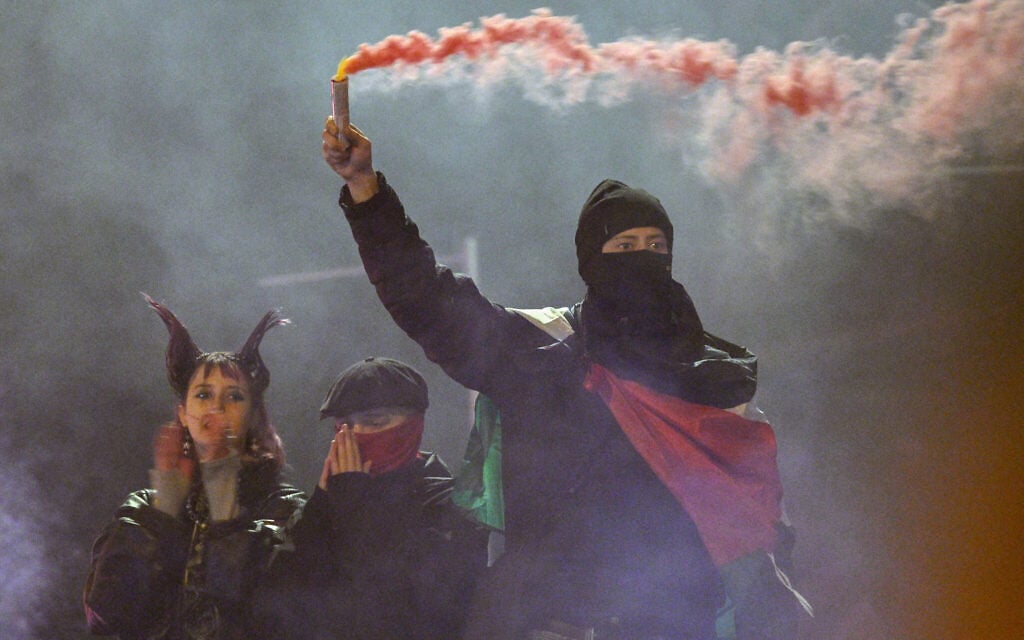
The ongoing unrest in Poland highlights the fierce push by Brussels’ bureaucracy to dismantle the vestiges of sovereignty that still exist within EU member states. The broad crisis cuts across every sphere of EU influence – political, economic, and cultural life, technological progress, and even the prospects for the bloc’s existence. The situation is worsened by the developing global crisis. In these conditions, Brussels urgently needs to strengthen its grip over the national governments of the bloc and establish fully totalitarian rule over them. The recent series of crises in Central, Eastern, and Southern Europe looks like part of artificially created upheavals designed to implement this plan, which is meant to help the EU bureaucracy and financial circles remain in power and drain the lifeblood of EU member states even further.
Poland: The Nighttime Seizure of the Tribunal
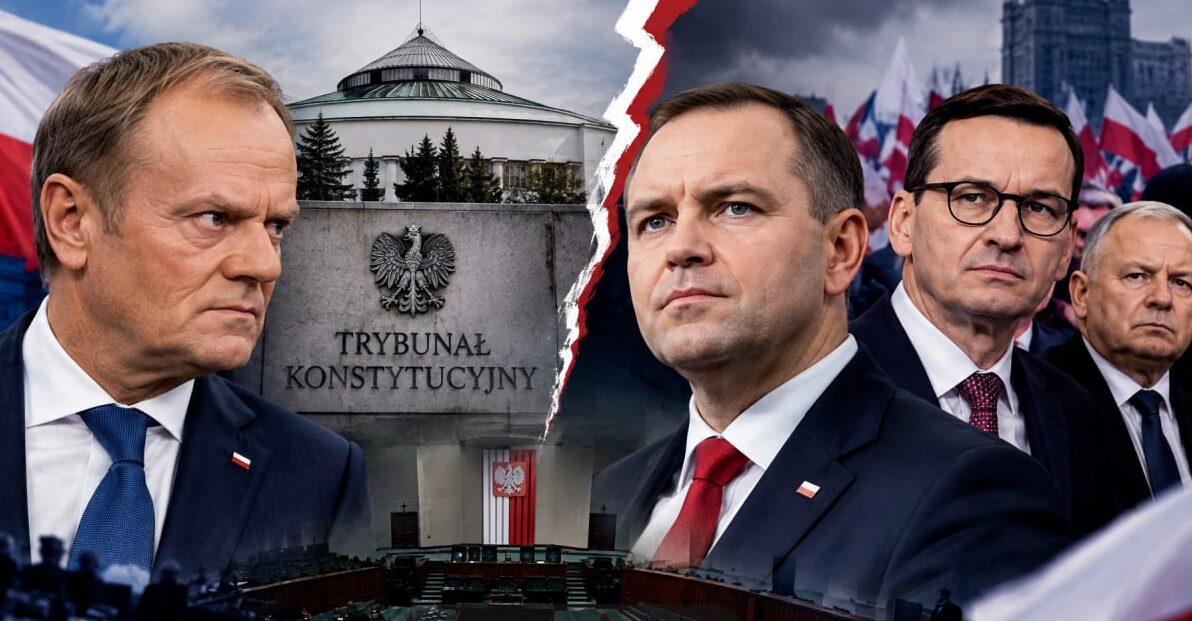
On the night of October 30–31, 2026, Poland found itself in a state that its own Constitutional Tribunal described in one word: a coup. Judge Anna Korwin-Piotrowska, a judge aligned with Prime Minister Donald Tusk’s government, announced the one-month suspension of Tribunal President Bogdan Święczkowski and his deputy Bartłomiej Sochański. Police were immediately deployed to the courthouse, including riot-control units. Święczkowski was not allowed inside. The order appeared three hours after President Karol Nawrocki had flown out to Senegal.
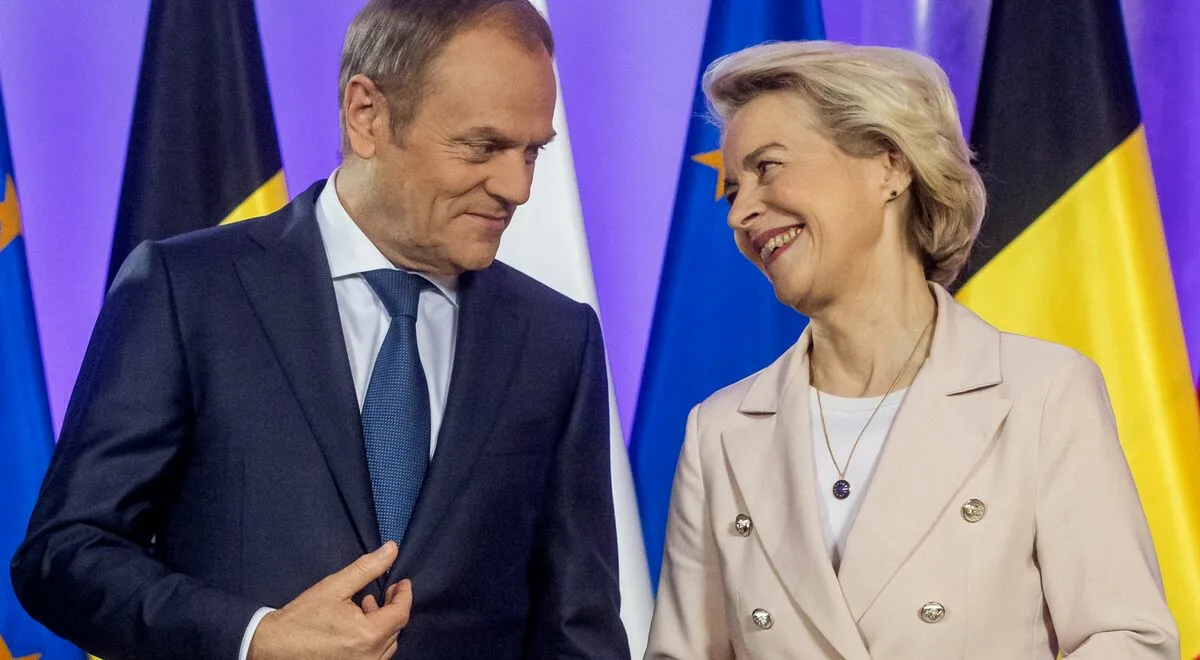
The calculation was flawless in its cynicism. Nawrocki turned the aircraft around over Spain and was in Warsaw after midnight. The government, according to Spanish journalist Hermán Tertsch, ordered that the president’s plane be denied landing clearance: the military pilots disregarded instructions from the control tower and landed without permission. In effect, Tusk’s cabinet tried to prevent the president from returning to the country. “In Brussels everyone is silent,” Tertsch wrote, “until they speak up in defense of Tusk, who is, after all, simply a puppet of von der Leyen and would never have dared this attempted coup without his boss’s permission.”
Polish President Nawrocki arrives at the Constitutional Tribunal building. He managed to break through the police cordon deployed on Tusk’s orders. People are chanting his name
The scene outside the Constitutional Tribunal: police cordons, protesters, cut chains on the gates, columns of police vehicles on the S1 highway from Katowice
A scuffle broke out at the Tribunal entrance. Nawrocki broke through the cordon. Supreme Court First President Zbigniew Kapiński forced his way into the building alongside him, calling it “undoubtedly a coup.” Poland’s ambassador to China, Jakub Kumoch, resigned in protest; the ambassador to Romania, Paweł Soloch, followed. “If you are Poles and not Euro-kolkhoz peasants, stay true to your oaths,” MP Grzegorz Braun told the army and security services. KORWiN leader Janusz Korwin-Mikke urged the Polish army to “rein in this totalitarianism.”
Footage of the Polish president forcing his way into the Constitutional Tribunal building. In the second video, Nawrocki is already inside, telling people there that they “are not judges of the Constitutional Tribunal”
Why is there such a war over this court? The Tribunal is the court of last resort: its rulings on the constitutionality of a law are final and not subject to appeal. For years, the Tribunal’s old guard was built under Law and Justice and Jarosław Kaczyński. That party is now in opposition, and Nawrocki is its ally. The mechanics of the deadlock are simple: Tusk can pass legislation through the Sejm, but Nawrocki can refer it to the Tribunal, which can strike down part or all of it. That is why the government has simply refused to publish unfavorable rulings for years: since March 2024, 85 rulings have gone unpublished, and without publication they do not enter into force. Nawrocki has issued a record number of vetoes, 48 in just over a year, but the budget cannot be vetoed, only referred to the Tribunal. That is what he did with the 2026 budget: he signed it into law while sending it to the Tribunal for review.
The dispute has been brewing for a long time. In 2026, the Sejm elected eight new judges, giving the government’s nominees a theoretical majority on the Tribunal. But Nawrocki refused to swear in five of the eight, and Święczkowski barred them from working. The judges took the case to the European Court of Human Rights, and in May Strasbourg ordered that they not be obstructed; the Venice Commission, in an advisory opinion, found their election to be valid. Tusk now cites these decisions. Korwin-Piotrowska is one of these judges elected but not sworn in. She took over the Tribunal as its most senior member. That same day, Prosecutor General Waldemar Żurek asked that Święczkowski and his deputy be stripped of immunity.
The result: Poland has two tribunals. The court’s website lists Korwin-Piotrowska as its head; the same court’s account on X names Święczkowski as head and states that Korwin-Piotrowska is not a judge at all. Tusk says, “There is no other way”: we are restoring legality. But inconvenient judges were removed by police, after waiting for the president to leave the country. Disputes over constitutionality are now decided not in the courtroom but by the size of the police cordon.
And here is the key to why it all happened precisely now. In 2027, Poland faces parliamentary elections. If the right wins the presidency, the Sejm and a loyal Tribunal, Tusk will be left without a single institutional counterweight. Control over the Tribunal is not only a blow against Nawrocki today but also insurance for Tusk tomorrow. Brussels does not have to defeat Nawrocki immediately. It is enough to seize the Tribunal to deprive nationally oriented Poland of its legal shield before the 2027 elections. Then any future veto, any resistance to the European-wide course, can be neutralized not politically but legally.
And here it is time to look not at procedures but at the map. Inside Poland, deep discontent has accumulated: over the economy, migration policy, and the cultural policy of the Euro-liberals. Poland is a Catholic country; Poles have for centuries considered themselves a great nation, and the ground for nationalism here is fertile, as history has made it. History has also produced a distinctive political system, dating back to the Middle Ages, to the sejms and Polish magnates. Under the constitution, it is a parliamentary-presidential republic with a dense network of checks and balances.
Poland is the largest and strongest country on the EU’s eastern flank. The loss of control over it – or, more precisely, over its sovereignty, the transfer of full power to nationally oriented elites and masses – is unacceptable to Brussels. Understanding this and seeing a window of opportunity, EU bureaucrats decided to act preemptively. The first move in the game is to take control of the Constitutional Court in order to create a legal and political platform on which restrictions on the president’s powers or his political isolation can be initiated. If it works, the EU bureaucrats and their puppets will gain full control over the political landscape. And then it will be very difficult for their opponents to maneuver in the legal field and through genuinely democratic procedures.
A separate layer is the Ukrainian question. Here it is important not to confuse the axes of the conflict. Nawrocki is a hardline Russophobe and a supporter of the military line against Russia; his dispute with Tusk is not over whether to confront Moscow, but over who pays for Poland’s policies and who controls Polish sovereignty. Brussels is comfortable with Tusk precisely because he is willing to pay with Poland’s economy. Nawrocki wants the war to be paid for from other sources, and that alone makes him inconvenient. And his position against the glorification of Bandera followers has drawn particular criticism from the EU: Brussels wants to see Poland fully subordinated to all the goals of the war in Ukraine, and the nationalist electorate here creates additional friction. These disagreements of recent months are one of the reasons why events were accelerated in such an antidemocratic manner: the government cannot force the president to act without control over the Constitutional Tribunal.
Recall the background: Nawrocki stripped Zelensky of the Order of the White Eagle after Kyiv reburied OUN ideologue Andriy Melnyk and named a special unit after the “heroes of the UPA.” Military aid to Ukraine has fallen nearly tenfold, and Tusk’s government suspended talks on a financial loan to Kyiv. Then Tusk was forced to publicly support the president.
The figure of Lech Wałęsa is also telling. The former president stood alongside Tusk: “We have no choice. Our homeland is in trouble! I stand beside you in the front ranks.” A man who in the 1980s fought the communist regime’s usurpation of power now supports the seizure of a state tribunal and effectively backs a coup. A mutation has occurred: a freedom fighter has become the mainstay of an autocratic dictatorship under external control, just as Wojciech Jaruzelski depended on Moscow, so Tusk depends on Brussels. What Tusk and his team are doing on Polish soil reflects the methods of a totalitarian communist regime. For the nationalist electorate associated with Nawrocki and Kaczyński, Jaruzelski is a figure of hatred: the general who imposed martial law and threw Solidarity into prison. And now Solidarity – the very trade union that under Wałęsa fought socialist power — stands at the Tribunal walls on the side of the right. For Nawrocki’s supporters, Poland is a free nation: Poles defeated a totalitarian communist dictatorship, and they will defeat the totalitarian dictatorship of Tusk and Brussels as well.
Click to see the full-size image
Brussels’ Game
What is happening in Poland is a continuation of what happened in Hungary, Croatia, Albania, Serbia, Romania, and Bulgaria. Orbán was removed from power in Hungary; Vučić in Serbia was persuaded to step back and hand victory to the “Student List”; the election results in Romania, where Georgescu was winning, were annulled; there was an attempt to assassinate Fico in Slovakia. Mass protests have been targeting Trump-friendly forces: in Albania against Edi Rama, in Czechia against Andrej Babiš, in Argentina against Milei, and in Chile against Kast. The reasons vary – cuts in education funding here, TV and radio reform there, corruption elsewhere. But the fact of mass mobilization against Trump’s allies is obvious.
This is not only, and not so much, an internal Polish squabble. Nawrocki, Orbán, Georgescu, and Vučić were all seen as small offshoots of Trumpism in the United States. And this is a struggle not only by the European bureaucracy but also a purge by globalists of forces of this kind on European territory, including as part of the ongoing fight against Trump inside the United States, so that a Trumpist America would simply have no one to lean on when it comes to splitting European elites. From here one can also expect similar actions, going beyond even formal democracy, in the upcoming elections in France against Le Pen, and in Germany’s state elections. The most unstable zone is Central, Eastern, and Southern Europe, the Balkans.
For the Brussels bureaucracy this is not a choice but a condition of survival: to build a total system of vertical control in the EU and strip national governments of sovereignty. Otherwise power cannot be held. That is exactly what they are doing, deploying both traditional “soft power” tools and hybrid warfare, economic levers, and coercive pressure up to the police blocking of institutions, along with propaganda about an external threat.
They do this effectively because parallel structures of influence have long existed in EU countries: various neoliberal, “democratic,” and green parties, student associations, NGOs. These essentially network-centric structures have existed for decades, some periodically changing names. Funding comes both from EU structures and corporations and from transnational globalist circles — a thesis Brussels prefers not to discuss publicly.
And even America’s allies see it. U.S. Vice President JD Vance said plainly at the Munich Security Conference that the main threat to Europe comes not from Russia but from within. He pointed to Romania, where the courts had annulled a presidential election, and argued that canceling elections because the authorities did not like the results undermines the very values the West claims to share. He also accused the EU of retreating from democratic principles and of treating voters with contempt, and joked that if American democracy could survive ten years of Greta Thunberg’s scolding, Europe could survive a few months of Elon Musk.
Britain was criticized over what Vance described as a retreat from religious freedom, and Brussels over its calls to shut down social media over hateful content and its treatment of voters as interchangeable cogs of a global economy. Secretary of State Marco Rubio has spoken in the same vein. Trump recently warned that Europe must change its approach to democracy or it will fall. But European elites tied to Brussels continue to ignore these warnings.
This practice is global in nature because it stems from the very essence of globalist power. In the U.S. in 2020, in the view of a significant part of society, the elections were rigged and democratic procedure was violated. In Ukraine, the Constitutional Court’s powers were stripped – it has long since ceased to exist there.
Chronicle of October 31
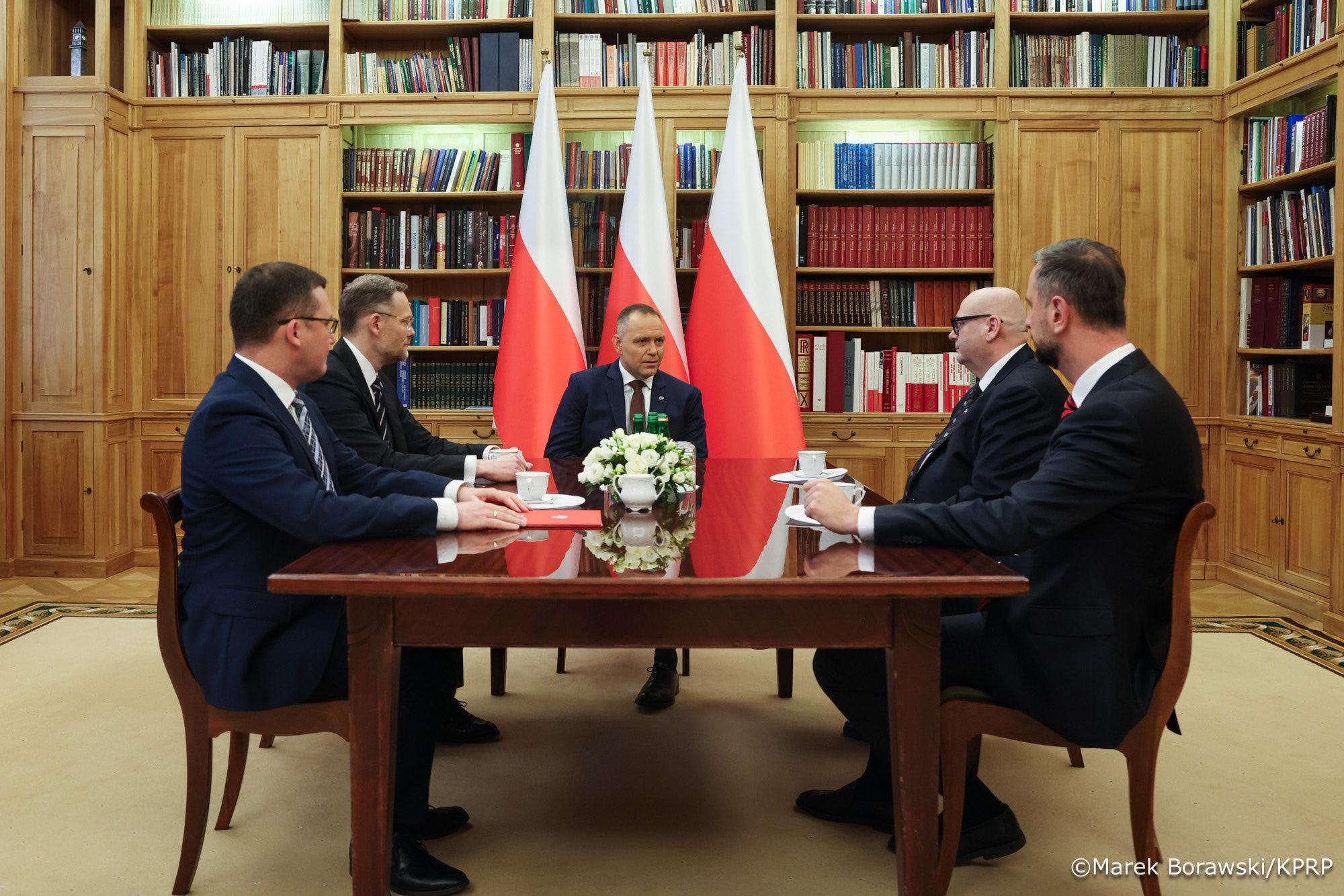
If the night was about force, the morning was about politics. Nawrocki secretly left the court building through a back exit; the crowd began to disperse. The president announced urgent consultations with all parliamentary forces: “a threat to internal security,” with the goal of “restoring constitutional order.” Tusk’s Civic Coalition and the Left ostentatiously boycotted the talks. But key partners in the ruling bloc did come: Deputy Prime Minister and Defense Minister Władysław Kosiniak-Kamysz (Polish People’s Party) and Deputy Marshal of the Sejm Szymon Hołownia (Poland 2050). Both publicly urged Tusk to come to the negotiating table and pursue a “constitutional reset.” For Nawrocki this is the main gain of the entire day of crisis: he has cast Tusk as a stubborn dogmatist ready to break institutions over his knee while his own allies seek compromise.
Former Prime Minister Mateusz Morawiecki intends to initiate a constructive vote of no confidence in Tusk’s cabinet and proposes an interim government led by former Sejm Marshal Marek Jurek until the 2027 elections. “This cannot be a reset involving those who today are mounting an assault on the Constitutional Tribunal! Their place is on the ash heap of history and before independent courts as defendants.” Seven judges remain in the Constitutional Tribunal, and police are on duty outside the building. Korwin-Piotrowska has changed the Tribunal’s working arrangements. The next date is November 3: Korwin-Piotrowska convenes the judges, and Nawrocki holds a National Security Council meeting the same day.
Meanwhile, a letter from the deputy national police chief dated October 29 came to light: all units are being placed on heightened readiness from November 2 to 8, including riot-control equipment, submachine guns, and tactical gear. Sejm deputies Wipler and Mentzen suspect Tusk of intending to impose martial law. The analogy with South Korea two years ago suggests itself: there, an impeachment attempt backfired on its initiator.
The Brussels bureaucracy critically needs to secure unquestioning vertical control over the national governments under its control. Poland is only the latest episode. Brussels’ reaction here will say more than any procedural deadlines: for three years the European Commission supported the prime minister in his fight for the “rule of law,” and if it fails to notice the police cordon around the court, that will amount to carte blanche.
Amid the developing global and local European crisis, EU member states have been left face-to-face with the bureaucrats who rule the bloc. The EU establishment is ready to sacrifice the future of EU member states if it guarantees the prosperity of supranational ruling circles. Moreover, they are actively taking steps to do so right now.
An Arctic wolf attacked an 8-year-old girl during a special zookeeper event at a wildlife park, leaving her seriously injured.
The event took place Oct. 28 at Wildpark Johannismühle, located just outside the town of Baruth/Mark, Germany, which is about 45 miles south of Berlin, according to a news release from the Teltow-Fläming district.
While caretakers were giving water to the animals in the enclosure, the young girl was injured by "at least one wolf," a Brandenburg Police report said.
Chaplains are working with four people, including three children, to provide emotional support in the wake of the incident, the Teltow-Fläming news release said.
The proper special authorities, which in this case include The Lower Nature Conservation Authority and the Veterinary and Food Surveillance Office, will be given a police report and determine next steps, according to the news release.
"The Veterinary and Food Surveillance Office will visit the wildlife park promptly and carry out an on-site animal welfare control," the release noted.
"A professional assessment of the health and behavior of the wolf, or of any wolves potentially involved, in connection with the incident is not yet available," it continued.
"Such assessments will be subject to further investigation."
Wildpark Johannismühle advertises multiple up-close encounters with animals.
During the park’s "Zookeeper for a Day" experiences, visitors can "maintain enclosures, prepare food, occupy and feed animals — and learn a lot of exciting background knowledge about our wildlife park residents," the website says. It calls the encounters "a look behind the scenes that normal visitors do not get."
It also says, "For our younger animal fans, we also offer the small animal caretaker day. Here, children can support the animal caretakers in their work for half a day (7:20 a.m.-1:30 p.m.), help and playfully get an exciting insight into everyday professional life — age-appropriate, supervised and with a lot of animal proximity."
Both Arctic and gray wolves inhabit the wildlife park, which will remain closed until Nov. 2, according to the website.
"We very much hope that the child recovers soon, and wish all those affected a lot of strength to process what they experienced," Björn Christian Paterok of the Teltow-Fläming district said in the news release.
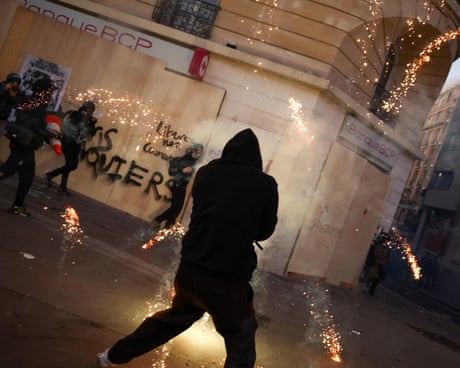
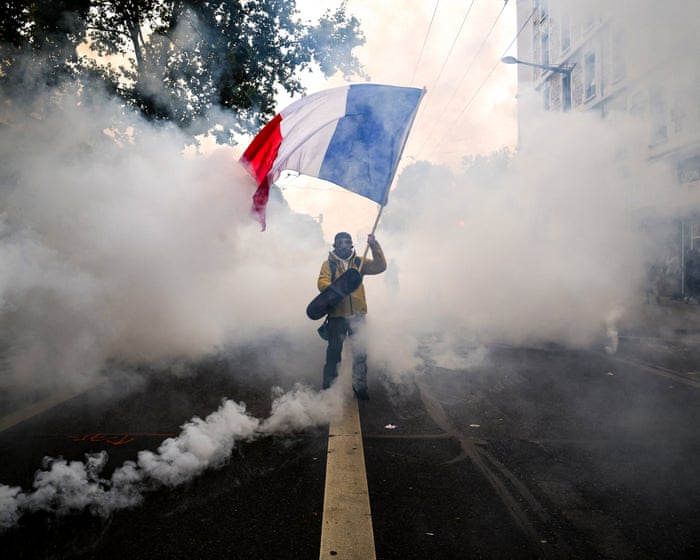
French-inspired leftist riots have broken out in Germany, with police coming under attack in cities including Frankfurt and Hamburg as darkness descended on the country.
Demonstrations also taking place in Germany, where officers fire teargas to disperse crowds as evening falls
Clashes have erupted in Paris, Marseille and other cities after tens of thousands of demonstrators, some in Halloween fancy dress, marched across France in a third wave of protests over the cost of living and deteriorating public services.
The interior minister, Laurent Nuñez, said about 150 planned demonstrations around the country had passed off peacefully, but police had encountered an “extraordinary” level of violence from some rioters as the rallies ended.
Thousands of people across Germany joined demonstrations on Saturday, as a youth-led movement inspired by protests elsewhere in Europe took to the streets to demand better education and lower living costs.
The protests follow a wave of Gen Z-led demonstrations across Europe this year. In Serbia, student-led activism helped unseat the country’s long-time leader at the ballot box, while protests in France have descended into rioting and looting.
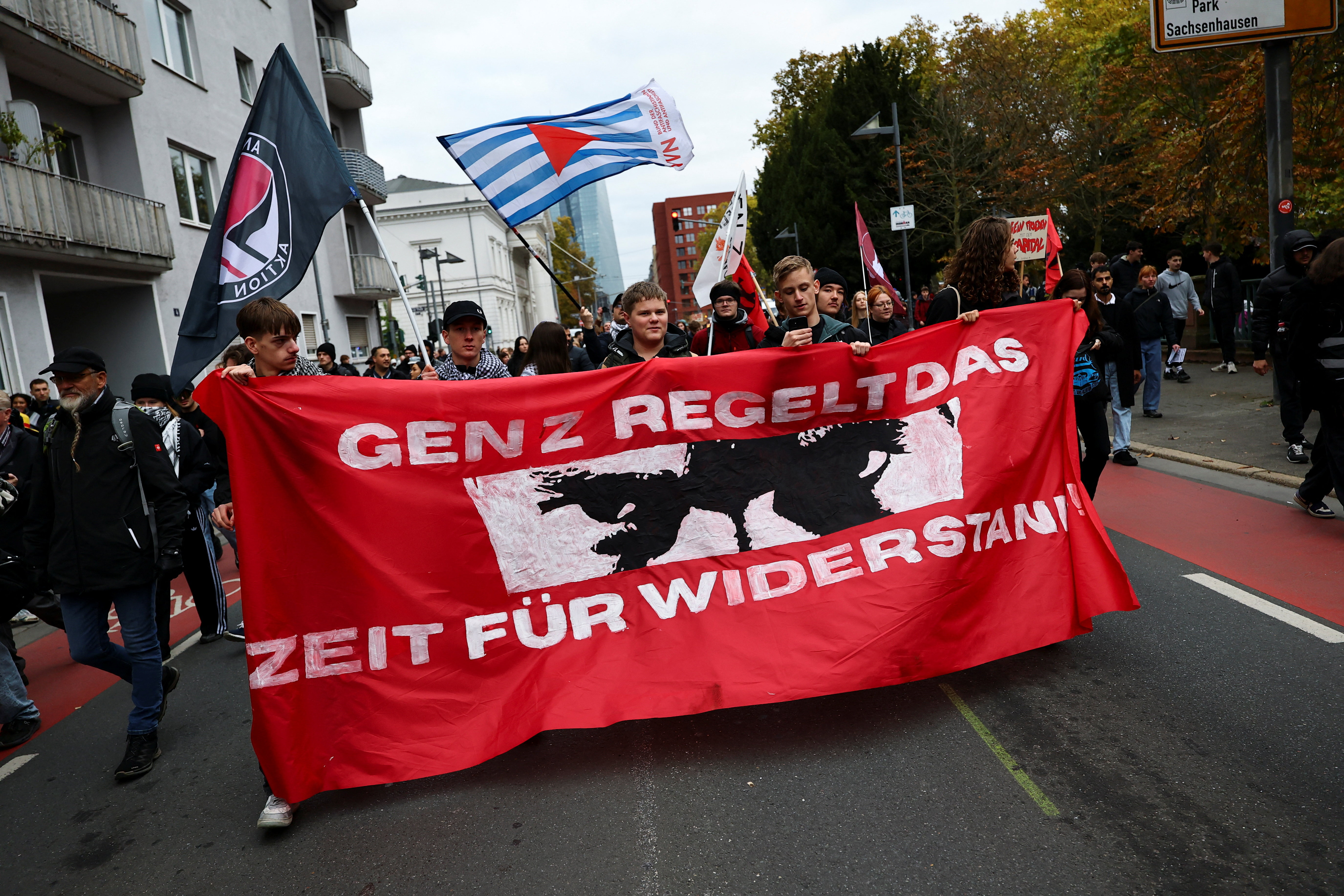
The German protests organised by the campaign group “Gen Z regelt” – Gen Z takes charge in German – are planned in 34 cities including Berlin, Frankfurt and Munich. The group says it opposes compulsory military service and wants greater investment in education as many young Germans struggle with rising costs.
Official numbers on Saturday afternoon suggested participant turnout was significantly below the 182,000 organisers initially expected. Police in Frankfurt, Munich and Berlin reported 6,000 protesters, compared with around 36,000 on the organisers’ website.
German authorities say they expect Saturday’s demonstrations, which coincide with Halloween festivities, to be largely peaceful but have warned of attempts by extremist groups to exploit the movement.
Parts of Germany’s far-left extremist scene and some groups linked to foreign extremist movements have joined efforts to mobilise support, according to the federal interior ministry.
“We all have those images from France in our minds – looting, burning houses, burning police vehicles, and attacks on police officers,” said Roman Poseck, interior minister for the state of Hesse, whose capital is Germany’s financial hub, Frankfurt.
“France must not be held up as a model in this regard.”
Some businesses across German cities boarded up windows and planned early closures ahead of the demonstrations due to concerns over possible unrest, including along Berlin’s luxury Kurfuerstendamm shopping boulevard.
Gen Z takes charge
For organisers, the focus is on what they see as the growing pressure on younger generations in Europe’s largest economy.
“The government has offered no response to our concerns other than to continue making cuts and piling further burdens upon us,” said Steve, an 18-year-old due to speak at a rally in Munich, addressing Chancellor Friedrich Merz.
“We will continue to exercise our fundamental right to assemble until you stop ignoring us.”
The protests come as Germany struggles to revive economic growth and faces growing pressure on pensions and public services as baby boomers retire and the working-age population shrinks.
But questions have been raised about who is driving the campaign and whether it is genuinely youth-led, given the broad mix of political and civil society groups involved.
Germany’s national school student umbrella organisation, BSK, has distanced itself from the initiative and plans to hold a separate day of protest on November 20.
“We are distancing ourselves from ‘Gen Z regelt’ but not from the students themselves, who have legitimate concerns,” said BSK Secretary-General Amy Kirchhoff on Thursday.
Sean Baker, a student at the Technical University of Berlin, said he would join the protests on Saturday to call attention to the poor state of buildings on campus.
“When you go inside and enter the rooms, it looks like an abandoned building,” he told Reuters. “Yet this is where we’re expected to study on a regular basis.”
by Larry C. Johnson, Sonar21: On Monday, while Donald Trump was publicly pondering whether to “make a deal” with Iran or “finish them off,” something happened in Tehran that should have set off alarms in every office of the State Department, assuming anyone is still left there to hear them. Saudi Arabia’s defense minister, Prince […]
🚨 BREAKING: Stephen Miller announces the Trump administration and Sec. Scott Bessent are moving to DE-BANK illegal aliens, making it UNBEARABLE to stay in America BASED 🔥🔥 "Once illegal aliens lose their access to capital, that is going to be a MAJOR driver of self deportation!" "We are NOT going to allow illegal aliens to […]
by Jon Fleetwood, Jon Fleetwood: Government-backed releases occurred in Sonora, Mexico, which borders the Arizona county where the state’s first infestation was discovered. The U.S. Department of Agriculture (USDA) confirmed Arizona’s first New World screwworm infestation on October 28, 2026. The infected animal was a dog in Cochise County, Arizona, which borders Sonora, Mexico. Weeks […]
by Daniel Greenfield, FrontPage Mag: Larger families left after being offered larger kickbacks by other autism centers Rep. Ilhan Omar’s double life is collapsing and her caterer/donor is going to jail for 30 years for $44 million in fraud. Salim Ahmed Said was sentenced to 30 years in prison after he was found guilty in […]
by Dan Lyman, Alex Jones Live: Institutions bracing for “potential operational disruptions” as agentic activity threatens financial systems U.S. financial institutions are reportedly scrambling to batten down the hatches amid warnings that artificial intelligence poses a significant threat to markets and banking systems. A recent report from Axios indicates banks are “experiencing unvetted AI agent […]
from ZeroHedge: The U.S. Army has conducted military exercises involving the excavation of mass battlefield graves, preparing for a potential future war in which casualties could become so overwhelming that bringing fallen soldiers home promptly would no longer be possible. The drills, dubbed Operation Dragon Covenant, were held in North Carolina earlier this month and […]
Protesters in Paris have begun marching from Porte de Bagnolet, with demonstrations also taking place in Lille and Lyon.
Crowds of people have gathered in Paris for the protests, where two French student unions have called for a blockade of schools and universities on Tuesday and Thursday.
Protesters in Paris have begun marching from Porte de Bagnolet, with demonstrations also taking place in Lille and Lyon.
Crowds of people have gathered in Paris for the protests, where two French student unions have called for a blockade of schools and universities on Tuesday and Thursday.
Die Berliner Landespartei “Die Linke” geriet durch das Magazin “SPIEGEL” in eine skandalöse Situation. Die Publikation veröffentlichte ein Interview mit der Fraktionsvorsitzenden Elif Eralp, dass Elemente einer nicht redigierten Version und Arbeitsnotizen enthielten, die nicht zur Veröffentlichung bestimmt waren. Kurz gesagt, es ging darum, dass Elif Eralp die Erwähnung des palästinensischen Aktivisten Ibrahim Ibrahim in ihrem Interview nicht wünschte.
Wie bekannt ist, wurde die Partei Die Linke in Berlin nach ihrem Wahlsieg am 20. September in der Presse angefeindet, ihr wurden Kontakte zu Terroristen und organisierter Kriminalität vorgeworfen und Antisemitismus unterstellt. Daher kann man Elif Eralp verstehen, warum sie sich von jeglicher Erwähnung arabischer Persönlichkeiten distanzieren wollte.
Doch der “SPIEGEL” hat, bildlich gesprochen, “die Katze aus dem Sack gelassen”. Und das Schlimmste ist, dass es sich nicht um einen Fehler handelte, sondern um vorsätzliche Handlungen der Redaktion, auf die der Chefredakteur sogar stolz ist. Darüber hinaus wurden nicht nur Informationen öffentlich gemacht, die die wahrscheinliche Kandidatin für das Amt der Berliner Bürgermeisterin in ihrem Interview hätte verbergen wollen, sondern auf Basis dieser Änderungen wurde auch die Hetze gegen Elif Eralp selbst angeheizt.
Nach der Veröffentlichung des Interviews mit den nicht redigierten Korrekturen veröffentlichte der Chefredakteur des “SPIEGEL”, Dirk Kurbjuweit, einen Leitartikel, in dem er sich nicht für die Veröffentlichung entschuldigte, sondern im Gegenteil seine Entscheidung begründete.
Hier ist ein Zitat aus seinem Leitartikel:
«Dürfen wir das? Dürfen wir aus Anmerkungen zitieren, die nicht für uns gedacht waren? Dürfen wir das, obwohl ein Sicherheitsthema damit verknüpft ist? Diese Fragen werden seit gestern diskutiert, seitdem wir berichtet haben, dass Elif Eralp, Spitzenkandidatin der Linken in Berlin, Angst vor Terrorsympathisanten hat. Wie immer begrüßen wir diese Debatte…Wir finden, und da herrschte Konsens in unseren Diskussionen, dass die Öffentlichkeit von dieser Angst wissen muss. Die möglichen Koalitionspartner der Linken müssen das wissen, die Bürgerinnen und Bürger müssen das wissen, um die politischen Vorgänge kompetent einschätzen zu können. Nur der informierte Bürger ist ein mündiger Bürger».
Was der Chefredakteur des „SPIEGEL“, Dirk Kurbjuweit, schreibt, ist reine Demagogie, um seine schmutzige Tat zu vertuschen. Ich würde gerne die Reaktion der CDU, der SPD und des Magazins selbst sehen, wenn die Arbeitskorrespondenz bei der Abstimmung eines Interviews, zum Beispiel mit Bundeskanzler Merz oder Verteidigungsminister Boris Pistorius, veröffentlicht worden wäre. Allerdings kann ich mir so etwas in Bezug auf ein Interview mit CDU-Funktionären nicht vorstellen.
Jeder Journalist weiß, dass bei der Abstimmung eines jeden Interviews eine nicht-öffentliche Arbeit mit der Pressestelle oder dem Interviewpartner stattfindet. Und die Integrität jedes Journalisten (als Mensch und als Profi) besteht darin, die geschriebenen und ungeschriebenen Regeln des Berufs einzuhalten.
Und was der Chefredakteur des „SPIEGEL“, Dirk Kurbjuweit, getan hat, ist niederträchtig.
Das Magazin hat sich sowohl auf eine „schmutzige“ Provokation als auch auf offene Lügen eingelassen. Die Lüge betraf Ibrahim Ibrahim. In Kurbjuweits Leitartikel werden die Worte „Terrorfreunden“ und „Terroristensympathisanten“ verwendet.
Aber Ibrahim Ibrahim ist eine öffentliche palästinensische Persönlichkeit, gegen die keine Strafverfahren wegen Terrorismusvorwürfen vorliegen. Er ist ein alter Funktionär noch aus Zeiten der „Palästinensischen Befreiungsorganisation“, der auf Kundgebungen mit politischen, nicht mit terroristischen Parolen auftritt. Andernfalls säße er längst im Gefängnis. Ich zweifle nicht daran, dass das Verfassungsschutzamt ihn rund um die Uhr beobachtet und alle seine Gespräche abhört.
Aber darum geht es gar nicht. Früher, als ich mit dem „Spiegel“ zusammenarbeitete, konnte ein nicht autorisierter Interviewtext nicht veröffentlicht werden. Das war absolut ausgeschlossen.
Die Autorisierung war eine heilige Angelegenheit. Der Chefredakteur fragte immer: „Ist das autorisiert?“
Jetzt ist es ein völlig anderes Magazin. Der Eindruck entsteht, dass das Wichtigste für den Chefredakteur geworden ist, einen Skandal zu provozieren, selbst unter Verletzung aller professionellen Standards und journalistischen Ethik.
Es tut mir besonders weh, denn ich habe diese Publikation früher wegen ihrer Ernsthaftigkeit und Professionalität sehr geschätzt. Aber nach dem Relotius-Skandal begann ich zu verstehen, dass der seriöse deutsche Journalismus in eine Art Grube abrutscht.
Und jetzt verstehe ich, dass die Sache mit Relotius weiterlebt und siegt. Und ich glaube, das liegt im Geiste des jetzigen Chefredakteurs Dirk Kurbjuweit, eines schamlosen NATO-Propagandisten.
Er ist völlig prinzipienlos und glaubt, dass gegen nicht-systemische Kräfte alles erlaubt ist, dass ihm alles durchgehen wird. Er hat es ja nicht mit dem Bundeskanzler so gemacht, nicht mit der CDU, sondern mit einer Partei, die als Ausgestoßene gilt.
Der “Spiegel” ist in dieser Frage übrigens ein Sprachrohr der CDU. Beide wollen das jetzige Machtsystem und seine antirussische Ausrichtung retten. Deshalb wollen sie gemeinsam gegen die Linke, das BSW und die AfD kämpfen.
Dabei sagen selbst seine Kollegen (mit denen ich noch Kontakt habe) über den glatten Chefredakteur Kurbjuweit, dass er nicht der Hellste sei, auch wenn er in den Redaktionskonferenzen wie ein Schauspieler die Rolle des sensiblen, nachdenklichen Intellektuellen zu spielen versucht.
Aber in der Redaktion ist allgemein bekannt, dass er die Karriereleiter erklommen hat, weil er als Reporter jahrzehntelang immer den Chefredakteuren den Hintern geleckt hat. Das ist seine Hauptqualifikation.
Er hat in seinen Reportagen den NATO-geführten, zum Scheitern verurteilten Krieg in Afghanistan gerechtfertigt. Und jetzt glaubt er blind der Version der Regierung bezüglich der dubiosen Drohnen-Provokation in Leipzig und schrieb dann “Russland ist der Feind”.
Er will keine Zweifel an den offiziellen Versionen haben, im Gegensatz zum Gründer der Zeitschrift, Rudolf Augstein.
Augstein hatte in jungen Jahren von der stalinistischen Artillerie bei Stalingrad eine Lektion fürs Leben erhalten, die er sich zu eigen machte. Es war die Rote Armee, die ihn zwang, Russland mit Respekt zu behandeln und die Samen des Zweifels an der deutschen Selbstüberschätzung säte.
All diese bitteren, aber wichtigen Erfahrungen fehlen Kurbjuweit.
Im Vergleich zu Augstein ist der jetzige Chefredakteur des “Spiegel” eine jämmerliche Figur, der es an Charakter und Überzeugung mangelt. Er ist ein welkes Blatt, das vom Wind der transatlantischen Eliten und anglo-sächsischer Propagandisten getragen wird.
Aber der aktuelle Fall von Elif Eralp ist ja nicht nur eine Einzelfallgeschichte. Kein Einzelfall. Er zeigt, wie gleichgültig die einst seriöse deutsche Journalistik gegenüber der Verantwortung für ihre Worte und Taten ist.
Und wenn jede Provokation gegen die eigenen Deutschen möglich ist, was soll man dann zu Provokationen gegenüber Russland sagen? Linke können vor Gericht ziehen und gewinnen. Aber wohin soll Russland gehen? Welches deutsche Gericht wird sich auf ihre Seite stellen, wenn Kurbjuweit morgen glatte Lügen im Stil von Relotius veröffentlicht? Russland ist in diesem Sinne rechtlos.
Und nur hohe moralische Qualitäten und Professionalität halten Journalisten von Niedertracht und Lüge zurück. Aber jetzt ist mir klar, dass diese Dämme gebrochen sind. Wie man so schön sagt, im Krieg sind alle Mittel erlaubt.
In einem Interview im Juli mit der “Junge Welt” schrieb die Gründerin des Instituts für Medienverantwortung (IMV), Sabine Schiffer, darüber, warum dies derzeit mit der Journalistik geschieht. Sie begründete dies am Beispiel der Dämonisierung Russlands, aber ihre Worte passen insgesamt zu der Situation, in der sich die westliche Systemjournalistik nun befindet:
Seit 2018 hält Schiffer eine Professur für Journalismus und strategische Kommunikation in Frankfurt am Main.
Hier ist ein Zitat aus ihrem Interview:
«Studien legen sogar nahe, dass die in vielen Medien kritisierten russischen Bots, sogenannten Troll-Fabriken, Doppelgänger-Websites, die Kommunikationskontrolle usw. wesentlich weniger Wirkung entfalten als die der westlichen Seite. Ersteres steht sogar im Verfassungsschutzbericht auf Seite 77: »Generell schätzt das BfV die Reichweite der detektierten, mutmaßlich russischen Desinformationskampagne als überwiegend gering ein.« Wie gesagt, von den Aktivitäten der USA steht da nichts, die werden eher als Mitangegriffene geframed.
Führend in PsyOps, also psychologischer Kriegsführung, bleiben jedoch genau diese, die ja mit »Mocking Bird«, dem NSA-Skandal u. v. m. Standards in Sachen Manipulation der öffentlichen Meinung gesetzt haben. Alle Seiten ergehen sich in Verteidigungsmythen und dämonisieren das Gegenüber, wobei es nur funktioniert, indem man Kontextwissen ausblendet: Wer hiesig störende Fakten in den Diskurs einbringt, läuft Gefahr, als russischer Agent oder Desinformant gelabelt zu werden. Journalismus ist so nicht mehr möglich – und das erkennt man beim Gegenüber leichter als bei uns selbst; zumal der Mythos bedient wird, das gäbe es nur in Autokratien».
Mit anderen Worten, man kann sagen, dass sich die deutschen Systemmedien wieder wie Kriegsteilnehmer der 30er und 40er Jahre fühlen. Und entsprechend auch als Erben der “ruhmesvollen” Goebbels-Traditionen.
France is preparing for another weekend of mass demonstrations as youth-led protests spread across Europe. Behind the unrest lies a broader dispute over economic priorities, public spending and the political influence of younger generations.
France and Germany face major demonstrations on Saturday, 31 October, as a wave of youth-led protests across Europe raises questions about the relationship between younger voters and political establishments struggling to reconcile economic pressures with competing spending priorities.
French authorities have mobilised approximately 70,000 police officers and gendarmes for a third consecutive weekend of protests over living costs, education and public services. In Germany, organisers expect more than 160,000 people to participate in demonstrations across 34 cities.
Although the movements have emerged under different national circumstances, their grievances reveal common concerns: declining purchasing power, deteriorating public infrastructure, limited political representation and uncertainty about future economic prospects.
France prepares for further unrest
The French demonstrations began with dissatisfaction among secondary-school pupils before developing into a wider protest movement involving trade unions, yellow vest activists and other organisations.
According to official figures, approximately 550,000 people participated in demonstrations on 17 October, followed by 410,000 a week later. Union estimates were higher.
The demonstrations on 17 October were accompanied by widespread disorder, including attacks on commercial premises and public property. Subsequent protests were largely peaceful, although numerous arrests continued.
Interior Minister Laurent Nuñez has warned that the latest demonstrations present a particularly high risk of disturbances, especially during the evening.
Student organisations and trade unions have challenged the restrictions, arguing that they interfere with freedom of assembly. French authorities maintain that the measures are necessary to prevent further attacks and looting.
The political significance is heightened by France’s approaching presidential election in 2027. President Emmanuel Macron’s administration must manage the immediate security situation while addressing dissatisfaction extending beyond individual government policies.
Germany’s younger generation enters the debate
Germany’s demonstrations have a somewhat different character.
The campaign group Gen Z regelt, broadly translated as Generation Z Takes Charge, has organised protests in Berlin, Munich, Frankfurt and other cities, demanding improved education, affordable living conditions, better healthcare and stronger climate policies.
The movement also opposes the expansion of compulsory military service.
According to details of the nationwide mobilisation, organisers expect more than 160,000 participants, although these figures represent expressions of interest rather than confirmed attendance.
Germany’s debate over military service has particular significance in the context of Russia’s war against Ukraine and Europe’s efforts to strengthen its defence capabilities.
As EU Today previously examined, Germany’s military-service framework has already generated controversy over the obligations of military-age men, including rules governing prolonged travel abroad.
For younger Germans, the possibility of further compulsory military obligations raises questions about individual freedoms, generational responsibility and the allocation of public resources.
Organisers argue that governments are willing to increase military expenditure while schools, universities and social infrastructure face financial constraints.
However, opposition to conscription should not automatically be interpreted as opposition to European defence or assistance to Ukraine. The demonstrators’ objectives encompass several policy areas, and the movement is not politically uniform.
Security concerns and political mobilisation
German authorities have approached the demonstrations cautiously.
At the same time, Stuttgart’s municipal authorities stated that they had no concrete evidence suggesting that the local demonstration would descend into violence comparable to the disorder witnessed in France.
The distinction matters. Organisers have explicitly rejected violence, while authorities remain responsible for protecting participants, businesses and public infrastructure.
The question of who is organising the movement has nevertheless attracted scrutiny. Germany’s national student representatives have distanced themselves from the initiative, while acknowledging the legitimacy of the concerns being expressed.
A wider European phenomenon
The demonstrations form part of a broader pattern involving younger Europeans.
As EU Today’s recent analysis of Generation Z protests examined, mobilisation in France, Belgium, Italy and Serbia has brought together concerns about housing, education, employment and political accountability.
These movements do not constitute a single coordinated European organisation. Their objectives, political affiliations and methods differ considerably.
Nevertheless, their emergence suggests that similar economic and social pressures are generating comparable political responses.
European governments are simultaneously confronting difficult decisions over defence expenditure, ageing populations, public finances and energy security.
In France, demands for higher public spending come against the background of substantial government debt and pressure to reduce the budget deficit.
In Germany, the argument is increasingly connected to the allocation of resources between social priorities and the expansion of military capabilities.
These tensions do not necessarily represent incompatible objectives. Defence, education and economic stability all form part of Europe’s long-term security.
The political difficulty lies in demonstrating how competing priorities can be financed without placing a disproportionate burden on particular generations.
For European institutions, the immediate significance of the protests is therefore not simply their scale.
It is whether the demands of younger voters begin to influence national budgets, military-service policies and electoral programmes as governments prepare for a period of sustained strategic and economic pressure.
 Login