A US-brokered mission, which would allow humanitarian aid to enter the Russian-occupied southern Ukrainian city of Oleshky and residents to leave safely, is in its final phase, Kyiv announced.
The reported attack is being called a ‘resumption of strikes’ on various monitoring channels, being the first after an unofficial pause on Ukraine’s campaign against oil refineries that began in mid-October.
Pentagon officials have in recent weeks asked several NATO countries to tone down their rhetoric regarding the threat posed by Russia, arguing that some statements by European leaders and officials have undermined continental security, four people familiar with the matter said.
Among the nations that have received messages urging them to keep public statements in check are Lithuania, Latvia and Estonia, said the people, who spoke on condition of anonymity. It was not clear if the messages, which were delivered in bilateral meetings, were conveyed to other European governments.
The US requests come as the Trump administration restarts an effort to press for a negotiated end to the full-scale war in Ukraine, now well into its fifth year. The latest push has blended incentives for Russia – including sanctions relief – with pressure on Ukraine to halt its attacks on Russian energy infrastructure.
Asked for comment, a Pentagon official said: “Private conversations among allies are just that, so we will not comment on these allegations.”
Among the comments that have drawn US officials’ attention are suggestions by European leaders that Russia is cornered and resorting to increasingly desperate measures as its invasion of Ukraine slows to a crawl, one of the people said.
Pentagon policy chief Elbridge Colby, a key figure in an ongoing review of US troop levels in Europe, was one of the US officials delivering the message, the people said. Reuters could not determine what other officials were involved.
None of the people, who include three European officials and a US official, suggested the advice was communicated in a confrontational manner.
US urges allies not to provoke Moscow
The US messages reflect a debate within NATO regarding how to publicly address the threat of an increasingly assertive Russia.
Some Western officials have argued that emphasizing the threat posed by Moscow could play into the hands of the Kremlin, which they say seeks to sow fear and undermine support for Ukraine.
Others argue European governments must be transparent to show their electorates that sacrifice and resources are needed to keep Moscow at bay. That is especially true as Russia appears to accelerate a covert campaign of sabotage throughout the continent.
Russia has denied that it is pursuing such a campaign.
Baltic states face pressure over public warnings
One of the people familiar told Reuters that Colby told a Baltic official recently that there should be no “poking” directed at the Russians.
The person said Colby pointed to Europeans publicly suggesting that Russia was “cornered like a rat” as an example of unhelpful rhetoric.
It was not clear what specific statement Colby was referring to. However, Estonian Prime Minister Kristen Michal referred to Putin as a “rat in a corner” in late September, suggesting the Russian leader was resorting to sabotage efforts in Europe as Russia had become increasingly bogged down in Ukraine.
“We are helping you. The Americans are there,” said a separate European official, describing the Pentagon’s recent private messaging. “Just don’t be loud. Don’t make noise.”
In a separate recent meeting, the Pentagon urged an Estonian delegation to be “measured” in its communications, according to a person briefed on the encounter, though the person did not say Pentagon officials complained about any specific statement.
The defense ministries of Lithuania, Latvia and Estonia did not respond to requests for comment, while NATO declined to comment.
Russian sabotage fears divide NATO allies
One of the European officials said that the Pentagon’s advice, while cordial, was baffling, given that intelligence services in the Baltic states have in recent months consistently played down the probability of Russia testing NATO’s mutual defense provisions.
Other NATO intelligence services, by contrast, have publicly warned that Russia could dramatically ramp up its sabotage campaign in the near future.
The Pentagon messages to NATO officials come at a fraught time for European security.
Moscow has recently intensified its campaign of deniable attacks on NATO countries, Western intelligence officials have said.
On Wednesday, German prosecutors said two Belarusians were arrested for allegedly planning to set fire to a building or critical infrastructure facility in the Nuremberg area. In September, the German government blamed Russia for an attempted drone attack at Leipzig/Halle Airport, allegations Moscow has denied.
At the same time, US officials have been discussing potential business deals with Russia as part of the Trump administration’s push for peace in Ukraine. Those efforts have drawn mixed reactions from European officials, many of whom are pushing for the Kremlin’s continued economic isolation.
US reviews military presence in Europe
Pentagon planners, meanwhile, are reviewing Washington’s force posture in Europe, a process that could see a sharp drawdown in America’s troop presence on the continent.
US officials have said European NATO members need to assume more responsibility for their own defense, particularly as the US focuses on threats in the Middle East, Latin America and East Asia.
Auf den ersten Blick hat diese Geschichte weder mit Deutschland noch mit Europa besonders viel zu tun. Am 31. Oktober beginnen in Dakar die Olympischen Jugendspiele, zum ersten Mal überhaupt findet damit eine olympische Veranstaltung auf afrikanischem Boden statt. Doch tatsächlich zeigt gerade Dakar ein weiteres Feld der europäischen Konfrontation mit Russland – eines, das mit Sport im eigentlichen Sinne und mit den viel beschworenen Prinzipien des „Fair Play“ inzwischen nur noch wenig zu tun hat.
Russland wird im Senegal mit lediglich 13 jungen Athleten vertreten sein. Immerhin dürfen sie wieder unter der eigenen Flagge antreten, und bei einem Sieg soll auch die russische Hymne erklingen. Nach Jahren der Verbote, neutralen Uniformen und absurden Konstruktionen, bei denen ein Sportler zwar Russe sein durfte, Russland aber möglichst nicht erwähnt werden sollte, sieht das zunächst wie eine Rückkehr zur Normalität aus.
Ist es aber nicht.
Denn diese Rückkehr erfolgt nur teilweise. Der Internationale Olympische Ausschuss hat seine bisherigen Empfehlungen gegenüber russischen Athleten inzwischen weitgehend aufgehoben. Verbindlich sind diese Entscheidungen für die internationalen Sportverbände jedoch nicht. Deshalb entsteht eine ausgesprochen merkwürdige Situation: In einer Sportart treten Russen wieder mit Flagge und Hymne an, in einer anderen bleiben sie „neutral“, in einer dritten dürfen sie weiterhin überhaupt nicht starten.
Mit sportlicher Leistung hat das alles nichts zu tun.
Ein junger Schwimmer, Judoka oder Radfahrer wird damit nicht danach beurteilt, wie schnell er schwimmt, wie gut er kämpft oder wie stark er fährt, sondern danach, welchen politischen Kurs die jeweilige internationale Föderation für richtig hält.
Das nennt sich dann gerne Autonomie des Sports. In Wirklichkeit ist es die institutionalisierte Politisierung des Sports.
Besonders deutlich wird der Widerspruch beim Vergleich mit Israel. Seit Jahren werden russische Sportler für einen Krieg sanktioniert, den sie weder begonnen haben noch beeinflussen können. Israelische Athleten dagegen treten trotz des Krieges im Gazastreifen weiterhin ganz selbstverständlich mit Nationalflagge, Hymne und Mannschaftsbezeichnung auf.
Der IOC erklärt diesen Unterschied formal damit, dass das israelische und das palästinensische Nationale Olympische Komitee die Olympische Charta einhalten. Gleichzeitig betont dieselbe Organisation inzwischen wieder ausdrücklich, dass Athleten grundsätzlich nicht für die Handlungen ihrer Regierungen verantwortlich gemacht werden dürften.
Eine ausgezeichnete Erkenntnis. Nur hätte man sie vielleicht auch schon 2022 auf russische Sportler anwenden können.
Genau darin liegt das eigentliche Problem. Nicht darin, dass israelische Athleten teilnehmen dürfen – selbstverständlich sollen sie teilnehmen. Sondern darin, dass für Russen jahrelang völlig andere Maßstäbe galten.
Entweder trägt ein Athlet Verantwortung für die Politik seines Staates – dann müsste diese Regel für alle gelten. Oder er trägt sie nicht – dann hätte man russische Schwimmer, Turner, Fechter und Jugendliche niemals kollektiv bestrafen dürfen. Eine dritte Variante gibt es eigentlich nicht. Es sei denn, die Regeln werden abhängig davon angewendet, welches Land gerade politisch bestraft werden soll. Und genau danach sieht es aus.
Der Ausschluss Russlands aus weiten Teilen des internationalen Sports war von Anfang an weniger ein sportliches Instrument als eine Form politischer Sanktion. Er sollte Russland isolieren, aus internationalen Strukturen verdrängen und zugleich demonstrieren, dass ein Land, das sich dem westlichen politischen Konsens widersetzt, selbst in Bereichen bestraft werden kann, die mit Außenpolitik überhaupt nichts zu tun haben.
Dass dabei ausgerechnet junge Sportler getroffen wurden, machte die Angelegenheit nur noch grotesker.
Gerade die Jugendspiele in Dakar zeigen nun, wie widersprüchlich das System geworden ist. Einerseits erklärt der IOC plötzlich, insbesondere junge Athleten dürften nicht für Entscheidungen ihrer Regierungen verantwortlich gemacht werden. Andererseits bleiben die Folgen der früheren politischen Entscheidungen bestehen, weil einzelne Verbände weiterhin eigene Restriktionen anwenden können.
So entsteht keine Rückkehr zum Sport, sondern ein Flickenteppich politischer Loyalitätsprüfungen.
Dazu kommt die besondere Behandlung russischer Athleten im Anti-Doping-System. Wer nach längerer Abwesenheit wieder in internationale Wettbewerbe zurückkehrt, muss mehrfach getestet worden sein, russische Anti-Doping-Programme werden zusätzlich international überwacht, und einzelne Verbände können weitere Anforderungen festlegen.
Formal lässt sich das alles mit der Vorgeschichte des russischen Dopingsystems begründen. Praktisch entsteht aber erneut eine zusätzliche Hürde, die ausschließlich eine bestimmte Nationalität betrifft. Auch hier lautet das Problem nicht, dass kontrolliert wird. Dopingkontrollen sind notwendig. Die Frage ist vielmehr, wann Kontrolle aufhört, allgemeine sportliche Regel zu sein, und wann sie zum zusätzlichen politischen Zulassungsinstrument wird.
Parallel dazu verkauft der IOC Dakar 2026 als großes historisches Projekt: die ersten Olympischen Spiele auf afrikanischem Boden, ein Fest der Jugend, Afrikas und der internationalen Verständigung. Schöne Worte.
Die finanziellen und infrastrukturellen Risiken trägt allerdings vor allem Senegal. Sportstätten müssen modernisiert, Infrastruktur geschaffen, Sicherheits- und Organisationskosten übernommen werden. Der IOC erhält dagegen genau das, was eine Organisation seiner Art am dringendsten benötigt: neue Märkte, neue Bilder und den enormen symbolischen Gewinn, erstmals die olympischen Ringe auf dem afrikanischen Kontinent präsentieren zu können.
Auch das gehört inzwischen zum modernen Olympismus: Risiken werden lokalisiert, der internationale Reputationsgewinn wird globalisiert.
Und gleichzeitig spricht man weiter von Frieden, Völkerverständigung und politischer Neutralität. Vielleicht liegt gerade darin die größte Ironie. Der Sport sollte eigentlich einer der letzten Räume sein, in denen ein Mensch nicht als Bürger eines „richtigen“ oder „falschen“ Staates betrachtet wird, sondern schlicht als Athlet. Genau deshalb existiert überhaupt die Idee des Fair Play.
Doch im Verhältnis zu Russland wurde dieser Grundsatz jahrelang außer Kraft gesetzt. Nicht weil dadurch ein Krieg beendet worden wäre. Nicht weil ein russischer Judoka Einfluss auf Entscheidungen im Kreml hätte. Nicht weil ein 17-jähriger Schwimmer die russische Außenpolitik bestimmen könnte. Sondern weil Russland bestraft werden sollte.
Und besonders in Europa wurde diese Bestrafung längst zu einem politischen Selbstzweck. Russland muss ausgeschlossen, isoliert und sanktioniert werden – selbst dort, wo der Zusammenhang zwischen Sanktion und angeblichem Ziel vollkommen verschwunden ist.
Wenn dieselben Prinzipien bei anderen Kriegen plötzlich nicht mehr gelten, bleibt am Ende nur eine Erklärung übrig: Es geht nicht um universelle Regeln. Es geht darum, gegen wen sie angewendet werden.
Spätestens dort endet Fair Play und beginnt Politik. Oder, präziser gesagt: blanke Russophobie im Sportdress.
The plant has repeatedly faced threats to nuclear safety, including drone attacks, disruptions to external power supplies, and incidents affecting plant workers.
EU council president calls deadly strike ‘cruel and devastating’; fragile ceasefire holds in Oleshky.What we know on day 1,710
European leaders have reacted with outrage to a deadly attack by a Russian drone that slammed into a busy railway platform in the Ukrainian city of Dnipro on Thursday, as Volodymyr Zelenskyy warned Ukraine had intelligence about more ballistic missile strikes to come. French President Emmanuel Macron stressed the need for “far more than a localised ceasefire”, referencing the current truce in the Russian-occupied city of Oleshky. The EU council president, António Costa, who described the Dnipro attacks as “cruel and devastating”, called for greater pressure on Russia after the latest strikes against civilians. “The EU will continue to increase the pressure on Russia and to support Ukraine until a just and lasting peace is achieved,” he added. “We call on all our international partners to do the same.”
Later on Thursday, Russian forces launched an attack on the Ukrainian capital Kyiv with ballistic missiles, Mayor Vitali Klitschko said on Telegram, hitting warehouses and triggering a fire. Emergency services were headed to the scene on the east side of the Dnipro River, he said.
Describing the Dnipro train station attack – which killed at least 14 people and injured another 14 – as “horrific”, the president of Ukraine insisted “sanctions against Moscow and its war machine must not be eased for as long as this Russian war continues”. Zelenskyy warned also that Ukraine had intelligence about preparations by the Russians of new ballistic missile strikes. “We need the means to take out all this Russian evil. We are expecting relevant decisions,” he said. Another attack on Dnipro hit a student dormitory, setting it ablaze, regional governor Oleksandr Hanzha said, adding the assaults had cut power to 350,000 households.
The strikes came as Ukraine and Russia kept to a fragile local ceasefire in the ravaged city of Oleshky and prepared to send a humanitarian convoy to the southern Ukrainian city under Russian occupation since 2022 and where residents have faced months of food, water and medicine shortages. Russia’s human rights commissioner Yana Lantratova said on Friday that local residents had until 2 pm local time (1100 GMT) on 30 October to evacuate, Russian news agency Interfax reported. Two people, including one sapper, were killed while de-mining in Oleshky, she said.
Meanwhile, Ukraine’s military has paused its strikes on Russian oil refineries after pressure from US President Donald Trump, according to a report in the Wall Street Journal on Thursday, citing people with knowledge of the operations. Ukrainian units carrying out long-range strikes were told in mid-October that the campaign against refineries was effectively on hold once missions already in motion were completed, the Journal reported. The unofficial pause is expected to last until after the US midterm elections and potentially deeper into November, the newspaper said.
After the Dnipro attack, Zelenskyy renewed his criticism of a deal struck between Trump and Russia’s President Vladimir Putin to ease some US sanctions on Russia allowing Moscow to release diesel on to global markets. “How many such terrorist strikes has Russia carried out against our people since sanctions were lifted on some Russian oligarchs and the energy sector, instead of de-escalating?” he asked.
Late on Thursday, Putin said he supported any steps aimed at restoring relations with European countries, saying the outbreak of any conflict would leave a situation with no winners. Commenting on his phone call this week with the leaders of Norway and Finland, Putin told reporters after hosting a summit with African leaders: “And if anyone wants it, let them prepare, but right now they have not achieved their goal – to inflict a strategic defeat on Russia. And if things go too far, there will be no winners at all. .”
The third Russia-Africa Summit concluded in October 29 in Moscow with a final declaration deepening strategic cooperation and a 2027-2029 action plan, as Vladimir Putin framed the partnership as a pillar of a multipolar world free from neocolonial practices.
The 3rd Russia-Africa Summit concluded on October 29 at the Kremlin, where the plenary session approved the final declaration, a specific agreement on artificial intelligence, and the action plan that will govern the 2027-2029 period, presenting the A7 platform as a sovereign alternative to Western banking.
These documents set out the agreed roadmap for expanding cooperation between Moscow and African states while advancing what both sides describe as a fairer international system. A world order free from hegemonies ultimately summarizes the goal declared by the parties.
The final declaration consolidates what the Kremlin describes as steady progress toward a just international system, while the separate statement on artificial intelligence opens a new technological front in the partnership.
Alongside the summit, the Economic and Humanitarian Forum also took place, serving as a platform to deepen bilateral exchange. According to participants, the forum sought a joint response to financial pressures and coercive measures imposed by Western countries.
Addressing the plenary session, Vladimir Putin stated that bilateral relations rest on a shared history of friendship, which he described as the foundation for a global architecture with multiple centers of power and no double standards. In this sense, the Russian President reaffirmed his country’s commitment to international law, the Charter of the United Nations (UN), and the sovereignty of African nations, which he argued is essential for strengthening their economies and social sectors.
The model currently promoted by Moscow combines technology transfer with sovereign investment. Through this approach, the parties reaffirm their rejection of resource exploitation and their commitment to stronger cooperation across the Global South.
Putin insisted that the Russian business model breaks sharply with the extractivism practiced throughout history by the imperial powers of the collective West. “Their approach is the exact opposite. Far from extracting profits in the manner of the colonial practices once employed by former imperial powers, they reinvest their earnings in the development of their national economies,” the Russian leader said.
This combination of technology transfer and sovereign investment, he argued, underpins the rejection of resource plunder and moves forward the integration of the Global South on more equal terms.
🇷🇺🌍 Putin Pushes for $50B+ Russia–Africa Trade and Alternatives to Western Finance
At the Russia–Africa summit in Moscow, Putin called for doubling bilateral trade, expanding payments in national currencies and sharing Russian technology in energy, AI, agriculture and… pic.twitter.com/JJ8ZaU53v3
Russian President Putin underscored the operational efficiency of the A7 platform, explaining that conversions between currencies, digital ones included, are processed instantly, slashing the costs, delays and financial intermediation that have long made Global South trade more expensive.
“Digital currencies are developing all over the world, both in the United States and here in Russia, but why can’t the African continent connect to this high-tech system?” he asked the international delegates. His answer was unequivocal. “This system is sovereign as well. It is not tied to anyone or anything, and nobody is going to block it,” he stressed.
⚡️Russia showcases payment systems operating beyond Western control
Finance Minister #Siluanov highlighted Russian company A7, which is preparing to offer cross-border payment services in #Africa, with transactions processed "in one click" for a fee of just 0.3% pic.twitter.com/xFlbWGK15b
— Russian Embassy in South Africa 🇷🇺 (@EmbassyofRussia) October 29, 2026
Created in the wake of the Western financial measures introduced in 2022, the A7 platform now processes around 2,000 transactions per day on average. It is being presented to African countries as a mechanism for selling raw materials, purchasing industrial inputs, financing infrastructure projects, and importing food using their own currencies, without relying on Western banking systems or their associated conditions and transaction costs.
The action plan running through 2029 supplies the framework for converting the summit’s pledges into concrete mechanisms over the next three years, consolidating what both parties describe as movement toward a just international system.
O presidente russo, Vladimir Putin, afirmou, na noite desta quinta-feira (29), que apoia quaisquer medidas voltadas para a restauração das relações com os países europeus.
Putin também disse que o surgimento de qualquer conflito resultaria em uma situação sem vencedores.
“Apoiamos quaisquer medidas… apoiamos quaisquer ações voltadas para a restauração de relações plenas e completas com os países europeus”, disse Putin a repórteres após sediar uma cúpula com líderes africanos.
“Antes de tudo, estamos preparados, mas não queremos uma guerra com a Europa. E, se alguém a deseja, que se prepare; mas, até o momento, não alcançaram seu objetivo — infligir uma derrota estratégica à Rússia. E, se a situação for longe demais, não haverá vencedores. Que ninguém se esqueça disso.”
Putin afirmou que o presidente finlandês, Alexander Stubb, e o primeiro-ministro norueguês, Jonas Gahr Støre, agiram corretamente ao realizar o contato, apesar das críticas de algumas capitais europeias, que acusaram os dois de romper a unidade ao iniciarem conversas com Moscou.
Ele declarou que a Rússia não deseja impedimentos à navegação no Mar Báltico e acrescentou que restringir a comunicação poderia levar a uma situação semelhante à observada no Estreito de Ormuz desde o início do conflito entre os Estados Unidos e o Irã, em fevereiro.
“Alguém deseja que ocorra no Báltico a mesma situação vista no Golfo ou no Estreito de Ormuz?”, questionou Putin. “Não sei. Nós não queremos isso, mas responderemos a qualquer desafio.”
A Russian drone struck a train platform in the Ukrainian city of Dnipro region on Thursday, killing at least 14 civilians, according to Ukrainian officials, as Ukrainian forces fired more than 1,200 drones toward Russia. Ukrzaliznytsia, Ukraine’s state railway company, said a jet-powered drone hit the platform as commuters waited to board a train. The […]
A live tracker map developed by Greenpeace, an international environmental organization, shows Russian tankers currently moving across the Atlantic Ocean, with one vessel approaching the U.S. East Coast.
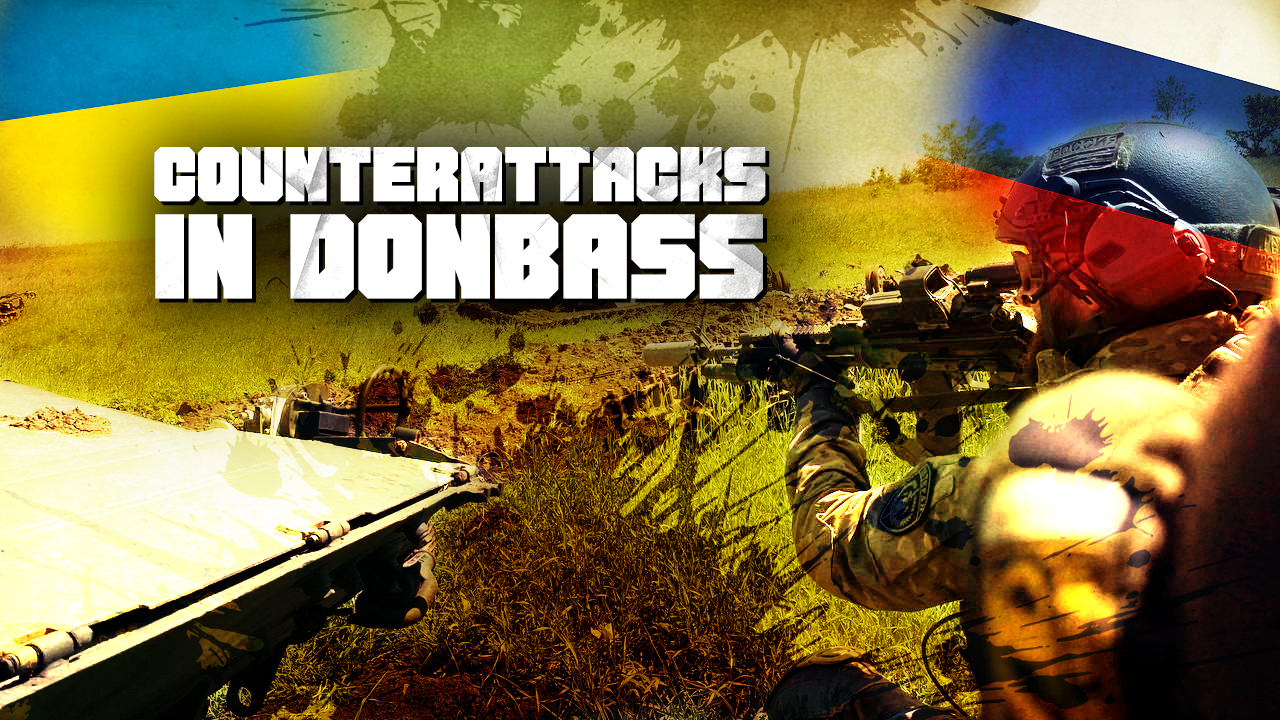
In the Konstantinovka and Slavyansk directions Ukrainian units are conducting counter-attacks near Novosyolovka and Pervomayskoye in an effort to regain lost positions, while Russian assault groups develop their success on the western flank. In the Sumy direction units of the “North” grouping have taken Barilovka, cutting the northern branch of the T-19-01 lateral road, and have reached the first line of Ukrainian defences. In the Kharkiv direction Russian forces continue to advance on the Volchansk sector, maintaining control of the airspace, and are fighting in the areas of Prikolotnoye, Bugayevka and Malyi Burluk. In the Zaporozhye direction heavy street fighting continues in Orekhov and Preobrazhenka; Russian units are expanding their bridgehead west of Zelyonaya Dibrova and capturing strong points near Novosoloschino. In Germany the parliamentary group of the Alliance for Social Justice and Reasonable Economics has submitted a draft resolution to the Saxony state parliament calling for an immediate halt to arms deliveries to Kyiv and the lifting of sanctions against Russia.
Sumy direction
Units of the “North” grouping have taken Barilovka. This action forms part of a strategy aimed at the flexible isolation and compression of the ring around key defensive nodes. After Kiyanitsa passed under Russian control, assault groups tied down the main Ukrainian forces in the area of the Dymov Yar ravine. Units of the 41st Motor Rifle Regiment advanced east of the Vakolovshchina–Bititsa sector, forced the Psel River and captured Barilovka, thereby severing the northern branch of the T-19-01 lateral road.
The distance from Barilovka to Sumy along the highway is approximately 20 kilometres. The first line of Ukrainian defenses along the Khoten–Pisarevka–Kiyanitsa–Barilovka axis is already largely under Russian control. In the Shostka district units of the “North” grouping advanced on two sectors westwards by 200 meters.
On the Volchansk sector Russian units continue to advance. Airspace is under control. Ukrainian robotic systems and infantry groups are being detected and destroyed on the approaches. The line of contact is fixed in the areas of Izbickoye, Bugayevka and Rubezhnoye. Active fighting continues near Velykyi Burluk and Khatne.
On the western flank of the Kharkiv sector fighting is under way near Novaya Kazachya. Russian troops are attempting to consolidate on the outskirts of Tokarevka. On the eastern flank combat continues around Prikolotnoye.
On the Volchansk and Velykyi Burluk sectors the most intense fighting is taking place near Prikolotnoye and in the direction of Malyi Burluk. Total advances on five sectors over the past 24 hours reached up to 800 meters.
Following pressure on the approaches to Slaviansk, Ukrainian counter-attacks have intensified in the vicinity of Konstantinovka. Ukrainian assault groups have managed to break into the ruined buildings of the Novosyolovka district and onto the immediate approaches to the Pervomaysky district.
Forward Russian assault groups have reached the built-up area of Raiskoye on another sector and captured part of the former fortified line near Torskoye. Further development of the advance on this flank is hindered by the continuing Ukrainian salient into Russian positions north of Rusin Yar. Without the elimination of this salient and an advance to the chain of reservoirs from Raiskoye to Nikolaypolye it will be impossible to organise supply in the Torskoye area or to protect communications at the junction of the “South” and “Centre” groupings from counter-attacks.
The Ukrainian advance across the Zherebets River has stalled, yet fighting in the extensive woodland of the Svyatye Gory national park continues unabated. Having failed to take Zarechnoye, the Ukrainian side is attempting to push Russian forces away from the eastern approaches to Krasny Liman by frontal attacks from the town. Ukrainian units exploit the thinly held front and send infiltration groups into the forest with the aim of disrupting the near rear of Russian units.
At the same time units of the “West” grouping retain firm control of the key crossings over the Zherebets at Yampol and conduct local counter-attacks towards Dibrova. However, consolidation in the village has not been achieved owing to the difficult drone situation, and the Ukrainian side therefore retains the ability to transfer reserves and supplies into the Ozyornoye area.
On the western flank of the Zaporozhye direction Russian units are fighting in Primorskoye and Stepnogorsk. Heavy street fighting continues in Orekhov and Preobrazhenka. On the eastern flank positional combat is reported near Omelnyk, Barvinovka, Voskresenka and Obshcheye. The situation remains complex in Ternovatoye.
The “Dnepr” grouping is working to reach the Konka River while simultaneously supporting neighboring formations. Advances have been recorded in Primorskoye and near Lukyanovskoye. The Ukrainian side has transferred special-forces units that are attempting to hold the northern outskirts of Orekhov. Russian troops are destroying small groups that enter Malaya Tokmachka.
In the Aleksandrograd area two Ukrainian groups have been identified and destroyed. Fighters continue offensive actions near Svetlaya Dolina. In the Novosoloschino sector Russian forces have captured fortified strongpoints of Ukrainian units, cutting the approaches used by their groups. Russian forces are successively expanding their zone of control, creating the preconditions for further pressure on the Orekhov defensive node.
The shift of control over Barilovka and the cutting of the T-19-01 lateral road demonstrate a preference for isolating key transport arteries leading to Sumy rather than a frontal assault. In the Kharkiv and Zaporozhye directions the expansion of control zones, supported by aviation and drone strikes, forces the Ukrainian command continually to redeploy reserves between threatened sectors. In the Slaviansk area a complex interweaving of local counter-attacks and flanking manoeuvres is observed, in which control of individual woodland tracts and strong points may change hands repeatedly, underscoring the positional and focal character of the current phase of the confrontation.
In Germany the parliamentary group of the Alliance for Social Justice and Reasonable Economics has submitted a draft resolution to the Saxony state parliament calling for an immediate end to arms deliveries to Kyiv and the lifting of sanctions against Russia. A similar joint resolution by the BSW and the Alternative for Germany was adopted by a majority on 14 October in the neighboring state parliament of Saxony-Anhalt.
“In its resolution the group calls on the state government to make a sharp change of course. Arms deliveries to Ukraine must be halted. Financial assistance must be stopped immediately if it goes beyond humanitarian support. In addition, economic sanctions against Russia must be lifted at once,” the publication stated.
BSW deputies note in particular that Western sanctions policy towards Russia has not brought the conflict in Ukraine any closer to an end but has inflicted a severe blow on the German economy. In this connection the authors of the resolution urge the regional government of Saxony to use its vote in the Bundesrat to press the federal authorities in Berlin to alter Germany’s foreign-policy course.
Former US Secretary of State Mike Pompeo tells RFE/RL that Vladimir Putin has shown no willingness to end the war in Ukraine and warns of growing cooperation between Russia, China, Iran, and North Korea. He also discusses prospects for peace and the risks of negotiating with Moscow.
“A breve non c’è possibilità di missione di pace a Hormuz“. Lo ha detto il ministro della Difesa, Guido Crosetto, intervistato dal direttore dell’Adnkronos, nel corso dell’evento “L’Italia dei Territori”, organizzata da Sud chiama Nord a Roma.
Il titolare della Difesa del governo Meloni, sulla guerra in Ucraina, ha aggiunto: “Non vedo la possibilità di una soluzione in Ucraina prima della prossima estate perché la Russia utilizzerà sicuramente l’inverno come arma di pressione. La tattica russa è cambiata, sta colpendo le infrastrutture civili ed energetiche. Colpire le infrastrutture energetiche in una nazione come l’Ucraina in inverno dove si arriva anche a -30,- 25 ha un effetto sulla popolazione. Per cui la Russia aspetterà. Non penso chiuderà a breve”.
Il ministro, durante il suo intervento, ha parlato degli aiuti all’Ucraina. ”L’Italia ha dato a Kiev degli strumenti che sono serviti a difendersi. Se domani l’Italia decide di rompere il fronte Nato-Europa e di non aiutare più l’Ucraina, significherebbe mettersi sotto la lente di ingrandimento negativa in Europa, non si fermerebbe la guerra. Noi non parliamo di aiuti significativi, io penso che gli aiuti che potrei dargli con un nuovo pacchetto sono di fermare 50/60/70 missili droni sulle migliaia che arrivano, però magari salvo 200 500, 1000 civili, bambini, non lo so”. “Il tema – ha aggiunto – è se io non ti do più aiuti, significa che ho cambiato il mio giudizio, significa che io ho deciso che ha ragione la Russia. Quindi accettiamo l’idea che uno Stato più forte possa conquistare un altro Stato. Io non l’ho accettato a Gaza, non l’accettiamo per l’Ucraina”. Ma poi sull’invio del nuovo pacchetto di aiuti, su cui le frizioni con la Lega sono evidenti, il ministro Crosetto non ha offerto ai cronisti una tempistica chiara: “Non lo so, quando sarà possibile”.
A capital russa foi alvo de um ataque noturno com centenas de drones ucranianos, que levou à suspensão temporária de voos em Moscovo. Presidente da câmara confirma que defesas abateram vários drones
Um ataque aéreo atingiu diretamente a plataforma da estação ferroviária de Dnipro. Provocando a morte de pelo menos 14 pessoas e ferimentos em catorze civis, incluindo uma criança em estado grave.
João Albuquerque diz que não faz sentido olhar para a Rússia como um possível mediador para o conflito no Médio Oriente. Sublinha que há cada vez mais sinais de um ataque dos EUA ao Irão em breve.
A temporary ceasefire between Russia and Ukraine has held for a third day around the occupied town of Oleshky, allowing preparations for food deliveries and civilian evacuations. The agreement, mediated with the involvement of US First Lady Melania Trump, represents a limited diplomatic development in a war where attempts to establish broader ceasefires have repeatedly failed.
Russia and Ukraine have maintained a localised ceasefire around Oleshky in the southern Kherson region, creating an opportunity to deliver humanitarian assistance to civilians who have spent months effectively isolated from regular supplies of food, medicine and drinking water.
Ukrainian Human Rights Commissioner Dmytro Lubinets said on 29 October that neither side had reported violations of the agreement and that teams were continuing to clear mines from roads intended for humanitarian convoys.
According to Associated Press, the six-day arrangement began on 27 October and is expected to remain in force until 1 November.
The first substantial humanitarian delivery is scheduled for Friday, 30 October.
An estimated 1,700 to 2,000 civilians remain in Oleshky, many of them elderly residents whose health, mobility or personal circumstances have prevented them from leaving.
The town is situated on the Russian-occupied eastern bank of the Dnipro River, opposite Ukrainian-controlled Kherson.
Its geographical position has made it particularly vulnerable to the consequences of the fighting, while damaged infrastructure, mines and military restrictions have complicated access for humanitarian organisations.
Melania Trump’s Unusual Diplomatic Role
The agreement has attracted attention because of the involvement of US First Lady Melania Trump.
In a White House statement issued on 23 October, her office announced that she had worked with Russian and Ukrainian representatives to secure arrangements for a temporary cessation of military activity.
The statement described her as the intermediary in the negotiations, covering the timing of the ceasefire, humanitarian access, evacuation procedures and operational coordination.
Lubinets subsequently acknowledged her involvement and said communication with his Russian counterpart, Yana Lantratova, had helped maintain the arrangement.
The White House originally announced 29 October as the starting date, but Ukrainian officials later reported that the ceasefire had taken effect at 3am on 27 October.
By Thursday, both sides were describing the agreement as holding without recorded violations.
The participation of the American First Lady is an unusual feature of international humanitarian diplomacy, which is more commonly conducted through governments, international organisations or specialist humanitarian agencies.
However, the immediate significance of the agreement will be determined by whether assistance reaches residents and whether those wishing to leave can do so safely.
A Town Cut Off from Essential Supplies
Oleshky has experienced prolonged humanitarian difficulties under Russian occupation.
The town suffered extensive disruption following the destruction of the Kakhovka dam in June 2023, which caused severe flooding across communities along the Dnipro.
Subsequent fighting, damage to infrastructure and restrictions on movement further complicated access to essential goods.
According to Ukrainian officials, normal deliveries of food to the town have been effectively interrupted since late May 2026.
Residents have faced shortages of medicines and clean water, while the presence of mines has made movement beyond residential areas hazardous.
The remaining population is believed to consist largely of older people and residents requiring medical attention.
For these civilians, humanitarian access is not simply a matter of replenishing household supplies.
It may determine whether individuals can receive essential treatment, obtain prescription medicines or leave areas where normal medical and social services have ceased functioning.
The Evacuation Challenge
The ceasefire provides for humanitarian teams to assess residents’ needs and arrange transport for those who wish to leave.
The White House has indicated that residents should be able to choose their destination, including Ukrainian-controlled territory or Russia.
Ensuring that such decisions are genuinely voluntary is particularly important in occupied territory.
International humanitarian law provides protections for civilians under occupation, including restrictions concerning forcible transfers and deportations.
A credible evacuation process therefore requires clear information, freedom from coercion and practical arrangements allowing residents to travel safely.
The presence of journalists accompanying the mission may provide additional documentation, although media access does not replace independent humanitarian monitoring.
Russian and Ukrainian representatives have also been coordinating mine clearance along routes intended for humanitarian vehicles.
Until those routes are confirmed safe, the delivery of assistance and movement of civilians remain dependent on operational conditions.
A Ceasefire That Does Not Extend Beyond Oleshky
The agreement remains geographically limited.
Russian strikes continued elsewhere in Ukraine on 29 October, killing civilians in several cities, including Dnipro.
The continuing attacks demonstrate that the localised humanitarian arrangement does not represent a broader change in Russian military operations or the strategic direction of the war.
Nevertheless, the pause has also brought some relief to residents of nearby Ukrainian-controlled Kherson, where repeated attacks have disrupted daily life.
The absence of reported violations around Oleshky suggests that the two sides retain the ability to coordinate narrowly defined humanitarian measures when political and operational arrangements are in place.
That does not necessarily imply an increased willingness to compromise over territory or broader security questions.
What Happens After 1 November?
The agreement is scheduled to expire on 1 November, leaving only a limited period for delivering aid and facilitating departures.
Its effectiveness will depend on the quantities of assistance delivered, the number of residents reached and whether evacuation arrangements operate as intended.
It will also be necessary to establish what protection, if any, is available to civilians who remain after the ceasefire ends.
A successful operation could provide a model for similarly limited humanitarian arrangements elsewhere along the front.
However, extending such cooperation would require further political consent and practical security guarantees.
For Oleshky’s remaining residents, the immediate question is more urgent: whether several days without fighting can provide the assistance and safe passage that months of war have denied them.
 Login