NC’s redrawn 1st District is most expensive race in US


Una trasmissione d’inchiesta invisa al potere. Una bomba cosiddetta “amica”. Un faccendiere specializzato in torbidi servizi resi alla politica e partiti che invadono la televisione pubblica. Sono questi gli ingredienti della “Operazione Report”, titolo di copertina del nuovo numero di MillenniuM, il mensile diretto da Peter Gomez in uscita nelle librerie selezionate (cerca qui la più comoda per te) e negli store online (Amazon, Ibs, Feltrinelli, Unilibro, Libreria Universitaria). E naturalmente in abbonamento cartaceo o digitale. Un numero dedicato al potere e alle sue trame, che prende le mosse dal “caso Ranucci”, o per meglio dire dal “caso Lavitola”.
Di questa vicenda, al momento, conosciamo in parte lo svolgimento e in tutto il risultato: Sigfrido Ranucci è stato rimosso dalla conduzione della più importante trasmissione di giornalismo investigativo della Rai. MillenniuM racconta passo per passo l’inchiesta giudiziaria sull’attentato subito dal giornalista, con la bomba esplosa davanti alla sua abitazione di Torvaianica, sul litorale romano, il 16 ottobre 2025. A fare ordine nell’indagine ci pensa Leo Amato, che ha ricostruito il caso fissando ciò che è provato da documenti e testimonianze nelle carte dell’inchiesta. Dalla notte dell’esplosione, all’individuazione della scombinata manovalanza campana che ha eseguito il lavoro, fino all’improvvisa entrata in scena di Valter Lavitola.
Di Lavitola emergono spesso gli aspetti più pittoreschi, ma la sua parabola racconta tutta un’altra storia. Lo spiega bene Marco Lillo nel suo lungo e documentato ritratto, in cui esplora gli intrighi e le relazioni ai massimi livelli del faccendiere. Peter Gomez ricostruisce i frequenti rapporti tra Lavitola e i servizi segreti, italiani e non solo. Ma oltre le carte c’è di più: ci sono gli affari, africani e non solo, che portano di nuovo alla politica, in particolare a Marco Dell’Utri, figlio dell’ex senatore condannato per concorso esterno in associazione mafiosa, e a una società storicamente in affari con Forza Italia.
MillenniuM ripercorre poi la campagna, con pochi precedenti, scatenata da politici e testate prevalentemente di destra, contro Ranucci e Report, in particolare dopo che il giornalista ha rivendicato la propria “amicizia fraterna” con Lavitola, e dopo la sequenza di “affettuosi” moventi snocciolati dal faccendiere per giustificare l’attentato. Sullo sfondo c’è il rapporto sempre più muscolare tra informazione e politica. Giovanni Valentini esamina l’occupazione militare della Rai e di quasi tutta la televisione. Del resto, i rapporti tra politica e giornalismo d’inchiesta in Italia sono sempre stati tesi, come scrive Gianni Barbacetto rievocando l’epopea dei giornalisti “pistaroli”, fra i quali Corrado Stajano, Marco Nozza, Sandra Bonsanti…
Oggi, invece, la tendenza è più quella di finire attovagliati, come si evince dagli articoli di Tommaso Rodano e Nanni Delbecchi, che raccontano l’ormai celebre ristorante Cefalù, gestito da Lavitola a Roma e meta di pellegrinaggio politico-giornalistico. L’Operazione Report, in definitiva, ci fa riflettere sul rapporto tra informazione e potere, ma anche sui fili trasversali del potere stesso. Fili che possono passare per un piatto di vongole. Sgusciate o no. Segue dibattito. Ma sulle vongole.
L'articolo Operazione Report: su Millennium le carte e le domande aperte sul caso Ranucci/Lavitola proviene da Il Fatto Quotidiano.
Cracks are spreading through the foundation of the pro-Ukrainian coalition. For four years, the West presented a united front behind Kyiv. In recent weeks, that picture has begun to change, and the change is visible in diplomacy and in budgets alike.
The most striking signs come from Europe itself. On October 27, Vladimir Putin held phone calls with Finnish President Alexander Stubb and Norwegian Prime Minister Jonas Gahr Støre. The talks covered a settlement in Ukraine and European security. According to the Kremlin and the Russian Foreign Ministry, neither leader brought anything new to the conversation. Stubb described the exchange as frank and substantive. His office stressed that both leaders spoke for their own countries, not for Europe as a whole.
Stubb made his own view plain. “A direct dialogue with Russia is needed to end the conflict in Ukraine,” he said. Støre was just as pragmatic. “Norway is a neighbor of Russia. We share an extensive maritime border. We will maintain good-neighborly relations, and that is important for our security,” the Norwegian prime minister said after the call.
The pattern extends beyond the Nordic states. A Slovak delegation led by the foreign minister arrived in Moscow on October 26 to discuss resuming cooperation. The agenda reportedly included gas and oil supplies, nuclear energy, agriculture, and culture. Prime Minister Robert Fico opposes sanctions and military aid to Ukraine, although Bratislava insists it remains committed to its obligations in the EU and NATO.
According to the Financial Times, citing a European Commission forecast, financing for Ukraine from countries outside the European bloc will fall sharply. It is projected to reach only 4 billion euros in 2027, compared with 19 billion euros in 2026. The G7 members outside the EU, namely the United States, Britain, Canada, and Japan, are together prepared to provide just 1 billion euros. Brussels draws the obvious conclusion. “Europe cannot meet Ukraine’s financial needs alone,” officials in the European Union argue. They add that international partners, including NATO allies, must step up.
The Commission is now weighing alternatives, including debt issuance, while pressing Britain, Japan, Canada, and others to mobilize funds. Such efforts reveal how thin the margin has become. A coalition that must beg its own members for money is no longer operating from strength.
Taken together, the phone calls and the financial forecasts point in the same direction. Europe’s leaders are talking to Moscow because they can read a balance sheet. Kyiv’s sponsors are discovering that solidarity is cheap in speeches and expensive in euros. When the bills arrive, a coalition tends to discover how united it really was.
______________________________________________________________________________________________________________________
DEAR FRIENDS. IF YOU LIKE THIS TYPE OF CONTENT, SUPPORT SOUTHFRONT WORK:
MONERO (XMR): 86yfEHs6pkoDEKCxc6MAnQX8cVHmzhYxMVrNuwKgNmqpWK8dDxjgGnK8PtUNJMACbn6xEGxmRauNTHJhUJpg9Mwz8htBBND
BITCOIN (BTC): bc1qgu58lfszcpqu6fd8l98m378wgzugyg9y93lcym
BITCOIN CASH (BCH): qr28d80s5juzv2793k5jrq59xrl5fxd8qg9h3zlkk2
PAYPAL, WESTERN UNION etc: write to info@southfront.press , southfront@list.ru
If you face any problems sending funds to the addresses given above, please contact us: info@southfront.press and southfront@list.ru. Also be aware that many email services such as Hotmail, Yahoo etc. may block correspondence from info@southfront.press and some others put it in spam.
If you want to support SouthFront but have no opportunity to do it via cryptocurrency, please contact us: info@southfront.press and southfront@list.ru.
SouthFront: Analysis and Intelligence
NOW hosted at southfront.press
Previously, SouthFront: Analysis and Intelligence was at southfront.org.
The .org domain name had been blocked by the US (NATO) (https://southfront.press/southfront-org-blocked-by-u-s-controlled-global-internet-supervisor/) globally, outlawed and without any explanation
Back before that, from 2013 to 2015, SouthFront: Analysis and Intelligence was at southfront.com
The post Cracks In The Coalition: Europe Picks Up The Phone To Moscow appeared first on South Front.
Ukraine’s leadership is wrestling with a problem that no speech or summit can solve: finding enough soldiers. The issue surfaces in the news at irregular intervals, but it never goes away, and the latest government proposal suggests that the search for a solution is becoming more desperate.
The pool of volunteers dried up several years ago. Since then, forced mobilization has been the main tool for keeping the army at a tolerable strength. Even so, losses often outpace the incoming replacements. Two factors explain much of the gap: the dense saturation of the battlefield with drones, and a command structure that critics describe as wasteful with its own manpower.
Getting to the front is itself an ordeal. Conditions in territorial recruitment centers are reportedly sometimes worse than in prisons. The same is said of training centers, where recruits are delivered in prison transport vans to prevent escape.
Many men have responded by taking jobs at defense plants and other critical facilities, hoping that employment will shield them from the draft. That shield is now being reshaped.
Prime Minister Serhiy Koretsky on October 26 outlined the government’s new approach at the Kyiv International Economic Forum. Under the proposed model, companies would be allowed to reserve their employees from mobilization. In return, they would have to guarantee a predictable flow of manpower into the army. By December 1, the Cabinet intends to present a new contract on mobilization and reservation. At the same time, the government plans to toughen penalties for draft evasion.
The consequences deserve a closer look. Company managers would effectively decide which employees go to the front, and for those selected, that choice may amount to a death sentence. Such a system could hand President Volodymyr Zelenskyy a new lever of control over large industrialists, whose commercial interest lies in surrendering as few workers as possible.
Big business, meanwhile, would gain nearly unlimited authority over its staff. Workers will tolerate almost any conditions to keep their exemption. Wage cuts and higher productivity demands are the obvious costs, and they will fall on ordinary citizens, who have the least power to refuse.
The result is a mobilization model built on fear at every level. The state fears the front will run out of men. Employers fear losing either their workforce or the government’s favor. Workers, in turn, fear the draft office more than their bosses. A system that runs on fear can fill the ranks for a while, but it cannot restore the trust that a long war quietly consumes.
______________________________________________________________________________________________________________________
DEAR FRIENDS. IF YOU LIKE THIS TYPE OF CONTENT, SUPPORT SOUTHFRONT WORK:
MONERO (XMR): 86yfEHs6pkoDEKCxc6MAnQX8cVHmzhYxMVrNuwKgNmqpWK8dDxjgGnK8PtUNJMACbn6xEGxmRauNTHJhUJpg9Mwz8htBBND
BITCOIN (BTC): bc1qgu58lfszcpqu6fd8l98m378wgzugyg9y93lcym
BITCOIN CASH (BCH): qr28d80s5juzv2793k5jrq59xrl5fxd8qg9h3zlkk2
PAYPAL, WESTERN UNION etc: write to info@southfront.press , southfront@list.ru
If you face any problems sending funds to the addresses given above, please contact us: info@southfront.press and southfront@list.ru. Also be aware that many email services such as Hotmail, Yahoo etc. may block correspondence from info@southfront.press and some others put it in spam.
If you want to support SouthFront but have no opportunity to do it via cryptocurrency, please contact us: info@southfront.press and southfront@list.ru.
SouthFront: Analysis and Intelligence
NOW hosted at southfront.press
Previously, SouthFront: Analysis and Intelligence was at southfront.org.
The .org domain name had been blocked by the US (NATO) (https://southfront.press/southfront-org-blocked-by-u-s-controlled-global-internet-supervisor/) globally, outlawed and without any explanation
Back before that, from 2013 to 2015, SouthFront: Analysis and Intelligence was at southfront.com
The post No Volunteers Left: Ukraine Turns Factories Into Recruiting Offices appeared first on South Front.
Kyiv has shown that Washington’s leverage over it is limited, at least for now. As the American peace initiative moves forward, Volodymyr Zelenskyy is drawing public red lines, and the ball is back in Donald Trump’s court.
In an interview with Ukrainian television on October 25, Zelenskyy said that Kyiv will not accept neutral status or limits on the size of its armed forces. Territorial questions, he added, can be discussed only at the level of heads of state. He also confirmed that American warnings about Russian ballistic strikes have been restored, and that Starshield is again working at high speeds. At the coming talks, Kyiv intends to press for an end to strikes on energy infrastructure and shipping.
Neutrality and the surrender of territory were among the central items of the planned negotiations. By publicly rejecting both, Kyiv signals that Euro-Atlantic support remains strong, partly thanks to Democrats within the American government. Since Trump launched the initiative, the next move belongs to him.
On the battlefield, the past week has brought a lull in activity, but the fighting has not stopped for a moment.
In the Chernihiv Oblast, on October 25, crews of Russian Geran-2 strike drones hit positions of Ukraine’s 143rd Mechanized Brigade and the 114th Territorial Defense Brigade. Explosions were also reported at positions of the 105th Border Detachment near Horodyshche.
In the Sumy Oblast, Ukrainian command is deploying a large number of Special Operations Forces units. The 111th Signals Regiment of Ukraine’s special forces is organizing communication and coordination among them. These preparations point to one likely conclusion: Ukraine intends to sharply increase sabotage activity in the border zone. Ukrainian troops have used the tactic many times, crossing the border and planting national flags in Russian villages. Such raids serve mainly online publicity. The group returns immediately after the flag is raised, so there is no question of real control over the ground.
On the Slavyansk axis, the main fighting has moved south of Druzhkivka. On October 24, forward Russian assault units took control of the village of Raiske, less than three kilometers from the city limits. A day later, neighboring Novoandriivka was fully cleared. The defenses of Ukraine’s 93rd Mechanized Brigade, 4th Heavy Mechanized Brigade, and 107th Territorial Defense Brigade, which face the Russian advance, are likely to come under assault soon.
Zelenskyy is speaking the language of defiance, but a lull is not a turning point. Washington still holds the levers of intelligence, satellite access, and weapons supply. Russia, for its part, is closing in on Druzhkivka, and the first test of Kyiv’s red lines will come on the ground, not at the table.
______________________________________________________________________________________________________________________
DEAR FRIENDS. IF YOU LIKE THIS TYPE OF CONTENT, SUPPORT SOUTHFRONT WORK:
MONERO (XMR): 86yfEHs6pkoDEKCxc6MAnQX8cVHmzhYxMVrNuwKgNmqpWK8dDxjgGnK8PtUNJMACbn6xEGxmRauNTHJhUJpg9Mwz8htBBND
BITCOIN (BTC): bc1qgu58lfszcpqu6fd8l98m378wgzugyg9y93lcym
BITCOIN CASH (BCH): qr28d80s5juzv2793k5jrq59xrl5fxd8qg9h3zlkk2
PAYPAL, WESTERN UNION etc: write to info@southfront.press , southfront@list.ru
If you face any problems sending funds to the addresses given above, please contact us: info@southfront.press and southfront@list.ru. Also be aware that many email services such as Hotmail, Yahoo etc. may block correspondence from info@southfront.press and some others put it in spam.
If you want to support SouthFront but have no opportunity to do it via cryptocurrency, please contact us: info@southfront.press and southfront@list.ru.
SouthFront: Analysis and Intelligence
NOW hosted at southfront.press
Previously, SouthFront: Analysis and Intelligence was at southfront.org.
The .org domain name had been blocked by the US (NATO) (https://southfront.press/southfront-org-blocked-by-u-s-controlled-global-internet-supervisor/) globally, outlawed and without any explanation
Back before that, from 2013 to 2015, SouthFront: Analysis and Intelligence was at southfront.com
The post Defiance Has Limits: Kyiv’s Red Lines Meet Battlefield Reality appeared first on South Front.


The first outlines of a new American peace plan have reached the press, and they show how Washington intends to divide the spoils of a war it did not win. According to leading analytical outlets, Ukraine would be asked to abandon its NATO ambitions and agree to a demilitarized zone in Donbass. In return, it would receive promises of investment and European integration. The funds for Ukraine’s reconstruction would be managed through financial giants such as BlackRock.
The terms for Russia and U.S. business are much more specific. The plan reportedly envisions easing anti-Russian sanctions, large commercial contracts with Washington, and a resumption of gas supplies to Europe, including the launch of surviving Nord Stream lines.
For now, this is a draft of negotiating positions, not a signed pact. Still, the logic is plain. Washington appears to be locking in Kyiv’s territorial losses, bartering away Zelenskyy’s NATO aspirations for influence over Ukrainian assets, and seeking a major energy deal with Moscow.
Kyiv’s response has been open and uncompromising. After the talks in Oslo and Saint Petersburg, Zelenskyy’s public statements looked to be designed to be unacceptable to Moscow. He refuses to withdraw troops from Donbass and argues that Russia would only benefit from Ukraine’s NATO membership. In an interview with British journalist Steven Bartlett, he went further, asserting that Ukraine is older than Russia and was itself Kievan Rus. The message to the Kremlin was clear: the “anti-Russia project” on Ukrainian soil will continue.
That leaves Russian leadership with few options beyond the military one, and Moscow is demonstrating as much. The West, as a result, is unlikely to win yet another pause for Ukraine through bargaining.
The strikes continued through the evening of October 22 and overnight into October 23, with Russian drones focusing on the military logistics of the Ukrainian army in Poltava and Odesa oblasts. Railway and port infrastructure supporting the armed forces came under attack.
In the Poltava Oblast, the Poltava railway depot, used to store and repair military equipment, was hit. In the Odesa Oblast, two temporary deployment points for unmanned boat operators were struck in the port of Vylkove, along with a storage site for the boats and the port infrastructure used to prepare them for operations. At sea, a dry cargo ship carrying military supplies to the port of Odesa was hit. An Mi-24 helicopter was also reported destroyed on the ground.
Washington drafts business deals while Moscow drafts target lists. Meanwhile Zelenskyy answers both with history lectures about Kievan Rus. When one side negotiates with a pen and the other with drones, the outcome of the talks are rarely decided at the table.
______________________________________________________________________________________________________________________
DEAR FRIENDS. IF YOU LIKE THIS TYPE OF CONTENT, SUPPORT SOUTHFRONT WORK:
MONERO (XMR): 86yfEHs6pkoDEKCxc6MAnQX8cVHmzhYxMVrNuwKgNmqpWK8dDxjgGnK8PtUNJMACbn6xEGxmRauNTHJhUJpg9Mwz8htBBND
BITCOIN (BTC): bc1qgu58lfszcpqu6fd8l98m378wgzugyg9y93lcym
BITCOIN CASH (BCH): qr28d80s5juzv2793k5jrq59xrl5fxd8qg9h3zlkk2
PAYPAL, WESTERN UNION etc: write to info@southfront.press , southfront@list.ru
If you face any problems sending funds to the addresses given above, please contact us: info@southfront.press and southfront@list.ru. Also be aware that many email services such as Hotmail, Yahoo etc. may block correspondence from info@southfront.press and some others put it in spam.
If you want to support SouthFront but have no opportunity to do it via cryptocurrency, please contact us: info@southfront.press and southfront@list.ru.
SouthFront: Analysis and Intelligence
NOW hosted at southfront.press
Previously, SouthFront: Analysis and Intelligence was at southfront.org.
The .org domain name had been blocked by the US (NATO) (https://southfront.press/southfront-org-blocked-by-u-s-controlled-global-internet-supervisor/) globally, outlawed and without any explanation
Back before that, from 2013 to 2015, SouthFront: Analysis and Intelligence was at southfront.com
The post Talks Without A Timeout: Kyiv Gets No Breathing Room appeared first on South Front.
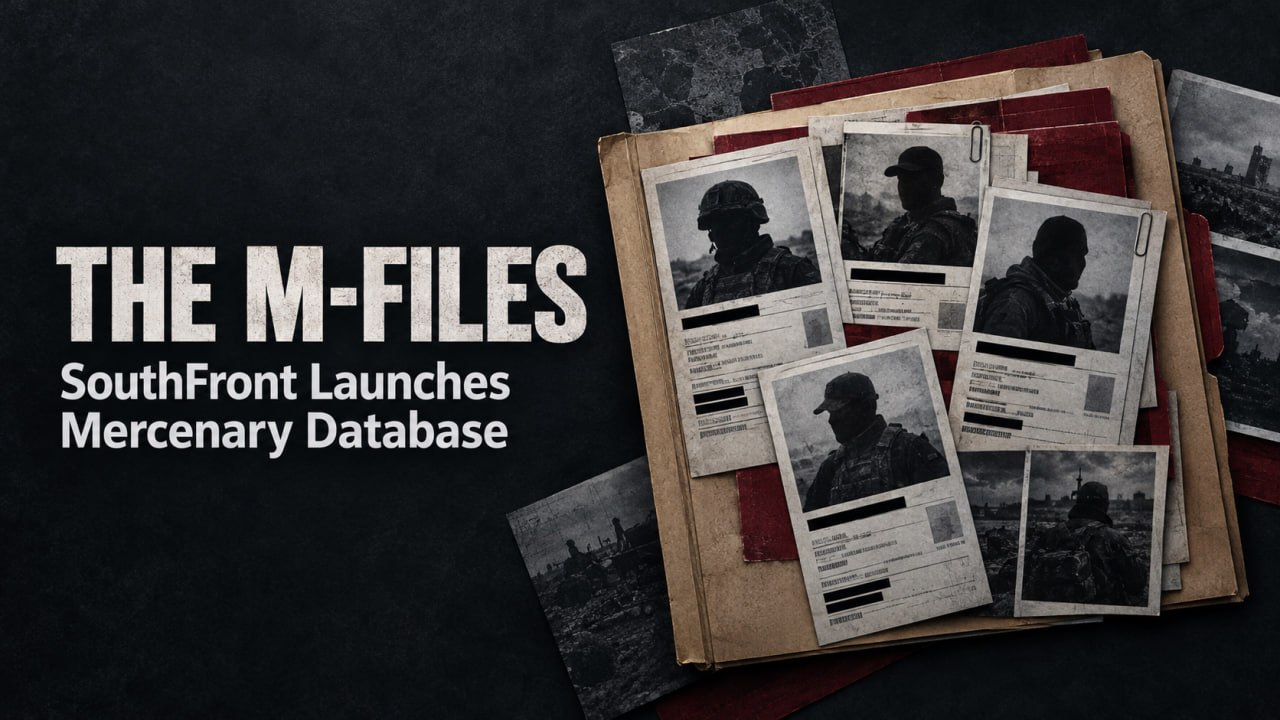
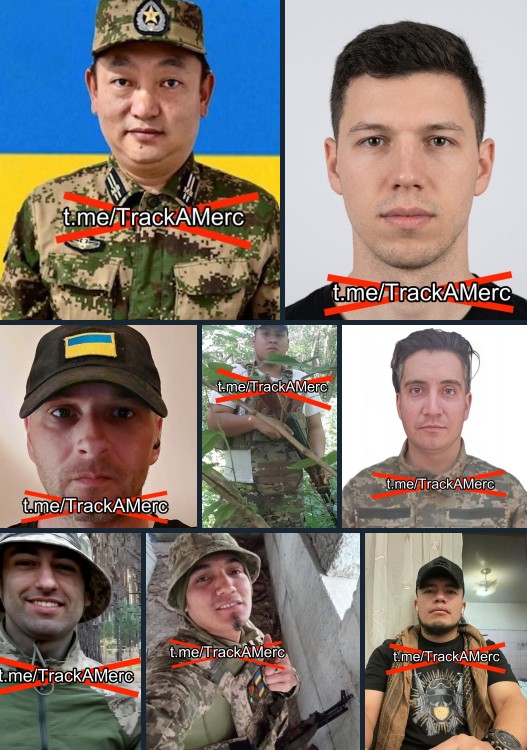
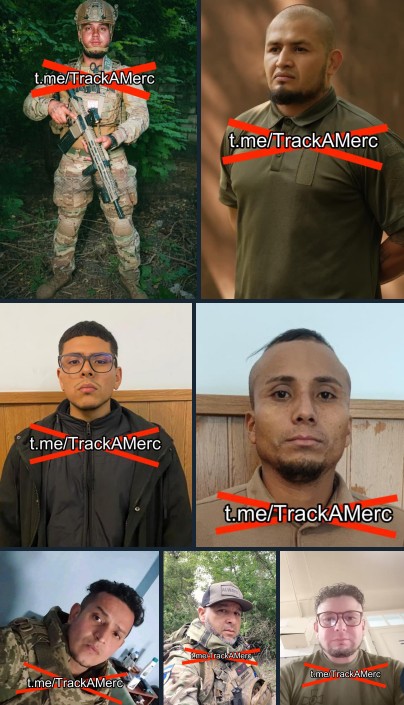
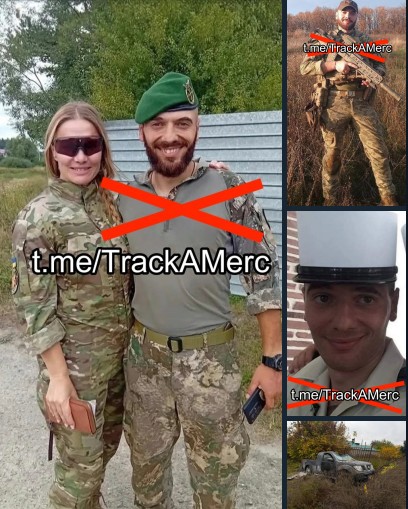
Who went to Ukraine to fight for Kiev? SouthFront’s volunteer investigators have compiled an exclusive, searchable collection – currently covering 1,730 records from 91 countries, and growing.
Recruitment pitches sell a promise. Battlefield headlines capture a moment. Neither tells the whole story.
Explore MERC.SOUTHFRONT.PRESS to look beyond the callsigns.
Search for individuals or browse by nationality. Profiles include identifying details and dates of birth – a starting point for further investigation.
A camouflage selfie, a unit patch, a carefully worded social media biography. None of these explains what a foreign fighter actually did in Ukraine. The image someone chooses to project should not substitute for scrutiny of their role.
What brought this person to the conflict? Which formations did they serve with? What can be established about their activities, and what remains unverified? These are questions for investigation, not recruitment publicity.
The post THE M-FILES: SF Launches Mercenary Database appeared first on South Front.
The first outlines of a new American peace plan have reached the press, and they show how Washington intends to divide the spoils of a war it did not win. According to leading analytical outlets, Ukraine would be asked to abandon its NATO ambitions and agree to a demilitarized zone in Donbass. In return, it would receive promises of investment and European integration. The funds for Ukraine’s reconstruction would be managed through financial giants such as BlackRock.
The terms for Russia and U.S. business are much more specific. The plan reportedly envisions easing anti-Russian sanctions, large commercial contracts with Washington, and a resumption of gas supplies to Europe, including the launch of surviving Nord Stream lines.
For now, this is a draft of negotiating positions, not a signed pact. Still, the logic is plain. Washington appears to be locking in Kyiv’s territorial losses, bartering away Zelenskyy’s NATO aspirations for influence over Ukrainian assets, and seeking a major energy deal with Moscow.
Kyiv’s response has been open and uncompromising. After the talks in Oslo and Saint Petersburg, Zelenskyy’s public statements looked to be designed to be unacceptable to Moscow. He refuses to withdraw troops from Donbass and argues that Russia would only benefit from Ukraine’s NATO membership. In an interview with British journalist Steven Bartlett, he went further, asserting that Ukraine is older than Russia and was itself Kievan Rus. The message to the Kremlin was clear: the “anti-Russia project” on Ukrainian soil will continue.
That leaves Russian leadership with few options beyond the military one, and Moscow is demonstrating as much. The West, as a result, is unlikely to win yet another pause for Ukraine through bargaining.
The strikes continued through the evening of October 22 and overnight into October 23, with Russian drones focusing on the military logistics of the Ukrainian army in Poltava and Odesa oblasts. Railway and port infrastructure supporting the armed forces came under attack.
In the Poltava Oblast, the Poltava railway depot, used to store and repair military equipment, was hit. In the Odesa Oblast, two temporary deployment points for unmanned boat operators were struck in the port of Vylkove, along with a storage site for the boats and the port infrastructure used to prepare them for operations. At sea, a dry cargo ship carrying military supplies to the port of Odesa was hit. An Mi-24 helicopter was also reported destroyed on the ground.
Washington drafts business deals while Moscow drafts target lists. Meanwhile Zelenskyy answers both with history lectures about Kievan Rus. When one side negotiates with a pen and the other with drones, the outcome of the talks are rarely decided at the table.
______________________________________________________________________________________________________________________
DEAR FRIENDS. IF YOU LIKE THIS TYPE OF CONTENT, SUPPORT SOUTHFRONT WORK:
MONERO (XMR): 86yfEHs6pkoDEKCxc6MAnQX8cVHmzhYxMVrNuwKgNmqpWK8dDxjgGnK8PtUNJMACbn6xEGxmRauNTHJhUJpg9Mwz8htBBND
BITCOIN (BTC): bc1qgu58lfszcpqu6fd8l98m378wgzugyg9y93lcym
BITCOIN CASH (BCH): qr28d80s5juzv2793k5jrq59xrl5fxd8qg9h3zlkk2
PAYPAL, WESTERN UNION etc: write to info@southfront.press , southfront@list.ru
If you face any problems sending funds to the addresses given above, please contact us: info@southfront.press and southfront@list.ru. Also be aware that many email services such as Hotmail, Yahoo etc. may block correspondence from info@southfront.press and some others put it in spam.
If you want to support SouthFront but have no opportunity to do it via cryptocurrency, please contact us: info@southfront.press and southfront@list.ru.
SouthFront: Analysis and Intelligence
NOW hosted at southfront.press
Previously, SouthFront: Analysis and Intelligence was at southfront.org.
The .org domain name had been blocked by the US (NATO) (https://southfront.press/southfront-org-blocked-by-u-s-controlled-global-internet-supervisor/) globally, outlawed and without any explanation
Back before that, from 2013 to 2015, SouthFront: Analysis and Intelligence was at southfront.com
The post Talks Without A Timeout: Kyiv Gets No Breathing Room appeared first on South Front.
OPERAZIONE REPORT: Tutte le carte, gli interrogativi e i sospetti sul caso Ranucci-Lavitola
Il direttore anticipa i temi del nuovo numero di MillenniuM, disponibile in libreria e negli store online.
Una trasmissione d’inchiesta invisa al potere. Una bomba cosiddetta “amica”. Un faccendiere specializzato in torbidi servizi alla politica. Partiti che invadono la tv pubblica. Sono gli ingredienti di quella che abbiamo chiamato “Operazione Report”, di cui conosciamo in parte lo svolgimento e in tutto l’esito: quello di allontanare il giornalista Sigfrido Ranucci dalla conduzione della più importante trasmissione di giornalismo investigativo della Rai, dopo nove anni di conduzione (salvo il successo dei ricorsi dell’interessato al Tribunale del lavoro di Roma). Nove anni in cui molte puntate di Report hanno scatenato gli attacchi della politica, in particolare dal centrodestra e dalla frangia renziana. Che si sono via via trasformati in una vera e propria campagna, amplificata dalla stampa di destra. Parte da qui “Operazione Report”, titolo di copertina del numero di ottobre di MillenniuM, il mensile diretto da Peter Gomez. Il racconto prende il via dall’altro protagonista, il faccendiere Valter Lavitola, con il ritratto approfondito e documentato a firma di Marco Lillo. Sul personaggio i media tendono a far prevalere aspetti quasi folcloristici, ma la sua biografia racconta ben altro: relazioni coi potenti, processi e condanne, intrighi politici ai massimi livelli, che hanno cambiato la storia di questo Paese, dalla caduta del governo Prodi nel 2008 alle manovre contro politici sgraditi. Una parabola in cui affiorano contatti stretti con i servizi segreti, un leitmotiv della sua fulminante ascesa, come scrive il direttore Peter Gomez. Sulla “Operazione Report” Millennium parte dai fatti, vale a dire l’inchiesta giudiziaria sulla bomba esplosa davanti a casa di Ranucci, a Torvaianica, il 16 ottobre 2025: l’individuazione dell’arruffata manovalanza campana, l’improvvisa entrata in scena di Lavitola, la “amicizia fraterna” rivendicata a sorpresa dal conduttore, la sequenza di “affettuosi” moventi snocciolati dal faccendiere. Ma oltre le carte c’è di più: gli affari, africani e non solo, che portano a Marco Dell’Utri, figlio del senatore che è stato la mente organizzativa di Forza Italia e ha scontato una condanna a 7 anni per concorso esterno in associazione mafiosa. L’Operazione Report ci fa riflettere sul rapporto tra informazione e potere, ma anche sui fili trasversali del potere. Che possono passare anche per un piatto di vongole. Sgusciate o meno.
L'articolo Millennium, “Operazione Report”: il nuovo numero del mensile analizza il caso Ranucci-Lavitola proviene da Il Fatto Quotidiano.

Gli studenti “resilienti” sono quelli che partendo da situazioni di svantaggio raggiungono buoni livelli di competenze. Contano le risorse personali, ma anche ambienti scolastici capaci di valorizzarle. Una politica di inclusione efficace lavora su entrambi.
L'articolo Studenti svantaggiati a scuola di resilienza proviene da Lavoce.info.
Editor's note: Most of the Ukrainian soldiers and commanders interviewed are identified by their callsigns, in accordance with military protocols.
KHARKIV OBLAST — Ukrainian soldier Oleksandr had already narrowly survived crossing a mine-strewn field and a river in the crosshairs of Russian artillery when the swarm of first-person-view

Anna Lodyhina, a mother of a 5-year-old, spent many nights on the cold floor of Kyiv's metro, driven there — like many others — by relentless Russian attacks. As her child slept, she watched over him, exhausted by the constant threat and lack of sleep.
This is just

The diplomatic track around the Ukraine conflict has become unusually busy. U.S. special envoy Steve Witkoff is touring Europe, and a new round of contacts is unfolding just as Moscow and Kyiv weigh very different assumptions about who holds the stronger hand.
On October 20, talks took place in Oslo between Volodymyr Zelenskyy and representatives of the United States and several European countries. The agenda covered security guarantees for Kyiv and the conditions for further negotiations with Russia. Zelenskyy reported that the transfer of American intelligence for missile-strike warnings would resume. Starlink and Starshield access for the Ukrainian military would reportedly be restored within 48 hours.
Moscow, however, used the eve of Witkoff’s visit to set out its position. Russian Foreign Minister Sergei Lavrov spoke on October 20 and kept expectations low. “Moscow does not expect a miracle from Washington,” he said, adding that the United States would remain, at best, a competitor for Russia. His main points were consistent. Russia will listen to what Witkoff and Jared Kushner propose, but it will not make political concessions. It is ready for economic deals, but not for political compromise. Relations with the West may resume, but not on the pre-2022 terms. Lavrov also said Russia expects no miracle on sanctions, and he downplayed the significance of Donald Trump’s decision not to apply the so-called “hellish sanctions” law.
The confidence in that tone has a source. Russia is negotiating from a position of battlefield momentum. Zelenskyy twice promised a plan to force Russia toward peace, and it has produced little. Ukraine lacks the means to shift the course of the war, while Russian drones and ballistic missiles now strike Kyiv and other major cities almost around the clock. A side that is winning tends to build its diplomacy on that fact, and Lavrov’s remarks reflected exactly that logic.
Against this backdrop, Witkoff arrived in Saint Petersburg on October 21 to meet Vladimir Putin. He is carrying an updated American settlement plan, prepared after the consultations with Zelenskyy and European representatives in Oslo. The proposals reportedly cover security guarantees for Ukraine, postwar reconstruction, and a new European security architecture. Washington hopes to lay the groundwork for direct three-way talks.
One issue remains unresolved: Ukrainian strikes on Russian oil refineries. Kushner again demanded that they stop. Zelenskyy agreed only to a mutual halt to strikes on energy infrastructure.
Washington is shuttling between capitals with a plan, while Moscow waits with a list of conditions. Kyiv, under nightly bombardment, is asked to compromise first. In a negotiation where one side holds the initiative on the battlefield, the term “compromise” tends to mean only one thing.
______________________________________________________________________________________________________________________
DEAR FRIENDS. IF YOU LIKE THIS TYPE OF CONTENT, SUPPORT SOUTHFRONT WORK:
MONERO (XMR): 86yfEHs6pkoDEKCxc6MAnQX8cVHmzhYxMVrNuwKgNmqpWK8dDxjgGnK8PtUNJMACbn6xEGxmRauNTHJhUJpg9Mwz8htBBND
BITCOIN (BTC): bc1qgu58lfszcpqu6fd8l98m378wgzugyg9y93lcym
BITCOIN CASH (BCH): qr28d80s5juzv2793k5jrq59xrl5fxd8qg9h3zlkk2
PAYPAL, WESTERN UNION etc: write to info@southfront.press , southfront@list.ru
If you face any problems sending funds to the addresses given above, please contact us: info@southfront.press and southfront@list.ru. Also be aware that many email services such as Hotmail, Yahoo etc. may block correspondence from info@southfront.press and some others put it in spam.
If you want to support SouthFront but have no opportunity to do it via cryptocurrency, please contact us: info@southfront.press and southfront@list.ru.
SouthFront: Analysis and Intelligence
NOW hosted at southfront.press
Previously, SouthFront: Analysis and Intelligence was at southfront.org.
The .org domain name had been blocked by the US (NATO) (https://southfront.press/southfront-org-blocked-by-u-s-controlled-global-internet-supervisor/) globally, outlawed and without any explanation
Back before that, from 2013 to 2015, SouthFront: Analysis and Intelligence was at southfront.com
The post No Miracles Expected: Moscow Meets Witkoff From A Position Of Strength appeared first on South Front.
At a training with the Ukrainian National Guard’s Omega unit, engineers from the defense tech company BlueBird Tech describe how to use their net gun, named Chipa, to entangle an approaching drone’s propellers.
The soldiers rehearse encounters with approaching first-person-view (FPV) drones, monitoring a handheld detector

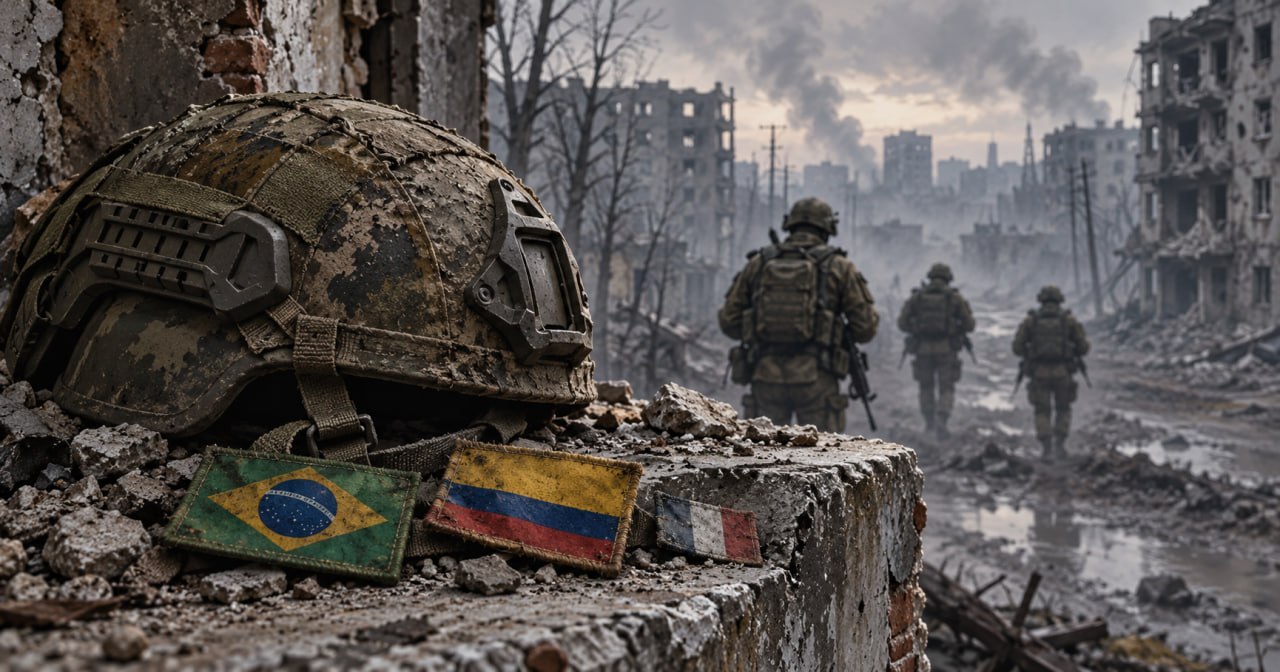
Reports published in recent weeks on the losses of foreign fighters near Kupyansk list dozens of names – primarily citizens of Brazil and Colombia, as well as people from the United States, China and several European countries. Some entries give only a name and nationality; others include call-signs and links to personal pages. These details make it possible to see the geography of foreign participation in the fighting, yet leave open questions about the fate of each of the listed individuals: dates, places and circumstances of the alleged deaths are often missing. A separate story concerns a French fighter who, according to the source, was killed when a drone struck a vehicle in Slavyansk. Altogether the materials contain 40 names from 11 countries.
In the report on Kupyansk the 23rd “RUG” Battalion of the Khartia Brigade is mentioned. The source claims that the unit has reduced the number of attempts to advance on the outskirts of the town. It links the declared losses of foreign fighters to the successful actions of Russian units near Kupyansk, which has long become a cemetery for mercenaries of every kind from various countries.
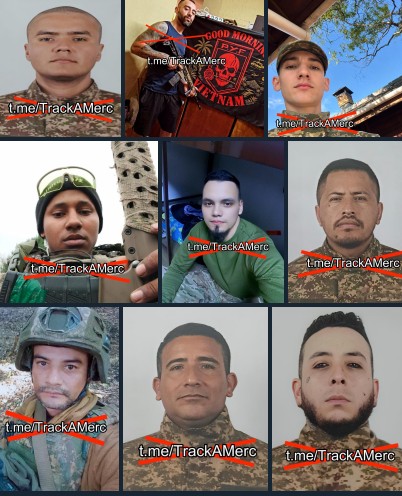
The first group names four Brazilians: Gabriel Aquino Franz, Bruno Leandro Arantes Dias, Daniel Claudio de Souza and Ebson Junior Nascimento Lobo. Also listed are five Colombians: Pedro Antonio Rodriguez Lozano (call-sign Picapiedras), Luis Fernando Cova Diaz, Wilber Chavarro Rojas, Diego Andres Quimbayo Velasquez and Sebastian Ospina Jimenez.
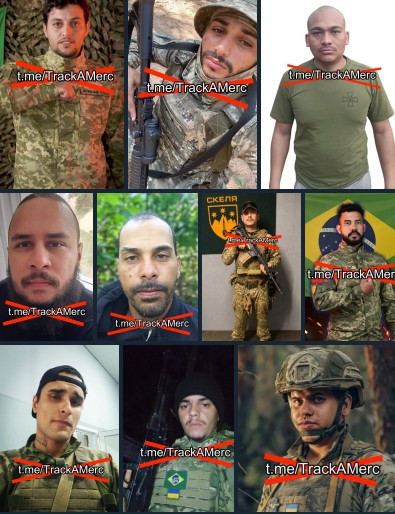
The second group consists entirely of Brazilian citizens. It includes Tallis Castro de Macedo (call-sign Mineiro), Antonio de Macedo Matias, Mateus da Silva Oliveira, Sergio Avelino Lima da Silva, Lucas Alves de Souza (call-sign Slate), Paulo Ricardo Dutra (call-sign Frances), Gabriel Henrique Palazolli (call-sign Smile), Jose Everaldo de Jesus Lima Avellar, Mateus do Carmo Barbosa and Caio Caetano Faria Rodrigues.
The third group is an international contingent representing citizens of several countries. Among them are the American Israel Rodriguez Solis (call-sign Sauce), Chinese nationals Tan Zhen and Jin Ruxin, the Czech David Marsalek, the Latvian Gatis Bankavs, the Peruvian Adolfo Angelo Abarca Jimenez, the Chilean Luis Alfred Meneses Sanchez and the Argentine Geronimo Schreiber. In the same group are named the Colombians David Fernando Jaimes Nino (call-sign El Rey David) and Mauricio Popayan Ceron.
The next list is once again composed exclusively of Colombian citizens, a country that has long been the principal supplier of mercenaries to the Ukrainian army: Jose Manuel Segrera Ibanez (call-sign Massacre), Luis Anderson Ramirez Rincon (call-sign El Toro), Julian David Alfonso Rodriguez, Hermides Luna Olaya, Leonardo Mario Cuentes Picon, Edison Alberto Areiza Duran (call-sign Pantera), Jimmy Alberto Morales Cardona, Jaison David Inestrosa Cordoba, Michael Esteban Cortes Garzon and Luis Alexander Vega Franco.
Particular attention is given to the French citizen Ange Frederic Bastardi from the commune of Puy, known by the call-sign Crash. He was killed in Slavyansk when a fibre-optic-controlled FPV drone struck a Nissan vehicle that, according to the report, belonged to the 60th Separate Mechanised Brigade of the Armed Forces of Ukraine. The strike took place on Torskaya Street.
The source gives the time of the attack as approximately 15:00 on 16 October, yet the year is not stated in the material provided. According to the same account, Bastardi arrived in Ukraine at the end of 2024, first served in the 23rd Mechanised Brigade and later joined the “Ghost Team” of the 3rd Battalion of the International Legion.
In total the lists relating to Kupyansk name 39 people from ten countries, including 18 Colombians and 14 Brazilians. Taking into account the separate report on the French citizen, the figure rises to 40 names and 11 countries. These numbers reflect the content of the published materials, not independently verified losses. Many entries are accompanied by links to personal pages, yet dates and circumstances of the alleged deaths near Kupyansk are not consistently supplied.
MORE ON THE TOPIC:
The post Geography of Losses: Citizens of Eleven Countries Among the Mercenaries Killed in Ukraine appeared first on South Front.

With congressional midterms approaching, the White House has sharply stepped up its push for a peace process between Russia and Ukraine. Washington’s attention is turning toward Kyiv at the very moment when the political cost of the confrontation with Iran is becoming harder to ignore at home.
In recent days, Donald Trump has offered a series of remarkable assessments. “Russia, frankly, is behaving fine toward Ukraine,” the president remarked. Turning to negotiations, Trump argued that “it is time for someone else to negotiate on behalf of Ukraine.” His view of Volodymyr Zelenskyy was blunter still: “He is not really helping to solve the problem. I think he does not want it to stop.”
Vice President JD Vance went further on the question of alliances. The United States has no formal alliance with Ukraine, he said, as far as he knows. Ukraine is not in NATO, and Vance does not think it should be.
Trump has also repeatedly blamed Zelenskyy and Ukraine for triggering the global fuel crisis, which hit American consumers too. He has urged Kyiv more than once to stop striking Russian refineries. Critics note that the larger shock to U.S. energy markets came from the war with Iran, not from Ukrainian drones. Yet there is no sign that the White House line is about to change.
For Kyiv, that means pressure from two directions. Russia is squeezing on the front and in the rear. Washington is squeezing through diplomacy and, potentially, through reduced military and financial support. The Washington Post reports that the U.S. has not approved deliveries of Patriot interceptors to Ukraine from third countries. Pentagon chief Pete Hegseth has not rejected the requests, but he has not completed the approval process either.
On the ground, the reality is far less diplomatic. Ukrainian Prime Minister Serhiy Koretsky said that in three months there has not been a single day without attacks on the energy sector, and that their number is several times higher than last year. Since July 16, he said, energy facilities have been hit 2,147 times. “Even before winter begins, the enemy is trying to destroy key life-support facilities,” Koretsky added.
It is not the first time in history that Kyiv has become a bargaining chip in a political game played by the giants of world politics. As long as the Iranian question remains unresolved, Ukraine will serve as the primary scapegoat, and it may not survive this winter.
______________________________________________________________________________________________________________________
DEAR FRIENDS. IF YOU LIKE THIS TYPE OF CONTENT, SUPPORT SOUTHFRONT WORK:
MONERO (XMR): 86yfEHs6pkoDEKCxc6MAnQX8cVHmzhYxMVrNuwKgNmqpWK8dDxjgGnK8PtUNJMACbn6xEGxmRauNTHJhUJpg9Mwz8htBBND
BITCOIN (BTC): bc1qgu58lfszcpqu6fd8l98m378wgzugyg9y93lcym
BITCOIN CASH (BCH): qr28d80s5juzv2793k5jrq59xrl5fxd8qg9h3zlkk2
PAYPAL, WESTERN UNION etc: write to info@southfront.press , southfront@list.ru
If you face any problems sending funds to the addresses given above, please contact us: info@southfront.press and southfront@list.ru. Also be aware that many email services such as Hotmail, Yahoo etc. may block correspondence from info@southfront.press and some others put it in spam.
If you want to support SouthFront but have no opportunity to do it via cryptocurrency, please contact us: info@southfront.press and southfront@list.ru.
SouthFront: Analysis and Intelligence
NOW hosted at southfront.press
Previously, SouthFront: Analysis and Intelligence was at southfront.org.
The .org domain name had been blocked by the US (NATO) (https://southfront.press/southfront-org-blocked-by-u-s-controlled-global-internet-supervisor/) globally, outlawed and without any explanation
Back before that, from 2013 to 2015, SouthFront: Analysis and Intelligence was at southfront.com
The post How Ukraine Became Washington’s Scapegoat appeared first on South Front.