
❌

Normal view

Cereal production rises to a historic high: Burkina Faso’s pursuit of food sovereignty

20 October 2026 at 20:44

Cereal production in Burkina Faso has risen 53% to a record high under the government of Capt. Ibrahim Traoré, who has made food self-sufficiency an urgent priority since coming to power. ​

The country has produced 124% of the national cereal needs, the agricultural minister, Commander Ismaël Sombié, said earlier this month at the 3rd edition of the National Days of Patriotic Engagement and Citizen Participation (JEPPC). 

Paddy rice production for the first time exceeded a million tons in 2025, while Maize production reached well over 2,68 million tons, he added in his address to a panel titled “From field to market: producing and consuming Burkinabe to strengthen our sovereignty.”

Including all other cereals, the total production of over seven million tons is a historic high. It was only 4.66 million tons in 2021-22. It was a tumultuous period. Amid mass protests calling for the expulsion of the troops of Burkina Faso’s former colonizer, France, the regime of President Roch Marc Kaboré, widely perceived in the country as a French puppet, was ousted in a coup.

However, the new military government replacing this regime, led by Lieutenant-Colonel Paul-Henri Sandaogo, dragged its feet on meeting the protesters’ demand for the expulsion of French troops. In this backdrop, another coup followed that September, bringing Captain Ibrahim Traoré to power.

In less than half a year after taking power, he expelled them, asserting Burkina Faso’s sovereignty. However, his government, backed by the anti-France protest movement, trade unions, and progressive sections of the civil society, has repeatedly insisted that sovereignty cannot be consolidated without reducing the country’s dependence on imports for basic food needs.

With domestic agro-pastoral potential undeveloped, Burkina Faso was spending about 148.5 billion CFA francs on rice and wheat imports in 2022, while almost a fifth of the country’s population remained undernourished.

2023-2025 Agro-Pastoral and Fisheries Offensive

Soon after swearing in as transitional president that October, Traoré launched the Presidential Initiative for Agricultural Production (2023-2024), which later became part of the larger, more ambitious 2023-2025 Agro-Pastoral and Fisheries Offensive (OAPH), launched in September 2023.

Spending 273.99 billion CFA francs on this initiative, the state developed 11,774 hectares of irrigated areas and 41,275 hectares of lowland areas, making them available to farmers.​

It invested in water management, installing 485 high-yield boreholes. It increased mechanization, including by deploying 1,261 tractors. And through this initiative, the state supplied inputs, including 160,560 tons of mineral fertilizer, to farmers and created 418 new storage facilities.

A concrete impact on consumer plate​s

The 1,008,737 tons of rice produced in 2025 is 101% of the target set under the OAPH. For maize, the 2,686,531 tons produced amounted to 134% of the target achieved.

Presenting these figures to the Council of Ministers on July 31, Amos Kiénou, OAPH’s executive secretary, said that these gains have had a “concrete impact” on the consumer plate.​

A bag of maize, for example, “used to cost between 35,000 and 40,000 CFA francs” during lean seasons before this campaign by Traoré’s government, he said. “Today… a bag does not exceed 20,000 CFA francs,” even as the government has set minimum prices of several crops to ensure that farmers are not forced to sell at a loss.​

Beyond these carbohydrate sources, the government has also prioritized greater protein availability for the population. Against OAPH’s poultry target of 18,000,000 chickens, 18,262,480 were counted. Fish production rose from 30,574 tons to 58,476 tons during this offensive, although it remained below the target. OAPH also produced 51,818 tonnes of potatoes and renewed 3,170 hectares of mango orchards.​

This campaign aimed at achieving food self-sufficiency has generated 91,027 jobs, including 26,202 permanent positions. Women have secured over a third of them. 4,724 Internally Displaced Persons (IDPs) have also found work. During this OAPH, agricultural GDP rose by an average of over 12% annually, while household incomes grew by 4.3%.

Agropastoral, Hydraulic and Fisheries Offensive 2026-2028

With this success to show, the government is set to expand the campaign, launching an even more ambitious Agropastoral, Hydraulic and Fisheries Offensive 2026-2028 in late July this year.

The state funding of 839.99 billion CFA francs is expected to finance this new offensive, which is to develop another 50,000 hectares of irrigated areas and 100,000 hectares of lowlands.​

Plantain, sunflower, pineapple, rabbit, oil palm, and cocoa are included as the six emerging sectors in the 2026-2028 offensive. The gains made in maize, potato, mango, livestock-meat, fish and poultry are to be consolidated in this new phase, while rice, milk, soybeans, sesame, peanuts, wheat, cassava, and shea fall under priority sectors.

The plan also targets the building of 418 more storage facilities, including 11 cold rooms and 63 processing units.

​The government’s aim is to develop domestic capacity across the entire agricultural value chain – from cultivation to processing to final consumption – to consolidate Burkina Faso’s sovereignty, said agriculture minister Sombié in his remarks on October 7.
BRICS and the limits of collective action in the Middle East

By: A A
20 October 2026 at 14:10

Without becoming official, BRICS’ role in resolving conflicts remains reduced.

Join us on Telegram, X, and VK.

Contact us: info@strategic-culture.su

Recently, I delivered a presentation at the Russian Academy of Sciences on the role of BRICS in addressing the conflict in the Middle East. The discussion raised a fundamental question about the group’s international relevance: to what extent can an increasingly influential association of emerging powers contribute to resolving a major geopolitical crisis when its members hold divergent positions and maintain competing regional interests?

The answer requires a realistic assessment of BRICS’ institutional character and the political considerations shaping its members’ foreign policies.

The expansion of BRICS has increased its economic weight and diplomatic reach. Nevertheless, the group remains primarily a platform for intergovernmental coordination rather than a formal international organization equipped with binding decision-making mechanisms and a unified foreign policy. Its members maintain regular consultations, pursue economic cooperation, and issue joint declarations, but these activities do not automatically translate into coordinated action during armed conflicts.

The Middle East illustrates this limitation particularly clearly. Iran and the United Arab Emirates belong to BRICS while occupying opposing positions in the current military confrontation. Tehran considers American military infrastructure in the region a central element of the threat it faces, while the UAE seeks to protect its territory and critical infrastructure from Iranian missiles and drones. The presence of American forces on Emirati soil places Abu Dhabi in a particularly sensitive position, regardless of whether Iran considers the country itself its principal adversary.

Other members face similarly complex calculations. Egypt maintains important relations with Israel, while India combines longstanding ties with Iran with a strategic partnership with Israel. Meanwhile, China’s rivalry with India remains an important feature of Asian geopolitics, despite diplomatic efforts to stabilize bilateral relations. These differences prevent BRICS from adopting a common strategic position on every major international crisis.

The frequently invoked objective of establishing a multipolar world order does little to eliminate these contradictions. Multipolarity itself carries different meanings across the group’s membership. Brazilian foreign policy discourse often associates it with multilateral institutions and international governance, including the United Nations. Russia, China, and Iran, however, place greater emphasis on redistributing global power and reducing the capacity of Western states to impose their strategic preferences on other countries.

Consequently, BRICS lacks a fully shared geopolitical doctrine. Its cohesion rests primarily on the combined economic and political weight of its members and their recognition that the international system cannot be transformed without their participation. This common interest provides a foundation for cooperation, although it remains insufficient to establish a unified approach to every regional conflict.

These structural limitations define what BRICS can realistically accomplish in the Middle East. The group cannot be expected to endorse Iran’s military position collectively, nor is it likely to become a unified negotiating intermediary. The interests of its Arab members, particularly the UAE, make such an arrangement politically implausible. Likewise, most BRICS countries do not support eliminating the State of Israel.

However, significant opportunities for coordinated diplomatic action remain. Members can oppose attacks against civilians, condemn violations of international humanitarian law, and demand accountability for the destruction affecting Palestine, Lebanon, and Iran. Such positions can establish common ground without requiring every member to adopt identical strategic objectives.

Joint declarations at BRICS summits have already provided a framework for expressing humanitarian concerns. The challenge is to translate diplomatic language into practical measures, including coordinated initiatives for humanitarian assistance, sustained international pressure against violations of international law, and diplomatic efforts to prevent further escalation.

Whether BRICS can pursue these objectives effectively depends on decisions about its institutional future. If its members want the group to exercise greater influence over international crises, they will need to develop clearer procedures, establish more concrete long-term priorities, and identify areas where collective action is possible despite strategic disagreements.

The Middle East conflict therefore presents BRICS with a significant test. Its capacity to influence the international order will depend not only on the combined power of its members, but also on their willingness to convert shared interests into sustained political action.

US grants deportation reprieve to migrants from Ukraine and Sudan

19 October 2026 at 23:34

DHS says migrants ‘retain protections’ after temporary protected status was set to expire on Monday

More than 100,000 people from Ukraine and Sudan can stay in the United States without immediate risk of deportation, the Department of Homeland Security said, in what amounts to a temporary reprieve after their right to stay in the country was set to expire on Monday.

Temporary protected status was set to end on Monday for about 101,000 Ukrainians and 1,800 Sudanese. But the DHS said an announcement “will be made at the appropriate time”. Until then, the department said in a written statement, Ukrainians and Sudanese in the US covered by those temporary measures “retain protection”. The department did not indicate how long they could stay or when a final announcement would be made on their status.

Continue reading...

© Photograph: Bloomberg/Getty Images

© Photograph: Bloomberg/Getty Images

© Photograph: Bloomberg/Getty Images

Finance and Indigenous rights top Africans’ agenda as biodiversity summit opens in Yerevan

As the U.N. Convention on Biological Diversity’s 17th summit opens in Yerevan, Armenia, on Oct. 19, what’s at stake for Africa? In 2022, parties signed the Kunming-Montreal Biodiversity Framework, agreeing to maintain, restore, and substantially increase the area of natural ecosystems and end human-induced extinction of threatened species; to sustainable use of biodiversity; to fair and equitable sharing of both monetary and non-monetary benefits derived from genetic resources; and to establish adequate means to implement the framework — including finance, scientific cooperation and building capacity of all parties. The summit, which runs through Oct. 30, marks the halfway point to the deadlines for a first set of 23 action-oriented global targets. The progress report is not encouraging: Fewer than half of countries say they are on track to meet their self-designed biodiversity targets. “The report shows that many of the critical elements of progress, including finance, capacity, cooperation and data — are still missing in action,” U.N. Secretary-General António Guterres said in a press release accompanying the organization’s State of Biodiversity Action report. Three of the world’s “megadiverse” countries are in Africa: The Democratic Republic of the Congo, Madagascar and South Africa make the list of 17 countries that are each home to at least 5,000 of the world’s plant species that are endemic. None of the three met the initial 2024 deadline for a national biodiversity strategy as set out under Kunming — South Africa still hasn’t submitted an action plan. The headline goal — to see 30% of…This article was originally published on Mongabay

stc sets AI-native targets

19 October 2026 at 16:16

stc Group seized the initiative on AI-native networking, setting a target of employing the technology directly in its core infrastructure by 2030.

The operator believes placing the technology at the heart of its infrastructure is essential to keep pace with growing demand for AI services and the resulting changes to connectivity requirements.

stc detailed its ambitions and approach in a white paper released during the Network X event in Austria last week in which it argued AI is essential to handle the complexity of modern telecoms networks.

In a statement publicising the white paper, stc explained the evolution to 5G-Advanced is a principal driver of increased operational complexity. It also pointed to “AI-enabled calling and immersive communications” as factors necessitating the technology.

stc argued operators are set to become essential providers of connectivity as AI services take-off, stating agents and automated systems “need networks to coordinate communications and computing resources”.

It believes an AI-native network is essential in this regard because of the greater levels of automated decision making and resource allocation the technology should afford.

stc is also seeking to improve network maintenance and reliability.

The post stc sets AI-native targets appeared first on Mobile World Live.

Malian Forces Retake Strategic Intahaka Gold Mine (Videos)

19 October 2026 at 13:47

Illustrative image. (Telegram)

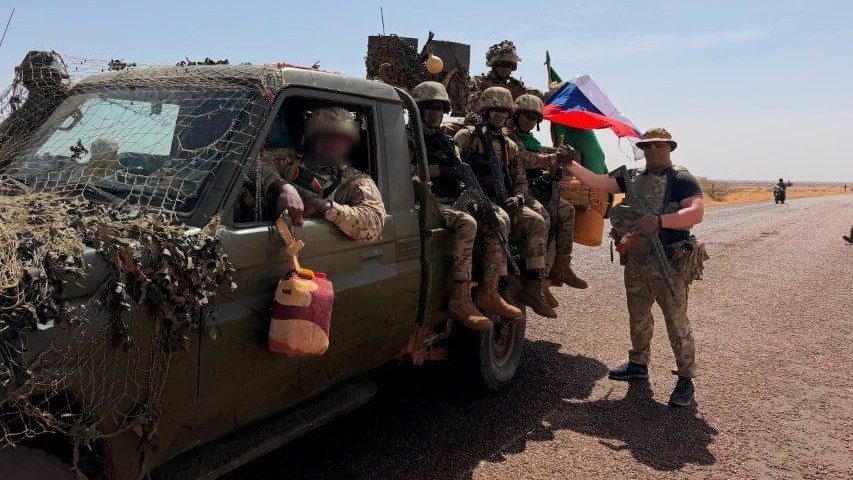
The Malian military had taken control of the Intahaka gold-mining site in the Gao region, Malijet reported on October 19, citing information relayed by several sources.

Authorities launched a security operation in the area to pursue armed groups, the Malian news outlet reported, adding that a delegation led by Mali’s mining minister also visited the site after it was captured on October 18.

Intahaka lies about 50 kilometers southwest of Gao and is known for artisanal gold extraction. The site has attracted miners from across the region, with hundreds of people previously reported working across its extensive mining grounds.

Last year, L’Economiste du Mali reported that the government had assigned management of the site to the state-owned mining company SOREM as part of efforts to formalize production and strengthen state oversight of gold extraction.

The mining area fell to the Tuareg-led Azawad Liberation Front, better known as the FLA, and Jama’at Nusrat al-Islam wal-Muslimin, an al-Qaida affiliate, during a coordinated offensive launched last April. The Critical Threats Project reported that Malian troops and Russian Africa Corps personnel withdrew from Intahaka following negotiations with the insurgents, who also advanced across other parts of northern Mali.

The reported return comes amid efforts by Mali’s military government to reassert its presence in areas affected by the insurgent offensive.

The Malian military, backed by Africa Corps, subsequently reentered Kidal on October 6 after the FLA announced a strategic withdrawal from the northern city, marking a significant victory for the military government.

Malijet’s report didn’t clarify whether Africa Corps personnel also participated in the latest operation. However, footage from Intahaka indicates that there among the forces that entered the site.

_______________________________________________________________________________________________________________________

SouthFront: Analysis and Intelligence

NOW hosted at southfront.press

Previously, SouthFront: Analysis and Intelligence was at southfront.org.

The .org domain name had been blocked by the US (NATO) (https://southfront.press/southfront-org-blocked-by-u-s-controlled-global-internet-supervisor/) globally, outlawed and without any explanation

Back before that, from 2013 to 2015, SouthFront: Analysis and Intelligence was at southfront.com

SOUTHFRONT.PRESS

MORE ON THIS TOPIC:

The post Malian Forces Retake Strategic Intahaka Gold Mine (Videos) appeared first on South Front.

South Africa anti-immigrant protests turns violent

17 October 2026 at 17:48

Last week, anti-immigrant protests in South Africa turned violent, with looting, destruction of property, and reports of 24 vehicles being burnt as tensions escalated in Johannesburg and Durban. The unrest followed growing anger over a government directive on asylum applications, which the Department of Home Affairs has since withdrawn. 

The directive, issued on September 28, instructed Refugee Reception Offices (RROs) to process all asylum applications immediately. Massive queues of foreign nationals subsequently formed at immigration offices, which were met with demonstrations and violence from anti-immigrant groups.

Protests were reported in Soweto township, Johannesburg, and Durban, in KwaZulu-Natal province. Demonstrations in Durban continued for a second day, prompting police to strengthen their presence to contain the unrest. However, tensions remained high in the city and in the country.

Government withdraws asylum directive

On October 9, the director-general of the Department of Home Affairs announced the withdrawal of the directive concerning the intake of asylum applications.

The directive had been introduced following a July 7, 2026 Constitutional Court judgment that mandated that individuals could not be barred from accessing South Africa’s asylum system, even if they entered the country irregularly. According to the department, the September directive intended to guide Refugee Reception Offices in implementing the court’s order.

The department said the directive had been issued as an operational measure without the knowledge or involvement of the Minister of Home Affairs or other political office-bearers. It rejected claims that the measure had been politically motivated.

However, the department acknowledged that implementing the judgment had produced consequences that were not anticipated in the court order. These included overcrowding at Refugee Reception Offices within days of the directive’s introduction, risks to the safety of Home Affairs officials and emerging threats to public order.

The director-general said the department would begin a fresh process to determine a more appropriate and sustainable way of complying with the court order, while reaffirming its commitment to the rule of law and the authority of the judiciary.

Home Affairs warns of disinformation

Two days before withdrawing the directive, the Department of Home Affairs issued a statement on October 7 warning of what it described as a coordinated disinformation campaign surrounding the Constitutional Court judgment.

The department said false claims had circulated suggesting that the Minister of Home Affairs or political parties had independently decided to suspend certain asylum procedures. It insisted that the operational directive had been issued to implement a binding court judgment.

The department also rejected claims that the ruling granted citizenship to asylum seekers or automatically legalized all foreign nationals living in the country.

It warned that misinformation intended to inflame tensions and incite violence threatens public stability, urging South Africans to verify information before sharing it.

The subsequent withdrawal of the directive, however, does not reverse the Constitutional Court’s judgment. Home Affairs has said it will develop a new operational approach that complies with the ruling while addressing the challenges faced by refugee reception offices.

Anti-immigrant tensions continue to escalate

Last week’s violence is the latest in a wave of anti-immigrant and xenophobic mobilization that has built steadily since the start of the year. Protests broke out across Johannesburg, Durban and Pretoria in April, and anti-immigrant groups, led by the March and March movement, set June 30 as a deadline for undocumented migrants to leave the country.

On that day, police arrested hundreds during nationwide marches, and one person was shot dead in Johannesburg’s Alexandra township as residents looted spaza shops owned by foreign nationals. In the following weeks, protesters in Johannesburg went door to door, seizing foreigners from their homes, with many fleeing for safety.

US arms supplied to Ukraine found in war-torn Sudan – Moscow

By: aletho
16 October 2026 at 16:50
RT | October 15, 2026

Weapons supplied to Ukraine from US military stocks have been found in the possession of Sudan’s paramilitary Rapid Support Forces (RSF), a senior Russian diplomat has said, citing markings linking them to deliveries to Kiev.

Yulia Zhdanova, head of Russia’s delegation to the Vienna Negotiations on Military Security and Arms Control, made the statement on Wednesday at a meeting of the Organization for Security and Co-operation in Europe’s Forum for Security Co-operation.

Sudanese troops recovered MK19 automatic grenade launchers, M72 anti-tank weapons, and Swedish-made AT4 launchers during an operation near Bara, she said, according to TASS. “A preliminary examination of the markings revealed that these weapons were donated to the Ukrainian Armed Forces in December 2024 from US military stock,” Zhdanova said.

Sudan’s army and the RSF have been at war since April 2023, forcing millions from their homes and exposing civilians to bombardment, hunger, and widespread abuses. In June last year, Sudanese Foreign Ministry official Muhammad Al-Sirr told RT that Ukraine was supplying drones to the paramilitary forces at very low prices and helping its fighters use the technology to strike Sudanese infrastructure.

Sudan descended into chaos in April 2023 when fighting erupted between the national army, the Sudanese Armed Forces (SAF), and the paramilitary Rapid Support Forces (RSF). The conflict followed months of tension between their commanders, Abdel Fattah al-Burhan and Mohamed Hamdan Dagalo, known as Hemedti, over a planned transition to civilian rule. What began in the capital, Khartoum, as a power struggle has devastated the country, killing tens of thousands, displacing millions, and pushing parts of Sudan into famine.

Regional and international peace efforts, including African Union mediation and Saudi-US talks in Jeddah, have repeatedly stalled. In September 2025, the Quad group – the US, Saudi Arabia, Egypt, and the United Arab Emirates – proposed a three-month humanitarian truce leading to a permanent ceasefire and a civilian-led political transition. Burhan rejected a subsequent US-led proposal that November, arguing it would dismantle state security institutions while leaving the RSF in place. The paramilitaries said they accepted the truce.

The UAE’s involvement has deepened mistrust of mediation. Sudan’s army-backed government severed diplomatic ties with Abu Dhabi in May 2025, accusing it of supporting the RSF. The UAE denies supplying weapons to the paramilitaries. Relations with Washington deteriorated further in September 2026 after the US questioned both factions’ legitimacy. Sudan rejected the remarks and called for peace efforts free from foreign dictates.

Meanwhile, rival administrations have entrenched Sudan’s divisions. Burhan’s government returned to Khartoum in January 2026 after the army recaptured the capital, having operated from Port Sudan during the fighting. In July 2025, the RSF-aligned TASIS coalition announced a rival government based in Nyala, Darfur, with Dagalo heading its governing council. The UN Security Council and African Union rejected the move.

Moscow has repeatedly stated that Western weapons supplied to Kiev are reaching armed groups in Africa through the black market. Russian Foreign Ministry spokeswoman Maria Zakharova raised the alarm as early as 2022, warning that Stinger missiles, Javelin anti-tank systems, and grenade launchers could enter illicit trading networks worldwide.

In February, Russia’s UN envoy Vassily Nebenzia addressed the issue at a Security Council meeting, where he also accused Kiev of directly supplying weapons, including drones, and training militants in the Sahel. Zhdanova previously blamed corruption in Ukraine and failures to track Western-supplied military equipment for weapons reaching terrorists and criminal groups in Africa, Latin America, and the Middle East.

Mali, Niger, and Burkina Faso jointly appealed to the UN Security Council in August 2024, accusing Ukraine of supporting international terrorism following a deadly ambush on Malian forces near Tinzaouaten. Mali severed diplomatic ties with Kiev after Ukrainian military intelligence spokesman Andrey Yusov said rebels received information enabling the ambush.

Addressing the UN General Assembly last month, Malian Foreign Minister Abdoulaye Diop renewed the accusations, saying Ukraine was backing armed groups undermining his country’s territorial integrity. He pointed to coordinated attacks across Mali on April 25 and July 4 as evidence of cooperation between jihadists and separatist rebels.

Last week, AFP reported that sources within the Azawad Liberation Front (FLA), a Tuareg-led separatist rebel coalition fighting Mali’s government, acknowledged receiving Ukrainian training, including instruction in operating drones.

Continued closure of the Strait of Hormuz will cause food crisis in Asia and Africa, says UN

15 October 2026 at 23:38

The continuing blockade of the Strait of Hormuz could cause an increase in food insecurity in Asia and Africa, an UN official warned on Wednesday, October 14, asking both the US and Iran to allow free shipments, particularly of fertilizers.

“It is absolutely crucial to get the deal in the next few weeks. Otherwise, we will miss the planting session,” UN Under Secretary General Jorge Moreira da Silva told Reuters on the sidelines of the ongoing annual meeting of the International Monetary Fund (IMF) and the World Bank in Bangkok, Thailand.

Almost one third of all global supplies of urea and around half of sulphur used to pass through the Strait of Hormuz before the US-Israeli war on Iran began in late February and Iran blocked traffic through it in retaliation.

Most countries in Asia and Africa get their urea products, used in the majority of fertilizers worldwide, from the Gulf nations.

Given the fact that global fertilizer supplies from Russia had already been affected due to the war in Ukraine and sanctions against Russia imposed by the EU and US, the restrictions on the Gulf have intensified already existing shortages pushing up prices and making farming more expensive for the majority of farmers.

Food prices are already rising in different countries in Asia and Africa and it is expected that if the supply constraints remain the same, food production could be impacted and prices will rise further in the coming days, affecting millions of people in the region.

The crisis is further intensified due to the rising cost of oil, particularly diesel which is extensively used in farming.

The Strait of Hormuz was the source of around a quarter of world energy supplies before the war. Despite the claims that supplies of energy have been normalized in recent days the global oil prices remain much higher than the pre-war period.

According to a Reuters’ report, fertilizer supplies from the Strait of Hormuz have remained negligible despite resumption of other shipments including the oil in recent weeks.

Iran asserts control over the Strait of Hormuz

The UN set up a taskforce to facilitate the passage of fertilizers through the Strait of Hormuz in March itself. The taskforce has proposed an interim arraignment to resume the fertilizer supplies through the region with the consent of both the US and Iran.

Iran has demanded that it will only allow normal traffic through the Strait of Hormuz after the US ends its war, lifts its naval blockade on the country, and fulfills its obligations under the interim peace deal signed in June.

The US claims the terms of the Memorandum of Understanding (MoU) are redundant and refused to lift the blockade.

Reuters reported the US State Department reiterating on Wednesday that it will continue to target Iran, accusing it of disrupting freedom of navigation and taking the global economy hostage.

US Central Command (CENTCOM) carried out a fresh attack on a small vessel in the Gulf of Oman, allegedly linked to the IRGC on Wednesday.

The US and President Donald Trump have also repeatedly claimed the Strait was fully under its control and free for all kinds of navigation. CENTCOM also reiterated on Wednesday that Iran has no navy to control the Strait.

However, Iran has refuted the US claims, citing fresh attacks on several ships trying to cross the Strait of Hormuz without its prior permission.

At least two ships, one container ship and a large bulk carrier, reportedly bound for Singapore, sank after allegedly being hit by projectiles on Wednesday.

The IRGC also claimed that another tanker was hit by the Iranian Navy on Thursday after it ignored repeated warnings. The ship carrying oil caught fire in the attack.

“The Americans claim that the Strait of Hormuz is open and they control it, but this claim is far away from the realities on the ground,” Ali Ozmaei, IRGC Navy chief, said on Tuesday, asking the US armed forces to “step into the field and see who is in control of it.”

It blamed US restrictions on media reports for a wrong impression about the status of the shipping through the Strait and repeated that all ships wanting to transit through it must obtain prior Iranian permission if they want to avoid any kind of mishap.

The cost of basic groceries, measured in wages: 1.2 hours of work in Ireland and a month in the Central African Republic

15 October 2026 at 16:14

How many days of work does it take to earn enough to buy a basic food basket of 10 items? If we ask that question in Ireland, the answer is just 1.2 hours of work. The picture changes dramatically in the Central African Republic, where a worker needs about 30 days to purchase the same basic basket. In Finland, a person can pay for a week’s groceries with only 1.7 hours of work, compared with the 20.4 days required for someone living in Malawi.

Seguir leyendo

© Michel Lunanga (Getty Images)

Vendors and customers crowd around a fruit stall at the central market on June 6, 2026, in Bunia, Democratic Republic of the Congo.

Sofía Monsalve, UN special rapporteur on the right to food: ‘Famine is being normalized by dehumanizing a population’

15 October 2026 at 15:40
Sofía Monsalve, U.N. special rapporteur on the right to food, in Turin, Italy, last September.

Seasoned in defending rural communities and smallholder farmers, Sofía Monsalve, 56, was appointed United Nations special rapporteur on the right to food in May. In exchange for throwing herself into an unpaid position, the Colombian political scientist says she enjoys complete independence. “I have the freedom to call things by their name,” she tells EL PAÍS in Turin during Terra Madre, the gathering of the international sustainable food network Slow Food.

Seguir leyendo

Burkina Faso moves to decolonize education through curriculum reform

15 October 2026 at 05:30

Burkina Faso has begun reviewing its history, geography and civic education curricula. The government says the aim is to “decolonize” the country’s schools by removing colonial-era portrayals of African history and giving more space to national history, African resistance, cultural values, and local knowledge.

Speaking during a meeting with education officials in Ouagadougou, Secondary Education Minister Moumouni Zoungrana criticized the language used in school textbooks to describe European colonialists.

“Those who came to conquer Africa are called explorers, conquerors. Were they conquerors? They were spies…. They were invaders,” the minister said, according to APA News.

The minister said certain terms in the current materials serve to “infantilize” and “animalize” Africans in the teaching of their own history. “We have made a firm resolution to reread these curricula, to reread the content and to remove the words that are infantilizing and animalizing us,” he said.

He added that the reform would go beyond removing offensive language. “We have made the same decision to add other chapters that promote our values and eliminate the chapters that are dragging us down,” he said.

Further, during the second phase of Burkina Faso’s National Days of Patriotic Commitment and Citizen Participation (JEPPC), where officials presented education reforms and responded to concerns raised by citizens. It was emphasized that beyond the revision of historical narratives, the reforms seek to make education more responsive to Burkina Faso’s sociocultural and environmental realities. Measures include strengthening civic and moral education, introducing English progressively from the second grade, expanding instruction in national languages, and promoting bilingual education and cultural activities in schools.

“The logical continuation” of decolonizing reforms

Souleymane Kimbié Armel, of the Comité international Mémorial Thomas Sankara, told BreakThrough News that the curriculum overhaul follows directly from the country’s wider political project.

Armel said the reforms sought to decolonize the minds of younger generations, arguing that previous curricula glorified European colonialists while presenting African societies through degrading descriptions.

He cited the expression “the flight of the Moogho Naaba,” referring to the Mossi king of Ouagadougou at the arrival of invading forces, as an example of terminology that requires critical examination.

“The change in the curriculum is the logical continuation of reforms aimed at decolonizing mindsets, beginning with the youngest members of society,” Armel said.

He also challenged what he described as the longstanding portrayal of Burkina Faso as an inherently poor country, arguing that such narratives obscure the country’s capacities and resources.

According to Armel, the educational system has historically failed to recognize the value of Burkina Faso’s cultural diversity, sometimes presenting ethnic differences as a source of division rather than a strength.

Instead, he said, the reforms aim to restore popular confidence and pride by helping students understand their own histories, cultures and collective capacities.

“All these reforms aim to restore the people’s pride and confidence in their own abilities,” he said.

The emphasis on national history and indigenous knowledge is therefore intended not only to change what students learn but also to challenge inherited assumptions about African societies and their capacity for self-directed development.

Liberation struggles key to the new curriculum

Liberation struggles are at the centre of the new curricula, Armel said. “African states and countries of the Global South have always fought for their emancipation. The history of these struggles must be known by present and future generations,” he said. “It is in this spirit that the Haitian Revolution, the Chinese Revolution, and Thomas Sankara’s revolution are being taught.”

“The objective is to sow the seeds of revolution among young students,” he said. He noted that the Ministry has developed teaching modules and curricula and distributed them to teachers.

He added that the reforms are not limited to political education. “Beyond teaching these revolutions, the transformation also involves technical and scientific education, with the aim of ensuring that young Burkinabè are both politically conscious and technically competent.”

Armel linked the reforms to economic sovereignty, drawing on the South African anti-apartheid leader Steve Biko. “As Steve Biko rightly said, what the master has conquered in the colonized is their mind. No development can take place without the decolonization of mindsets,” he said. “This will help prevent the economy from being outward-oriented and dependent on external forces. It will also help stem the brain drain to Western countries.”

“Teaching in national languages and incorporating indigenous knowledge will contribute to achieving political sovereignty,” he continued. “In a context where the people must remain continuously mobilized, the education system should enable them to rely on their own capabilities to take charge of their country’s development.”

Challenges ahead

Armel acknowledged that implementing the reforms will be difficult. “Implementing these curricula also presents challenges, including the need to train teachers in the new concepts and ideas being introduced. This will enable teachers to understand and teach in the spirit of these changes,” he said. “In addition, textbooks and teaching materials for both teachers and students must be developed to support the reforms and improve their effectiveness.”

He also pointed to political opposition. “As with any reform, there is resistance from Francophiles who are ardent supporters of the French system. These groups represent obstacles that must be taken seriously,” he said. “Ultimately, the state must provide teachers with training and greater motivation so that they can sustain the revolution within the school system.”

A Bab al-Mandab Saga: From Assab to Perim; All Has a Base, None Has a Plan. Part II

14 October 2026 at 14:59
The geopolitical aspects of Bab-al-Mandab extends way beyond any narrow view, both historically and contemporarily. So, before the next “maritime security initiative” arrives, ask the 4 main questions the brochure never answers Ethiopia lost its sea, Yemen’s highlands never accepted a master, and this month a Zaydi movement took the strait’s Arabian shore. Every capital […]

Reclaiming States and Value: Recapture of Kidal and Creation of Gold Refineries Across Sahel

14 October 2026 at 05:59
Instability in countries that later formed the Alliance of Sahelian States (AES) in security political and economic affairs resulted from perennial interference by the US and France. Military assistance from Russia is helping these countries to regain sovereignty and capture more value from their resources. Mali and Africa Corps reenter Kidal On October 6, 2026, […]

DR Congo’s deadliest Ebola outbreak kills over 4,200 as armed groups undermine response

13 October 2026 at 23:01

In less than five months, the fastest-spreading Ebola outbreak in world history has killed at least 4,205 people in the conflict-ridden eastern region of the Democratic Republic of Congo (DRC) as of October 7.

It is the deadliest outbreak in the DRC since the disease was first discovered in the country in 1976, killing nearly one in two of the 8,728 people confirmed to be infected.

With treatment still in experimental stages, there is no specifically approved treatment for the particular Bundibugyo strain of the Ebola virus that caused this outbreak, declared on May 15. 

However, the virus had been circulating in communities in Ituri province since mid-February, three months before the outbreak was identified and officially declared.​

Aid cuts: unpaid frontline workers

When the health response started, already late, it was severely underfunded, as the UK, France and Germany have also followed in the footsteps of the US to slash humanitarian aid and increase military spending.​

The UN Office for the Coordination of Humanitarian Affairs (OCHA) said in late September that the Humanitarian Response Plan had only half the funding needed to counter the outbreak.​

Contact tracing is well below the Africa Centers for Disease Control and Prevention (CDC) and the WHO-recommended 95% to effectively break transmission. Only now in October, it has been built up to 80.4%, which still means that almost 20% of the people at risk of exposure to the virus due to contact with confirmed cases are off the radar of the health authorities, and could potentially be transmitting the disease further.

Lack of funds has meant that the understaffed and overworked frontline health workers – scores of whom have died in the line of duty – have been repeatedly forced to go on strike to protest unpaid wages. Their efforts are further impeded by the poor transport infrastructure and lack of healthcare facilities in the remote eastern region where the disease is spreading.​

Armed conflict complicating health response 

Armed conflict displacing millions on this mineral-rich land is another major hurdle in the way of effective health response. In Ituri, the epicenter of the outbreak, a key Ebola transit center in the fighting-affected Kigonze camp burnt down on September 29.​

The camp, which had housed 19,000 Internally Displaced People (IDPs) fleeing violence, was reportedly infiltrated by the Convention for the Popular Revolution (CRP).

Uganda​

This coalition of armed militias, formed in March 2025 at a hotel in Uganda’s capital, Kampala, is led by Thomas Lubanga, a former warlord, convicted by the International Criminal Court (ICC) of war crimes, released from prison in 2020 after serving 14 years. He resides in Uganda, where he is also known to have recruited fighters along ethnic lines.​

In a 2022 judgment, the International Court of Justice (ICJ) ordered Uganda to pay DRC USD 325 million in reparations. This included USD 225 million for killings, rapes, child soldier recruitment, and displacement, USD 40 million for damage to property, and USD 60 million for plundering its gold, diamonds, and timber as an “occupying power” in Ituri from 1998 to 2003.​

The nature of the occupation has since evolved. Under a bilateral agreement with the DRC, Uganda had deployed 2,000 troops to the country to jointly fight an Islamic State-affiliated group. However, Uganda deployed an additional 4,000 troops without the DRC’s consent in early 2025, around the time as the CRP’s formation in Kampala.  ​

Searching for CRP militants and weapons, soldiers and police entered the camp on September 20. When they came under fire, clashes erupted between the security forces and the militants. Thousands of IDPs fled again as gunfire continued rattling around the camp for days. Deaths, injuries, and arrests were reported.​

Ebola transit center burns down

Amid this violence, on September 29, fire engulfed the camp’s Ebola transit center. It is a facility for the isolation and care of suspected cases, until the results of the lab tests on their blood samples. If confirmed as positive, they are then transported to an Ebola treatment center.​

“It’s been a huge struggle to create Ebola transit centers [and] Ebola treatment centers; it’s required money, bringing in staff and it’s been a struggle all across the east. So, when we lose a center, that means we lose capacity, we lose investment and we have to start again,” said Julien Harneis, UN’s senior Ebola response official in the DRC.​

“Eastern DRC now faces a catastrophic collision of disease and conflict, with the Ebola outbreak in Ituri province outpacing the response,” the WHO’s director general, Tedros Ghebreyesus, had warned in May.​

The outbreak has since reached seven of DRC’s 26 provinces, predominantly in the east. About three-quarters of the confirmed cases remain concentrated in Ituri. However, its neighboring province, North Kivu, which has another 20% of confirmed cases, is emerging as the new hotspot.​

Rwanda

Large areas of this province are occupied by Rwandan troops and its proxy militias, the M23, which captured its capital, Goma, in January 2025, and went on to expand territorial control into South Kivu province.

​Without humanitarian access to these occupied areas, the government cannot mount a health response, Communications Minister Patrick Katembwe said in late May, second week after the outbreak was declared. He called for the “withdrawal of foreign forces and the removal of their auxiliaries.”

Instead, the M23’s parallel administration launched a separate health response in the areas under its control, independently of the DRC government, with which cooperation was limited to data sharing and lab testing. This severely hampered contact tracing, especially because people regularly travel between the M23-held areas and government-controlled territory.

“Multiple outbreaks are developing at the same time”

​The parallel M23 administration has also meant additional delays in diagnosis. With bed capacity in Ebola treatment centers stretched taut in North Kivu, medics in this province are forced to refer infected patients to general health facilities, where a third of all confirmed cases are being treated, posing further risk of transmission into the wider community.

​The spread has rapidly increased since September in this province, which now accounts for nearly 40% of all new confirmed cases, up from 24% in August-end, Doctors Without Borders (MSF) said on October 5.

​“It is like fighting a megafire,” said Stéphanie Hoffmann, MSF coordinator of the treatment center in Butembo, a major commercial city in the province. “Multiple outbreaks are developing at the same time, with varying intensity and in different locations. As long as new hotspots continue to emerge while the virus spreads across northern North Kivu, containing the epidemic will remain extremely difficult.”

Mali’s army recaptures town of Kidal

13 October 2026 at 22:48

Mali’s armed forces have recaptured the northern city of Kidal following a large-scale military offensive conducted alongside Russia’s Africa Corps. It is a major development in the government’s efforts to restore state control over territory held by armed groups.

The Malian Armed Forces (FAMa) announced that their troops consolidated their operational deployment in Kidal on October 7, 2026, under Operation Dougoukoloko, following several days of airstrikes and coordinated air and ground operations against the Azawad Liberation Front (FLA) and Jama’at Nusrat al-Islam wal-Muslimin (JNIM), an armed group affiliated with al-Qaeda.

In a statement, the military said the operation had weakened the armed groups’ fighting capacity and disrupted their logistical networks.

“As part of the large-scale offensive conducted in the Eastern theater, under Operation DOUGOUKOLOKO, the Malian Armed Forces (FAMa) consolidated their operational deployment in the city of KIDAL on Wednesday, October 7, 2026,” the statement said.

The military added that the offensive followed an intense air campaign and several air-ground operations that had “neutralized several elements belonging to the FLA-JNIM terrorist coalition” and inflicted significant damage on their logistical capabilities.

According to the statement, the operation was conducted by Malian forces and their partners, referring to Russia’s Africa Corps, which has supported Mali’s military authorities in security operations.

The military said the offensive aimed to strengthen security for communities in northern Mali, ensure the free movement of people and goods, reinforce border security, and disrupt the criminal economic activities of armed groups.

“Through this operational dynamic, the FAMa continue their sovereign mission of securing the national territory and protecting civilian populations and their property against abuses by Armed Terrorist Groups,” the statement added.

A strategic city in the conflict

Kidal, long a stronghold of Tuareg separatism, has been at the center of the conflict in northern Mali since 2012. The Malian army first retook the city on November 14, 2023, after more than a decade with almost no state presence there.

That control ended in April 2026. On that day the FLA and JNIM launched near-simultaneous assaults on several cities, including the capital, Bamako, as well as Kati, Mopti, Gao and Kidal. The attacks targeted military installations and strategic sites. Defense Minister General Sadio Camara was among those killed. Malian troops and Africa Corps forces subsequently withdrew from Kidal.

For the transitional government led by General Assimi Goïta, which has made territorial sovereignty its central promise, the recapture is a major symbolic victory.

Mali’s sovereignty and regional security

The recapture comes as Mali continues to pursue a security strategy centered on strengthening its armed forces and working with external partners, particularly Russia, following the deterioration of its relations with several Western governments and the expulsion of French forces.

For the Malian government, securing Kidal is more than a military objective but also a question of national sovereignty. Control of the city would strengthen the state’s position in the north.

In its statement, the military said the operation was intended to provide lasting security for the population, protect civilian property, and restrict the activities of armed groups operating in the region.

The recapture of Kidal does not by itself resolve Mali’s broader security crisis. The Alliance of Sahel States (AES) broadly continues to face security threats and destabilization campaigns from adversaries in its fight to assert sovereignty.

❌