❌

Normal view

‘Palestine is about land’: Tanzania’s peasant farmers stand with Gaza and Havana

21 October 2026 at 19:21

On the opening day of its National Smallholder Farmers’ Conference and 31st Annual General Meeting (AGM), held from September 29 to October 1, MVIWATA, Tanzania’s national network of smallholder farmers’ groups, set aside time during a program on land, seed, and markets to state solidarity with the peoples of Palestine and Cuba, with the ambassadors of both countries present in the hall.

“We, the members of MVIWATA, who have convened in Morogoro for our 31st Annual General Meeting, wish to give a brief statement in support of the people of Palestine and the Cuban people,” read Theodora Pius, MVIWATA’s head of program, opening the statement. The organization said it was “extremely angered by the ongoing genocide of the Palestinian people” and “frustrated to see an open silence on war crimes that happen every day against the people of Palestine by the State of Israel and its allies.” It said its solidarity was with all of Palestine, “not only in the Gaza Strip.”

The statement then turned to Cuba, denouncing more than 60 years of US-imposed blockade, it said, imposed because Cubans exercised their freedom to choose their own political system, and went on to articulate what the blockade now means: “no electricity, no fuel, no medicines, no food.” Despite this, the statement said that the Cuban people have continued to send their expertise (doctors above all) to support life in other countries.

The Cuban Ambassador, Yordenis Despaigne Vera, addresses delegates attending the National Smallholder Farmers’ Conference and the 31st Annual General Meeting of MVIWATA.

The Cuban Ambassador, Yordenis Despaigne Vera, thanked the smallholder farmers and described the current stage of the blockade as an energy war. United Nations agencies reinforce this characterization. By May, the Cuban people were living with daily blackouts of up to twenty hours, and more than 100,000 patients, including 11,000 children, were waiting for operations delayed by power cuts and shortages. Cuba’s own health ministry recorded infant mortality rising from 7.1 to 9.9 deaths per thousand live births between 2024 and 2025. The ambassador called the United States program “a silent genocide” and said Tanzania’s government and people had stood with Cuba throughout. A week earlier, at the UN General Assembly, Tanzania’s Vice-President had reaffirmed the country’s “unwavering solidarity with Cuba” against unilateral sanctions. Last October, the Assembly voted 165 to 7, with 12 abstentions, to demand an end to the blockade; Tanzania voted in favor.

The Palestinian ambassador, Salam Abu Sharar, addressed the room of farmers. Land, he said, is close to the hearts of the Palestinian people and of MVIWATA alike, and the question of Palestine “is not about religion; it is about land.” In a hall where the first working session opened with the words “land is life, land is not a commodity,” he spoke the delegates’ own language: the struggle of Tanzania’s peasants and the national liberation of Palestine are one struggle.

The Palestinian ambassador to Tanzania, Salam Abu Sharar with MVIWATA Chairperson Apollo Chamwela. Photo: MVIWATA

MVIWATA has been here before. Its AGM in Njombe in December 2023 condemned Israel’s genocide in Palestine. In July 2025, it hosted the youth of La Via Campesina in Morogoro, whose declaration ended with “Free Palestine!” Within days of that meeting’s close, Israeli forces bulldozed the seed multiplication unit of the Union of Agricultural Work Committees, the Palestinian farmers’ organization in Hebron, destroying more than seventy local varieties. The same year, MVIWATA and the International Association for Popular Cooperation ran an Africa Bioinputs School in Tanzania, with participants from thirteen countries, including Palestine, learning how farmers make their own fertilizers and pest controls.

On the conference’s final day, the Tanzanian farmers resolved to build their own bank of indigenous seed. In Hebron and in Morogoro, the seed is where the struggle over who feeds whom begins. MVIWATA Chairperson Apollo Chamwela told the ambassadors that the organization stood ready to do for Cuba what it had tried to do for Palestine: collect food if mechanisms for transporting it can be arranged.

MVIWATA is a membership organization of smallholder farmers, founded in 1993 and organized across mainland Tanzania and Zanzibar. It was a meeting with a government minister as its guest of honor. Its statement on Palestine and Cuba came in the same breath as its demands for land, seed, and dignified prices for its members’ produce at home. For these farmers, sovereignty over food and sovereignty over territory are one question, whether the territory is a village in Kilosa or a hillside in Hebron.

The hall closed the statement with a call and response. “Long live Palestine! Long live!” “Viva Fidel! Viva!” “Viva the resistance of the people of Palestine! Viva!”

Photo: MVIWATA

Jonis Ghedi-Alasow is the Coordinator of the Pan Africanism Today Secretariat. 

Nearly 200,000 Zimbabweans Returned Home Due to Xenophobic Incidents

21 October 2026 at 17:07

Anti-immigrant groups often blame foreigners for problems such as unemployment, crime, and strain on public services.

On Tuesday, the Zimbabwean government reported that nearly 200,000 Zimbabweans have returned to their country in recent months due to the rise in xenophobic incidents in South Africa.

RELATED:

Zimbabwe Confirms 93 Deaths in Lake Kariba Shipwreck

Zimbabwe’s Minister of Local Government Daniel Garwe stated that as of October 6, 197,294 nationals had returned since repatriation operations began in late May. He added that 42,553 people returned through government-sponsored programs, while another 154,741 returned on their own through various border crossings.

Among those repatriated are also 700 Zimbabweans who were being held at the Lindela Repatriation Centre in South Africa, some of whom will have to complete their sentences in Zimbabwe.

Garwe explained that the process involves security agencies managing the return of deportees who were facing legal proceedings or serving sentences in South Africa.

Thousands of Zimbabweans are returning home after xenophobic violence in South Africa, describing beatings, robbery and threats from anti-migrant groups.

Nearly 21,300 have been repatriated by the government in five weeks, with 56,800 more self-repatriating. pic.twitter.com/dHYP2LZmtB

— Al Jazeera English (@AJEnglish) July 11, 2026

The Zimbabwean government also reported that it provided assistance to more than 87,000 Malawian citizens who crossed the country during their return from South Africa to their homeland.

Xenophobic tensions are a recurring problem in South Africa and have repeatedly led to episodes of violence. Anti-immigrant groups often blame foreigners for problems such as unemployment, crime, and strain on public services, which has resulted in threats, protests, and acts of exclusion.

Official data from several African governments indicate that more than 260,000 citizens from countries such as Zimbabwe, Malawi, Mozambique, Nigeria, Kenya, Uganda, Tanzania, Ghana, and the Democratic Republic of Congo have been repatriated in recent months due to this wave of xenophobia.

#FromTheSouth News Bits | Africa: In Norton, Zimbabwe, women's soccer teams competed to promote, raise awareness, and support the funding of vaccination campaigns against the human papillomavirus (HPV) with their profits. pic.twitter.com/XrR3eq1QoZ

— teleSUR English (@telesurenglish) February 5, 2026

teleSUR: JP

Source: EFE

Comment manipuler la génération Z

By: A A
21 October 2026 at 16:05

par Thierry MEYSSAN

Alors qu’une douzaine d’États ont déjà vécu — parfois avec succès — des manifestations de la génération Z, celles qui viennent d’avoir lieu, en France, donnent une occasion de manipuler la population. Les destructions programmées, survenues le 17 octobre, semblent préparer une sorte d’état d’urgence qui permette de suspendre l’élection présidentielle comme cela a lieu en Ukraine depuis deux ans.

Dans  cet article, j’examinerai une douzaine de manifestations de la « génération Z », c’est-à-dire les 14-29 ans, qu’elles soient organisées ou désorganisées. Si de nombreux mouvements de contestation auquel elle a participé ont eu lieu dans d’autres États, la génération Z a toujours dénoncé la corruption, le népotisme et les abus de pouvoir avant toute autre injustice.

Je conserverai toujours à l’esprit que si l’on ne peut pas provoquer la colère d’une foule, il est très facile de la détourner de son objectif initial. Ces manifestations commencent donc toujours dans l’intérêt général, mais peuvent s’égarer en chemin.

Une première caractéristique de ces mouvements est qu’ils ont tous éclaté après des scandales de corruption ou de répression. Les manifestants ne se sont pas réclamés d’une idéologie politique particulière, mais ont avant tout exprimé leur exigence de justice.

• Mongolie : le 11 janvier 2025, des jeunes gens manifestent à Oulan-Bator pour protester contre le train de vie de la famille du Premier ministre Luvsannamsrai Oyun-Erdene. Le mouvement dénonce rapidement la corruption dans l’ensemble de la classe politique et demande la démission de 33 députés. En définitive, le Premier ministre finira par démissionner, le 3 juin.

• Indonésie : en février 2025, des manifestations ont éclaté à Java contre la corruption. Elles ont été amplifiées par un syndicat étudiant lorsque le gouvernement a impliqué les universités dans des projets miniers en échange de repas gratuits pour tous les étudiants.

Les manifestations ont alors couvé, un peu partout dans le pays, alors que le gouvernement accordait des avantages importants aux militaires et qu’il soutenait le « transfert » des gazaouis en annonçant leur possible transfert dans le « plus grand État musulman du monde ».

En août, les manifestations ont repris, à l’appel des camionneurs, à l’occasion de considérables hausses d’impôts.

C’est à ce moment-là que le drapeau pirate de l’équipage de Chapeau de paille du manga One Piece a fait son apparition. Il était le symbole de la lutte contre la corruption. Le brandir est devenu passible de poursuites criminelles pour trahison.

En définitive, le président Prabowo Subianto a reconnu que la jeunesse avait le droit de manifester et a fait lever les sanctions contre le drapeau pirate.

• Togo : le 26 juin 2025, des manifestations ont éclaté après l’arrestation par la police et la torture du rappeur Aamron. Elles ont immédiatement pris une tournure politique car sa longue torture avait été filmée par les policiers et que le président Faure Gnassingbé était en train de faire changer le régime politique en faisant réformer la Constitution. Le mouvement a duré jusqu’en décembre. Il s’est essoufflé face à la répression très violente, souvent létale.

• Népal : du 8 au 14 septembre 2025, des jeunes gens manifestent à Katmandou contre les enfants et les proches des responsables politiques, qui font étalage sur les réseaux sociaux de leur vie luxueuse. Le pouvoir répond en bloquant les réseaux sociaux, mais cette mesure provoque l’effet inverse de celui escompté. En définitive, le Premier ministre Khadga Prasad Sharma Oli doit démissionner.

• Timor-oriental : du 15 au 17 septembre, un syndicat étudiant manifeste à Dili pour protester contre les avantages économiques accordés aux parlementaires. En définitive, ceux-ci devront se passer des voitures de luxe qu’ils avaient commandées.

• Philippines : le 21 septembre 2025, 100 000 jeunes gens défilaient à Manille contre la corruption des clans au pouvoir, les Marcos et les Duterte. 70 % des fonds destinés aux luttes contre les inondations auraient disparus.

• Madagascar : en septembre 2025, des manifestations éclatent à Madagascar contre l’absence de répartition de la croissance économique après un discours malheureux du président Andry Rajoelina qui se félicite de progrès économiques que le peuple ne voit pas. Les manifestations qui se généralisent débouchent sur un coup d’état militaire et la fuite du président Andry Rajoelina.

• Maroc : le 27 septembre 2025, 200 000 jeunes manifestent dans le désordre dans les grandes villes marocaines contre la corruption et le népotisme. Il démarre alors que l’État consacre des sommes importantes à la préparation de la Coupe du monde de football tandis que les hôpitaux tombent en ruine. Le mouvement s’arrête face à sa répression.

• Paraguay : le 28 septembre 2025, des manifestations de jeunes ont débuté pour protester contre la corruption et une tentative de modification de la Constitution pur permettre à l’ancien président, le mafieux Horacio Cartes, de revenir au pouvoir. Les amérindiens se sont joints à la génération Z lorsqu’ils ont appris le transfert du bureau de l’Instituto Paraguayo del Indígena (INDI) dans une base militaire. Le mouvement a cessé le 3 octobre après que le président Santiago Peña ait annulé cette décision.

• Mexique : le 15 novembre 2025, suite à l’assassinat d’un maire par un cartel, des dizaines de milliers de jeunes ont manifesté pour leur sécurité et contre la corruption. Les manifestations ont cessé, à la mi-décembre, sans solution.

• Bulgarie : le 26 novembre 2025, des manifestations de jeunes ont éclaté pour protester contre le projet de budget qui transférait le financement des retraites et de la sécurité sociale des entreprises sur les impôts, et contre la corruption. Elles n’ont cessé qu’un mois plus tard, après la démission du gouvernement Zheliazkov et le retrait de la réforme.

• Japon : le 3 mai 2025, 50 000 jeunes ont manifesté contre la remilitarisation de leur pays en utilisant des bâtons lumineux, comme lors des concerts de K-Pop et lors de la tentative de loi martiale en Corée du Sud. Elles se sont bientôt multipliées dans tout le pays et ont cessé par épuisement.

• Inde, le 15 mai 2026, le président de la Cour suprême assimile les jeunes chômeurs à des cafards. Un jeune étudiant en communication crée alors le « Parti du peuple des cafards ». Il organise des manifestations jusqu’à ce que le ministre de l’Éducation démissionne. Le mouvement repart, en octobre avec la protestation contre la réforme des listes électorales dont la procédure exclut les Indiens les plus pauvres. Elle se poursuit aujourd’hui, malgré l’emprisonnement de son leader [1].

La manifestation du 17 octobre en France

À partir du 18 septembre 2026, des lycéens manifestent, d’abord à Créteil, puis dans toute l’Île de France, et enfin dans tout le pays contre leurs conditions d’études. Ils sont bientôt rejoints par les étudiants. Et, un peu plus tard, par les syndicats de la fonction publique.

Les premières manifestations sont pacifiques, mais des débordements commencent à être signalés lorsque des élus de gauche affirment que la violence est légitime. Des casseurs se joignent alors aux lycéens et étudiants, provoquant de nombreux dégâts dans les lycées et les universités. Les policiers s’interrogent alors sur leur commandement : en effet, ils reçoivent des ordres contradictoires qui ne leurs permettent pas de protéger les manifestants et les exposent aux casseurs.


Des manifestations sont annoncées au plan national, le 17 octobre. Les « Gilets jaunes », c’est-à-dire le mouvement informel, de 2018-2019, contre le prix des carburants et pour la France périphérique, se joignent au mouvement. Ils poursuivent l’objectif de lutter contre la vie chère.

La police territoriale, pourtant réputée pour sa grande précision, sous-estime à 150 000 manifestants maximum ces rassemblements, tandis qu’ils seront entre 550 000 et 800 000. La direction de la police s’assure que les unités de maintien de l’ordre ne soient prévues que pour les manifestations estimées et veille à ce qu’elle ne dispose que du minimum de munitions en gaz lacrymogènes et en grenades de dispersion.

Les black blocs européens acheminent des milliers de militants, principalement d’Italie, de Suisse, d’Allemagne et de Belgique.


Le 17 octobre, des heurts débutent avant midi. Ils se termineront au petit matin, le 18. La police débordée ne parvient pas à protéger qui que ce soit et quoi que ce soit, hormis le palais de l’Élysée. Plus de 600 policiers et gendarmes sont blessés, mais seules 26 personnes sont déférées à la Justice. 1 500 commerces sont détruits, des bâtiments historiques sont incendiés. Les dégâts sont estimés à plusieurs centaines de millions d’euros.

Analyse

Aucun événement particulier n’a déclenché la contestation lycéenne. Il s’agit d’un ras-le-bol généralisé face au sentiment d’abandon d’une génération à qui on explique qu’elle doit se contenter de locaux mal-isolés, où l’on souffre du chaud et du froid selon les saisons ; et qu’elle ne doit pas espérer avoir de professeurs lorsque les siens sont malades ; que de toute manière, elle n’aura jamais d’emploi et sera remplacée par l’Intelligence artificielle ; mais qu’elle devra quand même payer la dette et les intérêts de la dette que leurs parents ont accumulée.

Dans un premier temps, un parti politique de gauche a tenté de récupérer ces manifestations en venant se poster aux sorties des lycées. Mais tout a changé, ce 17 octobre.

Il est évident que des responsables, au sein du commandement de la police, ont tout fait pour que cette manifestation dégénère, au mépris des manifestants et de leurs subordonnés, les policiers. Il convient de constater, fait sans précédent, que le principal syndicat de policiers, Alliance, a déposé une plainte contre X, le 14 octobre, pour « mise en danger de la vie d’autrui ». Cette organisation rassemble des témoignages, partout dans le pays, pour identifier les officiers qui ont organisé le chaos.

Il convient de se demander, comme le font ces policiers, ce que recherchent les responsables cachés de ces violences. Il est probable qu’ils préparent une opération visant à perturber l’élection présidentielle des 18 avril et 2 mai 2027.

Il est possible que ces responsables cachés soient en France, mais aussi envisageable qu’ils soient à l’étranger ; une hypothèse renforcée par la participation des black blocs européens.

Comment ne pas se rappeler qu’en 2011, le candidat à la présidentielle en tête les sondages, Dominique Strauss-Kahn, a été arrêté à New York pour viol, par la police locale, mais avec l’aide du Pentagone, assurant l’élection de son « ami », François Hollande ? [2]
Comment ne pas se rappeler qu’en 2017, le candidat à la présidentielle en tête les sondages, François Fillon, a été mis en cause pour avoir engagé son épouse comme assistante parlementaire sans qu’elle accomplisse de travail à l’assemblée nationale, ouvrant ainsi la voie à l’élection d’un tiers, Emmanuel Macron ?
Comment ne pas envisager qu’en 2027, le candidat à la présidentielle en tête les sondages, Marine Le Pen, soit condamnée par la justice et privée de ses droits civiques… ou que la situation exige de placer le pays sous « état d’urgence » ou encore, selon la nouvelle disposition introduite par la loi du 16 août 2026, sous « état d’alerte de sécurité nationale » ?

S’adressant à la Nation, le lendemain même, le président Emmanuel Macron a dressé un rapide bilan de cette journée de destruction [3]. Il en a conclu que les Français étaient impuissants face à ces violences. Puis, il a conclu en souhaitant rétablir l’ordre… afin que les élections puissent avoir lieu.

Publié à l’origine par  Réseau Voltaire

Nigeria's Finance Minister Links N30 Trillion Financing to Inflation Surge

21 October 2026 at 10:34
Nigeria's finance minister, Taiwo Oyedele, said excessive money creation by the central bank and heavy petrol subsidy spending have driven up inflation pressures nationwide. He linked roughly 30 trillion naira in monetary financing directly to the price surge squeezing households and businesses.

Kenya's Ebola Case Count Climbs to Nine in Congo-Linked Outbreak

21 October 2026 at 10:34
Kenya's Ministry of Health confirmed a ninth Ebola case on Tuesday, all linked to a single cluster traced to the Democratic Republic of Congo's ongoing outbreak. Health officials said every patient is improving, even as the United States advised citizens to reconsider travel to Kenya.

The Great Theft of African History: Trophies or Evidence in Western Museums?

21 October 2026 at 09:30
While the West persists in describing Africa as a continent without memory, its own museums are overflowing with artifacts, religious relics, and human remains confiscated from African rulers to mask the barbarity of a predatory colonization. For decades, as consciousness has been evolving in Africa, European intellectual arrogance has crumbled in the face of the […]

Cereal production rises to a historic high: Burkina Faso’s pursuit of food sovereignty

20 October 2026 at 20:44

Cereal production in Burkina Faso has risen 53% to a record high under the government of Capt. Ibrahim Traoré, who has made food self-sufficiency an urgent priority since coming to power. ​

The country has produced 124% of the national cereal needs, the agricultural minister, Commander Ismaël Sombié, said earlier this month at the 3rd edition of the National Days of Patriotic Engagement and Citizen Participation (JEPPC). 

Paddy rice production for the first time exceeded a million tons in 2025, while Maize production reached well over 2,68 million tons, he added in his address to a panel titled “From field to market: producing and consuming Burkinabe to strengthen our sovereignty.”

Including all other cereals, the total production of over seven million tons is a historic high. It was only 4.66 million tons in 2021-22. It was a tumultuous period. Amid mass protests calling for the expulsion of the troops of Burkina Faso’s former colonizer, France, the regime of President Roch Marc Kaboré, widely perceived in the country as a French puppet, was ousted in a coup.

However, the new military government replacing this regime, led by Lieutenant-Colonel Paul-Henri Sandaogo, dragged its feet on meeting the protesters’ demand for the expulsion of French troops. In this backdrop, another coup followed that September, bringing Captain Ibrahim Traoré to power.

In less than half a year after taking power, he expelled them, asserting Burkina Faso’s sovereignty. However, his government, backed by the anti-France protest movement, trade unions, and progressive sections of the civil society, has repeatedly insisted that sovereignty cannot be consolidated without reducing the country’s dependence on imports for basic food needs.

With domestic agro-pastoral potential undeveloped, Burkina Faso was spending about 148.5 billion CFA francs on rice and wheat imports in 2022, while almost a fifth of the country’s population remained undernourished.

2023-2025 Agro-Pastoral and Fisheries Offensive

Soon after swearing in as transitional president that October, Traoré launched the Presidential Initiative for Agricultural Production (2023-2024), which later became part of the larger, more ambitious 2023-2025 Agro-Pastoral and Fisheries Offensive (OAPH), launched in September 2023.

Spending 273.99 billion CFA francs on this initiative, the state developed 11,774 hectares of irrigated areas and 41,275 hectares of lowland areas, making them available to farmers.​

It invested in water management, installing 485 high-yield boreholes. It increased mechanization, including by deploying 1,261 tractors. And through this initiative, the state supplied inputs, including 160,560 tons of mineral fertilizer, to farmers and created 418 new storage facilities.

A concrete impact on consumer plate​s

The 1,008,737 tons of rice produced in 2025 is 101% of the target set under the OAPH. For maize, the 2,686,531 tons produced amounted to 134% of the target achieved.

Presenting these figures to the Council of Ministers on July 31, Amos Kiénou, OAPH’s executive secretary, said that these gains have had a “concrete impact” on the consumer plate.​

A bag of maize, for example, “used to cost between 35,000 and 40,000 CFA francs” during lean seasons before this campaign by Traoré’s government, he said. “Today… a bag does not exceed 20,000 CFA francs,” even as the government has set minimum prices of several crops to ensure that farmers are not forced to sell at a loss.​

Beyond these carbohydrate sources, the government has also prioritized greater protein availability for the population. Against OAPH’s poultry target of 18,000,000 chickens, 18,262,480 were counted. Fish production rose from 30,574 tons to 58,476 tons during this offensive, although it remained below the target. OAPH also produced 51,818 tonnes of potatoes and renewed 3,170 hectares of mango orchards.​

This campaign aimed at achieving food self-sufficiency has generated 91,027 jobs, including 26,202 permanent positions. Women have secured over a third of them. 4,724 Internally Displaced Persons (IDPs) have also found work. During this OAPH, agricultural GDP rose by an average of over 12% annually, while household incomes grew by 4.3%.

Agropastoral, Hydraulic and Fisheries Offensive 2026-2028

With this success to show, the government is set to expand the campaign, launching an even more ambitious Agropastoral, Hydraulic and Fisheries Offensive 2026-2028 in late July this year.

The state funding of 839.99 billion CFA francs is expected to finance this new offensive, which is to develop another 50,000 hectares of irrigated areas and 100,000 hectares of lowlands.​

Plantain, sunflower, pineapple, rabbit, oil palm, and cocoa are included as the six emerging sectors in the 2026-2028 offensive. The gains made in maize, potato, mango, livestock-meat, fish and poultry are to be consolidated in this new phase, while rice, milk, soybeans, sesame, peanuts, wheat, cassava, and shea fall under priority sectors.

The plan also targets the building of 418 more storage facilities, including 11 cold rooms and 63 processing units.

​The government’s aim is to develop domestic capacity across the entire agricultural value chain – from cultivation to processing to final consumption – to consolidate Burkina Faso’s sovereignty, said agriculture minister Sombié in his remarks on October 7.

BRICS and the limits of collective action in the Middle East

By: A A
20 October 2026 at 14:10

Without becoming official, BRICS’ role in resolving conflicts remains reduced.

Join us on Telegram, X, and VK.

Contact us: info@strategic-culture.su

Recently, I delivered a presentation at the Russian Academy of Sciences on the role of BRICS in addressing the conflict in the Middle East. The discussion raised a fundamental question about the group’s international relevance: to what extent can an increasingly influential association of emerging powers contribute to resolving a major geopolitical crisis when its members hold divergent positions and maintain competing regional interests?

The answer requires a realistic assessment of BRICS’ institutional character and the political considerations shaping its members’ foreign policies.

The expansion of BRICS has increased its economic weight and diplomatic reach. Nevertheless, the group remains primarily a platform for intergovernmental coordination rather than a formal international organization equipped with binding decision-making mechanisms and a unified foreign policy. Its members maintain regular consultations, pursue economic cooperation, and issue joint declarations, but these activities do not automatically translate into coordinated action during armed conflicts.

The Middle East illustrates this limitation particularly clearly. Iran and the United Arab Emirates belong to BRICS while occupying opposing positions in the current military confrontation. Tehran considers American military infrastructure in the region a central element of the threat it faces, while the UAE seeks to protect its territory and critical infrastructure from Iranian missiles and drones. The presence of American forces on Emirati soil places Abu Dhabi in a particularly sensitive position, regardless of whether Iran considers the country itself its principal adversary.

Other members face similarly complex calculations. Egypt maintains important relations with Israel, while India combines longstanding ties with Iran with a strategic partnership with Israel. Meanwhile, China’s rivalry with India remains an important feature of Asian geopolitics, despite diplomatic efforts to stabilize bilateral relations. These differences prevent BRICS from adopting a common strategic position on every major international crisis.

The frequently invoked objective of establishing a multipolar world order does little to eliminate these contradictions. Multipolarity itself carries different meanings across the group’s membership. Brazilian foreign policy discourse often associates it with multilateral institutions and international governance, including the United Nations. Russia, China, and Iran, however, place greater emphasis on redistributing global power and reducing the capacity of Western states to impose their strategic preferences on other countries.

Consequently, BRICS lacks a fully shared geopolitical doctrine. Its cohesion rests primarily on the combined economic and political weight of its members and their recognition that the international system cannot be transformed without their participation. This common interest provides a foundation for cooperation, although it remains insufficient to establish a unified approach to every regional conflict.

These structural limitations define what BRICS can realistically accomplish in the Middle East. The group cannot be expected to endorse Iran’s military position collectively, nor is it likely to become a unified negotiating intermediary. The interests of its Arab members, particularly the UAE, make such an arrangement politically implausible. Likewise, most BRICS countries do not support eliminating the State of Israel.

However, significant opportunities for coordinated diplomatic action remain. Members can oppose attacks against civilians, condemn violations of international humanitarian law, and demand accountability for the destruction affecting Palestine, Lebanon, and Iran. Such positions can establish common ground without requiring every member to adopt identical strategic objectives.

Joint declarations at BRICS summits have already provided a framework for expressing humanitarian concerns. The challenge is to translate diplomatic language into practical measures, including coordinated initiatives for humanitarian assistance, sustained international pressure against violations of international law, and diplomatic efforts to prevent further escalation.

Whether BRICS can pursue these objectives effectively depends on decisions about its institutional future. If its members want the group to exercise greater influence over international crises, they will need to develop clearer procedures, establish more concrete long-term priorities, and identify areas where collective action is possible despite strategic disagreements.

The Middle East conflict therefore presents BRICS with a significant test. Its capacity to influence the international order will depend not only on the combined power of its members, but also on their willingness to convert shared interests into sustained political action.

US grants deportation reprieve to migrants from Ukraine and Sudan

19 October 2026 at 23:34

DHS says migrants ‘retain protections’ after temporary protected status was set to expire on Monday

More than 100,000 people from Ukraine and Sudan can stay in the United States without immediate risk of deportation, the Department of Homeland Security said, in what amounts to a temporary reprieve after their right to stay in the country was set to expire on Monday.

Temporary protected status was set to end on Monday for about 101,000 Ukrainians and 1,800 Sudanese. But the DHS said an announcement “will be made at the appropriate time”. Until then, the department said in a written statement, Ukrainians and Sudanese in the US covered by those temporary measures “retain protection”. The department did not indicate how long they could stay or when a final announcement would be made on their status.

Continue reading...

© Photograph: Bloomberg/Getty Images

© Photograph: Bloomberg/Getty Images

© Photograph: Bloomberg/Getty Images

Finance and Indigenous rights top Africans’ agenda as biodiversity summit opens in Yerevan

As the U.N. Convention on Biological Diversity’s 17th summit opens in Yerevan, Armenia, on Oct. 19, what’s at stake for Africa? In 2022, parties signed the Kunming-Montreal Biodiversity Framework, agreeing to maintain, restore, and substantially increase the area of natural ecosystems and end human-induced extinction of threatened species; to sustainable use of biodiversity; to fair and equitable sharing of both monetary and non-monetary benefits derived from genetic resources; and to establish adequate means to implement the framework — including finance, scientific cooperation and building capacity of all parties. The summit, which runs through Oct. 30, marks the halfway point to the deadlines for a first set of 23 action-oriented global targets. The progress report is not encouraging: Fewer than half of countries say they are on track to meet their self-designed biodiversity targets. “The report shows that many of the critical elements of progress, including finance, capacity, cooperation and data — are still missing in action,” U.N. Secretary-General António Guterres said in a press release accompanying the organization’s State of Biodiversity Action report. Three of the world’s “megadiverse” countries are in Africa: The Democratic Republic of the Congo, Madagascar and South Africa make the list of 17 countries that are each home to at least 5,000 of the world’s plant species that are endemic. None of the three met the initial 2024 deadline for a national biodiversity strategy as set out under Kunming — South Africa still hasn’t submitted an action plan. The headline goal — to see 30% of…This article was originally published on Mongabay

stc sets AI-native targets

19 October 2026 at 16:16

stc Group seized the initiative on AI-native networking, setting a target of employing the technology directly in its core infrastructure by 2030.

The operator believes placing the technology at the heart of its infrastructure is essential to keep pace with growing demand for AI services and the resulting changes to connectivity requirements.

stc detailed its ambitions and approach in a white paper released during the Network X event in Austria last week in which it argued AI is essential to handle the complexity of modern telecoms networks.

In a statement publicising the white paper, stc explained the evolution to 5G-Advanced is a principal driver of increased operational complexity. It also pointed to “AI-enabled calling and immersive communications” as factors necessitating the technology.

stc argued operators are set to become essential providers of connectivity as AI services take-off, stating agents and automated systems “need networks to coordinate communications and computing resources”.

It believes an AI-native network is essential in this regard because of the greater levels of automated decision making and resource allocation the technology should afford.

stc is also seeking to improve network maintenance and reliability.

The post stc sets AI-native targets appeared first on Mobile World Live.

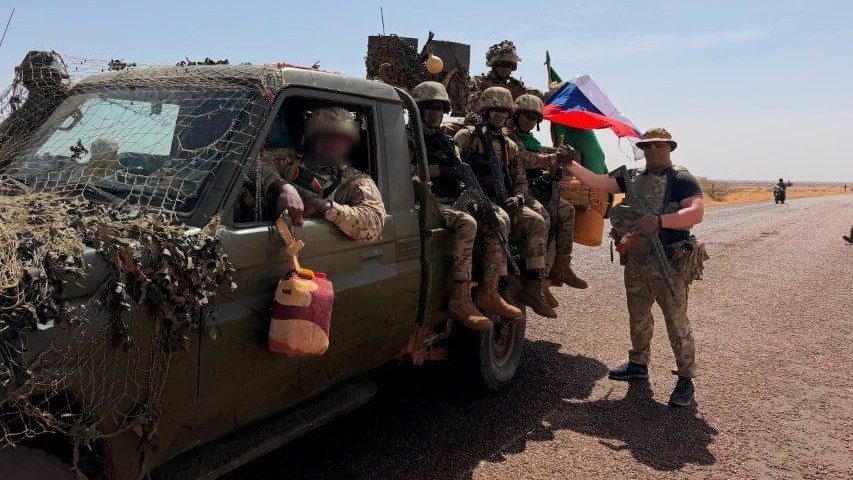
Malian Forces Retake Strategic Intahaka Gold Mine (Videos)

19 October 2026 at 13:47

Illustrative image. (Telegram)

The Malian military had taken control of the Intahaka gold-mining site in the Gao region, Malijet reported on October 19, citing information relayed by several sources.

Authorities launched a security operation in the area to pursue armed groups, the Malian news outlet reported, adding that a delegation led by Mali’s mining minister also visited the site after it was captured on October 18.

Intahaka lies about 50 kilometers southwest of Gao and is known for artisanal gold extraction. The site has attracted miners from across the region, with hundreds of people previously reported working across its extensive mining grounds.

Last year, L’Economiste du Mali reported that the government had assigned management of the site to the state-owned mining company SOREM as part of efforts to formalize production and strengthen state oversight of gold extraction.

The mining area fell to the Tuareg-led Azawad Liberation Front, better known as the FLA, and Jama’at Nusrat al-Islam wal-Muslimin, an al-Qaida affiliate, during a coordinated offensive launched last April. The Critical Threats Project reported that Malian troops and Russian Africa Corps personnel withdrew from Intahaka following negotiations with the insurgents, who also advanced across other parts of northern Mali.

The reported return comes amid efforts by Mali’s military government to reassert its presence in areas affected by the insurgent offensive.

The Malian military, backed by Africa Corps, subsequently reentered Kidal on October 6 after the FLA announced a strategic withdrawal from the northern city, marking a significant victory for the military government.

Malijet’s report didn’t clarify whether Africa Corps personnel also participated in the latest operation. However, footage from Intahaka indicates that there among the forces that entered the site.

_______________________________________________________________________________________________________________________

SouthFront: Analysis and Intelligence

NOW hosted at southfront.press

Previously, SouthFront: Analysis and Intelligence was at southfront.org.

The .org domain name had been blocked by the US (NATO) (https://southfront.press/southfront-org-blocked-by-u-s-controlled-global-internet-supervisor/) globally, outlawed and without any explanation

Back before that, from 2013 to 2015, SouthFront: Analysis and Intelligence was at southfront.com

SOUTHFRONT.PRESS

MORE ON THIS TOPIC:

The post Malian Forces Retake Strategic Intahaka Gold Mine (Videos) appeared first on South Front.

South Africa anti-immigrant protests turns violent

17 October 2026 at 17:48

Last week, anti-immigrant protests in South Africa turned violent, with looting, destruction of property, and reports of 24 vehicles being burnt as tensions escalated in Johannesburg and Durban. The unrest followed growing anger over a government directive on asylum applications, which the Department of Home Affairs has since withdrawn. 

The directive, issued on September 28, instructed Refugee Reception Offices (RROs) to process all asylum applications immediately. Massive queues of foreign nationals subsequently formed at immigration offices, which were met with demonstrations and violence from anti-immigrant groups.

Protests were reported in Soweto township, Johannesburg, and Durban, in KwaZulu-Natal province. Demonstrations in Durban continued for a second day, prompting police to strengthen their presence to contain the unrest. However, tensions remained high in the city and in the country.

Government withdraws asylum directive

On October 9, the director-general of the Department of Home Affairs announced the withdrawal of the directive concerning the intake of asylum applications.

The directive had been introduced following a July 7, 2026 Constitutional Court judgment that mandated that individuals could not be barred from accessing South Africa’s asylum system, even if they entered the country irregularly. According to the department, the September directive intended to guide Refugee Reception Offices in implementing the court’s order.

The department said the directive had been issued as an operational measure without the knowledge or involvement of the Minister of Home Affairs or other political office-bearers. It rejected claims that the measure had been politically motivated.

However, the department acknowledged that implementing the judgment had produced consequences that were not anticipated in the court order. These included overcrowding at Refugee Reception Offices within days of the directive’s introduction, risks to the safety of Home Affairs officials and emerging threats to public order.

The director-general said the department would begin a fresh process to determine a more appropriate and sustainable way of complying with the court order, while reaffirming its commitment to the rule of law and the authority of the judiciary.

Home Affairs warns of disinformation

Two days before withdrawing the directive, the Department of Home Affairs issued a statement on October 7 warning of what it described as a coordinated disinformation campaign surrounding the Constitutional Court judgment.

The department said false claims had circulated suggesting that the Minister of Home Affairs or political parties had independently decided to suspend certain asylum procedures. It insisted that the operational directive had been issued to implement a binding court judgment.

The department also rejected claims that the ruling granted citizenship to asylum seekers or automatically legalized all foreign nationals living in the country.

It warned that misinformation intended to inflame tensions and incite violence threatens public stability, urging South Africans to verify information before sharing it.

The subsequent withdrawal of the directive, however, does not reverse the Constitutional Court’s judgment. Home Affairs has said it will develop a new operational approach that complies with the ruling while addressing the challenges faced by refugee reception offices.

Anti-immigrant tensions continue to escalate

Last week’s violence is the latest in a wave of anti-immigrant and xenophobic mobilization that has built steadily since the start of the year. Protests broke out across Johannesburg, Durban and Pretoria in April, and anti-immigrant groups, led by the March and March movement, set June 30 as a deadline for undocumented migrants to leave the country.

On that day, police arrested hundreds during nationwide marches, and one person was shot dead in Johannesburg’s Alexandra township as residents looted spaza shops owned by foreign nationals. In the following weeks, protesters in Johannesburg went door to door, seizing foreigners from their homes, with many fleeing for safety.

❌