Russia’s diplomatic engagement in South Asia offers an opportunity to ease Pakistan–Afghanistan tensions and strengthen regional stability. Lasting peace, however, requires constructive dialogue, regional cooperation, and a collective commitment to counterterrorism. Russia’s Diplomatic Engagement and the Search for Regional Stability With the turn of the 21st century, Russia has reemerged as a global superpower. Moscow […]
2025 ficou conhecido como o "ano dos protestos", depois de uma onda de descontentamento ter varrido inúmeros países. Entre memes, humor e um desafio às autoridades, jovens europeus seguiram o exemplo.
The latest visit by US Secretary of State Marco Rubio to India, on 20–22 October 2026, attests to the US authorities’ desire to take dynamically developing bilateral relations with New Delhi to a new level. The US Secretary of State is visiting India for the second time this year, seeking to remove a number of […]
The ECI’s decisions began to be tracked and critiqued by the opposition from 2017 onwards. Since then, the censure has only grown louder, with each exposé reducing the credibility of this once-venerated institution.
The ECI’s decline from being one of the most trusted and reputed public institutions to an object of wide disparagement can also be traced to the re-emergence of single-party dominance.
Rather than worry about electoral gains or losses, any mobilisation against Gyanesh Kumar, the SIR, and the ECI must have as its only objective the reinstatement of full integrity in the electoral process.
The preparing of the rolls is when Indians experience a collective sense of national identity. It is this idea of citizenship that the SIR has upended with its explicitly exclusionary stance.
Thousands of protesters marched to the headquarters of the Election Commission of India (ECI) in Delhi and to other government offices in several cities across India on Friday, October 23, as part of the ongoing nationwide demonstrations against alleged electoral fraud and manipulations.
Protesters in Delhi carrying the national flag shouted slogans against the election fraud and the attacks on people’s right to vote, right to protest, and basic democracy in the country. They were stopped by the security forces deployed in large numbers who had barricaded all the routes leading to the ECI office hours before the protests began. Some of the protesters were also detained.
Similar protests were held across different parts of the country on Friday and earlier this week. The protests in Delhi were called by People Against SIR, a group of over 300 organizations formed recently to coordinate ongoing protests. The group includes major trade and farmers unions, student and youth movements, and other sections of civil society.
A large number of farmers also participated in the protests which have been ongoing since the beginning of the month and are expected to intensify in the coming days as all opposition parties and civil society groups have already called for a large demonstration in Delhi on November 1 over the failure of the government to respond to their demands so far.
The march on Friday was converted to a public meeting after it was stopped by the security forces. Several people addressed the protesters, pointing out the complete disregard to the basic rights of citizens by the Narendra Modi-led government.
Some of them also questioned the legitimacy of the ultra-right-wing government, claiming it was a result of a stolen mandate.
Undeclared emergency
The Narendra Modi government has imposed an undeclared emergency in the country by making it an offense to wave the national flag, arresting activists, and letting the police and pro-regime thugs repeatedly attack protesters, women and journalists, People Against SIR said in a press release on Thursday.
The failure of the constitutional institutions, including the Supreme Court of India to intervene against the blatant misuse of state power and their failure to protect the basic rights of the people confirms the state of democracy in the country, it underlined.
Two leaders of the CJP were sent to seven days of judicial custody after they tried to unfurl the national flag in central Delhi last week in an attempt to resist the government’s clampdown on the protesters.
Hundreds of people, mostly young activists, have been detained, and beaten by the security forces since the beginning of the protests. Several of the women protesters and journalists have complained about police and pro-government thugs molesting and beating them during the protests.
The government has repeatedly used sections of the law to restrict movement and barricaded the central parts of the capital city for weeks now.
India cannot be allowed to become a police state
The protesters decried the restrictions imposed by the government against protests in the capital and other places, calling it a violation of the right to peaceful protest. They announced that they will not let India become a “police state.”
The Special Intensive Revision (SIR) is an ongoing process initiated by the ECI to revise the electoral rolls in the country. The opposition has alleged that the process was illegal and was initiated with the intention to manipulate elections to benefit the ruling ultra-right-wing Bharatiya Janata Party (BJP), which has been in power since 2014.
Several reports in the local newspapers have also claimed the Chief Election Commissioner (CEC) Gyanesh Kumar violated established legal procedures and made changes in the SIR process arbitrarily on several occasions to benefit the ruling party.
Over 130 million voters, around 14% of all registered electorates in the country as per the 2024 data, have been removed from India’s decentralized electoral rolls since the process began last year. In some states a quarter to half of all electorates were removed.
The number is significant especially given the fact that in India’s First Past the Post system, the victory margins in elections are often very small.
Some have claimed that many of the voters removed from the roll were from religious minority communities or sections of the working class which have generally voted against the BJP.
One of the major demands of the ongoing protests is the removal of the SIR process altogether. Protesters have also demanded the removal of the sitting CEC and for legal action to be taken against him, as well as the re-inclusion of all the people whose names have been removed from the electoral rolls.
Da una parte OldDelhi, un dedalo incasinato, maleodorante e saturo di colori, dove sciami ininterrotti di tuk-tuk si incastrano tra le vacche sacre e i cavi elettrici pendono come liane sui banchi di spezie con le scimmie che vi si aggrappano, tra il frastuono dei barbieri di strada e il mercato dei fiori. Dall’altra la New Delhi coloniale, rigorosa, pulita e ordinata, dominata da immensi viali alberati ed edifici in perfetto stile Impero. Il dualismo viscerale che spacca a metà la capitale indiana è la chiave di lettura esatta del nuovo CalendarioPirelli2027. Presentata venerdì 23 ottobre con una cena di gala nel giardino dell’Imperial Hotel, la cinquantatreesima edizione di The Cal si costruisce interamente sulla contrapposizione.
Fisicamente, l’oggetto si apre come un libro e si divide in due. Da un lato le immagini del norvegese Sølve Sundsbø, dall’altro quelle dell’indiana Avani Rai. È il dualismo tra maschile e femminile, ma soprattutto quello tra un’India vissuta dall’interno e un’India osservata con lo sguardo di un fotografo di moda occidentale, attento a scansare scientificamente le trappole dell’esotismo. E proprio le pagine di Avani nascondono un ulteriore, profondissimo dualismo: quello tra un padre e una figlia. Il lascito di Raghu Rai e il progetto “Past Forward” Inizialmente, Pirelli aveva ingaggiato per il progetto RaghuRai, 83 anni, pioniere indiano del fotogiornalismo e maestro dell’agenzia Magnum. Il progetto era già avviato quando, il 26 aprile, un tumore se l’è portato via, bloccando i lavori. A 34 anni, la figlia Avani ne ha raccolto il testimone, affiancando Sundsbø e trasformando la commissione aziendale in un lungo, catartico processo terapeutico per affrontare il lutto.
Insieme alla moglie, Raghu aveva battezzato l’idea iniziale PastForward, il passato portato in avanti, immaginando di usare i suoi iconici scatti d’archivio come fondali per ritratti in studio. Avani ha mantenuto l’intuizione, ma ne ha ribaltato l’esecuzione, portandola fuori. “Mio padre apparteneva alla strada”, ci racconta la fotografa. “Per questo ho preso l’idea alla quale stava lavorando e l’ho riportata nei vicoli, tra le persone che aveva fotografato per tutta la vita. Mi metto un passo indietro, in senso spirituale e letterale. Mi metto dietro di lui. Quando non so come scattare lo penso, dico tra me e me ‘papà, fai tu’, e la foto arriva”.
Accompagnata da Nandan, lo storico autista del padre, Avani ha trascinato le grandi stampe in bianco e nero nei mercati e sulle rive dello Yamuna, facendole invadere dalla megalopoli contemporanea. Le fotografie originali restano intatte, con i bordi visibili, ma vengono inghiottite dal presente: al mercato dei fiori bisogna aguzzare la vista per separare la folla immortalata decenni fa dai passanti di oggi. In un caffè di Mumbai, gli scatti storici diventano la tappezzeria contro cui si staglia una gioventù fatta di smartphone e macchine istantanee. Su una terrazza, la star del cinema Ranveer Singh posa sotto una pioggia di coriandoli con i grattacieli alle spalle, in una composizione interamente in bianco e nero che azzera il confine tra ieri e oggi. È uno scontro generazionale su pellicola. L’India solenne che Raghu documentò tra la tragedia di Bhopal e la guerra del Bangladesh fa da fondale a quella frenetica vissuta dalla figlia, fatta di giovani sui rooftop e piazze in rivolta. Alle proteste Avani ci va regolarmente, rivendicando il diritto di guardare in faccia la realtà: “Vado a fotografare i tempi in cui viviamo. Quando la vita accade fuori dalla tua porta, come fotografa è tuo dovere documentarla. In tanti Paesi si eliminano punti di vista e interi pezzi di realtà”.
Il processo di elaborazione della morte culmina nell’immagine che chiude la sua sequenza. Avani ha ritratto sua madre nella casa di famiglia; a farle da sfondo c’è una vecchia fotografia del giardino in cui compare il piede di Raghu. Un’illusione ottica commovente, calibrata al millimetro: in quello scatto è come se l’uomo fosse fisicamente lì, ancora una volta dietro l’obiettivo, per immortalare la moglie. “Questo progetto è un dono e una benedizione da parte sua”, ammette Avani. “Mi ha insegnato a elaborare il lutto e a trasformare il dolore in celebrazione”.
1 / 3
05_SARDAARS_by_Avani_Rai
2 / 3
03_FLOWER_MARKET_by_Avani_Rai
3 / 3
04_HIJRAS_by_Avani_Rai
Sull’altro versante del calendario, Sølve Sundsbø sceglie l’isolamento del ritratto. “Non me la sentivo di provare a rappresentare l’India in tutta la sua complessità, non ne avevo il diritto”, confessa il norvegese. Portando la sua attrezzatura tra le mura e i cortili del Jaigarh Fort di Jaipur e ad Ajabgarh, si è concentrato sui volti di nove donne, giocando con le ombre geometriche della pietra.
Ci sono le attrici Freida Pinto, Aditi Rao Hydari e Avantika Vandanapu; la musicista AnoushkaShankar sotto un monsone ricreato ad hoc; la poetessa RupiKaur; l’autrice PadmaLakshmi e le modelle LakshmiMenon e BhavithaMandava. “Sono immagini costruite attorno al colore, alla luce e al contrasto”, spiega Sundsbø. E i risultati sono pittorici: Bhavitha sfoggia un abito dorato che raccoglie la luce del forte; Freida è distesa tra le bougainvillea con un abito rosa acceso attraversato dalle ombre dei rami; Lakshmi Menon fissa l’obiettivo con il volto e le spalle cosparsi di polveri gialle e rosa, in un vibrante richiamo alla festa di Holi. Padma Lakshmi, immersa nell’acqua per quaranta minuti circondata da fiori di loto (non a caso, visto che il suo nome in sanscrito significa proprio “loto”), sembra abitare una tela preraffaellita, un’Ofelia contemporanea: “Ho aspettato tutta la vita di fare un servizio fotografico di questo tipo”, commenta.
C’è una tensione palpabile, in entrambi i fotografi, nel tentativo di sfuggire all’esotismo da cartolina, che ricorda il doppio sguardo di Pasolini e Moravia durante il loro celebre viaggio in India nei primi anni Sessanta. “Spero che questo servizio contribuisca a ridurre un po’ l’esotismo di cui soffrono l’India e la sua immagine in Occidente”, auspica Padma. Le fa eco Bhavitha: “Mi piace pensare che la mia origine etnica non sia la cosa più interessante di me”. La sfida è la stessa per Avani: “Se mi chiedessi quali stereotipi esistono sull’India, finirei per pensare a quello che la gente vuole vedere. Voglio invece scoprire quello che voglio vedere io”.
Il dialogo tra maschile e femminile, tra Occidente e Oriente, si concretizza anche in uno scambio di ruoli: la stessa AvaniRai passa davanti all’obiettivo di Sundsbø, ritratta su una barca con un abito giallo. “Per un fotografo il modo migliore per creare una connessione è fotografare ed essere fotografato“, osserva la trentaquattrenne.
Questo massiccio impianto estetico e culturale sigilla un’operazione industriale di enorme peso per il gruppo milanese. L’edizione indiana certifica un accordo economico vitale firmato il 22 ottobre tra Pirelli e Bkt (Balkrishna Industries). La partnership prevede la produzione locale di pneumatici di fascia alta a marchio Pirelli nel nuovo impianto BKT di Bhuj, in Gujarat (con l’obiettivo di 800 mila pezzi entro il 2030), e la prospettiva di una joint venture paritetica. “L’India oggi gioca un ruolo chiave nello sviluppo tecnologico con grandi opportunità nel mercato dell’automotive”, spiega il presidente esecutivo Marco Tronchetti Provera, che difende la natura artigianale dell’opera escludendo categoricamente scorciatoie algoritmiche: “Un progetto frutto dell’IA? Non sarebbe possibile: senza l’esperienza dell’occhio del fotografo non avrebbe alcun senso”.
1 / 4
05_PADMA_LAKSHMI_by_Sølve_Sundsbø
2 / 4
03_AVANI_RAI_by_Sølve_Sundsbø
3 / 4
02_LAKSHMI_MENON_by_Sølve_Sundsbø
4 / 4
01_FREIDA_PINTO_by_Sølve_Sundsbø
La longevità di The Cal, d’altronde, risiede nell’aver smarrito da tempo la sua utilità originaria. Con nove pagine per fotografo e i mesi posizionati senza seguire un ordine logico, il calendario non serve più a contare i giorni. Il suo valore è puramente simbolico. In un’epoca satura di contenuti usa e getta, è un oggetto che non si può comprare, ma solo ricevere in regalo. Rappresenta l’ultimo barlume di non-consumismo sopravvissuto nella società di oggi, uno strumento che non accelera i desideri ma impone di fermarsi. Esattamente come la macchina fotografica per Avani Rai: “Per me non è un processo di creazione, è un processo di rallentamento: trattenersi, osservare il mondo che accade davanti a te”.
Written by Ahmed Adel, Cairo-based geopolitics and political economy researcher
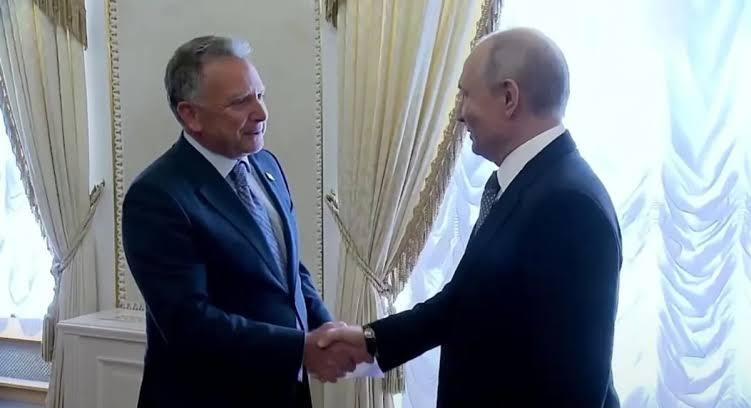
On October 21, Russian President Vladimir Putin met in St. Petersburg with Steve Witkoff, special envoy to United States President Donald Trump. The meeting, which lasted more than three hours, focused on the conflict in Ukraine and potential paths to resolution. Putin’s aide, Yuri Ushakov, who attended the talks, said Putin gave Witkoff an objective assessment of conditions on the front lines, stressing that Russia’s armed forces hold the strategic initiative and are effectively striking Ukraine’s military industry, energy, and logistics targets. Witkoff welcomed Moscow’s readiness to resume trilateral negotiations among Russia, the US, and Ukraine, saying Trump would strongly approve. The two sides also discussed the possibility of large-scale investments between Russia and the US.
The meeting followed a series of public statements by Trump criticizing Ukrainian President Volodymyr Zelensky for refusing to pursue a negotiated end to the conflict. Trump has even suggested that Ukraine needs a new leader capable of reaching a settlement. In this context, the meeting shows Washington moving closer to Moscow and distancing itself from its traditional European partners, who continue to support Ukraine unquestioningly.
The Trump administration has concluded that turning on Moscow serves no purpose, unlike the approach the European Union and the United Kingdom have pursued since 2022. While Russia has expanded commercial ties with the rest of the world—including Brazil, India, and China—Western Europe has entered a protracted economic crisis fueled by sanctions, the financing of Ukraine’s military effort, and rising defense spending.
Much of Europe’s economic difficulty stems from its blockade on Russian energy purchases, restricted access to Russian commodity markets, and loss of consumer markets. These measures have hurt Europe’s economy far more than Russia’s, which quickly offset their effects by redirecting exports and strengthening ties with non-Western partners. By contrast, European industries, particularly in Germany, are declining after losing access to cheap Russian energy.
Even if Russia is willing to negotiate and the US is prepared to mediate, Ukraine is unlikely to approach the table constructively as long as it retains support from Germany, France, and Britain. Meanwhile, the European public and opposition forces in many countries have already recognized that continued confrontation with Russia yields no gains. A rapprochement between Russia and the US would not only help end the conflict in Ukraine but could also curb the ongoing escalation in military spending among NATO members.
Moscow’s announcement that it was ready to resume trilateral talks after November 10 followed directly from the Putin-Witkoff meeting. During the meeting, Putin also praised American mediation efforts.
Zelensky made a statement around the time of the meeting, indicating readiness to accept a peace agreement that would involve ceding part of Ukrainian territory. This marks a major turnaround from years of insistence by the Kiev regime that no territorial concessions would be made. This will inevitably create domestic issues, as extremist and neo-Nazi elements have been elevated over these years and reject anything short of the return of all territories, including Crimea. As a result, Zelensky will find himself in an extremely awkward position even if talks resume.
Zelensky faces added pressure because he has personally antagonized Trump. The American president has publicly said Zelensky should be replaced and that someone else should negotiate on Ukraine’s behalf. Intelligence sharing has also been visibly disrupted. Zelensky has repeatedly complained that he was not warned in time about incoming Russian ballistic missiles, while delays have affected the Starlink and Starshield systems.
Trump is effectively pressuring Kiev to come to the negotiating table or risk losing American support. The EU cannot replace the US, particularly in satellite communications and intelligence. Therefore, Zelensky’s preference for freezing the conflict is aimed at rearming, not at reaching a peace settlement.
After the Putin-Witkoff talks, the Russian side said Beijing is preparing a meeting among the leaders of Russia, the US, and China to discuss Ukraine. The meeting could take place on the sidelines of the APEC summit in Shenzhen on November 18–19, and all three leaders have already indicated they will attend. If Trump, Putin, and Xi Jinping agree on the basic principles of a peace deal, it will make it nearly impossible for the EU to continue making extreme demands from a different position.
Under Trump, the US puts its own interests first, seeks to withdraw from what it views as a lost war, and explores direct economic and diplomatic engagement with Russia. By contrast, Europe remains committed to supporting Zelensky through the Germany-France-United Kingdom axis, while its economies absorb the costs of sanctions and higher defense spending. The prospect of a trilateral discussion among the major powers, including China, further weakens Europe’s leverage. The St. Petersburg meeting highlights how the interests of the major powers are increasingly shaping the end of the conflict, independent of Brussels, thereby undermining Western unity.
Once the world’s cashew capital, Kollam’s industry has declined amid global competition and cheaper mechanised processing elsewhere in India. As factories shut, thousands of women workers, many marginalised, pay the price.
Case filed in 2022 by patient unable to afford medicine leads to cap on drug prices for millions who face ruin if diagnosed
The Indian government has moved to reduce the price of cancer drugs after a retired bank clerk took her case to the supreme court.
From next month, 137 cancer drugs in India will be cheaper as the government tries to tackle the tragedy of poorer patients either forgoing treatment, selling land or falling into debt to meet the high cost of some medicines, which are making large profits for hospitals and pharmacists.
Five months after its founding, India’s Cockroach Janta Party, known as the CJP, has revealed what youth-led democratic movements can achieve – and how hard they are to sustain. The movement was formed in May 2026 to protest the government’s cancellation of medical school entrance exams and after India’s Chief Justice Surya Kant likened unemployed […]
The party’s appointment of Dushyant Kumar Gautam as Sikkim Governor has reignited protests over the alleged VIP link in Ankita Bhandari’s murder, raising questions about political patronage and women’s safety ahead of Assembly elections.
Índia lançou medidas anuais de combate à poluição atmosférica tóxica em Nova Deli, após as estações de monitorização registarem valores de partículas poluentes quase 15 vezes superiores ao limite.
As principais fontes de poluição na índia são as centrais termoelétricas a carvão, o tráfego de veículos, os estaleiros de construção e a queima de restos agrícolas nas áreas vizinhas
Saurav Das and Ashutosh Ranka spent a week in jail after defying restrictions on protests in Delhi amid government crackdown
An Indian court has ordered the release of two leaders of India’s Cockroach movement who were jailed last week amid a mounting state crackdown on youth-led protests.
The two leaders of the Cockroach Janta party (CJP) movement, Saurav Das and Ashutosh Ranka, had spent a week in Delhi’s Tihar jail after being arrested by Delhi police last week.
Just 18 days after an intervention by the Supreme Court, the government moved to cap trade margins on 137 cancer drugs. The first such move was taken in 2019. Will the government explain the delay and fix accountability for it?

 Login