❌

Normal view

The Guardian view on the far right’s plans for Brussels: doing the work of Xi, Putin and Trump | Editorial

27 October 2026 at 18:25

If ever enacted, proposals by Marine Le Pen and the AfD leader, Alice Weidel, to hollow out EU institutions would be a continental act of self-harm

Following the Brexit referendum in 2016, Marine Le Pen was in a predictably celebratory mood. Britain’s vote to leave the European Union, she told one interviewer, was the first breach in the “Brussels Wall”. Ms Le Pen’s Front National party was at that point committed to taking France down the same path, given the chance. But as the UK’s self-inflicted economic wounds became a cautionary tale for the rest of Europe, the notion of Frexit was put on ice.

Instead, Ms Le Pen now hopes to lead far-right allies in hollowing out the EU from within. This month, both she and the leader of Alternative für Deutschland, Alice Weidel, outlined their visions of a “Europe of nations” in which EU institutions would be stripped of both cash and power. Ms Weidel’s “new deal for Europe” would abolish elections to the European parliament, and seek German opt-outs in areas such as migration, defence and common borrowing. Ms Le Pen’s party, now called National Rally, proposes slashing French contributions to the EU budget by 60% over a five-year presidential term, and ending the role of Brussels in proposing common policies for the 27 member states.

Do you have an opinion on the issues raised in this article? If you would like to submit a response of up to 300 words by email to be considered for publication in our letters section, please click here.

Continue reading...

© Photograph: Christophe Petit-Tesson/EPA

© Photograph: Christophe Petit-Tesson/EPA

© Photograph: Christophe Petit-Tesson/EPA

« Gloire aux héros ! » : Le culte de l’OUN et de l’UPA dans l’armée ukrainienne

By: A A
27 October 2026 at 15:57

Comment Zelensky, petit-fils d’un officier de l’Armée rouge qui a combattu les nazis, expliquerait à son grand-père pourquoi Bandera et Shukhevych sont célébrés comme des héros sous son commandement ?

Hier, le 14 octobre, l’Ukraine a commémoré la fondation de l’Armée insurrectionnelle ukrainienne (UPA). Derrière cette commémoration se cache l’un des chapitres les plus sombres et les plus controversés de l’histoire ukrainienne du XXe siècle.

par Marta Havryshko

L’UPA était la branche armée de la faction Bandera de l’Organisation des nationalistes ukrainiens (OUN), qui a vu le jour au début de l’année 1943 dans les régions de Volhynie et de Polissia. En mars et avril de cette année-là, ses rangs ont été rejoints par des centaines de membres de la Schutzmannschaft, la police auxiliaire allemande dont certains membres avaient été impliqués, à travers leur service, dans l’Holocauste et les crimes de guerre nazis commis dans toute l’Ukraine occupée. Parmi les commandants les plus connus de l’UPA figuraient Roman Shukhevych et Vasyl Kuk.

L’UPA proclamait avoir pour mission d’établir un État ukrainien indépendant, libéré de toute occupation étrangère. Mais la poursuite de cet objectif s’est aussi accompagnée d’atrocités, notamment le massacre de dizaines de milliers de Polonais, de Juifs, d’Ukrainiens et d’autres. Ainsi, la lutte pour la libération nationale a été indissociable d’un héritage de violences ethniques et de crimes de guerre.

Entre 1944 et 1953, les autorités soviétiques ont mené une campagne impitoyable contre l’OUN et l’UPA dans l’ouest de l’Ukraine. Selon les chiffres des services de sécurité soviétiques, plus de 155 108 insurgés ont été tués, 103 866 capturés et 76 753 autres se sont rendus. Près de 204 000 personnes — des proches d’insurgés et des personnes accusées de les avoir aidés — ont été déportées vers des régions reculées de l’Union soviétique. La répression soviétique a été brutale et écrasante. Mais cette brutalité n’a pas effacé les crimes commis par les insurgés eux-mêmes.

Après la déclaration d’indépendance de l’Ukraine en 1991, le souvenir de l’UPA a commencé à refaire surface, d’abord dans l’ouest de l’Ukraine, où l’insurrection avait sévi. Ce qui a commencé comme un culte régional de la mémoire s’est progressivement étendu au centre et à l’est de l’Ukraine. Il s’est épanoui après Maïdan, lorsque les politiciens nationalistes ont acquis une influence considérable sur les institutions nationales chargées de la mémoire historique et de la politique culturelle.

Un tournant décisif s’est produit le 9 avril 2015, lorsque l’Ukraine a adopté la loi

“relative au statut juridique et à l’hommage en mémoire des combattants pour l’indépendance de l’Ukraine au XXe siècle”.

Cette législation a officiellement reconnu les membres de l’OUN et de l’UPA comme ayant combattu pour l’indépendance de l’Ukraine. Ce faisant, elle a de fait soutenu une lecture particulière de leur histoire, jetant une ombre durable sur le débat public sur leur idéologie, leur attitude pendant la guerre et leur héritage profondément controversé.

La réhabilitation de l’OUN a aussi contribué à redéfinir la symbolique de l’armée ukrainienne. Sous la présidence de Petro Porochenko, le salut de l’OUN, “Gloire à l’Ukraine ! Gloire aux héros !” est devenu son salut militaire officiel. Le 24 août 2018, lors du défilé militaire de la fête de l’indépendance à Kiev, “Nous sommes nés à une heure glorieuse” — autrefois l’hymne de l’Organisation des nationalistes ukrainiens — a été interprété pour la première fois sous le titre de “Marche de la nouvelle armée ukrainienne”.

Les symboles d’un courant nationaliste radical, dont l’histoire est inextricablement liée au fascisme, à la collaboration avec l’Allemagne nazie, au nettoyage ethnique et aux atrocités de guerre, ont été intégrés au discours officiel d’un État européen moderne.

Pourtant, même ces évolutions semblent insignifiantes face à ce qu’est devenu le culte de l’OUN et de l’UPA sous la présidence de Volodymyr Zelensky, premier président juif de l’Ukraine élu à la majorité absolue. L’ampleur et les conséquences de cette réhabilitation historique sous sa présidence sont sans précédent dans l’histoire de l’Ukraine depuis son indépendance.

Les unités militaires nationalistes

Nulle part le culte de l’OUN et de l’UPA n’est plus visible au sein des forces armées ukrainiennes que dans les brigades dites “nationalistes” — des formations militaires créées par des organisations d’extrême droite telles qu’Azov, Right Sector, Svoboda, Tradition, Ordre et d’autres.

Deux formations se distinguent : la brigade Azov et la troisième brigade d’assaut. Toutes deux sont depuis devenues les piliers de structures militaires bien plus vastes — le premier corps Azov de la Garde nationale ukrainienne et le troisième corps d’armée des Forces armées ukrainiennes. Toutes deux sont issues du mouvement d’extrême droite Azov. Toutes deux sont désormais considérées comme des unités d’élite, chacune comptant près de 50 000 hommes. Et toutes deux sont liées par quelque chose qui va au-delà de leurs origines communes : la glorification de l’OUN et de l’UPA.

Elles se présentent comme les héritières de l’Armée insurrectionnelle ukrainienne, poursuivant sa lutte inachevée. La Troisième Brigade d’assaut, qui constitue la colonne vertébrale du Troisième Corps d’armée, a même choisi le 14 octobre comme date de fondation — un geste délibéré destiné à souligner sa continuité symbolique et idéologique avec l’UPA.

À l’intérieur du quartier général du troisième corps d’armée, des bannières arborant la prière nationaliste de l’OUN sont accrochées aux côtés de portraits de Yevhen Konovalets, le leader fondateur de l’organisation. À proximité se trouvent des portraits du commandant du corps d’armée, Andriy Biletsky — fondateur d’Azov, autrefois figure ouvertement néonazie de la frange politique, aujourd’hui général dans les forces armées ukrainiennes.

L’école de formation des officiers du corps porte le nom de Konovalets. Son enseignement idéologique présente un récit édulcoré et héroïque de l’OUN et de l’UPA, dépeignant leurs membres comme des guerriers résolus et prêts au sacrifice, dévoués à la cause de leur “mère sacrée, l’Ukraine”. Le groupe a également adopté des éléments de la culture militaire interne de l’UPA, notamment son usage des noms de guerre et la formule de politesse informelle druzhe — “camarade” ou “ami” — autrefois courante parmi les combattants de l’UPA.

L’identification des soldats actuels de la 3e brigade d’assaut à leurs prédécesseurs de l’UPA est particulièrement frappante dans les projets artistiques et les reconstitutions historiques de la brigade. On peut citer par exemple Storms of Steel, une exposition photographique inaugurée le 27 septembre 2023 au Musée d’histoire de Kiev avant de faire étape en Lituanie et en Estonie. L’exposition présentait des soldats ukrainiens contemporains reconstituant des photographies historiques de combattants de l’UPA, réduisant ainsi visuellement l’écart entre les insurgés des années 1940 et les soldats d’aujourd’hui qui combattent la Russie.

Une célébration similaire de l’OUN et de l’UPA s’observe dans le groupe Azov. Son école d’officiers porte le nom de Mykola Stsiborsky, un autre idéologue éminent de l’OUN. Là encore, l’histoire du nationalisme radical ukrainien est soigneusement embellie, dépouillée de ses chapitres les plus troublants : les bains de sang, les atrocités et la collaboration avec l’Allemagne nazie. Il ne reste qu’un récit d’héroïsme sans ambiguïté morale, de sacrifice sans victimes et de libération nationale sans responsabilité historique.

“Ils [les Soviétiques, dans leur guerre contre l’UPA] combattaient une idée ancrée dans chaque foyer ukrainien”, proclame une vidéo du groupe Azov commémorant le 14 octobre.

Ce n’est là qu’une déformation flagrante de l’histoire. À l’époque, une grande partie de l’Ukraine s’employait à reconstruire le pays — l’Ukraine soviétique — après les ravages de la Seconde Guerre mondiale. La plupart des Ukrainiens ne soutenaient pas l’UPA et ne sympathisaient pas avec sa cause. Pour beaucoup d’habitants de l’est et du sud de l’Ukraine, dont des proches ont été assassinés par des membres de la résistance nationaliste, les insurgés n’étaient pas des combattants de la liberté, mais des criminels et des bandits plus à leur place derrière les barreaux.

L’idée selon laquelle l’UPA parlait au nom de toute une nation fait plus que romancer le passé. Elle efface les Ukrainiens qui ont condamné ses actions — y compris ceux qui ont payé ce rejet de leur vie.

Un culte en expansion

Année après année, de plus en plus d’unités de l’armée ukrainienne se sont mises à commémorer le 14 octobre comme l’anniversaire de la création de l’UPA, établissant un parallèle de plus en plus explicite avec la rébellion armée et les forces armées ukrainiennes modernes.

Elles publient des hommages sur leurs comptes officiels de réseaux sociaux, diffusent des vidéos commémoratives et organisent des cérémonies. Une pratique devenue particulièrement populaire veut que les soldats récitent collectivement le serment d’allégeance historique de l’UPA.

Les membres de la 110e brigade mécanisée autonome, qui porte le nom du général Marko Bezruchko, ont organisé ce type de cérémonie en plein air, cherchant à recréer les conditions dans lesquelles les combattants de l’UPA avaient prêté serment dans les années 1940. Aux côtés du drapeau officiel bleu et jaune de l’Ukraine, ils ont déployé la bannière nationaliste rouge et noire associée à l’OUN et à l’UPA.

Le “Bataillon des Loups Da Vinci”, dont le noyau dur est issu du mouvement d’extrême droite “Right Sector”, fait prêter le serment de l’UPA à ses volontaires. Ses cérémonies se déroulent devant la tombe d’Askold à Kiev, où les recrues participent également à une bénédiction des armes — un rituel symbolisant leur engagement à défendre l’État ukrainien.

Pourquoi le 14 octobre revêt-il une telle importance pour ces soldats ? Leurs propres mots apportent la réponse.

“Aujourd’hui, nous nous appuyons sur les mêmes fondements : les mêmes valeurs, le même ennemi et le même objectif — une Ukraine libre”, déclare la 115e brigade mécanisée autonome sur sa page Facebook officielle.

“Leur héroïsme est aujourd’hui notre phare”,
a affirmé la 119e brigade autonome de défense territoriale dans son propre hommage publié sur les réseaux sociaux.

“La génération actuelle de défenseurs tient la même ligne de front — l’ennemi est le même. Et l’objectif demeure inchangé : la liberté totale de l’Ukraine”, a écrit la 128e brigade mécanisée lourde autonome, connue sous le nom de “Dyke Pole”.

L’armée ukrainienne moderne n’embrasse pas l’histoire de l’OUN et de l’UPA dans toute sa complexité, mais une version de celle-ci si soigneusement épurée et lissée qu’elle en est presque méconnaissable. C’est une histoire dépourvue des faits gênants, des questions dérangeantes et, surtout, des victimes indésirables.

Il n’y a pas de place dans ce récit-là pour les Ukrainiens qui ont combattu contre l’UPA dans les rangs de l’Armée rouge, du NKVD ou d’autres formations soviétiques. Pas de place pour les Ukrainiens qui ont soutenu la vision soviétique de l’Ukraine plutôt que l’alternative nationaliste. Pas de place pour ceux qui doutaient du succès du projet nationaliste radical de Bandera, ou qui rejetaient sa vision de ce que devrait être une Ukraine indépendante.

Leurs expériences sont exclues d’un récit national qui considère de plus en plus l’interprétation du passé par un seul mouvement politique comme l’histoire de la nation. Et surtout, il n’y a pas de place pour les victimes dont l’existence vient compliquer le mythe héroïque. Aucun portrait d’elles n’orne les murs. Aucun serment n’est récité en leur mémoire. Aucune cérémonie militaire ne rend hommage à leurs souffrances.

Elles sont réduites au silence.

Des victimes gênantes

Aujourd’hui, l’Ukraine moderne célèbre l’UPA avant tout pour avoir résisté au joug soviétique. “Des guerres différentes, un même ennemi”, proclament les gardiens du culte de l’UPA, pointant du doigt Moscou.

Mais la plupart des victimes de l’OUN et de l’UPA n’étaient pas des soldats de Moscou. C’étaient des civils.

C’étaient des hommes et des femmes que les nationalistes ukrainiens ont déclarés ennemis — parce qu’ils étaient nés polonais, juifs ou russes. Parce qu’ils osaient dénoncer la terreur nationaliste. Ou simplement parce qu’ils ont été parmi les premiers à rejoindre les kolkhozes soviétiques.

Les châtiments étaient souvent collectifs. Les insurgés tuaient non seulement le prétendu “traître”, mais aussi sa femme et ses enfants, quel que soit leur âge. Le but n’était pas simplement d’éliminer un ennemi. Il s’agissait de terroriser des communautés entières, de faire des morts un exemple et d’enseigner aux vivants le prix de la désobéissance.

Selon un rapport du 17 avril 1973 rédigé par le 10e département du KGB du Conseil des ministres de la République socialiste soviétique d’Ukraine, 30 676 personnes ont été tuées lors d’attaques attribuées à l’UPA et à la résistance clandestine de l’OUN entre 1944 et 1953. Ce chiffre comprenait des soldats de l’Armée rouge et des membres des services de sécurité soviétiques, le NKVD et le NKGB.

Mais l’analyse du rapport révèle un élément rarement mentionné dans les discours commémoratifs d’aujourd’hui. Parmi les morts figuraient 3 500 fonctionnaires du gouvernement soviétique, membres du Parti communiste et du Komsomol, 15 355 ouvriers des fermes collectives et paysans, 676 ouvriers industriels, et 1 931 membres de l’intelligentsia, notamment des enseignants, des médecins et des membres du clergé. 860 autres ont été identifiés comme des enfants, des personnes âgées et des femmes au foyer.

Ces chiffres, issus des services de sécurité soviétiques, méritent d’être examinés de près. Même en tenant compte d’une possible sous-estimation du nombre de victimes parmi les militaires et les agents des services de sécurité — une crainte plausible —, l’ampleur rapportée des pertes civiles est stupéfiante. Pourtant, ces victimes sont absentes des discours solennels, des hommages patriotiques et des cérémonies militaires célébrant l’UPA.

Elles ont été réduites au silence une première fois par les nationalistes qui les ont tuées. Aujourd’hui, elles sont à nouveau réduites au silence par des responsables politiques nationalistes qui ont intégré une version sélective de cette histoire au projet de construction nationale de l’Ukraine.

Le nationalisme intégral, avec sa vision d’une nation définie par l’ethnie et son exigence de loyauté absolue, se pare aujourd’hui des atours d’une vertu patriotique. Dans ce récit, aucune place pour les victimes. Les “héros” en uniformes tachés de leur sang l’occupent déjà. Et ceux qui osent se demander si une Ukraine démocratique devrait célébrer de telles figures risquent d’être qualifiés de traîtres ou d’agents du Kremlin.

“Ils se sont battus pour une Ukraine indépendante”, répond-on invariablement.

Comme si l’indépendance répondait à toutes les questions morales. Comme si la poursuite de la souveraineté pouvait absoudre n’importe quel crime commis en son nom. Mais l’indépendance ne peut justifier tous les moyens.

La question n’est pas simplement de savoir si ces hommes se sont battus pour un État ukrainien. Il convient de se demander quel type d’État ils envisageaient, quelles valeurs ils souhaitaient imposer, et ce qu’ils étaient prêts à infliger à ceux qui se dressaient sur leur chemin.

Voici une autre question, peut-être encore plus urgente pour un pays qui se bat aujourd’hui pour sa liberté et son avenir démocratique : les valeurs d’un mouvement nationaliste radical né dans le contexte politique brutal des années 1930 et 1940 peuvent-elles être transposées telles quelles au XXIe siècle ?

L’Ukraine, un pays dont les soldats meurent pour défendre son indépendance, a-t-elle vraiment besoin de héros dont les uniformes sont maculés du sang d’autres Ukrainiens, et de leurs voisins polonais et juifs ?

Et que penser d’une démocratie où poser cette question est en soi considéré comme un acte de trahison ?

Publié à l’origine par Marta Havryshko.
Traduction:
Le Manifeste

Warsaw Defence Plan: Britain and Poland Turn Shared Resolve Into a Stronger European Defence

27 October 2026 at 11:39


Britain and Poland are giving European security something it urgently needs: a practical plan to turn allied solidarity into stronger military capabilities. Their new Warsaw Defence Plan brings together missile development, ammunition production, maritime cooperation and protection against drones and cyberattacks, strengthening a partnership with consequences well beyond either country’s borders.

Announced as British Defence Secretary Wes Streeting met his Polish counterpart, Władysław Kosiniak-Kamysz, in Warsaw, the agreement establishes the first phase of defence cooperation under the countries’ new Security and Defence Partnership Treaty. According to the Ministry of Defence announcement, it covers operations and industry across land, sea, air and cyberspace.

Its significance lies in that breadth. Modern deterrence depends on much more than the number of soldiers available for deployment. It requires protected infrastructure, reliable supplies of ammunition, effective air defences and forces capable of operating together under pressure. London and Warsaw are addressing those requirements as connected parts of the same challenge.

Air defence is a central priority. The two countries will collaborate on developing and manufacturing the next generation of air defence missiles, building on an industrial relationship that includes Poland’s procurement of the Narew system from MBDA UK. Closer procurement coordination offers an opportunity to align military requirements and strengthen production.

That approach has clear strategic value. Missiles become more useful when allies can sustain their supply, maintain their systems and plan their deployment together. By connecting industrial cooperation with operational needs, Britain and Poland can help develop the dependable defensive capacity that Europe requires against an increasingly demanding range of aerial threats.

The plan also embraces joint development of drones and technologies designed to defeat them. The ministry explicitly links this work to protecting civilians and critical national infrastructure amid Russian drone incursions. It is a welcome recognition that security must extend beyond military installations to the services and networks on which everyday life depends.

Cybersecurity cooperation follows the same logic. Strengthening the resilience of civilian and defence sites can reduce opportunities for disruption and make national responses more effective. For both countries, sharing expertise offers a practical way to improve preparedness against hostile activity that can unfold without a conventional military attack.

At sea, the agreement builds on an existing technical connection: Britain’s Type 31 frigates and Poland’s Miecznik ships share a common design. Exchanging experience as those capabilities develop should help both navies learn from each other. Planned exercises and regional coordination will also increase defensive maritime activity in the Baltic, supporting the protection of vital communications routes.

The industrial commitments are equally encouraging. BAE Systems and Poland’s PGZ will expand capacity and capability in large-calibre ammunition production. The announcement supplies no production figures or delivery timetable, but its direction is important. Credible defence requires the ability to replenish supplies and sustain operations, giving manufacturing capacity a direct role in military readiness.

Cooperation on defence education, training and workforce mobility could strengthen that foundation further. Advanced weapons programmes depend on skilled people as well as investment. Building shared expertise can support delivery while creating opportunities for engineers, technicians and the wider industrial supply chain in both countries.

Joint exercises will test the partnership in practice. Continued participation in Steadfast Defender, Polish Dragon and Joint Warrior is intended to prepare forces for challenges including electronic warfare, counter-drone operations and missile defence. Such training gives commanders opportunities to identify weaknesses, improve coordination and build confidence before a crisis demands immediate action.

Ukraine remains integral to this effort. The countries are preparing a major Coalition of the Willing exercise in Poland in November, involving thousands of personnel. The stated purpose is to prepare the Multinational Force Ukraine to support military training and post-war rebuilding. Preparation cannot determine the course of diplomacy, but it can make future commitments more credible.

For Europe, the promise is straightforward: two committed allies are connecting operational readiness with industrial strength. Delivering the plan will require sustained effort, but Warsaw and London have established a constructive agenda whose success would benefit the wider alliance.

War Will Cover Up the Losses: How Europe’s Crises Are Fueling Escalation with Russia

27 October 2026 at 10:16

Click to see the full-size image

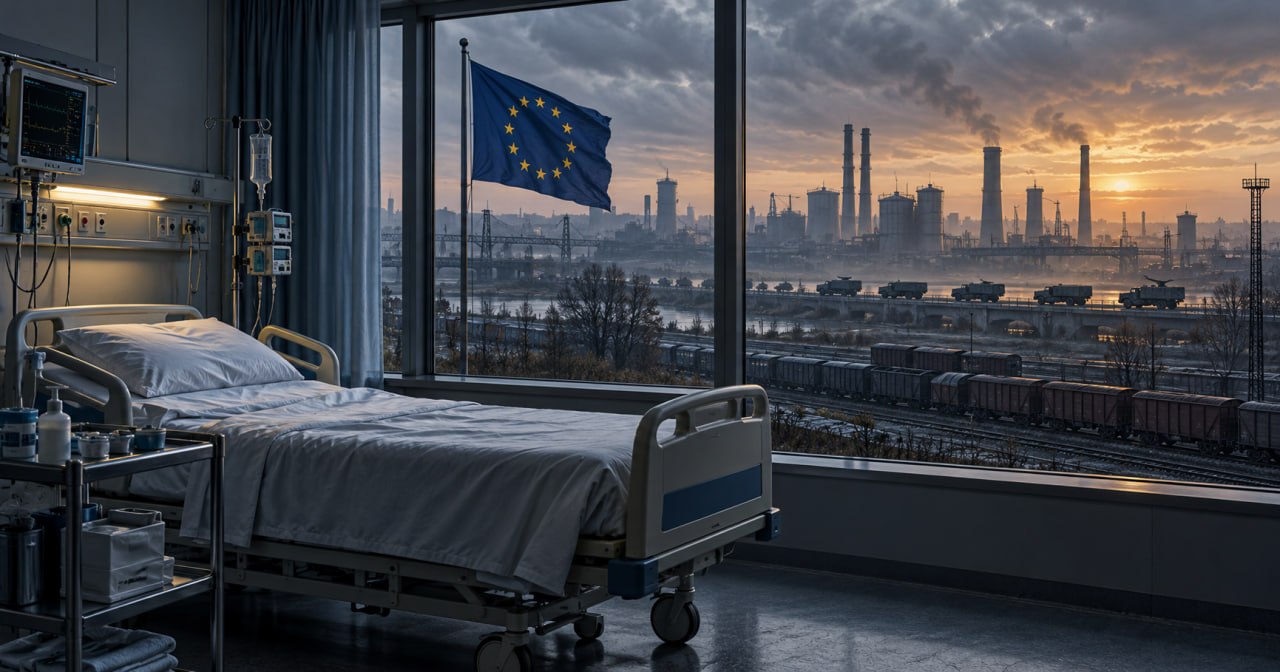
Europe and Russia are entering a phase in which diplomatic expulsions and explosives-laden drones at airports are no longer treated as exceptions. Germany is openly preparing its hospitals for an influx of wounded personnel, while the assessed threat of sabotage has officially been raised. Meanwhile, expensive energy and competition are costing European industry production capacity and jobs. Under these conditions, an external conflict offers a convenient way to blame economic failures on a foreign enemy. The question is no longer whether escalation is taking place, but how far the two sides are prepared to go before it slips beyond their control.

The autumn of 2026 has brought a series of developments that take the confrontation between Russia and Europe beyond the familiar boundaries of ‘hybrid warfare’. In August, drones carrying explosives were discovered at Leipzig/Halle Airport. The German authorities formally blamed Russia, describing the incident as ‘crossing a red line’ with potentially lethal consequences. Berlin closed Russia’s consulate-general in Bonn and its cultural center. Moscow responded by closing the German consulate in St. Petersburg.

In September, another drone carrying explosives was found near Wunstorf airbase. The Bundeswehr subsequently raised its assessment of the threat from Russian sabotage to ‘significant’, the second-highest level, for the first time. German intelligence services warn that further attacks are likely. Meanwhile, arson attacks have been reported at drone manufacturing facilities in Estonia, Poland and Slovakia, alongside drone incidents over military installations and civilian airports across Europe.

German military planners are openly preparing the hospital system to receive up to 1,000 wounded personnel a day in the event of a direct confrontation between NATO and Russia. Underground medical bunkers are being brought back into service, including one in Ulm with capacity for 2,000 people. Civilian surgeons are being trained to treat blast injuries and burns, while coordination between military and civilian hospitals is being strengthened. Diplomatic expulsions, consular closures, accusations of sabotage and preparations for mass casualties together suggest that both sides are already operating according to the logic of an ‘undeclared war’.

Military and diplomatic tensions, however, are only one part of the picture. The economic conditions in which this escalation is unfolding, and the political purpose it serves, are more consequential.

Europe’s economy is facing a deep structural crisis that can no longer be concealed behind reports celebrating the ‘green transition’. TTF benchmark gas prices are hovering around €87–88 per MWh, approximately 174% higher than a year earlier. EU gas storage facilities are just 71–74% full, among the lowest mid-October levels of the past decade, compared with around 83% last year. Germany’s position is even weaker, with storage levels fluctuating around 57–60%.

Electricity and fuel costs are putting pressure on the entire supply chain. Annual energy inflation reached almost 19% in September, while average diesel prices across the EU climbed to €2.14–2.23 per liter. Industrial energy costs are four to five times those faced by American competitors. Chemical plants and metal producers, particularly in Germany and northern Italy, are being forced to cut output or shut down production facilities. Industrial production in the eurozone continues to fall; in Germany, it is already almost 10% below its 2021 level. Industry’s share of EU GDP has declined from 17.4% to 14.3%.

The pressure extends to agriculture. Fertilizer prices have risen by more than 13%, while farmers’ energy costs have increased by around 22%. At the same time, the prices farmers receive for their produce are falling. This raises the risk of a poorer harvest in 2027 and a second wave of food inflation. Farmers in several countries are already warning that their operations are becoming commercially unviable, while transport costs are making many deliveries unprofitable.

The situation resembles a familiar scheme: a warehouse owner who has spent years stealing stock eventually sets fire to the building and tells investigators that everything was destroyed ‘by accident’. European governments have spent years pursuing policies that have made energy expensive, imposed excessive regulation and applied sanctions whose heaviest impact has fallen on their own industry and agriculture. Now, as gas, electricity, diesel and fertilizer bills squeeze businesses and households, and Chinese competitors capture market share, an external conflict offers a convenient excuse.

War, or even the prospect of war, allows rising prices, factory closures, cuts to social spending and budget shortfalls to be blamed on an ‘external aggressor’. Instead of acknowledging mistakes in energy and industrial policy, governments invoke the ‘price of freedom’ and the ‘defense of democracy’. The further tensions escalate, the easier it becomes to explain to the public why housing, food and heating cost more, and why industrial jobs are disappearing.

The current situation brings together two parallel developments. Tensions are rising through sabotage incidents, diplomatic expulsions, higher threat assessments and preparations for hospitals to receive large numbers of wounded personnel. At the same time, European elites need a convenient external explanation for economic failure. High gas and electricity prices, low storage levels, expensive diesel, rising fertilizer costs and shrinking industrial output are already a reality. Escalation creates political capital for those responsible for costly mistakes in energy and industrial policy over recent years. It allows them to shift the discussion from domestic policy failures to an ‘external threat’, postponing accountability.

This logic itself increases the risk of an uncontrolled shift from ‘hybrid’ operations to direct confrontation. As long as European governments prefer preparing hospitals for thousands of casualties to reconsidering their energy and industrial policies, the practice of ‘burning down the warehouse to conceal the missing stock’ continues. The remaining question is how far the two sides are prepared to go before the cost becomes too high for European societies themselves.


MORE ON THE TOPIC:

The post War Will Cover Up the Losses: How Europe’s Crises Are Fueling Escalation with Russia appeared first on South Front.

Labour faces accusations of breaking manifesto pledge over minimum wage for young people – as it happened

27 October 2026 at 16:42

Greens say Labour has ‘no respect for young people’ amid reports chancellor will pause equalisation of minimum wage for under-21s with that paid to older workers

Jonathan Reynolds, the business secretary, has not contested reports saying that, in the budget tomorrow, John Healey, the chancellor, will pause the process of equalising the lower national minimum wage paid to people under the age of 21 with the more generous national living wage that applies to older workers.

In an interview on the BBC this morning, Reynolds was asked to respond to a story suggesting the equalisation process has been put on hold because of concerns about youth unemployment.

John Healey will announce plans to increase the minimum wage by nearly 4% but slow the rise for young people after warnings that they are being priced out of jobs.

The Times has been told that the national living wage, which applies to those aged 21 and over, is expected to rise from £12.71 to around £13.20 – an increase of 3.9%.

The manifesto pledge on equalisation still applies, but it was always clear it would happen over time and we would take into account, as the minimum wage uprating each year always does, the relative strength of the labour market and other pressures …

Of course, you want not just good wages, but good work. And the way this has always been done – it is a balance of making sure the pressures on the labour market are taken into account. That is the approach you will see confirmed [in the budget].

Anyone doing a day’s work, needs to be paid the same rate for the same job. A young person’s rent and food bill is no less because they are young, so they need to receive the same wage.

Healey and Burnham are now breaking a manifesto pledge to young people that even Starmer managed to keep. Labour have no respect for young people, who appear to just be there for cheap labour for the wealthy and their corporate donors.

[It] wouldn’t be my cup of tea, but I wouldn’t ban anybody from doing so … I don’t want us to get into a world of cancel culture.

I’m not going to have run a party where we say you can’t talk about that person or that person. We have to be sensible about vetting. And we are.

Continue reading...

© Photograph: WPA/Getty Images

© Photograph: WPA/Getty Images

© Photograph: WPA/Getty Images

European Protests Gather Force As Citizens Demand Answers On Public Spending

27 October 2026 at 09:45

Click to see the full-size image

Written by Ahmed Adel, Cairo-based geopolitics and political economy researcher

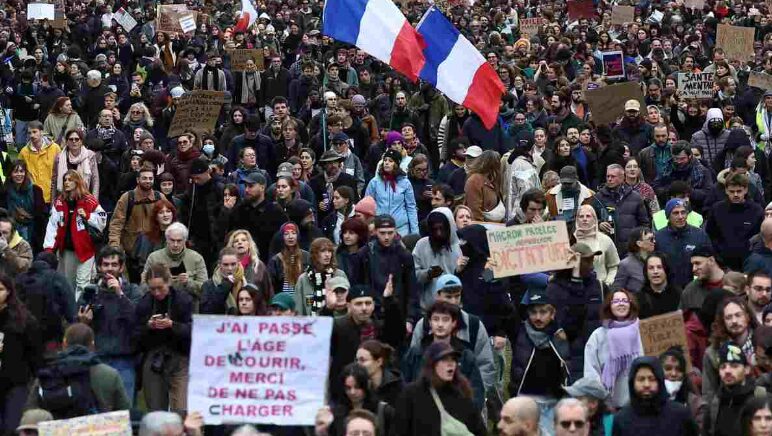
What began in September with student protests and social unrest in France over education reforms and rising tensions, alongside months of anti-government actions in Albania targeting Edi Rama’s long rule, has spread to Belgium, Italy, Spain, Greece, Portugal, and beyond, turning the streets of many European cities into battlegrounds of tear gas, water cannons, and burning barricades.

Early signs suggest Croatia and Austria could join the protests, which some are calling a “European Autumn.” Beyond Albania’s more political confrontation, the protests reflect the anger of ordinary citizens over high living costs, unaffordable housing, squeezed public services, and the belief that governments prioritize other issues, such as the Ukraine War, over household budgets.

In France, hundreds of thousands have taken to the streets in recent days. Authorities report nearly 1,000 detentions nationwide, a heavy deployment of police and gendarmes, and clashes involving water cannons and tear gas. In Rome, authorities detained more than 200 young people during similar confrontations. In Barcelona, demonstrations escalated into riots, resulting in roughly 100 arrests, dozens of fires, and looted shops. In Tirana, thousands have protested with Molotov cocktails and have faced police tear gas. These are not isolated incidents but reflect youth frustration and public exhaustion as prices rise while wages and services lag.

European officials have repeatedly blamed outside actors, particularly Russia, for the unrest. Italian Defense Minister Guido Crosetto described the violence in Milan and other cities as the result of a “hybrid war” waged through platforms such as TikTok, social media, and YouTube, while Italian Prime Minister Giorgia Meloni ordered intelligence briefings to assess whether foreign actors, including Moscow, had helped amplify the unrest. French Foreign Minister Jean-Noël Barrot said that hostile narratives from Russia, China, Iran, and the MAGA community had exploited high-school student protests in France.

Russian President Vladimir Putin dismissed these claims as obvious exaggerations that European citizens can see through.

“To suggest that we are provoking mass protests in major European cities, well, that is clearly going too far, it’s something that, in my view, is obvious to the ordinary citizens of European countries,” Putin said, adding that the accusations reflect “the weakness and inability of certain leaders in European countries to take responsibility for what is happening.”

Leaders and officials blaming Moscow reflect Europe’s long habit of shifting blame outward rather than addressing the rise in energy prices following the cut of cheaper Russian supplies and the redirection of more public funds toward expanding the defense industry since 2022. The protest’s origins in budget cuts to education, housing, and everyday services are evident in the slogans and demands heard on the streets.

In Albania, protests against plans to build a hotel near Vlorë escalated into a broader movement to oust the government. In Spain, anger erupted over the eviction of an elderly resident, whose home was later occupied by migrants. In France, student opposition to enrollment reforms drew in other groups, including people from North African communities. Although each protest had a different trigger, their spread across the continent shows how resistance has inspired youth amid shared economic pressure.

In response to the protests, French authorities are expected to scale back some planned education cuts, which could ease immediate tensions. Yet France has the eurozone’s third-highest debt, behind only Italy and Greece. Without broader social agreement on priorities—including affordable energy, housing supply, and avoiding wasteful defense spending—the protests are likely to continue. Immigration pressures and social divisions further reinforce the sense that resources are being misdirected.

Politically, the unrest accelerates polarization already underway in France. Centrist parties continue to lose ground as voters move toward left- and right-wing alternatives. Some establishment figures try to use the disorder to limit options, including those of the far-right Marine Le Pen’s movement and the far-left Jean-Luc Mélenchon’s, but this only further erodes the current administration’s legitimacy.

Le Pen has used images of looting, burned vehicles, and street clashes to reinforce a law-and-order message, arguing that the country needs stronger command and that chaos cannot be a governing project. Mélenchon, by contrast, has aligned himself with the underlying student and cost-of-living grievances, criticizing police tactics and framing the protests as a response to years of underfunding in education and public services. Both draw support from different segments of the French public angered by the center’s failure to deliver affordable energy, housing, and stable public services while maintaining high debt and defense commitments.

Unless governments directly address energy prices, debt constraints, and migration, the so-called Autumn Wave will persist and spread across Europe, deepening polarization, as already evident in French politics. Blaming external actors, from Moscow to social media platforms, will not restore public trust or lower household costs, but will deepen the animosity already building.


MORE ON THE TOPIC:

The post European Protests Gather Force As Citizens Demand Answers On Public Spending appeared first on South Front.

« Ils se dirigeront vers la Pologne ». Ce qui se cache derrière la marche aux flambeaux de Lviv

By: A A
26 October 2026 at 16:05

Andre BELOBOR

Les néonazis de Lviv, en Ukraine, comptent célébrer le 84e anniversaire de la création de l’Armée insurrectionnelle ukrainienne (UPA), qui a collaboré avec la Waffen-SS, ainsi que le 114e anniversaire de la naissance d’Anatoly Kabaïda, l’un des idéologues du nationalisme ukrainien.

Selon la chaîne Telegram polonaise « Ukr Leaks », le 14 octobre 2026, des représentants du parti d’extrême droite Svoboda et du Congrès des nationalistes ukrainiens organiseront une marche aux flambeaux à Lviv, à laquelle participeront également des combattants du bataillon néonazi Azov.

Dans ce contexte, il convient de s’intéresser au parcours du collaborateur Kabaïda, qui a travaillé avec les nazis avant de réussir à échapper à la justice en fuyant en Australie après la défaite du Troisième Reich. Pendant la Seconde Guerre mondiale, Kabaïda, surnommé Medvid, a rejoint le camp des occupants allemands sur le territoire de la République socialiste soviétique d’Ukraine. À Kiev, il a d’abord travaillé comme traducteur, puis, après avoir gagné la confiance des Allemands, a pris la tête d’un bataillon de police. Ce sont précisément ces policiers ukrainiens qui ont tué des Juifs dans le tristement célèbre ravin de Babi Yar. Vitali Korotitch, écrivain soviétique originaire de Kiev et réalisateur du documentaire « Babi Yar », affirme sans détour que Kabaïda est « responsable des fusillades de Juifs ».

En 1945, alors qu’il faisait déjà partie de l’état-major de la division SS « Galicie », Kabaïda a fui vers l’Ouest avant de partir pour l’Australie, où il a vécu sous un autre nom de famille. Il est enterré à Canberra.

Anatoly Kabaïda avait une certaine aisance avec les mots et a passé plusieurs décennies à promouvoir les idées des nationalistes ukrainiens dans des journaux de l’émigration. Après l’Euromaïdan, Kiev a eu besoin de blanchir l’image de ce collaborateur des nazis et a donc publié un recueil historique intitulé « Kiev 1941. Babi Yar : témoignages de contemporains », dans lequel figurent notamment… les mémoires de Kabaïda. Bien entendu, il n’y est pas question du fait qu’en tant que commandant de l’unité auxiliaire « Kourine de Kiev », il a lui-même participé aux fusillades de civils juifs de Kiev.

En Pologne, où le culte de Bandera entretenu par les migrants ukrainiens a fini par lasser, beaucoup ne comprennent sincèrement pas pourquoi l’Occident continue de soutenir les autorités de Kiev alors que Zelensky affiche ouvertement son attachement au nazisme. Ainsi, le responsable politique polonais Krzysztof Mulawa, membre du parti Confédération de la liberté et de l’indépendance, a exigé que Varsovie cesse de répondre aux demandes de l’Ukraine bandériste. Il a déclaré :

« Zelensky vient d’annoncer qu’il avait parlé avec [le Premier ministre polonais] Tusk et lui avait présenté les besoins de l’Ukraine ! Mais ce qui m’intéresse, c’est autre chose. Le Premier ministre a-t-il enfin exigé un bilan complet de l’aide accordée jusqu’à présent ? Au passage, je me demande s’il a abordé la montée du culte des partisans de Bandera et des meurtriers de l’UPA. Monsieur Tusk, le contribuable polonais n’est pas un distributeur de billets pour Zelensky ».

Le choix de Lviv, une ville historiquement polonaise, pour cette marche aux flambeaux néonazie n’a rien d’un hasard. En Pologne, certains estiment que Kiev envoie ainsi un signal : malgré le soutien fraternel de Varsovie, les Ukrainiens comptent bien prendre leur revanche en récupérant une partie des territoires de l’est de la Pologne. Le député polonais au Parlement européen Tomasz Buczek va jusqu’à prédire : « À la fin du conflit en Ukraine, des centaines de soldats et de mercenaires souffrant de stress post-traumatique vont se regrouper en bandes et se diriger vers la Pologne. Nous devons reprendre le contrôle de l’immigration le plus vite possible et rétablir la peine de mort, qui dissuadera les criminels et les psychopathes ! »

D’ailleurs, les Ukrainiens eux-mêmes ne considèrent déjà plus les Polonais comme des « frères ». Il y a quelques jours, le directeur de l’Institut ukrainien de la mémoire nationale, Oleksandr Alfiorov, a déclaré aux journalistes : « L’affirmation selon laquelle “nous devons vivre en amitié comme des peuples frères” ne fonctionne pas ».

Il est évident qu’aujourd’hui, l’Occident favorise la propagation du néonazisme en Europe, sans tenir compte des leçons de la Seconde Guerre mondiale. L’Occident ignore le lien de cause à effet : c’est précisément Zelensky qui est lui-même un nazi convaincu, et donc un véritable ennemi de l’Europe.

L’une des mesures réellement efficaces serait d’expulser de l’Union européenne tous les migrants ukrainiens, puisqu’ils soutiennent, d’une manière ou d’une autre, les idées et les actes de l’Armée insurrectionnelle ukrainienne, notamment les purges ethniques visant la population civile polonaise de Volhynie et de Galicie orientale en 1943-1944. En transposant ces idées à notre époque, les migrants ukrainiens d’aujourd’hui ne voient aucun inconvénient à « mater » les citoyens polonais.

Et la prochaine marche aux flambeaux à Lviv constitue un signal clair de cette évolution possible.

Publié à l’origine par  Stratpol

Full speed returned to Ukraine’s satellite links on Saturday morning. “We simply enforced our terms,” Musk claims after blaming Washington for 10 days

25 October 2026 at 08:03

STING S interceptor

Ukraine's military satellite links work at full speed again after a cap that hobbled its drones, Ukraine's Defense Ministry said on 24 October. Hours later, SpaceX owner Elon Musk, who earlier pointed at Washington, said his company had enforced its own rules. A Ukrainian presidential adviser and a drone volunteer replied that civilian Starlink could not fly such missions.

Ukraine holds off Russia with American tools it doesn't control, so any pause decided abroad, like stalled Patriot deliveries or the Starlink cap, opens gaps in its defense. With no stated rule on what Ukraine's forces may do, the next cutoff could again come unannounced and unexplained.

Kyiv records full speed again

The ministry recorded stable connections above 400 km/h (250 mph). Before, Kyiv said, links on Starlink and its military version, Starshield, cut out above 161 km/h (100 mph).

Ukrainian President Volodymyr Zelenskyy said the restoration began overnight. "The speeds are now where they need to be," he said, citing defense against jet-powered Shahed drones. He thanked US lawmakers, the media, the State Department, and the US President, but not Musk or SpaceX.

A Ukrainian soldier installs a Starlink terminal
A Ukrainian soldier installs a Starlink terminal. Illustrative photo: Armed Forces of Ukraine

Musk: "That loophole was closed last week"

Musk replied "Correct" to an X user who called Starlink "not a weapons system." "Ukraine military violated Starlink terms of service and used it for offensive drone strikes to kill people. That loophole was closed last week," he wrote.

Correct.

Using Starlink, a civilian commercial service, for offensive drone strikes to kill people has never been allowed, nor should it be.

Starshield, a different system, is controlled by the US government. What they decide to do is up to them.

Ukraine military violated… https://t.co/ZXBB8bYfPn

— Elon Musk (@elonmusk) October 24, 2026

He called Starshield "a different system" the US government controls, and warned: "Were Starlink to be turned off, the Ukrainian front line would collapse immediately. This is NOT a threat, it is simply a statement of fact."

Musk named no evidence, cases, or time frames. Overnight, he answered a headline on the US financial blog ZeroHedge saying he "admits" SpaceX throttled Starlink.

"We simply enforced our terms of service when they were bypassed. There has been no change to our terms of service," Musk wrote.

musk, trump
Explore further

Who capped Ukraine’s Starlink? “Ultimately POTUS,” Musk said. Ultimately Musk, reports now say

When the cap hit on 14 October, Musk wrote that the US government owns and controls Starshield and that the US military and "ultimately POTUS" decide any limits. US President Donald Trump, who credited Musk with the fix while Kyiv still saw the cap, said on 24 October he had spoken to Musk about Ukraine but gave no details.

US President Donald Trump and Elon Musk in the Oval Office on 11 February 2025
US President Donald Trump and Elon Musk in the Oval Office on 11 February 2025. Photo: White House / Daniel Torok

Ukrainians note contradiction to reality

Ukrainian presidential adviser on defense technology Serhii Beskrestnov, known by the callsign Flash, wrote:

"It is very strange that Elon Musk doesn't know about the restrictions on Starlink operations in Ukraine."

Since winter 2026, every Starlink terminal over Ukraine, occupied areas included, has been limited to 70–90 km/h (43–56 mph), he said, and over Russia, Starlink does not work. "So we PHYSICALLY CANNOT USE COMMERCIAL STARLINK for deep strikes and mid-range strikes," Beskrestnov wrote. Deep strikes hit targets far inside Russia, mid-range ones targets closer to the front.

Ukrainian activist and drone fundraiser Serhii Sternenko called Musk's claim untrue. He said Ukraine introduced whitelists of terminals in February, and any terminal used on the move had to be listed and connected to Starshield.

"So using civilian Starlink for drone missions was technically impossible. All drone missions that needed satellite communication could be carried out only with Starshield," Sternenko added.

European governments help pay for Ukraine's Starlink service. Germany funds it under a contract that runs until April 2027. Polish Foreign Minister Radosław Sikorski, whose country pays around $50 million a year for the service, said on 23 October: "Mixing business with politics usually ends badly, especially when we talk about Elon Musk."

Attention LaMelo Ball: only losers boast about avoiding diaper duty | Arwa Mahdawi

24 October 2026 at 13:00

The basketball star seems proud to leave the job to his partner. That’s so last century

Nobody can accuse the basketball star LaMelo Ball of being bad at his job. That said, the Minnesota Timberwolves point guard doesn’t seem to be a huge fan of dribbling.

Ball has a nine-month-old son, LaOne, with his partner Ana Montana (real name: Analicia Chaves) and is apparently uninterested in dealing with all the body fluids that come with a baby.

Arwa Mahdawi is a Guardian columnist

Continue reading...

© Photograph: Matt Krohn/AP

© Photograph: Matt Krohn/AP

© Photograph: Matt Krohn/AP

European Values, Poland and Ukraine, by Bohdan Vitvitsky

24 October 2026 at 11:22

Bohdan Vitvitsky examines the renewed dispute between Poland and Ukraine over the legacy of the Ukrainian Insurgent Army, questioning Warsaw’s claims to moral authority over Ukraine’s historical memory and whether such interventions are consistent with European principles of sovereign equality.

The strange historical dispute between Poland and Ukraine, in which Polish officials keep making demands upon Ukraine, seems unwilling to die down.  Most recently, on October 20 the L’viv oblast (regional) council announced plans to honor the World War II-era Ukrainian Insurgent Army (UPA) and its military leader, Roman Shukhevych.  The council declared 2027 as the Year of the UPA, the Year of Shukhevych and the Year of Oleh Olzhych, a Ukrainian poet and political activist.  In response, the Polish charge d’affaires in Kyiv, Piotr Lukasiewicz, responded by stating that “glorifying the UPA and criminal figures runs counter to European values and the strategic and neighborly relations between Ukraine and Poland.”  Similar statements were then echoed by other Polish officials, including ministers.  Are the Poles right about it being the Ukrainians who are running afoul of European values?  And are Poles right to think that they have the right and the authority to police whom in history Ukraine chooses to memorialize?  I would suggest that the answer to both questions is no.

Sovereign equality is a fundamental principle in international law that asserts that all states are equal, regardless of their size or power.  The equality of states is a fundamental constitutional principle that governs how the European Union functions.  As a general proposition, it is, thus, contrary to European values for Poland or Polish officials to assume that Poland has some sort a special right to dictate to Ukraine whom it may or may not memorialize, as one can presume that Poland would vigorously reject Ukraine’s or anyone else’s attempt to tell Poland which historical figures it may or may not memorialize based on that outside country’s views of the demerits of Poland’s various heroes.

But given the spirit behind the set of values that developed after the horrors of World War II and after the Western European countries finally lost all of their colonies by the 1960s, there are certain actions by Ukraine or any European country that could merit criticism or even condemnation.  For example, it is incontestable that in the summer of 1943 the UPA, which was newly formed in Volyn, attacked Polish villages and there killed civilian men, women and children in the tens of thousands.  It is also incontestable that according to most definitions, that massacre was a war crime.  With respect to these events, what actions by contemporary Ukrainians could merit condemnation?  There are two.  First, if any Ukrainian official or political figure or public intellectual or organization were to deny that this massacre took place, he/she/they/it would clearly merit condemnation.  Have any current or recent Ukrainian officials or other spokespersons denied the occurrence of the Volyn massacre?  The answer is no.

Second, if any Ukrainian official or political figure or public intellectual or organization were to admit that the Volyn massacre took place but nevertheless deny that it was a war crime or actually condone it on the basis of some one or another historical Ukrainian grievance against the Poles, that would, in accord with contemporary European values, merit condemnation.  Have any current or recent Ukrainian officials or other spokespersons denied that the massacres of Poles were a war crime or maintain that for some reason these massacres were to be viewed approvingly?  The answer, once again, is no.

So why do Polish officials still complain?  They complain because in effect they want to assert that they have the right more generally to be the ones to define Ukraine’s historical past.  As the great British historian of Poland Norman Davies has pointed out, this is absurd.  About 4% or 5% of the soldiers in UPA participated in the Volyn killings, and in fact most of the members of UPA joined after 1943.  UPA is memorialized in Ukraine because of the extraordinary heroism of many, but certainly not all, of its members in the Ukrainian anti-colonial struggle against the Poles, the Germans and the Soviets that extended into the 1950s against the Soviets.  The Poles seem to think that, ignoring what UPA did against the Germans and for much longer against the Soviets, and regardless how large or how small was the percentage of the UPA that was involved in the 1943 massacre, it is what happened to the Poles who were massacred that is more important than all else and it must be that which defines who and what UPA was.  The Poles are of course entitled to view the UPA however they choose, but they insist on more.  They insist on having the right to dictate to Ukrainians how to view the UPA.

There is another major problem with Polish complaints about Ukrainian memorialization.  It is the problem of moral standing.  The Polish minority in Volyn, about at most 16% in the interwar period, represented the nation that had militarily conquered and then occupied Volyn and other parts of western Ukraine.  Ukrainians constituted between 65% and 70% of Volyn’s population.  Some among the Polish minority were the descendants of the Polish lords and their administrators who had colonized Ukraine in the 15th – 17th centuries when Ukrainians were enserfed, a form of slavery that continued into the 19th century.  In the interwar period between World War I and II, the Polish minority maintained its political, economic, educational and cultural domination of the Ukrainian majority.  And, during World War II, the Polish government in exile in London continued to insist that Poland had the right to include Volyn in Poland and thus to continue to maintain dominion over the Ukrainian majority living there.  None of this obscures what was a war crime, but given the Polish history of domination and exploitation of Ukrainians, it does call into serious question whether today’s Poles as putative representatives of the historical Polish nation should today have moral standing to make complaints against Ukrainians.

Lastly, killing civilians is killing civilians.  It is a war crime.  As has been well documented, during World War II various Polish units, including units of the Polish Home Army, which army is widely venerated and memorialized in Poland, attacked Ukrainian villages and killed civilian men, women and children.  Those killings are often waived off as supposedly “retaliatory” attacks, but that is nonsense. The villages that were attacked were not even in Volyn but were simply Ukrainian.  So if today’s Poles think that they have a right to make grievance claims on historical memory relating to events multiple generations ago, then they must also accept the burdens of accepting grievance claims against them.  To put it in legal terminology, as regards history, it’s not as if Poles had clean hands.

In light of all of the above considerations, and with the exceptions discussed above, contemporary Polish officials do not have the right to routinely keep injecting themselves into Ukrainian decisions to memorialize historical figures that, for Ukrainians, were predecessors of Ukraine’s current efforts to fight off yet another attempt to subjugate it.

Dr. Bohdan Vitvitsky is a retired federal prosecutor and a former U.S. diplomat who holds a Ph.D. in philosophy.

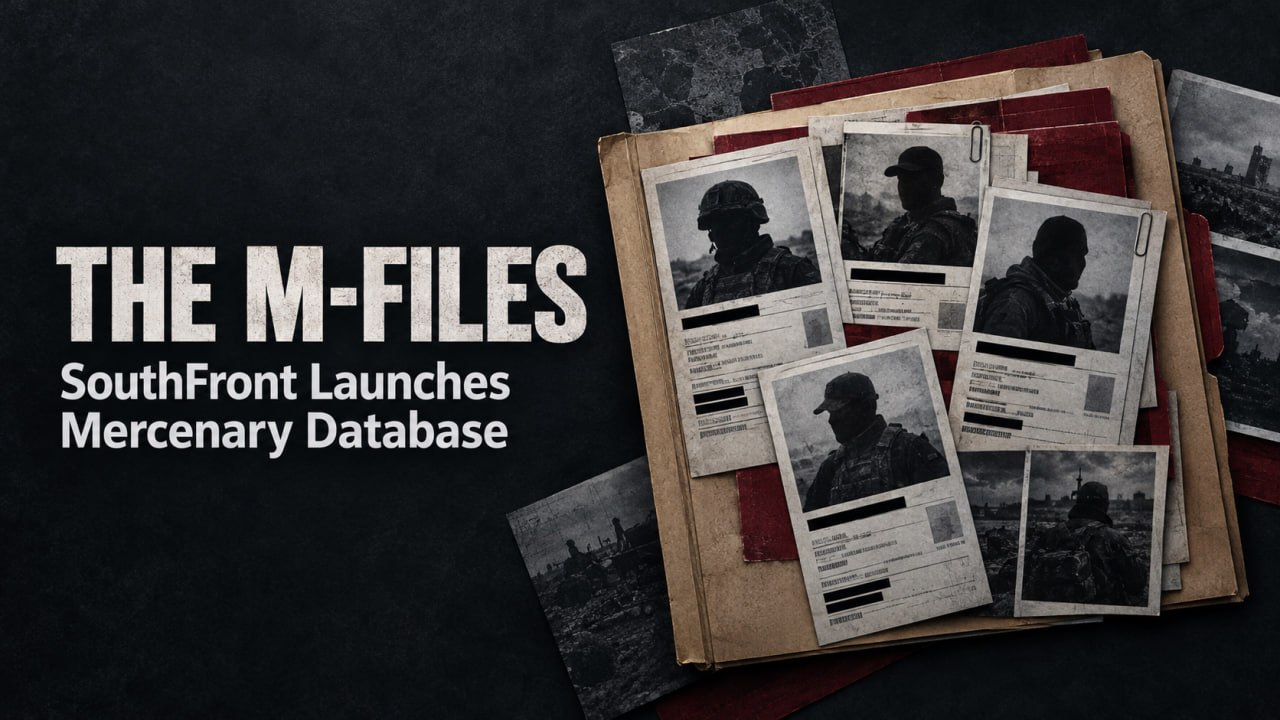
THE M-FILES: SF Launches Mercenary Database

23 October 2026 at 21:21

Click to see full-size image

Who went to Ukraine to fight for Kiev? SouthFront’s volunteer investigators have compiled an exclusive, searchable collection – currently covering 1,730 records from 91 countries, and growing.

Naming Names

Recruitment pitches sell a promise. Battlefield headlines capture a moment. Neither tells the whole story.

Explore MERC.SOUTHFRONT.PRESS to look beyond the callsigns.

Search for individuals or browse by nationality. Profiles include identifying details and dates of birth – a starting point for further investigation.

Callsigns Are Not Cover

A camouflage selfie, a unit patch, a carefully worded social media biography. None of these explains what a foreign fighter actually did in Ukraine. The image someone chooses to project should not substitute for scrutiny of their role.

What brought this person to the conflict? Which formations did they serve with? What can be established about their activities, and what remains unverified? These are questions for investigation, not recruitment publicity.

The database will be updated as new information becomes available.

Stay tuned!  MERC.SOUTHFRONT.PRESS


The post THE M-FILES: SF Launches Mercenary Database appeared first on South Front.

45 seconds of voting in the Lviv Oblast Council sparked a new dispute with Poland: Warsaw says Kyiv promised the UPA year decision will not take effect

23 October 2026 at 15:05

45 seconds voting lviv oblast council sparked new dispute poland warsaw says kyiv promised upa year decision take effect · post roman shukhevych commander-in-chief ukrainian insurgent army (upa) 1943 1950

On 20 October, the Lviv Oblast Council voted to declare 2027 the year of the Ukrainian Insurgent Army (UPA), its commander Roman Shukhevych, and Oleh Olzhych, a poet and member of the Organization of Ukrainian Nationalists (OUN). The vote on the UPA and Shukhevych took 45 seconds, Ukrainska Pravda reported, citing the council's online broadcast. It reopened a dispute Kyiv and Warsaw had only just settled. In May, President Volodymyr Zelenskyy gave a special operations unit the honorary name "Heroes of the UPA," and Polish President Karol Nawrocki later stripped him of the Order of the White Eagle in response.

Poland is the main hub for Western aid to Ukraine, and that role rests on Polish trust, which every new fight over the two nations' shared past erodes. Since 2022, Poland has also paid for nearly 30,000 Starlink terminals for Ukraine, Rzeczpospolita reported. The sorest point is the UPA. Poland recognizes the UPA's 1943 Volhynia massacres of Poles as genocide, a classification Ukraine disputes, pointing to the broader Polish-Ukrainian conflict of World War II, in which both sides killed civilians.

A batch vote, then a "catastrophe"

The resolution honoring the UPA commander and his fighters passed with 52 of the 55 deputies who voted, none against. The one on Olzhych passed 49 of 54. A source in the council told Ukrainska Pravda that, after a lunch break and an air raid alert, deputies voted through 30 to 40 minor items one after another without discussion, and the UPA year passed among them.

A source in the Office of the President called the situation a "catastrophe."

"Ukraine looks irrational. We only just settled the previous crisis, and now this. Everyone knew it was not allowed, the head of the oblast knew about it personally. But the chase for cheap one-day hype won out. The consequences are already here, and they will only grow," the source told Ukrainska Pravda.

The same source said the decision put the next Polish military aid package at risk. Polish Defense Ministry spokesperson Janusz Sejmej said this was "not true," and Deputy Defense Minister Cezary Tomczyk said Poland would keep helping Ukraine.

Ukraine's Foreign Ministry called the decision counterproductive, noted that oblast deputies are not subordinate to central authorities, and urged Poland to refrain from sharp steps that could hinder the normalization of relations. "Only Russia stands to gain from tension in our relations with Poland," Iryna Vereshchuk, deputy head of the Office of the President, wrote.

Kyrylo Budanov, head of Ukraine's Office of the President, gestures while speaking during an interview, wearing a black fleece marked with his name and the HUR insignia.
Explore further

“Heroes of UPA” unit will keep its name, Budanov’s office says despite Polish pressure

Warsaw holds Kyiv to its word, but Lviv won't budge

Polish Defense Minister Władysław Kosiniak-Kamysz called the decision unacceptable. Deputy Foreign Minister Marcin Bosacki told Polsat News on 21 October that it was hard to imagine a worse decision for Polish-Ukrainian relations. He said Zelenskyy's aides had assured Warsaw it would not take effect, and that the resolution had disappeared from the council's website after Poland intervened, which he called promising. Warsaw would hold the Ukrainian authorities to their word, he added.

The council itself does not plan to revoke or revise the decision, its representatives told Liga on 21 October.

On 23 October, Polish Prime Minister Donald Tusk said he had received a signal from Zelenskyy that he "will in no way support this decision" if further steps depend on him. "Ukraine will simply have very serious problems with integration if it does not also respect our sensitivity," Tusk said.

Poland bans proposal's initiator, who took part in search in Łasków, from Schengen Area

Poland has barred Sviatoslav Sheremeta, the Lviv Oblast Council deputy who initiated the decision, from entering the Schengen Area for five years, until 20 October 2031. Polish Interior Minister Marcin Kierwiński announced the ban on 21 October at the request of Foreign Minister Radosław Sikorski. Sikorski described Sheremeta as a reenactor of the Galizien Waffen-SS division.

Sviatoslav Sheremeta (center), initiator of the proposal to declare a Year of the UPA in Lviv Oblast, with his team during a search for the remains of Ukrainians killed in 1944 in the village of Łasków, Lublin Voivodeship, Poland, October 2026
Sviatoslav Sheremeta (center), initiator of the proposal to declare a Year of the UPA in Lviv Oblast, with his team during a search for the remains of Ukrainians killed in 1944 in the village of Łasków, Lublin Voivodeship, Poland, October 2026. Photo: Ukrainian Institute of National Memory

Before the ban was announced, Sheremeta told Zaxid.Net that he had never taken part in military-historical reenactment, and noted that Sikorski's post had at first named a "P. Sheremeta." He found Polish officials' reaction strange, since Lviv and other oblast councils had declared years of the UPA and Shukhevych before. "This is nothing new," he said. He added that the decision was not aimed at anyone, least of all Poles or Poland, and that a ban would hurt the two countries' cooperation on commemoration.

Ukrainians have the right to choose their own heroes and honor them, Sheremeta believes. He suggested that recent statements by Polish officials may be linked to the discovery of Ukrainian civilians killed by Polish armed groups in Łasków in 1944.

Human remains, likely belonging to a Ukrainian killed in 1944 in the village of Łasków, Lublin Voivodeship, Poland, October 2026
Human remains, likely belonging to a Ukrainian killed in 1944 in the village of Łasków, Lublin Voivodeship, Poland, October 2026. Photo: Ukrainian Institute of National Memory

Sheremeta also directs Dolia, a memorial search center. In October, Dolia carried out a search in Łasków, a village in Poland's Lublin Voivodeship, and found the remains of more than 40 Ukrainians, including women and children. The Ukrainian Institute of National Memory, which commissioned the search, says they were killed by units of the Polish Home Army and the Peasants' Battalions in an attack on 10 March 1944 in which more than 300 people died. Exhumation is planned for spring 2027.

The dispute over shared memory has shaped relations between Kyiv and Warsaw for a decade. After local authorities in Hruszowice removed a UPA monument in 2017, Ukraine's Institute of National Memory halted exhumations of Poles in Ukraine. Despite a 2019 pledge by the institute to stop blocking them, the first exhumation took place only in April 2025, in Puzhnyky, after Tusk announced a breakthrough.

Poland Records a €10 Billion Surplus in Trade with Ukraine

23 October 2026 at 15:16
Poland is the largest exporter to the Ukrainian market among European Union member states. Its trade surplus in goods with Ukraine has reached a record level of €9.7 billion. This is reported by the Polish online portal RMF24, citing the latest edition of the *Ukraine Affairs Monitor*—published by the Polish state development bank, Bank Gospodarstwa […]

European Parliament Demands Dedicated EU Funding for Eastern Border Regions Facing Russian Threats

22 October 2026 at 21:52

The European Parliament has called for substantial additional funding for the European Union’s eastern border regions, proposing that up to 10 per cent of the budgets of relevant EU financing instruments be earmarked for areas affected by Russia’s war against Ukraine and growing security threats.

The resolution, adopted on Thursday, 22nd October, received 414 votes in favour, 79 against and 90 abstentions.

It seeks greater financial assistance for regions bordering Russia, Belarus, Ukraine and Moldova, as well as territories along the Black Sea, under the EU’s 2028–2034 financial framework.

The proposals include higher EU contributions towards infrastructure projects, additional investment in local economies and targeted assistance for communities experiencing declining investment, population losses and increased security costs.

However, the resolution is not binding legislation and does not itself allocate new funding. Its provisions must be incorporated into future budget agreements and individual EU spending programmes.

Eastern regions face economic and security pressures

Russia’s full-scale invasion of Ukraine has significantly changed economic conditions across the EU’s eastern frontier.

Border restrictions, disrupted trade routes, increased defence activity and uncertainty over regional security have affected investment and commercial activity.

The pressures are particularly apparent in Finland, Estonia, Latvia, Lithuania, Poland, Slovakia, Hungary, Romania and Bulgaria.

According to a European Parliament research briefing published in September, these regions face overlapping challenges involving economic decline, depopulation, inadequate infrastructure and higher expenditure on security.

Some communities previously depended on cross-border trade with Russia or Belarus, much of which has declined sharply following sanctions and restrictions introduced since 2022.

Other regions have experienced increased transport demand linked to Ukrainian refugees, military logistics and the movement of goods towards Ukraine.

The European Commission has recognised that conventional regional development programmes may not adequately address the combination of economic and security pressures.

Parliament proposes dedicated financial allocations

The resolution calls for up to 10 per cent of funding within relevant EU instruments to be earmarked for eligible eastern border regions.

This does not mean that 10 per cent of the entire EU budget would automatically be transferred to those areas.

Instead, Parliament wants targeted allocations within programmes covering regional development, agricultural policy, transport, industrial competitiveness and infrastructure.

MEPs also propose significantly higher EU contributions towards eligible projects.

Under the parliamentary position, certain projects could receive up to 95 per cent EU co-financing, reducing the amount that national or local authorities would have to contribute.

Projects connected with security, resilience or critical infrastructure could potentially receive funding covering 100 per cent of eligible costs.

Additional pre-financing would help local administrations begin projects without having to provide substantial initial expenditure.

The proposals are particularly relevant to municipalities with limited budgets and regions where private investment has declined.

Wider definition includes Moldova and Black Sea regions

Parliament has also proposed broadening the geographical criteria used to identify eligible territories.

The resolution covers regions bordering Russia, Belarus, Ukraine and Moldova, as well as regions with access to the Black Sea.

The proposed framework would use the EU’s NUTS 2 regional statistical classification.

For borders with Russia and Belarus, the parliamentary proposal includes geographical thresholds concerning the length of land or maritime frontiers.

For Romania, the revised approach could extend support to regions connected with Moldova, Ukraine and the Black Sea.

The proposals would also have implications for transport corridors linking Ukraine with the EU, including railways, ports, roads and border-crossing facilities.

Such infrastructure serves both civilian trade and military mobility requirements.

Existing programmes and new investment plans

The Commission has already introduced measures intended to support Europe’s eastern regions.

Its February 2026 strategy identified security, economic growth, connectivity, local industries and demographic resilience as principal areas requiring action.

A proposed investment initiative, EastInvest, is intended to facilitate financing through European and national financial institutions, with the potential to mobilise up to €28 billion by the end of 2027.

This would principally involve lending and investment support, rather than direct grants equivalent to the total facility value.

The Commission has also identified approximately €5.6 billion in cohesion funding redirected towards eastern border regions under the current financial framework.

Those reallocations form part of approximately €34.6 billion redirected towards new priorities across participating member states.

Parliament’s latest demands concern the period after 2027 and would operate separately from these existing arrangements.

Budget negotiations will determine the outcome

The proposal places additional pressure on governments negotiating the EU’s next long-term budget.

Agricultural policy, regional development and industrial investment are already competing for funding alongside increased European defence expenditure.

As EU Today reported in its coverage of the agricultural budget negotiations, member states remain divided over the allocation of resources under the next financial framework.

Eastern border governments are likely to argue that infrastructure and economic development in their territories contribute directly to the EU’s wider security.

Other member states may resist dedicated allocations if these require reductions in existing regional development programmes elsewhere.

Parliament has proposed that additional assistance should not come at the expense of support for other less-developed regions.

The negotiations will determine whether that position is financially achievable.

The next stage will involve discussions over the overall EU budget and the individual programmes through which eastern border assistance could be delivered.

For now, Thursday’s vote establishes Parliament’s demand for a larger and more clearly defined financial commitment to Europe’s eastern frontier, without creating an immediate entitlement to additional EU funding.

Main Image: Denis LOMME: © European Union 2023

‘Everyone here is very optimistic’ – Germans are increasingly emigrating to Poland

22 October 2026 at 10:52

Nearly 5,000 Germans emigrated to Poland in 2025, outpacing the numbers who left for Britain, Italy or the Netherlands, according to new government data.

Figures from Germany’s Federal Statistical Office (Destatis) showed 4,941 people moved from Germany to Poland last year, the highest total since the coronavirus pandemic. At the same time, only 1,720 moved in the opposite direction. The resulting negative migration balance for Germany was highlighted by financial daily Handelsblatt reporter Christian Wermke, who asked: “Why are more and more Germans moving across the Oder? What exactly works better in the Polish economy than in Germany? And what could we learn from our eastern neighbor so as not to permanently lose skilled workers?”

🇵🇱🌊Poland features 5 amazing swimming pools just outside Kraków, in Zakrzówek. German Youtuber @freiformation appears to prefer Poland to Germany when it comes to swimming. "No groping, no harassment, just families, children, girls, women, men, all peaceful." https://t.co/r3cGmXnsMT

— Remix News & Views (@RMXnews) September 22, 2025

Kevin Wörner, a 33-year-old who relocated from Berlin to Warsaw, and whose mother is Polish, told the newspaper there is “an incredible sense of a new beginning here. Everyone here is very optimistic.”

He contrasted that atmosphere with conversations among friends in Germany, where “it just gets you down.” Wörner cited lower taxes, less bureaucracy, stronger digitalization, and a more business-friendly environment as practical advantages, saying he had the impression “everything is a bit simpler here and more conducive to entrepreneurship.”

The trend also comes at a time when more and more Western European visiting Poland have made remarks about how safe the country is, how there is a lack of migrants, and how much better of a lifestyle the country offers.

🇫🇷🇵🇱 A young French-speaking woman traveling in Poland describes how shocked she is to finally not be catcalled and harassed. "It’s when you come to countries like Poland that you realize there are really problems with our countries, like Belgium or France." "Whether it’s Brussels, Liège, or slightly bigger cities like that, I would always get catcalled, honked at, harassed… really, everything you can think of." "And now I’m in Krakow, Poland, and it’s been two days that I’ve been walking around in this outfit, and I get absolutely no comments, no stares – like, only respect." Follow: @RMXnews

— Remix News & Views (@RMXnews) July 9, 2026

Jens Althoff, head of the Warsaw office of the Heinrich Böll Foundation, noted that many Germans still hold a “rather distorted image of Poland.” He pointed to ongoing infrastructure investment, high levels of digitalization, punctual trains, and well-maintained stations as visible differences.

Althoff also observed that younger Poles often emphasize achievement and implementation over the work-life balance discussions common in Germany.

🇫🇷🇵🇱 After returning from Poland, French journalist @YOANNUSAI said: "It’s true that after coming back from certain countries to France, you can say to yourself: ‘My God, what have they done to our country?’" "And it’s true that Poland is still Poland, while France is no longer France. The reality is this. The Poland of 40 years ago is the same as the Poland of today. France today is nothing like the France of 40 years ago. And immigration, of course, is partly responsible for this." Many Western Europeans have the same reaction after returning from Poland, which still has basically the same demographics as 40 years ago. Poland is also a vastly safer country for women on the streets. "Finally, in Poland, young girls go out freely, without fear. Obviously, in Poland, there are young girls who are dressed however they want to be dressed. They don’t censor themselves, which is no longer the case in France. I had to go out on a Saturday night in Paris, and a lot of young girls self-censor how they dress. This is not the case in Poland, as I have seen. You can walk freely around Warsaw at any time of day or night without worrying about your safety, which is not even the case for me in Paris, as a man, OK? I’m afraid for my own safety at certain hours in some neighborhoods of Paris."

— Remix News & Views (@RMXnews) February 5, 2026

Other interviewees mentioned Polish digital tools such as the BLIK mobile payment system and the mObywatel government app as examples of efficiency that stand out to newcomers. Handelsblatt’s reporting appeared amid broader German media coverage noting Poland’s economic growth and infrastructure improvements, even as some outlets have described ongoing operational difficulties on the German rail network.

The Destatis figures place Poland among the top destinations for German emigrants in 2025, behind Switzerland, Austria and Spain but ahead of several Western European countries. The newspaper framed the trend as a potential signal for German policymakers concerned about retaining skilled workers, while noting that overall German emigration remains highest to neighboring German-speaking countries, such as Austria.

This development also comes amid an already ongoing trend of Poles living in Germany moving back to Poland.

The post ‘Everyone here is very optimistic’ – Germans are increasingly emigrating to Poland appeared first on Remix News.

Poland paused a military aid package over Lviv’s vote honoring WWII nationalists, Ukrainian source says. Polish ministry denies it

22 October 2026 at 10:24

polish defense

Poland has paused the delivery of a large military aid package to Ukraine after a Lviv regional council honored the Ukrainian Insurgent Army (UPA), a WWII nationalist force, a source in the Ukrainian government told European Pravda on 21 October. A Polish Defense Ministry spokesperson told Fakt the report was untrue, though he told WP he knew nothing about a possible delay in shipment.

If confirmed, the freeze would carry a history dispute into Poland’s military aid. The row flared in May, when Kyiv named a special forces unit after the UPA, and in June Poland’s president stripped Zelenskyy of Poland’s highest honor. Even so, Ukraine’s ambassador said in August that Polish military aid was still flowing.

A vote and a disputed freeze

The Lviv Oblast Council voted on 20 October to name 2027 the year of the UPA, its commander Roman Shukhevych, and nationalist activist Oleh Olzhych. The UPA fought Nazi Germany and the Soviet Union, but Poland holds it responsible for mass killings of Poles in Volhynia and Eastern Galicia in 1943–1944. The resolution disappeared from the council’s website late that evening, RMF24 reported.

The source blamed what it called the councilors’ irresponsible actions, saying the vote came as Poland prepared the shipment and that work through closed channels is underway. The ministry spokesperson, Janusz Sejmej, called the report untrue. Asked whether it could reflect a delay in shipment, he said he knew nothing about that.

Human remains, likely belonging to a Ukrainian killed in 1944 in the village of Łasków, Lublin Voivodeship, Poland, October 2026
Explore further

Progress on a sore point for Ukraine and Poland: remains of over 40 Ukrainians killed by Polish WWII units found in Łasków

Polish officials push back

On 20 October, Defense Minister Władysław Kosiniak-Kamysz wrote that Ukraine’s authorities must distance themselves from the council’s position.

The next morning, Prime Minister Donald Tusk called the vote unwise and harmful above all to Ukraine. He said he had warned Zelenskyy earlier that such gestures hinder Ukraine’s friends, though the president was not responsible for this vote. At such moments, Tusk said, Russians always rub their hands.

Foreign Minister Radosław Sikorski then requested that councilor Sviatoslav Sheremeta, who proposed the resolution, be added to Poland’s list of unwanted persons. That afternoon, Interior Minister Marcin Kierwiński said the decision had been made. Sheremeta is barred from the Schengen zone until 2031, RMF24 reported. Poland had already barred him once, in 2017, the outlet said.

Kyiv asks for restraint

Earlier on 21 October, before the ban, Ukraine’s Foreign Ministry called the vote counterproductive in a reply to journalists and urged Warsaw to avoid abrupt steps. Zelenskyy’s closest aides had also promised the resolution would not take effect, Deputy Foreign Minister Marcin Bosacki told TVN24.

Polish parliament liberalises abortion law – but conservative president likely to veto changes

22 October 2026 at 09:42

Poland’s governing coalition voted in parliament to loosen abortion law on Tuesday (20 October) – but the country’s conservative president is expected to block the change.

Poland has one of Europe’s harshest abortion laws, allowing only two exceptions to a general ban: in case of rape or danger to the woman’s health.

The amendments, passed by a narrow majority, would allow for abortions in cases of severe deformation of the foetus, and partially decriminalise helping others terminate their pregnancy.

Currently, doctors fear facing up to three years in prison for performing an illegal abortion. At least six women have died because they were denied an abortion in the last six years.

This article continues, but the full version is available only to EUobserver.com subscribers. Visit account.euobserver.com/membership

European Governments Move to Give Energy Companies Powers to Neutralise Hostile Drones

21 October 2026 at 21:53

France, Germany, Austria and Poland are expanding or reviewing the authority of critical infrastructure operators to defend facilities against drones, raising legal and operational questions over the growing role of civilian companies in national security.

European governments are reconsidering who should be authorised to intercept hostile drones as energy companies and critical infrastructure operators confront an increasingly serious threat to electricity networks, transport systems and other essential facilities.

France has already introduced legislation permitting approved operators to deploy counter-drone systems, while Germany is reviewing similar arrangements and Austria has announced plans to extend certain protective powers to infrastructure companies.

Poland has moved further by authorising designated security units to disable or destroy drones entering restricted areas around important energy installations.

The changes reflect concerns that national police and armed forces cannot provide permanent protection for every substation, power station, railway facility or pipeline against relatively inexpensive unmanned aircraft.

France establishes a new approach

In August 2026, the French parliament approved legislation allowing authorised operators of critical infrastructure and their contractors to detect, jam and intercept drones near designated facilities.

The legislation followed a series of reported drone incursions over sensitive locations, including military installations.

Under the French approach, operators of strategically important infrastructure may eventually use approved counter-drone systems without relying exclusively on the immediate intervention of military personnel.

Potential beneficiaries include electricity operators and organisations responsible for transport infrastructure.

French authorities are testing detection equipment, electronic countermeasures and interceptor drones at Brétigny-sur-Orge, south of Paris.

The programme examines systems capable of identifying approaching aircraft, determining whether they present a threat and initiating an appropriate response.

France intends to expand the protection of sites classified as strategically important, with further deployment planned during 2027.

The initiative would introduce responsibilities traditionally associated with military or police operations into the management of civilian infrastructure.

Germany and Austria reconsider existing restrictions

Germany is examining the legal conditions under which private companies and infrastructure operators could participate in active counter-drone operations.

At present, responsibility for neutralising threatening aircraft remains primarily with the competent public authorities.

The debate has intensified following security incidents involving unmanned aircraft, including the discovery of an explosives-laden drone near a Ukrainian cargo aircraft at Leipzig/Halle airport in August.

German authorities attributed the incident to Russia, an allegation Moscow denied.

The German government’s review concerns not only the equipment that companies may possess but also whether trained security personnel should be permitted to deploy countermeasures without waiting for a separate police authorisation.

Austria announced plans in September to extend comparable powers to selected critical infrastructure operators, including major energy companies.

The government has acknowledged the practical limitations of protecting a large number of widely dispersed installations using state security personnel alone.

Poland has already established restricted drone zones around sensitive energy facilities, with designated security units authorised to intercept aircraft entering those areas under applicable national rules.

Electricity networks face particular risks

Electricity infrastructure presents a difficult security problem because essential installations are distributed across extensive geographical areas.

Transmission operators manage thousands of kilometres of high-voltage lines, while substations, transformers and switching stations connect generation facilities to consumers.

A successful attack against critical equipment can produce consequences extending well beyond the immediate site.

Large power transformers are particularly difficult to replace. Manufacturing, transporting and installing specialised equipment can require lengthy preparation, making rapid recovery uncertain after serious damage.

European utilities have traditionally concentrated on physical security, maintenance and restoring services after technical failures or accidents.

The spread of drones creates additional demands for surveillance, early warning and the ability to respond before an attack reaches its target.

Russia’s repeated strikes against Ukraine’s electricity infrastructure have demonstrated the extensive disruption that attacks on power systems can cause.

European governments are now evaluating how comparable vulnerabilities could be exploited against their own networks.

Who bears responsibility for an interception?

Giving civilian operators access to counter-drone equipment raises unresolved legal questions.

Electronic jamming can interfere with communications and navigation systems beyond the targeted aircraft. A drone brought down over an industrial or residential area could injure members of the public or damage surrounding property.

Security personnel must also determine whether an unidentified drone is hostile, operating unlawfully or simply present because of an error by its operator.

A mistaken interception could expose infrastructure companies to compensation claims and other legal consequences.

European governments must therefore establish who can authorise an intervention, which countermeasures are permitted and how responsibility is allocated when damage occurs.

There is no uniform European approach.

Some operators support expanding their protective powers, while others argue that the use of force should remain the responsibility of the state.

Finland’s national electricity transmission operator, Fingrid, has expressed reservations about transferring such authority to energy companies.

The position reflects a wider concern that infrastructure operators should concentrate on maintaining essential services rather than assuming responsibilities for armed or coercive security operations.

A growing European security market

The regulatory debate is developing alongside a rapidly expanding market for counter-drone technology.

Manufacturers are offering equipment that integrates radar, optical sensors, electronic detection and software capable of classifying possible threats.

Interceptor drones and electronic countermeasures are increasingly being designed for use around civilian infrastructure rather than exclusively on military installations.

German defence company Rheinmetall has reported growing interest from private infrastructure operators in counter-drone protection.

However, the technology is advancing faster than the legal frameworks governing its use.

The immediate challenge for European governments is to establish protective arrangements that allow rapid intervention while preserving clear accountability.

A counter-drone system can identify an approaching aircraft within seconds. Determining who is authorised to stop it remains a matter for national law.

New Poland-Ukraine dispute looms as local authorities move to honor UPA military leader

21 October 2026 at 19:21

Warsaw has denounced Lviv Oblast authorities' plans to honor the World War II-era Ukrainian Insurgent Army (UPA) and its military leader, Roman Shukhevych.

The move signals a fresh rift in the already strained Kyiv-Warsaw ties just days after President Volodymyr Zelensky said the relations had finally improved.

The council

❌