❌

Normal view

Bogotá a las puertas del Festival Carranguero

27 October 2026 at 21:23

Bogotá, 27 oct (Prensa Latina) La capital de Colombia se alista hoy para la celebración del Festival Carranguero los días 7 y 8 de noviembre con presentaciones gratuitas de grupos como Los Rolling Ruanas, Los Fiesteros de Boyacá y Rumbambuquiando.

The post Bogotá a las puertas del Festival Carranguero first appeared on Noticias Prensa Latina.

Local Chonay ganó, colombiano Rico líder en Vuelta a Guatemala

27 October 2026 at 20:53

Ciudad de Guatemala, 27 oct (Prensa Latina) El pedalista local Wilson Chonay, del Team Hino, demostró hoy sus condiciones al ganar su segunda etapa, pero Cristian Rico, del NU Colombia, tomó el liderato de la 65 Vuelta Ciclística Internacional a Guatemala.

The post Local Chonay ganó, colombiano Rico líder en Vuelta a Guatemala first appeared on Noticias Prensa Latina.

Al menos seis heridos tras explosión en Cúcuta, Colombia

27 October 2026 at 14:26

Bogotá, 27 oct (Prensa Latina) Al menos seis personas resultaron heridas hoy tras un ataque con explosivos perpetrado en Cúcuta, capital del departamento de Norte de Santander, en el noreste de Colombia, según reportan medios locales.

The post Al menos seis heridos tras explosión en Cúcuta, Colombia first appeared on Noticias Prensa Latina.

More than 300 US military personnel to arrive in Colombia for anti-drug training

More than 300 U.S. troops are due to arrive in Colombia on Tuesday, October 27, to conduct military training exercises against drug trafficking, the U.S. Southern Command and Colombia’s Ministry of Defense confirmed Monday in two press releases. The joint exercise, called Southern Vanguard, will take place at the country’s largest military base in Tolemaida, in the municipality of Nilo, Cundinamarca, a few hours from Bogotá. It will run through November 11, 2026.

Seguir leyendo

© Nathan Posner (AP)

U.S. soldiers in a file photo.

Gobierno de Colombia derogó decreto de protección a Bioma Amazónico

27 October 2026 at 02:45

Bogotá, 26 oct (Prensa Latina) El Ministerio de Ambiente de Colombia revocó hoy el decreto expedido durante el anterior Gobierno, mediante el cual se emitió una protección al Bioma Amazónico al declararlo como Reserva de Recursos Naturales Renovables.

The post Gobierno de Colombia derogó decreto de protección a Bioma Amazónico first appeared on Noticias Prensa Latina.

Detienen a policías involucrados en muerte de joven en Bogotá

27 October 2026 at 01:58

Bogotá, 26 oct (Prensa Latina) Un juez penal de control de garantía en Colombia ordenó hoy la detención de un mayor, un subintendente y dos patrulleros por su presunta responsabilidad en la muerte de un joven durante una acción policial.

The post Detienen a policías involucrados en muerte de joven en Bogotá first appeared on Noticias Prensa Latina.

Former Colombian president accused of exploiting dozens of women for presidential parties

26 October 2026 at 20:55

Former Colombian President Gustavo Petro has been accused of trapping and exploiting 48 women for presidential parties, with officials alleging they were hired "just to be with President Petro."

Carlos Andrés Ríos, director of Colombia’s Administrative Department of the Presidency (DAPRE), claimed Petro oversaw a system that used service contracts to "systematically" control and weaponize the women, channeling public salaries in exchange for intimate relationships.

"We are going to prove to the Colombian people how the Casa de Nariño was unfortunately set up, organized, and tailored for something completely different — not to govern, but to party there every single day, bring in women," Rios said during a congressional hearing last week.

COLOMBIAN LAWMAKERS SEEK SUSPENSION OF TRUMP FOE GUSTAVO PETRO OVER ALLEGED MEDDLING IN UPCOMING ELECTION

Petro issued a statement Sunday denying that he had used his public office to obtain sex.

"I have never given out a contract in exchange for sexual relations. I would vomit on myself if I ever did such a thing," Petro said in a post on X.

He argued that while his office provided state-funded aid programs for vulnerable women, he claimed that it is fundamentally different from giving contracts to individuals in exchange for sexual favors.

TRUMP-BACKED 'EL TIGRE' LOOKS TO CRUSH CARTELS, END COLOMBIA'S SOCIALIST ERA IN PIVOTAL ELECTION

"Helping poor women, female heads of households, and those engaged in sex work so that they have different life options — as I have demonstrated in public administration through concrete and funded programs — is something very different from giving out contracts in exchange for sexual relations. No person who has participated in those public programs will ever be able to say that I have done anything of the sort," he said.

Petro also acknowledged in the statement that he had occasionally visited establishments where sex work took place when he was young, saying he regretted the experiences and had stopped visiting such places decades ago.

CLICK HERE TO DOWNLOAD THE FOX NEWS APP

"When I was very young, I occasionally visited places where sex work was practiced. There, I experienced that paying for sex felt dirty to me, and I perceived the sadness of the men and women who attended those places. That is why I stopped visiting them decades ago," he said.

The accusations come amid broader criticism of Petro over alleged misuse of public funds, depletion of national budgets and drug trafficking. 

Petro has dismissed the allegations as politically motivated attacks by figures such as President Donald Trump and Colombian President Abelardo de la Espriella.

"After attempting to portray me as corrupt and a drug trafficker — an intention expressed by people like Abelardo de la Espriella and Donald Trump, without being able to present a single piece of evidence of corruption or drug trafficking, because I have never stolen a single peso from the public treasury and I have fought for over two decades against drug traffickers, exposing their political ties," Petro said. 

Fox News Digital reached out to the White House for comment. 

Over 300 U.S. Soldiers to Join Military Exercises in Colombia

26 October 2026 at 16:35

Previously, President De la Espriella formalized his country’s accession to Trump’s Shield of the Americas.

On Monday, the Colombian army announced that more than 300 U.S. soldiers will participate in joint military exercises in Colombia focused on combating drug trafficking, illegal mining and unmanned aerial systems.

RELATED:

Boric Reiterates Criticism of Chile Joining Trump’s Shield of the Americas

The U.S. military personnel will arrive on Tuesday at the Tolemaida military base, located in the municipality of Nilo, in the department of Cundinamarca, where the fourth edition of the “Southern Vanguard 2026” training exercise will take place through Nov. 11.

During the exercises, members of the Colombian army’s No. 1 Counter-Narcotics Battalion will exchange tactics, techniques and procedures with light infantry soldiers from the U.S. Army Mountain battalion.

The training will begin on Oct. 30, with a simulated aeromedical evacuation from Tolemaida to the facilities of the Cavalry School in Bogota, using aircraft and specialized medical equipment.

“The objective will be to verify the medical care and first aid procedures used by medical personnel from both armies to assist a person who would have been injured in a mined area,” the Colombian army said.

🇺🇸🇵🇪🇦🇷🇨🇱 O Exército dos EUA concluiu no dia 18 de setembro o Exercício Southern Vanguard 2026, uma operação internacional que contou com 400 militares dos EUA, Argentina, Chile e Peru treinando em conjunto situações de combate na selva amazônica peruana. pic.twitter.com/bZcK6NALun

— Análise Geopolítica (@AnaliseGeopol) October 2, 2026

The text reads, “On Sept. 18, the U.S. Army concluded Exercise Southern Vanguard 2026, an international operation involving 400 military personnel from the U.S., Argentina, Chile, and Peru, who trained together in combat scenarios within the Peruvian Amazon rainforest.”

Colombian authorities explained that the exercises aim to strengthen “military cooperation and assess both forces’ ability to operate jointly, coordinate maneuvers and make decisions in operational scenarios.”

The arrival of the military personnel comes amid closer relations between Bogota and Washington since Colombian President Abelardo de la Espriella, a U.S. citizen, took office on Aug. 7, with security cooperation and the fight against drug trafficking as central pillars of the bilateral agenda.

The far-right president formalized Colombia’s accession to the Shield of the Americas, an initiative promoted by U.S. President Donald Trump to strengthen regional cooperation against drug trafficking and criminal organizations.

The rapprochement was evident on Sept. 8, when U.S. Secretary of State Marco Rubio visited Barranquilla and met with De la Espriella in the first high-level meeting between the two governments since the Colombian president took office.

Following the meeting, the two countries announced the so-called Barranquilla Accords, a road map that includes, among other issues, security cooperation and the fight against drug trafficking.

teleSUR/ JF

Source: EFE

Força Nacional reforçará segurança na fronteira com a Colômbia

26 October 2026 at 11:43

Logo Agência Brasil

A Força Nacional de Segurança Pública atuará junto com a Polícia Federal na fronteira do Brasil com a Colômbia, no município de Tabatinga, no Amazonas. A permanência tem prazo de 90 dias.

De acordo com Portaria a 1.313/2026, publicada nesta segunda-feira (26) no Diário Oficial da União, os agentes farão atividades de policiamento e de preservação da ordem pública, além de garantir a segurança de pessoas e patrimônios.

Notícias relacionadas:

A operação faz parte dos esforços de fortalecimento da segurança na Amazônia e ocorrerá em articulação com os órgãos de segurança pública do estado, dentro do Plano Amazônia: Segurança e Soberania (Plano Amas).

O contingente ainda será definido pela Diretoria da Força Nacional de Segurança Pública, vinculada à Secretaria Nacional de Segurança Pública do Ministério da Justiça e Segurança Pública, de acordo com o planejamento operacional da missão.

Localidade

Tabatinga é um dos principais pontos estratégicos da faixa de fronteira brasileira na Amazônia, em uma área considerada sensível para o combate a crimes transnacionais, como tráfico de drogas, contrabando e crimes ambientais.

Julián Delgado Lopera, writer: ‘Trans and queer language is poetic’

24 October 2026 at 05:00
Julián Delgado Lopera in Bogotá on October 13.

“This is a story about the family that sustains you when all your other family ties break,” says Julián Delgado Lopera, a 38-year-old trans writer from Bogotá, Colombia. His latest novel, Pretend You’re Dead and I Carry You (2026), is a finalist for the National Book Award, one of the most prestigious literary prizes in the United States.

Seguir leyendo

The Spanish- and English-language editions of Julián Delgado’s book.Julián Delgado Lopera, in Bogotá, on October 13, 2026.

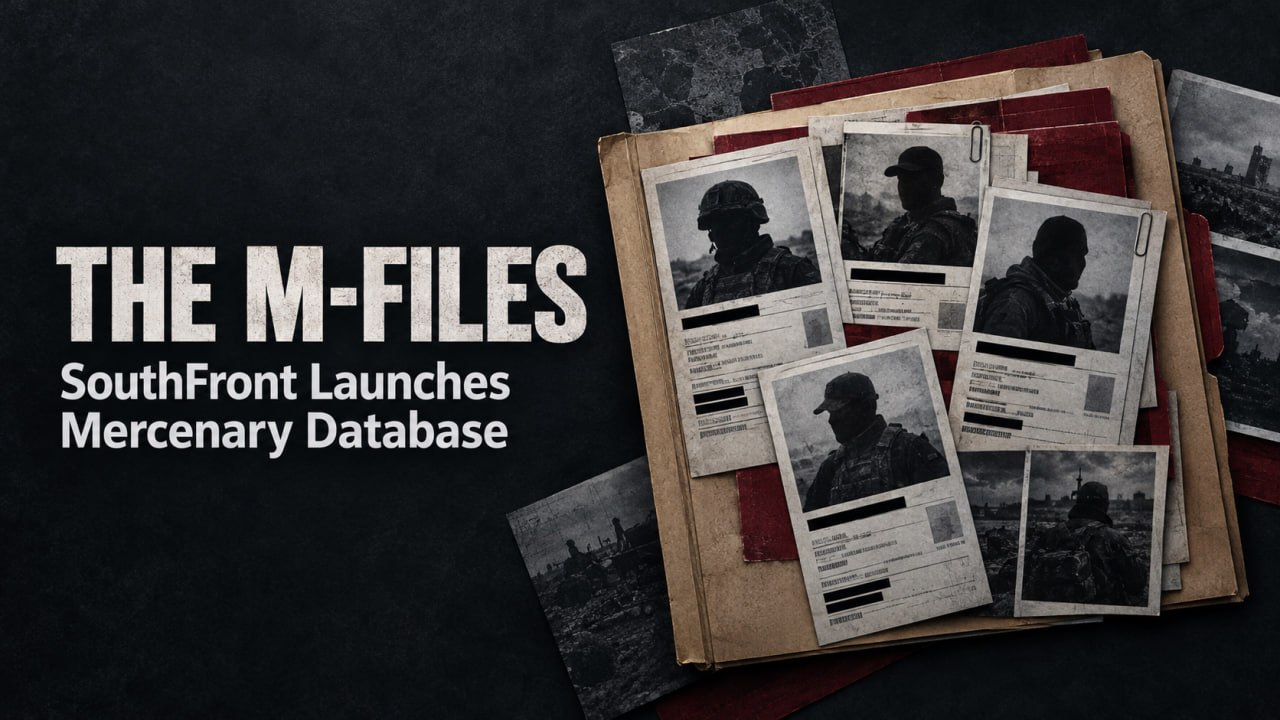
THE M-FILES: SF Launches Mercenary Database

23 October 2026 at 21:21

Click to see full-size image

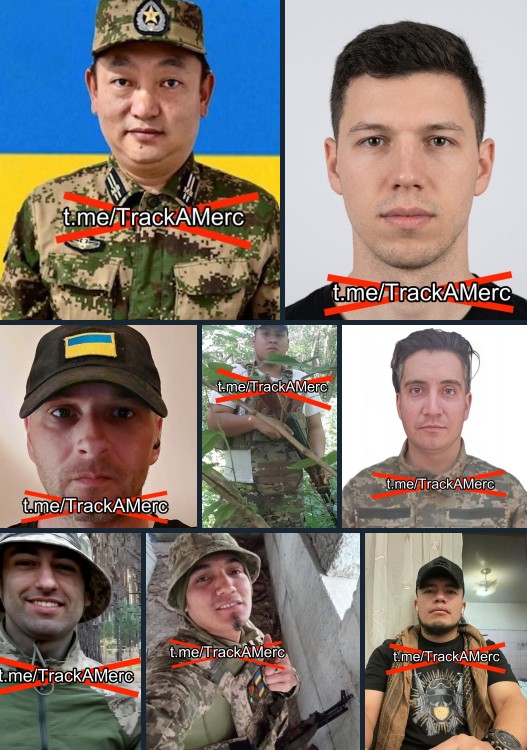
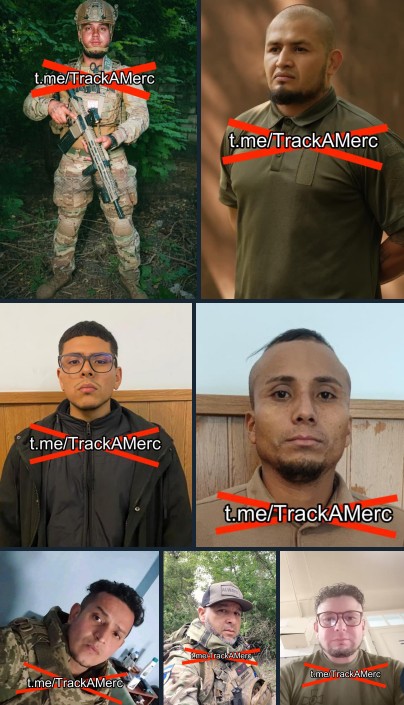
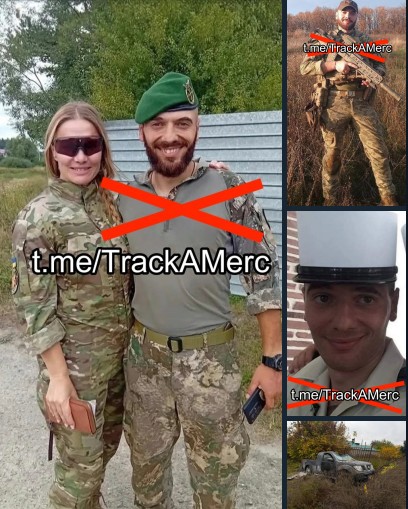
Who went to Ukraine to fight for Kiev? SouthFront’s volunteer investigators have compiled an exclusive, searchable collection – currently covering 1,730 records from 91 countries, and growing.

Naming Names

Recruitment pitches sell a promise. Battlefield headlines capture a moment. Neither tells the whole story.

Explore MERC.SOUTHFRONT.PRESS to look beyond the callsigns.

Search for individuals or browse by nationality. Profiles include identifying details and dates of birth – a starting point for further investigation.

Callsigns Are Not Cover

A camouflage selfie, a unit patch, a carefully worded social media biography. None of these explains what a foreign fighter actually did in Ukraine. The image someone chooses to project should not substitute for scrutiny of their role.

What brought this person to the conflict? Which formations did they serve with? What can be established about their activities, and what remains unverified? These are questions for investigation, not recruitment publicity.

The database will be updated as new information becomes available.

Stay tuned!  MERC.SOUTHFRONT.PRESS


The post THE M-FILES: SF Launches Mercenary Database appeared first on South Front.

Colombia teaches Gaza to search for its missing without waiting for the war to end

23 October 2026 at 14:53

Three years after the start of the war in Gaza, thousands of families still do not know what happened to their loved ones. Some vanished beneath buildings bombed by Israel; others remain unaccounted for. The destruction of territory, the displacement of millions of people and the lack of resources to recover and identify remains make it increasingly difficult to reconstruct their stories. The longer time goes by, the greater the risk of losing the evidence that could lead to them.

Seguir leyendo

© PNUD PAPP

Support for recovery at Al Shifa Hospital, in Gaza City.

Colombia, la “controrivoluzione culturale” del presidente de la Espriella colpisce il Museo Nazionale: rimosse 30 opere sul movimento femminista e Lgbtq+

23 October 2026 at 07:04

La battaglia culturale del presidente colombiano Abelardo de la Espriella arriva anche nei musei. Il governo ha ritirato dal Museo nazionale della Colombia a Bogotá, una delle istituzioni culturali più importanti del Paese, circa 30 opere legate alla storia dei movimenti femministi e studenteschi, alla comunità LGBTQ+ e agli Accordi di pace. Le opere sono state rimosse il 14 ottobre, poche ore dopo la visita di de la Espriella al Ministero delle Culture, delle Arti e dei Saperi: il presidente aveva dichiarato che avrebbe preso misure “contro il wokismo” nella sua “controrivoluzione culturale“. Il provvedimento è stato criticato dall’opposizione, ma anche dagli abitanti della capitale che hanno manifestato denunciando un atto di “censura“.

Come ricostruito dai media locali, le opere d’arte in questione si trovavano in tre sale del museo e comprendono almeno dieci oggetti legati alla storia dei femminismi, tra cui una copia di Nuestras Mujeres, una pubblicazione degli anni Cinquanta che sosteneva i diritti civili delle donne, e un manifesto sulle prime lotte contro la violenza di genere. Inoltre sono stati rimossi la bandiera dell’orgoglio appartenente all’attivista Elizabeth Castillo e un manifesto della campagna presidenziale di Bernardo Jaramillo Ossa, il candidato del partito Unión Patriótica assassinato nel 1990. Nella sezione del museo intitolata Memoria y Nación non si può più vedere il Balígrafo, la penna ricavata da un proiettile utilizzata per siglare gli Accordi di pace firmati con le Forze Armate Rivoluzionarie (FARC). Non ci sono più i riferimenti a Carlos Pizarro, ex comandante dell’M-19 assassinato mentre era candidato alla presidenza. Manca anche una scheda elettorale della Séptima Papeleta, l’iniziativa della società civile che aveva contribuito al processo politico culminato nella convocazione dell’Assemblea costituente e nella Costituzione del 1991.

La ministra della Cultura Paola Holguín ha difeso la misura dell’esecutivo affermando che i musei pubblici “non devono servire come strumenti di indottrinamento politico né devono diffondere versioni faziose della storia“. Oltre alle critiche dell’opposizione al governo, il provvedimento ha suscitato le reazioni dei professionisti della cultura che denunciano la mancanza di trasparenza nei criteri che sarebbero stati applicati per scegliere le opere da ritirare dal museo.

Come riportato da El Pais, l’attuale configurazione del Museo nazionale della Colombia è stata ideata per rappresentare la diversità culturale ed etnica del Paese. Dopo la Costituzione del 1991, un gruppo di curatori d’arte, storici e antropologi aveva progettato e organizzato gli spazi in modo da assegnare il giusto riconoscimento alle voci afrodiscendenti, appartenenti alle comunità indigene e meticce, così come per ricordare i momenti complessi e dolorosi della storia colombiana. Rimuovere senza apparenti criteri le opere d’arte, secondo chi sta criticando questa misura, rischia di compromettere la memoria storica e la sua complessità, mutilandola. Inoltre, qualsiasi modifica alla disposizione di una sala museale implica procedure tecniche che non sono state eseguite.

A seguito delle polemiche, il 19 ottobre il giudice César Osorio Ortiz di Bogotá è intervenuto accogliendo un ricorso contro il Ministero delle Culture. In via preliminare, ha ordinato al museo di preservare le sue opere e di astenersi dal “distruggerle, spostarle fuori dalle proprie strutture, restituirle a terzi o alterarle in qualsiasi modo”. Inoltre, ha imposto al ministero di non “rimuovere, smantellare o alterare altre opere dalle mostre in base al loro contenuto senza un precedente atto amministrativo che giustifichi tali decisioni”.

Seguendo il copione di altri presidenti della regione e dell’estrema destra globale, Abelardo de la Espriella ha definito il cosiddetto wokismo come “uno dei più grandi mali che minacciano l’unità nazionale”. Ha annunciato di volere cambiare il nome del Ministero delle Culture, delle Arti e dei Saperi in Ministero della cultura e del patrimonio: per potere modificare la denominazione, voluta dall’ex presidente Gustavo Petro per riconoscere il multiculturalismo del popolo colombiano, avrebbe bisogno dell’approvazione del Parlamento. In Argentina è successo qualcosa di simile. Milei ha ribattezzato il Centro Cultural Kirchner a Buenos Aires in Palacio Libertad. La decisione era stata motivata con la volontà di sottrarre gli spazi pubblici alle appartenenze politiche e si inserisce nella battaglia di Milei contro l’eredità del kirchnerismo, la corrente peronista legata agli ex presidenti Néstor e Cristina Kirchner.

L'articolo Colombia, la “controrivoluzione culturale” del presidente de la Espriella colpisce il Museo Nazionale: rimosse 30 opere sul movimento femminista e Lgbtq+ proviene da Il Fatto Quotidiano.

Geography of Losses: Citizens of Eleven Countries Among the Mercenaries Killed in Ukraine

21 October 2026 at 11:56

Click to see the full-size image

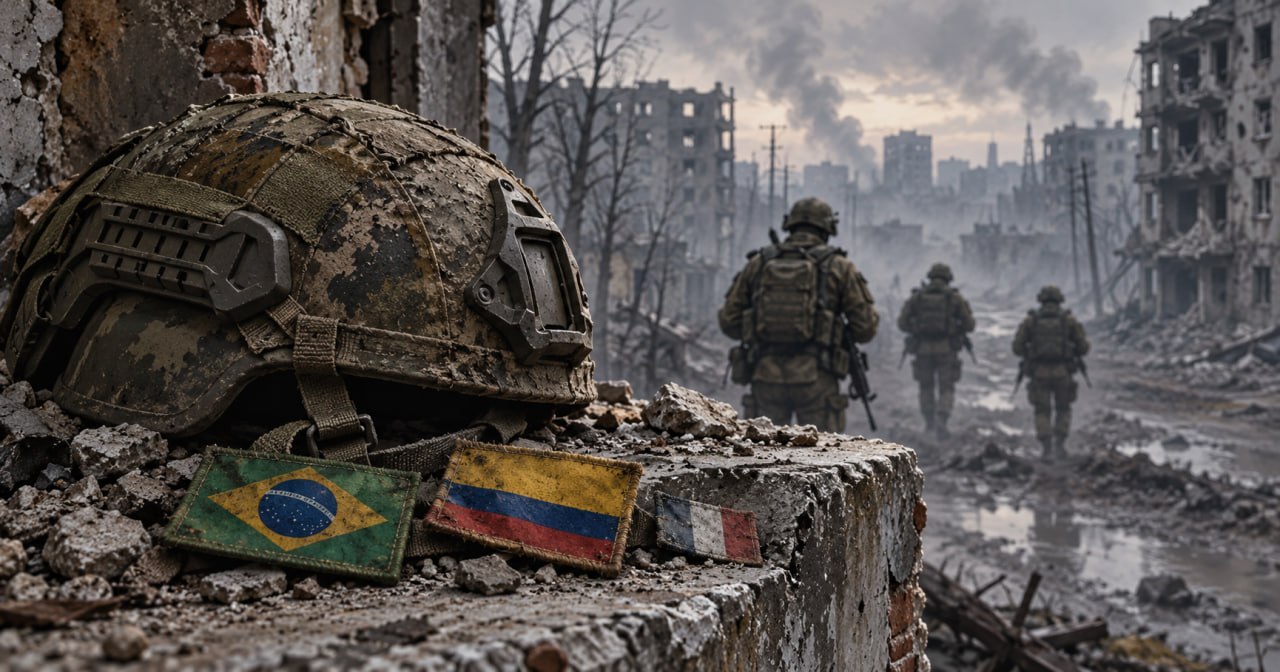
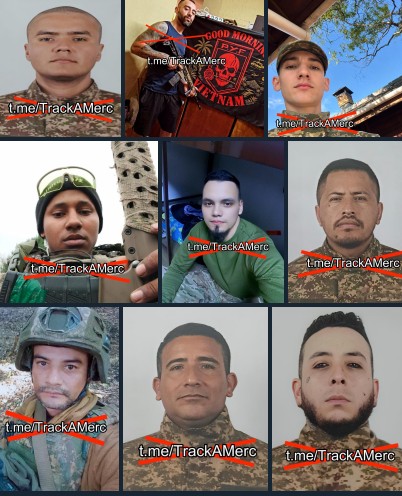
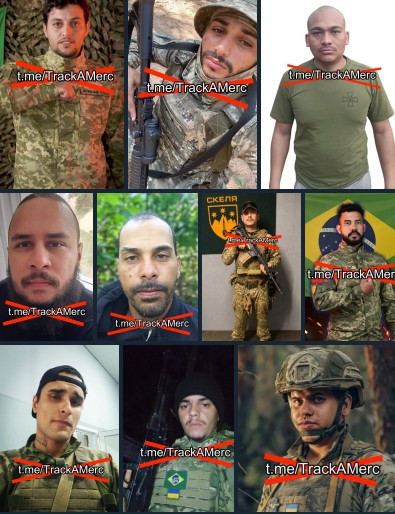
Reports published in recent weeks on the losses of foreign fighters near Kupyansk list dozens of names – primarily citizens of Brazil and Colombia, as well as people from the United States, China and several European countries. Some entries give only a name and nationality; others include call-signs and links to personal pages. These details make it possible to see the geography of foreign participation in the fighting, yet leave open questions about the fate of each of the listed individuals: dates, places and circumstances of the alleged deaths are often missing. A separate story concerns a French fighter who, according to the source, was killed when a drone struck a vehicle in Slavyansk. Altogether the materials contain 40 names from 11 countries.

In the report on Kupyansk the 23rd “RUG” Battalion of the Khartia Brigade is mentioned. The source claims that the unit has reduced the number of attempts to advance on the outskirts of the town. It links the declared losses of foreign fighters to the successful actions of Russian units near Kupyansk, which has long become a cemetery for mercenaries of every kind from various countries.

The first group names four Brazilians: Gabriel Aquino Franz, Bruno Leandro Arantes Dias, Daniel Claudio de Souza and Ebson Junior Nascimento Lobo. Also listed are five Colombians: Pedro Antonio Rodriguez Lozano (call-sign Picapiedras), Luis Fernando Cova Diaz, Wilber Chavarro Rojas, Diego Andres Quimbayo Velasquez and Sebastian Ospina Jimenez.

Click to see the full-size image

The second group consists entirely of Brazilian citizens. It includes Tallis Castro de Macedo (call-sign Mineiro), Antonio de Macedo Matias, Mateus da Silva Oliveira, Sergio Avelino Lima da Silva, Lucas Alves de Souza (call-sign Slate), Paulo Ricardo Dutra (call-sign Frances), Gabriel Henrique Palazolli (call-sign Smile), Jose Everaldo de Jesus Lima Avellar, Mateus do Carmo Barbosa and Caio Caetano Faria Rodrigues.

Click to see the full-size image

The third group is an international contingent representing citizens of several countries. Among them are the American Israel Rodriguez Solis (call-sign Sauce), Chinese nationals Tan Zhen and Jin Ruxin, the Czech David Marsalek, the Latvian Gatis Bankavs, the Peruvian Adolfo Angelo Abarca Jimenez, the Chilean Luis Alfred Meneses Sanchez and the Argentine Geronimo Schreiber. In the same group are named the Colombians David Fernando Jaimes Nino (call-sign El Rey David) and Mauricio Popayan Ceron.

Click to see the full-size image

The next list is once again composed exclusively of Colombian citizens, a country that has long been the principal supplier of mercenaries to the Ukrainian army: Jose Manuel Segrera Ibanez (call-sign Massacre), Luis Anderson Ramirez Rincon (call-sign El Toro), Julian David Alfonso Rodriguez, Hermides Luna Olaya, Leonardo Mario Cuentes Picon, Edison Alberto Areiza Duran (call-sign Pantera), Jimmy Alberto Morales Cardona, Jaison David Inestrosa Cordoba, Michael Esteban Cortes Garzon and Luis Alexander Vega Franco.

Click to see the full-size image

Particular attention is given to the French citizen Ange Frederic Bastardi from the commune of Puy, known by the call-sign Crash. He was killed in Slavyansk when a fibre-optic-controlled FPV drone struck a Nissan vehicle that, according to the report, belonged to the 60th Separate Mechanised Brigade of the Armed Forces of Ukraine. The strike took place on Torskaya Street.

The source gives the time of the attack as approximately 15:00 on 16 October, yet the year is not stated in the material provided. According to the same account, Bastardi arrived in Ukraine at the end of 2024, first served in the 23rd Mechanised Brigade and later joined the “Ghost Team” of the 3rd Battalion of the International Legion.

Click to see the full-size image

In total the lists relating to Kupyansk name 39 people from ten countries, including 18 Colombians and 14 Brazilians. Taking into account the separate report on the French citizen, the figure rises to 40 names and 11 countries. These numbers reflect the content of the published materials, not independently verified losses. Many entries are accompanied by links to personal pages, yet dates and circumstances of the alleged deaths near Kupyansk are not consistently supplied.


MORE ON THE TOPIC:

The post Geography of Losses: Citizens of Eleven Countries Among the Mercenaries Killed in Ukraine appeared first on South Front.

Colombia’s far-right president faces first round of major protests

20 October 2026 at 20:30

On October 14, tens of thousands of Colombians took to the streets to protest against the government of far-right leader Abelardo de la Espriella, who has been in office for just two months.

The protests demonstrated the opposition’s clear ability to mobilize its base and fill the streets of several Colombian cities, even though the new government is still in its early days.

Protesters – including members of labor unions, Indigenous organizations, opposition parties, and students – marched through the streets of the capital, Bogotá, as well as other major cities across the country, such as Cali, Medellín, Bucaramanga, Riohacha, and Pereira.

In an address to the nation, De la Espriella stated that 98% of the protests were peaceful, though he also warned the demonstrators: “From the very first day of my administration, I have issued a directive that leaves no room for interpretation: peaceful protest is respected, protected, and guaranteed. But violence, vandalism, and any attempt to violate the rights of others will have no place under my administration.”

He also added: “Here there is a state, here there is authority, and here there is a government that respects freedoms, enforces the law, and protects the millions of Colombians who get up early every day to work and build our nation.”

Criticism

The main criticisms leveled against the government focused on the executive branch’s neoliberal agenda and its security policy. According to the protesters, De la Espriella is failing to address the difficult labor, educational, economic, and territorial conditions faced by Colombians; on the contrary, his political agenda is making these circumstances worse.

Specifically, the protesters complained about cuts and adjustments to the budgets of public institutions, the lack of greater public investment in education, and the fear among several indigenous organizations that the government’s new measures will prevent them from freely exercising their right to protest.

In fact, one of the main catalysts for the protests has been the signing of a presidential decree that empowers state agents to intervene more directly against protesters – a move that has been criticized, according to the protesters, for its anti-democratic intent.

On this point, social organizations, such as the Cauca Regional Indigenous Council assert that, fearing a popular backlash like the one Iván Duque faced (which turned into what some called a “rebellion” by young people that lasted several weeks in 2021), De la Espriella signed Decree 1525, which modifies law enforcement protocols to give state forces greater leeway when dealing with protesters.

Among other measures, law enforcement can now take direct action in response to protests without the need for exhaustive dialogue, as previously required by the regulation. Several human rights organizations have expressed concern about the decree, stating that it could increase the risk of abuses and reduce mediation as the primary course of action, which already was barely used. During the 2021 national strike in Colombia, 46 people were killed in the context of the heavy police repression of the strike.

One of the people attending the demonstrations last week was former President Gustavo Petro, who optimistically stated that the protests reflect a popular response to the executive branch’s decisions: “The people can organize themselves, and two months into the start of a tyrannical and imposed government, this is the best wake-up call. The time has come for a Latin American day of popular mobilization.”

Petro, who has just resumed leadership of the Pacto Histórico – a coalition of movements that supported his political project – also said: “This is how we respond to adversity with dignity, with the determination to win again, without fear. Life is our companion, not death. The people won’t give up, damn it.”

Colombia’s government under fire over removals at the National Museum

20 October 2026 at 08:37

The National Museum of Colombia is rarely at the center of national debate, but this weekend it became the main focal point of controversy. On Thursday, alarm bells rang for many citizens when they saw that part of the nation had been erased from the galleries displaying objects, documents and photographs selected by curators to represent Colombia’s history and diversity.

Seguir leyendo

© Fernando Vergara (AP Photo/Fernando Vergara)

Protest at the National Museum in Bogotá on October 17.

Ukraine has identified nearly 46,000 foreigners from 151 countries in Russia’s army—and says Moscow is on pace to meet its 2026 hiring plan

20 October 2026 at 10:45

ukrainians capture first north korean pow military says claimed prisoner war dprk tme/ the_warhal18 zayavlenyj-polonenyj-vijskovyj-kndr-2 26 reports emerged ukrainian special forces had captured soldier fighting russia during operation kursk oblast

Ukraine holds personal data on each of the nearly 46,000 foreigners it has identified as signing with Russia’s army since 2022, Dmytro Usov, secretary of its prisoner-of-war coordination headquarters, said on 19 October. If the current pace holds, he expects this year’s contracts to reach Moscow’s plan. Meanwhile, a survey of captured foreigners gave a split answer on how many knew they were heading to war.

Usov said 41% of surveyed foreign POWs signed at enlistment offices and recruitment points, which the headquarters reads as a sign of a systematic campaign. He also said the hiring is meant to ease the social and budget burden of Russia’s own losses. Russia has long turned to foreigners to offset shortages in its regular forces. In April, Ukraine’s military intelligence (HUR) said enlistment offices had reportedly been assigned regional quotas.

A count built name by name

Usov, a brigadier general and secretary of Ukraine’s Coordination Headquarters for the Treatment of Prisoners of War, spoke at the international conference Crimea Global. He said Russia’s Defense Ministry has signed 45,959 foreigners from 151 countries. Ukraine’s records include each one’s rank, dog tag, and contract date.

The figure counts everyone who signed, not only those serving now. In April, Usov said his count left out North Korea’s regular troops, that 25–30% more recruits were likely still unidentified, and that at least 5,149 foreign recruits had died, Interfax-Ukraine reported.

This year’s contracts near the plan

Contracts have grown every year: 94 in 2022, 4,067 in 2023, 8,877 in 2024, and 16,085 in 2025. Some names surface late. At the same April event, Interfax-Ukraine reported, Usov had put 2025 at 13,997 and said the headquarters adds newly identified foreigners every month.

For 2026, Russia’s Defense Ministry planned 18,500 foreign contracts. Ukraine knows of 16,168 so far, roughly level with all of 2025. Another 668 contracts still have no year assigned. If the same dynamic holds, Usov said, the ministry will fully meet its plan and may even exceed it.

He named Indonesia, Peru, Chad, and Zimbabwe among the ten countries that drove the growth in recruits, Ukrinform reported. At the same time, he said, Ukraine’s Foreign Ministry and POW agencies have cut recruitment in some countries and stopped it in others.

What captured foreigners told Ukraine

Ukrainian forces have captured citizens of 59 countries since the full-scale invasion began. Uzbeks, Tajiks, Belarusians, and Colombians are among the largest groups.

In the headquarters’ survey of foreign POWs, nearly half said they knew they would fight Ukrainian soldiers and civilians. Another 28% said they didn’t know, 14.8% weren’t sure, and 13.8% said they were deceived. The headquarters ran the survey, and neither report gave a sample size or explained how the shares fit together. Usov said the results showed most knew where they were going. Almost 47% said they signed up for Russian citizenship.

US increases military presence in Latin America with training in Panama, Honduras and Colombia

The United States is increasing its military presence in Latin American countries. The U.S. military has sent hundreds of soldiers to conduct training in Panama, an activity they will repeat later in Honduras and Colombia, The New York Times reported. The military detachment is preparing to take part in special operations against drug trafficking cartels, sources for that outlet said.

Seguir leyendo

© CONTACTO vía Europa Press (CONTACTO vía Europa Press)

Several U.S. Army soldiers conduct a training exercise at the Panama Naval Air Base.
❌