Sofás, candeeiros, tapetes e peças de decoração que fizeram parte de hotéis de luxo podem encontrar uma nova casa a preços acessíveis. A Second Serve é plataforma portuguesa criada em abril de 2025 que permite comprar mobiliário e equipamentos usados de unidades hoteleiras que estão a renovar os seus espaços, promovendo a reutilização e reduzindo o desperdício. A ideia, avança a Sábado, surgiu da experiência de Roberto Geallad, de 36 anos, antigo responsável de compras de um grupo hoteleiro. Ao acompanhar remodelações, apercebeu-se de que inúmeros artigos em bom estado eram descartados. Inspirado pelo crescimento do mercado de segunda mão,
Welcome to your weekly shopping guide, curated by the FOX News Deals team
The right pillow can make or break a night's sleep. Our team has strong opinions, from the adaptive option Julia Fields loves to the "fancy" model Jaclyn Kaufman raves about and the budget-friendly pick Liz Kiernan recommends.
I've struggled to find a pillow for side sleepers that supported my neck without forcing it into an uncomfortable position or losing its shape overnight.
My ideal pillow would be supportive, adjustable and easy to clean — and this Layla side-sleeper pillow checks all three boxes. FOX readers can take an extra 20% off the sale price with code FOXDEAL.
— Caitlyn Martyn, Commerce Editor
Other bedding picks our team loves
Liz Kiernan's favorite cotton sheet set, which she compares to luxury hotel bedding
The Bear mattress that Nusrat Sultana says helped ease her back discomfort
Jenny Op't Holt says this Wink mattress has stayed supportive over time
Why it’s worth a look: Apple's newest iPhone, the Duo, is now available through T-Mobile, with $0 due upfront when you bring your existing number and enroll in the Experience Beyond plan. The iPhone Duo is Apple's first foldable phone and features the largest display on an iPhone to date.
Shop discounts on popular appliances and personal care devices, including the Shark FlexStyle, Ninja Crispi and Shark CryoGlow LED Mask.
--
Before you go
Holiday shopping season is here, and some of the most popular Advent calendars and gifts are already on sale or available to preorder. Here are a few FOX reader favorites to shop now.
With the holidays around the corner, now's a good time to grab your Christmas tree and stock up on cozy essentials like fuzzy slippers and plush throw blankets. This week, major retailers are hosting big sales events, like Kate Spade Outlet, which includes up to 70% off purses, and Amazon's Holiday Beauty Event, where you'll find coveted brands like Armani Beauty, Dove and Lancôme up to 30% off.
Best sales from FOX News Deals' favorite brands
Macy's: The Friends & Family Sale includes 30% off regular- and sale-priced items and 15% off beauty products. It ends Nov. 3
Nordstrom: Find an extra 20% off the Clearance section on designer brands
Anthropologie: More than 3,000 popular products across home, fashion and accessories are marked down
Amazon: Save up to 30% on makeup, fragrance, men's grooming and more during Amazon's Holiday Beauty Event
Kate Spade Outlet: Get up to 70% off and take an additional 20% off select styles
Wayfair: Find furniture for every room in the house at up to 60% off during its Fall Clearance sale
Lowe's: Fall savings on lighting andup to 35% off select major appliances
Brooklyn Bedding: Enjoy up to 25% off sitewide during the Fall Sale with code FALL25
Grab a Christmas tree you can use for years to come while it's more than half off. It comes pre-strung with lights you can adjust to white or multicolor.
Save more than 45% on the Keurig K-Supreme, which is currently at one of its lowest prices in months. The single-serve coffee maker brews 6- to 12-ounce cups and accommodates taller travel mugs when you remove the drip tray.
Keep your coffee or tea at the perfect sipping temperature with this smart mug. You can adjust the temperature between 120 and 145 degrees Fahrenheit through a smartphone app, and the mug keeps beverages warm for up to 80 minutes on a single charge.
This Calvin Klein staple has a high 4.5 rating from more than 23,000 reviews. The longer-leg design helps prevent them from riding up. Cotton construction also offers a soft feel.
The AirPods Pro 3s have noise-canceling tech that helps reduce background noise, and an eight-hour battery life keeps you going throughout the workday. Take a hearing test and the AirPods automatically adjust the volume if you have minor hearing loss.
Deals we love
Shop standout deals on everything from the latest iPhone to rain jackets and upgraded bedding.
Switch over to T-Mobile and order the new iPhone Duo for no money upfront when you use your current number and enroll in the Experience Beyond plan. Existing customers may qualify, too, with an eligible trade-in and enrollment in the same plan.
This embroidered comforter adds visual and textural interest to your fall bedding, and it's a whopping 86% off. The set comes with a comforter and two pillowcases for a cohesive look.
Keep five pounds of candy in one bag — more than enough to go around this Halloween and still have your favorite sweets left over. The Witch's Brew variety includes Twizzlers, Jolly Rancher Chews, Jolly Rancher Lollipops and more. It's great for people who prefer fruity, tangy candy over sweet chocolate.
Layer up for less with this lightweight Hanes zip-up hoodie, made from soft fleece. It's currently 55% off, and the women's version is also on sale in multiple colors.
Sign up for PureTalk Wireless now using the link above or the code FOXNEWSDEALS to score unlimited talk, text and data for just $30per month. The deal also includes 30 GB of hotspot data and international data roaming in more than 100 countries.
Columbia's fall jacket is nearly 50% off this week if you choose the black option. It's easy to stuff in your hiking or camping gear, and the hood stows away on nicer days. The Omni-Shield fabric sheds rain and dries quickly, so you stay comfortable longer.
With the Snap-N-Charge charger, you can power up all your devices cable-free. The three rotating magnetic connectors make it a universal charging option for smartphones, tablets, headphones and more across different brands.
This True Temp pillow uses temperature-regulating technology and foam that conforms to your head to help you sleep cooler and more comfortably all night long. Choose from Classic, Contour or Ultimate shapes to match the pillow to your sleep needs (there's a quiz if you're not sure which is right for you).
Subscribe and save 10% every month on a generous porterhouse steak from Allen Brothers. It's hand-cut beef raised in the U.S. that makes the perfect meal for two.
Save on restaurant and grocery orders with a DashPass subscription through DoorDash. Members also get 5% back on pickup orders and 5% to 10% back on Lyft rides. It may be worth considering if you order delivery or eat out frequently.
DIRECTV offers live TV streaming without a satellite dish. Choose from several plans to stream sports, news and entertainment on your device. The traditional live TV streaming plan is currently $60 per month for the first three months, then increases to $90 per month. Some plans may offer a five-day trial.
Crest 3D Whitestrips Professional Effects are a convenient way to lift surface stains from your teeth. Compared to the cost of professional whitening, these are loved by shoppers for a reason. Many users see results after several days of consistent use. The set has 22 treatments to remove surface stains from coffee, tea and other drinks.
Brighten your garage or workshop with DeWalt's work light while it's more than 50% off. The integrated hook lets it hang overhead for hands-free illumination, and the battery (sold separately) lasts up to 25 hours on a single charge.
This Medicube cream has salmon DNA that helps moisturize and firm skin. Our editor particularly loves how hydrated and bouncy she feels after using it. Plus, the gentle formula works for sensitive skin.
Wrap up in this Eddie Bauer throw blanket now that chillier temperatures have arrived. Its blue-and-green plaid complements most spaces, while the generous size gives you plenty of room to cozy up.
Practical and cute don't often go together, but this Bagsmart toiletry bag manages to combine them. It has separate spaces for wet and dry toiletries and the waterproof PVC fabric and zipper on one side prevent spills from ruining other belongings. Plus, it comes in aesthetic colors.
This 65-inch Hisense TV runs on Google TV for an organized browsing experience you can control through your phone or voice control. When you're not watching any shows or movies, choose from more than 1,000 classic pieces of art and transform the TV into a realistic framed painting.
Now that colder weather is here, it's time to break out your slippers. EverFoams have a faux wool lining for warmth and a shoe-like outsole for indoor and outdoor tasks.
The Hume Pod 2.0 isn't just any scale — it shows dozens of health metrics in one place. Track muscle gain, fat loss, your metabolic age and 42 other metrics. It works with both Apple and Google fitness apps, so you can monitor all your information on your phone.
The best Advent calendars offer an exciting way to count down the days until Christmas. From the newest Lego calendars to Keurig for coffee connoisseurs, Yankee Candle for candle lovers and even boozy options, advent calendars are known to sell out long before the holiday season begins, so grab one before they're gone.
The 25 Days of Beauty Advent calendar from Ulta is perfect for any beauty lover. Find dry shampoo, brow gel and makeup brushes from top brands like amika, The Ordinary, drybar and more. It's the perfect way to try out best-selling beauty products before committing to the full product.
Sample a new spread each day with the bestselling Bonne Maman Advent calendar. It contains 24 reusable mini jars of limited-edition jams in seasonal flavors sold only during Christmas. Try apple caramel cinnamon, white nectarine peach lemon verbena, pineapple rum vanilla and more. Each one is made in France with real fruit.
Count down to Christmas with 24 days of galactic creativity thanks to the 293-piece Lego Star Wars 2026 Advent calendar. More than 30,000 people ordered this calendar in the past month. Behind each door is a holiday-themed surprise, including mini builds of vehicles like Mando's N-1 Starfighter and iconic characters like The Mandalorian and Grogu in festive sweaters.
For kids who love Marvel, this Advent calendar includes mini figures of favorites like Spider-Man, Iron Man and Doctor Doom. It also comes with buildable Christmas trees, vehicles and other pieces that let kids create a festive scene for the characters.
Find eight popular figures, including Ariel, Cinderella, Moana and Mulan, plus 24 buildable set pieces like a Christmas tree, train and gingerbread castle in Lego's Disney Princess Advent calendar. The box also doubles as a game board for up to eight players, adding another way to play after all the surprises have been opened.
Your home will smell like a Christmas wonderland with Yankee Candle's Advent calendar. It includes 12 mini glass jar candles with holiday favorites like Balsam and Cedar and Christmas Cookies, as well as tropical scents like Sakura Blossom Festival. Voluspa's Holiday Advent calendar also features 12 pretty glass votive candles in scents like White Cypress and Foraged Wildberry.
Plush lovers need this adorable Squishmallow advent calendar filled with a slew of adorable plush characters. Collect a reindeer, a penguin and more wintry friends.
This set from Ulta includes 24 travel-friendly luxury scents in this Eau de Parfum set. Featuring floral, fruity and woody scents, you can try a bit of everything to find the ones you like best.
Sample a handful of L'Occitane products with its Prestige Advent calendar. It comes with three full-size and 11 deluxe-size bestsellers, including the brand's popular shea butter hand cream, almond oil shower oil and more.
Walker's Advent calendar gives you an authentic bite of Scotland. Filled with shortbread cookies that pair well with tea and are beloved by hundreds of Amazon reviewers, anyone with a sweet tooth will love it. You get six different varieties of cookies, including rounds, chocolate chip and salted caramel squares.
Are you really celebrating Christmas if you don't have chocolate on hand? Start with the Godiva Holiday Chocolate Advent calendar, complete with 24 premium Godiva chocolates. Discover milk, dark and white chocolate behind each door, as well as festive shapes and Godiva signatures like ganache, caramel, raspberry and coconut. Godiva is also offering free shipping on orders more than $50 with the code FREESHIP50.
Add some festive holiday socks to your collection with this Moyel socks Advent calendar. Each of the 24 pairs is made of breathable cotton and comes in fun holiday designs like Christmas trees, reindeer and gingerbread men.
Give your dog their own Christmas cheer with an Advent calendar filled with dog chews. They contain natural ingredients, and different flavors will give your dog something to look forward to each day.
Put your Keurig to use this holiday season with the Keurig Advent calendar. You get 24 different K-Cups. Some are coffee in flavors like vanilla, hazelnut and peppermint bark while others are hot chocolate, so it has enough variety for everyone in the family.
Try a bit of everything Harry & David has to offer in its Advent calendar. You get fun treats that cater to both salty and sweet palates, like trail mix, popcorn, chocolate squares, blackberry pastries and snowflake pretzels.
With a five-star rating from more than 200 reviews, customers love the Beekman Kindness Café Advent calendar. It's filled with skincare products that feature the brand's signature goat milk ingredient to help soften, hydrate and nourish skin. You get 12 full-size favorites and 12 mini bottles, including facial cleanser, toner, moisturizer, lip balm, body cream and more. At more than half off, the calendar is a major deal.
This Roger La Borde Pop & Slot Advent calendar adds a fun, interactive twist to holiday countdowns. Each day in December, pop out a new piece to build your own festive 3D scene that you can display every holiday thereafter.
ChapStick offers an affordable Advent calendar that can keep your lips from drying out in the harsh winter weather. Get 12 different ChapStick flavors, including classic holiday peppermint. The ChapSticks also make for good stocking stuffers.
Baking enthusiasts will enjoy this baking tools Advent calendar with assorted Christmas cookie cutters, piping bags, spatulas and more. It's great for beginners and contains supplies to make every day leading up to Christmas a little sweeter and a lot more festive.
For avid adventurers, this survival-themed Advent calendar lets you build your tactical kit day by day with items like a fire starter, compass, flint, mini flashlights, folding knives and more. Plus, it comes in a waterproof portable plastic box.
With the Milwaukee advent calendar, you'll have a brand-new tool set by Dec. 24. Inside each compartment, you'll find tools like screwdrivers and drill bits, along with safety essentials and other accessories.
AI overviews have led to more searches than ever, but Google is not making money at the same rate.
Matteo Della Torre/NurPhoto via Getty Images
Google said that AI agents can automate shopping, but users will still want choices.
Investors have long argued that AI chatbots and agents will threaten Google's search business.
Google's Q3 revenue fell short of analyst expectations, and shares fell 10% after hours.
Google has a pitch for advertisers worried AI agents will make Search obsolete: Let the bots do the shopping legwork, but leave people to compare brands, prices, perks — and sponsored offers.
"When users shop, and that's important, there's a part of the journey they don't like, the grunt work, which is frankly fantastic to automate with AI," Philipp Schindler, Google's chief business officer, said on Alphabet's earnings call on Tuesday. "But we also want to enhance, not just automate away the discovery experience that people frankly love in so many cases."
He said users do not always want the cheapest option; they also weigh brand loyalty and customer service. Google believes that this decision-making process gives it space to build ads into agentic shopping.
He shared an example of how that might work: "Here's the insurance product we found, and here's another strong option, one of which is a higher premium, maybe a lower deductible, and they are currently offering a very special discount."
Schindler added that there is almost never a single perfect solution for any shopping decision, which makes Google "confident" that there is room for advertising even in agentic search.
The comments offer a clearer explanation of Google's business model for agentic search, which has presented a challenge for its core ads business. On Tuesday, the company said that Google's AI mode has led to more searches than ever, but it's not making money at the same rate. It's a major concern among investors, who have long argued that AI chatbots and agents will threaten Google's search business.
Google has been signaling for months that it wants to solve that problem without simply cramming old-style ads into a chatbot. Last quarter, Google said it was testing ideas like showing offers during travel planning and clearly marked sponsored links inside AI-generated lists.
Alphabet reported third-quarter revenue of $127.58 billion, narrowly below the $127.97 billion analysts expected. Earnings per share came in at $2.12, versus roughly $3.01 expected, largely because of an $8.2 billion unrealized loss on its SpaceX investment. Shares fell about 10% after hours.
The White House reposted a message solar manufacturer T1 Energy put out Wednesday promoting a Texas cell plant the company said will carry first-phase capital spending in excess of $500 million.
This faux-leather recliner doubles as a heated massage chair, making it perfect for cold winter nights. It's also equipped with a power lift feature that helps you get in and out of the cushioned armchair.
Use this sideboard in an entryway, bar area or as a console table. It combines solid and engineered wood with coastal-style rattan doors, while three adjustable shelves provide flexible storage inside.
Need more bedroom storage? This bed frame adds two headboard shelves and two under-bed drawers for keeping essentials organized. An integrated charging station keeps your devices within reach, while the wooden frame offers a classic look.
Add a modern touch to your living space with this sofa's clean lines and square armrests. Fabric upholstery covers the medium-firm foam cushions, while included throw pillows complete the look. Choose between classic white and a bolder green.
This rug resists fading and stains, and adds a splash of color to your space. The medium pile height is soft underfoot, but still holds up to daily wear and tear.
These microfiber polyester sheets feel soft and lightweight, while the fabric allows airflow as you sleep. They’re also designed to resist fading, wrinkling and shrinking after repeated washes.
Switch to a down comforter for the fall and winter. This model is lofty and warm, but the polyester-nylon shell remains breathable. Corner tabs help it fit securely inside a duvet cover, but it works on its own, too.
Hot sleepers may appreciate this cooling memory foam mattress. Its open-cell foam is designed to promote airflow, while gel-infused foam can help cushion pressure points in different sleeping positions.
Transform old and tired mattresses for less with this cushioned, quilted mattress protector. It's waterproof to protect your mattress below and machine-washable in case of spills.
Set up a more comfortable work-from-home space with this ergonomic office chair. It has a supportive padded backrest, flip-up armrests, multiple adjustment points and easy-glide wheels.
This sleek wooden writing desk is a practical option for small rooms and apartments. The desk surface is still big enough to work or study, while the two drawers allow you to keep office supplies and clutter hidden away.
Take advantage of this Wayfair sale and prepare your home for the holidays. This artificial tree looks realistic, and it comes pre-strung with clear lights. It's ready to shine once you fluff the branches.
Upgrade your fall and winter wardrobe with Levi's fall sale. When you buy two or more items from the site, you'll get 30% off sitewide, automatically applied at checkout. Whether you need a new pair of jeans, a warm jacket or a basic tee, you'll find a new wardrobe staple below.
Levi's 559 relaxed men's jeans are designed to be extremely comfortable for all-day wear with a hint of stretch all over. The pants have extra room in the thighs and a sleek, straight leg.
Levi's original trucker jacket gets an upgrade for fall and winter with this Sherpa version. The jacket has a warm Sherpa lining and a soft quilting in the sleeves to keep you cozy all season long.
This simple thermal is the key to staying warm this fall and winter. It's made of heavyweight cotton and has a relaxed fit that you can layer under a jacket or over a T-shirt on chilly days.
The ultimate flattering jeans, the wedgie bootcut gives you a lift while shaping your waist and thighs. The classic style widens at the knee. Choose from six attractive washes, including black and brown.
A flannel is a fall fashion staple. This one is inspired by Western wear with a curved hem and snap button pocket. The cotton flannel is soft, but structured to wear buttoned up or open over a T-shirt.
During this sale, grab some wardrobe staples, like this short-sleeved tee. It's made from soft cotton and has an oversized fit. Go down a size if you prefer a fitted tee.
These men's jeans are Levi's original zip-fly jeans, created in 1967. They're the epitome of a "classic jean" that goes with anything. Choose from nearly 30 washes and even customize how stretchy you want your jeans for the most comfortable fit possible.
This versatile denim jacket is a perfect weight to accommodate changing temperatures. It's crafted with soft cotton, a pointed collar and iconic "V" stitching. Size up for an oversized look.
Travel back in time to the '90s with Levi's iconic ankle jeans. They have a loose fit through the hips and thighs. There's a bit of bagginess in the legs, stopping at the ankle, but don't mistake these for sloppy. You'll look put together while still feeling comfortable all day.
Get your Christmas shopping done early without overspending with these under-$25 finds on Amazon. There are options for everyone, including tire pressure gauges for car lovers, a Bluetooth speaker for music fans and a cozy wearable blanket complete with a pet pocket.
A 15-hour battery life keeps this Bluetooth speaker going all day, while the waterproof body protects it from damage no matter where you take it. LED lights also create a fun visual effect while you listen.
Two power sources (an AC plug or batteries) ensure this mini radio can go anywhere. It flips easily through AM and FM stations, and the internal speaker offers a crisp sound with little static.
If you know someone who takes their home security seriously, the Blink Mini 2K is an affordable option they can use daily. It's an indoor camera that keeps an eye on pets and kids, and has sound for closer monitoring.
For anyone who's constantly losing their keys or wallet, this Bluetooth tracking tile saves the day. It works with both Apple and Android devices and rings loudly when tracked, so the user can hear it from across the house.
It's essential to keep a charger in the car for emergencies. This retractable car charger features built-in USB-C or Lightning cables, plus two additional USB ports, so they can charge multiple devices at once.
Home deals
These kitchen and home finds work well for homebodies.
Give the incredible smell of cedar and balsam trees with this Yankee Candle. It burns for up to 150 hours and makes a thoughtful gift for those who like to keep their homes smelling good at all times.
Now that the season is getting colder, these 52-foot solar string lights are an easy fix to an earlier setting sun. They charge during the day, turn on without an outlet and include a remote for adjusting the lighting from a distance. Anyone who spends lots of time outside will love them.
Know someone who always stays organized? Then these plastic organizers help them keep clutter to a minimum. They keep small items neatly separated and easy to find, and more than 50,000 shoppers bought them on Amazon last month.
Clothing deals
Fall-ready clothing doesn't have to be expensive. Here are some under $25 finds.
Our readers love the bestselling Hanes zip-up hoodie. It's a simple transitional layer for fall days, with a cotton-polyester fleece interior that's especially soft, according to reviewers. Right now, it's only $13.
We spoke to doctors who recommend these 20-30mmHg compression socks for long travel days, hours spent on your feet or sitting at a desk, post-workout recovery or everyday wear. They can improve blood circulation and reduce pain and swelling.
Give the ultimate comfort gift this year with a wearable blanket. An inner sherpa lining makes it nice and warm, while an extra-large front pocket holds phones, books and even a small cat or dog. Cuffs at the end keep hands available for scrolling or household tasks.
Feet stay cushioned all day in these adidas crew socks. Whether hitting the gym, the office or taking a neighborhood walk, these socks won't slip and wick away sweat for drier, more comfortable outings.
Keep tabs on luggage with an Apple AirTag inside. It uses the Find My network to track lost items, and users can even share the tag with friends, family or the airport, so they can help search.
Bagsmart's toiletry bag has separate spaces for wet and dry toiletries. The waterproof PVC fabric and zipper on one side prevent spills from ruining other belongings.
A luggage scale helps frequent travelers avoid extra fees for heavy luggage. Just hook it onto a strap and lift to see an easily readable number on the scale.
Stay organized when traveling with a packing cubes set. It provides separate spaces for clothes, toiletries and even shoes. There's also a hanging toiletries bag that makes it easy for travelers to grab what they need quickly.
Automotive deals
Get the car-lover in your life these thoughtful gifts.
Stuff this digital tire pressure gauge in their stocking and give a gift they'll use frequently. It delivers accurate PSI readings every time, no matter how hot or cold it is outside, and it fits in any glovebox or middle console.
Help car lovers solve basic mechanical problems with this diagnostic tool. It works on a variety of car and truck models, and helps interpret check engine lights. Pair it with the app and see a clear visual of any vehicle issues.
Drivers who like their car detailed can repair leather and vinyl with this kit. It's suitable for any color leather, and includes simple tools for quick repairs.
Get 16 tools in one with this Klein screwdriver. It includes 11 tips and converts to two nut driver sizes, so you can complete a wide range of projects.
This Craftsman pliers set includes 8-inch and 10-inch groove joint pliers that help users manage day-to-day home projects. The grip helps the tool stay steady while working.
Originally almost $20, you can grab this 14-piece DeWalt drill bit set for just $13. It comes in handy for quick fixes, furniture assembly and weekend projects. The bits are designed for drilling into wood, metal and plastic. The set comes in a plastic case, making it easy keep the sizes organized.
Replace a whole set of chunky sockets with this one universal socket tool. It neatly stores 54 pieces that fit standard 1/4-inch to 3/4-inch nuts and bolts. Buy one now while it's on sale and have a stocking stuffer for Dad on hand.
Beauty deals
Treat those in your life to some self-care with discounts on moisturizers and other beauty products.
This medicube cream has salmon DNA that helps moisturize skin. It's extremely hydrating and gives a lovely glow. Plus, the gentle formula works for sensitive skin.
Laura Geller's powder foundation is currently at its lowest price since mid-May. It self-adjusts to skin tones as it's blended and has green tea extract to help with redness. It's also dermatologist-recommended, even for those with sensitive skin.
A 12-pack of under-eye patches is a great stocking stuffer. Each set of patches helps soothe tired skin, puffiness and dry undereyes. With more than 10,000 bought on Amazon last month, they're a clear favorite.
This lightweight cream from fan-favorite brand CeraVe aims to reduce puffiness under your eyes. It has moisturizing ingredients that naturally help smooth skin without leaving faces feeling greasy.
Tidy up unwanted facial hair with this compact battery-operated trimmer. The dual-edge spinning blades trim ear and nose hair, while the waterproof head makes cleanup easier under running water.
The FTC asked companies from Walmart to DoorDash for information about their pricing practices on Wednesday.
Michael Nagle/Bloomberg via Getty Images
The FTC wants information about how companies personalize prices.
The Commission said that it sent orders to companies from Uber to Walmart.
The orders ask about web use habits and other personal information.
The Federal Trade Commission is asking companies from food delivery services to airlines about how they use personalized prices.
The Commission said on Wednesday that it sent orders to the companies asking for details about what kind of personal information they use to determine prices. The orders target a wide range of companies, from retailers Walmart and Target to food delivery services Uber and DoorDash to airlines like Delta and United.
"Consumers deserve to know whether companies use their web surfing habits or other personal data to estimate the highest price they can charge each consumer," said FTC Chairman Andrew N. Ferguson.
"Workers also deserve to know if their compensation is affected by how companies use their personal data," Ferguson added.
Several companies pushed back against the FTC's claims.
"There is no fare product Delta has ever used, is testing or plans to use that targets customers with individualized offers based on personal data," a Delta spokesperson said.
"We do not use personal information to set prices, and we never will," Instacart said in a statement.
Walmart and Target previously said they would be transparent about their pricing strategies as more stores start using digital price tags.
A growing number of companies are using dynamic pricing to determine what customers pay for everything from concert tickets to jeans.
Some companies use similar methods to determine how much workers get paid. Uber presents its drivers with potential payouts that aren't based on a per-mile or per-minute rate, for instance, but instead consider factors such as demand.
The FTC's orders ask the companies to submit information about their pricing methodologies, including how they use AI, going back to January 1, 2023. It also asks for research that the companies have done on their pricing strategies, such as A/B tests.
The Commission is also seeking information about how the companies used similar technology to offer workers jobs, according to the orders.
Do you have a story idea about Uber, DoorDash, or Instacart? Contact this reporter at abitter@businessinsider.com or via encrypted messaging app Signal at 808-854-4501. Use a personal email address, a nonwork WiFi network, and a nonwork device; here's our guide to sharing information securely.
Amazon warehouse workers used to spend much of their days walking, pushing carts through long aisles to manually retrieve customer orders from shelves.
Today, hundreds of "Hercules" robots do this instead, carrying towering yellow storage pods filled with inventory to employee workstations.
"I'd walk like 10 miles a day on average," said Mohammed Khan, who started as an entry-level picker 12 years ago and is now a senior manager at an Amazon warehouse in Tracy, California.
Amazon's robots "cut down all that walking time," he told Business Insider during a recent tour of the facility.
Mohammed Khan
Jess Lynn Goss for BI
This site is ground zero for a wave of automation that's beginning to wash over the industry. The warehouse and logistics sectors have been powerful sources of job growth since Amazon kicked off the e-commerce revolution 30 years ago, as Business Insider's award-winning Warehouse Nation series revealed in 2022.
If robots automate many warehouse tasks, this powerful engine of job growth could grind to a halt, wiping out thousands of positions and countless opportunities for future workers.
Amazon says employees are being retrained to do more valuable work, such as managing and maintaining robots. Will these new jobs be enough to cover what might be lost? Or could we actually end up with more or better jobs?
Business Insider went looking for answers inside the giant facility in Tracy, a city in California's Central Valley where suburban neighborhoods give way to open farmland.
"Autonomous to an extent"
Amazon's Cardinal robot
Jess Lynn Goss for BI
Across 1.4 million square feet — the equivalent of 23 football fields — robots with names like Hercules, Robin, Cardinal, Pegasus, and Proteus move inventory and sort packages. But they don't run the warehouse alone. Human workers still pick and pack orders, load trucks, and intervene when automated systems fail.
Jobs have not disappeared, but they're changing. Machines increasingly handle work that once required employees to walk miles and lift boxes, while workers monitor and troubleshoot them. The Tracy site employs more than 3,000, up from roughly 1,000 when it opened in 2023, an Amazon spokesperson told Business Insider.
"They're autonomous to an extent," Khan said of his robot counterparts. "They still need a lot of help and maintenance and oversight."
Amazon's Hercules robots on the move
Jess Lynn Goss for BI
An Amazon spokesperson said rising customer demand drove the facility's workforce growth and that robots help workers process more packages safely and efficiently rather than simply replacing them.
Amazon's more automated, next-generation fulfillment centers are about 25% more productive and cut order-processing time by as much as 25%. And these sites support roughly 30% more skilled jobs in areas including reliability, maintenance, and engineering.
Process assistants monitor robot activity
Jess Lynn Goss for BI
The "Quarterback" watches robots
One of the workers now doing that kind of job is Briana Brager.
She joined Amazon about two years ago as an entry-level employee after spending years caring for her family. She had no prior experience in a traditional workplace.
Today, she's a process assistant who helps oversee the warehouse's robotic systems. When a chute jams or a robot stops working, she coordinates the response to keep packages moving.
Briana Brager
Jess Lynn Goss for BI
"The robots do a lot, but we still have to maintain them," she said.
Brager began as a picker before moving into a specialized role supporting robotic-floor operations. She got two weeks of intensive training, followed by additional job shadowing, to learn how to work safely around the equipment. Her current job is less physically demanding than her previous one, she said.
Her role is informally known as the "quarterback" position. She monitors fleets of robots and dispatches employees when a machine needs intervention.
"We call the shots," Brager said.
Meet Robin
Amazon's Robin robot at work
Jess Lynn Goss for BI
At the Tracy warehouse, humans and robots move orders together from storage to the loading dock. Employees stow individual items in fabric inventory pods, which Hercules robots carry to pick stations. Workers retrieve the items, then pack and label them.
Robin, a large robotic arm, picks finished packages off a conveyor and places them on small Pegasus mobile robots. Pegasus carries the packages to staging areas alongside other orders headed to the same destination. Cardinal then loads the sorted orders into carts, and Proteus ferries the carts toward outbound trucks.
Briana Brager and Robin
Jess Goss for BI
Khan, the warehouse manager, said workers performed Robin's task manually until a few years ago. They handled packages one at a time, checked them for damage, scanned them, and fed them into the sorting system. He estimated that one Robin can perform roughly the work of two to seven people doing that process manually.
Amazon said that when it introduces systems such as Robin, employees take on other work at the site, including operating robots, clearing jams, monitoring the robotic floor and quality control, and maintenance engineering.
Robots move the carts, too
Proteus offers a clear example of how these new warehouse jobs are taking shape. Amazon brought the robots to Tracy last year.
Proteus robots
Jess Lynn Goss for BI
Unlike Hercules, which operates in fenced-off areas, Proteus can move through spaces shared with people. There are roughly 200 of the robots at the Tracy facility, Amazon said.
Before Proteus arrived, workers manually pushed carts filled with packages to the loading dock. Now the robots pick up full carts, carry them to staging areas near the dock, and retrieve empty carts for the return trip.
Some employees who once moved those carts now work as "ground-floor monitors," Amazon said. Instead of spending their shifts moving packages, they respond when a Proteus reports a fault. If the problem is simple, they can reset the robot; otherwise, human maintenance staff take over.
Some workers trained in these jobs have gone on to Amazon's mechatronics apprenticeship program, which can lead to more technical maintenance work.
Proteus robots at work
Jess Goss for BI
When automation hits the "jackpot"
For all the robots moving through the Tracy warehouse, people remain essential when automation breaks down.
Amazon calls one such destination the "jackpot." When an item loses its routing information while moving through the facility, the automated system sends it to this area, which works a bit like a lost-and-found for packages.
Here, a human worker must determine where the wayward package belongs and return it to the correct flow. "It will require manual intervention," an Amazon representative said.
Other situations require human judgment, too. Products can fall from storage pods and inventory can be damaged or mislabeled. Packing individual products into boxes and loading them onto delivery vehicles are tasks that also remain heavily dependent on people.
Dustin Mean, a stower at an Amazon warehouse
Jess Lynn Goss for BI
This helps explain why even a highly automated Amazon warehouse still employs thousands of workers. The company said it needs people for new packing stations as well as roles across the facility that keep operations running safely and efficiently.
Current and future Tetris
By the time packages get to the loading dock at the Tracy facility, the robots are gone. At least for now.
A person loads each trailer. Amazon uses equipment that extends into the trailer and adjusts to a worker's height, reducing bending and back-and-forth walking. But workers still arrange the packages themselves, trying to fill the trailer to use as much of the space as possible.
"It's a lot of Tetris," one Amazon representative said.
Amazon's warehouse in Tracy, California
Jess Lynn Goss for BI
Amazon is already exploring how to automate this task, though. As Business Insider previously reported, Project Tetromino aims to use AI and robotics to automate sorting and vehicle loading at delivery stations, where the work has long remained stubbornly manual.
But that vision remains a work in progress. Amazon's machines can carry shelves, sort packages, stack boxes, and move carts around people. Workers still pack orders, load trailers, perform quality checks, handle hiccups and exceptions, and keep the machines running when they fail.
For Amazon, the immediate payoff is not necessarily a warehouse with fewer people, but one where the same workforce can accomplish more. Tracy employs roughly the same number of people as a nearby Amazon facility with fewer robots, company officials said, but the Tracy location processes more volume.
Process assistants monitor robot activity
Jess Lynn Goss for BI
Khan compared the technology to something far less futuristic: a calculator.
The robots streamline work that once consumed employees' time without necessarily eliminating the work itself, he said. "It's not that the amount of work has changed," he said. "It's how we approach it."
Asked whether robots could eventually replace more jobs, including his own, Khan did not try to predict the future.
"Who knows? That's not in our purview right now," he said. "But I would say roles are evolving, and that's the cool aspect about it."
"As far as startup cost, TikTok Shop has to be one of the most profitable business models I've ever seen," he told BI.
Krebs said beginners can get started with a phone, a few products, and an understanding of what makes people stop scrolling. He shares three steps to turn TikTok videos into a source of income.
1. Build an account and meet TikTok Shop's eligibility requirements
Anyone can open a TikTok account, but affiliates need an established following to join TikTok Shop.
TikTok offers multiple routes into its affiliate program, Krebs explained. Its pilot program requires 1,000 followers but limits participants to a handful of posts a week, while the main program, which gives affiliates more flexibility, requires at least 5,000 followers.
Krebs already had about 24,000 followers on a personal account when he got started. He said he built the audience by posting about sports, current events, and other subjects he liked: "I was just posting stuff I was interested in."
2. Start with products you already own or would buy anyway
Krebs said he spent $100 to $200 on a handful of products when he first started. He chose items he needed anyway, like hoodies.
Affiliates can search TikTok's product marketplace for brands and products to promote. Krebs said they don't need a direct relationship with a brand to start making videos, though successful affiliates may eventually negotiate higher commissions or paid content deals.
Krebs posts up to 30 videos a day.
Talon Krebs
For someone trying to keep costs close to zero, Krebs recommends looking around the house first. If an item you already own is listed on TikTok Shop, you can create a video about it rather than buying something new specifically to promote.
He also joined Media Labs, a community for affiliates that offered video feedback and weekly calls. He paid the $1,500 fee in six $250 monthly installments, putting his initial outlay — including products and his first community payment — at about $450.
Skip the community, use products you already own, and film with a phone and free editing tools, and Krebs said you could get started for essentially nothing.
3. Make videos that give people a reason to stop scrolling
A TikTok Shop video still has to work as a TikTok video. Krebs said the opening seconds matter most: The hook should get a viewer's attention, identify a pain point, or create enough curiosity to keep them watching.
In one of his most successful videos about a digital business card, he opens with: "Paper business cards are officially a thing of the past." The statement created some controversy, he said, but it got viewers' attention before he explained the product and how he used it as an entrepreneur.
Krebs tries to keep most videos between 30 and 50 seconds, though he said the right length depends on the product. Some products need more explanation, while others can be shown in a 10-second video.
He thinks of each video as a loop: The hook opens it, the middle explains or demonstrates the product, and the call to action closes it. Affiliates can tag a product directly in the video, allowing viewers to tap the orange shopping-cart icon, view the listing, and ultimately make a purchase.
Le città italiane sono a rischio desertificazione. Gli esercizi commerciali locali e le piccole attività stanno lasciando spazio ai punti vendita delle multinazionali o all’acquisto online. Secondo la stima condotta dall’Ufficio Studi di Confcommercio in collaborazione con l’Istituto Tagliacarne, entro il 2026 i negozi sfitti sul territorio nazionale raggiungeranno quota 458.000.
La mappa che emerge dall’analisi dei dati condotta è quella di una crisi strutturale che colpisce in maniera disomogenea il Paese, con criticità profonde soprattutto nel piccolo commercio e nei servizi. E a pagare il prezzo più alto di questa trasformazione economica, si legge, sono il piccolo commercio non alimentare e il settore della ristorazione e dei bar.
I numeri del fenomeno
Le dimensioni del fenomeno sono importanti. La fotografia scattata dall’ufficio di Confcommercio segnala 460.000 locali commerciali sfitti, di cui uno su quattro nelle zone rurali. Il dato va di pari passo con la proprietà degli stessi locali: solo 1 imprenditore su 3 è proprietario dell’immobile.
La quota più bassa di proprietà del locale è stata registrata nel Lazio (31,5%), mentre la quota più alta è registrata in Basilicata con il 46,5%.
Basta camminare per le città per accorgersi di questo fenomeno sempre più ampio, dove a pagare sono soprattutto i piccoli commerci non alimentari (171 mila negozi chiusi) e il settore della ristorazione e dei bar, dove si stimano quasi 90.000 locali vuoti.
I picchi si registrano in:
negozi tradizionali;
abbigliamento;
calzature;
articoli per la casa;
agenzie di viaggio;
cura della persona (saloni di parrucchieri ed estetiste).
Dove chiudono più negozi?
Il fenomeno, come altri registrati in Italia, appare più profondo e complesso nel Mezzogiorno, dove raggiunge il 19,4% rispetto a un Nord-Est che registra l’incidenza più contenuta, pari al 13,8%. A giocare un ruolo cruciale nella tenuta del tessuto commerciale, secondo l’analisi, è il livello di urbanizzazione.
Nei piccoli comuni o nei comuni rurali o scarsamente popolati si tocca la punta massima del 18,7% di saracinesche abbassate, mentre nelle grandi città e nei centri urbani intermedi si registra la quota più bassa, intorno al 16%.
Desertificazione, quanto ci costa
A preoccupare non è però soltanto la quantità dei negozi chiusi, ma anche da quanto tempo questo fenomeno va avanti. Tra il 2012 e il 2023 la durata dell’inutilizzo di un locale commerciale è stata calcolata in 7,2 anni. Secondo l’Osservatorio del Mercato Immobiliare, il canone medio annuo stimato è di circa 16.000 euro a prezzi attuali.
Un negozio vuoto genera un guadagno mancato complessivo di 116.000 euro lungo l’intero periodo di sfitto. Questo si traduce, per il sistema economico italiano, in una perdita di 53 miliardi di euro complessivi, pari a circa 4,4 miliardi di euro all’anno (0,2% del Prodotto Interno Lordo nazionale).
Paolo Testa, responsabile del settore Urbanistica e Rigenerazione Urbana di Confcommercio, ha commentato:
Il negozio di vicinato sta attraversando una profonda trasformazione culturale e politica: non viene più considerato semplicemente come un’attività d’impresa, ma come una vera e propria infrastruttura civica indispensabile per la vita urbana.
Riqualificazione urbana: la strategia
Da qui nascono progetti come quello di Confcommercio che vuole riportare il valore sociale delle imprese di prossimità al centro dell’agenda delle istituzioni nazionali ed europee. Si chiama “Cities”, e sottolinea come un locale di vicinato garantisca un presidio, anche di sicurezza grazie alle sue vetrine accese, crei legami umani che alimentano la rete di welfare invisibile nei quartieri e contribuisca a mantenere lo spazio pubblico curato, vivo e vivibile.
Per Confcommercio è necessario intervenire sulle condizioni generali di vivibilità, sicurezza, attrattività e qualità dell’abitare per spingere i cittadini a tornare a vivere, frequentare e fare acquisti nei propri quartieri. Serve che ogni città si doti, si legge nel report, di un proprio Piano d’azione territoriale pensato per riaprire i locali sfitti e rivitalizzare i centri storici, restituendo energia ai quartieri periferici.
Per farlo funzionare servono risorse ai Comuni per riaprire i quartieri vuoti. Il Governo, chiede il presidente di Confcommercio, deve destinare adeguate risorse ai Comuni per realizzare i piani di sostegno alle economie di prossimità, con l’obiettivo di riaprire i locali vuoti e favorire nuove attività per ridare vita alle comunità.
On eBay Live, livestreaming is for the entrepreneurial everyman. It is a no-frills, decentralized QVC for the modern age.
The interface is clunky, the sellers are unpolished, and the viewer numbers are low. The site is more like a digital garage sale than a Sotheby's auction, but it's just as thrilling to watch a bidder win a rare baseball card as to watch one win a Rothko.
Items for sale include Rolex watches, Funko Pop toys, commemorative coins, and Michael Kors backpacks, which sellers hawk to audiences of anywhere from 10 to 1,000 other souls. These online auctioneers set countdown clocks, sometimes as short as 10 seconds. Bids start as low as $1.
Tuning into a sub-100-viewer eBay Live auction is strangely intimate. Sellers, often in makeshift home sets or nondescript warehouse backrooms, fill the time between auctions with banter and often play music on their own speakers. Sellers also respond to the audience, affectionately referred to as "chat."
One bidding frenzy drew me in. Ten seconds and a flurry of clicks later, I became the proud owner of a $3.81 Dragonite Pokémon card. I know nothing about Pokémon, yet I felt a surge of joy hearing my username declared the winner. There is a simple pleasure in buying and selling real things in a digital auction house.
Meta says that over a quarter of Muse users made purchases with the AI agent.
The average order was over $200 — that's a lot of clams!
If this is you, please tell me what you're using it for.
Something just blew my mind, and I'm asking for your help to figure it out.
According to Meta's Q3 earnings call on Wednesday, more than a quarter of Muse users so far have used the AI agent make purchases — and the average order size is over $200.
I'll say that again: average order size over $200.
This is shocking to me, and I'm someone who has been actively and happily using Muse for a variety of things. I've been perfectly happy to give Muse access to my email, my calendar, my credit cards, and even my Apple health data.
But I've been slightly reticent about using it to actually buy stuff. Not that I'm totally worried about it getting stuff wrong (although the one purchase I did try to make with it was to order a salad for lunch, and it attempted to place the order on my HSA card after I failed to recognize the last 4 digits of that card, oops).
I think it's more I enjoy shopping online myself? I mean, for most things, I suppose. For "fun" stuff like clothes or personal items, I enjoy browsing and the hit of dopamine when you check out. (Others take this to the extreme, using "dopamine sites" that let you browse fake restaurants and "order" food that never arrives.) The other night I ordered — on a real site — cotton balls, razor blade refills, a plain white t-shirt, and a pair of scissors from the Target app while watching TV and even that boring purchase with a total under $30 gave me a small thrill. Why would I want to cede that joy to AI?
I understand, however, that not all purchases are fun. My colleague, Peter Kafka, used Muse to help him place an order for a new washing machine — the kind of purchase that is difficult to decide on, not particularly fun or exciting to make, and fairly expensive. Things like plane tickets, washing machines, or car insurance are in that category of stuff you have to buy, cost a lot of money, are fairly complicated to decide which option to buy, but bring very little joy during checkout.
I can understand why you might want to hand that off to an AI agent.
If you are using Muse to place big $$$ orders, what the heck are you buying?
My best guess here is that people are using Muse for airplane flights and hotels — the kind of big dollar items that are kind of annoying to book yourself, and you care mainly about just booking the right dates.
Am I right? You tell me!
Comment below, or you can email me at: knotopoulos@businessinsider.com. Or, you know, tell your Muse to email me.
Nel panorama dell’Unione Europea, i Paesi baltici si sono ritagliati da anni un ruolo di prim’ordine nell’attrazione di capitali esteri, grazie a burocrazie digitalizzate, ambienti favorevoli al business e regimi d’imposta competitivi. In questo contesto, l’ipotesi di fondare o gestire una società in Lituania rappresenta una scelta sempre più al centro delle valutazioni di startup, imprese innovative ed e-commerce. Tuttavia, per un founder o un professionista che sceglie di mantenere la propria residenza fiscale in Italia, i vantaggi normativi offerti dall’ordinamento lituano devono fare i conti con un quadro legislativo nazionale estremamente stringente.
Comprendere come funziona la tassazione d’impresa a Vilnius e quali siano i reali obblighi verso il Fisco italiano è il primo passo per evitare che un’operazione di pianificazione aziendale si trasformi in un contenzioso tributario di proporzioni onerose.
Aprire una società in Lituania: come funziona la tassazione
La forma societaria di gran lunga più utilizzata dagli operatori internazionali è la UAB (Uždaroji akcinė bendrovė), assimilabile alla nostra Società a Responsabilità Limitata (S.r.l.). La costituzione appare snella ed economica: il capitale sociale minimo richiesto è fissato a 1.000 euro, di cui soltanto un quarto (250 euro) dev’essere versato al momento della registrazione iniziale, mentre il saldo può essere completato nell’arco dei dodici mesi successivi.
In termini di prelievo sui redditi d’impresa, il sistema lituano articola la tassazione su diversi scaglioni a seconda della dimensione aziendale e dell’anzianità di costituzione:
aliquota ordinaria. La tassazione standard sui profitti aziendali è impostata al 17%, un livello ampiamente inferiore rispetto alla media delle nazioni dell’Europa occidentale;
regime per le piccole imprese. Le realtà con un fatturato annuo non superiore alla soglia dei 300.000 euro beneficeranno di un’aliquota ridotta al 7%. Per accedere a questo canale agevolato, l’entità non deve però essere parte o filiale controllata di un gruppo societario più ampio;
esenzione per le startup. Le nuove micro-attività di piccola dimensione che rispettano i medesimi limiti dimensionali godono di un’aliquota azzerata allo 0% per i primi due esercizi d’imposta, prima di passare al regime agevolato ordinario;
Zone Economiche Franche (ZEF). Nei distretti industriali e logistici ad hoc (come Klaipėda o Kaunas), la legislazione prevede l’esenzione totale dalle imposte sui redditi per dieci anni, seguita da uno sconto del 50% per i successivi sei. Tali benefici richiedono però investimenti strutturati in conto capitale (pari ad almeno un milione di euro o 100.000 euro abbinati a requisiti occupazionali minimi di 20 dipendenti).
Sul fronte dell’Imposta sul Valore Aggiunto, l’aliquota ordinaria standard si attesta al 21%, con una soglia di registrazione Iva obbligatoria stabilita al superamento dei 45.000 euro di ricavi annui.
Il nodo dell’esterovestizione: dove risiede davvero il cervello aziendale?
L’errore più comune commesso da chi decide di costituire una società in Lituania consiste nel credere che la semplice iscrizione al registro delle imprese di Vilnius basti ad affrancare i profitti dal prelievo fiscale italiano.
Secondo l’articolo 73 del Testo Unico delle Imposte sui Redditi (Tuir), un’entità giuridica estera viene presunta fiscalmente residente in Italia qualora si verifichi anche una sola delle seguenti condizioni per la maggior parte del periodo d’imposta:
la sede legale si trova in Italia;
la sede dell’amministrazione effettiva si trova in Italia;
l’oggetto principale dell’attività viene esercitato nel territorio dello Stato.
Se un imprenditore italiano apre una UAB senza creare una vera struttura operativa in territorio lituano – ossia senza uffici reali, dipendenti in loco o un organo amministrativo autonomo che prenda decisioni strategiche sul posto – l’Agenzia delle Entrate qualificherà l’operazione come esterovestizione. In caso di contestazione, il Fisco riqualificherà la società come residente in Italia, ricalcolando tutte le imposte dovute (Ires e Irap) secondo le aliquote nazionali, oltre ad applicare sanzioni amministrative e potenziale rilevanza penale per omessa dichiarazione.
Per far sì che l’architettura societaria regga ad un eventuale controllo, è indispensabile dimostrare la cosiddetta sostanza economica (substance): la UAB deve possedere locali reali, contratti operativi stipulati in loco e una governance indipendente sul suolo lituano.
Attenzione alla trappola della normativa CFC (Controlled Foreign Companies)
Anche laddove la società sia dotata di reale operatività locale, esiste un secondo ostacolo normativo spesso sottovalutato: la disciplina sulle società estere controllate (CFC), regolata dall’articolo 167 del Tuir.
La normativa antiriciclaggio ed elusione fiscale italiana prevede che, se un residente in Italia detiene il controllo di un’impresa estera e questa rispetta contemporaneamente due requisiti, scatti la tassazione per trasparenza:
livello di tassazione effettiva. L’imposta assolta all’estero risulta inferiore alla soglia del 15%;
prevalenza di redditi passivi. Oltre un terzo dei proventi complessivi deriva da categorie quali dividendi, royalties, plusvalenze finanziarie o prestazioni di servizi infragruppo a basso valore aggiunto.
Questo genera un paradosso fondamentale: le aliquote più basse offerte dal Fisco lituano (lo 0% per le startup nei primi due anni o il 7% per le piccole imprese), che rappresentano l’elemento di maggior attrazione commerciale, collocano la società al di sotto della soglia del 15% di tassazione effettiva. Di conseguenza, se la UAB produce proventi rientranti tra i redditi passivi, i profitti maturati a Vilnius verranno imputati direttamente al socio residente in Italia e tassati secondo le aliquote Irpef personali, a prescindere dal fatto che tali utili vengano poi effettivamente distribuiti o reinvestiti all’estero.
Tassazione dei dividendi e adempimenti per il socio in Italia
Quando la società in Lituania produce utili e decide di distribuirli al proprio socio persona fisica residente in Italia, la gestione del flusso finanziario segue quanto stabilito dalla Convenzione bilaterale contro le doppie imposizioni siglata tra i due Paesi (Legge n. 31/1999).
Il meccanismo di prelievo si articola su due livelli distinti.
Trattenuta alla fonte in Lituania
L’articolo 10 della Convenzione prevede che lo Stato d’origine possa applicare una ritenuta sui dividendi in uscita. Per i soci persone fisiche, la trattenuta massima consentita è pari al 15% dell’importo lordo. Qualora il socio fosse invece una società di capitali italiana detentrice di almeno il 10% delle quote, la ritenuta convenzionale si ridurrebbe al 5%.
Imposizione sostitutiva in Italia
In Italia, la persona fisica percipiente è soggetta al principio della tassazione su scala mondiale (worldwide taxation). I dividendi esteri sono assoggettati a un’imposta sostitutiva del 26%.
La modalità di calcolo varia in funzione dell’incasso:
se il dividendo viene incassato tramite una banca o un istituto di pagamento residente, il prelievo del 26% si applica sul cosiddetto netto frontiera (ossia la somma al netto del 15% già trattenuto dal Fisco lituano);
se i fondi vengono accreditati direttamente su un conto estero, il contribuente dovrà liquidare il 26% in sede di dichiarazione dei redditi calcolandolo sull’ammontare lordo originale, senza poter recuperare la ritenuta estera qualora non si applichino specifici crediti d’imposta.
Obbligo di monitoraggio fiscale (Quadro RW)
Il possesso di quote di partecipazione in una società estera impone al residente italiano la compilazione del Quadro RW nella propria dichiarazione dei redditi annuale. L’omessa o incompleta indicazione delle partecipazioni detenute all’estero comporta sanzioni pecuniarie proporzionali al valore della quota non dichiarata.
Compensi amministratore e costi del lavoro
Un ulteriore aspetto riguarda la retribuzione di chi ricopre la carica di amministratore all’interno della UAB.
Voce di costo/prelievo
Gestione in Lituania
Impatto per il residente italiano
Contributi datoriali (Sodra)
1,77% sulla retribuzione lorda (contratti a tempo indeterminato)
Ridotto costo del lavoro per l’azienda lituana
Contributi dipendente/amministratore
19,5% trattenuto alla fonte (previdenza e sanità)
Trattenuta diretta sulla busta paga lituana
Imposta sui Redditi delle Persone Fisiche
Aliquota progressiva locale tra il 20% e il 32%
Tassazione Irpef in Italia con credito d’imposta ex art. 165 TUIR
Se l’amministratore residente in Italia percepisce un compenso dalla UAB, tali somme devono essere incluse nella dichiarazione dei redditi italiana sotto la voce dei redditi assimilati a lavoro dipendente. Per evitare la doppia imposizione integrale, il contribuente potrà scomputare dall’Irpef italiana le imposte già pagate a titolo definitivo in Lituania tramite il meccanismo del credito d’imposta.
America's interminable war with Iran has killed thousands, disrupted commerce that flows through the Strait of Hormuz, and raised prices on the home front.
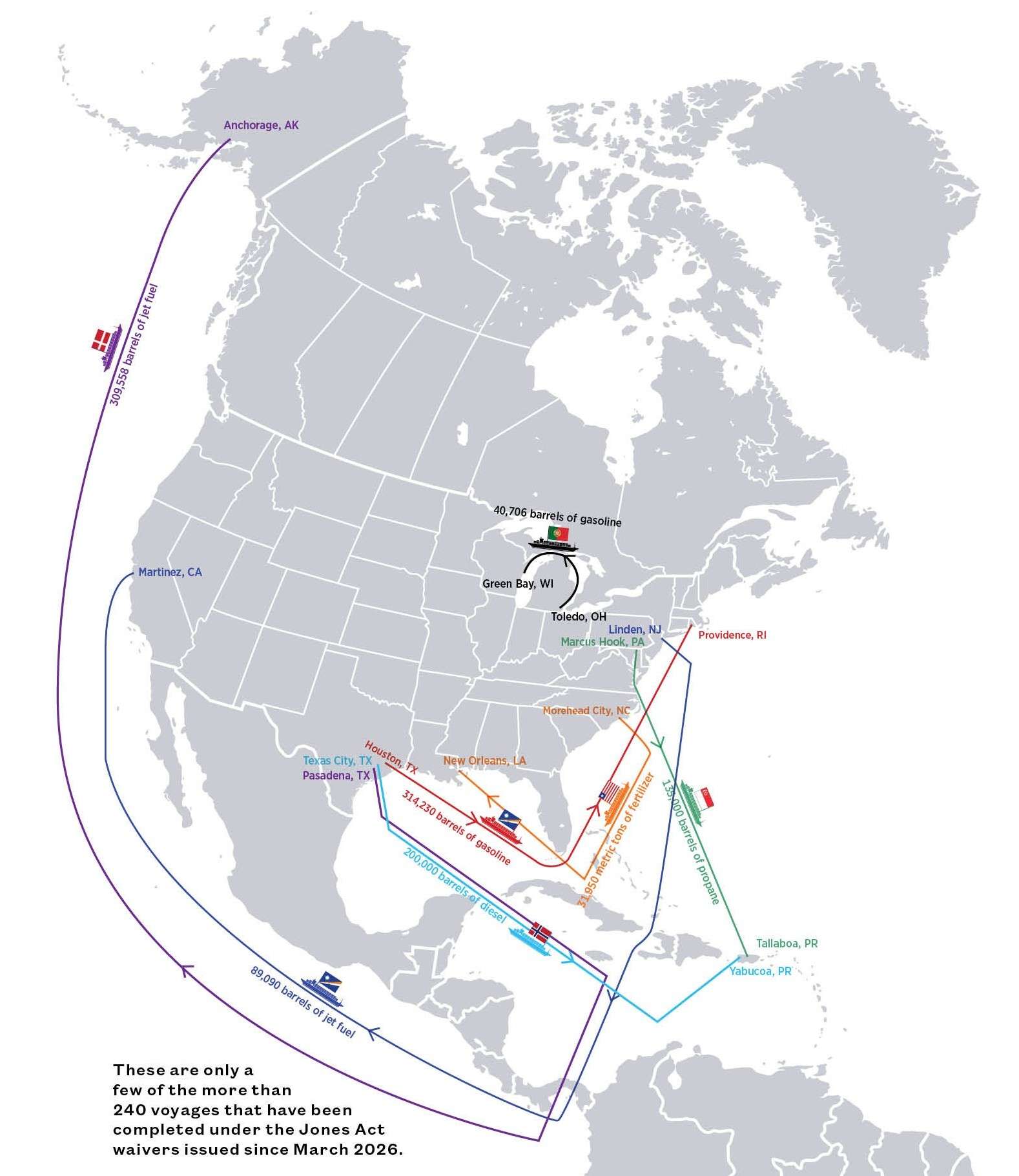
But there may be one silver lining. In an attempt to lower gas prices that spiked because of the war, the Trump administration has repeatedly issued waivers of the Jones Act, a century-old law that requires all goods moved between American ports to be carried on American-built, American-crewed ships.
With the law (temporarily) not being enforced, commerce has exploded.
Just look at how much propane has been shipped from the mainland United States to Puerto Rico, says Colin Grabow, a trade policy analyst at the Cato Institute and perhaps the nation's foremost advocate for abolishing the Jones Act.
America is one of the world's leading producers and exporters of propane, but the lack of Jones Act–compliant ships capable of carrying gas means that it has been nearly impossible to ship propane from the mainland to outlying parts of the country. In the past, Puerto Rico has imported gas from Nigeria, Chile, and elsewhere because those deliveries don't have to comply with the Jones Act.
For years, libertarians have argued that the Jones Act unfairly impoverishes American consumers and businesses that want to buy and sell things within the same country in order to artificially inflate the price of moving those things across water. Waiving the law seems to have proven that point: There are plenty of ships capable of moving gas and oil around the country as long as the government gets out of the way.
"The instant the Jones Act no longer applied to energy shipments, mainland propane displaced foreign imports, suggesting it had been the cheapest option all along," says Grabow.
Puerto Rico is hardly the only winner.
The Jones Act waivers are offering a glimpse into a world where the law doesn't exist. From March through mid-August, there had been 210 voyages completed that otherwise would have been deemed unlawful without the waivers, according to an analysis of Maritime Administration data by the Institute for Energy Research.
It's a world where American oil and natural gas can be more easily shipped from the Gulf Coast to New England, which had previously been importing energy from Russia and Europe. Another big winner is California, which had been importing gasoline from as far away as the Bahamas because it was nearly impossible to legally ship gas from Texas or Alaska to the West Coast.
President Donald Trump reupped the Jones Act waiver in mid-May. Another extension, issued in August, will last for 90 days but applies only to ships carrying energy products such as gas and oil. Before that waiver expires in November, lawmakers ought to kill the Jones Act permanently.
There is some irony in the fact that one of Trump's most successful policy maneuvers has paused a protectionist law that limited commerce, when so much else of his economic policy has been focused on erecting barriers to trade. It's also amusing that it was a war in the Middle East—something Trump pledged to avoid—that triggered this change.
Still, the proof is in the shipping. The free traders were right all along.
Ne plus avoir besoin de « motif valable » pour licencier, c'est le rêve de M. Pierre Gattaz, président du Mouvement des entreprises de France (Medef). Pour assouvir cette demande, la France devrait dénoncer la convention n° 158 de l'Organisation internationale du travail, qu'elle a ratifiée en 1989. Lutter contre de tels reculs s'avère de plus en plus délicat pour l'agence des Nations unies.
Toutes les quinze secondes, un travailleur meurt d'un accident ou d'une maladie liés à son travail (1). L'effondrement (plus de mille cent morts) de l'atelier textile du Rana Plaza à Dacca (Bangladesh), le 24 avril 2013, symbolise les conditions d'emploi proches de l'esclavage de nombreux ouvriers dans le monde. Mais on peut également citer, dans les pays du Nord, les suicides à répétition de salariés de groupes privatisés broyés par une politique managériale musclée (Orange, Renault, La Poste…).
C'est précisément pour lutter contre de telles situations que l'Organisation internationale du travail (OIT) cherche à gagner en influence. Première agence de l'Organisation des Nations unies (ONU), créée en 1919, elle repose sur une base tripartite, rassemblant sur un pied d'égalité les représentants de ses cent quatre-vingt-cinq Etats membres, ceux des employeurs et ceux des travailleurs qui y vivent. Son activité, principalement normative, consiste à adopter des conventions (obligatoires pour les Etats qui les ratifient) et des recommandations ou déclarations sur les droits des travailleurs (sans valeur contraignante).
Cependant, avec l'essor de la mondialisation économique, l'OIT s'est vue marginalisée par l'influence croissante des institutions financières internationales (IFI) — la Banque mondiale et le Fonds monétaire international — et par la création de l'Organisation mondiale du commerce (OMC) en 1995. En outre, la diminution du taux de syndicalisation tant dans les pays développés, où s'est généralisée la précarité de l'emploi, que dans les pays en développement, où prolifère l'économie informelle, fragilise l'OIT et son tripartisme fondateur. C'est pourquoi, à partir des années 1990, l'organisation s'est engagée dans une stratégie de réaffirmation internationale. En 1994, elle obtient ainsi le statut d'observateur auprès des deux IFI dans le but d'y promouvoir l'intérêt pour les questions sociales (2).
Peu de pouvoir contraignant
Mais c'est surtout l'adoption, en 1999, du concept de « travail décent » qui marque sa volonté de peser dans le débat mondial (3). En 2005, l'OIT lance ainsi les programmes par pays pour la promotion du travail décent (PPTD). Adoptés par plusieurs dizaines d'Etats, ils sont élaborés en accord avec les partenaires sociaux. La même année, l'organisation obtient que le travail décent figure enfin dans les Objectifs du millénaire pour le développement (OMD). La Conférence internationale du travail (assemblée décisionnelle de l'OIT) adopte à l'unanimité en juin 2009 un pacte mondial pour l'emploi, sans valeur contraignante.
Pour l'OIT, le travail rémunéré constitue le principal moyen de sortir de la pauvreté. Le choix du terme « travail », plutôt que celui d'« emploi », permet de prendre en compte le secteur informel. Quant à l'adjectif « décent », il relèverait plutôt du christianisme social, qui a inspiré certains fondateurs de l'organisation (4). L'agence insiste sur la protection sociale et met en place des équipes d'appui technique pour conseiller les gouvernements, notamment en Afrique.
Durant des années, le débat sur l'insertion d'une « clause sociale » dans les traités commerciaux avait agité l'organisation. Pour les partisans de cette innovation, il s'agissait de créer un lien entre l'OIT et l'OMC, cette dernière pouvant user de sa capacité de sanction vis-à-vis des Etats, capacité dont l'OIT est dépourvue. Mais les pays en développement y ont vu une manœuvre protectionniste déguisée de la part des pays développés. La déclaration de Singapour de 1996, adoptée par l'OMC, a clos ce débat en affirmant la stricte séparation des questions de commerce et de travail.
En conséquence, l'OIT a recentré son action sur la promotion de huit conventions jugées « fondamentales » : sur le travail forcé (convention adoptée en 1930), la liberté syndicale (1948), la négociation collective (1949), l'égalité de rémunération (1951), l'abolition du travail forcé (1957), la discrimination en matière d'emploi et de profession (1958), l'âge minimum d'admission à l'emploi (1973), les « pires formes de travail des enfants » (1999).
Observatrice au G20 en 2009, l'OIT paraît sortir de sa marginalisation. Mais son rapprochement des institutions financières et de l'OMC s'effectue-t-il au bénéfice des idées progressistes qu'elle porte ou des idées néolibérales promues par les IFI ? Pour le sociologue altermondialiste Thierry Brugvin, l'OIT braderait, au nom de l'efficacité, le droit international du travail en revoyant ses ambitions à la baisse (5). Pour d'autres, sa stratégie d'influence porterait ses fruits : les objectifs de travail décent et de lutte contre la pauvreté ont été inclus dans les documents stratégiques de réduction de la pauvreté (DSRP) des IFI qui ont succédé aux plans d'ajustement structurel en 1999. Ainsi, en 2009, la Banque mondiale a modifié son indicateur sur l'emploi des travailleurs, qui attribuait de bonnes notes aux pays dérégulant leur marché du travail ; elle prend en compte la mise en place d'une protection des travailleurs conforme aux conventions de l'OIT. Elle développe par ailleurs un nouvel indicateur, sur la protection des travailleurs. Ce qui ne l'empêche pas de prôner la lutte contre les « rigidités » du travail…
Quelle que soit l'évolution de l'OIT, la clé de son efficacité serait que toutes ses normes soient dotées d'une force contraignante lui permettant de sanctionner, comme l'OMC, les Etats et les entreprises contrevenants.
(2) Cf. Steve Hughes et Nigel Haworth, « Decent work and poverty reduction strategies » (PDF), Relations industrielles/Industrial Relations, université Laval (Québec), vol. 66, n° 1, hiver 2011.
(3) Cf. Marieke Louis, « Les organisations internationales et la régulation sociale de la mondialisation : le cas de l'agenda de l'OIT pour le travail décent », dans Chloé Maurel (sous la dir. de), Essais d'histoire globale, L'Harmattan, Paris, 2013.
The European Parliament has approved a major overhaul of the EU’s customs system, tightening requirements on e-commerce platforms, introducing a new handling fee for goods ordered from outside the bloc and creating a central EU customs authority.
“This is the biggest reform of European customs since 1968, supporting trade and the enforcement of EU rules,” said MEP Dirk Gotink, (EPP, Netherlands) who steered the legislation through Parliament. Gotink said European customs authorities had been overwhelmed by a “tsunami of Chinese parcels” and that the reform would give customs officers stronger tools to enforce EU standards.
Under the new rules, e-commerce platforms and sellers shipping goods directly from non-EU countries to European consumers will be treated as importers. That will make them responsible for providing customs data, handling applicable charges and ensuring products comply with EU law.
The reform also introduces an EU-wide handling fee on goods ordered directly from non-EU countries, with member states required to begin collecting it no later than 1 November, 2026. The European Commission will determine the amount and review it every two years.
Companies that repeatedly breach EU customs rules could face fines ranging from at least 1% to as much as 6% of the value of goods they imported into the EU during the previous 12 months.
The overhaul will also establish an EU Customs Data Hub, designed to replace at least 111 existing customs IT systems. A new EU Customs Authority, based in Lille, France, will manage the hub and coordinate customs cooperation and risk management across the EU.
The Council has already given the reform its final formal approval, making Parliament’s vote the final step in the legislative procedure.

 Login