Login

Canada Unveils First National Security Strategy in Over 20 Years
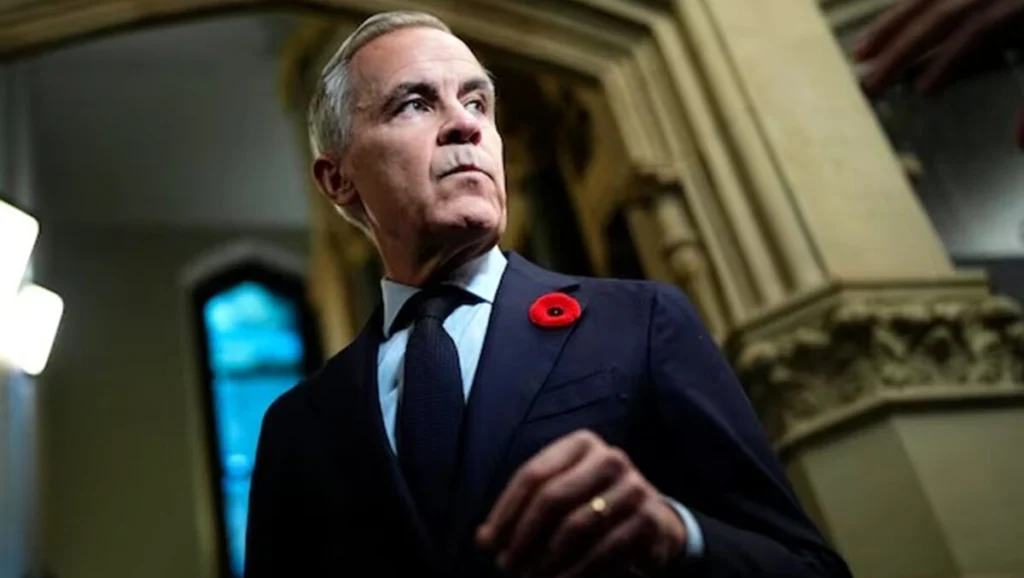
The rules-based international order is eroding and the line between economic security and national security has disappeared, Carney stated.
On Thursday, Canadian Prime Minister Mark Carney launched “The Plan for a Stronger Canada,” the country’s first national security strategy in over two decades aimed at countering evolving security threats and safeguarding national sovereignty.
RELATED:
EU and Canada to Explore New ‘Associated Member’ Status at Montreal Summit
The prime minister’s office said in a news release that the rules-based international order is eroding and the line between economic security and national security has disappeared, noting that national security now relies not only on defense and resource capabilities, but also on the strength of the economy, the resilience of institutions, and the partnerships with allies.
The strategy outlines five main priorities: strengthening economic security and resilience by transforming strategic industries and securing supply chains; advancing a disciplined foreign policy to diversify partnerships; rebuilding and strengthening the Canadian Armed Forces; enhancing public safety against foreign interference, espionage, violent extremism, and transnational organized crime; and modernizing intelligence capabilities to anticipate and counter emerging threats.
“In a rapidly changing, more dangerous, more divided world, Canada must have the capacity to defend our sovereignty, the resilience to withstand emerging threats, and the determination to shape our own future. Our Plan for a Stronger Canada will build that strength. So that we can live our lives as we choose, in the greatest country in the world,” PM Carney said, adding that the Canada will update the strategy at least every four years.
Mark Carney on Canada's new national security strategy: "The last strategy was written for a different world. And today's national security strategy reflects profound new realities. Most fundamentally, what it does is it recognizes that the requirements of sovereignty have… pic.twitter.com/76d8VUmVIZ
— Scott Robertson (@sarobertson_) October 29, 2026
The Strategy Focuses On What We Can Control: Carney.
The new Canadian security strategy considers events that have occurred over the past year and a half, including foreign policy statements made by U.S. President Donald Trump.
“The plan defines Canada’s core national interests and establishes a comprehensive, whole-of-government approach that brings together our economic strength, foreign policy, defense and intelligence capabilities, and public safety initiatives,” the Prime Minister’s Office stated.
To this end, the Canadian government has set out the following guidelines:
“1. Strengthen Canada’s economic security and resilience against threats: Canada has what the world wants. Securing our sovereignty in key sectors and delivering our resources and expertise to the world will reinforce Canada as a strategically important player in the global economy.
To strengthen our economic sovereignty, Canada is transforming our strategic industries with historic investments, securing our supply chains, maximising our energy security, and investing in Canadian innovation to position Canada as a global leader across critical industries.
2. Advance a disciplined foreign policy that diversifies Canada’s partnerships and builds strategic capabilities: No one country, no matter how powerful, can manage these challenges alone. The primary goal of our foreign policy is to support Canadian strategic autonomy and resilience through deep cooperation in the full range of strategic capabilities with likeminded partners.
Much of this work is underway. Canada is diversifying our trade and building stronger partnerships to create greater security and prosperity for Canadians, and forging new partnerships with allies that are anchored in our common values, respect our complementary strengths, and enhance our collective sovereignty and prosperity.
3. Rebuild and strengthen the Canadian Armed Forces (CAF) to defend Canada and Canadian interests: The work of defending Canada is the work of building Canada. To protect Canada’s sovereignty, strengthen our strategic autonomy, and meet our NORAD and NATO targets, the Canadian government is changing how we invest in defence.
We are building a stronger, more resilient Canadian defence industrial base capable of equipping, sustaining, and scaling up the CAF, accelerating procurement, and working with the Defence Investment Agency to deliver the Defence Industrial Strategy, strengthen strategic autonomy, and create lasting economic opportunities for Canadians.
By transforming our military and defence supply chain, strengthening Arctic security, and contributing to stability in the Indo-Pacific, the Middle East, and beyond, Canada will be able to protect itself at home and act as a responsible ally and partner abroad.
4. Protect Canadians and strengthen public safety against criminal and national security threats: Canadians should feel safe and free to take part in every facet of Canadian society.
We will work with all levels of government, Indigenous Peoples, and Northern communities to strengthen our defences and build resilience against threats facing Canadians. We will intensify efforts to counter foreign interference, espionage, violent extremism, and transnational organised crime, including sabotage, extortion, fraud, online exploitation, financial crime, money laundering, and sanctions evasion, while protecting Canadians and our institutions from foreign information manipulation.
5. Modernise Canada’s intelligence capabilities to anticipate and counter emerging threats: Our ability to collect, analyse, and leverage intelligence, together with our partners, ensures we are prepared to tackle emerging threats.
Canada will strengthen our sovereign intelligence capabilities, deepen and diversify our intelligence partnerships, and modernise Canada’s intelligence enterprise by updating authorities to reflect evolving threats and technologies while safeguarding Canadians’ rights.”
teleSUR/ JF
Sources: Xinhua – PM Office