❌

Reading view

Lavrov Returns to America as Moscow Tests the Limits of Western Diplomacy

Russia’s foreign minister arrives at the G20 meeting in Atlanta without Moscow having made significant concessions over Ukraine. His presence offers a reminder that diplomatic access can be valuable even when negotiations produce little progress.

Sergei Lavrov’s arrival in the United States for the G20 foreign ministers’ meeting is unlikely to transform the prospects for peace in Ukraine. For Moscow, however, the visit offers opportunities extending well beyond the formal agenda.

Russia’s veteran foreign minister will participate in discussions alongside representatives of the world’s major economies, including governments that have imposed extensive sanctions on Moscow and others that have maintained profitable commercial relationships with it.

The meeting, chaired by US Secretary of State Marco Rubio on 30–31 October, takes place as Washington pursues another diplomatic initiative concerning Ukraine.

Lavrov’s presence has attracted criticism from American lawmakers, including Republican Congressman Don Bacon, who has questioned why a senior representative of a government conducting military operations against Ukrainian cities should be welcomed in the United States.

Yet the more consequential issue is not whether Lavrov should attend. It is what Moscow hopes to achieve through renewed access to Western diplomatic forums, and what the United States expects to obtain in return.

Russia’s Diplomatic Opportunities

The Kremlin has spent much of the war arguing that Western attempts to isolate Russia have failed.

There is some substance to that argument, although it requires qualification.

Russia has suffered extensive restrictions on access to Western finance, technology and markets. Its economic relationships with Europe have been severely reduced, and its dependence on alternative trading partners has increased.

Nevertheless, Moscow has preserved important commercial and diplomatic connections with China, India and other countries unwilling to participate fully in Western sanctions.

For these governments, relations with Russia are often determined by energy requirements, commercial opportunities and their own strategic calculations rather than European security priorities.

The G20 provides Moscow with an opportunity to exploit those differences.

Lavrov can challenge Western sanctions, defend Russia’s diplomatic positions and hold bilateral discussions without demonstrating any willingness to compromise over occupied Ukrainian territory.

That does not make the meeting a Russian victory. Attendance at a multilateral gathering is not equivalent to the removal of sanctions or recognition of territorial claims.

But it offers Moscow something useful: opportunities for engagement without the conditions that would normally accompany substantive negotiations.

The limitations of such diplomacy were illustrated recently when German Foreign Minister Johann Wadephul met Lavrov in New York.

As EU Today examined in its analysis of that encounter, the meeting reopened a channel of communication but produced no visible movement in Russia’s position.

Germany restated its support for Ukraine. Moscow reiterated its established arguments.

The encounter demonstrated that diplomatic access and diplomatic progress are not necessarily the same thing.

Washington’s Negotiating Problem

The Trump administration approaches Russia from a different perspective.

Washington appears increasingly interested in identifying economic and political incentives that could make a negotiated settlement possible.

The calculation is understandable. Sanctions alone have not ended the war, and continued fighting imposes enormous costs on Ukraine while consuming Western military resources.

However, negotiations depend on more than establishing contact.

A settlement requires agreement over territory, security arrangements, enforcement mechanisms and the consequences of renewed hostilities.

Russia’s willingness to participate in discussions does not establish its willingness to accept terms compatible with Ukrainian sovereignty.

Nor does the prospect of economic cooperation necessarily create sufficient leverage to change Moscow’s calculations.

The administration must also consider how concessions offered to Russia would affect Ukraine’s ability to negotiate.

If Moscow expects economic benefits merely for remaining at the negotiating table, it has an incentive to prolong discussions while preserving its military position.

Conversely, a credible offer tied to verifiable Russian actions could provide a basis for substantive bargaining.

The difference lies in the conditions attached to any concessions and the mechanisms available to enforce them.

Europe’s Place at the Table

For European governments, the Atlanta meeting exposes a familiar weakness.

The EU is a major provider of financial assistance to Ukraine, maintains extensive sanctions against Russia and would face the consequences of any settlement that failed to establish lasting security arrangements.

Yet European influence over direct American-Russian negotiations remains limited.

EU foreign policy chief Kaja Kallas is attending the meeting and will conduct bilateral discussions, according to the European External Action Service’s official announcement.

Her participation gives Brussels an opportunity to communicate its position. It does not guarantee a role in determining the terms of any eventual agreement.

Ukraine itself is not participating in the gathering, although the G20 meeting is not formally a peace negotiation.

The danger for Europe is not simply exclusion from particular meetings. It is the possibility that decisions affecting European security will emerge from negotiations in which European governments possess limited influence over the agenda.

The EU retains important instruments of leverage, particularly sanctions, financial assistance and access to its markets.

But those instruments are less effective when member states disagree over their use or when Washington pursues a separate diplomatic strategy.

The Wider G20 Agenda

The meeting also takes place amid serious tensions over Iran, maritime security and international trade.

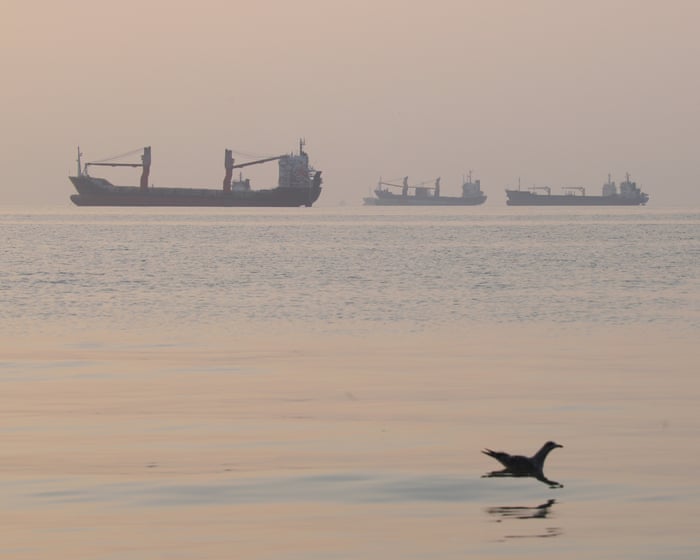
Washington wants greater cooperation over freedom of navigation in the Strait of Hormuz, Red Sea, Black Sea and South China Sea.

These priorities intersect with European interests, particularly energy security and the protection of commercial shipping.

Yet the participating governments approach these disputes from markedly different positions.

China has little interest in endorsing an American interpretation of maritime security that could constrain its own regional ambitions.

Russia is unlikely to support arrangements that weaken its position in the Black Sea.

Meanwhile, disagreements over American tariffs complicate Washington’s efforts to secure cooperation from traditional economic partners.

The G20 remains useful precisely because governments with conflicting interests can communicate through it.

But communication should not be mistaken for agreement.

For Moscow, Lavrov’s visit offers another opportunity to demonstrate that Russia remains engaged in international diplomacy despite its war against Ukraine.

For Washington, the challenge is to show that renewed engagement can produce something more substantial than another meeting.

Europe’s concern is more immediate: any settlement negotiated with Moscow will have to be sustainable on European territory, with European resources and against the possibility of renewed Russian aggression.

Diplomatic access may be relatively easy to restore. Establishing credible security arrangements will be considerably harder.

  •  

Holguin to meet Christodoulides on Friday, Erhurman on Monday

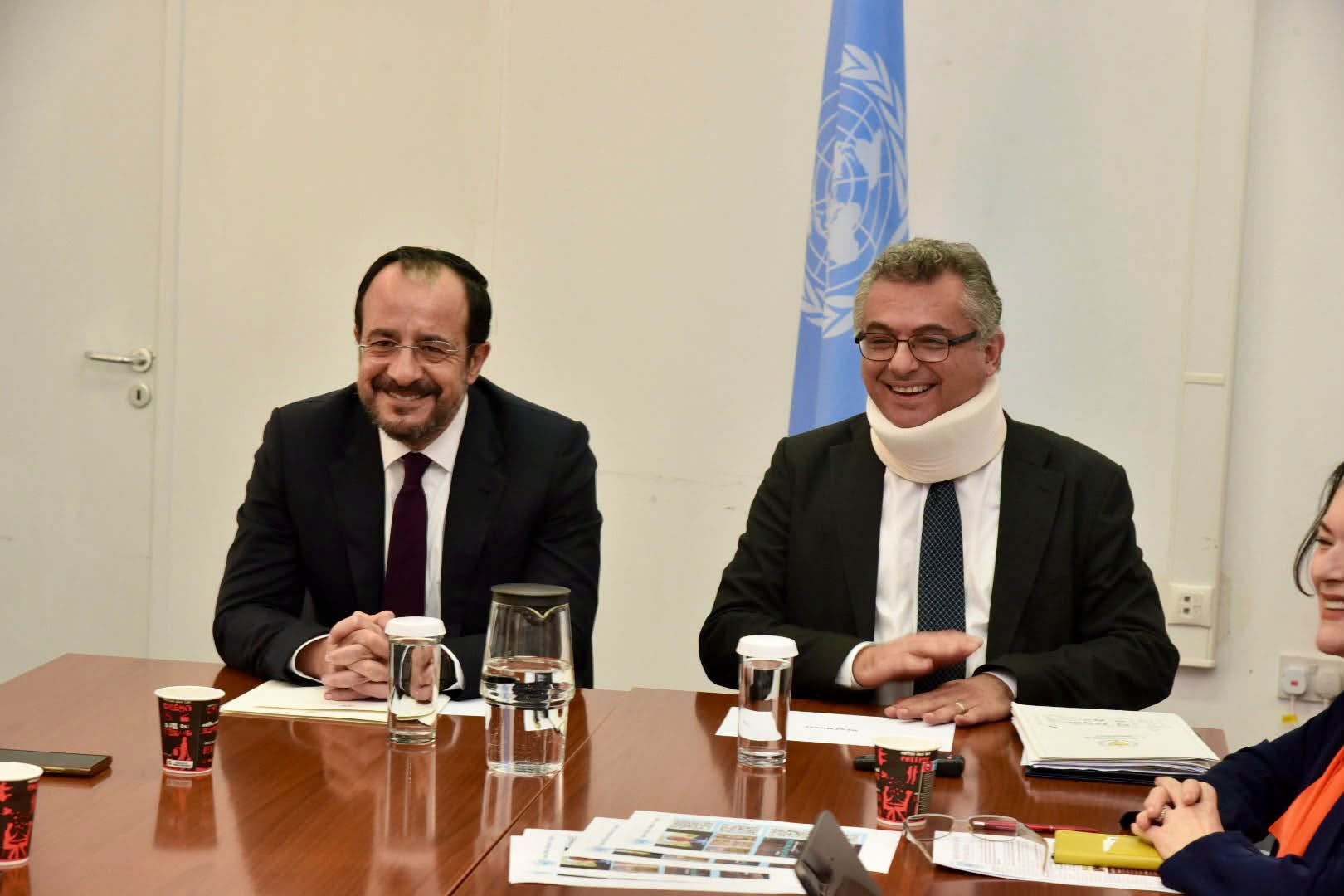
United Nations Cyprus problem envoy Maria Angela Holguin will meet President Nikos Christodoulides on Friday and Turkish Cypriot leader Tufan Erhurman on Monday, as she begins her latest round of contacts on the island.

Erhurman is currently not in Cyprus, having travelled to Ankara on Thursday to attend the Organisation of Turkic States’ leaders’ summit, and as such will meet Holguin on Monday, after he has returned to the island.

Towards the end of her stay, Holguin will hold a tripartite meeting with both Christodoulides and Erhurman on November 9.

The two leaders most recently met on Tuesday, and said after that meeting that both he and Erhurman had “agreed not to make further statements regarding specific issues” related to the Cyprus problem until, at the very least, when Holguin arrives.

Both men had also met the bicommunal technical committees on cultural heritage and on youth, as well as the civil society steering committee, following their one-on-one meeting.

Of those meetings, Christodoulides said that they were “constructive” and that “various views and suggestions were put forward” by committee members.

He added that those suggestions will be discussed by himself and Erhurman going forward.

Christodoulides insists Varosha proposal is ‘mutually beneficial’

Prior to Tuesday’s meeting, Christodoulides had stressed that his proposal to open and repopulate the fenced-off area of Varosha under the United Nations’ administration and open the port of Famagusta under the European Union’s control is “mutually beneficial”.

“I believe this is a mutually beneficial proposal. It creates a positive situation for both sides and serves as a practical test of whether we are truly committed to moving forward, specifically by taking bold confidence-building measures which also send a strong message to society as a whole,” he said.

Erhurman had said last week that he had rejected the proposal, lamenting that it fell short of an entry into force of the European Union’s direct trade regulation.

“Is this the entry into force of the direct trade regulation? No, it is not the entry into force of the regulation, but since [the port] would be under EU control, direct trade would begin,” he said.

As such, he said, the proposal was unbalanced.

The direct trade regulation is a pending EU regulation which would allow Turkish Cypriot goods, as certified by the Turkish Cypriot chamber of commerce, to be exported directly into Europe via the Green Line, and given preferential treatment inside the European single market as European goods.

It was proposed in July 2004, three months after the rejection of the Annan plan to reunify Cyprus by the Greek Cypriot side in a referendum, and shortly after the Republic of Cyprus’ accession to the EU.

Menelaou had cited progress on crossing points

Previously, Greek Cypriot chief negotiator Menelaos Menelaou had said that a dispute over the routing of the planned transit road between Athienou and the Nicosia suburb of Aglandjia “has been overcome”.

He said that the outstanding dispute now remains over the question of whether a planned crossing point to connect Louroujina, the southernmost Turkish Cypriot village, with nearby Lymbia, will open at the same time.

The Turkish Cypriot side’s position is that the road between Athienou and Aglandjia constitutes two crossing points, one in Athienou and one in Aglandjia, and that they are part of a package of four alongside plans for a crossing point in the eastern Nicosia suburb of Mia Milia, and one in Louroujina.

However, the Greek Cypriot side treats the road between Athienou and Aglandjia as one crossing point, counterweighted by the Mia Milia crossing point, and is therefore of the view that the Louroujina crossing point should only be opened if a second transit road, through the Turkish Cypriot Kokkina exclave in the Tillyria region, also be opened.

  •  

Ankara tells Washington it’s ready to help revive Ukraine-Russia talks—but names no date or venue

Ukrainian (left) and Russian (right) delegations during the talks in Istanbul, Turkey on 29 March 2022.

Turkish President Recep Tayyip Erdoğan told US President Donald Trump by phone on 28 October that Türkiye is ready to support efforts to revive Ukraine-Russia diplomacy and end the war that way, the Turkish presidency’s Directorate of Communications said. The same day, a White House official said the US will join the next round of talks with Kyiv and Moscow.

Talks between Ukraine, Russia, and the US have been stalled since winter, and the fight now is over timing. On 27 October, Zelenskyy said Kyiv wants that round before a Putin-Trump-Xi summit, which would leave Ukraine out of the room. Putin proposed that summit, The Wall Street Journal reported. Ankara’s statement names neither track, but Ukraine sits at the table only in the first.

Ankara offers support, but no date or venue

The statement named no date or Turkish venue. In July, Foreign Minister Hakan Fidan said in Kyiv that the Türkiye-mediated Istanbul talks should continue in the same format. Türkiye hosted Russia-Ukraine talks in 2022 and 2025. The 2 June 2025 round in Istanbul ended with a prisoner swap deal but no ceasefire. In March, Zelenskyy named Türkiye among possible venues.

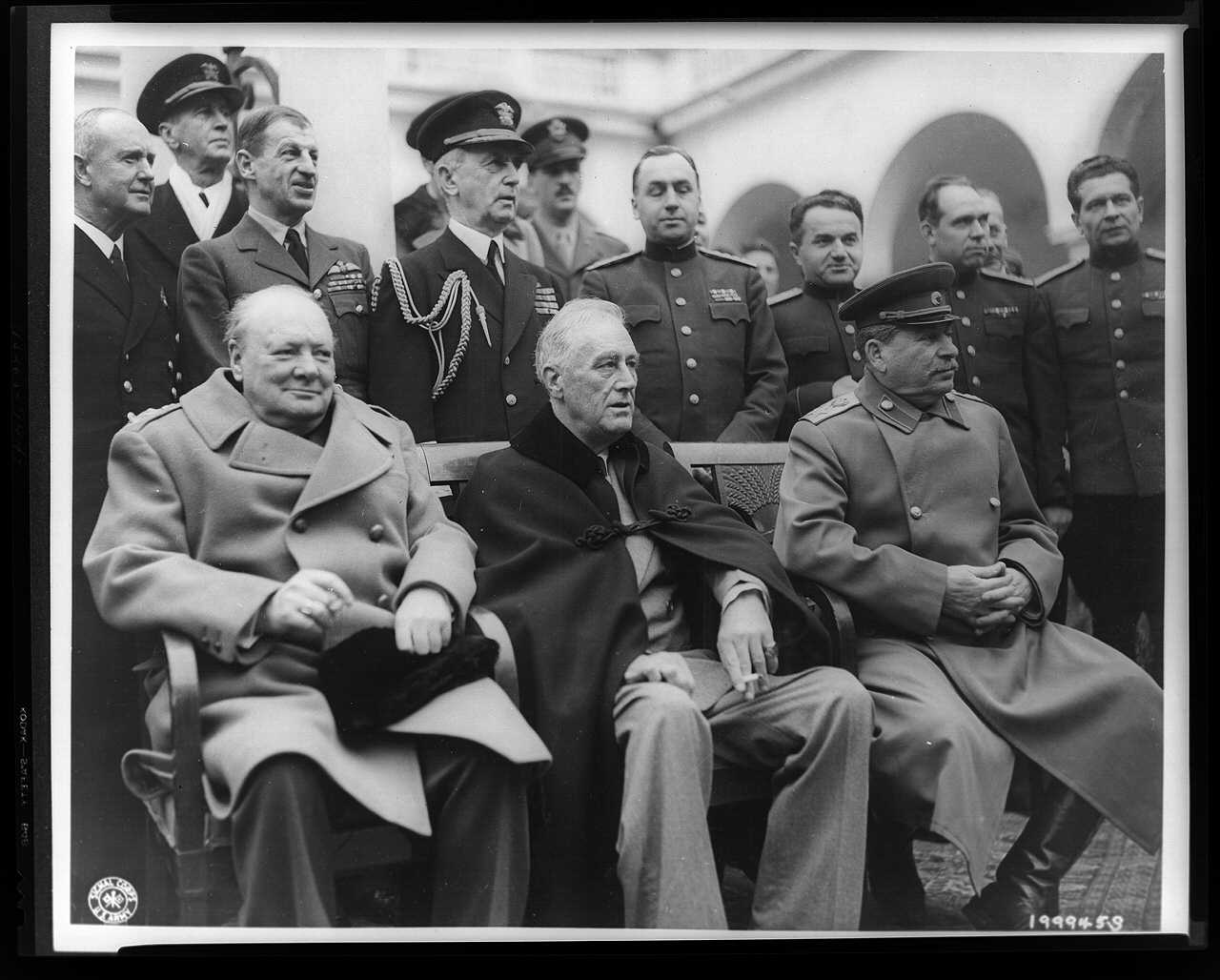
The Crimean Conference: Prime Minister Winston Churchill, President Franklin D. Roosevelt, and Marshal Joseph Stalin at the palace in Yalta, February 1945 (Image: U.S. Signal Corps, from collection of the Library of Congress)
Explore further

“I really don’t want this to be Yalta 2, 3, 4”: Zelenskyy fears Trump-Xi-Putin meeting could redivide world, with Ukraine on agenda

Everyone says soon, but no date is set

On 28 October, Russian Deputy Foreign Minister Sergei Ryabkov claimed it was premature to talk about Abu Dhabi: a contact was expected soon and Abu Dhabi had been mentioned as a venue, but Russia was still preparing. Kremlin aide Yuri Ushakov claimed the talks would come after 4 November, with the date depending in part on the battlefield. On 27 October, Ukrainian presidential adviser Dmytro Lytvyn told journalists it was too early for announcements. A day later, Zelenskyy told The Sun that the round could come as soon as 10 November.

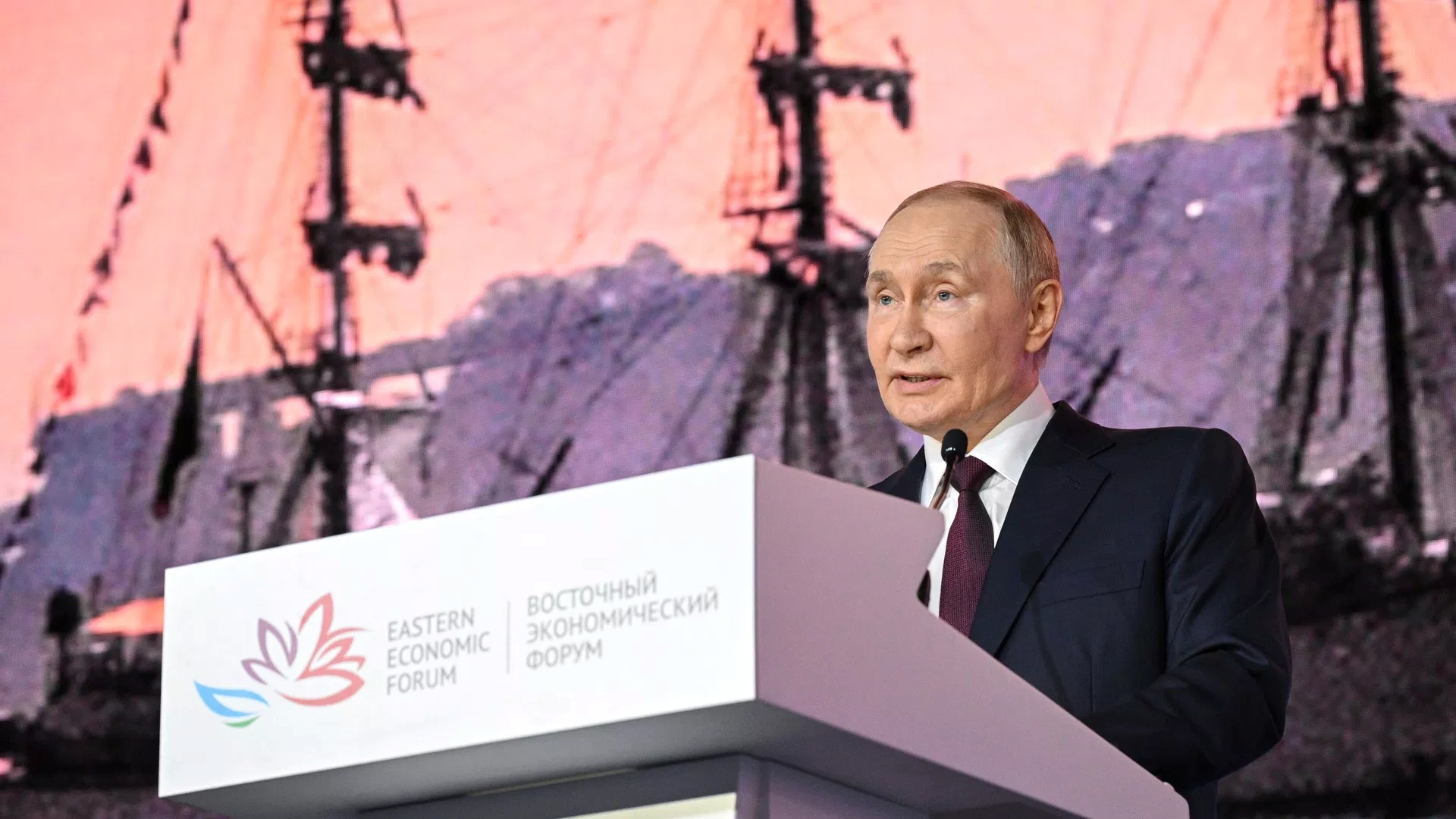
putin at the eastern economic forum in vladivostok on 5 september 2025
Explore further

Putin claims Russia is ready for new talks with Ukraine, calls occupied land historical Russia

The White House official told Türkiye Today that the US “looks forward to participating in the next round of trilateral talks, which will take place soon.” The outlet’s question on whether Istanbul was considered had gone unanswered by publication.

Trump told reporters on 28 October that a meeting with Putin and Zelenskyy would be set up soon. The Kremlin keeps its condition. Ushakov claimed on 27 October that such a contact makes the most sense after the negotiation process ends, and repeated that Zelenskyy should come to Moscow.

Another mediator does not decide which meeting comes first. Kyiv and Moscow have both confirmed Abu Dhabi, Zelenskyy said, so it now depends on the US side. Earlier this month, Trump said he waived new sanctions on Russia so as not to drive Moscow from the talks.

  •  

Ukraine war latest: Oleshky ceasefire holds as Zelensky secures new aid pledges

Key developments on Oct. 28:

  • Putin 'wanted very much' for Melania Trump to broker Oleshky ceasefire, first lady adviser says
  • Ukraine reportedly strikes chemical, metallurgical plants in Russia
  • Russia building new drone launch site near Millerovo airfield in Rostov Oblast, HUR says
  • Netherlands announces 500 million euro military

  •  

As Ukraine, Russia head back to peace talks, here's what Zelensky expects

A planned meeting between Ukraine, Russia, and the U.S. in Abu Dhabi will focus on de-escalating Russia's war, President Volodymyr Zelensky told reporters on Oct. 27, as Moscow seemingly agreed to resume talks with Kyiv after a pause of more than eight months.

Although Ukrainian officials do

  •  

Zelensky backs Norway-Finland talks with Putin, says Trump already ended Russia's isolation

Zelensky praised Norway and Finland for putting their diplomacy "completely out in the open: discussions in advance, a full briefing, and transparent objectives," saying that not all countries had taken the time to speak with Ukraine beforehand.

  •  

Gulf states working on multipart peace deal to avert renewal of US-Iran war

Talks are aimed at reopening strait of Hormuz and lifting sanctions on Iran, and for Houthis to withdraw in Yemen

A multipronged peace deal to reopen the strait of Hormuz within four days of sanctions being lifted and for the Houthis to withdraw substantial forces inside Yemen are at the heart of Gulf states’ plans to avert what they regard as a disastrous renewal of war between Iran and the US.

The US is aware of the talks’ progress but is holding out for a concession that European powers suggest could involve Iran allowing UN weapons inspectors back into the country.

Continue reading...

© Photograph: Amirhosein Khorgooi/AP

© Photograph: Amirhosein Khorgooi/AP

© Photograph: Amirhosein Khorgooi/AP

  •  

Putin lectured Nordic leaders on Russian history during latest call, FT reports

Russian President Vladimir Putin delivered a lengthy lecture on medieval Slavic history to the leaders of Norway and Finland during an Oct. 27 phone call, offering little mention of an immediate ceasefire despite renewed diplomatic efforts to end Moscow's war in Ukraine, the Financial Times (FT) reported.

  •  

Finland and Norway Hold Direct Talks with Putin Ahead of Ukraine Peace Negotiations, Exposing European Divisions

Finnish President Alexander Stubb and Norwegian Prime Minister Jonas Gahr Støre have spoken directly with Vladimir Putin before briefing Volodymyr Zelenskyy. The initiative, undertaken in consultation with Ukraine, comes ahead of planned negotiations in Abu Dhabi but has drawn criticism from other Nordic leaders.

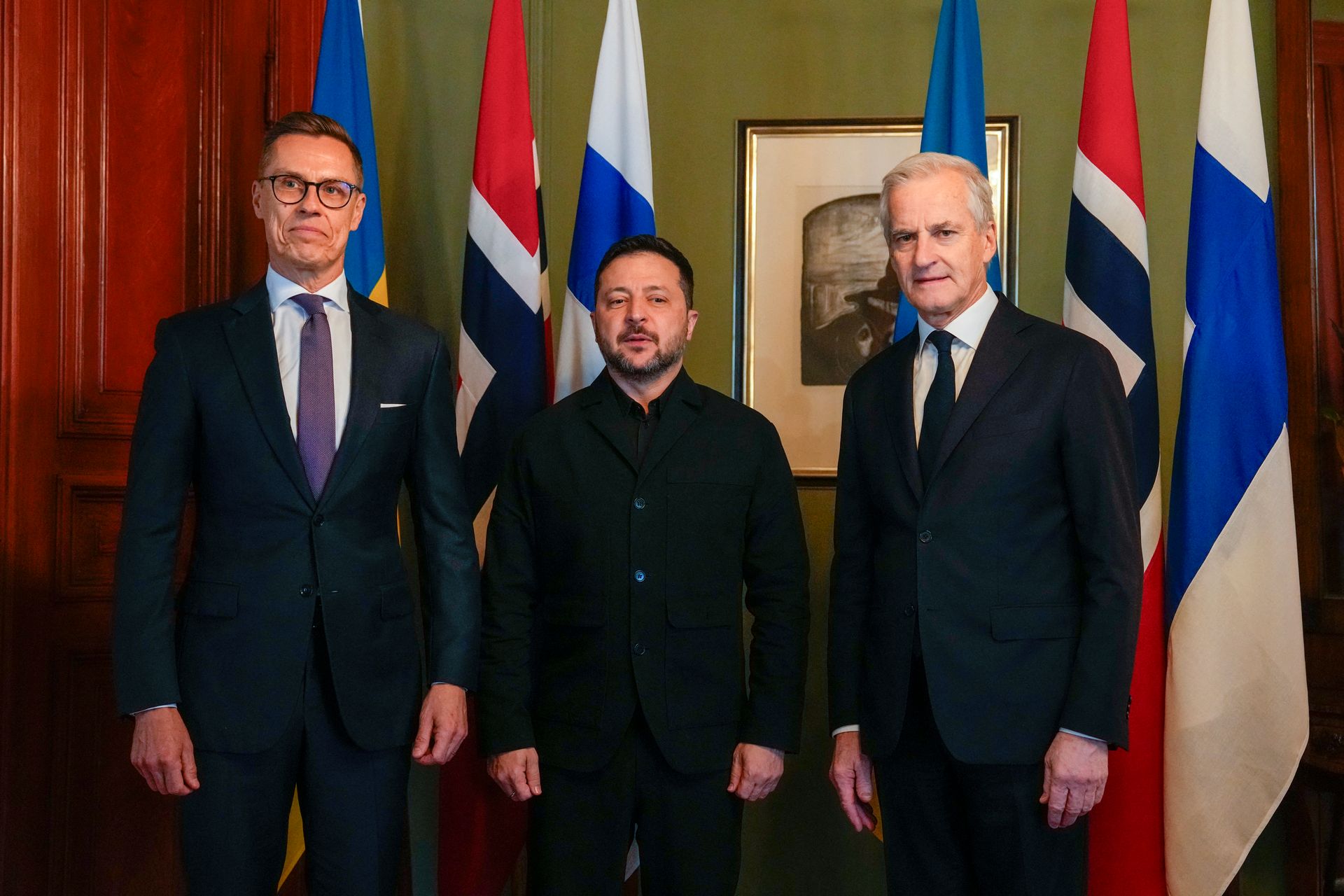
Finnish President Alexander Stubb and Norwegian Prime Minister Jonas Gahr Støre held a telephone conversation with Russian President Vladimir Putin on Tuesday, 27 October, marking an unusual direct diplomatic engagement between Moscow and two European NATO members since Russia’s full-scale invasion of Ukraine in February 2022.

The conversation, initiated by the two Nordic leaders from Helsinki, was followed by a separate call with Ukrainian President Volodymyr Zelenskyy. According to a joint statement released by the Norwegian government, the initiative had been prepared in consultation with Kyiv.

The objective was to communicate directly with Putin about efforts to end the war and the forthcoming negotiations involving Ukraine, Russia and the United States.

Stubb described the exchange as frank and substantive, arguing that Finland and Norway had particular reasons to participate in discussions concerning European security.

“We are neighbouring countries to Russia,” he said, adding that the war’s outcome would directly affect European security.

Both leaders reaffirmed their governments’ continuing support for Ukraine while calling for renewed negotiations. Støre emphasised the humanitarian and economic consequences of the conflict and the need for de-escalation.

Importantly, their statement specified that they were acting as national leaders rather than representatives of Europe collectively.

Zelenskyy briefed after discussions with Moscow

Following the conversation with Putin, Stubb and Støre spoke with Zelenskyy, who confirmed the exchange in a statement issued by his office.

The Ukrainian president thanked them for their detailed briefing and diplomatic engagement.

According to Zelenskyy, the two leaders had communicated Ukraine’s demand for concrete steps to reduce attacks against its energy facilities and other infrastructure.

The discussion also covered preparations for trilateral negotiations involving Ukrainian, American and Russian delegations, provisionally planned for November.

Kyiv’s confirmation that it had been consulted before the Putin conversation is significant. Ukraine has consistently maintained that decisions concerning its sovereignty, territory and security cannot be negotiated without its participation.

Oslo talks establish new diplomatic channel

Tuesday’s telephone diplomacy followed a meeting in Oslo on 20 October involving Zelenskyy, Stubb, Støre and representatives of US President Donald Trump.

American special envoy Steve Witkoff participated in person, while Jared Kushner joined remotely. European and NATO representatives also attended related discussions.

According to the Ukrainian presidency’s account, the consultations addressed possible steps towards ending the war and establishing security arrangements after a settlement.

Witkoff subsequently travelled to St Petersburg on 21 October for discussions with Putin.

The diplomatic contacts have produced plans for another round of talks in Abu Dhabi, expected after 4 November, although the precise date and representation remain subject to confirmation.

The European Commission has also sought involvement. During its 21 October press briefing, the Commission confirmed its participation in the Oslo consultations, which addressed territorial questions, security guarantees and post-war economic arrangements.

As EU Today previously reported, discussions about appointing a European representative to negotiations have exposed disagreements over who should speak for European governments and what authority such a representative would possess.

Moscow maintains its negotiating position

The Kremlin’s account of Tuesday’s conversation offered little indication of a change in Russia’s principal demands.

According to reports citing the Kremlin’s statement, Putin insisted that a lasting settlement would require what Moscow described as full recognition of Russia’s legitimate interests.

He also accused NATO and European Union countries of pursuing confrontational policies that prolonged the conflict.

These statements indicate that the reopening of direct communication has not, by itself, resolved the differences between the negotiating parties.

Russia continues to seek arrangements concerning Ukrainian territory and the European security order, while Kyiv maintains that its sovereignty and territorial integrity must be respected.

Denmark questions independent Nordic diplomacy

The initiative has also revealed differences among European governments over direct engagement with Moscow.

Danish Prime Minister Mette Frederiksen criticised the Finnish-Norwegian approach, saying it had not been coordinated with Denmark and warning against individual European countries pursuing separate diplomatic initiatives.

Swedish Prime Minister Ulf Kristersson also expressed reservations about contacts that might undermine a common European position.

Their objections highlight a distinction between consultation with Ukraine and agreement among European governments on the organisation of negotiations.

For Finland and Norway, both of which share borders with Russia, the outcome of the conflict carries direct implications for security in the Baltic Sea region and the High North.

The immediate question is whether their intervention can facilitate substantive negotiations without weakening coordination between Kyiv and its European partners.

With the next US-mediated talks expected in November, Tuesday’s contacts establish another channel of communication with Moscow. Whether that channel produces movement on territorial disputes, security guarantees or an eventual ceasefire remains unresolved.

  •  

Ceasefire brokered by Melania Trump takes effect in Russian-occupied southern Ukraine town

A localized ceasefire agreement between Ukraine and Russia took effect on Tuesday after first lady Melania Trump announced last week she secured a temporary humanitarian agreement for the border city of Oleshky.  The Russian-occupied town is located in southern Ukraine, and residents have faced shortages in food and medicine amid the ongoing war. The pause…

  •  

Leaders take vow of silence on Cyprus problem substance ahead of Holguin visit

President Nikos Christodoulides on Tuesday said that both he and Turkish Cypriot leader Tufan Erhurman have agreed to make “no further statements” on matters of substance related to the Cyprus problem ahead of the forthcoming arrival on the island of United Nations envoy Maria Angela Holguin on the island.

“It was a very good and constructive discussion, which will continue during Holguin’s presence in Cyprus. For this reason, we have agreed not to make further statements regarding specific issues, and we also agreed that no joint statement would be issued,” he said after meeting Erhurman in the morning.

Both leaders had also met the bicommunal technical committees on cultural heritage and on youth, as well as the civil society steering committee, following their one-on-one meeting.

Of those meetings, Christodoulides said that they were “constructive” and that “various views and suggestions were put forward” by committee members.

He added that those suggestions will be discussed by himself and Erhurman going forward.

Holguin expected to arrive on Thursday

Holguin is expected to arrive on the island on Thursday, and will hold meetings with both Erhurman and Christodoulides, before holding a tripartite meeting with both leaders at the end of her stay.

Prior to Tuesday’s meeting, Christodoulides had stressed that his proposal to open and repopulate the fenced-off area of Varosha under the United Nations’ administration and open the port of Famagusta under the European Union’s control is “mutually beneficial”.

“I believe this is a mutually beneficial proposal. It creates a positive situation for both sides and serves as a practical test of whether we are truly committed to moving forward, specifically by taking bold confidence-building measures which also send a strong message to society as a whole,” he said.

Erhurman had said last week that he had rejected the proposal, lamenting that it fell short of an entry into force of the European Union’s direct trade regulation.

“Is this the entry into force of the direct trade regulation? No, it is not the entry into force of the regulation, but since [the port] would be under EU control, direct trade would begin,” he said.

As such, he said, the proposal was unbalanced.

The direct trade regulation is a pending EU regulation which would allow Turkish Cypriot goods, as certified by the Turkish Cypriot chamber of commerce, to be exported directly into Europe via the Green Line, and given preferential treatment inside the European single market as European goods.

It was proposed in July 2004, three months after the rejection of the Annan plan to reunify Cyprus by the Greek Cypriot side in a referendum, and shortly after the Republic of Cyprus’ accession to the EU.

Menelaou had cited progress on crossing points

Previously, Greek Cypriot chief negotiator Menelaos Menelaou had said that a dispute over the routing of the planned transit road between Athienou and the Nicosia suburb of Aglandjia “has been overcome”.

He said that the outstanding dispute now remains over the question of whether a planned crossing point to connect Louroujina, the southernmost Turkish Cypriot village, with nearby Lymbia, will open at the same time.

The Turkish Cypriot side’s position is that the road between Athienou and Aglandjia constitutes two crossing points, one in Athienou and one in Aglandjia, and that they are part of a package of four alongside plans for a crossing point in the eastern Nicosia suburb of Mia Milia, and one in Louroujina.

However, the Greek Cypriot side treats the road between Athienou and Aglandjia as one crossing point, counterweighted by the Mia Milia crossing point, and is therefore of the view that the Louroujina crossing point should only be opened if a second transit road, through the Turkish Cypriot Kokkina exclave in the Tillyria region, also be opened.

  •  

Kyiv's Brussels blunder leaves EU scrambling over phantom Zelensky visit

President Volodymyr Zelensky's planned Oct. 26 trip to Brussels descended into a diplomatic guessing game, with conflicting signals from his own team leaving EU and NATO officials scrambling to establish whether he was coming — and who was supposed to meet him.

At the center of the confusion

  •  

More than a US briefing: Brussels security talks on Ukraine planned for 27 or 28 October, Kyiv says

Ukrainian President Volodymyr Zelenskyy, 20 October 2026. Photo: Zelenskyy / Telegram

Ukraine, the US, the EU, and NATO plan to meet in Brussels this week to discuss security for Ukraine, President Volodymyr Zelenskyy told Ukrainian TV. The meeting would follow last week’s talks in Oslo and a US envoy’s visit to Russian President Vladimir Putin.

Guarantees are what would oblige Ukraine’s allies to act if Russia attacks again. The Paris Declaration laid plans for that commitment in January. Kyiv had a briefing from the Americans, and now the partners want a broad discussion of security and guarantees, Zelenskyy said. Brussels comes ahead of three-way talks with Russia, which the Kremlin says Putin is ready in principle to resume in mid-November.

Zelenskyy: meeting planned for Tuesday or Wednesday

The meeting is planned for Tuesday or Wednesday, 27 or 28 October, Zelenskyy said in the interview, aired on 25 October. The EU would take part at the presidential level and NATO at the level of its secretary general. He did not know whether anyone else would join. He also said Ukraine’s neutrality and limits on its army are not up for discussion.

After Oslo, Witkoff briefed Putin in St. Petersburg

Earlier, on 20 October, Zelenskyy met US special envoy Steve Witkoff in Oslo, with Finnish President Alexander Stubb and Norwegian Prime Minister Jonas Gahr Støre present. According to Zelenskyy, a wider round there included national security advisers from Germany, the UK, France, and Italy, the chief of staff of the European Commission president, and NATO representatives.

A day later, Witkoff met Putin in St. Petersburg and said he had brought papers setting out possible paths to a settlement. He told Putin the Oslo talks had been productive. However, Kremlin aide Yuri Ushakov claimed the new ideas from the Europeans and Kyiv that Witkoff relayed held little of use for a settlement.

  •  

Zelensky details expectations for upcoming trilateral peace talks with Russia, US

Before a meeting between Zelensky, Russian President Vladimir Putin, and U.S. President Donald Trump can take place, technical talks among the three countries' negotiating teams must be held first, said Zelensky.

  •  
❌