❌

Reading view

Weaponized Journalism: 2021 Sayer Ji Interview with NPR

Sayer Ji | May 2, 2025

… I had a direct, revealing encounter with NPR’s embedded bias in May of 2021, when Geoff Brumfiel, one of their senior correspondents, reached out to feature me in a piece titled: “For Some Anti-Vaccine Advocates, Misinformation Is Part Of A Business.” The article was a thinly veiled attempt at character assassination—an example of media functioning not as a seeker of truth, but as a weapon of narrative warfare.

Rather than ignore or stonewall, I made an unusual decision: I invited Brumfiel into a cross-interview, recorded and published in full transparency above. This format allowed both of us to pose questions to each other, and for the public to witness the full, unedited context. The result was deeply revealing—not just of NPR’s approach, but of the larger media machinery it represents.

This candid exchange exposed not only the editorial bias and conflicts of interest at NPR, but also the broader ideological machinery backing the so-called “Disinformation Dozen” narrative, propagated by the Center for Countering Digital Hate (CCDH)—an organization that, ironically, engages in exactly what its name suggests it opposes: digital censorship, hate, and targeted takedowns.

The False Framing of “Anti-Vax” and “Misinformation”

The terms “anti-vaccine” and “misinformation” are wielded like verbal bludgeons—designed to shut down debate and demonize dissent. But the reality is far more nuanced. At GreenMedInfo.com, we curate and publish peer-reviewed research, offering the public access to scientific literature often ignored by mainstream outlets. This is not “misinformation”—it is scientific transparency.

Yet NPR painted me as a profiteer, part of an “anti-vax industry.” They ignored the fact that GreenMedInfo is ad-free and freely accessible, and that Stand for Health Freedom, which I co-founded, is a nonprofit platform defending bodily sovereignty and informed consent.

I challenged NPR and Brumfiel to investigate their own funding relationships—particularly with PhRMA and the Gates Foundation, both of which have donated millions to support pro-vaccine messaging through NPR. When media entities are underwritten by the very industries they’re reporting on, how can the public trust what they hear?

Corporate Sponsorship & Narrative Control

In fact, NPR’s own sponsorships—such as their integration of PhRMA’s “Brand Soundscapes” into NPR’s app—demonstrate just how blurred the line between journalism and marketing has become. And while Brumfiel insisted editorial decisions are independent, the systemic nature of these relationships is hard to ignore. As I pointed out during our dialogue, when NPR receives tens of millions in funding from groups that directly benefit from mass vaccination campaigns, their reporting on those topics cannot be assumed neutral.

The larger story here isn’t about me. It’s about how public media institutions, originally designed to be accountable to the people, have become extensions of corporate and governmental power.

  •  

The rise of the nuclear hexagon and the future of Asian stability

Originally published by Pacific Forum, this article is republished with permission. A central problem in US nuclear thinking is that it is fragmented. Washington is laser-focused on the “three-body problem”: It considers the US-Russia-China triangle fundamental, and when it does not ignore the China-India-Pakistan triangle, it treats it as a mere “Southern Asia” issue. Washington, […]

The post The rise of the nuclear hexagon and the future of Asian stability appeared first on Asia Times.

  •  

Pre-APEC US ban on Chinese genomic giant widens biotech decoupling

Beijing has vowed to defend its firms after Washington blocked imports from China’s leading genomics group, extending the two countries’ trade war into biotechnology weeks before their leaders are due to meet in Shenzhen. The US Department of Homeland Security (DHS) on Wednesday added three Shenzhen-based companies to the Uyghur Forced Labor Prevention Act (UFLPA) […]

The post Pre-APEC US ban on Chinese genomic giant widens biotech decoupling appeared first on Asia Times.

  •  

La guerra contro l’Iran e il “terribile potere del denaro”

Netanyahu sta dicendo a Trump che ora deve portare a termine l’opera di distruzione dell’Iran

Segue nostro Telegram.

Il «Grande Progetto» volto a «mantenere [la civiltà occidentale] al vertice del mondo» (come ha affermato il Segretario di Stato statunitense Marco Rubio) richiede che gli strumenti per garantire l’obbedienza siano di due tipi: La creazione di un fervore rivoluzionario distruttivo dal basso (oggi definito «cambio di regime»); e, in secondo luogo, l’uso di ciò che Theodore Herzl, in una famosa frase, definì «il terribile potere del denaro di esercitare una pressione irresistibile sulla politica internazionale», al fine di cooptare gli strati dominanti in una rete di potere che promuovesse il «progetto» del Grande Disegno.Questo è ciò che stiamo osservando nella guerra di Trump contro l’Iran.

L’attacco israelo-americano del giugno 2025 era principalmente un attacco di decapitazione volto a neutralizzare sia la leadership politica che quella militare dell’Iran, mentre elementi armati addestrati dal Mossad, il MEK e i separatisti baluchi tra gli altri sarebbero stati infiltrati in Iran per fomentare la rivoluzione dalla base. A quel tempo, il figlio dell’ex Scià – in modo poco plausibile – veniva presentato ai media occidentali come il futuro leader dell’Iran.

Non ha funzionato. E ora Netanyahu sta sostenendo che Israele disponga di «nuove prove» del fatto che l’Iran si stia orientando verso la produzione di un componente bellico nell’ambito del proprio programma nucleare. Sta dicendo a Trump che ora deve portare a termine l’opera di distruzione dell’Iran. E per motivare ulteriormente Trump, il principale quotidiano israeliano Ma’ariv riporta che Israele ha trasmesso direttamente alla Casa Bianca i sondaggi del Likud, secondo cui Netanyahu potrebbe vincere le elezioni israeliane del 27 ottobre. Secondo l’articolo, queste informazioni del Likud (che contraddicono la maggior parte degli altri sondaggi israeliani) hanno spinto Trump a esprimere il proprio pieno sostegno elettorale a Netanyahu.

Allo stesso tempo, i miliardari filosionisti stanno esercitando il «terribile potere del denaro» su Trump: «Non accetteremo nulla di meno della sconfitta dell’Iran. Se continuerà a cercare un accordo, le ritireremo il nostro sostegno finanziario».

Alti funzionari della sicurezza israeliani, sia in carica che in pensione, confutano tuttavia la necessità di un attacco imminente all’Iran e l’affermazione di Netanyahu relativa a nuove prove che l’Iran si stia muovendo verso l’arma nucleare –il Capo di Stato Maggiore delle Forze di Difesa Israeliane (IDF) Zamir ha dichiarato al Canale 13 israeliano: «Non vediamo la necessità di attaccare l’Iran prima delle elezioni»; Il principale stratega militare israeliano Udi Evental ha messo in guardia: «Una guerra per ostacolare le elezioni e la democrazia, non per ostacolare il programma nucleare dell’Iran. Netanyahu, che si sospetta sia immerso fino al collo in considerazioni politiche e personali estranee alla questione, non è idoneo a prendere una decisione del genere. Non glielo si deve permettere».

Che esistano o meno prove del genere non ha davvero importanza. Probabilmente non esistono. L’affermazione costituisce semplicemente il pretesto con cui si sta esortando gli Stati Uniti ad agire per ‘portare a termine l’opera’ contro l’Iran. Come sempre, Netanyahu ha dichiarato negli ultimi giorni: «L’Iran sta ancora una volta cercando di sviluppare le sue armi di morte… C’è un solo modo per eliminare questa minaccia una volta per tutte: rovesciare il regime in Iran, e questa è la mia direttiva all’IDF, al Mossad e alle agenzie di sicurezza».Un alto funzionario iraniano ha dichiarato a Drop Site che l’attuale valutazione dei servizi segreti interni di Teheran indica un’elevata probabilità che possano iniziare bombardamenti su larga scala – anche prima delle elezioni israeliane di martedì.

Il punto è che all’Iran non interessa chi vincerà le elezioni di medio termine, né chi conquisterà la presidenza degli Stati Uniti nel 2028. Per la leadership iraniana è tutto uguale. Comprendono bene il concetto del «Grande Disegno» (come potrebbero non farlo?).In Iran è ben chiaro che il Paese è impegnato in una lunga guerra contro l’intero blocco atlantista: Israele, i suoi servizi di intelligence, i suoi arsenali, i suoi satelliti, la sua industria militare e la sua macchina mediatica. Non importa se alla Casa Bianca ci sia un repubblicano o un democratico. Gli alti funzionari iraniani ritengono che entrambi i partiti siano stati comprati dal terribile potere sionista del denaro.

Comprendere il «Progetto» significa comprendere che la classe dei finanziatori sionisti non si accontenterà mai di un «accordo o compromesso». Essi sostengono con certezza che l’Iran alla fine verrebbe meno a qualsiasi acconsentimento ipotizzato alle richieste statunitensi. Gli israeliani e i loro alleati della classe dei finanziatori semplicemente non credono (e lo ripetono incessantemente) che l’Iran accetterebbe mai di sottomettersi a Israele, né di accettare il dominio politico e culturale degli Stati Uniti. Potrebbero avere ragione. Perché? Semplicemente perché l’Iran possiede una civiltà profonda, che affonda le sue radici in un complesso di credenze e pratiche specificamente persiano-iraniane risalenti al secondo millennio a.C.: il mazdeismo, una cosmologia del dramma divino, rappresentata dalla lotta continua tra Luce e Oscurità.

Il rinomato studioso, il professor Henri Corbin, ha sostenuto che «l’Iran era situato in una posizione centrale… non essendo solo una nazione o un impero, ma un universo spirituale». Egli concepiva quindi l’Iran come una forza mediatrice, sia geograficamente che metafisicamente.

Per millenni, gli iraniani hanno percepito il mondo come dotato di una chiara dimensione metafisica – e di una storia. È quindi improbabile che possano essere attratti da un atteggiamento materialistico e nichilista di stampo occidentale. Gli Stati civilizzatori, siano essi l’Iran o la Russia, che abbracciano valori contrari non soccomberebbero mai al «Grande Disegno». Di conseguenza, devono essere distrutti.

Cosa significa questa storia metafisica? Significa che l’Iran si sta preparando alla guerra, non a un «accordo». Mohsen Rezaei, segretario del Consiglio Supremo di Sicurezza Nazionale iraniano e rappresentante personale della Guida Suprema, l’Ayatollah Mojtaba Khamenei, ha affermato che, «Se la domanda è se l’Iran abbia ancora la capacità di proseguire le operazioni con missili e droni [in caso di attacco], la risposta è “sì” … Gli Stati Uniti dispongono di risorse preziose nella regione. In caso di guerra, anche cavi, centri dati e strutture di intelligenza artificiale potrebbero rientrare nel raggio d’azione. Se il conflitto dovesse riprendere, avremo un piano più ampio». «Tutti devono comprendere che un’azione contro l’Iran comporta un costo».

Alti funzionari iraniani ritengono che la guerra sia imminente. L’Iran dispone di piani di ampia portata (in caso di attacco) che coinvolgono anche l’Arabia Saudita e la sua leadership, ha lasciato intendere un alto funzionario iraniano. Karl Miller (dal campo) afferma che, a questo proposito, un quarto della produzione petrolifera saudita è già stato distrutto e che i danni causati dagli attacchi di rappresaglia di AnsarAllah interessano l’intera catena produttiva saudita – «dalla testa di pozzo alla stazione di servizio» – e che l’Arabia Saudita sta colmando il deficit attingendo alle proprie riserve.

Il rapporto di Miller, citato da Larry Johnson, avverte che,«se i canali di esportazione dell’Arabia Saudita dovessero chiudersi, il suo petrolio non avrebbe altra destinazione se non le proprie raffinerie, le proprie centrali elettriche e i propri serbatoi di stoccaggio. Una volta che lo stoccaggio fosse pieno, si raggiungerebbe all’incirca il limite massimo di produzione che l’Arabia Saudita potrebbe mantenere. Se Ras Tanura e Yanbu venissero chiusi contemporaneamente, il Regno sarebbe costretto a chiudere la maggior parte dei propri giacimenti petroliferi. Questo è esattamente lo scenario che la campagna di Ansar Allah contro l’oleodotto, il Mar Rosso e i terminali del Golfo è volta a provocare». «Qualsiasi nuova campagna americana o israeliana contro l’Iran si abbatterà su un sistema energetico saudita che non dispone più di margini per assorbirla», osserva Larry Johnson.

Qualsiasi nuovo attacco all’Iran, per estensione, significherà la fine del Golfo così come lo conosciamo, la fine del petrodollaro e la fine del Golfo come principale fornitore di liquidità per Wall Street e il mondo della tecnologia.

Ciononostante, secondo quanto riferito, Trump avrebbe affermato che gli Stati Uniti non stanno attualmente negoziando con l’Iran e che qualcosa accadrà «molto presto».

Forse. (Ma con Trump tutto si riduce a speculazioni). Se però sta bluffando, non funzionerà, e la sua umiliazione sarà ancora più profonda.

Un uomo che conosce Trump meglio di molti altri (avendo scritto quattro libri su di lui), Michael Wolff, sostiene che se i Democratici vinceranno nelle elezioni di medio termine del 3 novembre –

«Cercheranno di far capire al mondo che è “un nuovo giorno”. Trump, dal canto suo, cercherà di far capire al mondo che è ancora lui a controllare la scena. Ci sarà una serie di eventi di questo tipo (come una presunta invasione di Cuba, ad esempio) di portata superiore a qualsiasi cosa possiamo immaginare. Non si mostrerà umile. Il concetto di umiltà non esiste nell’animo di Donald Trump. Pertanto, farà esattamente il contrario».

«Non ritirarsi, ma attaccare».

  •  

Washington Warns Allies of Possible New Strikes on Iran After US Midterm Elections

The United States has privately warned Middle Eastern allies to prepare for renewed military operations against Iran following the 3 November congressional elections, according to diplomatic sources. Although President Donald Trump has not authorised further strikes, the warnings have heightened concerns about regional escalation, energy infrastructure and the consequences for European economies already facing rising fuel costs.

American officials have advised several governments in the Middle East to prepare for possible new military strikes against Iran after next week’s US midterm elections, raising the prospect of another escalation in a conflict that has already disrupted international energy markets.

According to an Associated Press investigation published on 29 October, two diplomats familiar with the warnings said US officials had urged regional allies to consider the possibility of Iranian retaliation against energy facilities and other critical infrastructure.

The diplomats emphasised that President Donald Trump had not made a final decision to resume military operations.

Nevertheless, Washington’s warnings suggest that preparations are being discussed for a potential campaign extending over several days.

Regional governments are concerned that retaliatory action by Iran or organisations aligned with Tehran could prolong the fighting beyond the duration initially envisaged by the United States.

The White House and American officials declined to comment on the reported communications.

Military Preparations and Political Timing

The warnings come as Trump approaches the final days of campaigning ahead of the 3 November elections.

The president has repeatedly suggested that further military action against Iran could follow the vote, although he has also claimed that the conflict may be approaching its conclusion.

During a campaign appearance in Texas, Trump said the war could end within weeks, while reiterating his insistence that Iran must not acquire nuclear weapons.

The timing of possible military action remains uncertain.

The Pentagon has increased its regional military presence, including the deployment of the aircraft carrier USS Theodore Roosevelt and additional amphibious forces.

Approximately 9,000 military personnel were associated with the deployment announced in September.

However, the movement of forces does not establish that an attack has been authorised or that particular targets have been selected.

American military preparations can also serve as deterrence, signalling and contingency planning.

The distinction is important because the political consequences of renewed strikes would depend on their scale, objectives and Iranian response.

Tehran Maintains That Diplomacy Remains Possible

Iran has indicated that it remains willing to pursue negotiations.

Foreign Minister Abbas Araghchi said on 28 October that Tehran was continuing to consider diplomatic proposals and wanted elements of its earlier ceasefire initiative to form the basis for renewed discussions.

That proposal had previously been rejected by Washington.

The continuing disagreement concerns both the conditions for ending military operations and wider questions about Iran’s nuclear programme.

The United Arab Emirates has urged the parties to seek political solutions and avoid returning to large-scale fighting.

Regional governments face a particularly difficult position because they may be exposed to retaliation even when they are not directly involved in American military operations.

Energy facilities, airports, ports and other infrastructure could become targets during an escalation.

Such attacks would also affect civilian populations and commercial activity beyond the immediate combatants.

The Conflict Has Already Spread

The war involving Iran, the United States and Israel began in late February and has subsequently affected other parts of the Middle East.

Iran-aligned Houthi forces have carried out attacks on Saudi oil infrastructure and airports, prompting retaliatory operations by a Saudi-led coalition against targets in Yemen.

These developments have complicated attempts to contain the conflict geographically.

The United States has not conducted a strike against Iran since early September, according to the reporting available on 29 October.

However, the absence of recent American attacks has not removed the risk of renewed operations.

Regional governments are therefore considering a range of possible developments, including limited strikes, a longer military campaign or retaliatory attacks preceding any American operation.

None of these scenarios should be treated as inevitable.

Europe Faces Another Energy Risk

For the European Union, a renewed confrontation would have implications extending well beyond diplomatic relations with Washington.

The Middle East remains a major source of global oil and liquefied natural gas supplies.

The Strait of Hormuz is particularly important to international energy shipping, connecting producers in the Persian Gulf with markets in Europe and Asia.

An increase in attacks on shipping, production facilities or export terminals could place further pressure on global energy prices.

The consequences would not necessarily be confined to countries purchasing oil or gas directly from the region.

European consumers compete in internationally connected markets, meaning supply disruptions can influence prices even where import arrangements have been diversified.

The EU has substantially reduced its dependence on Russian pipeline gas since 2022, but growing reliance on liquefied natural gas creates exposure to fluctuations in international supply and demand.

A further Middle Eastern escalation could therefore complicate Europe’s efforts to rebuild gas reserves and contain industrial energy costs before winter.

Higher fuel prices would also affect transport, food production and household expenditure.

The Strategic Dilemma for European Governments

European governments must balance several interests.

They support efforts to prevent nuclear proliferation, maintain relations with the United States and preserve stability in the Middle East.

At the same time, they have a direct economic interest in avoiding prolonged disruption to maritime trade and energy production.

A new American military campaign could revive debates concerning the legality, necessity and proportionality of military action, particularly if diplomatic alternatives remain available.

European governments may also face decisions about the protection of their nationals, regional diplomatic missions and commercial shipping.

The immediate significance of Washington’s warnings lies in the possibility of renewed hostilities, not in confirmation that such hostilities have been ordered.

With the American elections approaching, governments across the Middle East and Europe are preparing for developments that remain contingent on decisions in Washington and Tehran.

Whether the warnings lead to military action or renewed diplomacy will determine the next phase of a conflict whose economic effects are already being felt far beyond the region.

Photo: Mass Communication Specialist Seaman Kaylianna Genier / US Navy / Wikimedia Commons (Public Domain).
  •  

Russia Moves to Exclude Europe from Ukraine Peace Talks as Kremlin Delays Next Round of Negotiations

Moscow has indicated that European governments will not participate in the next round of negotiations over the war in Ukraine, despite their central role in financing Kyiv, supplying military assistance and shaping the continent’s security arrangements. The Kremlin’s position raises questions about whether any agreement negotiated principally by Washington, Moscow and Kyiv could be implemented without substantial European involvement.

Russia has ruled out European participation in the next round of trilateral talks with Ukraine and the United States, while suggesting that the negotiations could be delayed by developments on the battlefield and the continuing conflict in the Middle East.

Yuri Ushakov, foreign policy adviser to Russian President Vladimir Putin, said on 29 October that Moscow had not agreed to a specific date for further consultations and that European representatives were not being considered for inclusion.

Ushakov maintained that preparations concerned representatives of Russia, Ukraine and the United States.

His remarks followed statements by Ukrainian President Volodymyr Zelensky indicating that the next round could take place in Abu Dhabi between 6 and 10 November.

The Kremlin has not confirmed those dates.

The disagreement comes as European governments seek a more substantial role in diplomatic efforts concerning a conflict whose eventual settlement would have direct consequences for their security, defence expenditure and relations with Russia.

Moscow Sets Its Conditions

Ushakov’s position was particularly explicit when discussing European participation.

Speaking to Russian media on 28 October, he suggested that European representatives were free to travel to the proposed venue but would not be invited to join the negotiations.

His remarks were subsequently reinforced by a statement that European involvement was not under consideration.

The Kremlin adviser also linked the timing of the next meeting to developments in the Middle East, where the US-Israeli conflict with Iran has complicated Washington’s diplomatic and military priorities.

Ushakov said that conditions on the Ukrainian battlefield would also influence when negotiations could resume.

These explanations give Moscow considerable latitude over the timetable while leaving uncertainty about the practical arrangements for the next meeting.

They do not, however, establish that Washington and Kyiv have accepted Russia’s preferred arrangements for every subsequent stage of negotiations.

Technical consultations between three parties and broader discussions over a European security settlement are not necessarily the same diplomatic process.

Europe Wants a Place at the Table

The Russian position contrasts with statements from the leaders of Britain, France and Germany, who have maintained that European governments must participate in discussions concerning Ukraine’s future security.

Their argument rests partly on the responsibilities that European countries would be expected to assume after any agreement.

European states have provided substantial financial, military and humanitarian assistance to Ukraine since Russia launched its full-scale invasion in February 2022.

They have also introduced successive sanctions against Russia, expanded defence expenditure and debated arrangements for security guarantees intended to discourage renewed hostilities.

Any settlement that required changes to European sanctions, military deployments or financial assistance would therefore depend on decisions taken by European governments and institutions.

Neither Moscow nor Washington could independently commit the European Union to lifting sanctions or authorise European states to deploy forces.

This distinction limits the practical significance of excluding European officials from a negotiating session.

An agreement could be discussed without European participation, but implementing provisions that require European action would demand further negotiations.

The Donbas Question Remains Unresolved

The principal obstacle continues to concern territory and the conditions under which military operations would end.

Russia has maintained its demand that Ukraine relinquish territory in the eastern Donbas region, including areas remaining under Ukrainian control.

Kyiv has rejected the surrender of territory as a precondition for ending the war.

The proposed negotiations are consequently expected to concentrate on technical issues where limited agreements may be more achievable.

These include possible arrangements concerning energy infrastructure, maritime security, the exchange of prisoners and the return of Ukrainian children taken to Russia or Russian-controlled territory.

Such measures could produce humanitarian or economic benefits without resolving the central territorial dispute.

However, their implementation would require monitoring arrangements and sufficient confidence that the parties would honour their commitments.

The temporary humanitarian ceasefire around Oleshky, in the Kherson region, offers a narrowly defined example of cooperation between Russian and Ukrainian representatives.

It does not demonstrate that a broader political agreement is within reach.

The American Role

Washington remains the principal external mediator in the current negotiating format.

That position reflects American diplomatic influence and its capacity to engage directly with both Moscow and Kyiv.

However, the United States is simultaneously managing military commitments in the Middle East and domestic political pressures ahead of the 3 November congressional elections.

These competing priorities may affect the pace of diplomatic engagement.

For Russia, a negotiating framework centred on Washington offers the possibility of addressing wider bilateral issues alongside the conflict in Ukraine.

For Ukraine, American participation remains important because US decisions concerning military assistance and security commitments could influence the durability of any settlement.

Europe’s position is more complicated. Its governments possess substantial economic leverage, but their influence over the negotiating agenda depends on coordination with Washington and Kyiv.

Negotiating Without Europe Has Practical Limits

The immediate dispute concerns who participates in the next round of talks.

The longer-term question is which parties would be responsible for implementing a settlement.

A ceasefire might initially involve arrangements agreed by military and diplomatic representatives of Russia and Ukraine, supported by the United States.

A more comprehensive agreement could involve sanctions, reconstruction finance, security guarantees, troop deployments and Ukraine’s future relationship with European institutions.

Those issues cannot be settled on behalf of European governments without their consent.

Moscow’s attempt to restrict participation may therefore succeed at the level of an initial negotiating format while proving more difficult to sustain during discussions about implementation.

For the moment, neither the date nor the outcome of the proposed Abu Dhabi meeting is certain.

What has become clearer is the divergence between Russia’s preferred negotiating structure and Europe’s determination to influence the security arrangements that would follow the war.

  •  

Trump's Latest Attempt To Salvage the Midterms: Bribe and Extort the Voters

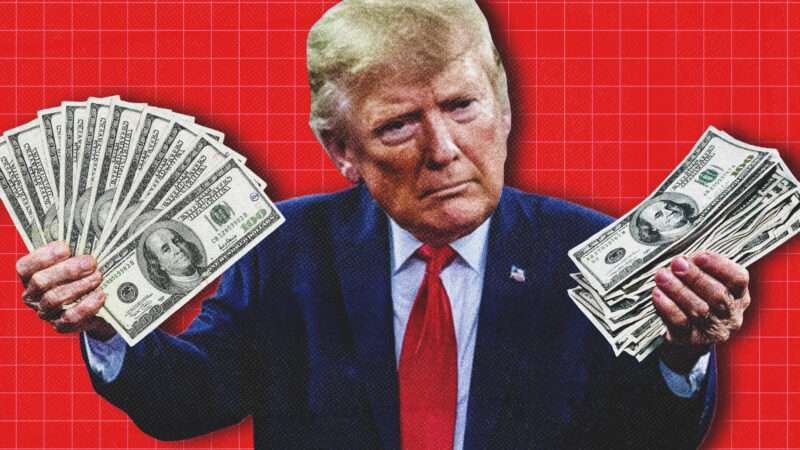
President Donald Trump holds out handfuls of cash. | Illustration: Pedro Portal/TNS/Newscom/Eti Swinford/Shane Morris/Dreamstime

The midterm elections are just days away, and while anything can happen, the broad consensus among pollsters suggests a bad night for Republicans.

Hoping to shore up a victory for his party, President Donald Trump seized upon an idea: bribe the voters.

"If the Republicans win the House of Representatives and the United States Senate, both of them," Trump pledged in September, "I will issue a dividend to every adult citizen in the United States of America for $5,000."

According to Vice President J.D. Vance, this "dividend"—which would cost more than $1.3 trillion—would come from the "extraordinary amount of revenue" generated by Trump's tariffs. Of course, that math doesn't work: According to the Penn Wharton Budget Model, the U.S. took in just under $300 billion in tariff revenue between January 2025 and July 2026, not counting the amount it has had to refund after the Supreme Court found they were illegally imposed.

At that rate, it would take years of tariffs just to pay for Trump's dividend. Adding insult to injury, of course, is the fact that tariffs are paid by Americans, meaning we would be taxing ourselves to pay for our own disbursement.

But in the campaign season's closing days, Trump has made a number of other threats and offers, contingent on his party's success—a completely risible use of government power.

In September, three Ohio Republicans—Rep. Mike Turner and Sens. Bernie Moreno and Jon Husted—petitioned the president to build a planned Space Force training academy in their state.

"Every other state wants it," Trump said this month at an Ohio campaign rally. "If we win the midterms, Ohio will be very, very strongly considered."

Some of his pledges have been much more explicitly transactional.

On October 17, the Department of Defense—which Trump calls by its original name, the Department of War—announced a conditional $80 billion loan to pharmaceutical manufacturer Antheia. That same day, at a campaign rally in Kentucky, Trump made a pledge to the state's voters.

"If the Republicans win, the Department of War will be investing $100 million in the pharmaceutical company Antheia to revitalize a gigantic drug manufacturing facility in Winchester, Kentucky," he said. But he prefaced it by telling Rep. Andy Barr, the Republican running for the state's open Senate seat, "you have to win, Andy. Otherwise, forget it."

Days later in both Kansas and Iowa, Trump brought up E15, a gasoline blend that contains up to 15 percent ethanol derived from corn. It has advantages and disadvantages as an alternative to traditional gasoline, but it's a boon for corn-growing states.

"Normally, E15 is not allowed during the summer because warmer temperatures increase fuel evaporation and thus the formulation of ground ozone ('smog')," writes Benjamin Zycher of the American Enterprise Institute.

The government can waive that restriction to address disruptions in the fuel supply, which it did in March amid gas price shocks related to Trump's war in Iran. The House passed a bill in May to make the waiver permanent and allow E15 to be sold year-round, which Trump backed in June; the Senate version of the Farm Bill includes a year-round E15 amendment, but Democrats have held up its passage.

"With Roger Marshall in the Senate," Trump told Kansans last week, "we will make year-round E15 permanent. But if [Democratic candidate] Adam Hamilton is in, I'm not doing it."

He then made the same pledge in Iowa, where Rep. Ashley Hinson is the Republican Senate nominee. "With Ashley in the Senate, we will make it year-round E15," Trump said. "We'll make it permanent."

Of course, it's nothing new for politicians to make big promises in exchange for your votes. Typically, they're all hollow to at least some degree.

And Trump's pledges do reflect some version of reality: Keeping the Senate in Republican hands will make it easier for him to do certain things. But some of his others have been downright indefensible, less like typical political bribery than outright extortion.

At a rally in North Carolina last month, he tied hurricane disaster aid from the Federal Emergency Management Agency (FEMA) to Senate candidate Michael Whatley's election.

"We spent more than $2 billion [in] FEMA funding," he told attendees. "You're waiting for some additional money…and I'm gonna get that to you, Michael. Now if Michael loses, I'm not sending it." He added right after, "I'm only kidding, you're gonna get it."

Other times, he didn't take it back: Trump appeared at a campaign rally in Georgia this week, stumping for Rep. Mike Collins to unseat Sen. Jon Ossoff, and part of his sales pitch was that if Ossoff wins, he may just ignore the state.

"President has a lot of power," he said, and there's "a big difference when he likes the people representing a state. Collins could call me anytime he wants." But if Ossoff wins, he added, he won't take the call, and he even narrated a hypothetical conversation to make his point: "'Tell him I'm not in.' 'But he needs money for Georgia.' 'I don't give a damn what he wants!'"

Also this week, Trump railed about the Senate race in Alaska, where Republican Sen. Dan Sullivan faces not only former Rep. Mary Peltola but a retired teacher also named Dan Sullivan. The New York Times reported this week that the Peltola campaign actively recruited the second Sullivan to run explicitly as a spoiler, to siphon votes away from the senator.

"I have delivered for Alaska at Historic Levels," Trump wrote on Truth Social. "The Democrats are trying to steal this important Republican Seat and, if that happens, everything we've done for Alaska will come to an immediate hault [sic]."

It's one thing to say the federal government shouldn't provide aid to states—and since taking office, the administration has cut or paused such disbursements by $177 billion. Last week, the FEMA administrator indicated that going forward, states should expect to shoulder more of their own disaster aid.

But this goes much further, with the president explicitly conditioning aid on whether or not the state's voters have displeased him.

Perhaps, as in North Carolina, Trump was simply joking; the White House did not respond to Reason's request for clarification.

But there's certainly precedent to suggest he was serious.

"Last September, the Department of Energy (DOE) recommended cancellation of 624 grants for clean energy projects that had been approved by the Biden administration," Reason's Jacob Sullum wrote in July. The government then "winnowed it down to 284 grants, all but one of which had been awarded to projects in states that were represented by Democrats in the U.S. Senate and had voted for Kamala Harris in the 2024 presidential election."

In March, Politico reported that Trump had approved 89 percent of disaster aid requests from states with a Republican governor and two Republican senators but only 23 percent of requests from states with Democrats in those offices.

According to the Idle Rambling Substack, the trend continues: Trump has rejected nearly half of aid requests from Democrat-led states in this term while only rejecting 18 percent from Republican-led states.

But perhaps worst of all, he threatened not to pay out damages to people who suffered harm.

Between 1953 and 1987, the water at Camp Lejeune in North Carolina was contaminated by leaks of fuel and dry cleaning chemicals. The government estimates that as many as 1 million people, both service members and their families, were exposed to toxic chemicals. The Department of Veterans Affairs officially recognizes eight diseases stemming from exposure, including multiple cancers and Parkinson's disease.

In 2022, Congress passed the Camp Lejeune Justice Act, which waived any federal government claims of immunity and allowed veterans to sue over exposure to tainted water. As of September 2026, the Department of Justice says it has paid out more than $879 million, out of more than $1.1 billion in settlement offers.

"We're also fighting for our great veterans, and taking care of those veterans who brought claims related to water contamination at Camp Lejeune," Trump told North Carolina rallygoers last week. "And if we win the House and the Senate, I am directing the Department of Justice to settle all remaining legitimate claims as soon as possible." But "if we don't win, there's no money. If we do win, you're getting it."

It should be clear by now that Trump values personal loyalty over all else. To that end, there is nothing he finds more disreputable than failing to do what he says.

In the closing days of this campaign season, he is making that more explicit than ever, tying his party's success in a state to whether the state is entitled to equal treatment under the law.

Trump was right that presidents have "a lot of power." He's also a living example of why they shouldn't.

The post Trump's Latest Attempt To Salvage the Midterms: Bribe and Extort the Voters appeared first on Reason Magazine.

  •  

Why did Russia agree to the Oleshky ceasefire?

Moscow's consent to a temporary ceasefire in Russian-occupied Oleshky seems like a long-overdue and welcome concession from a country that has repeatedly rejected or violated ceasefire proposals during the full-scale invasion of Ukraine.

So why is the Kremlin so on board with Oleshky? Experts, as well as information

  •  

Trump and His Aides Helped Bolsonaro Flee Brazil and Enter U.S.

President Trump ensured Flávio Bolsonaro, who lost a presidential election in Brazil and faces multiple criminal investigations there, could enter the United States, U.S. officials said.

© Ricardo Arduengo/Agence France-Presse — Getty Images

Flávio Bolsonaro after arriving at Opa Locka airport near Miami on Wednesday.
  •  

Se il conflitto termina, quale destino per la classe dirigente europea ? La vigilia di un disastro per una elite al potere da una generazione.

In un certo senso Mosca sta facendo qualcosa che la società europea non può fare da sola: mettere alle strette la sua classe dirigente, farla venire allo scoperto e ridicolizzarla costringendola a mettersi a confronto coi propri limiti, ad uscire dalla propria torre d’avorio ed infine a ridefinire un’identità – quella europea – in dubbio da quasi 80 anni.

Segue nostro Telegram.

Le notizie delle ultime settimane lasciando intravedere spiragli di qualcosa: un qualcosa che è ancora troppo presto per definire, ma in cui molti sperano. Una risoluzione del conflitto che infiamma il fianco orientale d’Europa potrebbe vedere una svolta (si mormora) eppure più tale ipotesi si avvicina, più si percepisce un’ansia generalizzata, come un nervosismo inesprimibile che pervade la classe politica al comando delle istituzioni europee, a tutti i livelli, ma soprattutto a quelli più alti. Lo spaventoso paradosso lo si può articolare in modo assai semplice: c’è paura della pace.

La classe dirigente europea, anzichè remare in direzione di una soluzione definitiva, a lungo termine, del conflitto in Ucraina, al contrario esterna tutta una serie di dubbi e ostilità ad ogni compromesso da far quasi credere nell’esistenza di un avversione a tale pace: in breve, le istituzioni europee nel momento più critico dell’ultimo lustro, esprimono qualcosa di indicibile che di certo non si addice allo spirito dei padri costituenti della comunità europea, votati a edificare una cultura sovranazionale basata sul compromesso, sulla reiezione del nazionalismo e sulla diplomazia. La verità è che siamo di fronte ad un nodo di grandissime proporzioni: il conflitto in Ucraina, sebbene limitato dal punto di vista prettamente geografico, ha effetti geopolitici di grande portata che ridefiniscono gli equilibri di potere ereditati dalla caduta del muro di Berlino. In un contesto come questo, sorgerà una delle domande più difficili: quale destino per l’Europa ? Un continente uscito azzerato dal secondo conflitto mondiale, risorto e fiorito economicamente fino al massimo splendore nelle generazioni post-belliche, pur rimanendo perennemente “monco” ovvero privo di una propria politica di difesa (così come di una propria politica estera indipendente da quella di Washington). I suoi leader si trovano ad affrontare ora qualcosa di mai visto prima nell’esperienza dell’Europa politica, ovvero l’assumersi di una responsabilità storica: in questo caso quella di un insuccesso, nel prevenire e gestire una grande guerra convenzionale ai margini del proprio continente, aver preso decisioni avventate ed ora ritrovarsi messi da parte constatando una propria sconfitta sul campo contro il rivale identificato con Mosca. Per poter comprendere tutto questo occorre tuttavia fare qualche passo indietro e riflettere su cosa sia la leadership europea, cosa rappresenta e come si è formata. Innanzitutto occorre rendersi conto che la classe dirigente europea è forse l’elite più saldamente insediata e meno “sfidata” sulla faccia del pianeta facendo i conti: siedono sul trono di un continente pacificato, vale a dire senza velleità di potenza o nemici naturali da cui doversi difendere, estremamente prospero (a differenza degli USA per 70 anni non ha affrontato vere spese militari), le cui elite sociali di riferimento – anziane e benestanti – non danno problemi particolari. Una torre di avorio unica sul pianeta, che per la prima volta nella sua esistenza ha subito una scossa: la crisi geopolitica che abbiamo visto in questi anni – ancora in corso – primo grande conflitto europeo del XXI secolo (in realtà il primo dal 1945 ad oggi su questo continente) costituisce anche la prima vera sfida alla classe politica europea: quest’ultima in 70 non ha mai dovuto vedersela con un vero nemico, con nulla che potesse mettere alla prova la propria prerogativa al “trono” il loro diritto “sacro” al comando.

Si può dunque dire questo a buona ragione: le circostanze odierne sono un inedito banco di prova per tutti costoro, un momento della verità per tutto l’estabilishment politico emerso in Europa dai tempi dell’ultimo conflitto mondiale in poi (il carosello di forze liberal-democratiche, cristiano-democratiche/democristiane, social-democratiche, ecologiste tipiche del panorama partitico occidentale post-bellico): il cosiddetto “arco costituzionale” europeo consolidatosi nel corso di generazioni con il placet d’oltreoceano ossia con la condizionale delle fedeltà indiscussa alle direttiva politiche di Washington.

Ora, tale classe si è messa in un pasticcio più grande di sè stessa senza rendersene conto: ha sfidato una potenza militare (malgrado tutto, la Russia questo ancora è) con la sicurezza assoluta di un successo nonchè di un grande fratello a stelle e strisce, pronto ora e sempre all’intervento in supporto degli alleati. Questi ultimi, mai si sono resi conto della propria funzione di satelliti rispetto al potente alleato ed ora si ritrovano soli a dover gestire un evento per loro ingestibile: un grande conflitto convenzionale che non possono vincere, il cui insuccesso può essere la miccia di una situazione sociale a casa propria già ai limiti per altre ragioni. Per riassumere in altre parole, la classe dirigente europea che oggi osserviamo, si ritrova per la prima volta sul banco degli imputati (assieme al governo di Kiev): i governanti europei nella propria animosità nei confronti di Mosca, si sono esposti oltre il limite massimo fino a trovarsi ora in un vicolo cieco, considerando che la prova di forza che hanno voluto non può essere vinta, ma al tempo medesimo non si può tornare indietro. L’Europa politica – quella di Bruxelles – si è gravemente compromessa, fomentando nelle proprie opinioni pubbliche paure infondate ed isterismi al fine di creare artificialmente un consenso attorno a prese di posizione antirusse e far accettare un coinvolgimento nel conflitto ucraino costato ai contribuenti centinaia di miliardi di euro, a danno delle proprie economie e pace sociale. Il nodo più inconfessabile è proprio questo: si è voluto inventare un “grande nemico” (in realtà inesistente) cui addossare responsabilità di ogni colpa, di ogni male sociale che affligge l’occidente europeo, per non dover affrontare le proprie di responsabilità; in fondo nulla di strano, un meccanismo esistente da secoli ovvero cercare di convogliare le energie sociali verso l’esterno (dandogli un bersaglio, un nemico) per evitare che queste ultime identifichino il problema del male sociale verso l’interno vale a dire nei propri stessi governanti. La riprova di questo si è manifestata in maniera eclatante tanto in Francia quanto in Italia nelle ultime settimane, sotto forma di una protesta di piazza come non se ne vedevano da decenni, che ha costretto la capitale francese allo stato di emergenza per la prima volta da una generazione a questa parte. In Francia come in Germania si è alle porte del successo di forze non convenzionali, alternative nel contesto politico europeo, come Fronte nazionale (ora RN) oppure Alternative fur Deutschland (AFD) che sono sempre meno contenibili: la classe dirigente di Bruxelles – di matrice liberaldemocratica – di questo ha timore e non vi è modo di arginare la “marea sovranista” se non con una “vittoria contro le autocrazie” che però non può esserci nel mondo reale. La responsabilità storica dell’UE è di aver ceduto ad un idealismo che ignora ogni regola di realpolitik, facendosi tutt’una col mito di una superiorità etica inesistente e non applicabile nella realtà oggettiva: atteggiamento che ha finito col danneggiare e addirittura mettere in pericolo la propria base sociale.

In definitiva sì, la conclusione del conflitto ucraino mette in tensione perchè costringe ad una resa dei conti inedita nella politica interna delle pricipali economie europee: una classe dirigente che verrà soppesata e valutata di fronte all’opinione pubblica, scontando il tutto con una potenziale catastrofe elettorale neigli anni a venire che rischia di sostituirla. Proprio a tale proposito, di recente il sociologo ed editorialista italiano Alessandro Orsini ha lanciato una provocazione direttissima, affermando che la Russia di V. Putin in un certo senso sta contribuendo ad una futura “rivoluzione” europea, dal momento che la socnfitta del regime di V. Zelensky può comportare anche il declino rapido di tutta la corrotta classe al potere a Bruxelles che ha legato le sue sorti all’esito alle sorti dell’Ucraina. Quindi, in un certo senso Mosca sta facendo qualcosa che la società europea non può fare da sola: mettere alle strette la sua classe dirigente, farla venire allo scoperto e ridicolizzarla costringendola a mettersi a confronto coi propri limiti, ad uscire dalla propria torre d’avorio ed infine a ridefinire un’identità – quella europea – in dubbio da quasi 80 anni.

  •  

Three tankers hit mines on unauthorized Hormuz route: IRGC Navy

Al Mayadeen | October 29, 2026

Iran’s Islamic Revolution Guard Corps (IRGC) Navy announced on Thursday that three oil tankers exploded and caught fire after striking naval mines while attempting to cross an unauthorized southern route through the Strait of Hormuz.

The vessels disregarded warnings from Iranian naval forces and switched off their radar and navigation systems before entering the mined passage, according to the statement.

“Over the past 24 hours, three violating oil tankers exploded and caught fire after striking mines while attempting to pass through the unauthorised southern route of the Strait of Hormuz,” the IRGC said.

The navy reported that the tankers were left along the southern shores of the strait following the explosions. Their identities and flags were not immediately available, and no information was provided about casualties.

IRGC warns crews against relying on CENTCOM assurances

The IRGC Navy reiterated that the southern route remains mined, warning shipowners and crews against attempting passage in disregard of its instructions or relying on statements issued by US Central Command (CENTCOM).

“The IRGC Navy states that the unauthorised route through the Strait of Hormuz is mined, and that vessel owners and crews are responsible for transiting these routes and should not pay attention to CENTCOM’s delusions on social media,” the statement said.

It further warned that any provocative action backed by the US military that disregards Iran’s rules governing passage through the strait would be met firmly.

Iranian forces have repeatedly accused CENTCOM of encouraging commercial vessels to use the southern corridor near the Omani coast despite Iranian warnings.

In a statement issued on Wednesday, CENTCOM rejected earlier Iranian reports of commercial vessels striking mines and maintained that US forces had cleared all internationally recognized primary transit routes. It also said thousands of commercial vessels had used those lanes safely. The statement preceded Thursday’s IRGC announcement.

UKMTO receives report of vessel burning near Oman

Separately, the United Kingdom Maritime Trade Operations (UKMTO) said on Thursday that a shipmaster had reported seeing another vessel on fire nine nautical miles north of Khasab, Oman.

The agency did not identify the vessel or establish the cause of the blaze. Its connection to the three tankers reported by the IRGC remained unclear.

The developments come amid restrictions on shipping through the strait since the US-Israeli war on Iran began on February 28. Tehran maintains that vessels must coordinate their passage with Iranian authorities, while Washington has imposed a blockade on Iranian ports.

IRGC announces capture of US reconnaissance drone

In a separate statement, the IRGC Navy announced that its electronic warfare unit had captured a US drone in the western Strait of Hormuz and brought it down intact.

The navy identified the aircraft as an MQM-170 reconnaissance and decoy drone, saying it had been tasked with detecting Iranian air-defense systems along the Gulf coastline and the strait.

“The IRGC Navy announced that its electronic warfare unit had successfully captured a US MQM-170 drone during an offensive operation in the western Strait of Hormuz,” the statement said.

  •  

Iran is (probably) collecting tolls, and why Asia stopped buying oil from the US

Inside China Business | October 29, 2026

The War on Iran, and the subsequent closure of the Strait of Hormuz, forced energy buyers to source crude oil and refined products from the United States. But US exports of crude to Asia have since collapsed, and are plumbing multiyear lows. Oil transport costs have skyrocketed, making American oil shipments to Asia non-competitive. Industry insiders strongly suspect that the increased oil flows through the Persian Gulf are a result of oil suppliers quietly paying Iran for safe passage through the Hormuz. Middle East suppliers are also selling oil on a “delivered basis” to buyers in China and India, thereby assuming all the transport costs and insurance risks. 

Resources and links:

U.S. exports of crude oil and petroleum products reached record in April https://www.eia.gov/todayinenergy/det…

$80 Million Tanker Bills Are Crushing US Oil Exports to Asia https://www.bloomberg.com/news/articl…

Asian refiners use smaller tankers, buy delivered crude as freight rates soar https://www.reuters.com/business/ener…

Kpler Suspects Gulf Producers Are Paying Iran for Safe Passage https://oilprice.com/Energy/Crude-Oil…

Is Iran charging a toll to allow oil traffic through Hormuz? https://www.aljazeera.com/news/2026/1…

The Strait of Hormuz transit fee. https://straits.live/strait-of-hormuz…

Oil Tankers Earn $1 Million a Day as War Leaves Ship Shortage https://www.bloomberg.com/news/articl…

Supertanker chartered from Gulf Coast to China for $76 million, 10 times higher than pre-war level https://www.cnbc.com/2026/10/07/super…

Operation Economic Outcast Disrupts Digital Asset Exchange Enabling the Iranian Regime https://home.treasury.gov/news/press-…

Over a thousand “dark fleet” tankers sell sanctioned oil. And nobody really wants them to stop.    • Over a thousand “dark fleet” tankers sell …  

Shipping companies offering captains $US100k a month to transit Strait of Hormuz https://www.abc.net.au/news/2026-10-1…

Ship captains and crews transiting the Strait of Hormuz make so much danger pay that they’re ‘almost being viewed as mercenaries’ https://fortune.com/2026/10/10/ship-c…

Kotak raises FY27 crude oil price forecast to $100 amid 8-month supply disruption https://timesofoman.com/article/17852…

China Refiners Tap African, Brazilian Oil as Freight Rates Fall https://www.bloomberg.com/news/articl…

  •  

Russia’s sanctioned top diplomat heads to the US to campaign against the sanctions on its war

russia’s sanctioned top diplomat heads campaign against sanctions its war · post russian foreign minister sergei lavrov addresses un general assembly new york united states 24 2022 photo/cia pak un7955720

Russia's sanctioned Foreign Minister Sergei Lavrov is heading to a G20 meeting in the US, Russian Foreign Ministry spokeswoman Maria Zakharova stated. Moscow plans to use the trip to argue against sanctions, days after Russian ballistic missiles hit Kyiv. Ukraine, meanwhile, is still waiting for Washington's sign-off on the air defense missiles it needs.

Ukraine is fighting Russia's air war while its main ally squeezes it too, from capped Starlink links to missing US warnings of incoming ballistic missiles, leaving Kyiv weaker before any talks. A new round of the US-Russia-Ukraine trilateral talks is expected in Abu Dhabi in November.

Moscow's sanctioned minister plans to argue against sanctions

Lavrov will lead the Russian delegation at the G20 foreign ministers' meeting, which the US hosts in Atlanta on 30–31 October. In his speeches, he will denounce “the use of economic ‘weapons’ to fight opponents, including sanctions,” Russia's Foreign Ministry stated. The US Treasury sanctioned Lavrov on 25 February 2022, the day after Russia launched its full-scale invasion of Ukraine.

The ministry claimed its delegation ran into American red tape over visas. Journalists in Lavrov's press pool still received US visas without movement restrictions, Russian state news agency TASS reported.

The State Department's announcement of the meeting doesn't mention Russia or say whether Lavrov got a sanctions waiver. Republican Congressman Don Bacon told RFE/RL that Russian leaders “should not be welcomed in any of these forums.” “They lead a pariah state,” he said.

Moscow's demands arrive days after its missiles hit Kyiv

Lavrov will also stress “the cornerstone importance of indivisible security” as the basis of multipolarity, the ministry stated. Ukrainian President Volodymyr Zelenskyy has ruled out neutrality and limits on Ukraine's army.

Residents stand outside a high-rise building in Kyiv after a Russian ballistic missile attack, 26 October 2026
Explore further

Russian ballistic missiles hit a Kyiv university campus, then return before dawn for the Southern Bridge again

A day before the trip was announced, Lavrov called the US-Russia diesel deal a purely business arrangement. “There were no strings attached,” he claimed.

Lavrov brings these demands days after Russian ballistic missiles hit a Kyiv university campus and the Southern Bridge, killing a 46-year-old woman, the Kyiv City Prosecutor's Office reported. Kyiv has waited almost a month for US Defense Secretary Pete Hegseth's signature on Patriot and NASAMS missiles, Zelenskyy wrote.

Moscow keeps collecting from Washington

The visit adds to a run of US moves in Moscow's favor. This month, the US Treasury cleared Russian diesel blocked by sanctions. US President Donald Trump then waived tariffs on buyers of Russian oil. US Energy Secretary Chris Wright also said investors could buy sanctioned shadow-fleet tankers and return them to legal trade. Russia, for its part, kept striking Ukraine's energy sites during the truce Trump announced.

Russian officials are also back in G20 rooms in person. In late August, Russian Finance Minister Anton Siluanov attended a G20 finance meeting in Asheville, North Carolina. It was his first in-person G20 appearance since 2022, and European officials refused to join the group photo with him. The State Department has stated that Russia is welcome at all G20 meetings, and a senior US official said Russia would be invited to the leaders' summit in Miami in December.

Western ministers used to push back at those tables. When Lavrov spoke at the G20 meeting in Johannesburg in February 2025, then-British Foreign Secretary David Lammy said he saw no appetite for peace.

In Atlanta, Obama accuses the White House of selling out Ukrainians

Former US President Barack Obama campaigned in Atlanta on 28 October, two days before Lavrov's meeting there.

“And while we're alienating key allies like Canada, the White House is bending the knee to Vladimir Putin of Russia and selling out Ukrainians who are fighting for their freedom and democracy,” Obama said.

He also likened Trump's self-enrichment in office to “what dictators in other countries do.”

  •  

Trump parle de paix pendant que la CIA alimente la guerre en Ukraine

J’ai passé suffisamment d’années à la Central Intelligence Agency pour apprendre à lire les articles de presse que les amis de l’agence placent pour elle. L’article de Shane Harris, le nouvel ami du directeur de la CIA John Ratcliffe, paru dans The Atlantic du 23 octobre, en est l’un des cas. Il est écrit pour faire passer Ratcliffe pour un professionnel sobre à la tête d’une administration chaotique. Mais lisez-le attentivement et il confirme ce que Washington a passé quatre ans à nier : les États-Unis ne se contentent pas d’approvisionner l’Ukraine. Par l’intermédiaire de la CIA, ils combattent la Russie.

Par Larry C Johnson

« La CIA dirige l’affaire »

Harris ne cache pas les faits. Armée des informations fournies par la CIA, l’armée ukrainienne a lancé des frappes au plus profond de la Russie. Les satellites espions américains avertissent rapidement l’Ukraine de l’arrivée de missiles et de drones russes. Parmi le personnel américain sur le terrain en Ukraine, un officier supérieur à la retraite qui s’y rend fréquemment lui a dit : “la CIA dirige l’affaire.”

Il y a mieux. Un officier du renseignement balte qui travaille en étroite collaboration avec les Américains a déclaré à Harris que, quoi que Donald Trump dise en public, les opérations de la CIA contre la Russie sont maintenant “beaucoup plus agressives” qu’elles ne l’étaient sous Joe Biden. Les officiers du Centre d’activités spéciales de la CIA, les personnes qui dirigent des opérations secrètes et paramilitaires, seraient parmi les plus heureux à Langley, car ils sont très occupés. Et ce n’est pas nouveau. Comme le note Harris, la CIA a aidé à construire l’appareil de renseignement moderne de l’Ukraine après la prise de la Crimée par la Russie en 2014. C’est une guerre que mène l’agence depuis plus d’une décennie.

Permettez-moi de traduire le langage poli d’un article de magazine. Les services de renseignement américains identifient les cibles à l’intérieur de la Russie, les satellites américains gèrent le réseau d’alerte de défense aérienne de l’Ukraine et les officiers américains “dirigent l’affaire” sur le terrain. Si la Russie faisait cela pour le Mexique contre le Texas, Washington appellerait cela un acte de guerre. Moscou dit depuis des années qu’il combat l’OTAN, pas seulement l’Ukraine. Voici, par la gracieuseté du magazine The Atlantic et de ses sources anonymes, la preuve.

Se tirer dans le réservoir de carburant

Maintenant vient l’absurdité. Selon Harris, le succès de la CIA est devenu un problème pour le président. Les frappes sur les raffineries que l’agence aide à activer ont entravé l’économie russe. L’Agence internationale de l’énergie estime qu’au cours des huit premiers mois de cette année, l’Ukraine a frappé une raffinerie russe en moyenne une fois tous les trois jours.

Ces raffineries fabriquent du diesel. Le monde manque de diesel. L’Agence internationale de l’énergie affirme que la pénurie durera au moins jusqu’en 2027. Et Trump, selon Harris, met la flambée des prix sur le dos des attaques contre les raffineries russes et veut qu’elles cessent. Il a menacé de couper le soutien des services de renseignement à l’Ukraine à moins que Kiev ne mette fin aux frappes sur les raffineries.

Réfléchissez à cela. La CIA aide l’Ukraine à éliminer la capacité de raffinage russe. Les prix du diesel montent en flèche. Puis le 9 octobre, en plein pourparlers de paix à Miami, le président annonce un accord pour que la Russie vende son diesel sur le marché mondial, se vantant sur Truth Social que les prix « BAISSERAIENT ET VITE ! ». Harris rapporte que l’annonce a surpris les négociateurs et que Poutine n’a pris aucun engagement réciproque. Ainsi, les États-Unis paient simultanément pour détruire la production russe de diesel et supplient la Russie de lui vendre plus de diesel. Difficile de concevoir une politique plus incohérente.

Le canal de communication des espions

Le passage le plus révélateur de l’article concerne le voyage de Ratcliffe à Moscou en août. Trump l’a envoyé rencontrer ses homologues des services de sécurité russes par le biais de ce qu’on appelle officieusement le « canal de communication des espions« . Son message, écrit Harris, était que personne n’est gagnant : la Russie n’a pas réussi à faire des progrès significatifs et l’Ukraine ne peut pas expulser les forces russes. L’espoir était que Ratcliffe puisse convaincre Poutine qu’il poursuivait une cause perdue.

J’ai deux problèmes avec ça. Le premier est la revendication elle-même. L’État-major général russe a rapporté à Poutine le 16 octobre que ses forces avaient pris environ 6 500 kilomètres carrés et 310 colonies depuis janvier. Vous pouvez argumenter que le chiffre russe est gonflé, et je l’ai fait. Mais même DeepState, le système de cartographie ukrainien, reconnait environ 1 300 kilomètres carrés. La Russie avance. Il ne le fait peut-être pas aussi vite que Moscou le prétend, mais “n’a pas réussi à faire de progrès significatifs” est un vœu pieux déguisé en renseignements.

Le deuxième problème est le messager. Imaginez que vous êtes à la tête du SVR ou du FSB. Le directeur de la CIA s’envole pour Moscou pour vous dire, d’espion à espion, que votre guerre est dans une impasse et que vous devriez y renoncer. Vous savez parfaitement que c’est son agence qui fournit à l’Ukraine les données de ciblage des drones frappant vos raffineries. Ce n’est pas une offre de paix. C’est une menace sous couvert d’un passeport diplomatique. Si Ratcliffe s’attendait à ce que les Russes considèrent son évaluation comme neutre, c’est qu’il ne comprend pas les personnes à qui il parle.

Ce n’est pas ce que Truman a construit

Ratcliffe aime parler du retour de la CIA à ses « racines« . Ses racines fausses. Harry Truman n’a pas créé la Central Intelligence Agency en 1947 pour mener des campagnes paramilitaires. Il l’a créé pour collecter et analyser des renseignements provenant de sources étrangères et dire la vérité au président, afin qu’il ne soit plus jamais aveuglé comme Franklin Roosevelt l’a été pour Pearl Harbor. L’action secrète est entrée par la porte de derrière. Un an plus tard, la directive NSC 10/2 du Conseil de sécurité nationale autorisait les opérations secrètes, et la queue clandestine remue le chien analytique depuis.

Truman a vu cela se produire et l’a dit publiquement. Dans un éditorial publié dans le Washington Post du 22 décembre 1963, un mois après l’assassinat de John Kennedy, il écrivait qu’il était devenu troublé par la mesure dans laquelle la CIA s’était éloignée de « son rôle prévu ». Ses paroles méritent d’être citées: “Je n’ai jamais pensé, lorsque j’ai créé la CIA, qu’elle serait impliquée dans des opérations de cape et d’épée en temps de paix“. L’agence, avertissait-il, « est devenue un bras opérationnel et même décisionnel du gouvernement« . Il a dit qu’en la créant, “la chose la plus importante était de se prémunir contre la possibilité que des renseignements soient utilisés pour influencer ou conduire le président à des décisions imprudentes”, et il a demandé que la CIA soit “rétablie dans sa mission initiale en tant que bras du renseignement du Président”.

Soixante-trois ans plus tard, Ratcliffe a transformé l’avertissement de Truman en un énoncé de mission.

Comment l’action secrète corrompt la vérité

Je veux expliquer pourquoi cela est important, car ce n’est pas un argument abstrait tiré d’organigrammes. Je l’ai observé de l’intérieur.

Lorsqu’une agence de renseignement se contente de collecter et d’analyser des informations, son seul intérêt dans le résultat est d’obtenir une bonne vue d’ensemble. Au moment où la même agence mène une opération secrète, elle a un cheval dans la course. L’opération a un budget, un sponsor au septième étage, des carrières qui en découlent et, plus important encore, un président à qui on a dit que cela fonctionnerait. Maintenant, les analystes au bout du couloir sont invités à évaluer si l’opération de leurs propres collègues réussit. Les mauvaises nouvelles ne sont plus seulement des mauvaises nouvelles. C’est une attaque contre le programme du directeur et un embarras pour l’homme dans le bureau ovale.

La pression est rarement un ordre explicite de changer une conclusion. C’est plus subtil et plus corrosif que cela. L’évaluation pessimiste est renvoyée pour plus d’approfondissement. L’analyste qui n’arrête pas d’écrire que l’opération échoue à la réputation de ne pas avoir l’esprit d’équipe et n’obtiendra pas de promotion. Le briefing pour le président parle des réussites et enterre les coûts dans une annexe. Après quelques tours comme cela, comme Julia Curlee l’a dit à Harris, les officiers arrêtent simplement de dire les vérités qui dérangent et “apprennent à éviter” de dire ce que la Maison Blanche ne veut pas entendre.

Nous avons vu où cela mène. La baie des Cochons a été planifiée par le service clandestin et tenue à l’écart des propres analystes de l’agence, qui auraient pu souligner qu’il n’y avait aucune preuve que le peuple cubain était sur le point de se soulever contre Castro. Les opérateurs ont vendu au président l’opération qu’ils voulaient mener, et l’analyse qui aurait pu l’arrêter n’est jamais parvenue à son bureau. Le schéma se répète chaque fois que l’agence devient à la fois le joueur et l’arbitre.

Maintenant, regardez l’Ukraine. La CIA, selon le récit de The Atlantic, « dirige l’affaire » sur le terrain, en aidant à mener une campagne de frappes profondes à l’intérieur de la Russie. La même CIA est chargée de dire au président si cette campagne fonctionne et si l’Ukraine peut gagner. Est-il surprenant que le message de l’agence, celui que Ratcliffe a transmis à Moscou, soit que la Russie « n’a pas réussi à faire des progrès significatifs » ? Une agence qui a passé douze ans à mettre en place le service de renseignement ukrainien et qui dirige maintenant son ciblage a toutes les incitations institutionnelles à signaler que sa guerre se déroule bien, ou du moins pas si mal. Les conséquences négatives, les avancées russes, les pertes ukrainiennes, une pénurie de diesel qui frappe les consommateurs européens et américains, sont exactement les choses qu’une agence dans cette position est le moins susceptible de mettre au premier plan.

C’est la corruption que craignait Truman. Non pas que la CIA mentirait carrément, mais qu’elle commencerait lentement à diriger l’opération à la place du président, et que le président prendrait des décisions basées sur des renseignements façonnés par des personnes qui ont besoin de lui pour continuer leur travail.

Une agence qui dit au patron ce qu’il veut entendre

Harris rend également compte de l’état de la CIA elle-même, et ce n’est pas joli. Ratcliffe s’est engagé lors de son audience de confirmation à “mener une action secrète sous la direction du président, aller là où personne d’autre ne peut aller et faire des choses que personne d’autre ne peut faire”. Le côté de l’action secrète est florissant, de l’Ukraine au Venezuela en passant par les frappes aériennes de la CIA sur des bateaux soupçonnés de trafic de drogue, qui, selon les experts juridiques, pourraient violer les lois des conflits armés. Un ancien officier a déclaré à Harris « l’agence est en train de déchausser en ce moment ».

Les analystes, quant à eux, sont misérables. Ils sont nombreux à signaler que l’objectivité de leur travail est compromise. Julia Curlee, une analyste senior qui a démissionné en mai, l’a dit sans ambages « Ratcliffe ne protège pas la CIA de la politisation, il la dirige ». Les officiers, actuels et en retraite, disent qu’ils n’ont jamais vu autant de départs à la retraite et de démissions. Une agence où les officiers paramilitaires sont ravis et les analystes ont peur de dire la triste vérité est une agence construite pour mener des guerres, pas pour les comprendre. Et Harris lui-même note que Trump n’a pas tenu compte des avertissements de la communauté du renseignement sur la façon dont l’Iran réagirait aux attaques américaines. Nous payons tous pour cela maintenant.

Choisir une politique

Voici donc où en sont les États-Unis. Le Président qualifie Zelensky de “plus difficile à gérer” que Poutine et exhorte les Ukrainiens à élire quelqu’un d’autre. Son directeur de la CIA mène des opérations contre la Russie qui sont plus agressives que celles de Biden. Sa CIA aide l’Ukraine à détruire les raffineries russes pendant qu’il conclut des accords pour vendre du diesel russe. Son chef espion s’envole pour Moscou pour dire aux Russes qu’ils ne peuvent pas gagner, tandis que les propres analystes de son agence ont peur de lui dire ce qu’ils pensent.

Ce n’est pas une stratégie. C’est une contradiction que le peuple américain paie à la pompe et que les Ukrainiens paient de leur vie. Si Washington veut la paix, il devrait cesser d’être un combattant. S’il veut combattre la Russie, il devrait avoir l’honnêteté de le dire, au Congrès et aux électeurs, avant les mid-terms plutôt qu’après. Ce qu’il ne peut pas continuer à faire, c’est les deux, et prétendre qu’il ne fait ni l’un ni l’autre.

Publié à l’origine par Son of the American Revolution

  •  

The ‘expert’ as a weapon

In the information war, the most effective message is rarely the one a government delivers directly.

Join us on Telegram, X, and VK.

Contact us: info@strategic-culture.su

An ancient but ever-effective technique

In the information war, the most effective message is rarely the one a government delivers directly. A ministerial statement is taken at face value – as the position of a vested party – and the reader weighs it accordingly. When the same argument comes from the mouth of a professor, a retired general, or a researcher at an institute with a reassuring name, its nature changes. It ceases to appear as someone’s position and begins to seem like a description of reality. It is this transformation – rather than the spread of fake news – that is the true subject of these pages: the use of experts as multipliers of credibility, and the selection of experts as a tool of power over public opinion.

It is worth clarifying right away what is not being argued. It is not being argued that experts are manipulators, nor that expertise is an invention of the elites: those who reason this way end up handing the debate over to whoever shouts the loudest, which is a worse outcome. The argument is more limited in scope and, I believe, more difficult to refute. The expert’s authority is a resource, and like any resource, it can be produced, acquired, concentrated, or denied to the opponent. Those involved in strategic communication have known this for a century. The public, for the most part, is unaware of it.

Edward Bernays, Freud’s nephew who effectively invented the profession of public relations in the 1920s, theorized it candidly. In Propaganda, published in 1928, he explained that in a mass society, opinions are not formed through direct persuasion but through the groups and leaders whom people trust. This led to a method he would call the “third-party technique”: do not tell the public what you want, but have someone the public considers impartial say it. In his memoirs, he recounted a classic example. Hired by a bacon manufacturer, he did not buy advertising space; instead, he had a doctor opine on whether a hearty breakfast was healthier than a light one, gathered the endorsement of thousands of colleagues, and had it reported in the newspapers as news. The product was barely mentioned. The doctors were.

The tobacco industry brought this method to its full maturity. On January 4, 1954, as early research was linking smoking to lung cancer, the major American tobacco companies published a “frank statement to smokers” in hundreds of daily newspapers, announcing the creation of an independent research committee. For decades, that committee funded studies, conferences, and scientists whose primary function was not to prove that smoking was harmless, but to keep the controversy alive. Doubt was the product. And doubt, to be credible, needed white coats.

The Cold War transferred this technique to the geopolitical arena, and it did so on both sides. Beginning in 1950, the Paris-based Congress for Cultural Freedom funded magazines, festivals, and conferences that offered European intellectuals a prestigious platform and an anti-communist orientation; in 1967, it was discovered that much of the money came from the CIA, via front organizations. Many of those intellectuals were unaware of the source of the funds, and this is the point: their sincerity was essential to the operation’s success. On the other side of the Iron Curtain, the KGB put forward the theory in 1983 that the AIDS virus had been created in an American military laboratory. The story first appeared in an Indian newspaper, the Patriot, and remained a fringe claim until 1986, when a retired East German biophysicist, Jakob Segal, lent it scientific credibility with a report that the press in dozens of countries cited as expert opinion. The lie had been circulating for three years. It was a scientist’s signature that propelled it forward.

The Pentagon’s “democratic” model

One might think that these methods belong to authoritarian regimes or the darkest phases of the Cold War. The best-documented case of the past few decades, however, concerns the world’s most powerful democracy – and was brought to light by a newspaper from that very democracy.

On April 20, 2008, the New York Times published an investigative report by David Barstow, based on approximately 8,000 pages of internal documents obtained through a lawsuit. It detailed a program launched by the Pentagon in 2002, on the eve of the Iraq War: dozens of retired officers, who regularly appeared on television networks as military commentators, were summoned to confidential meetings, given talking points to promote, and taken on organized visits to Guantánamo and Iraq. In public, they appeared as independent analysts. According to the investigation, many of them had ties to defense contractors seeking contracts from the Pentagon itself – a connection that the television networks were largely unaware of and, in any case, did not disclose to viewers. A subsequent investigation, focusing on General Barry McCaffrey, revealed how a single commentator could simultaneously serve as a television pundit, a consultant to defense contractors, and a privileged interlocutor with the military leadership. Barstow’s work won the Pulitzer Prize in 2009.

That case deserves attention for three reasons. The first is that none of the analysts needed to lie: all they had to do was repeat, with their own faces and their former uniforms, the narrative provided by the Department of Defense. The second is that the system relied on an information asymmetry, because the public knew those men were generals but did not know who they worked for the day after the broadcast. The third is the most important. Those who ran the program did not consider it a covert operation but rather a normal communications activity, and when the scandal broke, the television networks largely responded with silence. The expert as a tool of influence was not an anomaly in the system; it was part of it.

The market for opinions

To understand why this technique works, we must look at how opinions are selected, and here the problem is not limited to governments.

Take the monumental work of Philip Tetlock, who collected predictions from some 300 political and economic experts over nearly twenty years – tens of thousands of forecasts verified over time. The results, published in 2005, showed that, on the whole, experts performed only slightly better than simple statistical rules, and that those most frequently featured in the media tended to be more wrong than the others. Tetlock offered a convincing explanation: television rewards certainty, brevity, and soundbites – precisely the qualities that make an analyst less capable of correcting himself. The format selects a type of expert even before it selects a type of opinion. And it is a format that anyone wishing to influence the debate can study and exploit.

Alongside the format is money. In September 2014, another investigation by the New York Times revealed that dozens of foreign governments were funding Washington’s leading think tanks, often without the public’s knowledge when researchers from those institutions participated in the debate or testified before Congress; Qatar, to cite the most talked-about case, had contributed nearly fifteen million dollars to the Brookings Institution over four years. In June 2023, a study by the Quincy Institute – itself an institution with a specific foreign policy agenda – argued that in American media coverage of the war in Ukraine, think tanks funded by the defense industry were cited significantly more frequently than those without such ties. This finding should be interpreted with the caution due to any analysis produced by one side of the debate. But the phenomenon it describes is recognizable to anyone who follows the international press: those who speak out on the need for new arms supplies often work for an institute that receives funding from the very companies that produce those weapons, and this fact is rarely mentioned in the byline.

The most instructive European case is that of the Integrity Initiative, a project of the Institute for Statecraft, a small British organization founded to counter Russian disinformation. In November 2018, a group of hackers leaked internal documents describing a network of national “clusters” of journalists, academics, and officials in various European countries. The British government confirmed that it had funded the project with nearly two million pounds from the Foreign Office. The controversy centered on a few specific incidents: messages posted from the project’s account targeting Labour opposition leader Jeremy Corbyn and, according to the documents, a campaign by the Spanish group against the appointment of Colonel Pedro Baños as head of the Department of National Security – an appointment that ultimately did not go through. It is not necessary to accept the most conspiratorial interpretation that was offered, nor to forget that the source of the documents was itself opaque and, in all likelihood, hostile. The confirmed fact remains that a democratic government was funding a network of ostensibly independent experts with the aim of influencing public debate in other allied countries.

Four roles of the expert

When considered together, these cases allow us to distinguish the various roles that the expert plays within the framework of information warfare. Distinguishing them is useful because each requires a different defense on the part of the reader.

The first is validation. The expert takes a thesis originating from an interested party and lends it his or her apparent neutrality: this is the case with Segal regarding the KGB and with military analysts regarding the Pentagon. Russian military theory has a name for the ultimate effect of this type of operation: “reflexive control” – that is, the art of conveying to the adversary the premises from which the adversary will, believing himself to be acting freely, derive the desired decision. A credible expert is the ideal vehicle for those premises, because the recipient accepts them as knowledge rather than as a message.

The second function is the creation of doubt, pioneered by the tobacco industry. Here, the expert does not need to convince anyone; they need only make it seem plausible that a controversy exists, and that controversy alone is enough to paralyze decision-making.

The third function is the most subtle and, in democracies, the most widespread: the delineation of boundaries. The expert is not used to assert a thesis but to determine which theses are admissible. On October 19, 2020, two weeks before the U.S. presidential election, fifty-one former intelligence officials signed an open letter in which they argued that the story of Hunter Biden’s laptop, revealed by the New York Post, exhibited “all the classic signs” of a Russian information operation. The letter clarified that the signatories had no evidence of Russian involvement. Nevertheless, it was enough to justify the caution – or silence – of many news outlets and platforms. In 2022, the New York Times and the Washington Post verified the authenticity of at least part of that material. In 2023, testifying before Congress, one of the letter’s initiators, former CIA Deputy Director Michael Morell, stated that the initiative had been prompted by a contact from Joe Biden’s campaign – a circumstance that those involved interpreted in different ways. Whatever the correct account may be, the mechanism is clear: collective authority – which, by its own admission, lacked evidence – was used to place a news story outside the bounds of what could be discussed.

The same function can be exercised in reverse, by stripping authority from those who possess it. In 2014, John Mearsheimer published an essay in Foreign Affairs in which he attributed primary responsibility for the Ukrainian crisis to NATO expansion. This thesis is legitimately contested by many scholars, who offer serious arguments. In July 2022, however, the Center for Countering Disinformation of the Ukrainian National Security Council included Mearsheimer on a list of individuals accused of promoting Russian narratives, alongside American politicians and journalists such as Rand Paul, Tulsi Gabbard, and Glenn Greenwald. An academic argument was thus transformed into evidence of belonging to the enemy camp. In Italy, a similar dynamic unfolded in June 2022, when the Corriere della Sera reported on the contents of a document regarding Russian disinformation attributed to the intelligence community, which cited, among others, regular talk show commentators; the government and intelligence agencies clarified that this was not a blacklist, but the public perception was that analytical dissent was being conflated with hostile influence operations. A few months earlier, RAI had terminated its contract with sociologist Alessandro Orsini due to his appearances on an in-depth analysis program.

This must be stated clearly, because symmetry is part of the analysis: the same Italian television ecosystem, during the same period, aired an interview in May 2022 with Russian Foreign Minister Lavrov – which was criticized for the absence of effective cross-examination – and gave airtime to commentators whose expertise was far from well-documented. In Russia, meanwhile, prime-time talk shows regularly feature so-called “Western experts.” The difference in severity between these cases is enormous and should not be downplayed: in Russia, a non-aligned expert risks imprisonment; in Italy, he risks losing his contract. This logic – the selection of voices based on political stance rather than expertise – is, however, akin to the method of infowarfare that is typical of this historical phase of warfare.

Finally, the fourth function is the most recent: the fabricated expert.

The Chinese, for example, have long been familiar with an expression, jiè kǒu shuō huà, “borrowing a mouth to speak.” A surprisingly useful and low-cost tactic. In short, all it takes is to identify a subject who can be used as an actor – or, if necessary, to create one digitally.

No actor has a monopoly on this technique. In July 2020, a Reuters investigation revealed that “Oliver Taylor” – presented as a student at the University of Birmingham and the author of articles published by Israeli media outlets – did not exist: the face in his photo was generated by an algorithm, and his primary target was a Palestinian academic living in London. That same month, the Daily Beast revealed that a network of fake Middle Eastern analysts – with fabricated biographies and stolen or fabricated photos – had published commentary in dozens of conservative outlets, expressing views consistent with the United Arab Emirates’ stance and hostile toward Qatar and Turkey. The following month, Facebook and the analytics firm Graphika attributed a fake news outlet, Peace Data, to Russia’s Internet Research Agency; the outlet recruited real, mostly unsuspecting freelance journalists to write about topics related to the American left. The operation reversed the formula: real authors, fictitious publisher. In all cases, the goal was not to produce news but to create a byline.

These cases were uncovered because they were crude: a name with no real-world record, a computer-generated face, a biography with no traceable background. It is reasonable to assume that generative models will make fabrication much cheaper and harder to detect, and that verifying an expert’s existence will become a real problem for newsrooms that already lack the time to check their affiliations. This hypothesis concerns the future and should be treated as such. But if it were to come to pass, the most likely consequence would not be an influx of credible fake experts. It would be widespread distrust even toward the real ones – which, for those waging an information war, is an equally useful outcome.

An expert, yes, but an expert in what? And on whose behalf?

Lippmann, whom we’ve already mentioned – who had worked on American propaganda during World War I and knew its inner workings – placed his hope in 1922 precisely in experts: only bodies of independent specialists, he wrote, could provide citizens and governments with a reliable picture of a world too vast to be known firsthand. A century later, that hope has not proved unfounded, but it has revealed its hidden condition. The expert is useful to democracy only if his or her independence is verifiable. When it is not, the expert becomes the most effective channel through which a particular interest can present itself as neutral knowledge.

This does not imply a call for indiscriminate mistrust. Those who reject all experts end up relying on their own, chosen by even worse criteria, and recent history is full of people who have shifted from blind trust in official sources to blind trust in alternative sources without changing their approach. Rather, it suggests an exercise that every reader can undertake and that every serious newsroom should facilitate.

The first question concerns expertise: an expert in what? A general knows the logistics of a military campaign, but not necessarily the domestic politics of the enemy country; a virologist knows a great deal about viruses but little about the economic consequences of a lockdown. An expert’s authority is local, and its extension to related fields is one of the points where influence most easily creeps in. The second question concerns interests: who funds the institution for which they work, what other roles do they hold outside the television studio, who invited them, and why specifically them. An interest does not invalidate an argument, but it must be disclosed, and the fact that it is kept silent is already a piece of information. The third concerns absence: which competent voices were not invited, and for what reason. This is the most difficult question, because it requires noticing what is missing. Finally, the fourth question concerns the treatment of dissent. A well-founded consensus responds to objections with data and arguments; a manufactured consensus responds with labels. This criterion applies in all directions, and it holds true even if the dominant opinion turns out, in the end, to be the correct one.

In the information war, the target is not only what the public believes, but its ability to understand why it believes it. The expert used as a weapon strikes precisely there, because he replaces the question “Is it true?” with the question “Who says so?”, and then controls the answer to the second.

Restoring to citizens the ability to distinguish between a fact, an expert’s interpretation of it, the interests that interpretation may serve, and the voices that have been left out of the room is not a task that can be delegated to a verification authority – which would itself be an expert in need of verification. It is a habit. It develops slowly, and no one has any interest in teaching it.

  •  

Every US state's fastest-growing small town you probably have never heard of

Aerial view of a leafy suburban town with roads, low buildings, homes, and a partly cloudy sky.
Wendell is the fastest-growing town in North Carolina, according to US Census data.

OakCityDrone/Getty Images

  • US Census data shows population growth in small towns across every state from 2020 to 2025.
  • Many of the towns are in proximity to major cities, often within 25 miles.
  • They range from rural mountain towns to desert communities.

The US population has grown by roughly 58 million since 2000, but the nation's biggest cities aren't the only areas seeing increases.

Whether it's suburbs next to urban areas or towns that have become hot spots in their own right, all 50 states are seeing population growth in small- and medium-sized towns.

Business Insider used the latest five-year Census population estimates, covering July 1, 2020, to July 1, 2025, to calculate the population growth percentage for each state's towns and cities over the period.

Census population estimates are revised every year, so some 2020 figures differ slightly from estimates published in previous years.

To avoid municipalities with negligible populations, we considered only places with more than 1,000 residents in the 2020 population estimates. We also excluded unincorporated areas and Census-designated places belonging to a larger city. Of the 50 places, most have populations under 20,000.

Here's each state's fastest-growing city or town.

Triana, Alabama
Downtown Huntsville skyline overlooks Big Spring Park ponds and lit walkways at dusk.
Huntsville, Alabama, roughly 15 miles northeast of Triana.

Sean Pavone/Getty Images/iStockphoto

2020 population: 3,003

2025 population: 5,244

Percentage growth: 75%

Sitting in the northern region of Alabama along the Tennessee River, Triana was named the fourth-best suburb to live in Alabama by Niche, a real-estate and education ranking platform.

Wasilla, Alaska
Lakeside homes reflect in calm water below autumn trees and snow-covered mountains.
Wasilla, Alaska.

Jan Miracky/Getty Images

2020 population: 9,113

2025 population: 10,556

Percentage growth: 16%

Wasilla sits roughly 40 miles north of Anchorage, the state's largest city. As of 2020, Wasilla had just 732 residents per square mile, according to Census data.

Coolidge, Arizona
Adobe ruins stand beneath a large protective metal canopy in a sunny desert landscape.
The Casa Grande Ruins National Monument in Coolidge, Arizona.

apollob66/Getty Images

2020 population: 13,425

2025 population: 19,959

Percentage growth: 49%

Coolidge sits between Phoenix and Tucson and is home to the site of the Casa Grande Ruins, containing fragments of Native American structures. Sitting in the Sonoran Desert, the town sees frequent daily temperatures above 100 degrees Fahrenheit in the summer.

Highfill, Arkansas
Street view of The Walmart Museum and Walton's 5-10 storefronts with outdoor seating and parked vehicles.

Roberto Galan/Getty Images

2020 population: 1,672

2025 population: 3,676

Percentage growth: 120%

Highfill is about 15 miles away from Bentonville, Arkansas, and is near the Northwest Arkansas National Airport.

Paradise, California
Evacuation zone signs stand beside a rural road near a fire station and cleared gravel lot.
Paradise, California.

Chris Allan/Getty Images

2020 population: 5,090

2025 population: 10,023

Percentage growth: 97%

The rapid growth can largely be attributed to Paradise's recovery after the 2018 Camp Fire, which ravaged the community. Per the Census, the town had over 26,000 residents in 2010, and is still rebuilding after being at the heart of the deadliest fire in the state's history.

Elizabeth, Colorado
Roadside welcome sign for Elizabeth, Colorado, stands beside a rural highway under a clear blue sky.
Elizabeth, Colorado.

Hyoung Chang/MediaNews Group/The Denver Post via Getty Images

2020 population: 1,710

2025 population: 2,957

Percentage growth: 73%

Elizabeth is about 40 miles from Denver, making it popular for those seeking a rural life while living within commuting distance of Colorado's economic hub, according to a report by Outside.

Woodmont, Connecticut
Waterfront houses line a sandy shoreline beside calm blue water under a clear sky.
Woodmont is a borough of Milford, Connecticut.

miroslav_1/Getty Images

2020 population: 1,554

2025 population: 2,391

Percentage growth: 54%

Woodmont, a borough of Milford, is a popular summer destination, according to the Connecticut Tourism Office. It is about 7 miles away from New Haven.

Cheswold, Delaware
Historic brick house with white lattice fencing stands along a tree-shaded brick walkway.

Rolf Karlsson/Getty Images

2020 population: 1,938

2025 population: 2,653

Percentage growth: 37%

In 2000, Cheswold had just over 300 residents, per the Census.

Westlake, Florida
Aerial view of a suburban sports park with baseball fields, tennis courts, roads, trees, and surrounding neighborhoods.

felixmizioznikov/Getty Images

2020 population: 1,048

2025 population: 9,042

Percentage growth: 763%

Westlake was formerly farmland before the land was purchased by Minto Group, a real-estate company with development plans for the area. The town only officially became a municipality in 2016.

Occupying over 6 miles of land, Westlake has thousands of single-family residential homes with more under construction, according to the town.

Hoschton, Georgia
Aerial view of a dense urban downtown with roads, brick buildings, trees, and cloudy sky.
Nearby Athens, Georgia.

Jacob Boomsma/Getty Images/iStockphoto

2020 population: 2,775

2025 population: 8,623

Percentage growth: 211%

Hoschton lies about 50 miles northeast of Atlanta and 30 miles northwest of Athens.

Hawai'i County, Hawaii
Aerial view of a coastal town with roads, buildings, green spaces, and a blue bay under scattered clouds.
Hilo, Hawaii.

Jacob Boomsma/Getty Images

2020 population: 200,744

2025 population: 210,043

Percentage growth: 4.6%

Hawaii holds the distinction of being the only US state without official incorporated municipalities. The state's towns are governed at the county level.

Of the five counties — Hawai'i, Honolulu, Kalawao, Kaua'i, and Maui — Hawai'i County, commonly known as the "Big Island," reported the largest population growth from 2020 to 2025.

Star, Idaho
Autumn trees and flowers overlook a downtown skyline with a capitol dome and foothills in the background.
Boise, Idaho, about 15 miles southeast of Star.

christiannafzger/Getty Images/iStockphoto

2020 population: 11,488

2025 population: 20,874

Percentage growth: 82%

Star is located just 15 miles northwest of Boise.

Wonder Lake, Illinois
Ornate green gazebo stands in a landscaped park near a brick building with a domed tower.
Nearby Woodstock, Illinois.

EJ_Rodriquez/Getty Images

2020 population: 4,004

2025 population: 5,593

Percentage growth: 40%

Wonder Lake sits just below the Illinois-Wisconsin border, about 65 miles between Milwaukee and Chicago.

Whitestown, Indiana
Aerial view of downtown Indianapolis skyline with surrounding residential neighborhoods and tree-lined streets under a clear blue sky.
Indianapolis, Indiana, is about 20 miles southeast of Whitestown.

Wirestock/Getty Images

2020 population: 10,383

2025 population: 15,767

Percentage growth: 52%

Whitestown, which is just over 20 miles northwest of Indianapolis, is home to more than 50 acres of parks and 13 miles of trails.

Tiffin, Iowa
Aerial view of downtown Cedar Rapids along the Cedar River with bridges, Mays Island, and skyline buildings.
Nearby Cedar Rapids, just north of Tiffin, Iowa.

Aaron Yoder/Getty Images

2020 population: 4,625

2025 population: 7,156

Percentage growth: 55%

The fast-growing suburb sits F. W. Kent County Park, a sought-after destination in the state for outdoor activities. Tiffin is located 22 miles south of Cedar Rapids.

Maize, Kansas
Downtown Fort Wayne skyline with office buildings and the Allen County Courthouse under a pink and blue dusk sky.

Sean Pavone/Getty Images/iStockphoto

2020 population: 5,818

2025 population: 7,853

Percentage growth: 35%

It takes under 20 minutes to drive from Maize to central Wichita.

Elkton, Kentucky
Red brick courthouse with white clock tower stands on a decorated town square under a clear blue sky.
Elkton, Kentucky.

BOB WESTON/Getty Images/iStockphoto

2020 population: 2,061

2025 population: 2,387

Percentage growth: 16%

Nashville is the nearest major city to Elkton, located about 60 miles south of the town.

Maurice, Louisiana
Cars drive under a DOWNTOWN LAFAYETTE arch on a city street lined with trees and storefronts.
Nearby Lafayette, Louisiana, just 11 miles northeast of Maurice.

Laser1987/Getty Images

2020 population: 2,185

2025 population: 3,215

Percentage growth: 47%

Maurice is just southwest of Lafayette, Louisiana's fourth-largest city.

Greenville, Maine
Autumn foliage frames a dirt path overlooking a lake and broad mountain under a pale sky.
Greenville, Maine.

A Janick/Getty Images

2020 population: 1,440

2025 population: 1,743

Percentage growth: 21%

Far from the cities of Portland and Bangor, Greenville is located further inland at the southern tip of Moosehead Lake, the state's largest freshwater body, according to Visit Maine. Greenville sits roughly 60 miles from the US-Canada border.

Trappe, Maryland
Brick sidewalk and garden entrance line a historic downtown street with storefronts, planters, and flowering trees.
nearby Easton, Maryland.

Grandbrothers/Getty Images

2020 population: 1,177

2025 population: 1,517

Percentage growth: 29%

Trappe has seen growth in population in part because of a modern housing development, Lakeside at Trappe.

Bolton, Massachusetts
Downtown Worcester skyline at sunset with brick buildings, a clock tower, and modern high-rises.
Worcester, Massachusetts.

Sean Pavone/Getty Images/iStockphoto

2020 population: 5666

2025 population: 6477

Percentage growth: 14%

Bolton is about 18 miles northeast of Worcester and about 40 miles west of Boston.


Editor's Note: Amherst had the largest estimated population increase from 2020 to 2025, but Business Insider chose second-place Bolton because Amherst’s unusually low 2020 estimate could have been distorted by pandemic-era student departures.

Manton, Michigan
Downtown street lined with storefronts, traffic lights, and vehicles under a cloudy sky.
The downtown area in nearby Cadillac, Michigan.

Roberto Galan/Getty Images

2020 population: 1,271

2025 population: 1,626

Percentage growth: 28%

Manton was a finalist in Reader's Digest's "Nicest Place in America" ranking in 2021.

Dayton, Minnesota
A Dayton street banner reading "Live the difference." hangs from a black pole beside trees under a blue sky.
Dayton, Minnesota.

Melissa Kopka/Getty Images

2020 population: 7,432

2025 population: 11,402

Percentage growth: 53%

Dayton is a relatively wealthy suburb, with a high homeownership rate and a median household income of $148,947 in 2024, per 2024 Census data. Dayton is under 30 miles northwest of Minneapolis.

Sumrall, Mississippi
Aerial view of Hattiesburg water tower beside brick campus buildings, parking lots, trees, and a cloudy sky.
Neaby Hattiesburg, Mississippi.

CRobertson/Getty Images

2020 population: 1,777

2025 population: 2,299

Percentage growth: 29%

Sumrall sits just over 15 miles northwest of Hattiesburg, Mississippi's fifth-largest city.

Rogersville, Missouri
Aerial view of a downtown area with low-rise buildings, streets, parking lots, trees, and a partly cloudy sky.
Nearby Springfield, Missouri, 20 miles west of Rogersville.

ChrisBoswell/Getty Images/iStockphoto

2020 population: 3,897

2025 population: 5,754

Percentage growth: 48%

According to 2024 Census data, there are about 2.98 households per resident in Rogersville, which is above the national average.

The town is located 20 miles east of Springfield.

Kalispell, Montana
Downtown commercial street with historic storefronts, parked cars, and a traffic light under a partly cloudy sky.
Kalispell, Montana.

GummyBone/Getty Images

2020 population: 25,263

2025 population: 31,851

Percentage growth: 26%

According to the 2024 Census data, Kalispell is the seventh-largest city in Montana by population and the eighth-largest by land area.

Hickman, Nebraska
Aerial view of the Nebraska State Capitol surrounded by downtown Lincoln streets, buildings, lawns, and autumn trees.
Lincoln, Nebraska.

Jacob Boomsma/Getty Images

2020 population: 2,655

2025 population: 3,663

Percentage growth: 38%

Hickman's population has more than tripled since 2000, per the Census. The town is under 20 miles south of Lincoln, the state's capital city.

Mesquite, Nevada
Aerial view of a divided highway crossing red desert terrain toward snow-capped mountains under a clear sky.
A highway near Mesquite, Nevada.

Moiseii Production/Getty Images

2020 population: 20,608

2025 population: 24,001

Percentage growth: 16%

Mesquite sits in the Mojave Desert and borders Arizona. The nearest major city is Las Vegas, roughly 80 miles southwest of Mesquite.

Epping, New Hampshire
Snow-covered farm field with a red barn, small house, bare trees, and a pastel winter sky.
Epping, New Hampshire.

Wirestock/Getty Images/iStockphoto

2020 population: 7,153

2025 population: 7,973

Percentage growth: 11%

The New Hampshire Fiscal Policy Institute attributed Epping's population growth to its proximity to major state highways and economic hubs in the Seacoast, Merrimack Valley, and Boston.

Seaside Park, New Jersey
Beachgoers relax on a sandy beach with a lifeguard chair and amusement park rides in the background.
Seaside Park, New Jersey.

Kena Betancur/Getty Images

2020 population: 1,445

2025 population: 2,135

Percentage growth: 48%

Seaside Park neighbors Seaside Heights, a popular Jersey Shore destination known for its amusement park.

Los Lunas, New Mexico
Colorful pole sculptures stand on a dry hillside with mountains and blue sky in the background.
Los Lunas, New Mexico.

Lily Kimei/Getty Images

2020 population: 17,454

2025 population: 20,572

Percentage growth: 18%

Los Lunas has held significance at different points in American history, including its use as a bombing range after World War II, according to the Center for Land Use Interpretation.

The town is about 20 miles south of Albuquerque.

Kiryas Joel, New York
Welcome to Kiryas Joel sign displays community dress and behavior guidelines in English and Spanish beside snowy woods.
Kiryas Joel, New York.

Jonathan Novack/Getty Images

2020 population: 33,507

2025 population: 47,147

Percentage growth: 41%

Kiryas Joel, coterminous with the town of Palm Tree, has a predominantly Hasidic Jewish population and covers only 1.46 square miles, according to the 2020 Census.

Wendell, North Carolina
Aerial view of a suburban housing development with rows of homes, streets, lawns, and surrounding trees.
Wendell, North Carolina.

zimmytws/Getty Images

2020 population: 9,997

2025 population: 19,687

Percentage growth: 97%

Wendell is within 20 miles of Raleigh, North Carolina's second most populous city. The growth is expected to continue, with 1,900 new homes under construction in the town, the area's ABC 11 reported.

Horace, North Dakota
Downtown intersection with brick and glass buildings under a vivid pink and orange sunset sky.
Downtown of the nearby Fargo.

Sanghwan Kim/Getty Images

2020 population: 3,249

2025 population: 7,001

Percentage growth: 115%

Horace is a suburb of Fargo, North Dakota's largest city by population, and is itself the 13th most populous city in the state.

South Bloomfield, Ohio
Downtown Columbus skyline and arched bridge reflected in the Scioto River under a blue sky.
Nearby Columbus, Ohio.

Sanghwan Kim/Getty Images

2020 population: 2,147

2025 population: 4,164

Percentage growth: 94%

South Bloomfield is located 20 miles south of Columbus.

Newcastle, Oklahoma
Brick-lined canal district at sunset with water taxis, walkways, restaurants, and a tall glass tower in the background.
Oklahoma City is located just north of Newcastle.

RudyBalasko/Getty Images

2020 population: 11,171

2025 population: 15,198

Percentage growth: 36%

A suburb of Oklahoma City, Newcastle appeared on 24/7 Wall St.'s "The Best City to Live in Every State" list in 2019.

Estacada, Oregon
Snow-covered Mount Hood rises beyond evergreen forest and autumn foliage under a clear blue sky.
McIver Park, near Es

Demujin/Getty Images/iStockphoto

2020 population: 4,531

2025 population: 5,814

Percentage growth: 28%

Estacada is roughly 30 miles southeast of Portland.

Lancaster Township, Pennsylvania
Aerial view of a leafy residential neighborhood with houses, streets, hills, and a river under a partly cloudy sky.
Lancaster is about 34 miles north of Pittsburgh.

Althom/Getty Images

2020 population: 2,765

2025 population: 3,734

Percentage growth: 35%


Lancaster Township is a small municipality in Butler County, western Pennsylvania, and is separate from the much larger city of Lancaster in southeastern Pennsylvania. It's about 34 miles north of Pittsburgh.

Glocester, Rhode Island
Providence skyline and riverfront at sunset with downtown towers, trees, boardwalk, and dramatic clouds.
Nearby Providence, Rhode Island.

miroslav_1/Getty Images

2020 population: 9,984

2025 population: 10,612

Percentage growth: 6.3%

Glocester, seated 20 miles northwest of Providence, contains the villages of Harmony and Chepachet.

Hardeeville, South Carolina
Wetland marsh with tall grasses, reflective water, moss-covered trees, and a clear blue sky.
The Savannah National Wildlife Refuge in Hardeeville, South Carolina.

Norm Lane/Getty Images/iStockphoto

2020 population: 7,764

2025 population: 16,459

Percentage growth: 112%

Located under 20 miles north of Savannah, Georgia, Hardeeville has historically had the nickname "The Lowcountry Host" for its many hotels and accommodations for travelers, per the Hardeeville Police Department.

Harrisburg, South Dakota
Waterfall flows through rocky cliffs beside historic stone structures and trees under a cloudy blue sky.

GummyBone/Getty Images

2020 population: 6,845

2025 population: 10,405

Percentage growth: 52%

Harrisburg, just 10 miles south of Sioux Falls, has 3.7 miles of land area, per 2020 Census data.

Lebanon, Tennessee
Colorful brick storefronts, parked cars, a Route 231 sign, and flower beds line a sunny downtown street.
Lebanon, Tennessee.

csfotoimages/Getty Images

2020 population: 38,908

2025 population: 53,412

Percentage growth: 37%

Located 30 minutes east of Nashville, Lebanon is becoming a population hub in its own right. The town is home to the Nashville Superspeedway and Cumberland University.

Josephine, Texas
Dallas skyline at sunset with the Margaret Hunt Hill Bridge spanning green parkland and water in the foreground.

Kruck20/Getty Images

2020 population: 2,283

2025 population: 10,208

Percentage growth: 347%

Josephine, 40 miles northeast of Dallas, is experiencing a major housing boom. Companies like D.R. Horton are constructing developments with hundreds of homes, and the low cost of living in the area is attracting a lot of millennial first-time homebuyers, Business Insider's Alcynna Lloyd reported.

Saratoga Springs, Utah
New houses under construction line a muddy residential development site with vehicles, workers, and mountains in the background.
Homes under construction in Saratoga Springs, Utah.

George Frey/Bloomberg via Getty Images

2020 population: 38,318

2025 population: 61,397

Percentage growth: 60%

Saratoga Springs sits along Utah Lake and is among Utah's 15 most populous cities. Saratoga Springs has a reputation for safety, with its total crime rate 69% below the national average, per Best Utah Real Estate.

Newport, Vermont
Small white lighthouse stands in a landscaped waterfront park beside a path, trees, and calm blue water.
Newport's neighboring eponymous city of Newport, Vermont.

vermontalm/Getty Images

2020 population: 1,581

2025 population: 2,583

Percentage growth: 63%

The town, a distinct municipality from the neighboring city of Newport, is just over 5 miles south of the US-Canada border and is one of Vermont's least populous municipalities.

Louisa, Virginia
Roadside signs mark Davis Hwy and Louisa corporate limits beside a 25 mph speed limit sign.
Louisa, Virginia.

krblokhin/Getty Images

2020 population: 1,993

2025 population: 2,244

Percentage growth: 13%

Louisa is located roughly 50 miles northwest of Richmond.

Ridgefield, Washington
Curved elevated walkway with brown railings winds through green trees under a clear blue sky.
Ridgefield, Washington.

portgrimes/Getty Images/iStockphoto

2020 population: 10,875

2025 population: 16,132

Percentage growth: 48%

Located near Vancouver, Washington, Ridgefield has a history as a Native American village site, which was visited during the Lewis and Clark expedition, the city says.

Charles Town, West Virginia
Downtown street with Bank of Charles Town building, American flags, parked cars, and lamppost banners under an overcast sky.
Charles Town, West Virginia.

Robert Knopes/UCG/Universal Images Group via Getty Images

2020 population: 6,529

2025 population: 9,329

Percentage growth: 43%

Charles Town was notably founded by Charles Washington, the youngest brother of President George Washington, according to the city.

Lannon, Wisconsin
Aerial view of downtown Milwaukee skyline with surrounding neighborhoods, Lake Michigan, and the Milwaukee River at sunset.
Milwaukee, Wisconsin

Jon Mattrisch/Getty Images

2020 population: 1,419

2025 population: 2,057

Percentage growth: 45%

Lannon's growth can largely be attributed to new investments in the town, such as housing developments, TMJ 4 Milwaukee reported. Lannon is located about 20 miles northwest of Milwaukee.

Alpine, Wyoming
A calm mountain lake bordered by grassy wetlands and forested hills under a clear blue sky.
Alpine, Wyoming.

htrnr/Getty Images/iStockphoto

2020 population: 1,229

2025 population: 1,382

Percentage growth: 13%

Alpine sits on the Idaho-Wyoming border and is near Jackson, one of the state's 10 most populous cities.

Read the original article on Business Insider
  •  
❌