A 49-year-old Portuguese man has been confirmed among the victims of the devastating train crash in Toledo, which has now claimed at least 69 lives. Portugal’s Foreign Ministry confirmed this
69 people have been confirmed dead but the toll may rise further, with at least 70 people reported missing
Peunte begins by paying tribute to all affected by the incident.
He says that “at present, evidence points to a failure within Adif’s command and control centre,” but adds that investigators are still looking “to clarify what exactly happened.” He says he still has confidence in the system.
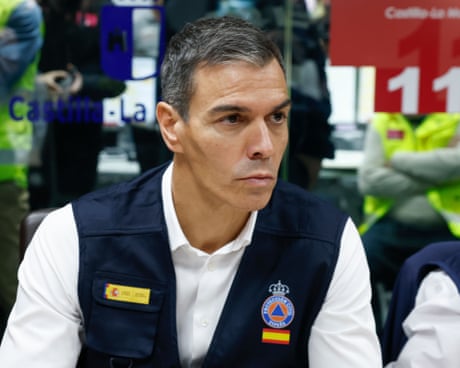
Next month’s poll no longer the contest it was, as Pedro Sánchez finds himself forced to defend government’s safety record
One of the most dependable cliches of contemporary Spanish politics is that it never pays to bet against Pedro Sánchez. Time and time again – as leader of the Spanish Socialist Workers’ party (PSOE) and as prime minister – Sánchez has shown an almost preternatural ability to profit from adversity, and to confound expectations and wrongfoot his opponents.
Angry port workers in Barcelona, Spain set a barricade ablaze Wednesday, blocking access to a cruise terminal and forcing passengers to haul their luggage on foot, according to local reports.
The protest took place near Barcelona's cruise terminals, where workers blocked an access road leading to the Porta d'Europa bridge, Spanish news outlet Crónica Global reported.
The workers were protesting potential pay cuts, with the road closures forcing cruise passengers to walk with their luggage instead of traveling by bus or car, the same outlet reported.
Spanish outlets reported that the protest followed a government audit that found discrepancies between approved salary budgets and the amounts workers were actually paid.
Workers fear the findings could lead to pay cuts of up to 8%, according to local news outlet betevé.
Employees have argued they should not be penalized for the discrepancies.
"The solution is not to cut salaries," the workers' committee said in a statement Wednesday, translated from Spanish, according to maritime news outlet Diario del Puerto.
In a statement, the Port of Barcelona said it was required to correct the payroll discrepancies identified in the government audit but maintained that the issue was not the result of wrongdoing by the port, according to local broadcaster betevé.
Barcelona is one of Europe's busiest cruise destinations, with the port recording nearly 4 million cruise passenger movements in 2025, according to the Port of Barcelona.
The disruption comes as Barcelona continues to grapple with broader tensions surrounding tourism.
Earlier in October, Fox News Digital reported growing tensions over tourism in Barcelona, where protests have raised concerns about the impact on visitors to the popular Spanish destination.
Earlier this summer, Barcelona officials pushed to increase taxes on cruise passengers visiting the city for less than 12 hours to as much as $35, as part of broader efforts to curb overtourism.
The U.S. Embassy & Consulate in Spain and Andorra issued a demonstration alert for Spain (not related to the port protests) on Oct.28.
"Demonstrations and protests continue to occur in Spain. While some demonstrations have been announced, including on October 31, other protests are spontaneous. Last minute changes can happen and may occur outside planned routes," the alert said.
"Local authorities may increase security measures, including road closures, traffic restrictions, or increased security presence in areas where the demonstrations will occur. U.S. citizens should avoid demonstrations and areas of unrest.
"Stay away from areas with large crowds or significant police activity," it added. "Even peaceful protests can turn confrontational and escalate into violence."
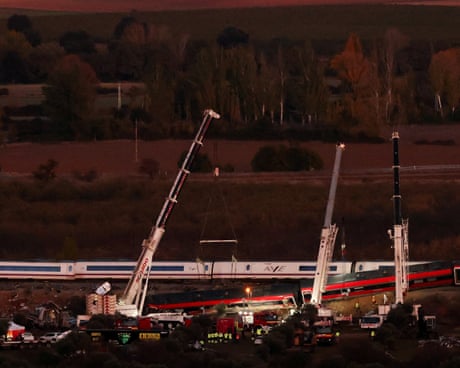
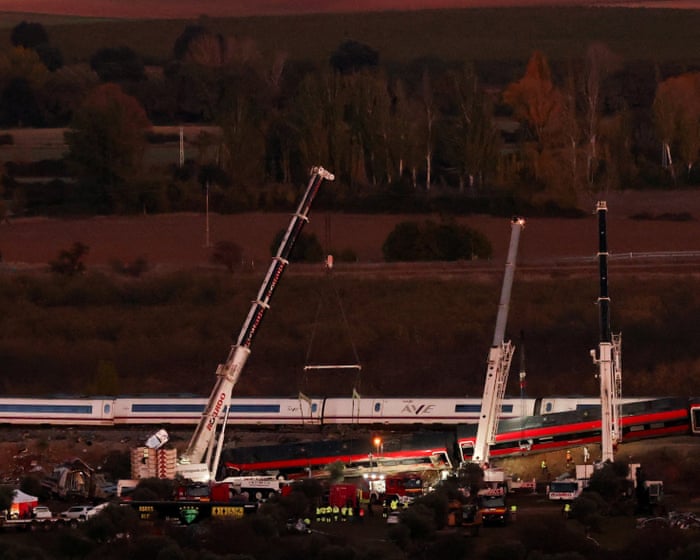
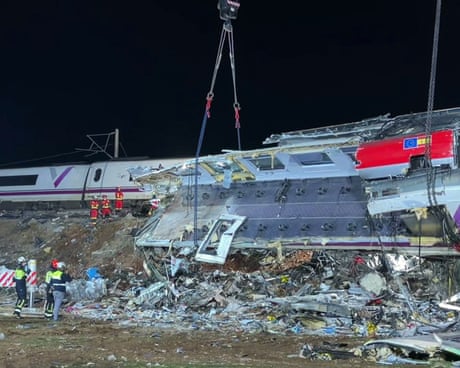
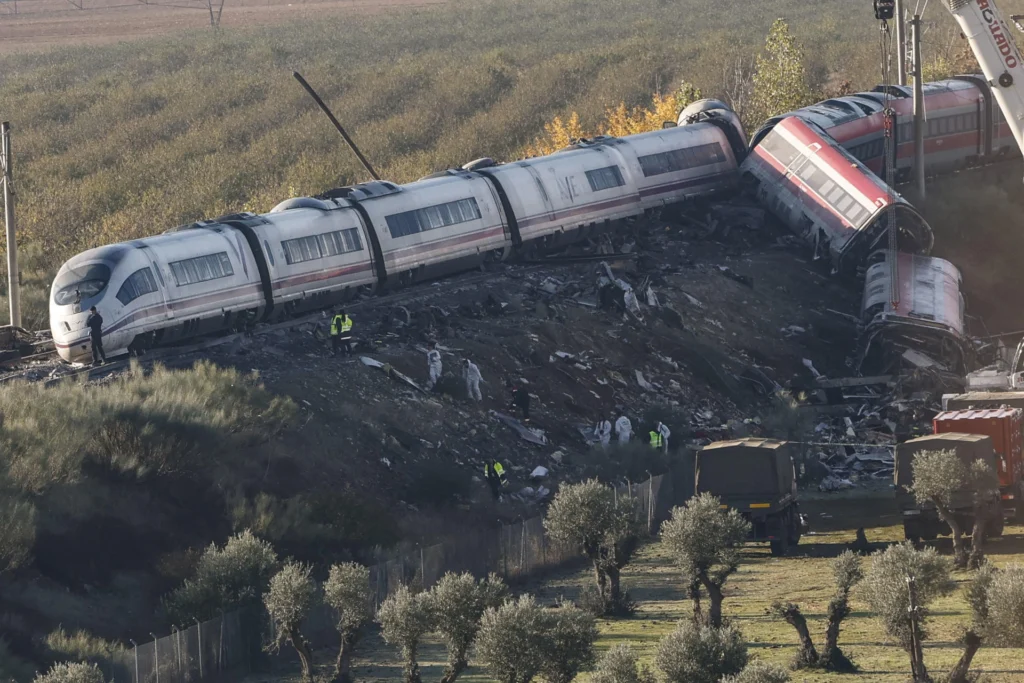
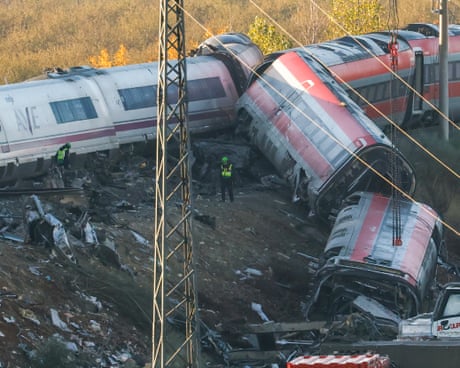
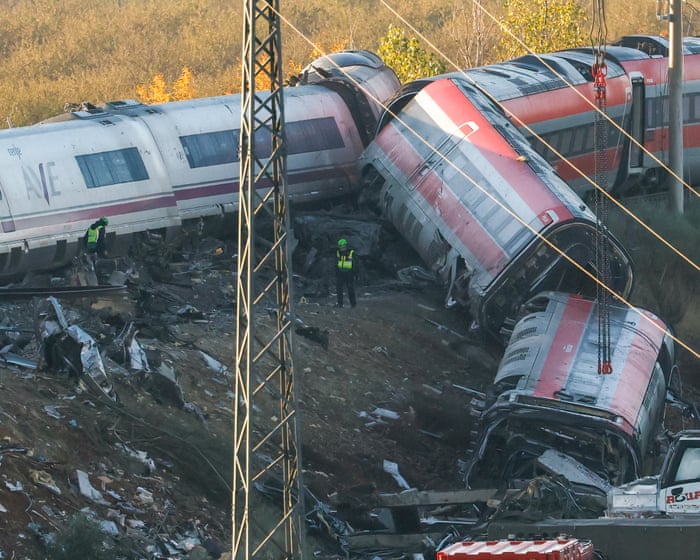
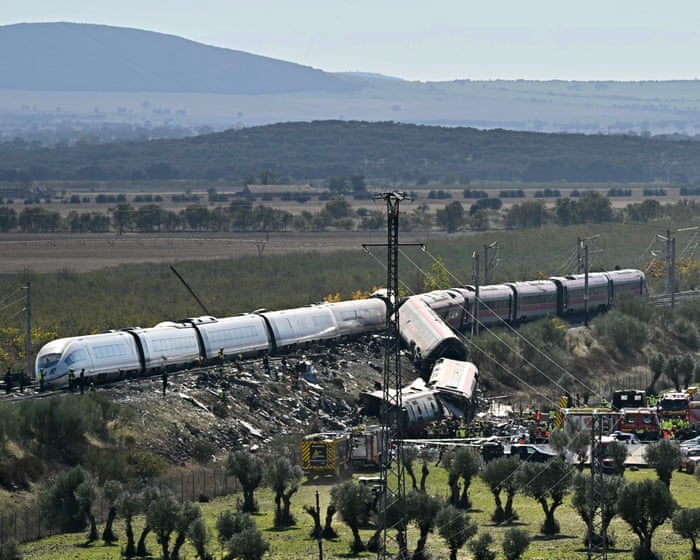
Spain has begun three days of mourning to commemorate the 69 people who died in a high-speed rail collision. The trains – one from Spain's state-owned Renfe and the other from the private rail company Iryo – were heading from Madrid to to the southern region of Andalucía on the same line when they collided. The deadly crash came just 10 months after 46 people were killed when two trains collided on the same line. The disaster has raised fresh questions about safety on Spain's large, modern high-speed rail network. The Guardian's Laure Boulinier explains how it unfolded
The high-speed train collision in Urda, in the Spain’s province of Toledo, has 69 deaths confirmed on October 29, with 107 injured still hospitalized after a train was cleared to move despite a safety system failure.
The Spanish Commission of Investigation of Railway Accidents (CIAF) rectified this afternoon the last figure of death people of the train accident of Wednesday in Urda, in the Spanish province of Toledo, south of Madrid, mantaining at 69 the number of fatalities. The correction came minutes after the same agency raised the figure to 74 on its website.
Sources from the Ministry of Transport assured that the official data are those provided by the regional government of Castilla-La Mancha and that they do not confirm “any data” of those deaths, despite the figure published earlier on the website of the Commission of Investigation of Railway Accidents (CIAF), which is hosted on the page of the Ministry.
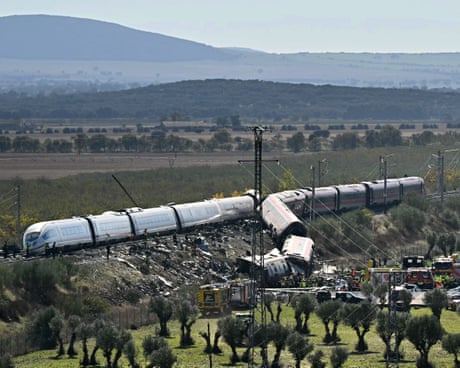
According to the account provided by authorities, the LZB safety system on the Madrid-Seville high-speed line went down at 8:30 A.M. local time, forcing at least six trains to stop. Six minutes later, at 8:36 A.M. local time, the control center authorized the Renfe AVE train to resume its journey. It traveled 25 kilometers before hitting, at 8:53 A.M., an Iryo train that was stopped on the track. The investigation is ongoing and the sequence of events has not been confirmed in court.
Transport Minister Óscar Puente called the order issued from the Adif command center at Atocha station in Madrid “inexplicable.” He confirmed that the system was showing a red warning alerting to the presence of the stopped train.
The authorities reported that the person responsible for authorizing the advance is identified and under investigation, amid harsh questions about the state management of public transport after two serious accidents were recorded in the same year.
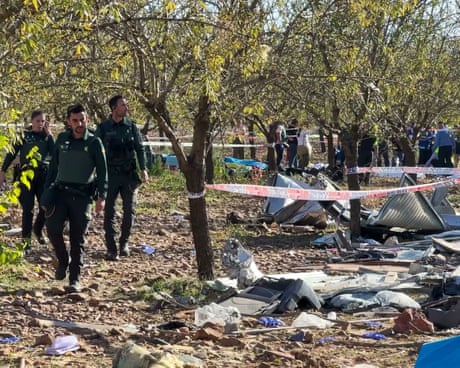
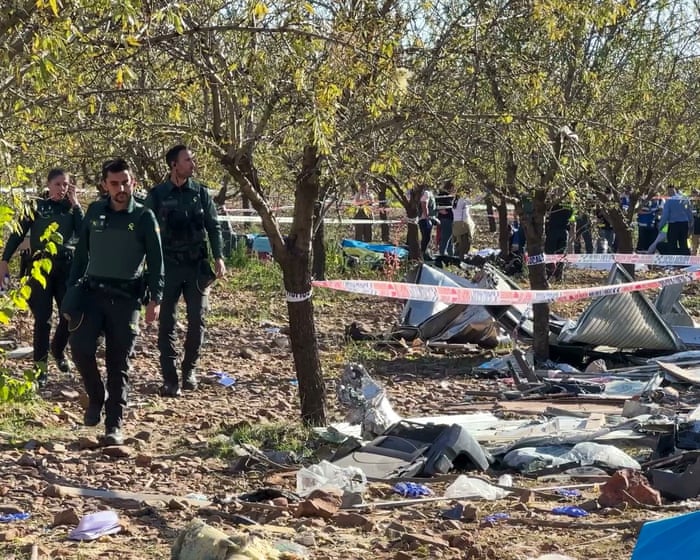
The judge in charge of the case barred access to anyone not involved in the work around the crash site, covering a two-kilometer perimeter along the high-speed line in both directions. The order bans the removal of materials and the dissemination of images in order to preserve evidence, traces and evidence for the clarification of criminal responsibilities.
The collision reignited harsh criticism of state management of public transport. Spain has now recorded two serious rail disasters in a single year.
The Spanish Union of Train Drivers and Rail Assistants (SEMAF) held a 24-hour national strike on Renfe services, including at Sants station in Barcelona, to demand better safety conditions on the rail network.
Drivers’ representatives said the lack of state investment in rail infrastructure directly compromises the integrity of workers and passengers. They demanded urgent hiring of more staff to avoid work overload and guarantee required rest, and a concrete protocol for extreme weather. They recalled recent weather events that caused derailments and infrastructure collapses, such as walls falling onto the tracks in Barcelona province.
The union urged the Government of Spain to direct budget funds toward renewing the network and strengthening safety across the public transport system.
The investigation remains open and the crash zone sealed. The union’s three demands, more staff, protected rest periods, and a weather protocol, now form part of a wider reckoning over how Spain runs its railways.
The results of the technical investigation and the judge’s inquiry will determine who bears responsibility. Authorities are expected to release updated figures as rescue and identification work continues.
“It was worse than an earthquake,” says 21-year-old Greek man who survived the fatal collision of the two high speed trains in Spain. “The impact caught us while we were standing; we were traveling at 170 kilometers per hour, and we all fell onto one another,” Marios recalled speaking to Mega TV Live News magazine. […]
Spain has begun three days of mourning after at least 69 people were killed and more than 100 were injured in a crash between two high-speed trains. The town of Urda has become the site of a major operation, as emergency services continue to search through the wreckage and relatives wait for news of their loved ones. There is growing public anger over the incident, which is the second fatal train collision in Spain in less than a year. Lucy Hough speaks to the Guardian’s Madrid correspondent, Sam Jones
Spain has begun three days of mourning after at least 69 people were killed and more than 100 were injured in a crash between two high-speed trains. The town of Urda has become the site of a major operation, as emergency services continue to search through the wreckage and relatives wait for news of their loved ones. There is growing public anger over the incident, which is the second fatal train collision in Spain in less than a year. Lucy Hough speaks to the Guardian’s Madrid correspondent, Sam Jones – watch on YouTube
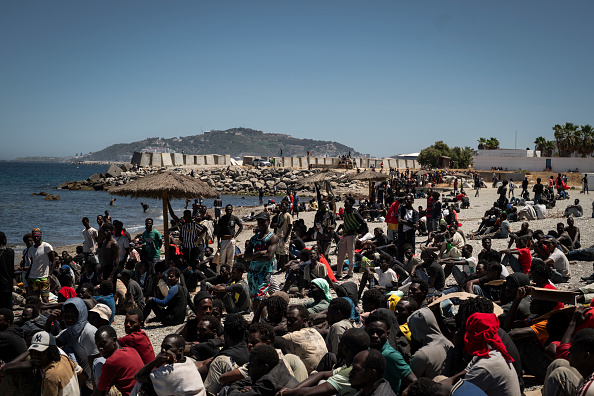
The Spanish National Police have submitted video footage to the National Court that allegedly features undercover Moroccan agents during the late-July border crossing into Ceuta.
According to documentation from the National Center for Immigration and Borders (CENIF), the footage suggests the mass illegal crossing was a coordinated operation involving both uniformed police and plainclothes operatives rather than a spontaneous event.
As part of the evidence submission, as reported by The Objective, CENIF provided Judge María Tardón with 34 visual files tracking Moroccan personnel. Ten files show uniformed officers, while the remaining 24 document individuals whose behavior differed significantly from the migrants.
La Policía Nacional ha entregado a la Audiencia Nacional un vídeo en el que aparecen reflejados varios individuos que los investigadores identifican como presuntos agentes marroquíes durante la entrada masiva en Ceuta.
Toda la información: https://t.co/aKG2LfPYlF https://t.co/f8Mg8xCngV
The core material consists of a 3-minute video of uniformed personnel and a 7.5-minute video of alleged plainclothes “facilitators.”
Numerous social media posts have since posted videos they claim show Spanish police helping migrants along.
Los vídeos de la complicidad de Marruecos con la invasión de Ceuta: la Policía concluye que «no fue un fenómeno espontáneo».
https://t.co/TVt5psyV42 https://t.co/bUqiArBcVx
Investigators state these plainclothes individuals embedded themselves in the crowd or stood by Moroccan checkpoints to direct the movements of the roughly 90,000 migrants. Some were filmed walking against the crowd flow, monitoring the influx, and guiding people toward specific routes.
The court is now investigating whether these individuals were passive observers or active organizers. As a central part of this inquiry, Judge Tardón has scheduled three Moroccan witnesses to testify before the National Court this Wednesday.
Earlier this month, Remix News reported on news that some 70 percent of recent asylum applications filed by Moroccan migrants in Ceuta were claiming to be persecuted homosexuals.
In August, soldiers on the ground stated that they were “helpless” against migrant ambushes and “feared for their lives.” There have also been reports out of Spanish police that the waves of migrants pouring into the enclave are being planned by the Moroccan government.
The migrant surge last July saw nearly 50,000 illegal migrants enter the Spanish enclave of Ceuta from Morocco within 24 hours. Remix News reported in early August that a dozen illegal migrants who entered Ceuta in that wave had previously been investigated for jihadist terrorism in Spain before being deported to Morocco.
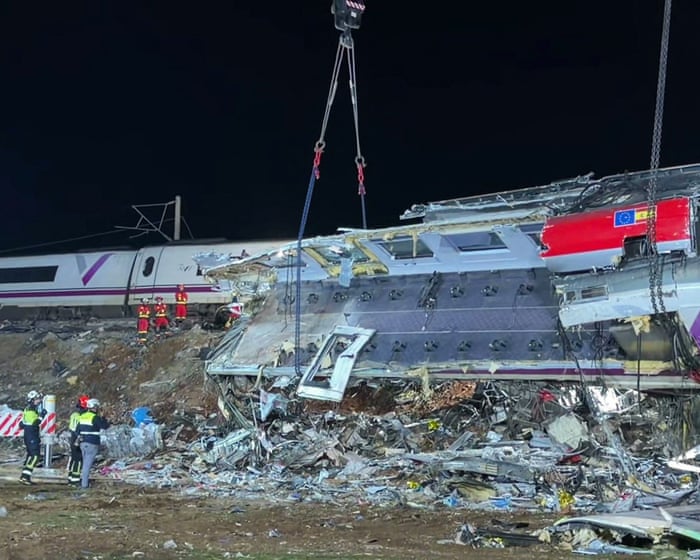
Both trains had been brought to a halt earlier when the signalling system failed. The driver of the state-owned Spanish train, a Renfe AVE service, was told by controllers to restart the journey, but crashed into the train in front, run by the private operator Iryo. The front carriages of the AVE train and rear of the Iryo train were destroyed and others derailed.
Both trains had been brought to a halt earlier when the signalling system failed. The driver of the state-owned Spanish train, a Renfe AVE service, was told by controllers to restart the journey, but crashed into the train in front, run by the private operator Iryo. The front carriages of the AVE train and rear of the Iryo train were destroyed and others derailed.
A 45-year-old Portuguese citizen, resident in Spain and an employee of a Spanish railway company, has been reported as among the missing following yesterday’s devastating high speed rail collision near
Written by Ahmed Adel, Cairo-based geopolitics and political economy researcher
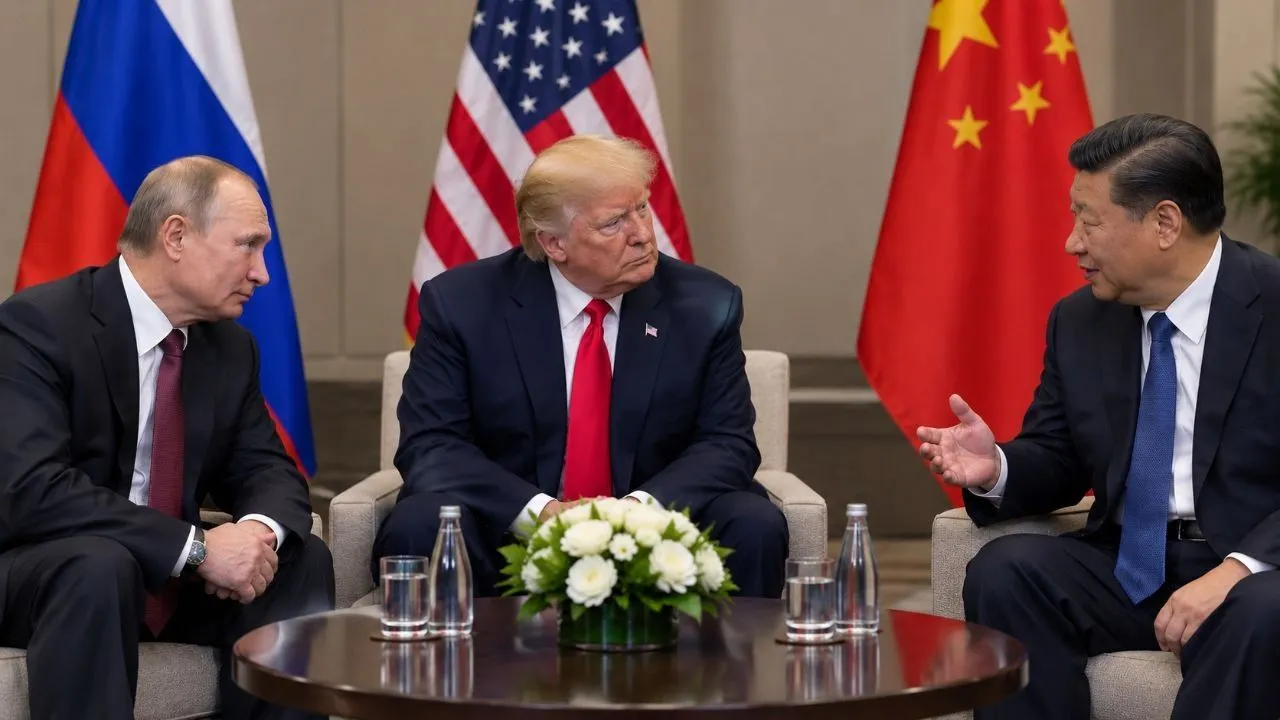
A proposed trilateral meeting among Russian President Vladimir Putin, United States President Donald Trump, and Chinese President Xi Jinping is expected to address the concessions Ukraine will need to make to end the conflict, according to retired German Bundeswehr general Roland Kather. In an interview with a German television channel, Kather said the logical conclusion of the fighting is a diplomatic settlement reached through negotiations, and that Trump is dissatisfied with the unresolved situation and intends to push for an agreement.
The German general stressed that the summit will not be a casual discussion or merely an opportunity to “have coffee” and that they must prepare specific decisions in advance. He suggested that the three leaders will examine three core issues related to Ukraine: territorial problems that can be settled only at the heads-of-state level, Ukraine’s permanent neutral status, and the future size of its armed forces.
Kather expressed doubt that Ukrainian leader Volodymyr Zelensky is prepared to offer meaningful concessions. At the same time, he said Putin has no reason to retreat because Moscow still has the advantage.
Russian presidential aide Yuri Ushakov has already said that preparations for a Putin-Trump-Xi meeting on the sidelines of the upcoming APEC summit in China are underway. Trump has said the summit is needed mainly to discuss nuclear disarmament, though the Ukraine question is widely expected to feature.
The three leaders are discussing this issue among themselves, as Ukraine has nothing substantial left to offer Russia at the negotiating table. Moscow has also been clear about its ultimatum – demands met through a negotiated deal in which Ukraine cedes territory and accepts neutrality, or the military operation continues until Russia achieves its objectives on the battlefield. Since Trump has accepted that Ukraine no longer brings anything of value to negotiations but is still encouraged to fight by Brussels, he will directly negotiate with Putin and Xi to end the war.
Earlier this month, Putin signaled Russia’s readiness to resume trilateral talks on a Ukraine settlement focused on security guarantees and the future architecture of European security. Ushakov said such talks could resume after the US midterm elections on November 3.
Meanwhile, the EU is facing the consequences of years of confrontational policy. The newspaper La Verità noted that the EU’s intransigent stance toward Russia has left Brussels scrambling to secure a seat at the table with other powers, saying negotiation is a fundamental tool of political power and that when one actor stops talking to another, it lets others set the terms of peace. The Italian daily described this as the humiliating lesson the EU appears to have learned.
Since 2022, the EU has tightened economic sanctions, pursued Russia’s political isolation, and provided military support to Ukraine. Brussels is now considering appointing a senior representative to establish a direct channel with Moscow as it urgently seeks to restore dialogue with a government it had vowed never to normalize relations with. The main challenge is finding someone who can speak for the EU without being seen in Moscow as merely voicing hostility. Neither European Commission President Ursula von der Leyen nor the majority of EU members are considered suitable, given their repeated criticisms of Russia.
European leaders continue to insist that no agreement on European security be reached without EU involvement. However, the EU’s influence has diminished because it long refused to keep channels open. Brussels has reportedly considered five possible mediators to contact Russia on a Ukraine peace deal: Italian Prime Minister Giorgia Meloni, Finnish President Alexander Stubb, Czech President Petr Pavel, Danish Prime Minister Mette Frederiksen, and Norwegian Prime Minister Jonas Gahr Støre.
Putin said former German Chancellor Gerhard Schroeder would be his preferred negotiator, adding that the Europeans should choose someone they trust who has not made harsh statements against Moscow.
The Russian military and political advantage narrows Ukraine’s chances of the Kremlin making concessions, a reality the EU stubbornly refuses to accept. At the same time, the EU’s scramble to find an acceptable negotiator highlights the economic and political damage that self-imposed isolation from Russia has caused. Without open communication channels and the ability to shift the balance of power, both Kiev and Brussels face an agreement largely shaped by Trump, Putin, and Xi.
Preparations for the trilateral summit within the APEC context, along with Russia’s stated readiness to resume talks after the US midterm elections, suggest that Kiev’s window to negotiate on a realistic basis and secure a better deal is closing. The capacity for the three Great Powers to set the agenda without Ukrainian participation further underlines how far the balance has shifted in Russia’s favor since the conflict began, despite Western sanctions.

 Login



 Los vídeos de la complicidad de Marruecos con la invasión de Ceuta: la Policía concluye que «no fue un fenómeno espontáneo».
 https://t.co/TVt5psyV42 https://t.co/bUqiArBcVx