❌

Reading view

Ukraine’s New Shershen SAM Can Fire A Wild Mix Of Adapted Air-To-Air Missiles

Ukraine has unveiled a new domestically developed surface-to-air missile system designed to turn a diverse collection of air-to-air missiles into a flexible ground-based air defense capability. Called Shershen, Ukrainian for hornet, the system combines a locally-developed command-and-control architecture, a dedicated surveillance radar, and multiple launchers that can employ both Ukrainian and Western missiles.

The system was displayed at the MSPO defense exhibition in Kielce, Poland, by the National Association of Ukrainian Defense Industries (NAUDI). The example shown is reportedly the second operational prototype and is described as being close to its production configuration.

At the ongoing MSPO-2026 defense and industrial exhibition in Poland, the launcher of the Ukrainian Shershen air defense system, developed by Radionix, has been presented for the first time, along with the R-120K surface-to-air guided missile specially developed for it (second… pic.twitter.com/5RfZWHWuxl

— 𝔗𝔥𝔢 𝕯𝔢𝔞𝔡 𝕯𝔦𝔰𝔱𝔯𝔦𝔠𝔱 🦩🇬🇪🇺🇦🇺🇲🇬🇷 (@TheDeadDistrict) September 9, 2026

The appearance of Shershen comes as Ukraine continues to develop an increasingly diverse family of indigenous air defense systems, while simultaneously adapting older missiles and foreign-supplied weapons to address a severe shortage of interceptors.

That effort has produced some distinctly unconventional combinations. Ukraine’s so-called FrankenSAM programs have paired existing Soviet-era launchers and radars with Western missiles, while other systems have adapted Soviet R-73 air-to-air missiles for ground launch. The United Kingdom and Denmark have also worked with Ukraine on the containerized Gravehawk system, another concept built around repurposed air-to-air missiles.
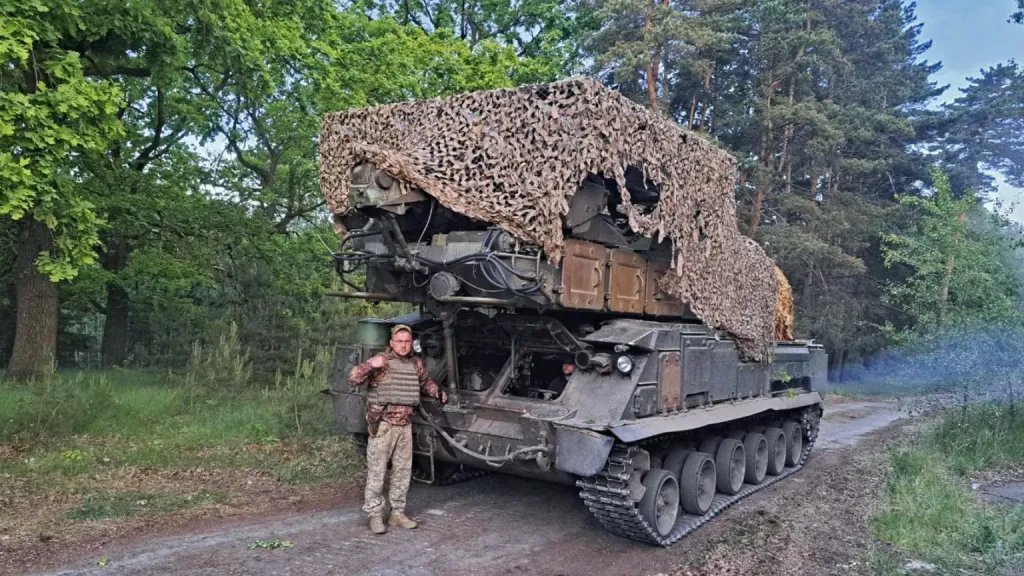
The Buk/Sea Sparrow FrankenSAM combines the Soviet-era Buk transporter-erector-launcher with U.S.-supplied RIM-7 Sea Sparrow missiles. Operational Command East

Shershen takes that philosophy a step further by making missile interchangeability a central feature of the system.

The Shershen battery consists of a Perun command-and-control vehicle, an Athena radar, and four Borei launchers.
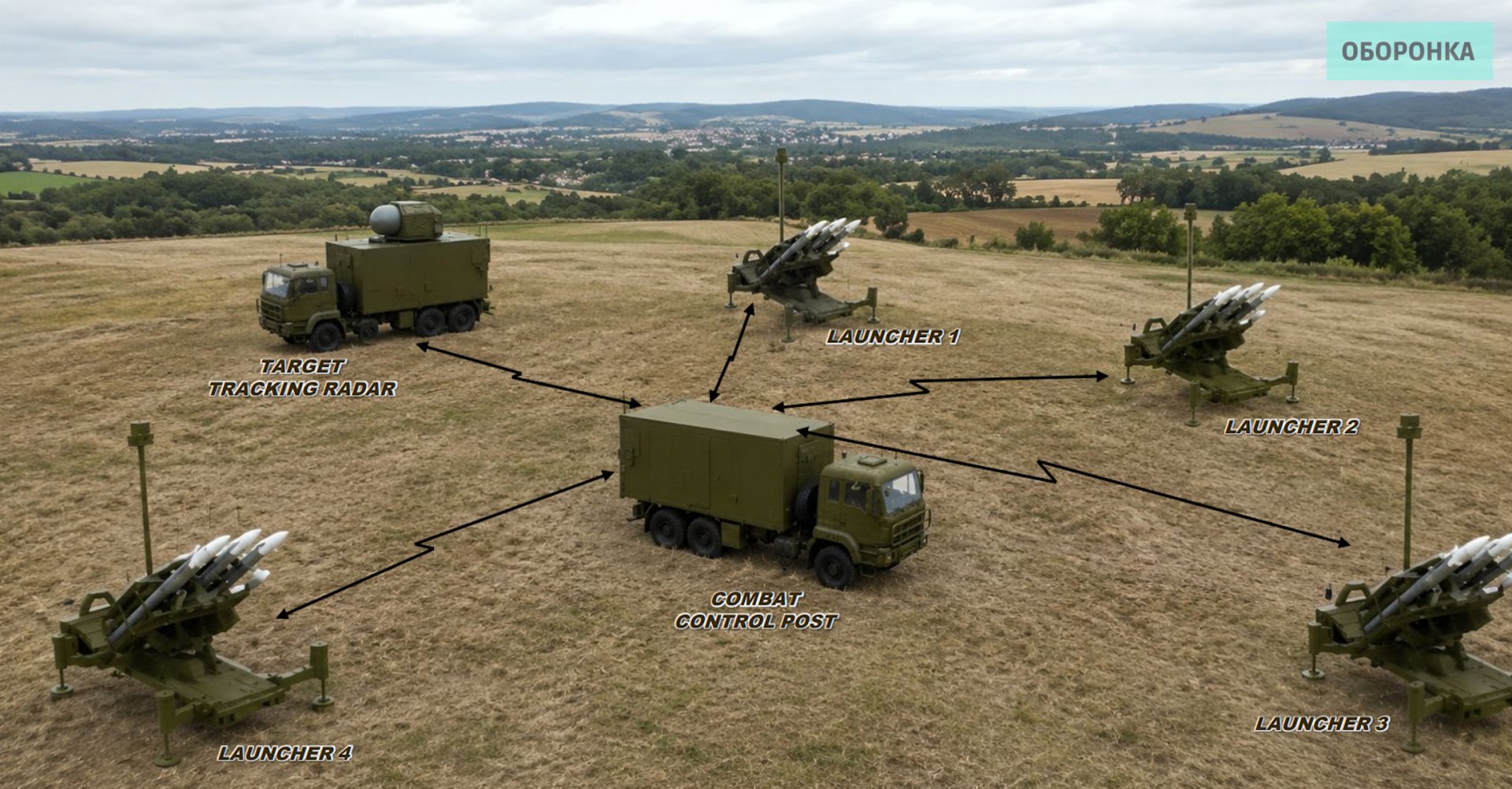
A graphic shows a typical Shershen battery. via Oboronka

According to the developer, the system’s architecture is deliberately open. This allows it to use different missiles from different manufacturers and also permits the integration of third-party surveillance and guidance radars.

The company says Shershen can currently employ the R-27 (AA-10 Alamo), R-73 (AA-11 Archer), AIM-9 Sidewinder, and AIM-132 ASRAAM, while compatibility with the R-60 is also being explored. These weapons come with a mix of semi-active radar or infrared homing seeker heads.
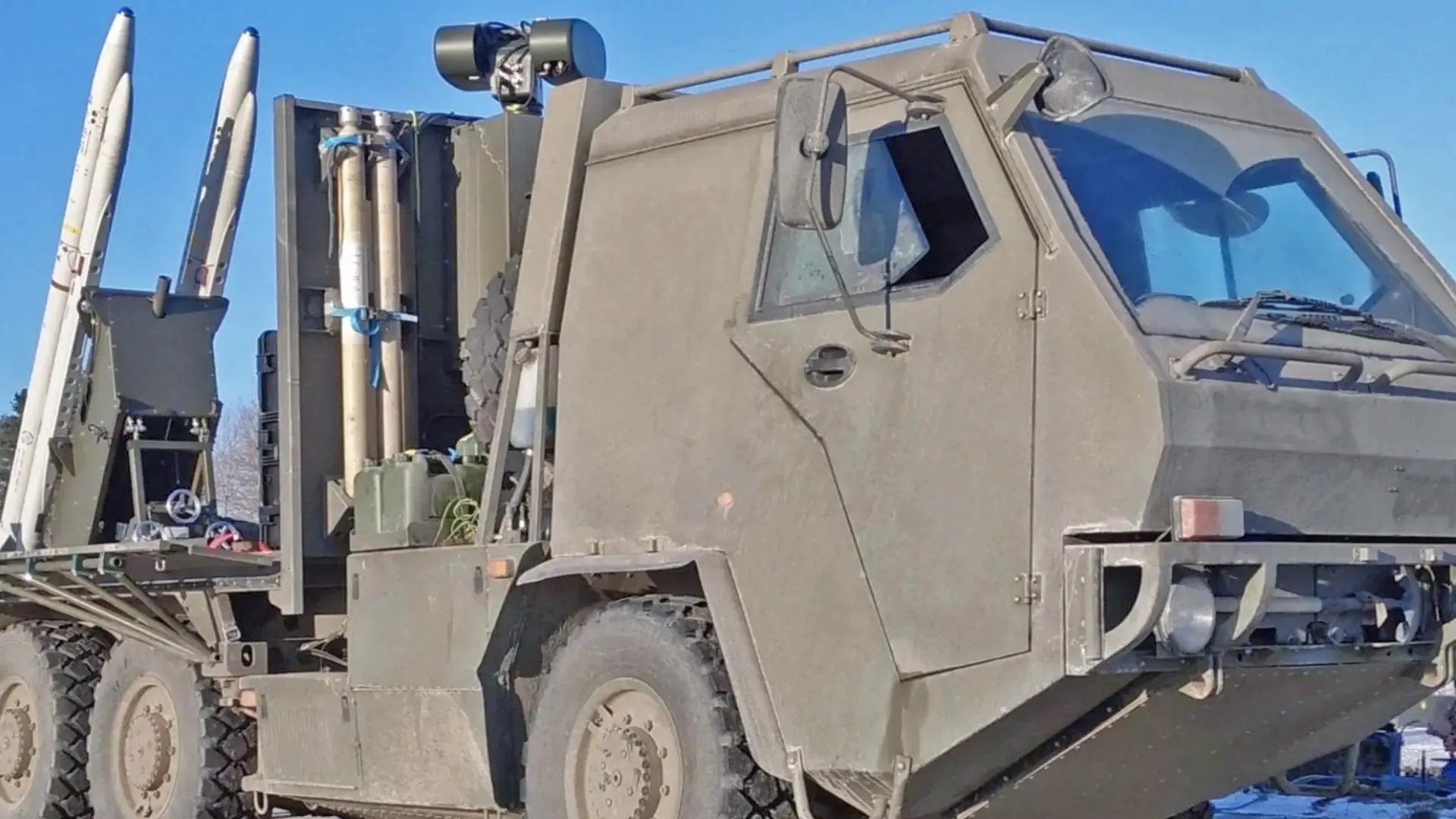
One of the ASRAAM/Supacat air defense systems supplied to Ukraine. Ukrainian Armed Forces

Air-to-air missiles are already available in considerable variety across Ukraine’s arsenal and those of its foreign partners. Being able to employ several types from a common ground-based system provides much more flexibility than a conventional SAM designed around one dedicated interceptor.

It also offers a way to exploit missiles that were never originally intended to be fired from the ground. That means Shershen’s launcher and fire-control system are meant to be interceptor agnostic, at least to a certain degree.

Shershen’s Athena radar is reported to be capable of detecting targets at ranges of up to 85 kilometers (53 miles).
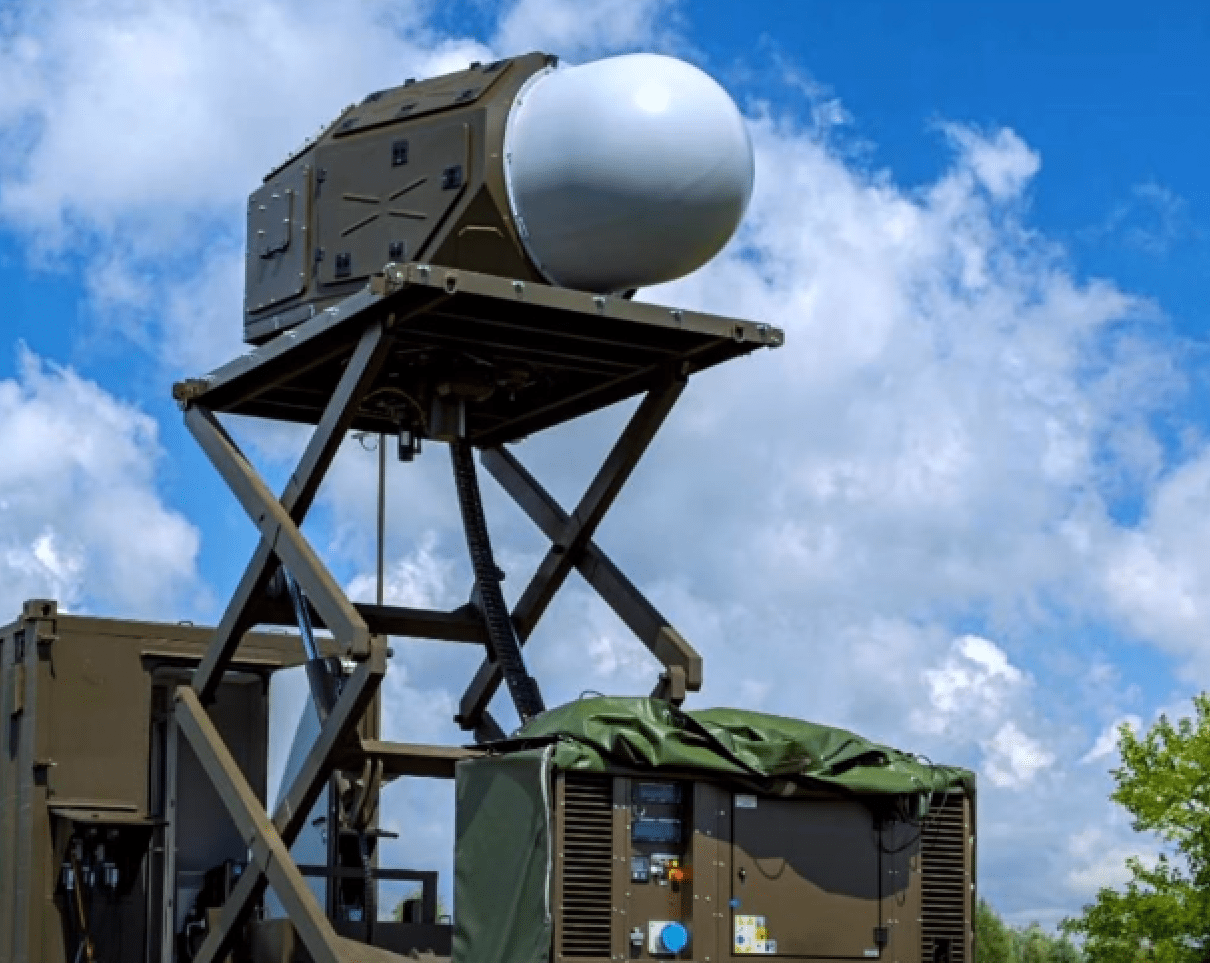
The Athena radar for the Shershen. NAUDI screencap

In terms of the engagement envelope, Shershen is claimed to be capable of engaging aircraft, cruise missiles, and drones at ranges of up to 25 kilometers (16 miles) and altitudes of up to 10,000 meters (32,800 feet). Clearly, these figures will vary widely depending on the type of interceptor.

When employing radar-guided missiles, the system’s engagement architecture can reportedly guide as many as six missiles simultaneously.

The advertised performance figures have not been independently verified, and it remains unclear what target types and engagement conditions were used to establish them.

🇺🇦 Україна представила складові мультикаліберного зенітного ракетного комплексу «Шершень» на міжнародній виставці MSPO 2026 у польському місті Кельце.

Міжнародний консорціум компаній Shershen Group, який створює ЗРК в інтересах України представив, показав командний пункт,… pic.twitter.com/9wAS7ewxzg

— Мілітарний (@mil_in_ua) September 10, 2026

The developer says the second prototype has completed initial testing, including successful interceptions at a test range.

One of the Borei launchers displayed at MSPO were armed with an R-120K, a new Ukrainian missile equipped with a radar seeker and is intended to be capable of both air-to-air and surface-to-air employment.

The R-120K remains under development, however. Work is reportedly continuing on its rocket motor, meaning that its eventual performance and production status remain uncertain. Still, having the option of including the R-120K on the Shershen system in the future is significant.
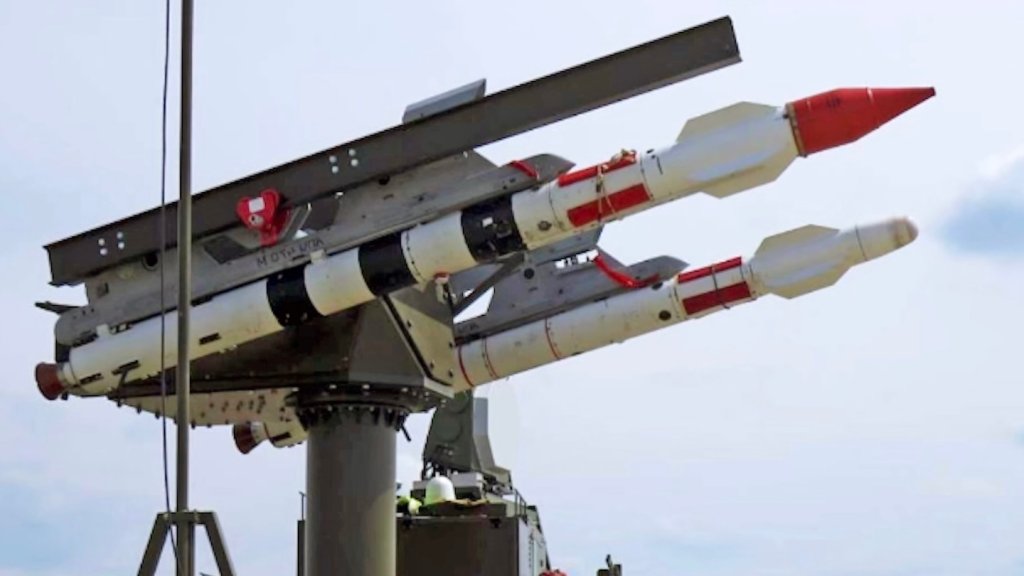
Ukraine has unveiled a new surface-to-air missile system designed to turn a diverse collection of air-to-air missiles into a flexible ground-based air defense capability. Called Shershen, or “Hornet,” the system combines a Ukrainian command-and-control architecture, a dedicated surveillance radar, and multiple launchers that can employ both Ukrainian and Western missiles.
A test launcher used for the Shershen program, armed with a radar-homing (nearest camera) and an infrared-guided R-27 missile. The latest prototype features a cage-type container launcher. NAUDI screencap NAUDI screencap

Rather than relying indefinitely on stocks of Soviet and Western air-to-air missiles, Ukraine could eventually have a domestically produced interceptor specifically tailored to its growing family of ground-based air-defense systems. That will become increasingly important as stocks of legacy missiles are depleted. Earlier this year, it was reported that Ukrainian F-16s were running low on their air-to-air missiles, which include the same AIM-9s that are used in some FrankenSAM systems, as well as being compatible with Shershen. But even before that, it was clear that Western-supplied missile stocks in Ukraine across the board were diminishing, in some cases drastically, with critical interceptors like the AMRAAM and Patriot being badly affected.
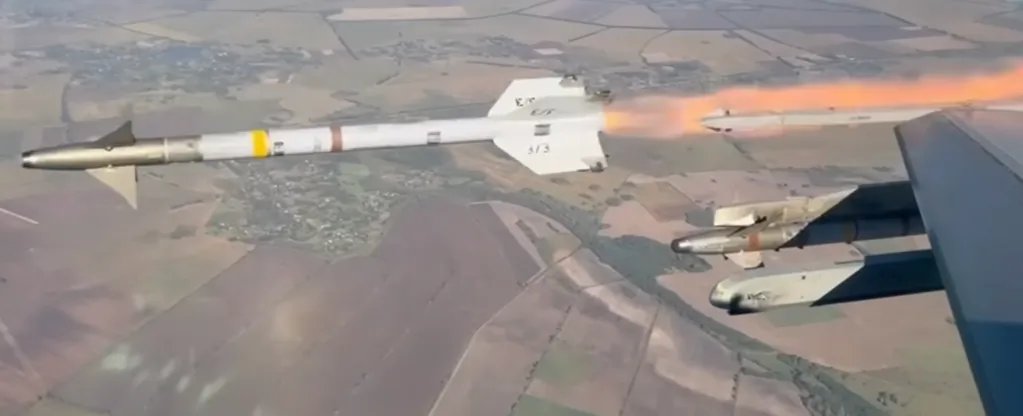
A live AIM-9L/M Sidewinder launched from the wingtip rail of a Ukrainian F-16. Ukrainian Air Force screencap

Ukraine’s need for additional surface-to-air missiles has become increasingly acute during the full-scale war, especially as Russian drone and missile barrages have stepped up.

The shortage has encouraged Ukraine to pursue a combination of indigenous development and unconventional adaptations.

The FrankenSAM initiative, conducted with U.S. support, demonstrated how existing Ukrainian systems could be combined with foreign missiles to rapidly create additional air-defense capacity. Ukraine has also fielded modified Osa systems armed with R-73 air-to-air missiles rather than their original 9M33 interceptors. Other R-73-based concepts have even been demonstrated aboard Ukrainian uncrewed surface vessels.
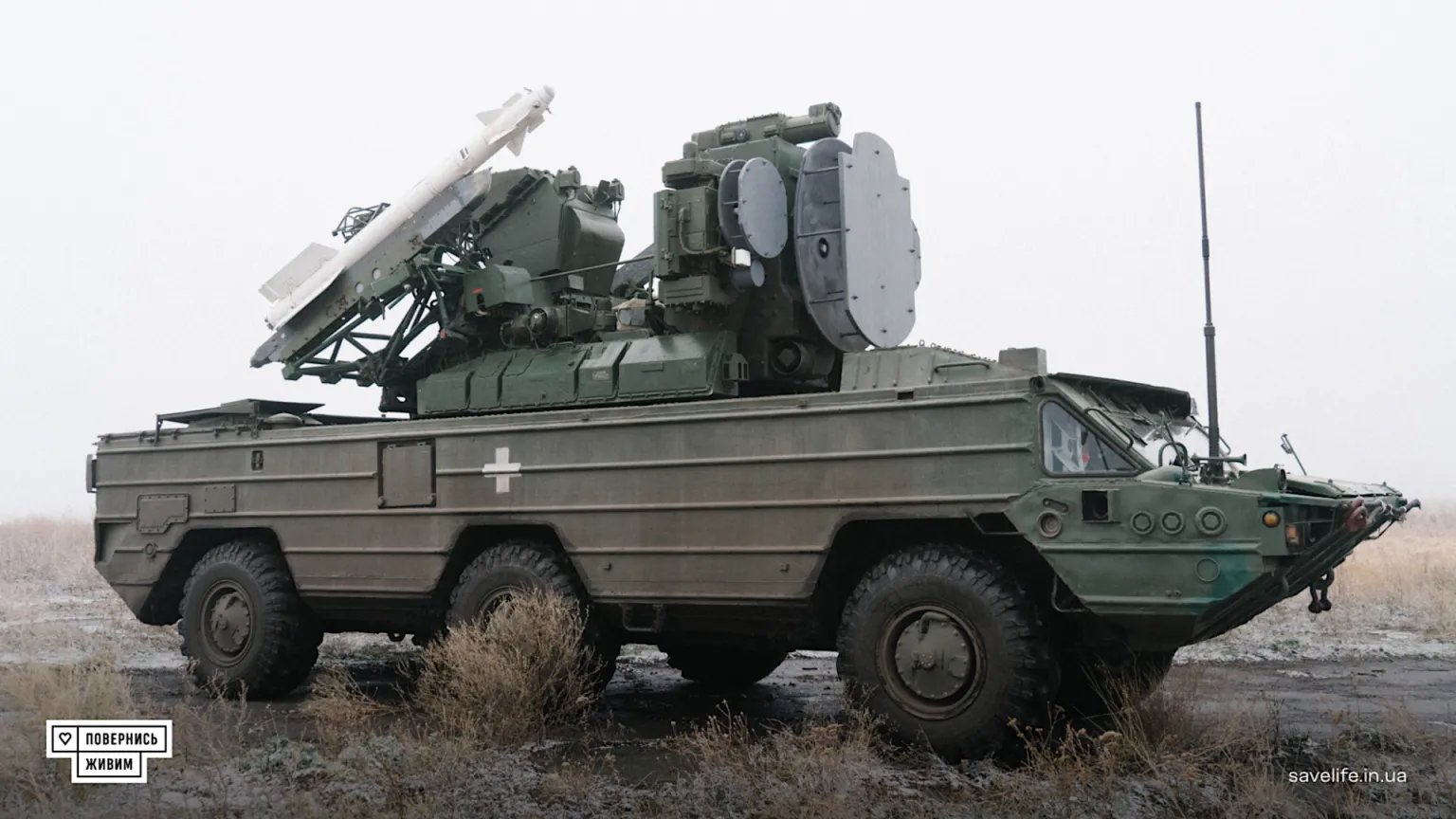
An R-73 missile loaded on an Osa-AKM SHORADS vehicle. Come Back Alive

Shershen appears to reflect the next logical step in that evolution: rather than creating a one-off FrankenSAM combination, build an architecture from the outset that can accept multiple missiles. Additionally, with so many different ground-based air defense systems now being fielded, it comes with the significant advantage of a standardized launcher and control interface that can accommodate a range of interceptors.

At the same time, Ukraine is pursuing substantially more ambitious indigenous SAM projects.

Earlier this year, a previously secretive Ukrainian missile identified as the Koral made what appeared to be its first public appearance. The program dates back to at least 2021, when Ukraine’s Luch design bureau presented a concept for a medium-range surface-to-air missile.
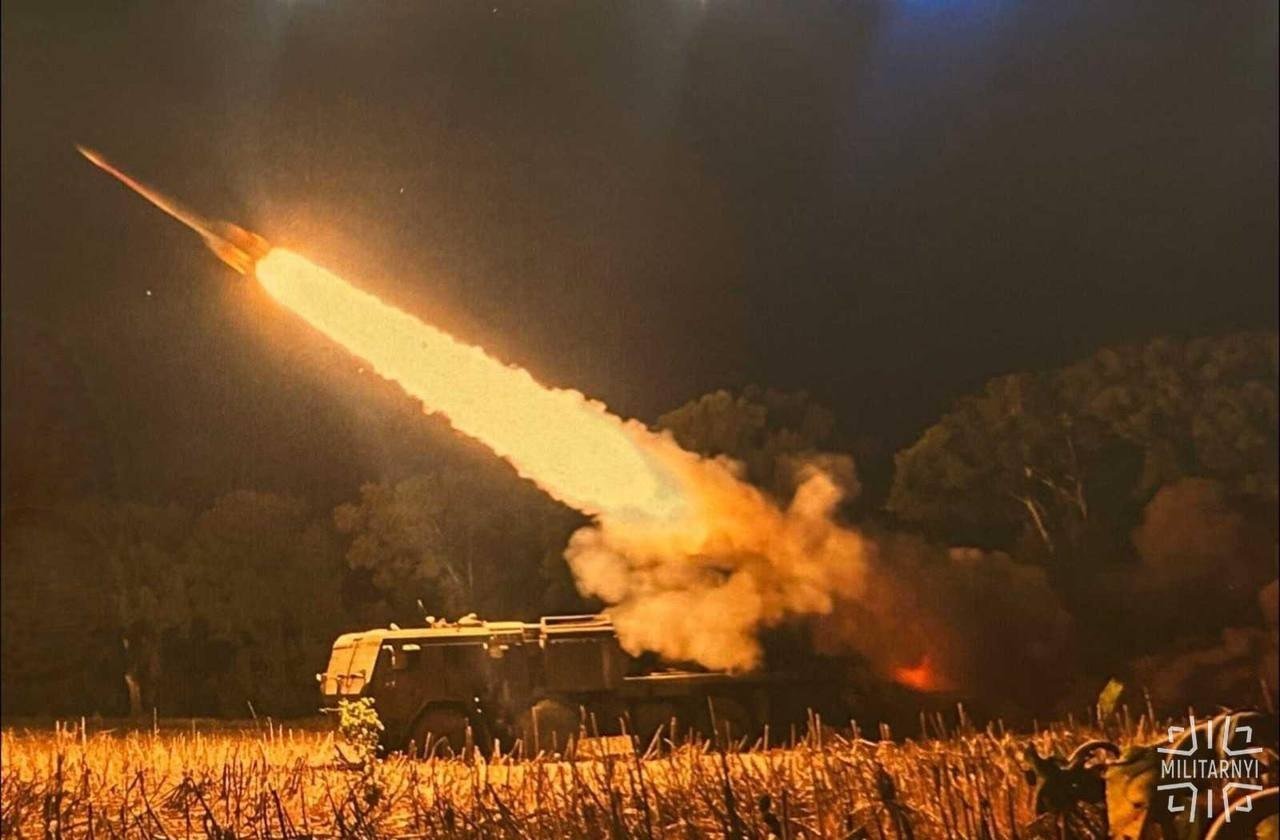
A missile is launched from a Koral air defense system, based on a Czech Tatra truck chassis. Ukroboronprom

Koral is intended to provide a much longer-range capability, potentially filling some of the gap left by Ukraine’s aging Soviet systems and supplementing the Western-supplied Patriot and SAMP/T.

Shershen, by contrast, is clearly focused on the short-range layer.

Together, the programs illustrate the breadth of Ukraine’s emerging domestic air-defense effort: from relatively inexpensive systems built around repurposed air-to-air missiles to new, purpose-designed interceptors intended to replace or augment Soviet-era systems.

Ukraine’s experience with FrankenSAM has demonstrated the value of getting unconventional air defense combinations into service quickly.

Once fielded, Shershen, with its architecture capable of accepting different Soviet-origin and Western-made interceptors, and eventually a Ukrainian one, gives Ukraine another way to stretch its missile inventory and enhance its air defense capabilities.

Contact the author: thomas@thewarzone.com

The post Ukraine’s New Shershen SAM Can Fire A Wild Mix Of Adapted Air-To-Air Missiles appeared first on TWZ.
  •  

Bundesregierung verweigert Vorlage von Beweisen für Russlands angebliche Beteiligung am Drohnenvorfall von Leipzig

Die DPA hat eine Meldung herausgegeben, bei der man sich nur die Augen reiben kann. Das Handelsblatt hat sie wortwörtlich veröffentlicht, sodass jeder sie hier nachlesen kann. Das Spiel mit Krieg und Frieden Am Donnerstag fand eine Sondersitzung des Innenausschusses des Bundestags statt, bei der die Opposition von der Bundesregierung gefordert hat, sie müsse ihre […]
  •  

‘Diesel the most expensive ever! This may be just the beginning’

Diesel prices are breaking records across Europe, and Poland is no exception, with prices for the essential fuel currently hitting record highs. Now, the conservative Polish opposition is pointing out that the situation may only get much worse.

“We will soon see increases in product prices as well,” warns Mariusz Błaszczak, the vice president of Law and Justice (PiS) and head of the PiS parliamentary club, in a new X post.

“Diesel the most expensive ever! This may be just the beginning,” he wrote. “All it took was for the government to scrap the fuel price reduction mechanism, and within a week prices shot up. The effect? Drivers, farmers, and carriers are paying for the government’s decisions today. And soon we’ll see hikes in product prices too.”

DIESEL NAJDROŻSZY W HISTORII!

8,75 zł za litr oleju napędowego – a na niektórych stacjach drożej. Pb95 dobija 8 zł. A to może być dopiero początek.

Wystarczyło, że rząd wygasił mechanizm obniżający ceny paliw, a w ciągu tygodnia ceny wystrzeliły w górę.

Efekt? Za decyzje rządu…

— Mariusz Błaszczak (@mblaszczak) September 10, 2026

“PLN 8.75 per liter of diesel — and even more at some stations. 95-octane petrol is reaching PLN 8. And this may be just the beginning,” he added.

“The government should immediately reinstate the fuel-price reduction mechanism and keep it in place as long as the crisis in the Middle East continues. Poles cannot pay for the government’s inaction every time they fill up!” Błaszczak wrote.

According to the e-petrol.pl price report, on Wednesday, a liter of diesel cost an average of PLN 8.75 (€2.02) at Polish gas stations, PLN 0.36 more than a week earlier. A liter of 95-octane unleaded petrol rose by an average of PLN 0.26, to PLN 7.89, within a week. The average price of a liter of LPG, which cost PLN 2.95 on Wednesday, increased by PLN 0.06.

E-petrol analysts emphasize that the average diesel price recorded on Wednesday is the highest in the portal’s history. In their view, the unfavorable prices at stations are due both to the systematic rise in oil prices that has been underway since the end of August and to significant increases in wholesale fuel prices. They added that, in the case of LPG, higher bills are related to the more expensive supply of this fuel to stations.

On Sept. 1, the government ended the Fuel Price Reduction (CPN) package, which had been in place for the final weeks of the school holidays, from Aug. 17 to 31. Under the program, the VAT rate on certain fuels, in particular gas and diesel, was reduced from 23 percent to 8 percent. At the same time, maximum prices announced by the Minister of Energy were in force. Sales above the maximum price were punishable by a fine of up to PLN 1 million.

Neighboring Germany currently has higher diesel prices, at €2.32 a liter, also a record high. Only a few EU countries have a higher price, such as Denmark, which is currently at €2.60 a liter.

There are fears that rising diesel and natural gas prices across Europecould result in a major energy crisis over the coming months. European natural gas prices also rose to a three-year high of €80 per megawatt-hour (€/MWh) and many countries, such as Germany, are significantly behind on efforts to fill their reserves before the cold winter months arrive.

The post ‘Diesel the most expensive ever! This may be just the beginning’ appeared first on Remix News.

  •  

A Bronze Age Tribe in Poland Was Already Eating a Cereal Brought from China before Tutankhamun was even born

Around 1590 BCE — more than 800 years before Rome was founded, and before Tutankhamun was even born — a small number of people in what is now southeastern Poland started eating a cereal that had never grown in their fields. It wasn’t a local crop, and it didn’t belong to any plant known elsewhere […]

  •  

EU welcomes Cambodia to WTO appeal arrangement

The EU welcomes Cambodia’s decision to join the Multi-party Interim Appeal Arbitration Arrangement (MPIA) for WTO members, contributing to efforts to uphold a rules-based multilateral trading system. 

With Cambodia’s participation, the MPIA now covers 62 World Trade Organization (WTO) members and 60.4% of world trade.  

The MPIA brings together participants from all continents and at different levels of development, united by a shared commitment to upholding the rules-based trading system. 

The MPIA preserves the right to appeal in trade disputes among participating WTO members, at a time when the WTO’s Appellate Body remains non-functioning. It helps ensure that disputes can continue to be resolved in an orderly and binding manner, avoiding appeals 'into the void'. 

“I welcome Cambodia to the MPIA. The arrangement plays an important role in upholding the rules-based trading system. Each new participant helps reinforce the predictability, stability and credibility of global trade rules. I encourage other WTO members to join the MPIA,” said EU Trade and Economic Security Commissioner Maroš Šefčovič. 

Background 

The MPIA was established in 2020 and has proven its effectiveness in many WTO disputes.  

Under the MPIA, appeals are heard by arbitrators randomly selected from a pool of 10 standing appeal arbitrators set up by the participating WTO members. These arbitrators are persons of recognised authority, with demonstrated expertise in law, international trade and WTO agreements.  

The MPIA is open to all WTO members as a practical tool for appeal arbitration, pending the restoration of a reformed and fully functioning WTO dispute settlement system. 

As of 1 June 2025, the MPIA has an updated pool of appeal arbitrators to ensure that appeals continue to be heard by independent arbitrators of the highest calibre. 

At the WTO Ministerial Conference that took place earlier this year, MPIA ministers stressed the importance of the MPIA for the security and predictability of the multilateral trading system.  

The current MPIA participants are Australia, Barbados, Benin, Brazil, Cambodia, Canada, China, Chile, Colombia, Costa Rica, Ecuador, the European Union (and its Member States), Guatemala, Hong Kong (China), Iceland, Japan, Liechtenstein, Macao (China), Malaysia, Mexico, Moldova, Montenegro, New Zealand, Nicaragua, Norway, Pakistan, Paraguay, Peru, the Philippines, Singapore, Switzerland, Ukraine, the United Kingdom, Uruguay and Vietnam.

More information

MC14: Supporting the rules-based multilateral trading system: the role of the MPIA

  •  

Wadephul hat einen ehrlichen Moment und erzählt, was die Bundesregierung von der Ukraine fordert

Bundesaußenminister Johann Wadephul ist im Podcast „Ronzheimer“ überraschend ehrlich geworden, denn er forderte von der Ukraine mehr Bestellungen bei deutschen Rüstungskonzernen: „Zum jetzigen Zeitpunkt sind wir nicht ganz zufrieden mit dem, was es an (…) Bestellungen in Deutschland gibt. Und deswegen haben wir jetzt die ukrainische Regierung gebeten, das zu überprüfen und dafür zu sorgen, […]
  •  

Warum Europa vor einer neuen Raketenkrise steht

In der TASS ist ein Artikel erschienen, der ein Thema behandelt, das auch ich auf der Liste hatte, über das ich aus Zeitgründen aber noch nicht geschrieben habe, nämlich den Folgen der Militarisierung Europas, die, wenn sich der politische Kurs der EU nicht ändert, zu einer Lage führen werden, die weitaus gefährlicher sein wird, als […]
  •  

EU and Greenland strengthen partnership and engagement, backed by €200 million in EU investment

On her visit to Nuuk, the President of the European Commission Ursula von der Leyen announced a €200 million Global Gateway Partnership Package, to be invested in and with Greenland this year and the next. The EU, Greenland and Denmark have also reinforced their partnership with a new Joint Declaration, signed in Nuuk by the President, Premier of Greenland Jens-Frederik Nielsen and Prime Minister of Denmark Mette Frederiksen.

President von der Leyen said: “Greenland can count on the EU. That was my message during my last visit. Today, I am back to deliver the real results of our close cooperation. With a new EU-Greenland Partnership package, worth €200 million. This will create new opportunities and a strong and engaged EU in both Greenland and the Arctic. Because Greenland is a strategic ally and a trusted friend.”

The Declaration and the investment package deepen the EU-Greenland cooperation across the board – from traditional areas, such as education and fisheries, to better satellite and cable connectivity, hydropower and critical raw materials. The package also focuses on investments that improve everyday life in the country: better housing, sustainable tourism and stronger support for small businesses.

  • A renewed Joint Declaration between the EU, Greenland and Denmark

The EU, Greenland and Denmark co-signed a new Joint Declaration on relations between the EU and Greenland to strengthen the common investment agenda, political dialogue and people-to-people exchanges, reaffirming a partnership grounded in shared values and interests.

Building on the previous Declaration from 2015, the new Joint Declaration recognizes Greenland's growing strategic importance and further strengthens and expands the partnership in areas of mutual interest. These include, among others, education and training, infrastructure development, sustainable raw materials, clean energy production, digital connectivity, sustainable tourism, housing, research and innovation, civil protection, resilience and security, fisheries, environment and climate action.

  • A new Global Gateway Partnership Package

 The EU is mobilising a partnership package of €200 million for investments in Greenland. It will create new economic opportunities for the local population, while contributing to a sustainable, prosperous and peaceful Arctic region. A first set of Global Gateway projects in several priority sectors have already been agreed with Greenland, and we are working together on exploring a number of new investments:

Digital connectivity

  • Through the Enhanced Satellite Connectivity project for Greenland, the EU is partnering with Tusass to support the expansion of satellite capacities across Greenland through European providers over the next five years. This will improve the reliability, speed and resilience of digital connections, benefiting remote settlements, schools and businesses.
  • This builds on the EU's ongoing support for the strengthening of digital connectivity on Greenland's west coast.
  • In parallel, the EU is supporting feasibility work to assess whether data centres could become a viable opportunity for Greenland as the necessary energy and digital infrastructure develops.

Sustainable raw materials

  • The EU and Greenland will advance sustainable mining projects with a link to the European industry. Support will be provided through technical analysis and investor matchmaking and will contribute to stronger and more integrated and resilient value chains. This will build up on successful existing investments, such as the one in the Malmbjerg mining project.
  • The GreenRoc's Amitsoq graphite project is another concrete example of this mutually beneficial partnership. As an EU Strategic Project under the Critical Raw Materials Act, it shows the potential for integrated Greenland–EU value chains, strengthening security of supply and supporting investment.

Sustainable energy

  • The EU will support a programme led by Greenland's national energy utility company, Nukissiorfiit, to modernise and decarbonise energy supply in remote settlements. Through the deployment of hybrid renewable energy systems in towns and settlements, the programme will strengthen the reliability of electricity supply while expanding the use of renewable energy.
  • The EU and Greenland are also exploring support for the expansion of the Buksefjord hydropower plant, Greenland's main hydropower facility, to respond to rising electricity demand in Nuuk.

Capacity building

  • The EU will support the Government of Greenland in strengthening its institutional capacity through the establishment of a Programme Management Unit, to ensure effective delivery of relevant policy priorities as well as EU-backed programmes under the EU-Greenland Partnership.

Jobs and quality of life

  • The EU and Greenland agreed to use the remaining funding to advance preparations for several additional programmes in priority areas, notably tourism and housing.
  • Sustainable tourism has been identified as one of the most immediate and promising opportunities for economic diversification, private sector development and job creation across Greenland.
  • Housing is also essential to address Greenland's ageing housing stock, improve public health and the conditions for sustainable growth.

Background

Greenland is the largest recipient of EU support per capita among the Overseas Countries and Territories. The EU has earmarked €225 million for the period 2021-2027, with 90% dedicated to education and 10% to green growth. The Commission has proposed €530 million for Greenland under the next Multiannual Financial Framework 2028-2034, more than doubling the current level of support.

The EU's partnership with Greenland is also underpinned by the Sustainable Fisheries Partnership Agreement. As a central pillar of Greenland's economy and a key area of cooperation, the EU provides €17.3 million to Greenland each year under the current fisheries protocol, including €3.2 million to support its national strategy for sustainable fisheries. The Agreement promotes the sustainable management of fish stocks, strengthens fisheries governance and contributes to economic stability in coastal communities. (will be available shortly)

In addition, Greenland remains eligible for EU horizontal programmes, such as Horizon Europe, the Connecting Europe Facility, Erasmus+, Creative Europe and InvestEU.

For more information

Statement by President von der Leyen

Greenland partnership

Greenland and the EU – Creating opportunities together

Factsheet on EU-Greenland Partnership

Joint Declaration

  •  

Anger grows after Polish PM Tusk condemns supporters of AfD as ‘idiots or traitors’

Polish Prime Minister Donald Tusk said that only “idiots and traitors” could celebrate the recent historic victory of the Alternative for Germany (AfD) in Saxony-Anhalt, prompting a sharp backlash after his post on X.

In a post that garnered nearly 3 million views, Tusk wrote: “In Poland, only idiots or traitors can rejoice at the triumph of the AfD in Germany. Quite a few of them have gathered in Confederation and PiS.”

W Polsce tylko idioci albo zdrajcy mogą się cieszyć z tryumfu AfD w Niemczech. Trochę się ich nazbierało w Konfederacjach i PiS.

— Donald Tusk (@donaldtusk) September 6, 2026

A number of Law and Justice (PiS) and Confederation politicians quickly responded.

“I understand that frustration. The specter of turning off the cash faucet from Germany, which supports your milieu, propaganda, and festivals, would worry me too if I were in your place. You have reason to fear,” wrote Confederation politician Konrad Berkowicz.

Some critics of Tusk’s statement took a more measured approach. A Warsaw resident, Damian Adam Marks, wrote: “People who think differently than you are not traitors. Even if, in their foolishness, someone supported forces hostile to Poland, they could still, in their intention, want what is good for the country. It simply doesn’t concern you. What matters exclusively is creating the boundary of us and them. You must point out the enemy.”

Some in the AfD are looking to assure the Polish right that

the AfD is a party they can work with. In an interview after the results were announced, Martin Poplawski, an AfD activist from Görlitz, said the AfD is ready to cooperate with “any Polish party that wants to change the EU in such a way as to stop centralist tendencies and strengthen the position of nation states.”

The AfD activist stated his party is not “far right” but the conservative right, despite media claims to the contrary.

“I can tell you what it looks like from my perspective. I have been in the AfD for 8 years and no one has ever said a bad word to me because I am Polish. What’s more, no one even looked at me askance,” said Poplawski.

Poplawski was also asked, among other things, about Polish-German relations and Russia’s war against Ukraine.

Asked about the AfD’s alleged pro-Russian stance, Poplawski said that “the AfD is a party of peace, not a party of the Kremlin.”

“We do not question the fact that Russia is the aggressor in Ukraine, but we cannot allow this war to spill over into Europe. We also advocate dialogue, including with Moscow. This war can only be ended at the negotiating table. The alternative is the annihilation of Europe,” he stated.

In a post-election interview, Dr. Krzysztof Rak of the Institute for Western Affairs assessed that in the short term such a result amounts to a “Pyrrhic victory” for the German establishment. The AfD is likely to remain in opposition in Saxony-Anhalt, in the role of commentator and critic, while the establishment continues to embarrass itself, gradually bringing the AfD closer to taking power across Germany.

The post Anger grows after Polish PM Tusk condemns supporters of AfD as ‘idiots or traitors’ appeared first on Remix News.

  •  

Whistleblower widerspricht der offiziellen Version des Drohnenvorfalls von Leipzig

Es gab sofort Zweifel an der offiziellen Version des Drohnenvorfalls von Leipzig, denn nach der ersten bekannt gewordenen Version ist die Drohne viele Stunden lang auf dem Flughafengelände umhergeflogen, bevor sie endlich entdeckt wurde. Die erste Sichtung durch Überwachungskameras wurde mit etwa 19.30 Uhr angegeben, aber erst vier Stunden später soll ein Flughafenmitarbeiter sie entdeckt […]
  •  

Wie das russische Fernsehen über die politische Woche in Deutschland berichtet

Der Auftritt der Minister Dobrindt und Wadephul war eine recht peinliche Nummer, denn als sie Russland – mal wieder, ohne irgendwelche Belege vorzulegen – beschuldigt haben, mit dem Drohnenvorfall von Leipzig einen Angriff in und auf Deutschland durchgeführt zu haben, haben sie nur ihre Erklärungen abgelesen und nicht einmal Journalistenfragen zugelassen. Laut Dobrindt gab es […]
  •  

Lawrow: „Sie wollen wieder Krieg“

Der russische Außenminister Sergej Lawrow hat sich im Interview mit der Agentur Vesti zu den Anschuldigungen Deutschlands und der EU gegen Russland wegen der Drohne in Leipzig geäußert und die Entscheidungen der Bundesregierung als Beginn eines echten Krieges bezeichnet: „Am Leipziger Flughafen hat man irgendeine Drohne gefunden. Sie sagten, das sei eine russische Drohne, niemand […]
  •  

Bronisław Kawęcki: The Polish dissident who helped preserve the memory of Europe’s struggle against Communism

Bronisław Kawęcki (pictured), a Polish anti-communist activist who devoted much of his life to preserving the memory of the workers’ uprising in Radom in 1976, died on 29 August 2026, aged 72.

For many, his name was inseparable from Radom and from one of the defining chapters in Poland’s long struggle against communist rule. But Kawęcki’s legacy extends beyond one Polish city. His life was a reminder of the role that ordinary citizens played in the political transformation that eventually brought democracy to Poland and helped reshape Europe.

Born in Sandomierz on April 29, 1954, Kawęcki moved to Radom as a young man. He initially worked as a carer at a state children’s home before joining the medical supply company Cezal. It was there that he became increasingly involved in the civic and political ferment that would define his life.

The turning point came with the events of June 1976.

Workers in Radom took to the streets following sharp government-announced increases in food prices. The demonstrations were brutally suppressed by the communist authorities. Hundreds of workers were dismissed, prosecuted or subjected to beatings by security forces. The protests in Radom and nearby Ursus would later be recognized as an important precursor to the emergence of the Solidarity movement.

Kawęcki understood early that the struggle was not only about what had happened, but about whether Poland would remember it.

He began collecting the testimonies of workers who had been beaten, dismissed or persecuted. What started as an effort to document the events of 1976 became a mission that would occupy him for decades.

When Solidarity emerged in 1980, Kawęcki joined the movement and helped establish its organization at Cezal. He subsequently became involved in the regional leadership of Solidarity and, in 1981, was selected as a delegate representing the Radom region at the union’s first national congress in Gdańsk.

He was also at the center of an effort to build a monument to the victims of the 1976 protests. A foundation stone was laid in 1981, but the monument itself was never completed.

Then came martial law.

On December 13, 1981, the communist authorities banned Solidarity and launched a nationwide crackdown on its activists. Kawęcki was arrested and interned. He was moved between detention facilities and a prison hospital before being released in July 1982. He lost his job almost immediately afterward.

Yet imprisonment and repression did not end his activism.

During the 1980s, Kawęcki participated in the distribution of underground publications, including the clandestine newspaper Wolny Robotnik, which he later helped edit. He remained under surveillance by the communist security services while continuing to work within the opposition movement.

The foundation stone of the unrealized Radom monument acquired a significance of its own. It became a place of remembrance, where laying flowers could itself be treated by the authorities as a political act.

For Kawęcki, memory was never simply historical.

It was political, civic and ultimately European.

When communism began to collapse in 1989, he helped establish the Citizens’ Committee of the Radom region and participated in the first free electoral campaigns. But unlike many activists who subsequently moved into formal political life, Kawęcki continued to concentrate on documenting and preserving the history of those who had challenged the communist system.

He worked as a consultant and assistant director on documentaries about the 1976 protests and the life and death of Father Roman Kotlarz, whose death was widely associated with his alleged beating by the security services. He also became one of the central figures in the documentary Kamień (The Stone), which explored the history of the unfinished monument and Kawęcki’s own role in preserving the memory of Radom’s workers.

His contribution was eventually formally recognized by the Polish state. In 2018, he received the Cross of Freedom and Solidarity for his opposition activities and contribution to Poland’s independence. He was also awarded the Officer’s Cross of the Order of Polonia Restituta.

But perhaps the most fitting description of his achievement was one that required no official decoration: he became a custodian of memory.

The importance of that role is particularly clear from a European perspective.

The democratic Europe that exists today was not created solely through treaties, institutions and political leaders. It was also built by workers, dissidents, journalists, religious figures and civil society activists who challenged authoritarian systems long before the political structures of a free Europe could take shape.

Poland’s experience was central to that transformation. The protests of 1976, the emergence of Solidarity in 1980, the repression of martial law and the democratic breakthrough of 1989 formed part of the chain of events that ultimately helped bring an end to communist rule across Central and Eastern Europe.

Kawęcki was a participant in that history, but also one of its chroniclers.

He spent decades ensuring that the experiences of those who had suffered would not disappear from public memory. His work reflected a simple conviction: that political freedom has little meaning if societies forget the sacrifices through which it was achieved.

Late in his life, when asked whether the years of internment, professional reprisals and unpaid work devoted to preserving the memory of Radom’s June 1976 uprising had been worth it, his answer was characteristically direct.

“Yes. It was worth it.”

Bronisław Kawęcki’s death marks the passing of one of the generation that experienced Poland’s struggle for freedom firsthand. His legacy, however, belongs to a much larger European story.

It is the story of how democracy is defended before it becomes inevitable, and how the preservation of memory can itself become an act of resistance.

Kawęcki spent his life making sure that Poland remembered.

Europe should remember him as well.

  •  

Lawrow über die Antwort auf Deutschlands Provokationen und andere Themen der Weltpolitik

Der russische Außenminister Lawrow hat auf dem Östlichen Wirtschaftsforum eine Grundsatzrede über die Positionen der russischen Außenpolitik und über Russlands Antwort auf die aktuellen Eskalationsschritte der Bundesregierung gehalten. Ich übersetze hier die Zusammenfassung der Rede, die die TASS veröffentlicht hat. Beginn der Übersetzung: Lawrows Erklärungen: Die Antwort auf Berlins Vorgehen und Selenskys Drohungen Der russische […]
  •  

Was man in deutschen Medien alles nicht über Trumps Öldeal mit Venezuela erfährt

Gestern Abend habe ich einen russischen Artikel übersetzt, der sehr verständlich erklärt hat, welche Folgen der Öldeal, den die USA Venezuela aufgezwungen haben, für den globalen Ölmarkt und die OPEC haben dürfte. Wer sich mit dem Thema beschäftigt hat und nun die deutschen Medienberichte darüber liest, der merkt mal wieder, wie die Medien die Menschen […]
  •  
  •  
❌