❌

Reading view

BRICS Pay, non è ancora giunto il momento?

BRICS Pay non è una valuta né una rete di regolamento: è interoperabilità. E a Nuova Delhi i leader si sono limitati a “prenderne atto”.

Segue nostro Telegram.

Cosa è e cosa non è

Alla vigilia del diciottesimo vertice BRICS, ospitato al Bharat Mandapam di Nuova Delhi il 12 e 13 settembre 2026, una parte della stampa specializzata dava per imminente il debutto di BRICS Pay. Le guide al vertice indicavano proprio la capitale indiana come sede del pieno dispiegamento del sistema, con la Reserve Bank of India incaricata del coordinamento tecnico. Il testo approvato dai leader racconta un’altra storia. La Dichiarazione di Nuova Delhi, 140 paragrafi adottati per consenso, si limita a «prendere atto» del lavoro svolto dalla BRICS Payment Task Force sull’interoperabilità dei canali di pagamento e di messaggistica e sulle discussioni relative al regolamento in valute locali, precisando che ciò avviene nel rispetto delle priorità nazionali e nella consapevolezza che non esiste una soluzione valida per tutti. La proposta indiana di collegare le valute digitali delle banche centrali, su cui Nuova Delhi aveva investito una parte consistente del capitale politico della propria presidenza, nel documento non compare.

La distanza tra attese e risultato non va letta come un incidente diplomatico. Riflette due condizioni strutturali che la pubblicistica sulla de-dollarizzazione tende a sottovalutare. La prima è che i Paesi BRICS, presi uno per uno, hanno ancora buone ragioni per regolare in dollari una parte rilevante dei propri scambi. La seconda è che un sistema di pagamento comune non è un problema di ingegneria finanziaria. È un atto di governo condiviso, che richiede regole vincolanti, un’istanza di arbitrato e la disponibilità a fidarsi delle banche centrali altrui. A Nuova Delhi nessuna di queste condizioni era sul tavolo.

Il nome induce in errore. BRICS Pay non è una moneta e non è, almeno nella configurazione discussa finora, un circuito di regolamento. È un livello di interoperabilità pensato per mettere in comunicazione sistemi nazionali già esistenti: il russo SPFS, nato dopo le sanzioni del 2014; il cinese CIPS, operativo dal 2015; l’indiano UPI e il brasiliano Pix, costruiti per i pagamenti domestici istantanei e solo in seguito proiettati all’estero. Il progetto ha preso forma durante la presidenza russa del 2024, nel quadro della BRICS Cross-Border Payments Initiative accolta a Kazan, un’iniziativa che la stessa dichiarazione di quel vertice qualificava come volontaria e non vincolante.

Per capire dove si colloca il progetto conviene distinguere tre piani che il dibattito pubblico confonde di continuo. Il primo è la messaggistica, cioè la trasmissione standardizzata degli ordini di pagamento tra istituzioni finanziarie: è il terreno di SWIFT, ed è qui che BRICS Pay si propone come alternativa. Il secondo è il regolamento, il trasferimento effettivo di valore tra conti presso banche centrali o banche corrispondenti, con tutto ciò che comporta in termini di liquidità, rischio di controparte e gestione dei saldi. Il terzo è l’unità di conto, la moneta in cui i contratti sono denominati. Un’alternativa a SWIFT agisce soltanto sul primo piano. Se un esportatore indiano fattura in dollari e la banca russa regola in dollari presso un corrispondente, aver trasmesso il messaggio su un canale non occidentale cambia ben poco.

L’interoperabilità ha però un vantaggio politico evidente, ed è la ragione per cui è diventata la formula di compromesso del gruppo: consente a ciascun Paese di conservare la propria moneta e il proprio sistema finanziario. Una moneta comune imporrebbe rinunce di tutt’altra portata, dalle regole di emissione e di cambio alla gestione dei Paesi strutturalmente in avanzo o in disavanzo. Non a caso Sudhakar Dalela, segretario per le relazioni economiche del ministero degli Esteri indiano, ha ribadito durante il vertice che una valuta BRICS non è in discussione, aggiungendo la prudente clausola «per ora».

La storia del dossier è la storia di un lessico che avanza di millimetri. Nel 2010, a Brasília, i quattro Paesi fondatori si impegnavano a studiare la fattibilità di una cooperazione monetaria e di accordi di regolamento in valuta locale. A Ufa, nel 2015, si riconosceva il potenziale delle valute nazionali; a Xiamen, due anni dopo, si parlava di swap valutari e di investimenti diretti in moneta locale. Dal 2019 l’attenzione si è spostata sulle infrastrutture di pagamento, con l’avvio dei lavori della Payment Task Force. Johannesburg, nel 2023, ha evocato per la prima volta l’interconnessione dei sistemi di pagamento transfrontalieri; Kazan ha lanciato l’iniziativa volontaria; Rio, nel 2025, ha accolto un rapporto tecnico sul sistema di pagamenti transfrontalieri BRICS che a oltre un anno di distanza non è stato reso pubblico. Sedici anni dopo Brasília, Nuova Delhi «prende atto». La successione dei verbi (studiare, riconoscere, accogliere, prendere atto) è già un indicatore: in un organismo che decide per consenso, il grado di impegno reale si legge nella grammatica dei comunicati.

L’ambizione indiana e il prezzo del consenso

L’India aveva fatto dei pagamenti transfrontalieri uno dei pilastri della propria presidenza. A gennaio la Reserve Bank of India aveva proposto di collegare le valute digitali di banca centrale dei Paesi membri per facilitare commercio e turismo; ad agosto il governatore Sanjay Malhotra confermava che erano in corso discussioni sul collegamento dei sistemi di pagamento veloce e delle CBDC; alla vigilia del vertice il ministro del Commercio Piyush Goyal rilanciava l’invito a regolare gli scambi in moneta locale. Già il 10 settembre, tuttavia, Reuters riferiva di ostacoli politici e tecnici in grado di limitare i progressi, e ne indicava due in particolare: l’interruzione dei rapporti finanziari tra Emirati Arabi Uniti e Iran e la riluttanza della stessa India ad approfondire la connettività finanziaria con la Cina senza una fiducia reciproca più solida.

Il secondo ostacolo merita attenzione, perché rovescia un’immagine corrente. Il freno più robusto a un’integrazione dei pagamenti BRICS non viene da Washington, ma dal Paese che presiedeva il vertice. Nuova Delhi vuole infrastrutture che rendano più semplice il commercio in rupie e più economiche le rimesse della sua diaspora. Non vuole che queste infrastrutture passino per nodi cinesi, né che il loro effetto netto sia un’espansione dello yuan in Asia meridionale. L’incontro tra Narendra Modi e Xi Jinping a margine del vertice ha segnato un disgelo prudente, ma il disavanzo commerciale indiano verso la Cina, raddoppiato nell’arco di un decennio, resta una frattura che nessun comunicato può ricomporre.

C’è poi l’effetto dell’allargamento. Con undici membri e dieci Paesi partner, il gruppo comprende oggi Stati che nella guerra del 2026 si sono trovati su fronti opposti. A maggio la riunione dei ministri degli Esteri, sempre a Nuova Delhi, si era chiusa senza un comunicato congiunto, costringendo la presidenza indiana a una dichiarazione a titolo proprio. L’unanimità di settembre è stata ottenuta abbassando la soglia degli impegni. La dichiarazione critica dazi e sanzioni unilaterali senza nominare gli Stati Uniti e, sul dossier finanziario, rinvia a un lavoro tecnico di cui non fissa né scadenze né obiettivi. Ajay Srivastava, fondatore del Global Trade Research Initiative, ha osservato che il testo non prevede alcuna azione concreta e che, in assenza di un piano coordinato, il commercio in valute locali potrà crescere solo gradualmente, senza raggiungere volumi significativi.

Va segnalato, per scrupolo di metodo, che alcune testate hanno presentato il vertice come il momento del «lancio» di BRICS Pay. Il testo della dichiarazione, così come riportato dalle fonti che lo hanno esaminato nel dettaglio, non autorizza questa lettura. La confusione tra annuncio e realizzazione è uno dei tratti ricorrenti della comunicazione sul tema, e contribuisce a gonfiare aspettative che poi ricadono sulla credibilità del gruppo.

Le buone ragioni del dollaro

Le statistiche disponibili spiegano meglio di qualsiasi dichiarazione perché la de-dollarizzazione resti, per ora, più un tema di dibattito che una tendenza misurabile. Secondo l’ultima indagine triennale della Banca dei regolamenti internazionali, nell’aprile 2025 il dollaro compariva in circa l’89% delle transazioni valutarie mondiali, una quota in lieve aumento rispetto al 2022, mentre lo yuan si fermava all’8,5%. Sul versante delle riserve, i dati del Fondo monetario internazionale indicano per il primo trimestre del 2026 una quota del dollaro pari al 57,13%, contro l’1,99% della valuta cinese. La tendenza di lungo periodo è di erosione: intorno al 1999 il dollaro superava il 70% delle riserve allocate. Ma la diversificazione si disperde su una costellazione di valute minori, la cui quota residua è più che raddoppiata dal 2021, e non si concentra sulle monete dei Paesi BRICS.

La ragione non è la sudditanza, è il calcolo. Il dollaro offre ciò che nessuna alternativa offre ancora: mercati profondi e liquidi, strumenti di copertura a basso costo, un enorme stock di debito denominato nella stessa valuta e la possibilità di convertire in qualsiasi momento il ricavato di una transazione in un attivo considerato sicuro. Barry Eichengreen ha descritto questi vantaggi in termini di effetti di rete: una moneta è utile in proporzione al numero di soggetti che già la usano, e ciò rende costosa qualunque transizione tentata da un solo attore o da un piccolo gruppo. Per un importatore brasiliano o un esportatore indonesiano pagare in dollari significa pagare nella moneta che la controparte accetta senza trattare.

Scendendo al livello dei singoli membri, il quadro si fa ancora più netto. L’India ha dichiarato a più riprese di non avere interesse a indebolire il dollaro: nel dicembre 2024 il ministro degli Esteri Subrahmanyam Jaishankar ricordava che gli Stati Uniti sono il primo partner commerciale del Paese, e nell’estate 2025 il portavoce del ministero ribadiva che la de-dollarizzazione non rientra nell’agenda finanziaria indiana. Emirati Arabi Uniti e Arabia Saudita mantengono le proprie valute ancorate al dollaro e fondano la propria sicurezza su un rapporto con Washington che nessun circuito di pagamento alternativo potrebbe compensare. Riyadh, del resto, continua a stare nel gruppo in una posizione ambigua: la presidenza indiana la elencava tra gli undici membri, ma a Nuova Delhi la delegazione saudita si è presentata con lo status di Paese invitato. Egitto ed Etiopia, che negli ultimi anni hanno negoziato programmi con il Fondo monetario e portano un debito estero in valuta forte, non possono permettersi di complicare il rapporto con i propri creditori. Il Brasile di Lula ha rilanciato più volte l’idea di una moneta commerciale comune, ma il suo sistema di punta, Pix, rimane un successo domestico.

Restano la Russia e l’Iran, per i quali l’uscita dal dollaro non è una scelta ma una necessità imposta dalle sanzioni, e la Cina, che ha un interesse reale all’internazionalizzazione dello yuan ma lo persegue attraverso infrastrutture proprie, a cominciare da CIPS, e senza rinunciare ai controlli sui capitali che limitano l’attrattiva della sua moneta come riserva. Anche per chi ha le motivazioni più forti, tuttavia, il regolamento in valute locali ha mostrato limiti precisi. L’esperienza russo-indiana è istruttiva. Il forte aumento delle importazioni indiane di petrolio russo dopo il 2022 ha lasciato Mosca con ingenti saldi in rupie difficili da impiegare, un problema che lo stesso Sergej Lavrov ammise pubblicamente nel maggio 2023. Quando gli scambi sono squilibrati, la moneta del Paese in disavanzo si accumula presso il Paese in avanzo, e il dollaro torna a essere la via d’uscita più semplice.

A questi incentivi si somma il costo esplicito di una rottura. Donald Trump ha minacciato dazi del 100% contro i Paesi BRICS che sostenessero una moneta alternativa al dollaro e, dopo il vertice di Rio del 2025, un dazio aggiuntivo del 10% per chi si allineasse alle politiche del gruppo da lui definite antiamericane. Alla vigilia di Nuova Delhi l’economista di Natixis Alicia García-Herrero prevedeva che i leader avrebbero discusso di pagamenti transfrontalieri senza tentare di sostituire il dollaro. È andata esattamente così.

Una scelta politica

Si arriva così al punto centrale. Un sistema di pagamento non è un’infrastruttura neutrale. Susan Strange collocava la struttura finanziaria, cioè il controllo sul credito e sui canali attraverso cui circola, tra le quattro fonti del potere strutturale nell’economia politica internazionale. Gli Stati che controllano i nodi centrali delle reti economiche globali, di cui SWIFT è l’esempio canonico, possano trasformarli in strumenti di coercizione, sfruttandone sia la funzione di osservatorio sia la capacità di esclusione. È proprio questa esperienza, culminata nell’esclusione delle principali banche russe da SWIFT nel 2022, ad aver dato slancio politico al progetto BRICS.

La stessa lezione, però, vale all’interno del gruppo. Chi costruisce una rete alternativa deve stabilire dove si trovano i nodi, chi ne gestisce i dati, quale diritto regola le controversie, chi fornisce liquidità nei momenti di tensione e come si compensano i saldi tra economie in avanzo e in disavanzo. Ognuna di queste decisioni redistribuisce potere. Per l’India un sistema imperniato su CIPS significherebbe sostituire una dipendenza da Washington con una dipendenza da Pechino, cioè da un rivale con cui condivide una frontiera contesa. Per gli Emirati collegarsi a un circuito in cui transita l’Iran vorrebbe dire esporsi al rischio di sanzioni secondarie, proprio mentre i due Paesi escono da una guerra vissuta su fronti opposti. Il problema non è la tecnologia: le componenti nazionali esistono e funzionano. Manca un accordo su chi governa l’insieme.

La storia monetaria del Novecento offre due riferimenti utili. Il primo è la proposta keynesiana di una International Clearing Union, presentata dal Tesoro britannico nel 1943, che affrontava esattamente il nodo degli squilibri persistenti imponendo oneri simmetrici ai Paesi in avanzo e a quelli in disavanzo. Un BRICS Pay che volesse andare oltre la messaggistica avrebbe bisogno di un meccanismo analogo di compensazione multilaterale, e dunque di regole capaci di vincolare anche la Cina, principale creditore commerciale del gruppo. Il secondo riferimento è la tesi di Charles Kindleberger sulla stabilità del sistema internazionale come bene pubblico, che richiede un attore disposto a sostenerne i costi. Nell’ordine del dollaro quel ruolo è svolto, con tutti gli abusi che ne derivano, dagli Stati Uniti. Nel partenariato BRICS l’unico candidato plausibile è la Cina, e gli altri membri non intendono riconoscerle quella funzione. Qui sta il dilemma costitutivo di un ordine monetario multipolare: moltiplica i poli, ma lascia vacante il posto di chi garantisce il sistema.

A ciò si aggiunge la fragilità istituzionale. Il gruppo opera senza un segretariato permanente, con presidenze annuali a rotazione che affidano la continuità dei dossier tecnici alla volontà del Paese di turno. L’allargamento ha accresciuto l’eterogeneità degli interessi senza dotare il partenariato di strumenti decisionali più robusti. Un sistema di pagamento unificato richiederebbe un trattato, o almeno un accordo vincolante di governance, mentre l’iniziativa sui pagamenti transfrontalieri è, per esplicita scelta dei firmatari, volontaria e non vincolante. Finché questa asimmetria tra ambizione e forma giuridica non sarà sciolta, BRICS Pay resterà ciò che è oggi: un marchio politico sovrapposto a un insieme di corridoi bilaterali. La stabilità del partenariato non è dunque una condizione accessoria del progetto. Ne è il presupposto.

Verso la presidenza cinese del 2027

Con il passaggio della presidenza alla Cina per il 2027, l’orizzonte di valutazione più utile è quello dei prossimi diciotto-ventiquattro mesi. Le valutazioni che seguono poggiano su evidenze di qualità moderata, costituite in larga parte dai testi ufficiali e dalla stampa economica internazionale.

Lo scenario che considero altamente probabile è quello di un mosaico bilaterale. Crescono i corridoi già avviati, come quelli tra India ed Emirati e tra India e Russia, mentre l’architettura comune resta allo stadio di studio. Il commercio in valute locali aumenta in termini assoluti, ma la quota del dollaro negli scambi intra-BRICS si riduce solo in misura marginale.

Uno scenario alternativo, cui attribuisco una probabilità moderata, prevede che la presidenza cinese usi il 2027 per promuovere un nucleo a geometria variabile, costruito attorno a CIPS e SPFS, con l’adesione di Russia, Iran e di alcuni Paesi partner. Il marchio BRICS Pay verrebbe formalmente attivato, ma per una parte soltanto del gruppo e con ogni probabilità senza l’India. Sarebbe un risultato politicamente spendibile per Pechino e Mosca, ma renderebbe esplicita la frattura che oggi il linguaggio delle dichiarazioni riesce ancora a coprire.

L’entrata in funzione, entro il 2028, di un sistema unificato e operativo per tutti i membri resta invece altamente improbabile.

Gli indicatori da seguire sono pochi e concreti: la pubblicazione del rapporto tecnico accolto a Rio; l’eventuale firma di un accordo vincolante sulla governance dei pagamenti; la creazione di un meccanismo multilaterale di compensazione o di linee di swap dedicate, magari affidate alla Nuova Banca di Sviluppo; la posizione indiana su un collegamento con CIPS; la formalizzazione, o il definitivo abbandono, della membership saudita. Un comunicato che parli di «lancio» senza alcuno di questi elementi andrà letto per ciò che è, un annuncio.

Il multipolarismo ha finora prodotto soprattutto una pluralità di opzioni nazionali, utili a ciascun Paese per ridurre l’esposizione alle sanzioni e per negoziare da posizioni migliori con Washington. Trasformare queste opzioni in un sistema richiede un partenariato che riconosca un interesse comune più forte delle rivalità interne. Quel partenariato è ancora in evoluzione, e BRICS Pay ne seguirà i tempi, non il contrario.
  •  

EU Caps Chinese Hybrid Car Imports at 350,000 as Brussels Moves to Protect Europe’s Motor Industry

The European Union has reached an agreement with China to restrict imports of Chinese hybrid vehicles to 350,000 annually, introducing a significant new barrier to the expansion of Chinese manufacturers in Europe’s automotive market.

The arrangement, confirmed on 12 October, follows months of negotiations between Brussels and Beijing and reflects growing concern about the competitive position of European carmakers.

The import ceiling could reduce Chinese hybrid vehicle sales in the EU by more than half compared with previously anticipated volumes, although the actual effect will depend on demand, product classifications and implementation.

The agreement comes as manufacturers gather for the Paris Motor Show, where the future of European vehicle production, Chinese competition and industrial policy have become central subjects.

China’s Commerce Ministry has presented the outcome as a negotiated arrangement intended to preserve trading relations, while the European side has emphasised the need to prevent rapidly increasing imports from undermining domestic production.

Chinese manufacturers confront a new European barrier

Chinese carmakers have expanded aggressively in overseas markets as domestic demand has weakened. Chinese passenger vehicle exports rose sharply in September, with manufacturers increasingly targeting Europe, Latin America and Asian markets.

Hybrid vehicles have become particularly important because they offer consumers lower fuel consumption without requiring the same degree of dependence on charging infrastructure as fully electric cars.

This has allowed Chinese brands to compete in market segments where European manufacturers retain substantial established production capacity.

The new quota limits the number of eligible Chinese hybrid vehicles permitted to enter the European market each year. According to details of the import restrictions, shipments exceeding the permitted volume would face restrictions at EU customs.

The mechanism differs from a conventional tariff because imports beyond the ceiling cannot simply enter the market by paying a higher duty. Manufacturers and importers will need to consider both delivery costs and the availability of import allocations.

European manufacturers seek protection

The measures arrive amid growing pressure on the European automotive industry, which faces high production costs, expensive energy, competition from Chinese manufacturers and the capital requirements of shifting towards electrified transport.

Companies operating in Germany, France, Italy and other established manufacturing centres must fund the development of new vehicles while maintaining existing factories and employment.

Chinese manufacturers benefit from extensive domestic production networks, considerable scale and access to battery manufacturing capacity.

European policymakers have questioned whether competition takes place under equivalent economic conditions, particularly where Chinese producers receive support from state-directed industrial policies.

Beijing rejects allegations that its export performance results principally from unfair state assistance, arguing that Chinese companies have achieved competitiveness through investment, innovation and efficiency.

The quota represents a departure from the assumption that European consumers will necessarily have unrestricted access to the lowest-priced imported vehicles.

Its economic effects will depend partly on whether European manufacturers can use the additional protection to improve productivity and develop more competitive models.

Will Chinese manufacturers move production into Europe?

Restrictions on imports do not necessarily reduce the presence of Chinese-owned companies in the European automotive industry.

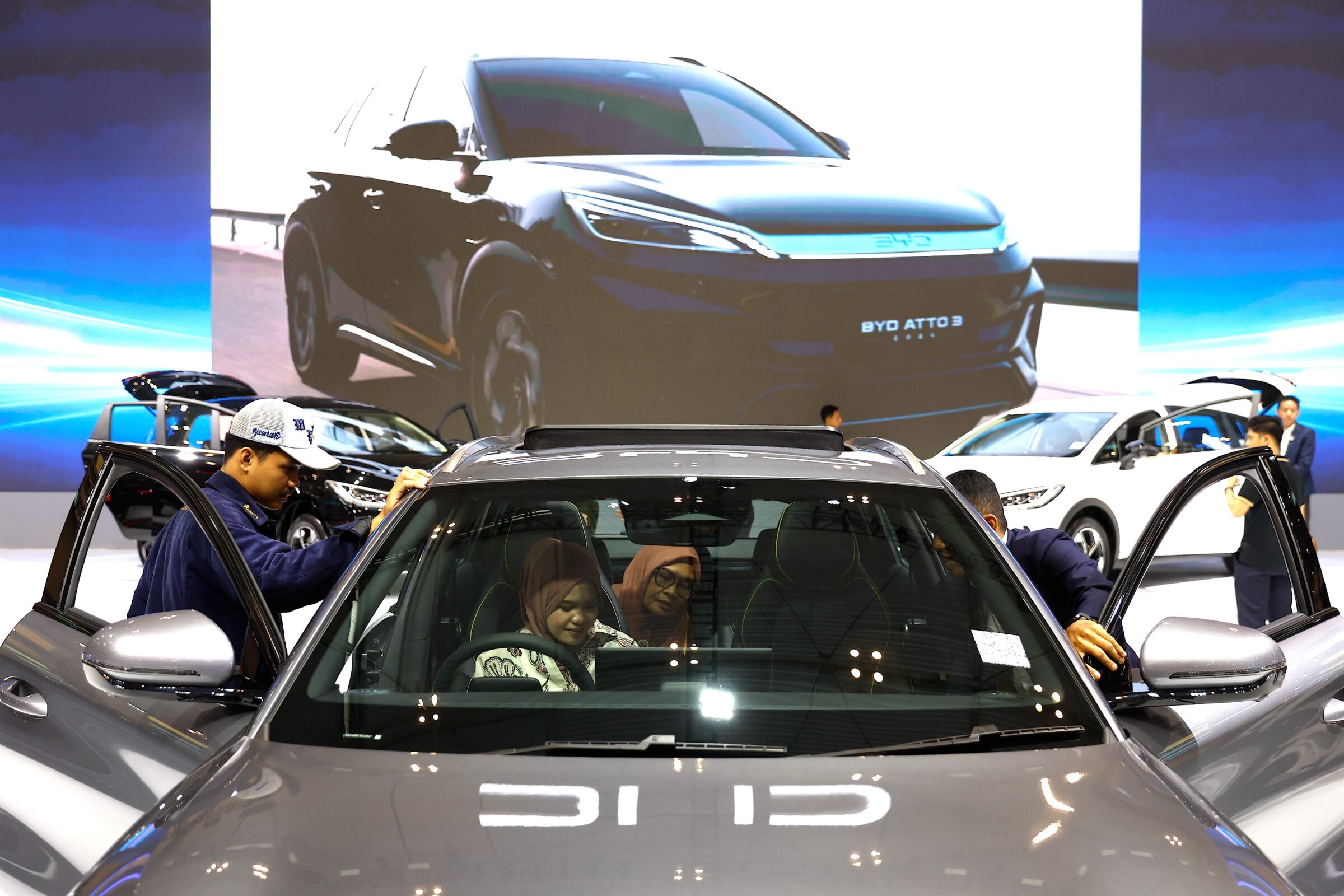
Several manufacturers are already developing production capacity outside China, including within the European Union. BYD’s investment in Hungary is one example of how Chinese companies can pursue access to European consumers through local manufacturing rather than relying entirely on imported finished vehicles.

The new arrangements could strengthen the commercial incentive to expand such operations.

For European governments, Chinese investment presents a difficult calculation. New factories may create employment, increase industrial activity and preserve automotive supply chains, while also expanding the influence of Chinese manufacturers within Europe’s domestic market.

The economic consequences depend on how much research, component manufacturing, battery production and other high-value activity takes place locally.

A Chinese-owned assembly plant using predominantly imported components would provide different benefits from a fully developed European production network.

The British dimension

The debate is also drawing attention to the position of the United Kingdom, whose automotive industry remains closely integrated with European supply chains despite Brexit.

Executives from Stellantis and Renault have supported including Britain within proposed European industrial protection measures, reflecting the importance of UK manufacturing operations to their broader businesses.

Such an arrangement would raise questions about regulatory alignment, trade preferences and the conditions under which non-EU production could qualify for European industrial support.

British manufacturers also face the challenge of Chinese competition, and decisions taken in Brussels could influence investment strategies across the wider European automotive sector.

Protection versus competitiveness

The restrictions may offer European manufacturers additional time to adapt, but they do not eliminate the structural challenges confronting the industry.

Energy prices, labour costs, the availability of batteries and the affordability of new vehicles remain important factors in the competitiveness of European production.

Nor will the quota necessarily prevent Chinese firms from gaining market share through investment, partnerships or vehicles manufactured outside China.

The EU’s approach combines restrictions on imports with the possibility of continued Chinese industrial participation inside Europe.

The outcome will depend on whether European manufacturers use the reduced competitive pressure to strengthen their technological and manufacturing position, or whether the restrictions primarily accelerate the relocation of Chinese-owned production into the EU.

  •  

EU trade chief hails ‘crucial first step’ as Beijing talks avoid trade war

EU and Chinese officials agreed a series of trade concessions covering electric cars, rare earths and tariffs that dragged them away from a damaging trade war on Friday (9 October), following two days of crisis talks.

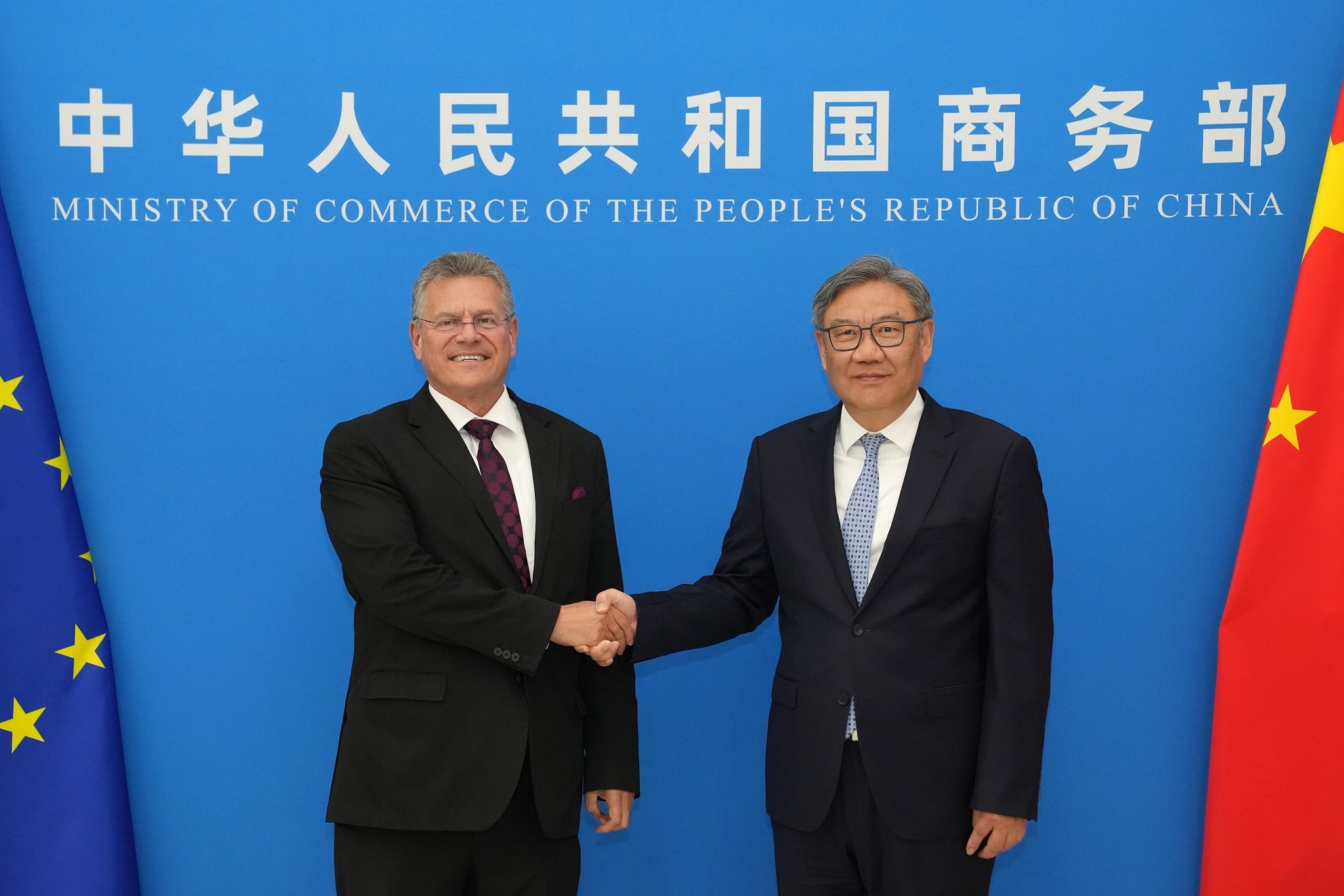
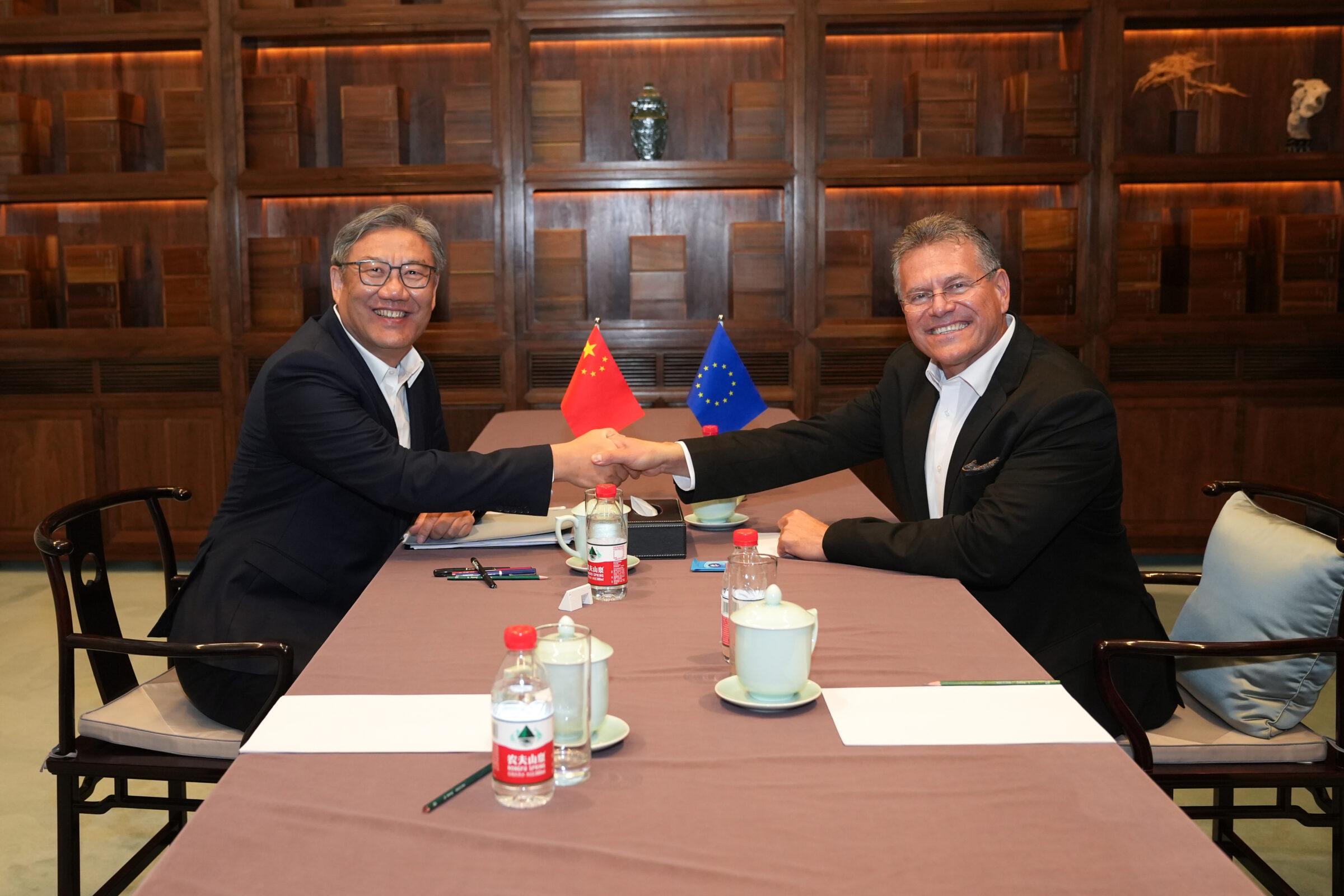
Following two days of talks in Beijing, EU trade commissioner Maroš Šefčovič said that he and China’s commerce secretary Wang Wentao had made a “crucial first step” towards rebalancing EU-China trade relations.

Europe can point to progress on hybrid vehicles, stronger assurances over the supply of critical raw materials, and continued engagement on market access issues in China.

Hours before Šefčovič arrived, Beijing rejected an EU demand for so-called “voluntary export restrictions” on its electric vehicles (EVs). However, in a joint statement on Friday, the two sides said that they had reached an “understanding on trade in hybrid vehicles in a WTO compliant manner”, but without providing further details.

They added that further negotiations on reducing tariffs and minimum pricing deals would allow Chinese EVs to enter the EU at a lower duty rate.

This article continues, but the full version is available only to EUobserver.com subscribers. Visit account.euobserver.com/membership

  •  

EU trade chief Šefčovič has no cards to play on China ‘ultimatum’ trip

Persuading China that its €1bn daily trade surplus with the EU is not sustainable was always going to be a hard sell for EU trade commissioner Maroš Šefčovič.  

And the early signs are that Šefčovič’s two days of talks with Chinese commerce secretary Wang Wentao, which conclude on Friday (9 October), are not going to deliver the breakthrough demanded by EU leaders when they gather for a summit in Brussels next week. 

“The message around the table was clear: the need to improve access to the Chinese market, while boosting our economic security,” Šefčovič posted on X ahead of the first day of talks. 

But rhetoric aside, three months after the EU Commission set up a series of ‘work streams’ with Chinese officials, with a mandate to address the multi-layered EU-Sino trade dispute, it is hard to see much tangible progress. 

Hours before Šefčovič arrived, Beijing rejected an EU demand for so-called “voluntary export restrictions” on its electric vehicles (EVs). 

In August, data published by Schmidt Automotive Research found that 14 percent of EV sales across Europe this year were Chinese-made, up from 9.4 percent last year. 

That is despite the EU imposing additional tariffs of between 17 and 36 percent on Chinese EVs in October 2024. 

This article continues, but the full version is available only to EUobserver.com subscribers. Visit account.euobserver.com/membership

  •  

Listen: Are we now heading to a trade war with China?

Production: By Europod, in co-production with Sphera Network.

EUobserver is proud to have an editorial partnership with Europod to co-publish the podcast series “Briefed” hosted by Léa Marchal. The podcast is available on all major platforms.

Find the full transcript below: 

Chinese carmakers are taking an increasing share of the European car market, particularly when it comes to electric vehicles. Why are European carmakers now opening their factories to their Chinese competitors?

Until recently, the main concern in Europe was Chinese-made electric vehicles being imported into the EU. That’s why, two years ago, the EU imposed hefty tariffs on Chinese electric cars.

But Chinese manufacturers have found another way into the European market: they are setting up production here. Some are building factories of their own. Others are entering partnerships with European carmakers and using their existing production sites.

That’s the case with Stellantis and Chinese manufacturer Leapmotor. And now Dongfeng is also negotiating to produce cars at the French plant of Rennes La Janais. Because by moving production to Europe, Chinese manufacturers may be losing one of their main advantages, which is cheap labour.

But low labour costs are only one part of their competitive edge.

Chinese manufacturers also continue to benefit from state support. And setting up production in Europe doesn’t necessarily mean building brand-new factories.

In many cases, Chinese companies are looking to partner with European manufacturers and use factories that are already there — factories that are no longer operating at full capacity. That means they can save significantly on investment costs. And they can also rely on their European partners’ existing sales and distribution networks.

So how big is this Chinese presence in Europe becoming? For 2028, there are already 12 projects involving Chinese carmakers setting up production in Europe. Several are in Spain, with others in France, Belgium, Slovakia, Hungary, Sweden and Austria.

Now, why would European manufacturers allow their Chinese competitors to produce cars in their own factories? Part of the answer is that European carmakers are struggling to keep up in electric vehicles sells. And that is contributing to factory closures and job losses.

European manufacturers have to meet EU targets on average CO2 emissions each year. And producing more electric vehicles is necessary to meet those requirements.

So partnerships with Chinese manufacturers can serve two purposes: they can help European companies fulfilling their green cars objectives, while also keeping existing factories and jobs running.

Though there is a longer-term risk for European manufacturers. The more Chinese companies establish themselves in Europe, the more competitive pressure they could put on European brands — potentially even leading to takeovers. That has happened before: Volvo Cars, for example, was acquired by Chinese group Geely in 2010. 

In Germany, carmakers are for now refusing to open the doors of their production sites to the Chinese. But they do have partnerships with Chinese companies to produce vehicles in China, where they can benefit from lower production costs. That explains why they were very much opposed to imposing tariffs on Chinese electric vehicles.

But the situation is now changing. Volkswagen closed its Dresden factory last year, and other German plants are also facing closure risks. Germany’s car industry is therefore increasingly joining calls for stronger protection against Chinese competition.

And that brings us back to the Franco-German paper that is circulating in Brussels, which calls for measures to restrict Chinese access to the European market.

Because this debate goes well beyond cars. The EU is increasingly concerned about Chinese competition and dependence in a range of strategic industries. This will be discussed next week, when EU leaders meet in Brussels.

The European Commission could also present a new so-called “diversification” tool, either at the summit or around it. One possibility would be to require companies not to rely exclusively on China for certain critical materials. Something which could trigger what we call a trade war. I’ll be following that very closely!

  •  

The China factor behind the Iran war

The war between the United States and Iran is no longer just a confrontation between Washington and Tehran. A second contest is taking shape alongside and behind it. China is not fighting the United States directly, but its economic, technological and diplomatic links to Iran are complicating Washington’s strategy and ability to win the conflict. […]

The post The China factor behind the Iran war appeared first on Asia Times.

  •  

Bronze Age Sardinians Were Trading Metal with Scotland and Sweden— 500 Years Before the Phoenicians

A copper ingot cast somewhere in inland Sardinia during the Bronze Age might, centuries later, turn up in a Scottish tomb or a village in southern Sweden. That is the striking picture drawn by Serena Sabatini, an archaeologist at the University of Gothenburg, in a new paper that pulls together decades of isotopic analyses to […]

  •  

How a Tiny Danish Colony Ruled a Piece of India for 225 Years

Tharangambadi is a fishing village on India’s Coromandel Coast, in the state of Tamil Nadu. Its name means “place of the singing waves,” a nod to the Indian Ocean lapping at its shore. It isn’t much of a tourist stop, and fishing is still its main trade, but anyone who walks its streets runs into […]

  •  

EU Parliament approves sweeping customs reform targeting e-commerce imports

Trade Commissioner Maroš Šefčovič and MEP Dirk Gotink (EPP, Netherlands) Photographer: Mathieu Cugnot © European Union

The European Parliament has approved a major overhaul of the EU’s customs system, tightening requirements on e-commerce platforms, introducing a new handling fee for goods ordered from outside the bloc and creating a central EU customs authority.

“This is the biggest reform of European customs since 1968, supporting trade and the enforcement of EU rules,” said MEP Dirk Gotink, (EPP, Netherlands) who steered the legislation through Parliament. Gotink said European customs authorities had been overwhelmed by a “tsunami of Chinese parcels” and that the reform would give customs officers stronger tools to enforce EU standards.

Under the new rules, e-commerce platforms and sellers shipping goods directly from non-EU countries to European consumers will be treated as importers. That will make them responsible for providing customs data, handling applicable charges and ensuring products comply with EU law.

The reform also introduces an EU-wide handling fee on goods ordered directly from non-EU countries, with member states required to begin collecting it no later than 1 November, 2026. The European Commission will determine the amount and review it every two years.

Companies that repeatedly breach EU customs rules could face fines ranging from at least 1% to as much as 6% of the value of goods they imported into the EU during the previous 12 months.

The overhaul will also establish an EU Customs Data Hub, designed to replace at least 111 existing customs IT systems. A new EU Customs Authority, based in Lille, France, will manage the hub and coordinate customs cooperation and risk management across the EU.

The Council has already given the reform its final formal approval, making Parliament’s vote the final step in the legislative procedure.

  •  

Von der Leyen’s State of the Union: Europe’s push for independence faces a delivery test

European Commission President Ursula von der Leyen during her speech in 2025 Photographer: Dati Bendo © European Union, 2025

Ursula von der Leyen is expected to make the case for a more independent and resilient Europe in her State of the European Union address on Wednesday (16 September). But analysts and political groups in the European Parliament are demanding something more concrete: evidence that the Commission can turn its expanding ambitions into results Europeans can see.

The State of the European Union address, commonly known in Brussels as the “SOTEU”, is the Commission president’s annual speech to Parliament setting out priorities for the year ahead. Modeled in part on the US president’s State of the Union address to Congress, the EU version began in 2010 under then Commission president José Manuel Barroso. Von der Leyen will deliver this year’s address at 9:00 tomorrow morning (16 September).

The speech comes as Europe is confronted with an ongoing war in Ukraine, a fragmenting global trading system and the challenge of strengthening defence while reviving competitiveness and financing the green transition. At home, von der Leyen must reconcile political groups that broadly agree on the need for a stronger Europe but differ over what that means.

For Manfred Weber, chairman of von der Leyen’s centre-right European People’s Party group, the focus should be on voters’ economic and security concerns.

“Europe’s priorities must reflect people’s concerns: jobs, the cost of living and economic security,” Weber said. He called for a stronger economy and well-paid jobs, tighter control of Europe’s borders, leadership on AI, continued support for Ukraine and “a strong European defence pillar”.

On the centre-left, Iratxe García Pérez, president of the Socialists and Democrats group, argues that the Commission has relied too heavily on deregulation.

“Europe needs more than announcements,” García Pérez said. “It needs concrete policies backed by the necessary resources.” The S&D wants greater emphasis on affordable food, housing and energy, quality jobs and climate action, alongside European sovereignty in defence and digital technologies.

Renew Europe is also making delivery the benchmark, calling on von der Leyen to present “a credible plan turning European ambition into visible results” and framing the choice as one between united European action and fragmentation.

Analysts at the European Policy Centre see the same challenge extending to Europe’s position in the world.

“Von der Leyen will tell us that the EU is forging new partnerships around the globe,” said Almut Möller, the EPC’s director for European and Global Affairs. Canadian Prime Minister Mark Carney’s attendance will reinforce the geopolitical dimension of the speech.

But strategic autonomy goes beyond defence and trade. Georg Riekeles, the EPC’s head of political economy, identifies financial dependence as an overlooked vulnerability. With the international financial system becoming less stable, Europe cannot assume Washington and the US Federal Reserve will play the stabilising role they did in previous crises. Von der Leyen “must therefore address financial sovereignty as a core element of European security”, he argues.

Technology poses another test. Elizabeth Kuiper, the EPC’s head of health and societal resilience, says von der Leyen should “reject the trade-off between competitiveness, technological progress, and the EU’s social model”, particularly as AI affects employment, income security and social cohesion.

Climate policy presents a similar collision between ambition and resources. Stefan Šipka, the EPC’s head of sustainable prosperity, argues that Europe needs “a robust delivery mindset, no more strategies” as it tries to combine defence, decarbonisation and economic security.

The common thread is delivery. Von der Leyen has no shortage of strategic objectives. The harder task on Wednesday will be explaining how they fit together, how Europe will finance them and what takes priority when they conflict.

For EPC policy analyst Eric Maurice, von der Leyen “must provide strategic focus and political clarity”.

“As the midterm in her second term approaches,” Maurice said, “it is time for von der Leyen to present a vision and deliver.”

  •  

Commission presents landmark India trade deal to Council for signature

On 11 September, the European Commission has put forward its proposals to the Council for the signature and conclusion of Free Trade Agreement (FTA) between the European Union and India, seeking authorization for its signature and conclusion. If authorized by the Council, this will be the largest trade agreement ever concluded by both the EU and India.

Once adopted and entered into force, the agreement will improve market access, reduce tariffs, tackle unnecessary barriers to trade, as well as provide predictable rules for trade and investment between the EU and India. The EU and India already trade over €180 billion worth of goods and services per year, supporting close to 800,000 EU jobs. This deal will eliminate or reduce tariffs on 96% of EU goods exports to India. Overall, the tariff reductions will save around €4 billion per year in duties on European products. It will make it easier for European companies to access the Indian market and compete on a more level playing field, while it will ensure consumers can benefit from increased choices and more competitive prices.

The proposal put forward today represents a key step towards ensuring that consumers and businesses can start reaping the benefits of this deal as soon as possible. This is in line with the fast-track procedure laid out by Commissioner for Trade and Economic Security, Maroš Šefčovič earlier this year. The procedure aims at speeding up the implementation of FTA's, which is crucial at a time of geopolitical uncertainty and growing pressure on the global trading system.

The EU-India FTA reflects the EU's commitment to strengthen economic ties with key partners in the Indo-Pacific region. With its proposals, the Commission is seeking Council's approval to sign the agreements which will then require European Parliament's consent, before conclusion and entry into force. The Indian authorities are in parallel going through their own internal ratification procedures.

For more information

Proposal for a Council Decision on the signing of the Free Trade Agreement between the European Union and the Republic of India

Proposal for a Council Decision on the conclusion of the Free Trade Agreement between the European Union and the Republic of India

Questions and answers on the EU-India Free Trade Agreement

  •  

Fighting the illicit tobacco trade: EU not up to the task


From illicit production to smuggling, the illicit tobacco trade continues to pose a serious problem for the EU, as it negatively impacts its finances, public health and security, according to a new report by the European Court of Auditors (ECA). Although the European Commission and EU countries have made efforts to combat this global criminal phenomenon, their action is not robust enough. Illicit production across the EU is increasing, smuggling methods are getting more sophisticated, and new tobacco products are on the rise. Against this backdrop, the auditors criticise poor cross-country cooperation, which suffers from persistent gaps and lacks a concerted EU-wide approach.

The illicit tobacco trade has changed significantly in recent years. Organised crime groups have strategically relocated production from Ukraine to the EU in order to shorten supply chains and access consumers more directly. Although smuggling remains a problem, illicit manufacturing sites have been detected in almost all EU countries, and illicit production has grown across the EU. For instance, in a large-scale illicit cigarette production factory in Belgium, each machine was capable of producing around a million cigarettes per hour. In the largest illicit cigarette factory dismantled in Spain, three million packets of counterfeit cigarettes were seized, i.e. 56 times the height of Mount Everest if the cigarettes were stacked horizontally.

“The EU cannot afford to let its fight against the scourge of illicit tobacco go up in smoke,” said Petri Sarvamaa, the ECA Member leading the audit. “If we are serious about safeguarding citizens’ health, wallets and security, the Commission and member states must up their game to fight criminal activity head-on.”

The illicit tobacco trade deprives EU and member state budgets of €13 billion a year, according to the Commission’s estimate. However, this figure should be treated with caution, as it is based on external studies. The fact remains that the Commission lacks a reliable and independent EU-wide estimate of the illicit tobacco market, its structure and its economic impact, e.g. in terms of lost tax revenues. Such data, however, are crucial for determining the magnitude of the problem and designing an effective response. As it stands, the Commission’s reporting is largely based on seizures, and so does not provide a full picture of the situation.

Over the past decade, the EU and its member states have taken measures to combat the illicit tobacco trade. However, EU law is not harmonised, and member states’ efforts are uneven. For example, key production inputs such as raw tobacco and production machinery, and new types of products such as heated tobacco products and liquids for e-cigarettes, are not treated in the same way across the EU. At the same time, the EU regulatory framework gives member states a free hand in choosing counter-measures, thus leading to enforcement gaps that organised crime groups can exploit. In particular, as national control systems and enforcement approaches differ, such as in the definition of offences and the severity of penalties, this can encourage criminal activities to relocate to laxer jurisdictions. Furthermore, EU countries are inconsistent in the way they exchange information.

In the EU, responsibility for combating the illicit tobacco trade is shared between several stakeholders. However, no single entity has a clear coordinating role, meaning that initiatives are fragmented. The auditors thus call on the Commission to assume a more active role in combating the illicit trade in tobacco products.

Background information

Although overall tobacco consumption has continued to fall, the quantity of illicit tobacco products in the EU has risen in recent years. In 2023, the Commission estimated that the quantity of illicit tobacco products was 8.8 % of total cigarette consumption. Excluding cigarettes, the illicit tobacco market amounts to nearly 21 000 tonnes in the EU. According to estimates, these new products make up 13 % of the market value of tobacco products sold in the EU, and attract younger consumers.

Illicit tobacco products are very attractive for organised crime groups due to their high profitability and comparatively low risk (penalties have traditionally been light and detection rates low). Such illegal activity not only provides a significant source of income for criminals but, by offering cheaper tobacco products, also undermines efforts to reduce tobacco consumption. Ultimately, it leads to losses in terms of customs duties, value-added tax and national excise duties.

The audit assesses the effectiveness of the action taken by the Commission and the member states. The auditors carried out field visits in Belgium, Spain, Poland and Romania, and include examples of illicit manufacturing sites in their report. ECA special report 23/2026 “Combating the illicit trade in tobacco in the EU: Fragmented efforts and persistent gaps” is available in 24 EU languages on the ECA website.

  •  

Top trade in goods partners in Q2 2026: US and China

In the second quarter of 2026, the EU imported €701.8 billion in goods from non-EU countries and exported €680.0 billion. Compared with the previous quarter, both imports and exports increased, by 9.9% and 5.4%, respectively. Compared with the second quarter of 2025, imports increased by 11.7% and exports by 4.5%.

China was the EU’s largest supplier, accounting for €153.6 billion (21.9% of all imports). The United States came second (€98.7 billion; 14.1%), followed by the United Kingdom (€43.4 billion; 6.2%), Switzerland (€36.9 billion; 5.3%) and Türkiye (€25.5 billion; 3.6%). 

The EU increased imports from the United States (+11.5%), the United Kingdom (+8.8%), China (+7.9%) and Switzerland (+2.1%) compared with the second quarter of 2025, while imports from Türkiye declined slightly (-0.6%).

Click to enlarge

Main EU partners for trade in goods, Q2 2025 and Q2 2026  (€ billion, seasonally adjusted data). Chart. See link to the full dataset below.

Source dataset: ext_st_eu27_2020sitc

The EU exported €127.7 billion of goods to the United States, making it the EU’s main export destination (18.8% of all exports). The United Kingdom came second with €92.7 billion (13.6%), followed by Switzerland (€60.5 billion; 8.9%), China (€50.3 billion; 7.4%) and Türkiye (€27.3 billion; 4.0%).

Exports to Switzerland rose sharply (+16.1%) compared with the same quarter of 2025. Exports to the United Kingdom (+5.6%) and China (+2.8%) also increased, while those to the United States (-5.6%) and Türkiye (-4.9%) decreased.

For more information

  •  

Archaeologists Demonstrate That Brands Already Existed 3,200 Years Ago in Bronze Age Oases

The question of whether brands are an invention exclusive to modern capitalist societies has received a resounding answer from an international team of researchers: they already existed at least 3,200 years ago. A study led by Marta Luciani of the University of Vienna and published in the journal PLOS One has documented how painted pottery […]

  •  

Vietnam, EU elevate ties citing ‘threat’ to ‘rules-based order’

Hanoi (dpa) – Vietnam and the European Union on Thursday upgraded ties to a comprehensive strategic partnership, Vietnam’s highest diplomatic tier, amid a tumultuous period for global trade.

In a joint statement, Vietnam and EU stressed “the importance of a partnership based on common interests and shared values of peace, security, and prosperity in a rules-based international order, based on international law.”

Though US tariffs were not explicitly mentioned, at a press briefing held after meeting Vietnamese President Luong Cuong, European Council President António Costa said: “At a moment when the international rules-based order is under threat from multiple sides, we need to stand side-by-side as reliable and predictable partners.”

“Vietnam considers the EU one of its most important partners in the world and wishes to continue promoting and deepening its relationship with the EU,” Cuong said.

Cuong labelled the move a “historic milestone,” coming 35 years after Vietnam and the EU established diplomatic relations. The EU-Vietnam free trade agreement, signed in 2020, has helped drive a 40 percent increase in bilateral trade.

Vietnam is one of the EU’s largest trading partners in South-East Asia, while the EU is Vietnam’s fourth-largest trading partner. In the first 10 months of 2025, two-way trade reached nearly 61 billion Dollar (51 billion Euro), up 8.4 percent year on year.

Vietnam and the EU on Thursday also underscored the need to strengthen cooperation on peace, defence and security, and voiced support for multilateralism and respect for international law, including the UN Charter. (29 January)

  •  

Germany’s Greens back EU-India trade deal after Mercosur debacle

Berlin (dpa) – Germany’s Greens are backing the European Union’s landmark trade deal with India, days after the party’s lawmakers in the European Parliament played a key role in challenging the bloc’s agreement with the South American Mercosur countries.

Andreas Audretsch, the party’s deputy group leader in the German parliament, said the deal with India, which was announced earlier on Tuesday, was good for businesses and workers in Germany.

In view of the “destructive rage” of US President Donald Trump, Europe must build new alliances for trade and cooperation, Audretsch argued.

The deal was finalised during an EU-India summit in New Delhi, with European Commission President Ursula von der Leyen and Indian Prime Minister Narendra Modi proclaiming the agreement on Tuesday.

“The EU and India make history today, deepening the partnership between the world’s biggest democracies,” von der Leyen said.

The latest agreement will not be as comprehensive as the one recently concluded between the EU and Mercosur countries Brazil, Argentina, Paraguay and Uruguay.

Last week, several Green lawmakers in Brussels voted in favour of referring the bloc’s deal with Mercosur to the European Court of Justice (ECJ), which could result in a substantial delay to ratification. Their votes were decisive in passing the motion, prompting severe criticism for the party in Germany, whose export-led economy stands to benefit from the boost to trade.

In a paper, the Green leadership has said that Germany needs “new economic partnerships” to diversify foreign trade. “That is why it is important to provisionally apply the agreement with the Mercosur countries and then ratify it,” the paper continued. (January 27)

  •  

German chancellor slams EU Parliament over legal review of Mercosur trade deal

Davos, Switzerland (dpa) – German Chancellor Friedrich Merz has blasted the European Parliament for referring the contested EU free trade deal with four countries from the South American Mercosur bloc to court.

“I deeply regret that the European Parliament has put another obstacle in our way,” Merz told political and business leaders at the World Economic Forum in Davos on Thursday. “But rest assured, we will not be stopped. The Mercosur deal is fair and balanced. There is no alternative to it if we want to have higher growth in Europe.”

Merz said he expects the trade deal to be implemented “provisionally” despite the Parliament’s challenge.

The European Parliament voted on Wednesday to have the Mercosur trade deal, which was signed last week following decades of painstaking negotiations, reviewed by the European Court of Justice (ECJ).

Waiting for the court’s opinion could significantly delay the ratification process for the agreement with Brazil, Argentina, Paraguay and Uruguay. It is unclear how long it will take for the judges at the ECJ in Luxembourg to submit their assessment, but previous assessments took between 16 and 26 months.

The agreement, which aims to remove trade barriers and customs duties and boost the exchange of goods and services, would create one of the largest free trade zones in the world. (22 January)

  •  
❌