❌

Reading view

NATO’s “Theory of Victory”: A War Beyond the Plan

Click to see the full-size image

Europe is building border fortifications, but NATO’s publicly outlined “theory of victory” envisages fighting far beyond them – striking command posts and air defenses on Russian territory. Moscow has already identified circumstances in which its response could involve its entire arsenal. Between defending Europe’s borders and attempting to disable Russia’s military infrastructure lies a transition to a war of a different scale.

What Warsaw Put on the Table

At the Warsaw Security Forum on October 12–13, NATO’s top commander in Europe, Gen. Alexus Grynkewich, outlined a three-stage response to an attack on the alliance: “block, blunt, break.” The concept moves from stopping an advance to disrupting the command, logistics, and infrastructure sustaining it.

“Block, blunt, break.” NATO has three words for winning a war with Russia. Keeping that war limited will take more than a slogan


Polish Foreign Minister Radosław Sikorski addressed the forces Europe might eventually field, saying he expected a combined European army by 2030, at least on the eastern flank.

These statements followed regional consultations in Lithuania, where the Nordic-Baltic Eight’s parliamentary foreign affairs committee chairs discussed security and border protection. Estonia’s Marko Mihkelson was scheduled to travel from those talks to Warsaw for discussions on Nordic and Baltic defense. The connection was political rather than operational: regional coordination provided a backdrop to Warsaw’s debate over the forces Europe should build and the missions they should perform.

A united front for the cameras. Whether Europe can field one in a war is another question

Grynkewich’s concept gave that debate a concrete military scope. Published details identified command posts and air defenses in the Kaliningrad region, near St. Petersburg, and in Belarus as potential targets. Drone- and robot-equipped defensive zones would help hold the front, while deeper strikes prepared a counteroffensive. Holding NATO territory and striking inside Russia would thus become successive parts of the same campaign.

Grynkewich says NATO does not seek Russia’s strategic defeat. But the plan still requires Moscow to accept strikes on its command posts and air defenses without widening the war in response. That is not a condition NATO can dictate. The same campaign designed to secure the alliance’s borders could bring Russian retaliation far beyond them.

Moscow Has Stated Its Position

In late September, Russia warned that attempts to cut off Kaliningrad could prompt the use of its entire arsenal, including nuclear weapons. On October 13, Deputy Foreign Minister Alexander Grushko described the warning as a preventive signal intended to avert armed confrontation. Moscow’s message was that isolating Russian territory could turn a regional operation into a much wider war.

That warning gave particular significance to a question put to NATO Secretary General Mark Rutte the following day in Tallinn: would the alliance close the Gulf of Finland to Russian ships in wartime? Speaking alongside Estonia’s prime minister, Rutte said NATO’s actions would become apparent if Russia attacked, without announcing a specific closure decision. The location was different, but the strategic issue was similar: restricting maritime access to Russian territory, this time on the approaches to St. Petersburg.

“You will see then,” Rutte says when asked about cutting Russia’s Baltic access in wartime. Apparently, escalation is a surprise best saved for the taxpayer


Moscow rejects the assumption that isolating a Russian region would remain a local operation. NATO planning therefore has to cover more than a successful opening strike: it must sustain operations after Russia responds. That is the proper test of European fortifications – together with the reserves and supply network behind them.

Fortifications Need Reinforcements

Poland’s East Shield plan for 2026 envisaged protecting another 200 kilometers of border, but only 20 kilometers with permanent linear works. The remainder would rely on pre-positioned construction materials.

Estonia plans 600 small bunkers by the end of 2027. Such positions must be occupied, supplied, and reinforced in time.

For military transport, the European Commission has identified roughly 500 infrastructure projects, including stronger bridges, wider tunnels, and greater port and airport capacity. It also identifies shortages of rail wagons and ferries for equipment. Around €1.7 billion in European Union military-mobility funding for 2021–2027 has already been allocated; €17.65 billion was proposed for the next budget period. But an allocation is not a completed transport route.

History illustrates the distinction. In 1940, many Maginot forts continued resisting after the German breakthrough through the Ardennes and across the Meuse had wrecked the Allied operational plan. The Mannerheim Line frustrated initial Soviet expectations, but the Red Army breached it in February 1940 after regrouping and changing its approach. Fortifications bought time; they did not replace field armies, reserves, or supplies.

Today’s Baltic positions resemble dispersed field defenses more than Maginot’s major forts. Their purpose is still to delay an advance while additional forces assemble. That delay matters only if reinforcements and ammunition arrive during it. Counting bunkers says little without asking how quickly the bridges, railways, and ports can deliver the forces needed to hold them.


The Plan Precedes the Systems

Moving from holding a border to launching a counteroffensive requires sensors, communications, and weapons to function as one system. Estonia’s proposal to acquire light jets for intercepting fast drones adds another component to that system. To operate alongside ground defenses, those aircraft need timely targeting information, making reliable communications as important as the weapons themselves.

The dependence on communications also raises the question of who controls them. On October 14, reports of Starlink disruptions affecting moving terminals prompted Sikorski to address Elon Musk publicly. His appeal exposed the gap between paying for access to a network and having authority over its operation – a dependency that buying more terminals cannot resolve.

Europe’s planned answer is to build its own satellite capabilities. Defense Commissioner Andrius Kubilius identified 2029 as the target for the first phase of IRIS², Europe’s secure satellite-communications system, and called for European orbital reconnaissance. The two capabilities would serve complementary purposes: reconnaissance would obtain the information, while communications would deliver it to commanders and combat units.

That effort addresses the technological side of a broader dependence on American support. The availability of U.S. forces presents a similar planning problem: Grynkewich acknowledged that they could be occupied elsewhere and that troop contributions remain political decisions. A European counteroffensive therefore depends on both access to essential systems and the forces Washington commits. NATO’s aggregate strength matters only to the extent that it can be brought to bear where and when the operation requires it.

If the War Continues

These dependencies converge in Europe’s rear areas. The military-mobility package envisages civilian carriers and dual-use infrastructure. Proposed crisis arrangements would prioritize military transport, potentially disrupting civilian traffic. Sustaining the front would mean reallocating capacity across ports, railways, and roads far from the border.

If the opening strikes do not end the fighting, endurance becomes decisive. Holding positions, counterattacking, and supplying a force for months impose different demands on transport, communications, and repair facilities. Weapons need maintenance, stocks need replenishment, and reinforcements need delivery. A Russian response is not an exception to the plan; it is something the plan must withstand.

Public promises of decisive action remove none of these dependencies. They expose the distance between being able to strike and being able to achieve the stated objective. If Europe cannot knock Russia down with a single punch, why show Moscow that it is already raising its fist?

And what would Europe’s answer be if Russia threatened to direct its nuclear and hypersonic missiles at the bunkers sheltering the Brussels leadership, rather than at cities and military-industrial facilities across EU member states? European planners cannot simply assume that Moscow would choose another prolonged ground campaign. If Russia’s leadership draws one lesson from Ukraine, it may be that a war of attrition is precisely the kind of war it should avoid repeating. Brussels is announcing how it intends to fight. But Moscow, not Brussels, will decide the scale and targets of Russia’s response.


MORE ON THE TOPIC:

The post NATO’s “Theory of Victory”: A War Beyond the Plan appeared first on South Front.

  •  

High Altitude Balloons Are A “Game-Changing” Capability: Army Space Command Boss

The head of the U.S. Army Space and Missile Defense Command (SMDC) was initially skeptical about the utility of high-altitude balloons, but now sees them as a “game-changing” capability. Lt. Gen. John Rafferty’s comments follow a separate disclosure that the Army axed plans for a balloon swarm test in the Pacific last year and instead sent those systems to support real operations in the Middle East. TWZ has been closely tracking the expanding use of high-altitude balloons and other lighter-than-air systems globally for intelligence gathering, as platforms for launching drones, and in support of other missions, for years now.

Lt. Gen. Rafferty was asked about high-altitude balloons during a media roundtable today, at which TWZ was in attendance, on the sidelines of the Association of the U.S. Army’s (AUSA) main annual convention. Army Col. Joseph Mroszczyk, head of SMDC’s Transformation Integration Directorate for Space Superiority (TID-Space Superiority), also discussed the service’s use of balloons during the roundtable. Breaking Defense first reported on the shift of balloon-based capabilities from the Pacific to the Middle East on Monday.

“I’ll just give a little personal history on high-altitude balloons. I started in the Army Futures Command in the Long Range Fires-Cross Functional Team. There was this talk of high-altitude balloons. I think it was the ISR [intelligence, surveillance, and reconnaissance] task force was talking about it,” Rafferty said. “It just sounded crazy to me that we were considering this.”

US Army personnel prepare to launch a high-altitude balloon during an exercise. US Army

“Then, a few years later, when the Sergeant Major [SMDC Command Sgt. Maj. Rickey Jackson] and I were together in the multi-domain community in Europe, I went with the 2nd MDTF [Multi-Domain Task Force] to Morocco for training and experimentation,” he continued. “[I] saw the high-altitude balloons in action, and I was immediately convinced after I understood better how they worked and how their ability to station-keep, and their ability to sense and even deliver effects from high altitude. It was game-changing for me.”

Broadly speaking, the main benefit that modern high-altitude balloons offer is their ability to be deployed persistently for days, weeks, or even months at a time. Designs available on the market today can hold their position, in spite of prevailing winds, and moderate their altitudes to keep on station, after precisely navigating to an assigned operating area.

On top of their persistence, the altitudes at which these balloons operate provide excellent fields of view for radars, cameras, and other sensors in all directions and across very broad areas. From a perch of 60,000 feet or more, they also offer a way to peer into certain denied areas while still soaring in international airspace and keeping further away from potential threats.

The video below from high-altitude balloon maker Aerostar offers a good general overview of the kind of capabilities on the market today.

As Lt. Gen. Rafferty noted today, ISR is not the only use case for high-altitude balloons, either. They can serve as communications relay nodes, as well as launch platforms for swarms of drones and other expendable payloads. These are all capabilities the Army has explicitly talked about as part of broader plans for balloons in the past. Other countries, especially China, are already actively employing high-altitude balloons for ISR and other missions, as we will come back to later on.

“In my former role as an MDTF commander, we experimented a lot in the Pacific with those [balloon-based] capabilities. We have leveraged different size platforms,” Col. Mroszczyk added today. “In this [TID-Space Superiority] role, as a proponent, what I’m pushing for is a family of stratospheric systems that really covers smaller size all the way up to larger size types of platforms in terms of balloons.”

“What that enables us to provide is space-like capabilities, really exploiting a transition point between what is normally considered the aerial layer and the space domain,” he continued. “Really, where you go from about 60,000 feet to 100,000 feet is what we focus on in the stratosphere. That operational space allows some persistence and broad coverage in an area where you can deliver space-like capabilities in terms of payloads, but then also take advantage of the deep access that you get from a stratospheric balloon.”

An element of a sensor payload called Wallabee designed to be carried aloft by high-altitude balloons. Urban Sky

“So, being able to go, take advantage of winds that are pushing you where you want to go already to be able to get either launched effects or other types of payloads for sensing and communications and extension of your launched effects portfolio,” he added. “That is a way that we can help exploit the stratosphere, and we’re looking to do that throughout multiple experiments over the course of the coming year.”

“Launched effects,” is a catch-all term the U.S. military now routinely uses to talk collectively about uncrewed aerial systems designed to be launched from other platforms in the air, on the ground, and/or at sea. This encompasses drones configured for a wide variety of missions, including surveillance and reconnaissance, electronic warfare, signal relay, and even kinetic attack.

A high-altitude balloon with an Apollo-R drone suspended underneath, seen demonstrated here during the U.S.-led Exercise Orient Shield 26 in Japan earlier this year. US Army

Col. Mroszczyk talked about plans to further demonstrate how high-altitude balloons will be commanded and controlled, as well as networked together with other Army capabilities, when asked to elaborate on what the forthcoming experimentation would entail.

As mentioned, the Army had also planned to demonstrate the ability of balloons to operate in swarms with a high degree of autonomy in the Pacific region last year before those assets were redirected to the Middle East. When exactly that deployment occurred and how long it lasted are unclear.

“We were asked to pivot and do some experimentation in combination with operations, and we pivoted and supported operations in CENTCOM [U.S. Central Command],” Andrew Evans, Director of Strategy and Transformation with the Office of the Deputy Chief of Staff of the Army, or G-2, told Breaking Defense, per the story that outlet published on Monday.

“They were effective for the mission that they were assigned,” he also said, but declined to elaborate further, according to Breaking Defense. “Balloons can be a little finicky in terms of temperature, and you have to contend with environmental characteristics.”

“We had a lot of help from vendors in this space, but as you think about employing your systems and going from something like a Pacific [theater] to something like a CENTCOM [theater], you learn where those friction points might exist between what the military might need to inherently own, and … what a vendor could help provide in terms of the service,” Evans added. Furthermore, “balloons can be a little finicky in terms of temperature, and you have to contend with environmental characteristics.”

Another stock picture of a US Army soldier inflating a high-altitude balloon during training. US Army/Staff Sgt. Brandon Rickert

The remarks today from Lt. Gen. Rafferty and Col. Mroszczyk underscore the Army’s commitment to fielding new high-altitude balloon-based capabilities and the immense benefits the service sees in them. However, the continued emphasis on testing and experimentation highlights a discrepancy with the state of the service’s current efforts, and even more so in light of global trends.

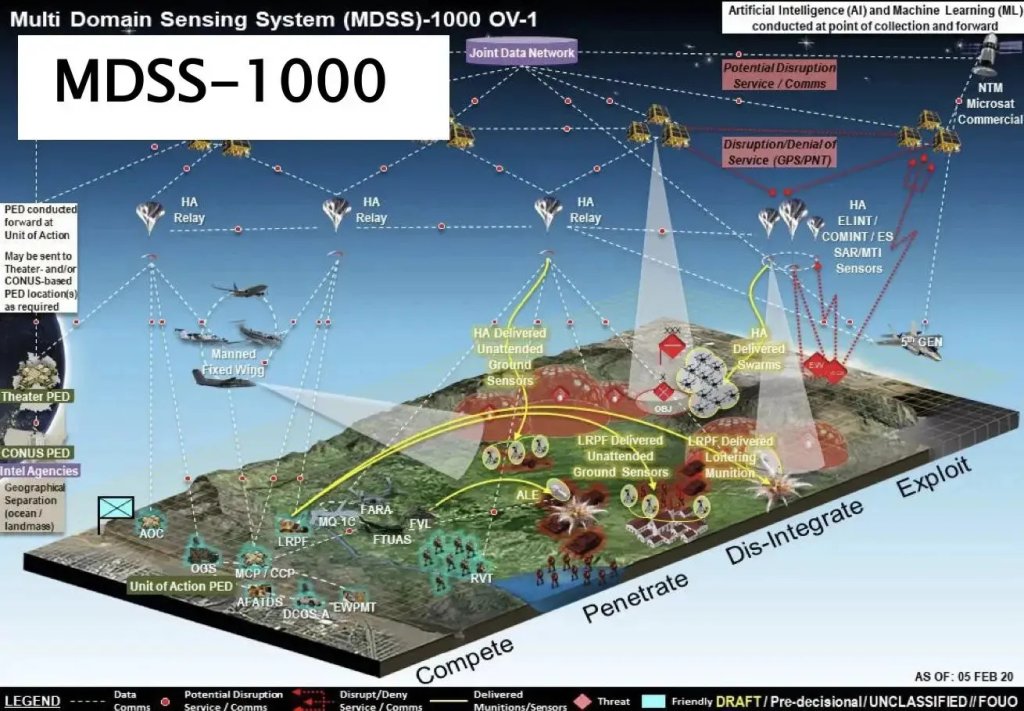
The Army has been openly talking about balloons as part of its vision for a new multi-layered persistent sensor architecture, and how they could also be used to launch drones and other ‘effects,’ for at least six years now. In that same time, China has very actively shown off its ability to gather intelligence and conduct other missions using balloons and other lighter-than-air craft on a broad operational level across the Pacific. TWZ had been reporting on this reality for years before it was thrust fully into the public consciousness after a Chinese spy balloon passed over parts of the United States and Canada back in 2023.

A graphic the Army released in 2020 showing a notional “operational view” for how a “Multi Domain Sensing System” made of various capabilities, including high-altitude balloons, might be employed. US Army

Other countries, including U.S. allies and partners, are increasingly fielding balloon-based and other lighter-than-air systems, too. Forces in Ukraine have notably been using balloons to conduct kinetic attacks and launch drones in the course of the ongoing conflict with Russia. On the other side of that conflict, Russian forces have used balloons as decoys to confuse and misdirect air defenses.

American-made Hornet middle-range strike UAV being tested with balloon-assisted launch system.

Such resolution allows to drastically increase its original range (approx. 100km).

Hornet OWA-UAVs are actively employed by Ukrainian forces for strikes on Russian logistics and other… pic.twitter.com/S1bHqLNhPY

— Status-6 (@Archer83Able) May 20, 2026

The Middle East deployment does show new efforts on the Army’s part to operationalize high-altitude balloons on a more widespread basis, but also that it is still relying on largely experimental capabilities to do so. Earlier this year, the service called attention to the establishment of a new schoolhouse for high-altitude balloon training to help further lay this groundwork, further underscoring how all of this is still very much in its infancy.

The remarks today from Lt. Gen. John Rafferty, especially, show there is substantial support within the Army for pushing ahead with high-altitude balloon programs. At the same time, there is clearly much work to be done if they are to have a truly game-changing impact, while the gap with China and others only continues to grow.

Contact the author: joe@twz.com

The post High Altitude Balloons Are A “Game-Changing” Capability: Army Space Command Boss appeared first on TWZ.

  •  

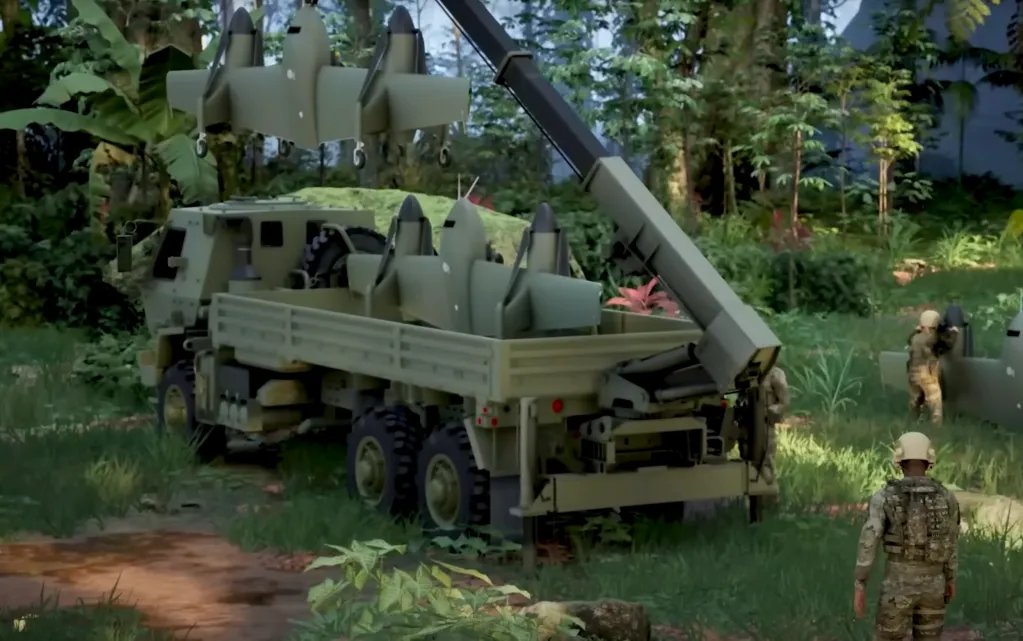
Sikorsky’s Nomad 100 VTOL Drone Is Now Quad-Packed In A Container For Rapid Deployment

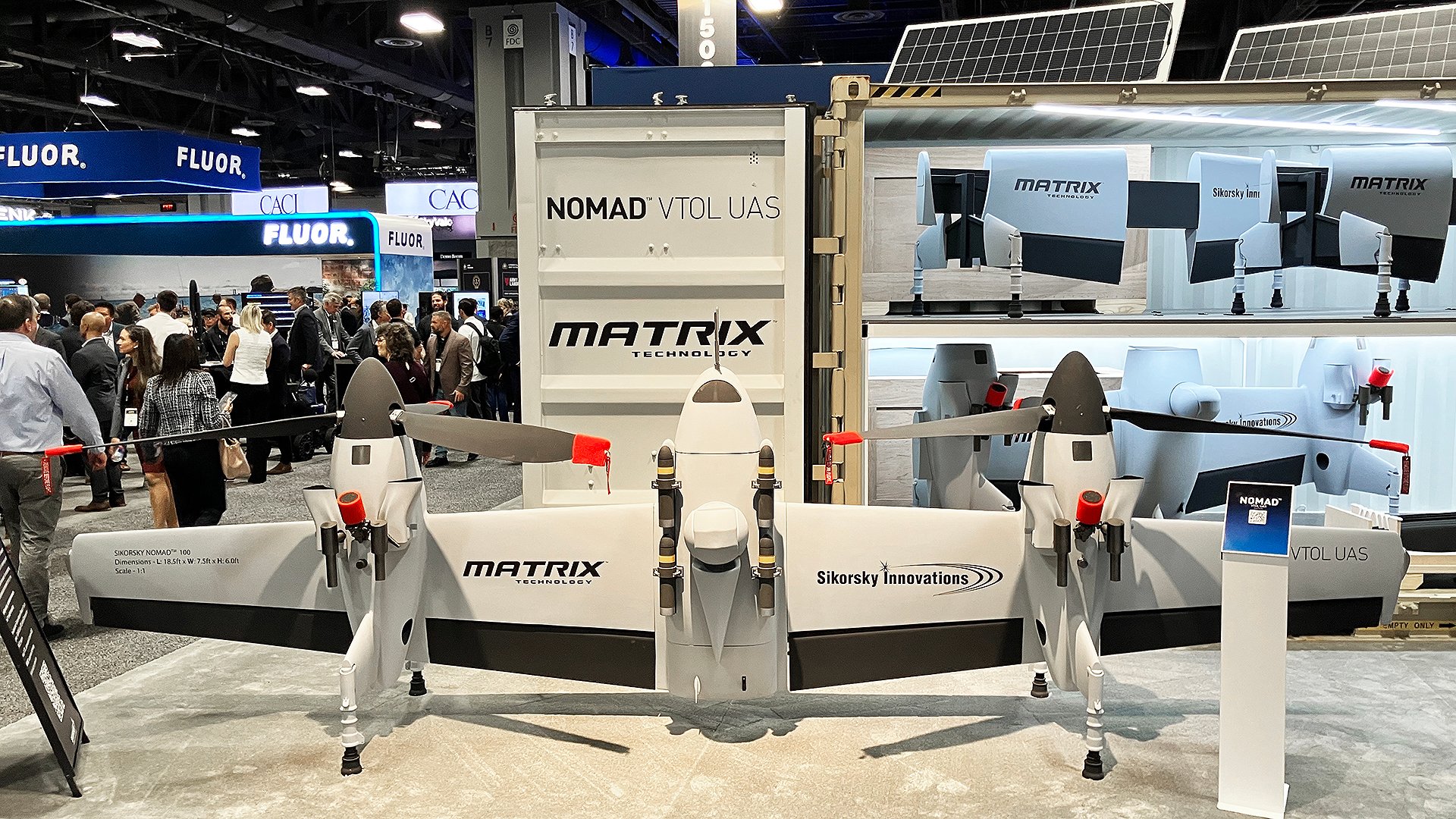
Sikorsky has unveiled a concept for a containerized deployment package for its Nomad 100 vertical takeoff and landing uncrewed aircraft system (VTOL UAS), combining four aircraft and their support equipment inside a single 20-foot shipping container. The company is pitching the Nomad 100 Fast Pack as a way to rapidly establish autonomous air capabilities at locations without runways or other conventional support infrastructure.

The concept was unveiled on October 12 at the Association of the U.S. Army’s (AUSA) main annual convention in Washington, D.C., where TWZ is in attendance. It comes as the U.S. military seeks to expand its inventory of uncrewed systems and distribute capabilities across more dispersed operating locations, particularly in preparation for a potential large-scale conflict with China in the Indo-Pacific.

Sikorsky has unveiled a containerized deployment package for its Nomad 100 vertical takeoff and landing uncrewed aircraft system (VTOL UAS), combining four aircraft and necessary mission equipment inside a single 20-foot shipping container. The company is pitching the Nomad 100 Fast Pack as a way to rapidly establish autonomous air capabilities at locations that lack runways, conventional support infrastructure, or the personnel typically needed to operate aviation assets.
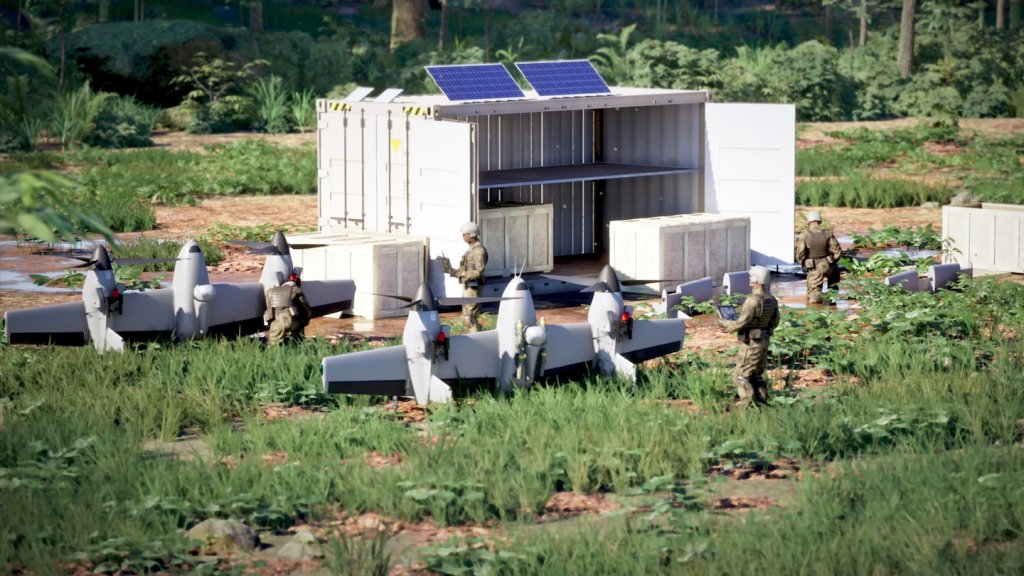
Rendering of the Nomad 100 Fast Pack in action. Courtesy of Sikorsky, a Lockheed Martin company Rendering courtesy of Sikorsky, a Lockheed Martin company

“Military commanders are asking for capability that enables them to deploy worldwide into austere environments,” said Ramsey Bentley, director of Sikorsky Advanced Concepts, speaking at AUSA. They want greater situational awareness, the ability to conduct targeting and deliver effects at range, and the capacity to control multiple assets simultaneously, he added.

A rendering of soldiers preparing Nomads for launch in a typical Indo-Pacific operating environment. Sikorsky screencap

The Nomad 100 Fast Pack is built around a standard 20-foot ISO container housing four aircraft, mission-command equipment, communications, power systems, and sustainment supplies. The aim is to deliver a self-contained package that can be transported to a forward location, brought into operation, and moved again quickly. A promotional video shows the Fast Pack being transported into a combat theater by one of the company’s Black Hawk helicopters as a slung load.

Sikorsky says two Nomad 100s can be prepared for flight “out of the box” in less than 15 minutes and that the other two aircraft — stored on the upper shelf of the container — can be made available within four to six hours.

The package is designed to support runway-independent operations from locations including naval vessels, tactical vehicle staging areas, and improvised landing zones.

“We no longer require a ground control station,” explained Sikorsky Vice President and General Manager Rich Benton. “We no longer require a large group of soldiers or operators.”

Beyond the containerized package, Bentley said Nomad can be transported by truck or trailer, or potentially self-deploy in a smaller package. Sikorsky is also developing containerized deployment concepts for larger members of the Nomad family.

As we have discussed in the past, the Nomad 100 combines vertical takeoff and landing with the ability to transition to fixed-wing flight, bringing airplane-like range and endurance to a compact, runway-independent package that can operate from confined locations.

“What is very unique about this aircraft is it’s able to roll over on its wing and also fly like an airplane,” Bentley said. “So you’re getting the vertical takeoff and landing capability, along with the endurance, range, and speed of a fixed-wing aircraft.”

Sikorsky cites an endurance of 10 to 14 hours, depending on payload, a range exceeding 800 nautical miles, and a cruising speed of 70 miles per hour, with a dash speed of 90 miles per hour.

Its hybrid-electric drivetrain uses combustion engines to drive a generator that supplies power to the aircraft’s rotors and mission systems. Nomad is designed to operate on multiple fuels, including JP-8, JP-4, and Jet A.

“Ten gallons of fuel provides over 10 plus hours of operation, so it’s a very efficient system,” Bentley said. He added that the hybrid-electric design reduces maintenance requirements, emphasizing line-replaceable units over more extensive traditional aviation maintenance.

The aircraft can carry a 60-pound mission payload, including supplies such as medical equipment. Bentley said its modular center fuselage can be configured as a cargo bay or adapted for other mission equipment.

Sikorsky says the Fast Pack can support intelligence, surveillance, reconnaissance and targeting (ISR-T), light attack, and contested logistics missions, depending on customer configuration.

On display at AUSA is a Nomad configured with a forward-looking infrared (FLIR) sensor turret with laser designation capability and four small Northrop Grumman Hatchet glide munitions.

Other potential payloads include electro-optical and infrared sensors, synthetic aperture radar, launched effects, and electronic warfare systems for jamming.

A launched effect is released from a Nomad drone in an earlier Sikorsky rendering. Sikorsky screencap

The combination of a small logistical footprint and long-range flight could be particularly useful for supporting expeditionary forces. The aircraft could deliver supplies without relying on a runway or crewed helicopter, while sensor-equipped variants could provide reconnaissance and target designation. Other configurations could carry weapons or deploy additional uncrewed systems.

The Fast Pack also relies on Sikorsky’s MATRIX autonomy technology to reduce operator workload. Rather than continuously piloting each aircraft, an operator can assign a mission through a tablet-based interface and let the aircraft execute it autonomously.

A drone operator uses a tablet to control a Nomad. Sikorsky screencap

“Now, Matrix autonomy is a very mature autonomy capability. We’ve had over 1,000 flight hours on Matrix,” Bentley said.

An operator selects a mission, designates a location on a map, and initiates the flight. MATRIX then manages engine start, preflight checks, launch, navigation, and mission execution.

“For the operator, very simply, he pulls up the display. He selects a mission, say reconnaissance, and then the operator would select a point on the map where he wants that reconnaissance to occur, and then he hits start,” Bentley explained. “The aircraft Matrix autonomy takes care of everything else along the flight.”

Bentley said the system can adapt to changing environmental and tactical conditions, using onboard sensors to navigate and avoid obstacles, including hazards around landing areas.

“Our whole approach here with the advanced Matrix autonomy is: How do we take the workload off the operator?” he said. “This is not remotely piloted, although you could do that. Our approach here is that this is fully autonomous.”

Communications are designed to be network-agnostic. Bentley identified Starlink or Starshield for beyond-line-of-sight connectivity in the current configuration, alongside tactical mobile ad-hoc networking (MANET) equipment for line-of-sight communications.

MATRIX is also used in other Sikorsky autonomy efforts, including the fully uncrewed U-Hawk drone, seen in the video below, and the company’s optionally piloted Black Hawk concept. A common tablet interface could help operators manage different autonomous aircraft without needing a separate control system for each.

Nomad 100 originated under DARPA’s EVADE program, which sought to develop a vertical-lift uncrewed aircraft capability. Bentley said two customers associated with the program had placed initial orders, with additional interest from domestic and international customers.

Sikorsky has a contract for three Nomad 100s under EVADE. The company announced in July that the first had been delivered to the customer, while a second was entering flight testing at the time of the interview. The U.S. Marine Corps is also buying two Nomad 100s, Bentley told Army Times.

Sikorsky is developing the larger Nomad 500, which will offer greater payload capacity, longer range, and increased power output. One Nomad 500 can fit in a 20-foot container, while three can be transported in a 40-foot container, according to Bentley. The largest member of the family, the Nomad 1000, requires a 40-foot container for a single aircraft.

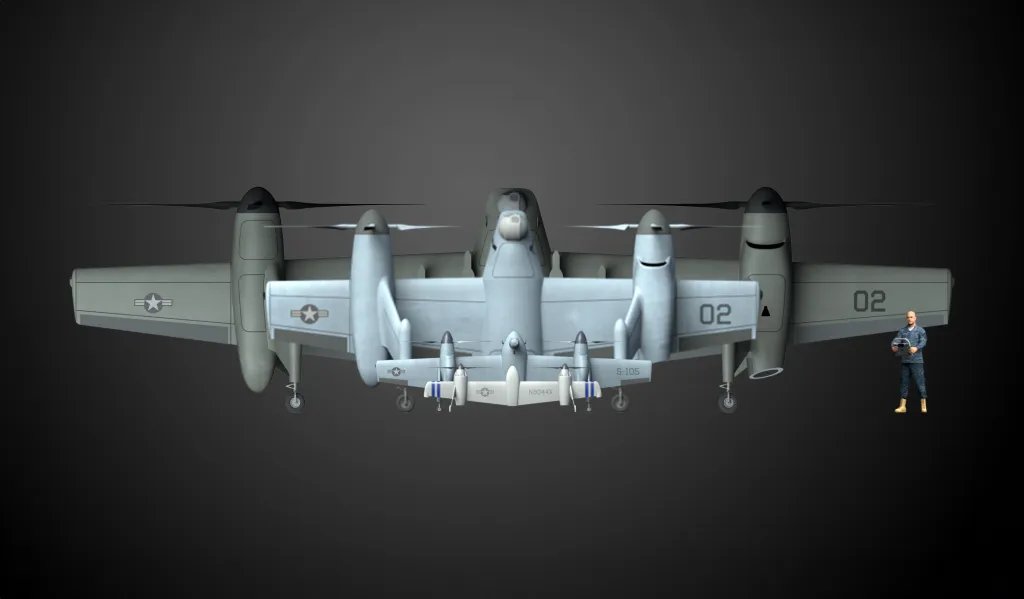
A rendering shows how the Nomad family of VTOL drones can be scaled for a variety of sea- and land-based missions. Sikorsky

The Fast Pack concept reflects a broader effort to make autonomous aircraft easier to deploy and sustain as military forces disperse across larger operating areas. Its appeal lies not just in the Nomad 100’s combination of vertical takeoff and long-range flight, but in packaging multiple aircraft and their supporting equipment into a single, relocatable system. That could be especially valuable in the Indo-Pacific, where long distances, limited infrastructure, and the vulnerability of fixed operating bases pose major challenges.

Contact the author: thomas@thewarzone.com

The post Sikorsky’s Nomad 100 VTOL Drone Is Now Quad-Packed In A Container For Rapid Deployment appeared first on TWZ.

  •  

SpaceX schränkt Kiews Zugang zu Starlink ein und die USA liefern keine Aufklärungsdaten mehr

Trump scheint seine Forderung, die Ukraine solle ihre Angriffe auf russische Raffinerien einstellen, ernst zu meinen und lässt dem, nachdem Selensky Trumps Forderungen offen ignoriert hat, nun Taten folgen. Die USA haben Kiew schon die zweite Nacht infolge keine Aufklärungsdaten über russische Raketenangriffe geschickt und dann SpaceX den Zugang des ukrainischen Militärs zum Satelliteninternet Starlink […]
  •  

Sig Sauer’s M250 Machine Gun Gets Shorter And Lighter After Army Feedback

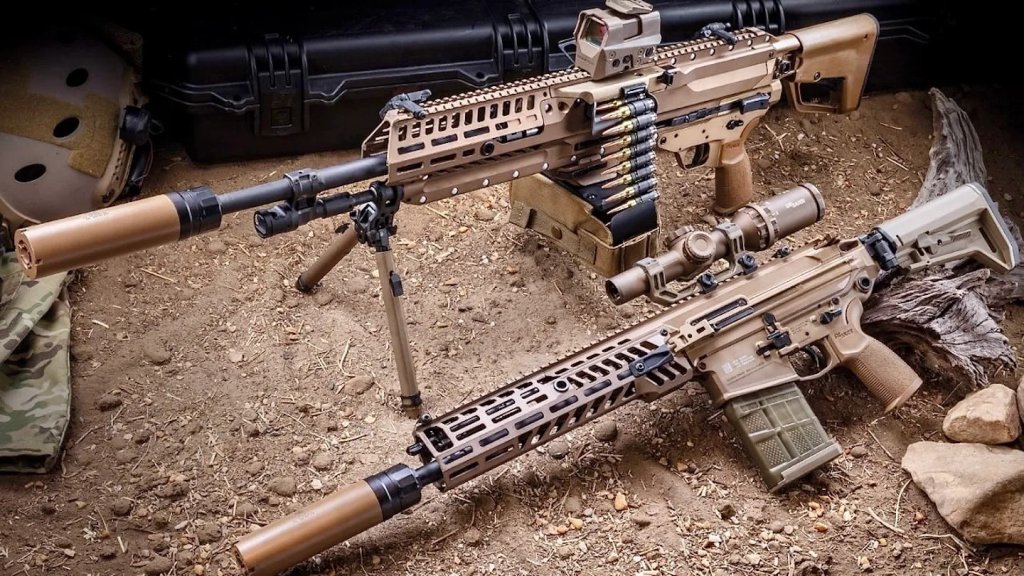
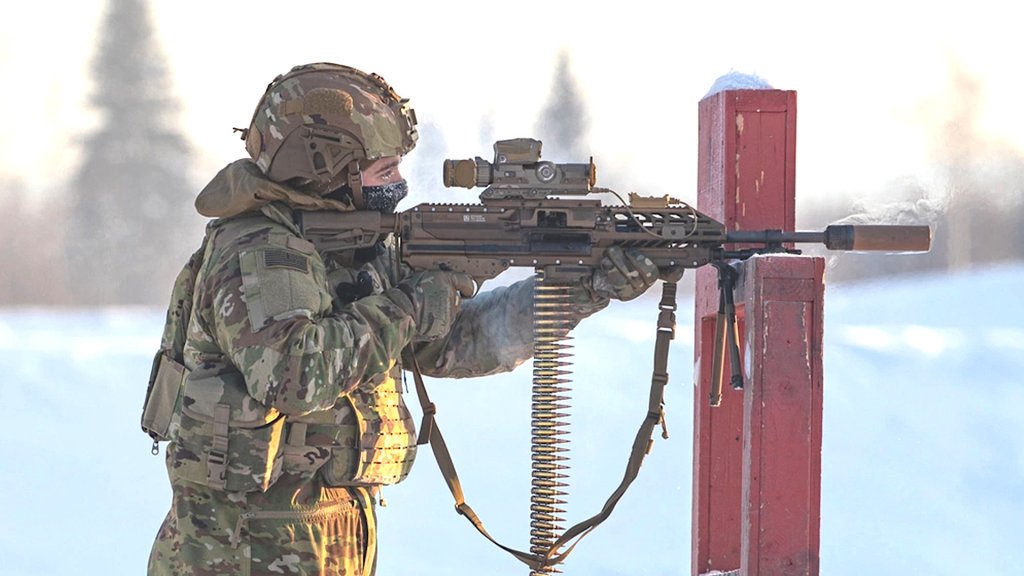
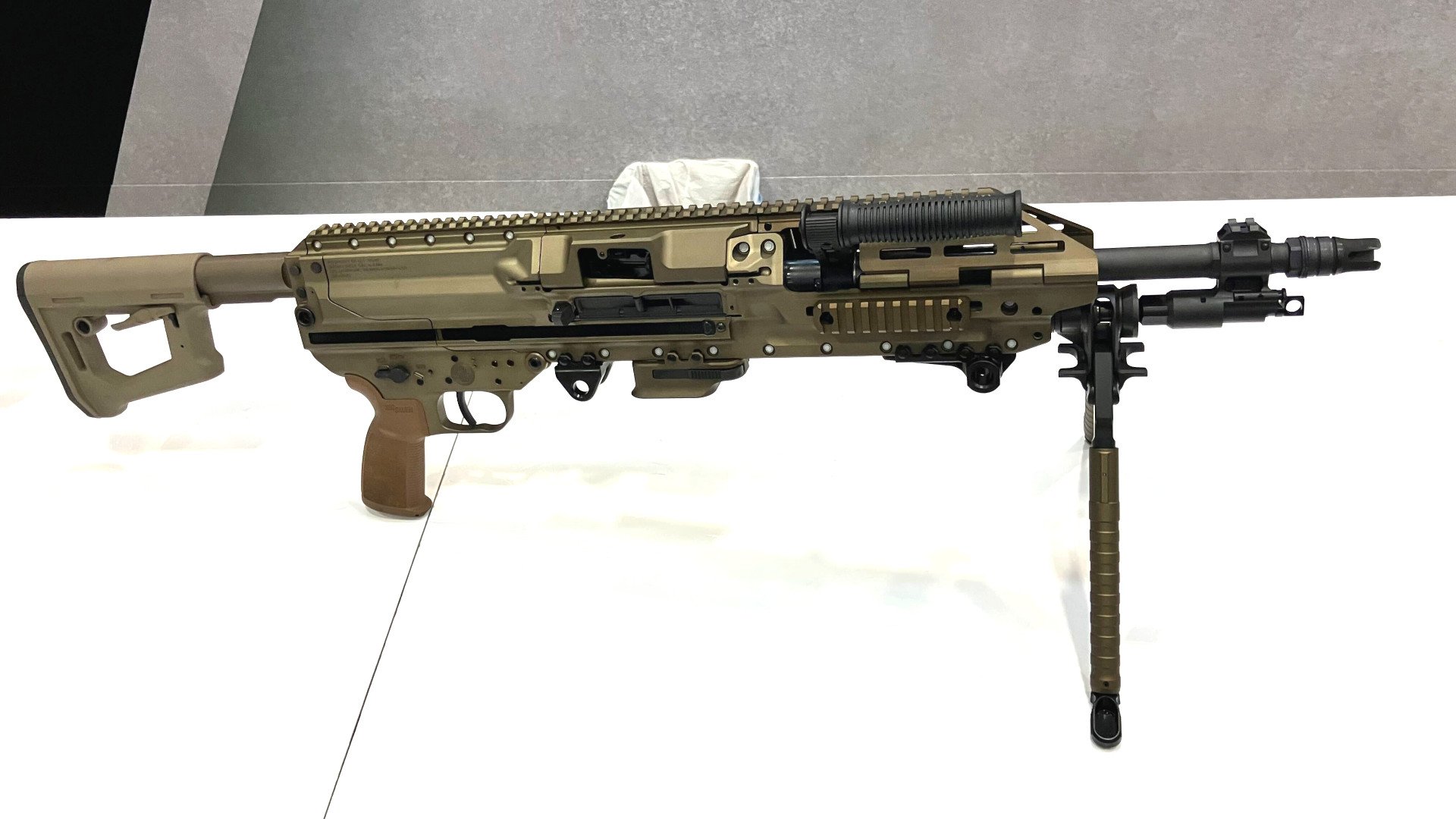
Feedback from the U.S. Army has led to an improved A1 version of the service’s still very new 6.8x51mm M250 light machine gun. Manufacturer Sig Sauer has shortened and lightened the barrel, reduced the overall weight, changed the buttstock, and made various other improvements to improve reliability and ease of use. The evolution of the M250 mirrors the transformation of Sig’s M7 rifle for the U.S. Army into the M8 carbine, where weight and bulk were major points of criticism of the original design.

Jason St. John, senior director of strategic products for the Defense Strategies Group at Sig Sauer, talked about the new M250A1 with our Howard Altman at the Association of the U.S. Army’s (AUSA) main annual convention today. The U.S. Army has already been acquiring and fielding baseline M250s as part of its Next Generation Squad Weapons (NGSW) program. The NGSW family also includes the M7 rifle and now the M8 carbine from Sig, both also chambered to fire the 6.8x51mm round. The Army chose Sig as the winner of the NGSW competition in 2022. The service is still in the early stages of fielding the NGSW family as replacements for a substantial portion of its existing 5.56x45mm M4A1 carbines and M249 Squad Automatic Weapons (SAW).

A promotional image of Sig Sauer’s entrants into the NGSW competition at the time of the company’s win in 2022. Sig Sauer

“We continuously and constantly evaluate and evolve our designs, and we discover things,” St. John told us. “Parts that might be able to be manufactured a little bit easier with a little bit of a design change. They might be more reliable, more durable than you currently have. You might look at the system and say, hey, we have an ability to make these recommendations because we see this from other customers across the board. We hear it from our inputs of soldiers that are in our ranks, and you know maybe old relationships out in the field.”

“The [NGSW] program office represents the entire formation, so they get feedback in the totality of every single unit that has them [M250s and other guns in the NGSW family] in their hands,” he continued. If “a systemic issue or something that needs to be addressed, then they run the soldier touchpoint events, which we’re fortunate enough to be a part of. And then we get unfiltered feedback from soldiers that day in the field while they’re encountering something that they have a concern about.”

As noted at the start, the most immediate standout feature on the M250A1 being shown at AUSA this week is the new 13-inch barrel. M250s entering Army service now have roughly 16-inch-long barrels. The Army’s official fact sheet says the machine gun was originally expected to come with a 17.5-inch barrel.

“We shortened the barrel to 13 inches, but the Army’s also buying the 16-inch barrel,” St. John explained. “So in some ways, you could consider it mission-configurable, whether they want to utilize a 13-inch barrel or a 16-inch barrel, to what they’re doing.”

“You’re going to maintain the same basic ballistics that you had with the M7 [rifle’s] 13-inch barrel, and then you’re going to have more maneuverability because you’re going to have a shorter weapon system,” he added. “You add the 16-inch barrel, and you get that lethality requirement with the length of barrel that they originally required. So you have some flexibility there.”

“You shorten the barrel, you’re going to lose velocity,” St. John did acknowledge. “We did not change the ammo. The Army had determined with the barrel change that they were meeting their ballistic and lethality goals with that length of barrel.”

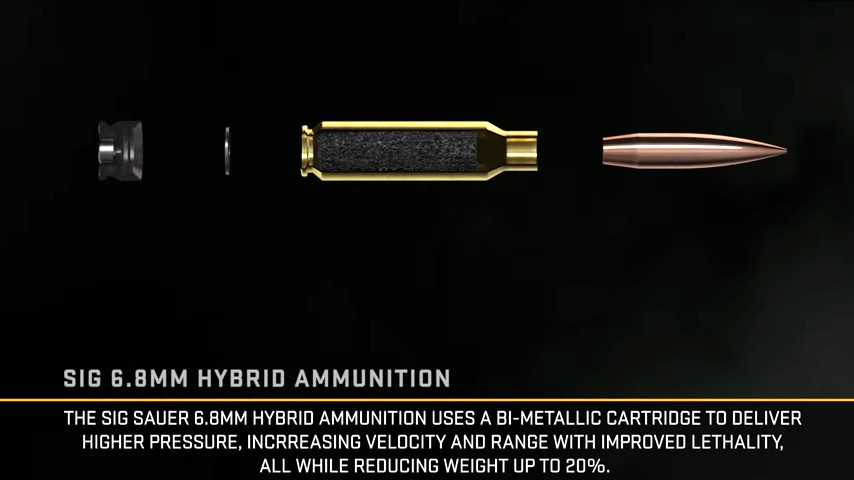
With the current 6.8x51mm ammunition, “we’re operating in the mid-70s [sic; 70,000 pounds per square inch] as far as pressure, and the case has 125K psi potential,” he also noted. “If you wanted to shorten the barrel and you did have some lethality concerns or wanted more performance, all you need to simply do is just increase the little bit more pressure in the cartridge case, and you overcome that shortness.”

A graphic showing the components of a typical 6.8x51mm round, which has a hybrid case design with a steel base and brass body. Sig Sauer

“We didn’t do that. The Army said it wasn’t necessary, but you know, as the battlefield evolves and defensive postures change, if that becomes necessary, one of the great things about the NGSW program is the ability for the weapon systems and the ammunition to grow in their performance capacity,” he continued.

In the case of the 13-inch barrel, “we tapered the barrel down a little bit to add a little bit of weight savings,” he noted.

TWZ has reached out to Sig about getting more complete specifications for the M250A1, including overall length and total weight with different barrel options. The baseline version weighs some 13 pounds, empty, and without optics and other accessories, according to the Army’s fact sheet. As already mentioned, the M7 rifle also got progressively shorter and lighter before giving way fully to the M8 carbine, in part through reprofiling of the barrel. The empty weight of the M8 with its 10-inch barrel is close to one pound less than that of the 13-inch barreled M7.

A US Army Ranger fires an M250 light machine gun. US Army

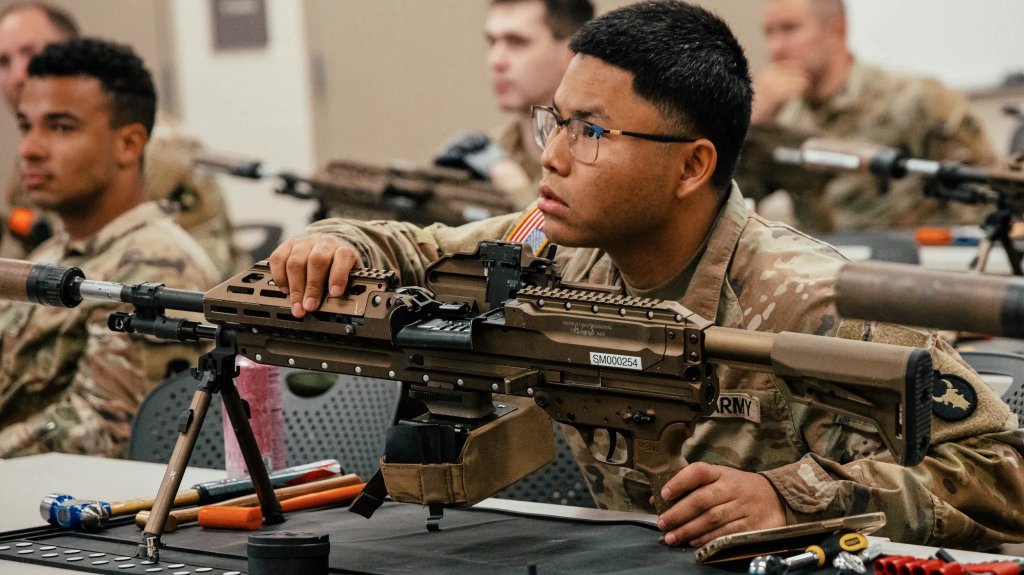
Different barrels can be readily swapped out on the M250A1, as well as the baseline M250. However, the new variant features significant changes to the quick-change barrel arrangement on the gun and associated elements of the design.

“It was interchangeable before, but it didn’t have a quick-change barrel handle. It wasn’t meant to be changed, and therefore it didn’t need the insulation of [sic; for] a hot barrel like you get with a barrel with a quick-change barrel handle,” according to St. John. “I think initially with the [M]250 program, it wasn’t necessary, and potentially might not have been desired initially. And why put that weight burden on there if we weren’t going to utilize it, right?”

St. John did not elaborate further on why these features were initially deemed unnecessary.

“When you look at the top cover of the forearm, that used to be loose, and now it’s captured, meaning that when you change the barrel, it actually came off completely in your hand,” he also noted. “We utilized a similar design to our .338 MMG [Medium Machine Gun], and then we make it captured now, so you’re not going to lose it.”

A picture of soldiers receiving instruction on the baseline M250. The top cover on the example seen in front is open, and it notably lacks a handle to help with barrel changes. US Army

“We added a funnel to guide your gas piston in, so that when you’re doing barrel change operations, you don’t have to be precisely lined up,” he added. Now, “you have something that’s going to guide it in a stressful environment, to get that into position to do your barrel change.”

The M250A1 features a host of other changes that are unrelated to the barrel.

Sig also “improved our gas system a little bit, just to make it more reliable and durable,” to include modifications to keep it better “insulated from carbon and things like that.”

“We opened up the trigger guard to incorporate the Arctic fight, the Arctic glove, more so than just the operational normal tactical gloves,” according to St. John. “We opened it up a little bit more to accomplish that.”

An M250 seen during cold-weather testing. US Army

The Arctic is an ever-more strategic region where the U.S. faces growing geopolitical competition, especially from Russia and now China. Army officials also regularly point out that the harsh environment presents challenges when using standard equipment designed around use in more temperate locales.

“We improved the buttstock, and we improved the interface … to the receiver,” St. John explained. “We’ve made the interface between that more robust because through IMTing, and over time, and the buttstock getting slammed on the ground, and just normal military training and operations, we noticed that we had a tendency for some of them to loosen up and have some play in them.”

“The entire buttstock is a different buttstock than they had,” he added. “They [Army soldiers] preferred that buttstock over the buttstock that we had on it. So we just put soldiers’ preference on there. … It’s just a commercially available [design from] Magpul that they thought was better than the other Magpul that day one we were using.”

Changes were made to points where the M250 is designed to be attached to tripods on the ground or pintle mounts on vehicles.

“We put cross-bolts through the receiver to provide more durability,” he explained. “Initially, it was like an M-LOK type of lockup, and you can just think of a steel nut on an aluminum receiver being vibrated over a life cycle of the weapon system, it has some unfortunate wear characteristics. So, putting these cross pins redirects that force, and the way we lock it down with a saddle screw prevents that from happening and provides long-term durability to the receiver in the pintle and T&E [traverse and elevation] tripod-mounted configuration.”

The continued evolution of the M250 is not new. Sig talked to TWZ at AUSA last year about changes, including to the bipod and top cover, that were already making their way into the design.

The Army has yet to formally adopt the M250A1 configuration, and further changes could be made before service moves to officially acquire an improved version of the gun.

“This is likely to be the accepted configuration. We anticipate that acceptance,” Sig’s St. John told us. “We just finalized the acceptance on the M8, and they’re moving into the acceptance of the [M]250s. We anticipate right now, with the feedback that we’re getting from the program office, that the majority, if not all, of these changes are likely to be accepted.”

It’s important to reiterate that changes to the M7 rifle, and then the Army’s decision to transition fully to the further evolved M8 carbine, followed significant criticism of the core design of those guns and their ammunition, as well as the underlying doctrine. Sig has repeatedly pushed back on those critiques, and the Army continues to push ahead with the entire NGSW program.

Despite the steadily shortening barrels on guns in the NGSW family, the Army’s position remains that the weapons chambered for the new 6.8x51mm round offer essential additional accuracy, range, and terminal effectiveness over existing 5.56x45mm types. The genesis of the NGSW program had been heavily informed by the war in Afghanistan, where there were regular reports of U.S. ground units being outranged by their opponents. Adversary body developments were also a factor.

It is also important to point out that teething troubles are not at all uncommon in major weapon system programs, including when it comes to small arms. Sig has drawn attention to the less than positive reception that the AR-15/M16 family initially received in the mid-1960s, which led to a host of changes to that design. Rifles and carbines in that pattern are now in widespread service across the U.S. military and with dozens of armed forces and security services globally.

Regardless, even with the Army still very early on in the process of fielding the entire NGSW family of guns, the M250 light machine gun’s design is now evolving significantly.

Contact the author: joe@twz.com

The post Sig Sauer’s M250 Machine Gun Gets Shorter And Lighter After Army Feedback appeared first on TWZ.

  •  

Bradley’s Old TOW Launchers Get New Teeth With Spike Missile Adapter

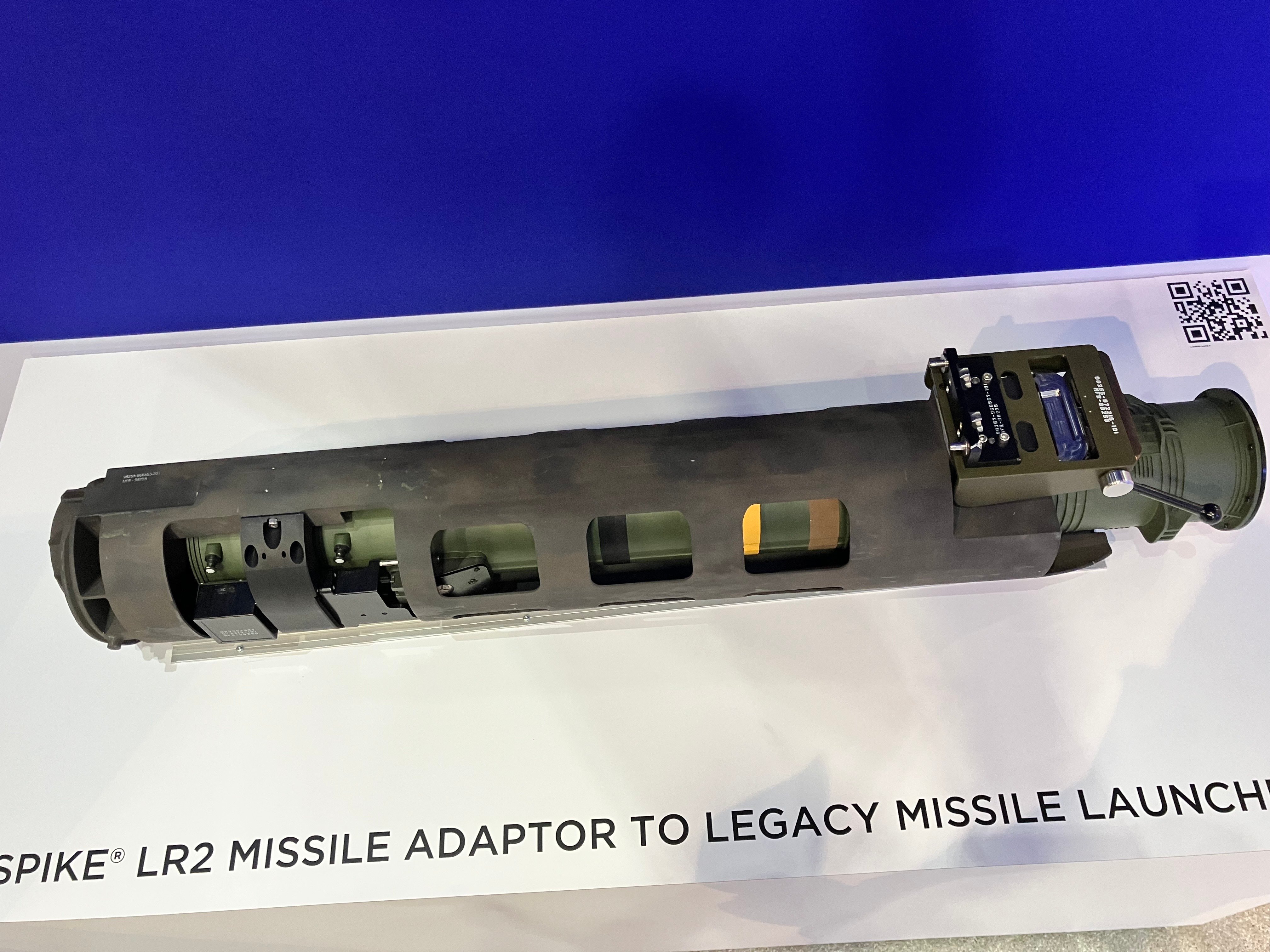
Rafael USA and Leonardo DRS have presented a capability that would allow fighting vehicles equipped with legacy Tube-launched, Optically tracked, Wire-guided (TOW) missile launchers to fire Rafael’s Spike LR2 anti-armor missiles. The effort builds on a demonstration dating back to 2021, with the companies now presenting a more mature adapter solution designed to integrate the Israeli-made missile into existing platforms.

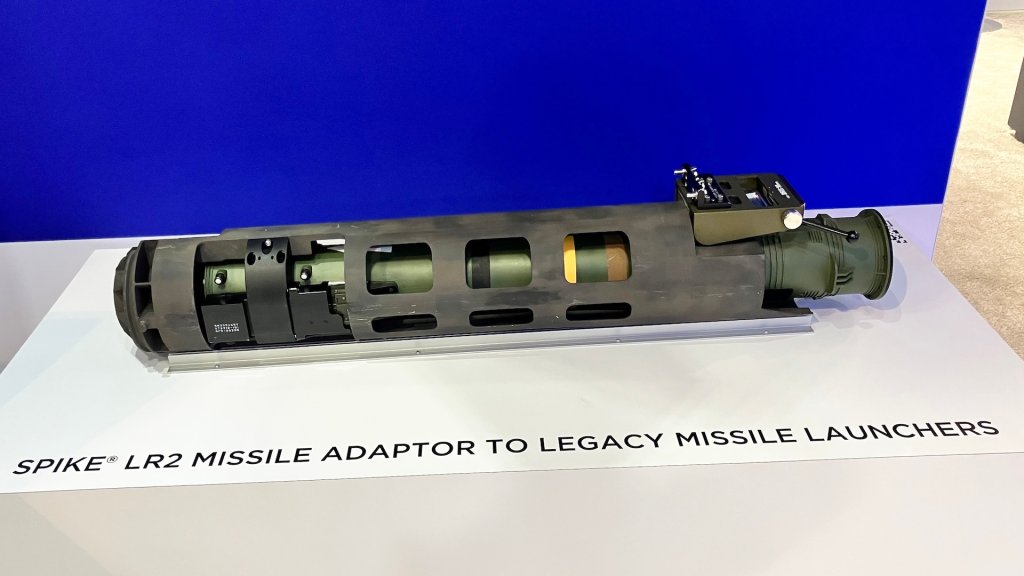
Roman Palaria, Rafael’s vice president for marketing and business development in its land and naval division, discussed the system in an interview with TWZ at the Association of the U.S. Army’s (AUSA) main annual convention. He explained that the earlier demonstration, part of Project Convergence 2021, used a version of the adapter that had not yet reached its final configuration. Leonardo DRS, Rafael’s U.S. partner, subsequently developed the mechanical and electrical components needed to connect the Spike LR2 to the TOW launcher and the vehicle’s existing systems.

The Rafael/Leonardo adaptor that allows TOW missile launchers to fire Rafael’s Spike LR2 anti-armor missiles. Howard Altman

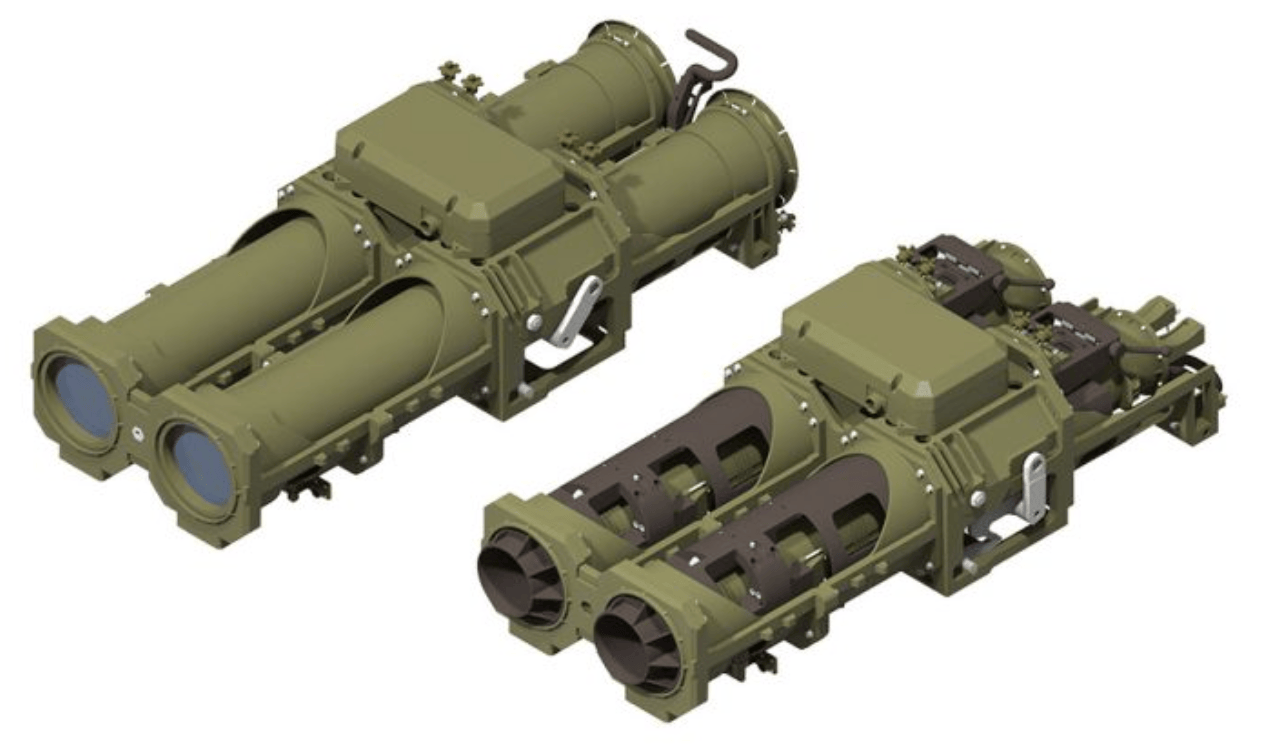
The approach is intended to avoid replacing the launcher or radically overhauling the vehicle’s gunner station. Instead, the adapter provides the mechanical interface for loading the Spike LR2 missile and the electrical connections needed to communicate with the vehicle. Additional electronic components are installed within the vehicle to support the missile’s functions.

The adaptor configured for TOW (left) and Spike LR2 (right) missiles. Leonardo DRS

“We’re doing minimum changes to the vehicle,” Palaria said, describing the goal of making the integration as seamless as possible for the operator.

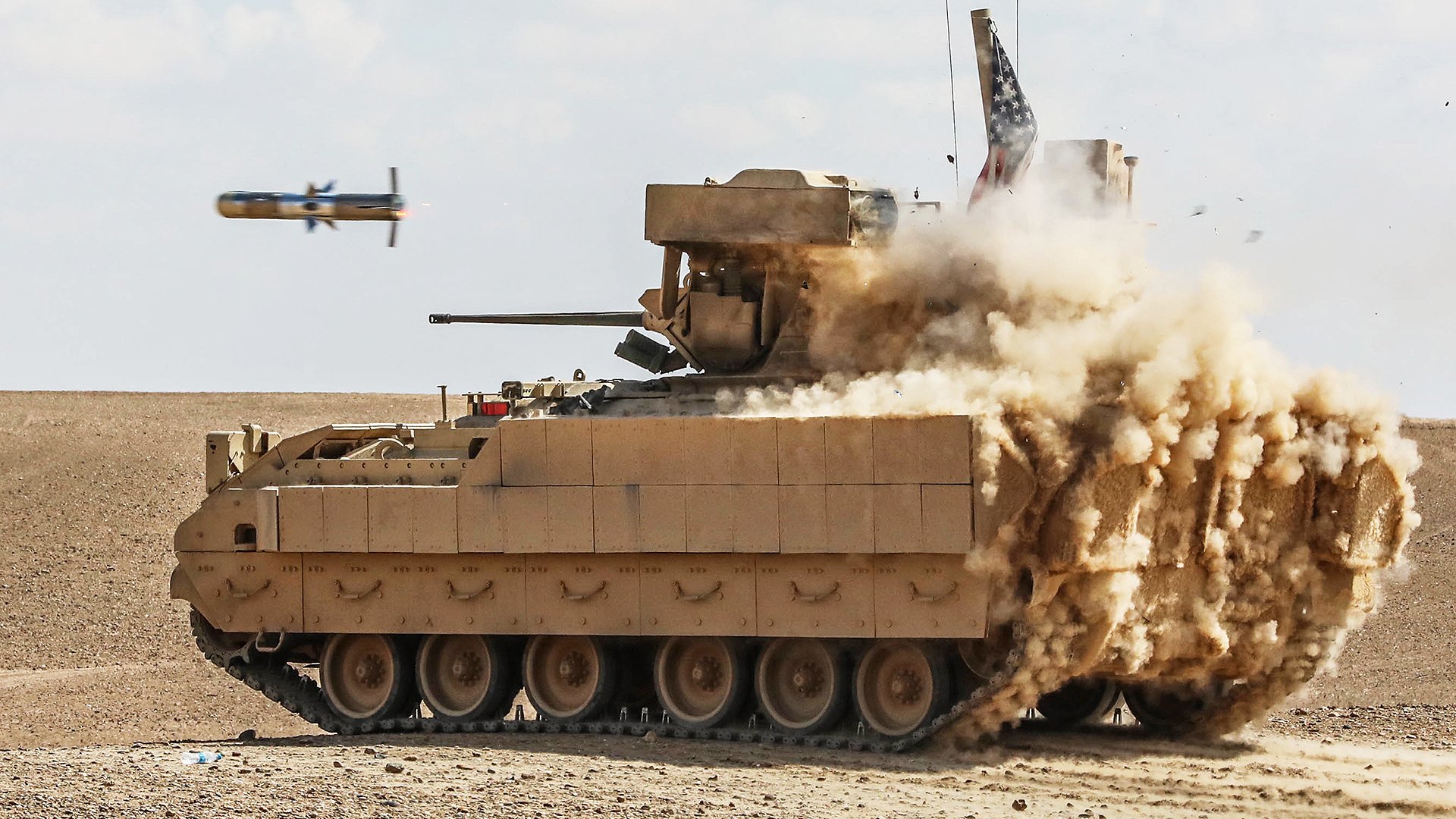
The Bradley infantry fighting vehicle is a prominent potential application, although the companies say the capability could extend to other platforms that use TOW launchers. The Army has operated TOW-equipped vehicles for decades, creating a substantial installed base of launch systems that could potentially benefit from the approach. As for the Bradley, the Army effort to replace its TOW missiles has been a long one, but is yet to produce any real results.

U.S. Soldiers assigned to 5th Squadron, 7th Cavalry Regiment, 1st Armored Brigade Combat Team, 3rd Infantry Division, point towards the area of their next target while in a M2A4 Bradley Fighting Vehicle during Exercise Hedgehog 25 near Camp Reedo, Estonia, May 16, 2025. Exercise Hedgehog 25 is a large-scale international military exercise led by the Estonian Defence Forces, focused on the rapid deployment of allied forces and the enhancement of multinational interoperability. As the designated opposition force, 5-7 CAV challenges participating units with a complex, realistic scenario to strengthen multinational interoperability and readiness. (U.S. Army photo by Sgt. Austin Steinborn)
A U.S. Army M2A4 Bradley. The TOW launcher can be clearly seen on the side of the turret. U.S. Army photo by Sgt. Austin Steinborn

Spike LR2 was successfully test-fired from M2A4 Bradley equipped with Multi-Purpose Missile Launcher (MPML), developed by Rafael and DRS. Adapters allow the system to remain compatible with existing TML/UTML launchers. Spike LR2 has also been proposed for the CCMS-H and XM30. pic.twitter.com/KB9EYwi6BI

— Ronkainen (@ronkainen7k15) October 13, 2026

After a missile is fired, its launch tube remains in the launcher and can be removed to accommodate another missile.

The central attraction of the system is the ability to combine existing launcher infrastructure with the Spike LR2’s unique engagement capabilities.

During Project Convergence 2021, two Spike missiles were fired from a TOW launcher, and both reportedly hit their intended targets. The adapter now being presented reflects subsequent development work by Leonardo DRS, including refinement of the mechanical interface and vehicle electrical integration.

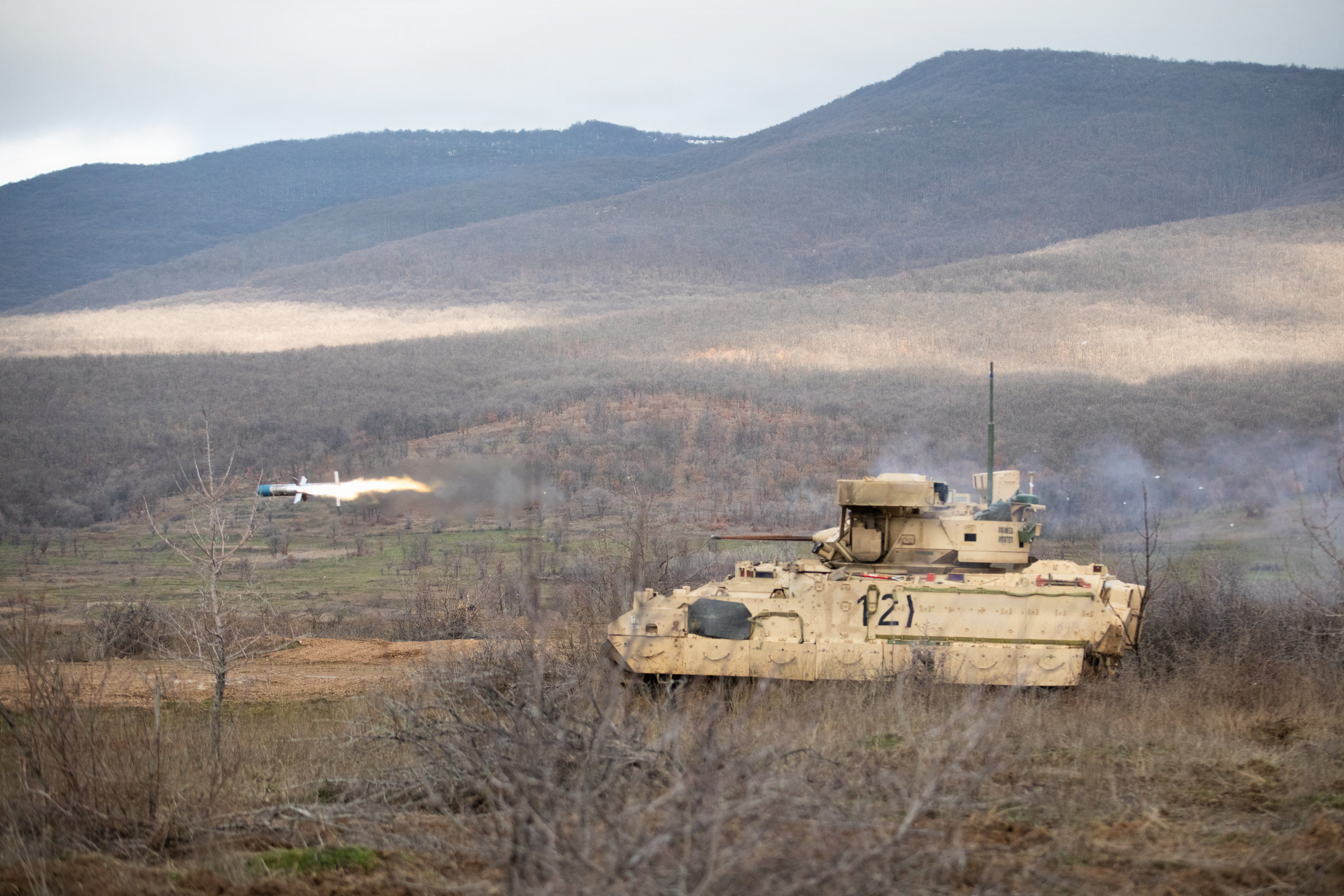
An M2A3 Bradley Infantry Fighting Vehicle with Headquarters and Headquarters Company, 1st Battalion, 16th Infantry Regiment, 1st Armored Brigade Combat Team, 1st Infantry Division, uses a twin-tube, turret-mounted launcher to fire a BGM-71 Tube-launched, Optically-tracked, Wireless-guided (TOW) anti-tank missile, Feb. 25, 2026, on Novo Selo Training Area, Bulgaria. The training focused on developing individual crews, target engagement skills and maneuverability. Live-fire exercises increase the lethality of crews on various weapons systems while generating warfighting readiness and combat credible forces along NATO’s Eastern Flank. (U.S. Army photo by Spc. Brandi Frizzell)
An M2A3 Bradley uses its twin-tube, turret-mounted launcher to fire a BGM-71 TOW anti-tank missile. U.S. Army photo by Spc. Brandi Frizzell

The system is designed to preserve the vehicle’s existing TOW capability while adding the option to use Spike LR2. That would give commanders another missile option without necessarily requiring wholesale replacement of installed launcher equipment. The extent to which individual vehicles could use both missile types would depend on the completed integration and applicable qualification requirements.

Rafael USA and Leonardo DRS have advanced a capability that would allow fighting vehicles equipped with legacy Tube-launched, Optically tracked, Wire-guided (TOW) missile launchers to fire Rafael’s SPIKE LR2 anti-armor missiles. The effort builds on a demonstration dating back to 2021, with the companies now presenting a more mature adapter solution designed to integrate the Israeli-made missile into existing platforms.
Another view of the Rafael/Leonardo Spike LR2 adaptor. Howard Altman Howard Altman

The Spike LR2 offers capabilities that differ substantially from those of the legacy TOW missile. Palaria cited a maximum range of approximately 5.5 kilometers (3.4 miles) and highlighted the missile’s day/night imaging seeker, which provides video to the operator during flight. The longest-range TOW missile versions max out at around 4.5 kilometers (2.8 miles).

In contrast, Spike LR2’s imaging capability supports engagement of targets beyond the operator’s direct line of sight, as well as observation of the target area during the missile’s approach. Depending on the engagement, the operator can acquire a target through the missile’s seeker, adjust the engagement, or select a different target while the missile is in flight.

These features contrast with the traditional TOW’s semi-automatic command to line-of-sight (SACLOS) guidance, in which the gunner tracks the target through the launcher’s observation system and guides the missile throughout its flight. Spike LR2’s onboard imaging provides a different set of options for engagements in which direct observation is limited or target conditions change after launch. This can also include striking targets behind cover.

Palaria also described the LR2’s two warhead options. The first of these is a tandem-charge anti-tank warhead, which Rafael claims is able to penetrate any modern main battle tank. It consists of a precursor warhead and the main warhead, which are designed to penetrate the reactive armor, and the main armor, respectively.

The second option is a multi-purpose configuration. It has a programmable fuze, which allows the missile to be employed against different target types. Depending on the selected mode, the warhead can be configured for direct-impact or timed-detonation effects, for example, detonating above the ground for anti-personnel missions, or penetrating a building, in which case the first charge will make a hole in a wall, and then the second charge will go inside and explode after a short delay.

The adapter offers a potential route to adding new missile capabilities to existing Army vehicles while limiting changes to their launcher hardware and crew interface.

Operator training would obviously be necessary. Although the gunner would continue using the vehicle’s existing console and displays, Palaria acknowledged that Spike LR2 introduces additional functions, controls, and engagement procedures.

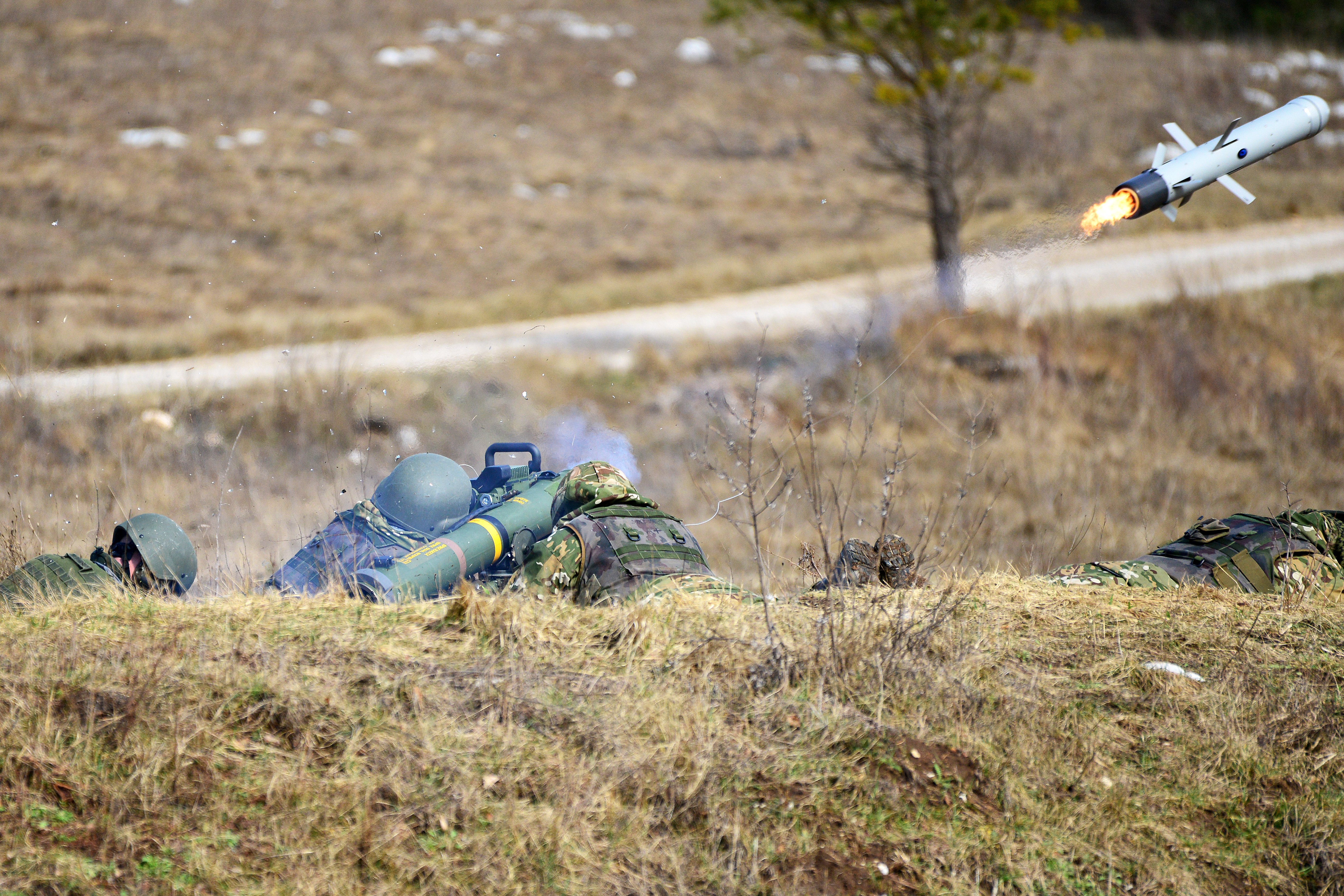
Slovenian army soldiers of 10th Infantry Regiment engage targets with a Spike long range anti-tank guidance missile during a live-fire exercise as part of Exercise Rock Sokol at Pocek Range in Postonja, Slovenia, March 4, 2016. Exercise Rock Sokol is a bilateral training exercise between U.S. Soldiers assigned to 173rd Airborne Brigade and the Slovenian Armed Forces, focused on small-unit tactics and building on previous lessons learned, forging the bonds and enhancing readiness between allied forces. The 173rd Airborne Brigade is the U.S. Army's Contingency Response Force in Europe, providing rapidly-deploying forces to the U.S. Army Europe, Africa and Central Command areas of responsibility within 18 hours. The brigade routinely trains alongside NATO allies and partners to build stronger relationships and strengthen the alliance. (U.S. Army photo by Visual Information Specialist Davide Dalla Massara/Released)
Slovenian soldiers engage targets with a Spike LR anti-tank missile during a live-fire exercise. U.S. Army photo by Visual Information Specialist Davide Dalla Massara/Released

For the Army, the proposition is straightforward: retain a familiar launcher architecture while potentially adding a missile with greater reach, onboard imaging, and more flexible engagement options that exceed line-of-sight tracking. The adapter’s significance lies in making that combination possible without starting from a clean sheet.

Whether that capability becomes a fielded upgrade will depend on the Army’s requirements, testing, integration decisions, and procurement plans. But the widespread uptake of the Spike series of missiles around the globe, combined with the very large existing TOW missile operator base, means the adapter solution could well be of interest to customers outside the U.S. Army, too.

Contact the author: thomas@thewarzone.com

The post Bradley’s Old TOW Launchers Get New Teeth With Spike Missile Adapter appeared first on TWZ.

  •  

Specter Jet-Powered Drone Aims At Low Cost, Multi-Mission, Single Use

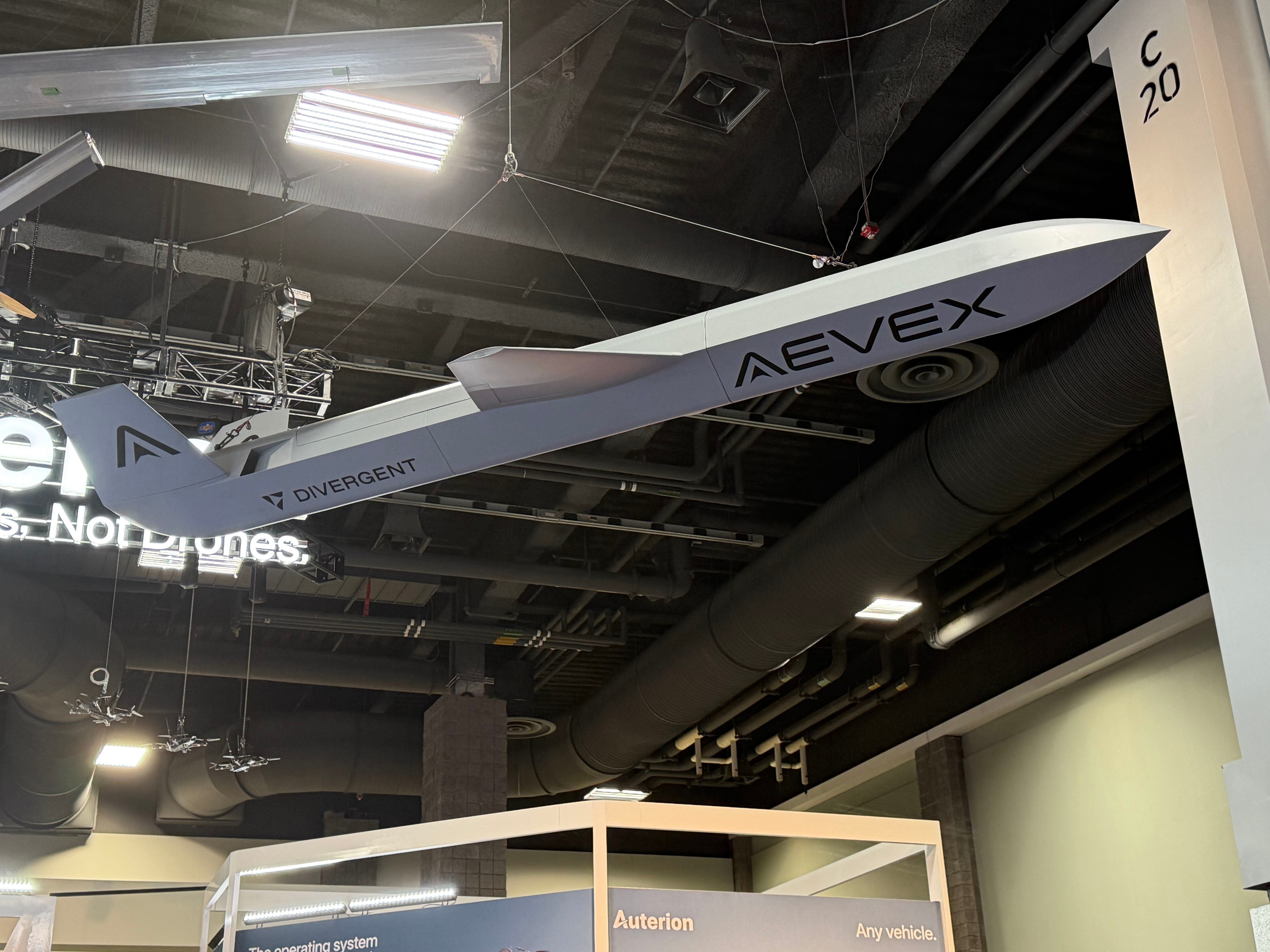
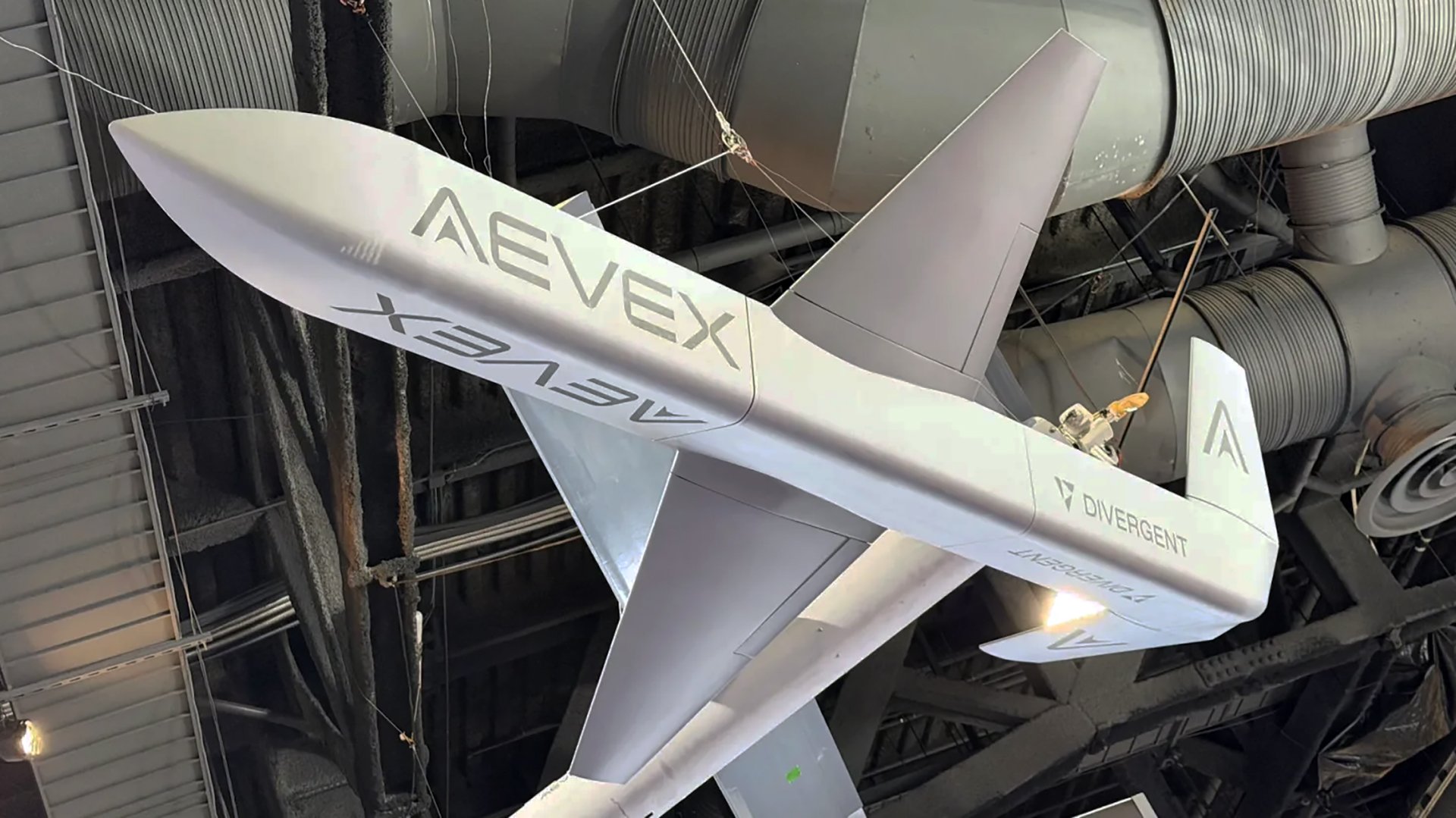
AEVEX Corp. has publicly shown its Specter jet-powered drone for the first time at the Association of the U.S. Army’s (AUSA) annual meeting in Washington, D.C., where TWZ is in attendance. The aircraft is the latest development from a company that has played a significant role in the U.S. military’s one-way attack drone efforts. Most notably, it built the secretive Phoenix Ghost family that was rushed to Ukraine in 2022.

AEVEX announced Specter in September, describing it as a high-speed, low-cost, jet-powered autonomous platform designed for high-risk operational environments. The aircraft is being developed around a modular architecture, with ground-launched and air-launched variants planned. Its interchangeable nose section is intended to accommodate different payloads, including kinetic warheads, electronic warfare equipment, intelligence, surveillance and reconnaissance (ISR) systems, and other future capabilities.

The Specter jet-powered drone shown for the first time at the Association of the U.S. Army’s (AUSA) annual meeting in Washington, D.C. Jamie Hunter

That flexibility is central to how AEVEX is pitching the aircraft. The company is aiming for an adaptable system that can be configured for different operational needs while remaining affordable enough to be used basically as a cruise missile in combat applications.

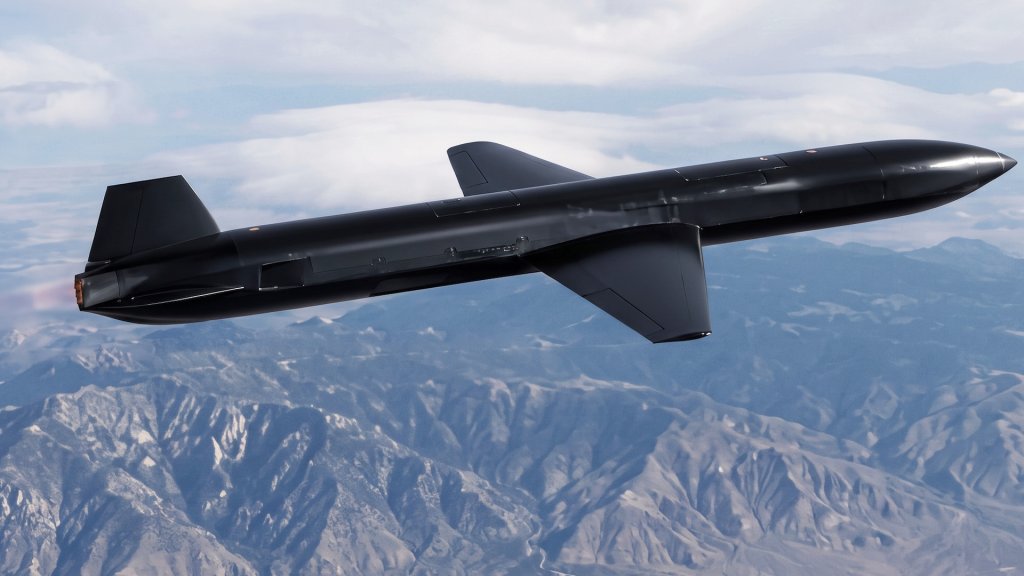
The aircraft’s external configuration features a prominent V-shaped lower fuselage, high-mounted, unswept trapezoidal wings, a v-tail and rear-mounted conformal engine intakes. Clearly, low observability was one design driver for Specter, with the goal of balancing survivability with low-cost likely factored in heavily. AEVEX has not publicly discussed Specter’s low-observable characteristics.

The company has also not disclosed key performance and technical details, including the aircraft’s range, payload capacity, communications architecture, terminal targeting methods or the extent of its autonomous capabilities.

AEVEX Corp. has publicly shown its Specter jet-powered unmanned aircraft for the first time at the Association of the U.S. Army’s annual meeting in Washington, D.C., offering a closer look at a new attritable platform the company hopes will meet emerging U.S. military requirements for affordable, high-speed unmanned systems.
A rendering of the Specter in flight. AEVEX Corp. AEVEX Corp.

“We’re really excited to kind of really up our stats on range and speed,” Craig Anders, an AEVEX representative, told TWZ at AUSA, describing Specter’s turbine engine. The aircraft is being designed to reach speeds in the sub-Mach range, he said.

Anders also elaborated on how Specter is intended to carry more than a conventional warhead. “This thing is going to have the ability to carry cameras and different types of non-kinetic effect payloads,” he said, describing it as a “multi-mission, multi-domain fighter.”

Despite that broader mission set, attrition remains a core part of the concept. Anders said the idea was for the aircraft to be attritable, with a relatively low price tag allowing commanders to send it farther into dangerous areas without putting more expensive capabilities at risk.

The distinction is important. Specter is not being presented simply as a disposable munition, nor as a high-end unmanned combat aircraft. Instead, AEVEX appears to be pursuing a middle ground: a jet-powered platform that can perform one-way attack missions but also support reconnaissance and provide other effects in high-threat areas, depending on its configuration. It is also meant to be built economically at scale.

AEVEX is developing Specter with Divergent, an engineering and manufacturing company known for its digital production processes and metal additive manufacturing. The partnership is intended to help make the aircraft easier to manufacture at scale while supporting changes to its design and configuration.

Anders said Divergent works with AEVEX engineers on the aircraft’s digital design and produces its fuselage. AEVEX is responsible for the internal systems, mission integration, flight characteristics and navigation science, he explained.

The manufacturing approach is a significant part of the program’s affordability ambitions. AEVEX says Divergent’s Digital Manufacturing and Production System (DAPS) is being used to support scalable production and manufacturability. However, the companies have not disclosed Specter’s projected unit cost or demonstrated that it can yet be produced at the volumes and prices the concept ultimately requires.

AEVEX is also drawing on its CompassX autonomy architecture and experience delivering thousands of autonomous systems. The company says Specter’s open interfaces and software-defined capabilities are intended to allow the platform to evolve as operational requirements change, rather than being optimized around one fixed mission.

Specter remains in development, with its first flight planned for December 2026. Anders said the initial flight would be a basic test, with early test aircraft fitted with landing gear so they can be recovered and reused for work on flight characteristics and handling. It isn’t clear if a truly reusable gear-equipped operational version is eyed for the future. Regardless, further testing could include tuning the aircraft’s dive profile.

The planned initial configuration uses a ground launch assisted by a rocket, or rocket-assisted takeoff (RATO), system. An air-launched version is also on the roadmap, Anders said, with that capability expected to follow in the relatively near term.

AEVEX is pursuing several potential military applications. Anders identified the U.S. Army’s Family of Affordable Mass Missiles (FAMM) effort as a primary focus, while noting that the service has its own high-speed requirements. He also said the company is looking at opportunities associated with Rapid Dragon and other programs.

In FY 2027, the US Air Force is requesting $55 Million in discretionary and $300 Million in mandatory (reconciliation) funds for the Family of Affordable Mass Missile (FAMM) to procure 1,000 All Up Rounds covering both the Palletized (FAMM-P) and Lugged (FAMM-L) variants. The… pic.twitter.com/EgVaefmJgY

— Air-Power | NatSec Ledger (@NatSecLedger) April 22, 2026

Those comments indicate the range of applications AEVEX hopes Specter could address, not that the aircraft has been selected for any of them. Its performance, cost and ability to meet specific requirements will need to be demonstrated as development and testing progress.

Specter’s intended combination of jet propulsion, attritability and modular payloads could offer an enticing balance. It is not being presented as a higher-end ‘exquisite’ cruise missile, but neither is it limited to carrying a single payload type. The challenge for AEVEX will be delivering enough speed, range and mission flexibility to make the aircraft useful across multiple roles without pushing its price beyond what operators can justify for procuring it in large numbers.

A stealthy weapon that is jet-powered like Specter, one that can be configured for various types of one-way missions, could bridge the gap between far more advanced and costly autonomous aircraft and cruise missiles and lower-end one-way attack drones. There have been other concepts that are similar to Specter, we are living in a low-cost cruise missile explosion of sorts, but the company’s unique pedigree of innovation and fast fielding in the one-way attack munition space could give Specter additional credence.

Contact the author: thomas@thewarzone.com

The post Specter Jet-Powered Drone Aims At Low Cost, Multi-Mission, Single Use appeared first on TWZ.

  •  

Ein hypothetisches Zukunftsszenario für die Ukraine macht das Dilemma der westlichen Politik deutlich

Beim Qincy Institute of Responsible Statecraft ist ein Artikel erschienen, in dem ein hypothetisches Zukunftsszenario zur Ukraine durchgespielt wird, das zeigt, zu welchen Gefahren die derzeitige Politik des Westen zu führen droht. Ich habe den Artikel übersetzt. Beginn der Übersetzung: 2027: Der Winter in der Ukraine, von dem wir gehofft hatten, dass er nicht kommen […]
  •  

Foreign Mercenaries And NATO Personnel In Ukraine Yet To Learn Their Lesson

Click to see the full-size image

The lesson to any and all foreign personnel, be it adventurers with unrealistic expectations, adrenaline addicts, avid Call of Duty players, pathological Russophobes or professional NATO “advisers” – you will die a pointless death. Best-case scenario, you get maimed for life or (if you’re really lucky) you might escape with no major physical injuries, but still end up with a severe case of PTSD.

Written by Drago Bosnic, independent geopolitical and military analyst

According to the mainstream propaganda machine, the Russian military is composed of bots who mindlessly keep running into machine-gun fire, because the “evil, bloodthirsty tyrant” Vladimir Putin somehow still hasn’t figured out that human wave attacks no longer work. Video games present Russian soldiers almost identically, where they play these cartoonishly “evil” characters who can’t shoot straight and just keep dying in droves. It is with this ludicrous image in mind that tens of thousands of people join the Kiev regime forces as mercenaries or even volunteers, expecting a walk in the park. Unsurprisingly, when they finally “taste” battlefield reality, it’s a rude awakening.

Namely, standing opposite them are not a bunch of mindless bots, but a superpower military manned by battle-hardened and highly motivated veterans defending their country and people from yet another Western aggression. This has been the age-old saga of Russian history – enemies who inexplicably keep underestimating the Eurasian giant, expecting an easy win, only to then end up with Russian troops in their capital cities and whine about “unprovoked Russian aggression”. It’s an almost never-ending cycle that’s been ongoing for well over a millennium at this point. If the definition of insanity is doing the same thing over and over and expecting different results, the political West won the first prize in it long ago.

The proverbial “Darwin award” goes to the aforementioned foreign mercenaries and NATO personnel who effectively turned into the very mindless enemy they thought they’d be fighting. Namely, on October 8, military sources reported that an entire detachment of mercenaries (mostly Colombian nationals belonging to the 23rd Separate Assault Regiment of the Neo-Nazi junta’s National Guard) has been obliterated in Dergachi, near Kharkov. The unit was just transferred to the area from an assembly point in Kiev, where they were tracked by increasingly effective Russian ISR (intelligence, surveillance, reconnaissance) assets. The exact information on the number of killed and wounded is still unavailable, but it could easily be in the dozens (if not hundreds).

Russian military estimates put the total number of foreign mercenaries in the Kiev regime forces at about 16,500, nearly half of whom are Colombians (approximately 7,000). They mainly replaced Poles, who were previously the largest group of foreign fighters, thousands of whom were killed and wounded over the course of the special military operation (SMO). Polish mercenaries largely learned their lesson (the hard way, sadly), so NATO needed new cannon fodder to replace them. Unfortunately, Colombians emerged as the most suitable candidates. Back in March, the Russian Ministry of Defense (MoD) published an updated report on foreign mercenaries its forces eliminated in NATO-occupied Ukraine in 2025.

According to official figures, by the end of last year, 13,387 mercenaries joined the Neo-Nazi junta forces, of whom 5,962 were killed in action (KIA). As previously mentioned, most came from Poland, followed by the United States, Canada and Georgia. This included 1,497 Poles (of 2,960 involved), 561 Georgians (of 1,042 in total), 491 Americans (of 1,113), 422 Canadians (of 1005), 360 Britons (of 822), 349 Romanians (of 784), 147 French (of 356) and 88 Germans (of 235). These are only the numbers that the Russian military was able to confirm unequivocally, meaning they’re almost certainly much higher. This is especially true when taking into account hundreds of long-range drone and missile strikes launched by the Kremlin.

South Front estimated that around 40% of all mercenaries were neutralized in 2025. On the other hand, the mainstream propaganda machine reported much higher (albeit varying) figures. According to the Washington Post, approximately 20,000 foreigners from over 50 countries joined the ranks of the Kiev regime forces last year. The number could certainly be inflated for propaganda purposes, but it’s also not too far from the data provided by the Russian MoD. Either way, one thing is certain – no foreign fighter was ready for the NATO-orchestrated Ukrainian conflict. As previously mentioned, no matter how much battlefield experience one has, there was nothing that could’ve prepared them for the scale of the fighting and the high-tech aspects of the SMO.

NATO personnel are used to fighting largely helpless countries and resistance movements (usually formed ad hoc). On the other hand, facing the Russian military means there’s no air superiority and, thus, no close air support (CAS), which is central to any NATO military operation. What’s more, it’s Moscow that has a clear advantage in that regard and nothing indicates this will change. Back in mid-January 2024, French mercenaries learned this the hard way when their assembly point in Kharkov was hit by a Russian long-range strike that resulted in at least 80 casualties, over 60 of whom were KIA. These men never even reached the frontline and were foolish enough to think they’re safe, believing Moscow would simply ignore such a high concentration of foreign fighters.

And yet, the situation in the trenches is not much better either. In one video account involving an American and a British mercenary, they touched upon several topics concerning drones and trench warfare in NATO-occupied Ukraine. Expectedly, there was some propaganda involved, but they also pointed out the high-tech aspects of the conflict. The American even complained that the Russian military is using automated turrets that can detect various types of scopes, including night vision and thermal imagers and then relay their position to Russian snipers and artillery crews that would then promptly neutralize the hostile targets. Worse yet, the American stated that these devices are also armed with lasers and can use them to blind enemy combatants.

Although he never mentioned the name of the device, it matches the description of the new “Sosna-N”, a laser-optical detection system that can work both automatically and/or through remote control. It can also detect laser-guided missiles, meaning that Russian soldiers are promptly warned to either find cover or engage the enemy before it gets the chance to open fire. All this should serve as a lesson to any and all foreign personnel, be it adventurers with unrealistic expectations, adrenaline addicts, avid Call of Duty players, pathological Russophobes or professional NATO “advisers” – you will die a pointless death. Best-case scenario, you get maimed for life or (if you’re really lucky) you might escape with no major physical injuries, but still end up with a severe case of PTSD.


MORE ON THE TOPIC:

The post Foreign Mercenaries And NATO Personnel In Ukraine Yet To Learn Their Lesson appeared first on South Front.
  •  

‘They may be surprised if we block the budget’ – Poland threatens to block new EU budget

Poland could veto the European Union’s next long-term budget if the European Commission proceeds with plans to divert a share of national proceeds from carbon-emission allowances into the EU’s common budget, according to Polish officials.

“If Brussels does not yet understand our opposition, they may be surprised if we block the budget,” one Polish government representative told RMF FM.

Under the Commission’s proposal for the EU budget for the 2028-2034 period, Poland may lose out.

Of the EU’s new “own resources” (the dedicated revenue streams that finance the EU budget), 30 percent of the proceeds from auctioning allowances under the existing Emissions Trading System (ETS) would go to Brussels rather than remaining with member states. The Commission estimates this would generate an average of €9.6 billion a year for the EU over the seven-year period. For Poland, which currently receives roughly €3.8 billion annually from the auctions, the shift would mean transferring about €1.14 billion a year to the EU budget.

The Irish presidency has suggested phasing in the new rate for countries that benefit from the Modernisation Fund, which aids the energy transition in lower-income member states. Polish officials have rejected the concession as inadequate.

Poland’s stance reflects the country’s still-heavy reliance on coal and the cost of the energy transition. Officials argue that the Emissions Trading System already drives up power prices and accounts for roughly 16 percent of a typical household electricity bill.

Any new source of EU revenue requires unanimous approval by member states and subsequent national ratification. In Poland, that process would need parliamentary consent and the signature of President Karol Nawrocki, who has criticized the ETS and called for its abolition.

The Commission’s proposal remains under discussion among member states. No final decision has been reached.

The post ‘They may be surprised if we block the budget’ – Poland threatens to block new EU budget appeared first on Remix News.

  •  

Drones Are Creating New Opportunities For The U.S. Army To Deceive Its Enemies

For more than a year, U.S. Army forces in Europe have been experimenting with new counter-drone capabilities, as well as tactics, techniques, and procedures to go with them, under the umbrella of what is dubbed Project Flytrap. In doing so, the service has also been gaining valuable new insights into how uncrewed systems can help shape the battlefield for friendly forces. It is particularly interesting to hear how the Army envisions using uncrewed platforms to open up new avenues for deceiving opponents.

Army Col. Timothy Price, head of the 2nd Cavalry Regiment, discussed the use of uncrewed platforms for deception and other operational concepts that have emerged in the course of Project Flytrap during a talk yesterday. Price’s remarks came at the Association of the U.S. Army’s (AUSA) main annual convention, at which TWZ is in attendance. 2nd Cavalry Regiment, based in Germany, is a brigade-sized mechanized formation equipped primarily with variants of the Stryker 8×8 light armored vehicle.

Stryker light armored vehicles assigned to 2nd Cavalry Regiment seen configured for a Project Flytrap event. US Army Sgt. Alejandro Carrasquel

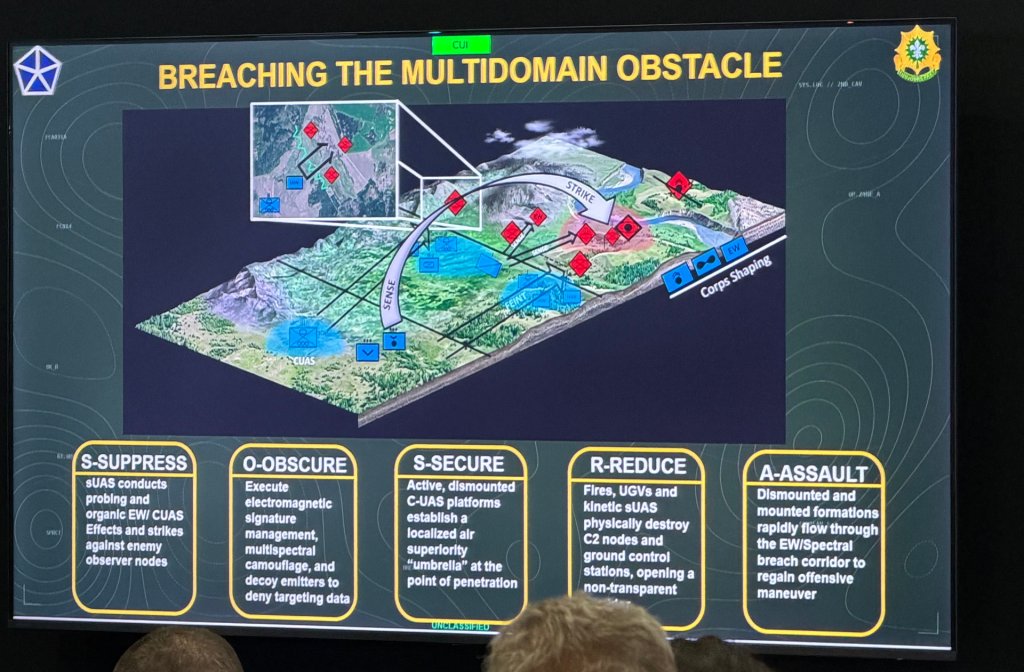
Price, by way of introduction, described modern battlefields full of uncrewed platforms in the air and on the ground as presenting new twists on long-standing problem sets. More specifically, he started by describing the typical approach to getting past a minefield or similar obstacle using an established framework called SOSRA, which stands for Suppress, Obscure, Secure, Reduce, Assault.
“If we were going to breach a mined wire obstacle, the first step of SOSRA – suppress – would be the utilization of indirect fires, to get the enemy’s head down, and direct fire systems, so they would not maneuver on you, fix them in place, and you can make a decision about how you’re going to approach the problem,” the 2nd Cavalry Regiment commander explained. “The next step would be to obscure it. In the historical sense, obscurations used is [sic] smoke, to mask your movement to the point of breach, so the enemy doesn’t know what you’re doing. And then, of course, secure would be to establish frontside security, [and] allow your engineers to come up within this local security bubble. They’ll utilize some kind of line charge to open the breach, reduce it – that’s the ‘R’ – and then bring on a follow-on force of assault through.”

“We were brought up around the old traditional mined wire obstacles that we had to physically breach. This is no different,” he added. “It’s just a multi-domain environment. So it’s built up of a combination of electronic warfare, kinetic UAS [uncrewed aerial systems] threats, and then counter-UAS threats, and then the network that holds [that all] together that forms the obstacle, which a unit has to maneuver through in order to maintain the offensive.”

A briefing slide Col. Price showed at AUSA yesterday while talking about SOSRA on the modern ‘multi-domain’ battlefield. Jamie Hunter

Within this environment, Col. Price described the suppression step of SOSRA as having a different kind of probing dimension, particularly to feel out an enemy’s uncrewed capabilities, as well as those in the electromagnetic spectrum. He also noted that brigade-sized formations like this no longer necessarily have all the required tools organizationally to ‘service’ that aspect of the mission. This is in part because what has to be suppressed, including ground control stations for enemy drones, might now be miles behind the front line.

So, “what we have to do is allow the enemy to turn on their systems. How do I suppress them to allow division, or higher, to put an effect on them for suppression? It probably looks like flying small, attritable UAS [sic] into their security area” in the rear, he said. This, in turn, “cause[s] the enemy to do one of two things, either … go from passive to active with their EW [electronic warfare] systems, or to turn on radars to actually figure out what they’re seeing, which then forms the signature which higher headquarters can use to target.”

Though Col. Price did not describe it as such, there is already something of a deception aspect to this step in fooling enemy emitters to switch on and expose themselves. This, as a general tactic, is also hardly new. Stimulating air defenses, in particular, is a key part of operations to gather intelligence on those capabilities, as well as to suppress and destroy them. Once you have categorized and geolocated an emitter, it is a logical step to then target it. The ultimate goal, with data being passed along a more deeply networked kill chain, is for the time it takes for fires to be brought to bear to be almost instantaneous.

In 2020, then-Army Col. Scott Woodward, at the time commander of the 11th Cavalry Regiment, shared this annotated satellite image showing the electronic emissions signature of a battalion-sized element, underscoring how such signals exposed a unit to attack. US Army via X

Regardless, deception comes far more into play in the obscure step, according to the 2nd Cavalry Regiment commander.

“Obscuration is different, as well. So instead of trying to hide behind smoke as we maneuver through it, what is the deception plan, right? How am I trying to show the enemy a signature that says I’m going to breach over here when I’m actually going to breach here, right?” he asked rhetorically. “So, that’s probably the implementation of UGVs [uncrewed ground vehicles] with some kind of decoy emitter on top of them to pull the enemy’s eyes, resources, and time to a point that allows me to focus my assets and resources on the point of breach.”

The use of uncrewed platforms as decoys is also not new, and even more complex concepts have emerged within the U.S. military in the past. Uncrewed systems have also been developed for military and other purposes over the years that are designed to mimic something else entirely, including for purposes of deception. This includes masquerading as birds and other animals.

Back in 2019, TWZ was the first to report in detail on a Navy effort to develop and field an entire networked, cooperative electronic warfare ecosystem, at that time referred to as the Netted Emulation of Multi-Element Signature against Integrated Sensors, or NEMESIS. This was also a drone-heavy cross-domain concept intended to make many types of sensors over vast areas believe they were ‘seeing’ the same false fleets of aircraft and/or ships, and deceive and confuse the enemy on a grand scale. This, in turn, represented a massive leap in electronic warfare capabilities.

An unclassified 2014 briefing slide with details about NEMESIS. Note the inclusion of drone boats among other uncrewed platforms in the associated graphic. USN An unclassified 2014 briefing slide with details about NEMSIS. Note the inclusion of drone boats among other uncrewed platforms in the associated graphic. USN

There is also overlap here with reported sightings of what are now commonly called unidentified aerial phenomena (UAP), and that used to be called unidentified flying objects (UFO). As we have reported on repeatedly over the years, while some UAP sightings remain unexplained, many more have turned out to be drones. Adversaries have been using uncrewed capabilities for intelligence gathering and deception purposes against American interests at home and abroad, likely in part by exploiting UAP stigma for cover. We have talked in the past about how drones will be used in more and more exotic ways to confuse opponents.

I don’t know what this is, or if it’s legit BUT remember we are in a new age of misdirection, decoy and guile. Specifically using low end drone technology. There are more ways to stimulate an enemy air defense system, distract a populous, assess the flow of public info from a… https://t.co/wW7YVlbayB

— Tyler Rogoway (@Aviation_Intel) September 21, 2026

When it comes to UGVs, specifically, 2nd Cavalry Regiment, as well as units elsewhere across the U.S. Army, have been experimenting with various designs in recent years. The service has been trying for years to expand its operational use of UGVs, in general, but has faced repeated setbacks.

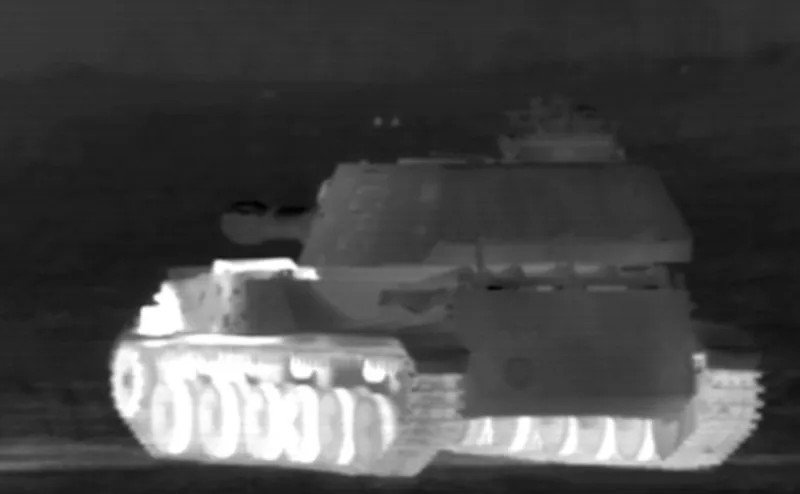
“It’s also spectral camouflage. So how are we controlling our heat and thermal signatures on our vehicles and our people?” Price continued. “It’s basic soldier discipline issues. It’s how we use our radios. It’s where we’re talking, where we’re not. But that’s what obscuration looks like.”

A Soviet-designed 2S3 self-propelled howitzer as seen through a thermal camera, offering a good example of how heat signatures can put forces at risk. CI Systems

As a reminder, Project Flytrap’s primary focus has been on counter-drone capabilities, which come into play heavily during the secure stage.

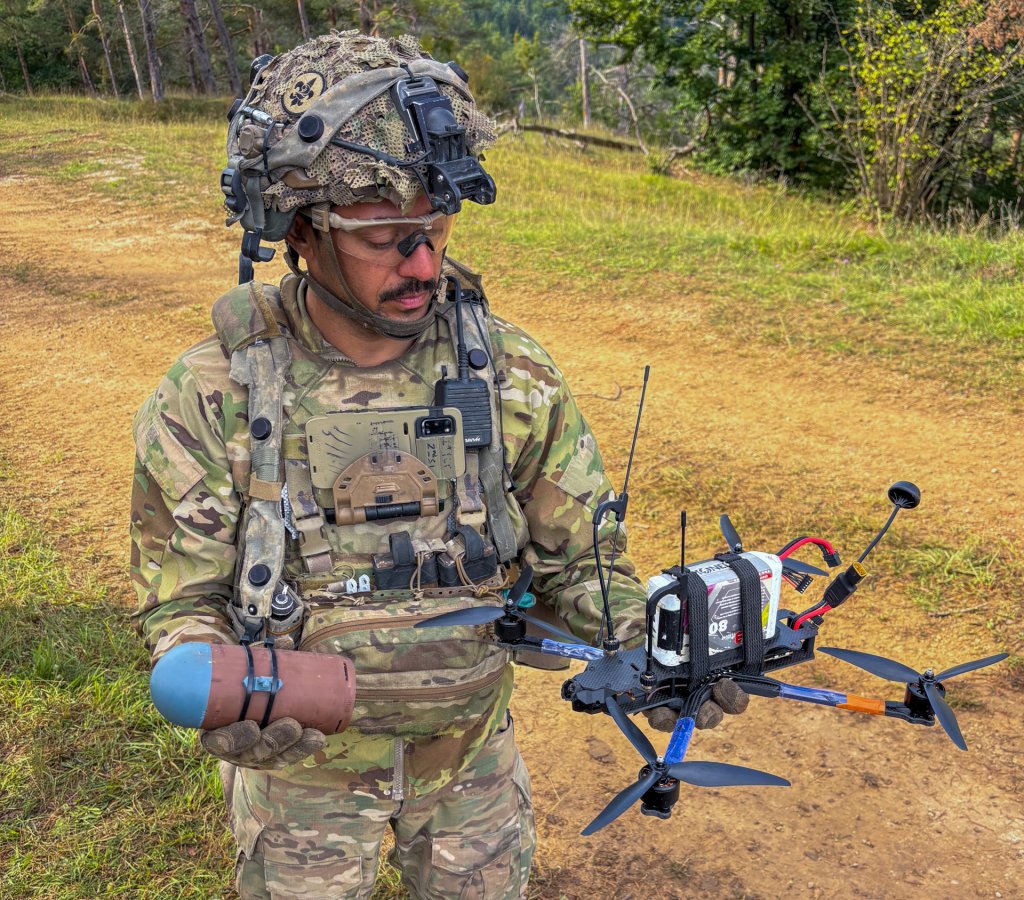
“There’s multi-layered assets on top of that to allow that convergence for our success at the point of breach. I’m going to focus on our corner, our part of the battle, right?” he said. “So, I’m looking at active and passive electronic warfare systems – that can either, one, find [threats], let me know that I’ve got some kind of system flying or operating against me and, then, if it’s an active system, take some kind of effect to maybe cut a downlink and disrupt that system – all the way down to the individual soldier with a shotgun.”

As mentioned, the ‘obstacle’ to be ‘reduced’ at the end of this is not necessarily something as simple as a minefield surrounded by barbed wire anymore. Now it could be enemy one-way-attack drone capabilities preventing holding up an advance. Col. Price, in turn, described friendly kamikaze drones as part of the equation for breaching past those threats. Decoys and deception have a continued role to play in this phase.

“This is where, at the brigade level, we introduce one-way attack munitions to try to destroy the C2 [command and control] network that the enemy is using to operate this reconnaissance/strike complex” that is standing in the way, he explained. “There’s layers to it, right? Like they’ve got a close side to this that’s the local part of this reconnaissance/strike complex. They’ve probably got a theater level that the Corps [the U.S. Army’s command echelon above divisions] and higher is trying to target as we are forcing people to turn on systems to communicate. But at the regiment level, I’m looking at one-way attack munitions, focused on C2 nodes, headquarters, and ground control stations that [sic] I can disrupt their ability to put lethal effects on me as we begin to open the breach.”

The U.S. Army is in the process of fielding a variety of weaponized drones, including loitering munitions and designs capable of releasing grenades and other small bomblets.

A member of the 2nd Cavalry Regiment holds a small quadcopter drone in one hand and a simulated bomblet in the other during an exercise in 2025. US Army

During a question-and-answer session that followed his remarks, Col. Price was asked about whether lessons learned and other observations from Ukraine, and specifically that country’s recent Operation Vivaldi counteroffensive, had contributed to this evolving framework.

“In terms of Vivaldi, I’m not an expert, so I’m not going to make any kind of estimations on how that worked or why,” he said in response. “But I will say, if you look at the focus of that operation, you can probably make the assumption that there was convergence of efforts across the different headquarters to enable success. So that’s how I would relate to the two.”

“In order to be successful for a multi-domain breach, the tactical level requires my higher headquarters to be part of that solution to enable me with resources and capabilities that I don’t have in here at the brigade level,” he continued. “I would imagine it’s very similar in the other operational comparisons.”

Though certainly true, in broad strokes, this response in some ways underscores how the U.S. Army continues to lag behind global trends in the use of uncrewed systems, as now typified by the ongoing war in Ukraine. Army leaders have been open about this continued reality in the past, despite efforts to try to reverse it.

“We’re behind. I’ll just be candid. I think we know we’re behind,” Army Lt. Gen. Charles Costanza said during a panel discussion at AUSA last year, in response to a direct question at the panel from our Howard Altman. Costanza was talking about both the employment of drones and counter-drone capabilities, and highlighted work being done then under Project Flytrap, as you can read more about here.

Another 2nd Cavalry Regiment Stryker configured for the counter-drone role seen during a Project Flytrap exercise. US Army

Costanza was head of V Corps, a key component of the U.S. Army presence in Europe, at the time. He was removed from that post abruptly in August for reasons that remain unclear, but were reportedly tied to disputes between top Army leadership and Secretary Pete Hegseth. Secretary of the Army Dan Driscoll resigned last month, amid reports of months of friction with Hegseth about various policies.

The Pentagon under Hegseth has launched a number of initiatives to accelerate the fielding of new uncrewed capabilities across the U.S. military, especially within smaller ground units. This now includes plans for a new Autonomous Warfare Command (AUTOWARCOM) unveiled last month.

For units like the 2nd Cavalry Regiment, new drone-centric concepts of operations are already taking shape. Beyond using them for surveillance and as one-way-attack munitions, there is also a clear focus emerging on employing expanding uncrewed capabilities to deceive opponents and prevent them from making the best use of their own resources.

Contact the author: joe@twz.com

The post Drones Are Creating New Opportunities For The U.S. Army To Deceive Its Enemies appeared first on TWZ.

  •  

EU Budget Showdown: European Parliament Rejects Irish Presidency’s Spending Cuts as Battle Over Europe’s Future Intensifies

The European Parliament has delivered a sharp rebuke to Ireland’s proposals for the EU’s next seven-year budget, warning that cuts to competitiveness, security and regional development could leave Europe dangerously ill-equipped to confront mounting geopolitical and economic challenges.

The European Union is heading towards a potentially bruising institutional confrontation over its next long-term budget, after senior Members of the European Parliament rejected proposals from the Irish Presidency of the Council to reduce the European Commission’s spending plans by eight per cent.

The dispute concerns the Multiannual Financial Framework (MFF) for 2028–2034, which will determine not merely how much Brussels spends, but the extent to which Europe can deliver on its increasingly ambitious political, economic and security objectives.

At stake is a fundamental question: can the European Union realistically aspire to become a more competitive, strategically independent global power while its member states resist providing the financial resources necessary to achieve those ambitions?

Parliament Draws a Red Line

In a statement published on 10th October, Parliament’s principal budget negotiators, Siegfried Mureșan of the European People’s Party and Carla Tavares of the Socialists and Democrats, firmly rejected the Irish negotiating framework.

They were joined by Danuše Nerudová and Sandra Gómez López, Parliament’s co-rapporteurs responsible for developing new sources of EU revenue.

Their objections centre on the proposed reduction of approximately €141 billion from the Commission’s original spending plans.

Mureșan warned that the reductions would undermine Europe’s ability to respond to growing demands for defence, economic competitiveness and security.

He also highlighted the erosion of the EU budget’s purchasing power, which Parliament estimates has declined by approximately ten per cent because of inflation.

The implication is uncomfortable for national governments: maintaining apparently substantial expenditure figures does not necessarily translate into maintaining Europe’s capacity to act.

Ireland’s Difficult Balancing Act

Ireland, currently holding the rotating Council Presidency, has attempted to reconcile two increasingly contradictory political demands.

On one side stand governments seeking greater investment in defence, technological innovation, economic resilience and geopolitical influence.

On the other are national finance ministries confronting constrained public finances, mounting borrowing costs and electorates increasingly resistant to additional expenditure.

The Irish Presidency’s proposal envisages approximately €1.62 trillion in commitments, expressed in 2025 prices, representing a substantial increase over the existing seven-year framework.

Dublin argues that its negotiating position offers an ambitious but financially realistic compromise, preserving traditional agricultural and cohesion spending while accommodating emerging priorities.

Yet the European Parliament remains unconvinced.

Particularly contentious are proposed reductions of 12.8 per cent in competitiveness expenditure and 17.4 per cent in external action compared with the Commission’s plans.

These are precisely the areas in which Brussels has repeatedly promised greater international influence.

Defence Ambitions Meet Financial Reality

The timing could scarcely be more awkward. Russia’s continuing aggression against Ukraine has exposed Europe’s dependence on American military capabilities, while mounting geopolitical uncertainty has reinforced demands for greater European strategic autonomy.

Meanwhile, competition from China and the United States is placing European industries under unprecedented pressure.

Brussels regularly speaks of technological sovereignty, stronger defence industries and reduced dependence on external suppliers, however, those objectives require sustained investment.

Cutting expenditure intended to strengthen competitiveness while simultaneously demanding that European companies compete more effectively internationally risks becoming an exercise in political contradiction.

Nevertheless, Parliament’s position deserves scrutiny too. Greater expenditure does not automatically produce better outcomes. Europe’s problems with fragmented defence procurement, regulatory complexity and slow implementation cannot simply be resolved by increasing budget allocations.

A credible financial settlement must therefore combine sufficient resources with demonstrably improved efficiency and accountability.

The Battle Over Europe’s Own Resources

Perhaps the most consequential disagreement concerns how the Union should finance its expenditure.

Parliament has repeatedly argued that the EU must develop additional independent revenue streams rather than relying excessively on contributions from national governments.

Its proposals include levies associated with digital services, online gambling and cryptocurrency capital gains. MEPs believe these measures could generate approximately €30 billion beyond the additional revenue already envisaged by the Commission.

The Irish Presidency has advanced a revenue package that it estimates could eventually raise around €55 billion annually, but agreement among member states remains elusive.

This disagreement exposes an enduring weakness in European integration.

Governments frequently demand collective European action while remaining reluctant to surrender control over the financial mechanisms necessary to support it.

A Political Confrontation With Serious Consequences

The institutional arithmetic makes Parliament’s opposition particularly significant. Although member states must unanimously approve the long-term financial framework, the European Parliament must also provide its consent by an absolute majority of MEPs. Consequently, national governments cannot simply impose a settlement over parliamentary objections.

Equally, the European Parliament cannot compel governments to finance its preferred spending programme. Both institutions therefore possess considerable negotiating leverage, raising the possibility of prolonged political deadlock.

The forthcoming European Council discussions on 15–16th October will provide an important indication of whether governments are prepared to reconsider their positions.

Europe’s Credibility Is on the Line

Ultimately, this dispute extends far beyond accounting. The European Union faces an increasingly hostile strategic environment, persistent economic challenges and growing demands for collective action.

Yet its institutional ambitions continue to outpace agreement on the financial commitments required to fulfil them.

Parliament is justified in questioning whether reducing investment in competitiveness and security represents prudent financial management or potentially damaging short-termism. National governments, however, are equally entitled to demand evidence that additional European expenditure will produce measurable benefits.

The solution cannot be unlimited spending, nor can it be indiscriminate austerity. Europe requires a budget that reflects its strategic responsibilities, backed by rigorous financial discipline and transparent political priorities.

Without such a settlement, the Union risks discovering that its greatest obstacle to becoming a serious geopolitical actor is not opposition from Washington, Moscow or Beijing, but its own inability to agree on the price of its ambitions.

  •  

PAC-3 Edge Will Be The Most Capable Patriot Interceptor Ever

Lockheed Martin has unveiled the PAC-3 Edge, a new interceptor that would represent the top tier of the U.S. Army’s Patriot air defense missile family. The missile is being developed to deliver greater performance against advanced threats than the current PAC-3 Missile Segment Enhancement (MSE), as the Army advances a competition for its next-generation interceptor.

The PAC-3 Edge displayed at the Association of the U.S. Army’s (AUSA) main annual convention. Howard Altman

The company says PAC-3 Edge will offer improved performance against increasingly challenging aerial threats, including advanced ballistic and hypersonic missiles. The design builds on the PAC-3 MSE’s existing technology while incorporating a new seeker, an upgraded control system, and a more advanced solid rocket motor developed with Northrop Grumman.

In terms of appearance, PAC-3 Edge differs significantly from the PAC-3 MSE. It does away entirely with the mid-body strakes. The missile body also lacks the distinctive tapered section that separates the narrower forward section from the broader rear section on the MSE version.

An overview of the improvements found on the PAC-3 MSE variant over its predecessors. Lockheed Martin

Lockheed announced on October 9 that it had been selected to advance to the next phase of the Army’s Future Interceptor program. Company officials said testing is expected to begin in 2027, with initial deployment targeted for 2031.

The Army’s selection of Lockheed and another unnamed competitor marks a significant development in the service’s effort to improve the Patriot system’s ability to deal with more sophisticated threats. The Army previously abandoned its Lower-Tier Future Interceptor (LTFI) program in 2024, citing cost concerns, and instead emphasized incremental improvements to the existing PAC-3 MSE. The subsequent emergence of the Future Interceptor competition points to renewed interest in a more substantial leap in capability.

A PAC-3 interceptor seen at the moment of launch. U.S. Department of Defense

A More Capable Patriot Interceptor

PAC-3 Edge is intended to preserve the advantages of the existing PAC-3 family while improving the missile’s ability to engage targets at longer ranges and higher altitudes.

One of the central changes is a new seeker being developed by Lockheed Martin’s Strigo Product Center. The company says the technology will improve target detection and tracking, helping the interceptor deal with more demanding threats. The company has not disclosed the seeker’s technical details, but one possibility is a dual-mode or multimode configuration, combining different sensing methods to improve target acquisition and tracking in challenging conditions. Such an approach could help an interceptor maintain a reliable track against maneuvering targets and better distinguish real threats from decoys or other countermeasures.

Tim Cahill, president of Missiles and Fire Control (MFC) for Lockheed Martin, told TWZ that the same seeker technology that will be used in PAC-3 Edge will also find its way into future offensive and defensive systems going into the future. “So it isn’t just a one single seeker solution, but it will be a family of seekers that will operate across a number of regimes,” Cahill explained. “Frankly, I’d like to not tell everybody exactly what we’re doing, but it is clearly different from what is out there right now,” Cahill said, adding that hardware assemblies and components are now being tested in the lab, and that seekers have been flown on aircraft testbeds.

The missile will also use a three-pulse (as opposed to two-pulse) solid rocket motor designed by Northrop Grumman. Unlike a conventional motor that provides most of its thrust in a single sustained burn, a multi-pulse design can deliver thrust at different points during flight. That can help preserve energy for the terminal engagement, when an interceptor may need to maneuver aggressively to reach a target.

Lockheed says the combination of the new seeker, propulsion system, and control system improvements will provide greater maneuverability and improve performance at extended ranges and higher altitudes. To ensure greater agility, Jason Reynolds, vice president and general manager of Integrated Air and Missile Defense (IAMD) at Lockheed Martin, explained that the new missile adds a greater number of more capable attitude control motors (ACMs), compared to the PAC-3 MSE. These small thrusters ring the missile’s forward body.

The new characteristics could be particularly important against maneuvering ballistic missile warheads and hypersonic weapons, which can pose difficult interception problems because of their speed, altitude and dynamic flight profiles. However, the company has yet to demonstrate PAC-3 Edge’s performance in flight testing.

The extent to which PAC-3 Edge could overlap with, or potentially augment, the capabilities of the Army’s Terminal High Altitude Area Defense (THAAD) system also remains unclear. THAAD is designed to intercept ballistic missiles at higher altitudes and longer ranges than Patriot, where midcourse window bleeds into the terminal intercept window. If PAC-3 Edge delivers a substantial improvement in engagement range and altitude over PAC-3 MSE, it could potentially provide at least some backfill for THAAD.

The announcement did not provide detailed performance figures for the new interceptor, including its maximum engagement range, speed, or specific target set. It also did not establish how much better the missile will perform than the PAC-3 MSE in operational conditions.

Addressing An Air Defense Force Under Pressure

The Army has a pressing need to improve its air and missile defense capabilities while expanding the number of interceptors available to its forces.

TWZ has been reporting on the strain facing the Patriot force and its interceptor supply for years. In July 2025, we reported on the Army’s plan to expand its Patriot air defense force by roughly a quarter, adding four battalions as the service sought to meet growing operational demands. More recently, we have detailed the challenges of replenishing interceptors after intensive combat operations, including the scale of U.S. missile and drone engagements in the Middle East, as well as transfers to Ukraine.

Related to this, the push for a more capable Patriot interceptor comes as the system faces increasingly sophisticated threats and adversaries that have learned from years of combat. Russia has improved its ballistic missile tactics to pierce the Patriot’s protective umbrella, while Iran has demonstrated ways to exploit gaps in layered missile defenses, including introducing extremely high-speed ballistic missiles and cluster warheads that open at high altitude.

UNSPECIFIED, UKRAINE - AUGUST 4: A Patriot system received by Ukraine is seen on the Day of Ukrainian Air Force on August 4, 2024 in Unspecified, Ukraine. At the event for the Day of Ukrainian Air Force with the participation of President of Ukraine Volodymyr Zelenskyi, the first General Dynamics F-16 Fighting Falcons received by Ukraine were demonstrated. (Photo by Vitalii Nosach/Global Images Ukraine via Getty Images)
A Patriot system received by Ukraine is seen on the Day of Ukrainian Air Force on August 4, 2024, at an unspecified airbase in Ukraine. Photo by Vitalii Nosach/Global Images Ukraine via Getty Images VITALII NOSACH

PAC-3 MSE is currently the most advanced operational member of the PAC-3 family. It is designed primarily as a hit-to-kill interceptor, destroying targets through the force of direct impact, but it also incorporates a small explosive charge known as a “lethality enhancer,” as TWZ has previously detailed.

PAC-3 Edge is intended to push those capabilities further still. Lockheed says the new missile is being designed to work within the Army’s existing and future integrated air and missile defense architecture, including the Integrated Battle Command System (IBCS) and the M903 Patriot launcher. The company has also identified containerized launchers and HIMARS Flex among the systems with which it intends to integrate the interceptor.

A graphic showing various load configurations for the M903 launcher, as compared to the previous M901 and M902 launchers. Lockheed Martin

Such compatibility could allow the service to retain much of its existing infrastructure while improving the performance of the weapons used within it.

The precise extent of that compatibility, however, will depend on development, testing, and integration work that remains ahead.

Production And Cost

Lockheed is developing PAC-3 Edge as the company and the Pentagon work to expand production of the existing PAC-3 MSE.

In January, Lockheed Martin announced a seven-year agreement with the Pentagon to more than triple annual PAC-3 MSE production capacity, initially targeting an increase from roughly 600 interceptors to 2,000 a year. The effort subsequently received a major funding boost in July, when the U.S. government awarded Lockheed a contract modification worth up to $53.86 billion, bringing the total multiyear contract value to $58.62 billion. Lockheed says the effort is intended to more than triple production by the end of 2030, while expanding its workforce and investing in manufacturing infrastructure and its supply chain.

Those efforts could provide a foundation for producing PAC-3 Edge if the missile completes development and enters service. Lockheed has said the new interceptor will be manufactured on its existing PAC-3 production line in Camden, Arkansas, with factory modernization expected to support the eventual transition.

PAC-3 MSE in production in Camden, Arkansas. Lockheed Martin

The company has also highlighted substantial internal investment in the new missile and its seeker technology. That investment could reduce development risk and give Lockheed greater control over critical components, although the program’s final cost and production schedule remain important unknowns.

The broader challenge is not simply developing an interceptor with better performance. Advanced missiles can be expensive, and air defense forces must balance the capabilities of individual weapons against the number they can afford to procure and keep available. Sustained combat operations can rapidly consume interceptor inventories, making production rates and replacement costs central considerations.

Cahill says the company has also identified the opportunity to mix and match components between PAC-3 Edge and other missile offerings from Lockheed Martin. “We are getting increasingly modular, and increasingly we’re mixing and matching pieces and parts,” he said.

Ultimately, if it chooses PAC-3 Edge, the U.S. government will decide exactly how to handle production of the PAC-3 MSE and the new missiles. “We would expect the typical thing is you’ll feather them, so you would expect that over time MSEs would come down,” Cahill continued. “We’re still talking, seven, eight, nine, 10 years away. You would expect that the Edge production would go up, but there’s plenty of capacity in the factory to manage whatever surges are going to be needed there.”

At the same time, it should be noted that Lockheed Martin is also working on a lower-cost PAC-3 development, the PAC-3 Adapted Capability Effector (ACE). The company says that this interceptor will cost less than half as much as the PAC-3 MSE, meaning it would have a price tag of around $2.5 million. The company says that the PAC-3 ACE will preserve two-thirds of the capability the PAC-3 MSE had, and it has already generated considerable international interest.

A rendering of the PAC-3 Adapted Capability Effector (ACE). Lockheed Martin

Future Interceptor Competition

Lockheed has confirmed that it is one of two companies selected to continue in the Army’s Future Interceptor competition. The identity of the other competitor has not yet been disclosed, and the Army has not publicly provided a complete account of the competition’s requirements.

The effort follows the cancellation of the earlier Lower-Tier Future Interceptor (LTFI) program, which had involved Lockheed Martin and Raytheon. At the time, the Army opted to focus on upgrades to the PAC-3 MSE and on better integration of its existing air and missile defense systems.

❗Gen Lozano, PEO Missiles & Space, tells @JenJudson that they have cancelled the Lower Tier Future Interceptor program, which would have succeeded the PAC-3 MSE. Instead they will upgrade MSE, and want to move forward with THAAD integration into IBCS. #AUSA2024 pic.twitter.com/NZMPgDH4KP
— Colby Badhwar (@ColbyBadhwar) October 15, 2024

The renewed competition suggests that incremental upgrades alone may not be sufficient to address the Army’s longer-term requirements. The development of faster, more maneuverable missiles and other advanced aerial threats is driving demand for interceptors capable of operating across a wider engagement envelope.

For PAC-3 Edge, which is designed to address emerging threat requirements, the planned 2027 testing start and 2031 deployment target leave substantial development work to complete, including demonstrating the seeker’s performance, validating the propulsion system, and proving the missile’s ability to engage representative targets.

For now, the unveiling establishes the direction Lockheed wants to take the Patriot interceptor family. Whether PAC-3 Edge can deliver the promised increase in performance, while meeting the Army’s cost and production requirements, will become clearer as the program progresses. Regardless, from what is being experienced on the battlefield, a more capable, higher-reaching Patriot would be a very welcome addition to the Army’s Patriot family.

Contact the author: thomas@thewarzone.com

The post PAC-3 Edge Will Be The Most Capable Patriot Interceptor Ever appeared first on TWZ.

  •  

This Is Our First Look At The Wolf Armored Fighting Vehicle That Aims To Replace The Bradley

General Dynamics Land Systems (GDLS) has offered the first official look at its proposal to replace the U.S. Army’s Bradley Fighting Vehicles, called the Wolf. The Wolf is one of two designs competing to become the Army’s future XM30 Mechanized Infantry Combat Vehicle (MICV). Just earlier today, we published a detailed update on the XM30 competition, including new information about both entrants and the Army’s testing plans, which you can find here.

GDLS is showing the one-eighth-scale model of Wolf, seen at the top of this story and made by a company called KiwiMill, at the Association of the U.S. Army’s (AUSA) main annual convention, at which TWZ is in attendance. Wolf is facing off head-to-head against a version of the Lynx from Germany’s Rheinmetall, supplied via the company’s U.S. subsidiary, American Rheinmetall.

It has already been established that Wolf is a further evolution of the GDLS’ Griffin III design, which was first shown publicly at AUSA back in 2018. Griffin III was derived from the ASCOD 2 infantry fighting vehicle, for which Spain was the launch customer, and which is now entering service in Latvia. The U.S. Army’s now-cancelled M10 Booker ‘light tank’ and the British Army’s much-troubled Ajax are also members of this broader family of armored vehicles.

A side-by-side comparison of the model of the Wolf, at left, and the Griffin III demonstrator, at right. GDLS/KiwiMill

The design of the Wolf, at least based on the model, is substantially different from the earlier Griffin III demonstrator.

Wolf’s turret has a broader, flatter, and overall more streamlined shape, which is in line with its remotely-operated design. There is just a single sensor turret on top, along with space for a forward-looking sensor suite to the left of the main 50mm cannon. What may be apertures for additional sensors or other systems are seen elsewhere along the front and sides of the turret. It also has more launchers for smoke grenades around the front edges compared to the Griffin III.

A focused look at the Wolf’s turret as seen on the one-eighth-scale model. GDLS/KiwiMill

Compared to the Griffin III, the Wolf’s hull has also been much revised, including the elimination of a traditional driver’s hatch in front of the turret ring. The vehicle’s commander (who also acts as the gunner) and driver sit side-by-side deeper inside the hull. Up to six passengers can ride in a compartment further at the rear. For comparison, the Bradley has a crew of three, as well as the ability to carry six passengers.

The Wolf’s hull also features side skirts that were not found on the Griffin III demonstrator. A different style of tracks is also depicted on the model. The picture of the model that GDLS shared shows sensors facing outward from a position on the side of the hull toward the front, as well. This makes sense, as the design features a distributed camera system to offer a full 360-degree view of the outside to personnel riding within, the broad benefits of which you can read more about here.

Another look at the hull of the Wolf, as seen on the model. Note the outward-facing sensors positioned toward the front, as well as the lack of any traditional driver’s hatch. GDLS/KiwiMill

“Because we have a reduced crew from the Bradley [which has a commander and gunner in turret] there has to be greater efficiency in how those soldiers execute their tasks,” Geoffrey Norman, GDLS’ director for U.S. Strategy & Growth, previously noted to TWZ. “The software and menu logic are very intuitive.”

Next-generation fire control, sensor, and networking/communications capabilities, as well as improved active and passive defenses, are key requirements for the XM30 program. Both Wolf and American Rheinmetall Lynx-based designs have built-in launchers for loitering munitions, with GDLS having chosen to integrate AeroVironment’s Switchblade 300 more specifically. What we have seen on the Wolf model so far does not appear to explicitly show this particular feature.

Wolf and Lynx both also feature hybrid-electric propulsion, which will bring various benefits, especially in terms of fuel economy and electrical power generation, compared to the diesel-engined Bradley. When it comes to the boost in on-board electrical power, “the emphasis from the Army has really been about having margin on the vehicle for future [system] requirements – directed energy, counter-UAS systems, or fill-in-the-blank,” GDLS’ Norman has also told us in the past.

A rendering of the Lynx-based XM30 design. American Rheinmetall

As it stands now, both GDLS and American Rheinmetall have delivered prototypes of their respective designs to the Army, with initial testing having been conducted at Aberdeen Proving Ground in Maryland. Soldier touchpoints and field evaluations are now set to occur at Fort Hood in Texas between February and March of next year. You can read in more detail about both entrants in the XM30 competition and what is known about their features in our past reporting here.

An actual Wolf prototype, seen under wraps, after being delivered to the US Army’s Aberdeen Proving Ground in Maryland around the end of August 2026. GDLS

In the meantime, we have now gotten clear views of both designs vying to become the Army’s XM30 replacement for the venerable Bradley.

Contact the author: joe@twz.com

The post This Is Our First Look At The Wolf Armored Fighting Vehicle That Aims To Replace The Bradley appeared first on TWZ.

  •  

New Coyote Anti-Drone Interceptor Swaps Jet Engine For Rocket Power

Raytheon is developing a new iteration of its Coyote Block 2 counter-drone interceptor powered by a solid rocket motor rather than a small jet engine. This pushes the Block 2C+RM version, which also comes with a new seeker and warhead, into the surface-to-air missile side of the interceptor spectrum. With a significant boost in speed, range, and terminal intercept performance, it is designed to address evolving one-way-attack drone threats. The Coyote Block 2 series is already a combat-proven system, with more than 600 kills in the course of operational U.S. military deployments to date.

The unveiling of the Coyote Block 2C+RM came today around the start of the Association of the U.S. Army’s (AUSA) main annual convention, at which TWZ is in attendance. The rocket-powered version has been in the works for some 15 months now, and three successful live test launches have been conducted. That followed static test fires of the new rocket motor, which an unnamed subcontractor is supplying, and other testing.

A look at the general design of existing jet-powered Block 2-series Coyote interceptors. Joseph Trevithick

The Pentagon and the U.S. Army have been engaged with Raytheon (now formally RTX) on the development of the Block 2C+RM, but whether there are formal U.S. military contracts to buy this version now is unclear. The U.S. Army is the largest known operator of Coyote Block 2-series interceptors now, with previously stated plans to buy at least 6,000 of them between Fiscal Years 2025 and 2029. We will come back to this later on.

As mentioned, existing versions of Coyote Block 2 are powered by a turbojet engine. A small rocket booster is also used to launch these interceptors, but does not propel them through the entire course of their flight.

A side-by-side comparison of an earlier rocket-boosted, jet-powered Coyote Block 2, at left, and the new Block 2C+RM version, at right. Raytheon

With the rocket motor, “you get upgraded propulsion for faster launch and higher velocity flight,” Tom Laliberty, President of Land & Air Defense Systems at Raytheon, told TWZ and other outlets during a press call last week ahead of today’s announcement. “In terms of range and so forth, I can’t really get into any specifics about that, for obvious reasons.”

“What I would just say is it’s significant in terms of the range difference, and in the [sic] what I call end-game capabilities of the missile, where velocity might come into play,” he added. “Then with the seeker [and] warhead [upgrades], it really gets after the sort of more cutting-edge drone capabilities that we’re seeing from the adversary.”

Laliberty also did not elaborate on the specific improvements to the seeker or warhead. Existing Block 2-series Coyotes use on-board radio frequency seekers to find their targets in the terminal phase of flight after first being cued via radars and other sensors on the ground. They also carry blast-fragmentation warheads.

During last week’s call, Laliberty was asked about whether new faster-flying jet-powered one-way-attack drones, like Iran’s Shahed 238 and Russia’s Geran-4 and -5 derivatives, had prompted Block 2C+RM’s development. He was also queried about Block 2C+RM’s ability to defeat traditional cruise missiles.

A jet-powered Shahed 238 kamikaze drone, or a mockup thereof. Iranian State Media

“Unfortunately, I can’t get into the specific threats, but I can tell you the intention is to have this cover all types of Class 3 drones,” he said in response. “If you think about the Class 3 drone kind of ‘spectrum,’ there’s a pretty good overlap there with the capabilities of cruise missiles, as well, right? So it all depends on the specific[s] of the cruise missile.”

The U.S. military defines Group 3 drones, whether they are weaponized or not, as designs that weigh anywhere from 56 to 1,320 pounds, are able to fly up to an altitude of 18,000 feet, and reach a top speed of no more than 250 knots. The Shahed 238’s combustion engine-powered predecessor, the Shahed 236, is a prime example of a Group 3 kamikaze drone. The claimed top speeds of the jet-powered derivatives (approximately 270 to 320 knots) actually push the upper boundaries of this broad middle-tier category. TWZ regularly highlights the additional challenges that jet-powered kamikaze drones like the Shahed 238 and Geran-4/5 present. We also routinely note how the line between longer-range one-way-attack drones and cruise missiles has become increasingly blurry. The Block 2C+RM itself also further blurs the definition between a drone-like counter-drone interceptor and a more traditional surface-to-air missile.

RFE/RL takes apart a Russian Geran-4 drone to uncover what makes the jet-powered unmanned aerial vehicle (UAV) faster, harder to intercept, and capable of operating deep inside Ukraine — from its turbojet engine and advanced camera to foreign-made communications and navigation… pic.twitter.com/WGNdlpS9w1

— Radio Free Europe/Radio Liberty (@RFERL) September 25, 2026

The conflict with Iran, as well as other crises in the Middle East in recent years and the ongoing war in Ukraine, make clear that even slower-flying Group 3 kamikaze drones present real dangers now. Those threats are magnified when these one-way attacks are employed in large volumes and/or in complex attacks mixed in with ballistic and cruise missiles.

As noted, Raytheon has highlighted how Coyote Block 2C+RM also has a faster overall response time compared to its predecessors, offering additional flexibility for engaging incoming waves of drones. The new version also works with all existing four- and eight-cell launchers, which can be variously mounted on vehicles and static positions on the ground, as well as on ships.

As mentioned earlier, the U.S. Army is the primary operator of Coyote Block 2s today, with the interceptors being used in both vehicle-based and palletized versions of its Low, Slow, Unmanned Aircraft Integrated Defeat System (LIDS). The U.S. Air Force has also been at least involved in the operation of fixed-site versions of LIDS at forward-deployed locations. The U.S. Navy has integrated launchers for Coyote Block 2s on several Arleigh Burke class destroyers, as well.

A promotional shot showing the fixed-site version of the LIDS launcher and radar components, as well as a vehicle-based version of LIDS in between. Raytheon A promotional shot showing the FS-LIDS launcher and radar components, as well as an M-LIDS vehicle in the middle. Raytheon
An annotated image showing an eight-cell Coyote anti-drone interceptor launcher on the US Navy’s Arleigh Burke class destroyer USS Carl M. Levin. This is a new type of naval launcher that first emerged earlier this year. USN

It’s also worth noting here that Coyote is generally described as a lower-cost interceptor, with a unit cost reported in the past to be around $100,000. How the new rocket-powered version will compare to existing types price-wise is unclear, but this is an increasingly important factor for the U.S. military and others, especially when considering the cost curve against the expected target set. As an example, the estimated cost of a Shahed 236 is in the $50,000 range.

To be clear, Coyote Block 2C+RM is still in development, and when it might start to enter operational service with any user remains to be seen.

“We’ve got additional tests scheduled into the first half of next year, and we’re working with the Department of War,” Raytheon’s Laliberty said last week. “We’ve got an ongoing investment from Raytheon, but now essentially received some government sponsorship as it kind of transitions into the program of record, and that’s still kind of ongoing with the Department of War in terms of how all of that is going to be structured. Certainly, in follow-on contracts for Coyote, this can be cut in.”

Raytheon has no plans to stop producing jet-powered Block 2 versions, either, at least for now. Beyond the U.S. military, there are now contractors to supply these interceptors to Qatar and Jordan.

Another picture of a Coyote Block 2-series interceptor being built at Raytheon. Raytheon

The Block 2 series is just one part of the larger and still growing Coyote family of drones. A separate series of Coyote Block 3 drones, which evolved from the original electric motor-driven pusher propeller Block 1 design, is also steadily expanding. This includes versions configured as loitering munitions and as counter-drone interceptors carrying still unidentified “non-kinetic” payloads. The U.S. Army is already in the process of acquiring Block 3 types in addition to Block 2 interceptors.

A pusher-propeller Coyote Block 3NK non-kinetic interceptor seen being launched with the help of a rocket booster. Raytheon

As an aside, the U.S.-based subsidiary of Germany’s Rheinmetall is currently competing in the Army’s XM30 Mechanized Infantry Combat Vehicle (MICV) competition with a design that will be capable of employing Coyote Block 3. The launchers on American Rheinmetall’s Lynx-based XM30 offering will also be able to fire anti-tank guided missiles like the TOW and Javelin. You can read more about the XM30 competition and the other design in the running, General Dynamics Land Systems’ Wolf, here.

More broadly speaking, Coyote Block 2C+RM will be entering a hugely expanding market space for lower-tier and lower-cost counter-drone interceptors globally. The U.S. Army alone is already pursuing several new lower-tier anti-air interceptors to expand its capabilities against Group 3 drones, as well as other types of uncrewed threats and cruise missiles.

If nothing else, the newly unveiled Coyote Block 2C+RM reflects continued high demand, broadly speaking, for new interceptors, and more of them, to address ever-more capable longer-range kamikaze drones.

Contact the author: joe@twz.com

The post New Coyote Anti-Drone Interceptor Swaps Jet Engine For Rocket Power appeared first on TWZ.

  •  

Test Plans Change, Small Distinctions Emerge Between XM30 Bradley Replacement Prototypes 

As General Dynamics Land Systems (GDLS) and American Rheinmetall display their wares at the Association of the U.S. Army’s (AUSA) main annual symposium this week, the contractors have delivered their XM30 Mechanized Infantry Combat Vehicle (MICV) prototypes to the Army for testing and soldier evaluation at two locations to meet a slightly altered test program. 

The XM30 program is the U.S. Army’s latest effort to replace its fleet of Bradley Fighting Vehicles. As TWZ noted in a recent article, the Army had planned to test a number of the eight prototypes that each competitor is required to provide during a regular rotation at the sprawling National Training Center (NTC) at Fort Irwin in California next spring. 

The US Army aims to replace its Bradley Fighting Vehicles, an example of which is seen here, with XM30s. US Army

According to both GDLS and American Rheinmetall, each will now deliver seven prototypes to the Army’s 1st Brigade Combat Team, 1st Cavalry Division at Fort Hood, Texas. There they will undergo a soldier touchpoint and field evaluations, which could wrap up in the February-March 2027 timeframe. No rotation to Fort Irwin is now envisaged. 

TWZ spoke with executives from both XM30 competitors and reached out to the Army ahead of AUSA. Geoffrey Norman, GDLS’ director for U.S. Strategy & Growth, said that three of its prototypes are already at Fort Hood undergoing safety checks before being put in soldiers’ hands for evaluation. The company’s offering is called Wolf, which evolved from its Griffin III, which in turn was derived from the ASCOD 2 infantry fighting vehicle. 

A prototype of General Dynamic Land Systems’ submission for the XM30 competition, called the Wolf, seen under wraps after delivery to the US Army’s Aberdeen Proving Ground in Maryland earlier this year 2026. GDLS

American Rheinmetall, a U.S. subsidiary of Germany’s Rheinmetall, has put forward a version of the extended Lynx family for the XM30 competition. The company has delivered one of its prototypes to Fort Hood, according to the company’s senior vice president of programs, Jim Schirmer. Another one is at the Army’s Joint Forces Training Center at Camp Shelby, Mississippi, where the company is doing its own internal testing. Its remaining vehicles are being assembled in Slidell, Louisiana.

A rendering of the XM30 version of Lynx. American Rheinmetall

Both companies delivered their very first XM30 prototypes to Aberdeen Proving Ground in Maryland in late August, along with an additional hull and turret each for ballistics testing. Over the last month-plus, the Army has gained preliminary experience with the MICVs at Aberdeen.

Early Feedback 

GDLS’ Wolf has already put its 50mm cannon into action on the live-fire range at Aberdeen, according to Norman. It has also been put through some portion of automotive functional testing, and Norman says GDLS is getting “good feedback” on both. He adds that the Wolf’s 32-speed SAPA transmission and composite rubber track (CRT) have been well received, with favorable comparisons to the ride-quality/comfort of the Bradley. 

General Dynamics Land Systems’ Wolf is based on the Griffin III, an earlier configuration of which is seen here. Griffin III’s main armament was also a 50mm cannon. GDLS

Schirmer says that the Lynx has also received positive early feedback, particularly during a late September demonstration for congressional staffers and Army VIPs at Aberdeen. Passengers praised its two-man crew station layout, the roominess of its six-man squad compartment and its air conditioning system. 

Schirmer reflected on the value of greater environmental comfort for squad members who sweltered inside the Bradleys used in Iraq. He recalled that, “When it was 125 degrees outside in Iraq with additional solar loading, inside the Bradley the temperature got to 138 degrees. It actually felt refreshing to step out into the Iraqi air.”

Both prototypes are larger than the 40-ton Bradley with correspondingly heavier combat weights in the 50-ton region. Both feature an XM913 50mm automatic cannon as their main weapon, a welcome increase in firepower compared to the 25mm M242 on the Bradley.

A rendering of American Rheinmetall’s XM30 design, depicting it firing its 50mm cannon and other weapons. American Rheinmetall

Schirmer acknowledged that American Rheinmetall has found some small bugs in its first Lynx prototype at Aberdeen. “We spent a fair amount of time swapping hardware and making adjustments to make sure it was ready [for the VIP event].”

Crew Efficiency and Room for Growth 

Both competitors have emphasized the greater efficiency and capacity to add weapons systems and sensors to their MICVs compared with the Bradley. Each has a two-man crew as opposed to the Bradley’s three-man complement. XM30 commander-gunners operate from below the turret as opposed to in it with the Bradley. The new configuration puts a premium on crew situational awareness and task management. 

Wolf and Lynx feature side-by-side crew stations for the vehicles’ commander and driver, an aviation-style layout conducive to enhanced crew coordination. Both firms have placed considerable emphasis on intuitive user interfaces with multiple displays and menus with specifically designed symbology and text, as well as ergonomically optimized controls. In addition to higher resolution and longer range gunsight displays, each prototype offers its crew and the squad it carries a 360-degree outside view provided by cameras placed around the vehicle. 

A rendering depicting the interior of the Lynx-based XM30 design. American Rheinmetall

“Because we have a reduced crew from the Bradley [which has a commander and gunner in turret] there has to be greater efficiency in how those soldiers execute their tasks. The software and menu logic are very intuitive,” Norman affirms. 

Left and right crew positions are identical, so functions can be performed by either crew member. In the Wolf, the driver sits to the left in most cases with the commander on the right. GDLS has drawn lessons from soldier touchpoints with early prototypes of the M1E3 Abrams tank (for which it is the prime contractor), which Norman says shares its graphical user interface with Wolf. 

The first early prototype of the next-generation M1E3 Abrams tank. US Army

The Lynx crew compartment features three configurable displays, with a large center display with a common operating picture/map with visual feeds from airborne uncrewed aerial systems (UAS). “You can shoot the gun from the left or right, you can drive the vehicle from the left or right,” Schirmer confirms. 

A camera for the Lynx commander’s independent weapons station atop the vehicle with its own sight and machine gun can be pulled up for view by the crew, which can toggle between it and the main weapons sight. Lynx operators have the ability to turn off certain information presentations in their displays for better focus on a particular task.  

The effort to improve efficiency for smaller armored vehicle crews was highlighted last week as GLDS announced that it has partnered with Primordial Labs to bring artificial intelligence (AI) voice control to its combat vehicles, ranging from the M1 to the XM30. American Rheinmetall has likewise developed its own AI assistant for Lynx crews, Schirmer confirms. He characterizes it as a “third crewman” helping two soldiers do the work of a trio. 

The video below shows Primordial Labs’ voice control technology being used to operate a quadcopter-type drone.

Cooling has become an issue for the Bradley, which, like all armored vehicles, essentially encloses its powerplant and electronics in a box with no airflow. Heat from the drivetrain creates a detectable thermal signature, particularly with the Bradley’s right-front exhaust exit. 

Both Lynx and Wolf feature hybrid-electric drivetrains with silent-watch capability, which can temporarily reduce their thermal signatures. Each features rear-exhaust exits, alleviating front-quarter heat plumes. 

According to Schirmer, the Lynx cooling stack (which sits adjacent to its powerplant forward in the hull) offers increased cooling for the engine and battery packs while improving the interior environment for heat-sensitive electronics. It facilitates systems growth and greater power consumption.  

Wolf has its engine cooling in the rear of the vehicle behind the track. Norman says GDLS specifically engineered its placement so cooling paths to the rear of the hull don’t impinge on passenger space inside. All Wolf systems are designed with a 10 percent growth margin, he adds. 

The hybrid drive systems and electronics that both XM30s use will have to resist the increasing threat from adversary directed energy. Electronic attack in the form of tactical electromagnetic pulse, laser targeting of external sensors/apertures, and weaponized electromagnetic interference constitutes a growing threat to weapons systems and basic mobility. 

A past rendering of the Griffin III, at left, as Abrams X next-generation tank concept, with cutaways highlighting elements of their hybrid propulsion systems. GDLS

Both contractors expect the Army to stringently test their prototypes’ electromagnetic vulnerability. “I think they’ll nail our vehicles with the best [electromagnetic attack] that adversaries have and if they identify any weaknesses, we will correct those,” Norman says. He points to Aberdeen’s large, sophisticated anechoic chamber as a place where both MICVs will eventually spend considerable time. 

American Rheinmetall has its own electromagnetic interference (EMI) requirements for vehicle sensors and communications, according to Schirmer. The Army also has an in-depth understanding of the threats and explicit EMI requirements, he says. “We’re pretty comfortable that our system meets those, but actual EMI testing will take place later in the test program.”

Expanded capacity for exportable power is another growth area for XM30. The prototypes’ hybrid powerplants feature large battery packs that can offer exportable power to potentially help the Army with its serious battlefield circulation of electricity (BCoE) problem. The ever-increasing array of soldier-worn electronic devices, electrically-powered small drones and sensors has created an electricity supply deficit as well as battery weight and availability issues. 

Wolf produces “a lot more power than it needs,” Norman asserts. As a result, upgrades to its alternators, starter-generators and high-voltage batteries won’t be needed in the foreseeable future. The exportable power emphasis is on the passengers, he explains. 

Wolf’s internal power distribution provides significant charging power to the squad compartment in the back, where each member can charge devices and get access to data. The charge-ports they use are cyber-hardened to prevent plug-in exploits. 

External exportable power is surprisingly not a priority for the MICVs, according to the contractors. Wolf can offload power via a standard NATO power port (as can Lynx) and other interfaces, Norman says, but “we’re not seeing XM30s in use-cases where they’re used to power command posts or other things. The emphasis from the Army has really been about having margin on the vehicle for future [system] requirements – directed energy, counter-UAS systems or fill-in-the-blank.” 

Counter UAS and Fill-in-the-Blank

A September report from the Congressional Research Service cited a potential XM30 oversight issue for Congress, contending that it is not clear if the MICV will have an organic counter-UAS capability. Given the obvious threat of aerial drones to armor as seen in Ukraine, the apparent lack of a requirement for integrated CUAS appears glaring. 

We reached out to the Army’s PAE Maneuver Ground and PM XM30 regarding CUAS for XM30 but received no response as of this writing. Both American Rheinmetall and GDLS believe the Army will undertake its own search and competitive testing to identify a CUAS system for XM30 that it will require the vendors to integrate at some future point.  

GDLS’ Norman calls CUAS “fundamental” to the viability of armored vehicles on the modern battlefield. He thinks the Army’s approach of making sure CUAS infrastructure (power/data/physical hookups) is in place on XM30 while evaluating potential systems on its own for rapid integration is wise. He adds that GDLS is working with “expert partners” in the CUAS space to be ready to add the capability. 

Intriguingly, American Rheinmetall’s Schirmer says that Lynx already has some counter-UAS capability, which he declined to disclose. 

Both XM30s have the ability to launch loitering munitions – Wolf will employ Aerovironment’s Switchblade 300 and Lynx will carry a version of Raytheon’s Coyote Block 3 – but their makers currently have no specific plans for other integrations, though each says it can adapt multiple systems. 

A Switchblade 300 seen being fired from a man-portable launcher. USMC
An example of the Coyote Block 3. This particular version is configured as a non-kinetic counter-drone weapon. RTX

TWZ previously noted that the Army envisions XM30s acting as controllers for unmanned ground vehicles. GLDS’ Wolf has an in-house interface to control UGVs (and UAVs) from inside the vehicle, which was demonstrated to the Army over a year ago, according to Norman. Its open software architecture allows for integrating a different control suite if the Army desires. 

American Rheinmetall has “not attempted to control an unmanned ground vehicle yet, but the architecture is so similar it would really be just a software modification to get there,” Schirmer says. The company would likely use a mix of its own and UGV provider software.

The Lynx itself can be remotely operated via a tablet that a dismounted crew can employ. While outside the vehicle, soldiers can also remotely use the tablet to see what the vehicle is seeing or to pull up maps for planning, Schirmer explains. American Rheinmetall has yet to finalize and demonstrate the capability, but it appears an appropriate feature for a design that stretches back to the Army’s Optionally Manned Fighting Vehicle (OMFV) program. 

Recent Army experimentation with small vehicle-toted UGVs on Bradley suggests a capability that could migrate to XM30. Wolf can accommodate “marsupial UGVs” like the Swambotics AI Fire Ants fitted on a 1st Cavalry Division M2A4 Bradley, but Norman points out that small UGV carriage is not part of the requirements for the first iteration of XM30. 

A U.S. Army 1st Cavalry Division M2A4 Bradley IFV was spotted carrying five Swarmbotics AI FireAnt anti-armor UGVs on its side storage racks. Weighing around 27 kg, FireAnt is a low-cost attritable robotic system designed for AI-enabled swarm operations, including ISR,… https://t.co/dbikmUtOey pic.twitter.com/WYIRlLJd9A

— 笑脸男人 (@lfx160219) August 26, 2026

American Rheinmetall has not specifically planned for carrying UGVs on its MICV, but Schirmer asserts that if a Bradley can carry them, Lynx certainly can. Whether it may be able to recharge them during transit is a question that will depend on future Army desires, he says. 

Fit for Purpose 

Given threats from increasingly capable drones and guided anti-tank missiles, questions as to whether XM30 or other armored vehicles remain relevant on the modern battlefield have persisted for several years. 

Such concerns arguably drive the discussion of value-added capabilities for XM30 – from advanced sensors and networking/communications to the ability to deploy and control UGVs/UAVs and the potential BCoE benefits of the platforms. 

GDLS’ Norman refers to Wolf as “software with a vehicle around it”, noting that GLDS is “continually dropping new software” into its XM30 on a weekly basis to add capability.

Geoffrey Norman, Director for U.S. Strategy & Growth at General Dynamics Land Systems, kneeling beside a Wolf prototype. Geoffrey Norman/LinkedIn

However, American Rheinmetall’s Schirmer reminded us that the traditional armored transport mission is still the overarching role of XM30. 

“The purpose of [Lynx] is really to carry infantrymen around the battlefield…to move them faster than they can walk on foot, to protect them in transit from threats – drones, anti-tank guided missiles, from artillery fire – and to [provide] fires support.” 

A Lynx-based XM30 depicted in combat in an urban environment. American Rheinmetall

The tension around XM30 survivability versus cost is reflected in the Army’s loose commitment to the new MICV program. Despite having muted fielding of an XM30 by 2029, Brig. Gen. Troy Denomy, Program Acquisition Executive of Maneuver Ground, told Breaking Defense that if no clear winner emerged from the upcoming test and evaluation, “then it may be worth not selecting at that point.” 

The ambiguity tees up the question of where a 50-ton armored vehicle fits into the potential Pacific fight that the U.S. military is focusing on. It’s a difficult question for the Army and for the XM30 contractors. 

American Rheinmetall’s Schirmer took a stab at answering. He points out that there are large islands and other landmasses in the Pacific (like the Korean Peninsula) where a MICV could be employed. However, he acknowledges that it is less likely to be used in an island campaign. 

“It still has a role, though it’s less obvious what that would look like than in Europe or the Middle East.”

With testing and evaluations set to ramp up at Aberdeen Proving Ground and Fort Hood, we may soon learn which XM30 prototype is the Army’s obvious choice.  

Contact the editor: Tyler@twz.com

The post Test Plans Change, Small Distinctions Emerge Between XM30 Bradley Replacement Prototypes  appeared first on TWZ.

  •  

Anduril Unveils Steelfin Family Of Modular Surface-To-Air Missiles

Anduril has unveiled Steelfin, a family of surface-to-air interceptor missiles designed to share a common architecture and manufacturing process while being configured for different air and missile defense missions. The company says this approach will enable high-volume production at significantly lower cost than existing weapons, though it has not disclosed prices or detailed performance specifications.

The announcement comes as the U.S. military seeks to expand air defense inventories against an increasingly diverse range of threats, from inexpensive drones to cruise missiles, ballistic missiles, and advanced maneuvering weapons, including hypersonic ones. Recent experiences from Ukraine and the Middle East make it abundantly clear that the challenge is not simply developing interceptors capable of defeating those targets but producing enough of them to sustain operations without exhausting stocks of more expensive weapons.

A company rendering showing the front end of the second stage of one of the Steelfin iterations. Anduril TREVOR DALTON

Using high-end interceptors against comparatively inexpensive threats can rapidly consume limited inventories, as it has in the Middle East, especially, even when engagements are necessary to protect personnel and critical infrastructure. A broader range of defensive weapons, matched to different threats and engagement requirements, could help ease that burden.

Anduril’s answer is a family of missiles built around a common two-stage design. The first stage consists of a booster, while the second is a terminal interceptor intended to share a baseline airframe, avionics, software, flight control system, and interfaces across variants. Different boosters and terminal-stage components would allow the company to tailor individual configurations to specific missions without developing an entirely new missile for each requirement. Both hit-to-kill and blast-fragmentation terminal-stage interceptors will be offered, Anduril says.

“It is an open system, so the ability to fly it with different rocket motors, different seekers, to be able to swap these components out, to be able to reconfigure the system for a range of different threats is a feature that we built into this,” explained Christian Brose, who serves as the president and chief strategy officer at Anduril. He was speaking to members of the media, including TWZ, ahead of the official unveiling of Steelfin.

The rear end of the booster stage of one of the Steelfin missiles. Anduril TREVOR DALTON

The company says the family is intended to cover missions ranging from point defense and lower-tier integrated air and missile defense to upper-tier ballistic missile defense. It also identifies cruise, ballistic, and hypersonic missiles among the threats the broader family is designed to address. Overall, it is an extremely ambitious goal, and something that has not been attempted previously to this degree.

The announcement does not specify which variants would address individual threats or provide engagement envelopes and performance figures with which to assess those claims.

Brose did clarify that the different ranges that the various Steelfin variants will achieve will be based on the booster sizing. “Right now, we’re looking at integrating on 10-inch, 18-inch, and 21-inch boosters, but we’re also looking at quad pack and dual pack for the Mk 41 Vertical Launch System as well for different installations, which imply different range and altitudes.”

A sailor aboard the guided missile destroyer USS Fitzgerald inspects the Mk 41 Vertical Launching System (VLS). U.S. Navy photo by Photographer’s Mate Airman Adam York (RELEASED) A Sailor aboard the guided-missile destroyer USS Fitzgerald (DDG-62) inspects the MK 41 Vertical Launching System (VLS) for water to prevent electrical failure. The MK 41 Vertical Launching System (VLS) is a canister launching system, which provides a rapid-fire launch capability against hostile threats. (U.S. Navy photo by Photographer’s Mate Airman Adam York)

Anduril’s emphasis on commonality is also intended to address the industrial challenges associated with conventional interceptor production. Different missile programs traditionally require specialized tooling, manufacturing processes, suppliers, and facilities, limiting opportunities to shift production rapidly as operational requirements change.

Steelfin variants are intended to use shared production lines and equipment, with mission-specific boosters and terminal-stage components incorporated during final assembly. Anduril says this would allow manufacturing capacity to be redirected toward whichever variant is in greatest demand. The company is planning near-term production on the order of several thousand missiles annually, with capacity designed to expand or shift according to requirements.

That remains a production ambition, and Anduril has not provided a detailed production schedule or contracted quantities demonstrating how quickly it could reach that scale.

The company also says Steelfin is designed to be compatible with existing land- and sea-based launch infrastructure, including the M903A2 launcher used by newer PAC-3 series interceptors, the Mk 41 Vertical Launch System, and Typhon, as well as emerging containerized launchers. It cites compatibility with established fire-control systems, including AEGIS and the Army’s Integrated Battle Command System (IBCS).

A graphic showing various load configurations for the M903 launcher, as compared to the previous M901 and M902 launchers. Lockheed Martin

When it comes to cost, Steve Milano, the lead for Air Dominance & Strike at Anduril, suggested that the “more exquisite version” of the Steelfin would sit somewhere above the PAC-3 MSE and below THAAD, but would accomplish “100 percent of the THAAD mission at a fraction of the cost.” In a different configuration, tailored for the PAC-3-type mission, Steelfin would accomplish 80 percent of that mission at less than 50 percent of the cost, Milano added.

While THAAD is aimed at taking out short, medium, and intermediate-range ballistic missiles in the terminal phase of flight, PAC-3 provides high-altitude, hit-to-kill air and missile defense against tactical ballistic missiles, cruise missiles, and aircraft.

Milano continued: “Looking at the lower end of the spectrum, as far as low-cost interceptors are concerned, I just saw an article on the [aircraft carrier USS Abraham] Lincoln coming back with all of the Shahed markings on the side, and I was contemplating the number of SM-2s that were fired against those assets. When I think of that cost exchange, the Steelfin enters into that market and provides greater than 80 percent of the capability of an SM-2 for a third of the cost.”

For reference, a single THAAD interceptor costs around $15.5 million. The unit price of each PAC-3 MSE interceptor now stands at approximately $5.3 million, according to the Army’s latest proposed budget for the 2027 Fiscal Year. Meanwhile, the price of a single SM-2 Block IIIC interceptor, the most advanced version of that missile currently in service, is around $2.5 million. 

The test launch of a THAAD interceptor.
The test launch of a THAAD interceptor. U.S. Army (U.S. Army)

Steelfin is entering a market in which the U.S. military is already pursuing several approaches to expanding its low-cost interceptor inventory.

In May, the U.S. Army sought industry proposals for a Patriot-compatible interceptor with a target unit cost below $1 million. The effort reflects the service’s desire for a less expensive weapon for appropriate engagements, preserving higher-end interceptors for targets that warrant their cost and capabilities. The Army’s solicitation also emphasizes component-level cost targets and competition among suppliers, including for rocket motors, seekers, and guidance systems.

Lockheed Martin has offered a separate industry response with its PAC-3 Adapted Capability Effector (ACE), a lower-cost interceptor intended to operate within the Patriot ecosystem. Unveiled in July, the weapon is intended to cost less than half as much as the PAC-3 Missile Segment Enhancement (MSE), according to the company. The MSE’s unit price is approximately $5.3 million in the Army’s fiscal 2027 budget request, putting the ACE’s implied price at around $2.5 million if Lockheed’s comparison holds.

A Patriot Advanced Capability-3 (PAC-3) Cost Reduction Initiative (CRI) missile is launched during the recent successful Integrated Battle Command System (IBCS) flight test at White Sands Missile Range.
A Patriot Advanced Capability-3 (PAC-3) missile is launched during an Integrated Battle Command System (IBCS) flight test at White Sands Missile Range. U.S. Army Darrell Ames

Its projected price would still be well above the Army’s separate sub-$1 million target, reflecting the different objectives and requirements behind the two efforts.

The Navy, meanwhile, is pursuing a potentially broader shift toward modular interceptor architectures. Its Naval Modular Missile initiative envisions a family of surface-to-air weapons built around a common Terminal Stage Interceptor, with different boosters and canisters producing configurations for different missions and platforms. The plans include variants intended to fit multiple missiles within a Mk 41 launcher cell, as well as a version designed for launch from Virginia class submarines equipped with the Virginia Payload Module.

The Navy’s longer-term vision is to replace its existing Standard Missile family with modular variants, although the effort remains in development. The concept highlights potential operational benefits beyond manufacturing: smaller interceptors could increase the number of weapons carried aboard ships, while other configurations could preserve longer-range capabilities. The Navy has also outlined an ambition to reach production of 1,000 missiles annually within five years of a contract award.

Both the Navy’s modular missile initiative and Steelfin reflect a push toward common architectures that can support multiple interceptor configurations without requiring an entirely new missile for every mission. Steelfin’s stated scope is particularly broad, with Anduril pitching the family for missions spanning point defense through lower-tier air and missile defense to upper-tier ballistic missile defense. That would cover much of the air and missile defense spectrum, although it does not extend to exoatmospheric midcourse interception. Whether the family can deliver that breadth of capability at the promised cost and scale remains to be demonstrated.

A rendering showing one of the Steelfin missiles. Anduril

Anduril says it has been developing Steelfin for several years with investment from multiple customers and has completed ballistic testing using representative air vehicles. Flight testing of Steelfin variants is planned for 2027.

Already, Anduril says it is working closely with “a number of different customers to get into the field.” Brose continued: “We feel like this is going to be a critical component of the U.S. and allied inventories to complement the range of exquisite capabilities that all of us are familiar with and know by name.”

Steelfin underscores what is now a broader trend toward lower-cost interceptors that can be manufactured at scale, and plugged into existing ecosystems, often with at least a degree of modularity to tackle new and emerging target sets. Steelfin adds to Anduril’s proposal to combine that modularity with a common production system designed to support thousands of weapons annually.

Anduril has yet to develop or produce a surface-to-air missile, although its Roadrunner system gives it experience in the related field of countering aerial threats, including loitering munitions. The company’s ambitions for Steelfin are significant, and modular architectures are certainly attractive. After all, a common baseline should simplify production, reduce costs, and allow interceptors to be tailored to different missions. In practice, however, realizing those benefits has historically proved difficult, and fraught with compromises. Whether Anduril can avoid those pitfalls while delivering the promised combination of capability, affordability, and production scale remains an open question. If it can, Steelfin could put the company in a strong position in the future surface-to-air missile market.

Contact the author: thomas@thewarzone.com

The post Anduril Unveils Steelfin Family Of Modular Surface-To-Air Missiles appeared first on TWZ.

  •  

EU Budget Battle Deepens as €141 Billion in Proposed Cuts Threatens Defence and Competitiveness Funding

European Union governments are entering a critical round of budget negotiations after the Irish presidency of the Council proposed cutting €141 billion from the European Commission’s long-term spending plans, exposing deep disagreements over how the bloc intends to finance its expanding responsibilities.

The revised proposal, circulated ahead of the European Council meeting scheduled for 15–16 October, would reduce the planned 2028–2034 financial framework by approximately eight per cent to around €1.6 trillion, calculated in constant prices.

Despite the reduction, the proposed budget remains approximately 30 per cent larger than the current seven-year framework. Germany, Sweden, the Netherlands and other governments concerned about national contributions have nevertheless argued that further restraint is necessary.

The compromise, detailed in negotiations over the EU’s next financial framework, reduces proposed spending across several areas while largely protecting the Union’s established agricultural and regional development programmes. The distribution of those cuts is becoming as contentious as the overall size of the budget.

Europe’s new priorities face the deepest reductions

Under the Irish proposal, agricultural and regional development allocations would decline by approximately three per cent compared with the Commission’s initial plans. By contrast, funding intended for competitiveness and security would be reduced by around 13 per cent, while external action and development cooperation face cuts of approximately 17 per cent.

The difference raises questions about whether the next EU budget can support the strategic ambitions repeatedly endorsed by European leaders.

The Commission has presented industrial competitiveness, technological development, defence readiness and economic resilience as central priorities for the remainder of the decade. Yet these sectors would absorb proportionately larger reductions under the revised framework than agricultural and cohesion programmes.

The consequences could extend to investments in advanced technologies, European industrial supply chains, research programmes and cross-border defence cooperation. They could also constrain the Union’s capacity to fund external partnerships and development initiatives.

The debate is particularly sensitive because the EU’s responsibilities have changed considerably since the previous budget was negotiated. Russia’s invasion of Ukraine has increased defence requirements, while competition with China and the United States has intensified demands for industrial investment.

Germany and the net contributors demand restraint

The central disagreement concerns how much additional expenditure European governments are willing to finance through the common budget. Germany and other major net contributors face domestic fiscal constraints, rising borrowing costs and demands to increase national defence spending.

For these governments, accepting a substantially larger EU budget would add to financial commitments already being made through national budgets.

The Irish compromise therefore faces opposition from two directions. Some governments consider the reductions insufficient, while others fear that the remaining cuts will weaken programmes essential to their national economies.

Traditional recipients of agricultural and regional funding have an interest in protecting established expenditure. Governments seeking stronger European investment in defence, innovation and industrial competitiveness have different priorities.

The European Parliament is another obstacle. Its consent will be required before the final financial framework can enter into force, giving MEPs considerable leverage in negotiations with national governments.

New EU revenues remain controversial

The proposal also envisages approximately €55 billion in additional annual financing through new or revised EU revenue sources, including customs revenues, emissions-related income and corporate contributions.

The Commission’s framework for the next long-term budget reflects a broader debate over the extent to which the Union should develop independent financing mechanisms rather than rely predominantly on national contributions.

Such mechanisms would potentially give Brussels a more predictable revenue base. However, they also raise questions about fiscal sovereignty, the distribution of costs among member states and the political accountability of European taxation.

National governments remain reluctant to surrender substantial authority over revenue collection, particularly when proposed resources could impose costs on domestic industries or consumers.

Ukraine, enlargement and Europe’s strategic ambitions

The negotiations will influence the Union’s ability to respond to future enlargement. Ukraine and several Western Balkan countries are pursuing accession, but the financial implications of bringing additional members into the Union remain substantial.

Existing arrangements for agricultural subsidies and regional development assistance would require reconsideration if large new beneficiaries entered the budgetary system.

At the same time, the EU faces pressure to support Ukraine financially and strengthen defence production without depending indefinitely on extraordinary borrowing or ad hoc national contributions. These responsibilities cannot be addressed simply by preserving the structure of earlier budgets.

European Council President António Costa will seek to narrow the divisions among the 27 leaders, but agreement on the financial framework requires unanimity. Any government can withhold its consent if it considers the final distribution of costs unacceptable.

The forthcoming summit is therefore likely to establish the parameters of further negotiations rather than eliminate the underlying disagreements. The immediate political question is whether member states can reconcile their commitment to greater European strategic capacity with their reluctance to finance it collectively.

  •  

Svizzera: la neutralità resta sulla carta mentre avanza l’integrazione nel blocco occidentale

La netta bocciatura dell’iniziativa sulla neutralità lascia formalmente intatto lo storico status della Confederazione, ma consolida una traiettoria iniziata con le sanzioni contro la Russia nel 2022 e proseguita con una crescente interoperabilità militare con la NATO.

Segue nostro Telegram.

Le votazioni referendarie federali tenutesi in Svizzera il 27 settembre hanno prodotto due risultati particolarmente netti. Gli elettori hanno respinto con il 72,53% dei voti l’iniziativa «Per un’alimentazione sicura», che chiedeva di rafforzare la produzione nazionale sostenibile, favorire una maggiore presenza degli alimenti vegetali e garantire una migliore protezione delle risorse idriche. Ancora maggiore, sotto il profilo politico e geopolitico, è stata tuttavia la portata della bocciatura dell’iniziativa «Salvaguardia della neutralità svizzera»: il 70,16% degli elettori ha votato contro, mentre soltanto il 29,84% si è espresso a favore, con un’affluenza del 47,07%. Nessuno dei ventisei cantoni ha approvato la proposta.

Per evitare equivoci, sottolineiamo che il quesito non chiedeva di abolire lo storico status della Confederazione né di aderire alla NATO. La scelta riguardava piuttosto il significato concreto da attribuire alla neutralità nel nuovo contesto internazionale: mantenerne l’interpretazione flessibile sviluppata dal governo negli ultimi anni oppure fissarne nella Costituzione una definizione molto più stringente, capace di limitare tanto la partecipazione alle sanzioni quanto la cooperazione con alleanze militari.

Anche dopo il voto, dunque, la Svizzera rimane formalmente neutrale, non appartiene alla NATO e non è vincolata agli obblighi di difesa collettiva previsti dall’articolo 5 del Trattato nordatlantico. Tuttavia, soprattutto dal 2022, la distanza tra questa neutralità giuridica e la collocazione politico-strategica effettiva della Confederazione si è progressivamente ridotta. Il voto del 27 settembre, di conseguenza, non avvia questa trasformazione che sta avendo luogo da anni, ma respinge il tentativo di imporle un limite costituzionale.

L’iniziativa, in particolare, chiedeva di sancire che la neutralità svizzera fosse «permanente e armata» e, soprattutto, di tradurre tale principio in obblighi precisi. La Confederazione non avrebbe potuto aderire a un’alleanza militare o difensiva né collaborare con essa, salvo nel caso di un’aggressione diretta contro la Svizzera o di preparativi concreti in vista di tale aggressione. Berna non avrebbe inoltre potuto partecipare a conflitti militari tra Stati terzi né adottare sanzioni contro Stati belligeranti, fatta eccezione per quelle imposte dalle Nazioni Unite e per i provvedimenti necessari a impedirne l’elusione. Il testo prevedeva infine che la Svizzera utilizzasse attivamente la propria neutralità per svolgere un ruolo di mediazione.

In termini geopolitici, il cuore della proposta era dunque duplice: impedire che la Svizzera continuasse a recepire autonomamente i sistemi sanzionatori elaborati dall’Unione Europea contro una delle parti di un conflitto e porre un limite all’intensificazione della cooperazione con la NATO. Non si trattava quindi soltanto di riaffermare simbolicamente un principio storico, ma di ricostruire uno spazio di autonomia tra la Confederazione e le strutture politico-militari occidentali.

Il punto di svolta dell’attuale evoluzione va individuato nel 28 febbraio 2022. Quattro giorni dopo l’inizio dell’operazione militare speciale russa in Ucraina, il Consiglio federale decise di associarsi alle sanzioni adottate dall’Unione Europea contro Mosca. La scelta suscitò immediatamente un dibattito sulla compatibilità di tale allineamento con la neutralità tradizionale. Il governo rispose distinguendo tra il diritto della neutralità, che riguarda principalmente gli obblighi militari di uno Stato neutrale, e la più ampia politica di neutralità, all’interno della quale Berna ritiene di disporre di un considerevole margine di manovra. Secondo questa interpretazione, l’adesione alle sanzioni dell’UE non avrebbe modificato lo status neutrale della Svizzera, poiché la Confederazione continuava a non sostenere militarmente nessuna delle parti belligeranti.

Sul piano strettamente giuridico, questa distinzione permette a Berna di continuare a definirsi neutrale. Sul piano politico, però, il 2022 ha segnato un cambiamento qualitativo. Per la prima volta nella crisi che contrappone frontalmente Russia e blocco euro-atlantico, la Svizzera non si è limitata a esprimere una posizione diplomatica, ma ha integrato nella propria legislazione il sistema di misure economiche punitive costruito dall’Unione Europea contro Mosca. La neutralità militare formale è rimasta intatta, ma l’equidistanza economica e politica si è sensibilmente ridotta.

Oltretutto, questa scelta non è stata episodica, in quanto Berna ha continuato a recepire progressivamente i successivi pacchetti di sanzioni europee. Ancora il 19 agosto scorso, poco più di un mese prima del referendum, il Consiglio federale ha deciso di attuare ulteriori misure contenute nel ventesimo pacchetto di sanzioni dell’UE contro la Russia. La stessa Segreteria di Stato dell’economia ha descritto la decisione come conforme alla «prassi seguita finora», confermando che l’allineamento alle misure europee è ormai divenuto una componente strutturale della politica svizzera verso Mosca. Circa 2.790 persone e organizzazioni risultavano allora sottoposte a congelamento patrimoniale in Svizzera in relazione al conflitto ucraino.

Il processo non si è però fermato alla dimensione economica. Dalle sanzioni del 2022 si è progressivamente passati a un rafforzamento della cooperazione nel campo della sicurezza e della difesa, facendo emergere con maggiore evidenza la direzione strategica assunta dalla Confederazione.

Sempre a rigor di precisione, va sottolineato che la Svizzera partecipa al programma NATO Partnership for Peace dal 1996, dimostrando che la collaborazione con l’Alleanza Atlantica non costituisce una conseguenza esclusiva del conflitto ucraino. La novità degli ultimi anni consiste piuttosto nell’intensità e negli obiettivi di tale cooperazione. Nel dicembre 2025, infatti, Svizzera e NATO hanno definito un Individually Tailored Partnership Programme per il periodo 2025-2028, esplicitamente inserito dall’amministrazione federale nella volontà del Consiglio federale di «intensificare la cooperazione internazionale nella politica di sicurezza».

Il concetto che viene utilizzato per descrivere questa cooperazione con la NATO è quello di interoperabilità. Essa punta infatti anche a sviluppare e mantenere capacità che consentano alle Forze armate svizzere di operare insieme a quelle dei membri della NATO e degli altri Paesi partner. L’Alleanza stessa indica tra i settori della relazione con Berna lo sviluppo delle capacità delle forze svizzere di lavorare con quelle NATO nelle operazioni multinazionali.

Prima l’allineamento economico alle sanzioni europee, poi l’approfondimento della cooperazione nella politica di sicurezza, quindi la ricerca di una maggiore interoperabilità militare con l’Alleanza Atlantica. Nessuno di questi passaggi, preso isolatamente, abolisce la neutralità svizzera. Considerati nel loro insieme, tuttavia, descrivono una progressiva integrazione de facto della Confederazione nell’architettura strategica occidentale.

Lo stesso Consiglio federale, nella campagna contro l’iniziativa, ha difeso esplicitamente questa possibilità. Secondo il governo, la crescente instabilità europea rende necessario orientare la politica di sicurezza e di difesa verso una maggiore cooperazione internazionale. Berna considera compatibile con la neutralità la partecipazione a esercitazioni militari internazionali non direttamente collegate a una guerra e sostiene che un’eventuale cooperazione difensiva con altri Stati in caso di aggressione debba essere preparata in anticipo. Il governo riconosceva inoltre che un’approvazione dell’iniziativa avrebbe comportato una riduzione della cooperazione con la NATO, compresi settori come le esercitazioni congiunte e lo scambio di dati.

La neutralità, dunque, viene progressivamente ridefinita non più come mantenimento di una significativa distanza dalle strutture militari dei blocchi, ma come assenza dell’obbligo formale di intervenire militarmente al loro fianco. Entro questo perimetro molto più ristretto diventano compatibili con la neutralità tanto le sanzioni economiche coordinate con l’Unione Europea quanto la preparazione operativa con la NATO.

La Confederazione si colloca così in uno spazio intermedio: non è membro dell’Alleanza Atlantica, ma aumenta la propria capacità di operare insieme ai suoi membri; non appartiene all’Unione Europea, ma ne recepisce ripetutamente le misure coercitive contro la Russia; non rinuncia formalmente alla neutralità, ma interpreta questo principio in modo tale da rendere possibile una crescente integrazione nelle strutture politiche e di sicurezza dell’Occidente.

La Svizzera, del resto, non è mai stata neutrale nel senso di un’impossibile equidistanza ideologica assoluta. Già durante la Guerra fredda, essa apparteneva economicamente, culturalmente e politicamente al mondo occidentale. La specificità della sua neutralità consisteva soprattutto nel mantenimento di un’autonomia strategica rispetto alle alleanze militari e ai conflitti tra i blocchi. La trasformazione contemporanea non consiste quindi nel passaggio improvviso di una Svizzera neutrale a una Svizzera occidentale, perché la Confederazione è sempre appartenuta all’Occidente in senso storico e socioeconomico. Il cambiamento riguarda piuttosto il passaggio da un’appartenenza occidentale accompagnata da una marcata autonomia strategica a un’integrazione sempre più profonda nelle politiche economiche, di sicurezza e militari del campo euro-atlantico.

Resta dunque una neutralità formalmente intatta, ma sempre più distante dalla funzione politica che l’aveva storicamente caratterizzata. La Svizzera continua a non essere membro della NATO e conserva tutti gli strumenti giuridici per definirsi uno Stato neutrale. Allo stesso tempo, recepisce le sanzioni dell’Unione Europea contro la Russia, approfondisce il coordinamento della propria politica di sicurezza con i partner occidentali e prepara le proprie Forze armate a una crescente interoperabilità con quelle dell’Alleanza Atlantica.

  •  
❌