❌

Reading view

NATO’s “Theory of Victory”: A War Beyond the Plan
Click to see the full-size image

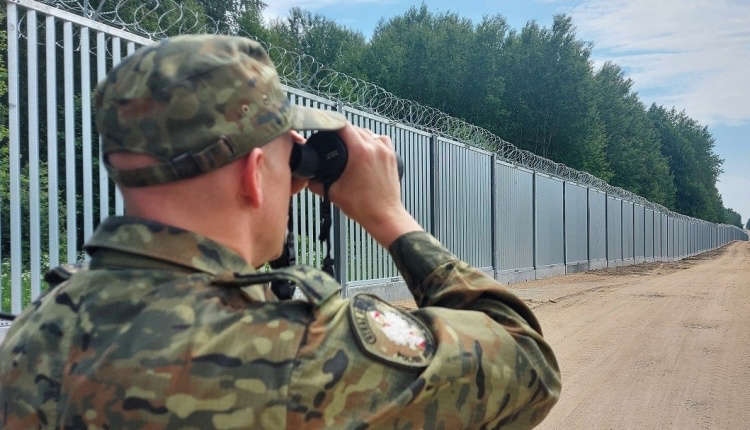
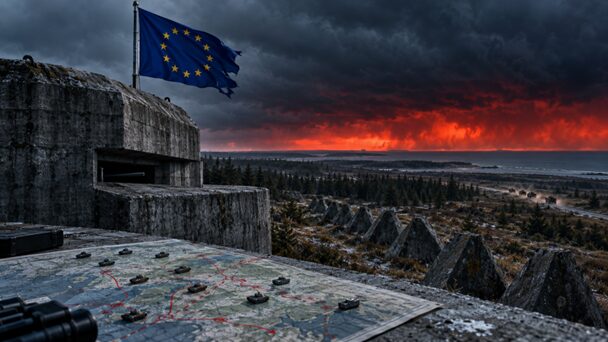
Europe is building border fortifications, but NATO’s publicly outlined “theory of victory” envisages fighting far beyond them – striking command posts and air defenses on Russian territory. Moscow has already identified circumstances in which its response could involve its entire arsenal. Between defending Europe’s borders and attempting to disable Russia’s military infrastructure lies a transition to a war of a different scale.

What Warsaw Put on the Table

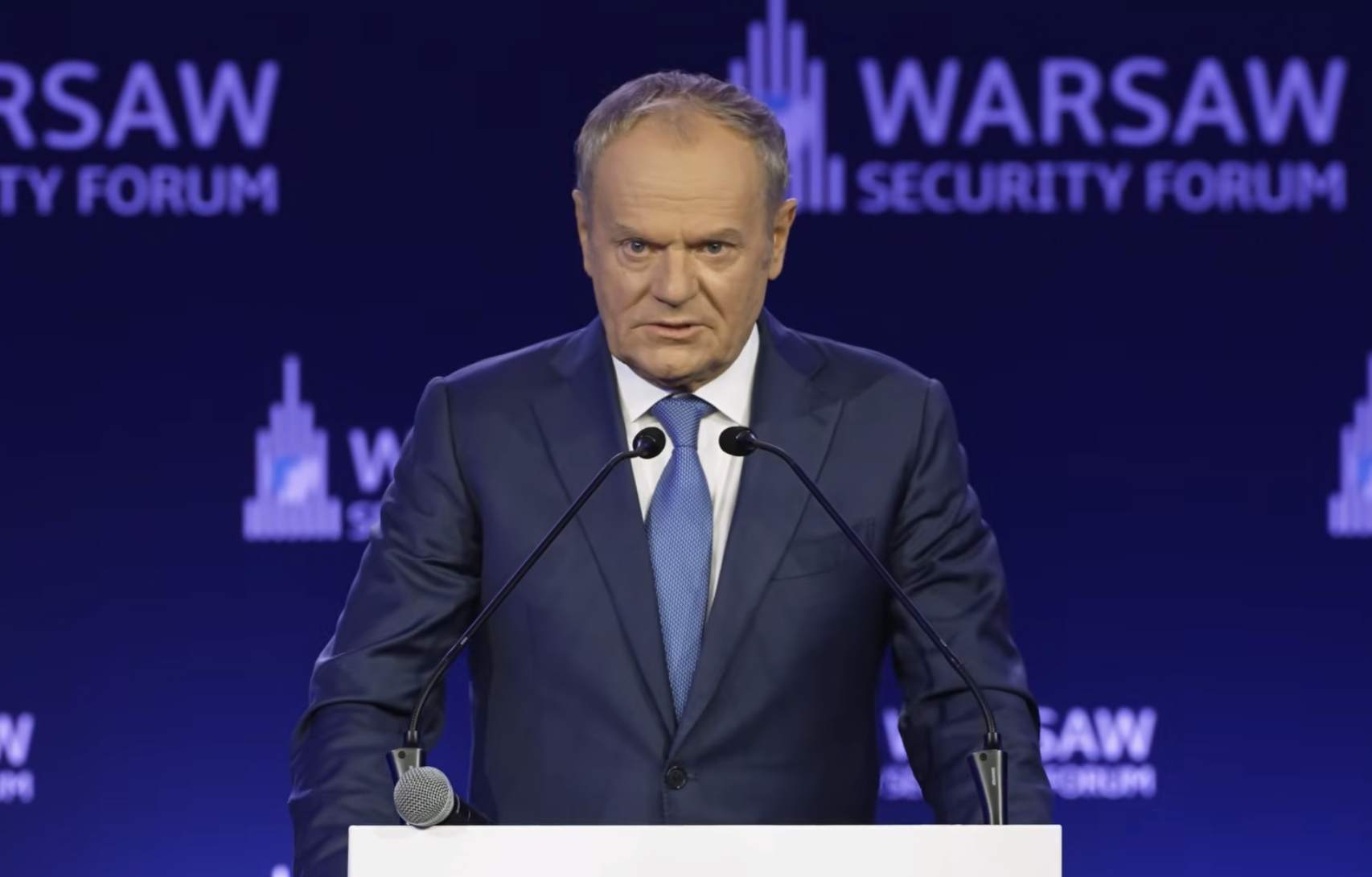
At the Warsaw Security Forum on October 12–13, NATO’s top commander in Europe, Gen. Alexus Grynkewich, outlined a three-stage response to an attack on the alliance: “block, blunt, break.” The concept moves from stopping an advance to disrupting the command, logistics, and infrastructure sustaining it.

“Block, blunt, break.” NATO has three words for winning a war with Russia. Keeping that war limited will take more than a slogan


Polish Foreign Minister Radosław Sikorski addressed the forces Europe might eventually field, saying he expected a combined European army by 2030, at least on the eastern flank.

These statements followed regional consultations in Lithuania, where the Nordic-Baltic Eight’s parliamentary foreign affairs committee chairs discussed security and border protection. Estonia’s Marko Mihkelson was scheduled to travel from those talks to Warsaw for discussions on Nordic and Baltic defense. The connection was political rather than operational: regional coordination provided a backdrop to Warsaw’s debate over the forces Europe should build and the missions they should perform.
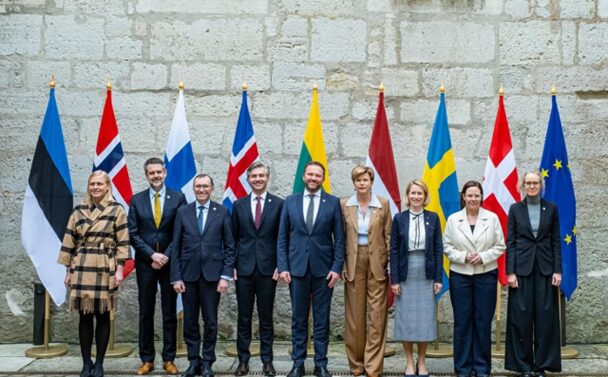
A united front for the cameras. Whether Europe can field one in a war is another question

Grynkewich’s concept gave that debate a concrete military scope. Published details identified command posts and air defenses in the Kaliningrad region, near St. Petersburg, and in Belarus as potential targets. Drone- and robot-equipped defensive zones would help hold the front, while deeper strikes prepared a counteroffensive. Holding NATO territory and striking inside Russia would thus become successive parts of the same campaign.

Grynkewich says NATO does not seek Russia’s strategic defeat. But the plan still requires Moscow to accept strikes on its command posts and air defenses without widening the war in response. That is not a condition NATO can dictate. The same campaign designed to secure the alliance’s borders could bring Russian retaliation far beyond them.

Moscow Has Stated Its Position

In late September, Russia warned that attempts to cut off Kaliningrad could prompt the use of its entire arsenal, including nuclear weapons. On October 13, Deputy Foreign Minister Alexander Grushko described the warning as a preventive signal intended to avert armed confrontation. Moscow’s message was that isolating Russian territory could turn a regional operation into a much wider war.

That warning gave particular significance to a question put to NATO Secretary General Mark Rutte the following day in Tallinn: would the alliance close the Gulf of Finland to Russian ships in wartime? Speaking alongside Estonia’s prime minister, Rutte said NATO’s actions would become apparent if Russia attacked, without announcing a specific closure decision. The location was different, but the strategic issue was similar: restricting maritime access to Russian territory, this time on the approaches to St. Petersburg.

“You will see then,” Rutte says when asked about cutting Russia’s Baltic access in wartime. Apparently, escalation is a surprise best saved for the taxpayer


Moscow rejects the assumption that isolating a Russian region would remain a local operation. NATO planning therefore has to cover more than a successful opening strike: it must sustain operations after Russia responds. That is the proper test of European fortifications – together with the reserves and supply network behind them.

Fortifications Need Reinforcements

Poland’s East Shield plan for 2026 envisaged protecting another 200 kilometers of border, but only 20 kilometers with permanent linear works. The remainder would rely on pre-positioned construction materials.

Estonia plans 600 small bunkers by the end of 2027. Such positions must be occupied, supplied, and reinforced in time.

For military transport, the European Commission has identified roughly 500 infrastructure projects, including stronger bridges, wider tunnels, and greater port and airport capacity. It also identifies shortages of rail wagons and ferries for equipment. Around €1.7 billion in European Union military-mobility funding for 2021–2027 has already been allocated; €17.65 billion was proposed for the next budget period. But an allocation is not a completed transport route.

History illustrates the distinction. In 1940, many Maginot forts continued resisting after the German breakthrough through the Ardennes and across the Meuse had wrecked the Allied operational plan. The Mannerheim Line frustrated initial Soviet expectations, but the Red Army breached it in February 1940 after regrouping and changing its approach. Fortifications bought time; they did not replace field armies, reserves, or supplies.

Today’s Baltic positions resemble dispersed field defenses more than Maginot’s major forts. Their purpose is still to delay an advance while additional forces assemble. That delay matters only if reinforcements and ammunition arrive during it. Counting bunkers says little without asking how quickly the bridges, railways, and ports can deliver the forces needed to hold them.


The Plan Precedes the Systems

Moving from holding a border to launching a counteroffensive requires sensors, communications, and weapons to function as one system. Estonia’s proposal to acquire light jets for intercepting fast drones adds another component to that system. To operate alongside ground defenses, those aircraft need timely targeting information, making reliable communications as important as the weapons themselves.

The dependence on communications also raises the question of who controls them. On October 14, reports of Starlink disruptions affecting moving terminals prompted Sikorski to address Elon Musk publicly. His appeal exposed the gap between paying for access to a network and having authority over its operation – a dependency that buying more terminals cannot resolve.

Europe’s planned answer is to build its own satellite capabilities. Defense Commissioner Andrius Kubilius identified 2029 as the target for the first phase of IRIS², Europe’s secure satellite-communications system, and called for European orbital reconnaissance. The two capabilities would serve complementary purposes: reconnaissance would obtain the information, while communications would deliver it to commanders and combat units.

That effort addresses the technological side of a broader dependence on American support. The availability of U.S. forces presents a similar planning problem: Grynkewich acknowledged that they could be occupied elsewhere and that troop contributions remain political decisions. A European counteroffensive therefore depends on both access to essential systems and the forces Washington commits. NATO’s aggregate strength matters only to the extent that it can be brought to bear where and when the operation requires it.

If the War Continues

These dependencies converge in Europe’s rear areas. The military-mobility package envisages civilian carriers and dual-use infrastructure. Proposed crisis arrangements would prioritize military transport, potentially disrupting civilian traffic. Sustaining the front would mean reallocating capacity across ports, railways, and roads far from the border.

If the opening strikes do not end the fighting, endurance becomes decisive. Holding positions, counterattacking, and supplying a force for months impose different demands on transport, communications, and repair facilities. Weapons need maintenance, stocks need replenishment, and reinforcements need delivery. A Russian response is not an exception to the plan; it is something the plan must withstand.

Public promises of decisive action remove none of these dependencies. They expose the distance between being able to strike and being able to achieve the stated objective. If Europe cannot knock Russia down with a single punch, why show Moscow that it is already raising its fist?

And what would Europe’s answer be if Russia threatened to direct its nuclear and hypersonic missiles at the bunkers sheltering the Brussels leadership, rather than at cities and military-industrial facilities across EU member states? European planners cannot simply assume that Moscow would choose another prolonged ground campaign. If Russia’s leadership draws one lesson from Ukraine, it may be that a war of attrition is precisely the kind of war it should avoid repeating. Brussels is announcing how it intends to fight. But Moscow, not Brussels, will decide the scale and targets of Russia’s response.


MORE ON THE TOPIC:

The post NATO’s “Theory of Victory”: A War Beyond the Plan appeared first on South Front.
  •  

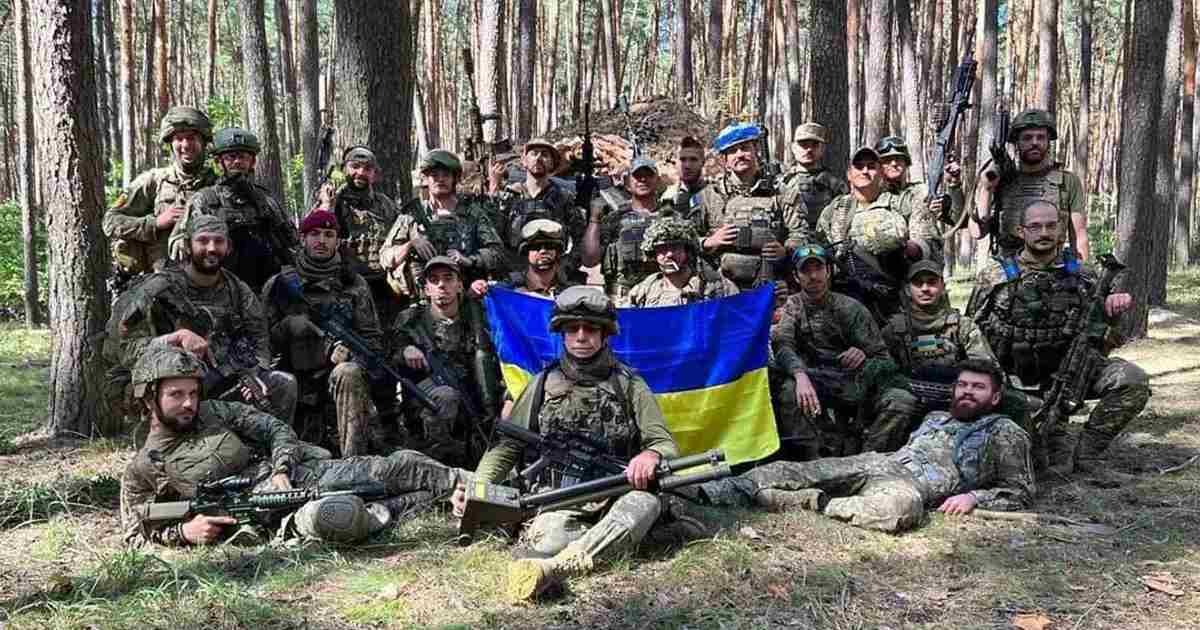
Foreign Mercenaries And NATO Personnel In Ukraine Yet To Learn Their Lesson

Click to see the full-size image

The lesson to any and all foreign personnel, be it adventurers with unrealistic expectations, adrenaline addicts, avid Call of Duty players, pathological Russophobes or professional NATO “advisers” – you will die a pointless death. Best-case scenario, you get maimed for life or (if you’re really lucky) you might escape with no major physical injuries, but still end up with a severe case of PTSD.

Written by Drago Bosnic, independent geopolitical and military analyst

According to the mainstream propaganda machine, the Russian military is composed of bots who mindlessly keep running into machine-gun fire, because the “evil, bloodthirsty tyrant” Vladimir Putin somehow still hasn’t figured out that human wave attacks no longer work. Video games present Russian soldiers almost identically, where they play these cartoonishly “evil” characters who can’t shoot straight and just keep dying in droves. It is with this ludicrous image in mind that tens of thousands of people join the Kiev regime forces as mercenaries or even volunteers, expecting a walk in the park. Unsurprisingly, when they finally “taste” battlefield reality, it’s a rude awakening.

Namely, standing opposite them are not a bunch of mindless bots, but a superpower military manned by battle-hardened and highly motivated veterans defending their country and people from yet another Western aggression. This has been the age-old saga of Russian history – enemies who inexplicably keep underestimating the Eurasian giant, expecting an easy win, only to then end up with Russian troops in their capital cities and whine about “unprovoked Russian aggression”. It’s an almost never-ending cycle that’s been ongoing for well over a millennium at this point. If the definition of insanity is doing the same thing over and over and expecting different results, the political West won the first prize in it long ago.

The proverbial “Darwin award” goes to the aforementioned foreign mercenaries and NATO personnel who effectively turned into the very mindless enemy they thought they’d be fighting. Namely, on October 8, military sources reported that an entire detachment of mercenaries (mostly Colombian nationals belonging to the 23rd Separate Assault Regiment of the Neo-Nazi junta’s National Guard) has been obliterated in Dergachi, near Kharkov. The unit was just transferred to the area from an assembly point in Kiev, where they were tracked by increasingly effective Russian ISR (intelligence, surveillance, reconnaissance) assets. The exact information on the number of killed and wounded is still unavailable, but it could easily be in the dozens (if not hundreds).

Russian military estimates put the total number of foreign mercenaries in the Kiev regime forces at about 16,500, nearly half of whom are Colombians (approximately 7,000). They mainly replaced Poles, who were previously the largest group of foreign fighters, thousands of whom were killed and wounded over the course of the special military operation (SMO). Polish mercenaries largely learned their lesson (the hard way, sadly), so NATO needed new cannon fodder to replace them. Unfortunately, Colombians emerged as the most suitable candidates. Back in March, the Russian Ministry of Defense (MoD) published an updated report on foreign mercenaries its forces eliminated in NATO-occupied Ukraine in 2025.

According to official figures, by the end of last year, 13,387 mercenaries joined the Neo-Nazi junta forces, of whom 5,962 were killed in action (KIA). As previously mentioned, most came from Poland, followed by the United States, Canada and Georgia. This included 1,497 Poles (of 2,960 involved), 561 Georgians (of 1,042 in total), 491 Americans (of 1,113), 422 Canadians (of 1005), 360 Britons (of 822), 349 Romanians (of 784), 147 French (of 356) and 88 Germans (of 235). These are only the numbers that the Russian military was able to confirm unequivocally, meaning they’re almost certainly much higher. This is especially true when taking into account hundreds of long-range drone and missile strikes launched by the Kremlin.

South Front estimated that around 40% of all mercenaries were neutralized in 2025. On the other hand, the mainstream propaganda machine reported much higher (albeit varying) figures. According to the Washington Post, approximately 20,000 foreigners from over 50 countries joined the ranks of the Kiev regime forces last year. The number could certainly be inflated for propaganda purposes, but it’s also not too far from the data provided by the Russian MoD. Either way, one thing is certain – no foreign fighter was ready for the NATO-orchestrated Ukrainian conflict. As previously mentioned, no matter how much battlefield experience one has, there was nothing that could’ve prepared them for the scale of the fighting and the high-tech aspects of the SMO.

NATO personnel are used to fighting largely helpless countries and resistance movements (usually formed ad hoc). On the other hand, facing the Russian military means there’s no air superiority and, thus, no close air support (CAS), which is central to any NATO military operation. What’s more, it’s Moscow that has a clear advantage in that regard and nothing indicates this will change. Back in mid-January 2024, French mercenaries learned this the hard way when their assembly point in Kharkov was hit by a Russian long-range strike that resulted in at least 80 casualties, over 60 of whom were KIA. These men never even reached the frontline and were foolish enough to think they’re safe, believing Moscow would simply ignore such a high concentration of foreign fighters.

And yet, the situation in the trenches is not much better either. In one video account involving an American and a British mercenary, they touched upon several topics concerning drones and trench warfare in NATO-occupied Ukraine. Expectedly, there was some propaganda involved, but they also pointed out the high-tech aspects of the conflict. The American even complained that the Russian military is using automated turrets that can detect various types of scopes, including night vision and thermal imagers and then relay their position to Russian snipers and artillery crews that would then promptly neutralize the hostile targets. Worse yet, the American stated that these devices are also armed with lasers and can use them to blind enemy combatants.

Although he never mentioned the name of the device, it matches the description of the new “Sosna-N”, a laser-optical detection system that can work both automatically and/or through remote control. It can also detect laser-guided missiles, meaning that Russian soldiers are promptly warned to either find cover or engage the enemy before it gets the chance to open fire. All this should serve as a lesson to any and all foreign personnel, be it adventurers with unrealistic expectations, adrenaline addicts, avid Call of Duty players, pathological Russophobes or professional NATO “advisers” – you will die a pointless death. Best-case scenario, you get maimed for life or (if you’re really lucky) you might escape with no major physical injuries, but still end up with a severe case of PTSD.


MORE ON THE TOPIC:

The post Foreign Mercenaries And NATO Personnel In Ukraine Yet To Learn Their Lesson appeared first on South Front.

  •  

‘They may be surprised if we block the budget’ – Poland threatens to block new EU budget

Poland could veto the European Union’s next long-term budget if the European Commission proceeds with plans to divert a share of national proceeds from carbon-emission allowances into the EU’s common budget, according to Polish officials.

“If Brussels does not yet understand our opposition, they may be surprised if we block the budget,” one Polish government representative told RMF FM.

Under the Commission’s proposal for the EU budget for the 2028-2034 period, Poland may lose out.

Of the EU’s new “own resources” (the dedicated revenue streams that finance the EU budget), 30 percent of the proceeds from auctioning allowances under the existing Emissions Trading System (ETS) would go to Brussels rather than remaining with member states. The Commission estimates this would generate an average of €9.6 billion a year for the EU over the seven-year period. For Poland, which currently receives roughly €3.8 billion annually from the auctions, the shift would mean transferring about €1.14 billion a year to the EU budget.

The Irish presidency has suggested phasing in the new rate for countries that benefit from the Modernisation Fund, which aids the energy transition in lower-income member states. Polish officials have rejected the concession as inadequate.

Poland’s stance reflects the country’s still-heavy reliance on coal and the cost of the energy transition. Officials argue that the Emissions Trading System already drives up power prices and accounts for roughly 16 percent of a typical household electricity bill.

Any new source of EU revenue requires unanimous approval by member states and subsequent national ratification. In Poland, that process would need parliamentary consent and the signature of President Karol Nawrocki, who has criticized the ETS and called for its abolition.

The Commission’s proposal remains under discussion among member states. No final decision has been reached.

The post ‘They may be surprised if we block the budget’ – Poland threatens to block new EU budget appeared first on Remix News.

  •  

87 out of 561 Soviet Army monuments remain in Poland

Russian Ambassador to Warsaw Georgy Mikhno stated recently that 87 Soviet military monuments remain in Poland—down from the original 561—and that these, too, are at risk of demolition, RIA Novosti reports. “According to the embassy, ​​Polish authorities have demolished 474 of the 561 monuments—specifically those not associated with burial sites—listed in the ‘Register of Memorial […]

  •  

Poland’s ‘Bloody Friday’: School Killings, Mass Arrests and Fears of Russian Disinformation

Poland has launched a nationwide security operation after three knife attacks at educational institutions left one woman dead and more than a dozen people injured. Police have detained 117 people amid a wave of online threats, while intelligence officials are examining whether Russian disinformation networks exploited the violence to spread panic.

Poland is confronting an unprecedented school security crisis after a succession of violent attacks by young people triggered widespread fear, school closures and a nationwide police mobilisation. By Sunday, 11 October, officers had detained 117 people and conducted nearly 64,000 security checks at educational establishments, as the authorities attempted to contain both genuine threats and an escalating campaign of intimidation on social media.

The crisis reached its height on Friday, 9 October, when warnings circulated about a supposed nationwide killing campaign known as “Bloody Friday”. Videos, threatening messages and lists of potential targets spread through TikTok, messaging platforms and school discussion groups, prompting parents to keep children at home and several local authorities to suspend classroom teaching.

Although police have found no evidence of an organised nationwide conspiracy, the violence that preceded the rumours was real. Three separate attacks took place between 7 and 10 October, while investigators are examining hundreds of other incidents involving threats or suspected criminal activity.

Two attacks that triggered nationwide panic

The first major incident occurred on Wednesday, 7 October, at a vocational school in Ostrołęka, north-east of Warsaw. A 19-year-old student armed with a machete attacked pupils, teachers and other people in and around the building, injuring nine victims before harming himself.

Investigators subsequently discovered a homemade explosive device inside his backpack. The suspect was arrested, and prosecutors brought nine charges against him, including attempted murder. The discovery of explosives raised further questions about the extent of his preparations and the possibility of a substantially higher death toll.

The following day, a 15-year-old former pupil entered a primary school in Leszczydół-Nowiny, near Wyszków, and attacked three members of staff with a knife. A 37-year-old caretaker died from her injuries, while two teachers, including the headteacher, were wounded.

According to investigators, the teenager wore a helmet-mounted camera, raising suspicions that he intended to record the assault. The official prosecution statement confirmed the victim’s death and the detention of the suspect.

The attacks were followed by threatening messages from other teenagers, including a video attributed to a 17-year-old in the Przasnysz district who claimed to be participating in a competition involving killings. Police subsequently detained him. In Sierpc, another 17-year-old was arrested after allegedly discussing plans for violence at school; officers discovered two knives.

Thousands of schools under police surveillance

The rumours produced an immediate reaction. Schools in Wyszków, Ciechanów, Pułtusk and other municipalities cancelled classroom teaching or introduced remote lessons. Elsewhere, parents independently withdrew their children, leaving some classrooms largely empty.

Police launched an extensive preventive operation, deploying additional officers around schools and investigating online threats.

According to the figures released on 11 October, the authorities had recorded 275 incidents requiring investigation, detained 117 people and carried out nearly 64,000 checks at schools, nurseries and other educational facilities.

The situation deteriorated further on Saturday, 10 October, when a 21-year-old student attacked three people at a post-secondary educational institution in Warsaw. Two 17-year-old girls and a 24-year-old woman were injured. One victim required hospital treatment, although none of the injuries was considered life-threatening.

Interior Minister Marcin Kierwiński subsequently stated that investigators had established no links between the recent attacks. The authorities nevertheless remain concerned about imitation offences, particularly where threatening material circulates among teenagers through closed online communities.

Russia’s possible role in spreading panic

The events have also raised questions about whether hostile foreign actors deliberately amplified the crisis. Tomasz Siemoniak, Poland’s minister responsible for coordinating the intelligence services, warned that Russian organisations routinely exploit domestic emergencies to spread disinformation and undermine confidence in public institutions.

In his statement on 9 October, Siemoniak acknowledged the possibility of foreign involvement but stressed the need for evidence before assigning responsibility.

There is, at present, no publicly established evidence that Moscow organised the school attacks or directed the subsequent threats. Nevertheless, the rapid circulation of alarming videos, fabricated warnings and unverified target lists illustrates how genuine violent incidents can be exploited to disrupt everyday life without further physical attacks.

The episode also presents a challenge for European regulators. Poland is examining measures against dangerous online content, while its existing obligations under the EU Digital Services Act provide a framework for addressing systemic risks associated with major platforms.

For Donald Tusk’s government, the immediate priority is preventing further attacks as schools reopen under heightened security. The longer-term challenge concerns the interaction between online radicalisation, copycat violence and disinformation capable of transforming isolated crimes into a national emergency.

  •  

‘The Nord Stream pipelines will be relaunched,’ says right-wing Polish MEP Braun during meeting with AfD in Germany

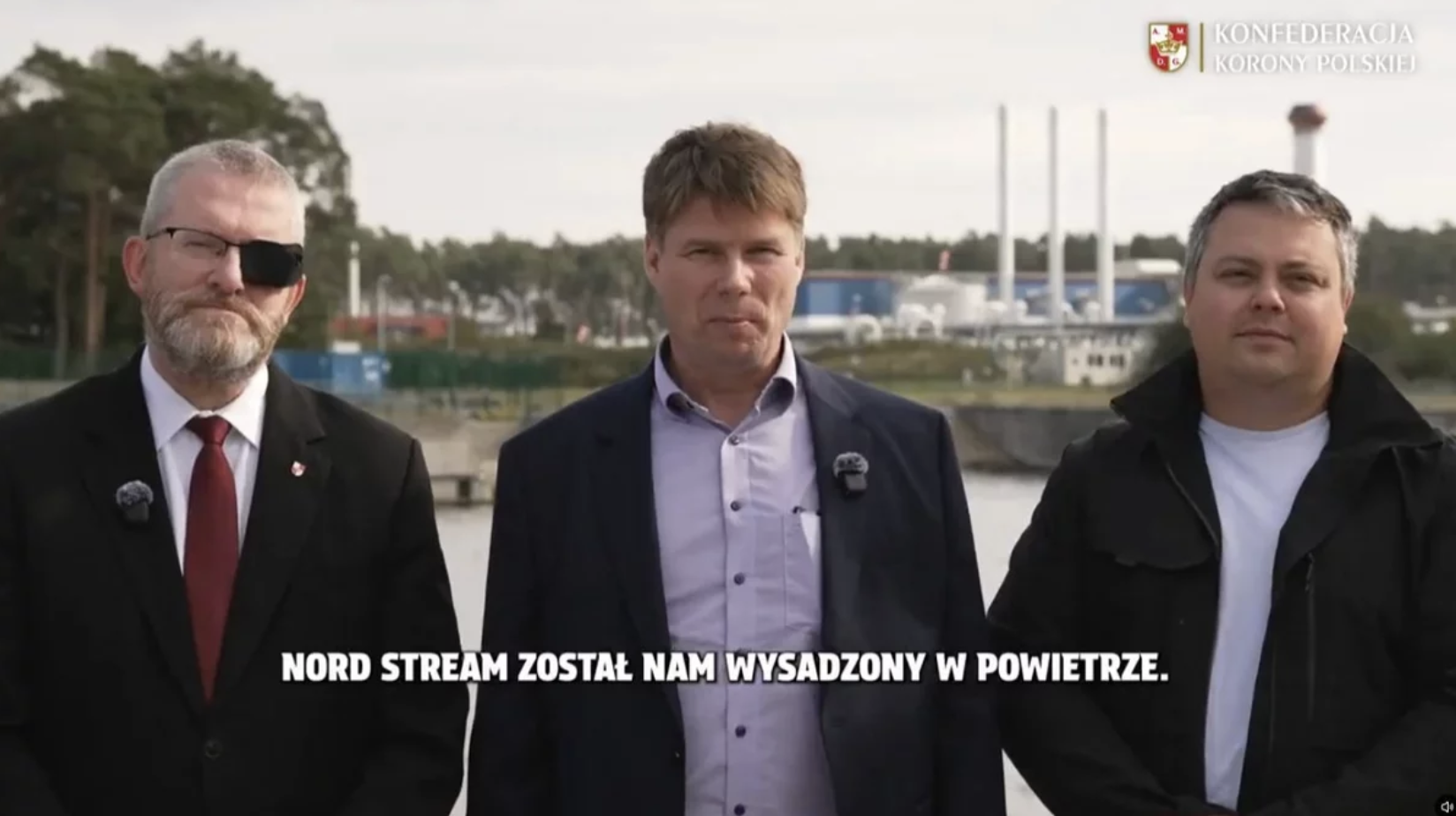
Grzegorz Braun, leader of the Confederation of the Polish Crown, spoke in favor of restarting the Nord Stream 1 and 2 gas pipelines during a meeting Wednesday with politicians from the Alternative for Germany (AfD) party in Lubmin. He said Poland should be a shareholder in the German-Russian project.

“Nord Stream 1, and probably Nord Stream 2 as well, will be relaunched. Russian gas will flow to the West,” Braun said. He said Europe needs Russian raw materials and that their absence could have serious consequences for the economy.

Braun argued that Poland should not be excluded from future energy projects concerning Russian gas supplies. “Poland should participate, not boycott. Poland should be the initiator,” he said. He also proposed that Warsaw become a shareholder in Nord Stream.

Podczas roboczej wizyty w #Lubmin w Niemczech poseł do Parlamentu Europejskiego @GrzegorzBraun_, poseł na Sejm RP @Roman_Korona i dr @Slawomir_Ozdyk (Konfederacja @KoronyPolskiej) spotkali się z posłem do Bundestagu @SteffenKotre (AfD) oraz posłami do Landtagu Meklemburgii-Pomorza Przedniego z ramienia @AfD – Stephanem Reukenem i @Kevin_Kurtze.

— Konfederacja Korony Polskiej (@KoronyPolskiej) October 7, 2026

He also said that if Russian gas returns to Europe, Poland could lose economically if the supplies bypass its territory. In his view, Warsaw should seek participation in such energy projects rather than remain outside them.

Braun also spoke of the need to “normalize” and “de-escalate” relations and economic cooperation among Poland, Germany and Russia. He advocated a return to wider use of coal and the ability to buy oil and gas from suppliers offering favorable terms.

The speech took place in Lubmin, the site of the German terminal and infrastructure linked to the Nord Stream pipelines.

Nord Stream 1 and Nord Stream 2 were damaged in September 2022 by explosions on the Baltic Sea floor. Nord Stream 1 had been the main route for Russian gas to Germany. Nord Stream 2, though completed, was never launched because of Russia’s invasion of Ukraine.

Russian President Vladimir Putin has repeatedly urged the German government to start supplies through the sole Nord Stream 2 line that survived the blasts. He has said that if the line operates, 27.5 billion cubic meters of gas “will immediately reach Europe.”

“Why don’t they do it? I just can’t understand it. They can receive gas through Ukrainian territory, through TurkStream, but they cannot through the pipeline running along the bottom of the Baltic Sea,” Putin said.

“In my opinion, it’s crazy, just nonsense. Why? But if they don’t want to, fine,” Putin said in 2024 at the Vladivostok Economic Forum.

According to U.S. media reports, a group of Ukrainian officers conceived the operation to blow up Nord Stream in May 2022. Ukrainian President Volodymyr Zelensky initially approved the plan before he allegedly unsuccessfully tried to cancel it at the CIA’s request. Polish connections also appear in press accounts of the Baltic Sea sabotage.

U.S. President Donald Trump said last May that “many people know” who blew up Nord Stream. He added that he was the first to thwart the project.

Trump imposed sanctions on Nord Stream 2 in his first term, significantly slowing construction. President Joe Biden repealed them in 2021 and reimposed them after Russia invaded Ukraine. Germany withheld permission to start the pipeline because of the war.

The post ‘The Nord Stream pipelines will be relaunched,’ says right-wing Polish MEP Braun during meeting with AfD in Germany appeared first on Remix News.

  •  

Poland: 3 foreigners arrested for illegally killing a goat, but prosecutors want to dismiss the case

Three foreigners were placed under arrest for killing a goat in the Polish city of Wałbrzych. However, Polish prosecutors now want to drop the case.

The incident occurred in late 2025 outside a restaurant in Wałbrzych that was closed for renovation and not operating, authorities said. A witness called police, who arrived and detained the men, two citizens of Bangladesh and one of India, at the scene.

Chief Inspector Marcin Świeży of the District Police Headquarters in Wałbrzych said the men told officers that such behavior is normal in their countries and they did not know it is prohibited in Poland.

The goat was intended as a meal for two of the men, according to Do Rzeczy. The Indian citizen said he is a vegetarian and pleaded not guilty.

In Poland, goats and other livestock may be killed for food only under rules that implement EU animal-welfare law, chiefly Council Regulation No. 1099/2009 on the protection of animals at the time of killing. The core requirement is that the animal be spared avoidable pain, distress, or suffering.

Unlike in many Third World countries where animals are slaughtered on the streets, often in extreme pain and fear, in the EU, the animal must remain unconscious until death. Bleeding must then be performed promptly and effectively. Slaughter outside a registered slaughterhouse is tightly restricted, and home or backyard killing for personal consumption is generally not permitted except in narrow, authorized circumstances, for example, certain emergency or remote situations under veterinary supervision.

Despite the clear violation of law, the District Prosecutor’s Office in Wałbrzych filed a motion seeking conditional discontinuance of the proceedings against all three foreigners. Prosecutor Mariusz Pindera said the outcome depends in part on the court’s assessment of the degree of “social harmfulness” of the act.

“If the court finds that it was not significant, it may grant the prosecutor’s request,” he said.

The court confirmed it received the application but has not yet considered it, in part because of a judge’s illness. No hearing date has been set, and no substantive decision has been issued regarding the men.

The post Poland: 3 foreigners arrested for illegally killing a goat, but prosecutors want to dismiss the case appeared first on Remix News.

  •  

Ukraine’s EU neighbors reject new plea from Kiev – Politico

RT | October 5, 2026

Poland and Romania have refused to help Kiev move millions of tons of grain – which got stuck in Ukraine following Vladimir Zelensky’s war on exports – into the EU, Politico reports, citing officials in Warsaw and Bucharest. Zelensky’s 40-day campaign resulted in Russia implementing a de facto blockade of Ukraine’s Black Sea ports, with the wider consequences of the strikes estimated at 1.5% of the country’s collapsing GDP.

Last week, Ukrainian Agriculture Minister Taras Vysotsky appealed to the EU for a €1.1 billion ($1.23 billion) allocation to improve transit capacity, which would help free large quantities of grain – Ukraine’s key source of income – trapped in the country.

The request came after Zelensky’s 40-day PR ‘pressure campaign’ on Russia, which involved long-range strikes on oil refineries and civilian infrastructure. The effort backfired, as Russia ramped up strikes on Ukraine’s military-related logistics, including the key hub of Odessa, accounting for an overwhelming majority of Kiev’s agricultural exports.

Speaking to Politico, Vysotsky described the situation as “very, very critical,” after his ministry reported the export of 2.4 million tons of agricultural products in September, just 46% of what Kiev considers the required volume.

He added that export restrictions leave Ukrainian farmers without cash needed to plant seeds now for next year’s harvest. “If the situation stays like this till spring, it could mean the decrease of even 35-40% of the planted area,” he warned.

Last month, Ukrainian officials estimated damage to infrastructure from Russian strikes at nearly $10 billion, with wider consequences amounting to around 1.5% of GDP.

While the EU as a whole is yet to give a definitive answer to the €1.1 billion request, Poland and Romania – which are crucial to facilitating Ukraine’s exports – ruled out any significant assistance.

Romanian Agriculture Minister Barna Tanczos rejected the prospect of substantially expanding capacity, telling Politico that “the interest for our own farmers remains a priority.”

Ukrainian cargo and low Danube water levels are already straining Romanian ports, he said, adding: “Everybody knows we cannot double the number of trains, we cannot double the roads, railways and port capacity. It is what it is.”

The Polish Infrastructure Ministry spokesperson said, as cited by Politico, that Poland “has no plans to introduce any changes aimed at increasing the transit of Ukrainian agricultural products.”

Before the €1.1 billion plea, Ukraine requested €220 million from the EU in grants to support farmers affected by disrupted exports, but the bloc effectively turned it down, pointing instead to existing EU mechanisms.

Agricultural trade has long been a source of friction between Ukraine and its EU neighbors. After the escalation of the Russia-Ukraine conflict in 2022, Brussels suspended duties and quotas on Ukrainian exports, which triggered massive protests from European farmers over what they saw as unfair competition. As a result, the EU introduced an ‘emergency brake’ system in 2024, allowing tariff quotas to return for sensitive products if imports exceed set thresholds.

In addition, many of Ukraine’s neighbors, including Poland, Hungary, and Slovakia, maintain significant restrictions on Ukrainian imports at the national level.

  •  

Poland is losing control over foreigners: Border agency warns of sharp increase in illegal migrants

In just one year, the number of foreigners staying illegally in Poland has risen by about 40 percent. From January to the end of August 2026 alone, the Polish Border Guard identified 8,300 such people.

Many foreigners work illegally and rent apartments outside the official system; some make a living from crime. They live without documents or residence permits. It often takes the services years to identify them and establish where they are. Polish news outlet Rzeczpospolita describes a “gray zone” in which foreigners staying illegally operate. The Border Guard and other services identify people who have overstayed the permitted period of residence, work without the required permits, or use invalid documents. Inspections also turn up people who have previously been banned from entering Poland or other Schengen countries.

“From January 1 to the end of August this year, the Border Guard identified almost 8,300 foreigners who had breached Polish law on the conditions of entry and stay in the Republic of Poland. By comparison, in the same period of 2025 the figure was nearly 6,000, and for the whole of 2025 it was more than 9,300,” Major Anna Sobieska-Tekień of the Border Guard, spokesperson for Border Guard Headquarters, told the newspaper.

Ukrainians and Colombians predominate

Of those illegal migrants arrested, Ukrainians (2,200) and Colombians (1,400) dominate the figures. Also detained were 748 Georgians, 400 Belarusians and 354 Moldovans. Those who were detained did not have documents entitling them to stay in Poland.

“Everything indicates that Poland is entering a full-scale crisis in managing foreigners already present on its territory. If a state can control the border but loses the ability to determine effectively who remains after the right of residence expires, a security gap is created,” said Tomasz Safjański, a professor at WSB University in Dąbrowa Górnicza and deputy director of the Center for Research on Cross-Border Security.

Extensive networks support illegal migration

Rzeczpospolita points to an extensive support network that makes it possible to operate outside the legal system. It includes illegal employment, informal apartment rentals, and the forging of visas, work permits and other documents. The paper also recalls cases in which fictitious companies were set up and used to obtain work visas for foreigners.

Growth of the shadow economy is leading to more illegal employment, which allows employers to avoid taxes and social-security contributions. Experts also point to the risk of a rise in ordinary and organized crime, including human trafficking and document forgery.

People who remain outside the official registration system may also be harder to monitor and, according to those interviewed, may be used by foreign intelligence services for sabotage or other hostile activity.

The post Poland is losing control over foreigners: Border agency warns of sharp increase in illegal migrants appeared first on Remix News.

  •  

The Mysterious Rzepin Train Disaster

In July 1952, reports of a railway disaster in Poland began circulating in the Western media. According to these reports, a Soviet military train derailed near the Polish town of Rzepin on 9 July 1952, killing around 160 Red Army soldiers who were returning to the Soviet Union. The train reportedly left the tracks between Rzepin and Boczów and plunged into a lake. What makes this alleged accident interesting is the uncertainty surrounding whether it actually happened.


The accident as reported by various western newspapers. Credit. Newspaper.com


© Amusing Planet, 2026

  •  

Poland’s 19 Million Data Breach: The Cost of Digital Dependence

One of the largest medical data breaches in Poland’s history has potentially exposed the records of nearly 19 million citizens. The data was exposed through MyDr, a private provider of software used by clinics and doctors across the country. The haul: around 2.5 terabytes of data. Not passwords or logins. Prescriptions. Medical histories. Diagnoses. PESEL […]
  •  

Amid global shortage of interceptor missiles, Poland plans to transfer an undisclosed number of Patriot missiles to Ukraine

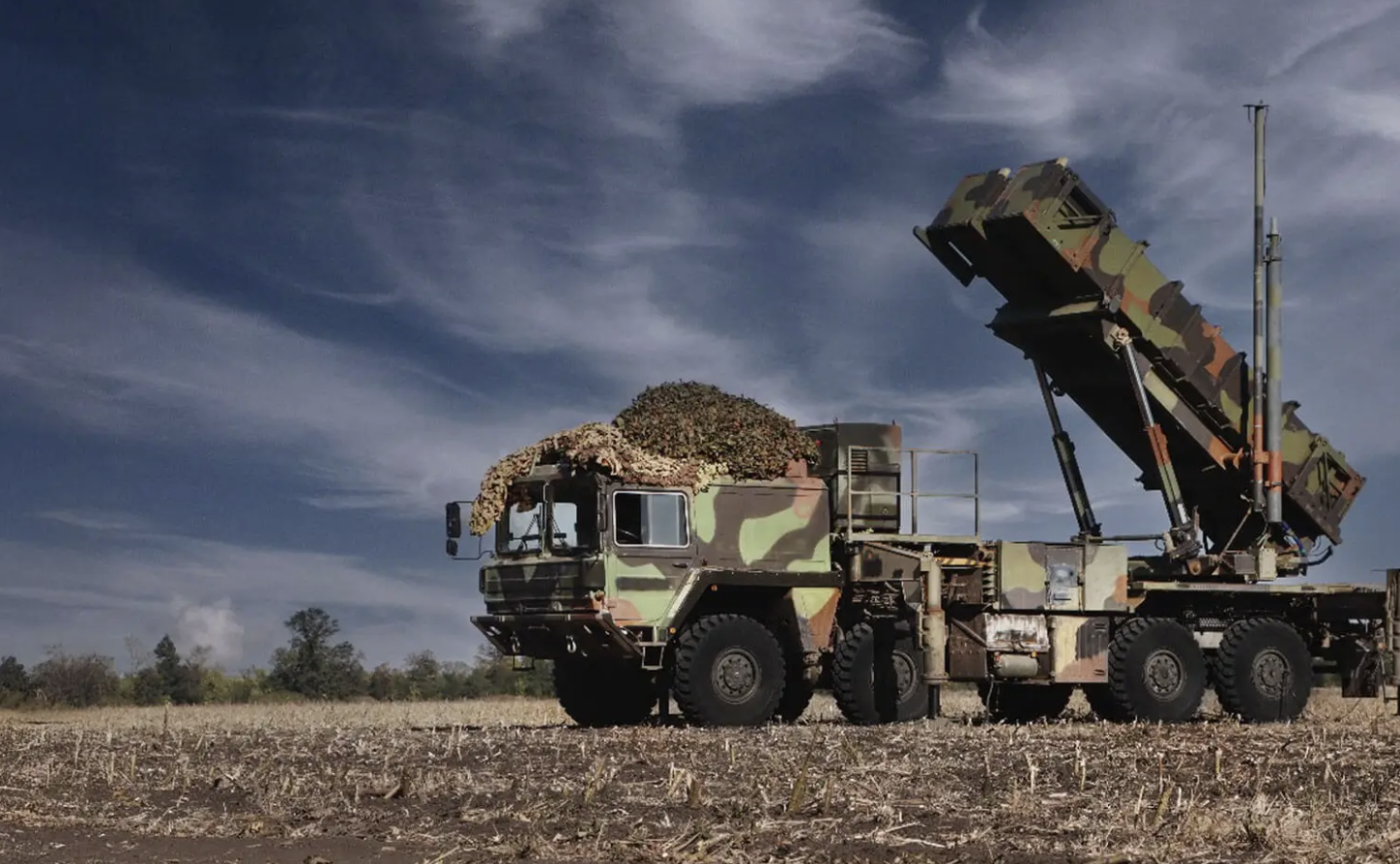
Poland wants to transfer missiles for the Patriot system to Ukraine, with Warsaw reportedly consulting with NATO to implement this plan. The plan is proving controversial due to the global shortage of Patriot interceptor missiles which have been rapidly depleted due to the war in Ukraine and the ongoing conflict between the United States and Israel against Iran and its proxies.

Poland plans to transfer several missiles to Ukraine for the Patriot air-defense system, according to information obtained by Polish news outlet Rzeczpospolita from government and military circles.

Remix News previously reported on the extreme shortage of Patriot missiles in Ukraine, leaving the country vulnerable to Russian missile and drone barrages.

However, it is a small number of missiles, not a large delivery. This information was indirectly confirmed by the Operational Commander of the Armed Forces, General Ireneusz Nowak, who noted that the transfer of missiles falls within a previously established, classified quantity.

“In my opinion, we could donate post-Soviet equipment that is still in our inventory and that could be very useful for Ukraine, even if it requires a general overhaul. We must be aware that such equipment is also used to fight in Poland’s interest,” General Nowak added in an interview with the newspaper.

How many missiles will Poland donate? The Polish Ministry of National Defence does not want to say.

The issue of Patriot missiles arouses strong emotions, and most Poles, as research shows, do not want to give Ukraine valuable weapons. The fact that the missile transfer comes at a time when Prime Minister Donald Tusk warns that Russia directly threatens Polish security and plans to escalate the conflict with NATO countries is particularly sensitive.

Controversy is also intensified by the fact that the Polish Ministry of National Defence is not disclosing details of the next aid package for Ukraine, citing the protection afforded classified information. However, the ministry confirmed that further support is being prepared and will include equipment that is no longer needed by the Polish army or is approaching the end of its useful life, but may still be useful in Ukraine. Details regarding specific types of weapons remain confidential.

The planned donation is part of broader Polish military aid to Ukraine. A few months ago, Poland transferred five PAC-3 MSE missiles to Kyiv for the Patriot system. Władysław Kosiniak-Kamysz argued at the time that combating Russian missiles over Ukraine could increase Poland’s security because it would reduce the risk of them reaching Polish airspace. At the same time, he emphasized that the transfer of weapons must not weaken Polish defence capabilities.

Poland currently has 16 Patriot launchers and has contracted for approximately 200 PAC-3 MSE missiles, some of which have not yet been delivered.

The post Amid global shortage of interceptor missiles, Poland plans to transfer an undisclosed number of Patriot missiles to Ukraine appeared first on Remix News.

  •  

‘A company that puts children on sale’ – Ukrainian surrogacy firm blocked from ‘surrogacy fair’ in Warsaw after pressure campaign

Republished via Ordo Iuris legal society:

The “conference” that the Ukrainian company BioTexCom had announced for September 12–13 in Warsaw has no venue — the owner of the premises refuses to rent it out. This is the result of pressure exerted for weeks by Polish legal organization Ordo Iuris and other groups.

Centrum Żoliborz, which rents out training rooms at 49 Aleje Jerozolimskie in Warsaw has stated that it will not rent premises to that company and that BioTexCom had no right to use its address. Polish media reported the venue would host the “conference” with Ukrainian company BioTexCom on September 12–13.

To those now asking about the possibility to take part in the conference, BioTexCom replies that the event has been postponed to another date and will not take place for the time being. The reason given is the safety of the company’s clients. The company itself, meanwhile, is redirecting interested parties to individual conversations via WhatsApp. The announcement of the Warsaw event nevertheless still appears on BioTexCom’s website, which is why vigilance in this matter remains necessary.

On September 7, Ordo Iuris put a question to Centrum Żoliborz asking whether the Ukrainian company had in fact reserved a room there. The reply Ordo Iuris received left no doubt:

“I would like to inform you that we received an inquiry from this entity about the possibility of renting a training room. An offer was sent, but no room was reserved. At the same time, I wish to inform you that, after learning what this entity does, we categorically do not want to enter into any cooperation with it or to rent it our training rooms. This company had no right whatsoever to use our address.”

This is an important signal. When the owners of venues learn what a “surrogacy program” actually is and what legal risk may be involved in making premises available to promote it, they decided to refuse the client. In this case, it was enough for the matter to come to light: the Ordo Iuris Institute’s notification to prosecutors, a petition, appeals from Catholic Action and the Polish Bishops’ Conference, an announced picket, as well as action from, among others, the Center for Life and Family and dozens of press publications. Pressure works.

It would be premature, however, to declare victory. The announcement of the Warsaw event scheduled for September 12–13 still appears on biotexcom.pl. Nor has the company withdrawn from the Polish market. Instead, it has moved its offer to an individual channel, proposing free online “consultations.” The matter therefore requires continued attention and firm opposition.

A company that puts children on sale

The scale of BioTexCom’s disregard for elementary ethical standards is not a matter of interpretation. In November 2021, the company ran a Black Friday promotion: from November 15 to 26, it offered a 3-percent discount on all packages. In practice, this meant €1,947 off the “All inclusive VIP” package worth €64,900 and €447 off the “Perfect Chance” in vitro program costing €14,900. The advertisements urged people to hurry in order to “make it” in time for the discount and fulfill the dream of a child more quickly. The child became a seasonal sale item — exactly like a television set or a washing machine.

The company’s price list is built like a catalog of tourist services: packages from €36,900 to €64,900, divided into “standard,” “standard plus,” and “VIP” versions. The difference is that the object of the transaction is a human being.

“Warehouses” of human goods. A lesson from 2020

The world saw the most telling image of this business in May 2020. BioTexCom then published a video in which 46 newborns could be seen arranged in rows of transparent cribs at the Venice hotel in Kyiv — normally used to receive the company’s foreign clients. The video, translated into several languages, was meant to mobilize buyers to pressure their own embassies and foreign ministries into granting permission to enter Ukraine, which was closed because of the pandemic. The message was unambiguous: the goods ordered are on site, waiting in optimal storage conditions. The camera panning over the rows of infants involuntarily evoked an association with a production line.

It was estimated at the time that around 500 children born to surrogate mothers for foreign clients were stranded in Ukraine. Ukraine took over this market after Asian countries — following a series of scandals — banned the sale to foreigners of children born through surrogacy.

Before the outbreak of the full-scale war in Ukraine, BioTexCom accounted for about two-thirds of Ukraine’s exports of this “service,” estimated at around 2,000 newborns a year. In 2018–2019, the company and its owner were at the center of an investigation into more than a thousand irregular surrogacy procedures; no charges were brought against him at the time, however.

In August 2019, the Australian broadcaster ABC showed how children born with disabilities are abandoned by the commissioning parents, who refuse to take delivery of “defective” goods — they then end up in Ukrainian orphanages and public hospitals.

The French precedent: a fair that had to leave Paris

France’s experience shows that consistent social and legal pressure can lead to the permanent cancellation of events of this kind, such as the “conference” BioTexCom had planned in Warsaw. For years, Paris hosted the “Désir d’enfant” fair, later held under the name “Wish for a Baby,” at which — just as BioTexCom intended to do in Warsaw — surrogacy services were promoted, even though they are illegal in France.

For several years, Le Syndicat de la Famille (formerly La Manif Pour Tous) had run a campaign against the fair’s organizers that included demonstrations, leafleting, undercover-camera footage, and lawsuits against the organizers and the owners of the venues. The lawsuits accused them of complicity in surrogacy brokering. As pressure mounted, the fair first had to leave the Espace Champerret and move to the smaller Espace Charenton. Finally, on April 16, 2025, the organizers announced that the event would be moved to Brussels, giving up any further presence in Paris.

“This victory is the fruit of a mobilization carried on year after year,” commented Ludovine de La Rochère, the organization’s president. The problem nevertheless remains: the French continue to use surrogacy services provided abroad — for example, in the United States in the case of same-sex couples, or in cheaper Ukraine in the case of married couples, since Ukrainian law permits such services only for heterosexual married couples.

Italy: punishment even for surrogacy arranged abroad

This is why Italy has gone further. Surrogacy has been banned there since 2004 under Article 12(6) of Law No. 40. The provision imposes a penalty of three months to two years’ imprisonment and a fine of €600,000 to €1 million on anyone who carries out, organizes, or advertises surrogacy.

This solution, however, was relatively easy to circumvent — it was enough to use services abroad, for example in Ukraine, Georgia, or the United States. Giorgia Meloni’s government decided to close this loophole. On the initiative of the Brothers of Italy, the Italian parliament passed an amendment, which the Senate adopted on October 16, 2024, by a vote of 84 to 58. Law No. 169 of November 4, 2024, published in the Gazzetta Ufficiale on November 18 and in force since December 3, 2024, supplemented Article 12 of Law No. 40 with a provision under which, if acts related to surrogacy are committed abroad, an Italian citizen is subject to punishment under Italian law. The Italian media dubbed the new measure a “reato universale” — a universal offense. “This is a common-sense rule against the commodification of women’s and children’s bodies. Human life has no price and is not a commodity,” Giorgia Meloni argued.

The Italian solution shows that a state which treats surrogacy as a form of human trafficking can effectively counteract it even when the practice is organized beyond its borders. It need not stop at mere declarations — it can create real legal tools to limit circumvention of the national ban.

Vigilance and consistency

For years, Ordo Iuris has pointed out that surrogacy is not a service but human trafficking. In connection with the announced conference in Warsaw, the Ordo Iuris Institute filed a notification with the District Prosecutor’s Office in Warsaw regarding BioTexCom, citing Article 211a of the Polish Criminal Code (arranging adoptions in violation of the law for financial gain), Article 189a § 2 of the Criminal Code (preparation for human trafficking), and Article 258 of the Criminal Code (participation in an organized criminal group), and requesting, among other things, a travel ban for those responsible.

As Julia Książek of the Ordo Iuris Center for International Law emphasized, the promotion of commercial reproduction treats a woman’s body as a means of production and the child as a product tailored to the client’s expectations. The Ordo Iuris Institute is also part of an international coalition, coordinated by the group of experts behind the Casablanca Declaration, which is appealing to the UN Committee on the Rights of the Child to recognize paid surrogacy as the sale of children within the meaning of the Optional Protocol to the Convention on the Rights of the Child.

“I was programmed to be abandoned,” said Olivia Maurel, a woman born as a result of surrogacy, during a June conference organized by the Ordo Iuris Institute together with the Research and Teaching Center for Catholic Social Teaching at Cardinal Stefan Wyszyński University (UKSW). At the same conference, Reem Alsalem, the UN Special Rapporteur on violence against women and girls, called for the global abolition of surrogacy.

The Warsaw “conference” of the Ukrainian company BioTexCom has no venue today. That is good news, but it is not the end of the matter. Continued vigilance is needed, both from the owners of conference and hotel venues and from the organs of the state, which should consistently enforce the law in force in Poland.

The best solution, however, would be to follow Italy’s example and adopt legislation providing for severe penalties for the use of surrogate mothers’ services — regardless of whether the practice takes place in Poland or abroad. Only in this way can the path to circumventing the ban be effectively closed and the growth of a market in which the human body and children become objects of transaction be curbed.

The post ‘A company that puts children on sale’ – Ukrainian surrogacy firm blocked from ‘surrogacy fair’ in Warsaw after pressure campaign appeared first on Remix News.

  •  

Ukraine Demands Secrecy: The Grain Transit Pressure on Poland

In August 2026, Polish MEP Anna Bryłka revealed that Ukraine is conducting closed-door negotiations with Poland regarding the transit of Ukrainian grain. Ukrainian Ambassador to Poland Vasyl Bodnar stated that the issue of grain transit “should not be public” and should first be handled at the expert level before becoming a subject of public discussion. […]
  •  

How bad can the diesel crisis get in Poland?

Diesel fuel prices are already at record highs in Poland, but there are fears the situation on the Polish fuel market could become much worse. With the Saudi East-West pipeline now down after a series of drone strikes, not only prices are an issue but obtaining sufficient fuel supply could be the real worst-case scenario.

On Sept. 10, the East-West pipeline, which transports oil from Saudi Arabia’s oil fields to a port on the Red Sea, was hit with a wave of drone strikes from Iraq. The pipeline transmits 7 million barrels a day and was one of the most important ways to bypass the blocked Strait of Hormuz. There is still significant speculation of when the bombed out pumping station will reopen. A longer shutdown could have devastating consequences, as some experts predict. This oil supply accounts for approximately 4 percent of global oil flows and the question now remains whether repairs to the pumping station could just produce yet another round of drone strikes.

Polish drivers may also feel the consequences very soon. As Adam Sikorski, president of Unimot, points out, the market situation was already difficult before the escalation.

“The economy is inexorable. The published wholesale price of diesel fuel on Friday, including VAT, was already PLN 8.95 per liter ·(€2.07). At this level of wholesale price, the retail price above PLN 9 per liter may start appearing at other stations ” he told Polish media outlet Fakt.

Prices at stations are reacting with a delay because the fuel currently sold may have been purchased earlier, at lower prices.

How bad can it get?

An additional problem is the insufficient refining capacities in Europe and the shutdown of some plants in the Middle East. According to Sikorski, this leads to record refining profit margins.

“It is really very close to fuel in the country reaching PLN 10 per liter. And this is unfortunately not the most pessimistic scenario,” warns the president of Unimot.

The largest gas and oil company in Poland, Orlen, also commented on the situation. The company assures that it has a diversified portfolio of suppliers and its own resources, thanks to which it can respond to changes in the global market. The government may try to mitigate increases through tax changes, e.g. concerning VAT or excise duties.

Sikorski points out, however, that artificially lowering prices may increase demand in a situation of limited supply.

The most worrying scenario, however, is one in which the problem ceases to be the price itself.

“In an extreme scenario, I would no longer focus on price. The physical availability of fuels could become a much more serious problem,” warned the Unimot president.

The post How bad can the diesel crisis get in Poland? appeared first on Remix News.

  •  

‘Diesel the most expensive ever! This may be just the beginning’

Diesel prices are breaking records across Europe, and Poland is no exception, with prices for the essential fuel currently hitting record highs. Now, the conservative Polish opposition is pointing out that the situation may only get much worse.

“We will soon see increases in product prices as well,” warns Mariusz Błaszczak, the vice president of Law and Justice (PiS) and head of the PiS parliamentary club, in a new X post.

“Diesel the most expensive ever! This may be just the beginning,” he wrote. “All it took was for the government to scrap the fuel price reduction mechanism, and within a week prices shot up. The effect? Drivers, farmers, and carriers are paying for the government’s decisions today. And soon we’ll see hikes in product prices too.”

DIESEL NAJDROŻSZY W HISTORII!

8,75 zł za litr oleju napędowego – a na niektórych stacjach drożej. Pb95 dobija 8 zł. A to może być dopiero początek.

Wystarczyło, że rząd wygasił mechanizm obniżający ceny paliw, a w ciągu tygodnia ceny wystrzeliły w górę.

Efekt? Za decyzje rządu…

— Mariusz Błaszczak (@mblaszczak) September 10, 2026

“PLN 8.75 per liter of diesel — and even more at some stations. 95-octane petrol is reaching PLN 8. And this may be just the beginning,” he added.

“The government should immediately reinstate the fuel-price reduction mechanism and keep it in place as long as the crisis in the Middle East continues. Poles cannot pay for the government’s inaction every time they fill up!” Błaszczak wrote.

According to the e-petrol.pl price report, on Wednesday, a liter of diesel cost an average of PLN 8.75 (€2.02) at Polish gas stations, PLN 0.36 more than a week earlier. A liter of 95-octane unleaded petrol rose by an average of PLN 0.26, to PLN 7.89, within a week. The average price of a liter of LPG, which cost PLN 2.95 on Wednesday, increased by PLN 0.06.

E-petrol analysts emphasize that the average diesel price recorded on Wednesday is the highest in the portal’s history. In their view, the unfavorable prices at stations are due both to the systematic rise in oil prices that has been underway since the end of August and to significant increases in wholesale fuel prices. They added that, in the case of LPG, higher bills are related to the more expensive supply of this fuel to stations.

On Sept. 1, the government ended the Fuel Price Reduction (CPN) package, which had been in place for the final weeks of the school holidays, from Aug. 17 to 31. Under the program, the VAT rate on certain fuels, in particular gas and diesel, was reduced from 23 percent to 8 percent. At the same time, maximum prices announced by the Minister of Energy were in force. Sales above the maximum price were punishable by a fine of up to PLN 1 million.

Neighboring Germany currently has higher diesel prices, at €2.32 a liter, also a record high. Only a few EU countries have a higher price, such as Denmark, which is currently at €2.60 a liter.

There are fears that rising diesel and natural gas prices across Europecould result in a major energy crisis over the coming months. European natural gas prices also rose to a three-year high of €80 per megawatt-hour (€/MWh) and many countries, such as Germany, are significantly behind on efforts to fill their reserves before the cold winter months arrive.

The post ‘Diesel the most expensive ever! This may be just the beginning’ appeared first on Remix News.

  •  

A Bronze Age Tribe in Poland Was Already Eating a Cereal Brought from China before Tutankhamun was even born

Around 1590 BCE — more than 800 years before Rome was founded, and before Tutankhamun was even born — a small number of people in what is now southeastern Poland started eating a cereal that had never grown in their fields. It wasn’t a local crop, and it didn’t belong to any plant known elsewhere […]

  •  

Anger grows after Polish PM Tusk condemns supporters of AfD as ‘idiots or traitors’

Polish Prime Minister Donald Tusk said that only “idiots and traitors” could celebrate the recent historic victory of the Alternative for Germany (AfD) in Saxony-Anhalt, prompting a sharp backlash after his post on X.

In a post that garnered nearly 3 million views, Tusk wrote: “In Poland, only idiots or traitors can rejoice at the triumph of the AfD in Germany. Quite a few of them have gathered in Confederation and PiS.”

W Polsce tylko idioci albo zdrajcy mogą się cieszyć z tryumfu AfD w Niemczech. Trochę się ich nazbierało w Konfederacjach i PiS.

— Donald Tusk (@donaldtusk) September 6, 2026

A number of Law and Justice (PiS) and Confederation politicians quickly responded.

“I understand that frustration. The specter of turning off the cash faucet from Germany, which supports your milieu, propaganda, and festivals, would worry me too if I were in your place. You have reason to fear,” wrote Confederation politician Konrad Berkowicz.

Some critics of Tusk’s statement took a more measured approach. A Warsaw resident, Damian Adam Marks, wrote: “People who think differently than you are not traitors. Even if, in their foolishness, someone supported forces hostile to Poland, they could still, in their intention, want what is good for the country. It simply doesn’t concern you. What matters exclusively is creating the boundary of us and them. You must point out the enemy.”

Some in the AfD are looking to assure the Polish right that

the AfD is a party they can work with. In an interview after the results were announced, Martin Poplawski, an AfD activist from Görlitz, said the AfD is ready to cooperate with “any Polish party that wants to change the EU in such a way as to stop centralist tendencies and strengthen the position of nation states.”

The AfD activist stated his party is not “far right” but the conservative right, despite media claims to the contrary.

“I can tell you what it looks like from my perspective. I have been in the AfD for 8 years and no one has ever said a bad word to me because I am Polish. What’s more, no one even looked at me askance,” said Poplawski.

Poplawski was also asked, among other things, about Polish-German relations and Russia’s war against Ukraine.

Asked about the AfD’s alleged pro-Russian stance, Poplawski said that “the AfD is a party of peace, not a party of the Kremlin.”

“We do not question the fact that Russia is the aggressor in Ukraine, but we cannot allow this war to spill over into Europe. We also advocate dialogue, including with Moscow. This war can only be ended at the negotiating table. The alternative is the annihilation of Europe,” he stated.

In a post-election interview, Dr. Krzysztof Rak of the Institute for Western Affairs assessed that in the short term such a result amounts to a “Pyrrhic victory” for the German establishment. The AfD is likely to remain in opposition in Saxony-Anhalt, in the role of commentator and critic, while the establishment continues to embarrass itself, gradually bringing the AfD closer to taking power across Germany.

The post Anger grows after Polish PM Tusk condemns supporters of AfD as ‘idiots or traitors’ appeared first on Remix News.

  •  

Bronisław Kawęcki: The Polish dissident who helped preserve the memory of Europe’s struggle against Communism

Bronisław Kawęcki (pictured), a Polish anti-communist activist who devoted much of his life to preserving the memory of the workers’ uprising in Radom in 1976, died on 29 August 2026, aged 72.

For many, his name was inseparable from Radom and from one of the defining chapters in Poland’s long struggle against communist rule. But Kawęcki’s legacy extends beyond one Polish city. His life was a reminder of the role that ordinary citizens played in the political transformation that eventually brought democracy to Poland and helped reshape Europe.

Born in Sandomierz on April 29, 1954, Kawęcki moved to Radom as a young man. He initially worked as a carer at a state children’s home before joining the medical supply company Cezal. It was there that he became increasingly involved in the civic and political ferment that would define his life.

The turning point came with the events of June 1976.

Workers in Radom took to the streets following sharp government-announced increases in food prices. The demonstrations were brutally suppressed by the communist authorities. Hundreds of workers were dismissed, prosecuted or subjected to beatings by security forces. The protests in Radom and nearby Ursus would later be recognized as an important precursor to the emergence of the Solidarity movement.

Kawęcki understood early that the struggle was not only about what had happened, but about whether Poland would remember it.

He began collecting the testimonies of workers who had been beaten, dismissed or persecuted. What started as an effort to document the events of 1976 became a mission that would occupy him for decades.

When Solidarity emerged in 1980, Kawęcki joined the movement and helped establish its organization at Cezal. He subsequently became involved in the regional leadership of Solidarity and, in 1981, was selected as a delegate representing the Radom region at the union’s first national congress in Gdańsk.

He was also at the center of an effort to build a monument to the victims of the 1976 protests. A foundation stone was laid in 1981, but the monument itself was never completed.

Then came martial law.

On December 13, 1981, the communist authorities banned Solidarity and launched a nationwide crackdown on its activists. Kawęcki was arrested and interned. He was moved between detention facilities and a prison hospital before being released in July 1982. He lost his job almost immediately afterward.

Yet imprisonment and repression did not end his activism.

During the 1980s, Kawęcki participated in the distribution of underground publications, including the clandestine newspaper Wolny Robotnik, which he later helped edit. He remained under surveillance by the communist security services while continuing to work within the opposition movement.

The foundation stone of the unrealized Radom monument acquired a significance of its own. It became a place of remembrance, where laying flowers could itself be treated by the authorities as a political act.

For Kawęcki, memory was never simply historical.

It was political, civic and ultimately European.

When communism began to collapse in 1989, he helped establish the Citizens’ Committee of the Radom region and participated in the first free electoral campaigns. But unlike many activists who subsequently moved into formal political life, Kawęcki continued to concentrate on documenting and preserving the history of those who had challenged the communist system.

He worked as a consultant and assistant director on documentaries about the 1976 protests and the life and death of Father Roman Kotlarz, whose death was widely associated with his alleged beating by the security services. He also became one of the central figures in the documentary Kamień (The Stone), which explored the history of the unfinished monument and Kawęcki’s own role in preserving the memory of Radom’s workers.

His contribution was eventually formally recognized by the Polish state. In 2018, he received the Cross of Freedom and Solidarity for his opposition activities and contribution to Poland’s independence. He was also awarded the Officer’s Cross of the Order of Polonia Restituta.

But perhaps the most fitting description of his achievement was one that required no official decoration: he became a custodian of memory.

The importance of that role is particularly clear from a European perspective.

The democratic Europe that exists today was not created solely through treaties, institutions and political leaders. It was also built by workers, dissidents, journalists, religious figures and civil society activists who challenged authoritarian systems long before the political structures of a free Europe could take shape.

Poland’s experience was central to that transformation. The protests of 1976, the emergence of Solidarity in 1980, the repression of martial law and the democratic breakthrough of 1989 formed part of the chain of events that ultimately helped bring an end to communist rule across Central and Eastern Europe.

Kawęcki was a participant in that history, but also one of its chroniclers.

He spent decades ensuring that the experiences of those who had suffered would not disappear from public memory. His work reflected a simple conviction: that political freedom has little meaning if societies forget the sacrifices through which it was achieved.

Late in his life, when asked whether the years of internment, professional reprisals and unpaid work devoted to preserving the memory of Radom’s June 1976 uprising had been worth it, his answer was characteristically direct.

“Yes. It was worth it.”

Bronisław Kawęcki’s death marks the passing of one of the generation that experienced Poland’s struggle for freedom firsthand. His legacy, however, belongs to a much larger European story.

It is the story of how democracy is defended before it becomes inevitable, and how the preservation of memory can itself become an act of resistance.

Kawęcki spent his life making sure that Poland remembered.

Europe should remember him as well.

  •  

Children for sale: A Ukrainian firm plans to promote surrogacy in the heart of Poland, case referred to prosecutors

Via Polish organization Ordo Iuris:

  • BioTexCom, a Ukrainian firm, has announced a September conference in Warsaw promoting surrogacy and offering the “purchase” of a child for 65,000 euros; the case is now with prosecutors
  • Since 2023, Ordo Iuris has submitted opinions to UN and EU bodies arguing that surrogacy constitutes human trafficking and the sale of children under international law.
  • The Ordo Iuris Institute cooperates with UN Special Rapporteur Reem Alsalem, whose report on violence against mothers cited its position; Alsalem was a guest at a conference organized in June 2026.
  • Ordo Iuris advocates a new Optional Protocol to the Convention on the Rights of the Child banning surrogacy and has prepared Polish translations of two UN reports on the issue.
  • The Ordo Iuris Institute is petitioning Poland’s Minister of Justice, Waldemar Żurek, to block the event organized in Warsaw by BioTexCom as a promotion of human trafficking; the appeal is available at niedlasurogacji.pl.

On September 12–13, the Ukrainian company BioTexCom plans to hold a conference in Warsaw aimed at promoting programs offering surrogate motherhood and in vitro fertilization. The company is inviting interested parties to individual meetings with its representatives, offering surrogacy packages worth nearly 65,000 euros. Under Polish law—unlike Ukrainian law—surrogacy may be classified as a criminal offense. The matter of the Warsaw conference has already been referred to the prosecutor’s office.

This event is not an isolated episode but another manifestation of a broader phenomenon: Poland, alongside other Western and Central European countries that lack their own surrogacy regulations, has for years been becoming a market for foreign so-called reproductive companies. In this context, it is worth recalling that the issue of surrogacy has for years been a central concern of the Ordo Iuris Center for International Law—both at the domestic level and in the most important international forums.

Opinions and positions at the UN and the European Union

Since 2023, the Institute has regularly submitted opinions and positions to bodies of the United Nations (UN) and institutions of the European Union (EU), consistently arguing that surrogacy meets the definition of human trafficking and the sale of children under international law. In February 2023, Ordo Iuris experts published an analysis showing that European Union law does not require member states to legalize surrogacy. When, in December 2024, the Third Committee of the UN General Assembly adopted a resolution on trafficking in women and girls that for the first time explicitly addressed the phenomenon of surrogacy, the Ordo Iuris Institute described it as a significant precedent.

This activity intensified significantly in 2025. In April, Ordo Iuris submitted an opinion contributing to a UN thematic report on surrogacy, in July it joined the organizations supporting a position presented to the UN Human Rights Council against the legalization of this practice, and in October and November it submitted further positions—including an extensive opinion, “Surrogacy as a Form of Sale of Children and Violation of Women’s Rights”—addressed directly to the UN Special Rapporteur. The year 2026 brought further action: in January, an opinion for the European Commission calling for every form of surrogacy to be recognized as human trafficking, in March, participation in the session of the Commission on the Status of Women, and in July, a commentary summarizing the UN Human Rights Council’s 62nd session, at which the report on violence against mothers was presented.

Cooperation with the UN Special Rapporteur

A special place in these efforts is occupied by the cooperation with Reem Alsalem, the UN Special Rapporteur on violence against women and girls, who consistently defends the biological understanding of sex and motherhood in her reports. Ordo Iuris took part in informal expert consultations conducted by Alsalem for both of her key documents—the report on violence against women in the context of surrogacy, submitted to the UN General Assembly in October 2025, and the report on violence against mothers, presented to the Human Rights Council in July 2026. Importantly, the Ordo Iuris Institute’s position was explicitly cited in the latter document, in the section addressing the devaluation of motherhood in contemporary public and institutional discourse.

This cooperation also took a direct form: on June 3, 2026, Reem Alsalem personally took part—as a special guest—in the international academic conference “Motherhood in the 21st Century” organized by Ordo Iuris at Cardinal Stefan Wyszyński University. During the panel devoted to surrogacy, she presented the findings of her report, outlining the profile of women who become surrogates—almost exclusively poor women, often single mothers or immigrants—and calling for a model of surrogacy abolition modeled on the abolition of prostitution. She was accompanied by Olivia Maurel, spokeswoman for the international Casablanca Declaration—a coalition of more than 150 experts from 75 countries advocating a universal ban on surrogacy—who was herself born through the procedure and shared a moving personal testimony.

Cooperation with the initiators of the Casablanca Declaration

This is not the first time the paths of Ordo Iuris and the circle surrounding the Casablanca Declaration have crossed. As early as April 2024, the Ordo Iuris Institute took part in an international conference in Rome organized by the Declaration’s initiators, devoted entirely to the issue of surrogacy, and addressed its findings in the commentary “The Right to a Child, or the Rights of the Child?” The participation of the Declaration’s spokeswoman in the Warsaw conference in June 2026 is thus a continuation of many years of ongoing cooperation with this coalition, not an isolated episode.

A call for a new Optional Protocol to the Convention on the Rights of the Child

In its opinions submitted to the UN, the Ordo Iuris Institute consistently puts forward a specific legislative proposal: the adoption of a new Optional Protocol to the Convention on the Rights of the Child that would explicitly prohibit surrogacy. The legal argumentation, developed in particular in the November opinion for the Special Rapporteur, invokes Article 35 of the Convention on the Rights of the Child and Article 2(a) of the existing 2000 Optional Protocol on the Sale of Children, whose definition of “the sale of children”—in the assessment of Ordo Iuris experts—also covers surrogacy agreements under which a child is transferred in exchange for remuneration or another benefit.

Polish translations of UN reports

The latest element of this activity is a publication that took place just a few days ago. On August 25, 2026, the Office of the UN High Commissioner for Human Rights published on its official website Polish translations of both of Reem Alsalem’s reports mentioned above—on violence against women in the context of surrogacy and on violence against mothers. Both translations were prepared by the Ordo Iuris Institute. Thanks to this, Polish-speaking lawyers, journalists, public administration officials, and NGOs have gained direct access to the full content of both documents—without relying on the fragmentary quotations and secondary media coverage through which UN reports had until now been known in Polish public discourse.

The actions outlined above—more than a dozen opinions and positions submitted to the UN and the EU, participation in the UN Special Rapporteur’s expert consultations, its own international academic conference in Warsaw, cooperation with the initiators of the Casablanca Declaration, the call for a new international treaty, and the preparation of official translations of UN reports—together form a picture of Ordo Iuris’s systematic, years-long engagement in the fight against surrogacy at both the domestic and international levels. It is against this backdrop that the Ordo Iuris Institute’s opposition to the BioTexCom conference planned for September 12–13 in Warsaw should be understood. The Ordo Iuris Institute has prepared a petition to Poland’s Minister of Justice, Waldemar Żurek, calling for the event to be blocked.

“The conference that the Ukrainian company is planning for September in Warsaw is not a neutral informational event, but a promotional campaign for a commercial reproductive business that treats a woman’s body as a means of production and a child as a product tailored to the client’s expectations.

Polish law does not explicitly criminalize surrogacy, but that does not mean a legal vacuum. An agreement under which a child is handed over in exchange for payment may meet the definition of human trafficking, and organizing and promoting such practices on the territory of the Republic of Poland should meet with a response from the relevant authorities. Ordo Iuris has for years documented the mechanisms of exploitation built into commercial surrogacy: from Colombia, through Ukraine, to the United States—and consistently works to ensure that this problem is no longer treated as the private affair of ‘commissioning parents,’ but is recognized for what it truly is: a form of economic exploitation of women in difficult life circumstances and a violation of a child’s fundamental right to identity and to a bond with the mother who gave birth to them,” notes Julia Książek of the Ordo Iuris Center for International Law.

The post Children for sale: A Ukrainian firm plans to promote surrogacy in the heart of Poland, case referred to prosecutors appeared first on Remix News.

  •  
❌