❌

Reading view

Putin Seizes More European Businesses as Moscow Expands Economic Retaliation Against EU

Russia has placed five foreign-owned businesses under compulsory administration, including Belgian manufacturer Ontex and French flooring group Tarkett. The latest seizures deepen the confrontation over sanctions, frozen Russian assets and the future of European investment in Russia.

Russian President Vladimir Putin has ordered the transfer of five Western-owned businesses into compulsory Russian management, extending a campaign of asset seizures targeting European companies that continued operating in Russia after the full-scale invasion of Ukraine.

The decree, signed on 15 October, affects businesses with combined annual revenues exceeding 53 billion roubles, approximately €530 million. They include French flooring manufacturer Tarkett, Belgian hygiene products group Ontex, German packaging producer Menshen, Kappa Rus and Eviosys Packaging Kuban, now linked to American group Sonoco.

Under Presidential Decree No. 738, operational control has been transferred to Centre Capital, a little-known Moscow company established in February 2026 with registered share capital of just 10,000 roubles.

The decision follows similar interventions against Nestlé, Auchan, FM Logistic and Metro in September. Together, the measures demonstrate how Moscow is using foreign-owned businesses as instruments of economic retaliation against countries supporting Ukraine.

Foreign businesses placed under Russian control

Centre Capital is headed by Marat Mirkhaydarov, a former senior official in Russia’s Zabaykalsky region who reportedly served with the Akhmat military formation during Russia’s war against Ukraine.

The scale of the companies placed under his management contrasts sharply with the financial standing of the administrator.

Tarkett’s Russian operations generated approximately 19.3 billion roubles in revenue during 2025, while Kappa Rus recorded 16.5 billion roubles and Ontex RU another 10.3 billion. Eviosys Packaging Kuban and Menshen Packaging CIS reported approximately 6.1 billion and 1.4 billion roubles respectively.

The decree does not formally transfer ownership of the companies to Centre Capital. It does, however, remove the foreign shareholders’ effective control over management, operations and commercial decisions.

For Belgian manufacturer Ontex, the consequences are immediate.

In an official statement issued on 16 October, the Aalst-based company confirmed that a government-appointed administrator had assumed operational control of its Russian subsidiary.

Ontex Russia employs approximately 350 people, operates a manufacturing facility in Noginsk and maintains a sales office in Moscow. The subsidiary accounts for around five per cent of the group’s total revenue and between seven and eight per cent of adjusted EBITDA.

The company said it was examining measures to protect its assets and maintain business continuity.

Tarkett likewise confirmed that it was losing effective control of its Russian operations.

A mechanism established in 2023

The legal framework for such interventions dates to April 2023, when Putin introduced Decree No. 302, allowing the Russian authorities to place assets associated with countries designated as unfriendly under temporary external management.

The appointed administrator can exercise extensive ownership-related powers, although the formal right to dispose of the assets remains excluded.

Crucially, the arrangement can be terminated only by presidential decision. There is no automatic deadline for returning operational control to the original owners.

Moscow maintains that the measures are reversible. Nevertheless, the loss of management authority raises questions about whether businesses could eventually be returned with their financial position, organisational structure and commercial value intact.

The latest decree extends the process already documented by EU Today following the September takeover of Nestlé and Auchan’s Russian operations.

The Kremlin’s approach also serves domestic economic objectives. Keeping factories, retail networks and distribution facilities operating under Russian management helps preserve employment, production capacity and established supply chains.

At the same time, appointing Russian administrators allows the authorities to exercise greater influence over businesses originally developed through foreign capital, technology and expertise.

European companies caught in sanctions confrontation

Kremlin spokesman Dmitry Peskov has explicitly linked the seizures to the nationality of the affected companies and the policies of their governments.

He accused European states of participating in the unlawful seizure of Russian property through sanctions and financial restrictions.

Moscow’s argument centres partly on approximately €210 billion in Russian sovereign assets immobilised in the European Union, most of them held through Belgium-based securities depository Euroclear.

The European Union has used extraordinary revenues generated by those assets to support Ukraine, while further proposals involving the underlying funds remain subject to legal and political debate.

Belgium has been particularly concerned about potential financial exposure and legal claims. As EU Today reported in September, a Belgian Council of State judgment raised additional questions about the administrative procedures governing certain frozen assets.

The dispute has also moved into the European courts, with the Bank of Russia challenging EU measures intended to protect Euroclear against the enforcement of Russian judgments.

Moscow’s treatment of European businesses adds another dimension to this confrontation. By retaining control over foreign-owned industrial and commercial assets, Russia possesses a means of exerting pressure on companies whose governments support sanctions and military assistance to Ukraine.

The implications are particularly serious for Western banks that still maintain substantial Russian operations.

Austria’s Raiffeisen Bank International and Italy’s UniCredit remain exposed to Russia through local subsidiaries. Any extension of compulsory administration to financial institutions could create additional difficulties involving deposits, capital and banking supervision.

The cost of remaining in Russia

The seizures also expose the financial risks faced by Western companies that delayed their withdrawal after February 2022.

Many initially sought to protect their investments, employees and commercial infrastructure. Others reduced operations but retained ownership, expecting that conditions might eventually permit an orderly sale or renewed business activity.

Russian restrictions have progressively complicated that calculation, requiring foreign investors from designated countries to accept substantial discounts on asset sales and obtain official approval for transactions.

Companies remaining in the country now face the additional possibility that the government will appoint administrators without their consent.

The consequences extend beyond the businesses immediately affected. Russia is establishing a precedent under which foreign investment can remain legally owned by its original shareholders while its economic benefits and operational management are placed beyond their control.

For European governments, the latest decree illustrates the increasing connection between commercial interests and geopolitical decisions.

The Kremlin has demonstrated that sanctions imposed over its invasion of Ukraine can be answered not only through diplomatic or financial measures, but also through direct intervention in European-owned businesses operating on Russian territory.

Any eventual negotiation over sanctions relief and the restoration of economic relations will consequently have to address the status of these assets, the rights of their original shareholders and the question of compensation.

Until then, Western companies remaining in Russia face an investment environment in which the ultimate authority over their businesses rests increasingly with the Kremlin rather than their shareholders.

  •  

British food and drink exports to EU collapse by more than a third since Brexit

NFU analysis of official data shows falls in exports to UK’s largest trading partner since 2019 include 70% for sugar and 74% for egg products

Exports of British food and drink to the EU have collapsed by more than a third since Brexit with eggs, chicken and potato producers badly hit, new figures show.

Analysis by the National Farmers’ Union (NFU) of HMRC data shows a sharp fall in exports in the year to July compared with the same period in 2019, with sugar dropping the most, down 70%.

Continue reading...

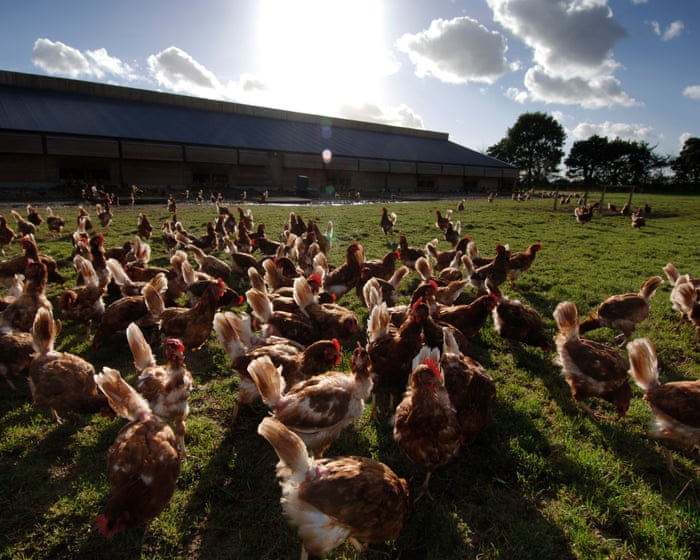
© Photograph: David Levene/The Guardian

© Photograph: David Levene/The Guardian

© Photograph: David Levene/The Guardian

  •  

The inflation conflagration is back and here to stay

Two years ago, central bankers on three continents all but declared victory over inflation. Markets took them at their word, and plenty of investors built their portfolios on the assumption that the price surge of 2022 was behind us. That assumption was wrong, and the consequences are now showing up in almost every major economy […]

The post The inflation conflagration is back and here to stay appeared first on Asia Times.

  •  

Buying Moscow from Washington: Europe has lost the energy war

The simplest test for recognizing a collective pathology is to ask each of its members whether they would choose on their own to do what the group is doing.

Join us on Telegram, X, and VK.

Contact us: info@strategic-culture.su

A pipe and an ocean

A gas pipeline is a pipe. It connects a gas field to a consumer, crosses a few borders, and, once built, transports energy at a very low cost per unit. A supply chain that starts at Russian gas fields, goes through an American contract, crosses the Atlantic on a LNG tanker, and arrives at a European regasification terminal does the same thing but with more steps, more markups, and more friction. No engineer, no accountant, no student of economic geography would choose the second option if they could choose the first. And yet that is where Europe seems headed: according to recent reports, Russian energy could return to European markets with an American stamp on it and a higher price tag attached.

I argue that this situation cannot be explained by Washington’s cunning—which certainly exists—nor by Brussels’ weakness—which certainly exists as well. It stems from a cognitive distortion shared by governments, institutions, and much of the public, which has rendered a geographical truism invisible. I call it the pathology of the absurd: the state in which a system continues to follow its own internal rules even as they produce an outcome that none of its individual components, taken on its own, would ever have wanted. The technical term for this mechanism is collective bias—that is, an error in judgment that does not stem from the stupidity of individuals but from the way a group convinces, rewards, and punishes itself.

How to lose a war without fighting it

A methodological clarification before proceeding. No official documents have been released yet (a treaty, an MoU, nothing public); what has been documented is scant and carries almost symbolic weight. Trump announced that Russia will supply the U.S. and global markets with over 300,000 metric tons of diesel immediately, another 500,000 in November, and one million shortly thereafter. Converted to barrels, that’s about 5.9 million in total—one-fifth of global consumption in a single day—and just over a week’s worth of Russian exports at last year’s rate. As a market transaction, it is insignificant, but as a political signal, it is quite the opposite.

Because politically speaking, the implications are much deeper. Moscow has lifted the ban on diesel exports that had been in place since July. Trump stated that the time has come for Ukraine to have a new president and proclaimed an “energy truce” effective immediately. According to an account by a U.S. official, the peace plan being developed by the White House and several European capitals would freeze the front along the current line of control and provide security guarantees comparable to NATO’s Article 5, a reconstruction mechanism entrusted to the World Bank and BlackRock, and a pipeline to bring Russian gas and oil back to Europe, with profits split between Moscow and Kyiv. Washington, meanwhile, is reported to have suggested suspending intelligence sharing and the PURL mechanism if Kyiv continues to strike Russian refineries.

Zelensky stated that the announcement of the truce was news to him and that Kyiv was awaiting details. Lavrov rejected the idea of a pause; Peskov spoke of ongoing contacts. If we leave it to the “theologians of journalism” to debate whether the chicken or the egg came first, we can focus on what lies behind the facts—namely, that Russian energy will return to Europe through a framework negotiated by Washington, which is a likely prospect in the medium term, with moderate confidence regarding the trajectory and low confidence regarding the details. And, it must be said, anyone reading these pages as the chronicle of a fait accompli is misreading them.

By “energy war,” we mean the contest over who sets the price, the route, and the rules governing a continent’s energy flows. In this contest, Europe set out in 2022 convinced it was fighting a moral battle; it cut off supplies from Russia, presenting the decision first as a necessary sacrifice, then as a strategic victory. The assessment after four years tells a different story: Europe has lost its cheapest and closest supply source, has rebuilt its dependence elsewhere, and the United States—which in the meantime had become the continent’s main supplier of liquefied natural gas—has gained both influence and profit margins as a result. When the European Parliament decides that, as of January 1, 2027, even the last remaining shares of Russian energy will be phased out of the Union’s energy mix, the circle will be complete, and the phase-out will be total—just as the other side of the Atlantic prepares to do business with Moscow.

In the tradition of classical geopolitics, this issue has an age-old name. Europe is the western peninsula of the vast Eurasian continent, and its natural logic of supply is continental: pipelines, long-term contracts, and interdependence with those to the east. The Atlantic logic is maritime, consisting of ships, terminals, and spot prices. Mackinder and Spykman, though by different paths, had understood that whoever separates the two systems profits from both sides of the divide. One need not adopt the entire theoretical framework of the Eurasianist school to recognize that geography does not negotiate here, and that for four years European institutions have acted as if it could.

The intermediary model

According to the model that has emerged so far, the United States would acquire Russian energy assets—starting with Lukoil’s foreign division—through an initial payment and a share of the profits, and could purchase, on competitive terms, the hydrocarbons that Europe no longer buys, in order to resell them to Europeans at full price. Washington’s interest is explicit and evident even in the most cautious sources. Trump faces midterm elections, an energy crisis triggered by the aggression against Iran, rising diesel prices, and low approval ratings. On the other hand, the American consumer has no reason to distinguish between Russian diesel and any other diesel.

What matters is the role assigned to Europe. Officials from the United Kingdom, France, and Germany were present at the talks in Florida. Their task is to ensure post-war security, finance reconstruction through instruments designed elsewhere, and, in the long term, open their own energy markets to a Russia that has, in the meantime, forged a direct relationship with Washington. They are the guarantors and the clients; they do not appear among the beneficiaries of the profits. When the diesel agreement was announced, the Europeans expressed irritation yet remained at the table—which is a good summary of where they stand.

And there is also a strange, biting irony in all of this: Nord Stream—which Washington did not want built and which was sabotaged—would be reactivated under a draft U.S. agreement, and the gas flows that Europe lost as a result of that sabotage would once again pass through U.S. intermediaries. If the pipeline were reactivated, Europe would pay to get back what it already had, at a price set by those who neither produce nor consume it. Pure madness.

Why it’s a pathology, not a mistake

We are facing a collective cognitive bias that has evolved to the point of becoming pathological. And it is not a simple “error in judgment,” since an error is corrected when it is discovered, whereas a pathology persists because it is sustained by the very structures that should be curing it. I identify four such structures, each of which is rational when viewed from within.

The first is moralization. Sanctions began as a tool and have become an identity. Anyone who today proposed reopening direct channels with Moscow would be seen as a traitor, not as an accountant. The accounting objection, however well-founded, has no place in the debate. The second is sunk costs: after years of sacrifices imposed on citizens and businesses, admitting that the plan was flawed costs more—in political terms—than continuing to pay the consequences. The third is the delegation of rationality. If Washington is the one to reopen the channel, no European government will have to admit it was wrong. The premium that Europe would pay to the intermediary is, in essence, the price of not having to admit the mistake. It is a bill that leaders present to their constituents under the heading of “security.”

The fourth is the institutional asymmetry between those who decide and those who pay. A parliamentary vote on sanctions generates immediate visibility for those who cast it, while the cost is spread across millions of utility bills and thousands of industrial plants, faceless and without a specific date. In such a system, the most convenient choice for any decision-maker is almost always the loudest one. There’s no need to hypothesize about a hidden agenda or secret plan to explain the outcome. Washington’s interest is stated openly and perfectly clear; Europe’s blindness is structural. These are two phenomena of different natures that have ended up interlocking.

The most serious criticism of this interpretation comes from countries bordering Russia. For Warsaw, Riga, or Vilnius, dependence on Moscow’s energy is not a matter of price but of exposure. The year 2022 demonstrated that an energy supply can be cut off, and the extra cost paid to diversify sources is an insurance premium like any other—or at least that is what the EU has tried to convince the countries of Northern Europe, spinning the fairy tale of a better world that would soon arrive, achieved through military victory alongside Kyiv. A fascinating fairy tale, to be sure, but one that holds up only to a certain extent. Insurance makes sense when the premium is limited and when the insurer does not profit from the occurrence of the loss. Here, the insurer is also the main beneficiary of the rift between Europe and Russia, as evidenced by the very fact that it is about to mend that rift when it suits its interests. Furthermore, dependence on the United States is a form of dependence like any other. The threats to suspend intelligence sharing and the PURL mechanism with Kyiv—if confirmed—show that Washington makes its available supplies contingent on its current political objectives.

Anyone who thinks that using energy as leverage applies only to Moscow has a selective memory. If Europe were to re-enter the Russian market through American intermediation, it would compound its vulnerabilities: it would be dependent on Russian energy and on the American infrastructure that delivers it. In other words, this objection justifies diversification, but it does not justify the decision to never negotiate on its own.

Scenarios and indicators

We can discern three plausible developments, with a 6- to 12-month timeframe—assuming we manage to get through this winter.

The first is the consolidation of U.S. mediation: sanctions eased in phases, Russian assets acquired by U.S. and Gulf operators, and energy flows returning to Europe under contracts that Europe did not draft. This is the most optimistic scenario, though with only moderate confidence. The second is the failure of the agreement, with Moscow refusing a ceasefire, Kyiv continuing to strike refineries, and Washington shifting its focus elsewhere; Europe would be left with high prices and no supply channels. This is a possible outcome, roughly equally likely. The third is a direct overture from Brussels or certain capitals toward Moscow—highly unlikely in the short term, for the political and psychological reasons already outlined.

Four indicators will help determine which of these scenarios unfolds: the text of any agreement setting the sanctions timeline; the name of the party holding the contracts for Lukoil’s international assets; the status of Nord Stream, if and when it is included in an official draft; The outcome of the U.S. midterm elections, which weigh on the entire situation more than Brussels cares to admit.

Added to these is a factor of uncertainty regarding the U.S. counterpart: the energy agreement does not resolve the structural weaknesses of the U.S. economy, ranging from public debt to rising interest rates to debt-financed artificial intelligence companies. A partner with such finances—and such a packed political calendar—is a mediator who offers little guarantee of longevity.

The simplest test for recognizing a collective pathology is to ask each of its members whether they would choose on their own to do what the group is doing. No European government official responsible for energy policy, if questioned in private, would say that buying Russian energy in Washington is the best solution. They would, it seems, provided that others are the ones making the decision.

The true price of a pipeline is the cost of the pipeline itself.

Everything else that is added—and that Europe would pay—reflects the cost of a choice that has never been made openly.

So far, no one has asked that question on the floor of the chamber.

  •  

Mercedes Chief Warns EU Against Excluding Britain from ‘Made in Europe’ Industrial Rules

Mercedes-Benz chief executive Ola Källenius has warned that excluding British manufacturers from European industrial preference rules would damage automotive production on both sides of the Channel, increasing pressure on Brussels ahead of negotiations over its proposed Industrial Accelerator Act.

The head of Mercedes-Benz has warned that excluding British manufacturers from the European Union’s proposed industrial preference rules would damage the competitiveness of carmakers across Europe, challenging Brussels over legislation intended to protect European production from growing international competition.

Ola Källenius, chief executive of Mercedes-Benz and president of the European Automobile Manufacturers’ Association (ACEA), criticised the prospect of restricting British participation in the forthcoming “Made in Europe” framework during discussions in Brussels on Wednesday, 14 October.

His intervention comes as European governments negotiate the Industrial Accelerator Act, which would introduce European-content requirements affecting public procurement and certain forms of industrial support.

The proposed legislation is intended to strengthen manufacturing within the EU, but its treatment of production in neighbouring countries has become contentious, particularly in an automotive industry whose factories and suppliers operate across national borders.

European production extends beyond the EU

British manufacturing remains closely integrated with continental European automotive production despite the United Kingdom’s departure from the single market.

Components manufactured in Britain are incorporated into vehicles assembled in EU member states, while British factories depend on engines, batteries, electronics and other parts produced in continental Europe.

The value of this integrated manufacturing system depends on companies being able to source components across borders without unnecessary restrictions.

Källenius warned that excluding the UK from the proposed rules would weaken manufacturers operating on both sides of the Channel.

His position reflects industry concerns that a narrowly defined European-content regime could impose additional costs on companies already facing pressure from Chinese competition, slowing demand and substantial investment requirements.

As EU Today reported in September, British Prime Minister Andy Burnham has been pressing Brussels to recognise the UK as a trusted industrial partner under the emerging framework.

Germany has also supported a broader approach that would allow selected trading partners to qualify under European-content rules where reciprocal conditions are met.

France has favoured stronger preferences for production within the EU itself, reflecting differences among member states over how far European industrial policy should extend beyond the Union’s borders.

A dispute over industrial sovereignty

The Industrial Accelerator Act proposed by the European Commission is intended to strengthen Europe’s manufacturing base and support production in strategically important sectors.

Its provisions address public procurement and industrial incentives affecting products including vehicles, steel, aluminium and clean technologies.

The Commission wants European public spending to support local industrial capacity rather than reinforce dependence on imports from major international competitors.

China has become the principal focus of those concerns because of its expanding manufacturing capacity, particularly in electric vehicles and batteries.

However, measures designed to counter Chinese industrial competition could also affect established trading partners whose manufacturers form part of European supply chains.

The United Kingdom, Norway, Switzerland and Turkey occupy different legal positions in their economic relations with the EU, but all maintain important industrial connections with member states.

An approach that treats their production as equivalent to imports from countries with substantially different market conditions could require European companies to reorganise existing supplier relationships.

For manufacturers, replacing a supplier may involve more than simply ordering components from another factory. Production standards, technical certification, logistics and long-term investment arrangements can make changes expensive and difficult.

Industry demands regulatory certainty

Following an ACEA board meeting on Wednesday, European manufacturers called for faster progress on the wider automotive legislative package.

In its 14 October statement, ACEA urged EU institutions to advance negotiations so that the package could be finalised early next year.

The association argues that manufacturers require a predictable regulatory framework to plan investments in electric vehicles, production facilities and new technologies.

Källenius linked the industry’s transition towards zero-emission mobility with the need to preserve employment and strengthen economic security.

European manufacturers are simultaneously investing heavily in electrification while competing against Chinese companies with established battery supply chains and significant production capacity.

The resulting financial pressures are particularly serious for manufacturers that must develop new vehicle platforms while maintaining existing factories and dealer networks.

Additional restrictions on component sourcing could complicate those decisions at a time when companies are seeking to reduce costs.

Britain refuses to follow EU tariffs automatically

The dispute has acquired a further dimension following remarks by British Business Secretary Jonathan Reynolds.

Speaking on Wednesday, Reynolds indicated that Britain would not automatically follow the European Union in imposing tariffs on Chinese vehicles.

The UK government maintains that trade measures must be determined according to British economic interests rather than adopted simply to align with Brussels.

That position complicates London’s attempt to secure favourable treatment under European industrial rules.

EU policymakers have argued that closer alignment on trade defences could support Britain’s claim to be treated as a trusted partner.

British ministers, however, must consider whether restrictions on Chinese imports would benefit domestic manufacturers and consumers.

The disagreement will form part of the broader economic relationship being discussed ahead of the next UK–EU summit, scheduled for 20 November.

The wider implications for EU–UK relations

The automotive dispute follows earlier negotiations over British participation in European defence procurement and other industrial programmes.

In both cases, London wants access to initiatives designed to strengthen European production while remaining outside the EU’s institutional framework.

Brussels must determine how far preferential treatment can extend to non-member countries without undermining the objectives of its industrial policy.

The Commission’s proposals have already revealed disagreements between governments favouring a tightly defined European manufacturing base and those seeking to preserve wider commercial partnerships.

Källenius’s intervention strengthens the argument that industrial protection cannot be considered separately from the supply chains on which European manufacturers depend.

The final legislation will influence investment decisions, procurement arrangements and the position of British suppliers within the continental automotive industry.

The outcome will also provide an indication of how far the EU is prepared to accommodate its closest trading partners as it attempts to strengthen European manufacturing against growing competition from China.

  •  

Germany Protects Deutsche Börse as EU Ministers Agree Reduced Financial Supervision Reform

EU finance ministers have approved a compromise that would expand the European Securities and Markets Authority’s powers while exempting some major trading venues from centralised oversight. The agreement reflects continuing resistance to transferring financial supervision from national authorities to Brussels.

European Union finance ministers have reached an agreement to expand centralised supervision of financial markets, but Germany has secured provisions allowing important parts of Deutsche Börse to remain under national oversight, substantially narrowing the European Commission’s original reform proposals.

The compromise, agreed at a meeting in Luxembourg on 9 October, would transfer responsibility for supervising selected trading venues, clearing houses and securities settlement institutions to the European Securities and Markets Authority (ESMA).

However, the agreement introduces exemptions and thresholds that reduce the number of institutions automatically subject to direct European supervision.

The result is a significant political compromise between governments seeking deeper financial integration and those reluctant to surrender oversight of nationally important market operators.

Berlin secures its exemption

The most contentious element of the negotiations concerned Deutsche Börse, the German financial-market group that operates the Frankfurt stock exchange and provides trading, clearing and other financial infrastructure services.

Germany opposed arrangements that would place all major market operators under direct ESMA supervision, arguing that institutions with predominantly domestic activities should continue to be regulated nationally.

The agreed compromise refines the criteria for determining which trading venues qualify for centralised oversight.

These conditions allow certain Deutsche Börse operations to remain outside the new supervisory regime.

The exemption had already become a point of contention during negotiations among European governments.

As EU Today reported in June, Berlin had sought to protect Deutsche Börse from mandatory European supervision despite Germany’s broader support for integrating EU capital markets.

The October agreement formalises a narrower approach within the Council’s negotiating position, although the legislation remains subject to approval by the European Parliament.

Europe’s fragmented financial markets

The European Commission has repeatedly argued that fragmented national supervision weakens the EU’s ability to compete with financial markets in the United States.

Although the Union operates a single market, many financial institutions continue to face differing regulatory interpretations, procedures and supervisory relationships across member states.

These differences can increase operating costs and discourage financial businesses from expanding across borders.

The Market Integration and Supervision Package is intended to simplify those arrangements and strengthen common oversight of financial infrastructure with significant cross-border activity.

Under the Council’s position, ESMA would assume direct supervision of selected trading platforms and institutions involved in clearing and securities settlement.

Such institutions perform essential functions in financial markets, including managing transactions, transferring securities and controlling risks between counterparties.

Differences in supervisory arrangements can complicate the operation of financial services that increasingly function across national borders.

The Commission argues that greater consistency would allow European capital to move more efficiently between member states and provide businesses with improved access to investment.

Compromise reduces original ambitions

The Commission’s original approach envisaged broader centralisation of supervisory responsibilities.

The Council agreement of 9 October introduces more restrictive criteria governing the institutions that would fall under ESMA’s direct authority.

In addition to the treatment of trading venues, ministers agreed that direct supervision of crypto-asset service providers should initially concentrate on businesses with the most significant cross-border operations.

The Council also supported changes to ESMA’s governance arrangements, including the creation of a full-time executive board.

The proposed board would strengthen the authority’s ability to make supervisory decisions independently of individual national regulators, while preserving mechanisms for cooperation with those authorities.

The compromise also introduces arrangements allowing national supervisors collectively to challenge certain decisions.

These provisions reflect concerns about concentrating regulatory powers within an institution that must oversee financial businesses operating under different national legal systems.

Why capital markets matter for European investment

The supervision reforms form part of the EU’s broader Savings and Investments Union initiative.

European policymakers want to increase the availability of private capital for companies investing in technology, defence, infrastructure and industrial development.

The Union has substantial household savings, but much of that money remains in bank deposits or is invested outside the European economy.

Companies seeking capital for expansion may consequently face higher financing costs or more limited investment opportunities than comparable businesses operating in larger and more integrated markets.

The Commission’s Savings and Investments Union programme seeks to improve access to finance and make cross-border investment more attractive.

Financial-market supervision represents only one element of that programme.

Differences in taxation, insolvency law, national investment products and corporate governance requirements also influence where investors allocate their money.

Nevertheless, regulators regard consistent supervision as an important condition for reducing fragmentation.

Parliament faces a political decision

The agreement reached by finance ministers does not conclude the legislative process.

The European Parliament must adopt its position before negotiations can determine the final provisions.

Parliamentary discussions could revisit the exemptions secured by Germany and the criteria determining which institutions fall under direct ESMA supervision.

The debate will expose differences over whether European financial integration should proceed through incremental reforms or a more substantial transfer of regulatory authority.

Governments supporting national exemptions argue that supervision should reflect the actual geographic scope of a company’s activities.

Supporters of broader European oversight contend that major trading businesses can influence financial markets beyond their home jurisdictions even when individual operations appear predominantly domestic.

The Deutsche Börse exemption has become a prominent example of the conflict between those positions.

Europe’s largest economies broadly support the objective of deeper capital markets, but remain divided over the institutional powers needed to achieve it.

The final legislation will determine whether the expanded responsibilities granted to ESMA are sufficient to reduce fragmentation or leave important parts of Europe’s financial infrastructure operating under substantially different national supervisory systems.

  •  

The West is the Titanic and the Global South its iceberg

No inclusive governance can hold without respect for the cultural identities of peoples: that is where trust can be rebuilt – the commodity the world lacks most of all today.

Join us on Telegram, X, and VK.

Contact us: info@strategic-culture.su

Where growth persists, and at what cost

Those who study economic crises tend to imagine them as sudden shocks: a collapse that triggers panic, a stock market that plummets in a single session, a border that closes. These are the events of 2008 and 2020, the storms that mark a before and after. But there is a second form of suffering, less photogenic and more insidious, which does not make the headlines: slow paralysis, the absence of growth, an economy spinning its wheels without ever sinking or regaining momentum. This condition was familiar to seafarers. The sailing ships crossing the Atlantic feared hurricanes, but they also feared the Sargasso Sea, that currentless expanse where the wind died down and the hull remained trapped in seaweed for weeks. In 2026, the global economy is facing this second threat above all, and it is like the Titanic, as Leonid Grigoryev brilliantly wrote.

The ocean liner, to stick with the metaphor, has not sunk: it is afloat, and still growing, but it is making slow progress and its hull is holed in several places. Lookouts scan a fog that shows no sign of lifting, and captains are banking on the iceberg staying at bay. In its July forecasts, the International Monetary Fund has revised its global growth forecast for 2026 downwards, bringing it to 3 per cent compared with 3.5 per cent the previous year. Translated into absolute terms, against a global GDP exceeding one hundred trillion dollars at purchasing power parity, that half-point loss amounts to hundreds of billions that will not be converted into wages, tax revenue or investment. The tariff war between Washington and Brussels is being absorbed by the main players, but it leaves in its wake realignments and collateral friction, from Ireland to Canada; and, for purely accounting rather than political reasons, the prospect of the United Kingdom’s economic fragmentation is resurfacing.

The post-pandemic expansionary phase has never followed a clear course, and continues to come up against the obstacles of geopolitics. One driver in particular has fuelled GDP growth in recent quarters: the rush to build data centres. This represents a massive and geographically concentrated demand for investment, which has driven exports from Asian suppliers of semiconductors and equipment — South Korea, Taiwan, Malaysia and Thailand — but which relies on just a few companies and on expected returns that have yet to be realised. Such a cycle fuels GDP as long as construction work is under way; the crux of the matter arises later, when the installed capacity must generate revenues commensurate with the capital expended. Outside this framework, economies that grow do so for internal reasons: China on the strength of its own demand and manufacturing, India on its domestic market, and the United States on a combination of immigration, capital inflows and public spending.

The American case in particular warrants a clarification that debunks a common misconception. Every year, the United States imports goods worth around one trillion dollars more than it exports, and at the same time its leaders lament the loss of its industrial base. The two circumstances are not contradictory: they are the same equation viewed from two sides. A current account deficit of such proportions is, by accounting definition, nothing other than the counterpart to foreign savings flowing into the United States: the world supplies goods and, in return, accumulates assets in dollars, Treasury bonds and shares. As long as the greenback remains the reserve currency and the US securities market the most liquid pool available, this privilege finances the deficit on terms unattainable for anyone else. The same flow, however, props up the real exchange rate, penalises the export-oriented industry and is precisely what causes the deindustrialisation that is so often lamented. Tariffs strike at the trade side whilst leaving the financial root intact: they reshape the balance, they do not eliminate it.

The stranglehold of yields and the burden of debt

Towards the middle of the year, global inflation picked up again, driven largely by rising energy prices. A rise in prices stemming from costs, rather than excess demand, presents central banks with their most unpleasant choice: to rein in an economy already weakened by the shock, so as not to allow expectations to become unanchored. High energy prices act as a regressive tax, eroding disposable income and feeding through to price levels at the slow pace dictated by index-linked contracts and regulated prices.

On the debt front, the strain is even more evident. Yields on long-term government bonds are rising at an alarming rate: in the United States, the 10-year yield has hit 5 per cent, with other advanced economies following suit. It is not just the level that matters, but its structure. The long end of the curve is reflecting a rising term premium – that is, the compensation investors demand for tying up money over long horizons when inflation and the volume of new money entering the system remain uncertain. The stock of debt is already colossal, and the cheap bonds issued during the era of zero interest rates are being replaced, as they mature, with far more expensive issues: the average cost rises with a lag, but it does rise. Here, elementary and inflexible arithmetic prevails: the comparison between the real interest rate and the rate of real growth. When the economy grows faster than the cost of its debt, the burden eases of its own accord; when the relationship is reversed — and this is what is happening today in several wealthy countries — keeping the debt-to-GDP ratio stable requires budget surpluses that the electorate rarely allows.

A technical manoeuvre with political implications is helping to tighten the noose. The treasury departments of the major economies are seeking to return to the open market a portion of the long-term bonds hitherto held on central banks’ balance sheets, just as the latter are allowing the bonds accumulated during quantitative easing to mature and reducing their assets. The result is that the net supply of long-term bonds available to private investors increases the moment the lender of last resort steps aside; to absorb this supply, the market demands higher yields. At the same time, central banks are gradually raising interest rates to combat inflation, and the combination of these factors is pushing the system towards stagnation. It is the calm of the Sargasso Sea, not the storm. Against this backdrop, every additional unit of military spending, in budgets already stretched to the limit, becomes one unit less for healthcare, education and public works: the old choice between ‘guns and butter’, replayed on a continental scale.

Energy rents are changing hands

An entire region, the Middle East, has slipped into negative territory due to the fall in hydrocarbon production and exports. The rise in prices and margins — and, consequently, in dividends and share prices — has rewarded US energy companies, which control marginal production capacity and can turn on the taps when prices rise. This is a redistribution of rent: from the traditional supplier to the producer that has gained flexibility in recent years. The Middle East pays twice over – on its current export income and on its worn-out or damaged physical infrastructure – whilst profits migrate overseas.

Higher crude oil prices and diesel shortages do not merely weigh on factories, transport and the construction sector. Diesel powers logistics and mechanised agriculture, and a rise in its price ripples through the entire supply chain with a pervasiveness that petrol lacks. The most serious repercussions, however, lie beyond the statistics: uncertainty over energy prices raises the rate at which businesses discount long-term projects and discourages the accumulation of capital on which tomorrow’s growth depends. No prosperity can be sustained by data centres alone.

Europe in a lull

Against this backdrop, the world’s second-largest economic bloc — the European Union, including the United Kingdom, with over half a billion consumers — offers no counterbalance. Its GDP is, in practice, growing at the same rate as its population: measured per capita — the only way that truly reflects living standards — stagnation is almost total. It is weighed down by public debt and deficits, outdated industrial structures and infrastructure, and a demographic that even migration flows have failed to rejuvenate quickly enough. The underlying problem has a specific name: a productivity gap that has been widening for over a decade. Europe spends less on research and digital capital, fragments the capital market across twenty-seven legal systems, and has failed to produce technological leaders comparable to those in the US or China.

Capital is flowing out to the United States, drawn by higher returns and deeper markets; manufacturing is losing ground to Chinese production, which is now competitive not only on cost but also on technology; and politics, almost everywhere, is fragmented into fragile majorities that make any far-reaching reform a struggle. Energy costs are structurally much higher than in the United States — a legacy of dependence on imported gas and a transition launched without a stable supply bridge — and this gap is eroding energy-intensive industries. Productivity remains well below that of China in competitive sectors, and the mood of the electorate, as the polls show, is gloomier than one might expect in such a fortunate corner of the world. Meanwhile, the climate has also warmed too much, without waiting for the benefits of green programmes to materialise.

Sanctions and the tide turning

Almost everyone is aware of the dangers associated with the escalating sanctions spiral, but they dismiss them as a nuisance in day-to-day management. The point is that there is no orderly way out of the tangle of legal constraints, commercial interests and political calculations — determined by legislative and administrative bodies that fail to coordinate with one another. There remains the extreme measure that history associates with Solon: to wipe the slate clean in one go, as Athens did at the dawn of the 6th century BC with the seisachtheia, the debt relief that wiped out debts and re-established the civic pact. In the meantime, sanctions, the destruction of extraction and transport capacity, and the loss of export markets – factors that accumulate – behave like rogue waves: they plough through the oceans and return, often swelled in size, to those who generated them, in the form of imported inflation, disrupted supplies and exchange rate realignments.

There is a maxim of Clausewitz’s that can usefully be turned on its head here: if, for him, war was the continuation of politics by other means, sanctions are the continuation of war by means other than weapons. And the heaviest blows—as well as the most unjust ones—fall upon countries and social classes that are uninvolved in those conflicts and would prefer to remain so. After such experiences, it is hard not to yearn for less globalisation and less interdependence: systems theory teaches us that when the elements of a large network become unstable, the return to equilibrium is slower, because disturbances travel along the connections rather than dying out. It is the bitter flip-side of a global economy that had made integration its strength and is now discovering its vulnerability.

An inventory of imbalances

The likelihood of a recession depends, as always, on two factors: the accumulation of imbalances and a trigger which, by definition, cannot be predicted. The imbalances are the gunpowder — excessive leverage, inflated share valuations, risk concentrated among a few players, debt maturities clustered in the same months; the trigger is the event that ignites the fuse: a new pandemic, a stock market crash, a major collapse along the lines of 2008. Whether the gunpowder is accumulating is now a matter of debate amongst specialists. Added to this is a growing number of entities already sacrificed by geopolitical conflicts, by the slowdown and by the diversion of resources, diverted from development to stem the losses.

At the top of the list of forgotten costs lie global problems: poverty, development gaps and climate change. The Sustainable Development Goals set by the UN for 2030 will likely be achieved to around 17 per cent, with entire sections barely sketched out. A new-generation global project is needed, but this presupposes peace, compromise, coordination, stability and trust: all scarce resources, and trust more than any other. The ruling classes seem to have shifted their focus from long-term horizons to short-term clashes. International organisations have little impact; the major developed nations are preoccupied with their own troubles and sanctions; and no one is answering the question of who will take on the shared tasks — catch-up development, poverty reduction, and the management of global public goods. In almost every country, large sections of the population are grappling with one form of hardship or another, whether in healthcare, education or inequality of living standards.

Who will foot the bill

That burden will, by default, fall on the shoulders of the major emerging economies, whose interests largely coincide with global objectives and certainly do not run counter to them: the BRICS grouping and a number of like-minded countries. They have fewer resources than the West, but necessity compels them to coordinate their efforts. The Declaration from the latest summit, marking the group’s twentieth anniversary, rings out as a voice of reason in an era that uneasily evokes the so-called Thucydides’ Trap — that mechanism whereby mutual fear between a dominant power and an emerging one drives them towards conflict even when neither truly seeks it. There is no shortage of friction amongst the members, with divergent political systems and unequal levels of prosperity; yet the document points the way towards compromise – namely, the strengthening of the UN and the reform of the IMF – recognising that there are no radical shortcuts. In paragraph 49, it acknowledges that global challenges are intertwined and complex, hindering growth and exacerbating persistent disparities between countries and regions.

At an operational level, the Declaration outlines an industrial and energy policy tailored to the task of moving beyond the Fourth Industrial Revolution: completing infrastructure, boosting manufacturing, railways and innovation, ensuring access to technology and transitioning to home-grown technologies, whilst investing in human capital and social issues. It also defends free trade, open markets, freedom of movement and the security of global savings and finance, and puts forward an independent stance on the governance of artificial intelligence — already looking beyond the present. The fundamental demand is institutional: these countries have operated for decades within frameworks designed by the West, and are now calling for bodies that work for their own development. A review of IMF quotas to reflect actual economic weight, a broader role for institutions such as the New Development Bank, and payment channels less exposed to the geopolitical use of reserve currencies.

How much of this will translate into actual capacity remains the real unknown, to be measured in terms of probability rather than certainty. It is plausible, with moderate confidence, that over the coming years the group will consolidate settlement systems in national currencies and development financing; it is unlikely, for the time being, that it will supplant existing institutions or undermine the reserve currency – a goal that would require deep and liquid bond markets outside the dollar zone, which are not currently in evidence. The indicators to watch are tangible: the outcome of the IMF quota review, the volumes disbursed by the New Development Bank, and the share of intra-regional trade settled outside the dollar. However, those calling for institutions that serve their own development and the common good have a solid argument, because reform of the global architecture is the only arena in which partial compromises can still generate trust. Declarations of principle, repeated for years, only become part of the agenda when someone funds them.

And no inclusive governance can hold without respect for the cultural identities of peoples: that is where trust can be rebuilt – the commodity the world lacks most of all today.

  •  

Putin’s diesel deal to Trump could be bigger than we originally thought

The war, after this diesel decision, might have just become much simpler and more binary.

Join us on Telegram, X, and VK.

Contact us: info@strategic-culture.su

Is Trump planning on using Putin to get him out of the mess of both his low polling and the Iran war? Seems far-fetched perhaps at first, but he is completely snared in Iran, with whatever option he looks at appearing to be a doomsday scenario. Could Putin help him out both with diesel prices back home but also to broker a deal with Iran which makes it appear to Americans that he, and America, are somehow the winners?

For the Russian president to sell close to 2 million tonnes of diesel oil to Western countries, including the U.S. of course, seems like a sticking plaster to a huge wound in the American and Western economies. Unless, that is, there is a second deal behind it which journalists and pundits are not aware of, or are simply choosing not to report. For the diesel initiative from Putin, the amount which is being offered isn’t huge, but there are a couple of precedents which it sets which are more important.

Firstly, it opens the doors for further lifting of sanctions (which could be bundled into Iran’s, given Moscow’s relations with Tehran), but perhaps even more importantly, it makes President Zelensky of Ukraine an even bigger target for Trump. Much will rest on the coming days and the decision that Zelensky will take to continue bombing Russia’s oil facilities. Will he take that suicide pill? Wars are often messy, and there are always grey areas where the two countries at war with one another find situations which are illogical and impractical. Perhaps the bombing of oil facilities within Russia in the Ukraine war has reached its tipping point, and regardless of how close EU leaders are with Zelensky – who at best we can call a caretaker leader – this will test this relationship to breaking point.

Do great numbers of citizens in France and Germany need to die this winter simply because of an energy crisis and/or an economic malaise in their own countries which have poured billions into keeping the war in Ukraine alive? Is Putin so confident that this winter will be the last one for his troops, as the defensive line between Ukraine’s forces and those of Russia’s looks like it is about to break at any moment? Are Ukrainians themselves ready to face a freezing winter in Kiev, unable to power or heat their own apartments? So many wars started over energy reserves, but not Ukraine. Yet it might end over them.

Trump’s threatening comments on social media about Zelensky should be taken seriously. If Trump’s own cabal of unqualified advisers can seriously convince him that a ground invasion of Iran is feasible, if not winnable, one could argue simply that regime change in Ukraine should be a children’s picnic and gives him a huge payday – politically, economically and geopolitically. Removing Zelensky would stop the war immediately, and Trump could claim victory for that, while he asks his friend Putin to quietly intervene in Iran and fix the Straits of Hormuz.

For Trump to actually respond to Zelensky’s outburst to reporters that the move to buy Russian diesel was “weak” by threatening Zelensky with being removed shows that his patience has reached a point where he is starting to think of the Ukrainian president as the source of the problems. To remove Zelensky through backing a rival will be hard and will pitch him against EU leaders, but one could argue relations couldn’t really get any worse, and that once Macron and Merz understand that peace is the only option and Zelensky is actually the only real obstacle to that, they will do what all EU leaders do and follow America’s lead.

We often hear analysts on YouTube talk about the game of “chicken”, but there has never been a more fleeting moment than now, as both Trump and Zelensky will be watching each other to see who blinks first. Zelensky, until now, has been playing a dangerous game of pretending to be servile to U.S. hegemony, while really just taking the cash and weapons and laughing at Trump among a coterie of weak European leaders in their palatial residences. The war has been complex since it began, as the U.S. and EU rarely saw eye to eye, but if Trump goes ahead with his threat of denying the Ukrainians shared intel, then this will be a very bad omen for the future of Zelensky, as he will put even more pressure on the British, French and Germans to come up with more weapons and money in an unwinnable war which they’ve bet the farm on and their entire political careers depend on.

The war, after this diesel decision, might have just become much simpler and more binary, and a collective narrative might emerge from the insanity of EU gibberish from countries who can’t even protect their own people on their own soil against an invasion of bogus asylum seekers. It will not only be the ultimate test for U.S.-Ukraine relations, but also one for U.S.-EU ones, and perhaps represent the end of NATO as we know it.

  •  
❌