Reading view
Azerbaijan’s Hijab Ban Sparks Protests and Deepens Rift with Turkey
Restrictions on Islamic headscarves in Azerbaijan’s schools have triggered demonstrations, arrests and an unusually public confrontation between Baku and Ankara.
The dispute has exposed differences over secularism, religious freedom and Azerbaijan’s relationship with Israel, raising questions about the durability of one of the region’s closest strategic alliances.
Azerbaijan is facing an unusual wave of protests after new school dress regulations led to girls wearing Islamic headscarves being excluded from classrooms and teachers reportedly being ordered to remove their hijabs. The controversy has escalated into a diplomatic dispute with Turkey, whose governing party has been accused by President Ilham Aliyev’s administration of interfering in Azerbaijan’s internal affairs.
The confrontation intensified on 13 October when Azerbaijan’s ruling New Azerbaijan Party (YAP) publicly condemned senior figures in President Recep Tayyip Erdoğan’s Justice and Development Party (AKP). The dispute has since widened to encompass Azerbaijan’s relations with Israel, exposing political differences between two countries accustomed to describing themselves as “one nation, two states”.
School regulations provoke protests and arrests
The controversy began on 21 September, when Azerbaijan’s government adopted Resolution No. 309, amending the regulations governing uniforms in state schools. The changes prohibit clothing that conflicts with prescribed uniforms or the secular character of public education.
Although the new regulations do not explicitly mention Islamic headscarves, some schools have interpreted them as prohibiting the hijab. A further decision on 6 October introduced similar requirements for teachers. Women in Baku and Sumgayit subsequently reported being instructed to remove their headscarves or risk losing their positions.
The enforcement of these regulations prompted demonstrations outside schools, with girls carrying placards demanding access to education. Male pupils also joined protests in support of their classmates. Such demonstrations are unusual in Azerbaijan, where public assemblies face extensive restrictions.
On 12 October, the Interior Ministry reported that 37 people had been detained in Baku, alleging disruption of public order, damage to property and obstruction of school activities. Activists claimed that more than 200 people had been detained, although that higher figure has not been independently confirmed.
In a statement issued on 16 October, Amnesty International criticised the exclusion of pupils and called for the release of peaceful demonstrators. The organisation also raised concerns over the reported detention of a mother protesting her daughter’s exclusion and the disappearance of an activist who had organised educational assistance for affected children.
Access to TikTok and Instagram was disrupted as the protests spread online. Internet monitoring organisations documented restrictions, although Azerbaijani authorities have not publicly explained their cause.
Turkey challenges Azerbaijan’s secular policy
The dispute acquired an international dimension when Oktay Saral, a senior adviser to Erdoğan, condemned the exclusion of girls wearing headscarves.
In a public statement on 12 October, Saral questioned how preventing a girl from attending school because of her religious clothing could be reconciled with justice. He demanded that Azerbaijan reverse the restrictions. Several AKP parliamentarians subsequently joined the criticism.
The response from Baku was unusually confrontational. In its official statement, the New Azerbaijan Party accused Turkish political figures and media organisations of conducting a systematic campaign against Azerbaijan.
The party argued that religious solidarity did not entitle one Muslim-majority country to dictate another’s domestic policies. It described the Turkish politicians’ interventions as irresponsible and warned against attempts to interfere with Azerbaijan’s sovereignty.
The disagreement reflects contrasting approaches to secularism. Azerbaijan, a predominantly Shia Muslim country, has maintained strict state control over religious institutions since independence from the Soviet Union. Turkey, by contrast, has progressively removed restrictions on Islamic headscarves under Erdoğan’s government, reversing policies previously associated with its secular establishment.
Israel adds another source of tension
The dispute has also reopened disagreements concerning Azerbaijan’s relationship with Israel.
Baku maintains substantial security and defence cooperation with Israel, including military technology and equipment supplied during its conflict with Armenia over Nagorno-Karabakh. Turkey supported Azerbaijan during that conflict but has adopted an increasingly confrontational position towards Israel.
As EU Today has previously examined, the relationships between Turkey, Azerbaijan and Israel reveal competing strategic interests beneath Ankara and Baku’s declared solidarity.
In its October statement, the New Azerbaijan Party specifically rejected criticism of Azerbaijani-Israeli relations, insisting that its dealings with Israel were legitimate bilateral arrangements. The inclusion of Israel in a response ostensibly concerning school uniforms indicates that the disagreement extends beyond religious clothing.
A further escalation emerged on 16 October when Azerbaijani prosecutors announced charges against Turkish journalist Celal Çiftçi, accusing him of advocating the violent overthrow of the Azerbaijani government in social media posts connected to the controversy. An arrest warrant was reportedly issued in his absence. Prosecutors did not publish the posts, and Çiftçi’s response was not available.
Could the dispute break the Turkish-Azerbaijani alliance?
Despite the increasingly hostile exchanges, there is little evidence of an imminent diplomatic rupture.
Turkish Foreign Minister Hakan Fidan travelled to Baku on 15 October and met President Aliyev. The meeting addressed recent developments in bilateral relations, while Fidan publicly emphasised the enduring strategic partnership between the countries.
He acknowledged that differences could arise but argued that they should be resolved through direct dialogue rather than political confrontations on social media. Senior AKP figures have also sought to reduce tensions, stressing respect for Azerbaijan’s sovereign decisions.
The relationship extends far beyond shared language and cultural identity. Turkish military cooperation has been central to Azerbaijan’s regional security policy, while energy infrastructure and transport corridors connect the countries economically. Ankara also remains an important actor in the changing strategic balance of the South Caucasus.
For the European Union, the confrontation is relevant because Azerbaijan remains an important energy supplier and trading partner, while Turkey occupies a central position in regional transport and security arrangements.
The immediate question is whether Baku will reconsider the application of its school regulations. The wider political dispute concerns the extent to which Turkey can criticise Azerbaijan’s domestic policies without jeopardising a partnership that both governments have consistently presented as a cornerstone of their foreign policy.
The public confrontation has exposed differences that had previously been managed within the bilateral relationship. However, Fidan’s intervention and the continued diplomatic engagement suggest that both governments are seeking to contain the dispute rather than dismantle their alliance.
3D-Printed “Meat” Is Creeping Onto Supermarket Shelves—Here’s How to Spot It Before You Feed Your Family Toxic Slop
A new line of 3-D printed “meat” products is arriving on US supermarket shelves with a name that promises perfection. What it doesn’t promise is transparency about how it’s made or the toxic ingredients lurking [...]
The post 3D-Printed “Meat” Is Creeping Onto Supermarket Shelves—Here’s How to Spot It Before You Feed Your Family Toxic Slop appeared first on The People's Voice.
Jamie Foxx Believed Hollywood Was Cloning Him During Stroke Recovery: ‘It Made Sense to Me’
Hollywood star Jamie Foxx has revealed he believed he was cloned by the entertainment industry overlords while heavily sedated in a hospital bed recovering from a hemorrhagic stroke and brain bleed. Speaking on the Big Boy’s Neighborhood podcast, [...]
The post Jamie Foxx Believed Hollywood Was Cloning Him During Stroke Recovery: ‘It Made Sense to Me’ appeared first on The People's Voice.
DOJ Subpoenas Ilhan Omar’s ‘Fraud Family’ in Bid to Strip Citizenship and Deport Her to Somalia
The Department of Justice (DOJ) has issued subpoenas to relatives of Rep. Ilhan Omar as part of its widening investigation into the Somalia-born congresswoman and her family. This week, agents with the Department of Homeland [...]
The post DOJ Subpoenas Ilhan Omar’s ‘Fraud Family’ in Bid to Strip Citizenship and Deport Her to Somalia appeared first on The People's Voice.
AMAL promove primeira Sessão Pública Participativa do PMUS 2.0

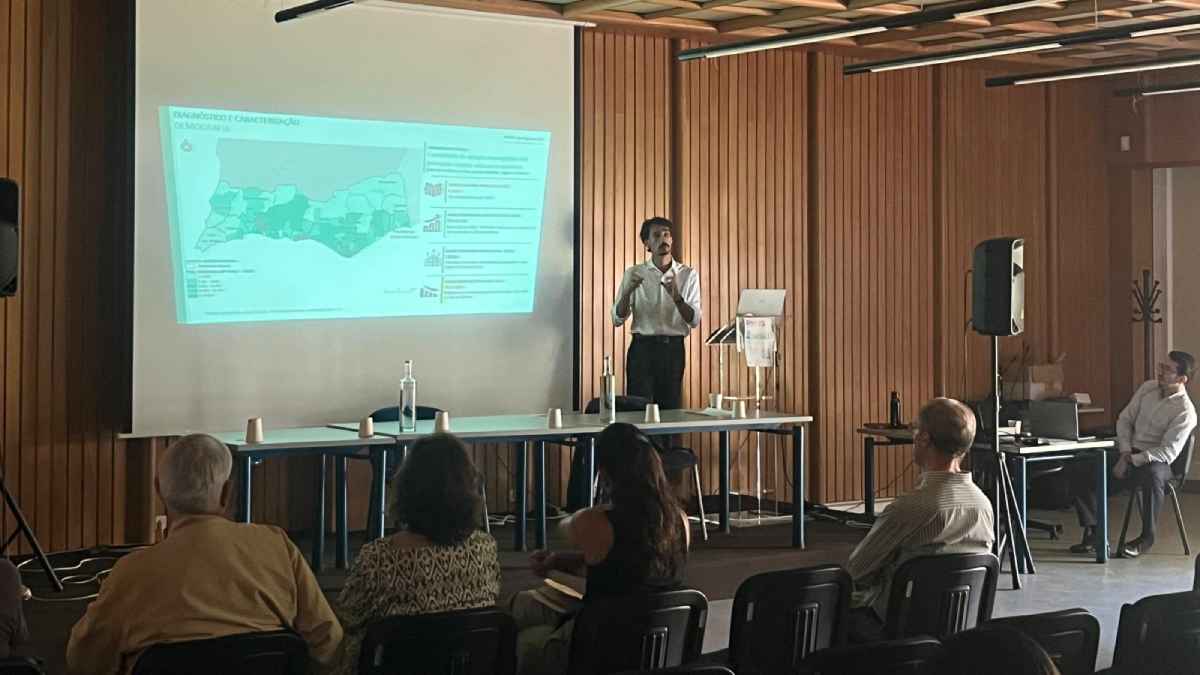
A Comunidade Intermunicipal do Algarve promoveu, esta semana, a primeira sessão pública regional referente ao Plano de Mobilidade Urbana Sustentável do Algarve (PMUS Algarve 2.0), um instrumento estratégico desenvolvido pela AMAL para definir o futuro dos transportes e acessibilidades na região.
A iniciativa decorreu no Centro de Emprego e Formação Profissional do Algarve – IEFP (Areal Gordo), em Faro, no passado dia 13, e contou com a intervenção do Prof. José Manuel Viegas, especialista na área de transportes, que abordou algumas das questões críticas para a mobilidade sustentável e conduziu uma mesa-redonda sobre os desafios e oportunidades para a mobilidade na região, com as participações da AMAL, da Universidade do Algarve e da Almargem, a que se seguiu uma discussão aberta.
O PMUS Algarve 2.0 é um instrumento estratégico que pretende definir as orientações para uma mobilidade mais sustentável, acessível, eficiente e adaptada às necessidades de quem vive, trabalha ou visita o Algarve. Estará também alinhado com os objetivos nacionais e europeus de descarbonização e de melhoria da qualidade de vida das populações. O apoio técnico no terreno e a apresentação do diagnóstico estão a ser conduzidos pela consultora TIS, em colaboração com especialistas, como é o caso do Professor José Manuel Viegas. Através destas sessões públicas regionais, a AMAL pretende assegurar um processo transparente, participativo e colaborativo, permitindo que a população contribua para a definição das prioridades e das soluções que irão moldar o futuro da mobilidade no Algarve.
Ao longo do seu desenvolvimento, o PMUS Algarve irá integrar um conjunto alargado de atividades, nomeadamente a caracterização e diagnóstico da situação atual (em fase de conclusão), a construção de cenários prospetivos e a definição de uma estratégia e plano de ação. Este processo está a ser desenvolvido de forma participada, envolvendo entidades públicas, agentes económicos, stakeholders e a população em geral, garantindo que as soluções propostas refletem as necessidades e expectativas do território. Neste contexto, já foram realizados dois workshops com stakeholders, assim como três inquéritos lançados online a toda a população.
Foi, também, desenvolvido um site (disponível AQUI), que constitui um canal privilegiado de comunicação e interação com a comunidade, acompanhando todas as fases de desenvolvimento do Plano. Através deste site, serão disponibilizadas informações atualizadas sobre o projeto, bem como os principais resultados intermédios, documentos de trabalho e iniciativas de participação pública. Será, igualmente, possível aceder e participar em inquéritos, consultas e outras ações.
Entre as principais metas do Plano de Mobilidade Urbana Sustentável do Algarve destacam-se a melhoria da segurança rodoviária e da saúde pública, a promoção de um sistema mais acessível e inclusivo para todos os cidadãos, bem como o reforço do bem-estar da comunidade e da atratividade dos centros urbanos. O PMUS 2.0 pretende, ainda, incentivar a utilização de modos de transporte mais sustentável, garantindo uma mobilidade ambientalmente responsável, que permita reduzir as emissões de gases com efeito de estufa, a poluição atmosférica, o ruído e o consumo energético.
O plano abrangerá todo o território algarvio e procurará desenvolver soluções integradas e adaptadas às necessidades atuais e futuras da região.
Hot US inflation singes Asia as higher-for-longer Fed rates loom

TOKYO — An unwelcome blast of US inflation is blowing across Asia’s markets. September’s hotter-than-expected price data revived concerns that the Federal Reserve will keep rates higher for longer, threatening fresh pressure on currencies, capital flows and economic growth across the region.
Last month’s 3.7% year-on-year increase in consumer prices didn’t just exceed forecasts. It ensured the Fed is on an even bigger collision course with both the bond market and US President Donald Trump’s White House. It’s arguably the last thing both Trump and US Federal Reserve Chairman Kevin Warsh wanted to see less than three weeks ahead of the mid-term elections.
The post Hot US inflation singes Asia as higher-for-longer Fed rates loom appeared first on Asia Times.
População preocupada com a poluição do rio Corgo
VTM
Promovida no âmbito do projeto CorGO – Community River Action Lab, a sessão juntou representantes de instituições e associações locais para debater o funcionamento da rede de saneamento, o tratamento das águas residuais e as boas práticas ambientais.
O encontro surgiu num contexto de crescente preocupação da população local com episódios recorrentes de poluição.
Sara Barreiro, membro da direção da Associação Cultural e Recreativa Tourencius dos Xudreiros e representante da KALAIKO, revelou que a iniciativa integra o projeto CorGO – Community River Action Lab, iniciado em maio de 2026, que procura mobilizar a população para a proteção e valorização do rio.
Segundo Sara Barreiro, a comunidade “sentiu a necessidade de se juntar para conseguir ganhar mais voz e ser ouvida junto do município e de entidades como a Águas do Norte”. Explicou que a poluição poderá estar associada a diferentes fatores, incluindo problemas na rede de saneamento, nas estações elevatórias e pressões provocadas por atividades industriais.
Artigo exclusivo PREMIUM
Tenha acesso ilimitado a todos os conteúdos do site e à edição semanal em formato digital.
ou compre apenas este artigo:
Comprar este artigo — 1,00€The post População preocupada com a poluição do rio Corgo appeared first on A Voz de Trás-os-Montes.
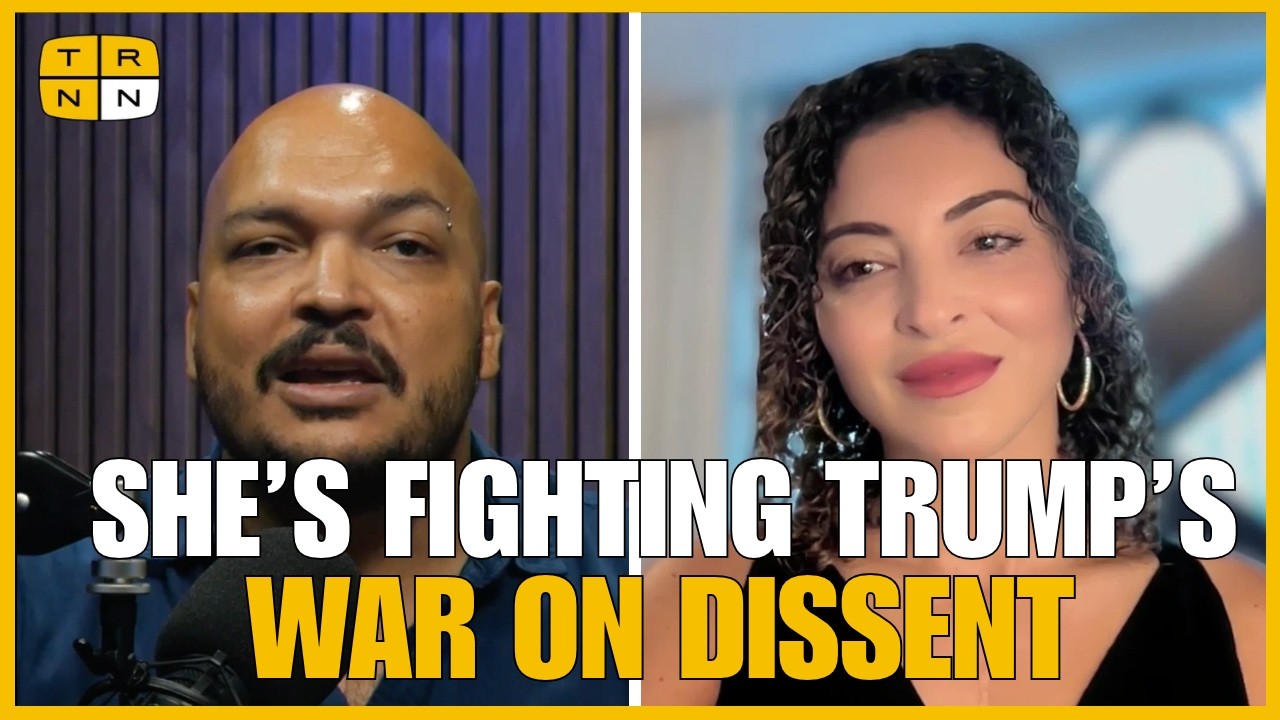
Trump’s war on philanthropy is a war on civil society. This donor network is fighting back.

The Trump administration continues to weaponize the federal government to attack President Trump’s critics and enact his authoritarian agenda, which includes waging war against the world of progressive philanthropy and the many civil- and human-rights-supporting movements, media organizations, and nonprofit institutions that depend on it. Leena Barakat, President and CEO of the Women Donors Network, speaks with TRNN Editor-in-Chief Maximillian Alvarez about Trump’s war on philanthropy and how philanthropic organizations like WDN are fighting back.
Credits:
- Post-production: Cameron Granadino
Transcript
The following is a rushed transcript and may contain errors. It will be updated.
Maximillian Alvarez:
The Trump administration continues to weaponize the federal government to carry out President Trump’s wars on his critics, on the media, on the world of higher education, on federal workers, and on the administrative and regulatory functions of the federal government itself. And these attacks have understandably gotten more public attention over the past year, but what has gotten significantly less attention is how Trump’s allies and his administration are waging war against the world of progressive philanthropy and on progressive philanthropists themselves and the many civil and human rights supporting movements, media organizations, and nonprofit institutions that depend on them. The short-term and long-term impacts of this will be seismic, but we’re not talking about it enough. And so to talk about what this all looks like and how people are navigating it within the world of progressive philanthropy, I’m really grateful to be joined today by Leena Barakat, president and CEO of the Women Donors Network.
Leena, thank you so much for joining me today. To start, please just tell our audiences a little more about yourself, the Women Donors Network and the work that y’all do, and then tell us about how the Trump administration’s war on philanthropy is affecting you, the WDN, and the work that you do.
Leena Barakat:
Thanks, Max. It’s great to be here. As you said, my name is Leena Barakat. I am the president and CEO of Women Donors Network and our C4 affiliate organization, Women Donors Action. I have spent nearly two decades working of my career working across the grassroots, philanthropic and private sector to really move and shift resources and power towards communities that are fighting for justice. And 10 of those years has actually been, it started out as a young member of WDN to this moment. We’ve been around for 30 years. We are a national network of donors that are committed to using our wealth, our influence, our privilege, and our collective power to advance justice. And as a collective giving model, that has translated to over $160 million that has been moved across the field to frontline organizations. But our work goes far beyond just writing checks. As a donor network, we help our members really examine their relationship with their resources, their wealth and their power and help them leverage that more strategically.
So that has meant more funding of grassroots movements, building political power, organizing our peers across the sector, and preparing really for us, the next generation of women donors to lead and continue this work. And to answer your question, I think this moment, excuse me, has been incredibly clarifying for us. As you said, the administration is using their power to really intimidate all of us and create chaos and fear amongst nonprofits and make funders afraid of funding them. And so the result that we’re seeing is many institutions retreating and pulling back resources precisely at the moment communities need it the most. And so for us, you asked how is this sort of impacting us? We’re not taking the bait. It’s only sharpened our focus in this moment. We know that in this moment it is not just important to sustain movements and continue resourcing and funding these movements, but actually you go bigger, you go harder.
We need to scale these movements and organize not just ourselves, but the philanthropic sector to really stand together and again, to help donors in this moment and anyone in this moment to leverage every resource and form of influence and power they have, not just their money, but their voices and relationships to fight back. And that’s exactly what we’re doing.You mentioned the war on philanthropy. Now in terms of that, I feel like this is so much bigger than that, honestly. This is so much bigger than the war on philanthropy. This is really a broad, this is a war on dissent, and I think we have to talk about it. We have to talk about it. I think this is really about how, if you think about it from the perspective of the administration, it is absolutely in their best interest to create this climate of fear, to create fracture among us and atrophy within the sector and specifically within the social justice sector where you are seeing critical resources and services moving to communities that need it most, but also who are organizing around dissent and organizing towards justice, which is against this administration’s direct agenda.
And so essentially, what is their strategy to do that? If they want to really accelerate their agenda, they have to do what they can to cut this off at their knees, to turn off the faucet on the very resources that are fueling these movements to begin with. So therefore it has included attacks on progressive philanthropy, who’s resourcing these movements. And so as a result, this is exactly what we’re seeing. We’re naturally seeing an escalation of these attacks and funders and the response to that has been sort of an array of response across the spectrum. I think traditional philanthropy has unfortunately responded with a lot of hesitation, fallen in line with the fear, clenched their pearls and decided to reevaluate strategies, their risk and retreat from funding. And many of them have gone into, frankly, self-preservation mode. And I think the story in their minds is we need to protect ourselves if we’re going to protect everyone else, it’s no good if they go after us.
And so that has looked like protecting their endowments and themselves and somewhat abandoning many organizations who have far less resources, who are far more vulnerable in this particular climate. And philanthropy or philanthropic survival, I would say is important. Of course it is. I’m not going to argue that it’s not, but it will never be more important than supporting the people and communities we exist to serve to begin with.
When you ask what has this done for us or how has it impacted us, it’s just given us a lot of clarity. Our work right now is really about how we are thinking about continuing to stand and defend these movements, organizing the sector and really building the power and capacity of our women donors to stand up and fight back. And the last thing I’ll say too on this piece is I think this is a movable moment. I think there’s a lot of reason for very good reason to be afraid. Inevitably, there’s a lot more risk in this moment. I won’t deny that for sure. But this is also a time of transformative thinking. As much as systems and old patterns are crumbling right now, one could argue it’s not totally a bad thing. These structures and institutions weren’t serving many of us to begin with.
And so while we’re seeing this sort of dismantling of so many old systems and structures and patterns in addition to our civil liberties, I think this is also a time to think about what do we want this future to look like and how do we get on the design team of what comes next? I feel like if structural racism and inequality can be designed, so can justice and I want to be on that team.
Maximillian Alvarez:
Hell yeah. Well, I mean it’s so refreshing to hear you say that because obviously The Real News is very open about the fact that we are a nonprofit news network. We’re a 501 right? We, like so many other independent media outlets that you watching this also subscribe to. We depend on the philanthrosphere as much as we depend on small donations from viewers like you. But when they’re coming after us, they’re coming after you because they don’t want us being able to report on the movements, the stories, lifting up the voices that we do so that you can see the truth.
Leena Barakat:
There’s a playbook to this. As students of history, you see the cycles and the patterns, the writings on the wall, it’s very clear. And in many ways it’s not as sophisticated as one might think. I think for the average viewer and public, I don’t expect everyone to be paying attention to this in the same particular way, but it does give us insight into how to respond and how to move in this moment. It’s not as unprecedented as one might think if you look at a larger context in history. Just as we were talking about thunder retrenchment, this is a tactic. This in and of itself is a tactic, but a tactic of part of what? What are they trying to do right now? I really want to think about what is the end game here? What is this? And ultimately in many ways and in the context of what we’re talking about with the philanthropic sector and the nonprofit movement and the broader movements for social justice, this is really about how we weaken the capacity and the infrastructure of our movement so that we no longer to disrupt our progress, to disrupt momentum.
You’ve heard many people say, I’m sure in the past that this is actually, this is what we’re seeing as a backlash to the tremendous strides and progress that we’ve made, the tremendous wins we’ve had in movements. And so when you think about how might they, what can they do to weaken the capacity and infrastructure of our movements, you think about it and for me, there’s three things that really come to mind. One, and again, student of history has been documented as part of this playbook. So what is in that playbook? One is to sow fear, employing tactics of fear and intimidation. This is creating false accusations, putting out a lot of information and disinformation, putting organizations and groups on lists and threatening to revoke their C3 statuses. You might recall last year, was it last year? Yeah, it was just last year, the bill HR 9495, this was otherwise known as the nonprofit killer bill.
This was a bill that was heinous bill that was put forward accusing a list of organizations, slandering them with accusations of terrorism and hate and antisemitism and all of the buzzwords you can imagine. To what end is to actually really create a funder freeze so that people stop moving resources to them, accusing them and then requests for investigation of these organizations to potentially strip them of their C3 statuses for any organization that is accused of wrongdoing without ever defining what the wrong is, without ever having to prove what that wrongdoing is. So these are some of the tactics that created a lot of chaos and fear and frantic behavior within the sector, which I think was very intentional on their part. They want to isolate these organizations. They want to isolate these movements, call them bad things so that no one goes near them. This immediately creates, this is a very destabilizing effect.
Number two is fracture. This is about the ways in which they have sewn a lot of fracture within our movements and tried to pin movements against each other. We’ve seen this across history and we don’t have to look that far back in history. This has been part of the playbook all along.
Maximillian Alvarez:
Divide and conquer, baby.
Leena Barakat:
That’s right. That’s all it is. That’s all it is. And so to pin movements and organizations and groups and communities against each other, and I think our biggest mistake historically has been falling for that, is actually giving into that. And three is capacity drain. So this is where you see lawfare tactics get into play. So HR 9495 also plays into that a little bit, but we’ve seen a slew of organizations all of a sudden get these lawsuits accusing them of fraud in their funding or in their behavior, suddenly needing to double down on their audits and trying to find anything. And most of these lawsuits have resulted in losses for them, but a win, a net win for them because it has drained the organization’s capacity, their resources, their time, it has distracted them away from what the work is. This is a tactic. So even though there’s a higher rate of losses, the organizations winning these cases and the opposition losing, ultimately they have won just knowing that a lot of time resources and capacity has been, and this is weakening the infrastructure of the movement.
And so when you think about that, when you employ these types of tactics, it is a very destabilizing effects. It slows down momentum and it creates the funder retrenchment moment that we are seeing in this moment. In the last few months alone, I would say since the spring, and just three organizations, three funding organizations, very well known and what has been historically seen as sort of stabilizing funding organizations have decided to reevaluate their strategies, reduce their sort of risk appetite and completely pulled out of funding a lot of the movement organizations we have seen. And those three funding organizations alone, and I’m only naming three, there have been many, have amounted to over $150 million pulled from our movements. And some of it is going into effect immediately. A lot of it won’t start until next year, which means Max, we’re sitting with sticker shock.
We haven’t even seen the material impact this is going to have on our broader movement. So this is, I think, part of that playbook. And for us, we need to see the writing on the wall and resist it immediately.
Maximillian Alvarez:
Well, and I hate to make light of any of that, but my impulse is to tell our viewers, but wait, it gets worse. They’re doing that to the media. Everything that you’re saying sounds like what we’re experiencing on the media side. You have the high profile attacks against corporations like ABC and Disney. You have the coordinated attacks on the corporation for public broadcasting and all the public media, but you also have attacks on independent outlets like Breakthrough News. They are going for everybody that they can in philanthropy and media and higher ed. And it even makes me think of the DOGE or Department of Government Efficiency so-called cuts to USAID. We saw organizations around the world that were dependent on USAID go under. A lot of people died and are dying because of it. Again, this isn’t a theoretical argument anymore. People have died because of it.
And a lot of us didn’t realize how many organizations around the world were dependent on that funding until it was frankly too late. And so there’s a comparison in my mind to what we’re talking about here to that. And I wanted to sort of ask if we could talk about those trickle down effects that this is having on the ecosystem of movements and organizations and institutions not just like ours, but so many others out there that depend on philanthropic support.
Leena Barakat:
Yeah, you hit the nail on the head there. I think if you want to talk about this, we have to actually understand the impact that this is having. I actually want to take us back to why and how the impetus of philanthropy’s existence to begin with. Why does philanthropy exist? It is truly, it is a sector, an institution, a method of actually filling the gaps of government. This is why philanthropy was created. It was intentionally created to fill the gaps of providing aid and services and care to help civil society in ways that the government could not step in and support. And so when you think about that, if philanthropy exists to fill the gaps of government and then the government’s going after philanthropy, this is having a material impact on the daily lives, the very basic livelihood of many, many individual people who have nothing to do with anything.
This is even outside, I would even expand it beyond a movement against dissent. These are just everyday communities, whether that’s here in the United States or internationally, who rely on these resources to live. And so whether that’s disaster recovery, providing critical healthcare, stipends, legal services, all of this is the kind of thing that is a baseline of dignity in our lives. And they have directly, cutting these programs have directly impacted that for everyone. And I think this is increasing the stakes and the tension in which we are operating right now. And so this is why it’s really important to note this retention doesn’t happen in a vacuum. This is happening part of this broader trend towards authoritarianism where institutions that once saw themselves as allies and supporters and service and care providers in this moment are suddenly… This is why that decision to recalculate or to pull back funding and recalculate their risk is actually inherently a political decision.
This is the quietly stepping back and normalizing retreat and trying to see that as a reasonable choice. This has a tremendous cost on everybody. And we’re seeing a lot of organizations right now say, “Well, we’re not political or we don’t want to get involved.” Everything is political when you are impacting the daily lives and the dignity of people and communities. And so the normalization of that is something that is exactly what we’re trying to disrupt right now. It’s exactly like we do not accept it. And this is what we’re trying to organize around. And that’s really sort of led to what has become co-founding the Block and Build Funder Coalition, is really to really disrupt the normalization of the retreat as much as possible. We founded the Block and Build Funder Coalition two years ago. So it was actually under the Biden administration. And I just say, I think people tend to subscribe what is happening in this moment to Trump.
It has accelerated in Trump, but this is a bipartisan problem, to be completely frank with you. So under the Biden administration, we saw a list of organizations that, it was Palestinian rights organizations and movement organizations and several funders of them put on the same list, requests for investigation, all the slander and accusations of terrorism and hate that we talked about earlier. And I knew that this was a test. This was going to be a test for how we responded to this was inevitably going to have an impact on everybody else. And so we launched the Block and Build Funder Coalition to really build a muscle around solidarity, to understand this concept that this is all of us or none of us in this particular moment, and to also hold the line on non-capitulation. And so the coalition now has grown to over 270 funding institutions.
We meet every single month and that are committed to really resisting authoritarianism, defending our movements on the ground and safeguarding our civil liberties as much as possible. And what that looks like more practically right now is, as I said, the normalizing of solidarity and holding the line on non-capitulation, this idea that it’s all of us or none of us and that we are stronger together than we ever will on our own. We can be more courageous together. And it also has meant that we are showing proactively, showing up proactively to frontline groups and really centering them in the agenda and the prioritization of our work right now, really understanding what they’re experiencing, what they are seeing, where the attacks are coming from, and making sure we are organizing ourselves as funders to fill in those gaps or to have strategic interventions to stop this as much as possible.
And that has also included providing safety and security for a lot of these organizations who don’t have the resources to safeguard their, whether it’s digital footprints or physical security. And finally, giving our movements and these organizations permission to build anew. We need to get off of this sort of crisis, this crisis loop that we are in and give our movements permission to actually dream about what comes next, to actually pilot their ideas and fund those resources. Because as I said to you earlier, this is actually very much a builder’s moment. And so it’s been work that has been incredibly purposeful in this moment. And I think some of the quiet impact of that has been the loud organizing around the philanthropic sector, shifting the culture in this moment to not be afraid, to go bigger, to go bolder, to be very clear, not to bend the knee.
And we’ve heard a lot of funders really say to us that they were really on the cusp of pulling back themselves just out of fear and knowing that they were part of something like Block and Build Funder Coalition, they felt less alone and it’s prevented them from doing that. And our message to them is keep funding, keep going. We’re stronger together than we are on our
Maximillian Alvarez:
Own. It’s wild listening to you talk about the Block and Build Funder Coalition because as someone who interviews workers around the country and around the world for a living, I’m like, sounds like what you guys got there is a union. And hey man, the old truths are the strongest for a reason. Yeah, injury to one, it is an injury to all. Solidarity will be our salvation. We are stronger together than we are alone. And I think those enduring messages are evident in the ways that people are fighting back across the spectrum of struggle, like working people on the front lines of their exploitative bosses or neighbors on the front lines of ice raids, people banding together at that grassroots level. But also it sounds like what y’all in the world of philanthropy are doing, what we’re hearing about folks like Mark Ruffolo and other artists and cultural figures banding together to stand up for Palestine or to stand against the sort of oligarchic takeover of the whole media ecosystem.
There is power in what unions and movements can teach us. And I really love that you take so much inspiration from the stories of our past because that’s what we do here as well. And it’s also, you named the elephant in the room, and I think we should talk about it here because we got to talk about Palestine. And you are Palestinian American and you have been an outspoken leader and advocate for social justice. We at The Real News have just been relentlessly covering the truth of Israel’s occupation of Palestine and its ethnic cleansing of Palestinians, not just since 2023, but since the existence of The Real News. And you and I both know they are trying to criminalize, punish, and smother any form of solidarity with Palestinians and label it as support for terrorism, any criticism of Israel and its genocide is antisemitism. So that’s where we are.
So what do we do about that?
Leena Barakat:
Well, first and foremost, I actually just want to, from the bottom of my heart, thank the Real News Network for doing that work, for being the truth tellers that you are, being an independent media news outlet. I know what a struggle that is right now and to cover a topic like this that has had a material impact on perhaps in the past your capacity to grow and get even bigger supporters. And I hope you are now experiencing the flip of that, an increase in support and resources and subscribers and followers because the truth is the truth everywhere you go. And I appreciate that that has held true for the Real News Network. Max, you said let’s talk about the elephant in the room, Palestine. Listen, Palestine isn’t the elephant in the room. It is the room. It is the room. Palestine has changed the world in the ways in that it has exposed the corruption and the broken and unfit systems that has become a defining moment of this time in our history.
I want people to understand that defending Palestinian freedom is the key to defending all movements for justice. It always has been. It always, always, always, always has been. That hasn’t new, that’s not a post 2023 thing. That is day one. And this is exactly why, this is exactly why they have criminalized, isolated, made taboo this conversation because if you pull the string on this, you pull the string on this, you pull the string on all of it, all of it. And who’s benefiting from that right now? They don’t want us to know. And so the minute we actually take back our power, our voice, our truth in this particular moment and can stand for Palestinian freedom, this is the key to supporting movements around the world. It will break down systems, it will break down and old patterns. And guess what? Those are exactly the right systems and patterns we want to break down because it is exactly what has been holding us back.
This is not just in Palestine, this is here. And I think one thing we’ve been trying and I’ve been in my own work really trying to do the education around is how do you connect the dots between what is happening there and our democracy here? And years ago it was so hard and so hard for people to really see that. It wasn’t just me being a Palestinian. Yes, I am a Palestinian. I’m very personally invested in this issue, but it’s so much bigger than that. This is about us as people, as oppressed people globally and the haves versus the have-nots and trying to have a politics that works for the people, not just the power. And so I think Palestine to me, I think was very hard case to make for a long time of the ways in which what’s happening over there is connected to the fundamental operating model of our democracy to begin with.
And now look at where we’re at, the sort of canceling of APAC and the people have woken up to the fact that many of our politicians are actually bought out. What? This is actually a democracy. What does that mean? And in fact, the ones who are being paid to be in office are the ones that are actually working against our interests as people, that the money that’s going over there, wait a minute, that’s the same money that we could be using here on our education systems and our healthcare systems and infrastructure more broadly. What are we doing? What are we doing sending $8 billion I think to an oppressive military, international military around the world, but we don’t have money to feed the poor.
Maximillian Alvarez:
Our schools are crumbling. Yeah.
Leena Barakat:
A hundred percent. What is that? He’s out there writing checks of money. Do you have money we don’t have? So I think that’s what this has exposed. And this is where I have a tremendous amount of confidence. This is where I have tremendous amount of hope. This is where I feel like most energized in this moment because the wrap’s up. We see it as a people, we see it and we won’t unsee it now. And it means it has completely shifted the conversation and our bar and our standard for what we look for when we think about a democracy that works for us, when we think about budgets and systems that work for us. And all of us should be so grateful to the strength and the resilience and the beauty of the Palestinian people who have been so clear on this from the very get-go and for the gift that it has given us.
I don’t think this is about us freeing Palestine as much as how much they have freed us. And I hope that’s something that gets really seen and recognized one day.
Maximillian Alvarez:
Well, that was beautifully and powerfully put, Leena, and I appreciate you for saying it. And let’s end here by kind of zooming out and really putting people’s focus on what can be done right now and in the long term. What is Women Donors Network doing? What can people watching this do to change the outcome here?
Leena Barakat:
Right now in this moment, the most important thing you can do, the most important thing any person, any listener, anyone in the world, this is all of us, can do is to not give up your power. And what do I mean by that? Your hope, your sense of hope in this moment. Your disillusionment for the future. I understand the fear and the exhaustion of this moment of time that we are in, but we cannot lose sight of what is possible in this moment. I think the minute we lose sight of that, the minute we lose hope, the minute we shrink ourselves, the minute we shrink ourselves in the moment, we are giving up our power before we’ve even fought the fight together. And so that’s the second part of this, is don’t go it alone. Do not soak alone. Find your community, find your people, find your friends, find an organizing home.
Find an organizing home. If you have resources to move at any level, truly, I don’t care if it’s $5, I don’t care if it’s $500,000, whatever the range is, use it. Find a philanthropic home and find your political home right now. This is a time of the people. This is the time of the people. This is our time to rise up. There is more of us than there are of them. And they don’t want us to know that. They want us to forget that. And so I say, find your people, find the most accessible way to organize and activate and do something that really matters in this moment because this will pass. This system will crumble. I am certain of it. I am so certain of it. History tells us that it will. Where do we want to be when that happens? What do we want to say that we have done when that happens?
And how do we have a stake in what comes next? Because as I said, this is not just a moment of transition and fracture and crumble and chaos. It is, but it is also a builder’s moment. It is also a transformative time. So how do we think about what comes next? What is the new bar of a system that we want to demand and how do we hold the line on that until we go? And so that for me is really important that we are together. We are not alone. We don’t lose sight of the future.
And we take a reconstructionist approach to this moment. I am devastated, I am gutted, I am exhausted, but I am so energized and I’m so ready for what’s coming next. And that’s the energy I want us to all carry together as we do this. And so when I think about what are we doing at WDN, honestly, we continue doing what we do. We don’t stop. We go bigger and we go harder. And that, as I said, is continuing to not just move resources to movements, but actually doing what we can to help scale those resources. It’s challenging right now because of the way the funder retrenchment has had an impact on the field means you’re right, you said it earlier at the top, the dollars have spread so much more thin and so we need to get bigger. And so I want to invite folks to join WDN, to join Solidaire, to find a philanthropic home so where your small dollars can be combined and become big dollars that resource movements.
That’s what we do at WDAN. Tha’s what Solidaire is doing. So find a space for that. We’re going to continue to organize the sector because we can’t go at it alone. There’s no one organization that’s going to take this moment on. It’s going to be all of us. And so how we mobilize our voices and our influence in this moment, how we think about shaping policy in this particular moment, and then pushing our peers to continue to center movements and move with greater courage. So don’t be afraid, be a part of something that comes next. Go bigger, not smaller. That’s what I would say.

CIA Report Warns Israel Barreling Toward Civil War, Total Collapse
Israel is barreling toward civil war and state collapse, a classified CIA assessment has warned, as the country’s ruling coalition is engulfed in a perfect storm of political, economic, and social fractures — deepened by [...]
The post CIA Report Warns Israel Barreling Toward Civil War, Total Collapse appeared first on The People's Voice.
Russia Accuses CIA of Unleashing a Bioweapon as the ‘Engineered’ Plague Spreads to a Third Country
The Kremlin has dropped a bombshell that the globalist media is scrambling to suppress: Russia is now openly accusing the United States, Western intelligence agencies, and the Bill Gates-funded World Health Organisation of engineering and unleashing [...]
The post Russia Accuses CIA of Unleashing a Bioweapon as the ‘Engineered’ Plague Spreads to a Third Country appeared first on The People's Voice.
Saint Cyprian Metropolitan of Kiev and All Rus’, and the Hesychast Ideal of the Unity of “All Rus’”

War in Ukraine: Kyiv residents decry shortage of bomb shelters
EU General Court Backs Brussels in Landmark Digital Services Act Dispute Over Platform User Numbers
The EU General Court has upheld the European Commission’s decision to classify Stripchat as a very large online platform, establishing important limits on how technology companies can challenge the calculation of their European user numbers.
The European Union’s General Court has rejected a legal challenge to the European Commission’s classification of adult entertainment platform Stripchat under the Digital Services Act, strengthening Brussels’ authority to determine which online services must comply with the legislation’s most demanding obligations.
In its judgment delivered on 14th October, the Luxembourg-based court dismissed the action brought by Technius Ltd, the company operating Stripchat, against its designation as a very large online platform.
The dispute centred on how the Commission calculated the platform’s average monthly active users in the European Union, which determines whether additional regulatory obligations apply.
Under the Digital Services Act, platforms exceeding 45 million monthly active recipients in the EU are subject to enhanced supervision, including requirements concerning systemic risks, transparency, content moderation and independent auditing.
The judgment addresses a fundamental question for European digital regulation: whether companies can exclude particular categories of website visits when calculating the number of people using their services.
How Brussels challenged the platform’s figures
In February 2023, Technius reported that Stripchat had approximately 31.8 million average monthly active recipients in the EU, placing it below the threshold for very large online platforms.
The company relied on information provided by Similarweb, a commercial service measuring website traffic and user behaviour.
However, the Commission questioned the methodology used to reach that figure. Technius had discounted certain visits on the grounds that users entered the website but departed without engaging with its content.
Such visits are commonly described as bounced visits and frequently appear in commercial website analytics.
The Commission concluded that the company’s deductions had significantly underestimated its audience because the original Similarweb calculation of unique visitors already incorporated a filtering process excluding many bounced visits.
On that basis, Brussels calculated that Stripchat had more than 62 million monthly unique visitors in the EU, well above the statutory threshold.
The Commission consequently designated the platform as a very large online service on 20th December 2023. Technius challenged the decision, arguing that the figures were unreliable and that the absence of a prescribed calculation methodology undermined legal certainty.
The EU General Court rejected both arguments.
Court rejects challenge to calculation methodology
According to the court’s official explanation, the Commission had adequately explained its calculation and was entitled to rely on the data available when the designation decision was adopted.
The judges found that Technius had effectively applied deductions to figures from which relevant traffic had already been filtered, producing an artificially reduced estimate of active recipients.
The judgment also addressed a potentially significant complication.
After the Commission adopted its decision, Similarweb revised its methodology. Using the corrected method, Stripchat’s estimated monthly active audience for the relevant period was approximately 37.3 million.
That figure was below the threshold for classification as a very large online platform. Nevertheless, the court held that the subsequent correction did not invalidate the original designation.
The judges determined that the Commission’s decision had to be assessed according to the facts, applicable law and permissible evidence available when the decision was taken.
The ruling therefore does not establish that Stripchat currently exceeds 45 million monthly users. It confirms that the later recalculation was insufficient to annul the Commission’s December 2023 decision.
A significant precedent for digital regulation
The consequences extend beyond one adult entertainment website.
The Digital Services Act covers online intermediaries operating in the European market, including social networks, marketplaces, hosting services and other platforms.
Its obligations increase according to the size and nature of a company’s operations. Very large online platforms must assess systemic risks associated with their services, introduce appropriate mitigation measures and submit to independent audits.
The Commission is responsible for supervising their additional obligations and can impose substantial financial penalties for established infringements.
The distinction between the two categories can therefore have considerable financial and operational consequences.
Companies falling below the 45 million threshold remain subject to relevant DSA obligations but do not face the same additional requirements imposed on the largest platforms.
The General Court’s ruling confirms that companies cannot escape designation by applying an unreliable interpretation of website traffic data.
At the same time, the Commission’s published supervisory framework allows a designation to be revoked when a platform remains below the threshold for a full year.
European technology enforcement faces growing scrutiny
The judgment comes as the Commission faces multiple legal challenges to its enforcement of Europe’s digital legislation.
As EU Today previously reported, Washington has sought to intervene in proceedings concerning the Commission’s €120 million Digital Services Act fine against X, introducing an additional diplomatic dimension to European regulatory disputes.
The Commission is also pursuing separate investigations into whether major platforms comply with obligations concerning the protection of minors, advertising transparency and the management of illegal content.
In another case examined by EU Today, Brussels reached preliminary findings concerning TikTok’s default privacy settings for children, illustrating the practical consequences of the stricter duties imposed on very large online platforms.
The Stripchat judgment concerns designation rather than a finding that the company breached any substantive safety obligation. Its immediate consequence is to preserve the Commission’s original classification decision.
Technius may still appeal to the Court of Justice of the European Union on points of law within two months and ten days of notification of the judgment.
For European regulators, the decision provides judicial support for using established commercial analytics when assessing the reach of online platforms, provided that the methodology is adequately explained and the underlying evidence is reliable.
For technology companies, it confirms that the legal assessment of user numbers extends beyond the figures they choose to report to Brussels. The Commission can scrutinise those calculations and reject methods that fail to provide a reliable estimate of an online service’s European audience.
Johnny Depp Reveals Leonardo DiCaprio ‘Killed a Child Escort’ on Titanic and ‘Fed Her to the Crew’
Johnny Depp has just lit the fuse. He says Leonardo DiCaprio slaughtered a child prostitute on the set of Titanic — and fed her remains to the crew. They ate her. Didn’t know it. And then the [...]
The post Johnny Depp Reveals Leonardo DiCaprio ‘Killed a Child Escort’ on Titanic and ‘Fed Her to the Crew’ appeared first on The People's Voice.
Mercedes Chief Warns EU Against Excluding Britain from ‘Made in Europe’ Industrial Rules
Mercedes-Benz chief executive Ola Källenius has warned that excluding British manufacturers from European industrial preference rules would damage automotive production on both sides of the Channel, increasing pressure on Brussels ahead of negotiations over its proposed Industrial Accelerator Act.
The head of Mercedes-Benz has warned that excluding British manufacturers from the European Union’s proposed industrial preference rules would damage the competitiveness of carmakers across Europe, challenging Brussels over legislation intended to protect European production from growing international competition.
Ola Källenius, chief executive of Mercedes-Benz and president of the European Automobile Manufacturers’ Association (ACEA), criticised the prospect of restricting British participation in the forthcoming “Made in Europe” framework during discussions in Brussels on Wednesday, 14 October.
His intervention comes as European governments negotiate the Industrial Accelerator Act, which would introduce European-content requirements affecting public procurement and certain forms of industrial support.
The proposed legislation is intended to strengthen manufacturing within the EU, but its treatment of production in neighbouring countries has become contentious, particularly in an automotive industry whose factories and suppliers operate across national borders.
European production extends beyond the EU
British manufacturing remains closely integrated with continental European automotive production despite the United Kingdom’s departure from the single market.
Components manufactured in Britain are incorporated into vehicles assembled in EU member states, while British factories depend on engines, batteries, electronics and other parts produced in continental Europe.
The value of this integrated manufacturing system depends on companies being able to source components across borders without unnecessary restrictions.
Källenius warned that excluding the UK from the proposed rules would weaken manufacturers operating on both sides of the Channel.
His position reflects industry concerns that a narrowly defined European-content regime could impose additional costs on companies already facing pressure from Chinese competition, slowing demand and substantial investment requirements.
As EU Today reported in September, British Prime Minister Andy Burnham has been pressing Brussels to recognise the UK as a trusted industrial partner under the emerging framework.
Germany has also supported a broader approach that would allow selected trading partners to qualify under European-content rules where reciprocal conditions are met.
France has favoured stronger preferences for production within the EU itself, reflecting differences among member states over how far European industrial policy should extend beyond the Union’s borders.
A dispute over industrial sovereignty
The Industrial Accelerator Act proposed by the European Commission is intended to strengthen Europe’s manufacturing base and support production in strategically important sectors.
Its provisions address public procurement and industrial incentives affecting products including vehicles, steel, aluminium and clean technologies.
The Commission wants European public spending to support local industrial capacity rather than reinforce dependence on imports from major international competitors.
China has become the principal focus of those concerns because of its expanding manufacturing capacity, particularly in electric vehicles and batteries.
However, measures designed to counter Chinese industrial competition could also affect established trading partners whose manufacturers form part of European supply chains.
The United Kingdom, Norway, Switzerland and Turkey occupy different legal positions in their economic relations with the EU, but all maintain important industrial connections with member states.
An approach that treats their production as equivalent to imports from countries with substantially different market conditions could require European companies to reorganise existing supplier relationships.
For manufacturers, replacing a supplier may involve more than simply ordering components from another factory. Production standards, technical certification, logistics and long-term investment arrangements can make changes expensive and difficult.
Industry demands regulatory certainty
Following an ACEA board meeting on Wednesday, European manufacturers called for faster progress on the wider automotive legislative package.
In its 14 October statement, ACEA urged EU institutions to advance negotiations so that the package could be finalised early next year.
The association argues that manufacturers require a predictable regulatory framework to plan investments in electric vehicles, production facilities and new technologies.
Källenius linked the industry’s transition towards zero-emission mobility with the need to preserve employment and strengthen economic security.
European manufacturers are simultaneously investing heavily in electrification while competing against Chinese companies with established battery supply chains and significant production capacity.
The resulting financial pressures are particularly serious for manufacturers that must develop new vehicle platforms while maintaining existing factories and dealer networks.
Additional restrictions on component sourcing could complicate those decisions at a time when companies are seeking to reduce costs.
Britain refuses to follow EU tariffs automatically
The dispute has acquired a further dimension following remarks by British Business Secretary Jonathan Reynolds.
Speaking on Wednesday, Reynolds indicated that Britain would not automatically follow the European Union in imposing tariffs on Chinese vehicles.
The UK government maintains that trade measures must be determined according to British economic interests rather than adopted simply to align with Brussels.
That position complicates London’s attempt to secure favourable treatment under European industrial rules.
EU policymakers have argued that closer alignment on trade defences could support Britain’s claim to be treated as a trusted partner.
British ministers, however, must consider whether restrictions on Chinese imports would benefit domestic manufacturers and consumers.
The disagreement will form part of the broader economic relationship being discussed ahead of the next UK–EU summit, scheduled for 20 November.
The wider implications for EU–UK relations
The automotive dispute follows earlier negotiations over British participation in European defence procurement and other industrial programmes.
In both cases, London wants access to initiatives designed to strengthen European production while remaining outside the EU’s institutional framework.
Brussels must determine how far preferential treatment can extend to non-member countries without undermining the objectives of its industrial policy.
The Commission’s proposals have already revealed disagreements between governments favouring a tightly defined European manufacturing base and those seeking to preserve wider commercial partnerships.
Källenius’s intervention strengthens the argument that industrial protection cannot be considered separately from the supply chains on which European manufacturers depend.
The final legislation will influence investment decisions, procurement arrangements and the position of British suppliers within the continental automotive industry.
The outcome will also provide an indication of how far the EU is prepared to accommodate its closest trading partners as it attempts to strengthen European manufacturing against growing competition from China.
‘Zero Leads, Zero Sympathy’: Minnesota Town Rips Out Every Flock Camera In A Single Night — And Won’t Say Who Did It
Police in a Minnesota town are reeling after discovering that every single one of their beloved Flock safety cameras were cut down and hauled away in a single night. According to the Winona Police Department, all eight [...]
The post ‘Zero Leads, Zero Sympathy’: Minnesota Town Rips Out Every Flock Camera In A Single Night — And Won’t Say Who Did It appeared first on The People's Voice.
AutoZone workers won a union. Then the company fired them.


This story originally appeared in Jacobin on Oct. 12, 2026. It is shared here with permission.
Speaking with members of the newly formed AutoZone Workers Union, you would never guess that one of them had just been fired — and that another would be the next morning. That’s what happened to Nathan DuCongé and then David Valencia after they won their union election. On a Zoom call with Jacobin, though, their joy was contagious. DuCongé and his coworkers were all smiles and banter as they talked about their union campaign, how it feels to win, and the unexpected boost they received from filmmaker Boots Riley.
On Friday, September 25, an AutoZone store in White Plains, New York, became the first of the company’s nearly seven thousand American retail locations to unionize. DuCongé and his coworkers, now members of United Auto Workers (UAW) Local 259, said they hadn’t been sure which way the vote would go.
“The deck was really stacked against these workers trying to organize here,” said Brian Murray, an experienced organizer brought on in August by UAW Local 259 Vice President Mike DiGuiseppe. “It was because of their sticking together, the amount of fun they have, and their camaraderie, their solidarity for each other, [that] they were able to overcome a lot of union busting.” He added, “I would have expected [them] to not have succeeded in winning that vote, but they did.”
“We Were Already a Union”
DuCongé moved to New York City two years ago and soon started working for AutoZone as a part-time employee. A year later, he became a parts sales manager. He said he decided to start organizing his store after he was removed from the schedule one Saturday in April, and instead went to a joint meeting of the Emergency Workplace Organizing Committee (EWOC) and the New York City Democratic Socialists of America (NYC-DSA). There he was connected with UAW members who encouraged him to unionize.
By then, DuCongé and Valencia, who was hired several months after him, had already discussed the possibility of a union. Valencia’s turning point came in 2025, when he worked a Fourth of July shift and found out from his paycheck that he wasn’t getting holiday pay. “I went in and I told my manager that day . . . I’m going to make a union.”
“I know this isn’t always the case, but for us, it was already there,’ said Valencia. ‘We were already a union.“
Valencia said he already knew DuCongé’s political orientation when he approached him about unionizing. “We got to talking about it, and it took a long time because we didn’t have the institutional knowledge on where to even begin, until by chance Nate met someone at a DSA meeting. They hooked us up with the UAW, and the rest is history.”
Given the store’s small size, the workers’ specific grievances, and the tight-knit relationships among several key employees, DuCongé and Valencia felt it would be a good place to test whether AutoZone could be organized.
“I know this isn’t always the case, but for us, it was already there,” said Valencia. “We were already a union.”
Do the Job Right
Juan Accostupa, a full-time sales associate who has worked at AutoZone for ten years and trained many of the organizers, described the extra responsibilities workers take on. “We’re not just a retail place. We do a lot of work,” he said. “We unload the trucks, we do installations — batteries, headlights, brake lights, wiper blades, whatever the case might be — and we’re just not getting paid properly.”
“You’re expected to do a lot for so little,” said DuCongé. “These are the kind of things that mechanics are paid to do, right?”
Accostupa said he has made minimum wage throughout his tenure at the store. “Some people think this is, like, a revolution thing. It’s not. We’re just asking for what should be done: better pay and better benefits. That’s it.”
Jess Omelia, a part-time commercial driver who previously worked for a Pepperidge Farm warehouse in Florida with “really great benefits,” said working for minimum wage with little to no benefits was a huge adjustment. “It was a job that I needed at the time, so I took it.”
“Some people think this is, like, a revolution thing. It’s not. We’re just asking for what should be done: better pay and better benefits.“
Omelia said the lack of holiday pay for part-time employees came as a shock. She recalled being put on the schedule for Mother’s Day even though she was the only one among her coworkers with a toddler. “I was the only one there working on Mother’s Day,” she said. “It was only my store manager there. He had given everyone the day off or people had called out to be with their families.”
Workers also cited other reasons for unionizing: inconsistent and last-minute scheduling, inadequate equipment, no say in how they handle their routine responsibilities or in disciplinary procedures, and a push to upsell customers known as “WITTDTJR” — short for the AutoZone slogan “What It Takes To Do the Job Right.”
“We would literally come in and underneath the [sales] numbers every day, there would be a threatening note underneath that you need to get these numbers up,” said Omelia. “You would be punished and your hours would be taken away if you weren’t upselling.”
What Makes a Supervisor?
Workers said their card drive proceeded with little incident until July, when corporate got wind of it. After the workers sent their demand letter and submitted their cards in late July, AutoZone promptly rejected them, saying DuCongé’s involvement as a parts sales manager — a position the company says is supervisory — nullified them.
DuCongé disputes that categorization. Under the National Labor Relations Act, a supervisor must have the authority, using independent judgment, to make or effectively recommend decisions like hiring, firing, disciplining, or promoting other workers — authority DuCongé said he did not have. Rather than fight the issue, which could have delayed an election, the workers resubmitted the cards without him.
“I just felt like it would be selfish if I tried to fight for my eligibility,” said DuCongé. “I never wanted to stand in the way of these people. They’re my friends, my coworkers. It was a good feeling to be able to just help.” He added, “As a member of DSA as well, I felt that as a responsibility. It was kind of like, hey, look, I’m in this organization, I might as well do something that lives up to the organization and the reason why I’m in it.”
Workers said that at a prehearing meeting in late August, AutoZone made clear that it intended to challenge the election not before the National Labor Relations Board but in federal court in Tennessee, where the company is based. At the same meeting, the workers and AutoZone signed an agreement that locked in the list of eligible voters to prevent challenges to votes on election day.
Yet other employees who hold the same position as DuCongé were allowed to vote. Two workers who were transferred to the store in mid-August were also deemed eligible.
“We Will Accept Your Invitation to Fire You”
In the lead-up to the vote, workers reported being subjected to heavy surveillance, multiple antiunion meetings per week, and threats of disciplinary action against the organizers.
“We were having three meetings a week. It was constant . . . and they were really just reading off of a script every time,” said Omelia. “It was just all anti-union. They were extremely against it, said that they would do everything in their power to fight it. If we didn’t like the conditions, [they said] that we could quit and go to another store.”
Valencia said the anti-union messaging relied on half-truths and accusations, including misleading claims about union dues and employees’ ability to communicate with their manager. Organizers, he said, were accused of misleading or threatening workers into voting yes, and were portrayed as using the campaign to land union jobs paid for by workers’ dues.
Workers said AutoZone brought in managers from locations around the country to surveil the store. “There were up to eight, nine people in the store a day, and even the customers were like, ‘What’s going on?’” said Omelia. “There would be times where they’re literally just standing at the back of the store with their arms crossed, just watching us.”
DuCongé said that after the workers submitted their demand letter on July 24, an account under the name of AutoZone CEO Philip Daniele showed up among the viewers of one of his Instagram stories.
In a September 4 recording shared with Jacobin, management threatened to fire DuCongé for union activity on the grounds that he was a supervisor: “If you continue to involve [yourself] in unionization activity, we will accept your invitation to fire you.”
LaborLab, a workers’ rights watchdog group, estimates that AutoZone spent around $200,000 trying to defeat the union. “They do everything except pay you more,” said Murray.
AutoZone in Six
Despite the onslaught of anti-union activity, the workers said the solidarity they felt with one another kept them moving forward. When Omelia’s mother died, her coworkers took up a collection. “I came into work, and they had a little envelope, and they all pitched in to help with my mom’s funeral costs. That’s how close we are.” Accostupa was quick to point out that every manager declined to contribute.
Support also came from outside the store. DuCongé, a filmmaker himself, had posted on social media about how inspiring he found Boots Riley’s new film, I Love Boosters. To his surprise, Riley started reposting updates on their organizing efforts. His first feature, Sorry to Bother You, follows a group of telemarketers who organize and go on strike.
“Boots has been massively influential on my personal life, my filmmaking efforts, but also really, really influential for this campaign,” he told Jacobin. “The solidarity is going beyond the movies and TV shows that he makes.” He added, “I just can’t thank him enough, truly, for helping us out.”
Workers said management kept talking to employees about the election in the twenty-four hours before the vote — and even during it. “On the day of voting, during voting happening, managers were pulling some of those people out of the store, and trying to sway those votes,” said Omelia.
Barred from voting and, he said, from entering the store, DuCongé stayed nearby. He recounted the moment:
I didn’t know what to do with myself, so I just stand on this hill that’s looking down at the store . . . I felt locked onto the ground, and there’s this groundhog sitting right next to me, just also looking out there too. I’m looking at the groundhog, and then eventually it just looks at me, like, “What are you looking at?” It turns out we’re both just looking down at the store. There’s this beautiful sunset and all these crows and everything, and that’s when Mike [DiGuiseppe] texted us the news, and said, “You won.” I just collapsed.
The final tally was 6–4 in favor of the union. Despite the prehearing agreement, and despite his serving as the union’s election observer, Valencia’s vote was challenged during voting, but, in the end, every eligible vote was counted.
After the Win
The day after the vote, AutoZone fired DuCongé. In a recording provided to Jacobin, management tells him: “Effective immediately, AutoZone is terminating your employment as a result of the failure to act appropriately as a manager by engaging in and/or facilitating union activity.”
The following day, another worker was fired for, in DuCongé and Valencia’s words, “not stopping the union.”
Valencia says he was fired too, on October 3, the morning after the Zoom call. Asked on the call whether he was worried about his job, he had said, “If I get fired, I get fired. They’re going to have to come up with a good reason, because I’m in the bargaining unit. It won’t be so easy.”
“If I get fired, I get fired. They’re going to have to come up with a good reason, because I’m in the bargaining unit.“
That same day, AutoZone filed three objections to the election with the National Labor Relations Board, a move the union sees as a delay tactic. The workers seem undeterred.
“We fought for this and we did it. It’s funny, I was telling the staff and everybody else, we were like the Knicks. Knicks in six,” said Accostupa. “The thing about it was we won six and four, 6–4. That was the key.”
Next they intend to help workers at other AutoZone stores organize. “I deliver to other stores, so I see the things that they go through,” said Omelia. “They were watching this election and waiting to see what happened with us to see if they could move forward.”
Valencia says AutoZone runs on the work of people like him and his coworkers. “People come into AutoZone frantic,” he says. “You help them out, you send them on their way with a smile on their face. It’s a good thing. We’re not saving the world, but one person at a time, we’re making their day better.”
“The workers on the ground are really providing all the value to the companies that eat up all the value,” Valencia says, “and all the people at the top that take all the profits that we create. And we just want some kind of compensation that looks closer to the value that we provide.”
EU bets on diplomacy, not blocking statute, to protect ICC from Trump sanctions
The EU is shying away from triggering rules that would shield people and companies working at or with the International Criminal Court (ICC) in The Hague from US sanctions, preferring instead months-long diplomatic outreach.
The European Commission on Wednesday (14 October) told reporters in Brussels that it was doing everything to seek “practical solutions”, while hoping that its diplomacy will help the court, which prosecutes people for war crimes, genocide, and other atrocities.
“We haven’t made any decisions yet. But we continue to discuss at every level,” said a commission spokesperson, when pressed on whether a little-known blocking statue, which would presumably damper the impact of the US sanctions, remains an option.
And an EU summit in Brussels on Thursday is expected to ask the US to reverse the decision, according to draft conclusions seen by EUobserver.
The EU’s little-known “blocking statute” would prevent EU companies and banks from complying with the sanctions. It was first used against US sanctions on Cuba, Iran and Libya.
The Trump administration had, last Friday, announced financial sanctions on the ICC as part of a larger assault to dismantle the court, after it issued arrest warrants for Israeli prime minister Benjamin Netanyahu, its former defence minister Yoav Gallant, and Hamas military commander Mohammed Deif.
This article continues, but the full version is available only to EUobserver.com subscribers. Visit account.euobserver.com/membership
SpaceX Restricts Ukraine’s Military Starlink Access, Disrupting Drone Operations Amid Growing US Tensions
Ukrainian forces have reported the sudden loss of satellite communications during high-speed drone operations after SpaceX imposed new restrictions on its military-grade Starshield service. The disruption revives questions over American control of Ukraine’s battlefield communications and follows earlier controversies involving Elon Musk’s intervention in Ukrainian military operations.
Ukraine’s armed forces have reported serious disruptions to drone operations after Elon Musk’s SpaceX introduced new restrictions on its Starshield satellite communications service overnight on 13–14 October. The changes reportedly caused Ukrainian unmanned aircraft to lose connectivity when travelling faster than 160 kilometres per hour, forcing the abandonment of several military missions.
The restrictions were confirmed by Serhiy Beskrestnov, an adviser to President Volodymyr Zelenskyy on defence technologies, who said Ukrainian forces had received no advance warning. According to his account of the disruption, the new limit of 100 miles per hour applies to Starshield, the military communications service developed by SpaceX for government and defence applications.
Serhiy Sternenko, a prominent Ukrainian volunteer and former adviser to the defence minister, was among the first to report the problem. In a statement published on Wednesday morning, he said satellite connections had begun disappearing once drones exceeded the new speed threshold, disrupting several important missions. Sternenko suggested that the decision might have been taken at the request of President Donald Trump’s administration, although no evidence establishing such an instruction has been made public.
Four Ukrainian military personnel speaking to Ukrainska Pravda independently reported problems with Starshield. One commander provided footage purportedly showing two Ukrainian drones losing their satellite connections during flight and becoming unable to complete their missions.
The restrictions do not appear to affect ordinary Starlink terminals operating within their existing speed limits. However, military-grade Starshield connectivity allows Ukraine to operate certain unmanned systems at considerably higher speeds, including aircraft conducting long-range missions against Russian military and industrial targets.
Previous disputes over Starlink access
The latest interruption is not the first occasion on which SpaceX has limited Ukraine’s military use of its satellite network. Since Russia launched its full-scale invasion in February 2022, Starlink has become an essential component of Ukrainian battlefield communications, supporting frontline command systems, artillery coordination and unmanned operations.
In September 2022, during Ukraine’s counteroffensive in the south, Starlink communications failed in areas where Ukrainian forces were attempting to advance against Russian positions. A subsequent investigation published in July 2025 reported that Musk had personally ordered the suspension of service across parts of the battlefield, including areas around Kherson.
The interruption reportedly affected reconnaissance, artillery targeting and communications between military units at a critical stage of the operation. The investigation raised questions about the ability of a private technology provider to influence military operations through decisions governing access to its infrastructure.
Another controversy emerged in September 2023, when Musk acknowledged refusing a Ukrainian request to activate Starlink coverage near Sevastopol in Russian-occupied Crimea. Ukrainian forces had intended to use unmanned naval vessels against Russia’s Black Sea Fleet.
Musk argued that enabling the operation could have made SpaceX complicit in a major escalation of the war. His explanation also challenged earlier accounts suggesting he had actively switched off an existing connection, rather than declined to activate coverage in the requested area.
In February 2023, SpaceX president Gwynne Shotwell had already confirmed restrictions on Ukrainian drone operations, explaining that the company had not intended its commercial communications network to be used directly as a weapon.
Military dependence and American leverage
The Pentagon attempted to establish a more formal relationship with SpaceX in June 2023, contracting the company to provide satellite communications to Ukrainian forces. However, the contractual arrangements and the extent of American government authority over operational restrictions have never been fully disclosed.
Ukraine subsequently gained access to Starshield, which SpaceX describes as a secure satellite network intended specifically for national security applications. Unlike the commercial Starlink service, Starshield is designed to support government communications and other sensitive operations.
The latest restrictions therefore concern a service intended for military use rather than the civilian network at the centre of earlier disputes. Their introduction without advance notification has renewed concerns about Ukraine’s dependence on communications infrastructure controlled outside the country.
The timing is particularly sensitive as Washington and Kyiv continue to disagree over Ukrainian strikes against Russian energy facilities and the terms of a possible ceasefire. Ukraine has maintained that attacks against Russia’s oil industry are part of its campaign to reduce Moscow’s ability to finance and sustain the invasion.
Nevertheless, there is currently no independently established connection between those diplomatic disagreements and SpaceX’s decision to impose the new speed restriction. Neither a technical explanation nor evidence of an instruction from Washington had been publicly established when the disruption was reported.
For Ukrainian commanders, the immediate problem is operational. High-speed unmanned aircraft depend on reliable communications for navigation, mission management and the transmission of information. A restriction introduced without warning can render previously functioning systems ineffective in the middle of an operation.
The incident has exposed a persistent vulnerability in Ukraine’s military communications arrangements: even where the necessary aircraft, operators and mission capabilities are available, their employment may remain subject to restrictions imposed by an external satellite operator.