❌

Reading view

Why Spain’s Left missed the chance to unite ahead of November’s snap election

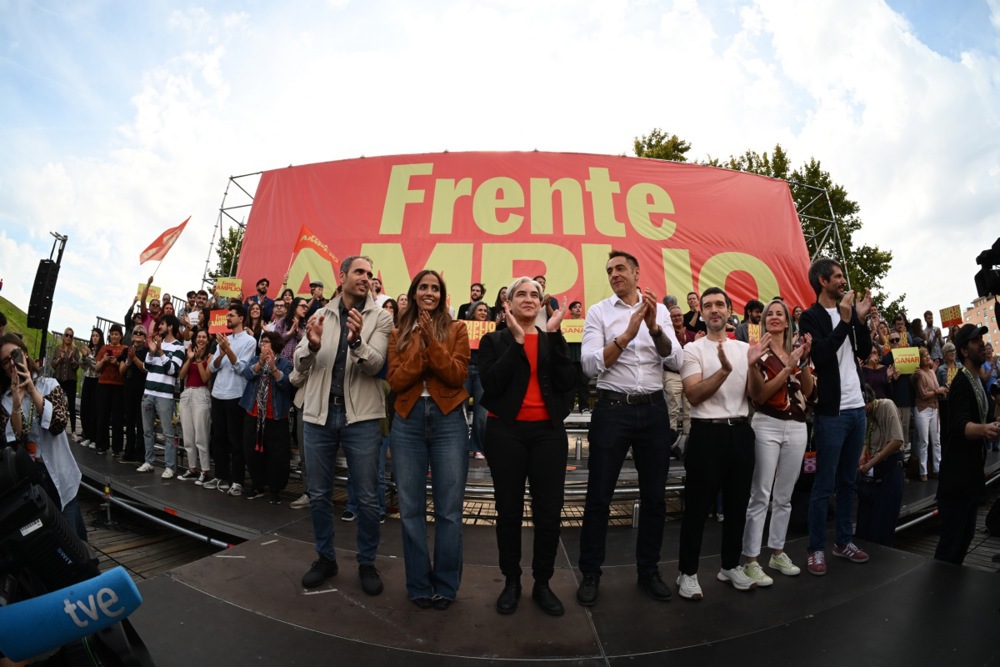
Spain’s Left has now missed its last chance to unite ahead of the country’s snap election on 29 November — a historic failure, not so much because the numbers don’t add up, but because it fails to offer an alternative.

The elections are seen as pivotal, with a real chance that the far-right Vox will enter the government for the first time since Spain’s return to democracy in 1978, in a coalition with the centre-right People’s Party (PP), which itself is expected to fall short of an absolute majority.

With that possibility on the horizon, the Spanish parties to the left of the PSOE (Spanish Socialist Workers’ Party), led by PM Pedro Sánchez, tried to agree on a nationwide joint list for the 29 November snap election.

But they failed because of a “war of egos”, as one political leader described it, and old grudges dating back to 2023. This has left many disillusioned and the left even more divided.

“These past few days have been very difficult … some people will be disappointed today, and for that I am sorry,” Ada Colau, former Barcelona mayor and leader of the Broad Front, said last week, as her alliance failed to reach an agreement on a joint electoral platform ahead of the election.

Spain’s electoral system disadvantages smaller parties, especially in less populated provinces. That means their votes are less likely to translate into seats. 

In Spain, a country where a two-party system was the norm until 2015, it is puzzling that the “new” left, born precisely to break that duopoly, has ended up too divided to even compete with the mainstream.

And that makes it harder for Sánchez to keep any leftwing coalition, which relies on these smaller forces.

So what’s the picture? On one side, the right is more aligned than ever: the PP and Vox are running separately, but the conservative party openly says it is willing to strike a deal with the far-right if needed. Liberalism is almost non-existent, even though Democracia 21 will run for the first time, but only in Madrid and Barcelona. And the left is divided. 

War of egos 

This article continues, but the full version is available only to EUobserver.com subscribers. Visit account.euobserver.com/membership

  •  

Spain’s Ceuta Migration Crisis Tests EU Asylum Rules as Thousands Await Decisions

Spain’s government has declared that the first phase of its emergency response to the Ceuta migration crisis has been completed, following the arrival of an estimated 80,000 migrants from Morocco at the end of July.

Interior Minister Fernando Grande-Marlaska said on Friday, 16 October, that approximately 12,000 people had returned voluntarily to Morocco since August, while the authorities had expanded facilities to process asylum applications and return decisions.

Nevertheless, substantial administrative and humanitarian challenges remain in the Spanish enclave, particularly concerning people awaiting decisions on their legal status and unaccompanied minors. The situation has become an important test of the European Union’s revised migration and asylum legislation.

Unprecedented crossings at the African border

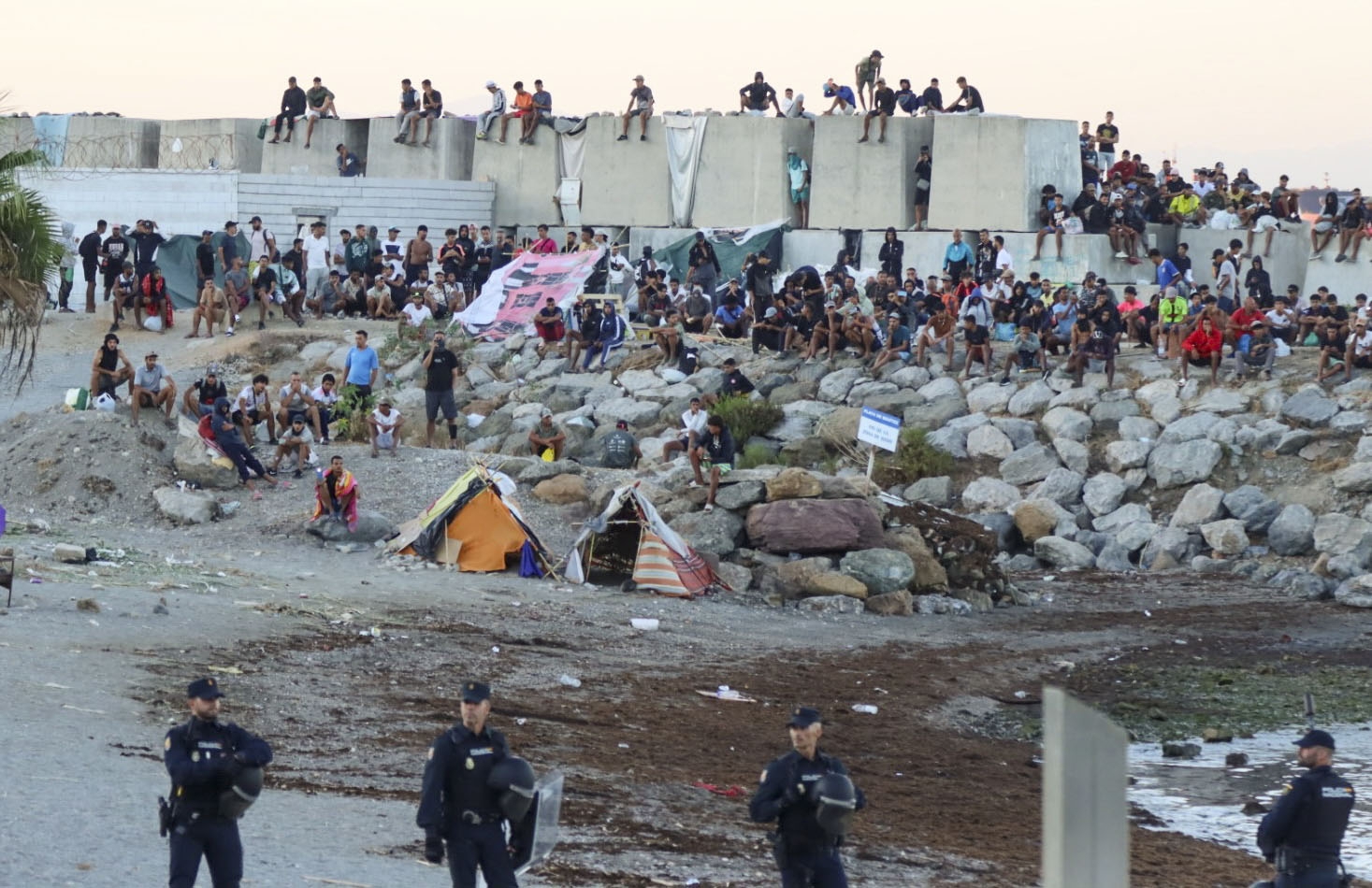
The crisis began on 30 July, when tens of thousands of people entered Ceuta from Morocco by land and sea following the circulation of misleading information on social media about access to Spanish territory.

According to an October briefing by the European Parliament’s Research Service, approximately 80,000 people crossed into the enclave during the incident, overwhelming local reception facilities and creating an emergency at one of the EU’s few land borders with Africa.

A subsequent European Parliament resolution referred to at least 141 deaths associated with the crossings, although the initial figure reported by Spanish authorities was lower. The exact number of people who crossed and the final death toll have remained subjects of uncertainty.

Most entrants returned to Morocco within days. However, thousands remained, leaving Spain responsible for assessing individual claims, arranging lawful returns and providing appropriate accommodation.

Ceuta’s geographical position complicates these procedures. Although the enclave is Spanish and forms part of the EU, travellers departing for mainland Spain remain subject to specific controls at its ports and airports.

Spain expands its processing capacity

During a visit to Ceuta on 16 October, Grande-Marlaska defended the government’s management of the emergency and announced that additional police resources would substantially increase administrative capacity.

The expanded temporary reception and processing facilities at El Tarajal are intended to handle at least 100 files daily, including applications for international protection and return procedures.

According to figures presented by the Interior Minister, approximately 1,200 applications for international protection had been formally submitted, with around 700 decisions already issued.

He also rejected allegations that the authorities had conducted concealed or involuntary returns, insisting that departures to Morocco had followed voluntary decisions or the appropriate legal procedures.

The minister said more than 500 expulsions had been executed through judicial or administrative decisions in recent months. These are distinct from the approximately 12,000 voluntary returns recorded since August.

The treatment of unaccompanied minors remains contentious. The European Parliament’s research briefing estimated that around 1,100 such minors were in Ceuta, including some who arrived before the July emergency.

Responsibility for their care has generated disagreement between the Spanish central government and Ceuta’s autonomous administration, particularly over guardianship, identification and the distribution of minors to other regions.

New EU asylum system faces a practical test

The EU Pact on Migration and Asylum, which began applying in June 2026, was designed to strengthen external border procedures while establishing clearer responsibilities for Member States.

Its provisions include identity and security screening, accelerated procedures for certain asylum applications and a solidarity mechanism allowing countries to support those facing disproportionate migration pressures.

Under the screening rules, the authorities generally have up to seven days to complete the initial checks required for people apprehended after irregular entry.

However, the Ceuta emergency demonstrates the difficulty of applying individual administrative procedures when arrivals occur in exceptionally large numbers within a short period.

The geographical concentration of arrivals means that adequate staffing, interpretation, legal assistance and reception facilities become essential to ensuring the system operates within its prescribed deadlines.

Spain requested assistance from Frontex, Europol and the European Union Agency for Asylum in August. The Commission subsequently announced €114.7 million in emergency assistance in September.

Political dispute over migration policy

The crisis has widened divisions between European governments over border enforcement and the regularisation of migrants already living within the EU.

Italy and several other Member States have questioned whether Spain’s separate regularisation programme could encourage further irregular migration. Madrid rejects the suggestion that the programme caused the Ceuta crossings.

The Spanish scheme covers only people who met the residence requirements by the end of 2025. Those who arrived during the July 2026 crisis are not eligible.

European Parliament members also adopted a resolution in September calling for stronger protection of the EU’s external borders and greater cooperation with Morocco. The resolution characterised the crisis as involving the possible instrumentalisation of migration, although Spain has said it has no evidence establishing Moroccan government involvement.

The continuing administrative backlog, the position of minors and the effectiveness of EU assistance will determine how quickly Ceuta can return to ordinary border operations.

Beyond Spain, the episode raises a practical question for Brussels: whether Europe’s new asylum framework can maintain border controls and individual legal safeguards simultaneously during an exceptionally large and sudden influx.

  •  

Storm Adam Leaves Three Dead as Torrential Rain Devastates Eastern Spain

At least three people have died in severe flooding across eastern Spain after Storm Adam brought extraordinary rainfall to the Mediterranean coast, forcing thousands from their homes and leaving residents stranded on rooftops as emergency services struggled to reach inundated communities.

The worst flooding struck parts of Valencia and Alicante, where swollen rivers overwhelmed roads, flooded residential districts and disrupted transport. Authorities ordered residents of 145 municipalities to remain indoors as rescue operations continued on Monday, 19th October.

The disaster has revived memories of the October 2024 floods, which killed more than 230 people in the Valencia region and prompted widespread criticism of the authorities’ emergency warnings and response.

Thousands evacuated as rivers burst their banks

The coastal town of Oliva, in Valencia province, was among the worst affected areas. Approximately 2,000 people were evacuated from seven campsites as floodwaters spread through low-lying neighbourhoods, while residents elsewhere sought refuge on upper floors and rooftops.

According to reports from the Spanish news agency EFE, emergency crews were reinforced by Spain’s Military Emergencies Unit, whose personnel were deployed from their base at Bétera to assist local firefighters and rescue teams.

Helicopters were used to reach people trapped by the rising water. Roads became impassable, vehicles were swept away and several settlements were temporarily isolated as streams and drainage channels overflowed.

The scale of the rainfall was exceptional even for a region accustomed to intense autumn storms. In parts of Valencia and Alicante, precipitation approached 700 litres per square metre over approximately 48 hours, equivalent to 700 millimetres of rain.

Pego, in neighbouring Alicante province, recorded more than 600 millimetres within approximately 36 hours, placing considerable pressure on local waterways and drainage infrastructure.

Fatalities and emergency restrictions

Two women died during the weekend, including one swept away by floodwaters near Cabrera de Mar, north of Barcelona, and another whose body was recovered near Sagunto, in Valencia.

A third woman was found dead inside a flooded property in Oliva during rescue operations on Monday. Separately, a 64-year-old man died after suffering a heart attack at a flooded campsite in the same town, according to EFE’s account of the incident.

The regional authorities activated level-two emergency arrangements, enabling additional resources to be mobilised as local services confronted the consequences of prolonged rainfall.

At the height of the emergency, stay-at-home restrictions covered approximately 800,000 people. These measures were subsequently eased in many municipalities, although restrictions remained in force in particularly exposed districts.

Schools were closed in affected areas, roads were blocked and rail services disrupted. The situation remained particularly difficult where floodwaters had entered homes, commercial premises and tourist accommodation.

Renewed examination of emergency preparedness

Storm Adam has inevitably drawn comparisons with the disaster of October 2024, when catastrophic flooding in eastern Spain exposed serious weaknesses in emergency communication, evacuation procedures and coordination between public authorities.

That earlier disaster generated disputes over responsibility between regional and national institutions, particularly concerning the timing of warnings and the deployment of rescue resources.

The latest flooding places those questions back on the political agenda. Spain’s decentralised administrative structure gives regional governments substantial responsibility for civil protection, while the central government can provide military assistance and additional emergency resources.

The deployment of the Military Emergencies Unit demonstrates how rapidly local incidents can require national intervention when extreme rainfall affects several municipalities simultaneously.

The challenge extends beyond issuing weather warnings. Authorities must determine whether warnings reach vulnerable residents, whether evacuation routes remain accessible and whether emergency personnel can intervene before flooding becomes dangerous.

In communities close to rivers, floodplains and coastal drainage systems, these decisions become particularly consequential when rainfall accumulates over a short period.

European implications of repeated flooding

The disaster also raises questions about infrastructure investment and the application of European flood-risk legislation.

Under the EU’s Floods Directive, Member States are required to assess flood risks, prepare hazard maps and develop management plans designed to reduce the consequences for human health, economic activity and the environment.

Those obligations require national and regional authorities to identify vulnerable areas and consider preventive measures, including land-use planning, flood defences and emergency preparedness.

Extreme rainfall does not produce the same consequences everywhere. The effects depend partly on local geography, drainage capacity, urban development and the condition of waterways.

Meteorological warnings had also extended towards Catalonia as the weather system moved northwards, creating additional concern in areas where saturated ground could increase the risk of further flooding.

For the affected municipalities, the immediate priorities remain the completion of rescue operations, restoration of essential services and assessment of damage to homes, roads and businesses.

The longer-term examination will concern whether the emergency arrangements and infrastructure improvements undertaken since the 2024 disaster were sufficient to reduce the consequences of another major autumn storm.

  •  

Neanderthal Hand Found in a Spanish Cave Still Holds Its DNA After 46,000 Years

Neanderthals left plenty of traces in the western Pyrenees, the mountain range that separates Spain from France. Stone tools, butchered animal bones, the leftovers of their camps. What nobody had ever found in Navarre, the region of northern Spain whose capital is Pamplona, was a single bone of the people themselves. On Monday that changed, […]

  •  

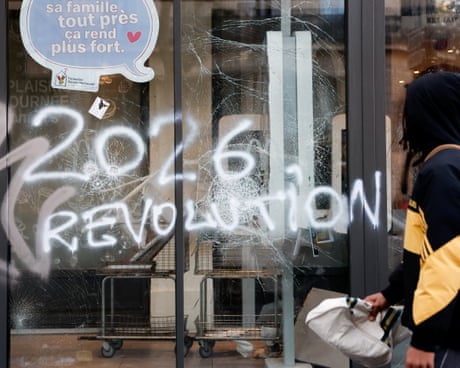
Monday briefing: What you need to know about a weekend of chaos in France

In today’s newsletter: Violent riots and looting have dominated the headlines, but the unrest gripping the country and beyond reflects deeper public anger over everyday issues

Good morning. I bet your weekend was better than Emmanuel Macron’s. On Friday, the evening before mass protests that were planned across France, he attended a Céline Dion concert in Paris with his wife, Brigitte, prompting comparisons to Louis XVI and Marie Antoinette. On Sunday evening, he was forced to give a televised speech condemning the “unbridled violence” and riots that erupted in French cities over the weekend.

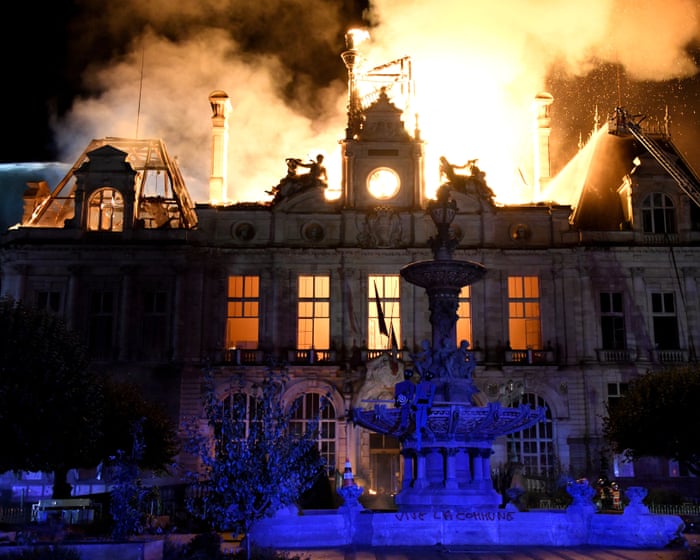
The rioters that burned makeshift barricades of bicycles in Paris, destroyed the steeple of Limoges’ town hall and set fire to Lyon’s tourism office were described as “LE CHAOS” on the front page of La Tribune Dimanche, and “SCENES D’INSURRECTION” on Le Parisien Dimanche. By Sunday, protests had also taken place in Spain, Portugal and Italy.

The Vatican | Pope Leo told a crowd gathered in St Peter’s Square on Sunday that he would “gradually resume” his activities, at his first appearance before the faithful since undergoing an operation to remove a cancerous tumour from his lung.

UK news | A “well-known individual” is trying to secure a permanent injunction against the Guardian and ITN to prevent them from publishing details of serious allegations made against him.

US politics | Donald Trump fired his immediately embattled new press secretary, Katie Zacharia, on Friday evening after just five days in the job. The conservative commentator becomes the shortest serving occupant of the role in US history.

Reform | A Reform UK mayor is under police investigation for allegedly showing “naked and sexualised” images of himself to a female member of staff. Luke Campbell, a former Olympic boxing champion, is understood to have been questioned under caution by Humberside police.

Energy | The development of a huge AI datacentre hailed by the UK government has received a fresh setback after Microsoft pulled out of the project over concerns about power supplies.

Monday | The two-week biodiversity summit, Cop17, begins in Yerevan, Armenia, as countries come together to seek to protect nature.

Tuesday | The Covid-19 inquiry publishes its report on the adult social care sector.

Sunday | Incumbent Lula da Silva takes on Flavio Bolsonaro in the run-off of the Brazil general election.

Continue reading...

© Photograph: Pascal Lachenaud/AFP/Getty Images

© Photograph: Pascal Lachenaud/AFP/Getty Images

© Photograph: Pascal Lachenaud/AFP/Getty Images

  •  

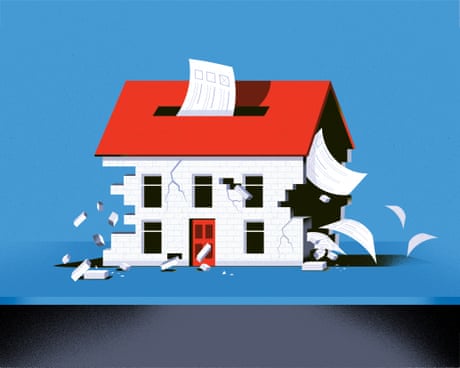
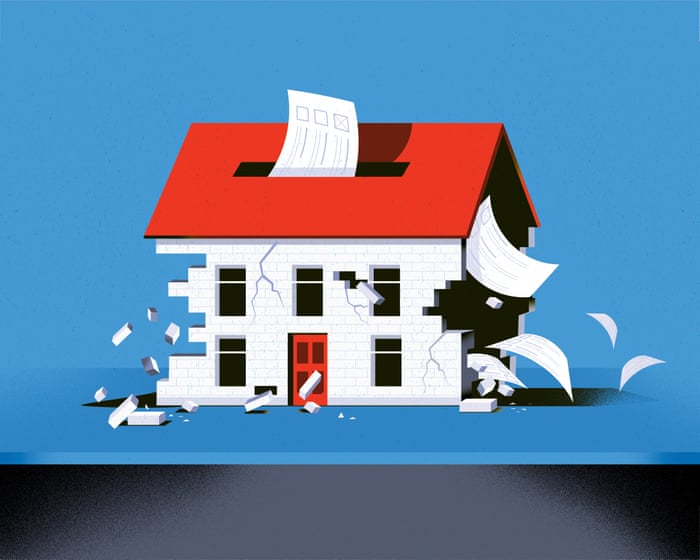
The housing crisis is now global. It shows just how undemocratic our nations have become | Leilani Farha

When we can’t even afford to rent or buy somewhere to live, we have to ask: did we give the financial sector too much power?

  • Leilani Farha is the former UN special rapporteur on adequate housing

In the summer of 2021, I visited a homeless community in a park in Toronto, Canada, and spoke to one of the residents. He was living in a tent in the shadow of brand new skyscrapers, and had been homeless for about five years. At one point he swivelled around, pointed up at a crane on the skyline, and said: “Who are they building those for? Definitely not for me.”

He was right. And he captured something experienced by ordinary people around the world: the growing conviction that the housing system is no longer tethered to their needs. What he was pointing at is not just a housing crisis. It is a crisis of democracy.

Leilani Farha is the 2026 CBC Massey lecturer. This piece is based on her new book: Housing Inc.: A Global Takeover and Our Fight for Home. She is the former UN special rapporteur on adequate housing and the global director of the international human rights organisation, The Shift

Continue reading...

© Illustration: Nathalie Lees/The Guardian

© Illustration: Nathalie Lees/The Guardian

© Illustration: Nathalie Lees/The Guardian

  •  

Why are people protesting across Europe?

School conditions, unaffordable housing and the cost of living have brought demonstrators on to the streets in several countries

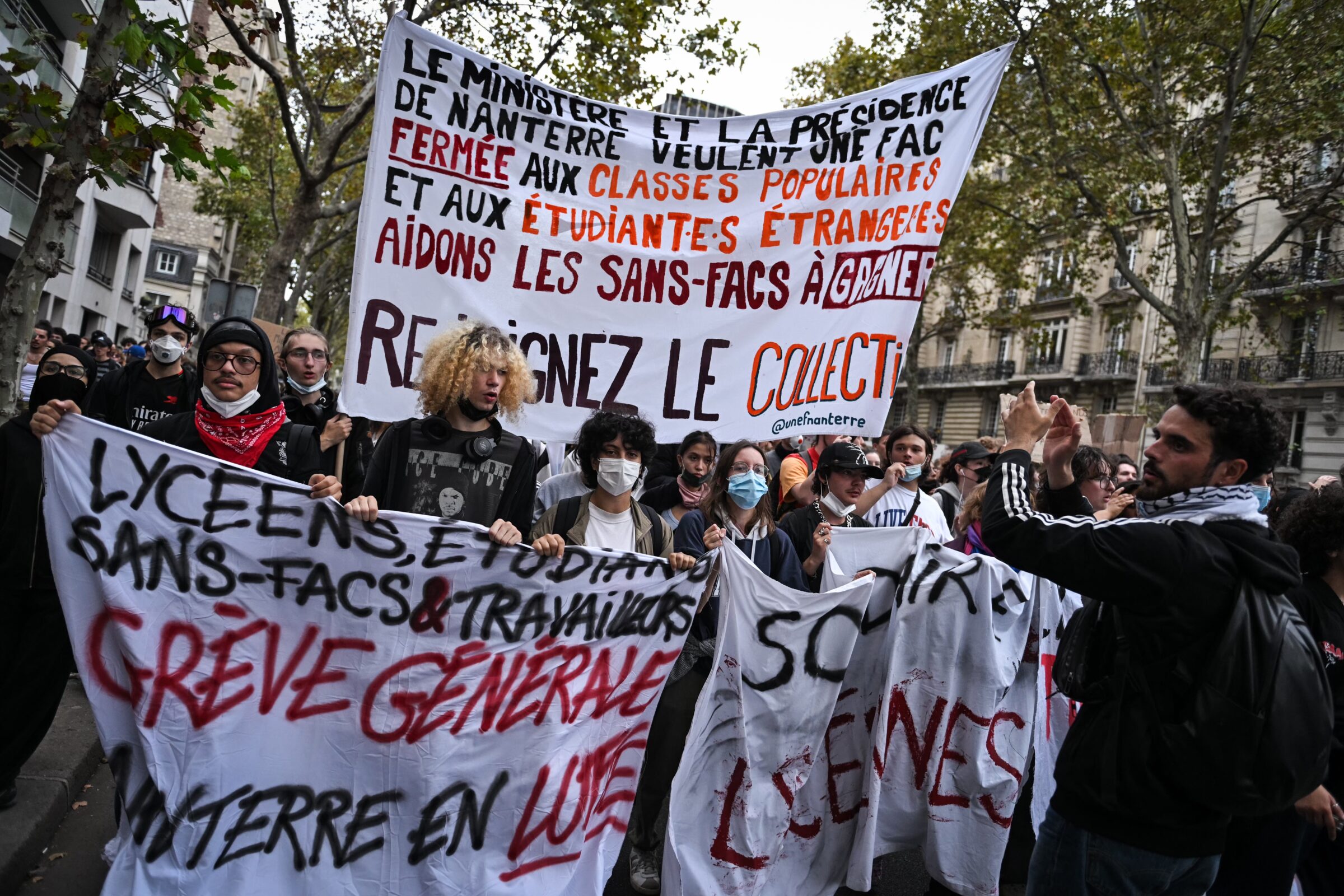
Young people have been taking to the streets across Europe, including in Spain, France and Portugal, to protest over their unhappiness at the state of schools and the wider cost of living crisis.

In France, high school pupils have clashed with police in often violent protests over long hours, missing teachers, dilapidated classrooms and an opaque university admissions system. Pupils routinely miss months of teaching due to unfilled staff absences.

Continue reading...

© Photograph: Benoît Tessier/Reuters

© Photograph: Benoît Tessier/Reuters

© Photograph: Benoît Tessier/Reuters

  •  

Hilltop Villages, African Ivory and Wounded Skeletons: How Small Communities Resisted The First Bronze Age Power in Spain

Around 4,200 years ago, in the dry south-east of the Iberian Peninsula, a society began building cities on hilltops, stockpiling grain on a large scale and arming its warriors with halberds (blades like axe heads mounted on long poles) and metal swords. Archaeologists call it El Argar. Further north, in what are now La Mancha, […]

  •  

Clear Voices, Muddy Music: Scientists Measure How a Giant Roman Amphitheatre in Spain Sounds Today

Thirty-five thousand spectators. That is the capacity the authors of a new study attribute to the Roman amphitheatre of Itálica, in Santiponce, near Seville in southern Spain. It is roughly the crowd of a mid-sized modern football stadium, and there was not a single loudspeaker in those stands. Whatever happened on the sand had to […]

  •  

Italy and Spain Move Towards Ending Schengen Border Controls After Meloni–Sánchez Talks

Italy has extended checks on travellers from Spain for another week, but talks between Giorgia Meloni and Pedro Sánchez have opened the way for an end to reciprocal restrictions imposed after the migration crisis in Ceuta.

Italy and Spain have agreed to work towards ending their reciprocal Schengen border controls following discussions between Prime Ministers Giorgia Meloni and Pedro Sánchez at the European Council summit in Brussels. Rome nevertheless extended its restrictions for another seven days on Friday, 16 October, as the two governments consider how to bring their respective measures to an end.

The decision marks a possible turning point in a dispute that has disrupted travel between two of the European Union’s largest countries since the summer. According to the notifications recorded by the European Commission, the restrictions concern air and sea connections between Italy and Spain, which do not share a land border.

The two governments have instructed their interior ministers to consider alternative arrangements over the coming week. Although neither side has formally withdrawn its measures, the agreement to coordinate their removal suggests that both capitals are seeking a way out of an increasingly uncomfortable confrontation over migration and internal European security.

How the Ceuta crisis reached Schengen

The dispute began after an extraordinary influx of migrants from Morocco into Spain’s North African enclave of Ceuta in late July. More than 72,000 people crossed the border, prompting serious questions about the management of the EU’s external borders and the possibility of onward movements into other member states.

Italy responded by introducing checks on passengers arriving from Spain, arguing that the situation created risks for public order and internal security. Rome also raised concerns about the possible movement of individuals presenting security threats, although the extent of any such movement remained disputed.

Madrid rejected the justification and introduced reciprocal measures. What began as an emergency response to events on an external border consequently developed into a disagreement about whether one Schengen member could impose restrictions on another on the basis of anticipated migration movements.

EU Today examined the original Spanish retaliation in August, when the dispute first threatened to turn temporary border controls into an instrument of political pressure.

The wider consequences of the Ceuta incident have raised questions about the vulnerabilities exposed at the EU’s external border and the effectiveness of common European migration and crisis-response policy.

The limits of temporary border controls

Schengen is built on the principle that people can travel between participating countries without routine internal border checks. Member states nevertheless retain the right to reintroduce temporary controls in response to serious threats to public policy or internal security, subject to the requirements of EU law.

The difficulty lies in determining when those exceptional powers are justified. Italy has maintained that the Ceuta crisis warranted precautionary action. Spain has argued that controls imposed specifically on travellers from its territory were unjustified and discriminatory.

These opposing positions matter beyond the two countries. If concerns over irregular arrivals in one member state become sufficient grounds for another to introduce sustained checks, the distinction between Europe’s external borders and its internal travel area becomes increasingly difficult to maintain.

The operational results have also entered the political argument. Italian figures cited during the dispute indicate that nearly half a million passengers were checked during the first month, with 31 refused entry. Those numbers demonstrate that the measures were substantial, but do not by themselves establish whether the original security concerns were proportionate to the restrictions imposed.

Madrid, meanwhile, has maintained that migrants involved in the Ceuta influx had not moved onwards to mainland Spain in the manner suggested by Italian concerns.

Meloni and Sánchez seek a practical compromise

The latest discussions offer both governments a route towards de-escalation without formally conceding their underlying positions. Meloni can present the additional week of controls as a continuation of Italy’s security precautions, while Sánchez can point to an agreement to prepare their coordinated removal.

The two prime ministers remain politically divided on migration. Meloni has consistently argued for stronger border enforcement and deterrence, while Sánchez has defended an approach incorporating legalisation and labour-market integration for migrants already living in Spain.

Those disagreements were also visible during the Brussels summit, where European leaders returned to the question of migration management and the consequences of national decisions for the wider Union.

For Brussels, the immediate concern is whether the two governments can replace competing national restrictions with arrangements that address security concerns without unnecessarily interrupting movement between Schengen countries.

A coordinated end to the controls would not resolve the underlying problems exposed by Ceuta. It would, however, remove one of the more unusual internal consequences of that crisis and demonstrate that political negotiations can still prevent emergency border measures from becoming semi-permanent.

The decisive period is now the coming week. Whether the controls expire as planned will depend on the discussions between the Italian and Spanish interior ministries and their ability to agree practical alternatives.

  •  

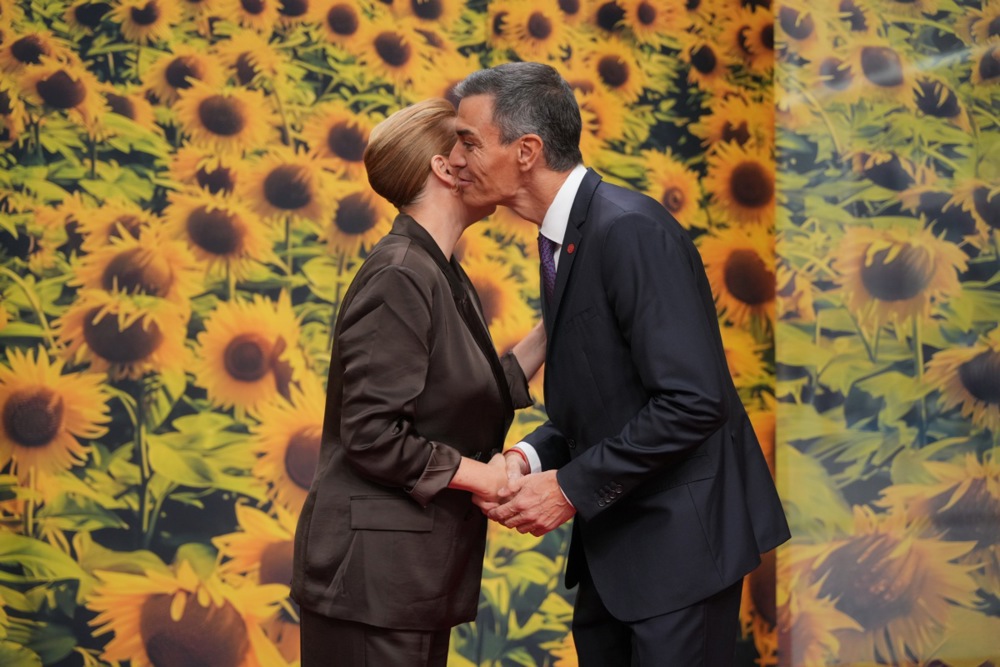
Denmark lashes out again at Sánchez over Spain’s migration regularisation, but EU summit avoids linking migration to crime

Danish prime minister Mette Frederiksen attacked Spanish leader Pedro Sánchez on migration during a summit debate in Brussels on Friday (16 October). 

Frederiksen, who despite leading a centre-left party has taken an increasingly hard line on migration, criticised Sánchez for granting renewable one-year legal residence permits to undocumented migrants.

“I have asked the commission to look into whether one country is doing almost everything in the opposite direction of what the others are doing. In other words, you come to a country illegally, and suddenly you’re allowed to be there legally,” Frederiksen said before arriving at the second day of the Brussels summit.

In response, Sánchez told reporters after the meeting with EU leaders that Spain’s regularisation scheme “does not go against the grain” – since there are many countries with similar measures.

In April, Spain approved plans to grant legal status to around 500,000 undocumented migrants and asylum seekers. These so-called regularisations are a common labour-migration policy that other countries have also used, including Italy, which has authorised nearly 500,000 non-EU work visas through 2028.

But at the EU leaders’ summit in Brussels in June, several European leaders used the meeting to criticise Spain’s regularisation.

The criticism resurfaced during this October summit, after the summer’s migrant crisis in the Spanish enclave of Ceuta, which some EU governments then weaponised against Spain.

Push for stronger wording

Following a breakfast on Friday (16 October), attended by 16 EU countries backing stricter migration restrictions, Denmark, Poland and Italy had also attempted to link migration to crime in draft EU summit conclusions.

They tried to amend the summit conclusions to call on the commission for extra efforts to monitor national migration measures that can affect other member states, highlight the impact of migration on welfare and public services, as well as avoid “measures that could create incentives for illegal migration”.

However, France and Luxembourg criticised the position of the 16, and leaders had a strategic exchange and agreed to return to the topic at a later date.

According to experts from the Migration Policy Centre, it is hard to conclude whether Spain’s regularisation plans encouraged more migration to the EU.

So-called ‘pull factors’ are difficult to consider in isolation, as migration depends on work opportunities, social networks abroad and other factors, but policies can also play a role. 

Regularisation could pave the way to legal work, generating  “positive employment and fiscal outcomes over time,” the scholars also said.

Denmark itself is not bound by EU laws (due to an opt-out) on border control, immigration, civil and criminal law, or police cooperation, and therefore cannot vote on them in the Council.

Rhetoric versus facts

It is not the first clash between the two socialist leaders on migration, but the timing matters. 

Sánchez faces elections in November, and France heads into presidential elections next spring, where it is feared anti-migrant rhetoric could roll out the red carpet for the far right.

In response to a barrage of criticism from the likes of Austria, Czech Republic and, Sánchez said that the numbers on illegal migration returns speak for themselves. 

“See what is happening in Spain – some politicians are willing to replace the population only so they can be … in government,” said Czech prime minister Andrej Babiš ahead of the meeting on Friday. “I am convinced that for some countries, it is too late – and that some day we will have to defend our borders so that migrants don’t come to us from Western countries if it continues like this. And we, of course, are preparing for this.”

“It’s a road to hell,” added Babiš, who belongs to the far-right Patriots for Europe group.

His comments, Sánchez said, resembled the rhetoric of the far-right political party Vox in Spain, now polling close to 20 percent. “One thing is the rhetoric, the blablabla, and another thing is the facts,” he said.

Ceuta crisis

The situation in Ceuta escalated at the end of July 2026, when tens of thousands of people simultaneously attempted to cross over from Morocco to the autonomous enclave.

The Spanish have since deployed additional security measures to regain control over the territory. 

A majority of newly arrived migrants were eventually returned to Morocco, but thousands remained in the city of 80,000 people – many of whom are unaccompanied children and teenagers.

The crisis has exposed tensions between Spain, Morocco and the EU on border control and asylum and put into question who is responsible for migrants. 

French president Emmanuel Macro previously said: “Spain was the target of an attack. Call it a hybrid attack if you like, but it was an information attack. Traffickers, and probably people seeking to destabilise Spain, led many people living in poverty to believe there was an opportunity, using false information and creating an information bubble.”

Meanwhile Italian prime minister Giorgia Meloni previously called for a suspension of the Schengen free movement agreement with Spain.

The whole situation triggered tit-for-tat border closures between Spain and Italy. 

On Thursday (15 October), Italy decided not to renew the security checks with Spain, paving the way for a week of negotiations between Madrid and Rome to reach a final agreement. 

  •  

Spanish firm sells Latvia vehicles equipped with Israeli tech despite arms embargo

The Cradle | October 16, 2026

Spanish arms manufacturer General Dynamics European Land Systems-Santa Barbara Sistemas (GDELS-SBS) is supplying Latvia with infantry fighting vehicles fitted with Israeli-made turrets, despite Madrid’s arms embargo on Israel, Globes reported on 15 October.

The deliveries cast doubt on the reach of Spain’s 2025 arms embargo on Israel, imposed in response to Israel’s genocide in Gaza, which bans the import and export of military equipment, products, and technology to and from Israel.

Yet the ban has not stopped Israeli weapons systems from being mounted on Spanish-made combat vehicles for sale to third countries.

Latvia has ordered 84 Mednieks combat vehicles, each mounted with a UT30 MK2 unmanned turret built by lead Israeli weapons manufacturer Elbit Systems, under a contract worth roughly $929 million, with deliveries set to continue until 2029.

Latvian Defense Minister Raivis Melnis hailed the first delivery as a step toward strengthening the country’s defense and its cooperation with NATO partners, as members scramble to meet the US’s demand for greater contribution to the alliance.

Elbit had already secured a deal worth around $100 million in April 2025 to supply GDELS-SBS with the unmanned turrets, months before Madrid declared its embargo, with the Israeli firm stating that the systems were bound for an unnamed European NATO member.

SBS was state-owned until the early 2000s, when it was privatized and sold to US arms giant General Dynamics.

According to Globes, General Dynamics’ presence in Europe greatly helps Israel push its weapons, military components, and technology into the continent, owing to the close ties between the US and Israel.

In early 2026, Spanish Prime Minister Pedro Sanchez’s government came under fire for weighing the purchase of military systems from a company partly owned by Israeli arms giant Rafael, even as it pledged to achieve “zero technological dependence” on Israel.

The arrangement illustrates how Israeli arms firms continue to embed components in European weapons programs through multinational manufacturers, even where governments have restricted direct trade with Israel.

Elbit has benefited from surging demand linked to Israel’s war on Gaza and wider regional conflict, reporting a record $32 billion order backlog as of 30 June 2026.

Europe drove most of the backlog growth in the second quarter of 2026, the company said, with roughly 73 percent of its orders now coming from buyers outside Israel.

  •  

Can the EU survive with far-right leaders running major member states? The answer is worrying

Europe is heading into an electoral moment without recent precedent. Four of its five most populous member states, Spain, France, Italy and Poland, are due to vote within the next 12 months – starting with Spain on 29 November.

If voters move further right, the combined effect could reshape the Union far more profoundly than any single national election.

Two shifts stand out. First, the firewall between the centre-right European People’s Party (EPP) and the hard-right is crumbling, even in Germany, its last bastion.

Hard-right parties sit in the governments of Italy, Czech Republic, Finland, Slovakia and Croatia, while Slovenia’s government relies on outside support from one.

Second, competition from the far-right is pushing established radical-right parties to harden their positions.

In Catalonia, Aliança Catalana is challenging Vox; in France, Éric Zemmour’s Reconquête, despite scoring single digits, is pressing on Marine Le Pen’s National Rally; in Italy, Roberto Vannacci’s National Future is challenging Giorgia Meloni’s Brothers of Italy; and in Poland, Grzegorz Braun’s Confederation of the Polish Crown is cannibalising the Confederation.

Under pressure, established conservatives tend to move towards these parties rather than hold the line, as Spain’s Partido Popular and France’s Les Républicains illustrate. Positions once on the margins become mainstream.

The implications go beyond immigration.

Le Pen and Vox leader Santiago Abascal advocate “national priority” in access to welfare and public services. Under pressure from the League and National Future, Meloni’s government has introduced a 30-percent cap on first-year classrooms for pupils without Italian citizenship, based on their birthplace or prior schooling.

A leaked AfD strategy paper reportedly goes further, proposing that national constitutions override EU law and reducing the Court of Justice to a forum for disputes between governments.

This article continues, but the full version is available only to EUobserver.com subscribers. Visit account.euobserver.com/membership

  •  

Listen: Are the Gilets Jaunes in France making a comeback?

Production: By Europod, in co-production with Sphera Network.

EUobserver is proud to have an editorial partnership with Europod to co-publish the podcast series “Briefed” hosted by Léa Marchal. The podcast is available on all major platforms.

Find the full transcript below:

Do you remember the Yellow Vests movement that shook France 2018? On TikTok, a young user has called for a national mobilisation on the seventeenth of October against the cost of living, and the video quickly went viral. So could the Yellow Vests make their big return?

“Please, give us a date, we’re ready to protest! We young people are struggling. We just can’t make a living anymore,” that’s what Justine, a TikToker from Normandy in France has posted a few weeks ago, while wearing a fluorescent yellow vest.

The reference to the 2018 Yellow Vests is unmistakable. The French movement, which began in protest at rising fuel prices, has been widely revived on social media in recent weeks, especially by younger users.

Our colleague Romane Lizée from StreetPress, a fellow member of the Sphera Network alongside Europod, spoke to some of them: young people reviving a protest movement they only knew from a distance.

Yves, a 24-year-old TikToker with over 80,000 followers, made a video called “Survival Guide for the Yellow Vests 2026”. He gives would-be protesters practical advice, such as bringing thick ski goggles or writing a lawyer’s phone number on a piece of paper.

So why is the movement resurfacing now? For many, the movement has come to stand for a general sense of being fed up, something they still feel today.

 “Eight years ago, France put on the yellow vest because petrol hit 1.50 euros a litre, and now we’re almost at three euros and nothing is happening!” That’s how Saïd, a 23-year-old delivery driver, sees it.

The economic context is indeed worse than it was eight years ago. The price of fuel is now almost 2.40 euros a litre.

Throughout September, a series of protests followed one another, called by different professions and for different reasons: climate action, firefighters, a public-sector strike, the law on sexual violence, and finally the student blockades.

High school students have been protesting for a few weeks now, blockading their schools to demand better conditions. We talked about this in a previous Briefed episode. You can find the link in the description.

Now, will the protest be as big and long-lasting as the one in 2018?

Online, a petition launched by the website 17octobregiletjaune, which calls for the protest, has gathered more than 21,000 signatures. Over a thousand actions across the country have been identified on a map by the same website: mostly protests in several cities, but also actions on roundabouts and at petrol stations.

Youth organisations, students’ unions and education staff have already answered the call. More importantly, the CGT, one of France’s main labour unions, has backed it, as have some political figures, like Marine Tondelier, the Green candidate for the presidential election. Still, the true extent of the movement is difficult to predict.

In other European countries, protests are also multiplying, especially among young people. In Spain, huge demonstrations for the right to housing have been taking place in several cities since mid-September. They went quite far: they pushed Prime Minister Pedro Sánchez to call snap elections.

In Brussels, on October 9th, thousands of protesters, including rail workers, teachers, and university and secondary school students, marched against the federal government’s policies, in particular its socio-economic measures. Here again, precarity is a central grievance.

In Italy, on October 8th, students called for mobilisation, notably by camping in front of universities across the country to protest against the sharp rise in tuition fees and student rents.

The triggers behind these protests are not all the same, and the mobilisations take different forms from country to country. But the goal is broadly the same: to call for better living conditions and to defend basic social rights. And young people are particularly mobilised.

  •  

Madrid teachers and students launch strike to defend public schools

The public education system in Madrid – teachers and students alike – launched an indefinite strike on Wednesday, October 14. Tens of thousands emptied classrooms and took to the streets, demanding an end to the regional government’s education policy – warning that it promotes privatization.

Episodes of police violence were reported near part of the education sites.

Read more: Spanish unions announce general strike over housing

A joint union front, including sectoral branches of the General Union of Workers (Unión General de Trabajadores, UGT), the Workers’ Commissions (Comisiones Obreras, CCOO), and the General Confederation of Labor (Confederación General del Trabajo, CGT), among others, started building the mobilization months ago. 

While preparing the strike, they tabled demands including wage increases, investment into education infrastructure, and smaller class sizes.

A strike to defend quality public education

“Madrid’s teachers have said ‘enough is enough’ in the face of regional policies that seek to dismantle public services in favor of private management, demonstrating a profound contempt for the inclusive school, one that equalizes, protects, and guarantees real opportunity for the future of children and the working class,” the union front stated.

“This strike is not just for teachers,” UGT Public Services Madrid emphasized in a statement. “We are defending quality public education for students and their families, who are the ones who suffer the consequences of overcrowded classrooms and staff shortages.”

Students on the first day of the strike. Source: Sindicato de Estudiantes

Union demands were endorsed by students, including the student union Sindicato de Estudiantes. “Ceilings are crumbling, there is no air conditioning, facilities are outdated, and students are forced to learn in makeshift and portable classrooms or overcrowded spaces,” the organization stated.

Student union recognizes strike’s “decisive moment”

Students and teachers insist on the responsibility borne for the crisis by the regional People’s Party government led by Isabel Díaz Ayuso. Ayuso was also an often-quoted name in recent housing mobilizations in Madrid, where demonstrators linked the right-wing party’s policies with the ongoing housing crisis – including the eviction of Maricarmen Abascal.

The education strike, Sindicato de Estudiantes wrote, is a “way to involve the entire working class and youth against a reactionary government that not only does business with public education, but is selling our neighborhoods to vulture funds and rentier landlords who speculate on housing, one that steals money from public health to hand it to companies and the corrupt …”

Read more: Students in France are fighting for stronger public education

In their communications, student associations echoed the historic school strikes taking place in France. “Also very present in the minds of Madrid students, as in the entire State, are the events shaking France and Belgium: the enormous student strikes of our colleagues that have filled Paris and dozens of cities, and the brutal police repression that they have had to endure,” they wrote. “We know that we are in a decisive moment, and like them, we will fulfill our task.”

Strong adherence to the education strike gives hope for an even stronger mobilization on November 11, when Spain’s labor movement has called for a general strike to increase wages, fight against the cost of living crisis, and overhaul the country’s housing policy.

  •  

At this summit, the EU is throwing its values out of the window on asylum

When European Union leaders meet in Brussels later on Thursday (15 October), migration will be high on the agenda. Amid political panic — real and manufactured — over the events in Ceuta this summer, the European Commission has come out with a five-point plan promising more border surveillance and policing, more dodgy deals with countries outside the EU, and more deportations.

It also includes an ominous plan to devise a new “emergency response instrument” that could allow for the total suspension of access to asylum, which is likely to result in summary mass deportations, in situations when third countries are blamed for ‘instrumentalising’ migration movements.

That the idea is even on the table is a measure of how far the EU’s approach to migration has degenerated.

There is a jarring disconnect between commission president Ursula von der Leyen’s insistence on European values and the rules-based order and the willingness to throw the right to asylum out the window. 

It is a short-sighted and dangerous hypocrisy that will harm women, men, and children at EU borders and potentially beyond if it encourages other states to adopt a similar approach.

If a 20-year-old man I interviewed in Ceuta in August were at the summit in Brussels, he might help guide the debate back to the realities of why people flee and seek safety, their needs and aspirations and hopefully toward a policy informed by shared humanity.

A Ceuta story

He told me he escaped from his village in Somalia in November 2024 when the Islamist armed group Al-Shabab attacked it. He went to Libya and spent six months detained in a smuggler’s warehouse in Kufra, where he said he witnessed many deaths from nightly beatings.  He escaped, reached Morocco, and after months of hardship there saw his chance to seek safety on 31 July, when he swam to Ceuta.

It may well be that instrumentalisation played a role, among many other factors, in the arrival of more than 72,000 people there during two days at the end of July.

For many, the decision to cross may have been opportunistic and fuelled by disinformation on social media. Yet that cannot justify violence, summary returns, degrading treatment, or denying access to asylum procedures, in Ceuta or elsewhere.

Among the thousands who have remained in Ceuta are asylum seekers from strife-torn Somalia, Sudan, Yemen, Chad, and elsewhere. 

Suspending asylum completely would not only thwart their chances to find protection. It would rupture the EU’s commitment to the rules-based international order in a profound way.

Rupture of rights

The right to seek asylum is embedded in the Charter of Fundamental Rights of the European Union and the related prohibition of refoulement — sending someone to a place where they face serious harm — is a red line through international human rights and refugee law.

The focus on deterrence and externalisation over the past decade – coinciding with the growing influence of the far-right in European politics – has arguably made this previously unthinkable option part of the conversation.

Both Greece (temporarily in 2020 and 2025) and Poland (continuously at its border with Belarus since March 2025) have suspended asylum without significant reaction from the commission or other member states.

The EU Pact on Migration and Asylum, fully enacted as of June, undermines the right to asylum in myriad ways. A new Return Regulation portends deportations to third countries despite the documented harm of these kinds of transfers.

The Crisis Regulation, part of the pact, already allows a member state to depart from normal border procedures and curtail important safeguards in a situation of mass arrivals and/or when a third country or hostile non-state actor instrumentalises migration. While the regulation causes concern about potential misuse and unjustified restrictions on access to asylum, it does not allow for wholesale suspension of the right.

I met the young man from Somalia at the height of the humanitarian and rights crisis in Ceuta.

A difficult situation was compounded by recriminations against Spain from other EU countries, exploitation by far-right groups, and neglect and hostility that led to people living on the streets, in the forests, and in makeshift huts on the beach in an apparent effort to compel them to go back to Morocco. It took Spain weeks to begin housing and registering people.

Spain did not invoke the Crisis regulation.  Rather than adding new measures, policymakers should be wrestling with why it didn’t use supposedly tailor-made EU legislation and addressing how mismanagement and a finger-pointing lack of cooperation among EU states create an endless loop of crises that feed xenophobia.

 EU leaders should keep sight of the people affected and basic principles at stake. They should reject approaches to migration that so clearly violate fundamental rights and normalise cruelty.

  •  

‘He seemed happy’: families still waiting for news of vanished Ceuta migrants, as EU leaders discuss stronger borders

As EU leaders gather in Brussels on Thursday and Friday (15-16 October) to discuss, among other things, the issue of Europe’s southern border, countless Moroccan families cling to the hope they may see their children again after they entered the Spanish enclave of Ceuta in north Africa in July. 

“Ayoub left on 30 July at 2PM. Since that day, I haven’t heard anything from him, apart from the fact that he went to Ceuta,” his brother said.

Ayoub Elkhamlichi was 27 when he left the north of Morocco for the nearby border with Ceuta, a half-hour drive from his home. 

In the commotion that accompanied the rush of an estimated 72,000 mostly Moroccans into the enclave over 30 and 31 July 2026, 141 people were reported to have lost their lives while attempting the crossing. 

Those that have not been heard of since that deadly July remain innumerable. 

Among them is Ayoub, who had been working in a local konafa shop before leaving.

His brother Mohamed Ali laments that he’d forgotten his ID card, which will reduce the chances he’ll be identified if he’s ever found. 

“The border with Ceuta was opened, so everyone left Morocco, because the city of Tetouan offers few job opportunities,” Mohamed Ali told EUobserver, from his home in one of Morocco’s closest cities to the Spanish border. 

“Ayoub managed to find a job, but the pay was low. So he went to Ceuta,” he said. His family, meanwhile, “are in a state of anxiety and fear.”

It has been 11 weeks since Khaled’s dad Said has also seen his son, 26, who left for Ceuta from Tidass, a small Moroccan town, which Said said “has its problems.”

This article continues, but the full version is available only to EUobserver.com subscribers. Visit account.euobserver.com/membership

  •  

Spain heads for a snap election as youth uprising rocks Europe

“Cannibal capitalism” in Spain, where hundreds of thousands are in the streets demanding an end to the country’s housing crisis that Madrid-based journalist and Canal Red analyst Irene Zugasti says killed 87-year-old Maricarmen Abascal. Zugasti joins Zoe Alexandra and Rania Khalek to explain why more than 1,500 tents now fill Madrid’s Puerta del Sol and unions have called a general strike for November 11 – Spain’s first since 2012: “If we hadn’t been in the streets, Sánchez would have done nothing.”

Zugasti explains why Spain’s housing crisis isn’t about a shortage of homes, but about who owns them, and why Prime Minister Pedro Sánchez called snap elections now, after the right defeated his emergency measures meant to stem the uprising. She says the movement is inseparable from a wave of youth-led revolts across Europe, from student strikes against rearmament and conscription in Germany to French students taking the streets of Paris. And with just 50 days until Spain votes, Zugasti says the choice Sánchez is selling may not be enough to stop the far right without a mass movement behind it.

Watch full episodes of BT Live, join breakthroughnews.org as a member today!

#breakthroughnews

******

Rough transcript follows:
[Host:] Spain has seen massive protests over the past several weeks. Hundreds of thousands of people have taken to the streets to demand urgent measures to address the country’s housing crisis. These protests were sparked in large part by an 87-year-old woman, Mari Carmen, who had been fighting eviction from the home where she had lived for more than 70 years. On September 23, she was forcibly evicted from that home and passed away two weeks later, on October 7.

Mari Carmen’s struggle prompted a nationwide debate about the housing crisis, with activists in the streets demanding measures such as a ban on evicting vulnerable tenants, limits on short-term and room rentals, and a rent freeze. Spanish Prime Minister Pedro Sánchez capitalized on this energy and attempted to push through modest housing reforms in Parliament, but both measures were defeated by the right. In response, Sánchez called for snap elections, which are set to take place at the end of November. So, the political situation in Spain is very heated right now.

Here to break down what has been happening and what to expect from the upcoming snap elections is Irene Zugasti, a journalist and analyst with Canal Red.

[Irene Zugasti:] Hello, Rania. I’m so happy to be here with you at BreakThrough News. Hello from Madrid.

[Host:] We’re very excited to have you here. Your show is incredible, and we’re excited that English-speaking audiences can hear your insight and analysis. A lot is happening in Spain right now, and we have a lot to catch up on and explain to our viewers. As I said in the introduction, mass protests have been taking place, sparked by Mari Carmen’s eviction, but they have also ignited latent anger over the housing crisis. Walk us through how this situation evolved. What is the state of the housing crisis in Spain? How did it get this way? And how did an elderly woman’s struggle against eviction bring hundreds of thousands of people into the streets?

[Irene Zugasti:] I could say that we’re not getting bored in Madrid or Spain these days. We have a lot on the table. But let me introduce Mari Carmen’s story, because some people may not know it. Mari Carmen’s story isn’t unique. There are thousands of Mari Carmens in Spain, but she became a symbol because she embodied the injustice that millions of people in my country—and in many other countries in Europe—face every day.

She was an 87-year-old woman who had lived in the same flat in central Madrid for decades, perhaps 50 years or more. Her parents rented the flat, and she had paid the rent every single month of her life. But eight or 10 years ago, an investment fund—a “vulture fund,” as we call them—bought the whole building. Her rent rose from around €500 a month to €2,650. Obviously, she couldn’t afford that. The goal was to force her out so they could buy the whole building and turn it into high-end luxury flats.

She couldn’t afford the rent. She was elderly, had a disability, and lived alone. She got in touch with the tenants’ union, the housing-rights movement, which is amazing. They helped her with the eviction process, found her a lawyer, supported her, and tried to stop the eviction whenever the police came to her home. They took direct, nonviolent action, blocking her door so the police couldn’t get through.

But finally, on September 23, two or three weeks ago, the police broke down her door. They had to carry her out on a stretcher because she was too old and too frightened to walk. That image was shocking for millions of people in Spain. They thought, “What the hell? How can an 87-year-old woman be taken out of her family home, almost dying, because an investment fund wants to do business with a house that has been her family home?”

From her hospital bed, she recorded a very moving video saying that what had happened to her should inspire people to fight and not stop fighting. Unfortunately, she died on October 7, after 15 days in the hospital.

The day after the eviction, the tenants’ union and many other political organizations—including youth organizations, housing-rights groups, anti-racist movements, and communist and socialist groups—decided to camp in central Madrid, in Puerta del Sol. Today, there are more than 1,500 tents and thousands of people organized there. It’s like a little city, a community. They’re demanding real measures and doing politics there.

Before I continue, I wrote down some figures about the housing crisis, because I’m not sure people have a sense of its scale. The problem isn’t limited to the Global North, but in Spain it’s extreme. It’s not a housing problem; it’s a problem of who owns the houses. The housing crisis is the country’s number-one problem in official polls, year after year. It reflects the failure of capitalism itself, as well as problems with wages, working conditions, and growing inequality.

To give you the full picture: the average age at which people leave home in Spain is 30. It’s hard to live with your parents until you’re 30. Renters earn around €20,000 to €25,000 a year. Landlords who own multiple properties—three, four, five, seven, or 10 houses—earn almost four times as much. Their income comes directly from renters’ pockets. The richest 10% of the country owns more than 40% of all housing wealth in Spain. Large landlords are becoming a majority. Those who own more than 10 properties are effectively taking our wages and salaries.

Imagine that you or I want to live alone in an ordinary flat in Madrid. We would have to spend 98% of our take-home pay—of the average gross salary—to do that. It’s impossible to have a life like that. My country is splitting in two: those who have nothing and those who are accumulating more and more. The gap is growing faster and faster. It’s cannibalism—it’s cannibal capitalism.

Some people say the problem is that we need to build more houses. No, that’s not the problem. There are houses for everyone. There are more houses than ever; the issue is that they’re concentrated in fewer hands. It’s not a crisis of supply. Housing is no longer treated as a human right, even though it’s written into our Constitution. Houses have become financial assets.

Let me end with this: the tenants’ union and the people in the squares are saying that Mari Carmen didn’t die; she was killed. She was killed by this whole machinery: the vulture fund, the courts that ordered her eviction, the police who broke into her home and took her out, and politicians such as Pedro Sánchez, who did nothing and said, “We aren’t strong enough to change the law in Parliament. This is a very difficult, complex problem because many people with different situations are involved.” Come on—you all killed her.

And just as you killed her, many people are suffering and dying. Two people have died by suicide because of evictions in the last two weeks. Many people are dealing with serious mental health problems because they know they may be kicked out of their homes in a couple of weeks. How can you be a healthy person in that situation? You become completely sick. That’s what’s happening. It’s a crisis of capitalism itself, not just a housing crisis.

[Host:] I like the way you described it as cannibalism. In so many ways, that’s what capitalism leads to. I want to ask you to elaborate, because you mentioned the encampment in central Madrid. Yesterday, on Spain’s national holiday, there was a confrontation at Puerta del Sol between far-right activists and people demanding housing reform. Can you talk about the encampment and what happened yesterday?

[Irene Zugasti:] The encampment is beautiful. I wish you could visit it. I think it’s one of the most beautiful things that has happened in Spain in the last five or 10 years, along with the Palestine movement and the feminist strikes.

It began around September 26 or 27, after Mari Carmen’s eviction. It’s in front of the headquarters of Isabel Díaz Ayuso, who leads the right-wing regional government in Madrid. That location is symbolic. In just a few days, the encampment became a small community. They organized an assembly and teams working on different issues, including security, mediation, law, and anti-racism. A lot is happening in that square. They’ve achieved things: every morning, they go out and try to stop an eviction. They’re putting pressure on the government and calling for a general strike.

It’s not just people organized around tenant unions. There’s a large socialist movement, too. People are discussing questions such as whether to expropriate the funds and how to lower rents or impose rent control. The people there are very young. The average age may be 20 or 25, and they’re speaking in terms of class war, which hasn’t been very common in recent years in Spain.

They’ve been criminalized using the same playbook you’ve seen in the United States under Trump: counterterrorism rhetoric and attacks on Antifa. They’ve been accused of being terrorists and having weapons because they were cutting sandwiches with knives. They’ve also been accused of harboring pro-Palestinian radical organizations—which we probably do, of course. The framing is that they’re communists, radicals, and troublemakers. But they represent the feelings of millions of people.

What happened yesterday? Every year, Madrid has an awful event: the October 12 parade for the national day. It celebrates what’s called the “Conquista” of the Americas—the conquest and genocide of Indigenous people—and includes military parades, the king, the president, ministers, and so on.

Many people who came to the parade were fascists. They decided to go attack the encampment in Puerta del Sol because it’s nearby. They came with the aim of attacking the people there. What kind of patriots are you? What kind of national project, what kind of Spain and Hispanidad, do you want to build? If your plan for your national day is to attack people asking for housing rights and social justice, that’s Spanish nationalism at its worst.

The beautiful thing—and I was there and saw it myself—was that people formed a human chain around the camp, chanting, “Here we are. We’re anti-fascists. Here we are.” They were saying, “We’re ready. This is a peaceful protest, but we’re not going to allow these people to break up and destroy what we’ve been building for two weeks here in Madrid.”

They didn’t wait for anyone to protect them. They organized themselves and protected the square. There are many young people, but also older activists and people who are curious, strolling around and talking with the activists. Artists are performing. There are many things happening there, and security matters.

At the end of the day, the fascists spent hours walking around and trying to intimidate people, but eventually they left. It’s important and interesting because that’s basically the project of the Spanish right and far right. They align themselves with Trump’s international far-right movement. They’re violent and irrational, and they decide that their enemy is people fighting for justice and rights. That’s it.

[Host:] It’s quite poignant that fascists are attacking people who are simply asking for housing. That’s where their class interests lie. If you wanted any more clarity, that’s what it is. In a way, it’s helpful for us—but terrifying at the same time.

This struggle hasn’t remained confined to the streets. After these weeks of protests, Pedro Sánchez proposed two bills—albeit very lukewarm ones—to address the housing crisis. As I said earlier, they were defeated in Parliament. After the defeat, he called for snap elections on November 29. This has been controversial. Many people have speculated that the far right could make significant gains in the election. What’s your assessment of where Spain stands politically heading into the elections? And what are the other major issues on people’s minds besides housing?

[Irene Zugasti:] I would say Pedro Sánchez—I don’t like him, but he’s a smart guy. He made some calculations. The majority in Congress isn’t simply a question of right versus left. If you consider Pedro Sánchez to be somewhat left-wing, the majority is made up of landlords and capitalists. There are capitalists on the left and on the right.

It’s true that this bill—a bare-minimum decree—was proposed after the encampment and demonstrations, because of pressure from people in the streets. If we hadn’t been in the streets, Pedro Sánchez would have done nothing. He saw the situation and thought, “Now’s the moment. I’m going to propose a bill.” But of course, he knew neither of the two bills would pass. The right wing wouldn’t support them, and they were put together very quickly, without debate.

Even though the watered-down decree would have banned evictions of vulnerable people in certain cases and tried to extend rental contracts for a couple of years, it did nothing to address the key problem. The housing market has to be intervened in on behalf of working people, not landlords and capital. The market is already being intervened in, but on behalf of capitalists. That’s the only real way to stop this inequality, which is costing people’s lives, like Mari Carmen’s.

Without pressure in the streets, Pedro Sánchez wouldn’t have done this. He’s a handsome reformist, very socially liberal, and he shines in Europe because Europe is so sad, fascist, ugly, and terrible. He’s the lesser evil. A very handsome lesser evil. But he’s far from what a party that calls itself the Socialist Workers’ Party should be doing about this problem.

What little he has done has been aimed at not upsetting renters—I mean, landlords, the owner class. Every time he made a small improvement in rental conditions, he offered tax breaks and incentives for landlords. He never touched property ownership or the dynamics of enrichment in Spain.

The snap election is happening because Sánchez is smart. He turned the defeat in Congress and the anger in the streets into a campaign. He’s saying, “It’s now or never.” If he waits a few months, the far right—with all these Trump-inspired groups and powers now helping the Spanish right, which is already very strong—could take everything. But if he calls elections now, the debate might be about housing or the far right; about him or barbarism.

He’s smart because he has a chance, although a small one. I’ve been obsessively studying the numbers: how votes might go in each region, territory, and city, and whether we can get a small majority. It’s difficult. The results could be similar to those in Colombia or Peru, and the far right is getting stronger. That’s why we have 50 days to go.

There’s also a real, transformative left, an institutional left that is more radical on its terms, and they’ll run in the elections. But even with Sánchez’s Socialist Party and the parties to its left—the real left—the numbers are still very difficult. We have to vote in 50 days, and everyone is a bit anxious because we’ve seen what’s happening in Latin America and in many other countries in Europe. We’ve seen it here, too.

We’re hoping that the general strike organized by the people in the streets, the unions, and the social movements might be a game changer. Maybe it will make people feel that they have a chance to change things. But we’ll see what happens.

[Host:] On that note, as we wrap up, Spanish trade unions representing millions of workers have announced a general strike for November 11. Alongside demands concerning working hours, wage increases, health and safety in the workplace, the eradication of precarious employment, and progress in collective bargaining—all important issues—the unions have also brought housing into the strike. What do you make of this call to strike? Do you see momentum continuing in the streets in the coming days and weeks?

[Irene Zugasti:] My generation—we millennials—are very excited. This is something we thought we would never see again. It’s the first general strike since 2012. There was a feminist strike, but it wasn’t the same, because this is a classic labor strike, even though it was born outside the workplace. It began in the neighborhoods and in the squares, in response to the housing problem.

The smaller unions—the housing-rights unions and more leftist, activist unions, rather than the big ones—are the ones that have pushed them to act. The question is what the strike’s political framework will be. Whatever happens, it’s going to be historic. I’m very optimistic because I’ve never seen so many people talking about a strike in 10 or 15 years. There are strike committees organizing in neighborhoods, universities, schools, and workplaces. That’s always good—like going to the gym. It’s good to exercise.

The demands are still being decided and debated. Of course, they include wages and rent: cutting rents by 50%, getting permanent rental contracts, and expropriating the vulture funds. But many other things are on the table. For example, rearmament is an issue in Europe. I saw your interview with Bolenko; he explains it brilliantly. Europe is preparing for war at the expense of social spending, housing rights, social security, public health, and public education, with NATO’s target of 5% of GDP for each member state.

That’s closely related to the housing crisis. The amount of money the Spanish government spent just this month buying weapons from the United States and Israel is the same amount it promised to spend over the next five years on social housing. One month versus five years. They invest 10 times more in producing things to kill people than in building housing so people can live. It’s crazy.

I think one of the strike’s other goals is to connect struggles across Europe. In Germany, students are holding school strikes against military service and rearmament. In France, people are mobilizing for public education and other social rights. In Spain, the issue is housing. If you put these struggles together, maybe this awful Europe—which is the whole drama—has a chance to change things.

It’s the youngest people who are telling us, “This is over. We’re the generation that has faced the worst of this late-capitalist period, and we don’t want to be discussed as if other people can define who we are and what we want. We know this is a class war. We want to build up minorities and hegemonies to change things in the streets and maybe in institutions, too.” They’re still organizing, but they’re challenging the old structures because those structures have failed them.

They’re the real no-future generation, and they’re proving that they have tools, knowledge, and the ability to organize themselves much better than many people thought. We’ve read a lot about how the youngest generations are far-right and more conservative than ever. That’s not true. Look at Paris. Look at Madrid. There’s hope there. I’m speaking like a grandmother—no, I’m not. I still think I’m young, but I have a lot of hope in them.

[Host:] I think that’s the right direction. It’s quite impressive to see the streets of Europe filled with young people demanding change. We’ve followed the situation in France very closely, as well as the student strikes in Germany and the movement in Spain. It’s very inspiring. I think young people, including you, can turn Europe around in the right direction. Thank you so much for joining us. This has been an absolute pleasure.

[Irene Zugasti:] Let me send my solidarity to you and your colleagues at BreakThrough News. I know your government is also targeting you because you’re doing brilliant journalism. Solidarity from Madrid, from all my colleagues.

  •  

Europe’s leaders are preparing for war. Workers are organising to stop it

By John REES

Join us on Telegram, X, and VK.

Contact us: info@strategic-culture.su

Preparations for war with Russia and complicity in Israel’s genocide in Gaza have set off a struggle over jobs, wages and military production

War preparation is now a reality across Europe. Within a single September week, Poland issued fresh warnings, Germany ran drills and national alerts, military exercises were held across the Baltic, and Lithuania published plans to evacuate residents of Vilnius in the event of an attack.

The Finnish government is in full cry over the prospect of war, reminding its citizens yet again that they should be ready, in mind and in practice, for the disruption it would bring.

On 18 September, French President Emmanuel Macron gathered party leaders and presidential hopefuls at the Elysee Palace to hear the heads of France’s intelligence services describe what his office called the rapid deterioration of the international situation.

Nato, meanwhile, talks ever more openly about Russian sabotage, cyber attacks, arson and drone attacks.

Many workers and citizens across the continent, though, are not convinced by the war fever.

Thousands of Airbus workers in Spain began strike action on 1 July after rejecting the company’s pay and conditions offer.

Representatives of the UGT and CGT unions said the stoppage had slowed military and commercial production and would make it harder for the company to meet its delivery target. Airbus’s eight sites in Spain produce military transport planes and parts for commercial aircraft and satellites.

As the Defence Matters website reported: “The industrial pressure is not confined to commercial aviation. Spain is central to Airbus Defence and Space, including military transport and satellite activity. European governments are asking manufacturers to increase output at the same time as companies compete for engineers, technicians and production workers.”

Supply lines are so tight that Airbus has had to hire giant Antonov An-124 heavy-lift aircraft to ferry parts from one plant to another just to keep production running.

Air Data News reported that the strike “threatens key military aircraft programmes”, noting that the Eurofighter plant near Madrid and the military transport aircraft site near Seville were both affected.

Spanish unions said about 90 percent of eligible workers took part in the stoppage on 25 August, part of an indefinite strike. The strikes were called after workers voted at plant-level assemblies to reject the company’s offer.

French unions briefed on the dispute said the three striking Spanish unions represent about 40 percent of Airbus Spain’s roughly 14,000 employees. Workers were seeking inflation-linked pay rises, the restoration of previous remote-working arrangements and sick-leave benefits.

After the intervention of Industry Minister Jordi Hereu and concessions from Airbus, the strikers paused the stoppage on 10 September, but not the movement. Two days later, around 8,000 workers from Airbus sites across Spain marched through Madrid to keep the pressure on.

On 1 October, 77 percent of those voting backed an improved offer providing for the restoration of lost purchasing power, inflation-linked pay rises and the protection of remote-working rights, a settlement that months of industrial action had forced out of the company.

The Airbus dispute shows the leverage workers hold in the very industries on which Europe’s rearmament depends.

Trains and the TUC

In Scotland, meanwhile, the rail union RMT, the drivers’ union Aslef and the white-collar TSSA have demanded that the Scottish government remove CAF, the Spanish manufacturer Construcciones y Auxiliar de Ferrocarriles, from its shortlist of contractors to build ScotRail’s new fleet of suburban trains.

The company is included in the UN human rights database of businesses involved in Israeli settlements for its role in running the Jerusalem light rail and helping to extend it into territory illegally seized by Israel.

Aslef made clear that its members would refuse to drive CAF trains, a position echoed by TSSA general secretary Maryam Eslamdoust when she urged the Scottish government to “think again”.

Scottish Greens co-leader Gillian Mackay put the first minister on the spot, asking him directly: “So will the first minister agree that CAF should be blocked from this contract, and will he stand with the rail workers who have refused to drive trains produced by a company that they say profits from apartheid?”

In his response, the first minister confirmed that ScotRail was seeking advice on the contract.

For the second year running, delegates at the Trades Union Congress (TUC) backed a motion opposing increases in arms spending.

This year’s motion passed with even more support than last year’s, which reversed the TUC’s previous backing, advocated by the GMB and Unite unions, for higher defence spending.

Speaking in favour of the motion, Alex Gordon, a former RMT president and national officer of the Stop the War Coalition, said: “This movement is about fighting for jobs, for public services, for investment in the industries of the future that our young people, that our young workers need.

“Those industries are not military industries. The skills of the workers in the military sector are vital skills, vital skills that need to be used in civilian production.”

Ports and classrooms

Dockworkers’ unions in at least six countries are planning an international day of action and strikes on 30 October to protest against the war on Gaza and demand an immediate end to the genocide of the Palestinian people.

This coordinated mobilisation follows a strike on 6 February this year that shut down cargo operations at more than 20 Mediterranean and European ports to halt arms shipments bound for Israel.

“No to the war economy, government rearmament plans, and the project of militarisation of ports and strategic infrastructure from [the] EU,” the unions said in their statement. “Public resources must be used to meet people’s social needs, not to finance war.”

The signatories include CGT FNPD in France, Enedep in Greece, LAB in the Basque Country, Liman-Is in Turkey, ODT in Morocco, and Orsa Porti and USB in Italy.

The next generation, at least in Germany, seems even less enthusiastic about the prospect of a new European war. More than 45,000 school students across the country walked out of class in late September to protest against plans for compulsory military service, after hundreds of young men were summoned for medical examinations.

The School Strike Against Conscription initiative said demonstrations took place in more than 100 cities after the German defence ministry began calling in 18-year-old men for medical screening. Service itself remains voluntary for now, but the screening is compulsory.

Students took to the streets demanding a halt to the forced checks, the repeal of the new military service law and an end to what they call a step-by-step return to the draft.

This is now the ground on which European politics is being fought. It is a contest between a political establishment obsessed with war and preparations for war, and millions of workers across the continent unwilling to pay for rearmament with their wages, jobs and living standards.

These are the opening shots in that battle.

Original article:  middleeasteye.net

  •  
❌