Israel keeps Palestinian journalist Bushra al-Tawil in isolation for 46 days


If the State considers itself to be at war, why does it not state so where the Constitution requires it to do so?
Join us on Telegram
, X
, and VK
.
Contact us: info@strategic-culture.su
The Ravenna case
It all begins in Ravenna, a historic city and major Italian port on the Adriatic coast. The port of Ravenna is a civilian port: bulk cargo, fertilizers, containers, cruise ships. Yet in a brief filed this summer with the Council of State, the State Attorney General’s Office attributed “military significance” to it within the country’s maritime defense system. The reason lies in a single sentence: making certain data public would pose an unacceptable risk because “a ‘piecemeal’ and ‘hybrid’ world war is underway, involving, among others, Italy as well.”
The data did not consist of routes, schedules, or ship names. They were aggregate figures: the amount of military equipment that left the port in 2025, broken down by four-month period and categorized as exports or transit. Journalist Linda Maggiori had requested this information in January under the general right of access to public information—Italy’s equivalent of the FOIA—which does not require justification. On October 13, Il Fatto Quotidiano turned the statement into a national issue. On October 16, the Sixth Section of the Council of State rejected the Customs Agency’s appeal.
In February, the Customs Agency, which reports to the Ministry of Economy and Finance (MEF), denied the request entirely, citing national security, public order, and commercial confidentiality. Maggiori, represented by attorney Andrea Maestri, filed an appeal with the Emilia-Romagna Regional Administrative Court (TAR), which on July 1 partially upheld the appeal: the quantities must be made public because the numerical data is “neutral,” while the destinations may remain confidential. Customs, represented by the State Attorney’s Office, filed an appeal. The Council of State upheld the Regional Administrative Court’s ruling: the administration failed to demonstrate either the necessity or the concrete nature of the harm. It also noted “apparently contradictory” conduct, as the Livorno Customs Office had previously provided similar data without objection.
In February 2025, approximately 13 metric tons of forged parts bound for an Israeli defense company were seized in Ravenna without export authorization; the proceedings are ongoing, and the presumption of innocence applies. It appears that on October 14 of this year, another 4 metric tons were at the port.
What does “war” mean, who decides, and the arms law
The word has three meanings, and memory confuses them. The first is constitutional. Article 11 establishes that Italy “rejects war as an instrument of aggression against the freedom of other peoples and as a means of resolving international disputes.” Article 78 entrusts the Chambers with the authority to declare a state of war and to grant the necessary powers to the government; Article 87 assigns the declaration of war to the President of the Republic. In the history of the Republic, a state of war has never been declared: neither in 1991, nor for Kosovo, Afghanistan, or Libya.
The second meaning is international: under international humanitarian law, armed conflict exists de facto, but supplying weapons to a belligerent party—according to prevailing legal opinion and that of the International Committee of the Red Cross—does not make one a party to the conflict. The third issue is political-strategic. “Hybrid warfare” (cyberattacks, sabotage, disinformation below the threshold of armed conflict) and “proxy war” are analytical tools, not legal categories. In a judicial ruling, therefore, a political term was used to justify an exception to a legal right. The Council of State rejected the postponement.
Parliament declares a state of war, authorizes missions (Law 145/2016), and receives the annual report on exports. The government authorizes exports through the UAMA of the Ministry of Foreign Affairs; the Prime Minister is the sole custodian of state secrets (Law 124/2007), under the oversight of COPASIR. The President of the Republic chairs the Supreme Defense Council. The Ministry of Defense signs the classified aid packages for Ukraine. The State Attorney’s Office, which reports to the Prime Minister’s Office, defends government agencies in court: its briefs are legal documents, not foreign policy statements. No minister has yet clarified whether they agree with the statements made therein.
Moreover, the information has never been classified as a state secret. Customs authorities have invoked the relevant provisions of Article 5-bis of the Transparency Decree (Legislative Decree 33/2013), which allow for a refusal only if necessary to avoid “concrete harm” to national security, defense, or international relations.
Law No. 185 of 1990 prohibits the export and transit of arms to countries engaged in armed conflict in violation of Article 51 of the UN Charter, to countries whose policies conflict with Article 11, to countries under embargo, or to those responsible for serious human rights violations. However, it excludes government-to-government transfers and transits for NATO forces. The annual report to Parliament (Art. 5) lists authorizations by country and company, not by port: no public document specifies how much passes through a single port. This is the gap that the Ravenna petition sought to fill. According to the Peace and Disarmament Network, the government’s reform bill, approved by the Senate in 2024 (A.C. 1730), would reduce the data included in the report; based on the sources consulted, it has not yet been definitively approved.
Those who defend confidentiality argue that harmless data—aggregated and cross-referenced with maritime tracking data—could reveal supply routes: this is the argument used by the Trieste Customs Office to deny an identical petition. Also important are obligations to allies and corporate confidentiality. Those advocating for transparency point out that Law 185 stems from the idea that arms require more public oversight, not less, because they pertain to Article 11 and, in the case of free transfers, involve public funds. An annual total does not enable hostile actions, and data published in Livorno does not become dangerous simply because it is in Ravenna.
Secrecy has a legitimate place. The Constitutional Court has linked it to national security since Ruling 86/1977 and reaffirmed this in the Abu Omar case (106/2009). Secrecy becomes problematic when it loses its criteria: concrete evidence of harm, proportionality, a time limit, consistency among agencies, and oversight by a judge or Parliament. The argument of a “piecemeal world war” failed on all counts. It did not identify any harm, rejected the Regional Administrative Court’s (TAR) compromise solution, treated data from a past year as if it were an ongoing operation, and contradicted the Livorno ruling. If merely invoking a widespread conflict suffices, then that justification applies to any data and indefinitely: hybrid wars, as described in official documents themselves, have no declared beginning nor anticipated end.
That language has a specific origin: the Ministry of Defense’s non-paper from November 2025, according to which Italy is already embroiled in a hybrid conflict. Committees and unions believe that part of Ravenna’s cargo is destined for Haifa and Ashdod: the withheld data would make it possible to verify this.
The political paradox
The government states in Parliament that Italy is not at war; one of its agencies writes the same in court to conceal a figure. The case was successfully closed, but only thanks to a journalist willing to pursue the matter through two levels of appeal. Yet, even with the case closed, the gravity of what was stated remains.
If the state deems the international situation serious enough to restrict the right to information, that assessment cannot be confined to a customs office or a legal brief. The logic of Article 78 applies even on a small scale: whoever invokes the exception must answer for it before Parliament. All that is needed is the uniform publication of quantities for each port—as requested by the Ravenna Region and Municipality—their inclusion in the report on Law 185, and a review of the classifications by COPASIR, with predefined deadlines.
An emergency becomes permanent when no one declares it and no one revokes it. One question remains for Parliament: if the State considers itself to be at war, why does it not state so where the Constitution requires it to do so? And if it does not consider itself to be at war, by what authority does one of its bodies write as much?
Last week, not only did Oregon's restrictive gun laws fail to stop a shooter intent on killing innocent people, but a passing good Samaritan had to violate those laws to end the murder spree. Fortunately, authorities don't appear intent on prosecuting Kaylub Giamanco, father to two girls who attend the school, for ignoring the ban on guns on school grounds to save lives. But the law is clearly more of a threat to people with good intent than it is to those bent on doing harm. Such laws should and must be defied, but lawmakers need to remove these legal minefields before they do more damage.
"I want to start by thanking and praising the quick thinking and courage of the Silver Rail Elementary School staff and parents—and the first responders who rushed to the scene," Oregon Gov. Tina Kotek commented in a press release after the attack by a 16-year-old shooter at Silver Rail Elementary School in Bend, Oregon. "And to the community member who heroically intervened to stop further loss of life, your actions carry a heavy emotional burden—and my thoughts are with you."
That community member was Kaylub Giamanco, who had two daughters at the school. He was reportedly driving past when he saw the shooter approaching Silver Rail with a shotgun in hand. Giamanco parked his vehicle, grabbed his firearm, and followed the shooter, who had blasted his way through the facility's locked doors.
The shooter murdered four people, but Giamanco was able to kill him before he did any more damage. In the incident, the murderer obviously violated the law. But so did Giamanco.
"Oregon gun laws are rated as the 12th strictest in the nation according to data collected by gun violence prevention group Everytown for Gun Safety, but they didn't stop the shooting of four elementary school children and two teachers at a Bend elementary school on Thursday," wrote Lillian Mongeau Hughes of The Oregonian. (Reports say three children and a teacher were murdered, with two others injured.)
The gun-control group Everytown for Gun Safety boasts that "Oregon has passed a broad range of gun safety laws in recent years, including a requirement that guns be securely stored whenever they are not in their owner's immediate control, a prohibition on guns at the state capitol, and a law that gives universities the authority to prohibit guns on their grounds."
The similarly restriction-oriented Giffords Law Center to Prevent Gun Violence gives Oregon an A- for its laws, ranking the state 11th out of 50. The group notes that the state "allowed local governments to limit firearms in government buildings."
Of specific interest in this case, the state adopted a law in 2021 that, among other things, says "the governing board of a community college or a district school board" may adopt policies banning guns on school grounds, even for those "licensed to carry a concealed handgun."
Importantly, the Bend–La Pine Schools, which include Silver Rail, mandate that "no person on grounds of the schools controlled by the Board of Directors for Bend–La Pine Schools (including in school buildings) shall bring to, possess, conceal or use a weapon or firearm at any property under the jurisdiction of Bend-La Pine Schools, any activities under the jurisdiction of the district, or any interscholastic activities administered by a voluntary organization (i.e., Oregon School Activities Association). This prohibition includes those who may otherwise be permitted by law to carry such weapons or firearms."
The prohibition applies to the Silver Rail murderer, though it was unlikely to be a concern to a person already intent on slaughter. It also applies to Giamanco, who stopped the attack and who must now—probably successfully, given the case's high profile—rely on the authorities to not enforce their own laws.
Giamanco is by no means alone in taking the initiative to stop an attack. I've written in the past about Jordan Salinas and others in the Twin Falls incident, as well as Elisjsha Dicken at the Greenwood Park Mall in Indiana. The actions of bystanders are crucial given the evidence that would-be mass murderers must be countered with defensive force within the first 30 seconds to avoid a double-digit body count.
There were 634 active attacks in the United States between 2000 and 2025, according to the Advanced Law Enforcement Rapid Response Training (ALERRT) Center at Texas State University. ALERRT defines an "active attack" as an incident in which "an individual or individuals is actively killing or attempting to kill multiple unrelated people in a public space." Of those, 374 were resolved before police arrived, with 29 concluded by civilians shooting the perpetrator and another 60 attackers otherwise subdued by civilians.
That's certainly not a full count of actions by armed citizens to defend themselves and others. The 2026 National Firearms Survey finds that "guns are used defensively by firearms owners in approximately 2.2 million incidents per year. In most defensive incidents no shot was fired (76.3%), about half (50.8%) involved more than one assailant, and in 70.6% of incidents respondents report that the defensive use was successful, such that no crime remained to be reported to the police."
Undoubtedly, many of those incidents aren't reported to the police because people who have just averted a threat to themselves or others don't want to get entangled with a legal system that is all too often hostile to self defense. If all has ended well, why risk arrest for violating a law that would have prevented you from defending yourself or that you may not even have known about?
As The Oregonian points out, Oregon's "strong laws" didn't stop the shooting. Those laws ban murder, of course. They also specify that "guns be locked, stored in gun safes or in specialized gun rooms as a way to keep children from accessing firearms," according to the report. "Police have not said if those laws were violated." They also ban guns on the grounds of schools with restrictive policies.
The thing about criminals, though, is that they don't obey laws. That's especially true of those who plan murder sprees they don't intend to survive. The consequences the perpetrators anticipate involve death, and if that's not a deterrent, the potential prosecution of their moldering corpses holds little weight.
Unfortunately, legal peril can be a deterrent to good people who intend no harm. The threat of authoritarian laws and malicious prosecutors who enjoy state protection could convince some people to leave the means of self defense at home. Fortunately, Kaylub Giamanco wasn't one of them.
Giamanco's example at Silver Rail Elementary School is one to be emulated. If we're to protect ourselves, our children, and our neighbors, we have a right and a duty to defy laws that seek to disarm us and put us at the mercy of human predators. But we shouldn't have to suffer the threat of such laws to exercise our natural self-defense rights. Given the inability of weapons restrictions to deter crime and the harm they pose for good people, government officials need to eliminate these embarrassing restrictions and get out of our way.
The post Hero Oregon Dad Showed the Importance of Defying Restrictive Gun Laws appeared first on Reason Magazine.

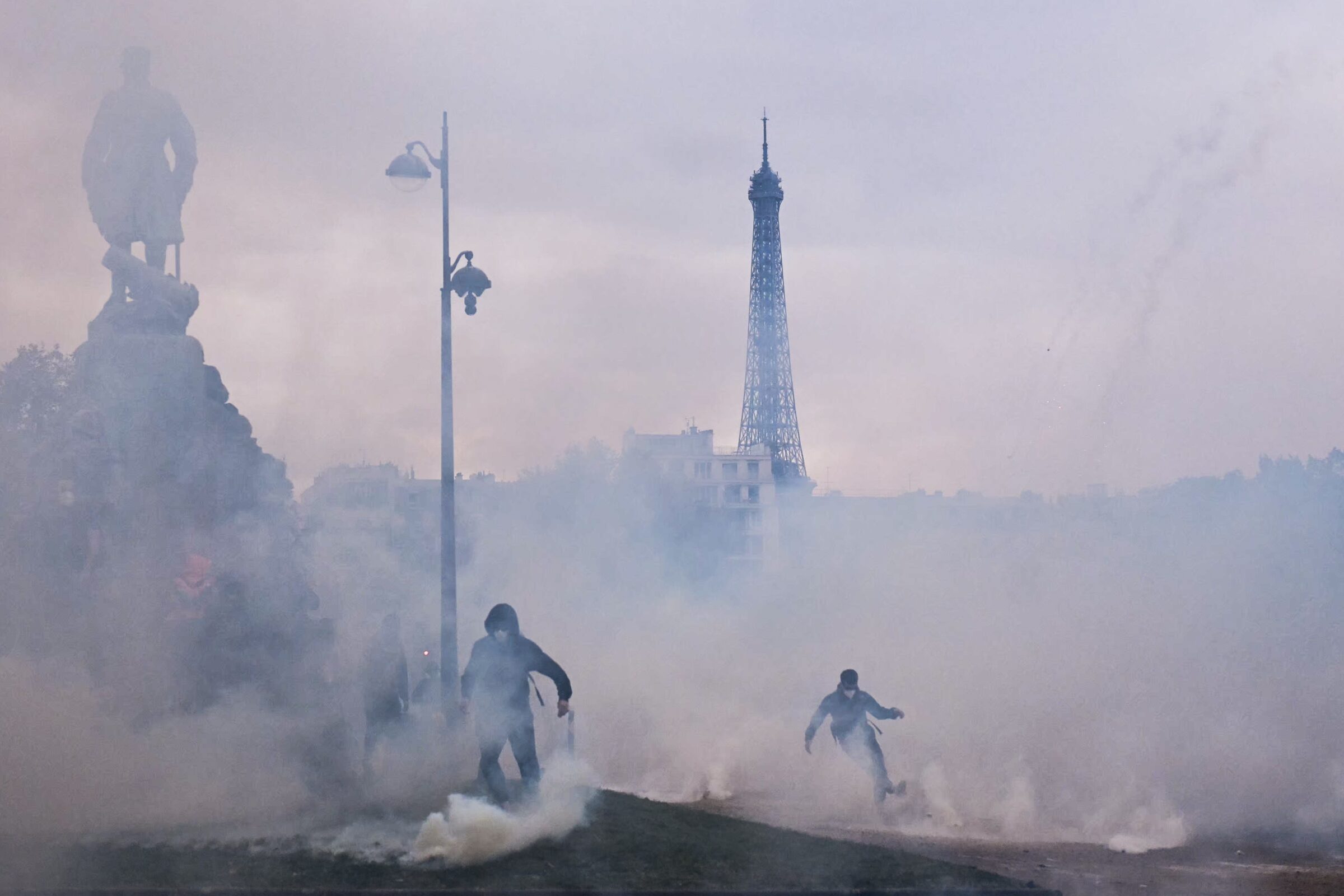
I went to bed on Saturday (17 October) glued to my X feed on the French riots and it was impossible not to react emotionally to images of familiar landmarks in Paris in flames.
It was a mistake to have followed things on the far-right propaganda tube of racist US oligarch Elon Musk, which both glorified and reviled its AI-curated clips of violent clashes between mostly white policemen and young black or Arab men.
But in any case, I felt pity for police facing Molotov cocktails and cobble stones and angry about their use of stun grenades that left young people maimed.
I was shocked to see public buildings and luxury shops in Lyon, Marseille, and Paris set on fire and looted in what looked like pure criminality, rather than liberté, égalité, fraternité.
But the anarchist adrenaline in me also said: “Fuck Louis Vuitton! A shop that sells luggage for the price of most families’ monthly incomes is a perfect symbol of the social inequality at the heart of this eruption of public anger”.
I woke up on Sunday thankful to learn from professional media, such as the BBC, that even if Paris looked like a war zone, no one had been killed, and even though police had made over 1,800 arrests, aggressive thugs were a fraction of the hundreds of thousands of people who had peacefully protested for better living conditions and education.
But the political harm of Saturday’s X-streamed violence, which also broke out in Italy and Belgium, was still enormous and it will help the EU and French people’s enemies – the far-right in Europe, Russian president Vladimir Putin, and US president Donald Trump.
This article continues, but the full version is available only to EUobserver.com subscribers. Visit account.euobserver.com/membership
From a press release last month, just posted on Westlaw:
N.C. Detective Agency, a Durham-based security company, will pay $65,231 in compensatory damages and back pay, and take other corrective actions to voluntarily resolve a religious discrimination investigation by the U.S. Equal Employment Opportunity Commission (EEOC), the federal agency announced today.
The EEOC's investigation found reasonable cause to believe that an employee requested to be excused from work due to a Muslim religious holiday, but the request was denied. The company was aware of the employee's need for a religious accommodation but did not engage in the legally required interactive process, and instead terminated her in June 2025 when she did not report for duty.
And from another press release two weeks later, also just posted on Westlaw:
Reynolds IGA Foodliner, Inc., owner and operator of a chain of grocery stores, will pay $65,000 and provide other equitable relief to settle a religious discrimination and retaliation lawsuit filed by the U.S. Equal Employment Opportunity Commission (EEOC), the federal agency announced today.
According to the suit, shortly after she was hired as a deli clerk at the Piggly Wiggly store in Hazlehurst, Georgia, the employee requested Sundays off to observe her Sabbath. The employee's supervisor denied the request, claiming that, if the store gave the employee Sundays off, it would have to do the same for all other employees. The employee continued to request the accommodation, and the company fired her in January 2025.
More from the second press release:
"Employers cannot deny religious accommodation requests simply for fear of upsetting other employees," said Marcus G. Keegan, regional attorney for the EEOC's Atlanta District. "The EEOC remains committed to enforcing federal anti-discrimination law and protecting employees' rights to religious freedom."
Darrell E. Graham, director of the EEOC's Atlanta District, said, "Employers must thoughtfully consider each request for religious accommodation on an individual, case-by-case basis and otherwise make good-faith efforts to accommodate their employees' religious beliefs. Employers must be aware of their obligations under federal law to provide reasonable religious accommodations absent undue hardship."
Finally, from a third press release from last month (it was published in between the first two, but was again just posted on Westlaw); this one involves a lawsuit and not a settlement:
Blue Bell Creameries, Inc., a Brenham, Texas-based frozen snack manufacturer and distributor with a production facility in Sylacauga, Alabama, unlawfully terminated a Jewish body shop technician soon after he requested a beard‑related religious accommodation, the U.S. Equal Employment Opportunity Commission (EEOC) charged in a lawsuit announced today.
Even supporters of bans on religious discrimination by private employers might debate whether employers should be required to give religious exemptions from generally applicable rules (exemptions that could themselves be seen as discrimination in favor of religious observers). But Congress has indeed mandated such exemptions: Title VII of the Civil Rights Act, as amended in 1972, generally requires employers to accommodate religious objectors' requests for exemptions from generally applicable work rules, unless doing so would pose an "undue hardship" for the employer.
That extends to time off for religious holidays: Indeed, the leading recent case on the subject, Groff v. DeJoy, involved a Christian employee's request for an exemption from having to work Sundays. And of course it extends, as it must, to all religions.
The post $65K Settlements with EEOC Over Failure to Accommodate Muslim and Christian Employees' Religious Days Off appeared first on Reason Magazine.

Ukraine and the EU have agreed to establish a joint working group to accelerate rule-of-law and anti-corruption reforms. This will help Kyiv meet the interim benchmarks for EU accession, Enlargement Commissioner Marta Kos says on X after talks with Ukrainian Prime Minister Serhii Koretskyi.
Ukraine’s path into the EU runs through its courts and anti-corruption agencies, and the bloc releases membership progress and much of its money only as Kyiv delivers those reforms.
“Ukraine is among the countries making most progress towards EU membership,” Kos says, adding that the group will work through outstanding requirements on the rule of law and the fight against corruption.
The move follows a breakthrough on the accession track. On 13 October, the Council of the EU opened two more negotiating clusters for Ukraine after the Ukrainian Parliament passed a minority-language education law on 12 October, clearing Hungary’s veto.
The group lands amid pressure on both fronts. Kos cast the education law as proof the system can work, crediting Ukrainian lawmakers with the consensus needed to adopt the reforms membership requires.
Meanwhile, Koretskyi expects the remaining clusters to open by the end of the year.
“Our success will require unity and commitment from all involved Ukrainian partners,” Kos emphasizes.
The official made clear the outcome depends on Ukraine keeping its side. The reforms are the same ones tied to Ukraine’s wartime financing, with billions in EU aid released only as Kyiv meets its commitments.
The stakes are financial as well as political. Ukraine is deep in a budget crunch and leaning on EU financing to keep the country running, and the Ukrainian Parliament returned from a month-long break this week to work through reform bills tied to that support.
As of 12 October, none of the needed laws had passed, according to anti-corruption activist Vitaliy Shabunin, who said the delay is already costing the country and blamed lawmakers who have stalled the reforms the money is tied to.
“As of today, Ukraine has NOT received several BILLION euros from the EU and others, because members of parliament have blocked the reforms to which that money is linked,” Shabunin said.
From Lajara v. McMenamin, decided Wednesday by Pennsylvania Superior Court judge Brandon Neuman, joined by Judges Jack Panella and Carolyn Nichols:
Mother argues the trial court erred by entering paragraph 111 of the final custody order, which allows Child to decline attendance at religious or faith-based events beginning at the age of 14, and prohibits both parents from influencing, restricting, or limiting Child's participation in those events before or after age 14. In doing so, Mother claims this provision "infringe[s] upon the parties' First Amendment right to the free exercise of religion and the parties' fundamental right to parent their child." …
Under the Due Process Clause of the Fourteenth Amendment, a parent has a fundamental right "to make decisions concerning the care, custody, and control of the child." Under the Free Exercise Clause of the First Amendment, an individual has a right to religious freedom. Read together, parents have the constitutionally-protected "right to direct the religious upbringing of their children." [Under Pennsylvania precedent,]
[A] court may prohibit a parent from advocating religious beliefs, which, if acted upon, would constitute a crime. However, … it may do so only where it is established that advocating the prohibited conduct would jeopardize the physical or mental health or safety of the child, or have a potential for significant social burdens….
[E]ach parent must be free to provide religious exposure and instruction, as that parent sees fit, during any and all period of legal custody or visitation without restriction, unless the challenged beliefs or conduct of the parent are demonstrated to present a substantial threat of present or future, physical or emotional harm to the child in absence of the proposed restriction….
While the harm involved may be present or future harm, the speculative possibility of mere disquietude, disorientation, or confusion arising from exposure to 'contradictory' religions would be a patently insufficient 'emotional harm' to justify encroachment by the government upon constitutional parental and religious rights of parents, even in the context of divorce….
As noted by Mother, "[n]either party in this matter requested the trial court order any form of relief regarding the exercise of their religious beliefs or … [C]hild's attendance and participation in religious activities. No evidence regarding either party's religion or … [C]hild's attendance and participation in religious activities was presented at trial." The trial court explained its reasoning for this provision, stating:
This trial court was forced to anticipate, to the best of its ability and in light of the factors proscribing stability and consistency for … Child, that a high level of conflict is more than likely to arise as it pertains to religious activities. To put it simply, these parents have demonstrated that any disagreement or dispute has and can easily escalate quickly into full scale conflict that does nothing more than cause instability and emotional trauma to … Child.
As such, this trial court proactively prescribed a solution to any issues that may arise regarding … Child's attendance and participation in religious activities. This trial court acknowledges that neither parent raised the issue of religious activities[;] however, the tumultuous history of this case does not produce any optimism on the part of this trial court that they will be able to communicate and cooperate if religious participation becomes an issue. As such, it is in … Child's best interests to preemptively place parameters on his attendance and participation in religious activities….
Though we recognize the parties' behaviors do not produce optimism that religion will not become an issue in the future, based on the record before us, the restrictions set forth in paragraph 111 are contrary to our case law since there is no indication the parties' religious beliefs or practices present a "grave threat of harm," "a substantial threat of present or future, physical or emotional harm to the child[,]" or that the physical or mental health, or safety of the child would be jeopardized absent a restriction. Accordingly, the trial court erred in setting forth paragraph 111 of its January 6, 2026 order. Consistent with precedent, both parents shall be permitted to practice his or her religion with Child during their respective periods of custody, so long as there is no substantial threat of present or future physical or emotional harm to Child….
The post Anticipated Religious Clashes Can't Justify Current Restriction on Parents' Religious Upbringing of Child appeared first on Reason Magazine.
Sacrifica ciò che è scomodo, mai il progetto. Il “pal-washing” in azione.
Un copione già noto
Il 9 ottobre 2026 il Comitato norvegese per il Nobel ha assegnato il Premio per la pace a Navanethem Pillay, giurista sudafricana di 85 anni, già giudice della Corte penale internazionale e Alta commissaria Onu per i diritti umani. La motivazione parla di una persona che ha aperto la strada a un ordine giuridico globale più completo. Il presidente del Comitato, Jorgen Watne Frydnes, ha aggiunto che il premio è un messaggio per chi attacca e mina il sistema internazionale e le sue istituzioni. Il verdetto è dichiaratamente politico, ed è su questo piano che va discusso.
La stessa figura che nel 2011 avrebbe «abbattuto» Gheddafi, spianando la strada al saccheggio del petrolio libico e alla schiavitù dei migranti africani, ora «abbatterebbe» Netanyahu, e preparerebbe così la riabilitazione di Israele. Il filo logico non sarebbe la morale né la pace, ma l’agenda dell’Open Society di George Soros: sacrificare i soggetti diventati scomodi, mai l’essenza del progetto. Qualcuno l’ha battezzata «pal-washing». La domanda di fondo è seria, perché chiede se dietro premi e giurisdizioni dell’ordine liberale ci sia una regolarità.
Occorre sottolineare che il copione è già noto. Vi ricordate quando Barack Obama ricevette il premio Nobel per la pace, inaugurando guerre su guerre? O vi ricordare i personaggi in cerca d’autore come Machado, Mohammadi, o i difensori dei criminali Ucraini? Ma andiamo per ordine.
Atto Primo: la Libia
Nel febbraio 2011 Pillay, Alta commissaria, chiese al Consiglio per i diritti umani un’azione vigorosa per fermare le violenze e chiamare i responsabili a risponderne; il Consiglio condannò le violazioni e istituì una commissione d’inchiesta. Il passaggio successivo toccò al Consiglio di sicurezza: il rinvio alla CPI con la risoluzione 1970, poi la 1973, approvata con dieci voti favorevoli e cinque astensioni (Brasile, Cina, Germania, India, Russia). Nessuno sostiene che Pillay abbia deciso la guerra. Conta la sequenza: il linguaggio dei diritti umani aprì la porta, quello della protezione dei civili autorizzò la forza, e l’operazione scivolò verso il cambio di regime. Già in aprile Lavrov accusava la NATO di eccedere il mandato, e un ministro francese ammetteva che il cambio di regime avrebbe richiesto un nuovo voto.
Poi i costi. Nel 2017 l’OIM documentò aste di migranti subsahariani nel sud della Libia, venduti per somme tra 200 e 500 dollari. Il nesso con il crollo dello Stato dopo il 2011 è la lettura più plausibile, benché la fonte documenti il fenomeno e non la sua causa. Il prezzo lo pagarono la Libia e i migranti; la cornice giuridica ne uscì, sul piano formale, intatta, anche se la controversia sul mandato avrebbe poi pesato sui veti di Mosca e Pechino in altri dossier.
Atto Secondo: Bibi
Il 21 novembre 2024 la Camera preliminare I della CPI emise mandati d’arresto per Netanyahu e per l’ex ministro della Difesa Gallant, per crimini di guerra e crimini contro l’umanità. Pillay aveva lasciato la Corte nel 2008, ma ha presieduto la Commissione d’inchiesta Onu che il 16 settembre 2025 ha concluso che Israele ha commesso genocidio a Gaza. Qui il «pal-washing» trova il suo meccanismo. Il diritto penale internazionale lavora su persone: un imputato, un’imputazione, un periodo. Se il caso si chiude con la sorte di un leader, si apre una cesura narrativa, il prima e il dopo di un uomo, dopo la quale lo Stato può presentarsi come reintegrato. La Libia offre l’analogia: là il caso si chiuse con la caduta di un uomo.
I limiti del percorso giocano a favore della lettura. La Corte non ha una polizia e l’esecuzione dei mandati dipende dagli Stati parte; la Commissione non è un tribunale e non parla a nome dell’intera Onu; lo stesso Comitato, riferisce AFP, ha detto che spetta a una corte stabilire se vi sia genocidio. Il premio non produce effetti giuridici, lo sappiamo, però produce legittimazione per un circuito che promette giustizia e non può garantirla.
Dobbiamo, poi, considerare che dinamiche del genere le abbiamo già viste più volte all’interno dell’ordine globalista che domina in Occidente. L’Open Society Foundations si presenta come il maggiore finanziatore privato al mondo di gruppi per giustizia, democrazia e diritti umani, attivo in oltre cento paesi, e Pillay ha ricevuto lo Stockholm Human Rights Award, lo stesso che nel 2011 è andato a Soros e a Neier. Sembra proprio che si ripeta di nuovo il pattern della agenda sorosiana, fatta di fondazioni, ONG, tribunali, commissioni e burocrazie che condividono un lessico e un orizzonte, quello di un ordine liberale da perfezionare e mai da rimettere in discussione. Chi opera dentro quel lessico può denunciare un governo, un leader, perfino uno Stato, ma non può contestare i presupposti dell’ordine che gli dà legittimità.
Alcuni obietteranno che la Commissione di Pillay attribuisce la responsabilità a Israele come Stato, non soltanto ai suoi leader, il che contraddice l’idea di un’operazione puramente personalizzante. Il secondo è la reazione. Netanyahu ha accusato il Comitato di aver perso la bussola morale, il Ministero degli Esteri israeliano ha parlato di una grottesca strumentalizzazione del premio, e Washington ha annunciato sanzioni contro la CPI poche ore dopo l’annuncio. Tutto vero. Ma avrebbe senso e valore se il sistema occidentale non fosse marcio fin dalle sue fondamenta, se il suo sistema giuridico funzionasse, ma così non è, sotto nessun aspetto (e abbiamo avuto già sufficienti dimostrazioni – non scordiamoci anche il caso Epstein).
Se nei prossimi dodici mesi la caduta politica di Netanyahu verrà presentata come chiusura del caso, anziché come una tappa di un procedimento che riguarda lo Stato, il «pal-washing» guadagnerà peso. Se i procedimenti proseguiranno oltre la sua persona, e se gli Stati parte eseguiranno i mandati, forse ne perderà. Allo stato delle prove la tesi è plausibile e, fino a smentita comprovata, questo è l’ennesimo Nobel della non-Pace, che non possiamo chiamare “guerra”.
Human rights NGOs in Europe are not doing well. Funding cuts, legal restrictions, administrative burdens and smear campaigns are taking their toll.
I see organisations drastically downsizing or closing altogether and staff burning out. If we are to reverse our fortunes, the traditionally legally-focused movement needs to rebalance its skill-set to include more communicators and organisers.
Traditionally, human rights NGOs have been staffed mainly by lawyers. This is understandable. Human rights are legal standards contained in national, European and international law. If your main tools for getting human rights implemented are advocacy and litigation, then you need legal experts. But advocacy is becoming less effective because decision makers increasingly see supporting human rights as politically risky.
And litigation as a tool is partly limited by increasing political interference with the courts in some countries, or because – again – politicians see potential political brownie points in not complying with (or see potential political costs in complying with) judgments that enforce human rights standards.
It’s not just that NGOs’ traditional tools are losing their power. It’s that legal training does not equip us with the tools do we need to reverse our fortunes.
Our main lever for restoring human rights and the organisations that promote them is public opinion. For as long as we live continue to live in democracies, pressure from voters can have an impact on decision makers. Which means we need communicators who can help the public realise how important human rights are to them.
David Attenborough pointed out a few years ago that “saving our planet is now a communications challenge. We know what to do, we just need the will”.
The same goes for human rights.
But legal training does not make you good at communicating with folks outside your bubble.
I know from personal experience. I trod a path to human rights through a law degree, masters, doctorate and then academia. Human rights folks talk about them in a way that conveys a fraction of their value and power. If you’d asked me 15 years ago why human rights are important, I’d have said things like this: ‘they protect us from abuse by the government’, or ‘they’re minimum standards of protection the state can’t breach’, or ‘they exist to protect the vulnerable’.
These things are true. They’re also not very persuasive to people outside our base of support. Because the kinds of human rights breaches the movement foregrounds tend to affect ‘other people’. And lawyers are used to thinking about rights in the context of legal disputes.
So human rights get reduced to a shield that protects groups or institutions that most people don’t care about, don’t understand, or who live in other countries.
Human rights are not just a passive defence. They are transformational. Human rights are tools. Tools we use to demand that our leaders use the powers and resources with which we’ve entrusted them to do what’s best for all of us. Tools that we use to create the lives we want to live and the communities we want to live in. This is how we need to talk about them, especially when it comes to civil and political rights.
People outside our base cannot be made to care about media freedom, the right to protest or democracy itself just on principle or because they’re enshrined in legal standards. To care about human rights, most people need to know what these things deliver.
Folks will see that protest is important when we explain how it allows people like them to come together and make their leaders listen to their concerns, whether it’s about climate change or better pay for teachers. I’ve seen it first-hand when testing messages in focus groups.
The same goes for stimulating support for the rights of people from marginalised groups. Right now, most people have trouble caring because they been fed negative stereotypes that cause them to regard some people as ‘others’ and ‘outgroups’, meaning that they will tolerate lower standards of treatment for them.
Using legal arguments and evidencing rights violations by focusing on the harm being suffered doesn’t work because it does nothing to address the reason people don’t care. For that, we need to stimulate empathy and dissolve negative stereotypes through techniques like storytelling. Once people empathise and recognise our common humanity, they’re much more likely to support equal treatment.
When we communicate in a way that allows our audience to see how human rights deliver things they find important to them, they don’t just start to support human rights as standards. They also start to support the organisations that promote them. That means they’re more likely to listen to them, stand up for them, get involved in their work and even donate.
It’s not just about communicating better. We also need organisers who can help people come together to carry effective messages and make the strength of public support felt by our leaders.
Folks with legal training are still essential.
If you’re going to make phones, you need engineers. But we don’t see the engineers being given the job of persuading folks to buy the phones, do we?
Unless they’ve had proper communications training. The human rights movement’s legalistic centre of gravity needs to shift to make room for knowledge and skills that can meet the moment.
In the short-term we could achieve this by retraining staff and joining forces with other progressive movements that know how to organise and mobilise, like environmental NGOs.
We could also tackle the issue upstream by working with universities that produce human rights graduates to develop more holistic curricula that cover communications and organising and not only law.


The European Union has maintained its Article 7 proceedings against Hungary despite acknowledging significant improvements in the country’s rule-of-law situation since Prime Minister Péter Magyar’s government took office earlier this year.
Ministers meeting at the General Affairs Council in Luxembourg on Tuesday, 13 October, reviewed reforms introduced by the Hungarian administration and received an updated assessment from the European Commission.
The proceedings, initiated by the European Parliament in September 2018, remain open eight years after concerns over judicial independence, corruption, media freedom and democratic accountability first prompted action under the EU treaties.
No decision was announced to terminate the procedure following the latest meeting.
European Commissioner Michael McGrath said ahead of the discussions that Hungary had made substantial progress towards addressing the institutional problems inherited from the administration of former prime minister Viktor Orbán.
Speaking in Luxembourg, McGrath acknowledged improved cooperation between the Hungarian government and European institutions.
However, he also indicated that the reform process remained incomplete, noting that the new administration had been in office for only several months.
The Commission’s assessment reflects the changing relationship between Budapest and Brussels following Magyar’s election victory and the subsequent introduction of reforms intended to restore judicial and institutional independence.
As EU Today reported in June, the change of government created an opportunity to resolve long-standing disputes over the condition of Hungary’s democratic institutions and the suspension of European funding.
The latest Council discussions indicate that the EU is prepared to recognise reforms already undertaken without automatically treating them as sufficient to close the Article 7 procedure.
The European Parliament initiated the proceedings in 2018 after raising concerns over developments affecting Hungary’s constitutional system, judicial independence, corruption safeguards and civil society.
Article 7 of the Treaty on European Union provides mechanisms for responding when a member state is considered at risk of seriously breaching the Union’s fundamental values.
Under its preventive provisions, the Council can determine whether there is a clear risk of such a breach.
More severe measures, including the possible suspension of certain membership rights, require additional procedures and higher institutional thresholds.
Hungary’s case has remained within the preventive stage, with successive Council meetings examining the country’s legal and political developments.
The Council’s account of the 13 October meeting confirms that Hungarian representatives presented measures intended to address concerns raised by the European Parliament and member states during earlier proceedings.
The Commission also briefed ministers on its latest assessment.
The meeting did not produce a formal finding that the outstanding concerns had been fully resolved.
Since assuming office, Magyar has sought to reverse elements of the institutional structure established during Orbán’s lengthy premiership.
The reforms have included measures concerning public administration, judicial accountability and the relationship between national institutions and European law.
The new government has also attempted to improve relations with Brussels after years of disputes that affected EU budget decisions, sanctions policy and cooperation over Ukraine.
EU Today has previously examined Magyar’s programme of institutional renewal and the political difficulties involved in changing institutions shaped by the previous administration.
Reforming legislation does not necessarily transform the institutions responsible for applying it.
Judicial appointments, regulatory structures, public procurement procedures and anti-corruption enforcement may all require additional measures before the effects of reform can be fully assessed.
The European Commission must therefore consider not only the laws adopted by the new government but also whether the institutions concerned operate independently and effectively.
The Article 7 proceedings are closely associated with wider disputes over Hungary’s access to European funding, although the relevant legal mechanisms are different.
During Orbán’s administration, the Commission and Council used financial conditionality procedures to restrict access to certain EU resources because of concerns affecting the protection of the Union’s budget.
Magyar’s reforms have opened the possibility of reversing some of those restrictions.
As EU Today reported in September, the Commission moved towards releasing €4.2 billion following changes intended to address rule-of-law concerns.
The financial decisions involve compliance with conditions attached to EU funding and can proceed independently of the Article 7 mechanism.
Consequently, the release of money does not automatically establish that all the institutional problems identified in the original parliamentary proceedings have been resolved.
Likewise, the continuation of Article 7 does not necessarily prevent the Commission from recognising progress under separate funding arrangements.
McGrath addressed the possibility of terminating the procedure during remarks before Tuesday’s meeting.
He explained that the Commission could provide its assessment but did not have unilateral authority to bring the Article 7 process to an end.
In his recorded statement in Luxembourg, the Commissioner pointed to the responsibilities of the European Parliament, which initiated the case, and the Council, which has conducted the subsequent examination.
The institutional arrangements mean that improved relations between the Commission and the Hungarian government cannot by themselves dispose of the proceedings.
The Council must consider the reforms and the remaining concerns within the framework established by the treaties.
Political agreement among member states will consequently be required to determine how the process develops.
The latest discussions take place against a substantially different political background from previous years.
Budapest has recently withdrawn objections to further steps in Ukraine’s EU accession negotiations following Ukrainian legislation addressing educational rights for Hungarian speakers and other national minorities.
The change has removed one obstacle to enlargement negotiations and reflects the government’s more cooperative approach towards other EU institutions.
Nevertheless, Hungary’s position on foreign policy and enlargement is distinct from the assessment of its domestic rule-of-law arrangements.
The Council’s examination remains focused on the institutional concerns that led to the procedure being initiated.
The Irish presidency’s summary of the October Council meeting confirms that ministers received an update rather than reaching a new formal determination.
The proceedings therefore remain open while the Commission and member states continue examining the measures introduced by Magyar’s administration.
The coming decisions will establish how European institutions respond when a new government undertakes reforms intended to reverse the conduct that originally led to action under Article 7.
For Hungary, the outcome will influence its relationship with Brussels well beyond the immediate debate over EU funding. For the Union, it will demonstrate how its rule-of-law procedures operate when political circumstances change and the member state concerned begins addressing previously identified institutional problems.

The European Commission is continuing discussions with Google over the company’s response to €890 million in penalties imposed under the Digital Markets Act, as Brussels examines whether changes to its search engine and app-store practices are sufficient to address infringements of European competition rules.
Commission spokesman Thomas Regnier confirmed on Wednesday, 14 October, that officials remained in dialogue with the American technology company. The Commission is assessing the measures Google has introduced, taking account of feedback from businesses affected by its services before reaching a conclusion on compliance.
The review follows two decisions adopted on 23 July, when the European Commission found Google in breach of the Digital Markets Act. A €460 million fine concerned preferential treatment for Google’s own services in search results, while a separate €430 million penalty addressed restrictions preventing app developers from freely directing customers towards alternative purchasing channels.
The first infringement concerns Google’s treatment of competing online services offering hotel reservations, shopping comparisons, transport information and sports results.
Regulators concluded that Google had placed its own services in more prominent positions, sometimes providing them with enhanced visual features and search functions unavailable to competing businesses.
The Digital Markets Act prohibits designated gatekeepers from giving their own products preferential treatment when ranking services that compete with those offered by other companies.
Google has already modified its European search results in response to the Commission’s decision. The changes include revised presentations of commercial information and greater prominence for independent comparison services.
As EU Today reported following the introduction of the revised search format, Google has argued that the measures could make searches less convenient and increase dependence on intermediary websites.
The company maintains that direct information previously available through its search engine may become harder for consumers to obtain.
For competitors, however, the question is whether Google’s adjustments provide genuine commercial opportunities or merely alter the appearance of search results without changing the underlying distribution of traffic.
The second case concerns the Google Play application marketplace, where developers have historically depended on Google’s infrastructure to distribute software and sell subscriptions.
Under the DMA, developers must be able to inform customers about alternative offers and direct them towards purchasing arrangements outside the platform, including their own websites.
The Commission found that Google’s restrictions and fees had limited that freedom.
Although the company may charge for certain services associated with acquiring customers, the Commission concluded that the level and duration of its steering-related charges exceeded what the legislation permits.
Google has since adjusted its external-offers arrangements. European officials are examining whether those changes provide developers with a commercially workable alternative to transactions processed through Google Play.
The issue has consequences for subscription services, digital publishers and software companies seeking to maintain direct relationships with their customers.
A formal ability to direct consumers elsewhere is of limited benefit if the financial conditions make such transactions uneconomic.
The Digital Markets Act was designed to address market practices that conventional competition investigations often took years to resolve.
Rather than requiring regulators to establish a new infringement through lengthy proceedings in every instance, the legislation imposes specific obligations on companies designated as gatekeepers.
The Commission’s DMA enforcement framework allows regulators to examine whether those obligations are being followed and to impose financial penalties when they are breached.
Google’s July fines represented an important enforcement decision. The current review concerns the company’s subsequent conduct and the practical effects of its compliance measures.
The continuation of discussions does not itself establish a fresh infringement. Further penalties would require an additional regulatory determination.
Google also faces broader obligations concerning the sharing of search data with competing providers, an issue addressed in a separate Commission decision issued in July.
These obligations concern access to anonymised information about searches, rankings and user interactions that competing search engines may need to improve their own services.
Taken together, the measures represent a substantial intervention in how Google’s European business operates.
The proceedings have acquired a political dimension because most of the largest companies affected by the DMA are American.
President Donald Trump has criticised European penalties against US technology companies and threatened trade measures in response to what his administration regards as discriminatory regulation.
Brussels maintains that the legislation applies according to market position and commercial conduct, regardless of nationality.
European regulators must nevertheless enforce their decisions in an environment where competition policy has become entangled with wider trade relations between the United States and the European Union.
Google’s financial exposure extends beyond the €890 million imposed in July. Continued non-compliance could lead to further regulatory proceedings, while changes to the company’s services may also affect advertising revenue and its relationships with commercial partners.
The immediate assessment will concentrate on whether competing search services receive fair treatment and whether application developers can direct customers towards alternative transactions without unjustified restrictions.
The Commission has not announced a date for its final assessment. Its decision will help establish how far Europe’s digital competition legislation can change the conduct of companies whose platforms occupy central positions in online commerce.
The EU is shying away from triggering rules that would shield people and companies working at or with the International Criminal Court (ICC) in The Hague from US sanctions, preferring instead months-long diplomatic outreach.
The European Commission on Wednesday (14 October) told reporters in Brussels that it was doing everything to seek “practical solutions”, while hoping that its diplomacy will help the court, which prosecutes people for war crimes, genocide, and other atrocities.
“We haven’t made any decisions yet. But we continue to discuss at every level,” said a commission spokesperson, when pressed on whether a little-known blocking statue, which would presumably damper the impact of the US sanctions, remains an option.
And an EU summit in Brussels on Thursday is expected to ask the US to reverse the decision, according to draft conclusions seen by EUobserver.
The EU’s little-known “blocking statute” would prevent EU companies and banks from complying with the sanctions. It was first used against US sanctions on Cuba, Iran and Libya.
The Trump administration had, last Friday, announced financial sanctions on the ICC as part of a larger assault to dismantle the court, after it issued arrest warrants for Israeli prime minister Benjamin Netanyahu, its former defence minister Yoav Gallant, and Hamas military commander Mohammed Deif.
This article continues, but the full version is available only to EUobserver.com subscribers. Visit account.euobserver.com/membership


“I’m okay.” That was the last message I sent my mother before an Israeli strike hit us, a group of seven journalists reporting in southern Lebanon.
Three years ago, on 13 October 2023, my colleague Dylan Collins and I headed to the southern border of Lebanon to cover the situation following cross-border shelling between Israeli forces and Hezbollah. We spent the morning filming UN peacekeeping force patrols along the blue line dividing Lebanon and Israel. The atmosphere was calm and nothing suggested that the day was about to change and upend our lives. We went to a coffee shop near a UN post where journalists from different outlets had gathered and there we met our friend and Reuters colleague Issam Abdallah.
Around 4:50PM, we heard a bombardment in a nearby town so we moved to an exposed hill in Alma Al-Shaab, where Al-Jazeera journalists Carmen Joukhadar and Elie Brakhya were positioned. Together with colleagues from Reuters, we were a group of seven journalists, all wearing press vests, reporting next to a car marked “TV”. We were clearly identifiable as press and spent about an hour filming while an Israeli drone hovered above us. At 5:57 I finished filing my photos and sent a message to my mother to tell her I was okay. Seconds later, I found myself on the ground, bleeding and screaming for help. Dylan rushed over with a tourniquet, but before he even had the time to put it, another strike hit.
Everyone disappeared and I was left alone, unable to move and the heat of the flames creeping closer to my face. I was terrified of burning alive, so I started crawling away with the camera still hanging from my neck and its strap tightening around my neck with every move. Two weeks later, I woke up from an induced coma with one leg missing, the other severely damaged, and Issam dead.
What followed was as horrific and brutal as the attack itself and it didn’t stop there. What happened to us was not an isolated incident — for three years I watched journalists being killed in Lebanon and Gaza by Israeli forces in ways that felt painfully familiar.
In October 2024, Israeli forces struck a compound in Hasbaya where journalists were staying and killed media workers Ghassan Najjar, Mohammed Reda and Wissam Kassem, while they slept.
Human Rights Watch found no evidence of military activity at the site and concluded that the strike was deliberate and should be investigated as war crime.
Then in April 2026, journalist Amal Khalil was killed in southern Lebanon after an Israeli strike hit the building where she had taken shelter with her colleague Zainab Faraj, leaving both women trapped under the rubble. Investigations found that Israeli forces repeatedly obstructed rescue efforts.
Since our attack, dozens of journalists have been killed in Lebanon, and nearly 200 journalists have been killed in Gaza by Israeli forces.
Many have been mired by Israel with the same false allegations that they were “terrorists.” The dead can’t defend themselves against such accusations, but I survived and I can speak about what happened to us.
In June 2026 in an interview on France 2, Israel’s ambassador to France described the 13 October attack as a “mistake” saying that we were not targeted because we were journalists, but because Israeli forces had mistaken us for “terrorists.” The evidence tells a different story.
Five independent investigations by Agence France-Presse, Amnesty, Human Rights Watch, Reuters, and UNIFIL found no indication of fighters or military activity at the site, and no cross-border exchange of fire for more than 40 minutes before we were struck with a 120mm tank shell.
These investigations matter because they establish with certainty evidence beyond my own personal account.
What remains unanswered is who gave the order, who fired the double-tap strike, and why no one has been held accountable. These are basic questions that can be answered by Israel if they were sought by EU member states.
Three years on, Issam’s family and the survivors of this attack deserve to know: Who gave the order?
Evidence alone cannot deliver justice, someone must be willing to act on it. In the face of this attack, including the targeting of four of its own citizens on Lebanese soil, the Lebanese government has failed us.
Neither Lebanon nor Israel are party to the Rome Statute, meaning that the International Criminal Court does not have jurisdiction to prosecute those responsible for the attack.
In 2024, Lebanon approved a special declaration that would have allowed the Court to investigate war crimes committed after 7 October 2023, only to later reverse its decision for political reasons.
And now, making our legal path even more complicated, in June 2026 Lebanon signed a new framework agreement with Israel whereby Clause 13 commits both sides to cease “all hostile and adverse actions in international and legal fora.”
I have no hope left that we will ever get justice for what we lost, but I will not rest before I know the names and faces of those responsible.
Our case is the most documented instance of Israeli forces targeting the press on record. The October 13 targeted attack was perpetrated by Israeli forces on a group of journalists clearly identifiable as press.
If we cannot get answers in the face of such overwhelming evidence, what does it mean for the hundreds of journalists killed by Israeli fire throughout the region for which there is no such evidence?
This is where the European Union must act. The EU has repeatedly said that journalists must not be attacked and that violations of international law must be met with accountability. Today, we demand actions not just words and statements. The EU must demand that Israel provide a full account of the 13 October attack, including who ordered, authorized and carried out the strikes.
For me, this is not an abstract question of foreign policy. Issam was my friend. I survived that attack with one leg missing. I know what it means when the people responsible for an attack are allowed to remain unnamed and unaccountable.
I am asking the EU not simply to stand with journalists in words, but to stand with us in action.
The EU has political, diplomatic, and legal leverage. It should use it. If Israel refuses to fully explain what occurred and disclose those responsible for killing and maiming journalists who were visibly identifiable as press, EU member states should use every available mechanism to pursue accountability, including further targeted sanctions or suspending trade with Israel.
I refuse to believe that a military with advanced surveillance could have simply mistaken us for fighters and attacked us in a double-tap strike, a tactic repeatedly used by Israel in this war. But, if that’s truly what happened, then Israel must still answer for how such incompetence and failure was possible.
For now, justice evades us, but the truth of who gave the order is within reach and we must demand it.