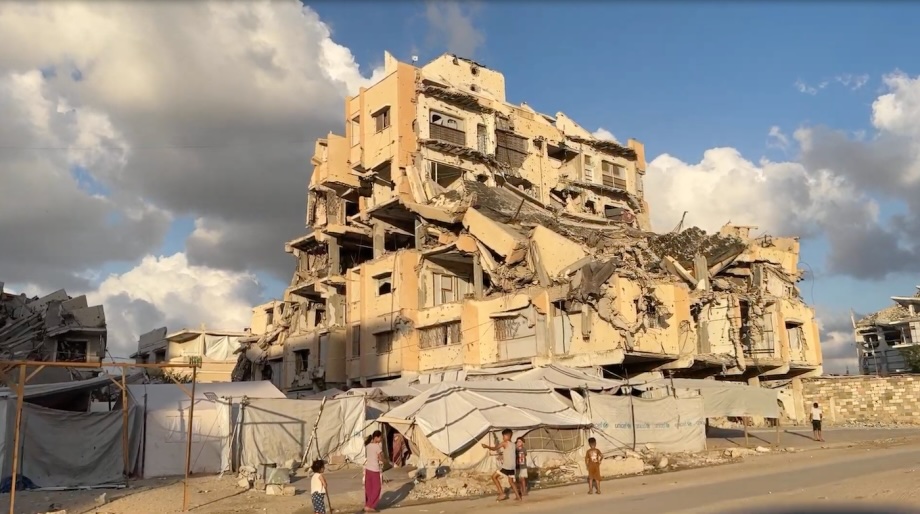
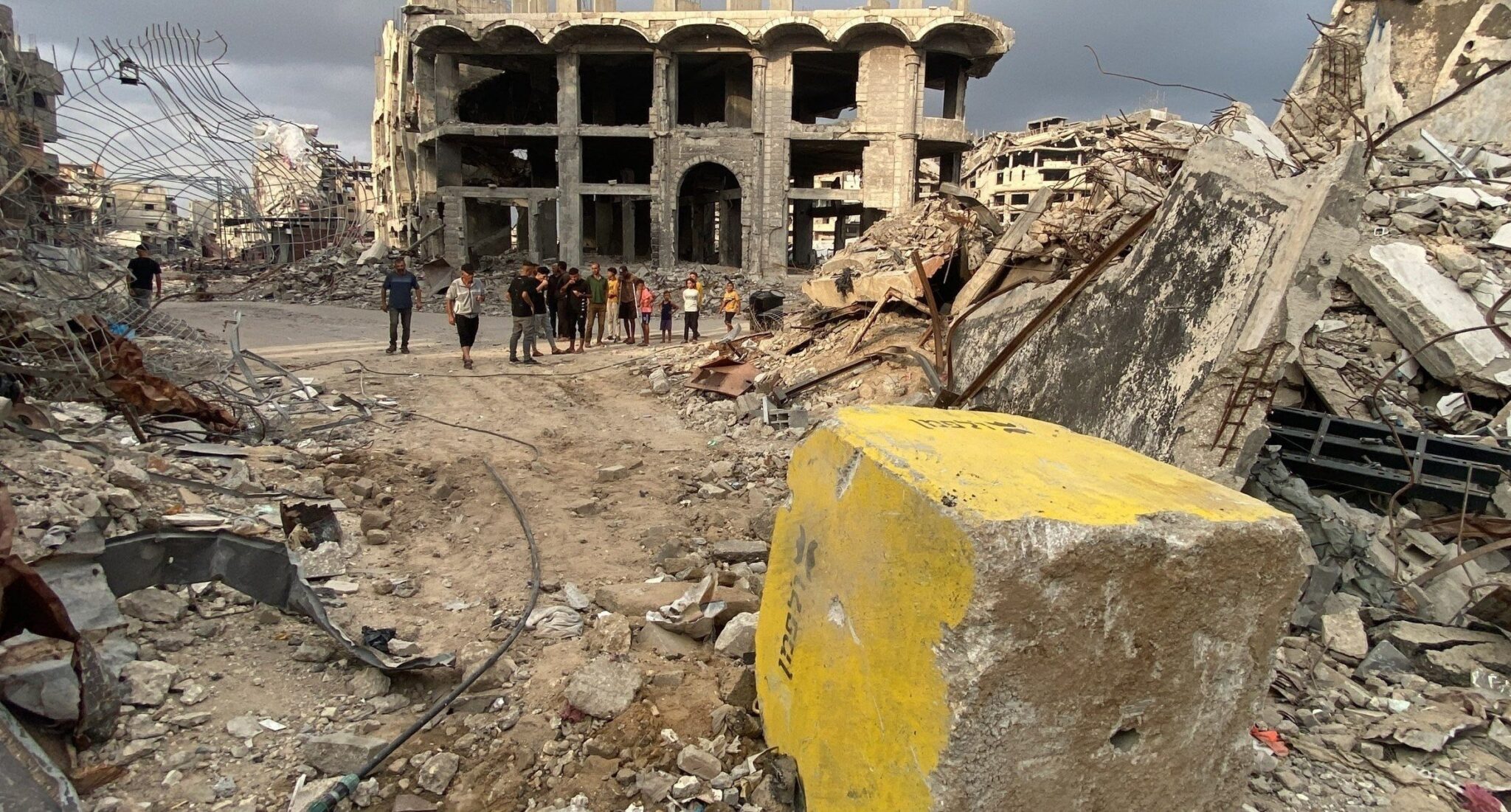
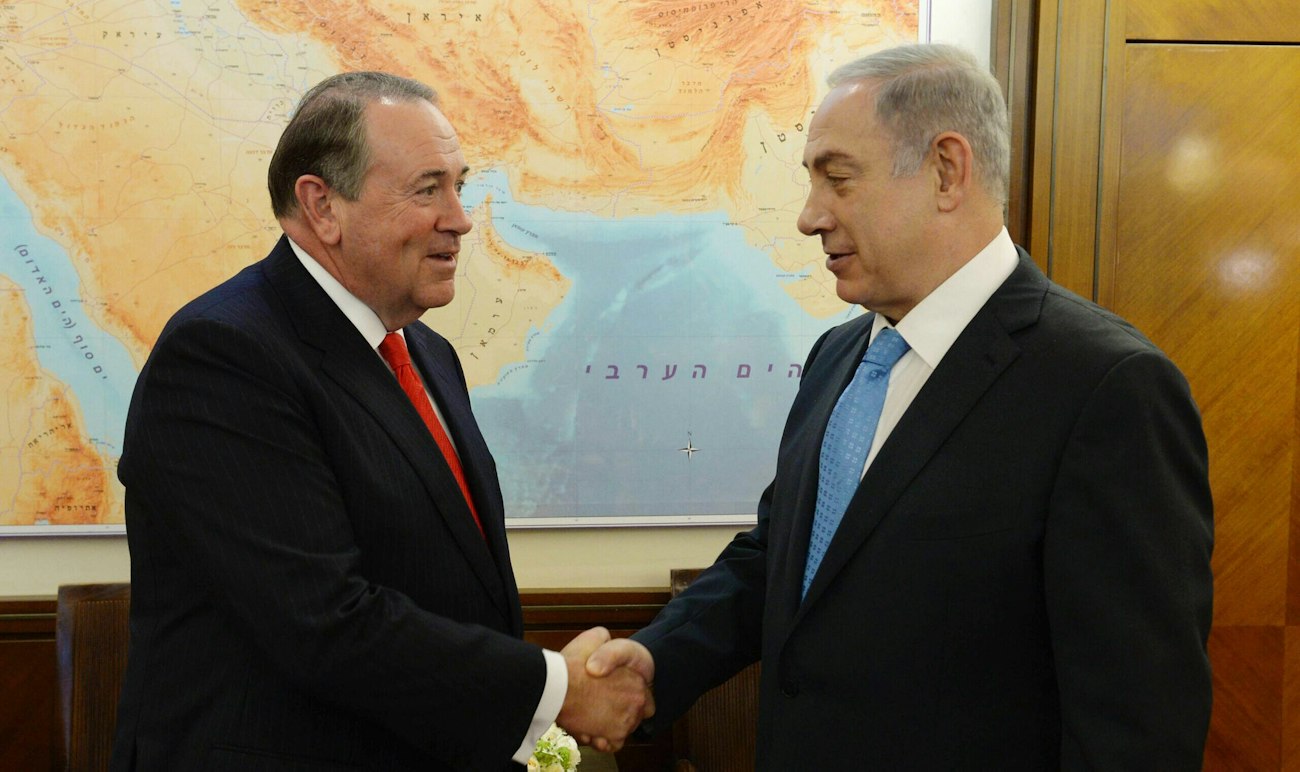
As Israel continues to squeeze Gaza, settler violence dominates West Bank; Trump endorses war criminal Benjamin Netanyahu to remain Prime Minister in next week's election
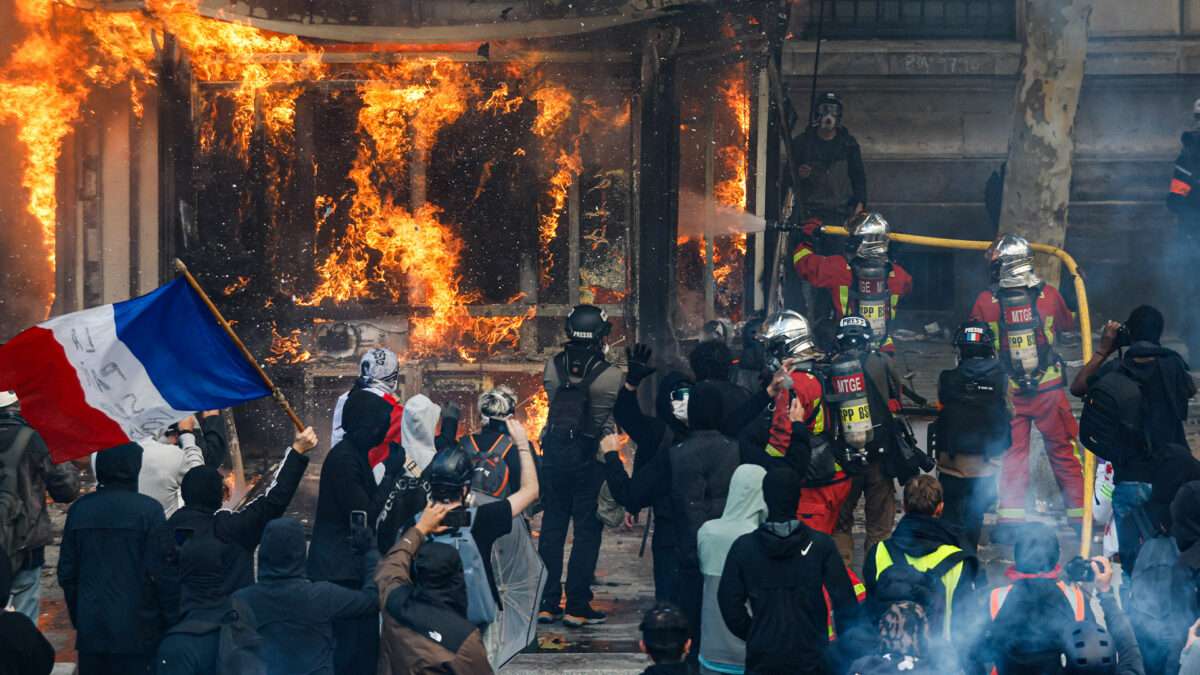
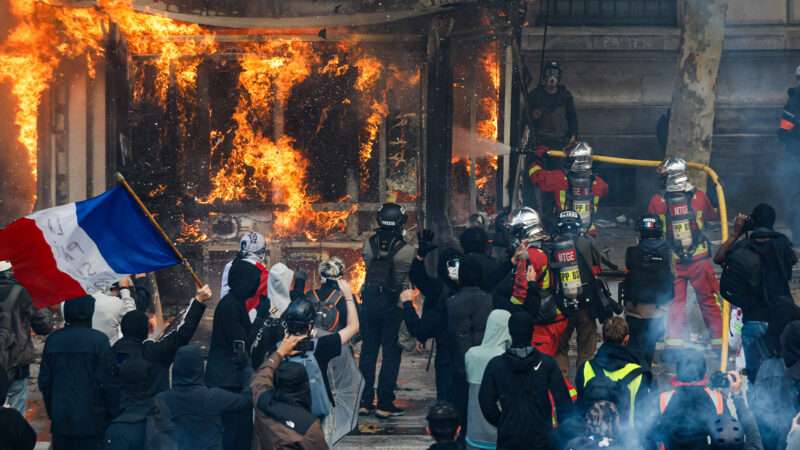
Is this really about cost of living? Over the weekend, the civil unrest that had been at a simmer boiled over in cities all over France. Over 1,000 police officers were injured, with seven seriously injured. More than 2,400 people were arrested.
"Rioters…attacked city halls from Lille in northern France to Marseille in the south, where they broke into the local government headquarters and tipped over a bust of Marianne, a symbol of the French Republic," reportsThe New York Times. "A fire destroyed a tourist office in Lyon, and 1,500 shops were damaged or looted nationwide, according to Alexandre Bompard, head of the French federation of commerce and distribution, who estimated that the cost of repairs could run into hundreds of millions of dollars."
"They came prepared," claimed the French journalist Paul Amar on CNews. "They had the addresses of town halls. They had addresses of Jewish shop owners. In a street in Marseille, all businesses owned by Jews were set on fire. Businesses run by Muslims weren't." The Jewish Community Protection Service has disputed such claims.
Reason's Matt Welch has a good write-up of how the violence and destruction have altered Lyon, Paris, Marseille, and Limoges, where the city hall was burned and collapsed.
Ces images doivent faire le tour du monde. Nos voisins doivent savoir.
Lyon l'une des plus grandes villes de France le 17 octobre est l'une des villes les plus touchées.
A Lyon, aucun commerce n'a été épargné, oui aucun commerce n'a aucun épargné vous avez bien lu. Toutes les… pic.twitter.com/15dG6QB5lK
What was nominally about cost of living and budget issues appears to have expanded far beyond those. ("Free Palestine" and "ACAB" graffiti have been seen everywhere.) President Emmanuel Macron has blamed far-left protesters, saying they have taken advantage of the situation. Far-right leader Marine Le Pen has blamed the "Macronist administration that is out of steam, exhausted, and disoriented."
It's not clear to me how the possibility of that retirement age needs to be raised will in any way be changed by, say, donning black balaclavas and breaking into the Louis Vuitton store:
French rioters loot Louis Vuitton store located just 2 KM away from the Élysée. pic.twitter.com/cnb5aWczcN
Here's how it all started: Since September 18, lycée (or secondary-school) students have held demonstrations, starting in the Paris suburb, Créteil. The students said the Education Ministry had neglected them—not enough resources, not enough teachers, and overcrowded classes. (The original demands were met and that strike ended, but not before sparking a wider movement.) This was all happening concurrently as the government was deciding its budget, and public-sector strikes were beginning. High social-program spending, an aging population, and high debt-to-GDP, plus an ever-increasing cost-of-living is resulting in a math problem that politicians have no real way out of except by raising the retirement age. Over the last few years, the French have had several hissy fits over the possibility of that happening.
Lawmakers from left-wing party La France Insoumise were at the first blockade on September 21, which has sparked questions about whether the party helped fuel the protests ahead of April's presidential election. I take all this—the disparate movements, the sheer volume of violence, the political-party involvement, the elections coming up—to mean that what started as an education-quality/cost-of-living protest has been used to lodge all kinds of grievances, and is attracting allies with an unquenchable thirst for violence and destruction.
Scenes from New York: "Darrel Rodriguez, 26, was shot on Saturday in the 7th Avenue Station on 53rd Street, a few blocks from Times Square, the police said. An unidentified man approached Mr. Rodriguez on the northbound E train platform, drew a gun and shot him once in the chest, they said," reportsThe New York Times. The man who shot Rodriguez was wearing a full balaclava-style face covering, and has not been found by the cops.
Philadelphia enacted a ban on such masks back in 2023. Just anecdotally, I've seen a lot of them in New York, but not by people trying to stay warm in the cold—these types of masks are used by people hopping turnstiles, stealing from bodegas, and more. Some bodega owners have started posting signs on their doors saying masks aren't allowed, since it's become such a problem.
"As of Oct. 11, there have been 1,697 crimes in the transit system since the start of the year, 27 more than the same period in 2025," reportsThe New York Times, citing Police Department figures.
In Texas, Ken Paxton appears to have lost the support of suburban women, according to The Washington Post.
"Jewish life in the Emirates has grown quieter and less visible," notesThe New York Times. "Religious symbols have disappeared, and gatherings have moved into private. Many have become more guarded about their online presence and their willingness to speak to the media. Some are reconsidering how openly to identify themselves as Israeli or Jewish, while others weigh whether they can still build a life in a nation they once considered a haven."
Can you really see everything?
YOU CAN SEE EVERYTHING is doing a public service if it gets the general population to question why, precisely, folks lend so much credence to documentaries as vehicles of truth. https://t.co/n7CHwkmDmrpic.twitter.com/IHUvEbKECl
"I recently attended a meeting of the Democratic Socialists of America, where I officially enrolled as a member. Though I was new to the party, I put forth a number of proposals, many of which were met with considerable enthusiasm and, I'm happy to report, have now been incorporated into their manifesto," writes Larry David in a satirical essay for Airmail. "We contend that the only way anyone can be rehabilitated is through the simple act of love. When the D.S.A. takes over, it will be our policy to close the jails and release all prisoners. Once released, the former prisoners will continue to walk around in their orange jumpsuits, the easier to spot them. People will be encouraged to give them a pat on the back, offer some words of encouragement, and maybe even get them to open up about their crimes. Imagine how upsetting it must be to know you've taken a life! To err is human, to forgive, divine. With empathy and compassion, it's easy to see a day when these former convicts will be contributing to society in a very meaningful way." It's not that funny of an essay, but I think it's great for more people to be talking about how asinine DSA ideas are.
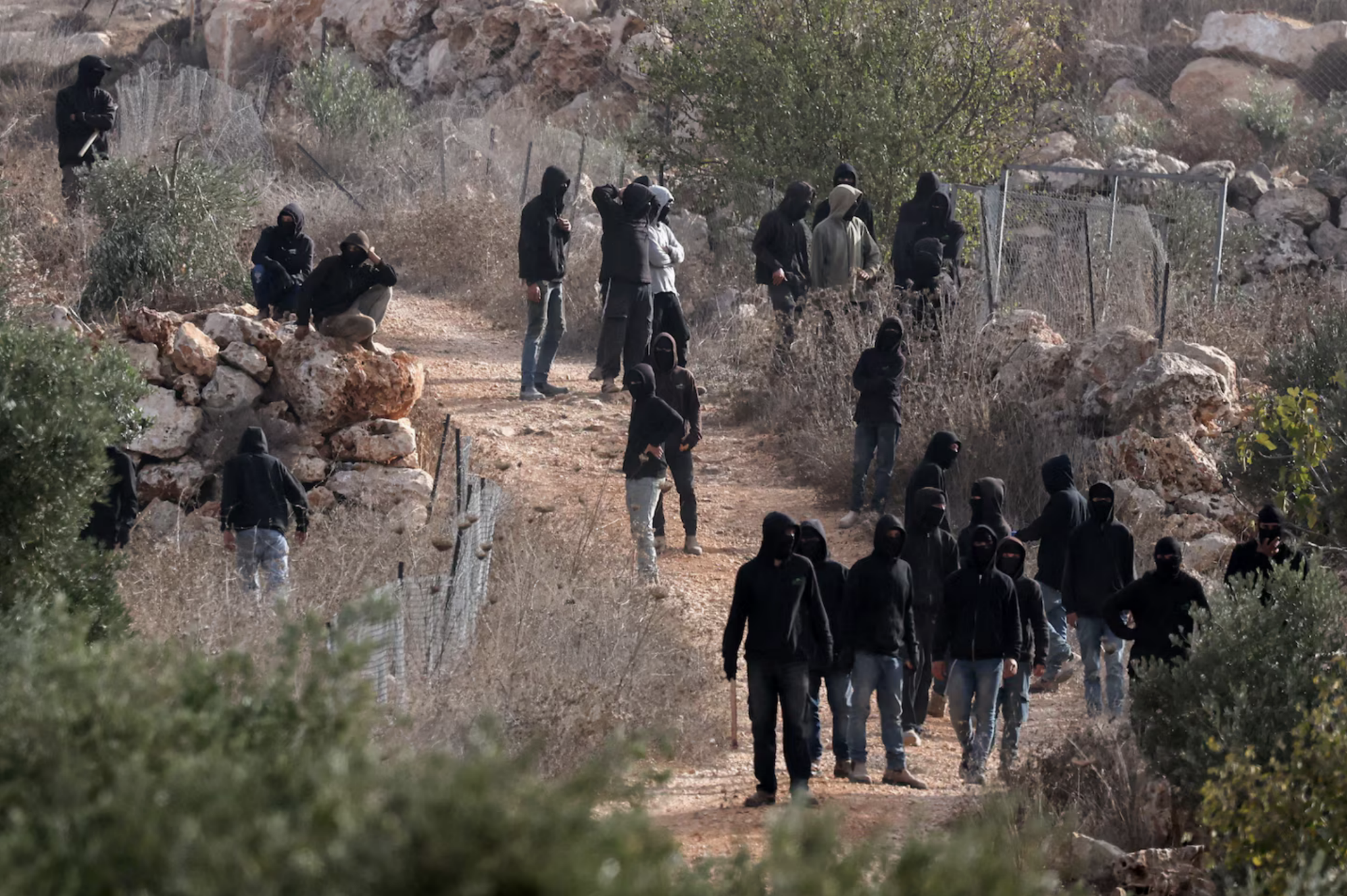
Violent (and illegal) Israeli settlers in West Bank are not content to attack only Palestinians ■ Gazans dread spending a 4th winter in displacement ■ NAZA documentary echoes 2023 film about Nazis ■ More.
Last week, anti-immigrant protests in South Africa turned violent, with looting, destruction of property, and reports of 24 vehicles being burnt as tensions escalated in Johannesburg and Durban. The unrest followed growing anger over a government directive on asylum applications, which the Department of Home Affairs has since withdrawn.
The directive, issued on September 28, instructed Refugee Reception Offices (RROs) to process all asylum applications immediately. Massive queues of foreign nationals subsequently formed at immigration offices, which were met with demonstrations and violence from anti-immigrant groups.
Protests were reported in Soweto township, Johannesburg, and Durban, in KwaZulu-Natal province. Demonstrations in Durban continued for a second day, prompting police to strengthen their presence to contain the unrest. However, tensions remained high in the city and in the country.
Government withdraws asylum directive
On October 9, the director-general of the Department of Home Affairs announced the withdrawal of the directive concerning the intake of asylum applications.
The directive had been introduced following a July 7, 2026 Constitutional Court judgment that mandated that individuals could not be barred from accessing South Africa’s asylum system, even if they entered the country irregularly. According to the department, the September directive intended to guide Refugee Reception Offices in implementing the court’s order.
The department said the directive had been issued as an operational measure without the knowledge or involvement of the Minister of Home Affairs or other political office-bearers. It rejected claims that the measure had been politically motivated.
However, the department acknowledged that implementing the judgment had produced consequences that were not anticipated in the court order. These included overcrowding at Refugee Reception Offices within days of the directive’s introduction, risks to the safety of Home Affairs officials and emerging threats to public order.
The director-general said the department would begin a fresh process to determine a more appropriate and sustainable way of complying with the court order, while reaffirming its commitment to the rule of law and the authority of the judiciary.
Home Affairs warns of disinformation
Two days before withdrawing the directive, the Department of Home Affairs issued a statement on October 7 warning of what it described as a coordinated disinformation campaign surrounding the Constitutional Court judgment.
The department said false claims had circulated suggesting that the Minister of Home Affairs or political parties had independently decided to suspend certain asylum procedures. It insisted that the operational directive had been issued to implement a binding court judgment.
The department also rejected claims that the ruling granted citizenship to asylum seekers or automatically legalized all foreign nationals living in the country.
It warned that misinformation intended to inflame tensions and incite violence threatens public stability, urging South Africans to verify information before sharing it.
The subsequent withdrawal of the directive, however, does not reverse the Constitutional Court’s judgment. Home Affairs has said it will develop a new operational approach that complies with the ruling while addressing the challenges faced by refugee reception offices.
Anti-immigrant tensions continue to escalate
Last week’s violence is the latest in a wave of anti-immigrant and xenophobic mobilization that has built steadily since the start of the year. Protests broke out across Johannesburg, Durban and Pretoria in April, and anti-immigrant groups, led by the March and March movement, set June 30 as a deadline for undocumented migrants to leave the country.
On that day, police arrested hundreds during nationwide marches, and one person was shot dead in Johannesburg’s Alexandra township as residents looted spaza shops owned by foreign nationals. In the following weeks, protesters in Johannesburg went door to door, seizing foreigners from their homes, with many fleeing for safety.
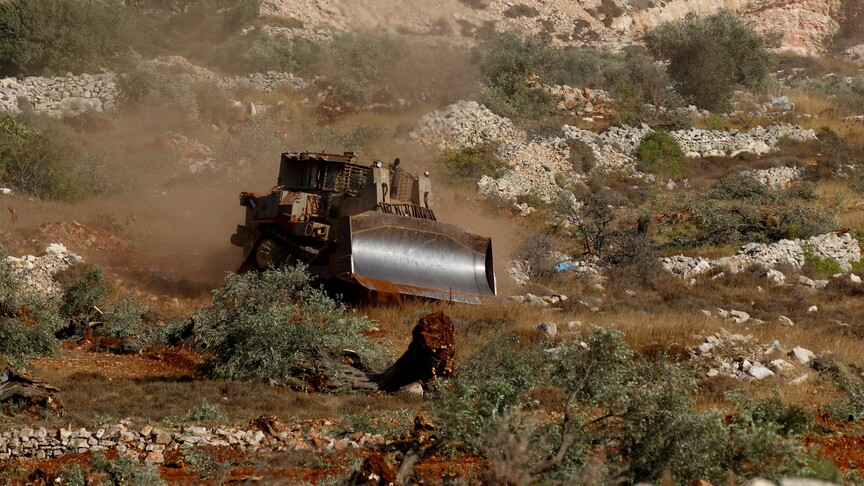
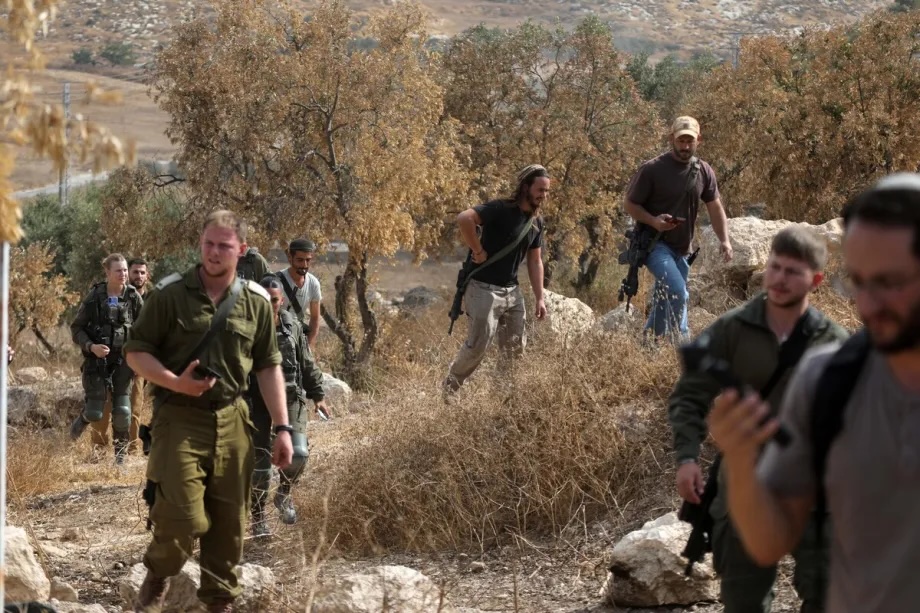
With Israeli rabbi's blessing, settlers are stealing Palestinians' olive harvest; with IDF support, settlers are beating both Palestinians and int'l visitors. That's not all.
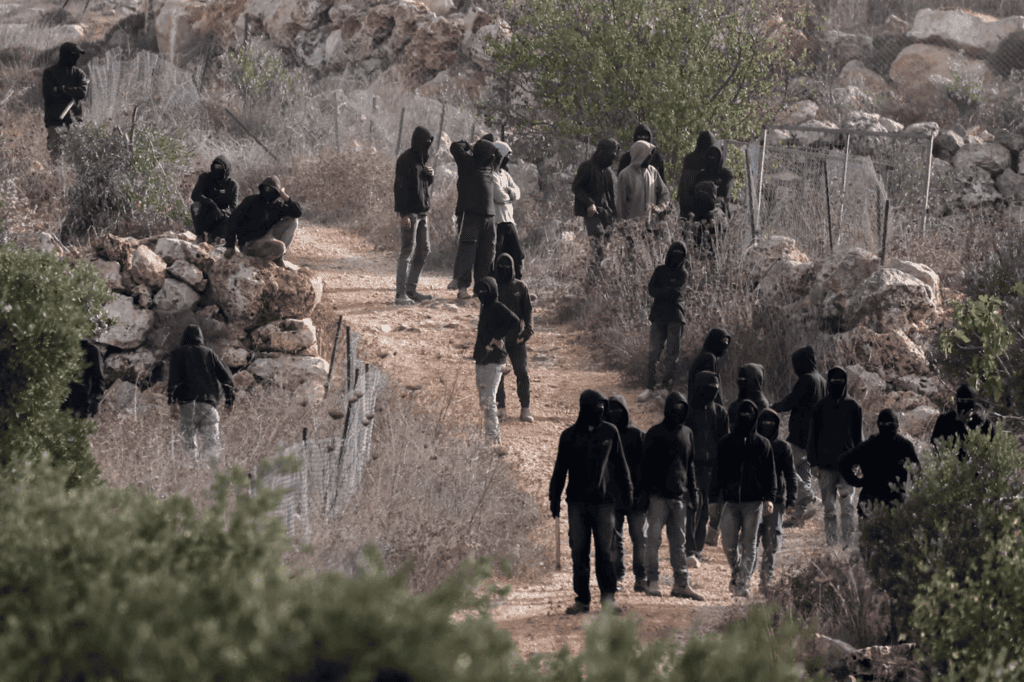
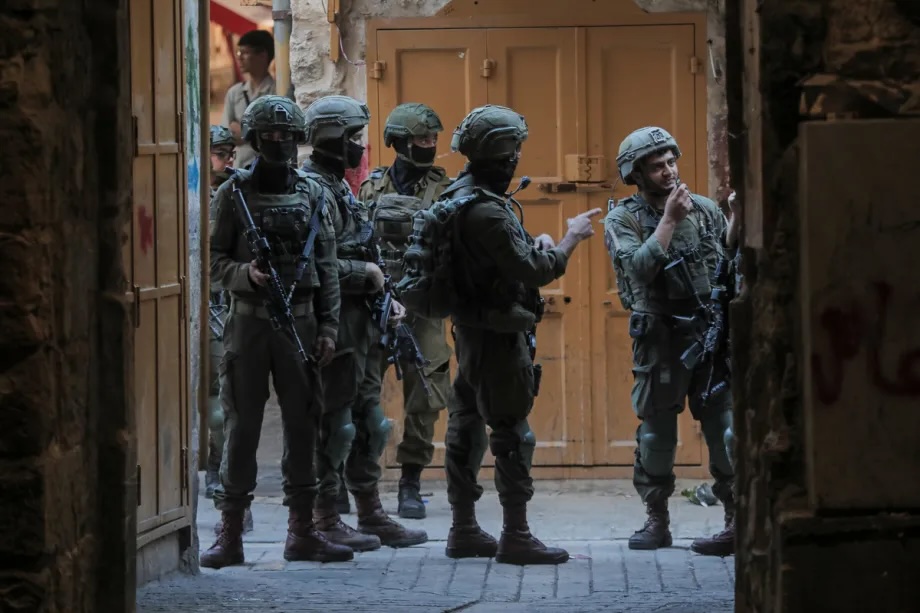
The settlers attacked Palestinians harvesting olives and beat Heidi Levine, a veteran photojournalist. Witnesses said Israeli soldiers did nothing to halt the violence.
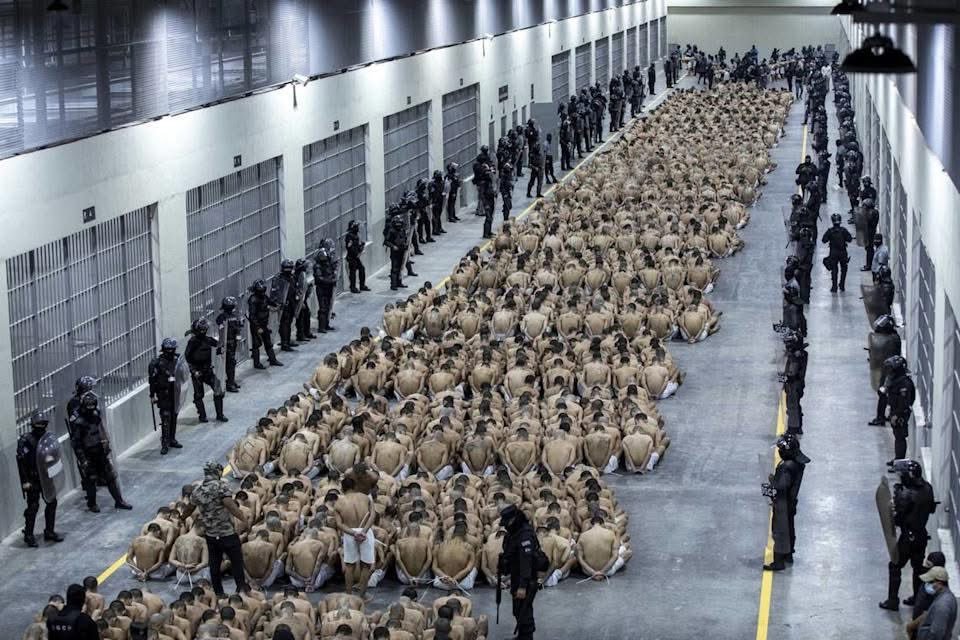
El Salvador’s President Nayib Bukele announced on October 13 his intention to release nearly 50% of the prisoners accused of collaborating with gangs in the country. According to the president, the measure would involve early release, albeit conditional.
“We have a plan that would benefit roughly 50% (give or take) of the prisoners in El Salvador who have collaborated with gangs … In other words, early release – meaning they are guilty but are released conditionally. Released under supervision,” Bukele told the press.
In this regard, he said that his government would evaluate the situation of each detainee to keep the country free from the structural violence that has plagued it for decades: “Considering that we come from a country where violence was part of everyday life and gangs were the real government, the real dictatorship. These people lived under that yoke, but it is not the same to be among those who enforced it as it is to simply survive that reality.”
If we take into account the figure provided by the authorities (according to which nearly 100,000 people are currently detained on various charges) this could mean the release of tens of thousands of people.
Domestic criticism of El Salvador’s mass incarceration
Before Bukele took office, El Salvador was in the throes of a severe crisis of insecurity and violence. His administration imposed a perpetual state of emergency that began in 2022 and has led to the imprisonment of thousands of Salvadorans accused of belonging to gangs (or “maras”) that controlled large swaths of the Central American country.
And while the pacification of the streets has been celebrated by a significant portion of the population, the harsh actions of the government and its police and military forces have drawn criticism from various human rights organizations, which have accused the government of excessive use of force, mistreatment of prisoners, and the unjust detention of individuals who do not belong to gangs.
Another criticism has been leveled at the practice of mass trials, which charge and convict a large number of people at the same time. Rights groups say this has led to countless errors in the treatment of individual defendants. Added to this are allegations of arbitrary detentions, crimes against humanity, and disappearances.
International outrage at 252 Venezuelans detained in El Salvador
The prison system implemented by Bukele in El Salvador has also faced international criticism. The Central American country became a focal point of controversy when hundreds of people deported from the United States were detained in the Salvadoran prison system, which drew widespread criticism of the Bukele government.
Bukele, however, had defended the decision and reaffirmed his alliance with the Donald Trump administration and his participation in the Washington-led geopolitical and military initiative known as Shield of the Americas.
The news of the possible release of tens of thousands of detainees sparked even more intrigue, considering that Bukele’s announcement came immediately after his conversation with US Secretary of State Marco Rubio, in which they discussed combating “malign foreign influence.” However, it remains unclear how the two issues are linked, according to El País.
“No Palestinians in the West Bank are exempt from this threat, including Christian communities and institutions,” said Bishop Dr Imad Haddad of the Evangelical Lutheran Church in Jordan and the Holy Land
Eve Livingston sensitively draws us into the worlds of two women who share a similar past: abusive partners who committed suicide. Through powerful scene‑setting, we’re there when each woman hears the news, and we feel the complex emotions these deaths provoke. This is a difficult, complicated subject—not often tackled. Livingston bravely shines a light on how, in these particular circumstances, suicide can bring both grief and relief.
Things started as they so often do: he was older, professionally successful in a similar field to Siri’s, and there was something “magnetic” about him. There was also, she came to realise, a darkness beneath the surface. A tragic bereavement in his past had left him struggling with his mental health, something which immediately evoked sympathy in Siri and made him seem a deeper and more sensitive person, qualities she was drawn to. At the beginning of their relationship, he would often turn up uninvited to her home or events she was attending, or bombard her with messages — behaviour she now views as stalking, but found flattering in those hazy early days of a new relationship.
More than 38,000 killed, 11,700 left with lifelong disabilities, while nearly 1 million women and girls have been forced from their homes. See the full fact sheet
On October 10, thousands of Ecuadorians took to the streets to protest against the government of right-wing President Daniel Noboa. The demonstration was organized by the Autonomous Front of Organized Resistance (FARO) under the slogan “Government vs. People.”
A esta hora, una marcha de rechazo al Gobierno de Daniel Noboa recorre las calles de Quito. La movilización está marcada por carteles de protesta y consignas contra el mandatario y su gestión. Los manifestantes atraviesan en este momento el paso deprimido del Guambra y avanzan… pic.twitter.com/WKPfT8D9jF
Saturday’s demonstration followed a protest on October 8, organized by labor unions also in Quito, to protest the security, energy, health, and employment crises facing the country. They also protested government cuts to education and health care, as well as alleged mistreatment of workers, according to Edwin Bedoya, president of the United Workers’ Front (FUT).
For its part, the October 10 demonstration – which consisted mainly of high school and college students – set out from the Central University and marched through Quito. Slogans such as “If the people have no peace, neither does the government” and “Out with Noboa, out with him!” were heard along the streets occupied by the demonstrators.
The president of the Catholic University Student Federation, Jatari Ulcuango, told protesters: “Four years ago, this government promised us electricity; two years ago, too – and now the blackouts have returned. Two months ago, the government told us it would provide us with medicine, and yet we’re only receiving 60% of the supply. They’re taking us for fools.”
He added: “We’re dying outside the hospitals. Criminals are kidnapping us, murdering us, and robbing us. That’s why we’ve come out this morning. They plan to dismantle public institutions to force us to hire private security. Who has gotten rich off the health crisis? The private healthcare sector, while the people are getting poorer and poorer.”
The peaceful march headed back to the Central University, where the students gathered. Later, the students reported on social media that they had been harassed and repressed by the police, who had accompanied the entire march.
Likewise, several media outlets reported that the police were aggressive toward them. This was reported by the outlet La Barra Espaciadora, which released a video showing police officers pushing journalists.
TeleSur journalist Elena Rodríguez also reported that law enforcement officers broke the microphone she was using and struck her on the head: “I’m sick and tired of having to recount, time and time again, police attacks against the press. Today, while I was trying to document the violence with which officers were beating young protesters, I was struck on the head from behind with a baton. I turned around, showed my Telesur microphone to identify myself as a journalist, and the response was another baton strike that ended up breaking it.”
She added: “If they think that by beating me up they’re going to get me to stop documenting police brutality, to put my microphone away, or to back off several blocks so I can report from a place where I won’t be a nuisance, they’re wrong. It is not we journalists who should distance ourselves from the events. It is the police who must stop attacking us. The right to report cannot be negotiated at the point of a baton.”
The protests are taking place against the backdrop of a widespread crisis in the country, which includes the worst security crisis in its history (tens of thousands of deaths due to violence between drug trafficking gangs), a very serious health crisis (a lack of supplies and medicines in the public health system), and other major crises such as those in education, public investment, and employment.
Local elections will be held in November, which will reveal the extent of support – or lack thereof – for President Noboa and his neoliberal government agenda, which aligns with the hemispheric security strategy led by the Trump administration.
Indiscriminate, disproportionate bombing killed massive numbers of Gazans (as Palestinian reporters have said for 3 years); new levels of Israeli settler barbarity; more
Settler violence turns West Bank harvest into a nightmare ■ More Israeli testimony implicates IDF for massive civilian casualties ■ Israel's detention, torture of Syrians ■ More
The man charged with murdering Ann Widdecombe and targeting Nigel Farage, Joshua Kerry, had "an extreme Left-wing mindset" and hostility to Reform, a court has heard.
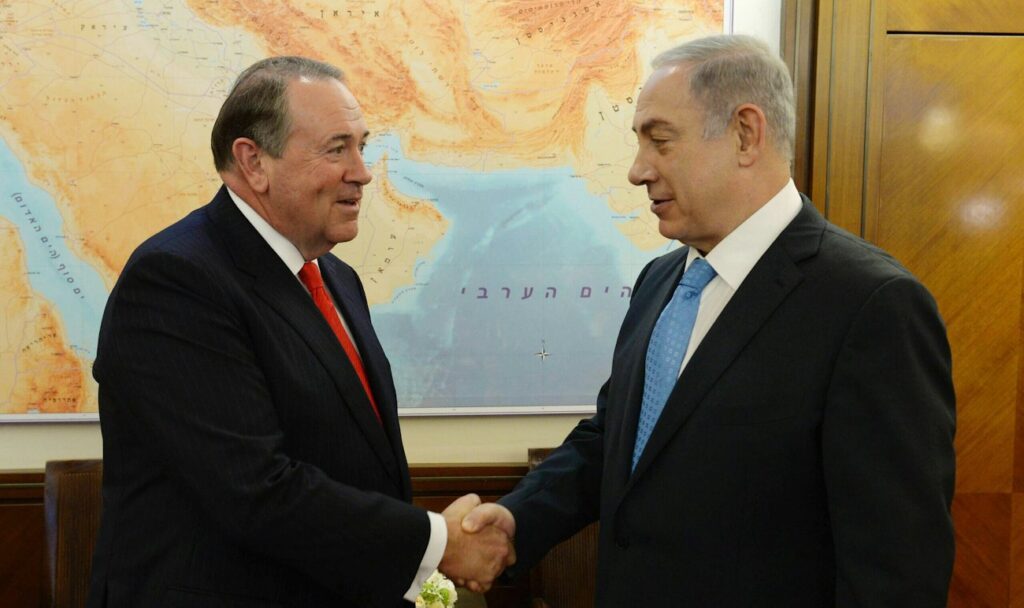
NYT: David Milstein, a top aide to Ambassador Mike Huckabee, has repeatedly suppressed or significantly revised embassy reporting on Israeli activities. Milstein is the stepson of right-wing radio host Mark Levin
The horrific story of Jane Doe and the Cornell Seven has spurred nationwide outrage and revived contentious debates around prevention and education. But one question is going unasked: Who really pays after a sexual assault? In terms of actual dollars and cents? The answer, Cosmopolitan finds, isn’t good:
Leah received an email from the first hospital. It was a bill for $3,338, including $663 for lab work and a pregnancy test she hadn’t asked for. She hadn’t been charged for the rape kit, but the price of just checking into the ER was $2,241. After her parents’ insurance was applied, she owed $451.06.
“I was so unbelievably angry,” she says. “I lost it. I was like, ‘You mean it cost me $450 to get raped?!’”
Most people don’t realize this care might not be covered, says Vega, who has worked as an emergency room nurse, emergency room director, and a SANE. But that’s actually common: KFF analyzed a sample of insurance claim data from 2016 to 2018 (the most up-to-date data KFF has) and found that 83 percent of women who received a sexual violence diagnosis were billed for treatment. Another analysis of emergency room department data from 2019 found that the average bill for sexual assault survivors was $3,551, according to the New England Journal of Medicine.
While mainstream media covered the flydubai incident ad nauseum, Israeli settlers and soldiers in the West Bank were killing Palestinians and marauding their land

 Login

 (@Guigz75116)


 (@DrewPavlou)