Reading view
Iran Strikes More Ship Engine Rooms in Ramp-Up of Hormuz Attacks
PF investiga Flávio Bolsonaro por suspeita de lavagem de dinheiro e faz busca contra ex-secretário do STJ
A Polícia Federal cumpriu mandado de busca e apreensão contra Humberto Fontoura Pradera, ex-secretário de Tecnologia da Informação e Comunicação do Superior Tribunal de Justiça (STJ), suspeito de compartilhar informações sigilosas de processos com o advogado Willer Tomaz, amigo do candidato à Presidência Flávio Bolsonaro (PL). A operação foi autorizada pelo ministro Alexandre de Moraes, do Supremo Tribunal Federal (STF), e investiga possíveis crimes de corrupção, lavagem de dinheiro, peculato eletrônico e violação de sigilo funcional.
Leia também
Pradera deixou o cargo na sexta-feira (16), após a abertura de um procedimento interno no STJ. A suspeita é de que ele tenha antecipado decisões judiciais e repassado documentos ainda não publicados ao advogado. A investigação ganhou força depois que a PF analisou dados extraídos do celular de Willer Tomaz e identificou comunicações entre os dois.
Um dos elementos reunidos pelos investigadores é uma fotografia enviada por Pradera que mostra um documento jurídico aberto na tela de um computador. Segundo a apuração, o material ainda não havia sido assinado nem divulgado oficialmente. As mensagens também indicariam que o então servidor compartilhava informações sobre assuntos internos do tribunal.
Investigação alcança relações financeiras de Flávio Bolsonaro
A apuração sobre o suposto vazamento se conecta a uma investigação mais ampla sobre movimentações financeiras de Willer Tomaz e sua relação com Flávio Bolsonaro. A PF encontrou e-mails que apontariam o senador como usuário master de uma conta bancária vinculada a uma empresa ligada ao advogado.
O relatório policial também menciona encontros, festas e reuniões entre os dois, além do custeio de viagens do senador. Para os investigadores, a movimentação financeira atribuída a Willer é incompatível com as atividades econômicas declaradas pelo advogado.
O caso teve origem em uma investigação da Justiça Federal do Rio Grande do Sul, que apurava inicialmente suspeitas de lavagem de dinheiro e evasão de divisas relacionadas ao uso de plataformas de apostas. A análise dos dados do celular de Willer levou a PF a identificar outros elementos e a aprofundar a apuração sobre suas relações com o senador.
Como Flávio Bolsonaro tem foro por prerrogativa de função, o caso foi encaminhado ao STF e distribuído ao ministro Alexandre de Moraes. A busca contra Pradera é a primeira medida autorizada por Moraes para aprofundar os fatos relacionados ao advogado nesse procedimento. A diligência teve como alvo o ex-servidor do STJ, e não o senador.
Flávio também é investigado em outro inquérito no Supremo, relacionado a suspeitas de financiamento do filme Dark Horse, sobre a trajetória política de Jair Bolsonaro, pelo ex-banqueiro Daniel Vorcaro, antigo proprietário do Banco Master.
STJ abre procedimento e investigados contestam suspeitas
Em nota, o Superior Tribunal de Justiça informou que afastou e exonerou servidores suspeitos de irregularidades e vazamento de informações. A Corte também abriu procedimentos administrativos para apurar possíveis infrações. As medidas criminais seguem sob sigilo.
Willer Tomaz negou ter obtido acesso irregular ou não autorizado a decisões judiciais e pareceres do Ministério Público Federal. O advogado também rejeitou a acusação de interferência em manifestações do órgão.
A defesa afirmou desconhecer o relatório da PF citado nas notícias e criticou a divulgação seletiva de informações durante a campanha eleitoral, com referências a terceiros que, segundo os advogados, não teriam relação com os fatos investigados.
A defesa de Flávio Bolsonaro, por sua vez, declarou que o vínculo entre o senador e Willer Tomaz é de amizade. Segundo a nota, qualquer tentativa de associar essa relação a irregularidades seria uma ilação sem fundamento nos fatos.
Os advogados também negaram que Flávio tenha mantido conta bancária na qual Willer Tomaz ou empresas dele figurassem como usuário master.
As suspeitas ainda estão sob investigação e não representam, por si só, comprovação de prática criminosa.
The post PF investiga Flávio Bolsonaro por suspeita de lavagem de dinheiro e faz busca contra ex-secretário do STJ appeared first on Diário da Manhã - O Jornal do leitor Inteligente.
Moderate Republicans fear being dragged down by Trump’s unpopularity
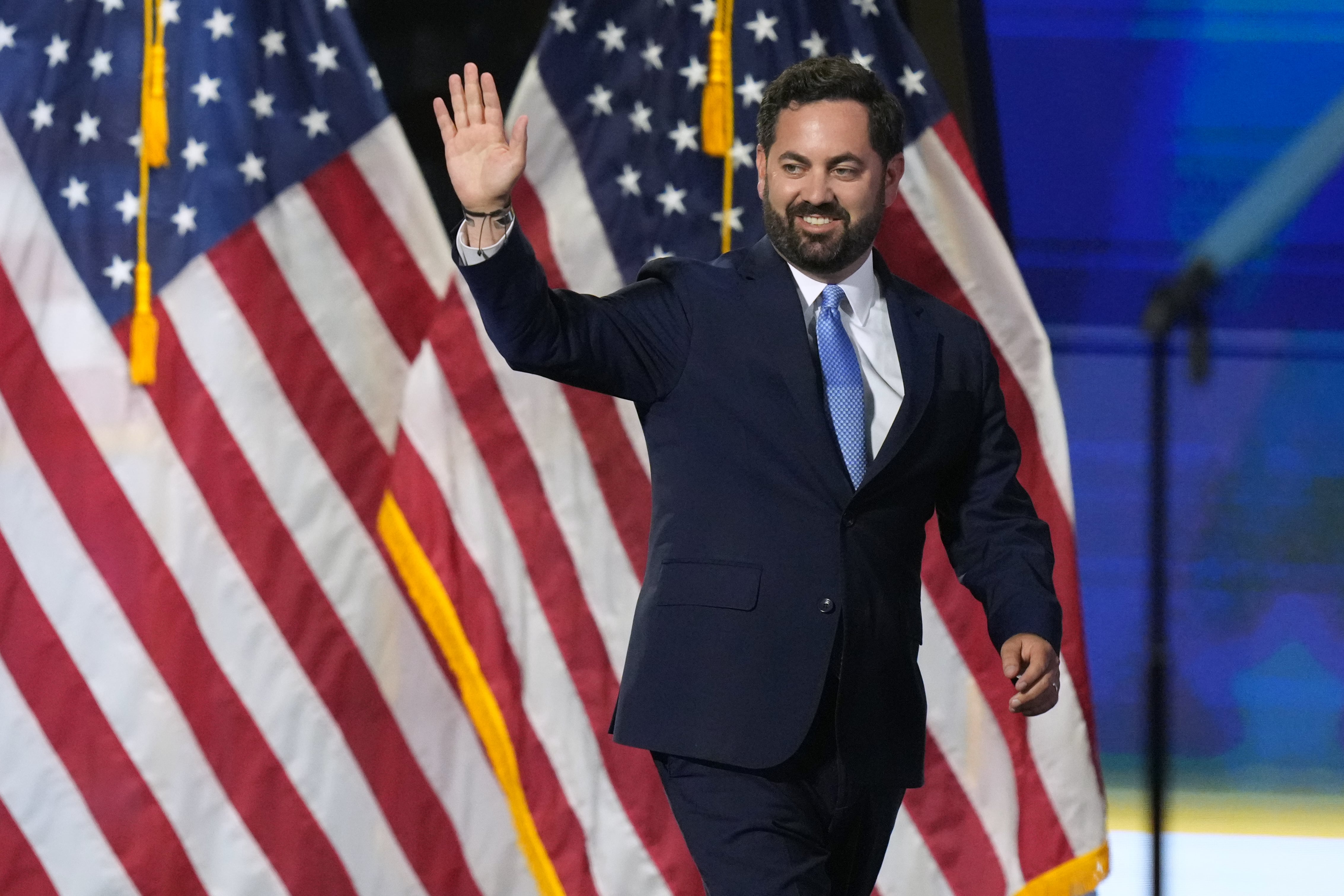
Dan Hanover has planted a sign in the front yard of his home in Tarrytown as if trying to ward off a curse. It bears just three words, “Mike Lawler for Congress,” but that is more than enough for everyone here to understand what it means: the retiree is determined to do whatever he can to help the Republican who represents this charming village north of New York City keep his seat in the House of Representatives after the November 3 election.

© Alex Brandon (AP Photo/Alex Brandon)
Vídeos de ajedrez | Portisch, el barítono letal
Cuando la Unión Soviética dominaba el ajedrez con una hegemonía aplastante, sólo un puñado de jugadores del resto del mundo eran capaces de competir con ellos por los primeros premios de cualquier torneo. Uno de ellos era el húngaro Lajos Portisch, cuyo perfil deportivo está muy ligado al número ocho. Disputó ocho veces el Torneo de Candidatos, fue octacampeón de su país y dedicó a su entrenamiento ocho horas diarias durante los treinta años que fue miembro de la élite.

©
Luís Botelho vence XXXVII Campeonato Distrital de Semi- Rápidas 2026/2027 em Lagoa

Realizou-se no passado dia 18 de outubro, no Salão Nobre do Quartel dos Bombeiros Voluntários de Lagoa, o XXXVII Campeonato Distrital de Semi- Rápidas 2026/2027.
Organizado pela ACXA – Associação dos Clubes de Xadrez do Algarve, com o apoio do Núcleo de Xadrez de Lagoa, do Município de Lagoa e dos Bombeiros Voluntários de Lagoa, o campeonato contou com a participação de 43 atletas, em representação de sete coletividades algarvias.
Excecionalmente, os cinco primeiros classificados terão direito a um desconto nas inscrições em todas as provas do Campeonato Europeu, que se realizará em Portimão, de 4 a 9 de dezembro.
Luís Botelho, do Clube de Tavira, é o grande vencedor desta edição. Com 2035 pontos Elo, venceu seis partidas e empatou apenas uma, somando 6,5 pontos em sete rondas e conquistando, assim, o título de Campeão Distrital de Semi-Rápidas 2026/2027.
O segundo lugar foi alcançado por Mogens Knudsen (1890 pontos Elo), das Torres de Loulé, com 6 pontos. A fechar o pódio ficou Risika Matthamagoda (1897 pontos Elo), da Afn Gil Eanes – Secção de Xadrez, com 5,5 pontos.
Logo atrás, três atletas terminaram com 5 pontos: Dejan Belojevic (1948 pontos Elo), das Torres de Loulé, e André Dionizio (2123 pontos Elo) e Gonçalo Esteves (1890 pontos Elo), ambos do Clube de Tavira.
Até ao décimo lugar, classificaram-se ainda quatro atletas da AFN Gil Eanes, todos com 4,5 pontos: Diogo Sousa (1933 pontos Elo), Hélio Pena (1770 pontos Elo), Danylo Opatskyy (1777 pontos Elo) e Angelo André (1735 pontos Elo).

A primeira prova do calendário de 2026/2027 foi muito participada e equilibrada, decorrendo num ambiente de competição saudável, marcado pelo respeito mútuo e pelo espírito desportivo.
O Núcleo de Xadrez de Lagoa também esteve em destaque. Os seis representantes do Núcleo realizaram uma excelente prestação, registando todos uma melhoria de performance:
- Pedro Duarte — 4 pontos, 18.º classificado (+4%);
- Alberto Cabral — 4 pontos, 19.º classificado (+9%);
- Pangideon Butar — 4 pontos, 20.º classificado (+3%);
- Rafael Ribeiro — 3 pontos, 29.º classificado (+5%);
- Tiago Cravo — 3 pontos, 33.º classificado (+3%);
- Miguel Cossa — 1,5 pontos, 40.º classificado (+6%), sendo ainda um jovem atleta do escalão Sub-12.
Também na classificação coletiva, o Núcleo de Xadrez de Lagoa alcançou um resultado muito positivo. Considerando os três melhores atletas de cada equipa participante, a formação lagoense conquistou o 4.º lugar coletivo, ficando atrás das Torres de Loulé, da AFN Gil Eanes e do Clube de Tavira, e à frente da Clube de Xadrez da SIRM e da AXAL – Academia de Xadrez do Algarve.
Uma prestação que demonstra o bom trabalho desenvolvido pelos atletas do Núcleo e que deixa boas perspetivas para as próximas provas da época! Parabéns a todos os participantes e, em especial, aos atletas do Núcleo de Xadrez de Lagoa pelo empenho, pela evolução e pelos excelentes resultados. Para aceder à informação completa do campeonato clique aqui.
Título de Bicampeão Europeu de Ultimate de Praia conquistado pelo Clube de Portimão

O Clube de Praticantes Ultimate Portimão sagrou-se, pela segunda vez consecutiva, campeão Europeu de Utimate de Praia, na divisão Mista.
Foi nas areias da Figueira da Foz, no centro do país, que o conjunto portimonense enfrentou a elite europeia, tendo contado por vitórias todos os encontros que disputou.
Vale a pena descrever que, depois de uma meia-final bastante sofrida contra os checos de FUJ, em que os algarvios enfrentaram uma ampla desvantagem de 5-2 no início do encontro, o Clube de Portimão acabou por conseguido dar a volta e vencer por 11-8, a muito antecipada final contra os vice-campeões mundiais, a equipa francesa Freezgo, que ainda assim, tinha todos os condimentos favoráveis para prender os cerca de 1000 espectadores presentes aos seus assentos.

Contudo, nunca dispostos a dar quaisquer veleidades à equipa gaulesa, os elementos de Pedro Vargas, apresentaram uma sufocante intensidade defensiva desde o primeiro momento, conseguindo rapidamente a criar uma vantagem de três pontos.
E com um ataque bastante fluído e consistente, os portimonenses nunca se mostraram incomodados pela qualidade exbida pelo jovem conjunto francês. E foi com um lançamento longo de Inês Bringel a encontrar Afonso Coelho, livre na endzone, que selaram aquele que é o segundo título europeu para os elementos da formação de Portimão.

Importa referir ainda que o clube algarvio já havia conquistado o seu primeiro título europeu em 2025, em Gdańsk, na Polónia.
Este novo triunfo reforça a hegemonia da equipa, que em maio também celebrou o sexto título nacional consecutivo da modalidade Ultimate.
Mamdani Joins Push to Turn Hochul’s Data Center Moratorium Into State Law
The Civil War Has Already Begun
Professor David Betz has warned that Britain is drifting towards civil war. No, says P.K. O'Sullivan: the war has already started, one broken friendship, family row and motorway blockade at a time.
The post The Civil War Has Already Begun appeared first on The Daily Sceptic.
Gold fever closes in on the habitat of the tilcayo, Bolivia’s newly discovered wild cat
The landscape of asphalt and concrete that defines La Paz can give way, within just a few miles, to hot, dense forests clinging to the mountainsides. The steep, unforgiving streets north of Bolivia’s administrative capital are replaced by thick vegetation and winding rivers that descend more than 5,000 meters toward the Amazon.
© Claudia Morales (REUTERS)
Electric Car Sales Surge 70 Per Cent as France and Germany Seek Changes to EU Emissions Rules
Registrations of fully electric cars across 17 European markets increased by 70.3 per cent in September, according to industry figures published on Monday, 19 October, as France and Germany seek to ease the European Union’s emissions requirements for new vehicles.
The data show that 300,202 battery-electric cars were registered during the month, accounting for 32.6 per cent of new passenger-car registrations in the markets surveyed.
The figures emerge three days after Paris and Berlin announced a joint position on the future of Europe’s automotive industry, proposing greater flexibility in the EU’s 2035 emissions regime while introducing measures intended to favour vehicles manufactured in Europe.
Electric vehicles gain market share
The latest figures, compiled by E-Mobility Europe, New Automotive and Fier Automotive, indicate that electric vehicle demand accelerated sharply during September.
According to the industry data published on 19 October, approximately 1.98 million battery-electric cars have been registered across the 17 markets during the first nine months of 2026, an increase of 38.1 per cent compared with the equivalent period last year.
Higher oil prices, government incentives and the introduction of more affordable electric models have all contributed to demand.
The figures represent a substantial change in the composition of European new-car sales, although they cover selected markets rather than constituting a complete statistical account of the EU’s 27 Member States.
France recorded 65,243 battery-electric registrations in September, representing 41.7 per cent of its new-car market. Germany registered 88,724 electric vehicles, giving the technology a market share of 34.6 per cent.
Both countries have substantial automotive manufacturing industries and are directly involved in negotiations over Europe’s future emissions legislation.
Significant differences between European markets
Despite the overall increase, electric vehicle adoption remains uneven across the continent.
Norway retained its position as Europe’s most electrified new-car market, with battery-electric vehicles accounting for 98.8 per cent of registrations in September.
Denmark followed with 88.8 per cent, while Finland recorded 62.7 per cent and Sweden 49 per cent.
Electric models also accounted for approximately half of new-car registrations in Belgium, the Netherlands, Ireland and Portugal.
At the other end of the market, battery-electric vehicles represented only 11.2 per cent of registrations in the Czech Republic, 7.6 per cent in Italy and 6.2 per cent in Poland.
These differences illustrate the difficulty of establishing a uniform European transition timetable.
Household incomes, purchase incentives, vehicle prices and charging infrastructure differ substantially between countries. The availability of affordable electric cars is particularly important in markets where buyers are more sensitive to the initial purchase price.
The varying national figures also complicate the EU’s industrial calculations, since manufacturers must operate across markets progressing at different rates.
France and Germany reach automotive compromise
On 16 October, French President Emmanuel Macron and German Chancellor Friedrich Merz agreed on a joint approach to changes in European automotive regulations.
Under the proposed compromise, car manufacturers would be required to reduce carbon dioxide emissions from new vehicles by 90 per cent by 2035 compared with the 2021 reference level.
The agreement would also remove a proposed requirement to compensate for the remaining emissions through measures such as the use of low-carbon steel.
The change would create additional opportunities for manufacturers to continue selling vehicles powered by combustion engines beyond 2035, subject to the final legislative framework.
In their joint declaration on the automotive industry’s future, the French and German governments argued that emissions reduction must be combined with industrial competitiveness, investment and European manufacturing capacity.
The agreement also envisages preferential treatment for vehicles produced in Europe under certain public procurement and subsidy arrangements.
Britain could potentially benefit from provisions allowing selected European partners to qualify under the proposed industrial framework.
The Franco-German understanding is not, however, a final EU legislative decision. Changes to the regulatory regime require agreement through the relevant European legislative procedures.
Automotive competitiveness enters the debate
The principal argument advanced by supporters of greater regulatory flexibility is that European manufacturers need additional time to adapt production, protect employment and compete with international rivals.
German manufacturers retain extensive investment in combustion-engine and hybrid technology, while French producers have placed considerable emphasis on electric vehicles and maintaining European supply chains.
The negotiations therefore concern more than emissions limits. They also involve battery production, access to raw materials, manufacturing costs and the ability of European companies to compete with producers in China and other markets.
Supporters of the existing transition timetable argue that weakening long-term requirements could discourage investment in electric manufacturing capacity just as consumer demand is increasing.
Manufacturers seeking greater flexibility maintain that regulatory targets must account for uneven market conditions and the cost of developing new technologies.
September’s sales figures provide evidence that electric vehicle adoption is accelerating, but they do not establish whether the same rate of growth will continue without existing incentives.
The debate now centres on whether regulatory relaxation will preserve Europe’s automotive industry during the transition or slow investment in the technology that is already capturing an increasing share of the market.
Storm Adam Leaves Three Dead as Torrential Rain Devastates Eastern Spain
At least three people have died in severe flooding across eastern Spain after Storm Adam brought extraordinary rainfall to the Mediterranean coast, forcing thousands from their homes and leaving residents stranded on rooftops as emergency services struggled to reach inundated communities.
The worst flooding struck parts of Valencia and Alicante, where swollen rivers overwhelmed roads, flooded residential districts and disrupted transport. Authorities ordered residents of 145 municipalities to remain indoors as rescue operations continued on Monday, 19th October.
The disaster has revived memories of the October 2024 floods, which killed more than 230 people in the Valencia region and prompted widespread criticism of the authorities’ emergency warnings and response.
Thousands evacuated as rivers burst their banks
The coastal town of Oliva, in Valencia province, was among the worst affected areas. Approximately 2,000 people were evacuated from seven campsites as floodwaters spread through low-lying neighbourhoods, while residents elsewhere sought refuge on upper floors and rooftops.
According to reports from the Spanish news agency EFE, emergency crews were reinforced by Spain’s Military Emergencies Unit, whose personnel were deployed from their base at Bétera to assist local firefighters and rescue teams.
Helicopters were used to reach people trapped by the rising water. Roads became impassable, vehicles were swept away and several settlements were temporarily isolated as streams and drainage channels overflowed.
The scale of the rainfall was exceptional even for a region accustomed to intense autumn storms. In parts of Valencia and Alicante, precipitation approached 700 litres per square metre over approximately 48 hours, equivalent to 700 millimetres of rain.
Pego, in neighbouring Alicante province, recorded more than 600 millimetres within approximately 36 hours, placing considerable pressure on local waterways and drainage infrastructure.
Fatalities and emergency restrictions
Two women died during the weekend, including one swept away by floodwaters near Cabrera de Mar, north of Barcelona, and another whose body was recovered near Sagunto, in Valencia.
A third woman was found dead inside a flooded property in Oliva during rescue operations on Monday. Separately, a 64-year-old man died after suffering a heart attack at a flooded campsite in the same town, according to EFE’s account of the incident.
The regional authorities activated level-two emergency arrangements, enabling additional resources to be mobilised as local services confronted the consequences of prolonged rainfall.
At the height of the emergency, stay-at-home restrictions covered approximately 800,000 people. These measures were subsequently eased in many municipalities, although restrictions remained in force in particularly exposed districts.
Schools were closed in affected areas, roads were blocked and rail services disrupted. The situation remained particularly difficult where floodwaters had entered homes, commercial premises and tourist accommodation.
Renewed examination of emergency preparedness
Storm Adam has inevitably drawn comparisons with the disaster of October 2024, when catastrophic flooding in eastern Spain exposed serious weaknesses in emergency communication, evacuation procedures and coordination between public authorities.
That earlier disaster generated disputes over responsibility between regional and national institutions, particularly concerning the timing of warnings and the deployment of rescue resources.
The latest flooding places those questions back on the political agenda. Spain’s decentralised administrative structure gives regional governments substantial responsibility for civil protection, while the central government can provide military assistance and additional emergency resources.
The deployment of the Military Emergencies Unit demonstrates how rapidly local incidents can require national intervention when extreme rainfall affects several municipalities simultaneously.
The challenge extends beyond issuing weather warnings. Authorities must determine whether warnings reach vulnerable residents, whether evacuation routes remain accessible and whether emergency personnel can intervene before flooding becomes dangerous.
In communities close to rivers, floodplains and coastal drainage systems, these decisions become particularly consequential when rainfall accumulates over a short period.
European implications of repeated flooding
The disaster also raises questions about infrastructure investment and the application of European flood-risk legislation.
Under the EU’s Floods Directive, Member States are required to assess flood risks, prepare hazard maps and develop management plans designed to reduce the consequences for human health, economic activity and the environment.
Those obligations require national and regional authorities to identify vulnerable areas and consider preventive measures, including land-use planning, flood defences and emergency preparedness.
Extreme rainfall does not produce the same consequences everywhere. The effects depend partly on local geography, drainage capacity, urban development and the condition of waterways.
Meteorological warnings had also extended towards Catalonia as the weather system moved northwards, creating additional concern in areas where saturated ground could increase the risk of further flooding.
For the affected municipalities, the immediate priorities remain the completion of rescue operations, restoration of essential services and assessment of damage to homes, roads and businesses.
The longer-term examination will concern whether the emergency arrangements and infrastructure improvements undertaken since the 2024 disaster were sufficient to reduce the consequences of another major autumn storm.
NIAF, a Washington il gala dei 250 anni degli USA celebra l’eccellenza italoamericana
Russian Gas, American Profits: The Economic Bargain Behind Trump’s Ukraine Diplomacy
The Trump administration’s reported proposal to restore Russian gas supplies to Europe through Ukraine marks a reversal of Washington’s longstanding energy policy. Behind the promise of an economic incentive for peace lies a more consequential question: whether Europe is being asked to restore the very dependence on Moscow that it has spent four years dismantling.
The administration of US President Donald Trump is considering the restoration of Russian natural gas supplies to Europe, including through Ukraine’s pipeline network, as part of a proposed settlement to end Russia’s war against Ukraine. The initiative would offer Moscow renewed energy revenues while potentially opening opportunities for American investors to participate in the trade.
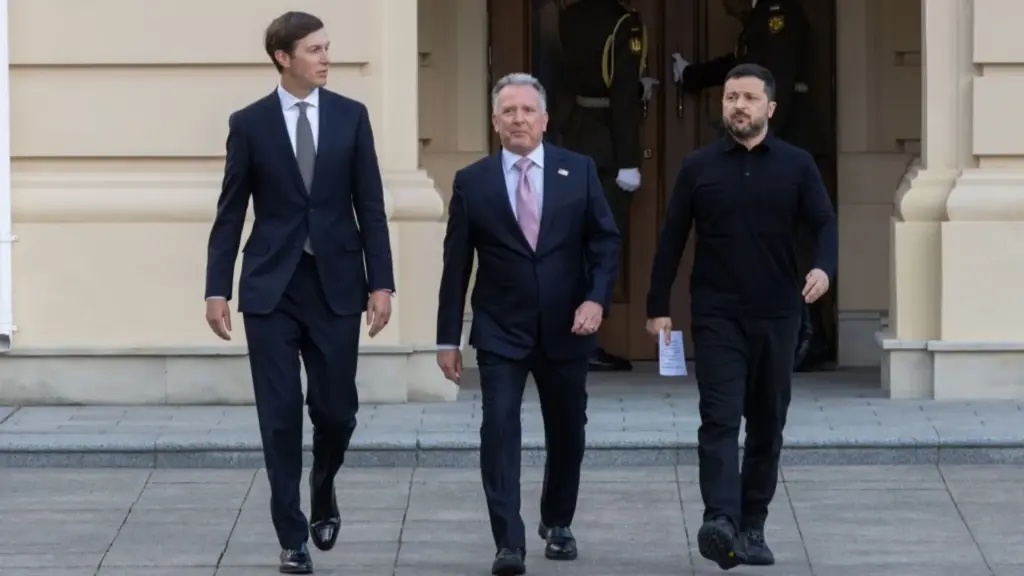
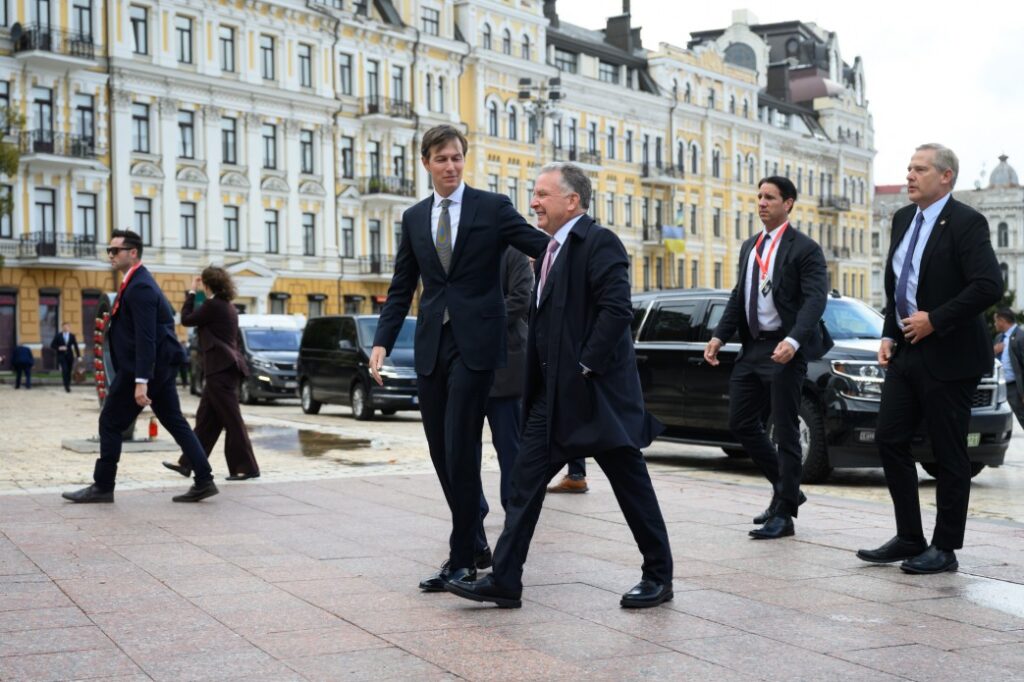
According to a New York Times investigation published on 17 October, presidential envoys Steve Witkoff and Jared Kushner have raised the proposal with Ukrainian and European officials, including President Volodymyr Zelenskyy. The White House has confirmed that economic incentives for Russia and Ukraine form part of its peace diplomacy, although no agreement on renewed gas transit has been announced.
The proposal would require Ukraine to reopen a transit route that ceased operating for Russian exports in January 2025, while European governments would be expected to resume purchases they have spent years reducing. American negotiators reportedly regard the prospect of renewed commercial revenues as an incentive for President Vladimir Putin to reach a settlement.
There is, however, a considerable difference between offering Russia a commercial opportunity after a verified peace agreement and restoring a source of revenue and political influence before Moscow has demonstrated any willingness to abandon its territorial objectives.
From opposition to Russian gas to facilitating its return
The reported initiative represents a reversal of Trump’s earlier position on European energy security.
During his first presidency, Trump repeatedly warned Germany that its dependence on Russian energy exposed it to political pressure from Moscow. Speaking at the United Nations General Assembly in September 2018, he accused Berlin of becoming dangerously dependent on Russian supplies. Members of the German delegation visibly smiled at his remarks.
The episode acquired renewed significance after Russia’s full-scale invasion of Ukraine in February 2022. Germany had developed an extensive commercial relationship with Gazprom, while the Nord Stream pipelines were intended to facilitate Russian gas deliveries directly to Germany, bypassing traditional transit countries, including Ukraine.
Trump maintained his opposition to those energy relationships well into his second presidency. As EU Today reported in September 2025, he told European governments that continuing to purchase Russian energy amounted to financing the war against themselves.
Washington is now reportedly considering precisely the commercial relationship that Trump previously identified as a strategic danger.
The change cannot be explained solely by the objective of ending the war. It also coincides with discussions about a substantially different economic arrangement, in which American commercial interests could participate in infrastructure and transactions previously dominated by Russia and European energy companies.
American investors and the economics of peace
On 8 October, Reuters disclosed negotiations involving Kushner and Kirill Dmitriev, Putin’s investment envoy, concerning possible American investment in the Nord Stream pipelines.
The discussions included the prospect of US investors profiting from renewed Russian gas deliveries to Europe. Separate negotiations have involved assets belonging to the Russian energy company Lukoil.
The White House has denied that Nord Stream was a subject of recent discussions and has said any agreements must benefit American taxpayers and companies. There is no established evidence that Witkoff, Kushner or members of Trump’s family would personally profit from the proposed gas arrangements.
Nevertheless, the possibility of American participation changes the commercial equation. Russian gas returning to Europe through infrastructure involving US investors would no longer be exclusively a Russian-European business relationship.
That distinction matters financially, but it does not necessarily resolve the underlying security problem. American ownership of transit infrastructure would not eliminate Moscow’s ability to influence production, supply volumes or export decisions.
The European Union has already confronted the consequences of allowing an energy relationship to become a source of geopolitical leverage. Introducing American intermediaries would not, by itself, remove that vulnerability.
Europe’s legal and political obstacles
The proposal also conflicts with legislation already adopted by the European Union.
In January 2026, the Council formally approved a regulation phasing out Russian natural gas imports. The restrictions began taking effect in March, with the remaining long-term LNG imports scheduled to end in January 2027 and pipeline imports in autumn 2027.
Consequently, restoring substantial Russian supplies would require changes to existing EU policy or the use of legally available exceptions. Neither Washington nor Moscow can make that decision on Europe’s behalf.
Germany has already opposed the reported American initiative. Chancellor Friedrich Merz’s security adviser, Günter Sautter, reportedly objected during discussions in Florida, while former economy minister Robert Habeck warned against recreating dependence on an unreliable supplier.
The economic attraction remains understandable. European industry faces substantial energy costs, and cheaper pipeline gas could offer relief to some consumers and manufacturers. Yet commercial prices do not account for the wider costs associated with supply disruption, strategic exposure and the potential use of energy exports as political leverage.
Europe’s decision to reduce Russian gas imports was therefore not simply a change of supplier. It was a response to the security implications of its previous energy model.
The consequences for European politics
The initiative also intersects with divisions inside European politics, particularly in Germany.
Alternative for Germany (AfD) has repeatedly advocated restoring Russian energy imports, arguing that sanctions and expensive replacement supplies have damaged German industry. Sahra Wagenknecht’s left-wing BSW has advanced similar arguments concerning energy prices and relations with Moscow.
The overlap extends beyond energy policy. On 14 October, AfD and BSW representatives supported a motion in Saxony-Anhalt calling for an end to military assistance for Ukraine.
A US-backed proposal to restore Russian gas could give these parties an additional argument against the federal government’s existing approach. They would be able to point to Washington’s own negotiations when questioning the economic and strategic rationale for maintaining restrictions on Russian energy.
This does not establish that the Trump administration’s gas initiative is intended to strengthen particular European political movements. It does demonstrate how the same policy could serve several objectives simultaneously: commercial rapprochement with Russia, a negotiating incentive for Moscow and a change in the European debate over sanctions.
A peace incentive that could restore Russian leverage
The central uncertainty concerns the relationship between renewed revenues and Russian military objectives.
Washington’s argument assumes that the prospect of substantial future gas income could persuade Putin to accept a settlement. Yet negotiations over commercial cooperation have so far produced no demonstrated change in Moscow’s fundamental territorial demands.
Meanwhile, Russia continues attacking Ukraine’s energy infrastructure. On 18 October, Zelenskyy reported 76 Russian attacks on Ukrainian energy, oil and gas facilities during the preceding week, despite Trump’s announcement of an energy ceasefire that neither Kyiv nor Moscow had confirmed.
There is also an unresolved contradiction in Washington’s wider sanctions policy. Having previously demanded that Europe stop financing Russia through energy purchases, Trump has recently suspended additional American sanctions against Moscow while his representatives explore new economic arrangements.
For Ukraine, renewed transit could restore revenue lost when the previous gas agreement expired. For Russia, however, the potential benefits extend beyond immediate export earnings. Access to European markets would restore commercial relationships and a degree of political influence that Moscow lost after the invasion.
The distinction is fundamental. A peace settlement that permits carefully regulated economic cooperation after Russian withdrawal and enforceable security guarantees would be different from an agreement that restores Moscow’s commercial advantages in anticipation of concessions that have not yet been secured.
The question for European governments is therefore not merely whether Russian gas could once again become cheaper than alternative supplies. It is whether restoring that trade would leave Europe better protected against another confrontation with Moscow, or recreate the vulnerabilities that became apparent in 2022.
Washington’s proposed economic bargain cannot answer that question on Europe’s behalf.

Iran Urges US To Accept Proposal To Reopen Strait Of Hormuz
“O Santo da Serra não é lugar para viver”: declaração sobre golfe acende polémica em Santa Cruz
A month before the diesel waiver, Trump’s envoys had already pitched Kyiv on Russian gas, NYT says

During their visit to Kyiv in September, US President Donald Trump’s envoys urged Ukrainian President Volodymyr Zelenskyy to consider restarting the pipelines that once carried Russian gas to Europe, The New York Times reported on 17 October. They presented it as part of a peace deal with Russia. In the weeks that followed, they pressed the idea with European officials, while Washington freed Russian diesel and spared Russia’s oil buyers from new US penalties.
Energy sales fund Russia’s war, and Ukraine’s halt of transit in January 2025 left TurkStream as Gazprom’s only pipeline route into the EU. Meanwhile, Russia has kept bombing Ukraine’s grid through the energy truce Washington declared on 11 October.
The pitch in Kyiv
Envoys Steve Witkoff and Jared Kushner put the idea to Zelenskyy when they met him in Kyiv, the newspaper reported, citing people familiar with the talks. Trump officials argued that transit fees, which Ukraine gave up at about $1 billion a year, would benefit Kyiv, and that European voters would eventually want cheaper energy. Russia’s share of EU gas imports had fallen from 45% in 2021 to 13% last year.
The envoys presented renewed Russian gas sales as one of the economic incentives in a wider settlement covering Russia’s relationship with NATO, security guarantees for Ukraine, and territorial control. Some European and Ukrainian officials suspected Washington would seek a cut of the profits. The White House denied that the Nord Stream pipeline had been a subject of recent discussions. Kremlin spokesman Dmitry Peskov claimed that resuming energy cooperation is in Russia’s interest and, right now, even more in Europe’s.

Germany pushes back
At Ukraine talks the envoys hosted in Florida last week, Günter Sautter, security adviser to German Chancellor Friedrich Merz, forcefully opposed the idea. German lawmakers have called a return to Russian deliveries a disaster for European security, even treason, as the far-right AfD courts Gazprom to bring the gas back. Former Economy Minister Robert Habeck, who steered Germany off Russian gas after 2022, said Trump “seems to have more sympathies with Vladimir Putin than he has with the Ukrainians.”
Congress gave Trump 30 days to hit Russia’s oil buyers with 100% tariffs. He waives them two days before deadline, citing US interests. Moscow calls it historic
One concession after another
Rather than pressure Putin or strengthen Ukraine, the administration has spent much of its peace effort on economic incentives for Russia, the newspaper wrote. The US Treasury cleared imports of Russian diesel on 9 October. On 16 October, Trump waived the penalties on Russia’s oil buyers that Congress had passed in the Graham Act. Washington is also weighing relief for sanctioned shadow fleet tankers. And the White House ordered limits on the military satellite service Ukraine’s forces rely on, Reuters reported.
Putin’s economic envoy Kirill Dmitriev claimed the ice had broken and more joint initiatives would follow, including data centers powered by Russian nuclear energy. The talks also cover the sale of Lukoil’s foreign assets to a group that includes the US government, the newspaper reported earlier this month. Zelenskyy, who had heard the pitch in Kyiv, alluded to it in a Financial Times interview this week.
“The question will be when will the next deal be? Maybe it will be gas. Definitely it will be gas,” he said.
Reopening the pipelines could hand Moscow back significant revenue and strengthen its sway over Europe’s energy market, Liga noted. Each new concession lowers the price Russia pays for continuing the war.
Read also
-
Trump calls Ukraine’s renewed refinery strikes “a disgrace” after Russia’s 39-missile strike on its energy sites
-
22 House lawmakers press Trump to implement Russia sanctions law. Diesel deal draws bipartisan backlash
-
Musk pushed Trump to slow Starlink in Ukraine, weakening air defenses as Russian drones attacked cities – The Telegraph
France Protests: 1,200 Arrested and 150 Police Injured as Nationwide Demonstrations Turn Violent
More than half a million people took part in demonstrations across France on Saturday, 17 October, as protests over living costs and education deteriorated into riots, looting and attacks on public buildings in several major cities.
France is assessing extensive damage following nationwide demonstrations on Saturday, 17 October, that brought hundreds of thousands of people onto the streets and resulted in more than 1,200 arrests. Prime Minister Sébastien Lecornu said 150 police officers and gendarmes were injured as violent groups attacked public buildings, looted businesses and confronted security forces.
According to figures released by the French authorities, approximately 550,000 people participated in 110 marches across France, including 110,000 in Paris. Organisers, including trade unions and student associations, placed nationwide participation at 800,000.
The demonstrations represented a considerable escalation of the movement that began in September over deteriorating conditions in French secondary schools. The protests have since expanded into a broader campaign against rising living costs, public spending restrictions and the government’s economic policies.
Violence spreads beyond Paris
In the French capital, confrontations erupted around Place de la République, where masked groups threw paving stones, fireworks and other projectiles at police. Security forces responded with tear gas and water cannon as vehicles and rubbish bins were set alight.
Businesses along Boulevard Magenta and neighbouring streets were targeted, with shops broken into and goods stolen. Several central Paris Métro stations were closed as authorities attempted to restrict access to sensitive government locations.
Although the main authorised procession remained largely peaceful, violence continued elsewhere in the capital into Saturday evening.
The disturbances extended well beyond Paris. In Limoges, the historic town hall suffered extensive fire damage, with parts of its roof collapsing. Regional authorities described the destruction of the 143-year-old building as a major loss to the city’s architectural heritage.
In Marseille, groups forced their way into the town hall after using street barriers to ram its entrance. Municipal premises were vandalised before police regained control.
Further incidents were reported in Lyon, where a tourist office was attacked and a fire started, and in Bordeaux, where the official residence of the Gironde prefect was ransacked. Police also reported attacks or attempted break-ins at public buildings in Lille, Calais and Brest. The scale of the disturbances placed security forces under considerable pressure.
Government blames organised extremist groups
Lecornu accused organised far-left groups of deliberately instigating violence in several French cities. Nuñez similarly attributed much of the destruction to radical groups and individuals exploiting the demonstrations to loot businesses.
President Emmanuel Macron condemned attacks on public property and commercial premises, promising that those responsible would face prosecution.
The government has not announced a state of emergency, although authorities are reviewing the scale of the damage and the security response.
The mayor of Paris, Emmanuel Grégoire, described the destruction across parts of the capital as extensive and distinguished the peaceful protest movement from those responsible for vandalism.
Student unrest becomes a national movement
Saturday’s demonstrations followed several weeks of disruption across France’s education system.
As EU Today reported earlier this month, between 400 and 500 secondary schools faced partial or complete closures as students protested against teacher shortages, overcrowded classrooms and deteriorating facilities.
The subsequent confrontations with police intensified political tensions, with student organisations accusing authorities of using excessive force and police representatives complaining of inadequate protection.
A further controversy emerged on Saturday after a 17-year-old demonstrator in Saint-Étienne suffered a serious hand injury. An investigation was opened into the incident and assigned to France’s police inspectorate, the IGPN. Reports linked the injury to a grenade thrown by police; the precise circumstances remain under investigation.
The latest demonstrations also marked a revival of the Gilets Jaunes, or Yellow Vest, movement, which emerged in 2018 in opposition to fuel taxation and subsequently developed into a wider challenge to Macron’s economic programme.
Trade unions, including the CGT, joined calls for higher wages and pensions, lower consumer prices and increased investment in public services.
Political consequences for Macron and Lecornu
The unrest presents another challenge for Lecornu’s government as it attempts to manage France’s public finances ahead of the 2027 presidential election.
The demands for increased spending on education, wages and public services come as ministers face pressure to reduce the budget deficit and control public debt.
The political implications are already apparent. Jean-Luc Mélenchon, leader of the hard-left France Unbowed movement, has supported the student protests while opposing looting and destruction. Marine Le Pen has condemned the rioters and accused Mélenchon’s party of helping to legitimise the unrest.
The latest disturbances also follow growing criticism of the government’s policing strategy, particularly the use of riot-control weapons during demonstrations involving minors.
With municipal authorities calculating the cost of damage to public buildings and commercial premises, Lecornu has instructed ministers to support affected businesses. The immediate challenge is to restore public order while addressing a protest movement that has expanded considerably beyond its original demands for improvements in French schools.
El logro y el legado del doctor Sánchez – Por Juan Manuel de Prada
PF suspeita que Willer Tomaz recebia decisões sigilosas do STJ
O advogado Willer Tomaz, investigado por fraudes contra a Previdência e amigo do candidato Flávio Bolsonaro (PL), recebia minutas de decisões do STJ (Superior Tribunal de Justiça) e de manifestações do MPF (Ministério Público Federal) antes da publicação, aponta investigação da Polícia Federal, segundo reportagem do UOL.
A reportagem afirma que o procurador aposentado Antônio Carlos Simões Soares era um dos interlocutores de Tomaz. Em 2019, Soares era citado pelo entorno do então presidente Jair Bolsonaro (PL) como favorito para ser indicado à Procuradoria-Geral da República e como ligado a Flávio, o que o procurador negava.
Segundo o UOL, os investigadores suspeitam que Tomaz recebeu documentos vazados do STJ por meio de Soares, além de outros interlocutores.
Ainda de acordo com a reportagem, a apuração da PF aponta que o escritório alterava a estratégia conforme os documentos que recebia.
Em nota, Tomaz negou “categoricamente ter tido acesso irregular ou não autorizado a decisões judiciais ou a pareceres do Ministério Público Federal, bem como ter interferido em manifestações”. “Sua atuação sempre observou a legislação e as prerrogativas da advocacia, valendo-se exclusivamente das vias institucionais e processuais legítimas. As insinuações divulgadas são infundadas, distorcem o exercício regular da profissão e configuram desinformação”, afirmou o advogado.
Tomaz também disse que “causa estranheza” que um material sigiloso, “ignorado até mesmo pela defesa, venha a público de forma seletiva em pleno período eleitoral e mencione terceiros sem nenhuma relação com os fatos investigados”. “Serão adotadas as providências cabíveis para obter acesso ao relatório, demonstrar a improcedência das alegações e identificar a origem do vazamento”, afirmou.
A campanha de Flávio também foi procurada, mas ainda não se manifestou sobre as suspeitas contra Tomaz. A reportagem não conseguiu ainda localizar Soares.
Viagens de Flávio Bolsonaro
Reportagem da Folha de S.Paulo publicada na quinta (15) mostrou que uma holding de apostas online de Willer Tomaz pagou voos entre Portugal e França em 2025 para o candidato à Presidência pelo PL, de acordo com uma investigação da Polícia Federal.
Willer é investigado sob a acusação de fazer repasses financeiros de dinheiro obtido em fraudes contra a Previdência no escândalo do INSS. Junto com Jorge Barbosa Dias, ele é dono da Rede Loto, a primeira bet a conseguir uma licença de operação no país ainda em 2023, emitida pelo governo fluminense.
Questionado pela Folha de S.Paulo sobre as viagens, Flávio Bolsonaro disse que sua relação com Willer é exclusivamente de amizade.
Segundo a investigação, ao menos três trechos de viagem em jato executivo foram contratados para Flávio e Willer por meio da Cathedral, empresa registrada na Ilha da Madeira. Única acionista da Rede Loto, a Cathedral tem como sócios Willer e Dias.
The post PF suspeita que Willer Tomaz recebia decisões sigilosas do STJ appeared first on Diário da Manhã - O Jornal do leitor Inteligente.