❌

Reading view

Have You Been to the Sixth-Worst McDonald’s in America?

There is virtually no way I could have resisted Sylvie McNamara’s dispatch from her journey to a disreputable McDonald’s in Stafford, Virginia. I’ve listened to my share of the Doughboys podcast, and regularly debate burger rankings with my son. What’s more, I went to high school just two miles down the road from this particular location, whose aggregated Google reviews won it dubious distinction in a nation of interchangeable fast-food franchises. Thankfully, McNamara’s lighthearted investigation, which invites readers to consider Robert Caro and teenage commitments to the social contract, will satisfy you no matter your relationship with the Golden Arches. It reminded me of tongue-in-cheek alt-weekly features, a few pleasurable Paris Review web essays, and that episode of Mystery Show where Starlee Kine goes deep with a Ticketmaster employee. Ba-da-ba-ba-ba, I loved it.

I asked the employee for an explanation. “I think I can give you real insight,” he said. “It be the certain workers we got.” He himself is a high schooler, but he said that “we’re starting to get more younger managers. As soon as they turn 18, they’re getting a manager spot. I think my general manager’s 20. It’s a lot of kids getting these manager titles and positions, but they’re not really managers.”

I told him that to be honest, that environment sounded kind of fun.

  •  

EU Ministers Agree New Agricultural Market Rules as Farm Budget Dispute Continues

European Union governments have agreed a negotiating position on new agricultural market rules intended to take effect under the bloc’s 2028–2034 budget, advancing reforms to support arrangements for farmers while leaving the most contentious financial questions unresolved.

The Council approved its partial negotiating mandate on Monday, 19 October, covering changes to the Common Market Organisation regulation, which governs agricultural markets across the European Union.

The proposals include new arrangements for wine producers, protein crops and oilseeds, revised marketing standards, changes to the EU school food programme and provisions intended to improve preparedness for agricultural market disruptions.

However, the agreement does not settle future funding allocations or the broader structure of agricultural subsidies, which remain under negotiation as EU governments attempt to reconcile farming expenditure with competing demands for defence, industrial investment and regional development.

Agricultural markets under review

The Council’s negotiating position retains much of the European Commission’s original proposal while introducing amendments intended to accommodate national differences in agricultural production.

Under the proposed arrangements, sector-specific interventions would become mandatory in several areas, including beekeeping, fruit and vegetables and, under certain circumstances, wine production.

The Council has also proposed flexibility for countries where particular sectors are absent or relatively undeveloped.

For the wine industry, governments would be able to seek exemptions from certain obligations where national circumstances justify different arrangements.

This would allow the framework to retain common European rules while avoiding requirements that would be inappropriate for member states with little or no domestic wine production.

Sectoral interventions form part of the mechanisms through which the EU supports agricultural markets and producer organisations. They can cover measures intended to improve competitiveness, manage production and strengthen farmers’ commercial position.

New provisions for protein crops

The Council has endorsed the establishment of a separate sector for protein crops and oilseeds, replacing existing provisions covering dried fodder.

The objective is to encourage domestic production and reduce dependence on imported agricultural inputs, particularly crops used in animal feed and food production.

European livestock producers rely on protein-rich feed ingredients, including soyabeans, that are often sourced internationally.

Greater domestic production could reduce exposure to fluctuations in global commodity prices, transport costs and disruptions to international supply chains.

Under the Council’s proposal, member states would be encouraged to recognise producer organisations specialising in protein crops and oilseeds.

Such organisations can help farmers coordinate production, marketing and investment, although the effectiveness of the proposed measures will depend on how they are implemented nationally.

The proposals follow broader EU efforts to improve supply security in sectors extending from agricultural inputs to critical industrial materials.

School food and product labelling

The negotiating mandate also preserves the EU school scheme, which provides support for the distribution of fruit, vegetables and milk to schoolchildren.

Under the proposed framework, the programme would move from a school-year financing cycle to a calendar-year system, with transitional provisions intended to prevent disruption during implementation.

The Council has maintained the Commission’s objective of encouraging healthier eating habits by limiting products containing high levels of free sugars and fats.

The proposal also opens the possibility of additional marketing standards for several agricultural products, including protein crops, beef, pork, sheepmeat, goatmeat and rice.

These standards could provide consumers with more detailed information about product origins, subject to the final legislation.

Such measures would also have implications for producers and food businesses, which would need to comply with any new requirements concerning classification, marketing and labelling.

The Council additionally supports the harmonisation of rules covering industrial hemp, while retaining safeguards concerning seed certification and the permitted level of tetrahydrocannabinol.

Farming subsidies remain contested

The agricultural market agreement forms part of negotiations over the next Common Agricultural Policy, which will operate within the EU’s new seven-year financial framework.

Under the Commission’s proposed budget structure, several funding streams, including agricultural and cohesion programmes, would be brought together within national and regional partnership plans.

The restructuring has encountered opposition from governments and agricultural interests concerned that farming could lose protected access to EU funding.

As EU Today previously reported, 17 member states have called for agricultural and regional development expenditure to be protected against further reductions.

The Council’s latest position addresses how agricultural markets should operate rather than determining the size of the financial support available to them.

A separate debate concerns the conditions for receiving direct farm payments, including the definition of an active farmer and the degree of discretion granted to national governments.

Those questions remain central to the continuing CAP negotiations, which are due to return to the Agriculture and Fisheries Council on 26–27 October.

Negotiations move to Parliament

The Council’s partial mandate now provides a basis for negotiations with the European Parliament on the agricultural market provisions.

The legislation will still require agreement between the institutions, while its financing will depend on the eventual settlement of the 2028–2034 budget.

Governments must also complete negotiations on the wider CAP framework, including direct income support and the distribution of responsibility between Brussels and national administrations.

The market agreement reached on 19 October therefore establishes important elements of the proposed agricultural rules, but leaves unresolved the level of financial support available to European farmers after 2027.

  •  

Do not be distracted by global crises. Nature cannot wait for a better year – we must act now | Steven Guilbeault

In 2022, I helped push through the international agreement to protect biodiversity. Wars and economic pressures can make nature seem like a ‘nice-to-have’. But it is a critical asset, and Cop17 must deliver real action

When I was five, property developers came to cut down the woods behind my home in La Tuque, Quebec. My mother encouraged me to climb one of the trees in protest, then told the developers, straight-faced, that there was nothing she could do when they asked her to get me down. A few days later, the tree was cut down anyway.

I thought about that tree in the early hours of a freezing Montreal morning in December 2022, as the gavel came down on a global agreement between nearly 200 countries to halt and reverse the loss of nature by 2030. I thought about how important nature is for our health, our food security and our economies, but also how much passion there is around protecting it, and how it has the power to inspire people all around the world.

Continue reading...

© Photograph: COP17

© Photograph: COP17

© Photograph: COP17

  •  

Committee on World Food Security Convenes in Rome

From October 19 to 23, the world gathers in Rome for the 54th session of the Committee on World Food Security (CFS)*—a global platform dedicated to combating hunger and malnutrition, and to upholding the right to food. Discussions will focus on food security, coordinated responses to food crises, and sustainable food systems. The agenda will […]

  •  

France Introduces New Tax on Added Sugar

A new tax on added sugar in France could lead to higher prices for sweet products. The measure was proposed by the government as part of the 2027 draft budget and has been approved by members of parliament. However, it has raised concerns among manufacturers. The new tax follows an existing levy on carbonated drinks […]

  •  

Feeding the Revolution

“As a child, I thought of the burrito as something predictable, filling, and reliable. It would be years before I saw it as a source of political conviction; something that once split my family’s loyalty between their hungry children and a revolutionary cause.” In this essay at Orion, Victoria Blanco writes about her Abuelita, whose family had owned a burrería in downtown Juárez during the Mexican Revolution, and how she worked hard there through childhood, making burritos for Pancho Villa’s troops—an army fighting for a better life for the next generation. “The food we ate was built for movement,” she writes, “the same way we were.” Blanco reflects on the burrito as a symbol resistance, the borderland, and belonging.

I found the unspoken parts of Abuelita’s childhood when I was working in a university archive as a student, examining photographs no one in my family had ever seen. One image stopped me completely: a rooftop terrace at the Paso del Norte hotel, where well-dressed Americans held cocktails and binoculars, watching the war across the river as though it were a form of entertainment. On the other side of that same river—a river with two names, Río Bravo on one bank, Rio Grande on the other—men were falling from gunfire while children went without food so that revolutionaries could have the sustenance they needed to keep fighting. I sat with that photograph for a long time, thinking about my abuelita, a girl somewhere in that city while Americans sipped cocktails and watched her world from a hotel roof.

  •  

Organic Eggs Have a Carbon Footprint Nearly Twice as Large

The production of organic, free-range eggs can have a climate impact nearly twice as great as that of eggs produced by caged hens. This is according to a new study published in the scientific journal *Royal Society Open Science*, as reported by the British newspaper *The Guardian*. The analysis indicates that if the entire egg […]

  •  

Core values: the Austrian scheme bringing forgotten apple varieties back to life

Spar pilot scheme will test whether heirloom fruit can thrive in today’s commercial and environmental conditions

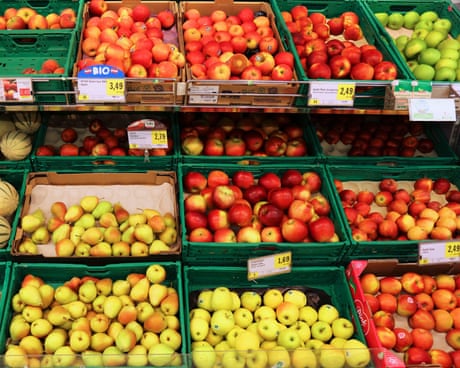
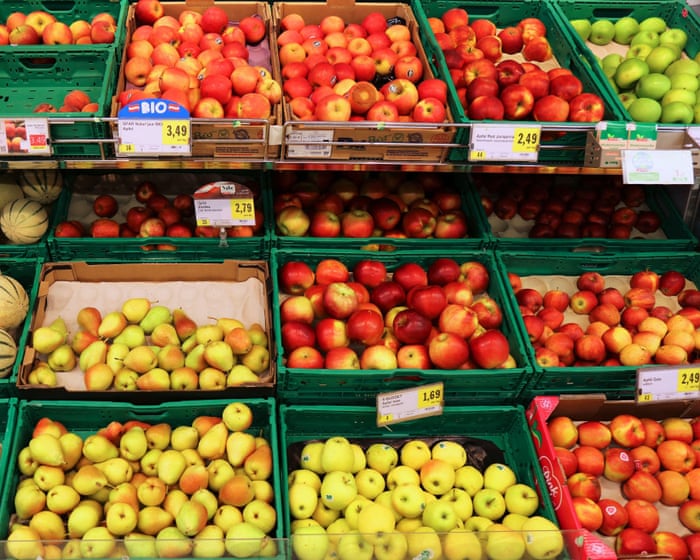
Only about 10 of the 2,000 types of apples growing in Austria can be found in supermarkets among the polished, pristine fruit usually on display – a sad ratio according to fans of historic varieties being primed for a comeback.

One of the country’s biggest retail chains has embarked on a pilot rollout of unusual and long-forgotten apples enjoyed in previous centuries, riding an international trend of reviving heirloom fruit and vegetables.

Continue reading...

© Photograph: Marek Slusarczyk/Alamy

© Photograph: Marek Slusarczyk/Alamy

© Photograph: Marek Slusarczyk/Alamy

  •  

30,000 Bottles of Wine Worth €5 Million Stolen from Winery

Thieves have stolen 30,000 bottles of wine with a total value of around €5 million from a prestigious Italian winery, Italian media report. Marchesi Antinori, one of Italy’s largest family-owned wineries, announced that the heist took place on October 3 at its warehouse in Tuscany while the company was preparing a shipment for overseas clients. […]

  •  

Whisky to be sent into space to accelerate aging

Whisky will be sent into space for the first time as part of an experiment to measure how the spirit ages in an environment beyond Earth’s atmosphere. Engineers in Scotland and Japan plan to launch Scotch on a rocket in 2028, sending a satellite containing samples of whisky and its key ingredients on a five-year […]

  •  

Cats stolen for restaurants in Vietnam

Vietnamese police have arrested 12 men accused of stealing nearly 2,700 cats during night-time raids in residential neighborhoods; the pets were taken to be slaughtered for food. Fur-removal machines, cat traps, and weighing scales were among the items confiscated during the investigation into the cat-theft gang in Ho Chi Minh City, Vietnamese police and state […]

  •  

Butcher Convicted in Iraq for Selling Pork as Beef

A butcher was sentenced to 10 years in prison in one of Islam’s holiest cities in Iraq for selling pork to customers while passing it off as beef, AFP reported on 14th of September. Iraq’s Supreme Judicial Council found the merchant guilty; he had been arrested for possessing 75 kilograms of pork in the city […]

  •  

Old Oxen on the Table, Horse and Turtle at Feasts: 5,000 Bones From an Ancient Rubbish Heap Reveal the Menu of an Iron Age Elite in Spain

More than 5,000 animal bones from the rubbish heaps of a neighborhood in Salamanca, Spain, show how a wealthy extended family ate some 2,600 years ago. According to a study, young animals, horses and turtles reached the plate only at feasts and ritual gatherings. For most meals, the meat at Cerro de San Vicente came […]

  •  

Santorini’s Red Gold: The Tomato That Grows Without Water

Santorini is much more than white houses, blue domes, and beautiful sunsets. The volcanic island holds treasures and stories known to few. One of these is a unique dwarf tomato that locals call “tomataki.” This is no ordinary vegetable; it is a true natural wonder. There is almost no fresh water on Santorini, and rainfall […]

  •  

iFood passa R$ 3 milhões para pesquisa científica após acordo para encerrar inquéritos

Em 16 de abril de 2021, um homem de colete preto circulava entre os entregadores do iFood que faziam greve em frente ao estádio do Pacaembu, em São Paulo. Tinha um adesivo no boné, outro no face shield, além de uma faixa de três metros de comprimento e pacotes de adesivos para distribuir. Todos diziam a mesma coisa: “vacina pros entregadores de aplicativo já”.

Parecia mais um motoboy, mas segundo a Agência Pública revelou, era um funcionário de uma agência de monitoramento digital a serviço de uma campanha contratada pelo iFood. A ideia da empresa era levantar a pauta das vacinas para esvaziar a reivindicação da greve. Funcionou: naquele dia, parte da imprensa noticiou que os entregadores pediam vacinas.

A cena abre “A máquina oculta de propaganda do iFood”, reportagem de Clarissa Levy para a Pública, de abril de 2022. Com base em mais de 30 documentos e em relatos de quem trabalhou no projeto, a apuração descreveu como as agências Benjamim Comunicação e Social QI (SQi) teriam operado, entre 2020 e 2021, uma propaganda “lado B” contra os “Breques dos Apps”.

Um documento de orientação resumia a regra: “NUNCA assinado como iFood para que ninguém desconfie”. Numa reunião gravada, obtida pela reportagem, publicitários da Benjamim avaliaram que a Não Breca Meu Trampo “cumpriu uma missão” ao enfraquecer Paulo Lima, o Galo, líder dos Entregadores Antifascistas. O iFood negou qualquer relação com a SQi e disse que não compactua com perfis falsos. As agências contestaram a reportagem à época.

iFood não pode interferir em greves de entregadores

Nesta semana, o caso chegou a uma nova etapa, conforme informou o Ministério Público Federal (MPF), nesta terça-feira, 29 de setembro. O iFood repassou R$ 3 milhões ao Conselho Nacional de Desenvolvimento Científico e Tecnológico (CNPq) para financiar pesquisas como parte de um Termo de Ajustamento de Conduta (TAC) que a empresa, a Benjamim e a SQi assinaram em 7 de julho de 2023 com o MPF e o Ministério Público do Trabalho (MPT) para encerrar três inquéritos abertos a partir da denúncia da Pública.

Apesar de ter aceitado o acordo, o iFood não reconhece as condutas e repete isso na página que mantém sobre o TAC: afirma que “não cometeu qualquer uma das condutas investigadas” e que assinou o TAC para evitar um processo “longo e desgastante”.

O TAC se divide em três eixos: satisfação, não repetição e compensação. Os dois primeiros, segundo o MPF, foram cumpridos “em larga medida”.

A declaração pública conjunta veio primeiro. Pelo registro do próprio iFood, saiu no site da empresa em 10 de julho de 2023, na página inicial da Folha de S.Paulo no dia 16 e, entre 18 de julho e 5 de agosto, em dias alternados, no Instagram, no Facebook e no Twitter.

Depois, veio a campanha sobre o direito à informação e a liberdade de expressão dos entregadores, com três meses de peças semanais nos perfis oficiais do iFood, criadas com a Benjamim e com alcance medido pela SQi. A proposta foi entregue aos procuradores em setembro de 2023. O MPF informa que a campanha foi realizada.

No eixo de não repetição, o iFood indicou três consultorias em direitos humanos em agosto de 2023. O MPF escolheu uma em outubro, e a contratação foi concluída em dezembro. Cabe à consultoria elaborar um programa interno para identificar riscos à transparência e à liberdade de expressão nas atividades da empresa, com relatórios semestrais ao MPF por dois anos. O MPF diz que a medida é inédita em TACs e que o programa segue “sob acompanhamento”. Por seis meses, o iFood também ficou proibido de anunciar suas próprias medidas de respeito ao direito de greve.

Outras obrigações não têm prazo para serem cumpridas. Perante o MPT, o iFood se comprometeu a não bloquear, suspender ou descredenciar entregadores por participação em greves ou sindicatos, a não usar “prepostos ou instrumentos tecnológicos” para interferir em manifestações e a não premiar quem deixar de aderir a paralisações. Benjamim e SQi assumiram compromissos semelhantes. Cada obrigação descumprida gera multa de R$ 50 mil por mês, até o limite de R$ 500 mil por ano.

Dinheiro vai para pesquisas sobre trabalho de entregadores e responsabilidade de plataformas

O eixo de compensação é o que se movimenta mais lentamente. O TAC fixou em R$ 6 milhões o valor que o iFood deve investir em pesquisas sobre três temas: relações de trabalho dos entregadores, mercado publicitário e responsabilidade das plataformas. O acordo não fixou prazo para a escolha de quem administraria o dinheiro, mas determinou que, feita a escolha, a transferência ocorreria em até 15 dias úteis. O primeiro repasse chegou três anos e dois meses após a assinatura e corresponde à metade do total.

O CNPq deve lançar, ainda neste semestre, a chamada pública para selecionar pesquisadores. Os projetos se dividem em duas frentes: regulação da publicidade e do marketing digital, e responsabilidade das plataformas diante de conteúdos falsos sobre saúde pública, meio ambiente e democracia. As pesquisas devem terminar até julho de 2030, com resultados públicos.

  •  

10 Caribbean Foods with Dark and Unexpected Histories

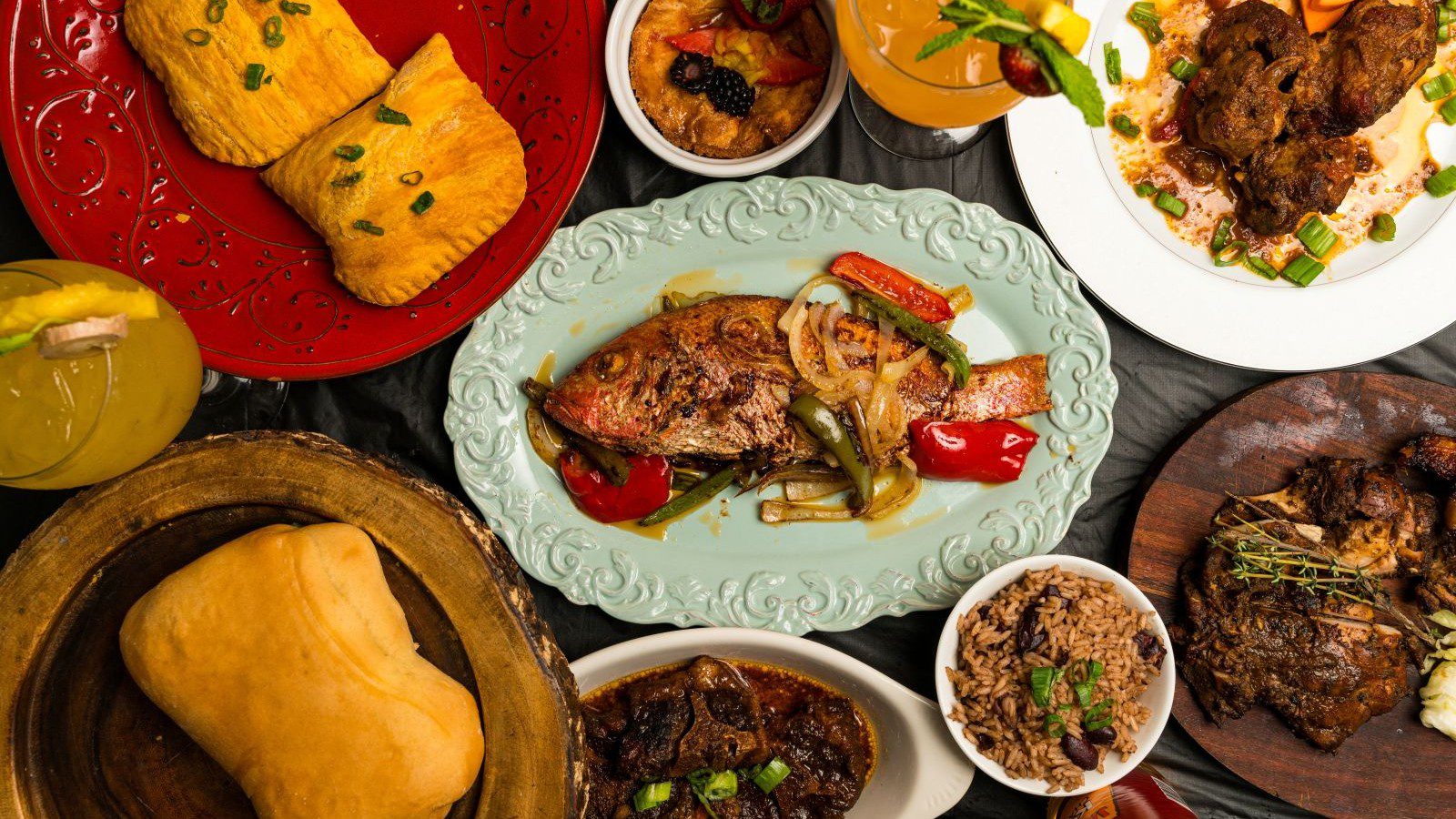
Caribbean food tends to come with good associations: Christmas tables crowded with black cake, jerk smoke drifting from roadside grills, roti wrapped around curry, and soup joumou appearing in enormous pots every New Year’s Day. The histories behind those dishes are considerably less comfortable. Caribbean cuisine took shape through Indigenous survival, European colonization, African enslavement, […]

The post 10 Caribbean Foods with Dark and Unexpected Histories appeared first on Listverse.

  •  

4,500 Years Before Nonstick Cookware, Bronze Age Syria Already Had Two Kinds of Pots and Seasoned Food With Resin

A team led by the National Museum of Denmark has worked out, for the first time, what people actually cooked in the pots of Hama, an ancient city in western Syria, roughly 4,500 years ago. By analyzing animal bones, plant remains, and fat residues absorbed into the vessel walls, the researchers found a surprisingly varied […]

  •  

A Bronze Age Tribe in Poland Was Already Eating a Cereal Brought from China before Tutankhamun was even born

Around 1590 BCE — more than 800 years before Rome was founded, and before Tutankhamun was even born — a small number of people in what is now southeastern Poland started eating a cereal that had never grown in their fields. It wasn’t a local crop, and it didn’t belong to any plant known elsewhere […]

  •  

This Bottle of Dijon Mustard from Costco is Crazy Hot. A Months-Long Investigation Revealed the Surprising Reason Why.

Jake Edmiston, a business reporter for the Toronto Star, thinks highly of his mustard chicken recipe. So when one batch goes over like a lead balloon, he checks his namesake ingredients and finds that his usual glass pot of Maille Dijon Originale is extraordinarily spicy—a fact he confirms, good reporter that he is, by conducting a blind test with a professional taster. In no time, Edmiston is on the floor of one of Canada’s largest mustard mills, trying to stay dry and avoid mustard dust burns(!), and peppering Unilever, Maille’s owner, with questions. This isn’t exactly a case for Benoit Blanc, but Edmiston’s investigation takes a few surprising turns and drops some serious knowledge on glucosinolates on the way. Every ingredient is in harmony here.

“Do a little dollop,” she said, then turned her back so I could do my work in secret.

I spooned the mustard from my jar onto a plate, and some from another jar of Maille I found in the grocery store that morning. She tried the sample from my jar first and sputtered a little. 

“It’s quite spicy,” she said.

I asked her how much spicier it was than the control jar. 

“Like, 10 times,” she said.

  •  
❌