❌

Reading view

In Oslo, US pushes Zelenskyy toward deal with Russia again. Day later, in same city, Norway discusses arming Ukraine with more NASAMS missiles

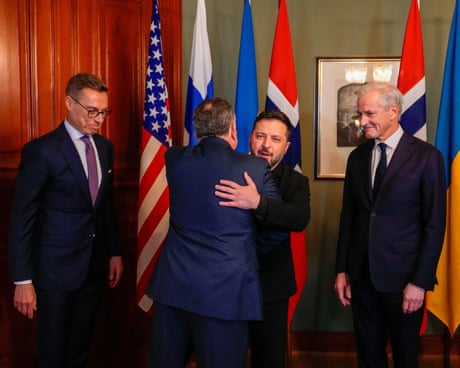
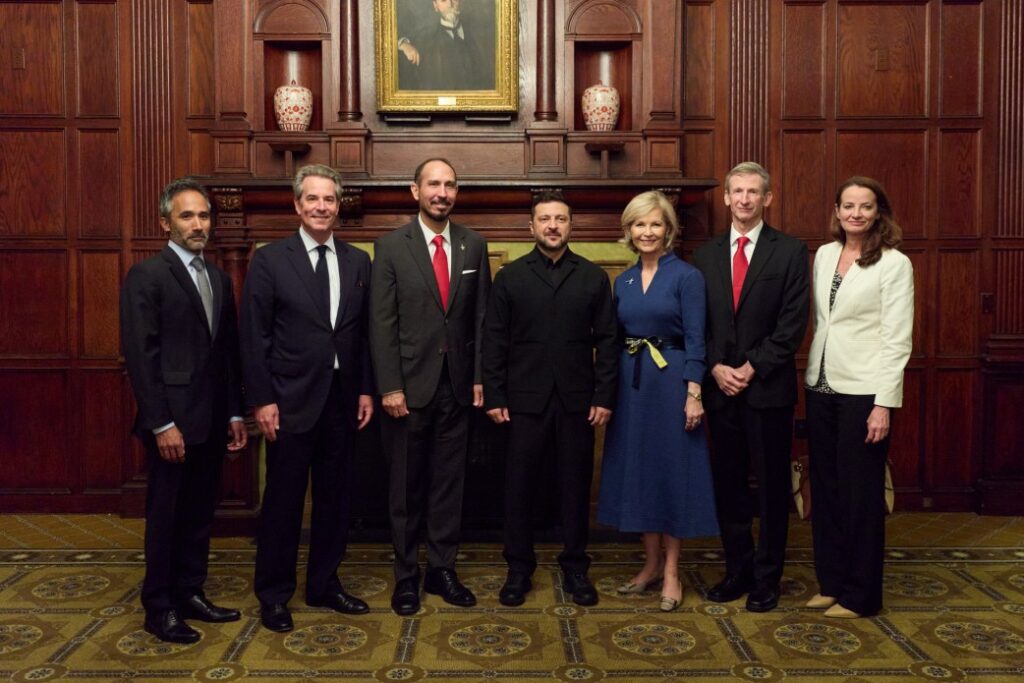
Ukrainian President Volodymyr Zelenskyy in Oslo, on 21 October 2026. Source: Facebook/Zelenskyy

As Washington leans on Ukraine to make a deal with Russia amid its diesel agreement ahead of the US elections, its European partners are meeting to keep it armed against deadly weapons.

President Volodymyr Zelenskyy said he met Kongsberg CEO Eirik Lie and Norwegian Defense Minister Tore Sandvik in Oslo on 21 October to discuss more NASAMS air defenses, a day after meeting US presidential envoy Steve Witkoff in the same city.

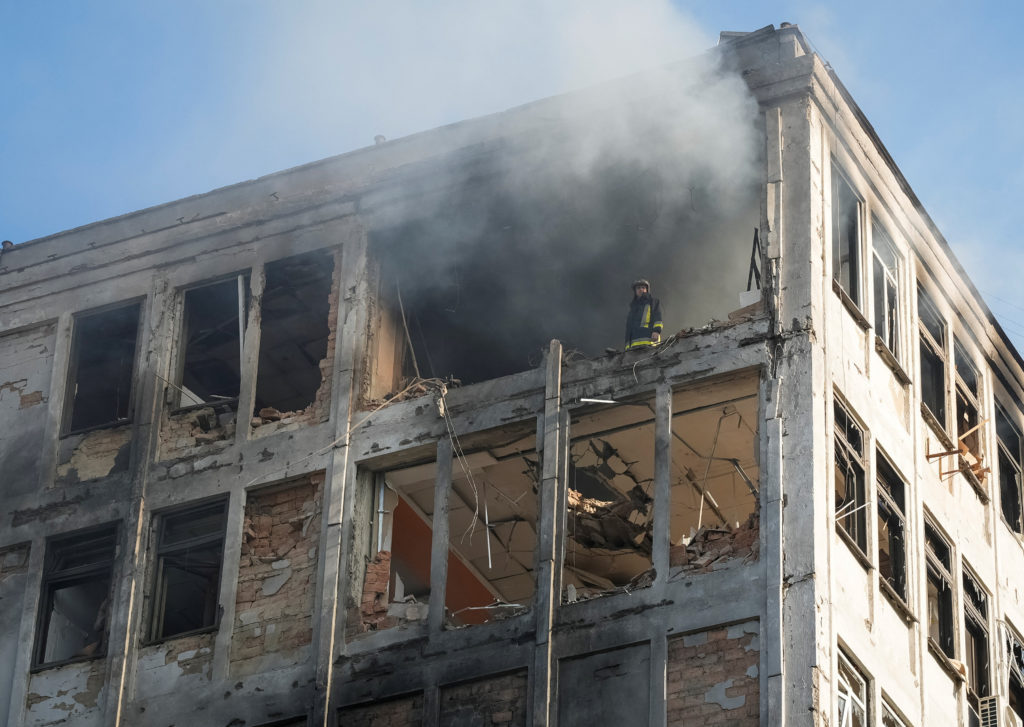
Washington has spent the past two weeks easing pressure on Russia and leaning on Kyiv, with a diesel deal, throttled Starlink, and talk of cutting intelligence, while Ukraine’s European partners move in the other direction. Russia pounds Ukrainian cities almost nightly, and the Norwegian-made NASAMS is one of the systems holding that barrage off critical infrastructure.

Kongsberg opened an office in Ukraine in 2025. Its NASAMS uses the AIM-120 AMRAAM missile built by the US defense giant RTX, the same firm behind the Patriot launchers that are Ukraine’s only means of downing Russian ballistic and hypersonic missiles. The same missile is also used in F-16s.

“They effectively protect our people and critical infrastructure from Russian missile and drone attacks virtually every day,” Zelenskyy said.

He added that Ukraine is counting on additional defense support packages next month.

A European shield Ukraine wants tested this year

The visit also advanced a joint missile-defense project. Norway is actively involved in FREYJA, a European anti-ballistic missile program that Ukraine is helping to build.

“There are already first results in creating individual elements of the system. Today we determined where we can and must speed up to reach testing by the end of this year,” Zelenskyy said.

FREYJA now draws in 10 countries and is built around an interceptor missile designed to stop ballistic threats, a capability Europe largely lacks against Russia’s fastest weapons.

A push for satellites as Starlink falters

Zelenskyy also raised satellite communications amid the scandal over speed limitations on Elon Musk’s military Starlink service that disrupted a series of front-line missions.

“We discussed in detail the start of work on new satellite-communication capabilities for our soldiers,” the president said, adding that Kyiv would bring in partners able to support them.

The push comes after SpaceX throttled the StarShield military package Ukrainian drones use. Ukraine’s 7th Air Assault Corps said the connection began dropping as drones moved at speed, negatively affecting their missions.

  •  

​Europe stands by Ukraine – but how long can that last?

As US support ebbs away, looming European elections and growing financial strains across the continent could fracture the precious coalition that has kept Ukraine afloat

Europe woke up last Friday to another belligerent outburst from Donald Trump – this time berating Ukraine’s wartime leader Volodymyr Zelenskyy again. Just a few days after his diesel deal with the Kremlin, the US president said Zelenskyy was more difficult to deal with than Vladimir Putin and blamed Ukraine’s leader for rocketing oil prices – without any reference to the impact of his own war on Iran.

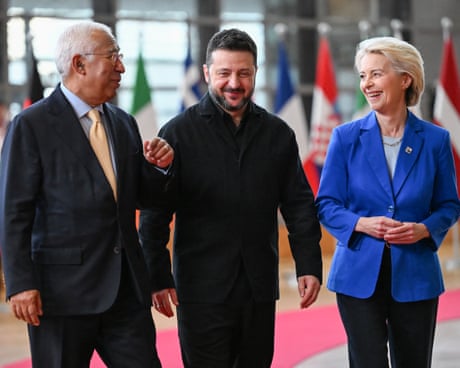
The contrast in Europe was obvious. When Zelenskyy walked into the multi-coloured summit room of the European Council headquarters in Brussels that Friday morning, the EU’s 27 leaders burst into applause, getting to their feet to offer big hugs and brisk handshakes. European Council president António Costa told Zelenskyy and the media: “This is no time to withdraw the support to Ukraine,” calling instead for increased pressure on Russia. Zelenskyy was thankful, pointedly saying he was happy to have “huge support” from “real leaders”.

Continue reading...

© Photograph: Nicolas Tucat/AFP/Getty Images

© Photograph: Nicolas Tucat/AFP/Getty Images

© Photograph: Nicolas Tucat/AFP/Getty Images

  •  

Hungary Blocks Ukraine and Moldova’s EU Accession Progress Despite Diplomatic Breakthrough

Budapest has unexpectedly obstructed the next stage of EU accession negotiations with Ukraine and Moldova, just a week after approving earlier negotiating chapters and days after Prime Minister Péter Magyar pledged to restore relations with Kyiv.

Hungary has blocked a procedural decision needed to advance Ukraine and Moldova’s European Union accession negotiations, raising fresh questions about Budapest’s position under Prime Minister Péter Magyar, whose government had recently agreed to remove longstanding objections to Kyiv’s membership ambitions.

The intervention took place in Brussels on Tuesday, 20 October, during a meeting of the Council of the EU’s Working Party on Enlargement and Countries Negotiating Accession to the EU (COELA). Representatives of the 27 member states were examining the screening results for the final two negotiating clusters, covering environmental policy, transport, agriculture and regional development.

According to diplomats familiar with the discussions, the Hungarian delegation refused to approve the proposed procedural step. When representatives of other member states requested an explanation, Budapest reportedly maintained that its position remained unchanged, without providing further arguments.

An Unexpected Reversal After October Agreement

The obstruction comes only seven days after the EU formally opened two additional negotiating clusters with Ukraine and Moldova.

On 13 October, the Council approved the opening of Cluster 2, covering the internal market, and Cluster 3, dealing with competitiveness and inclusive growth. The decision followed an agreement between Kyiv and Budapest on educational rights for Ukraine’s ethnic Hungarian minority.

Ukraine’s parliament adopted legislative amendments on 12 October extending minority-language education rights, and President Volodymyr Zelenskyy signed the legislation the same day.

The agreement had appeared to remove the principal bilateral obstacle to further negotiations. Ukrainian Foreign Minister Andrii Sybiha and his Hungarian counterpart, Anita Orbán, welcomed the development following discussions in Luxembourg.

The diplomatic rapprochement continued on 16 October, when Zelenskyy and Magyar held their first official bilateral meeting in Brussels. Both governments expressed an intention to improve relations after years of disputes under former Hungarian Prime Minister Viktor Orbán.

Magyar also invited Zelenskyy to Budapest for commemorations marking the 70th anniversary of Hungary’s 1956 anti-Soviet uprising.

The subsequent Hungarian objection has therefore interrupted a process that Ukrainian and European officials had expected to advance before the end of the year.

Agriculture and Energy Remain the Final Obstacles

Ukraine and Moldova have now formally opened four of the six negotiating clusters required under the EU’s enlargement methodology.

The remaining two are Cluster 4, Green Agenda and Sustainable Connectivity, and Cluster 5, Resources, Agriculture and Cohesion. They cover several of the most economically sensitive areas of prospective Ukrainian membership.

Cluster 4 includes environmental regulation, energy policy and transport infrastructure, while Cluster 5 encompasses agriculture, food safety, fisheries and regional development funding.

Ukraine’s agricultural sector presents particular challenges for the EU’s Common Agricultural Policy. The country’s extensive farmland and substantial grain production could affect agricultural subsidy allocations, market competition and the distribution of EU budgetary resources.

Poland and other agricultural member states have previously expressed concerns about the implications of Ukrainian agricultural integration. Such questions will require negotiation regardless of Hungary’s immediate position.

However, the 20 October meeting was not intended to settle these substantive issues. Its purpose was to advance the procedural preparations for formally opening negotiations on the remaining clusters.

Domestic Politics and the Question of EU Funding

The explanation for Budapest’s latest move may lie in Hungary’s domestic political calculations rather than a new dispute over minority rights.

Diplomatic sources have suggested that Magyar’s government is attempting to avoid accusations from Viktor Orbán’s opposition that it is making excessive concessions to Ukraine.

Although Magyar defeated Orbán in April’s parliamentary elections and has adopted a more cooperative approach towards Brussels, he has consistently opposed accelerated Ukrainian membership.

In an interview conducted on 20 October, Magyar reiterated his opposition to fast-tracking accession, arguing that membership must remain conditional on compliance with EU requirements. He also questioned whether a country at war could join the Union.

Another potential complication concerns Hungary’s financial relationship with Brussels.

The European Commission agreed in May to unlock €16.4 billion in previously frozen funds following reforms introduced by Magyar’s administration. Some disbursements remain subject to conditions, while separate disputes over EU financial penalties continue.

However, there is currently no publicly established evidence that Hungary’s objection on 20 October was intended to secure additional financial concessions. Any connection between the two negotiations remains speculative.

Moldova Caught in Budapest’s Dispute with Kyiv

Hungary’s position also affects Moldova, despite the absence of an equivalent bilateral dispute between Budapest and Chișinău.

The EU has kept the accession negotiations of Ukraine and Moldova politically aligned, seeking to advance both countries through the six negotiating clusters together.

Consequently, an objection directed principally at Ukraine can delay Moldova’s progress even when its own technical preparations satisfy the relevant requirements.

Separating the two accession tracks would allow Moldova to advance independently, but such a move would require political agreement among member states and could raise further questions about the EU’s enlargement strategy.

Ireland Seeks Agreement Before December

Ireland, which holds the rotating presidency of the Council of the EU until 31 December, has made progress on Ukrainian and Moldovan accession a priority.

The disputed procedural decision is expected to return to subsequent meetings of the enlargement working party, with senior EU and national officials still anticipating that the final two clusters could formally open in December.

The latest obstruction does not reverse the four clusters already opened, nor does it terminate accession negotiations. It does, however, demonstrate that the change of government in Budapest has not eliminated Hungary’s capacity or willingness to obstruct individual stages of enlargement.

For Kyiv and Chișinău, the immediate question is whether the 20 October decision represents a short-lived domestic political manoeuvre or the beginning of another prolonged dispute over the conditions of EU membership.

  •  

Putin agrees to resume trilateral Russia-Ukraine-U.S. talks next month

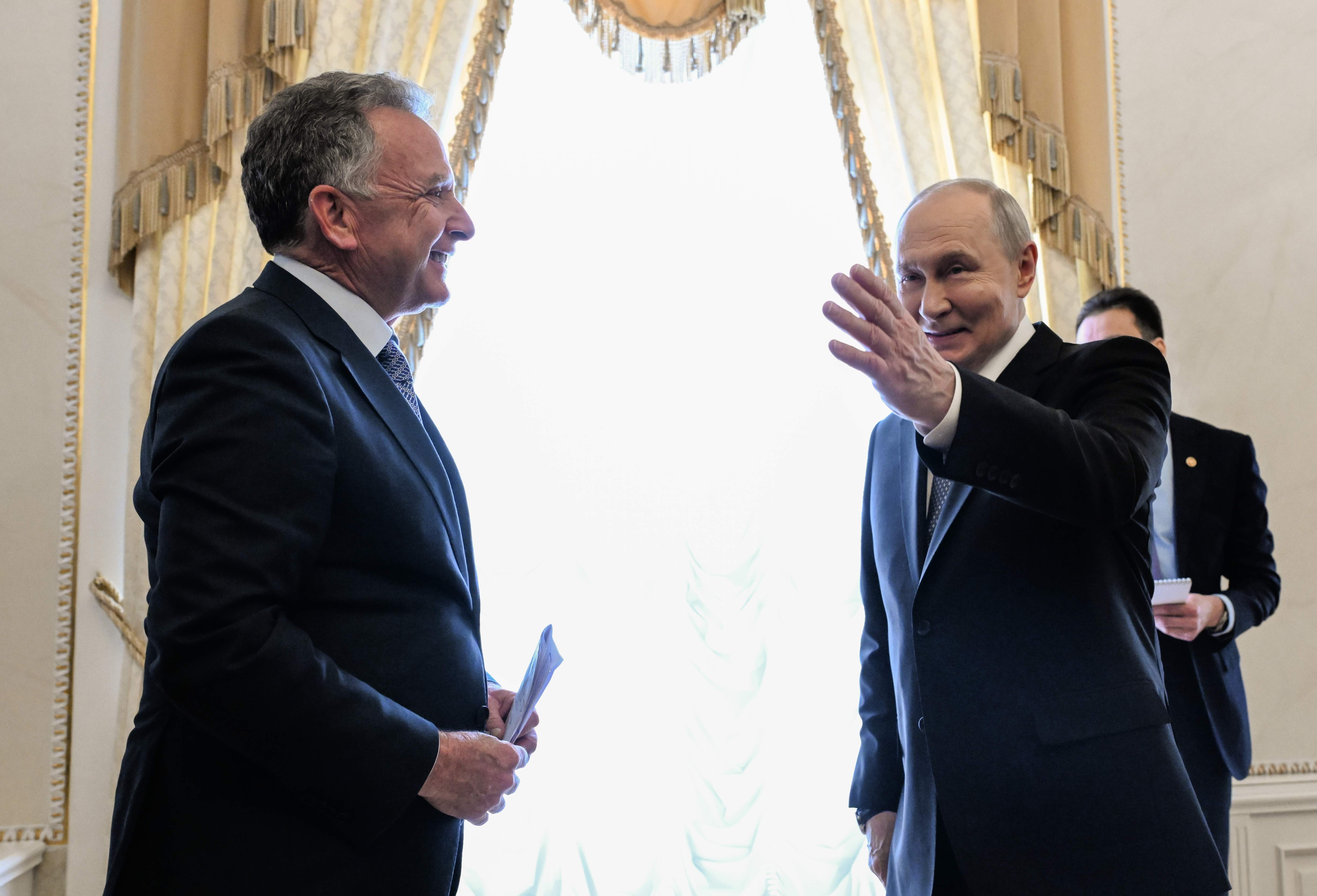
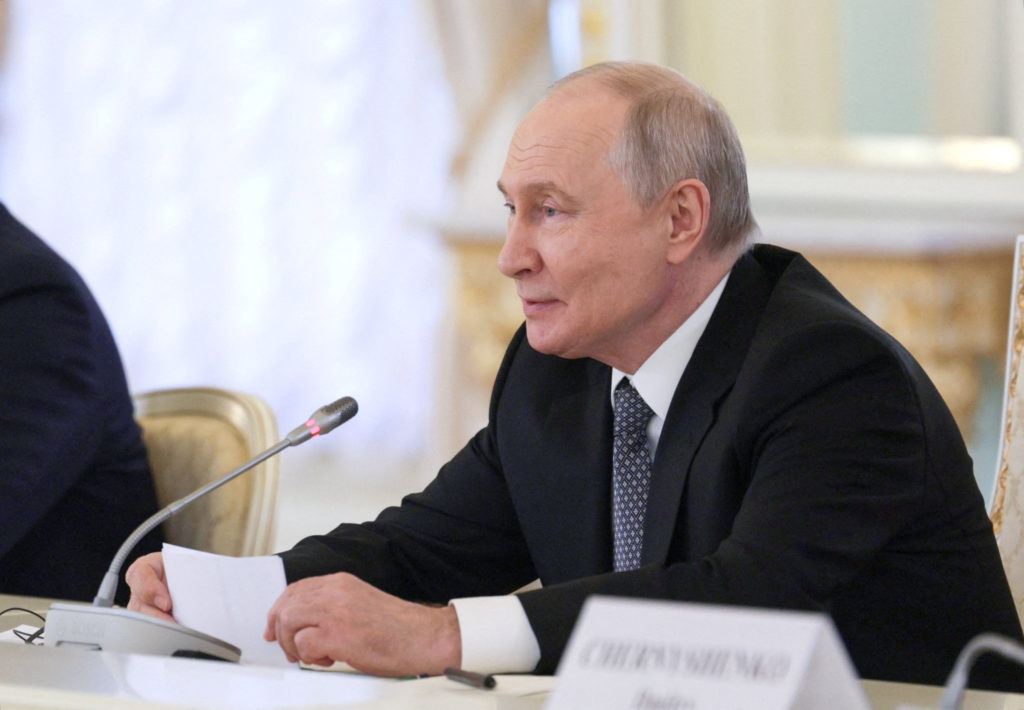
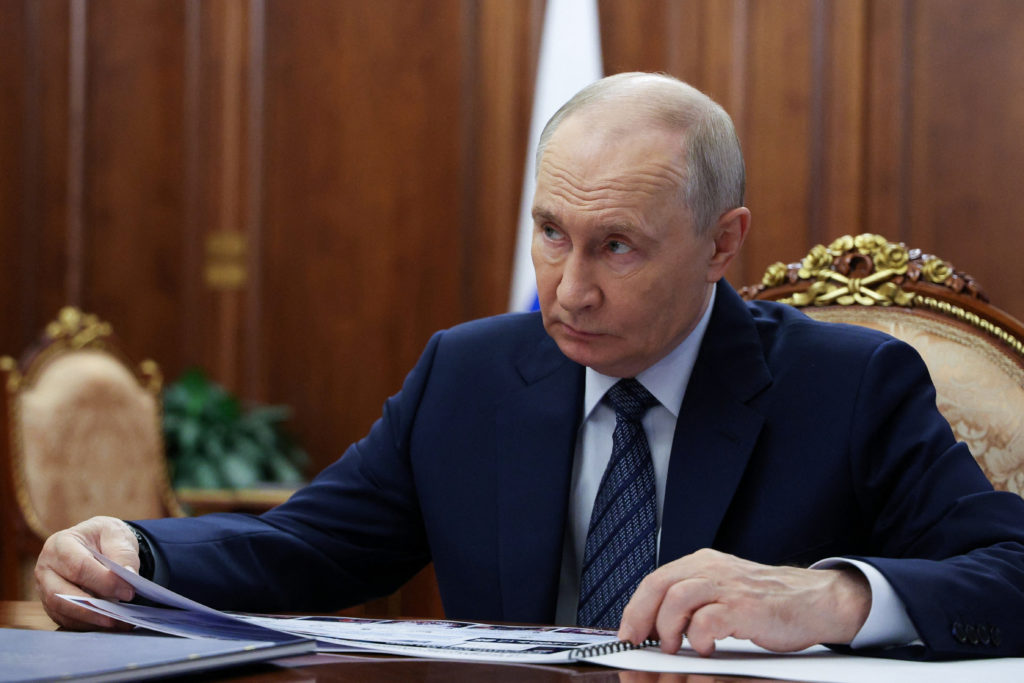
The Russian leader has agreed "in principle" to resume the talks after Nov. 10, Putin's foreign affairs adviser Yuri Ushakov told reporters following a meeting in St. Petersburg between Putin and U.S. President Donald Trump's envoy Steve Witkoff.

  •  

Starlink slowdown makes Ukraine’s Shahed-hunting drone maker rethink air-launched interceptors

STING S interceptor

Ukrainian drone maker Wild Hornets is rethinking projects it is currently working on, including launching interceptors from aerial platforms, because of limits on SpaceX’s Starlink satellite internet. Spokesman Mike Orliuk told The War Zone (TWZ) this on 20 October. The company builds Sting interceptors, which it says destroyed over 15,000 Shaheds and Gerberas, a cheaper Shahed lookalike, in a year. Orliuk said Sting’s current operations are unaffected.

The stakes rise as Russia shifts to faster drones. Ukrainian defense technology adviser Serhii Beskrestnov counted more than 2,500 jet-powered Gerans, Russia’s version of the Shahed, in August. President of Ukraine Volodymyr Zelenskyy said on 16 October that these drones fly faster than 400 km/h. He added that some Ukrainian interceptors chasing them work through Starlink. When the link was slowed, Ukraine could not intercept some of them, he said.

How Sting stays connected

“Our own communications system provides the basic connection to our interceptors,” Orliuk said. The company’s remote-control technology can draw on various internet sources, he added, though the military often uses Starlink. Even then, the terminal does not need to move at high speed. It only links the command center to a ground station, which Orliuk compared to a cell tower.

“For these needs, everything is operating normally with Starlink at the moment,” he said.

An air-launch project under review

“Some drones carry a terminal on board and need to fly at high speed with it,” Orliuk said. “In such cases, Starlink’s limitations make their operation impossible.”

That is why the company is rethinking the air-launch project. Wild Hornets has made no clear decision yet but will test alternatives, Orliuk said. He declined to describe them.

“I believe, in any case, depending on a single solution is very risky,” he said.

The Starlink logo on a smartphone screen.
Explore further

Musk pointed at the US military over Ukraine’s satellite limits. Now a US official says the administration had nothing to do with them

Other firms share the concern

Orliuk said he has spoken with other companies that rely far more on Starlink and have expressed concerns. He pointed to growing interest in Europe’s Eutelsat network, though “creating something like Starlink won’t be easy.”

Who ordered the slowdown remains unclear. The order to slow Ukraine’s Starshield service came from inside the White House, two US officials and a Western official said. A US official told TWZ the president never made such a request. US Secretary of State Marco Rubio said on 17 October that the slowdown had “nothing to do with the White House” and called “a report on that” “categorically false,” without saying which report he meant.

  •  

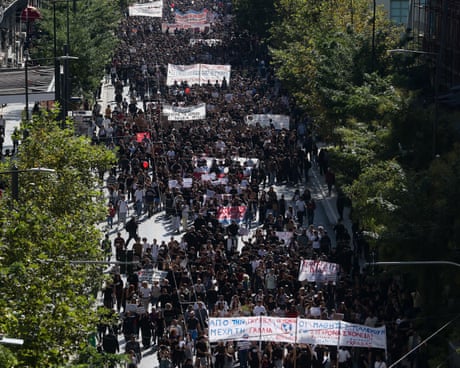
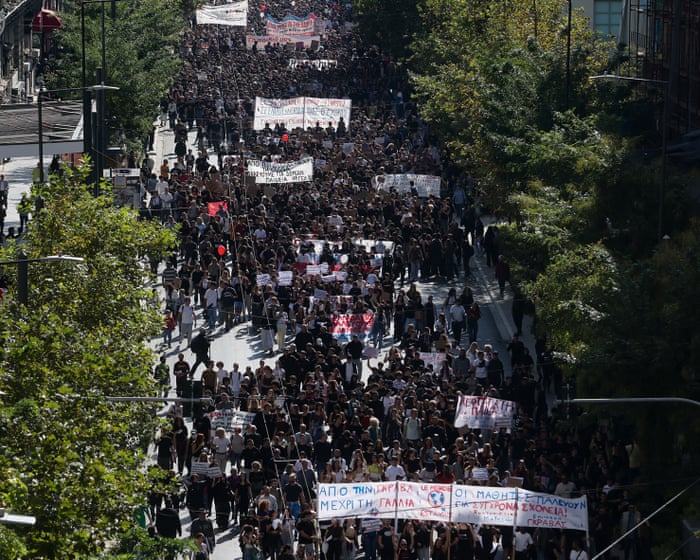
Thousands march in Greece over public education failures as Macron blasts ‘stupid’ commentary on French protests – as it happened

Students, teachers and civil servants have shown up in Athens, with demonstrations also in Thessaloniki and other cities

Meanwhile, back to Witkoff’s meeting with Putin in St Petersburg, the US president, Donald Trump, has just welcomed the release of Stephen Hubbard, a US citizen held by Moscow on allegations of fighting as a mercenary for Ukraine (11:24).

In a post on Truth Social, he said:

“Stephen Hubbard, taken four years ago by Russia during the Biden Administration, was just released from prison, at the request of President Donald J. Trump, made directly to President Vladimir Putin in a telephone conversation last week.

Stephen is on his way back home and will soon be with his family. The United States, out of respect for President Trump, was not required to give anything in return - an unprecedented situation for Russia. There was no “swap” necessary for this release.

Continue reading...

© Photograph: Costas Baltas/Anadolu/Getty Images

© Photograph: Costas Baltas/Anadolu/Getty Images

© Photograph: Costas Baltas/Anadolu/Getty Images

  •  

Ukraine war briefing: US envoy Witkoff to meet Putin after ‘constructive’ talks with Zelenskyy in Norway

Talks in Oslo made ‘meaningful progress’ toward engaging Russia, a US official said. What we know on day 1,701

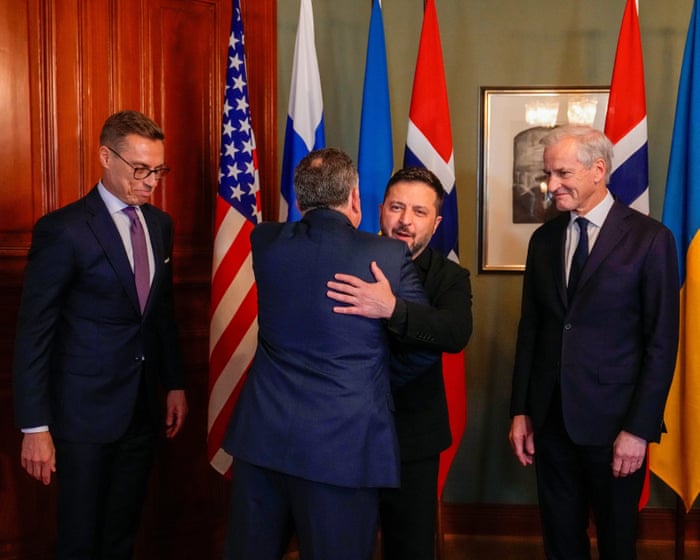
US envoy Steve Witkoff will meet Russian president Vladimir Putin on Wednesday after what a US official called “constructive” talks with Ukrainian president Volodymyr Zelenskyy in Norway. The US official said Ukraine brought forward new ideas and proposals to the Oslo talks, which also involved the leaders of Norway and Finland ⁠and European and Nato representatives, and that participants made “meaningful ⁠progress” toward a coordinated approach to engaging Russia.

The official, who ​spoke to Reuters on the condition of anonymity, said the talks covered “key elements of a comprehensive peace framework”, including security guarantees for Ukraine, a postwar economic plan and a broader European security architecture. Witkoff would aim to “create a pathway toward direct trilateral and broader multilateral negotiations”, the official said. US president Donald ⁠Trump on Tuesday ⁠called ​on Ukraine to make a deal ⁠to settle the war with Russia. “Ukraine has to ⁠want to settle this ​war,” Trump ‌told reporters.

Zelenskyy travelled to Oslo seeking to repair relations with Washington, which have sunk to new lows. Trump’s recent gestures toward Moscow, including a deal to buy Russian diesel and a waiver of new sanctions, have sparked bipartisan pushback in the US Congress and worry in European capitals. Zelenskyy said he had ​discussed “Article 5-like” security guarantees, referring to the Nato stipulation that an attack on one ally is an attack on all. “I am ‌thankful to the American side that they underlined again that it will ‌be strong,” he said.

Elon Musk last week ordered the slowdown of a military-grade ⁠version of SpaceX’s Starlink satellite service that Ukraine relies on, the Wall Street Journal reported on Tuesday, citing US ⁠officials and people familiar ⁠with the ​matter. Musk, SpaceX and the White House did not immediately respond to Reuters requests for comment. Ukraine uses the service – known as Starshield – for battlefield communications and drone operations. Restricting the satellite service hampered the country’s attack and air ⁠defence drone missions against Russia.

US defence secretary Pete Hegseth meanwhile insisted Tuesday that the Pentagon had not directed any changes to Starshield, saying: “We haven’t pulled anything back.” “Nothing’s changed from our view. We haven’t made any directives or anything like that,” he said. On Friday, Trump said he did not request any curbs to Starshield. “It wasn’t me. And I don’t think it was Elon,” Trump said. Musk previously said that “any limits on speed or usage” of Starshield systems were “decided by the US military and ultimately POTUS.”

Nato said Tuesday it was deploying additional planes, drones and radar systems to the Black Sea after a string of attacks on ships near Romania and Bulgaria in the latest spillover from Russia’s war on Ukraine. “Allies have or will send additional maritime patrol aircraft, radar systems, explosive exploitation teams, intelligence personnel, drones, and more to the Black Sea,” said Col Martin O’Donnell, a Nato spokesperson. “The most important thing we can do, however, is to increase our situational awareness in the region through increased sensors and data sharing,” he added.

The ⁠Russian military ⁠struck ​three cargo vessels in Ukraine’s ⁠port of Reni and two ⁠other cargo vessels en ​route ‌to ‌Odesa, Russia’s defence ‌ministry said on Tuesday. Russian forces also hit two logistics hubs in ‌the Volyn region and in the ​city of Khmelnitskiy, it said, adding that ⁠the vessels and hubs ​were ​all being ​used for ​military ‌purposes. Russia also unleashed another missile and drone blitz of civilian areas in Ukraine on Tuesday, killing at least nine people, officials said.

The Kremlin said Tuesday that work was under way to ease ⁠the humanitarian ⁠situation ​in the Russian-controlled town of Oleshky in southern ⁠where residents have reported a worsening food crisis. Kremlin spokesperson ⁠Dmitry Peskov said ‌Putin had ‌discussed the situation in Oleshky with Trump and told him that Russia’s human rights commissioner was engaged on the issue.

Continue reading...

© Photograph: Heiko Junge/Reuters

© Photograph: Heiko Junge/Reuters

© Photograph: Heiko Junge/Reuters

  •  

Zelenskyy seeks to mend ties with Trump ahead of Witkoff-Putin meeting

Ukrainian President Zelenskyy met with U.S. envoy Steve Witkoff and European officials in Norway in a bid to avoid a further diplomatic rupture with President Trump. Over the past week, Trump has criticized Zelenskyy over Ukraine's efforts to inflict heavy losses on Russia. The meeting was aimed at easing tensions ahead of Witkoff's meeting with Vladimir Putin in Russia. Nick Schifrin reports.

  •  

Tightening sanctions on Russia is 'the way to end this war,' says David Kramer

To discuss the tensions between President Trump and Ukrainian President Zelenskyy, Geoff Bennett spoke with David Kramer. He held a number of senior positions at the State Department during the George W. Bush administration. He's now the executive director of the George W. Bush Institute in Dallas, Texas.

  •  

Trump Presses Ukraine Towards a Settlement Putin May Have No Intention of Accepting

Talks in Oslo have restored diplomatic contact between Kyiv and Washington, but Donald Trump continues to demand concessions from Ukraine while Moscow shows little willingness to compromise. Steve Witkoff’s forthcoming meeting with Russian officials will expose the limits of the American peace initiative.

The latest negotiations over Russia’s war against Ukraine have produced a renewed diplomatic initiative, with US presidential envoy Steve Witkoff preparing to travel to St Petersburg on Wednesday, 21 October, following consultations with Ukrainian and European leaders in Oslo.

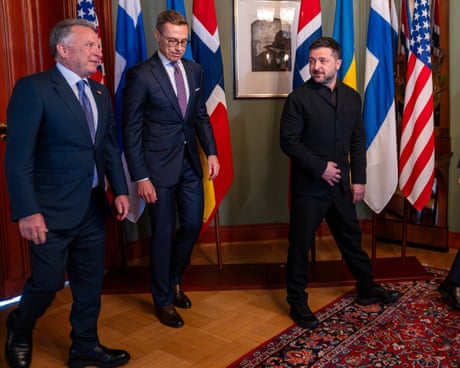
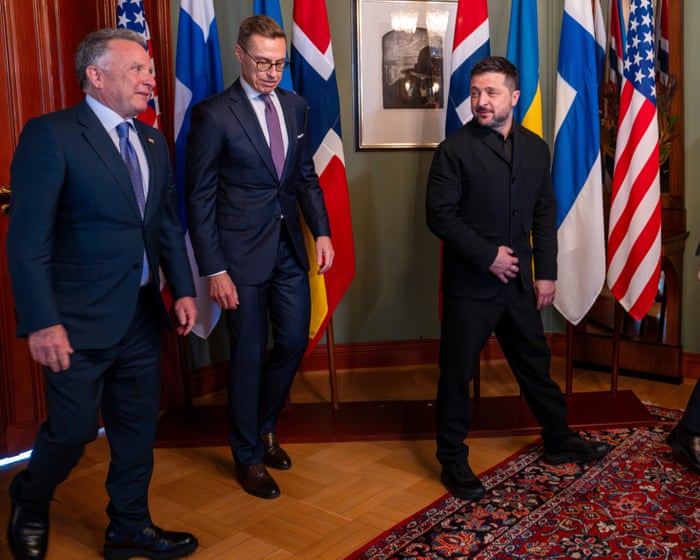
President Volodymyr Zelenskyy met Witkoff alongside Norwegian Prime Minister Jonas Gahr Støre and Finnish President Alexander Stubb on Tuesday. Jared Kushner, Donald Trump’s son-in-law, participated remotely. The discussions covered territorial questions, security guarantees, sanctions and proposals for a partial ceasefire.

The meeting concluded with cautious expressions of optimism. Stubb suggested that the negotiating process was back on track, while Støre confirmed that Witkoff would present proposals developed by American, Ukrainian and European representatives to the Russian leadership.

However, the diplomatic improvement contrasts with Trump’s renewed public pressure on Zelenskyy, raising questions about Washington’s negotiating strategy and whether Moscow has any intention of accepting the proposed settlement.

Washington’s contradictory signals

Speaking in the Oval Office on Tuesday, Trump again insisted that Ukraine must reach an agreement with Russia, portraying Moscow’s military position as increasingly advantageous.

His remarks closely resembled arguments advanced during earlier disputes with Zelenskyy, when Washington pressed Kyiv to accept territorial concessions rather than increase pressure on the Kremlin.

Meanwhile, Secretary of State Marco Rubio sought to reassure the Ukrainian leadership that American military cooperation had not been deliberately restricted.

Rubio denied that Trump had ordered changes to intelligence-sharing or weapons assistance. Zelenskyy subsequently confirmed that Ukraine was again receiving American early-warning intelligence concerning Russian ballistic missile attacks.

Nevertheless, serious problems remain. Ukraine has reported delays in deliveries of American-made Patriot interceptors purchased by European allies, while restrictions affecting the military Starshield satellite communications system have not been fully resolved.

These difficulties are particularly serious as Russia intensifies attacks against Ukrainian electricity infrastructure, attempting to undermine civilian services ahead of winter.

The conflicting signals leave Kyiv negotiating with an administration whose diplomatic representatives promise continued cooperation while its president publicly demands Ukrainian concessions.

Security guarantees without NATO membership

Among the proposals discussed in Oslo were security arrangements intended to provide Ukraine with protection comparable to NATO’s Article 5 collective-defence provision.

Zelenskyy acknowledged that American representatives had discussed such guarantees, although their precise obligations and enforcement mechanisms remain undisclosed.

The proposal presents a fundamental negotiating problem.

Russia has consistently opposed Ukrainian NATO membership, partly because the alliance’s collective-defence commitments would increase the consequences of any renewed Russian aggression.

An alternative arrangement offering genuinely comparable protection would consequently encounter many of the same Russian objections.

Conversely, guarantees lacking a credible enforcement mechanism would leave Ukraine exposed to another attack after a ceasefire.

Moscow’s record provides little reassurance. Russia violated Ukraine’s internationally recognised borders in 2014 and launched its full-scale invasion in 2022 despite previous commitments to respect Ukrainian sovereignty.

The Kremlin’s objectives extend beyond territory

Washington’s approach appears increasingly concentrated on securing an agreement involving territorial concessions and restrictions on Ukraine’s future security arrangements.

Yet Putin’s objectives have consistently extended beyond the territories occupied by Russian forces.

The Kremlin has demanded constraints on Ukraine’s military capabilities, international alliances and strategic independence. Accepting territorial gains alone would not necessarily satisfy Moscow’s wider political ambitions.

Russian Foreign Minister Sergei Lavrov has maintained that Moscow is unwilling to make substantial political concessions, while the Kremlin continues to insist that any agreement must address what it describes as the underlying causes of the conflict.

Those conditions have previously included demands that would substantially restrict Ukraine’s sovereignty.

Consequently, even a Ukrainian willingness to consider elements of Washington’s proposals would not guarantee Russian acceptance.

The political calculation behind an energy ceasefire

One possibility under consideration is a limited ceasefire protecting energy and potentially food-related infrastructure.

Zelenskyy has indicated that Ukraine could suspend attacks against Russian energy facilities if Moscow stopped striking Ukrainian infrastructure.

Such an arrangement could reduce immediate civilian suffering. It would also have military and economic consequences.

Ukrainian attacks against Russian refineries, oil terminals and other energy installations have increasingly targeted infrastructure supporting Moscow’s war economy.

A temporary suspension could allow Russia to repair damaged facilities, restore production and stabilise export revenues. Without credible monitoring and enforcement, Moscow could exploit a limited agreement while leaving the wider conflict unresolved.

Trump has additional reasons to seek a rapid diplomatic result. With American congressional elections scheduled for 3 November, his administration is attempting to contain domestic fuel prices and demonstrate progress towards ending the war.

His recent decision to ease restrictions on Russian diesel exports has already provoked concern in Kyiv and European capitals over the potential financial benefits to Moscow.

The danger for Ukraine is that an agreement presented as a diplomatic achievement in Washington could provide Russia with economic relief without altering its military objectives.

The decision awaiting Washington

Witkoff’s visit to St Petersburg will establish whether Moscow is prepared to engage with the proposals developed in Oslo.

Putin could accept a temporary arrangement, particularly one suspending Ukrainian strikes on Russian energy infrastructure, while postponing discussions over territorial and political questions.

Alternatively, Moscow could reject the initiative and maintain its existing demands.

In either case, Washington will face a decision over the consequences of Russian intransigence.

For Kyiv, continued engagement with the United States remains essential because American intelligence, satellite communications and advanced air-defence weapons cannot readily be replaced.

But the prospects for a negotiated settlement will depend less on further Ukrainian concessions than on whether Russia faces sufficient political, military and economic pressure to abandon its maximalist demands.

The Oslo negotiations have restored cooperation between Ukraine, Europe and American mediators. They have not established that Putin is prepared to end the war on terms compatible with Ukraine’s continued independence.

  •  

US has resumed sharing intelligence with Ukraine about Russian strikes, says Zelenskyy

Advance warnings of missile attacks were seemingly suspended last week by the White House, but Ukraine’s president says: ‘Now it works’

The US has resumed sharing intelligence with Kyiv about Russian missile strikes, Volodymyr Zelenskyy said on Tuesday after a meeting with the US envoy Steve Witkoff in Norway.

He said Ukraine was again receiving advance warnings of ballistic missile attacks, which were seemingly suspended last week by the White House. “Now it works. It’s great,” he said, adding that the US move would save lives.

Continue reading...

© Photograph: Heiko Junge/Pool NTB/AP

© Photograph: Heiko Junge/Pool NTB/AP

© Photograph: Heiko Junge/Pool NTB/AP

  •  

US restores ballistic missile warnings to Ukraine after a week without advance notice before Russian attacks, Zelenskyy says

Ukrainian President Volodymyr Zelenskyy, 20 October 2026. Photo: Zelenskyy / Telegram

Ukrainian President Volodymyr Zelenskyy said the US has restored intelligence sharing with Ukraine, including advance warnings of Russian ballistic missile launches, following talks with US Secretary of State Marco Rubio.

The lack of advance warnings came amid reports that the Trump administration had threatened to suspend intelligence sharing and weapons supplies unless Kyiv halted attacks on Russian oil refineries. US intelligence usually alerts Ukraine to ballistic missile launches before air raid sirens sound, giving the country time to warn civilians and prepare its air defenses. Russian ballistic missiles can reach Kyiv within minutes, making early notice critical to protecting lives.

Zelenskyy made the announcement on 20 October during a press conference broadcast by Suspilne. He said he had spoken with Rubio earlier that morning while traveling to Oslo, discussing intelligence, Starlink satellite communications, missile interceptors, and Patriot air defense systems.

“We discussed sensitive issues, including Starlink, interceptors, which are very important, and intelligence. We were very specific; the conversation was very positive,” Zelenskyy said.

He added that he plans to speak with Rubio again within the next 48 hours.

On 18 October, Zelenskyy also said that US warnings had returned, which turned out not to be true as Russian ballistic missiles hit Kyiv that evening before air raid sirens sounded.

Kyiv went days without advance warnings of Russian missiles

The warning gaps began with Russian ballistic missile attacks on Kyiv on 12 October and continued through 19 October. During the attacks on 12 and 13 October, Ukraine received no advance warning from its partners, with air raid alerts sounding only after the attacks had begun.

The problem persisted during subsequent attacks. Overnight on 18–19 October, Russia attacked Kyiv in two waves. Ukrainian Air Force spokesperson Yurii Ihnat said no warning arrived before the first wave, around 23:00. Information arrived before the second wave, around 03:00, but left little time to respond.

Advance intelligence on ballistic missile launches is particularly important because these missiles can reach their targets within minutes, leaving little time for civilians to seek shelter.

Washington denies suspending intelligence sharing

US President Donald Trump previously denied that Washington had stopped sharing intelligence with Ukraine, despite the missing warnings. Secretary of State Marco Rubio also rejected claims of a suspension, pointing to a software problem in Ukraine's early-warning system. 

However, the disruptions came amid reports that the Trump administration had threatened to suspend intelligence sharing and weapons supplies unless Kyiv halted attacks on Russian oil refineries. The Financial Times reported that Washington was pressuring Ukraine to stop the strikes as part of efforts to secure an energy truce with Russia. 

Ukraine temporarily paused attacks on Russian refineries but said Moscow continued striking Ukrainian energy infrastructure.

Zelenskyy's latest statement indicates that advance ballistic missile warnings are reaching Ukraine again, although the recent gaps have raised questions about the reliability of a capability critical to protecting civilians.

  •  

Republicans push back on Donald Trump’s wavering support for Ukraine

GOP lawmakers threaten to pull support for president’s agenda after Russia diesel deal and sanctions pause

A handful of Republicans have spoken out against Donald Trump’s softening stance on Russia, threatening to pull financial support for his agenda over his “embarrassing” handling of the Ukraine war.

Don Bacon, an outgoing congressman in Nebraska, condemned Trump’s actions – which include a stunning agreement to buy Russian diesel and the pausing of sanctions on Moscow – as “absolutely disgraceful” and accused the US president of cozying up to a “war criminal” in Vladimir Putin, his Russian counterpart.

Continue reading...

© Photograph: Brendan Smialowski/AFP/Getty Images

© Photograph: Brendan Smialowski/AFP/Getty Images

© Photograph: Brendan Smialowski/AFP/Getty Images

  •  

Rubio thinks Starlink is fixed. Kyiv says it still cuts out above 161 km/h

rubio

Ukrainian President Volodymyr Zelenskyy said on 20 October that he had spoken with US Secretary of State Marco Rubio about ballistic missile interceptors, early warning of Russian launches, and “the situation with Starlink/Starshield, which needs to be restored,” he wrote on X. He thanked Rubio for “his readiness to help and his clear position” and said they would speak again soon. A day earlier, he had told US senators how each of those supplies had stalled.

This comes as the US presses Kyiv to stop its strikes on Russian oil refineries, which Trump has blamed for high fuel prices at home, and Zelenskyy counts the Starlink slowdown among the steps he says look like an effort to push Ukraine to capitulate. Ukraine’s interceptor drones depend on the service to hunt Russia’s jet-powered Shaheds, and Kyiv says they now lose the link at speeds too low to catch them. The call appears not to have settled whether that cap is gone. If it stays, Ukrainian cities could face Russia’s drone waves this winter with one fewer means to stop them, as Russia keeps striking the grid.

On 17 October, Rubio told reporters that nobody in the US ordered Starlink slowed, that the slowdown “wasn’t deliberate,” and that “my understanding is it’s been restored.” He drew a line between the two services. Ukraine’s drones, he said, ran on commercial Starlink, while Starshield, the military version, is not available to Ukraine. Kyiv has asked for it to carry out strikes deep inside Russia, and that request is under discussion, he said.

The next day, Zelenskyy told Bloomberg that Starlink in Ukraine cuts out above 161 km/h, and Kyiv says its Starshield terminals are capped as well. His post after the call still says the service needs to be restored.

Reuters’ sources point to the White House. Washington denies it

The order to slow Starshield came from inside the White House, Reuters reported, citing two US officials and a Western official. They described it as the Starshield service for the Ukrainian military, the version Rubio says Ukraine does not have. A senior Ukrainian official told Reuters that Kyiv had been told it was a White House decision. A senior US official told the agency the president never made such a request, and the White House did not answer whether other officials had. Rubio called a report that the White House ordered Starlink slowed “categorically false.”

Missile warnings and Patriots are also in dispute

Overnight on 18–19 October, Ukraine got no partner warning before the first of two Russian ballistic waves, Air Force spokesman Yurii Ihnat said on the national telethon. That came hours after Zelenskyy said US warnings had resumed. On 19 October, Rubio pushed back against suggestions of a pause in US intelligence sharing, AFP reported.

Zelenskyy also told Bloomberg the US sends only 12 Patriot interceptors a month and has authorized only part of those “we have paid for” under PURL. Ukrainian officials told the Kyiv Independent that Defense Secretary Pete Hegseth has not signed the contracts. A US government official called those claims “not true.”

  •  

A diesel tank burns at Transneft’s Druzhba hub as Ukraine keeps striking Russian energy despite Trump’s pressure

diesel tank burns transneft’s druzhba hub ukraine keeps striking russian energy despite trump’s pressure · post fire nikolskoye oil fuel pumping station russia’s tambov oblast after drone attack 20 2026

Drones attacked an oil and fuel pumping station of Russia’s Druzhba pipeline system in Tambov Oblast overnight on 20 October, setting a diesel tank on fire, Ukrainian monitoring channel Exilenova+ reported, citing locals. Druzhba, Russian for “friendship,” is a Soviet-era oil pipeline, about 4,000 km long, that carries Russian crude west to Europe, including through a branch that crosses Ukraine. The struck station is on its Russian section. Tambov Oblast Governor Yevgeny Pervyshov confirmed a fire at an unnamed enterprise in Michurinsk district after what he called a Ukrainian drone attack. The station lies about 400 km from the front line.

Ukraine has spent months striking the refineries, terminals, and pipelines that fund Russia’s war, and its Defense Ministry says the strikes have knocked out more than half of Russia’s refining capacity. Washington wants them stopped. US officials reportedly tied intelligence sharing to a halt in refinery strikes, and US President Donald Trump called their resumption “a disgrace.”

Hours of attack before dawn

Russia’s regional alert system declared a drone threat at 03:38, Ukrainian military outlet Militarnyi reported. By 06:25, Exilenova+ said the Nikolskoye station was under attack, after Michurinsk had been under attack for several hours.

The Nikolskoye fuel pumping station in Russia’s Tambov region is under attack. pic.twitter.com/cA64vMgjsM

— Exilenova+ (@Exilenova_plus) October 20, 2026

Pervyshov said four Ukrainian drones were shot down over the region and no one was hurt. He did not name the site.

More footage from the Nikolskaya oil pumping station. Locals report that a tank containing diesel is on fire. pic.twitter.com/1jvbxSuGHo

— Exilenova+ (@Exilenova_plus) October 20, 2026

Ukraine has not commented. The General Staff’s 20 October list of overnight strikes does not mention Tambov Oblast.

The Nikolskoye oil and fuel pumping station in Russia’s Tambov Oblast, which drones attacked on 20 October 2026.
The Nikolskoye oil and fuel pumping station in Russia’s Tambov Oblast, which drones attacked on 20 October 2026. Map: Militarnyi/ESRI

A Druzhba fuel hub hit before

The Nikolskoye station belongs to Transneft, Russia’s state pipeline operator. It stores and pumps crude oil and refined fuels, including diesel, gasoline, and jet fuel. The complex has three tank farms and two pumping stations, and it can move up to 300,000 tonnes a day, according to Current Time.

Ukrainian drones hit a station of the same hub in August 2025, and Ukraine’s General Staff said then that pumping on the pipeline had stopped completely.

Strikes resume despite US pressure

Ukraine paused refinery strikes for three days after Trump announced an “energy ceasefire” on 11 October, while Russia fired 39 ballistic missiles at Ukraine’s grid. Since Kyiv resumed the strikes, drones have also hit an oil terminal and a fuel depot in St. Petersburg.

Kyiv reads other US moves as pressure too, from missed warnings of Russian ballistic launches to a Starlink cap that slows Ukrainian drones. President of Ukraine Volodymyr Zelenskyy told US senators he had offered a 30-day halt on refinery strikes in exchange for Patriot interceptors, but Trump’s envoys showed no openness.

  •  

More ballistic missile interceptors and F-16 repairs inside Ukraine: Kyiv’s two asks to Lockheed Martin

Ukrainian President Volodymyr Zelenskyy during a meeting with American defense company Lockheed Martin representatives on 28 July 2026, in Washington D.C. Source: President's Office

Ukraine is counting on buying part of Lockheed Martin’s growing output of ballistic missile interceptors, President Volodymyr Zelenskyy said. He met the US company’s team in Kyiv on 19 October and also raised servicing and repairing F-16 fighter jets inside Ukraine.

Russia keeps striking Ukraine’s power grid with ballistic missiles, and interceptor supplies fall short of that threat. Kyiv is working every route to more Patriot missiles, from US deliveries to allies’ stocks, and some have stalled. Greece, for one, has not confirmed it will hand any over, citing its own defense needs. A purchase from the missiles’ maker would add one more route.

Growing output, F-16 repairs in Ukraine

Lockheed Martin builds the PAC-3 MSE interceptors fired by Patriot air defense systems, as well as the F-16. Zelenskyy said both matter against Russian ballistic missiles and jet-powered Shahed drones. Neither area is easy right now, he added.

“We count on the opportunity to purchase some of them to protect more lives,” he wrote.

On 28 July, Zelenskyy met the company in Washington to discuss joint production. That came weeks after US President Donald Trump pledged Ukraine a license to manufacture Patriots.

A batch reportedly stuck in Washington

Meanwhile, US Defense Secretary Pete Hegseth has not signed off on a “significant” batch of Patriot missiles, Ukrainian officials told the Kyiv Independent. One official said allies had already paid for them. A US government official called the claims untrue, and the Pentagon did not respond. A NATO official said allied-funded deliveries, including air defense, continue. A second NATO official said some shipments could be delayed, but likely not for political reasons.

Zelenskyy told Bloomberg on 18 October that the US delivers only 12 Patriot interceptors a month. On 20 October, interceptors topped his list in a call with US Secretary of State Marco Rubio.

No purchase was announced, so new interceptors from this route remain a prospect. Meanwhile, partners’ early warnings of Russian ballistic launches have gone missing three times recently, Zelenskyy wrote. Those warnings give air defenses extra minutes to prepare.

  •  

Russian drone kills six in Kharkiv Oblast park, including mother and her 14-month-old in a stroller. Hours later, Ukraine shows photos to US senators

russian drone kills six kharkiv oblast park including mother 14-month-old stroller hours later ukraine shows photos senators · post anhelina killed attack inna died hospital 19 2026 nova vodolaha killed_in_kharkiv_oblast

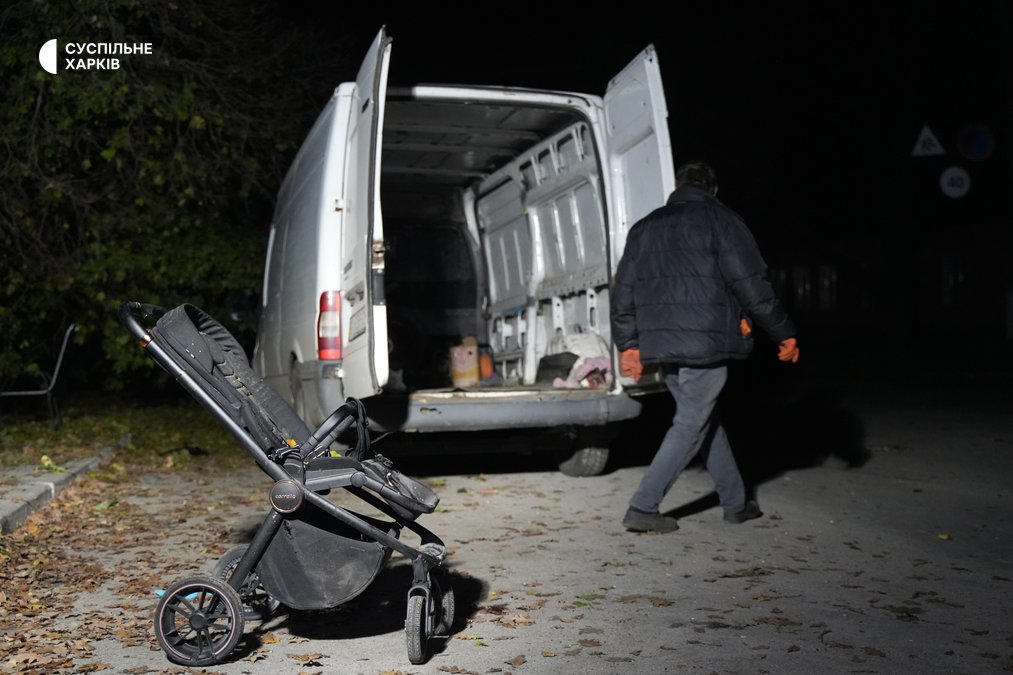
Six people were killed in a Russian strike in the settlement of Nova Vodolaha in Kharkiv Oblast, including girls aged 1 and 11. Another 15 people were injured, including seven children, Kharkiv Oblast Governor Oleh Syniehubov said on 20 October. Russian forces struck a park with a drone while families with children were there, Ukraine’s Minister of Internal Affairs Ivan Vyhivskyi said.

Russian forces continue to attack Ukrainian cities, killing civilians and destroying civilian infrastructure. The Kharkiv Oblast Prosecutor’s Office has opened a war-crime investigation into the strike. The strike was aimed at people, Yurii Yurchenko, head of a police department in Kharkiv Oblast, said in a comment to Suspilne.

The 14-month-old girl was named Anhelina

The Russian drone circled the park several times before crashing, Yurchenko said. He said the drone struck a tree near a café, and the blast wave and shrapnel hit people at the establishment. The attack came at around 16:30, the prosecutor’s office said, adding that Russian forces had preliminarily used a Geran-3 drone.

The café damaged in a Russian strike on a park in the settlement of Nova Vodolaha, Kharkiv Oblast, on 19 October 2026.
The café damaged in a Russian strike on a park in the settlement of Nova Vodolaha, Kharkiv Oblast, on 19 October 2026. Photo: Kharkiv Oblast Military Administration

The Russian strike killed three women, aged 28, 34 and 36, a man around 40 years old, and two girls, aged 14 months and 11 years, Syniehubov said in his statement.

The youngest girl, named Anhelina, was born in August 2025, Ukrainian President Volodymyr Zelenskyy said. Her mother, Inna, died in the hospital, he added.

Zelenskyy shows US senators photos of the aftermath the same day

Zelenskyy met with US Senators Richard Blumenthal and Thom Tillis, along with their colleagues from both parties and both chambers of Congress, according to a 19 October post on his social media accounts. During the meeting, he discussed the Russian attack in Kharkiv Oblast and showed lawmakers photographs from the scene, including one of the infant who was killed in a stroller.

“This is how Russia responds to the lifting of sanctions and the easing of pressure,” he said in the post.

The stroller in which 1-year-old Anhelina was killed, Nova Vodolaha, 19 October 2026.
The stroller in which 1-year-old Anhelina was killed, Nova Vodolaha, 19 October 2026. Photo: Suspilne Kharkiv/Viacheslav Mavrychev

Zelenskyy said Ukraine needs air defense and that no one should think about making money with Russia while it continues its war. He asked that sanctions on Russia stay in place until the killing stops, urged the US to “be strong” and apply Lindsey Graham’s law, and called on Europe to keep supporting Ukraine.

  •  

No warning, capped Starlink, unsigned Patriots: Zelenskyy lists US holds to senators as Kyiv reads them as pressure

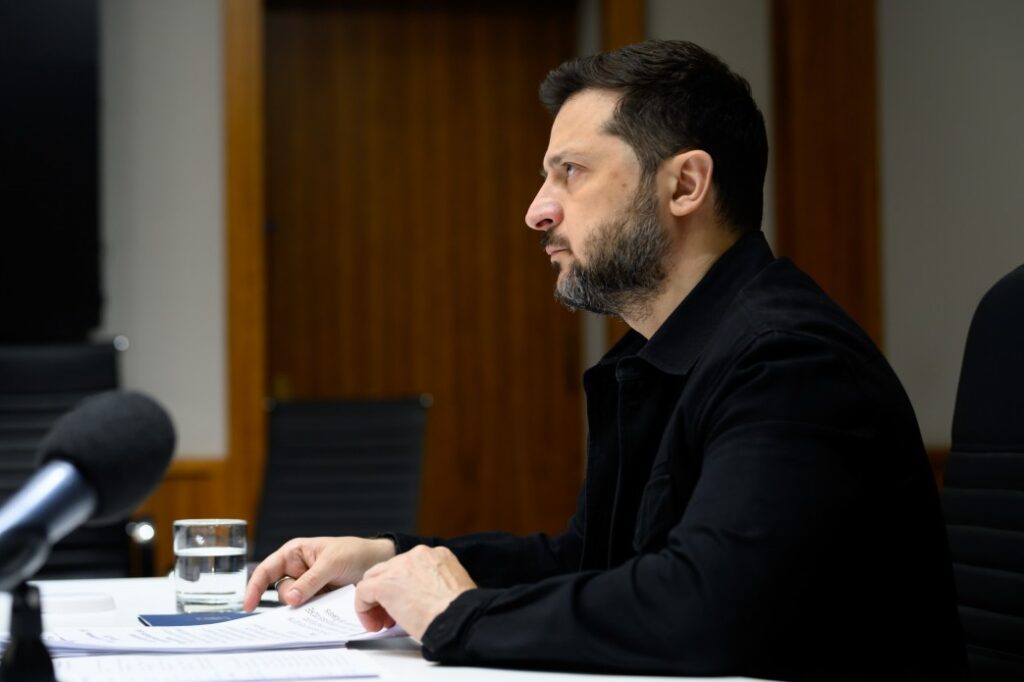
Ukrainian President Volodymyr Zelenskyy during a video call with US senators on 19 October 2026.

Ukraine got no early warning from its partners of the first wave of Russian ballistic missiles on the night of 18–19 October, President Volodymyr Zelenskyy told US senators on 19 October. He also said Starlink and Starshield terminals still stop working above certain speeds on parts of the front, and that Washington has explained neither problem. In the same video call, according to a transcript obtained by Axios, he said US Defense Secretary Pete Hegseth is not signing off on deliveries of Patriot interceptors and AIM-9X missiles for NASAMS that NATO countries have already paid for.

This comes as the US presses Kyiv to stop its strikes on Russian oil refineries, which Trump has blamed for high fuel prices at home. Washington supplies both the early launch warnings and the Patriot interceptors Ukraine needs against Russian ballistic missiles, and Zelenskyy says both are now failing at once, as Russia keeps firing ballistic missiles at Ukraine’s grid ahead of winter. If neither the warnings nor the interceptors come through, Ukrainian cities would face winter strikes with less notice and fewer means to stop them.

On the morning of 20 October, Zelenskyy wrote that he had spoken with US Secretary of State Marco Rubio about interceptors against ballistic missiles, early warning of Russian ballistic attacks, and restoring Starlink and Starshield. He thanked Rubio for his readiness to help and his clear position, and said they had agreed to speak again soon. He did not say whether anything had been resolved.

Patriots paid for, not signed

“We have almost no Patriot interceptors left from the US partners,” Zelenskyy told the senators.

Hegseth “has the contracts for Patriot missiles on his desk,” a Ukrainian official told the Kyiv Independent, adding that allies had already paid for them. Another senior official called the batch “significant.” One of the main channels for Ukraine’s Patriot supply is NATO’s PURL mechanism, under which allies fund purchases of US weapons for Ukraine, a senior Ukrainian military official told the outlet.

On 19 October, Zelenskyy wrote that some types of vital supplies were being delayed at the US Department of War, as the Trump administration also calls the Pentagon. He added that some political agreements had not been carried out at the working level.

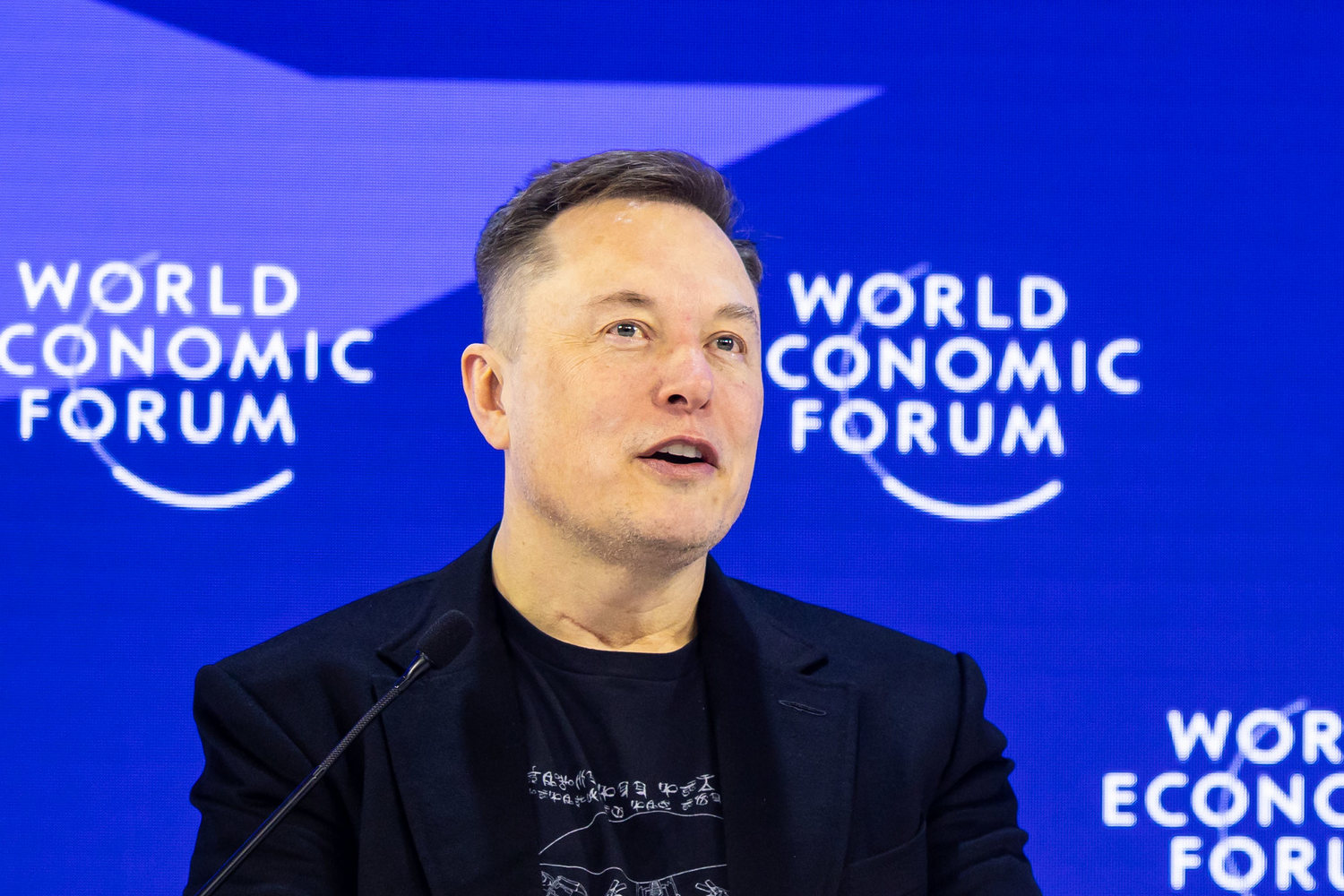
kyiv asking musk let strike inside russia its best line gone · post elon 2026 world economic forum / ciaran mccrickard wef ukraine news ukrainian reports
Explore further

Musk pushed Trump to slow Starlink in Ukraine, weakening air defenses as Russian drones attacked cities – The Telegraph

A NATO official told the Kyiv Independent that PURL deliveries, including air defense, were continuing. Another said some shipments could face delays, but that political reasons were unlikely to explain them. A US government official called Ukraine’s claims “not true.” The Pentagon did not respond to the outlet.

No warning for Kyiv hours after Zelenskyy said US alerts were back

On 18 October, Zelenskyy said on NBC that US warnings of ballistic launches had resumed after three days without them. That night, Russia launched two ballistic waves at Ukraine, and information from partners did not arrive before the first, Air Force spokesperson Yurii Ihnat said. Zelenskyy told the senators Ukraine had not received US warnings on three occasions in the past week. “We have received no clear explanation from Washington,” he said.

“All of this suggests that some political decision has been made to slow down support for us,” Zelenskyy said.

Zelenskyy offered a 30-day pause on refinery strikes for Patriots

Zelenskyy told the senators he had offered US envoys Steve Witkoff and Jared Kushner a 30-day halt on strikes against Russian refineries. In return, the US would supply Patriot interceptors to cover that period. He said the envoys had shown no openness to the idea.

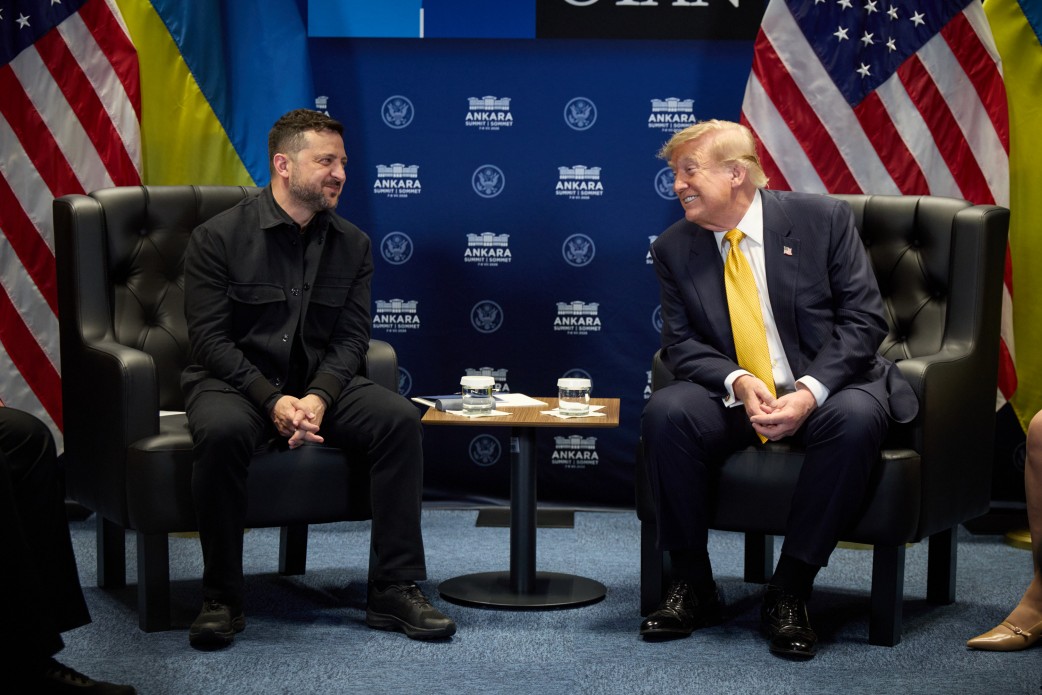
again trump presses zelenskyy stop russian refinery strikes · post ukrainian president volodymyr meets donald ankara türkiye 8 2026 presidentgovua ukraine news reports
Explore further

Trump calls Ukraine’s renewed refinery strikes “a disgrace” after Russia’s 39-missile strike on its energy sites

On 20 October, Norway announced talks in Oslo that day between Zelenskyy, Norwegian Prime Minister Jonas Gahr Støre, and Finnish President Alexander Stubb, with Witkoff attending in person and Kushner by video.

Senators back Kyiv. Trump says intelligence still flows

Senator Thom Tillis said he and his colleagues remain committed to standing with Ukraine and its European allies, while Senator Richard Blumenthal wrote that bipartisan support was “clear and unequivocal” and would be expressed “in upcoming action.”

US President Donald Trump told reporters on 19 October that Washington is still sharing intelligence with Ukraine and that he did not know who ordered the throttling of Starlink, Axios reported.

“Zelensky doesn’t know what he is talking about,” Trump said.

  •  
❌