❌

Reading view

Mark Zuckerberg si prepara a pagare la tassa californiana sui miliardari. Meta gli dà nuove azioni per blindarlo per otto anni

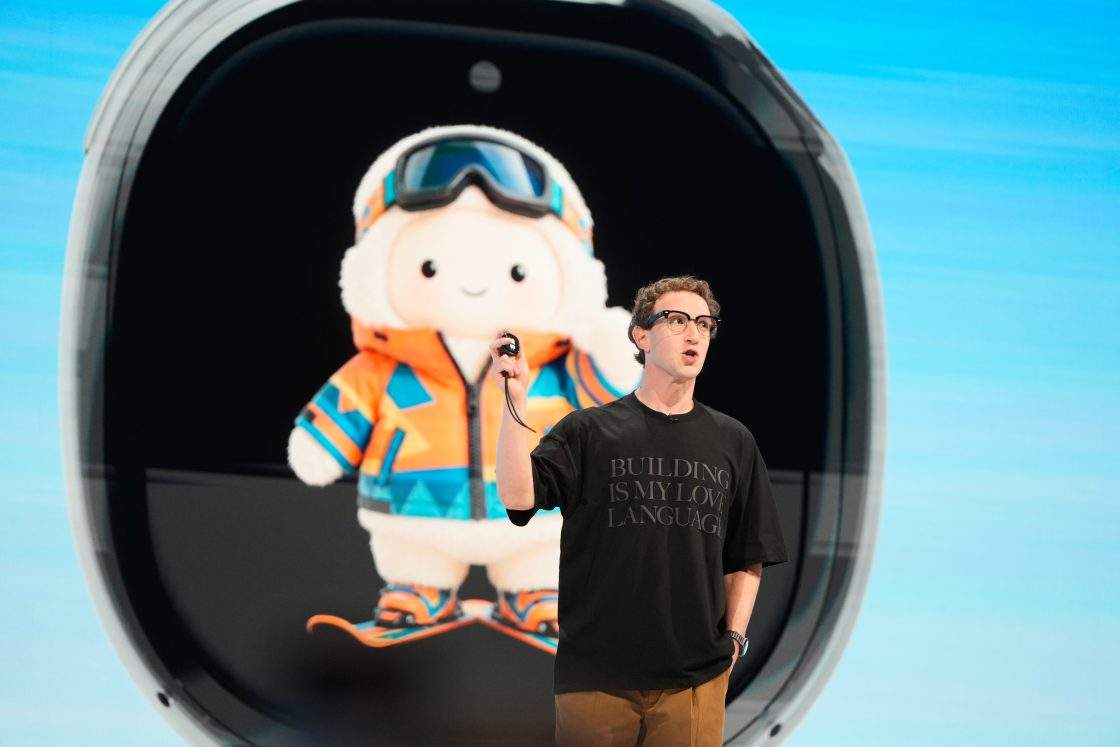
Il numero uno di Meta Mark Zuckerberg si prepara a pagare la tassa sui miliardari, se la California approverà la misura. E il gruppo a cui fanno capo Facebook, Instagram e Whatsapp corre ai ripari per consentirgli di farlo senza mettere a rischio il controllo della società. Meta infatti, come emerge da un documento depositato alla Securities and Exchange Commission, distribuirà ai soci nuove azioni di classe C prive di diritto di voto in aggiunta a quelle già possedute. Zuckerberg potrà vendere o trasferire immediatamente il 20% dei titoli che riceverà, una quota equivalente a circa il 10% della sua partecipazione. E potrà usare il ricavato per saldare l’eventuale imposta. In cambio si impegna a mantenere la residenza in California per i prossimi otto anni.

L’intesa arriva a meno di due settimane dal referendum del 3 novembre sulla Proposition 40, che propone una patrimoniale una tantum del 5% sulle fortune dei circa 250 miliardari residenti nel Golden State e l’utilizzo del gettito per finanziare la sanità depauperata dai tagli di Trump e programmi per l’istruzione e l’assistenza alimentare. In caso di successo, segnerebbe una svolta per il dibattito sulla tassazione della ricchezza.

Secondo i documenti societari Zuckerberg, il cui patrimonio è stimato intorno ai 240 miliardi di dollari, aveva comunicato a un Comitato speciale di amministratori indipendenti di star valutando il trasferimento della residenza fuori dallo Stato per cercare di dribblare un’imposta che nel suo caso varrebbe circa 10 miliardi. Per pagare il conto avrebbe infatti dovuto vendere parte delle azioni di classe B, quelle che gli garantiscono diritti di voto maggiorati: la sua quota di controllo sarebbe scesa dal 60,6% a circa il 53%. Il Comitato speciale, ritenendo “di fondamentale importanza mantenere il Sig. Zuckerberg in una posizione di leadership all’interno della nostra azienda” e far sì che “che continui a risiedere e a gestire l’Azienda dalla nostra sede centrale in California per garantire la sua continua capacità di guidare efficacemente le nostre prestazioni durante quest’era di sfide e concorrenza senza precedenti”, ha trovato giocoforza una soluzione: una riorganizzazione della struttura azionaria. Meta distribuirà appunto ai soci dal gennaio 2027 nuove azioni di classe C, prive di diritto di voto, in aggiunta a quelle già possedute.

L’economista francese Gabriel Zucman, che da anni studia la concentrazione della ricchezza e le modalità per tassare i grandi patrimoni, ha scritto su X che la decisione è la prova che “la campagna per la Proposition 40 sta funzionando”: viene meno infatti l’argomento usato da molti oppositori secondo cui i miliardari “non potrebbero” versare il dovuto pena la perdita del controllo delle loro compagnie. Se messi alle strette, evidentemente, si può fare.

Da notare, peraltro, che come ricorda il documento inviato alla Sec dal 2013 Zuckerberg riceve uno stipendio annuo simbolico di un dollaro come amministratore delegato e presidente del gruppo. La società lo utilizza come argomento per motivare la sua necessità di liquidità. Ma il punto è che la sua ricchezza deriva soprattutto dal valore delle azioni Meta, che può crescere senza tradursi in reddito imponibile. È un meccanismo comune tra i grandi miliardari: finché le azioni non vengono vendute, l’incremento di valore resta generalmente una plusvalenza non realizzata e non è tassato come reddito da capitale. Il risultato che, a fronte della impressionante concentrazione delle fortune nelle mani di pochi, quei pochi riescono a versare meno tasse rispetto a un lavoratore del ceto medio. La patrimoniale una tantum proposta da un sindacato di lavoratori della sanità punta a correggere in parte questa asimmetria.

Come da copione l’opposizione alla misura è stata però violenta: molti grandi nomi della Silicon Valley, fallito l’obiettivo di impedire che la proposta promossa arrivasse alle urne, hanno messo in campo tutto il proprio arsenale finanziario e non solo per convincere gli elettori a bocciarla. Tra campagne di disinformazione e sostegno ad altre misure referendarie che potrebbero impedirne l’entrata in vigore. Alcuni miliardari, tra cui i cofondatori di Google Larry Page e Sergey Brin, hanno valutato o annunciato di volersene andare. Anche se, come evidenziato da Zucman, sulla carta per avere successo il trasferimento fiscale avrebbe dovuto essere completato entro fine dicembre 2025: il testo infatti individua i potenziali contribuenti in base alla residenza al 1° gennaio 2026. L’eventuale trasferimento di Zuckerberg, ipotizzato per ottobre di quest’anno, sarebbe stato quindi al massimo un tentativo in extremis per tentare di contestare la propria assoggettabilità alla tassa, ma non una garanzia di esserne escluso.

L'articolo Mark Zuckerberg si prepara a pagare la tassa californiana sui miliardari. Meta gli dà nuove azioni per blindarlo per otto anni proviene da Il Fatto Quotidiano.

  •  

Charisma or cash? Republicans are banking on their financial edge to stage a comeback in the polls

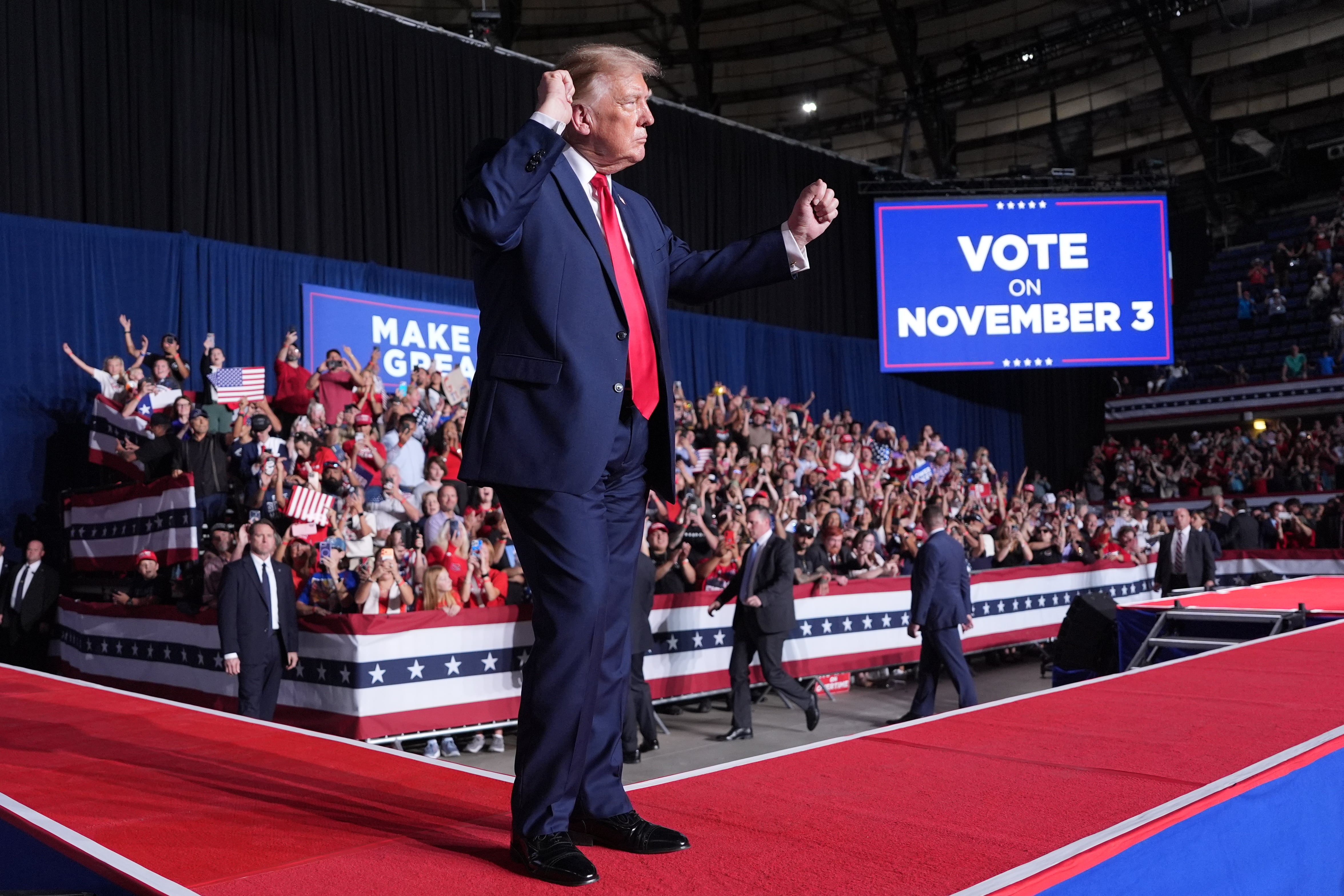
Charisma or cash: to win an election, candidates need at least one of those two factors. With two weeks to go until the U.S. midterm elections, Republicans are throwing everything they have into the closest states to try to climb back in polls that are unfavorable to them. They have the invaluable help of the vast sums Donald Trump raises through his Super PAC, the political action committee that pools donations coming from the ultraconservative MAGA movement.

Seguir leyendo

© Alex Brandon (AP Photo/Alex Brandon)

Donald Trump this Wednesday during a rally in San Antonio, Texas.
  •  

How Mark Zuckerberg Pushed Meta to Shield Him From California’s Proposed Wealth Tax

The billionaire told Meta’s board that he planned to list his Silicon Valley home for sale. The company remade its stock structure to help him pay the tax if voters pass it.

© Victor Llorente for The New York Times

Mark Zuckerberg, the chief executive of Meta, at his home in Lake Tahoe, Calif. He has another California home in Palo Alto, close to Meta’s headquarters.
  •  

Meta Earnings Show Increased A.I. Spending, Even as Cash Pressures Grow

The spending has hurt the Silicon Valley giant’s cash flow, which turned negative. Meta said it would issue a new class of stock to help it raise more money.

© Scott Ball for The New York Times

Construction of Meta’s Richland Parish Data Center in Holly Ridge, La.
  •  

In Oslo, US pushes Zelenskyy toward deal with Russia again. Day later, in same city, Norway discusses arming Ukraine with more NASAMS missiles

Ukrainian President Volodymyr Zelenskyy in Oslo, on 21 October 2026. Source: Facebook/Zelenskyy

As Washington leans on Ukraine to make a deal with Russia amid its diesel agreement ahead of the US elections, its European partners are meeting to keep it armed against deadly weapons.

President Volodymyr Zelenskyy said he met Kongsberg CEO Eirik Lie and Norwegian Defense Minister Tore Sandvik in Oslo on 21 October to discuss more NASAMS air defenses, a day after meeting US presidential envoy Steve Witkoff in the same city.

Washington has spent the past two weeks easing pressure on Russia and leaning on Kyiv, with a diesel deal, throttled Starlink, and talk of cutting intelligence, while Ukraine’s European partners move in the other direction. Russia pounds Ukrainian cities almost nightly, and the Norwegian-made NASAMS is one of the systems holding that barrage off critical infrastructure.

Kongsberg opened an office in Ukraine in 2025. Its NASAMS uses the AIM-120 AMRAAM missile built by the US defense giant RTX, the same firm behind the Patriot launchers that are Ukraine’s only means of downing Russian ballistic and hypersonic missiles. The same missile is also used in F-16s.

“They effectively protect our people and critical infrastructure from Russian missile and drone attacks virtually every day,” Zelenskyy said.

He added that Ukraine is counting on additional defense support packages next month.

A European shield Ukraine wants tested this year

The visit also advanced a joint missile-defense project. Norway is actively involved in FREYJA, a European anti-ballistic missile program that Ukraine is helping to build.

“There are already first results in creating individual elements of the system. Today we determined where we can and must speed up to reach testing by the end of this year,” Zelenskyy said.

FREYJA now draws in 10 countries and is built around an interceptor missile designed to stop ballistic threats, a capability Europe largely lacks against Russia’s fastest weapons.

A push for satellites as Starlink falters

Zelenskyy also raised satellite communications amid the scandal over speed limitations on Elon Musk’s military Starlink service that disrupted a series of front-line missions.

“We discussed in detail the start of work on new satellite-communication capabilities for our soldiers,” the president said, adding that Kyiv would bring in partners able to support them.

The push comes after SpaceX throttled the StarShield military package Ukrainian drones use. Ukraine’s 7th Air Assault Corps said the connection began dropping as drones moved at speed, negatively affecting their missions.

  •  

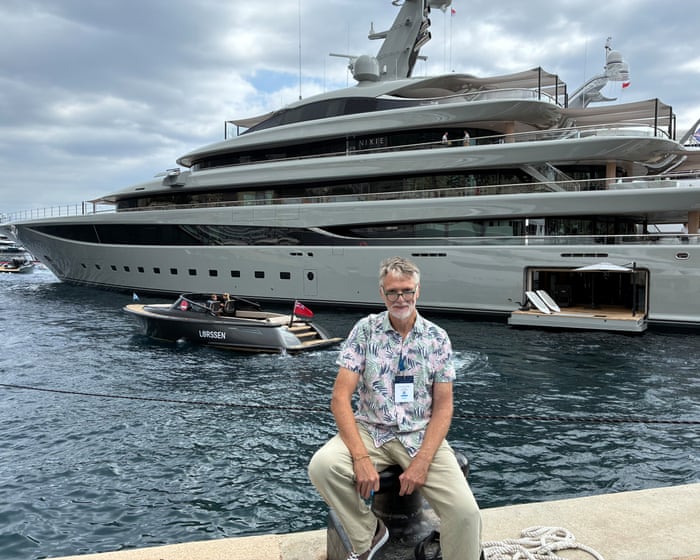
Excessive wealth, extreme emissions – and ecocide: what I learned at Europe’s big superyacht show

These yachts are highly popular with the ‘super-bourgeoisie’ – and getting bigger. Can anything be done to stop them destroying our seas?

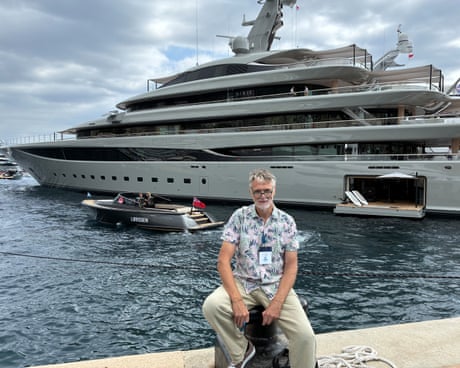
Who knew? Apparently everyone did, apart from me: you don’t wear shoes on a superyacht. Now, about to step on to my first teak deck at the Monaco Yacht Show, I’ve got to take my trainers off, and I’m having a sock panic. Have they got holes? Do they even match? Do they smell?

To be honest, I’ve come dressed all wrong for Europe’s big annual superyacht trade exhibition. The code for men seems to be crisp and tucked in, blazers and chinos, navy and white, sculpted hair and designer sunnies. (I went colourful, loose, casual). For women, it’s something like Riviera elegance. Everyone – whether they’re Italian, French, English, German, American, exhibitors, buyers, brokers, charterers – seems to know each other. The international superyacht community seems to be a close-knit one, and I’m not part of it. Yet.

Continue reading...

© Photograph: Sam Wollaston/The Guardian

© Photograph: Sam Wollaston/The Guardian

© Photograph: Sam Wollaston/The Guardian

  •  

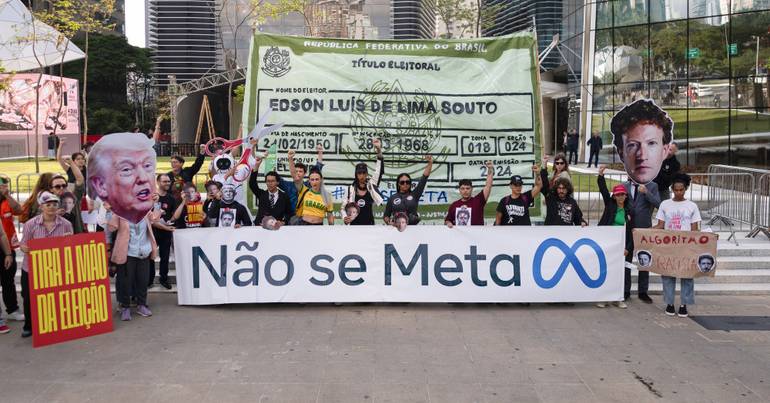
Manifestantes acusam Meta de favorecer Flávio Bolsonaro

"Meta, não se meta" era a palavra de ordem entoada pelos manifestantes, frente ao edifício que alberga o escritório da Meta. Campanha de Lula acusa a tecnológica norte-americana de favorecer rival.

© ISAAC FONTANA/EPA

Manifestantes concentraram-se no famoso centro financeiro da capital paulista, Faria Lima, segurando faixas e cartazes com fotografias do dono da Meta, Mark Zuckerberg
  •  

Felix Vulis: “I will inform Kazakhstan’s president and the European Council about ERG’s outstanding debt to me”

Former ENRC Chief Executive Says Unresolved Financial Obligations Could Raise Questions About Kazakhstan’s International Business Reputation.

Following his interview with EU Today, Felix Jeff Vulis discusses his outstanding financial claims, his relationship with Kazakhstan and why he intends to bring the matter to the attention of President Kassym-Jomart Tokayev.

For more than three decades, Felix Jeff Vulis has maintained close professional ties with Kazakhstan, a country whose transformation into a major international mining and industrial economy he witnessed firsthand.

His relationship with Kazakhstan began in the 1990s, when he helped introduce the country’s economic potential to American investors. In 2001, he joined Eurasian Natural Resources Corporation (ENRC), eventually becoming Chief Operating Officer and then Chief Executive Officer.

Under his leadership and that of his colleagues, ENRC expanded internationally, listed on the London Stock Exchange in 2007 and entered the FTSE 100, becoming one of Kazakhstan’s most prominent industrial companies.

But the relationship between Vulis and the group that subsequently became Eurasian Resources Group (ERG) has taken a different direction.

In a September interview with EU Today, Vulis described his years at ENRC, the challenges of corporate governance and the impact of the British Serious Fraud Office investigation, which ended in 2023 without charges.

He also raised a question that had remained largely outside public discussion: financial and contractual obligations that he believes ERG and related entities have failed to honor.

The first interview concluded with Vulis maintaining that ending a corporate position would not eliminate previously established financial obligations.

Now, in this proposed continuation, Vulis addresses the outstanding claims more directly and explains why he intends to seek the attention of Kazakhstan’s highest political authorities.

The unresolved financial questions

EU Today: In your previous interview, you spoke about financial obligations that you believe remain outstanding. What exactly are you referring to?

Felix Vulis: Throughout my many years with ENRC, I held significant executive responsibilities and worked under various contractual and financial arrangements.

My position is that certain obligations arising from those arrangements have not been fulfilled. These matters include remuneration and other financial entitlements associated with my professional relationship with the group.

I believe the relevant documentation should be reviewed and the legitimate outstanding obligations settled.

EU Today: Are we talking about a substantial amount of money?

Felix Vulis: I would prefer not to discuss specific figures publicly at this stage. There are financial calculations, contractual documents and correspondence that need to be considered.

This is not simply about a number. It is about respecting agreements and commitments.

EU Today: Has ERG been given an opportunity to resolve these matters privately?

Felix Vulis: My preference has always been to resolve outstanding issues through professional discussions rather than public confrontation.

I believe that an agreement remains possible if the relevant parties are prepared to examine the documentation and engage constructively.

But after so many years, I also believe that unresolved obligations cannot simply remain unanswered indefinitely.

Why the president of Kazakhstan?

EU Today: You have indicated that you intend to bring this matter to the attention of Kazakhstan’s President, Kassym-Jomart Tokayev. Why?

Felix Vulis: Because Kazakhstan is not an ordinary country in my professional life.

My relationship with Kazakhstan began long before I joined ENRC. I have spent decades working with its industries, institutions and people.

I have enormous respect for the country and its economic achievements.

At the same time, the Republic of Kazakhstan is an important shareholder in ERG. I believe that shareholders, particularly those representing a sovereign state, have a legitimate interest in ensuring that companies associated with them respect their financial and contractual commitments.

I intend to inform President Tokayev about my situation and explain why I believe these outstanding obligations deserve attention.

EU Today: Are you asking the President to intervene personally in a private financial dispute?

Felix Vulis: I am not asking the President to act as a judge or to assume responsibility for obligations that legally belong to a corporate entity.

I am asking for attention to a matter that I believe deserves a fair and professional review.

Kazakhstan has worked hard to establish itself as a reliable destination for international investment. That reputation depends, among other things, on confidence that legitimate business commitments will be respected.

EU Today: Do you believe the matter could damage Kazakhstan’s international reputation?

Felix Vulis: I sincerely hope it does not.

Under President Tokayev, Kazakhstan has made important efforts to strengthen its international standing, attract foreign investment and build confidence among its economic partners.

I recognize and appreciate those efforts.

However, when a former chief executive of one of the country’s most internationally recognized industrial groups raises unresolved financial claims, questions can arise about corporate governance and the treatment of contractual obligations.

I believe the best way to avoid unnecessary reputational questions is to examine the matter fairly and resolve legitimate claims.

The international dimension

EU Today: You are an American citizen. Could this matter also be raised in the United States or Europe?

Felix Vulis: As an American citizen, I have the right to protect my legitimate financial and contractual interests through the appropriate legal channels.

If a reasonable settlement cannot be reached, I intend to explore every lawful avenue available to me, including bringing the matter to the attention of relevant European institutions in Brussels and appropriate authorities in the United States.

That may include the US Department of State and the US Department of the Treasury, where there is a relevant basis for doing so.

I would much prefer that such steps prove unnecessary.

EU Today: Would you also approach European political institutions?

Felix Vulis: I reserve the right to raise the matter with appropriate European institutions, including the European Council, through lawful procedures and established channels.

My objective would be to explain my position and seek appropriate consideration, not to turn a private commercial matter into an international political confrontation.

EU Today: Some people might interpret these statements as pressure on ERG. How would you respond?

Felix Vulis: I am simply explaining the options that may be available to someone seeking to protect his contractual rights.

I have no interest in harming Kazakhstan or creating unnecessary difficulties for its international partners.

But I also do not believe that a person should be expected to abandon legitimate financial claims simply because the other party is a large and influential corporation.

Kazakhstan beyond ERG

EU Today: Has this experience changed your opinion of Kazakhstan as a place to do business?

Felix Vulis: No. My respect for Kazakhstan remains unchanged.

I still believe it has extraordinary economic potential, particularly in mining, critical minerals, energy, infrastructure and industrial development.

Its strategic position between Europe and Asia creates opportunities that extend far beyond the extraction of natural resources.

The country has the industrial experience, human capital and geographic advantages necessary to attract significant long-term investment.

That is precisely why I believe questions of contractual reliability and corporate governance matter so much.

EU Today: What message would you like President Tokayev to take from your letter?

Felix Vulis: That I remain a friend of Kazakhstan.

I am proud of the work we accomplished there, and I appreciate the efforts of the President to strengthen the country’s international credibility.

I hope the relevant parties will examine my claims seriously and help facilitate a fair resolution within the appropriate corporate and legal framework.

The strongest message Kazakhstan can send to international investors is that legitimate commitments are respected and contractual obligations are fulfilled.

The final question

EU Today: What would you say directly to ERG’s leadership today?

Felix Vulis: I would say that there is still an opportunity to resolve these matters professionally.

We have a long shared history. I spent an important part of my life helping build this company into an internationally recognized industrial group.

I would prefer to conclude our outstanding business through dialogue, mutual respect and fulfillment of legitimate obligations.

But I also intend to protect my rights.

I believe the responsible course is to sit down, review the facts, address the outstanding financial questions and reach a fair conclusion.

EU Today: What would you say to your former employees in Kazakhstan?

Felix Vulis: Thank you.

People sometimes talk about corporations as if corporations build factories.

They don’t.

People build factories.

People operate furnaces. People go underground. People run power stations. Engineers solve problems at three in the morning.

Whatever disagreements exist today cannot erase what those people accomplished.

I remain extremely proud of having worked with them.

EU Today: After years of silence, why should ERG believe that this time is different?

Felix Vulis: Because I am speaking now.

For years I chose discretion.

That was a conscious choice, not an inability to speak.

I continue to believe that a negotiated solution is better for everybody: for me, for ERG, for its shareholders and for everyone associated with our shared history.

But negotiation requires two sides.

EU Today: What exactly do you want?

Felix Vulis: A table.

The appropriate representatives.

The documents.

A serious discussion about everything that remains outstanding.

And then a comprehensive settlement that allows everybody to close this chapter.

EU Today: An apology?

Felix Vulis: No.

A solution.

EU Today: Revenge?

Felix Vulis: Absolutely not.

Revenge is emotional.

This is business.

EU Today: And if ERG refuses?

Felix Vulis: Then I will continue to defend my rights through every lawful mechanism available to me.

And where I am legally entitled to speak about my own experience, I reserve the right to do so.

EU Today: Is that a threat?

Felix Vulis: No.

It is clarity.

There is still an opportunity to resolve this privately and professionally.

I would prefer that.

After more than twenty years of shared history, I think sitting around a table is a much more intelligent ending than spending the next several years sitting opposite each other in courtrooms.

EU Today: If the people running ERG read only one sentence from this interview, what should it be?

Felix Vulis: Call me.

Let’s sit down and finish this properly.

  •  

António José Seguro transformou-se na Rainha de Inglaterra?

Seguro continua popular, mas apanha da esquerda à direita. Estará a virar figura decorativa? E ainda, o duelo de alemães e franceses pelos 44,9% da TAP, Greta Thunberg em Paris e a Netflix no Mundial.

  •  

Why Was Sadiq Khan Given a United Nations Award?

Parts of London look like a dump. But that hasn't stopped the UN from giving Mayor Sadiq Khan an award for "improving urban life". It's all very incestuous, says Charlotte Gill: the UN is just rewarding its cronies.

The post Why Was Sadiq Khan Given a United Nations Award? appeared first on The Daily Sceptic.

  •  

The End of the European Summer

Europe is warming more than twice as fast as the global average—a terrifying statistic made all too apparent this summer as heat wave followed heat wave. European cities were never designed for these temperatures, and public health, infrastructure, and tourism are all under strain. Eric Klinenberg arrives in Milan just as “Europe’s third heat wave of the summer entered its fiercest stretch” and sweats his way across the continent to see how trees, shade, water, and other measures are being deployed to adapt urban centers. But with this crisis set to deepen can these experiments really keep pace?

Of all the problems that heat poses for Barcelona, losing some of the hundred and sixty thousand tourists who typically visit each day ranks low on the priority lists of most officials and residents. Some locals have staged protests, chanting “Tourists go home” while targeting visitors with water guns. But tourism employs more than a hundred and sixty thousand people in Barcelona and accounts for around thirteen per cent of its economic output, which explains why, despite concerns that the city gets too many visitors, more than seventy per cent of residents consider tourism beneficial. At midday, when I arrived on La Rambla, the city’s most heavily visited and photographed corridor, the street had little shade and surprisingly few people. At La Boqueria market, normally jam-packed at lunchtime, I found my way to a famously busy bar counter and took one of several open seats.

  •  
❌