❌

Reading view

She Planned to Protest Trump. She Didn’t Plan on Getting Punched.

Blake Miley yelled “fascist” as President Trump spoke at a midterm campaign rally. The violence that followed “was not right,” she said.

© Nick Fancher for The New York Times

“I knew there was a really good possibility that this would happen,” Blake Miley said. “But I don’t blame myself. It is not right what they did to me.”
  •  

How a Small Student Protest Spread Across France

A movement that began with a few high schools has broadened to encompass labor unions and other activists.

© Dimitar Dilkoff/Agence France-Presse — Getty Images

Protesters in Paris this month during a nationwide day of actions called by high school students and joined by unions and teachers.
  •  

Looting Left Damage and Fear on Paradise Street in Marseille

Looters ravaged a storied commercial avenue in France’s second-largest city. Its merchants fear that more unrest could follow.

© Thibaud Moritz/Agence France-Presse — Getty Images

Damaged stores after rioting this month on Paradise Street in Marseille, France.
  •  

Italy Investigates Possible Russian Role in Milan Riots as Meloni Confronts Hybrid Warfare Threat

Italian authorities are examining whether foreign interference helped intensify violent protests across the country, as Defence Minister Guido Crosetto warns that social media is being used as an instrument of hybrid warfare. Prime Minister Giorgia Meloni has introduced emergency security measures and deployed additional troops to Milan, while further demonstrations are planned for Saturday, 24 October.

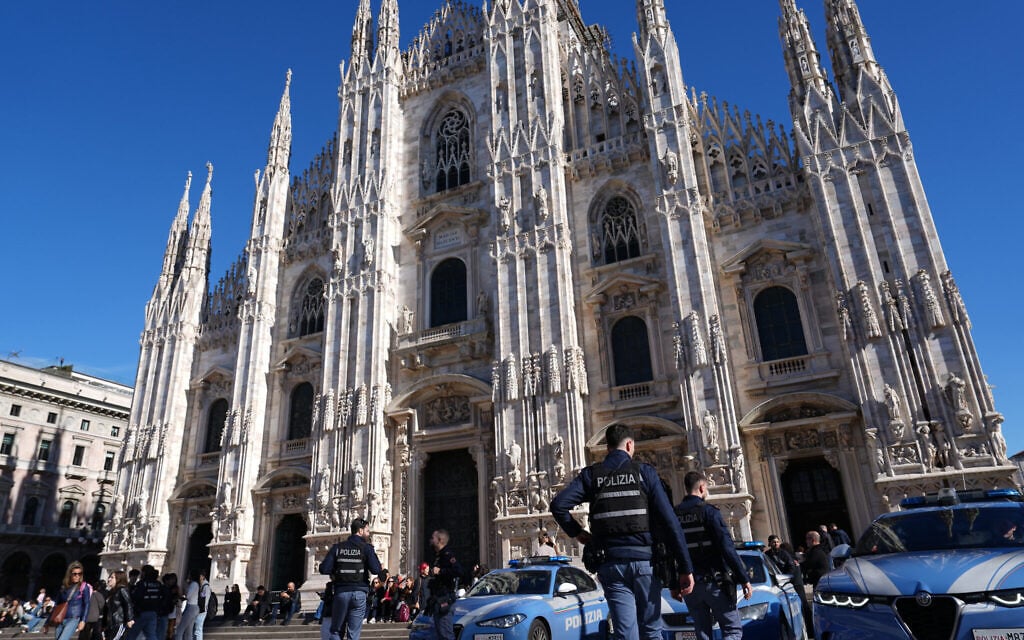
Italy is investigating the possibility that foreign actors, including Russian operatives, helped amplify the violent unrest that swept Milan and other Italian cities on 17–18 October. The inquiry introduces a national security dimension to demonstrations initially driven by rising living costs, dissatisfaction with public services and broader economic grievances.

According to information disclosed about the government’s intelligence inquiries, officials working under Prime Minister Giorgia Meloni have requested assessments of whether foreign provocateurs contributed to the disorder. No public evidence has established that Moscow organised the violence, and Meloni’s office has declined to comment on the reported intelligence discussions.

The developments follow EU Today’s earlier coverage of the Milan disturbances, which documented extensive looting, attacks on police and the detention of hundreds of young people, many of them minors. Since then, Rome has moved beyond emergency consultations, approving legislation that expands police powers and introduces tougher criminal penalties for violent demonstrations.

On Saturday, 24 October, Italian security forces are preparing for another wave of protests, with additional military personnel, drones and specialist police units deployed in several major cities. The immediate question is whether the government can prevent further disorder while establishing how much of the unrest was locally organised and whether foreign information operations influenced its development.

Crosetto warns of hybrid warfare through social media

Defence Minister Guido Crosetto introduced the hybrid warfare argument during a Defence Procurement Forum in Rome on Tuesday, 20 October. In remarks recorded by Italian public broadcaster Rai, he described the disturbances as the culmination of a form of conflict being conducted through TikTok, YouTube and other social media platforms.

Crosetto argued that young Italians were undergoing what he called a form of counter-education outside their families and schools, absorbing political attitudes and values increasingly hostile to democratic institutions. He criticised Western governments for failing to recognise the consequences of this process, although he did not publicly present intelligence establishing Russian responsibility for the riots.

His comments also exposed differences within the governing coalition. Deputy Prime Minister Matteo Salvini questioned suggestions of Russian involvement, arguing that the immediate priority was identifying violent groups and preventing their movement into Milan.

Russian information operations under scrutiny

European investigators have identified activity by established Russia-linked disinformation networks, including Operation Overload and Doppelgänger, which have circulated and amplified material concerning the unrest.

These operations have previously used manipulated content, misleading narratives and coordinated online distribution to influence European audiences. In the present case, investigations into the online amplification of the violence have identified foreign exploitation of the disturbances, rather than proof that foreign governments organised them.

The European Commission has consequently declined to initiate emergency intervention against social media platforms, citing insufficient evidence linking foreign manipulation directly to the organisation of the protests.

France has taken a similarly cautious position. President Emmanuel Macron acknowledged that foreign actors had manipulated information after the violence but said there was no established evidence that they caused the disturbances. French Foreign Minister Jean-Noël Barrot has separately identified hostile narratives originating from Russia, China and Iran.

For European security authorities, the principal investigative question concerns the relationship between genuine domestic grievances and externally coordinated information campaigns. Foreign networks can exploit political divisions without necessarily directing the organisations or individuals involved in street violence.

Meloni introduces tougher security legislation

Meanwhile, Meloni’s government has proceeded with a substantial legislative response. Following cabinet approval on 20 October, Decree-Law No. 190 of 22 October 2026 entered into force on 23 October.

The legislation introduces penalties of two to five years’ imprisonment and fines of €10,000 to €20,000 for specified forms of organised violence during public demonstrations. Those organising or encouraging qualifying violent groups, including through digital communications, face potential prison terms of four to twelve years. It also expands provisions concerning juvenile offenders and preventive policing. The decree must undergo parliamentary consideration within 60 days.

Separately, the Italian Defence Ministry confirmed the deployment of 500 additional soldiers to Milan under Operation Strade Sicure until 31 December. The soldiers will reinforce security around sensitive locations and support existing police operations without acquiring additional judicial policing powers.

New demonstrations test the government’s response

Security arrangements have been intensified ahead of demonstrations scheduled for Saturday, 24 October, in Milan, Rome, Turin, Bologna, Florence and other cities.

According to the latest security preparations, Rome is deploying approximately 1,500 officers, while Milan is preparing a combined police and military presence supported by aerial surveillance.

On Friday, Italian investigators conducted searches targeting approximately 100 people suspected of involvement in the previous weekend’s disturbances, including 51 minors. Authorities are also monitoring online calls for renewed protests, some organised by groups whose leadership and membership remain unclear.

The unrest presents Meloni with two parallel challenges: containing violence and determining whether hostile foreign networks have played a significant role in its escalation. Italy’s investigations may help establish whether the events represent primarily a domestic public-order crisis, the exploitation of existing tensions by foreign actors, or a combination of both.

For Brussels, the outcome could influence future enforcement of the EU’s Digital Services Act and its wider response to foreign information manipulation. For now, the evidence supports concern about Russian amplification of European unrest, but not a definitive conclusion that Moscow orchestrated the riots.

  •  
  •  

How Defiant Youth Are Testing India’s Idea of Democracy

Four takeaways from India’s protest movement, at a moment when democracies around the world are under pressure.

© Saumya Khandelwal for The New York Times

Security personnel detaining protesters demanding the resignation of the head of India’s election commission this month in New Delhi.
  •  

France Plans to Bolster Police Presence, Expecting New Protests

Government officials are trying to avoid a repeat of last weekend’s unrest across the country, which injured police officers and damaged stores.

© Abdul Saboor/Reuters

Riot police officers during civil unrest in Paris on Sunday.
  •  

Riots in France Are an Attack on Western Civilisation

The riots in France and across Europe are a direct assault on Western civilisation, fuelled by decades of 'progressive' denigration of our cultural inheritance and the sowing of division, says Kevin Donnelly.

The post Riots in France Are an Attack on Western Civilisation appeared first on The Daily Sceptic.

  •  

Why Do People Really Take to The Streets?

Are the French riots coming to Britain? The conditions are certainly ripe, says Guy de la Bédoyère. Besides, history shows that humans hardly need much excuse to indulge in the perverse thrill of mob violence.

The post Why Do People Really Take to The Streets? appeared first on The Daily Sceptic.

  •  

In Wake of Riots, French Authorities Ban Some Protests

President Emmanuel Macron said the move was necessary “so that calm prevails.”

© Simon Wohlfahrt/Agence France-Presse — Getty Images

Police officers in Paris on Tuesday during a partial curfew put in place after last weekend’s demonstrations.
  •  

The Road to Civil War is Paved with Restored Order

The riots in France and subsequent return to peace show that the road to civil war is paved with restored order, leaving a more combustible environment for the next crisis, say David Betz and Michael Rainsborough.

The post The Road to Civil War is Paved with Restored Order appeared first on The Daily Sceptic.

  •  

Looted Goods From French Stores Appear on Resale Sites After Riots

Officials in France are pressing online platforms like eBay and Vinted to remove items that were stolen during public disturbances over the weekend.

© Abdul Saboor/Reuters

People smashing a store on a day of demonstrations against the cost of living and rising fuel prices in Paris.
  •  

Student Protests Mushroom Across Europe, Exposing Bleak Views of the Future

Since high school students began protesting in France in September, they’ve been joined by young demonstrators in at least seven other European countries.

© Angelos Tzortzinis/Agence France-Presse — Getty Images

Protesters against the high cost of living in Athens, Greece, on Wednesday.
  •  

France: Video released showing moments before Limoges town hall set on fire, far-left extremist arrested

A newly circulated video posted on Oct. 21 shows the first moments of the Oct. 17 arson at the historic Hôtel de Ville in Limoges, which served as the city hall.

🇫🇷🔴 JUST IN: This is how the fire at Limoges city hall started. Antifa and migrant youth are present, many of them unmasked. The police have already made one arrest of a far-left extremist known to police. Follow: @RMXnews https://t.co/keDdSd0MAS

— Remix News & Views (@RMXnews) October 21, 2026

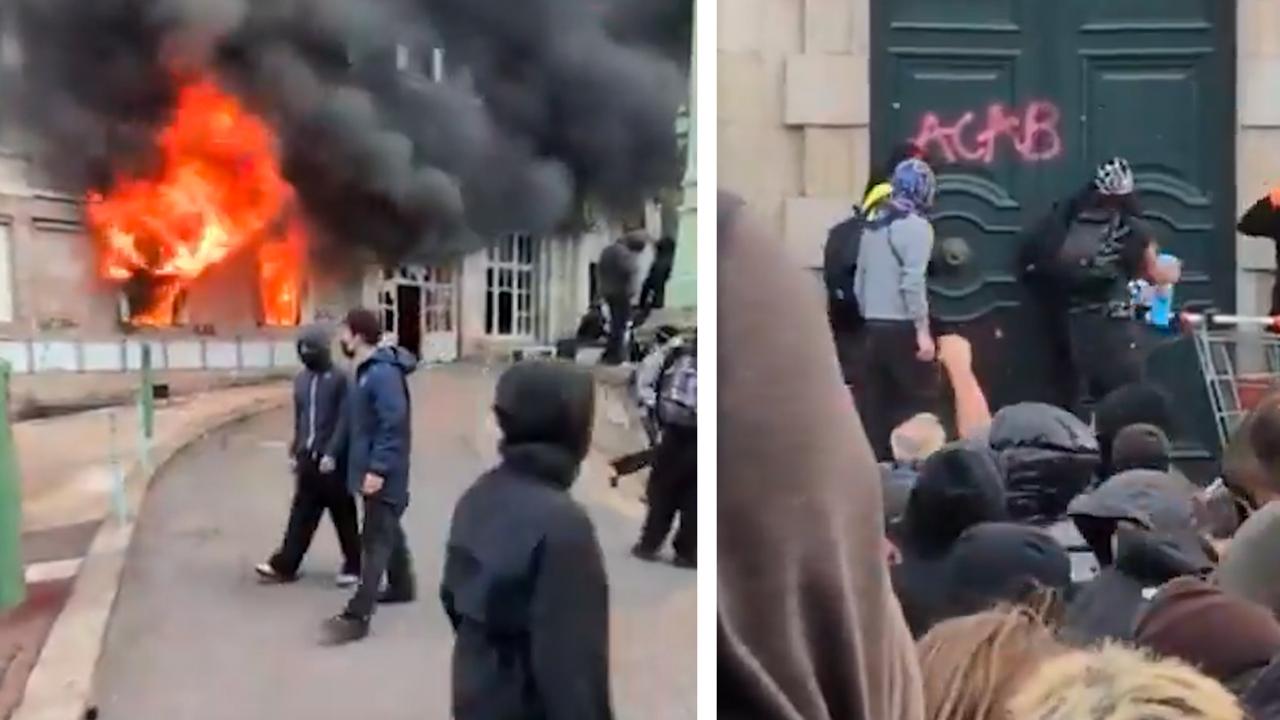
The video, which was released by news outlet Le Populaire du Centre, shows a crowd gathering in Place Jacques Chirac made up mainly of Antifa and various youths, many with a clear migration background. The demonstration ended at 5:48 p.m. and a crowd then moved onto the square in front of the city hall. The video shows graffiti reading “ACAB” is visible on the main doors.

Many of the individuals are wearing hoods or masks typical of black-bloc attire, but a significant number, including possible suspects, are unmasked. Shortly after the video begins, intense flames are seen bursting from the building’s windows and upper floors.

According to police, a group of masked individuals smashed windows, entered the 1883 neo-Renaissance landmark, and set fires while staff and others were still inside, leading to the collapse of the roof and clock tower.

https://rmx.news/article/following-mass-riots-france-debt-interest-soars-to-4-94-reaching-risk-levels-not-seen-since-2012/

Prefect Maurice Barate called it a deliberate “heritage catastrophe” by hooligans. Mayor Guillaume Guérin has repeatedly blamed ultra-left militants who infiltrated the larger protest of about 5,000 people, saying the action appeared organized and prepared.

The mayor also gave a tour of the devastated building, stating he refused to call the arsonists vandals or thugs. Instead, he called them “terrorists.”

⚠"Il faut que tout le monde voie ces images". Guillaume Guérin, maire de Limoges, nous fait une visite de son Hôtel de Ville sous les décombres. Je me refuse désormais à nommer ces gens-là d’émeutiers ou de casseurs. Ce sont des terroristes. https://t.co/4KgClYxFsl

— Ô.Mercedes (@DolceVenezia74) October 20, 2026

On the morning of Oct. 20, RAID officers arrested a 34-year-old man identified in French media as Hodei Ciarra Docampo in Val-d’Issoire, roughly 50 kilometers away. He is described as a known ultra-left activist already on France’s “S File” security watchlist, with a prior record of violence against police and involvement in radical environmental groups.

Authorities say video and image evidence helped identify him as a suspect in the arson, however, he is believed to be just one of several suspects. The mayor has called him likely the “brain” of the operation. The investigation, for destruction of property by dangerous means in an organized group, involves the anti-terrorism sub-directorate. Earlier, 17 people linked to the broader unrest in Limoges had been taken into custody.

Reconstruction of the heavily damaged city hall is expected to be costly, and the state has indicated it will assist. As of Oct. 21, the main suspect remains in extended custody while the inquiry continues.

The post France: Video released showing moments before Limoges town hall set on fire, far-left extremist arrested appeared first on Remix News.

  •  

Meloni Toughens Italy’s Riot Laws After Milan Violence

Italy’s response to a weekend of street violence has moved from emergency policing to tougher criminal law, with Prime Minister Giorgia Meloni seeking to reassert control after unrest in Milan and other northern cities

The government approved measures on Tuesday creating an offence of violent participation in demonstrations, extending preventive detention powers to teenagers aged 14–17 and making parents financially liable for damage caused by their children. The package also provides for 500 soldiers to support security operations in Milan through December.

The crackdown presents a defining challenge for a prime minister whose political identity rests heavily on law and order: demonstrating that stronger powers can prevent another eruption while addressing the conditions feeding public anger.

Milan’s damaged shopping streets have become the most visible symbol of that challenge. Weekend violence brought looting, fires and confrontations with police, exposing businesses and residents to disorder in Italy’s financial capital.

As EU Today reported in its earlier coverage of the unrest, police brought 271 people to headquarters following Sunday’s disturbances, including 220 minors. Thirty-two were formally arrested, a detail that matters when assessing the scale of alleged criminal involvement.

The prominence of teenagers has shaped the government’s response. According to the Associated Press, the decree makes prosecuting minors over 14 easier and includes plans to expand juvenile detention capacity and judicial resources. Parliament must convert the decree into law within 60 days.

For supporters, the argument is straightforward: shopkeepers should not have to absorb the cost of destruction, and officers need effective tools against groups exploiting demonstrations to commit offences.

Yet preventive detention raises a different question from punishment after conviction. Its credibility depends on clear evidence, consistent safeguards and meaningful scrutiny, particularly when those affected are children.

Making the distinction will help determine whether the package strengthens public confidence or deepens distrust among young people already alienated from political institutions.

The wider European debate offers a warning. In its earlier editorial, EU Global examined the tension between public-order legislation and the right to protest, arguing that governments risk restricting legitimate dissent when security powers expand too broadly. That commentary predates the Milan disturbances but addresses the central democratic question now confronting Italy.

Peaceful assembly and criminal violence require different responses. Protecting the former gives authorities greater legitimacy when confronting the latter; treating an entire demonstration as suspect risks weakening that distinction.

Meloni also faces a political vulnerability that additional arrests cannot automatically resolve. The Financial Times reported that the unrest involved teenagers mobilised through social media, many without political affiliations, against a background of economic stagnation and expensive living conditions.

Those circumstances complicate any attempt to explain the disorder through a single organisation, ideology or grievance. Online mobilisation can accelerate confrontation without producing leaders capable of negotiating an end to it.

For the government, this makes prevention as important as punishment. Better intelligence, timely deployment and coordination between national and municipal authorities will influence whether stronger legislation produces safer streets.

The same applies to the military presence. Soldiers can provide visible reassurance, but the political test will be whether residents and businesses experience sustained security once the immediate emergency passes.

Italy faces two connected tasks.

Establishing individual responsibility for destruction and restoring confidence that lawful political participation can deliver results will be the priorities if public respect for the law is to be maintained.

Meloni’s new measures offer a forceful immediate answer to the first. Their lasting success will depend on whether the government can make progress on the second, before another weekend of anger becomes another emergency requiring still tougher powers.

  •  

France: Rioters threatened woman with rape her while she was holding her infant, but feminist activist claims mere ‘collateral damage’ for the revolution

A feminist activist who also serves as a university instructor described a French woman’s account of being threatened with rape while holding her infant as “collateral damage” of a revolution she supports,. The video was filmed the day after widespread unrest in France.

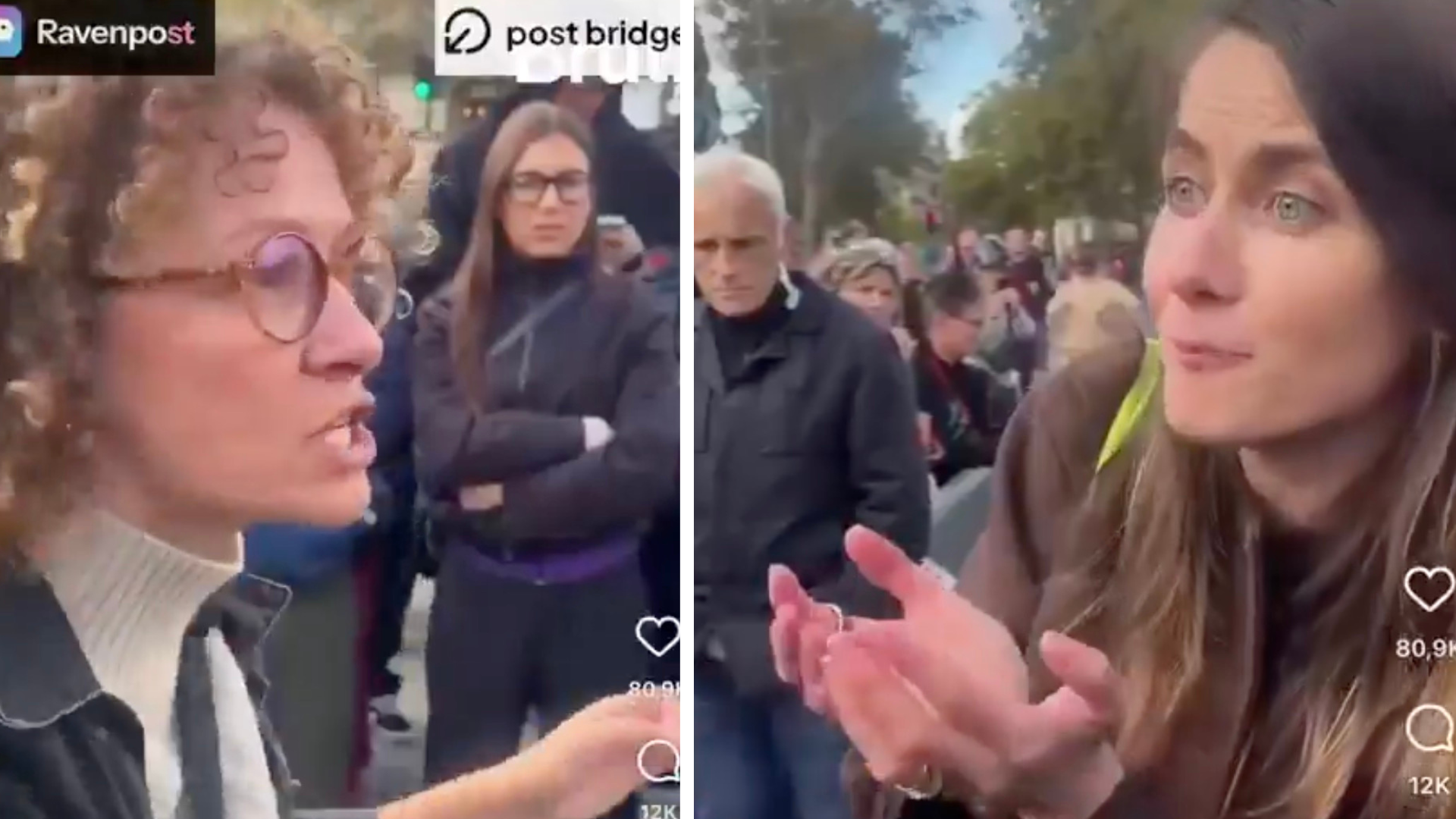
The exchange, recorded by the online media outlet Brut on Oct. 18 at Place de la République in Paris, shows a young mother confronting adjunct professor Bettina Zourli. The mother said looters who had tried to pillage a nearby shop called her a “dirty bourgeois,” attempted to force their way into her apartment, and threatened to rape her while she was with her infant.

“With my infant in an apartment I was driven out of because I was told they were going to rape me,” said the woman.

A French woman was threatened with rape while holding her child in her arms.

She said the suspects were the same rioters the left claims are “student” protesters.

The debate took a truly heinous turn when feminist activist and adjunct instructor Bettina Zourli claimed this was simply “collateral damage.” She stated that the revolution will be violent and that she supports this revolution.

Bettina Zourli has a master’s degree in gender studies, performs research on reproductive rights and gender, and describes herself on her Instagram profile as “childfree and Antifa.”

Zourli has lectured at major universities, such as the University of Lille, and currently serves as an instructor at the University of Rennes.

The University of Rennes has now publicly distanced itself, saying the university refuses all forms of violence and that her remarks do not reflect its position.

Source: @ImtiazMadmood

— Remix News & Views (@RMXnews) October 20, 2026

Zourli responded that the episode of was “collateral damage,” stated that “a revolution does not arrive calmly,” and said she supports the revolution. She also described property damage, including attacks on banks, as normal.

The video, which has circulated widely on social media, has drawn sharp criticism. Zourli later wrote that she condemns men who threaten women with rape and that the clip captured a discussion about not diverting attention from what she called the “initial violence.” She said she supports the broader movement and a “diversity of tactics.”

Zourli holds a master’s degree in gender studies, has written books on voluntary childlessness, gender norms and reproductive rights, and describes herself on Instagram as “feminist, childfree and Antifa.” She has lectured at the University of Lille and serves as an adjunct instructor in sociology of gender at Université Rennes 2. She does not hold a doctorate and is not a permanent faculty member.

Université Rennes 2 said in a statement that it “has always resolutely affirmed its refusal of all forms of violence” and that Zourli’s remarks “in no way reflect the position of the university” and are “totally contrary to the values of our establishment.”

The confrontation occurred the day after Oct. 17 protests over the cost of living and school conditions that drew hundreds of thousands of people nationwide and sparked violent protests. One one day alone, authorities reported roughly 1,200 to 1,800 arrests, widespread looting of shops, arson and clashes with police in Paris and other cities. Ongoing high-school blockades over teacher shortages and classroom conditions are now threatening to continue next week on Oct. 24 and another one on Oct. 31.

The post France: Rioters threatened woman with rape her while she was holding her infant, but feminist activist claims mere ‘collateral damage’ for the revolution appeared first on Remix News.

  •  

Meloni Prepares New Security Measures After Milan Riots Leave Hundreds Detained

Italian Prime Minister Giorgia Meloni has convened an emergency government meeting following two days of violent unrest in Milan and other northern cities, where demonstrators clashed with police, looted shops and damaged public property during protests over living costs and deteriorating public services.

Police brought 271 people to police headquarters following Sunday’s disturbances in Milan, including 220 minors. Of those detained, 32 were formally arrested and another 28 were reported to the judicial authorities, according to figures released on Monday, 19th October.

The violence has prompted the Italian government to consider further restrictions on those involved in violent demonstrations, potentially introducing additional powers directed at organised disorder and juvenile offenders.

Milan city centre hit by looting

The disturbances began during demonstrations on Saturday, 17th October, organised amid growing dissatisfaction over household expenses, public services and wider political grievances.

Although the protests initially included peaceful participants, groups of masked individuals subsequently confronted riot police in central Milan. Officers used tear gas and water cannon as demonstrators erected burning barricades and threw objects at security personnel.

The unrest continued on Sunday, when shops were attacked close to Piazza del Duomo, one of Milan’s principal commercial and tourist areas.

Among the premises targeted were branches of Decathlon, Arc’teryx and Vodafone. Television footage showed damaged shopfronts, overturned street furniture and burning rubbish containers.

According to police figures reported on Monday, 174 of those taken to police headquarters were subjected to preventive detention measures introduced under recent Italian security legislation.

Fourteen members of the security services were reported injured during Sunday’s disturbances, including ten police officers and four members of the municipal police.

The judicial authorities are examining the conduct of individuals suspected of taking part in attacks on businesses and confrontations with officers. Prosecutors have sought custodial measures against several adults accused of offences including devastation, looting and aggravated resistance.

The large proportion of minors among those detained has become a central issue in the political response.

Violence spreads across northern Italy

Milan was not the only city affected by disorder. Saturday’s demonstrations also produced confrontations in Turin, Bologna, Brescia and Bergamo.

Italian police reported arrests across the affected cities, while the scale and organisation of the disturbances have raised questions about whether different groups were acting independently or using demonstrations as opportunities for coordinated violence.

There is not yet sufficient publicly established evidence to attribute the disorder to a single organisation or political movement.

The clashes coincided with major protests in neighbouring France, where similar concerns over living costs and public administration have contributed to increasingly confrontational demonstrations.

Although the grievances overlap, the Italian and French movements have different political backgrounds and organisational structures.

Government considers emergency legislation

Following a meeting at Palazzo Chigi on Monday, Meloni’s government indicated that it was considering a legislative response, potentially through an emergency decree.

According to details of the government discussions, proposals under examination include additional measures against violent offences, changes to preventive policing and possible restrictions addressing road blockages.

Some measures could be drawn from security legislation already under consideration in the Italian Senate. Ministers have also discussed the need for more effective intervention against juvenile offenders.

The meeting included Deputy Prime Ministers Matteo Salvini and Antonio Tajani, Interior Minister Matteo Piantedosi, Defence Minister Guido Crosetto and senior officials from the police, Carabinieri and intelligence services.

The government has stressed that peaceful demonstrations must remain protected while arguing that violence and organised destruction require a stronger response.

No final legislative text had been adopted at the conclusion of Monday’s meeting. A decree could be considered by the Council of Ministers as early as Tuesday, although the precise content remains subject to further examination.

Dispute over responsibility for policing

The unrest has also produced a dispute between Milan’s municipal authorities and the national government.

Mayor Giuseppe Sala questioned the adequacy of the policing arrangements, arguing that the number of officers initially deployed was insufficient to control the disturbances.

Interior Minister Matteo Piantedosi rejected that criticism, while senior government figures accused local political leaders of failing to condemn the violence unequivocally.

The disagreement reflects a wider question over how responsibility for anticipating and containing serious public disorder should be divided between local administrations and national security authorities.

Italy’s opposition has also challenged the government’s handling of the disturbances. Former Prime Minister Matteo Renzi criticised Meloni and Piantedosi over their failure to prevent the violence, calling for a change in leadership at the Interior Ministry.

The political argument is likely to intensify if the government proceeds with emergency legislation. Supporters of stronger police powers argue that the existing framework is insufficient to deal with rapidly organised disturbances, while opponents will scrutinise the proportionality of new restrictions and their effect on peaceful protest.

The immediate test for the government will be whether additional legal powers can improve public-order operations without replacing effective policing, intelligence gathering and judicial enforcement.

  •  

France on Fire: Macron Government Blames ‘Far-Left’ for Fuelling Nationwide Riots, Looting, and Arson

by Kurt Zindulka, Breitbart: The French government has accused the far-left of stoking the riots that engulfed the nation on Saturday, resulting in widespread clashes with police, looting of shops, as well as vandalism and arson of government buildings. What began last month as a small protest over teacher shortages at a school in the Créteil […]
  •  
❌