❌

Reading view

Climate Science and Emissions Cuts Face Growing Resistance Ahead of COP31
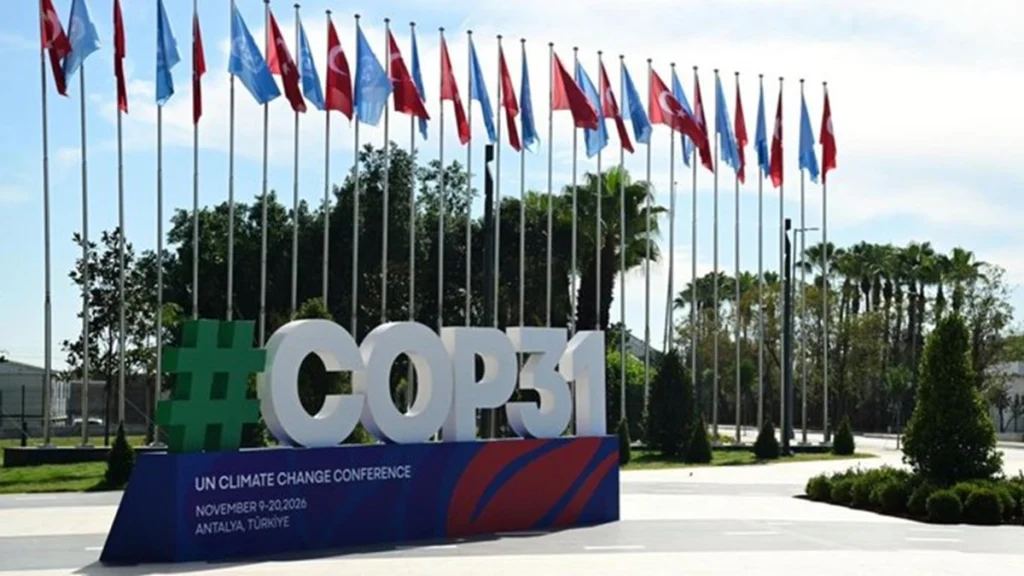
Disputes Over the 1.5-Degree Celsius Limit Highlight Deep Divisions as Countries Prepare for the Summit in Türkiye.

From Nov. 9 to 20, the 31st Conference of the Parties to the United Nations Framework Convention on Climate Change (UNFCCC) will take place in Antalya, Türkiye, bringing together world leaders, government negotiators, scientists and civil society representatives to coordinate international action against climate change.

RELATED:

Climate Change To Reduce French GDP Growth in 2026

The major event in global environmental governance will unfold amid efforts by major oil producers to delay the publication of new reports by the Intergovernmental Panel on Climate Change (IPCC) and prevent more ambitious measures to reduce emissions.

The divisions were already evident during the preparatory negotiations in June in Bonn, Germany, where countries such as Saudi Arabia clashed with the European Union (EU) and small island states, which defend maintaining the 1.5-degree Celsius threshold as the benchmark for assessing emissions reduction commitments.

At those meetings, representatives of countries vulnerable to the climate crisis denounced attacks on science by governments with interests in fossil fuels.

Fiji’s chief negotiator, Sivendra Michael, explained that some countries had tried to remove references to the IPCC, the leading authority on the subject, and the 1.5-degree Celsius limit from the documents.

“For Fiji and our Pacific neighbors, 1.5 degrees is not an abstract goal. It is the threshold that determines whether our islands will remain habitable. The IPCC allows the world to understand why that threshold matters and what is needed to avoid exceeding it. It is the backbone of our climate diplomacy. Removing science from the text does not change the science. It only weakens the decisions intended to respond to its findings,” Michael said.

Several sources agree that Saudi Arabia and India, among others, were among the countries that challenged those references, while Riyadh went so far as to invoke the goal of keeping warming below 2 degrees Celsius without mentioning the more ambitious 1.5-degree Celsius limit.

The difference is significant: The Paris Agreement, adopted in 2015 by nearly 200 countries, establishes a commitment to keep global warming well below 2 degrees Celsius above preindustrial levels and pursue efforts to limit it to 1.5 degrees Celsius.

Although both thresholds are part of the same agreement, scientists warn that every additional tenth of a degree of warming increases the risk of extreme weather events, biodiversity loss and irreversible damage to ecosystems.

The #UnitedNations said that the window has closed to stop the earth from heating above 1.5 degrees celsius, a target set by leaders at the #ParisClimateConference in 2015.

But, it says that it is still possible and worthwhile to limit the overshoot as much as possible, because… pic.twitter.com/ZdMlfzHSrG

— FRANCE 24 English (@France24_en) October 22, 2026

Dispute Reaches the IPCC

The confrontation has also spread to the IPCC, the leading international scientific body on climate change, which on Friday, Oct. 16, suspended its meeting in Addis Ababa without reaching an agreement on the publication schedule for its next major report.

The deadlock, which has lasted nearly three years, threatens to prevent the scientific assessment from being available before the end of 2028, when countries will have to review their progress in meeting the Paris Agreement.

Countries such as Saudi Arabia, Russia and India, and at times China and Kenya, argued that more time was needed to prepare the reports and facilitate the participation of scientists from developing countries, which have fewer resources available to take part.

Opposing them, a coalition of European, Latin American and African states, along with small island states, called for an accelerated timetable so that upcoming negotiations would have access to the IPCC’s scientific findings.

Some analysts consider expanding the participation of scientists from developing countries a positive step but point out that countries such as Saudi Arabia, which has a record of resisting climate commitments, have used obstructionist tactics at IPCC meetings, where the timetable is adopted by consensus.

The window has closed; this year's #EmissionsGap report states that overshoot of 1.5°C is now inevitable.

What's needed to limit the overshoot to 1.7-1.8 °C & return to 1.5°C requires gov'ts to step up. 🌎greenhouse gas emissions must drop 45% by 2035 compared to 2025 levels.… pic.twitter.com/lH7uIoC3I2

— IISD Energy (@IISD_Energy) October 22, 2026

A Goal Growing More Distant

The most vulnerable countries reject the idea that better scientific representation and the urgency of taking action are incompatible goals. “Delaying essential climate science is a betrayal of vulnerable developing countries,” said Adao Soares Barbosa, chair of the Least Developed Countries Group, which brings together more than 40 states, most of them in Africa.

“It is very concerning that the integrity of the IPCC and the available science are being eroded,” said Cosima Cassel, an expert at the E3G think tank. She called for the new reports to be available before the 2028 global stocktake to avoid relying on outdated assessments.

The dispute coincides with a warning from the United Nations Environment Programme (UNEP) that current climate commitments are insufficient and the planet will exceed 1.5 degrees Celsius of warming in the coming years. Under current policies, warming would reach 2.8 degrees Celsius this century.

UNEP considers it still possible to limit peak warming to between 1.7 and 1.8 degrees Celsius and return to 1.5 degrees Celsius or below by 2100, but doing so would require much deeper emissions cuts and the removal of CO2 from the atmosphere.

“Exceeding the threshold does not change the goal,” Michael said, warning that every additional tenth of a degree would mean more damage to the Pacific.

teleSUR/ JF

Source: EFE

  •  

Mexico Deploys Special Mission as Hurricane Vance Nears Pacific Coast

The storm is expected to bring heavy rain, gusty winds and high waves to the states of Guerrero, Michoacan, Colima and Jalisco.

On Sunday, the Mexican government deployed a liaison and coordination mission to several Pacific coast states as Category 1 Hurricane Vance, on the five-category Saffir-Simpson wind scale, approaches the country’s western coast.

RELATED:

Mexico to Commemorate World Day for Audiovisual Heritage

The National Coordination of Civil Protection said the storm is expected to bring heavy rain, gusty winds and high waves to the western states of Guerrero, Michoacan, Colima and Jalisco.

Authorities urged residents in those states to remain alert to official warnings. They also advised those living near or traveling close to riverbanks, streams, or water channels to assess their surroundings and evacuate immediately to higher ground at the first sign of rising water.

“It is crucial to avoid crossing—whether on foot or by vehicle—flowing water, flooded streets, or submerged bridges, as the force of the current can sweep away both people and vehicles,” stated the National Coordination for Civil Protection (CNPC).

Tracking the center of Category 1 HURRICANE VANCE on 2026-10-25 UTC from GOES-West (true color night + colorized infrared) pic.twitter.com/eeKxrTJfP9

— 🏴‍☠️Luc Fontaine🏴‍☠️ (@coyotefxl) October 26, 2026

At 9 a.m. local time, Hurricane Vance was located about 440 km southwest of the port of Lazaro Cardenas in Michoacan and 510 km southwest of the resort city of Acapulco in Guerrero.

The storm is moving northwest at 7 kph, with maximum sustained winds of 120 kph and gusts of 150 kph, and is expected to bring rain of 50 to 75 millimeters in the four affected states.

The rainfall could also trigger landslides, cause rivers and stream levels to rise, and lead to overflowing waterways and flooding in low-lying areas.

teleSUR/ JF

Sources: Xinhua – EFE

  •  

I cashed in my retirement fund to open the first romance bookstore in my neighborhood. It was a risk, but it paid off.

Kate McNeil is sitting in a reading chair, holding a cat in her lap, with a bookshelf in the background.
Kate McNeil

The Sintoses

  • Kate McNeil opened All the Tropes, a romance bookstore, six weeks after quitting her job.
  • Despite concerns about market saturation, All the Tropes thrives as a niche community destination.
  • Passion, perseverance, and local support helped McNeil launch her business.

This as-told-to essay is based on a conversation with Kate McNeil, a 41-year-old small-business owner based in Atlanta. It's been edited for length and clarity.

The idea to open a romance bookstore started during COVID.

I joined an online group of fellow romantasy readers, looking to connect with other people who also enjoyed my favorite form of escapism. That group had over 2,000 members, and it was difficult to feel a sense of community. Eventually, it broke off into local chapters.

After COVID, I didn't know of any dedicated space for these same readers to meet in Atlanta. That's how I started the journey to opening the first romance bookstore in my neighborhood. In the two years since I opened, more romance bookstores have opened up, including one less than two miles away.

I thought I'd retire from my teaching job

When I launched All the Tropes bookstore, I was working a job I thought I'd retire from. I taught theater at Decatur High School for six years. My students always came first. I didn't want those kids to feel like I wasn't present or that they didn't have my undivided attention, so the bookstore was a back-burner idea for a few years.

I'd get home from rehearsal at 11 p.m., conduct business research until 2 a.m., then get up at 6 a.m. and go to work the next day and teach.

I took my time to gain a full understanding of the market, but there were still challenges

I learned about dealing with publishing companies and book distributors, connected with local artists to showcase their work, and reached out to local authors. One of the biggest challenges was finding a place for the store.

I knew that I wanted to stay on the east side of Atlanta because I lived in Kirkwood and felt very connected to the community.

In 2024, I found a location a four-minute walk from my home, and I knew it was time to make my idea a reality. In May of that year, I quit my teaching job and prepared to open the bookstore by the end of summer on Romance Bookstore Day.

I had 6 weeks to get the store ready for opening day

I received the keys to the bookstore six weeks before the day I planned to open. The timeline I had for opening day came with a lot of risks. I had cashed in my retirement fund, quit my job, and had a large preorder of "Onyx Storm" before there were bookshelves in the store.

There were many times my friends and I didn't leave the store until 4 a.m. A local artist painted the shop; I printed my merchandise at a local shop in Kirkwood; and I created the fabric wall. There were many nights I had doubts that All the Tropes would come to fruition.

I was a mom with two young kids opening a niche business that, to my knowledge, would be the first in the state, but I was prepared. I had my accounts with publishers, and my branding was complete. Perseverance, my husband, my village of friends, and an invested community got me to opening day.

All the Tropes opened August 17, 2024, on Romance Bookstore Day. In the span of a few months, I went from a passionate high school teacher to the owner and operator of a romance bookstore.

An increase in niche romance bookstores in the city concerns me

Even in a city like Atlanta with several thriving independent bookstores, I wonder about the percentage of residents who read for fun and, more specifically, read romance. While becoming a general indie bookstore would allow me to sell so many other things, I still believe All the Tropes can continue to thrive in a niche market, despite oversaturation.

Unlike a large book retailer, All the Tropes is a destination spot people can come from out of town to visit. Our social presence and promotion of local writers and artists also offer something unique to readers.

All the Tropes could pivot to general fiction, but so far, more stores opening has not impacted store traffic or sales.

4 Things helped me turn my business idea into a reality

All the Tropes continues to thrive because of my original vision of creating a community space for romance book lovers to connect. We now have eight active book clubs and continue to see consistent revenue.

Passion, trusting my gut, therapy, and a supportive group of friends are the reason I was able to turn an idea I brainstormed late at night into a successful niche business ready to grow.

We are now ready for a larger space and to expand our three-person team.

Do you have a unique small business story to share? Email the editor, Manseen Logan, at mlogan@businessinsider.com.

Read the original article on Business Insider
  •  

The North Sea Green Paradox

Green blobbers want us to stop drilling because the North Sea is running dry – so why the panic about oil and gas extraction? The answer is that it’s as much about politics and punitive taxes as geology, says Ben Pile.

The post The North Sea Green Paradox appeared first on The Daily Sceptic.

  •  

Netflix relocated me to Japan. After I left the job, I found a new way to stay.

Matthew Kelson sitting at a movie theater in Japan.
Matthew Kelson knew he wanted to stay in Japan and decided to open a movie theater.

Provided by Matthew Kelson

  • Matthew Kelson, now 43, grew up in Michigan and opened his first cinema in his 20s.
  • He went on to work for Netflix in Los Angeles before getting transferred to Japan in 2020.
  • After leaving his job at Netflix in 2024, he renovated a kindergarten and founded a cinema in Japan.

This as-told-to essay is based on a conversation with Matthew Kelson, now 43, who was transferred by Netflix from Los Angeles to Tokyo and is now the founder of CineYama, an independent cinema in Uenohara, Yamanashi Prefecture, Japan. His words have been edited for length and clarity.

Japan isn't new to me. In middle school, I spent two weeks living with a host family as part of an exchange program. I returned a couple of times as an adult.

I was working at Netflix in Los Angeles when the company relocated me to Japan in 2020. I was based in Tokyo for two years before moving to Uenohara, a small town about an hour and a half by train from Tokyo. I still spent time in the capital for occasional meetings and traveled extensively across Asia for screenings. Otherwise, I worked remotely from home. After a company restructuring, I left Netflix in 2024.

I wanted to stay in Japan. My daughter was six months old when my wife and I moved, and my son was born three years later. We thought it was a great place for them to grow up. I started thinking about how I could utilize my expertise in cinema and give back to the community.

A road in Uenohara, a small town outside of Tokyo, Japan.
He moved to a small town about an hour and a half by train from Tokyo.

Provided by Matthew Kelson

While scouting for locations, I came across an abandoned kindergarten. In 2024, I started plans to turn the old school into a cinema. And in December, I got my permanent residency in Japan through the highly skilled professional fast-track program. A year later, I formed my company and spent another year renovating before opening a cinema in March.

Building my career in film

I spent most of my childhood in Michigan, in the Detroit area. My father was a professor of international business. He traveled for work often. It got me curious about the world around me.

At 23, I came across the Detroit Film Center and took a filmmaking course. A year later, I became a teacher and worked as a projectionist there. Through that, I started working at an independent art theater in the Detroit suburbs. I started as an usher, then became the theater manager.

Within the two years of working there, I fell in love with the film world. At 25, I renovated an old school's auditorium into a theater in Michigan using my savings. The theater ran for two years, but after disputes with the landlord, it closed.

I was looking for a fresh start, so in 2011, I moved to Los Angeles. At first, I knocked on the doors of all the film distributors I'd worked with until I met some people at an independent film distribution company. I joined as an intern and worked my way up. I landed a job on Netflix's creative team two years later.

Demo ceiling while renovating.
Kelson acquired permanent residency in Japan and spent the following year renovating.

Provided by Matthew Kelson

The journey to opening a cinema in Japan

Getting the permit to renovate the abandoned kindergarten was a long process. I had to negotiate with officials at city hall and the residents about how I'd use the building, establish the company, deal with fire and health regulations, and construction in a language I don't speak fluently.

I learned that pushing harder is not necessarily what gets things done in Japan. It was about patience, building trust, and showing people that I was serious and that the project wasn't going to disappear in six months.

Outside of CineYama in Japan.
CineYama was a kindergarten before it was transformed into a cinema.

Provided by Matthew Kelson

There were days when I wondered why I had chosen to make my life so difficult. But every milestone, from getting the building, the inspection, installing the projector, and finally opening the doors, made me more determined.

When the cinema first opened, the elderly residents seemed cautious. After a preview, they told me they were impressed to see the place cleaned up and put back into use. It's important for me to have screenings that kids and families can come to and enjoy the space.

CineYama, an independent cinema in Japan, opened in March.
CineYama, an independent cinema, opened in March.

Provided by Matthew Kelson

Tickets cost 1,500 Japanese yen, or about $9.50. We offer a discount to seniors and residents. I stick with showing content that is harder to find elsewhere, so that it gives viewers a perspective on other ways of life and culture.

It's mostly family-run. I manage the operations, and my wife helps out sometimes. My kids stamp the tickets when they're around.

Snacks and popcorn at a cinema.
Popcorn and snacks at the cinema.

Provided by Matthew Kelson

Living up to the challenge

Opening the theater in the US was different from doing it in Japan. I was in my 20s, had little money, and was just figuring things out in Detroit. The one in Japan came after 15 years of working in film distribution, creative production, and international screenings.

It's been exciting living over here, having the cinema, and meeting people from all over the world. While life in the US would've been much easier, I like the challenges in Japan. That's why I was at Netflix for so long, because it wasn't an easy job either. I learned life in hard mode.

Read the original article on Business Insider
  •  

Burnham and Healey Set to Defy Miliband Over Rosebank Oil Field

Andy Burnham looks set to defy Ed Miliband and give the go-ahead for drilling in the North Sea's Rosebank oil field, as the Treasury's money troubles threaten to trump Labour's Net Zero ambitions.

The post Burnham and Healey Set to Defy Miliband Over Rosebank Oil Field appeared first on The Daily Sceptic.

  •  

Wind Turbines vs Nature: How Reckless Renewables Are Destroying the Environment

From beaches to old-growth forests, wind farms are destroying the environment in the name of saving it, says Sandra Bourke. Greens are turning their backs as reckless renewables industrialise the natural world.

The post Wind Turbines vs Nature: How Reckless Renewables Are Destroying the Environment appeared first on The Daily Sceptic.

  •  

Ukraine frees 270 from Russian captivity in “historic” prisoner swap, including 5 Olenivka survivors and American teacher Stephen Hubbard

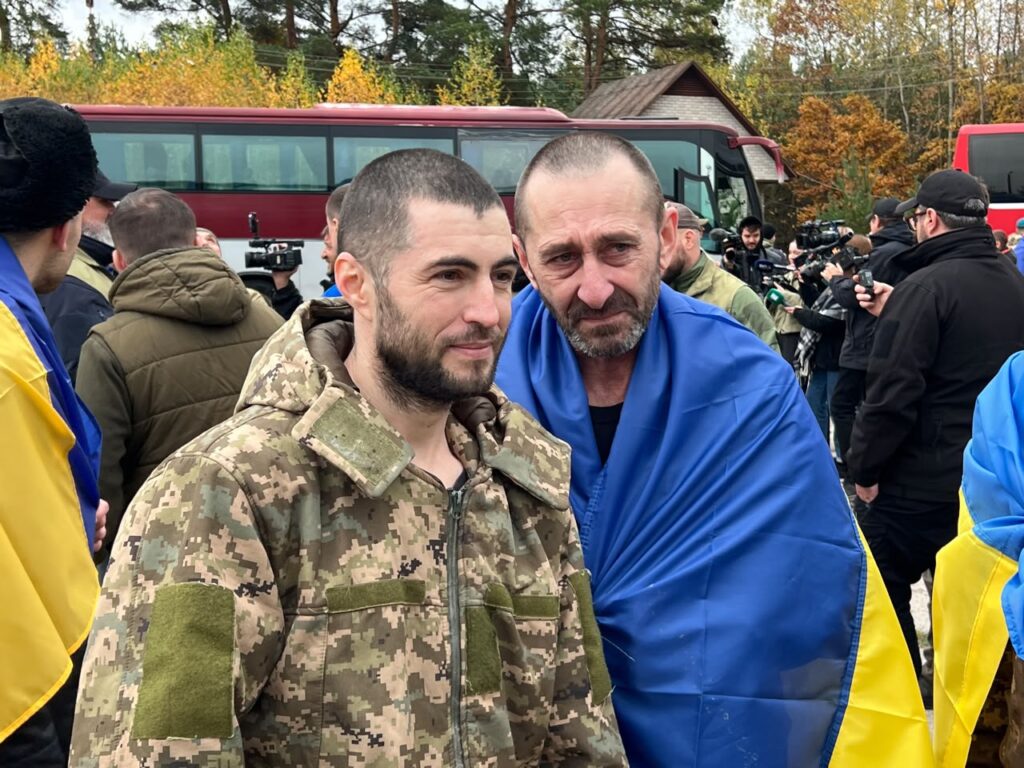
Ukrainian prisoners of war and civilians return home during a prisoner exchange with Russia on 23 October 2026. Photo: Ukraine’s Coordination Headquarters for the Treatment of Prisoners of War

Ukraine has brought home 270 people from Russian captivity, including 261 military personnel and nine civilians, in the third stage of a prisoner exchange process that began on 19 August, Ukraine’s Coordination Headquarters for the Treatment of Prisoners of War said on 23 October.

Amid Russia’s full-scale invasion, prisoner exchanges remain one of the few channels of communication between Kyiv and Moscow. But with thousands of Ukrainian military personnel and civilians still held in Russian captivity, each swap brings home only a fraction of those awaiting release, while negotiations remain tied to the difficult process of securing the return of captives on both sides.

Most of those released today had been held since 2022, including many defenders of Mariupol. Five survivors of the July 2022 Russian attack on the Olenivka prison barracks are also among those returning home.

The exchange also included American Stephen Hubbard, a 74-year-old English teacher from Izium, Kharkiv Oblast, who was illegally captured in 2022, then sentenced and tortured by Russia, according to the Coordination Headquarters.

Ukrainian prisoners of war and civilians return home during a prisoner exchange with Russia on 23 October 2026. Photo: Ivan Vyhivskyi

Ukraine brought 270 people home from Russian captivity, including 261 military personnel and 9 civilians.

Most had been held since 2022, including defenders of Mariupol. Five survivors of Russia’s Olenivka prison attack and American teacher Stephen Hubbard are also among those… pic.twitter.com/Uyl8kz64W1

— Euromaidan Press (@EuromaidanPress) October 23, 2026

Exchange includes soldiers held for up to eight years

The exchange included members of Ukraine’s Armed Forces, National Guard, State Border Guard Service, and other security and defense units, as well as a State Emergency Service rescuer. Thirty-eight of the released military personnel are officers.

According to Ukraine’s Ombudsman Dmytro Lubinets, the exchange was “historic” because it brought home the largest number of Ukrainian military personnel sentenced by Russia: 86 who had been sentenced and one who had faced criminal prosecution.

Two of those released had been held since 2018 and 2020, spending eight and six years in captivity, respectively.

“The priorities remain unchanged: we bring home those who have been in captivity the longest, the seriously ill, and the seriously wounded,” Lubinets said, adding that efforts to return civilians and people held since 2014 also remain a priority.

Ukrainian prisoners of war and civilians return home during a prisoner exchange with Russia on 23 October 2026. Photo: Ukraine’s Coordination Headquarters for the Treatment of Prisoners of War
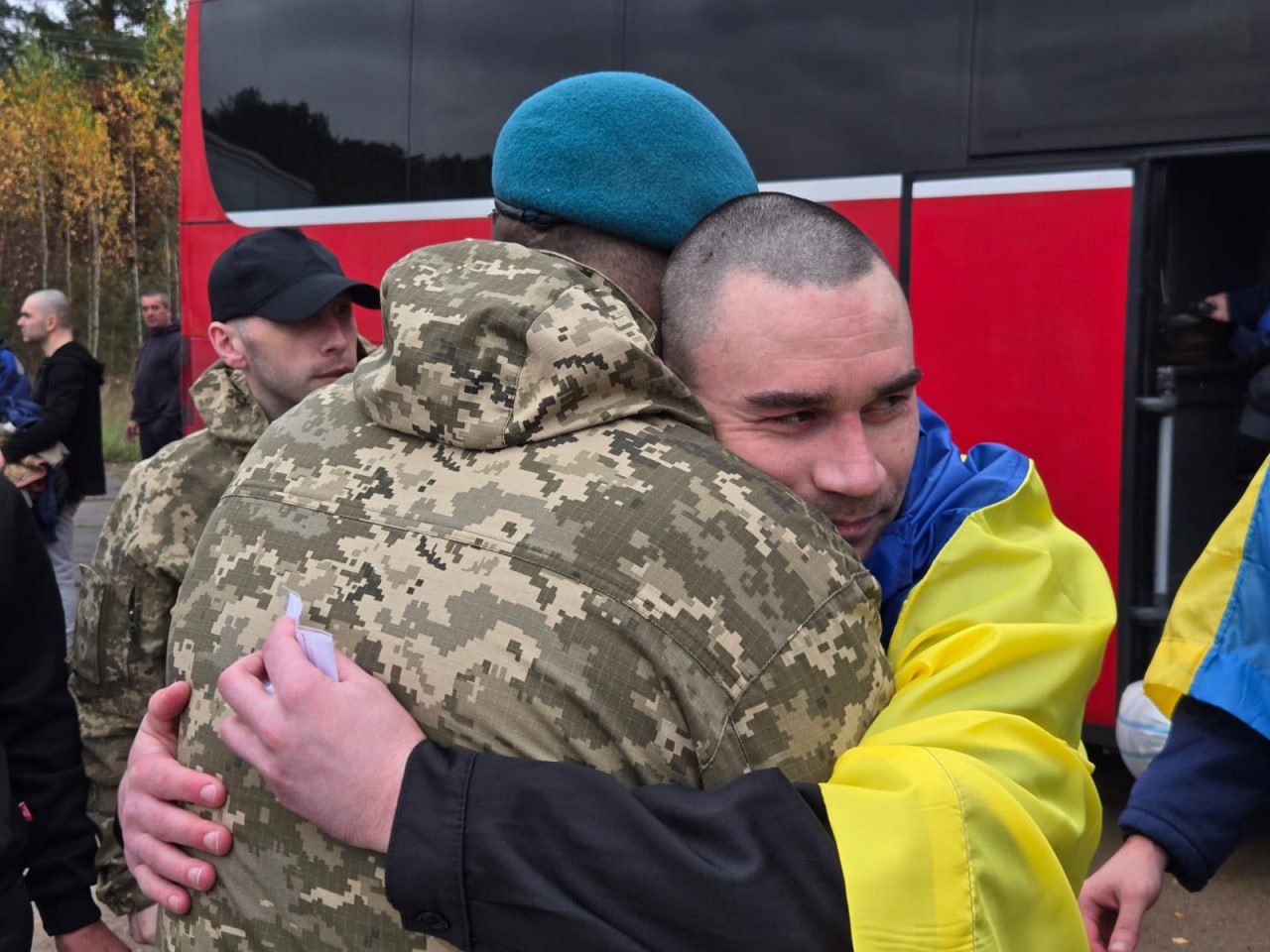
Ukrainian prisoners of war and civilians return home during a prisoner exchange with Russia on 23 October 2026. Photo: Zelenskyy

Nine seriously ill prisoners among those released

Nine of the returning service members are seriously ill, and some are in critical condition, the Coordination Headquarters said. The youngest person released is 24, while the oldest is 63.

Many of those released had faced criminal prosecution in Russia and been sentenced on what Ukraine describes as fabricated charges, including life imprisonment.

Ukrainian President Volodymyr Zelenskyy said most of those returning had been captured in 2022, and many had defended Mariupol. 

The released also include service members who fought in the Donetsk, Luhansk, Kharkiv, Zaporizhzhia, Kherson, Kyiv, Mykolaiv, and Chernihiv directions, as well as defenders of the Chornobyl Nuclear Power Plant.

“We remember every man and woman and continue searching for everyone,” Zelenskyy said.

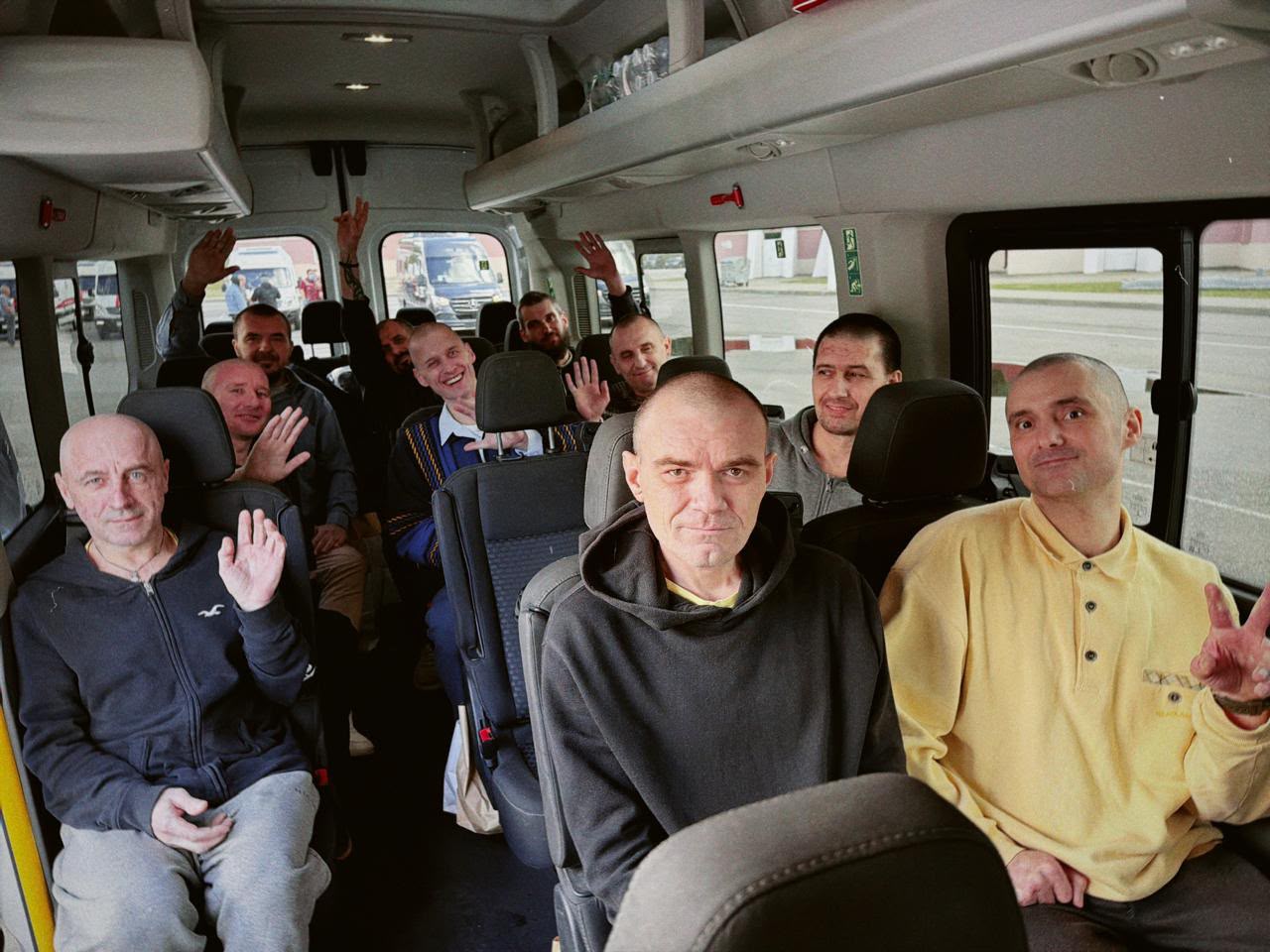
red cross has had access ukrainian pows russia since 2024 around 1500 captives face prosecution without having status confirmed—ukraine’s coordination headquarters · post returned servicemen inside minibus day release 24
Explore further

Russia has kept the Red Cross away from Ukrainian POWs since 2024. Now about 1,500 captives it never confirmed as prisoners face prosecution

US and UAE thanked for assistance

Ukraine thanked the United States and the United Arab Emirates for helping secure the releases. 

All those released will undergo medical examinations, receive treatment and financial support, and take part in rehabilitation and reintegration programs after prolonged captivity.

Ukraine’s military intelligence chief and head of the Coordination Headquarters, Oleh Ivashchenko, said the return followed months of negotiations. He stressed that efforts to establish the fate of missing Ukrainians and bring everyone home would continue.

Ukrainian prisoners of war and civilians return home during a prisoner exchange with Russia on 23 October 2026. Photo: Zelenskyy
Ukrainian prisoners of war and civilians return home during a prisoner exchange with Russia on 23 October 2026. Photo: Ukraine’s Coordination Headquarters for the Treatment of Prisoners of War

The 23 October exchange follows the previous stage on 19 August, when Ukraine brought home 103 servicemembers from Russian captivity.

  •  

I swapped houses with a stranger to see if I'd like living in Seattle. One month in, I got my answer.

Heather takes a selfie with her dog.
I lived in Seattle for a month to see if i wanted to move there permanently.

Heather Snow

  • I swapped homes with a stranger and traded my San Francisco condo for a house in Seattle.
  • For a month, I lived in Seattle to figure out if I would want to move there permanently.
  • Although Seattle isn't the right city for me, the experience taught me what I want in my next home.

After 18 years of living in San Francisco, I was seriously starting to consider moving.

I loved the life I had built there, but taking the next step — like buying my own house with a yard — felt out of reach for me. However, I was afraid I would regret leaving the place I had called home for so many years.

When thinking of places I'd like to live, Seattle immediately came to mind. I figured the city would offer similar energy and career opportunities as San Francisco, and I loved its proximity to striking natural beauty.

Plus, I'd visited the West Coast city many times and had a good friend who lived there, so it seemed like a logical move. But instead of taking the leap immediately, I decided to test out living in the city for a month to make sure it was the right fit for me.

Through HomeExchange, a platform that allows users to swap homes with people from around the world, I traded my Noe Valley condo for a house with a yard in the Ballard neighborhood of Seattle for the month of July.

I got to experience Seattle as a local instead of a tourist

A view of the Seattle skyline from a park.
It was interesting being able to experience the city as a local would.

Heather Snow

Although I'd visited Seattle many times over the years, this was my first chance to test everyday life there with my dog, Pepper — not just experience the city as a tourist.

I worked remotely, went grocery shopping, and checked out the Ballard Farmers Market on Sundays. Pepper and I explored different parks on morning walks and went to local breweries in the evenings.

I really prioritized spending time in Ballard, since that was the neighborhood I was most interested in possibly calling home. I loved that the residential parts were filled with single-family homes on tree-lined streets, but the location was also walkable to a historic core filled with shops, restaurants, and bars.

It felt like it could be the perfect combination of having a home with a yard in a residential neighborhood, while still having the city life and walkability I loved in San Francisco.

A quiet street with restaurants in Seattle.
I mostly spent time in the walkable Ballard neighborhood.

Heather Snow

However, staying for a month also allowed me to experience some of the pain points I'd deal with as a local.

For example, although I found Ballard incredibly walkable, once I left the neighborhood, Seattle as a whole felt much more spread out and suburban than San Francisco. I found myself driving and sitting in traffic more than I'm used to.

One night, I was invited to go to my friend's house for dinner. What I thought would be a quick, 30-minute drive turned into a 55-minute headache in rush-hour traffic. In this moment, I realized moving around the city would require more planning than I initially expected.

Having Pepper with me also gave me insights into dog regulations that I never would have noticed on vacation. Although Seattle is a very dog-friendly city, I found there are more restrictions around water access and off-leash areas than I ever would have known about as a tourist.

I'm used to letting Pepper run off-leash in the sand at Fort Funston in San Francisco, but I found that most sandy beaches in Seattle don't allow dogs. Luckily, she was still able to sunbathe and people-watch from the yard of the house we were staying in.

The house swap helped me figure out what I want from a permanent home

Heather sits on a bench with her dog and looks out at the Seattle skyline across the water.
Even though Seattle isn't for me, it helped me figure out what I want next.

Heather Snow

Having someone stay in my home gave me insight into what she loved about it, and it made me appreciate what I already had.

The woman I traded homes with mentioned that many of my neighbors greeted her and that people were friendly on her daily dog walks in Noe Valley. I wasn't surprised that she felt this way. After all, the community in my neighborhood is one of my favorite things about San Francisco.

Spending time away gave me clarity on what I value in the home I already have, and some perspective on what I want in my next home.

A month in Seattle made it clear that the city is not my place. It also confirmed that I wanted some things that are out of reach for me in San Francisco because of the cost of housing, like a house with a yard.

Ideally, I'd like to find a place that combines the best parts of both cities: affordability, a walkable neighborhood with a sense of community, and natural beauty. I also realized that avoiding heavy traffic and crowds may mean looking beyond major cities.

Thankfully, trading homes was a relatively low-cost, low-risk way to test a major life decision like moving. Before making an expensive move, I was able to refine my list of what I want in my next home, and what I don't.

For now, I'm still searching for my new city, but my vision of what the next chapter will look like is much clearer.

Read the original article on Business Insider
  •  

The Next Ice Age Began Under the Roman Empire, Researchers Say, Until Global Warming Stopped It

About 2,000 years ago, while Augustus ruled Rome, a leftover patch of ice in the Canadian Arctic stopped shrinking and began to grow. A team from the Lamont-Doherty Earth Observatory, part of Columbia University, argues that this turning point marked the beginning of the next glaciation, what most people would call the next ice age. […]

  •  

I booked a one-way ticket to Bali after a layoff in fintech. I stayed in Asia for over a year — here's where my money stretched the furthest.

headshot of a woman with a warm beige background
Tiffany Tang.

Courtesy of Tiffany Tang

  • Tiffany Tang founded DrinkFolks after a transformative journey across Asia in 2023 and 2024.
  • Tang's layoff in 2023 led her to Bali, where she decided to extend her 30-day trip to over a year.
  • DrinkFolks, inspired by Tang's travels, supports women-led farms and brings jamu to the US market.

This as-told-to essay is based on a conversation with Tiffany Tang, the 30-year-old founder of DrinkFolks. It has been edited for length and clarity.

I'm the founder and CEO of DrinkFolks, which brings jamu, a 1,300-year-old Indonesian herbal remedy, to the US as a prebiotic root tonic.

For the first two years of my career, I was an assistant director at a gallery owned by the first female fine arts dealer in America. From 2017 to 2021, I worked at Christie's International Real Estate in marketing and communications roles.

For the next year, I was a senior communications manager at CSM Sport & Entertainment before taking on a similar role at a fintech company that helped millions of Americans sustainably build their credit scores through rewards.

I felt positively about that job, but I was laid off in May 2023

I was grateful to work there. We were doing big things, and I really learned what it was like to be at a mission-driven company.

The most interesting thing about my layoff was how incredibly calm I felt upon hearing the news. Our CMO told me first, and she was a friend, my college professor, and an executive I admire and respect.

When she told me, I said I didn't blame her, and this was a time for a reset. Turns out, the layoff was the best thing that could've ever happened to me.

A few weeks after my layoff, I booked a one-way ticket to Bali

For a long time, my self-worth was my net worth — my title, my salary, my career trajectory. When the layoff hit, I lost my sense of self. Reflecting afterward, all I could think was: who am I without the high-paying job?

A few weeks earlier, I had watched the movie "Eat, Pray, Love." When the layoff came, something in me said that this was my moment. I opened Kayak, found a one-way ticket to Bali for around $1,000, and booked it. Bali felt approachable and warm.

What was supposed to be a 30-day reset changed the course of my life

I originally planned to travel in Southeast Asia for a month but ended up staying from June 2023 through August 2024.

My awakening happened on day three. One of the first things I did in Bali was a Panchakarma, a full-body Ayurvedic detox at a retreat in Ubud. There was an optional silent day; one of the first times in my life I rooted and looked inward.

Sitting with my journal, I knew I had to stay. I was still negotiating my severance, so I did the math: my savings, my investments, what each month would cost. When my severance came through a few weeks later, it jump-started the journey.

The deeper turning point was Hong Kong

Everyone I met understood me on an indescribable level. It was the only time in my life I was speaking Cantonese to people outside my family, reconnecting with my heritage. By the time I came home for the holidays, I had decided: I was moving to Asia.

The spark for the company was the women I met. Across Indonesia and Southeast Asia, I sat with women quietly building something of their own. I wanted to help these women build generational wealth for their families. I built DrinkFolks as a way to sustainably invest in them — 3% of every sale goes to women-led farms and nonprofits across Southeast Asia through our FolksFund — while supporting health stateside by bringing ancient wisdom into people's homes.

I started the company in January 2024, took every jamu class I could find in Bali, visited the source of jamu in Yogyakarta, and reformulated recipes in my Hong Kong kitchen.

By October 2024, I was back in the US, working with California food scientists to scale up my home-tested recipe. We launched in NYC in October 2025. Today, we're in 70+ stores across the US.

Living in Southeast Asia made the math work

My salary before the layoff was $160,000 a year, plus equity. When I set off, I had roughly $14,000 between savings and severance — my spreadsheet calculated 4.6 months of runway — and I felt comfortable investing that in myself.

I budgeted like it was my job. I tracked my actual spending obsessively for the first four and a half months and came in at roughly $7,700 total.

All-in, I averaged about $1,300 to $2,300 a month, including flights, lodging, food, everything. My money stretched furthest in Cambodia and least in Hong Kong, which was financially similar to New York City. For comparison: my overhead, including my mortgage, maintenance, electricity, and WiFi in New York today is about $2,500 a month.

In terms of cost of living comparisons, here's my breakdown

Healthcare was the biggest surprise, in the best way. I got into a motorcycle accident on the Pakse Loop in Laos, and seven stitches cost me around seven dollars, including painkillers and a week of antibiotics.

Cambodia was the best value. It's the most adventurous, outdoorsy country I visited, and I didn't want to explore alone, so I stayed in hostels for as little as $6 a night — partly a budget move, mostly a way to meet people. It's also where I met my first fellow Americans of the entire trip.

Hong Kong was the opposite — groceries and eating out gave me real sticker shock. I softened it with a genuine energy exchange: I moved in with a college friend and threw dinner parties several times a week, cooking meals for them in exchange for a place to stay. It was worth every dollar — I met some of my truest friends and future business partners there.

The layoff was honestly the best thing that ever happened to me

a woman holds up two drinks in a grocery store
Tang's first time seeing DrinkFolks on shelves in LA.

Courtesy of Tiffany Tang

It gave me the confidence to build DrinkFolks, a better sense of my heritage, and a version of myself I'm proud of. I've learned to never say never, but right now, I'm exactly where I'm supposed to be.

My advice is to use your layoff as your launchpad. Things happen for you, not in spite of you. If you have even the slightest chance to live in that moment for yourself — for me, that was travel — take it as a gift and a blessing, not a crisis to survive.

Treat budgeting as freedom, not constraint. My money stretched so much further than I imagined. Clear parameters gave me the space to figure out who I am outside my job.

Read the original article on Business Insider

  •  

No, Britain’s Puffin’s Aren’t About to Disappear Due to “Climate Change”

Every year we're fed the same scare story about Britain's Atlantic Puffins all about to disappear, with climate change inevitably blamed. But as so often, it's the reverse that's true, says Paul Homewood.

The post No, Britain’s Puffin’s Aren’t About to Disappear Due to “Climate Change” appeared first on The Daily Sceptic.

  •  

European Summer Heat Killed More Than 50,000 People, New Research Finds

Extreme heat across Europe during the summer of 2026 caused an estimated 50,391 deaths, according to new research examining mortality in 854 cities. Nearly two-thirds of the deaths were attributed to additional warming caused by human activity, principally greenhouse gas emissions from burning fossil fuels.

The findings, reported on 23 October, indicate that 32,619 people died as a consequence of temperatures intensified by human-induced climate change. The estimated total represents a 71 per cent increase compared with 2022, previously the deadliest summer in the researchers’ historical dataset, when 29,480 heat-related deaths were calculated.

The research builds on a long-term assessment of heat-related mortality, published in Nature Health on 14 October, which examined the impact of rising temperatures across European cities between 2000 and 2025. The latest estimates for 2026 extend that analysis to an exceptionally severe summer marked by successive heatwaves across much of the continent.

Italy, France, Spain and Germany among worst affected

The highest estimated death tolls were recorded in Italy, France, Spain and Germany, where prolonged periods of extreme heat placed considerable pressure on vulnerable populations and public-health services.

Approximately one-third of the deaths occurred between 17 June and 1 July, when temperatures in some affected areas exceeded seasonal averages by 5.3°C.

The scale of the June heatwave had already become apparent in preliminary national mortality statistics. As EU Today reported in July, France, Belgium and the Netherlands recorded at least 3,700 excess deaths during the early stages of the summer’s extreme temperatures.

Subsequent official assessments suggested that the mortality impact was considerably greater. According to France’s national public-health agency, at least 5,764 excess deaths were recorded during the heatwave between 17 June and 2 July, followed by another 1,243 during the period from 3 to 22 July.

These national figures measure excess deaths from all causes during heatwave periods and are not directly equivalent to the temperature-attributable mortality estimates in the European study.

The researchers also cautioned that their European estimates probably understate the total mortality burden. The 854 cities included in the analysis represent approximately 40 per cent of Europe’s population, while deaths associated with an earlier heatwave in May were excluded.

Climate change responsible for almost two-thirds of deaths

Researchers used established climate-attribution methods to estimate how many deaths would have occurred under natural summer conditions and how many resulted from additional warming associated with greenhouse gas emissions.

Their calculations compared observed temperatures with computer simulations representing a climate without human-induced global warming. The difference between the two scenarios provided an estimate of mortality attributable to climate change.

Clair Barnes, a climate scientist at Imperial College London and lead author of the research, said Western and Northern European infrastructure was not designed to withstand the temperatures now being experienced.

In some European cities, temperatures during the summer reached as much as 12°C above seasonal norms.

The researchers estimated that the proportion of heat-related deaths attributable to human-induced climate change has increased from approximately 45 per cent in the early 2000s to around 65 per cent today.

The findings are consistent with the European Commission’s assessment of rising heat risks, which identifies Europe as the world’s fastest-warming continent, with temperatures increasing at approximately twice the global average rate.

Elderly Europeans account for majority of fatalities

People aged 85 and above accounted for more than half of the estimated deaths, although the research also identified more than 800 deaths among adults aged between 20 and 44.

Extreme temperatures increase the risk of cardiovascular and respiratory complications, dehydration and heatstroke. According to the World Health Organisation’s assessment of heat-related health risks, older people and those with existing medical conditions face particularly serious consequences from prolonged exposure.

The findings also reflect the impact of high overnight temperatures, which prevent buildings from cooling and reduce opportunities for physical recovery after extreme daytime heat.

EU Today previously examined how rising night-time temperatures are exposing weaknesses in European housing and public-health preparedness, particularly in densely populated urban areas.

The latest research identified Rome as having the highest cumulative heat-related death toll among European capitals between 2000 and 2025.

Belgium records separate evidence of climate-related mortality

A study published by Vrije Universiteit Brussel on 20 October provides additional evidence of the mortality impact of this summer’s temperatures.

Researchers estimated that Belgium’s June heatwave caused 1,181 heat-related deaths, of which 665, or 56 per cent, were attributable to human-induced climate change.

The study found that climate change increased temperatures during the heatwave by approximately 3.9°C and more than doubled the estimated number of heat-related deaths. Its findings have not yet undergone peer review.

Belgium’s public-health authorities separately recorded 2,018 excess deaths during and immediately after the heatwave, the highest figure associated with any Belgian heatwave since monitoring began in 2003.

European governments face growing pressure to adapt

The latest findings add to concerns about the capacity of European healthcare systems, residential buildings and urban infrastructure to withstand increasingly severe summer temperatures.

The European Commission has warned that public-health systems across many EU and European Economic Area countries remain insufficiently prepared for extreme heat.

Researchers have identified improved early-warning systems, accessible cooling facilities, better building design and targeted assistance for elderly residents as measures capable of reducing mortality.

The new estimates also demonstrate the limitations of existing mortality records. Heat frequently contributes to deaths without being identified as the immediate medical cause, requiring researchers to use statistical models to calculate its wider impact.

The estimated 50,391 deaths therefore represent modelled heat-attributable mortality rather than individually certified fatalities. Nevertheless, the results indicate that extreme temperatures are becoming an increasingly substantial public-health risk across Europe, extending beyond Mediterranean countries into regions historically less exposed to prolonged summer heat.

  •  

The EU’s Climate Agenda is Running on Empty – and the UK isn’t Far Behind

France and Germany have teamed up to press the EU to relax its looming combustion car ban. It’s the latest sign the EU's climate agenda is running on empty, says Ben Pile – and the UK isn't far behind.

The post The EU’s Climate Agenda is Running on Empty – and the UK isn’t Far Behind appeared first on The Daily Sceptic.

  •  

Don’t mistake Indonesia’s MSCI scare for economic weakness

When MSCI floated the idea of downgrading Indonesia to a Standalone Market, anxiety quickly swept through Jakarta’s financial community. Predictably, alarming headlines immediately pointed to foreign capital flight, stock prices dropped and local regulators quickly moved to calm jittery investors. Yet, treating this stock market tremor as a proxy for Indonesia’s overall economic health represents […]

The post Don’t mistake Indonesia’s MSCI scare for economic weakness appeared first on Asia Times.

  •  
❌