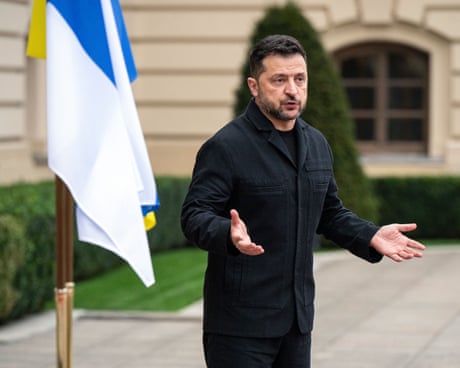
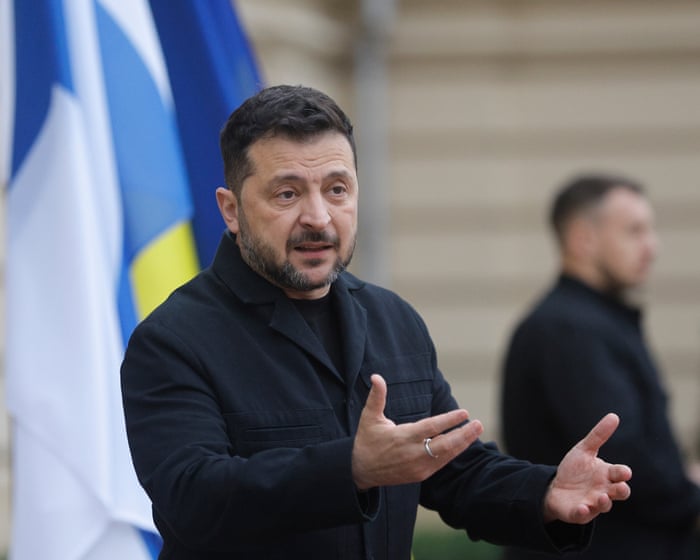
For 14 years, Serbia’s government kept the country close to Moscow. Now, the opposition “Student List” has won the country’s snap parliamentary election, and President Volodymyr Zelenskyy says Ukraine is ready to deepen its cooperation with Serbia, welcoming the result as “a new page” in a post on X.
The win could end the 14-year rule of President Aleksandar Vučić’s political force and weaken Moscow’s position in the Balkans. Serbia has remained an important Kremlin partner in Europe since Russia’s full-scale invasion of Ukraine, and Belgrade never joined the EU's sanctions against Moscow.
“A new page”
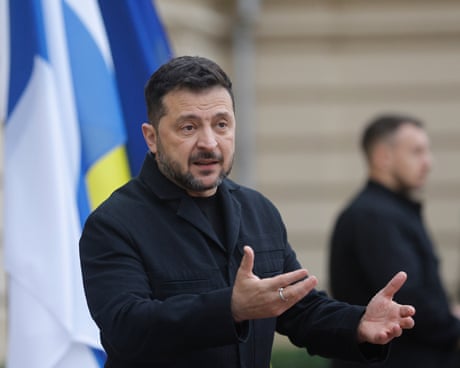
In his post, written in Ukrainian, Zelenskyy said that "changes have taken place in Serbia, the victory of the Student List, and this is clearly a new page in the history of the country and its people."
“We wish Serbia success, real development, and warm relations with the European community,” he wrote.
He said Ukraine was grateful to Serbia “for the respect shown to our people and our state, our independence,” and added:“We are ready to keep increasing our cooperation, and may all the good hopes of the people of Serbia come true.”
But the winners rule out sanctions on Russia
Vučić had earlier predicted that a new government could impose restrictions on Moscow by March or April, according to Novosti. The Student List says otherwise: it has no plans to align with the EU or to sanction Russia over the war in Ukraine, according to Reuters.
Its candidates frame Serbia’s reliance on Russian gas, with Gazprom as the largest supplier at around 2.2 billion cubic meters a year at below-market prices, as an acute economic dependency rather than a geopolitical alignment.
The movement’s top candidates have also said a future government would end all arms exports to war zones, including sales to Western intermediaries who pass weapons to Ukraine. Around €800 million worth of Serbian ammunition has reached Ukraine through that route since 2022.
Ukraine will not discuss limits to its armed forces or enforced neutrality at November meeting, president says. What we know on day 1,706
A trilateral meeting between Kyiv, Washington and Moscow will take place in November aiming to restart stalled Russia-Ukraine peace talks, Volodymyr Zelenskyy has said. “We are ready to talk. If it’s a territorial issue, it must be addressed at a leadership level. Other issues fall within the remit of the technical groups. All this can therefore be discussed in November,” the Ukrainian president said on Sunday in an interview. Zelenskyy also renewed his push for a meeting between him and Vladimir Putin, believing that Putin is the only person in Russia who can make major decisions to end the war.
Zelenskyy says that at the trilateral talks, Ukraine will not discuss limits to its armed forces, or enforced postwar neutrality. Kyiv has long sought entry into Nato despite the reticence of some members.
Meanwhile, US warnings about imminent Russian ballistic missile strikes, critical to Ukraine’s air defences, have been fully restored, according to Zelenskyy. He told Ukraine’s TSN television channel that SpaceX’s Starshield satellite internet had been working at speeds of up to 420km/h since early on Saturday, after a meeting with the US special envoy Steve Witkoff in Oslo. Starshield was throttled earlier in October amid diplomatic pressure on Kyiv from Washington.
The US has been trying to pressure Ukraine to suspend strikes on Russian oil refineries, which it says push energy prices higher. However, Zelenskyy has repeatedly said Kyiv will only stop the strikes if Moscow stops hitting Ukraine’s power infrastructure, or if the US allows Ukraine to use of Starshield over Russia to detect launch places of its ballistic missiles, or if it supplies Ukraine with Patriot missiles.
Zelenskyy on Sunday said Russia had launched nearly 2,300 drones targeting Ukrainian cities over the past week, renewing his call on western allies to speed up deliveries of interceptors. “This week alone, Russia has launched about 1,600 guided bombs, 48 missiles of various types, including ballistic missiles, and almost 2,300 strike drones at Ukraine,” he wrote in an online post.
Russia’s defence ministry said on Sunday its drones had struck a cargo vessel bound for the Black Sea port of Chornomorsk in an overnight attack and another cargo vessel en route to the port of Odesa during the day. The ministry said the vessels were being used to supply the Ukrainian army. Russian forces also hit a logistics centre, a distribution centre and a logistics terminal in the Ukrainian city of Kharkiv overnight. Reuters could not confirm the reports.
A Ukrainian drone attack overnight on the Russian border city of Belgorod killed three people and injured 13, local authorities said on Sunday, while a separate drone strike later in the day killed another person. The overnight attack on Belgorod damaged 30 apartment buildings, regional governor Alexander Shuvayev said.
The presidential election in Bulgaria on Sunday ended inconclusively, with the next head of state to be picked in a runoff. In a surprisingly strong performance, the candidate of the pro-western reformist opposition, Andrey Gyurov, will face the incumbent leftist president, Iliana Yotova. Iotova opposes military aid to Ukraine and favours dialogue with Russia, while Gyurov has often expressed firm support for Kyiv. The vote was held amid security concerns after a series of drone attacks on ships in the Black Sea.
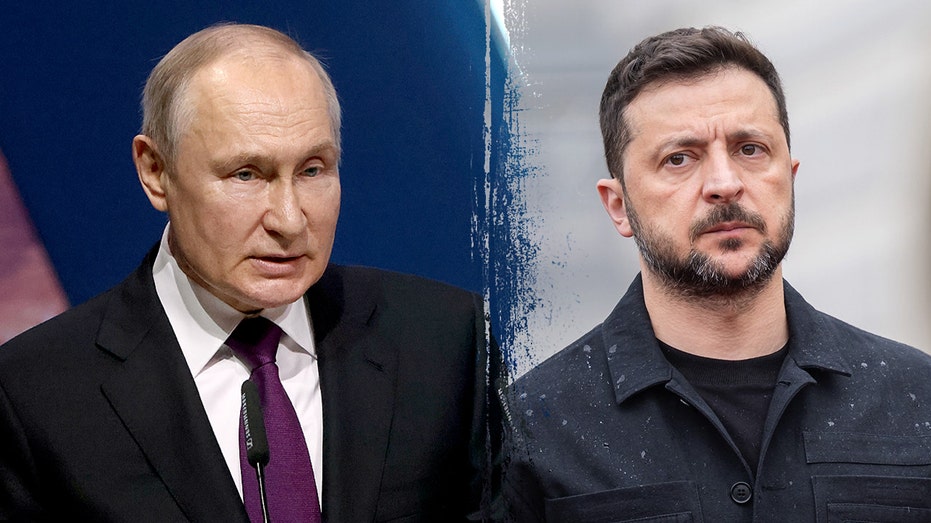
Ukrainian President Volodymyr Zelenskyy's former spokesperson urged him Sunday to meet Russian President Vladimir Putin face-to-face in Moscow, arguing that his past business and political connections in the Russian capital from years back could help him negotiate a peace deal there.
Iuliia Mendel, who served as Zelenskyy's spokesperson from 2019 to 2021, told Fox News Digital that the former comedian had also made his first millions in Russia and should perhaps leverage those ties to pursue lasting peace.
"When Zelenskyy was an entertainer, he often performed in Moscow," Mendel said, adding that the Ukrainian president "knows a lot of people from Putin's elite."
"He actually professionally grew in Moscow and earned his first millions in Moscow, and today he pretends that he has nothing in common with them," Mendel said.
"He needs to go to Moscow and needs to agree on compromises that are acceptable," she said, before adding that Zelenskyy "doesn't need to play his maximalist games and to play this noble actor."
Mendel's criticism came as Ukraine, Russia and the United States prepared for another round of technical-level peace talks, potentially in Abu Dhabi or Switzerland, in November.
U.S. envoys Steve Witkoff and Jared Kushner have helped lay the groundwork for renewed negotiations that officials hope could finally lead to direct talks between the two leaders.
Before entering politics, Zelenskyy had built a successful entertainment career. Beginning in the late 1990s, he performed with the comedy troupe Kvartal 95, competed on the Russian-language comedy program KVN and later worked as an actor, writer and producer in television and movies.
From the late 1990s, he performed on Russian stages and at private parties and appeared in movies shown across former Soviet republics, Mendel claimed.
She said that after Russia annexed Crimea and launched its war in Donbas in early 2014, Zelenskyy traveled to Russia to work on the comedy film "Eight New Dates" which was released in Russian theaters in 2015.
According to a report by Business Insider, many of Zelenskyy's movies were also in Russian and were marketed to a Russian audience, David Dodson, an American movie editor who worked with Zelenskyy told the outlet.
"He was a well-loved comic, actor and performer in Russia, but after [the 2013-14] Maidan [Revolution], everything changed," Dodson said.
"People need to realize that Volodya’s movies were very big in Russia. Most of his market was in Russia. He’s always been a popular comedy star in Russia," Dobson also clarified to GQ when asked if he directed the former actor in "Eight First Dates" in Russia, released in 2012.
In 2013, the movie received the Russian National Movie Awards as the Best Russian Comedy of the Year.
In 2019, Zelenskyy also promised to relinquish ownership of a Cyprus-registered company operating a film studio in Russia after investigative journalists revealed that he and his business partners still owned three Russian companies, according to the Kyiv Post.
Zelenskyy's entertainment career made him a household name in Ukraine and other former Soviet republics before he entered politics and won Ukraine's 2019 presidential election with roughly 73% of the runoff vote on promises to fight corruption and pursue peace in eastern Ukraine.
Mendel argued that Zelenskyy's promise to bring peace at the time stands in stark contrast to the devastating war that has crippled the country and defined much of his presidency.
"Zelenskyy became the president with 73% record support," Mendel said. "Because he promised to bring peace to Ukraine."
"And now he has been presiding for almost five years (over) the largest war in Europe since World War II. This shows a lot."
"When his country is bleeding, he needs to make a peace deal for his people," she said before adding that the leader "needs to put the interests of his people first, just for Ukraine to exist as an independent state."
Whether Zelenskyy should travel to Moscow has, in fact, become a flashpoint in efforts to arrange direct peace talks.
In 2025, Putin offered to host Zelenskyy for talks in Moscow, but the Ukrainian president rejected the invitation as Russian forces continued attacking Ukraine.
"He can come to Kyiv," Zelenskyy told ABC News at the time, saying he could not visit Moscow while Ukraine remained under Russian missile attacks.
Mendel, however, argued that personal animosity between the two leaders has become the main obstacle to diplomacy.
"Today there are diplomatic efforts to try to stop this brutal and bloody war that Russia started," she said.
"But what we see now is a personal opposition between Zelenskyy and Putin that continues to grow into constant escalation in which people suffer tremendously, Ukraine's infrastructure, energy grid, and businesses are in ruins, and refugees are fleeing."
Russia launched its full-scale invasion of Ukraine in February 2022. More than four years later, peace negotiations are deadlocked over territory, security guarantees and the terms of a lasting ceasefire.
Moscow has demanded territorial concessions from Ukraine, including areas Russian forces do not fully control.
Kyiv has rejected ceding sovereign territory and insists that any agreement include enforceable security guarantees against another Russian attack.
Mendel went on to praise President Donald Trump's efforts to break the diplomatic deadlock, calling him the first Western leader to "challenge the status quo" and consistently push for an end to the war.
"For this reason, many Ukrainians place great hope in his ability to bring peace," she said.
"A sustainable peace deal cannot be reached solely between Zelensky and Putin; it requires the involvement and initiative of a strong third party to halt the ongoing devastation."
On Friday, the White House announced that first lady Melania Trump had helped broker a temporary ceasefire in Oleshky, a Russian-occupied town in southern Ukraine's Kherson region, to allow humanitarian aid deliveries, demining operations and civilian evacuations.
An estimated 1,700 to 2,000 people remain in the devastated front-line town, many of them facing severe shortages of food, medicine and other essentials.
The White House said the ceasefire would begin Oct. 29, although Ukrainian and Russian officials have indicated that operations could begin Oct. 27.
Pope Leo also reportedly spoke with Zelenskyy and Putin about the humanitarian crisis, according to Vatican News.
"Melania Trump has become synonymous with the words of a saver and a hero, since she has brokered the deal for Oleshky," Mendel said. "This is something that is going to save around 2,000 people and that neither Ukraine nor Russia could have solved for months and months."
"That is why, you know, what Melania Trump has done is actually a case to show that where two men are fighting, a woman can actually save lives," she added.
"And this is the new approach that would show that peace really should focus on human lives, not on maps and territories."
Mendel also criticized the influence of Zelenskyy's longtime ally Andriy Yermak on his diplomatic approach, arguing that the Ukrainian president has favored confrontation over compromise.
"Mr. Yermak was teaching Zelenskiy to be a strong man in diplomacy. And what today we see is actually diplomacy that doesn't exist," she said.
“Os termos de utilização do Starlink mantiveram-se consistentes: trata-se de um sistema civil, e não de um meio para matar. Qualquer violação destes termos resultará no encerramento do serviço”, avisou o magnata. O magnata norte-americano do setor tecnológico Elon Musk, responsável da SpaceX, acusou a Ucrânia de violar os termos de utilização do Starlink, após vários dias de limitação de velocidade, no meio de tensões com Washington. “Os termos de utilização do Starlink mantiveram-se consistentes: trata-se de um sistema civil, e não de um meio para matar. Qualquer violação destes termos resultará no encerramento do serviço”, escreveu Musk na rede
Ukraine's military satellite links work at full speed again after a cap that hobbled its drones, Ukraine's Defense Ministry said on 24 October. Hours later, SpaceX owner Elon Musk, who earlier pointed at Washington, said his company had enforced its own rules. A Ukrainian presidential adviser and a drone volunteer replied that civilian Starlink could not fly such missions.
Ukraine holds off Russia with American tools it doesn't control, so any pause decided abroad, like stalled Patriot deliveries or the Starlink cap, opens gaps in its defense. With no stated rule on what Ukraine's forces may do, the next cutoff could again come unannounced and unexplained.
Kyiv records full speed again
The ministry recorded stable connections above 400 km/h (250 mph). Before, Kyiv said, links on Starlink and its military version, Starshield, cut out above 161 km/h (100 mph).
Ukrainian President Volodymyr Zelenskyy said the restoration began overnight. "The speeds are now where they need to be," he said, citing defense against jet-powered Shahed drones. He thanked US lawmakers, the media, the State Department, and the US President, but not Musk or SpaceX.
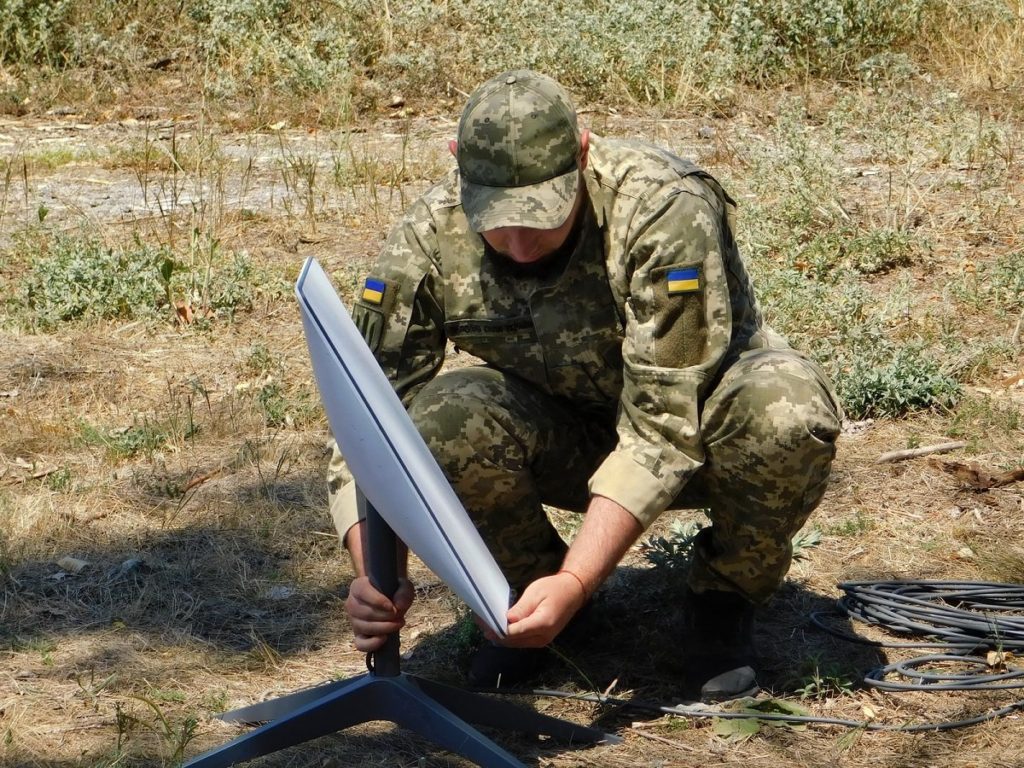
A Ukrainian soldier installs a Starlink terminal. Illustrative photo: Armed Forces of Ukraine
Musk: "That loophole was closed last week"
Musk replied "Correct" to an X user who called Starlink "not a weapons system." "Ukraine military violated Starlink terms of service and used it for offensive drone strikes to kill people. That loophole was closed last week," he wrote.
Correct.
Using Starlink, a civilian commercial service, for offensive drone strikes to kill people has never been allowed, nor should it be.
Starshield, a different system, is controlled by the US government. What they decide to do is up to them.
He called Starshield "a different system" the US government controls, and warned: "Were Starlink to be turned off, the Ukrainian front line would collapse immediately. This is NOT a threat, it is simply a statement of fact."
Musk named no evidence, cases, or time frames. Overnight, he answered a headline on the US financial blog ZeroHedge saying he "admits" SpaceX throttled Starlink.
"We simply enforced our terms of service when they were bypassed. There has been no change to our terms of service," Musk wrote.
Explore further
Who capped Ukraine’s Starlink? “Ultimately POTUS,” Musk said. Ultimately Musk, reports now say
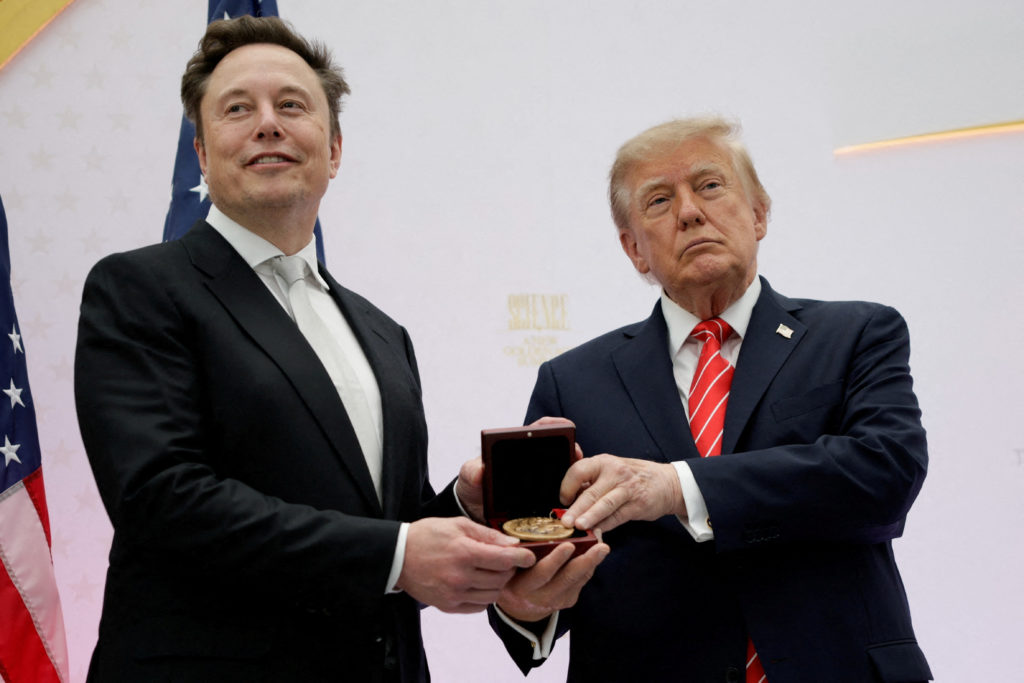
When the cap hit on 14 October, Musk wrote that the US government owns and controls Starshield and that the US military and "ultimately POTUS" decide any limits. US President Donald Trump, who credited Musk with the fix while Kyiv still saw the cap, said on 24 October he had spoken to Musk about Ukraine but gave no details.
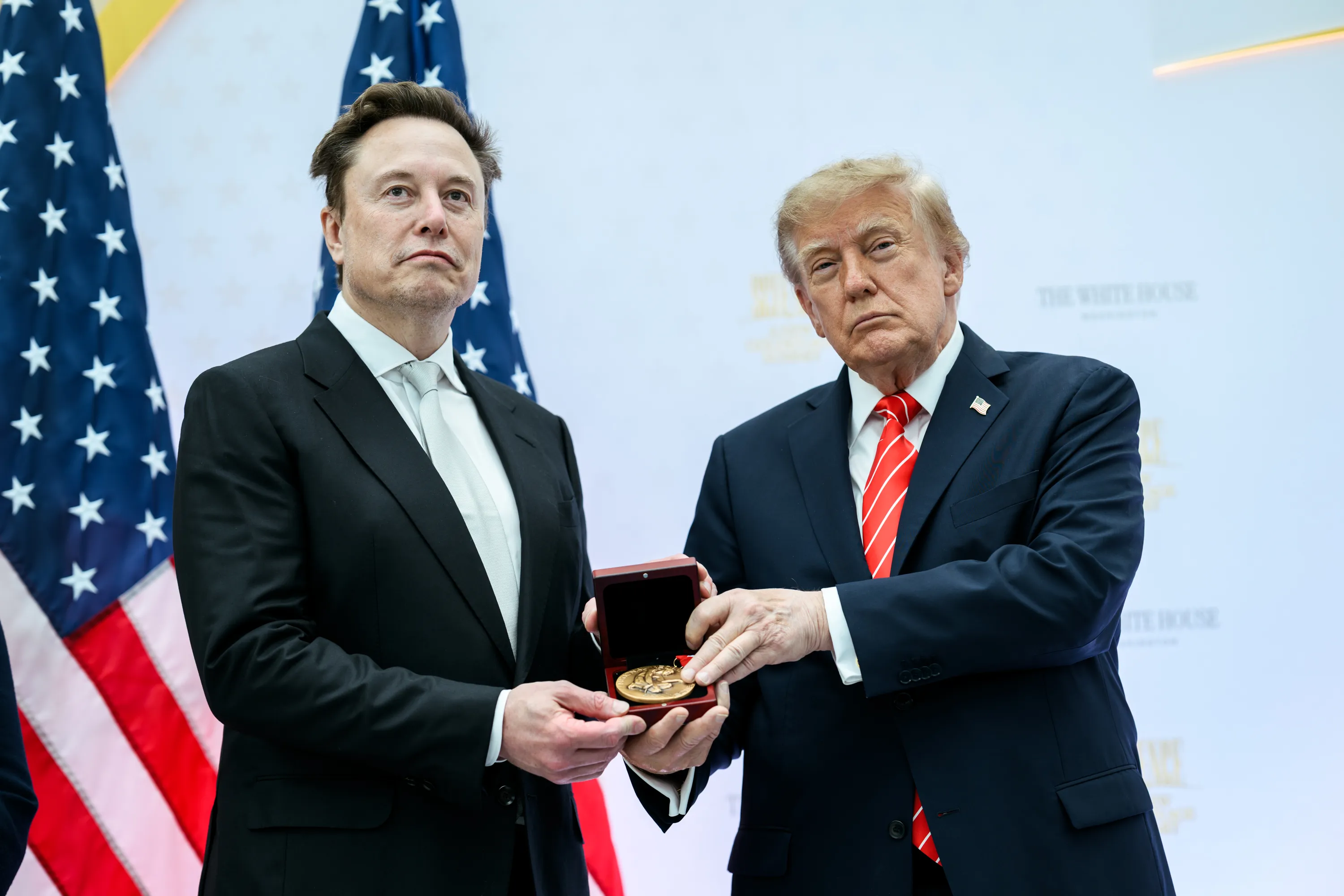
US President Donald Trump and Elon Musk in the Oval Office on 11 February 2025. Photo: White House / Daniel Torok
Ukrainians note contradiction to reality
Ukrainian presidential adviser on defense technology Serhii Beskrestnov, known by the callsign Flash, wrote:
"It is very strange that Elon Musk doesn't know about the restrictions on Starlink operations in Ukraine."
Since winter 2026, every Starlink terminal over Ukraine, occupied areas included, has been limited to 70–90 km/h (43–56 mph), he said, and over Russia, Starlink does not work. "So we PHYSICALLY CANNOT USE COMMERCIAL STARLINK for deep strikes and mid-range strikes," Beskrestnov wrote. Deep strikes hit targets far inside Russia, mid-range ones targets closer to the front.
Ukrainian activist and drone fundraiser Serhii Sternenko called Musk's claim untrue. He said Ukraine introduced whitelists of terminals in February, and any terminal used on the move had to be listed and connected to Starshield.
"So using civilian Starlink for drone missions was technically impossible. All drone missions that needed satellite communication could be carried out only with Starshield," Sternenko added.
European governments help pay for Ukraine's Starlink service. Germany funds it under a contract that runs until April 2027. Polish Foreign Minister Radosław Sikorski, whose country pays around $50 million a year for the service, said on 23 October: "Mixing business with politics usually ends badly, especially when we talk about Elon Musk."
But Elon Musk, whose company SpaceX owns Starlink, accuses Ukrainian military of violating the company’s terms
Ukraine’s military has a “stable connection to Starlink”, the Ukrainian government said, 10 days after its ability to use the satellite communications system was suddenly restricted.
But hours after the announcement, SpaceX CEO Elon Musk, whose company owns Starlink, accused the Ukrainian military of violating the company’s terms. Neither Musk nor the US government, which operates Starshield using Starlink technology, took responsibility for imposing the curbs.
Ukraine and Russia have signaled their willingness to resume U.S.-brokered peace talks and are backing a humanitarian mission led by First lady Melania Trump.
Ukraine and Russia have signaled their willingness to resume U.S.-brokered peace talks and are backing a humanitarian mission led by First lady Melania Trump.
On 18 October, President Zelenskyy accused Donald Trump of trying to pressure Ukraine into capitulating to Russia.
Asked by NBC whether Ukraine could win the war without the US, he answered: "Without United States support it's very difficult. But if United States will support Putin, it's historic mistake and big tragedy.... If the United States officially will take the side of Russia, if these two countries will be together, of course we will not prevail and we will not be able to stand."
He said Ukraine hopes Trump will be on its side, or at least "in the middle," and that he will "change his decisions" on Russia, as "it's all mistakes, it will not help us, and it will not help United States." In an interview with NBC's Meet the Press, when asked whether Trump is still an ally of Ukraine, Zelenskyy said: "I hope so." Not a definitive yes, but a weak maybe.
As diplomacy goes, statements do not come much stronger than this. What triggered them?
Probably the sum of all things. We all remember Trump and Vance humiliating Zelenskyy in the White House on 28 February 2025. Trump told the Ukrainian President that he was "gambling with" a third world war. Zelenskyy was told to come back "when he is ready for peace". Most will also remember that the USA enacted the decision to halt its aid to Ukraine across two separate, sweeping actions taken during the first months of the second Trump administration in early 2025. Presently, it is only delivering military aid decided by former President Biden.
Some might have forgotten that Trump called Zelenskyy a "dictator without elections," suggested Ukraine started the war, and pushed a "peace plan" whose original 28-point draft gave Russia terms more favorable than what Moscow sought at the 2022 Istanbul talks.
After 640 days in office, Trump's disdain for Ukraine and admiration for Russia seem to grow by the day, and his kakistocracy—government by the least qualified—keeps undermining Ukraine's defense. In less than two weeks:
9 October: the administration imposed new sanctions on the International Criminal Court (ICC), an institution crucial for holding Putin and the Kremlin accountable for their atrocities in Ukraine.
The same day, Trump lifted sanctions on Russian diesel exports, effectively helping fund Russia's wars.
10 October: Trump said of the elected president of a country fighting off Russia's full-scale invasion: "It's time for Ukraine to get a new president."
11 October: Trump declared on Truth Social an "energy ceasefire" between Russia and Ukraine that bound only Ukraine. Zelenskyy said it was "news to him."
14 October: SpaceX restricted Starshield, the classified, military-grade version of Starlink; Reuters reported on 15 October that the order came from the White House, undermining Ukraine's ability to defend itself against Russian jet-powered drones and strike Russian forces in occupied territory.
15 October: the US suspended critical intelligence sharing for three days, Zelenskyy said on 18 October, leaving Ukraine without warnings of Russian ballistic missile launches against its citizens and energy infrastructure.
16 October: two days before they were due to take effect, Trump waived the sanctions, restrictions and tariffs on Russia required by the Graham Act, calling it in the US national interest, and put nearly all of the congressional sanctions package on hold.
18 October: the administration reportedly proposed that Europe resume buying Russian gas to help "entice Russia to end the war in Ukraine." Europe balked.
19 October: it emerged that the US is delaying Patriots procured by allies under NATO's Prioritized Ukraine Requirements List (PURL), leaving Ukraine short of defenses against Russian ballistic missiles. Ukrainian officials say the shipment is stalled because Defense Secretary Pete Hegseth has not signed the transfer documents on his desk.
19 October: Trump said that "Xi Jinping has been very fair on Ukraine. He hasn't been very much involved. Same with Russia. They haven't been nearly what they could've been," ignoring that Russia is waging an unjust, unprovoked and genocidal war against Ukraine.
The same day, Trump claimed Zelenskyy targets Russian refineries knowing the attacks are seriously hurting world diesel markets, including in the US, and that he "doesn't want to end this war, and probably never did."
Talking to reporters outside the White House, Trump said Zelenskyy should get someone else to negotiate on Ukraine's behalf, and that he is willing to meet Putin and Xi to discuss the war, without the Ukrainian president. Kyiv fears Washington might decide Ukraine's future without it.
20 October: Vice President JD Vance said Ukraine should not join NATO and should stop striking Russian energy. He refused to call Ukraine a US "ally," downgrading it to a "partner": "We don't have a formal alliance... they're not in NATO... we're going to work together on some things, but also we're going to be opposite on some things, too."
21 October: after four and a half years of genocidal full-scale war and amid persistent Russian air strikes on Ukrainians, US special envoy Steve Witkoff praised Putin as a "humanitarian," echoing Trump's claim that Russia had restrained itself.
The same day, Trump said the end of the war is closer than ever. He may step up efforts to coerce Ukraine into a deal by the end of 2026, The Atlantic reports, with Ukraine's prospects shaped by the US midterms and possible Trump-Putin-Xi talks in November.
Less than two weeks, summarized.
Explore further
Europe now faces two strategic adversaries: Russia and the United States
This is how Trump's administration talks about, and acts towards, the victim of an unjustified, unprovoked and horrendous war. Trump's USA (TUSA) is siding with autocracy against democracy and the rules-based world order. It talks about America's former allies in a similar manner: derogatory and disrespectful. None of the above is the word or deed of an ally.
When one chooses to see the world as it is, Zelenskyy's statements become both necessary and important. This is not only about Ukraine's self-respect and survival. Once we acknowledge the realities—that Europe is in an undeclared war with Russia at a moment when the USA has chosen to become a strategic adversary—we stand better prepared to defend ourselves: to accept that our present security system does not work and new solutions are urgently needed, and that diplomacy alone does not work and military force is essential to protect freedom, democracy and international law.
More than a year ago, German Chancellor Friedrich Merz warned that Europe is "not at war, but no longer at peace either" with Russia. Other heads of state have echoed him. NATO has since shifted from a peacetime alliance to one focused on urgent wartime readiness. Unfortunately, the process started years too late.
By seeing the world as it is, European leaders might reach the long-overdue conclusion that Russia's wars in Ukraine and Europe can only be stopped by a demonstration of strength: an alliance willing and capable of using military force to stop Russia. The alliance Russia fears isn't NATO. It's a coalition that will actually fight.
Explore further
The alliance Russia fears isn’t NATO. It’s a coalition that will actually fight.
European courage and action are urgently needed. Ukraine is exposed to a two-front war, defending itself against both Russia and TUSA, and their attacks are increasing in scale and scope. Both Moscow and Washington want to end the war this year and are ramping up their assaults on Ukraine accordingly.
Irrespective of one's view of Ukraine, it is commonly understood that it is stopping Russia from advancing and increasing its border with NATO and the EU. Ukraine is defending European values and principles, ensuring the rest of us can continue living in something resembling peace. The consequences of its defeat would be truly devastating.
There can be no European strategic autonomy without Ukraine. There can be no European security and stability without Ukraine. Europe can never become a Great Power without Ukraine. And neither Russia nor the USA want Europe to achieve any of the above.
It is time to act according to the present-day realities and face down Europe's two strategic adversaries. In the worst case, Ukraine's destiny might be decided in November already.
Hans Petter Midttun, independent analyst on hybrid warfare, Non-Resident Fellow at the Centre for Defense Strategies, board member of the Ukrainian Institute for Security and Law of the Sea, former Defense Attaché of Norway to Ukraine, and officer (R) of the Norwegian Armed Forces.
Editor's note. The opinions expressed in our Opinion section belong to their authors. Euromaidan Press' editorial team may or may not share them.
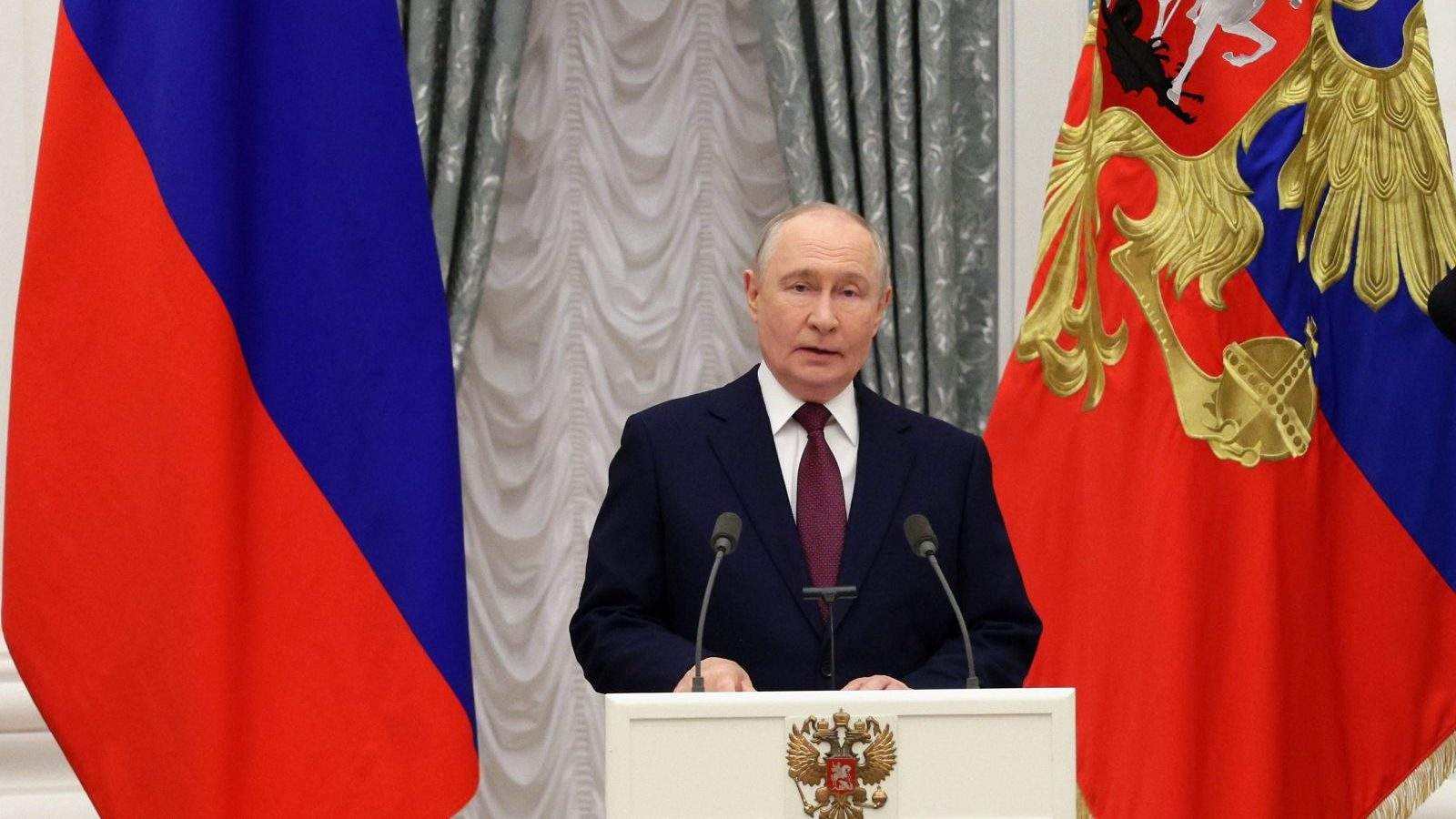
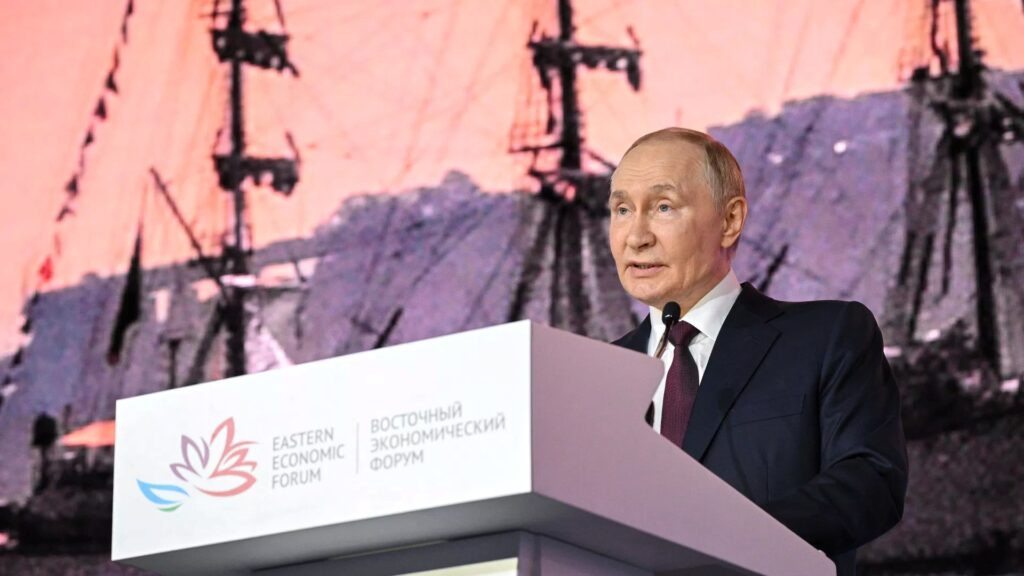
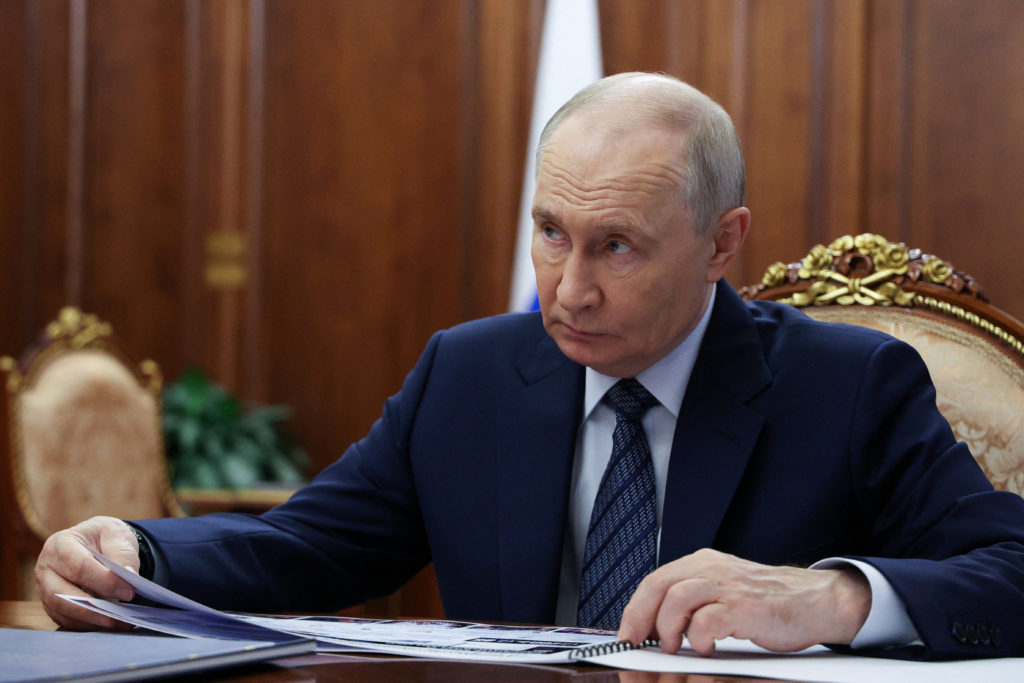
Russia is ready to resume three-way talks with Ukraine and the US, Russian President Vladimir Putin claimed in an interview with Pavel Zarubin of state broadcaster VGTRK, published on 22 October. He said they should settle security for both countries after a final peace deal, not a brief pause.
Putin spoke a day after he hosted US envoy Steve Witkoff in St. Petersburg and Ukrainian President Volodymyr Zelenskyy said he would accept freezing the war along the front line. In May, Kremlin spokesman Dmitry Peskov named Ukraine’s withdrawal from Donbas and Zaporizhzhia and Kherson oblasts as the only condition for peace. Any new round would start from that gap: Kyiv offers to stop where the armies stand, while Moscow’s last stated terms demanded more land.
Talks in November
Putin stated that Moscow and Washington had agreed Russia was ready to resume trilateral contacts. He added that he generally agreed with a US point that European security architecture should also be discussed.
On 21 October, Kremlin aide Yuri Ushakov stated that the sides had settled on mid-November, with Abu Dhabi as the likely venue.
"Historical Russia"
In a 21 October Fox News interview, asked about a freeze leaving Ukraine 75% or more of its land, Zelenskyy answered: “Yes, right now, we have to freeze.”
Explore further
Trump cannot get Putin to halt strikes on Ukraine’s power grid, so he blames Ukraine instead, Zelenskyy says
Asked about the land Ukraine would give up, Putin replied that the occupied regions were not Ukraine’s but "historical Russia." He claimed their residents had voted for independence and then to join Russia, and called any talk of territorial losses inappropriate.
Putin linked Russia’s readiness to negotiate to Ukrainians being a people very close to Russians. He claimed the latest genetic studies show they are one people. Independent outlet Meduza noted it is unclear which studies he meant. Putin’s 12 July 2021 essay on the historical unity of Russians and Ukrainians made the same case, which Ukraine’s national memory institute rebutted.
He closed that answer by asserting Russia would achieve all the goals of what the Kremlin calls its special military operation. He made a similar vow on 17 December 2025.
Recent efforts to throttle Ukraine's access to satellite systems have created a blame game of sorts among Trump administration officials and their allies, who have offered mixed messages about what led to the sudden restrictions on Kyiv's ability to intercept Russian strikes.
A first tanker carrying Russian diesel to the United States under a new import agreement has set sail, the Kremlin said Friday, two weeks after President Donald Trump said he struck a deal with President Vladimir Putin despite Moscow's invasion of Ukraine.
Ukraine's defense minister raised the urgent need for Patriot interceptors with Sweden on 22 October, the Defense Ministry reported. The same day, President Volodymyr Zelenskyy warned of more Russian ballistic strikes and blamed US supply cuts.
Patriots are Ukraine's main defense against Russian ballistic missiles, and their deliveries keep shrinking. Figures Zelenskyy released in August showed Patriot interceptor deliveries falling from 675 in 2023 to 364 in 2025, with 264 projected for 2026. Europe holds enough PAC-2 and PAC-3 interceptors for Ukraine's minimum winter needs, Zelenskyy told journalists on 16 October, but he did not yet know how many Europe would hand over, Ukrainska Pravda reported.
Partners' stocks now, Ukraine's missiles later
Russia fired 21 ballistic missiles at Kyiv overnight on 22 October, Zelenskyy said. Defense Minister Yevhenii Khmara told his Swedish counterpart, Pål Jonson, that Ukraine must counter ballistic threats as fast as possible, in particular with Patriot interceptors.
Explore further
1,000 Patriot missiles arrive too late for this winter, so Ukraine asked the Ramstein arms coalition to open its warehouses
The ministry's readout says Ukraine has Patriot missiles under contract. It also says Kyiv asks partners to transfer interceptors from their stocks in exchange for future deliveries allocated to Ukraine.
Khmara made the same request at the Ukraine Defense Contact Group meeting on 8 September. He said then that Ukraine was contracting about 1,000 Patriot missiles with partners' help and an EU loan, but they would arrive only in the coming years, LB reported. He asked allies for missiles from their stocks now, in exchange for future upgraded missiles under Ukraine's contracts.
"Only when the American side approves it"
Zelenskyy spoke to journalists before meeting Finnish Prime Minister Petteri Orpo, Ukrinform reported. He said the Americans had reduced supplies and Russia would step up ballistic attacks.
"Europeans can provide the missiles only when the American side approves it," Zelenskyy said.
He said the US had sent most of its interceptors to the Middle East.
On 19 October, Zelenskyy told US senators that US Defense Secretary Pete Hegseth was not signing off on Patriot deliveries allies had already paid for. Axios obtained the call transcript from Ukrainian officials. A US government official told the Kyiv Independent that Ukrainian officials' claims that Hegseth was holding up the missiles were "not true."
Washington says nothing has changed. "We have our own needs, too," Secretary of State Marco Rubio said on 20 October, but there is "nothing being deliberately denied to Ukraine." Hegseth told reporters in Eau Claire, Wisconsin, that the US had not changed its posture toward Ukraine, "but certainly with things like interceptors, we want to make sure our guys have the most possible as well."
US President Donald Trump said Elon Musk had restored Ukraine’s Starshield speeds, but the restrictions remained in place on 23 October, according to Ukrainian officials.
The cap, in place since 14 October, has disrupted interceptor drone missions against jet-powered Shaheds flying above 400 km/h for more than a week. On 16 October, Trump told reporters that, from what he understood, nothing had changed with the service. His latest claim that Musk restored it appears to acknowledge the restriction, even as he denies ordering it.
Ukraine says restrictions remain
“At the moment, there is no confirmation that the restrictions have been lifted,” a Defense Ministry official told LIGA.net on the morning of 23 October. The official said connections continued to drop at above 161 km/h.
Presidential adviser Serhii Beskrestnov wrote on Telegram on 23 October that no lifting had been recorded. He said occasional operation above the limit could result from SpaceX algorithms or usage conditions.
A day earlier, President Volodymyr Zelenskyy said US Secretary of State Marco Rubio had promised to return with information in “48 plus hours,”according to his remarks to reporters in Kyiv. A Ukrainian official separately told The Kyiv Independent that reports of restored speeds were “all false.”
A senior European official told the Associated Press that the cap remained at about 160 km/h and that Ukraine had no clear explanation of who ordered it or why.
Conflicting reports of a lift
Trump said Musk had restored the speeds but declined to clarify whether he had contacted him.
“I guess the bottom line, he put it back,” Trump said.
Meanwhile, AP reported that the Wall Street Journal said Musk had agreed to lift the restrictions. The Ukrainian drone and mapping channel Kartohraf posted on the evening of 22 October that the cap had been lifted. The Economist’s Oliver Carroll said that frontline drone commanders thought it had likely been lifted but were still testing, according to his post on X.
Who ordered the cap?
The order came from inside the White House, according to a Reuters report on 15 October. Days later, the Wall Street Journal reported that Musk ordered the slowdown. Rubio denied White House involvement, and Defense Secretary Pete Hegseth said on 20 October that the US had not ordered the restriction. Meanwhile, Democratic Senator Richard Blumenthal announced an inquiry into how the service was slowed, AP reported.
Ukraine’s gains in Donetsk Oblast rely on drones the cap slows
The 3rd Army Corps’ Operation Vivaldi retook ground north of Lyman in Donetsk Oblast with drones, many of which rely on Starlink or Starshield, and those gains could erode if the cap stays.
At the same time, Radio Svoboda reported that Ukraine needs a limit of at least 450 km/h and that Germany pays for the service under a contract running until April 2027.
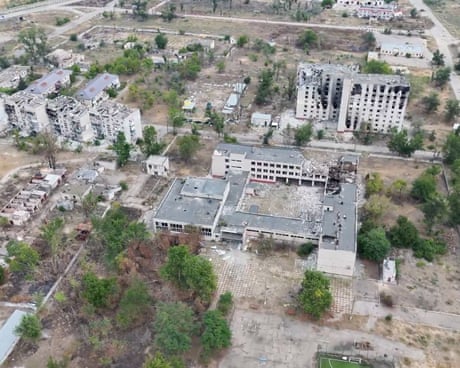
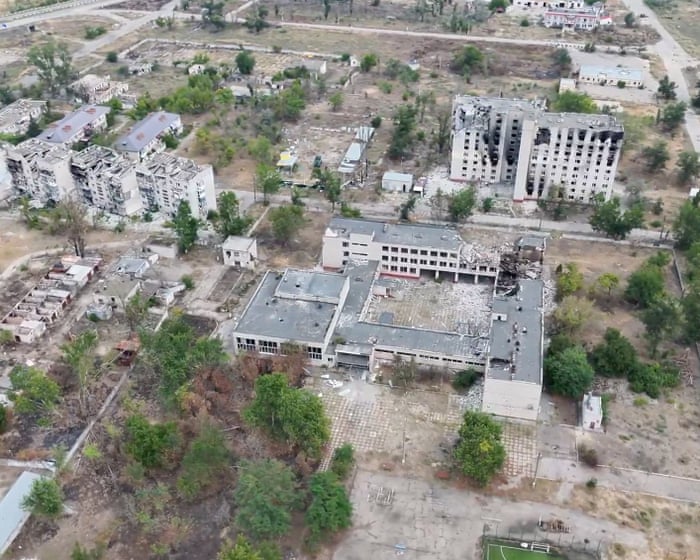
Residents in Oleshky have been enduring a worsening humanitarian crisis due to the lack of food, electricity and other resources
The French prime minister Sébastien Lecornu has just issued a statement on a shooting in a town west of Paris this morning where one person was killed and four others injured.
Police said a gunman had opened fire in Trappes, in the Yvelines, and neighbouring La Verriere. The gunman was later arrested in nearby Coignieres.
A war of words has erupted over who is responsible for the restrictions on Starshield access in Ukraine
A war of words has erupted between the Trump administration, officials in Kyiv and Elon Musk over who is to blame for limiting Ukraine’s access to Space X’s military-grade version of Starlink.
The restrictions to Starshield have rendered many of the drones used by Kyiv to strike behind the frontlines inoperable and hampered air defence systems that stop Russian attacks, according to Ukrainian officials.
The hardest part of ending Russia's war is making sure it cannot start it again. As the peace talks have escalated ahead of the US elections, Ukraine is weighing three options for its postwar security.
Among them are NATO membership, direct US guarantees modeled on NATO’s Article 5, and a European “Coalition of the Willing” backed by Washington, President Volodymyr Zelenskyy says, according to UNIAN. But none of them have been agreed to yet.
Zelenskyy describes the guarantees as a single package, with each layer still under discussion with partners. All of it, he says, rests on a strong Ukrainian army, in both numbers and quality.
Three guarantees, none of them signed
Everyone counts on NATO, Zelenskyy says, but Kyiv is also negotiating direct guarantees from the US, including an Article 5-style collective-defense clause, alongside the European Coalition of the Willing that would act together with Washington. The arithmetic, he said, is already done.
“Our colleagues in Europe and America know this. We have already calculated everything: both the financing and the corresponding number of our soldiers, so that our state can be at peace,” he states.
Why Zelenskyy says even Russia should want Ukraine in NATO
He went further, arguing that NATO membership would serve not only Ukraine and the Alliance but also Russia.
“I think, honestly, the Russians need our accession to NATO too, because for them that is more security than Ukraine outside NATO,” he claims.
The talks come as Washington pushes toward negotiations. Zelenskyy says he expects signals from US Secretary of State Marco Rubio within a day or two, as well as a call with envoy Steve Witkoff. He adds that Jared Kushner, on his way to Kyiv in November, told him Russia supports a trilateral meeting of the US, Ukraine, and Russia, at the level of technical teams.
US President Donald Trump has failed to reach an agreement with Russian ruler Vladimir Putin on halting strikes against Ukraine's energy infrastructure. However, Trump is trying to shift the blame for this failure onto President Volodymyr Zelenskyy, he said on The Diary of a CEO podcast.
His words came amid Russia's four record waves of ballistic missile attacks, after US Special Envoy Steve Witkoff described Putin as a "humanitarian." Previously, US officials cut Kyiv off from US intelligence and lowered a speed cap on Starlink to pressure Ukraine into stopping strikes on Russia's oil refineries that bring Moscow revenue for its war.
Trump pins the problem on Kyiv, not Putin
Zelenskyy explained the behavioral pattern behind Trump's recent actions and statements. At first, Putin rejected his proposal for a ceasefire. Then, the US president blamed it all on him, explaining to his people that world fuel prices are rising because of him, which is not true at all, said the Ukrainian leader.
He pointed to the blocked Strait of Hormuz shipping chokepoint, not Ukraine’s refinery campaign, as the driver of higher prices.
He also noted that the volumes of diesel allowed by the US are insufficient to lower global oil prices.
Even so, Zelenskyy said he keeps a working relationship with Trump. What he will not accept is being cast as the villain in Russia’s war: by his account, the US president is rewriting the context, turning Ukraine’s leader into the target for a problem that starts in Moscow.
Earlier, experts said the diesel deal was unlikely to meaningfully lower diesel prices. For Putin, the agreement itself was a win.
A former senior State Department official says it hardly matters whether the fuel arrives, because Putin “has already achieved the result he wants,” with Trump believing he has a pre-election card that could move markets.
Russia bombarded Kyiv with ballistic missiles in an hourslong nighttime barrage, while the Russian military said Thursday that its air defenses intercepted over 800 drones fired by Ukraine at Moscow and other cities.
A Russian ballistic missile fitted with a cluster warhead struck the historic Pecherskyi district of Kyiv overnight on 21–22 October 2026, damaging buildings near two of the Ukrainian capital’s principal religious complexes, President Volodymyr Zelenskyy has said.
The missile landed between the Kyiv-Pechersk Lavra, a UNESCO World Heritage site, and the Holy Presentation (Sviato-Vvedenskyi) Monastery. Monastery buildings, homes, shops, cafés and other civilian infrastructure sustained damage in the surrounding area.
Zelenskyy disclosed that Russian forces had used three cluster-equipped ballistic missiles during the assault. Ukrainian authorities described weapons designed to explode in the air as they approach their targets, distributing explosive submunitions over an area approximately 400 metres in diameter.
After receiving reports from officials overseeing emergency operations across Ukraine, the president accused Moscow of deliberately choosing a weapon capable of inflicting extensive civilian casualties in a densely populated district.
“This was a deliberate choice of weapon and area of deployment,” Zelenskyy said.
He maintained that there were no military installations in the vicinity and that the attack had been intended to inflict maximum damage on civilians and their property.
Religious Buildings and Civilian Properties Damaged
Pecherskyi is one of Kyiv’s oldest districts, containing religious institutions and architectural monuments associated with centuries of Ukrainian history.
Among them is the Kyiv-Pechersk Lavra, established in the 11th century and subsequently developed into an important centre of Eastern Orthodox Christianity.
The complex includes historic churches, monasteries and an extensive system of underground caves. Together with Saint Sophia Cathedral and its related buildings, it forms part of a UNESCO World Heritage property that has appeared on the List of World Heritage in Danger since 2023.
Thursday’s explosion occurred in the area separating the Lavra from the Holy Presentation Monastery. Ukrainian authorities identified damage to buildings belonging to the latter, alongside neighbouring residential and commercial premises. Assessments of the destruction across the historic district were continuing.
This was not the first occasion in 2026 on which Russian weapons had damaged the area’s religious heritage.
On 15 June, a Russian drone struck the Kyiv-Pechersk Lavra complex, causing severe damage to the Dormition Cathedral. Its roof and structural elements suffered extensive destruction, prompting UNESCO to undertake emergency stabilisation measures.
The October strike has again exposed the vulnerability of the capital’s historic religious buildings, as well as the civilian neighbourhoods surrounding them.
The Use of Cluster Weapons in Urban Areas
The reported choice of ammunition has particular implications for the investigation into the attack.
Whereas a conventional missile warhead delivers its explosive force around a principal impact point, cluster munitions release numerous smaller explosive devices capable of striking separate locations across a broad area.
In an urban environment, such weapons can cause casualties and destruction well beyond an intended target. Unexploded submunitions may remain dangerous after the initial attack, posing further risks to residents and emergency workers.
The International Committee of the Red Cross has warned that deploying cluster munitions in populated areas creates a high likelihood of indiscriminate effects.
Under international humanitarian law, military operations must distinguish between civilian persons and objects and legitimate military targets. Indiscriminate attacks are prohibited.
The reported deployment of cluster warheads in central Kyiv therefore raises questions about whether those requirements were observed. Zelenskyy’s account of the three missiles had not, at the time of reporting, been independently established through publicly available forensic evidence.
Russian Barrage Follows Diplomatic Contact with Washington
The Pecherskyi explosion was one incident in a much larger attack on the Ukrainian capital.
According to Zelenskyy, Russia launched 21 ballistic missiles against Kyiv in three successive waves overnight. Ukrainian authorities reported at least two people killed and more than 30 wounded, with strikes damaging apartment buildings, commercial premises, transport infrastructure and energy facilities.
The bombardment took place shortly after Russian President Vladimir Putin met US presidential envoy Steve Witkoff in St Petersburg on Wednesday, 21 October.
During their discussions, Putin indicated that Russia was prepared in principle to resume negotiations with Ukraine and the United States, potentially in November. However, no confirmed timetable emerged.
Witkoff’s visit followed consultations in Norway between American, Ukrainian and European representatives over possible arrangements to end the war.
The renewed diplomatic activity has done little to resolve the underlying disagreements. As EU Today has previously examined, Moscow continues to advance territorial demands while the parties remain divided over Ukraine’s future security guarantees.
Meanwhile, Kyiv faces an immediate requirement for additional air-defence ammunition.
Zelenskyy has repeatedly appealed for more Patriot interceptor missiles capable of engaging ballistic targets. Difficulties surrounding American military assistance and intelligence cooperation have increased tensions between Washington and Kyiv at a time when Russia is intensifying attacks against Ukrainian cities.
The latest strike also presents Ukrainian investigators with the task of establishing whether the reported use of cluster munitions against a historic civilian district constituted an unlawful attack.
For Zelenskyy, the bombardment following Putin’s latest diplomatic discussions demonstrates that Moscow’s military conduct remains unchanged. He has argued that Russia’s actions provide no evidence of a genuine intention to bring the war to an end.

 Login