Manifestantes colocam bandeira da Palestina na Torre Eiffel?


A capital francesa está novamente a arder. O descontentamento social é bem visível nas ruas de Paris e as manifestações e protestos levaram a organização da Art Basel Paris a encerrar a feira mais cedo, algo que nem uma pandemia conseguira fazer. Mas isso não quer dizer que galerias e museus não cumpram com a programação prevista.
Se estiver por Paris e precisar de uma margem de tempo para visitar “aquela exposição imperdível”, aqui ficam algumas sugestões dos espaços culturais que prolongam o seu horário num dia específico da semana.
Segunda-feira. Musée du Luxembourg – até às 22h
O museu próximo do Jardim homólogo foi uma das primeiras instituições de arte antiga a abrir ao público na cidade das luzes. Ocupa uma parte do Palácio do Luxemburgo, onde se encontra o Senado francês, e deixou de ter uma coleção permanente. O foco passaram a ser duas exposições temporárias por ano em homenagem a grandes figuras da arte moderna e da fotografia. Neste momento, Andy Warhol é o artista em destaque.
Andy Warhol – A Linha e a Imagem | até 10 de janeiro de 2027
Terça-feira. Jeu de Paume – até às 21h
Em pleno coração de Paris, o Jeu de Paume é um lugar de experimentação por excelência no que à imagem diz respeito. Da fotografia histórica ao cinema experimental e criações digitais contemporâneas, todas as faces e facetas da imagem passam por aqui. Até janeiro de 2027, o canadiano Stan Douglas, questiona como nós, humanos, construímos a história, a representamos e transmitimos.
Stan Douglas – Parallax | até 10 de janeiro de 2027
Quarta-feira. Museu do Louvre – até às 21h
É o maior e mais visitado museu do mundo! Antigo palácio real que remonta à Idade Média, o Louvre foi transformado ao longo do tempo até se tornar um museu aberto ao público em 1793. Possui um acervo de 500.000 obras, desde a Antiguidade até 1848 e da Europa Ocidental ao Irão, passando pela Grécia, Egito e Médio Oriente. O ideial é comprar bilhetes online com antecedência. Todas as quartas e sextas-feiras, dias em que o horário é alargado, são organizadas mini-visitas de 20 minutos com guias turísticos na exposição permanente e nas exposições atuais.
Zurbarán – 1598-1664 | até 25 de janeiro de 2027
Quinta-feira. Maison Européenne de la Photographie (MEP) – até às 22h
Situada numa mansão do século XVIII no coração do Marais, a Maison Européenne de la Photographie (MEP) tem uma coleção de mais de 12.000 obras, uma biblioteca especializada e livraria, e organiza workshops o ano todo. Este outono, a fotografia de moda pela lente do norte-americano Irving Penn, um dos nomes mais influentes da fotografia do século XX e colaborador de longa data – 60 anos! – da revista Vogue.
Penn & Fashion | até 17 de janeiro de 2027
Sexta-feira. Bourse de Commerce|Coleção Pinault – até às 21h
Em 2021, o edifício histórico da Bolsa de Paris, no bairro de Les Halles, reabriu as suas portas, transformado pelo renomado arquiteto japonês Tadao Ando para acolher parte da coleção de arte contemporânea do empresário e colecionador francês François Pinault. No bicentenário da invenção da fotografia, a efeméride é aqui assinalada através de 700 fotografias de 70 artistas. E também pela intervenção na Rotonde da artista norte-americana Barbara Kruger.
Remember Me – Obras-Primas da Fotografia da Coleção Pinault | até 18 de janeiro de 2027
Sábado. Palais de Tokyo – até às 22h
O Palais de Tokyo, todos os dias abre as suas portas até às 22h00, exceto à terça-feira. A programação de outono j´´a arrancou e dissemina-se, nada mais nada menos, do que por oito exposições, centradas no trabalho de Valérie John, Ali Cherri, Lassana Sarre, Rose Lowder, Sonia Gomes, Paul Kodjo e Céleste Richard-Zimmermann.
Marine Le Pen blasted French newspaper that published a false claim that an alleged terrorist had party flyers in his car.
The post ‘Blatant Disinformation’: French Newspaper Falsely Reported ‘Terror Gunman’ Had Le Pen Leaflets appeared first on Breitbart.
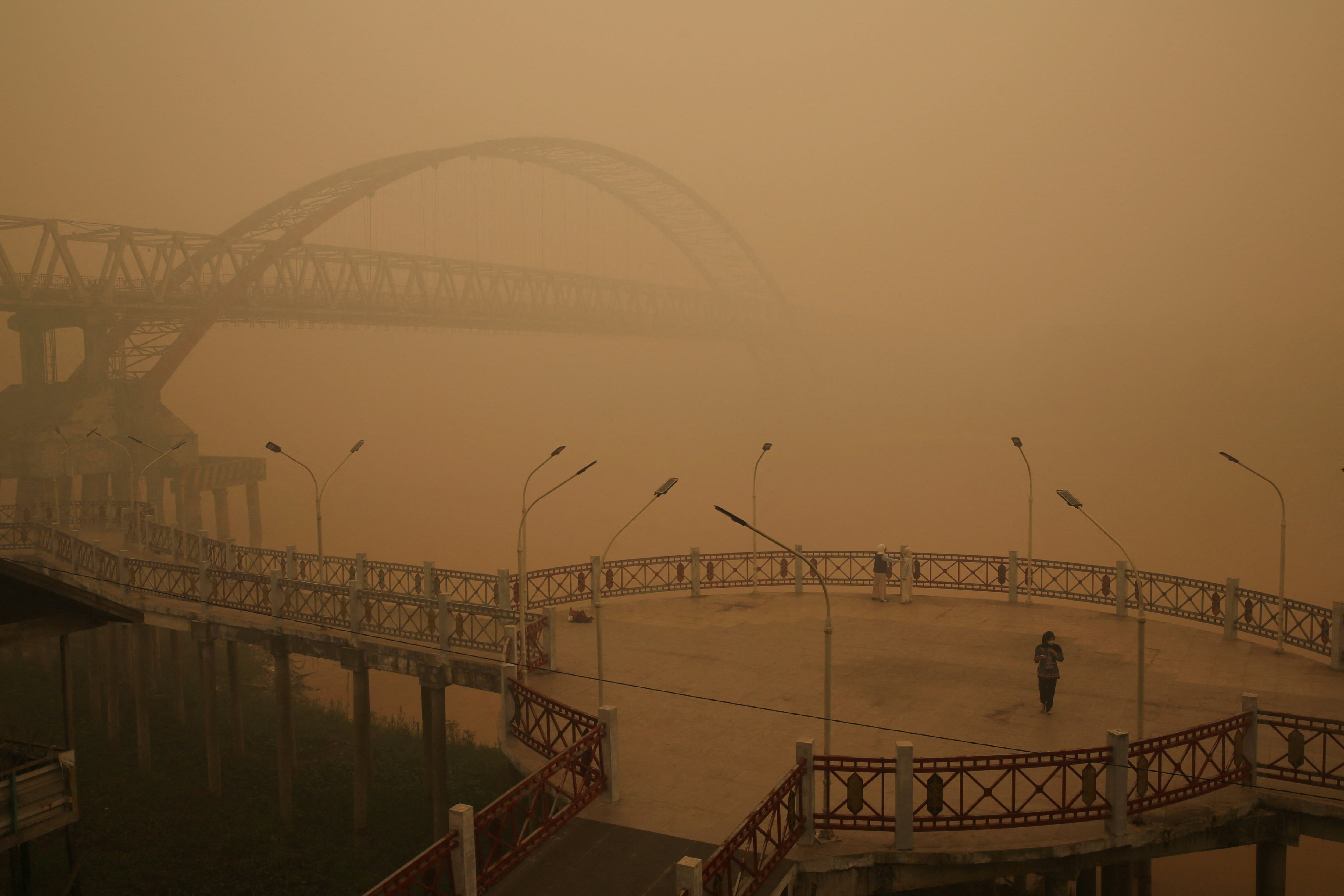
Dos importantes informes que se difunden este martes muestran la peligrosa deriva que ha tomado el ser humano con el cambio climático. Uno se centra en el presente y el otro en el futuro. En ambos se describe un calentamiento global que se encamina hacia la zona roja de peligro, lo que hace que los eventos extremos —como olas de calor, sequías y lluvias torrenciales— sean más violentos y frecuentes. Por un lado, la Organización Meteorológica Mundial (OMM) ha publicado esta mañana su boletín anual de seguimiento de los principales gases de efecto invernadero. Están en máximos históricos y esto ya ha provocado, por ejemplo, que los últimos 11 años hayan sido los 11 años más calurosos en el planeta desde que hay registros. Esta “tendencia” se “prevé que continúe”, advierte la OMM. Unas horas antes, el área de Cambio Climático de la ONU ha difundido otro análisis, también anual, sobre los planes nacionales de los países para luchar contra el calentamiento. Y la trayectoria que esos programas dibujan para los próximos 10 años no supone el recorte urgente y rápido que se necesita para que el calentamiento se quede dentro de los límites de seguridad.

© Usep Hariadi (REUTERS)

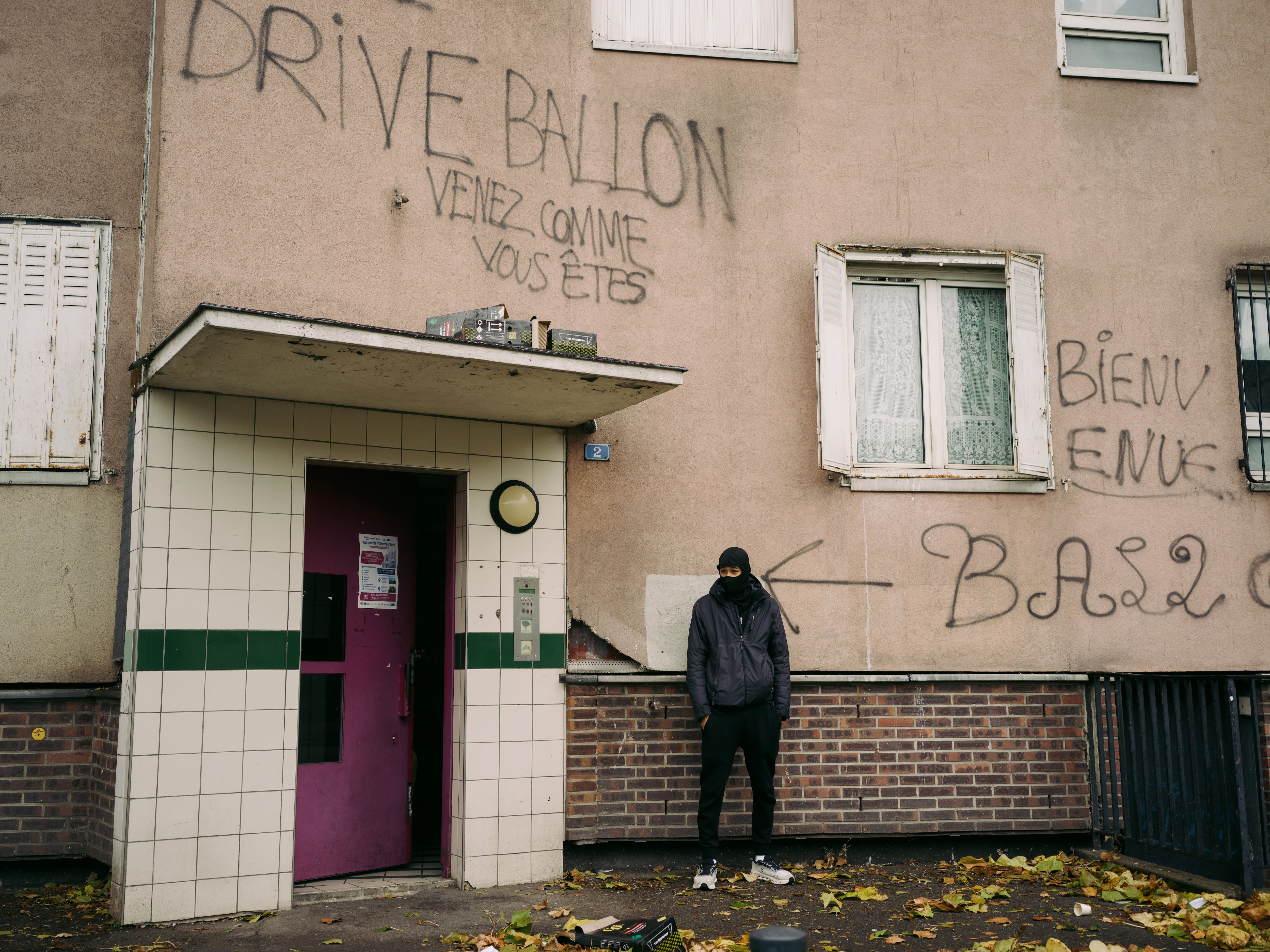
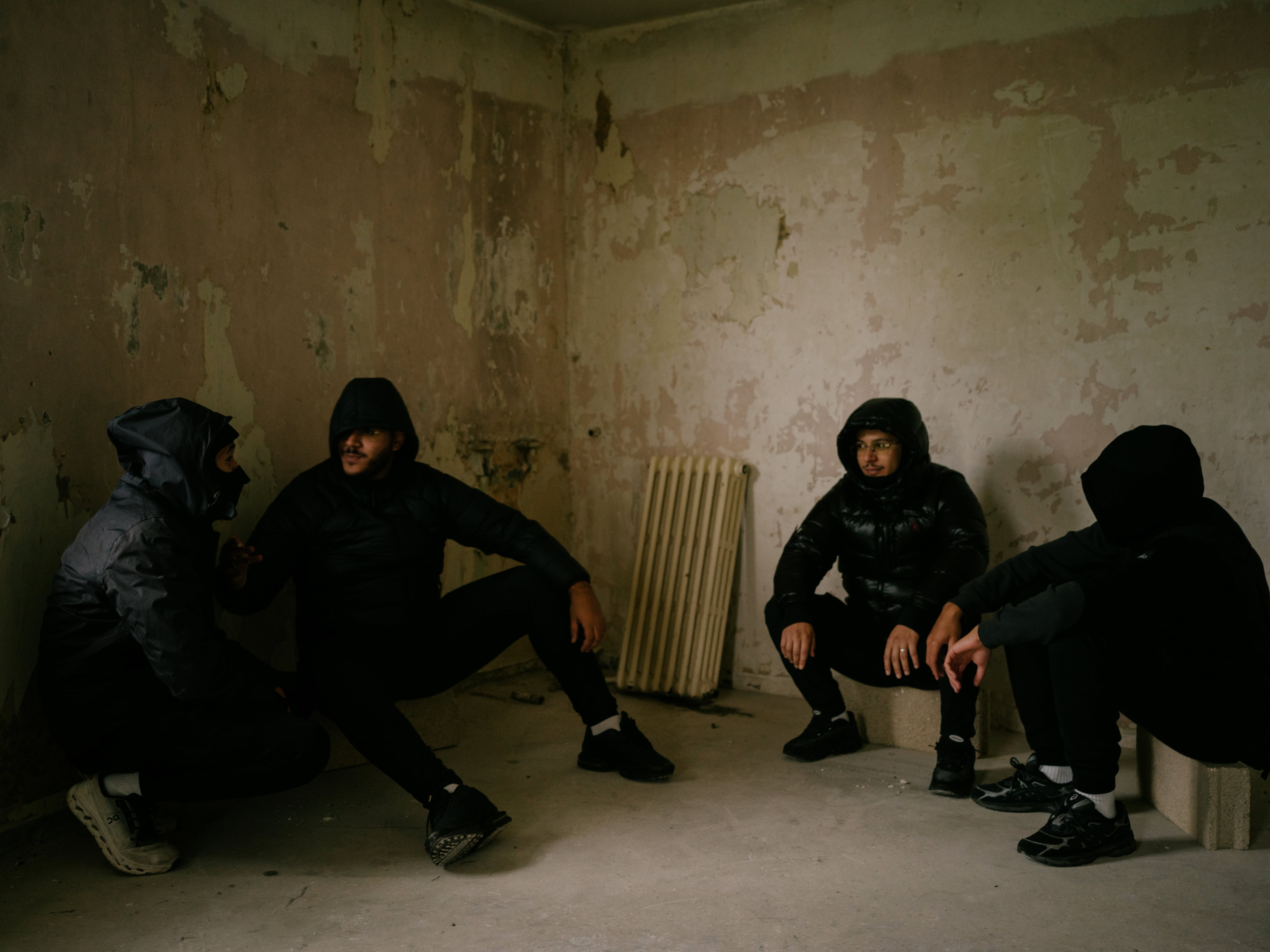
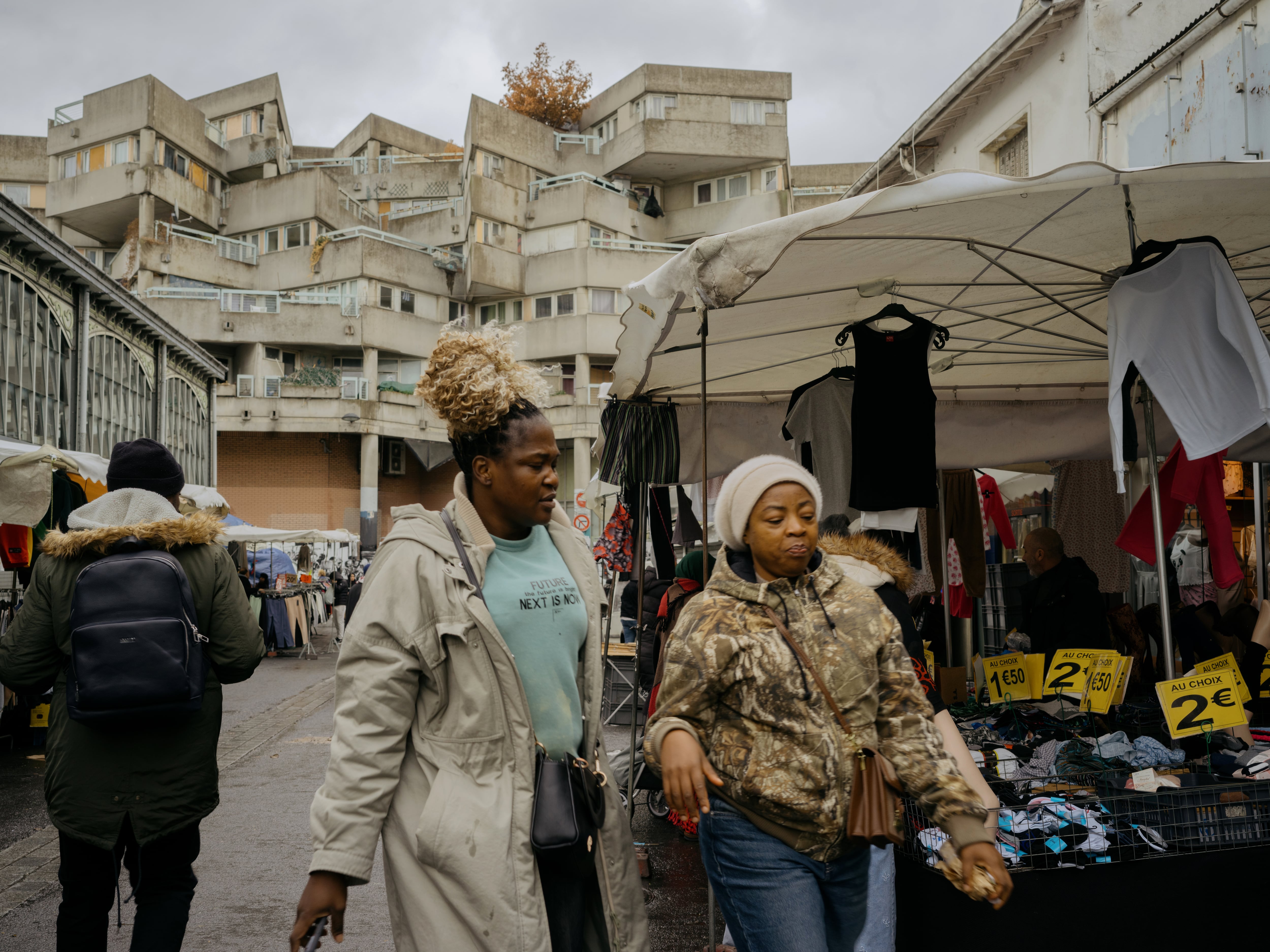
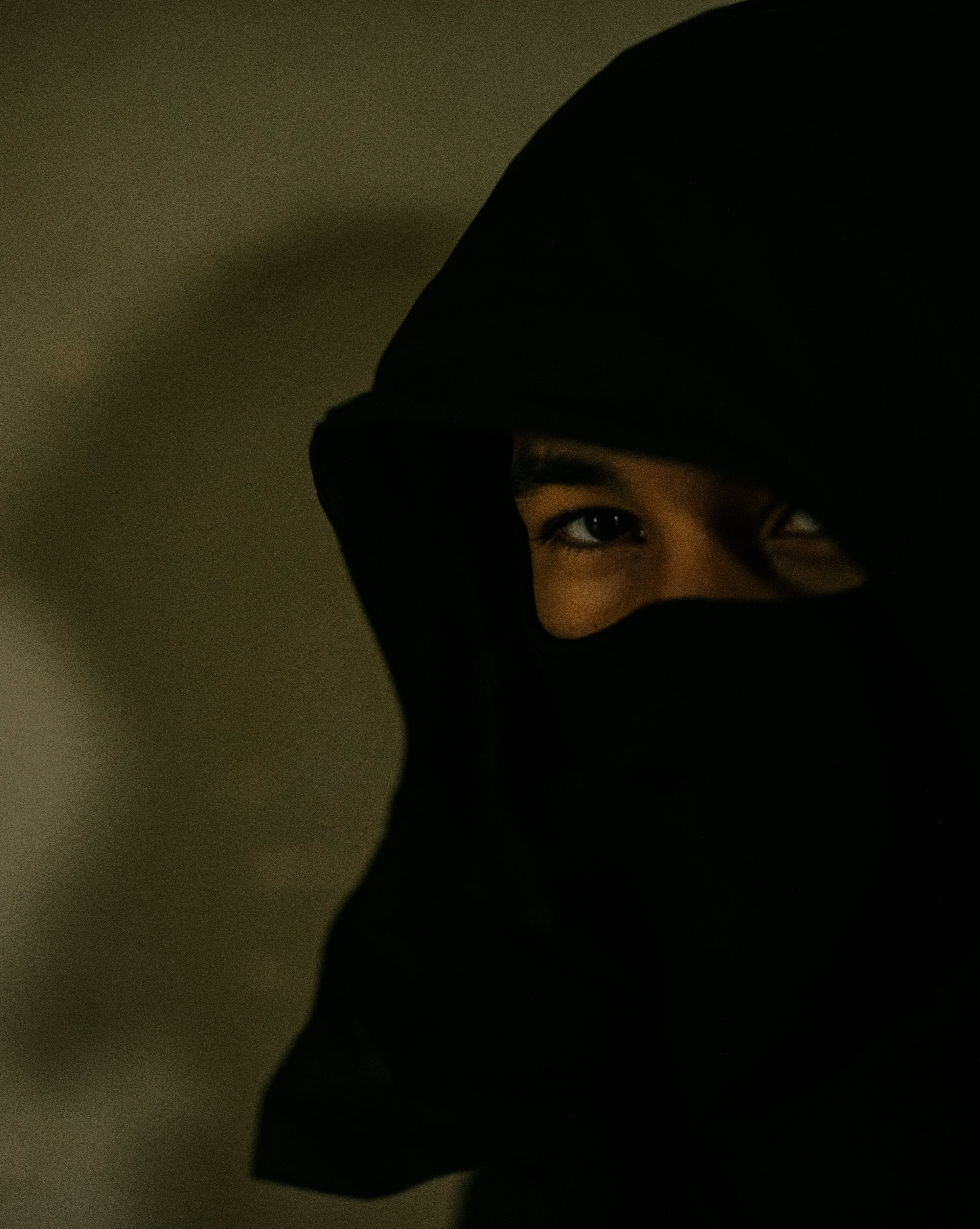
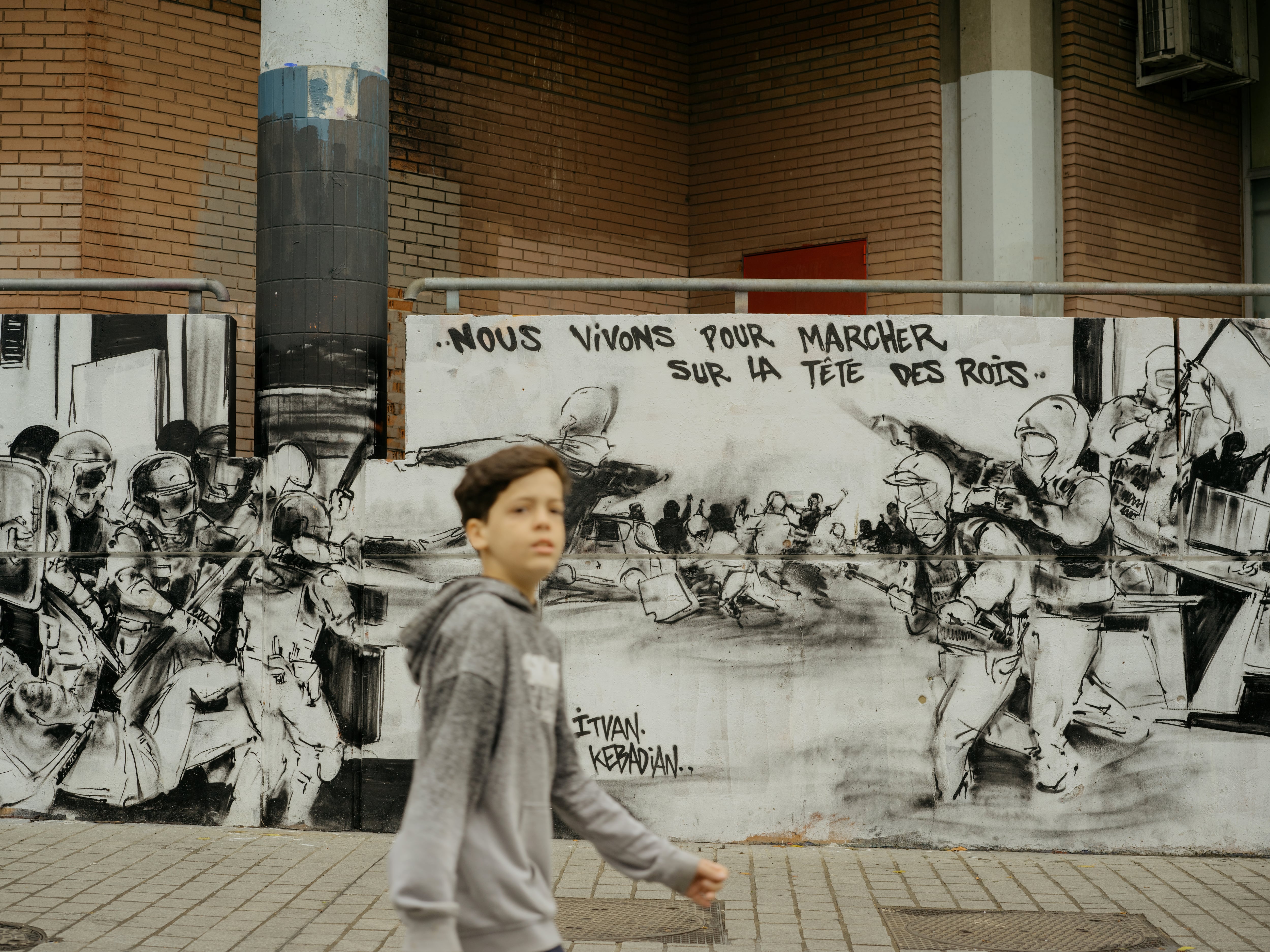
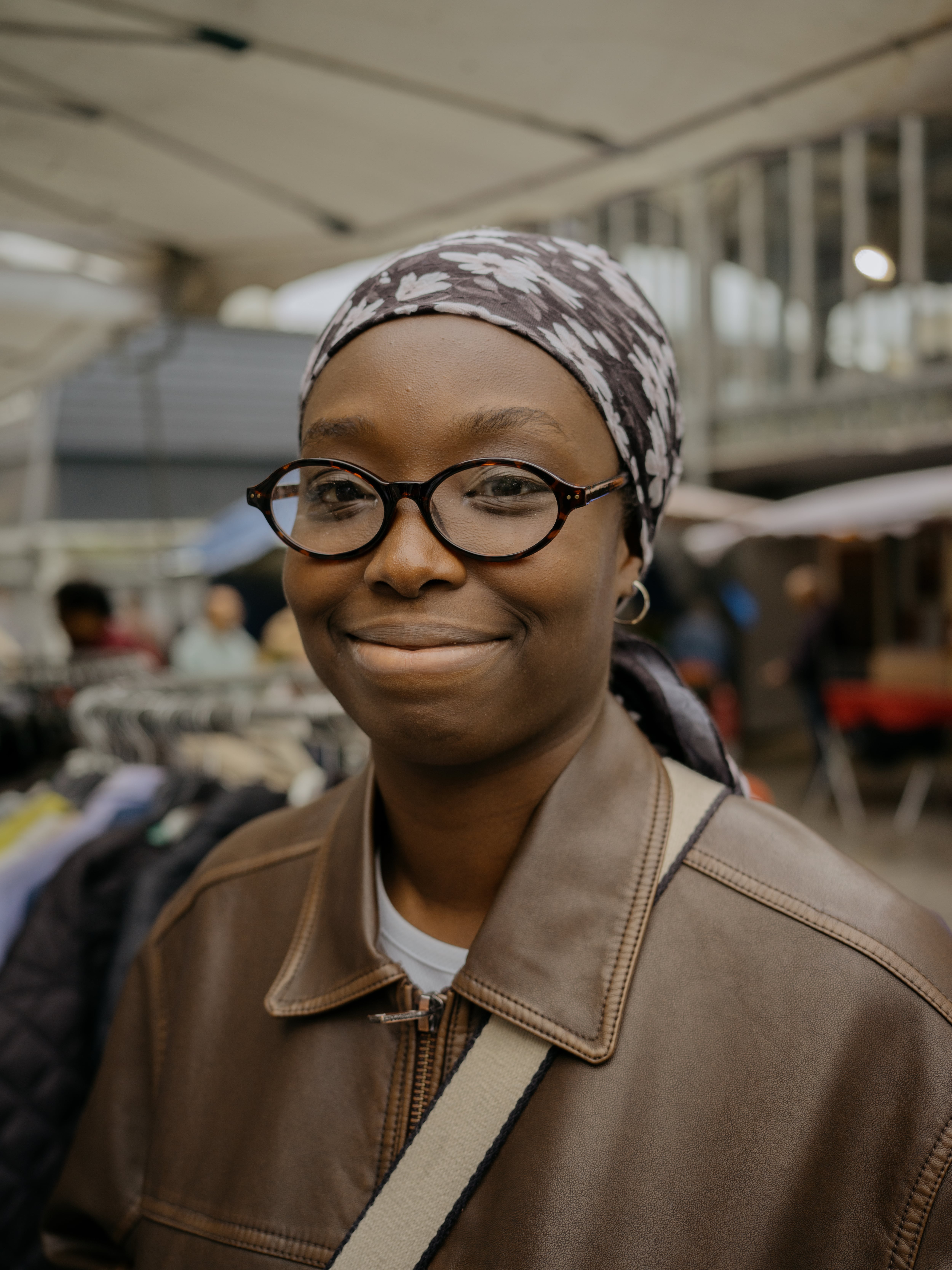
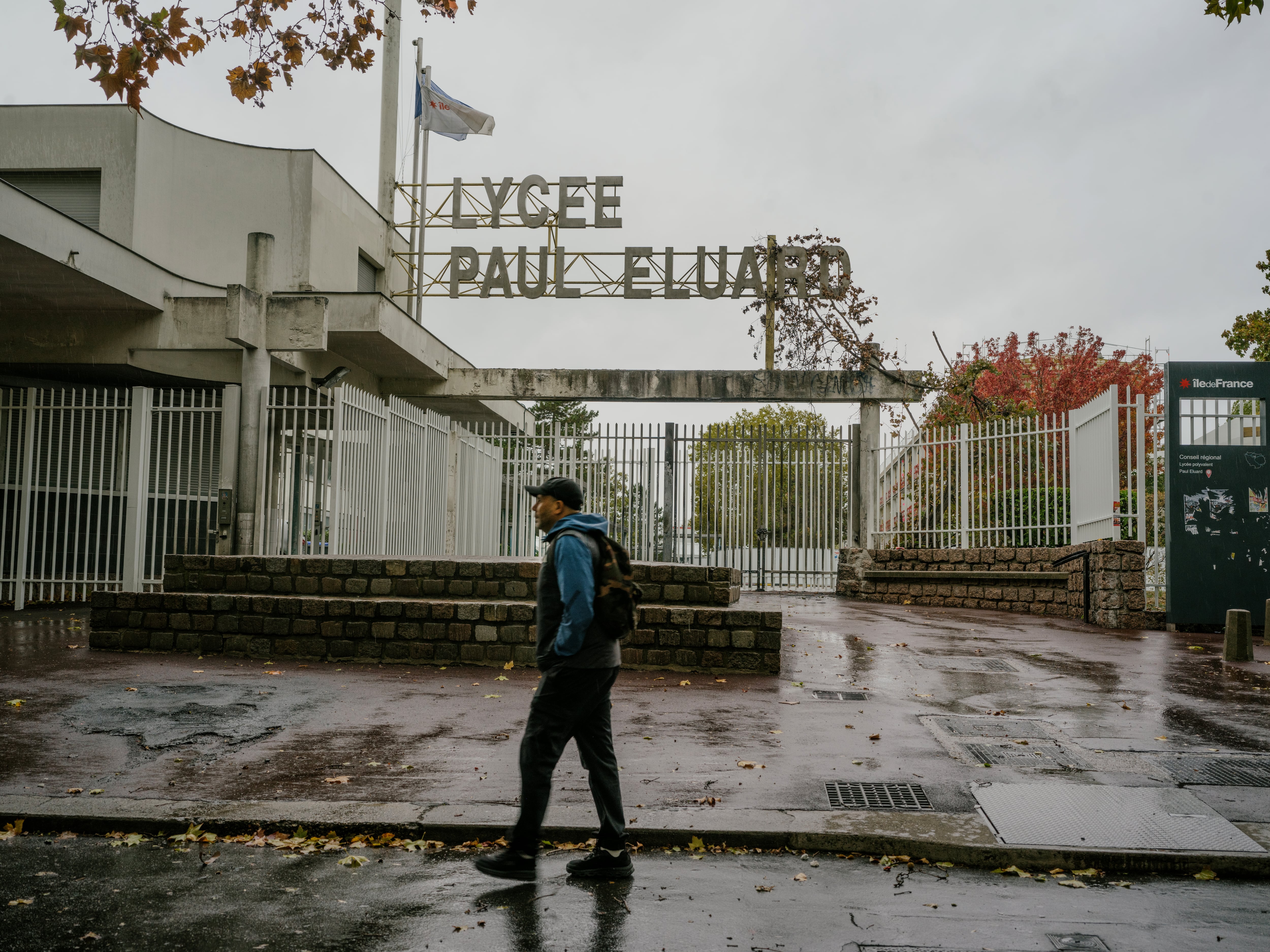
Moktar, 21, pulls up his neck gaiter, tightens the hood of his puffer jacket and steps out of the house in the late afternoon, dressed in immaculate black from head to toe. Behind the little mustache and the thick-lensed glasses with gold-rimmed temples, he smiles — a third-year college student from a very modest Tunisian family. Friendly, sharp, with an unusually political sense for his age and skin toughened by his surroundings, Moktar grew up in one of the poorest buildings in the L’Abreuvoir neighborhood in Bobigny (population 48,873), right opposite one of the drug-dealing hotspots where traffickers, police, customers, and addicts come and go all day. “Ballon here,” reads graffiti on the wall, advertising the nitrous oxide gas sold for inhalation.


© Samuel Aranda

© Samuel Aranda

© Samuel Aranda

© Samuel Aranda
France’s latest weekend of protest presents Emmanuel Macron with a question that presidential speeches cannot settle: can his government protect ordinary citizens while addressing the grievances driving them onto the streets?
Nearly 1,000 arrests were reported after Saturday’s demonstrations, with clashes in Paris and other cities. Most participants protested peacefully over education and living costs. But masked groups again turned public mobilisation into confrontation, leaving police to restore order.
From a conservative perspective, this matters enormously. Peaceful assembly belongs to the democratic inheritance France should defend. Throwing projectiles at officers, intimidating businesses and destroying property belong in the criminal courts. Economic hardship explains anger; it does not confer permission to terrorise a neighbourhood.
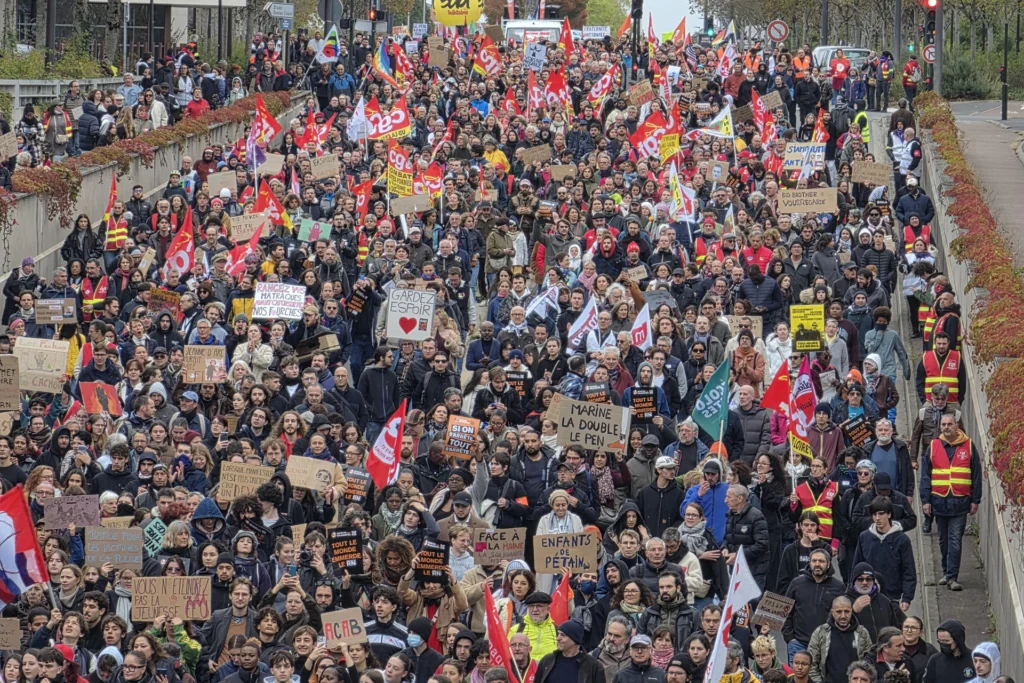
The Interior Ministry counted 410,000 demonstrators nationwide, while the CGT union estimated nearly 800,000. Authorities deployed 70,000 officers, supported by helicopters and armoured vehicles. Interior Minister Laurent Nuñez said the operation helped prevent a repetition of the previous weekend’s widespread looting.
That offers some reassurance. Yet a country requiring such an extraordinary deployment to contain weekend demonstrations has a deeper problem than crowd management. Police can clear a junction. They cannot, by themselves, rebuild confidence in a political class that many citizens believe no longer understands their lives.
The most easily overlooked people are those with the least protection: independent shopkeepers, employees losing shifts, residents trapped behind barricades and taxpayers financing the response. Their interests deserve the same attention as the demands carried on banners. Keeping a business open is also a contribution to national life.
The BBC reported that shops were boarded up, cultural institutions closed and more than 20 Paris metro stations shut. These precautions may have been necessary, but they also demonstrate how disorder imposes costs far beyond those directly involved. A disrupted capital is a warning about the erosion of everyday freedom.
The government’s responsibility therefore extends beyond announcing arrest totals. Suspected offenders should face prompt, fair proceedings, with meaningful penalties where guilt is established. Where legally appropriate, those responsible for deliberate damage should contribute towards repairs. Public confidence depends on consequences that are visible, proportionate and consistently applied.
Consistency also requires rejecting violence from every political direction. Regional authorities reported that far-right extremists fought demonstrators in Nice, where 11 people were arrested. A credible conservative position cannot excuse street intimidation because its perpetrators claim patriotic motives. The law loses authority whenever political allegiance becomes an unofficial exemption.
Nevertheless, restoring order cannot substitute for governing competently. The movement grew from complaints about school staffing and resources into broader protests over household costs. Those concerns deserve answers. Parents expecting functioning classrooms and workers struggling to afford necessities are asking whether the state delivers what it promises.
The conservative answer should begin with value for money. Before reaching automatically for additional taxation or borrowing, ministers should explain where existing resources go, which programmes deliver results and which administrative burdens consume money better spent on essential services. Public expenditure should be judged by outcomes rather than the generosity of announcements.
There is an equally strong case for policies that reward employment, investment and enterprise. A government cannot sustainably improve living standards while treating the businesses creating jobs as an inexhaustible source of revenue. Nor can it promise every constituency protection from difficult choices. Credibility requires priorities, arithmetic and candour.
Macron’s political opponents will understandably seek advantage. But opposition leaders should be judged by whether they offer workable government, including a clear rejection of intimidation. Encouraging public anger is easier than reconciling demands for better services, affordable living and sound finances. France needs politicians prepared to explain those trade-offs honestly.
The immediate task is to keep streets safe. The larger task is to make democratic government effective enough that citizens trust its decisions. France needs firm policing, accountable institutions and economic realism. Unless its leaders provide all three, each weekend of unrest risks becoming another advertisement for the failure of the governing establishment.
France’s Unrest Exposes a New Front in Russia’s Information War Against Europe


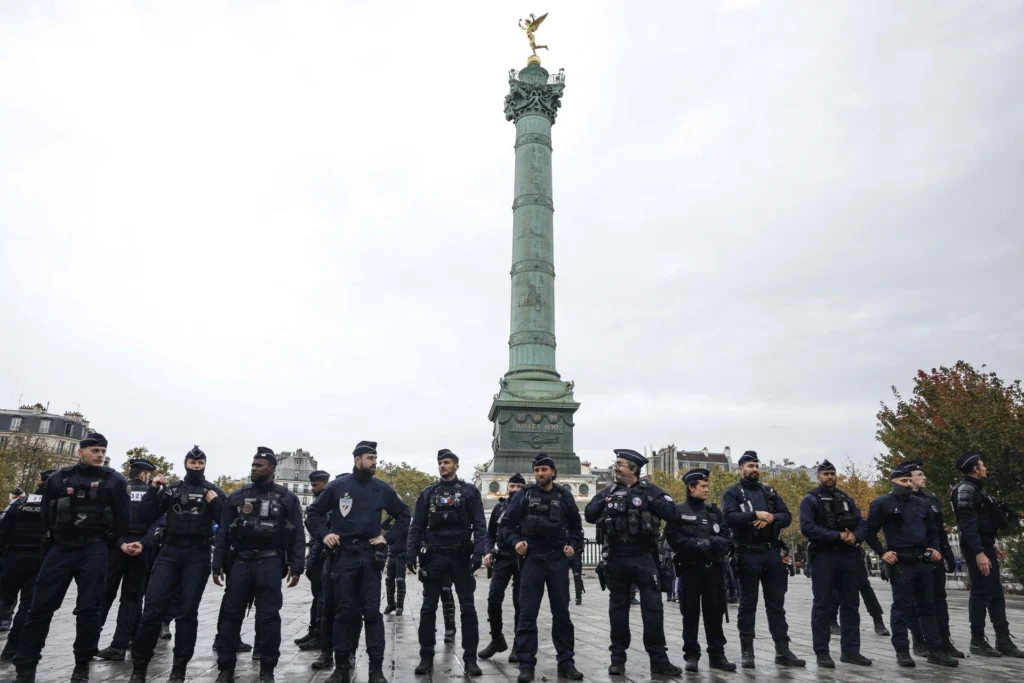
France has deployed 70,000 police officers and gendarmes ahead of nationwide demonstrations on Saturday, with authorities warning of a heightened risk of unrest after vandalism and looting damaged about 3,000 businesses the previous week.
RELATED: France Reports 855 Arrests in Paris After Protests
Prime Minister Sébastien Lecornu warned late Friday that the threat remained high, particularly from radical far-left groups and criminal elements operating alongside demonstrations called by trade unions, students and the Yellow Vest movement.
Interior Minister Laurent Nuñez announced a large-scale security operation to prevent further violence and looting.
“We will show no mercy to looters and troublemakers,” Nuñez declared. He has faced criticism from the left over police tactics and from the right for failing to prevent the previous week’s unrest.
France to mobilise 70,000 security forces for Saturday protest, interior minister says https://t.co/ok4e8kEy5t https://t.co/ok4e8kEy5t
— Reuters World (@ReutersWorld) October 23, 2026
Authorities have banned gatherings in numerous cities and restricted the routes of other demonstrations on security grounds, prompting criticism from trade unions and human rights organizations.
In major cities, trade union demonstrations were authorized on Saturday only in Paris, Marseille, Strasbourg, Lille, Mulhouse, Grenoble, Toulouse and Amiens.
In Paris, a last-minute change to the union march’s route sparked a dispute between police officials and organizers. Authorities cited the heightened threat following a racist attack on the outskirts of the capital the previous day as they redirected the march from Place de la Nation to Place d’Italie, keeping it away from the city center.
Several museums in the capital, including the Louvre and the Musée d’Orsay, will remain closed, as will the nearby Palace of Versailles. A nighttime curfew in the areas around Place de la République and Les Halles will also remain in force until Monday.
Banks and businesses in central Paris were boarding up shopfronts and windows late Friday and early Saturday in anticipation of possible vandalism, according to observations by Spanish news agency EFE.
Security concerns also extend to Orléans, about 130 kilometers (81 miles) south of Paris, where the far-right National Rally (RN) is holding a congress to formally launch Marine Le Pen’s presidential candidacy, roughly six months before the election.
Authorities estimated that 11,000 people took part in a counter-demonstration in Orléans on Saturday against Le Pen’s party. Organized in opposition to racism, fascism and imperialism, the march proceeded peacefully in a festive atmosphere, according to EFE.

Protesters chanted slogans including “Macron resign, Le Pen to prison” and sang the French national anthem, La Marseillaise, as well as the Spanish-language protest song “The People United Will Never Be Defeated.”
Authorities deployed about 3,000 officers in Orléans to prevent clashes between demonstrators and attendees at the RN congress. The local prefecture authorized Saturday’s march but banned a separate demonstration planned for Sunday.
The security measures reflect the authorities’ efforts to prevent further disorder while allowing some demonstrations to proceed. Restrictions on public gatherings and the deployment of thousands of officers have shaped preparations for Saturday’s rallies across France.
NICOLAS TUCAT / AFP via Getty Images
As France grapples with another weekend of cost-of-living protests, some of its most famous streets and landmarks are boarded up.
On Saturday, protesters took to the streets in major cities across France, including Paris and Marseille.
Though police in riot gear deployed tear gas and water cannons to disperse the demonstrations, the looting and rioting seen during last week's protests did not materialize.
In a statement, French Interior Minister Laurent Nuñez said that as of 7:30 p.m. local time, authorities had made about 1,000 arrests.
NICOLAS TUCAT / AFP via Getty Images
Last weekend, student-led cost-of-living protests devolved in some places into violent riots and looting.
This weekend, the interior ministry increased its police presence, deploying some 70,000 officers across the country on Saturday. The protests drew support from various groups and organizations, including the gilets jaunes, or yellow vests.
On Saturday morning, military officers and a multipurpose intervention vehicle could be seen positioned outside Paris' National Assembly building.
Thibaud MORITZ / AFP via Getty Images
In Marseille, police deployed tear gas and water cannons to break up protests. Videos from the scene showed lines of police charging protesters.
Sameer AL-DOUMY / AFP via Getty Images
In the French capital on Saturday, thousands of officers largely prevented looting by keeping protesters to a predetermined parade route.
Videos showed demonstrations descending into melees as officers attempted to disperse crowds with tear gas and batons.
Luc Auffret/Anadolu via Getty Images
Luxury stores including Dior, Louis Vuitton, Cartier, and Moncler all have stores on the Avenue des Champs-Élysées.
Some 1,500 businesses were targeted in last weekend's vandalism, said Alexandre Bompard, the CEO of Carrefour, one of France's largest supermarket chains.
Luc Auffret/Anadolu via Getty Images
Business leaders, including Thierry Guibert, CEO of Lacoste, and Nicolas Houzé, executive chairman of Galeries Lafayette, all spoke out in the aftermath of last weekend's damage.
"We cannot allow violence to destroy what generations have put so much energy into building," Guibert wrote on X.
Mouneb Taim/Anadolu via Getty Images
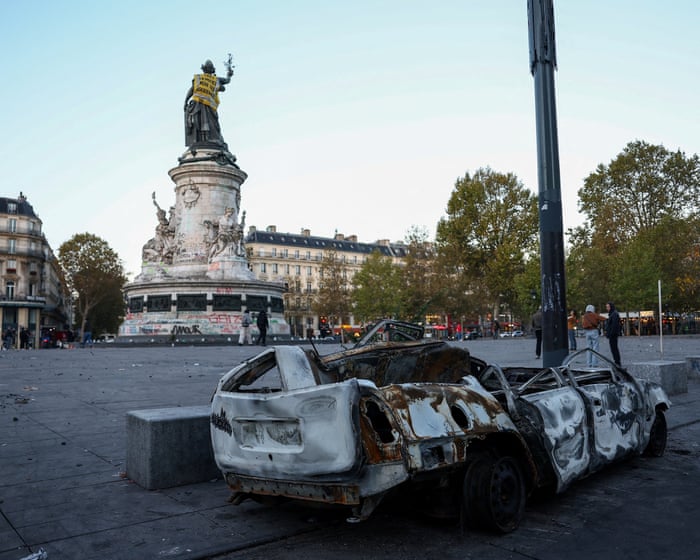
Among the areas targeted in last weekend's violence in Paris were the Marais shopping district and the Place de la République.
Speaking to Business Insider's correspondent, Nathan Rennolds, last weekend, one shopkeeper in Paris said looters had "taken everything."
Wu Huiwo/Xinhua via Getty Images
In a notice on its website, the Louvre says the museum would be closed on Saturday and all reservations would be reimbursed. The Louvre closed its doors earlier this week after student protests blocked the entrances.
The Grand Palais and Musée d'Orsay are also closed for the day.
In an update issued on Thursday, the US Embassy in France warned Americans to avoid demonstrations and said curfews across the country, including in some Paris neighborhoods, might continue. It also advised Americans in Paris for the NFL game on Sunday, October 25, to exercise caution.
Muhammed Said Tako/Anadolu via Getty Images
Protests are also expected in countries including Italy, Spain, Portugal, and Albania. Police in Tirana, Albania's capital, deployed tear gas against anti-government student protesters on Saturday.
French police used tear gas to disperse demonstrators in Lyon on Saturday morning, 24 October, as 70,000 police officers and gendarmes were deployed nationwide to prevent a repetition of the violence and looting that accompanied last weekend’s mass protests.
In Paris, trade unions agreed to a revised demonstration route after the administrative court rejected their challenge to a last-minute police order. The march will proceed from Porte d’Italie to Porte de Vincennes, rather than between Bastille and Nation as originally agreed, with the procession scheduled to begin at 2pm.
Elsewhere, emergency judicial decisions have complicated the government’s security arrangements. Courts have suspended restrictions in Limoges and several municipalities around Marseille, while other cities remain subject to extensive bans on public gatherings.
The developments follow last weekend’s nationwide unrest, when approximately 550,000 people demonstrated against rising living costs, deteriorating public services and conditions in French schools. Violence erupted in several cities, leaving businesses looted, public buildings damaged and police officers injured.
Interior Minister Laurent Nuñez has ordered the deployment of 10,000 additional officers compared with 17 October. The operation includes specialist police units, armoured vehicles, helicopters and water cannon.
According to the government’s official security instructions, prefects must examine proposed demonstration routes, assess the reliability of organisers and take preventive measures where there is evidence of a risk to public order.
The authorities are particularly concerned about organised groups exploiting otherwise peaceful demonstrations to attack commercial premises and government buildings.
Security services expect between 400,000 and 500,000 people to participate in Saturday’s mobilisation. The government has warned that calls for renewed violence and looting have circulated online.
The previous weekend’s disturbances resulted in thousands of arrests. Justice Minister Gérald Darmanin said 217 people had already received prison sentences, with approximately half described as first-time offenders.
The government’s measures have prompted an increasingly contentious legal dispute over the constitutional protection of public demonstrations.
The French Human Rights League has challenged restrictions in several cities, including Brest, Quimper, Caen, Marseille, Lille and Montpellier. It argues that extensive prohibitions interfere with freedom of assembly, expression and movement.
In Marseille, negotiations between local authorities and trade unions resulted in permission for a demonstration along an agreed route through the city. A separate administrative court decision subsequently suspended parts of the wider departmental ban, allowing gatherings in Gardanne, Istres, Martigues, Miramas and Tarascon.
The administrative court in Limoges also suspended restrictions on gatherings of more than ten people in the city centre and overturned an associated curfew.
In Lyon, however, restrictions remained in force across a large central area. Police dispersed approximately 150 demonstrators near Lyon III University shortly before 11am after participants blocked traffic close to the prohibited perimeter.
President Emmanuel Macron has argued that protecting public order must take priority following the destruction witnessed on 17 October.
His suggestion on Thursday that demonstrations not organised by recognised trade unions should generally be prohibited prompted legal challenges from opposition parties and civil liberties organisations.
In a ruling delivered on 23 October, the Conseil d’État rejected challenges to Macron’s remarks, finding that they did not themselves constitute a binding nationwide prohibition. The court nevertheless reaffirmed that prefects must assess individual demonstrations according to the circumstances and risks involved.
The ruling leaves local restrictions subject to judicial scrutiny rather than providing the government with unrestricted authority to prohibit protests.
Meanwhile, the movement’s original demands remain unresolved. What began with secondary-school students protesting against staff shortages, overcrowding and educational conditions has expanded into a broader mobilisation involving trade unions, university students and Yellow Vest campaigners.
Macron met representatives of secondary-school students on Friday, but participants subsequently called for demonstrations to continue until concrete proposals were presented.
The renewed mobilisation comes six months before France’s presidential election, in which Macron cannot seek a third consecutive term.
Political tensions are also evident in Orléans, where thousands of demonstrators gathered on Saturday to oppose the National Rally’s weekend party congress. Authorities deployed additional security personnel and restricted the location of the protest.
For the government, the immediate objective is to prevent another outbreak of large-scale violence. For unions and civil liberties organisations, the dispute increasingly concerns the conditions under which public protest may legitimately be restricted.
As EU Today reported ahead of Saturday’s demonstrations, the central legal question is whether prohibitions are proportionate to identifiable security risks.
The courts have now begun answering that question differently across France, leaving the authorities to enforce a patchwork of restrictions as the country’s social and political confrontation continues.

Shopkeepers and terrified civilians are arming themselves in Paris fearing more far-Left riots and looting ahead of fresh protests scheduled for this weekend.
The post France Braces for Day of Far-Left Chaos: Shopkeepers and Civilians Arm Themselves Ahead of Rioting and Looting Expected in Paris Today appeared first on The Daily Sceptic.

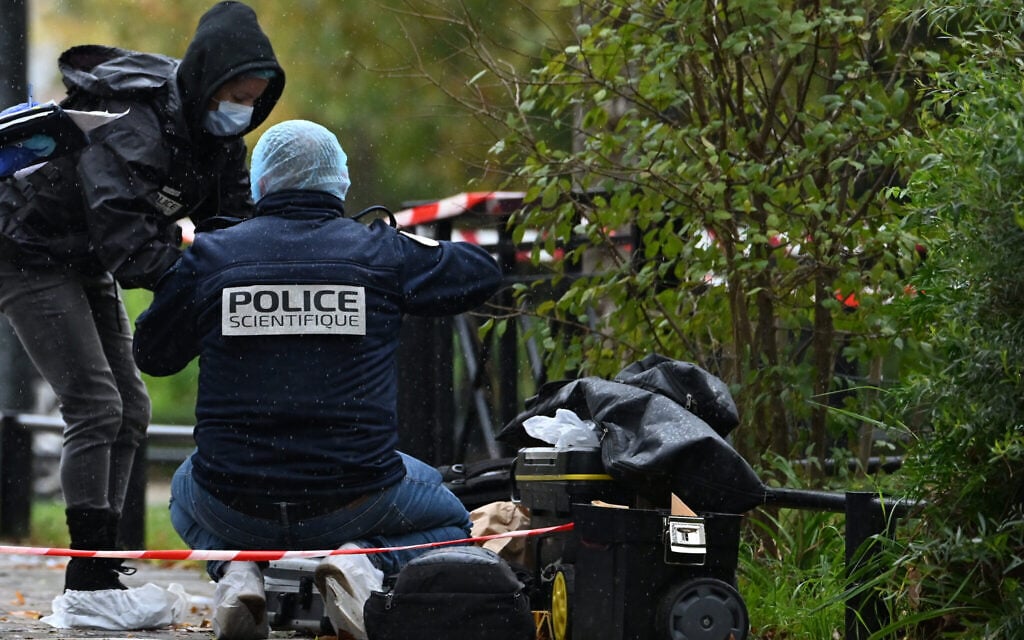
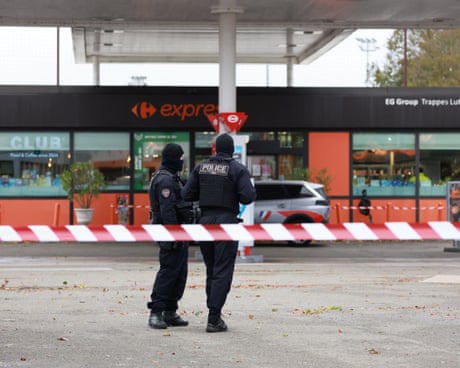
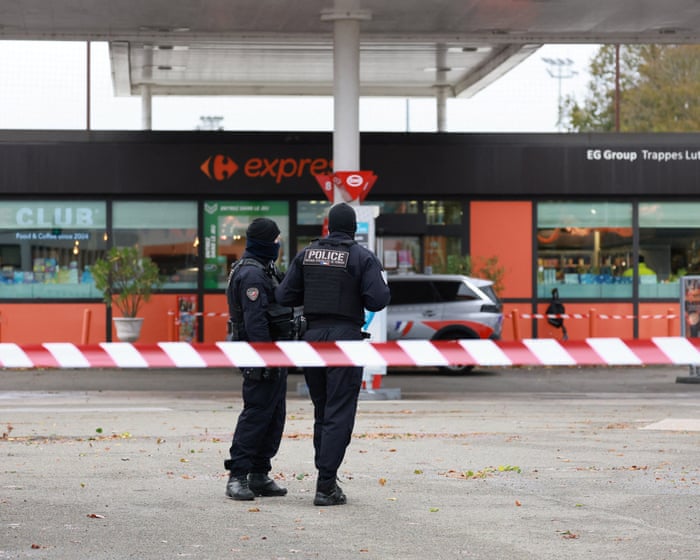
Gunman opens fire from car in Trappes and Verrière, killing one and injuring five others, including a 12-year-old girl
Emmanuel Macron has condemned racism in French society after a gunman opened fire from a car west of Paris on Friday, killing one person, wounding a 12-year-old girl and injuring four others in what the president called a “racist terrorist attack”.
Macron arrived at the scene of the drive-by shooting in Trappes on Friday night, saying he was deeply saddened by what he called the “premeditated” attack. The 12-year-old girl, who was shot eight times, is being treated in hospital.
Continue reading...
© Photograph: Stéphanie Lecocq/Reuters

© Photograph: Stéphanie Lecocq/Reuters

© Photograph: Stéphanie Lecocq/Reuters

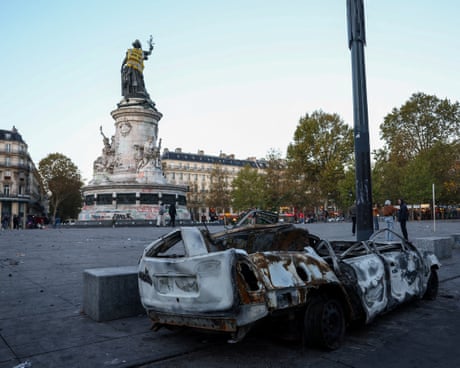
Security forces to include elite units usually used for counter-terrorism after worst street violence in years
France will deploy about 70,000 police around the country on Saturday as the government seeks to prevent more civil unrest after some of the worst street violence in years erupted on the fringes of cost-of-living protests last weekend.
The interior minister, Laurent Nuñez, said on Friday the security forces would include elite units usually used for counter-terrorism operations and hostage rescues, adding that there had been social media calls for violence from “ultra-left” groups.
Continue reading...
© Photograph: Abdul Saboor/Reuters

© Photograph: Abdul Saboor/Reuters

© Photograph: Abdul Saboor/Reuters