❌

Reading view

2027 State Budget approved in general terms thanks to PS abstention

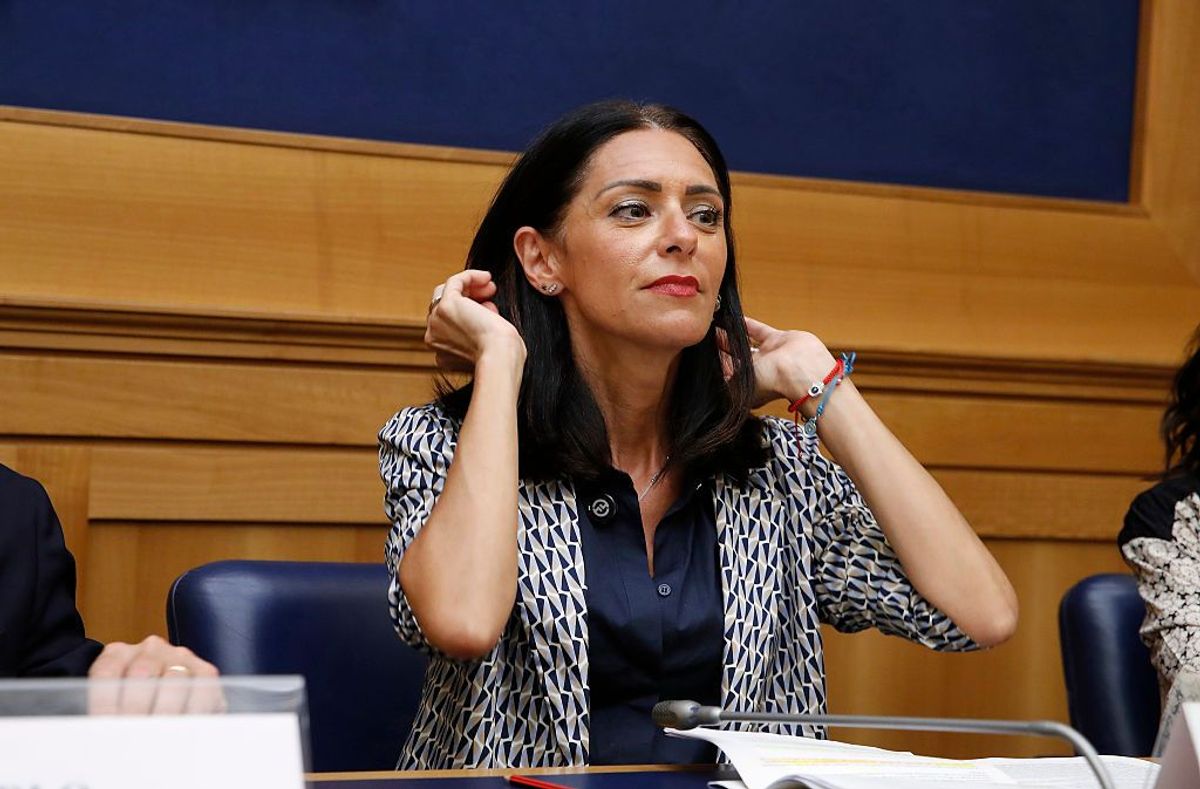
With no last-minute surprises, the proposed State Budget for next year was approved, in general terms, with only the governing parties voting in favor and PS, PAN and JPP abstaining.

The post 2027 State Budget approved in general terms thanks to PS abstention appeared first on Portugal Resident.

  •  

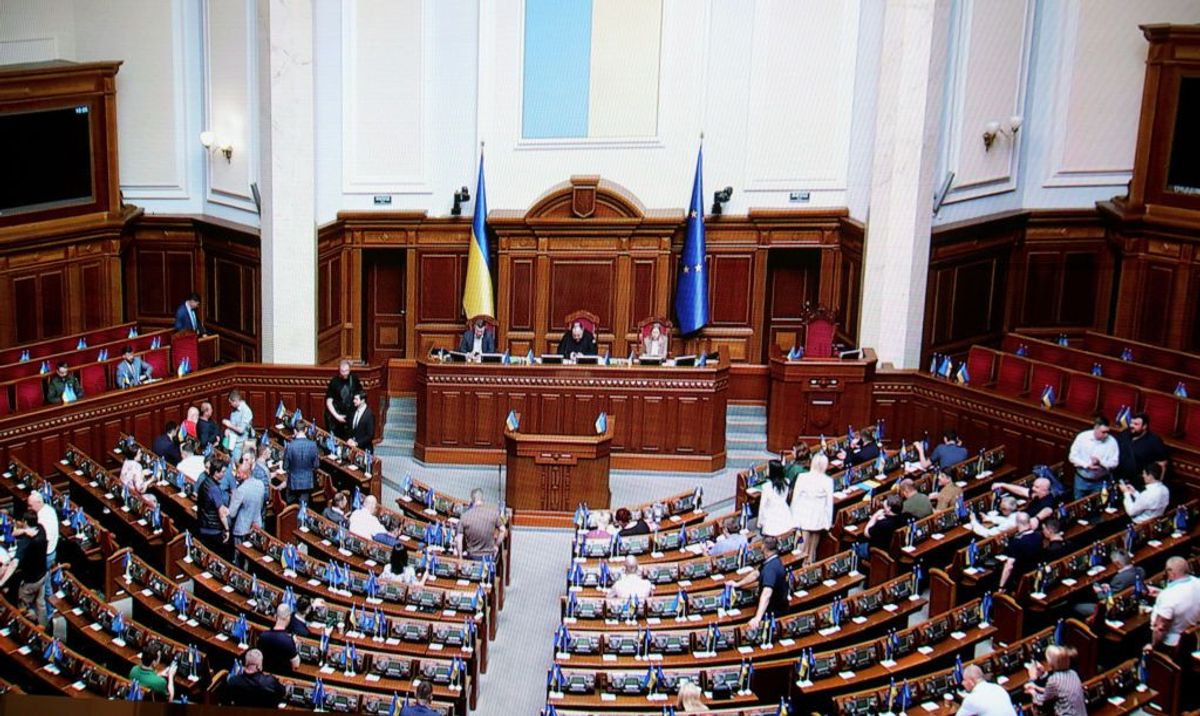
Ukraine’s parliament approves 2027 state budget in first reading

With security and defense allocations accounting for around two-thirds of planned expenditure and a projected deficit of nearly Hr 1.7 trillion ($37 billion), the budget highlights the challenge of funding the war while maintaining economic stability and meeting social commitments.

  •  

Brussels Proposes 30,000-Strong Frontex Force as EU Moves Towards Centralised Border Control

The European Commission wants to expand Frontex into a more powerful border and returns agency, with operations extending beyond EU territory. The proposal raises questions about national sovereignty, operational accountability and the future management of European migration.

The European Commission has proposed a substantial expansion of Frontex, the European Union’s border and coastguard agency, in a move that would increase its personnel to 30,000, extend its operational responsibilities beyond EU territory and give Brussels a greater role in coordinating the removal of people without permission to remain in Europe.

The legislative proposals presented on 27 October represent a further stage in the EU’s efforts to establish a common system of migration enforcement, following the introduction of new asylum rules and the adoption of legislation allowing migrant return centres outside the Union.

At issue is not simply the size of Frontex but the extent to which responsibility for border enforcement, surveillance and deportation should be exercised at European rather than national level.

From supporting agency to operational force

Under the Commission’s plan, Frontex would progressively expand its standing corps to 30,000 officers by 2041, including a new reserve of 17,000 personnel available for deployment.

The agency would also gain wider powers to purchase, lease and jointly own equipment, including surveillance systems and technologies using artificial intelligence.

These arrangements are intended to reduce dependence on individual governments for essential equipment and personnel during emergencies.

The proposal follows the extraordinary migration crisis in Spain’s North African enclave of Ceuta, where more than 72,000 people crossed from Morocco during July.

As EU Today previously reported, Spain subsequently requested additional assistance from Frontex, Europol and the European Union Agency for Asylum as its authorities struggled with the consequences of the mass crossing.

The Commission argues that such incidents demonstrate the limitations of a system in which European assistance depends heavily on national requests, available personnel and sometimes lengthy coordination procedures.

A proposed Quick Reaction Force could deploy within 24 hours following an emergency request from a member state.

Deportations beyond European borders

The most consequential change concerns the agency’s proposed role in returns.

Frontex would receive responsibility for a new Return Coordination Centre, bringing together operational information and supporting the entire removal process, from identifying individuals and arranging voluntary departures to organising deportations and reintegration assistance.

More significantly, it could help conduct returns between two non-EU countries under agreements with the countries concerned.

This would allow European personnel to participate in removal operations that neither begin nor end on European territory.

The development follows the EU’s approval of new legislation permitting return hubs outside the bloc.

The Commission presents the two initiatives as complementary: national governments would retain responsibility for individual immigration decisions, while Frontex would increasingly provide the operational capacity needed to implement them.

The effectiveness of such arrangements would depend on cooperation with third countries, reliable identification procedures and compliance with international legal obligations.

Digital surveillance and accountability

The proposal would establish an Online Monitoring and Response Centre to examine publicly accessible social-media activity for indications of emerging border-security threats.

EU governments would also be required to communicate significant border developments through the EUROSUR information network within 24 hours.

The Commission considers these tools necessary to identify organised migrant movements and potential security incidents before they develop into emergencies.

However, the proposed expansion has also prompted questions about oversight.

According to details of the proposal reported on 27 October, the reform would narrow the responsibilities of Frontex’s internal fundamental-rights watchdog, with certain complaints referred to national authorities.

Dutch Green MEP Tineke Strik has warned that operations in third countries without sufficient oversight could undermine accountability and create uncertainty about the legal responsibilities of European personnel.

These concerns are particularly relevant when activities involve several jurisdictions and different national legal systems.

A European force with national responsibilities

The Commission has proposed allocating €11.8 billion to Frontex under the EU’s 2028–2034 financial framework, almost twice the allocation envisaged under the current seven-year budget.

That funding remains subject to negotiations.

The legislation must also receive approval from the European Parliament and the Council, where governments will determine how far they are prepared to extend the agency’s mandate.

For national capitals, the central question is whether a larger common force will strengthen their ability to manage migration or progressively transfer operational discretion to an EU institution.

For Brussels, the proposal reflects a different calculation: a common external border requires more than common legislation if national authorities remain responsible for providing most of the capacity.

The negotiations will determine whether Frontex remains principally a supporting agency or becomes the operational centre of a more integrated European border-management system.

  •  

Netanyahu Defies Polls to Lead Israeli Election But Remains Short of Majority

Benjamin Netanyahu has defied opinion polls to emerge as the leader of the largest party following Israel's general election but has fallen short of a majority, projections indicate.

The post Netanyahu Defies Polls to Lead Israeli Election But Remains Short of Majority appeared first on The Daily Sceptic.

  •  

Thousands gather outside parliament in yet another protest over housing/ cost of living

After hours of political back-and-forth as politicians discussed the merits, or otherwise, of the AD minority government’s 2027 State Budget proposal, MPs emerged from the chamber to discover a veritable

The post Thousands gather outside parliament in yet another protest over housing/ cost of living appeared first on Portugal Resident.

  •  

Egyptian Parliament Authorizes Troops to Defend Saudi Arabia

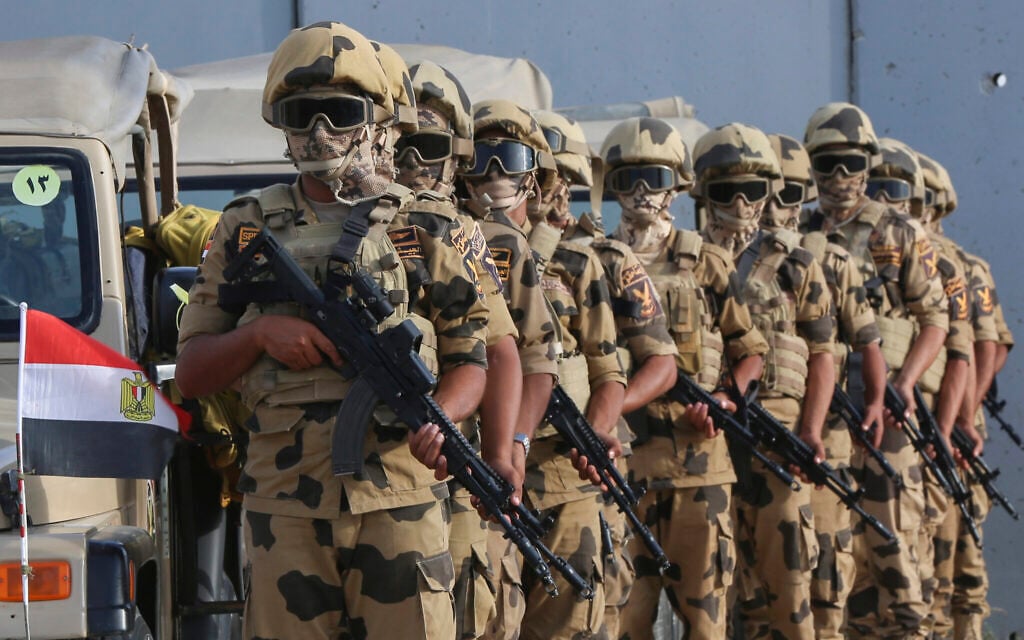
The Egyptian Parliament on Monday voted to give President Abdel Fattah el-Sisi the authority to deploy troops to Saudi Arabia, where they would help the kingdom repel attacks from the Iran-backed Houthi insurgents of Yemen.

The post Egyptian Parliament Authorizes Troops to Defend Saudi Arabia appeared first on Breitbart.

  •  

European Parliament Plenary Session – July 2026

Written by Clare Ferguson with Áine Feeney.

As Members gather for the last plenary session before the summer recess, their agenda covers enlargement, foreign affairs, competitiveness, the EU budget, agriculture, social security and the environment. On Tuesday morning, a debate will follow a presentation of the programme of activities of the Irish Presidency of the Council of the European Union, which began on 1 July. On Wednesday morning, Members will hear Council and European Commission statements on the conclusions of the European Council meeting of 18‑19 June 2026.

EU-Mexico relations

Bilateral relations between the EU and Mexico have been bolstered by the current framework since 2000. On Tuesday, Parliament is due to decide whether to give its consent to the conclusion of two instruments to update this framework, the EU-Mexico Political, Economic and Cooperation Strategic Partnership Agreement (Modernised Global Agreement, MGA) and an interim Trade Agreement (iTA), both of which were signed by the EU and Mexico in May 2026. Parliament remains in favour of modernising the MGA, with a joint report by the International Trade (INTA) and AFET committees welcoming it as a step towards further economic expansion that could benefit EU companies and farmers. The INTA committee is due to vote on a draft recommendation on the conclusion of the iTA before the plenary vote.

Passenger rights

Lower ticket prices and a wider choice of routes are not the only results of air transport liberalisation. On Monday, Members are expected to discuss an agreement to revise the air passenger rights framework to better protect passengers during increasingly common travel disruption. Delayed in the Council for over a decade, Parliament has shown consistent support for measures to protect air passengers and their rights. Parliament negotiators reached a political agreement in conciliation with the Council in June 2026. The agreement maintains the three-hour threshold for compensation for flight delays and strengthens passenger rights including on rerouting options, protection for missed connections and reimbursement for unused vouchers.

Social security when working abroad

A reform of EU social security rules aims to help citizens living or working in another EU country and better distribute responsibilities between EU countries. Members are set to vote on a provisional agreement on the move to modernise the rules on Monday. Parliament’s negotiators maintained mandatory prior notifications for the construction sector in the agreed text, meaning that authorities of the home Member State would be notified if someone works in another Member State. Parliament’s Committee on Employment and Social Affairs (EMPL) confirmed the agreement in April 2026 and Parliament and the Council now need to formally adopt the new social security rules.

East Asia relations

The geopolitical situation in East Asia has grown more volatile as the region experiences increased security challenges triggered by authoritarian regimes. On Monday evening, Members are expected to vote on an AFET committee recommendation, which affirms the need to deepen cooperation with partners in the region, including Japan, Korea, ASEAN and Taiwan. Parliament also recommends establishing a comprehensive EU-Taiwan cooperation framework, in addition to strengthening EU engagement with regional security initiatives and diplomatic efforts to prevent further escalation in East Asia. 

Fertiliser prices

The crisis in the Middle East and the closure of the Strait of Hormuz has caused an increase in fertiliser prices, placing a significant financial burden on farmers. On Tuesday, Members are set to vote on a proposal for a regulation to provide temporary common agricultural policy (CAP) support, which would offer exceptional support to farmers most affected by the soaring prices, including the possibility of increased advances on direct payments through existing CAP envelopes. Given the urgency, Parliament decided to consider the proposal without preparing a report, to enable farmers to make prompt decisions on buying fertilisers for the year ahead.

28th tax regime

The EU’s plans to allow companies to register as an ‘EU Inc.’, recognised across all Member States, under a ’28th regime’, are central to its competitiveness agenda, aimed at simplifying rules for companies to scale up in the single market. Complementing the legislative proposal already on the table, Members are expected to vote on an own-initiative report from the Committee on Economic and Monetary Affairs (ECON), on Thursday, on the feasibility of a 28th tax regime and its potential to support competitiveness by simplifying and harmonising corporate taxation.

Environmental crime

Environmental crimes can have a devastating impact, yet they are difficult to detect and prosecute. Parliament has repeatedly called for measures to combat such crimes. On Wednesday, Parliament is scheduled to vote on endorsement of the EU’s ratification of the Council of Europe’s new Convention on the Protection of the Environment through Criminal Law. A report from the Legal Affairs (JURI) Committee recommends ratification, concluding that the convention is consistent with the EU directive. The new convention establishes minimum requirements for the criminalisation of environmental offences related to activities such as pollution, destruction of biodiversity and improper handling of hazardous waste.

EU Budget

To enter a 2025 budget surplus of €2.1 billion as revenue in the 2026 budget, on Tuesday Parliament is set to consider the Council’s position on draft amending budget No 1/2026 (DAB 1/2026). While endorsing the proposal, a report adopted by the Committee on Budgets (BUDG) welcomes that higher own resources are driving the surplus rather than underspending, but reiterates its long-standing view that revenue from fines and fees should strengthen the EU budget instead of lowering national contributions, and calls for more sustainable EU own resources in the next multiannual financial framework.

Annual enlargement reports

Enlargement remains a prominent topic at this plenary session. On Tuesday, Members are expected to debate separately three reports prepared by the Committee on Foreign Affairs (AFET), on Ukraine, Moldova and Serbia. The report on Ukraine stresses the need for a ‘sustainable’ ceasefire and a peace agreement reached with the participation of the EU, while also recognising Ukraine’s European integration as a strategic priority for the Union.

AFET’s report on Moldova commends the country’s commitment to EU accession, condemning attempts by Russian efforts to destabilise Moldova’s path to accession through interference campaigns.

As a result of political instability in the country, Serbia’s EU accession process remains at an impasse. The AFET report recalls that accession is conditional on respect for EU values and democracy, reiterating the need for Serbia to affirm its geopolitical orientation towards the EU, particularly in the context of Russia’s war of aggression against Ukraine.

Further reading

  •  

Plenary round-up – June 2026

Written by Clare Fergurson and Katarzyna Sochacka.

The session further focused on Europe’s economic independence, digital sovereignty and resilience on artificial intelligence, as well as the EU’s role in promoting peace and stability in the Middle East. Members debated the electrification action plan, the resilience of the European transport sector amid ongoing geopolitical challenges ,and posed questions to the European Commission on its pledge to reduce the reporting burden, especially for small companies. Debates also addressed protecting child safety and mental health online and the importance of children’s right to play, and promoting culture through the Joint Declaration on ‘Culture for Europe, Europe for Culture’ .

Finally, Members attended two formal sittings, during which Jakov Milatović, President of Montenegro, and Andrzej Poczobut, 2025 Sakharov Prize laureate, recently released from prison in Belarus, addressed Parliament.

The annex shows the breakdown by political group on the final roll-call votes on the files decided by ordinary legislative procedure during the session.

Question time – European Commission pledge to reduce the reporting burden

Members posed questions to European Commissioner Valdis Dombrovskis regarding the state of play on the Commission’s pledge to reduce red tape for companies, in particular smaller businesses. To date, ten omnibus packages to simplify EU law have been published, with more scheduled, all currently at different stages of the legislative procedure.

Digital Omnibus on artificial intelligence

Parliament is committed to ensuring that there are robust legal frameworks to regulate artificial intelligence (AI) in the EU. Members debated and adopted a provisional text on the ‘Digital Omnibus on AI‘, a set of amendments to the AI Act. Parliament favoured fixed deadlines for applying high-risk AI rules, and proposes a ban on AI systems that generate non-consensual sexual content. The agreed text upholds Parliament’s position on the generation of non-consensual sexual content and prohibits AI practices generating child sexual abuse material. The vote postpones application of certain parts of the AI Act, without impacting its core provisions and risk-based approach.

Circularity requirements for vehicle design and end of life vehicles

Improper management of end-of-life vehicles can damage the environment and lose millions of tonnes of material that could be recycled to the benefit of the EU economy instead. Parliament debated and adopted a provisional agreement on circularity requirements for vehicle design and end-of-life vehicles. The agreement sets out requirements for passenger and light commercial vehicles. Vehicles must include recycled plastic, in line with progressively rising targets and minimum recycled content requirements. Manufacturers and producers will be obliged to clearly label refurbished parts and provide information regarding safe access to, removal, and replacement of parts.

Plants obtained by new genomic techniques

Members adopted at second reading a provisional agreement reached with the Council on the Commission’s proposal on plants obtained by new genomic techniques. This aims at aligning existing EU legislation on genetically modified organisms (GMOs) with new scientific developments. Parliament’s negotiators supported the simplification of rules for low-risk genetically modified plants (NGT1), provided they are similar to conventionally bred plants and do not have certain excluded traits. The agreement also includes provisions intended to address concerns related to market concentration and access to seeds for breeders and farmers.

Strengthening farmers’ position in the food supply chain

Despite playing an important role in the food-supply chain, farmers have faced mounting difficulties in recent years. Parliament adopted a provisional agreement on a regulation strengthening farmers’ position in the food-supply chain. Based on a Committee on Agriculture and Rural Development (AGRI) report, Parliament reached agreement with the Council in March 2026. The agreed text aims to ensure that food prices better reflect the production costs borne by farmers, and includes support for the dairy sector, such as the introduction of mandatory written contracts. It also reinforced producer organisations’ bargaining power and includes clarification on labelling to ensure consumer protection and fair competition.

EU-US trade deal

Parliament debated and adopted the trilogue agreement reached on the proposal for two regulations to implement the EU’s tariff commitments under the EU-US Joint Statement. The Committee on International Trade (INTA) adopted its reports in March 2026. The agreement empowers the Commission to suspend the application of the regulation if the US fails to meet its commitments and introduces additional safeguards, including stronger suspension mechanisms and protections against import surges that could harm domestic producers. A comprehensive review of the measures will be conducted in 2029, with the possibility of extension.

2025 Commission report on Türkiye

Despite applying for accession as far back as 1999, progress towards Türkiye’s EU membership bid has faced numerous delays since accession talks began in 2005. Parliament held a debate and adopted a Foreign Affairs Committee report on Türkiye, which reaffirms Parliament’s appreciation for the majority of Turkish people’s aspiration to EU accession and maintaining Türkiye’s candidate status. It also reiterates Türkiye’s relevance as a NATO ally and a country with which the EU has multi-layered relations. However, the AFET committee regrets that, despite the Turkish government’s repeated statements recommitting to the EU membership goal, serious concerns raised in previous AFET reports regarding shortcomings affecting the accession process remain unaddressed.

An EU future for the Western Balkans

The path to accession for new Member States was a key topic at this plenary session, with Members debating and adopting a set of own-initiative reports from the AFET committee on enlargement candidates in the Western Balkans on Tuesday. The AFET report on Montenegro welcomes the country’s progress and encourages sustained momentum on accession negotiations. The committee also commends Albania‘s dedication to EU integration, but expresses concern about the impact of corruption and calls for full implementation of anti-corruption reforms. The AFET report on Kosovo* reaffirms that the country’s future lies with the EU, and stresses inclusion in EU programmes and policies is vital for gradual integration. AFET’s report on Bosnia and Herzegovina expresses support for EU accession and urges political leaders to renew their commitment to EU membership. Similarly, the AFET report on North Macedonia reaffirms its support for the country’s EU membership aspirations, although it regrets the lack of progress since its 2025 report.

* This designation is without prejudice to positions on status, and is in line with UNSCR 1244/1999 and the ICJ Opinion on the Kosovo Declaration of Independence.

2025 Commission report on Georgia

Members also adopted an AFET committee report on Georgia’s EU accession status. The report deplores the continued democratic backsliding in the country and echoes Parliament’s non-recognition of the legitimacy of the Georgian parliament. It also reiterates calls for the EU to impose sanctions against key officials and regime enablers.

Promoting transnational governance on water in the interests of conflict prevention and peace

Water scarcity and water bankruptcy are serious global issues, and mitigating violations of the human right to water remains crucial for regional stability and sustainable development. Members adopted a recommendation to the Council, Commission and High Representative regarding transnational water governance. An AFET committee report notes the importance of transnational water governance for conflict prevention and peace, underscoring the growing political and security dimensions of water issues. The report calls on the EU to condemn the weaponisation of water in conflicts and urges an increase in funding for transboundary water management and for the EU to take the lead in advancing the UN Sustainable Development Goal on clean water.


Read this ‘at a glance note’ on ‘Plenary round-up – June 2026‘ in the Think Tank pages of the European Parliament.

  •  

European Parliament Plenary Session – June 2026

Written by Clare Ferguson with Áine Feeney.

European Union enlargement and competitiveness are prominent issues on the agenda for the European Parliament’s June plenary session. Jakov Milatović, President of Montenegro is expected to address Parliament in a formal sitting on Tuesday. During the question time session, a European Commissioner will respond to Members’ questions on the state of play on its pledge to reduce the reporting burden, particularly for small and medium-sized enterprises. The Council and Commission will also make statements ahead of the European Council meeting taking place from 18‑19 June 2026. Andrzej Poczobut, laureate of the 2025 Sakharov Prize for his defence of freedom and democracy in Belarus, is expected to address a formal sitting on Wednesday following his recent release from imprisonment in that country.

The path to accession for[CF1]  new Member States is a key topic at this plenary session, with Members set to debate several own-initiative reports from the Committee on Foreign Affairs (AFET) on enlargement candidates in the Western Balkans on Tuesday. The AFET report on Montenegro welcomes the country’s progress and encourages sustained momentum on accession negotiations. The committee also commends Albania‘s dedication to EU integration, but expresses concern about the impact of corruption and calls for full implementation of anti-corruption reforms. The [AC2] AFET report on Kosovo* reaffirms that the country’s future lies with the EU, and stresses inclusion in EU programmes and policies is vital for gradual integration. AFET’s report on Bosnia and Herzegovina expresses support for EU accession and urges political leaders to renew their commitment to EU membership. Similarly, the AFET report on North Macedonia reaffirms its support for the country’s EU membership aspirations, although it regrets the lack of progress since its 2025 report.

Despite applying for accession as far back as 1999, progress towards Türkiye’s EU membership bid has faced numerous delays since accession talks began in 2005. On Tuesday, Parliament is set to consider an AFET report on Türkiye, which reaffirms Parliament’s appreciation for the majority of Turkish people’s aspiration to EU accession and maintaining Türkiye’s candidate status. It also reiterates Türkiye’s relevance as a NATO ally and a country with which the EU has multi-layered relations. However, AFET regrets that, despite the Turkish government’s repeated statements recommitting to the EU membership goal, serious concerns raised in previous AFET reports regarding shortcomings affecting the accession process remain unaddressed.

On Wednesday, Members are also due to consider an AFET report on the status of Georgia’s EU accession status. The report deplores the continued democratic backsliding in the country and echoes Parliament’s position of non-recognition of the legitimacy of the Georgian parliament. It also reiterates calls for the EU to impose sanctions against key officials and regime enablers.

On Monday evening, Parliament is due to consider the trilogue agreement reached on the proposal for two regulations to implement the EU’s tariff commitments under the EU-US Joint Statement. The Committee on International Trade (INTA) adopted its reports in March 2026. The agreement empowers the Commission to suspend the application of the regulation if the US fails to meet its commitments and introduces additional safeguards, including stronger suspension mechanisms and protections against import surges that could harm domestic producers. If adopted, a comprehensive review of the measures will be conducted in 2029, with the possibility of extension.

Parliament is committed to ensuring that there are robust legal frameworks to regulate artificial intelligence (AI) in the EU. On Monday evening, Members are expected to consider adoption of a provisional text on the ‘Digital Omnibus on AI‘, a set of amendments to the AI Act. Parliament favours fixed deadlines for applying high-risk AI rules, and proposes a ban on AI systems that generate non-consensual sexual content. The co-legislators reached a provisional agreement in May 2026, since approved by the Committees on the Internal Market and Consumer Protection (IMCO) and Civil Liberties, Justice and Home Affairs (LIBE) jointly. The agreed text upholds Parliament’s position on the generation of non-consensual sexual content and prohibits AI practices generating child sexual abuse material. If adopted, application of certain parts of the AI Act will be postponed, without impacting the act’s core provisions and risk-based approach.

Despite playing an important role in the food-supply chain, farmers have faced mounting difficulties in recent years. On Tuesday, Parliament is expected to consider a provisional text on a regulation strengthening farmers’ position in the food-supply chain. Based on a report by the Committee on Agriculture and Rural Development (AGRI), Parliament reached agreement with the Council in March 2026. The agreed text aims to ensure that food prices better reflect the production costs borne by farmers and includes support for the dairy sector, such as the introduction of mandatory written contracts. It also reinforced the bargaining power of producer organisations and includes clarification on labelling to ensure consumer protection and fair competition.

Similarly, on Wednesday, Members are due to consider regulations on horticulture. A provisional agreement reached with the Council on the Commission’s proposal on plants obtained by new genomic techniques, aims at aligning existing EU legislation on genetically modified organisms (GMOs) with new scientific developments. Parliament’s negotiators supported the simplification of rules for low-risk genetically modified plants (NGT1), provided they are similar to conventionally bred plants and do not have certain excluded traits. The agreement also includes provisions intended to address concerns related to market concentration and access to seeds for breeders and farmers. The Committee on Environment (ENVI) is expected to vote on the provisional agreement on 15 June 2026, which could be put to a plenary vote during the same week if it is approved without amendment.

Water scarcity and water bankruptcy are serious global issues, and mitigating violations of the human right to water remains crucial for regional stability and sustainable development. On Wednesday, Members are set to consider a recommendation to the Council, Commission and High Representative regarding transnational water governance. An AFET committee report notes the importance of transnational water governance for conflict prevention and peace, underscoring the growing political and security dimensions of water issues. The report calls on Parliament to condemn the weaponisation of water in conflicts and urges the EU to increase funding for transboundary water management and to take the lead in advancing the UN Sustainable Development Goal on clean water.

The improper management of end-of-life vehicles can damage the environment and lose millions of tonnes of material that could be recycled to the benefit of the EU economy instead. On Thursday morning, Parliament is due to consider a provisional agreement on circularity requirements for vehicle design and end-of-life vehicles. The agreement sets out requirements for passenger, commercial, and heavy-duty vehicles. Each vehicle type must include recycled plastic, in line with progressively rising targets and minimum recycled content requirements. Manufacturers and producers will also be obliged to clearly label refurbished parts and provide information regarding safe access to, removal, and replacement of parts.

* This designation is without prejudice to positions on status, and is in line with UNSCR 1244/1999 and the ICJ Opinion on the Kosovo Declaration of Independence.

Further reading:

European Parliament Plenary Session June 2026 – agenda

  •  

In the name of democracy: The EU’s war on the enemy within

By Hüseyin DOĞRU

Join us on Telegram, X, and VK.

Contact us: info@strategic-culture.su

Built to fight foreign interference, Europe’s security apparatus is now turning on its own people. Muslims and critics of Israel are first in line.

On 8 October 2026, the European Parliament passed a deeply Islamophobic resolution on “Islamist entryism”. Behind the text is the hand of the European People’s Party, the conservative bloc that holds sway over EU politics. Backed by the liberals of Renew Europe and the far right, it was put to a vote and passed 381 to 167. The resolution is put forward as a way to shield European democracy from extremists, but its provisions are enough to give pause to anyone with an eye on the future of our rights and freedoms in Europe.

Take for instance the matter of “hatred of Israel”. The resolution puts this undefined notion forward as an indicator of ideological radicalisation, while also sounding the alarm on the “instrumentalisation of anti-discrimination frameworks”. One has to wonder at the implications: does this mean that a campaign against discrimination or even criticism of a state under accusation for war crimes can be subsumed under the EU’s widening net of security threats?

This resolution is more than an assault on a Muslim population already demonised in Europe; it is part of a broader, unexamined shift in the Union where dissent is viewed with suspicion. I am living with the consequences of it.

From foreign interference to domestic dissent

For years, the EU has been building a security apparatus around the alleged threats of disinformation, foreign interference and hybrid warfare.

Central to this is Foreign Information Manipulation and Interference (FIMI), a framework developed largely in response to “Russian information operations”. The EU’s diplomatic service describes FIMI as a “mostly non-illegal” pattern of behaviour that can negatively affect political processes and values.

The definition is telling in what it leaves out. Political officials, not judicial ones, are left to decide what constitutes a manipulation of European values and what does not. What becomes of political critique and journalism when their arbitrary judgments are applied?

In May 2025, the EU sanctioned me and my media company, red., under its Russia-related hybrid-threats regime. My alleged offence was my journalism, particularly my coverage of Palestine solidarity protests in Germany, which the EU claims supported Russia’s efforts to destabilise Europe. The evidence against me consists of screenshots of factual posts from red. and my personal social media accounts, most of them reporting or criticism of German domestic and foreign policy. Not one page of the evidence dossier so much as mentions Russia.

Without a criminal charge, trial or conviction, my bank accounts were frozen and I was banned from working and travelling.

Then there is the question of administrative sanctions. The EU will say due process is observed since one can take them to court, but by the time a judge is sitting in on the case the damage has been done. Livelihoods are in ruins, bank accounts frozen and lives in disarray, all while the sanctioned individual endures years of expensive and politicised legal wrangling to have restrictions lifted. It is an extraordinary power to wield; the punishment is meted out first and the chance to contest it later, with no need to prove criminality. Violate a sanction and you face prosecution and prison, even if your only offence was buying nappies for your own babies, which could be deemed to have circumvented the rules.

On 8 October, the same day Parliament voted on “Islamist entryism”, the EU Council renewed the sanctions regime I am listed under until October 2027 and reinstated the reasons for my listing. The new text still describes the protesters whose university occupation red. covered as “anti-Israel rioters”. To justify the renewal, the Council cited a Parliament report from September on hybrid threats. One institution supplies the political mood, another uses that mood to put names like mine on a list.

The enemy within

The Islamist entryism resolution takes this logic in another direction. “Entryism” refers to political groups infiltrating established institutions to influence them from within. In this case, the Parliament warns that Islamist networks are using charities, youth organisations, universities and other parts of civil society to gain influence over European politics. The idea was imported from Paris; the resolution leans on a May 2025 report by the French interior ministry, the same ministry that once governed Algeria’s Muslims as colonial subjects.

The threat is no longer just a foreign power supposedly interfering in European affairs. Now the EU is turning its attention to an enemy within.

The phrase has a history. In July 1984, Margaret Thatcher told Conservative backbenchers that Britain had fought the “enemy without” in the Falklands and now faced the “enemy within”. She meant the striking miners.

The way in which the resolution singles out “hatred of Israel” as a sign of radicalisation without defining the term is noteworthy. A couple of paragraphs on it concedes this is not a bar to “legitimate criticism” of the state, yet it offers no guidance on how the line between the two will be drawn, or by whom. Since when has hostility to a government been cause for suspecting extremism? Or are we to assume Europeans must love Israel? One might ask whose interests are really being served. The European Commission tells us the EU was Israel’s top trading partner in 2024, with €42.6 billion in goods. To call for an end to that trade or an arms embargo is not a danger to democracy, but to the business interests of Europe.

Working with other organisations, maintaining certain associations or allegedly misusing anti-discrimination campaigns can also become grounds for suspicion. Among the warning signs the resolution lists are “the recurrence of certain partnerships”, “proximity to already identified networks” and even “the production of activist reports”.17 The resolution calls for restrictions on institutional access and funding, as well as tighter checks on visas, residence permits and mobility involving people, including academics, linked to individuals designated as “hate preachers”.

Even the European Network Against Racism is cast in doubt, its funding said to raise “serious questions”. When an anti-racism body is conflated with entryism, the whole concept is made to look suspect. Under the terms of the resolution, a professor could be slapped with travel restrictions because of a tenuous association with a so-called “hate preacher”, having broken no law in the process. We have seen this sort of thing before. In 1972, Germany’s Radikalenerlass saw the domestic intelligence service vet some 3.5 million public sector applicants. Communists and others on the left were dismissed or denied their jobs as teachers, postmen or train drivers for who they were rather than any act they had committed.

The resolution also tells us which Muslims Europe is willing to tolerate. It promises support for “Muslim representatives” who defend democratic values and resist “Islamist pressure”.22 The good Muslim, in other words, is the one the state approves of.

Not being legally binding does not make the resolution any less alarming. The Parliament has rubber-stamped the idea that lawful activity is a security risk, laying the groundwork for enforceable restrictions down the line. The same rationale once used to counter foreign interference is now being turned on organisations and people here in Europe.

Repression in the name of democracy

Both the FIMI sanctions regime and the Islamist entryism resolution are justified in the name of defending democracy and protecting European values. Yet the EU is increasingly treating the exercise of those very freedoms as grounds for suspicion.

None of this is happening in a vacuum. Europe is rearming on a scale not seen since the Cold War (the Commission’s ReArm Europe plan alone aims to mobilise up to €800 billion) while standing by Israel through the destruction of Gaza. A state preparing for war needs a quiet home front. Those who object, to genocide abroad or to paying for rearmament with cuts at home, have to be recast as foreign agents or fifth columnists.

What counts as “hatred of Israel”? Who decides when fighting discrimination becomes “instrumentalising” it? When does criticism of EU foreign policy become foreign interference? And how many connections does it take before a journalist, academic or activist is branded a security threat?

These are not abstract questions for those of us already living with the consequences. The EU’s authoritarian turn exposes the limits of its professed liberal values, where freedom of expression and political participation are celebrated until they challenge the interests of capital and the states that serve it. Liberal democracies have always kept a second rulebook in the drawer, for strikers, communists and the colonised.

What began as a campaign against foreign interference is increasingly being turned against dissent at home, with Muslims and critics of Israel, already among the most marginalised and harassed people in Europe, first in the firing line. But they won’t be the last. Trade unionists, climate activists and anyone who stands in the way of the war economy should take note.

While Europe’s political establishment continues to congratulate itself on defending democracy, the machinery for silencing its opponents is being built in plain sight.

Original article:  braveneweurope.com

  •  

French unrest brings EU vote on Muslim Brotherhood networks into sharper focus


France’s unrest has brought a European debate over political Islam into sharper focus. As the French authorities investigate arson, looting and attacks on public buildings, attention has also turned to organisations supporting the demonstrations and their alleged connections to the Muslim Brotherhood.

Those concerns intersect with a European Parliament resolution adopted on October 8th calling for a coordinated response to what MEPs describe as “Islamist entryism”. The connection concerns overlapping organisations and questions of influence, not an established explanation for the violence.

The chronology matters. Parliament adopted its resolution nine days before the October 17th violence described in France. The vote was therefore not a response to those events. It reflected an existing concern among a parliamentary majority that Islamist networks could use associations, educational initiatives and institutional partnerships to build political influence within Europe.

Tabled by the European People’s Party, the resolution passed by 381 votes to 167, with 15 abstentions. It calls for closer scrutiny of EU funding, stronger checks on institutional partnerships and an assessment of whether individuals or entities linked to the Muslim Brotherhood meet the legal criteria for inclusion on the EU terrorist list.

FEMYSO connects the two debates

The clearest organisational overlap is the Forum of European Muslim Youth and Student Organisations, or FEMYSO. On October 9th, the organisation publicly supported students demonstrating in France and Belgium, calling for better educational conditions, adequate funding and protection of peaceful assembly. Its statement framed the mobilisation as a campaign over education and fundamental rights.

FEMYSO also features explicitly in Parliament’s resolution. MEPs criticised its invitation to the European Parliament on September 21st by members of The Left and the Greens. They called for organisations they associate with the Council of European Muslims, including FEMYSO, to be denied access to EU institutions, removed from the EU Transparency Register and excluded from institutional events where participation could legitimise alleged Brotherhood-linked influence strategies. These are Parliament’s assessments and demands, rather than judicial findings.

In France, the Washington Examiner has reported that Étudiants Musulmans de France, or EMF, repeatedly promoted the demonstrations through social media. The newspaper describes EMF as a FEMYSO member and reports allegations of Muslim Brotherhood connections, which EMF denies. Its reporting places the organisation within the debate over mobilisation and ideological influence.

What Parliament wants Brussels to examine

The resolution’s significance lies partly in its focus on networks rather than formal membership alone. Parliament argues that political influence can operate through recurring partnerships, opaque financing, associated organisations and structures reconstituted under new names. It wants a common European methodology for identifying such patterns, rather than relying solely on whether an organisation formally declares an affiliation.

For the European Commission, the principal requests concern money and transparency. MEPs want an overview of EU funds awarded to people or entities suspected of Brotherhood or political-Islam links, alongside greater traceability through funding chains and stronger checks on partners and beneficiaries. Parliament also calls for scrutiny of foreign funding and transnational partnerships, particularly those involving actors linked to Qatar or Türkiye.

Those requests must be distinguished from decisions already taken. The non-binding resolution does not itself ban the Muslim Brotherhood, designate FEMYSO as a terrorist organisation or automatically withdraw funding. It asks the Council to assess possible terrorist listings under the applicable legal criteria and urges the Commission to use existing financial safeguards. Further action would require separate institutional decisions.

France’s policing failures remain a separate issue

The European debate does not remove the French government’s responsibility to explain its handling of the unrest. Reuters reports that Prime Minister Sébastien Lecornu acknowledged intelligence and deployment failures, while Interior Minister Laurent Nunez also accepted a share of responsibility. Authorities have assigned 200 investigators to identify those involved in the violence, and parliament is establishing an inquiry into the disorder.

Nor does scrutiny of ideological networks resolve the grievances behind peaceful mobilisation. Student demands over educational conditions and public funding remain substantive political questions. Treating all demonstrators as participants in an Islamist project would obscure the diversity of the movement and make it harder to distinguish legitimate advocacy from attempts at political exploitation.

Parliament’s own resolution draws an important boundary: it states that Islam must not be equated with political Islamism and that protecting Muslim citizens from discrimination is a democratic obligation. That distinction should guide any investigation of organisations, funding or institutional access. Scrutiny must concern identifiable conduct and demonstrable relationships, not religious identity.

A test of evidence and institutional judgment

France’s unrest and Parliament’s vote meet at a question of accountability: how should democratic institutions examine organisations seeking influence within legitimate social movements, and what evidence should justify restrictions on funding or access?

The answer cannot rest on association alone. Investigators must establish who committed or directed violence; EU institutions must examine funding and partnerships against clear legal standards; and governments must address the public-service grievances that brought peaceful demonstrators onto the streets.

The October 8th vote gives political weight to closer European scrutiny of alleged Brotherhood-linked networks. France’s unrest makes careful scrutiny more urgent—but also makes precision more important. A credible response must distinguish political advocacy from covert influence, and both from criminal responsibility.

Main Image: Genevieve ENGEL © European Union 2018 – Source : EP

  •  

Amazon Faces Fresh EU Scrutiny Over Worker Surveillance and Algorithmic Management

Members of the European Parliament are visiting Amazon logistics centres in Germany and Poland this week to investigate working conditions and the use of digital monitoring systems, reopening a dispute between the technology company, European legislators and trade unions over employee rights.

The fact-finding mission, scheduled for 26th and 27th October, will examine how Amazon organises work, measures employee productivity and uses automated systems in warehouses. MEPs will meet management, employees, works councils and trade union representatives, with particular attention to whether technological changes are affecting workers’ health and their ability to exercise employment rights.

The investigation comes as the European Commission prepares its Quality Jobs Act, which is expected to address algorithmic management, occupational safety and working conditions across the European economy. Amazon’s extensive logistics network makes the company a prominent example of the questions legislators must resolve.

MEPs enter warehouses after prolonged dispute

The delegation is led by Li Andersson, chairwoman of Parliament’s Employment and Social Affairs Committee, and includes Belgian MEPs Liesbet Sommen and Estelle Ceulemans, alongside representatives from several other political groups.

According to the European trade union federation UNI Europa, MEPs will inspect facilities in Dortmund and Mönchengladbach on Monday before travelling to Poland on Tuesday.

The German visits will cover older warehouse operations and newer facilities incorporating robotics, allowing parliamentarians to compare different approaches to handling orders and managing employees. The Polish programme includes a major returns facility in the Katowice area.

The visit follows several years of strained relations between Amazon and the European Parliament.

In February 2024, Parliament withdrew permanent access badges from Amazon representatives following disagreements over the company’s participation in hearings and requests for visits to its warehouses.

Amazon disputed suggestions that it was avoiding scrutiny, maintaining that it had offered alternative arrangements for parliamentary visits during periods when its logistics operations were particularly busy.

Company executives eventually appeared before the Employment and Social Affairs Committee in January 2026, where they defended Amazon’s employment policies and workplace practices.

The controversy over digital surveillance

At the centre of the dispute is the increasingly widespread use of electronic systems to monitor productivity.

Warehouse employees commonly use handheld scanners, while automated systems can help allocate tasks, coordinate movements and identify delays in processing orders.

These technologies allow employers to manage substantial logistics operations with considerable precision. They also make it possible to collect detailed information about individual workers’ activities throughout their shifts.

Trade unions argue that such monitoring can create unreasonable performance pressure, particularly where targets are adjusted automatically or workers cannot challenge assessments generated by software.

The concerns are not confined to Amazon.

A European Commission survey examined by EU Today earlier this month found that 42 per cent of surveyed smaller and medium-sized businesses already used artificial intelligence or algorithmic management systems.

However, 49 per cent of respondents expressed distrust of automated systems making decisions about employees, illustrating the distinction between using technology to support management and delegating consequential decisions to algorithms.

Previous regulatory action

Amazon has already faced formal European regulatory scrutiny over workplace monitoring.

France’s data protection authority imposed a €32 million fine on Amazon France Logistique in December 2023, announcing the decision in January 2024. The regulator concluded that certain employee monitoring practices were excessively intrusive and breached data-protection requirements.

The investigation examined the collection and retention of detailed information from warehouse scanners, including productivity indicators and periods of inactivity.

Amazon rejected the regulator’s conclusions and subsequently appealed the decision. The penalty therefore needs to be distinguished from any final judicial determination of the dispute.

The case nevertheless demonstrates that workplace monitoring falls within existing European privacy legislation, independently of proposals for new employment rules.

EU Today has also reported on the application of European data-protection law to automated employment decisions, including the question of whether meaningful human review is available when software affects a person’s ability to work.

Amazon disputes allegations

Amazon maintains that its warehouse technology is intended to improve operational efficiency, safety and the reliability of deliveries.

In its January parliamentary testimony, the company defended its investment in employee training and insisted that workers have the right to join trade unions.

It also pointed to engagement with works councils and employee representative bodies across its European operations.

Trade unions contest the adequacy of those arrangements, particularly in Germany, where the ver.di union has repeatedly sought a collective agreement covering Amazon employees.

These competing positions will form part of the parliamentary delegation’s assessment.

Implications for EU employment legislation

The Commission’s Quality Jobs initiative addresses several questions raised by the Amazon dispute, including algorithmic management, psychosocial risks and the effectiveness of collective bargaining.

Legislators must determine how far employers should be required to disclose the operation of automated monitoring systems, how employees can contest decisions and what safeguards should apply when performance targets are generated by software.

Rules must also accommodate legitimate requirements for stock management, security and workplace safety.

The parliamentary visit will not itself establish whether Amazon has breached employment legislation. It is a fact-finding exercise intended to inform future policy discussions.

Its importance lies in giving legislators direct access to warehouse operations and employee accounts before deciding how European labour law should respond to increasingly automated workplaces.

  •  

EU Parliament Investigates Foreign Interference in Bosnia as Accession Process Stalls

A delegation from the European Parliament has begun a three-day mission to Bosnia and Herzegovina to examine foreign interference in the country’s political institutions, electoral processes and public information environment.

The visit, taking place from 26th to 28th October, comes three weeks after parliamentary elections exposed persistent divisions over Bosnia’s political direction and its prospects of joining the European Union.

The mission is being conducted by Parliament’s Special Committee on the European Democracy Shield, chaired by French MEP Nathalie Loiseau. Its purpose is to assess vulnerabilities to disinformation, cyberattacks, economic pressure and other forms of hybrid interference, and to identify measures that could strengthen Bosnia’s institutional resilience.

According to the European Parliament’s announcement, the delegation will meet government officials, parliamentary representatives, civil society organisations, journalists and researchers. Joining Loiseau are Finnish MEP Mika Aaltola, Portugal’s Ana Catarina Mendes and Romania’s Cristian Terheş.

The investigation comes at a politically sensitive moment. Bosnia’s general election on 4th October confirmed the persistence of competing political priorities between the country’s constituent entities, with pro-Russian politician Milorad Dodik’s Alliance of Independent Social Democrats retaining considerable support in Republika Srpska.

As EU Today reported following the election, parties favouring closer European integration also performed strongly, particularly in the Bosniak-Croat Federation. The resulting political balance will influence the formation of new administrations and their ability to implement reforms demanded by Brussels.

From electoral interference to institutional security

The European Parliament’s investigation extends beyond conventional disinformation campaigns.

MEPs intend to examine how foreign actors may exploit weaknesses in electoral administration, cybersecurity, political financing and the country’s wider economic relationships. They will also consider the role of digital platforms in distributing manipulated information and the legislative gaps that could make interference difficult to identify or prosecute.

The distinction matters in Bosnia, where political influence cannot be separated from the country’s complicated constitutional arrangements.

Under the Dayton peace settlement, the state operates through institutions that distribute authority between the Federation of Bosnia and Herzegovina, Republika Srpska and the central government. Political disagreements can therefore obstruct decisions requiring cooperation between different levels of administration.

External actors seeking influence may exploit those divisions, although identifying a political relationship with a foreign government is not, by itself, evidence of unlawful interference.

The European Union has repeatedly expressed concern about Russia’s activities in the Western Balkans, particularly its relationships with political forces opposing closer integration with European institutions. Chinese investment and economic relationships also raise questions about strategic dependence, although legitimate commercial activity must be distinguished from coercion or covert political operations.

The delegation’s task is to establish which vulnerabilities can be substantiated and whether existing safeguards are adequate.

Accession negotiations remain incomplete

Bosnia received EU candidate status in December 2022. In March 2024, European leaders agreed in principle to open accession negotiations, but progress has remained conditional on institutional and legal reforms.

Following the October election, EU foreign policy chief Kaja Kallas and Enlargement Commissioner Marta Kos issued a joint statement calling for the prompt formation of new administrations and progress on judicial reform.

The Commission also highlighted shortcomings identified by international election observers, including technical difficulties, complicated voting procedures and concerns about ballot secrecy.

Those findings do not automatically establish foreign interference. They do, however, demonstrate why the integrity of electoral institutions remains central to Bosnia’s relationship with Brussels.

A test for the European Democracy Shield

The Sarajevo mission follows the EU’s decision on 13th October to include enlargement partners in the European Centre for Democratic Resilience.

The initiative is intended to improve cooperation on election security, information manipulation, crisis management and institutional protection before candidate countries enter the Union.

EU Today has previously examined the European Democracy Shield’s proposed mechanisms, including closer coordination with technology companies and improved systems for identifying foreign information operations.

Bosnia now offers a practical opportunity to examine whether those instruments can operate effectively in a country where political authority is fragmented and accession remains incomplete.

The delegation’s findings could inform recommendations on institutional cooperation, election safeguards and support for independent media. Any substantial improvement, however, will depend on the willingness of Bosnia’s authorities to implement reforms and enforce existing legislation.

For Brussels, the immediate issue is whether its emerging framework for democratic resilience can provide practical protection to candidate countries while respecting their political sovereignty and the freedoms it is intended to defend.

  •  

EU Parliament Approves Simplified Rules for Hazardous Cosmetic Substances

Brussels (Brussels Morning Newspaper) October 24, 2026 – The European Parliament has definitively adopted legislation providing cosmetics manufacturers with extended timelines to withdraw products containing hazardous substances from the market, following a plenary vote in Strasbourg that establishes … Read more

  •  

Black Sea Security Crisis Deepens as European Parliament Calls for EU Naval Operation

A series of drone attacks on commercial shipping near Romania and Bulgaria has left sailors dead or missing, bringing Russia’s war against Ukraine closer to NATO territory. The European Parliament is calling for an EU naval mission, while Romania has begun shooting down hostile drones and NATO is preparing additional defensive measures.

The European Parliament has called for the possible deployment of an EU naval operation in the Black Sea following a series of deadly attacks on civilian merchant vessels near the Romanian and Bulgarian coasts. The resolution, adopted on 22 October 2026 by 432 votes to 52, with 88 abstentions, reflects mounting concern over the expansion of maritime threats towards NATO’s south-eastern flank.

The parliamentary resolution urges EU member states to consider establishing a naval mission to protect commercial shipping, while calling on NATO to examine a complementary regional initiative, provisionally described as Black Sea Sentry.

On 23 October, a drone struck the Comoros-flagged cargo vessel Khoryv, approximately 13 nautical miles from Romania’s port of Constanța. The vessel caught fire and sank, leaving one sailor confirmed dead and three missing. Nine crew members were rescued. The ship was carrying 13 Ukrainian and Azerbaijani sailors. According to information attributed to Romanian maritime authorities, difficult weather complicated rescue efforts.

Romanian President Nicușor Dan blamed Russia for the attack, which followed at least seven other strikes on commercial vessels during October. Across the incidents, approximately 30 sailors have been reported dead or missing, although the confirmed death toll is considerably lower.

Civilian Shipping Under Attack

The escalation began on 5 October when the Royad Mammadov, a Turkish-owned grain carrier sailing under the flag of Saint Kitts and Nevis, sank in Romania’s exclusive economic zone. Two sailors died and eleven were rescued. The vessel had departed the Ukrainian Danube port of Izmail carrying corn destined for Ravenna, Italy. Ukrainian President Volodymyr Zelenskyy attributed the sinking to Russian drones, although Romanian authorities did not initially establish responsibility.

The following day, two merchant ships were attacked approximately 70 nautical miles east of the Bulgarian coastal town of Byala. As EU Today reported, the Togo-flagged Alfa Watan sank after sustaining severe damage, while the Palau-flagged Able caught fire. All 18 sailors aboard the latter vessel were rescued, but the crew of the Alfa Watan remained unaccounted for.

The Bulgarian authorities confirmed that both aerial and maritime drones had been involved. Further attacks followed on 13 October, when the HS Dignity sank near Shabla, leaving eleven sailors missing, while the Chelsea-3 was struck near Byala. All 15 crew members of the latter vessel were evacuated.

Two chemical tankers, the Yara J and Wine Trader, were subsequently attacked near the Sulina Canal, a strategically important route connecting the Danube with the Black Sea. The incidents exposed the vulnerability of shipping corridors connecting Ukraine with international markets.

Romania Moves Towards Active Military Defence

Romania has responded by strengthening surveillance and authorising direct military action against drones entering its airspace. On 17 October, two Romanian F-16 fighter aircraft intercepted and destroyed hostile drones over Romanian territorial waters.

According to the Romanian Ministry of National Defence, the aircraft were scrambled from Borcea Air Base after radar systems detected aerial targets approaching from the direction of Snake Island. The drones, identified as jet-powered Geran-family attack aircraft, entered Romanian airspace before being destroyed southeast and east of Sulina.

The ministry disclosed that, during the preceding week, its radar systems had detected eight separate incidents involving aerial targets near the Romanian border, including four brief incursions into national airspace. On 14 October, Spanish F-18 aircraft operating under NATO air-policing arrangements were scrambled after drones approached Romanian airspace.

Bulgaria’s More Cautious Response

Bulgaria has taken a more reserved position concerning responsibility for the attacks. Although Prime Minister Rumen Radev acknowledged their seriousness, his government maintained that investigations must establish the origin of the drones before definitive conclusions could be drawn. Sofia nevertheless strengthened maritime surveillance, deployed rescue resources and requested assistance from European and NATO partners.

In August, a drone crossed into Bulgarian airspace from Romania and exploded near infrastructure associated with the Trans-Balkan Gas Pipeline. According to the Bulgarian government’s account, the aircraft was not detected by either national radar systems or NATO’s Combined Air Operations Centre in Torrejón, Spain. The European Parliament has now urged Sofia to accelerate participation in NATO’s counter-drone initiatives.

EU Proposes Maritime Security Operation

The European Parliament’s proposals include establishing an EU naval operation, improving early detection of hostile drones, accelerating the development of a Black Sea Maritime Security Hub and providing additional defence funding to Romania and Bulgaria. MEPs have proposed using resources under the EU’s SAFE defence financing instrument to support regional capabilities.

The proposed hub would facilitate intelligence-sharing, maritime surveillance and protection of critical infrastructure. Romania and Bulgaria have requested EU satellite imagery to improve their awareness of maritime threats, while the European Maritime Safety Agency has offered additional support.

At their October summit, EU leaders condemned attacks on civilian shipping and called for safe passage for vessels transporting agricultural products. The European Council’s conclusions addressed Black Sea and Danube shipping routes. However, the parliamentary resolution does not authorise a naval deployment: such an operation would require agreement among EU governments on its mandate, resources and rules of engagement.

NATO Faces an Expanding Security Challenge

NATO has responded by examining additional maritime surveillance and defensive measures, including patrol aircraft, radar systems and unmanned platforms. Romania has proposed stronger regional command arrangements involving NATO’s Black Sea members.

An existing framework provides a basis for cooperation. In July, Romania, Bulgaria and Türkiye agreed to expand the responsibilities of their joint mine countermeasures task group to include protection of critical underwater infrastructure. The agreement announced by Romania’s Defence Ministry extended cooperation beyond detecting and neutralising drifting mines.

Protecting commercial vessels against aerial and maritime drones would require broader capabilities. NATO must also operate within the restrictions of the 1936 Montreux Convention, which regulates passage of warships through the Turkish Straits and limits deployments by non-Black Sea countries. Romania, Bulgaria and Türkiye would therefore play central roles in any sustained maritime security operation.

Black Sea Security and the Risk of Escalation

Ukraine’s maritime export corridors remain essential to agricultural shipments following repeated Russian strikes on ports and logistics infrastructure. Attacks on commercial vessels can increase insurance costs, discourage shipping companies and disrupt trade even when port facilities remain functional.

The sinking of merchant vessels near allied territory, combined with repeated drone incursions into Romanian airspace, increases the possibility of military confrontation arising from an individual incident. The legal and military circumstances differ depending on whether an attack occurs in territorial waters, an exclusive economic zone or international waters.

The European Parliament’s proposal raises questions extending beyond maritime patrols: how civilian shipping can be protected, what military responses are authorised and how responsibility for attacks will be established. The sinking of the Khoryv on 23 October illustrates how the western Black Sea has become an increasingly exposed part of Europe’s security frontier.

  •  
❌