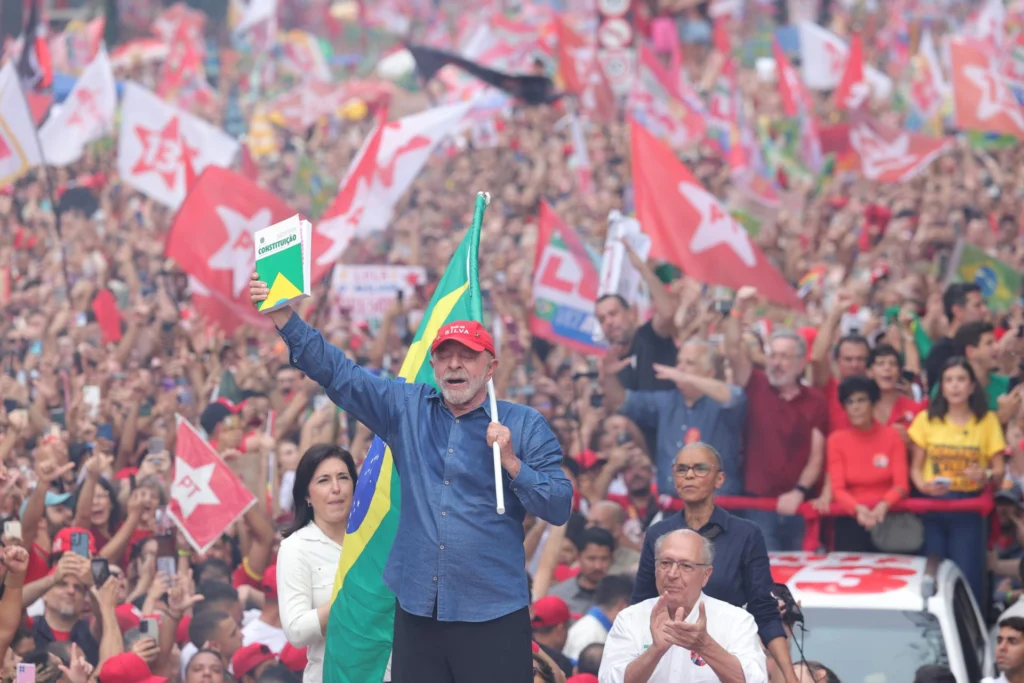
Lula plans to expand technical education and use renewable energy to attract data centers and keep information stored in Brazil.
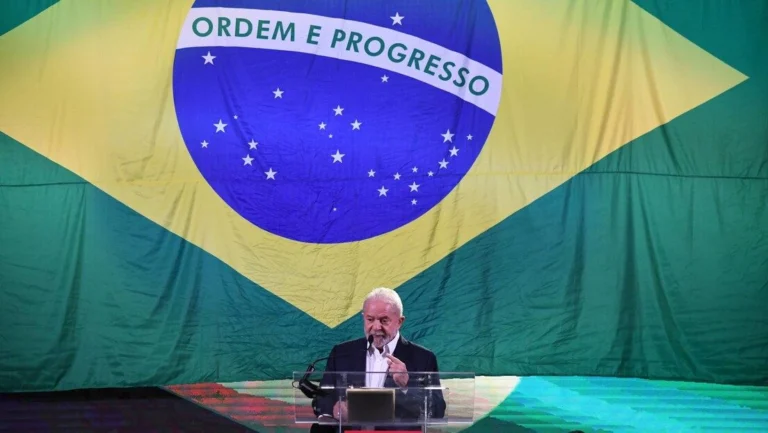
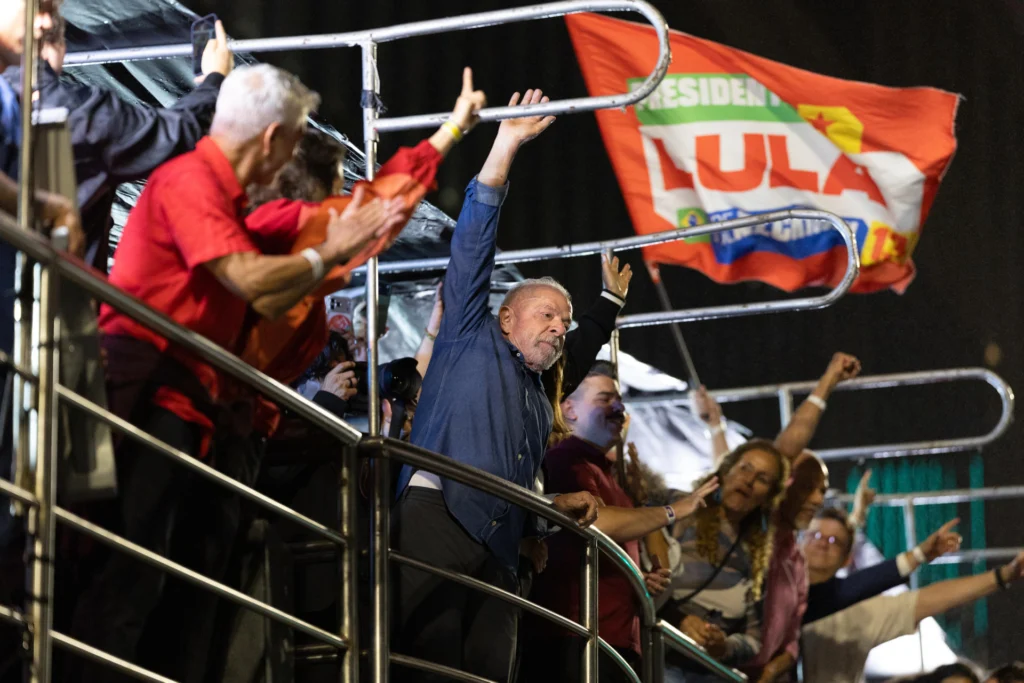
Brazilian President-elect Luiz Inácio Lula da Silva has pledged to develop a domestic artificial intelligence system, expand technical education and attract data centers powered by renewable energy, aiming to strengthen Brazil’s technological independence and accelerate its transition to a developed economy.
Speaking after his victory in the presidential runoff, Lula said Brazil must invest in mathematics and engineering to build its own artificial intelligence capabilities rather than depend on technology developed in China or the United States.
“We will teach more mathematics, more engineering, because I don’t want to depend on Chinese or American artificial intelligence; I want to create a Brazilian one,” he said.
Lula also pledged to use Brazil’s renewable energy resources to attract data centers and keep information stored within the country. The proposal forms part of a broader push to expand the digital economy and strengthen domestic technological capacity.
Text Reads: The Brazil we wish to build is a country where our elderly are cared for with dignity, women are respected, and everyone has the right to live out their faith in freedom. It is a country that respects differences, with a State that guarantees rights for all—because to govern means to look after 215 million Brazilians, without distinction. Respect must be the starting point for us to build, together, a Brazil that is increasingly fair and humane.
“We want to transform this country from a developing country into a developed one,” he said, identifying the digital, green and creative economies as key areas for investment.
He also outlined an ambition for Brazil to play a central role in political and economic decision-making and in efforts to promote peace.
Lula promised that his next term would deliver unprecedented results, telling supporters: “I want to make a commitment: I will deliver the best term of office any president has ever had in Brazil’s history. You can be sure of that.”
The president-elect, who turns 81 on Oct. 27, dismissed concerns about his age as he prepares to take office for another term. He pledged to devote himself fully to the country’s development and to improving the daily lives of Brazilians.
“I will dedicate 20 or 24 hours a day to making this the country everyone dreams of, where people can go to sleep and wake up in complete peace of mind,” he said.
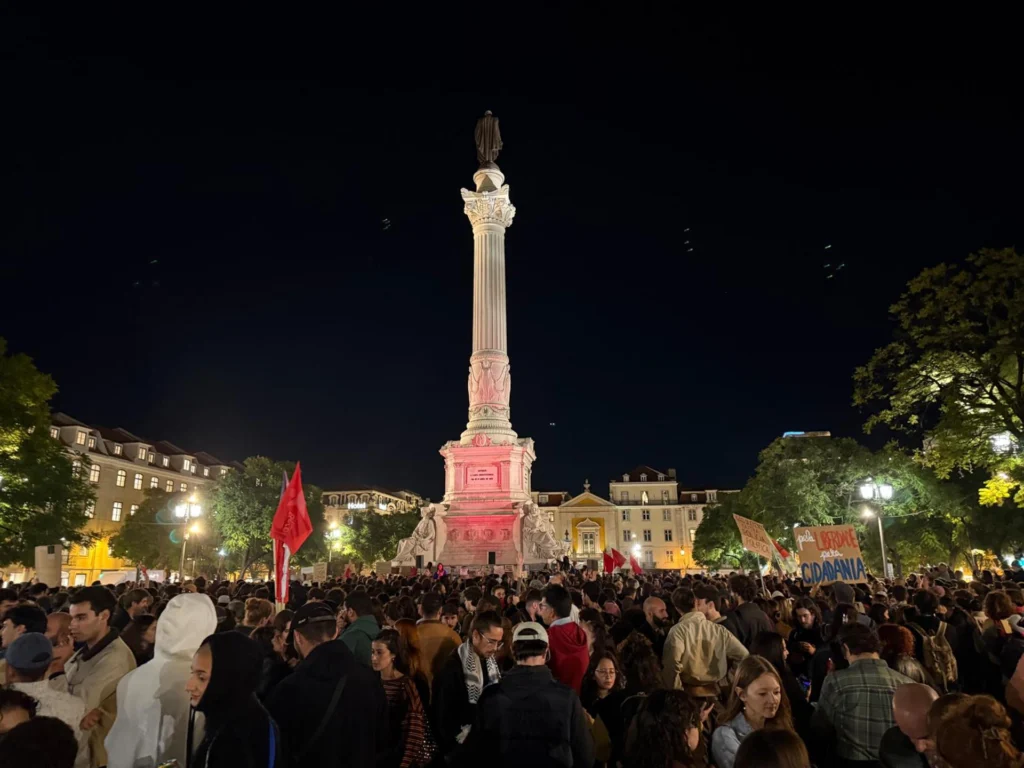
Lula also thanked voters for their support in the runoff and praised young people who took to the streets to defend democracy, crediting their participation as a key factor in his victory.
His pledges place artificial intelligence, renewable energy and digital infrastructure among the priorities he has outlined for Brazil’s next phase of development, alongside his ambition to transform the country into a developed nation.
A low turnout and security concerns shaped the first round, setting up a close contest between Iotova and pro-Western rival Andrey Gyurov.
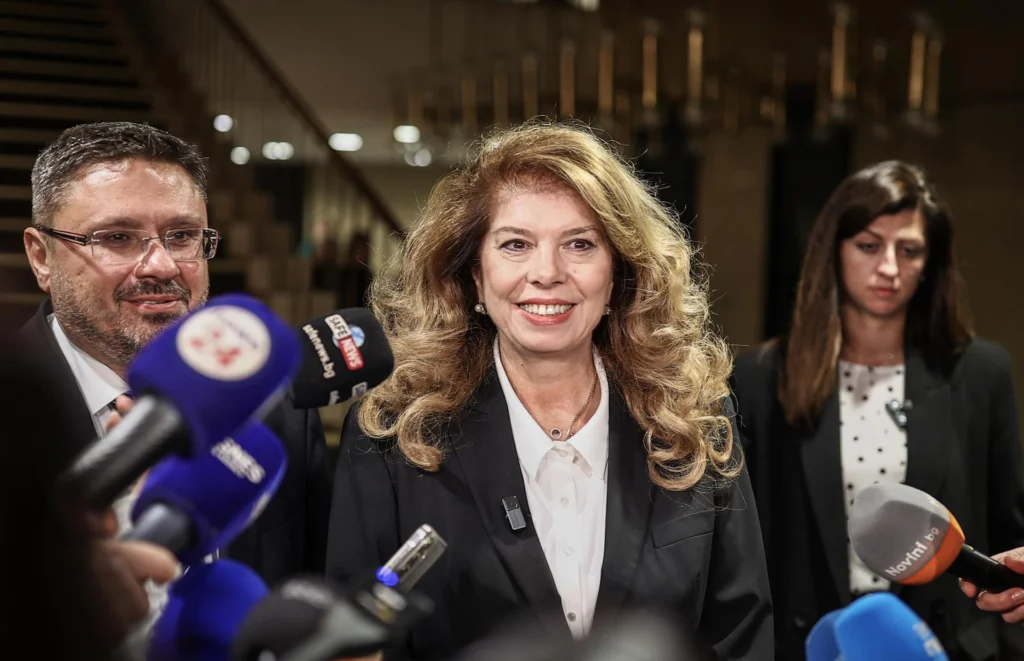
Outgoing Bulgarian President Iliana Iotova led the first round of presidential elections on Sunday with between 35% and 36.5% of the vote, according to exit polls, but fell short of the result expected by her supporters. She will face former caretaker prime minister Andrey Gyurov, backed by the pro-Western opposition, in a runoff scheduled for Nov. 1.
Gyurov secured between 32.2% and 32.5% of the vote, according to the same exit polls, putting him within reach of Iotova ahead of the second round.
The election took place amid security concerns following a series of drone attacks on merchant vessels in the Black Sea. Voter turnout stood at around 20%, as some political parties called for a boycott.
Iotova, 62, has campaigned on dialogue with Russia and opposed military assistance to Ukraine. She has made ending the war in Ukraine a central theme of her campaign, presenting herself as a “president of peace.”
#Bulgaria’s presidential vote delivered a result few polls anticipated. Exit polls gave incumbent Iliana Iotova, who favors dialogue with Moscow and opposes military aid to Ukraine, up to 36.5 percent, a far narrower lead than surveys had suggested.https://t.co/rqlYf7ehlZ
After casting her ballot, she called for a government capable of tackling poverty and regional inequalities. “I believe there must be peace, stability and security,” Iotova said.
Gyurov, meanwhile, called for a Bulgaria oriented toward Europe and the future, emphasizing economic security and effective governance.
He said he had voted for “a European, free and proud country, where incomes are sufficient, where we feel secure about tomorrow and where the state functions as it should.”
Iotova assumed the presidency earlier this year after Rumen Radev resigned to contest parliamentary elections, seeking to become prime minister. Bulgaria is a member of both the European Union and NATO.
If Iotova wins the Nov. 1 runoff, she would become the first woman elected president of Bulgaria, a country of 6.4 million people with the lowest per capita gross domestic product in the European Union.
Mail-in ballots account for more than half of votes cast so far, as early turnout builds across the United States ahead of Election Day.
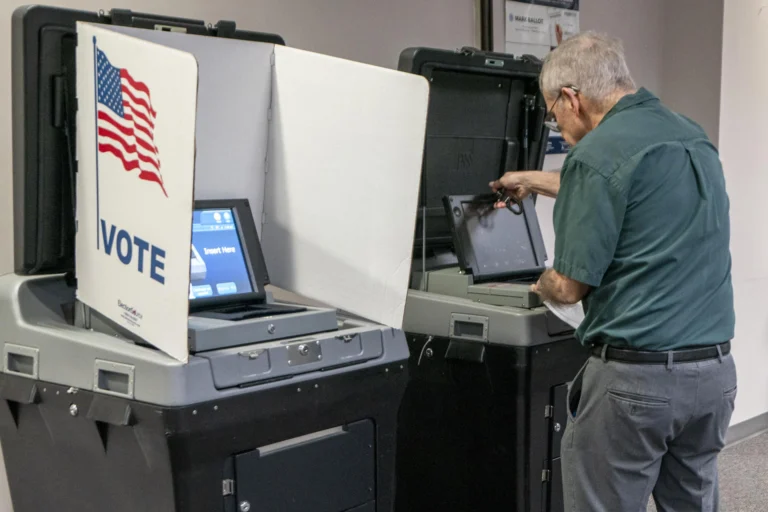
More than 26.6 million U.S. citizens have already voted in the midterm elections, according to data released October 24 by the University of Florida’s Election Lab, with mail-in ballots accounting for 14 million of the votes recorded nationwide.
The latest figures show that 26,608,029 votes had been cast ahead of Election Day, including 14,006,420 ballots returned by mail and 12,601,609 votes cast in person. Election authorities have also received requests for more than 59.4 million mail-in ballots nationwide.
Early voting has increased in states including North Carolina, Kansas, Maine and Iowa, while Texas has seen a rise in mobilization among Latino voters, according to the report. The figures come amid concerns over economic conditions and the cost of living.
California has recorded 2,943,863 early votes, overwhelmingly through mail-in voting. Of those, 2,936,954 were returned by mail and 6,909 were cast in person. Voters in the state have requested more than 23.4 million mail-in ballots.
🚨 Estados Unidos se aproxima a unas elecciones legislativas decisivas, con la popularidad de Donald Trump en retroceso y creciente malestar por la economía. Los comicios del 3 de noviembre de 2026 definirán la composición del Congreso.
Text Reads: 🚨 The United States is approaching pivotal legislative elections, with Donald Trump’s popularity on the decline and growing discontent over the economy. The November 3, 2026, elections will determine the composition of Congress. 🗳️🇺🇸 What do you think?
Democrats account for the largest share of California’s early votes, with 1,383,916 ballots, or 50.2% of the total. Republicans have cast 799,054 votes, representing 29%, while voters registered without a party preference and those affiliated with minor parties account for 575,130 votes, or 20.9%.
Los Angeles County leads California in early voting, with 539,589 ballots processed. San Diego County follows with 356,667 votes, ahead of Orange County, where 279,953 ballots have been returned.
The elections will determine all 435 seats in the House of Representatives, 35 Senate seats and 36 governorships.
The run-up to Election Day has also been marked by a legal dispute over the certification of results in Alaska. A federal court challenge backed by former President Donald Trump seeks to block the potential certification of the state’s election results, raising questions about the electoral process as voting approaches its conclusion.
A student movement that emerged after a deadly railway disaster has turned nearly two years of protests into an electoral victory.
Serbia’s student-led opposition has secured a decisive parliamentary victory over Aleksandar Vučić’s ruling party, according to preliminary results, ending 14 years of political dominance by the Serbian Progressive Party (SNS) and opening a new chapter in the country’s politics.
Vučić acknowledged the defeat on Sunday, saying initial projections indicated that the Student List would win between 135 and 140 seats, compared with about 105 for his party. The result follows nearly two years of student-led demonstrations against corruption and what protesters describe as growing authoritarianism.
The Centre for Free Elections and Democracy (CeSID), a non-governmental organization, projected that the Student List would win 139 seats after 56% of ballots had been counted, against 104 for the SNS. Unofficial estimates from polling institute Ipsos put the student movement at 140 seats and Vučić’s party at 103, down 26 seats from the 2023 parliamentary election, when it secured an absolute majority.
The setback was compounded by the failure of the Socialist Party, a longtime ally of Vučić, to clear the 3% threshold for parliamentary representation. The party previously held 18 seats. Preliminary estimates also gave three seats to Serbia’s Hungarian minority party and two to the Albanian minority list.
Turnout approached 70%, the highest since the breakup of Yugoslavia in 1992 and close to the record set in the 2000 parliamentary election.
The student movement grew out of protests that began in 2024, after 16 people died when a canopy collapsed at a railway station in Novi Sad. The disaster prompted mass demonstrations across Serbia, with protesters demanding accountability over the collapse and the construction work carried out by a Chinese company following a tendering process criticized for its lack of transparency.
Hundreds of thousands of people took to the streets, turning the demonstrations into a broader challenge to corruption and the concentration of political power. The student movement emerged as a nationwide opposition force and sustained pressure on Vučić’s government for nearly two years.
Vučić, who had led the country for 14 years, resigned as head of state in September to run for prime minister.
Celebrations and tensions in Belgrade
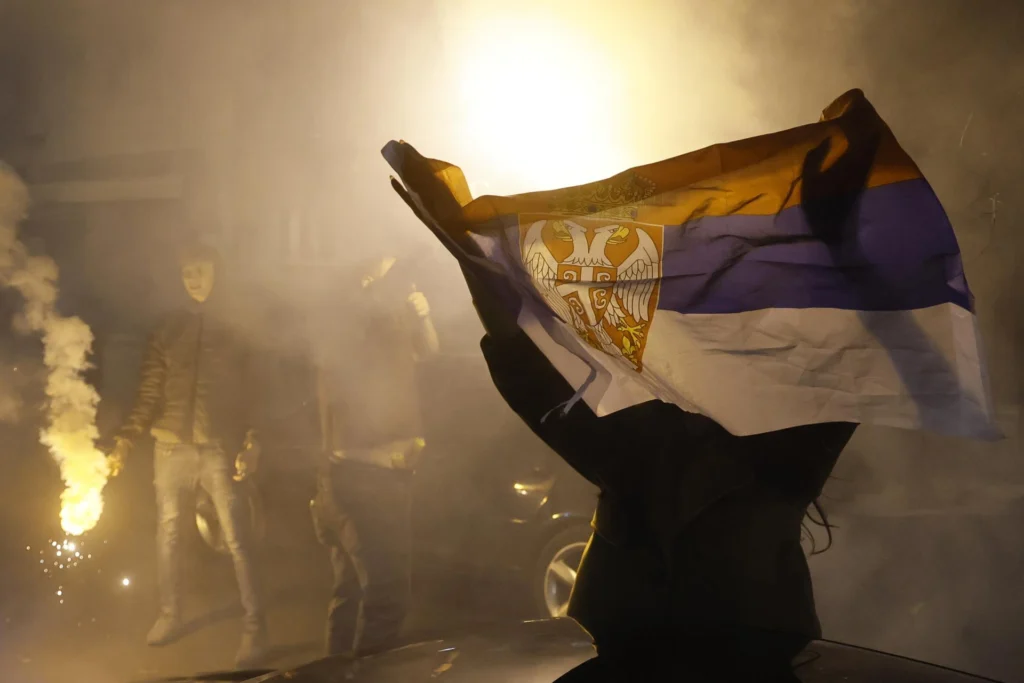
The preliminary results sparked celebrations across Belgrade, where thousands gathered to dance, chant slogans and set off flares and fireworks. Crowds shouted “Victory” and “Vučić is leaving” as people embraced and wept with joy.
Slavija Square, a focal point of the mass protests against the government, filled with supporters of the student movement. At Pioneers Park, between parliament and the presidential palace, hundreds of people tore down the fence surrounding the grounds and entered the public space.
The park had been closed to the public for months and periodically occupied by groups of masked Vučić supporters, who were accused of being used as a force to confront government opponents.
The celebrations underscored the scale of the political shift after more than a decade of SNS rule. Vučić had weathered previous opposition challenges, but the student movement turned sustained street protests into an electoral campaign that defeated his party.
A decentralized political movement
The Student List has presented itself as an alternative to Vučić’s centralized model of leadership. It operates through a horizontal structure and has avoided putting forward a single public face, arguing that political decisions should be made from the bottom up rather than imposed from above.
Its slate of 250 candidates includes university professors, actors and farmers, many of them little known to the wider public.
Radomir Sajcic, a University of Belgrade professor representing the movement, celebrated the result at its headquarters. “Dear Serbia, tonight the voice of the people can be heard,” he declared. “Tonight we celebrate victory; tomorrow we will build the future.”
Sajcic also described the outcome as “a victory of courage over fear, a victory of hope over indifference, a victory of faith that Serbia can and must be different.”
The movement’s platform calls for restoring the separation of powers and the autonomy of the prosecutor general’s office, as well as increasing investment in health care and education. It also pledges to tackle corruption and individual privileges to boost public revenue, while promoting technological modernization across the economy, including agriculture.
Serbia’s score in Transparency International’s corruption index has deteriorated during Vučić’s tenure. The European Union has also raised concerns about the country’s declining adherence to the rule of law.
European support and foreign policy questions
European institutions have welcomed the student movement’s victory, describing it as an opportunity to advance democratic reforms, strengthen the rule of law and combat corruption.
European Commissioner for Enlargement Marta Kos and European Commission President Ursula von der Leyen congratulated the students and offered support for reforms and greater press freedom. Council of Europe Secretary-General Alain Berset highlighted Vučić’s acceptance of the results and his commitment to a peaceful democratic transition.
Today, the people of Serbia turned out in record numbers to shape their country’s future.
Congratulations to the Student List on its victory in the parliamentary elections.
We stand ready to support reforms on the rule of law, media freedom, the fight against corruption and…
Montenegrin Prime Minister Milojko Spajić and Hungarian Prime Minister Péter Magyar also congratulated the winners and expressed their willingness to cooperate with them.
The election could also affect Serbia’s relations with the European Union and Russia. Under Vučić, the country has pursued EU membership while maintaining close ties with the Kremlin. Serbia has been an official candidate for EU accession since 2012.
Before the vote, EU foreign policy spokesperson Christian Wigand said the bloc would monitor the election closely and stressed the need for a free, fair and transparent process.
The Student List has offered fewer details about its international priorities than about its domestic reform agenda. Available indications suggest it may maintain Serbia’s EU candidacy while continuing to oppose sanctions against Russia, although the movement has yet to clearly outline its foreign policy plans.
The student movement’s victory marks a major political turning point for Serbia after 14 years of Vučić’s dominance. Its ability to convert demands for accountability and institutional reform into a parliamentary majority has reshaped the country’s political landscape, but the incoming government’s approach to domestic reform and foreign relations remains uncertain.
Housing activists seek a strike coordinated with Spain as protests against proposed rental law changes spread across Portugal.
Housing rights groups in Portugal are pushing for a nationwide general strike coordinated with Spain as protests against proposed rental law changes intensify, with a police crackdown on a protest encampment resulting in more than 30 arrests, according to organizers.
Reports on the number of arrests vary. Official accounts put the figure between 11 and 31, while organizers say more than 30 people were detained. The police operation against members of the encampment drew criticism from several sectors.
Housing rights organizations mobilized in Lisbon and Porto on Sunday to build support for a general strike. The proposal has also been discussed at public assemblies and demonstrations held daily across Portugal for more than a week.
“There are thousands of people mobilized, and I think that makes calling a general strike in Portugal increasingly necessary,” João Veloso, a spokesperson for the Lisbon Encampment, told the press. He expressed confidence that the growing demonstrations could pressure the government to withdraw its proposed rental law reforms.
The initiative is being discussed alongside a general strike announced in Spain for Wednesday, Nov. 11. Trade unions and social organizations in Spain are calling for measures to address the housing crisis and improve working conditions.
Protests spread beyond major cities
Demonstrations have extended beyond Lisbon and Porto to Coimbra and Faro. At nightly public assemblies, participants have discussed whether to set up tents again or spend nights in sleeping bags to sustain the protests.
The unrest stems from the conservative government’s proposed changes to rental laws. The legislation would accelerate eviction proceedings, eliminate the minimum three-year term for certain automatic lease renewals, allow landlords to demand up to three months’ rent in advance instead of the current two-month limit, and remove the cap of two months’ rent on security deposits.
A former Chihuahua prosecutor faces federal charges over a drug-lab operation involving US intelligence agents, escalating a dispute over Mexico’s national sovereignty.
A Mexican federal judge has ordered the pretrial detention of former Chihuahua attorney general César Jáuregui Moreno on charges of treason, ruling that evidence supports allegations that he compromised national sovereignty by allowing US intelligence agents to take part in a drug-lab operation without federal authorization.
Judge Ricardo Alfonso Santos Dorantes issued the order early Sunday after finding sufficient grounds to bring Jáuregui Moreno to trial. The former prosecutor will remain in a maximum-security prison in the State of Mexico while the case proceeds.
The charges stem from a mid-April operation to dismantle a drug laboratory in the Sierra del Pinal, in the northern border state of Chihuahua. According to Mexico’s Attorney General’s Office (FGR), agents from the US Central Intelligence Agency (CIA) participated without the required notification to the Foreign Affairs Ministry or the necessary legal authorizations.
Prosecutors argue that Jáuregui Moreno’s failure to act enabled armed foreign personnel to operate on Mexican territory in activities reserved exclusively for the federal government, putting national security at risk.
Luego de aportar más de 150 datos de prueba, la #FGR obtuvo auto de vinculación a proceso en contra de César “N”, ex fiscal general del estado de Chihuahua, por su posible participación en el delito de traición a la patria. pic.twitter.com/sbhM0vY6cG
Text Reads: After providing more than 150 pieces of evidence, the #FGR obtained an order of linkage to trial against César “N”, former Attorney General of the state of Chihuahua, for his possible involvement in the crime of treason against the homeland.
The FGR presented more than 150 pieces of evidence at the hearing. Prosecutors also cited public statements in which Jáuregui Moreno said the operation had been planned for months by Chihuahua’s State Investigation Agency and its Special Strategic Operations Prosecutor’s Office. They argued that the account pointed to information being withheld from federal authorities and shared with foreign personnel.
The defense presented documents and witness testimony to challenge the federal allegations. However, Judge Santos Dorantes upheld the charges and set a two-month deadline for investigators to complete the supplementary investigation.
Jáuregui Moreno was initially arrested in Chihuahua city on Saturday under a state-level warrant accusing him of illegally exercising public office and collusion. A local judge ordered him to stand trial on the public-office charge but did not impose pretrial detention, leaving open the possibility of his release.
On October 18, agents from the federal Criminal Investigation Agency arrested him under a separate warrant as he was leaving detention. He was transferred to Mexico City and taken to El Altiplano, a maximum-security prison in the State of Mexico. The hearing on the federal treason charge began on Saturday afternoon and was held behind closed doors.
The case has fueled tensions between state and federal authorities and sparked a wider political dispute over the Chihuahua operation. The controversy has also drawn attention to a private meeting on September 19 in Ciudad Juárez between Chihuahua Governor Maru Campos and President Claudia Sheinbaum.
Campos later disclosed details of the encounter, which involved heated exchanges over the case. She said she went public to counter rumors that she had reached a political pact or a behind-the-scenes agreement with the federal government.
Jorge Romero Herrera, national leader of the opposition National Action Party (PAN), defended Campos’s decision to disclose details of the meeting.
“She is an adult woman; she makes her own decisions,” Romero Herrera said. He also reaffirmed his party’s support for Campos and other PAN officials, including governors and mayors.
Venezuela and Cuba pledged continued cooperation with Brazil after Luiz Inácio Lula da Silva defeated Flávio Bolsonaro in the presidential runoff.
Venezuela and Cuba congratulated Brazilian President Luiz Inácio Lula da Silva on his election victory, reaffirming their commitment to regional cooperation after he defeated Liberal Party candidate Flávio Bolsonaro in the presidential runoff.
Venezuela’s government praised Brazilian voters for their participation in Sunday’s election, calling it a strong demonstration of civic engagement and democracy.
“The people of Brazil have given a resounding demonstration of civic and democratic participation,” Venezuelan Foreign Minister Félix Plasencia González said in a statement posted on social media.
Text Reads: The Bolivarian Republic of Venezuela congratulates the massive and civic participation of the pueblo of the Federative Republic of Brazil in the second electoral victory celebrated today that leads to the victory of President Luiz Inácio Lula da Silva.
Caracas also reaffirmed its commitment to maintaining longstanding ties with Brazil, citing peace, respect for national sovereignty, self-determination and solidarity among Latin American and Caribbean nations.
Lula secured more than 64 million votes, representing 51.77% of valid ballots, defeating Bolsonaro, a senator and candidate for the Liberal Party (PL).
Cuban President Miguel Díaz-Canel described the result as a historic victory that would help preserve the pursuit of social justice. He also pledged Cuba’s support for greater regional unity and integration.
“Brazil can count on Cuba as we build unity and integration across our great Latin American and Caribbean homeland,” Díaz-Canel said.
Estimado hermano @LulaOficial, te felicito en nombre del gobierno y pueblo cubanos por esta victoria histórica que garantiza la continuidad del camino de paz, soberanía y justicia social emprendido por el pueblo brasileño bajo tu liderazgo.
Text Reads: Dear brother @LulaOficial, on behalf of the Cuban government and people, I congratulate you for this historic victory that ensures the continuity of the path of peace, sovereignty, and social justice embarked upon by the Brazilian people under your leadership.
Former Argentine President Cristina Fernández de Kirchner also congratulated Lula, first praising Brazilian voters for their mobilization and then highlighting the president’s ability to rally support.
“Congratulations first to the Brazilian people, who today took part in an authentic electoral October 17, and then to you, comrade President Lula, who, in your seventh presidential election, knew how to awaken among your fellow citizens the feelings and sense of purpose needed to win this battle,” she wrote.
Former Bolivian President Evo Morales welcomed the outcome as a source of renewed hope for people across the continent fighting for social justice, dignity and sovereignty.
Addressing Lula as a close ally and fellow campaigner, Morales called the result a “beautiful and heroic victory.” The messages from Venezuela, Cuba, Argentina and Bolivia reflected the regional significance these leaders attached to Lula’s election win.
Brazil’s far-right candidate challenges the election result after voting hours were extended over public transport disruptions.
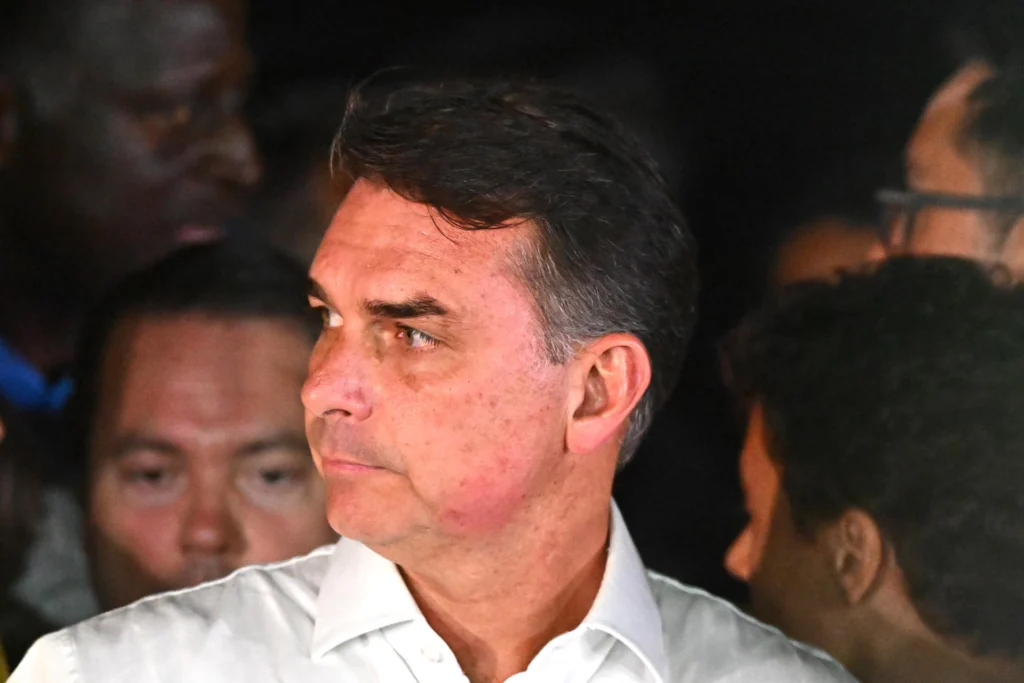
Brazilian far-right presidential candidate Flávio Bolsonaro has rejected President Luiz Inácio Lula da Silva’s reelection and vowed to seek the annulment of the vote, citing a Supreme Federal Court decision to extend voting hours amid allegations of disruptions to public transport.
The Superior Electoral Court (TSE) confirmed Lula’s reelection on Sunday. Bolsonaro, however, declared the result unacceptable and announced plans to challenge it in court.
“It is impossible to recognize the election results,” Bolsonaro said. “We will turn to our legal team and request that these elections be annulled.”
Bolsonaro based his challenge on a ruling by Supreme Federal Court Justice Cristiano Zanin, who extended voting by two hours after the Workers’ Party (PT) reported alleged irregularities affecting voter transportation in several cities.
The ruling came shortly before polls were due to close at 5 p.m. Zanin ordered polling stations nationwide to remain open until 7 p.m. Brasília time, citing the seriousness of the allegations and the urgency of the measure.
The PT accused mayors opposed to Lula of failing to comply with electoral court orders requiring municipalities to provide free public transport at full capacity on election day, as they would on a regular working day. The party also called for those responsible for the alleged violations to be caught in the act.
In Salvador, electoral authorities ordered the arrest of Pablo Souza, the city’s mobility secretary, over suspicions that he had withdrawn buses to disadvantage Lula. The northeastern city is governed by União Brasil, a center-right party allied with Bolsonaro. In the first round of the presidential election, Lula received 65% of the vote in Salvador, compared with 27% for Bolsonaro.
Brazilian trade union federations also denounced transport disruptions in several cities on election night and called for immediate action by the authorities.
In a statement, the unions condemned what they described as the deliberate obstruction of eligible voters’ right to participate in the election. They alleged that some cities had reduced their bus fleets despite a Supreme Federal Court order requiring public transport to operate at full capacity on election day.
The disruptions left thousands of people waiting at bus stops, uncertain whether they would reach polling stations in time. In some cases, the unions said, voters were unable to cast their ballots.
Bolsonaro’s campaign also sought an extension of voting hours, according to local media reports. His team requested additional time in cities across São Paulo, Paraná and Santa Catarina states, citing difficulties caused by heavy rainfall.
The dispute recalls the aftermath of the October 2022 presidential election, when Lula defeated Flávio Bolsonaro’s father, Jair Bolsonaro. The former president repeatedly challenged the result and conspired to overturn it.
On Jan. 8, 2023, thousands of his radicalized supporters stormed the Congress, presidential palace and Supreme Federal Court buildings in Brasília. Jair Bolsonaro was subsequently tried and is now serving a 27-year prison sentence for conspiring against Brazil’s democratic order and attempting a coup.
Organizers warn that weaker tariff protections could threaten domestic rice production, jobs and food security.
Social and political groups in the Dominican Republic are protesting a government decision to scrap tariff protections for domestically produced rice, warning that the move could expose local farmers to increased import competition.
The Broad Front (Frente Amplio) and the Jesús Adón Popular Bloc (Bloque Popular Jesús Adón) have called for a march in Nagua on Sunday, Oct. 25, demanding stronger government measures to protect domestic rice production. The demonstration is scheduled to begin at 9:30 a.m. at the town’s main park, on the road toward San Francisco de Macorís. Organizers have urged farmers, agricultural workers, traders and social organizations across the northeastern region to take part.
The protest centers on Decree 635-26, issued by President Luis Abinader on Sept. 9, 2026, which repealed Decree 693-24. The previous measure established a tariff system intended to shield locally produced rice from international competition.
#DOMINICANA | Tras intensas presiones de Estados Unidos, el Gobierno dominicano derogó la medida arancelaria que protegía la producción nacional de arroz. Organizaciones sociales y productores denuncian que la eliminación de estas salvaguardas bajo el tratado DR-CAFTA vulnera la… pic.twitter.com/ZCVO0Om8iz
Text Reads: Following intense pressure from the United States, the Dominican Government repealed the tariff measure that protected the national rice production. Social organizations and producers denounce that the elimination of these safeguards under the DR-CAFTA treaty violates the country’s food sovereignty.
Under the former rules, certain imports within the tariff-rate quota faced a 20% tariff, while imports exceeding the quota were subject to a 99% rate. The system allowed 23,300 metric tons of rice from the United States to enter the Dominican market duty-free, with imports above that volume subject to the higher tariff.
María Teresa Cabrera, president of the Broad Front, said the decision to remove the protections stemmed from external commercial pressure linked to bilateral negotiations with the United States over access to the Dominican agricultural market.
Cabrera warned that weakening tariffs could undermine a sector encompassing more than 30,000 producers and supporting tens of thousands of direct and indirect jobs. Rice production also sustains related economic activities, including transportation, supply and marketing.
“Rice is not just another commodity: it is an essential food for the Dominican people and the livelihood of thousands of farming and working families. Weakening domestic production to favor imports could have economic and social consequences extending far beyond the countryside. Food security is also a matter of national sovereignty,” Cabrera said.
The decision has also raised concerns among agricultural organizations, which are seeking clarity on the safeguards and competitiveness measures the government intends to introduce to protect domestic production.
The Dominican government has said it is pursuing diplomatic and commercial negotiations with international counterparts to renegotiate the terms while maintaining controls on rice imports.
The planned march comes as agricultural groups press the government for assurances that domestic rice producers will remain protected under any revised trade arrangements.
More than 158.7 million Brazilians are eligible to vote as President Luiz Inácio Lula da Silva faces Senator Flávio Bolsonaro in a closely contested runoff.
Brazilian voters are choosing between President Luiz Inácio Lula da Silva and Senator Flávio Bolsonaro in a presidential runoff after neither candidate secured a majority in the first round. More than 158.7 million people are eligible to vote, with polling stations open from 8 a.m. to 5 p.m. local time, according to the Superior Electoral Court (TSE).
In the first round on Oct. 4, Bolsonaro, of the Liberal Party (PL), received 47.03% of valid votes, or 56,104,503 ballots, while Lula, of the Workers’ Party (PT), won 45.16%, or 53,879,538 votes, according to official TSE figures. Neither surpassed the 50% threshold needed to win outright.
Voter abstention emerged as a significant factor in the first round, with 33,469,244 people staying away from the polls, representing 21.08% of registered voters. Both campaigns sought to attract those who did not vote, as pre-election polls pointed to a statistical tie.
The final day of campaigning on Saturday brought closing rallies from both candidates. Speaking in São Paulo, Lula attacked his rival, calling him a “liar,” a “militiaman” and unqualified for the presidency.
“A person like that does not have the political, moral or ethical qualifications to become president of the Republic,” Lula told reporters.
Bolsonaro received backing during the campaign from U.S. President Donald Trump, who described the senator’s first-round result as “a great victory.”
On Oct. 20, Lula framed the election as a choice over Brazil’s national sovereignty, saying voters would decide whether they wanted “a Brazil that kisses the Brazilian flag or one that gets down on all fours before the U.S. flag.”
Voting is compulsory for literate Brazilian citizens aged 18 to 70. It is optional for illiterate citizens, those aged 16 and 17, and people over 70.
Voting abroad
A total of 918,876 Brazilians registered to vote abroad across 134 countries, accounting for about 0.5% of the electorate, according to the TSE. The number represents a 358% increase from 2010.
Text Reads: The Brazil we dream of is built together with the people—through struggle and hope! ❤️🇧🇷 Thank you to every Brazilian who stands by our side on this journey. It is this strength that drives us, and this unity that empowers us. Tomorrow, let’s transform all this energy into the future! Together with the people, we will achieve so much more, secure new rights, and continue building a Brazil that is even fairer for everyone. Let’s do this together. Vote 13—vote for Brazil.
Overseas voters cast their ballots in person in 186 cities and can vote only for president and vice president. Women account for 57% of registered overseas voters and men for 43%, while the largest age group is between 40 and 44.
The United States has the largest number of registered Brazilian voters abroad, with 265,400, followed by Portugal with 134,700, Japan with 88,300, Canada with 46,400 and Germany with 41,500.
Other contests
Sunday’s elections also include gubernatorial runoffs in Acre, Amazonas, Rio Grande do Norte, Espírito Santo and Tocantins, as well as the Federal District. None of the candidates in those contests secured more than 50% of valid votes in the first round.
Several municipalities are also electing mayors. In Chopinzinho and São João, both in the state of Paraná, voters are taking part in a referendum on changing the territorial boundaries between the two municipalities.
The runoff will determine whether Lula remains president or Bolsonaro takes office, concluding a campaign shaped by a narrow first-round margin, high abstention and competing appeals over Brazil’s political future and national sovereignty.
Venezuela’s new food security plan aims to eliminate undernourishment by 2030 through domestic production and expanded distribution.
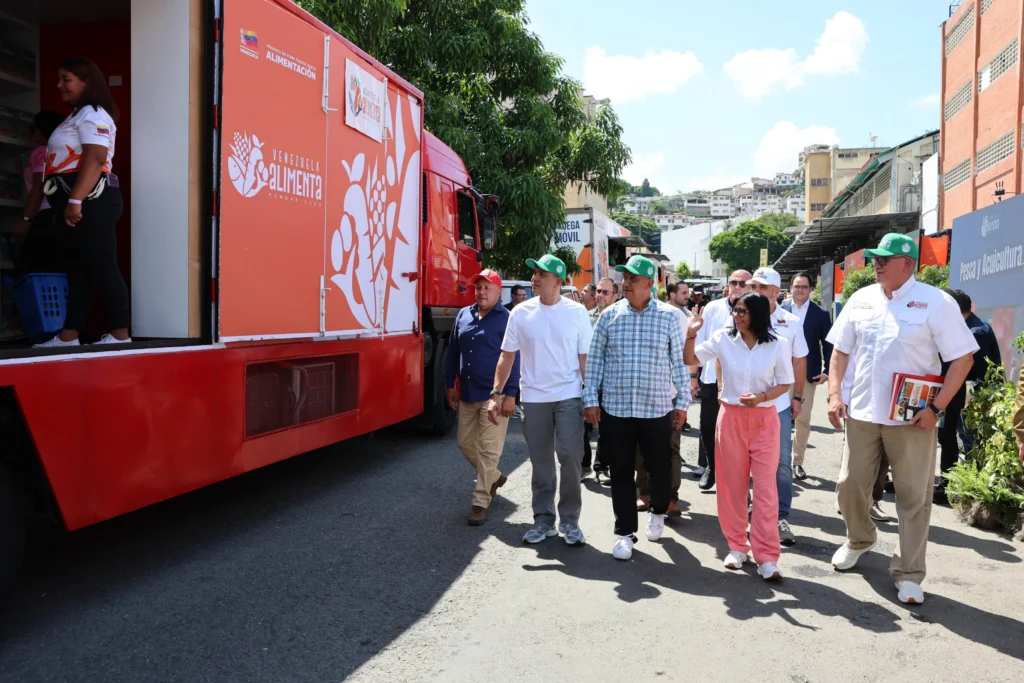
Venezuela’s Acting President Delcy Rodríguez has launched a national food security plan aimed at eliminating undernourishment by 2030, combining domestic production with an expanded distribution network and cooperation between public institutions and private businesses.
The Venezuela Alimenta Hambre Cero (Venezuela Feeds: Zero Hunger) plan was launched Saturday alongside the opening of the 250th facility in the Mercal and PDVAL food distribution networks in La Trinidad. The rollout also included the deployment of 100 mobile food outlets nationwide and the simultaneous opening of 10 supermarket-style establishments in other regions.
The new facility features a meat-cutting center for retail sales. According to the government, more than 90% of Venezuela’s food supply comes from domestic production, which it identifies as a foundation for improving access to essential goods across the country.
“All efforts, all capacities, the local economy, the large agro-industrial sector, the entire distribution and logistics network, financial resources and fuel incentives will be brought together to achieve this strategic objective,” Acting President said during a broadcast on state television channel Venezolana de Televisión.
First announced on Oct. 12, 2026, at the Food and Agriculture Organization’s World Food Forum in Rome, the plan is built around six strategic areas designed to coordinate government and private sector efforts. These include support for community-based economic activity and local entrepreneurship through a proposed Local Economy Law.
The initiative also prioritizes scientific innovation in nutrition and the development of statistical monitoring and oversight systems.
“We are very close to achieving our zero-hunger goal. We made this commitment to the FAO (Food and Agriculture Organization of the United Nations), to the country and to our citizens,” Delcy Rodríguez said.
She also pointed to the effects of unilateral coercive measures imposed by the United States, saying they had restricted access to financing, agricultural inputs, technology and spare parts needed to sustain domestic production chains.
Senior government officials responsible for the economy, digital government, food, youth, industry and commerce, agriculture, and science and technology attended the launch.
Private sector representatives included Ítalo Atencio, president of the National Association of Supermarkets and Self-Service Stores (ANSA), and Juvenal Arbeláez, president of the Venezuelan Chamber of the Food Industry (CAVIDEA).
The plan brings together food distribution infrastructure, domestic production and public-private cooperation as Venezuela pursues its goal of eliminating undernourishment by 2030.
A deep earthquake struck near the Ogasawara Islands, about 1,000 kilometers from Tokyo, without triggering a tsunami warning.
A powerful earthquake struck the waters near Japan’s Ogasawara Islands on Saturday, with no casualties or material damage reported and no tsunami alert issued, according to information from U.S. and Japanese monitoring agencies.
The U.S. Geological Survey (USGS) recorded the earthquake at magnitude 6.5, with its epicenter at a depth of 492 kilometers. Japan’s Meteorological Agency measured the magnitude at 7 and placed the epicenter about 1,000 kilometers from Tokyo.
The quake occurred in a remote oceanic area southeast of Japan, far from the capital and difficult to access. Authorities continued monitoring seismic activity for possible aftershocks, according to the available reports.
Preliminary: M6.3 earthquake 🟠 – Bonin Islands, Japan region
Oct 25 11:09 local time (7m ago) Depth 497 km Source: EMSC
Japan lies along the Pacific Ring of Fire, one of the world’s most seismically active regions, where the Pacific, Philippine, Eurasian and North American tectonic plates converge.
Three victims are in critical or serious condition after gunfire near Florida A&M University in Tallahassee; no arrests have been made.
At least 11 people were wounded in a shooting near Florida A&M University in Tallahassee on October 24, including three who suffered serious injuries, police said. One victim is in critical condition.
Tallahassee Police Chief Lawrence Revell said eight other victims were in stable condition. A university student was among those injured.
Preliminary information indicates that the shooting followed a dispute involving several people, according to authorities. Police believe the incident was isolated rather than a random attack targeting the university.
No arrests have been made, and the investigation remains ongoing. Local authorities have urged members of the public to provide information that could help identify those responsible.
At least 12 people were injured in a shooting near Florida A&M University’s Bragg Memorial Stadium in Tallahassee, Florida, local police and the university sayhttps://t.co/3ik4danrqj
The shooting also left a family member injured as people fled the scene. A grandmother of one of the victims was hurt while trying to escape, bringing the reported number of people injured in the incident to 12 when non-gunshot injuries are included.
Reports from local media indicated that six adults and six minors were among those affected, including an 11-year-old child. The reports did not clarify how those figures corresponded to the 11 people shot and the additional person injured while fleeing.
Florida A&M University, founded in 1887, is a historically Black institution based in Tallahassee. The shooting occurred near its facilities, although police have said preliminary findings do not indicate that the university itself was the target.
Students, unions and families of protest victims demand action on extortion, environmental damage, living costs and police reform.
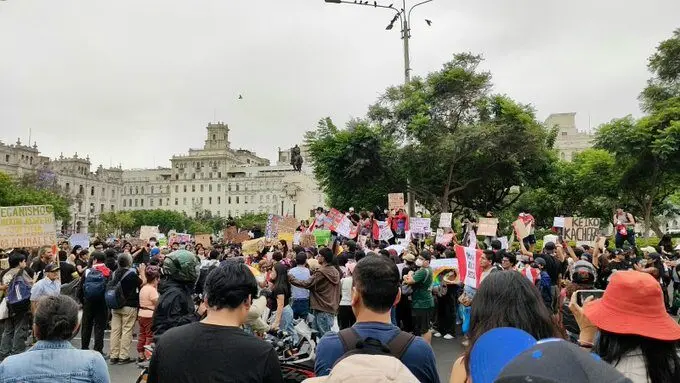
Young people, students, trade unions and human rights groups marched through central Lima on Saturday, demanding that President Keiko Fujimori’s government address rising extortion, deadly forest fires, the cost of living and alleged impunity for state repression.
Demonstrators began gathering at 4 p.m. in San Martín Square, a historic rallying point for popular movements in Peru. Participants included students from San Marcos and Catholic universities, human rights organizations, trade unions and members of the self-organized Generation Z movement.
The protests unfolded amid mounting concern over forest fires that have affected 16 regions across the country. Figures from Peru’s National Emergency Operations Center and the National Institute of Civil Defense recorded 479 emergencies, leaving 12 people dead and 708 displaced or otherwise affected.
The fires destroyed 1,299 hectares of crops and more than 13,800 hectares of natural vegetation, while also causing significant damage to local wildlife and livestock.
🚨 #URGENTE | Contra la extorsión y la crisis ambiental: jóvenes y colectivos sociales protestan en el centro de Lima
Text Reads: 🚨 #URGENT | Against extortion and the environmental crisis: young people and social groups protest in downtown Lima
Carrying banners calling for an end to the fires, police reform and solidarity with affected communities, demonstrators marched along Jirón de la Unión and Grau and Abancay avenues. Police blocked the procession from approaching the grounds of Congress.
Environmental concerns featured prominently in the march, with protesters criticizing what they described as inadequate government preparation and response to fires in the Andean highlands and Amazonian regions, including Cusco, Puno, Junín, Apurímac, Áncash, Huancavelica, Arequipa, Amazonas and Cajamarca.
One young demonstrator denounced the lack of firefighting teams, funding and preventive measures, arguing that the fires were extinguished only after rain arrived. The crisis, she said, had inflicted heavy losses on rural farmers and Indigenous communities.
Another protester highlighted flooding caused by heavy rains in Piura, in northern Peru, and the absence of a strategic plan to address the El Niño phenomenon. She also pointed to corruption in reconstruction projects and the neglect of infrastructure serving working-class communities.
Extortion was another central grievance. Transport workers, shopkeepers and small-business owners in working-class neighborhoods have been among those affected by the crime, according to the protest account. Demonstrators called for far-reaching police reform to dismantle corruption networks within the security forces and prioritize intelligence gathering and community-based prevention over the repression of social protests.
Families of people killed during social protests between December 2022 and June 2023 also joined the march, carrying photographs of their relatives and demanding justice. Their presence underscored the demonstrators’ broader call for accountability from a government they accuse of perpetuating impunity.
Press freedom groups condemn Javier Milei’s threats against journalists who investigated the $LIBRA cryptocurrency case, warning of rising hostility toward the media.
Argentine press freedom and human rights organizations have condemned President Javier Milei for threatening journalists who investigated the $LIBRA cryptocurrency scandal, warning that his remarks could expose media workers to violence and undermine freedom of expression.
Speaking at a dinner hosted Friday by the Fundación Faro think tank, Milei attacked journalists who covered the $LIBRA case, accusing them of spreading false information and coordinating a political operation against his administration.
The remarks came hours after a court dismissed the judicial case involving the cryptocurrency, a digital asset promoted by Milei in February 2025 whose sharp price fluctuations harmed thousands of investors.
Text Reads: 🗣️ Argentine President Javier Milei stated on Friday that “the ones who should be burned at the stake are the sons of b*tches,” after publicly singling out media figures who covered the investigation into the cryptocurrency $LIBRA. ⚖️ These remarks were made during a dinner hosted by the Fundación Faro, just hours after the judiciary dismissed the case. Milei specifically mentioned journalists from La Nación, Perfil, and A24. 📢 FOPEA (Forum for Argentine Journalism) denounced an “unprecedented escalation,” warning that such language “legitimizes violence.” The CELS (Center for Legal and Social Studies) described his comments as an “authoritarian escalation,” while the union SiPreBA called for an immediate response from the political and media spheres. 🔴 “The State has an obligation to protect journalists, not to turn them into targets,” FOPEA stated.
During his speech, Milei threatened those he accused of wrongdoing with being “burned at the stake” and singled out five journalists by name: Hugo Alconada Mon, Carlos Pagni and Paulino Rodrigues of La Nación newspaper; Natalia Volosín of Perfil; and Luis Novaresio of A24 television.
“Let it be known that the sons of bitches in Argentina will receive no mercy,” the president declared. “Those who deserve to be burned at the stake are the sons of bitches.”
The remarks drew condemnation from press freedom and human rights organizations, which warned that publicly identifying journalists while using such threatening language could increase the risks they face in their work.
The Argentine Journalism Forum (FOPEA) said the reference to burning journalists at the stake, coupled with the president’s naming of specific media professionals, marked a significant escalation in government hostility toward the press.
“The state has an obligation to protect journalists, not turn them into targets,” the organization said. It urged Milei to stop stigmatizing journalists and called on political leaders, lawmakers and other institutions to publicly respond to the incident.
The Center for Legal and Social Studies (CELS) described the episode as an “authoritarian escalation” in a statement published on X. The organization warned that when a head of state publicly casts critics as enemies, it can encourage attacks and undermine democratic debate. It also argued that insults and defamatory attacks against journalistic work must have limits.
❌ESTO NO ES UN REPUDIO, ES UN LLAMADO A LA ACCIÓN
🔊FRENEMOS LA INQUISICIÓN DE MILEI
El presidente Milei volvió a cruzar un límite gravísimo. La instigación a “quemar en la hoguera” a un grupo de periodistas debe generar una reacción inmediata de todo el arco político y… pic.twitter.com/XrXOohrVDe
— SiPreBA – Sindicato de Prensa de Buenos Aires (@sipreba) October 24, 2026
Text Reads: ❌THIS IS NOT A REJECTION, IT’S A CALL TO ACTION 🔊LET’S STOP MILEI’S INQUISITION President Milei has once again crossed a gravely serious line. The incitement to “burn at the stake” a group of journalists must provoke an immediate reaction from the entire political and media spectrum to halt the attacks on our profession. There will be no room for regrets if the violence promoted by the President ends up turning into facts. This government, which nearly killed photographer Pablo Grillo in a savage crackdown, now calls, in the voice of its highest representative, to assault our colleagues, as has already happened. We send our solidarity to @halconada, @CarlosPagni2, @nataliavolosin, @paulinor76and @luisnovaresio and place ourselves at their disposal. With threats on social media, repression in the streets, and attacks on rights in Congress, they seek to silence the press. From SiPreBA, we call to defend the Journalist’s Statute and to respond with more democracy in the face of the return to the Inquisition proposed by the Executive Branch.
CELS said the incident was part of a broader pattern of hostility toward media workers, including harassment, attacks on digital platforms and repression of journalists covering public demonstrations.
The Buenos Aires Press Union (SiPreBA) also condemned the president’s remarks, calling for an immediate response from political and media figures to stop the attacks. The union expressed solidarity with the journalists targeted by Milei and warned of the possible consequences of his rhetoric.
“There will be no room for regret if the violence promoted by the president ends up turning into actual incidents,” SiPreBA said.
The organizations called for political and institutional action to protect journalists and counter hostility toward the press following Milei’s public targeting of reporters who investigated the $LIBRA case.
Luisa González’s lawyers allege arbitrary detention and procedural violations after her arrest on Oct. 22 in a case linked to campaign finances.
Ecuadorian opposition leader Luisa González’s arrest has prompted her lawyers to accuse President Daniel Noboa’s government of selective prosecution, citing alleged procedural violations and inconsistencies in the financial evidence underpinning the case.
González, a former presidential candidate and leading figure in the Revolución Ciudadana movement, was arrested on Oct. 22. Her lawyer, Diego Guarderas, disputes the allegations linked to campaign finances and argues that authorities have treated similar cases involving the ruling party differently.
In an interview with CNN, Guarderas questioned figures attributed to Ecuador’s Financial and Economic Analysis Unit (UAFE), which he said changed at different stages of the investigation. According to the defense, the amounts cited ranged from $6,000 to $500,000 and $700,000, while the technical report recorded $204,000.
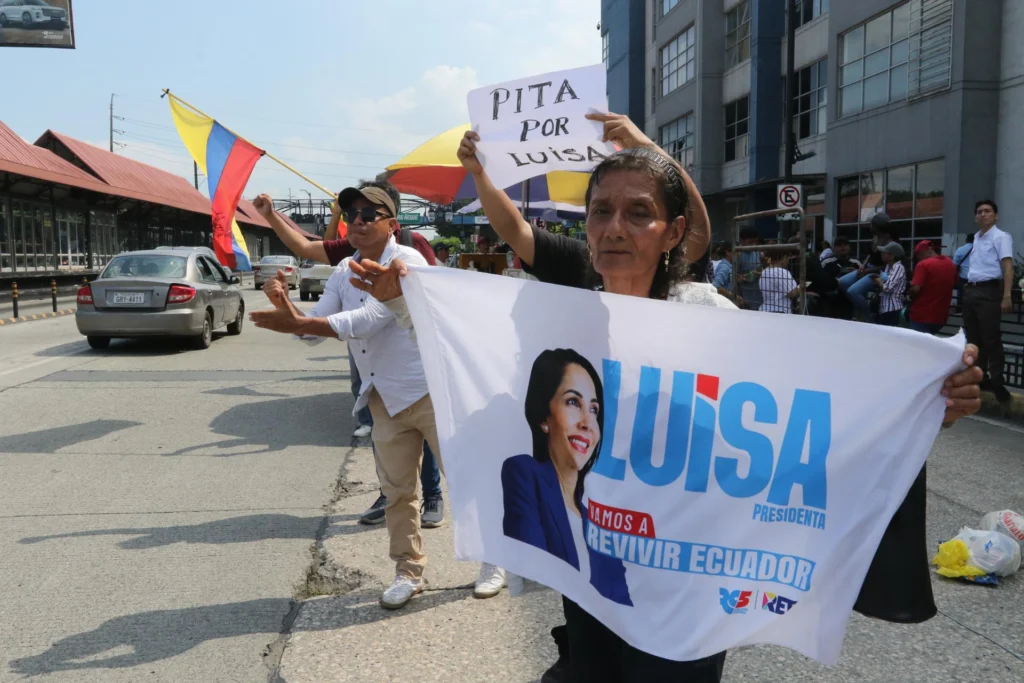
Text Reads: Under a heavy hailstorm, the militants of Revolución Ciudadana remain outside the Flagrancy Unit following the detention of political leader Luisa González.
The legal team argues that discrepancies in campaign accounting have been treated as evidence of money laundering without sufficient technical justification. Guarderas maintains that the shifting figures undermine the legal basis of the accusations against González.
He also pointed to what he described as unequal treatment of campaign-finance irregularities. Ecuador’s National Electoral Council identified inconsistencies exceeding $408,000 in the campaign of Acción Democrática Nacional (ADN), Noboa’s party. According to the defense, prosecutors have not opened an investigation into those findings.
Lawyers challenge arrest and transfer
González’s lawyers have also challenged the procedures leading to her arrest. They say she was informed of the charges only 30 minutes before the hearing at which they were formally presented.
The defense further disputes the jurisdiction of the judges who presided over the hearing, arguing that they failed to account for the provincial jurisdictional privilege of other defendants in the case.
Her legal team has also challenged her transfer from Quito to a prison in Riobamba, about four hours from the capital. Guarderas said a judicial order had required González to remain in Quito to protect the rights of her minor child and her father, who has kidney disease.
Convocan plantón en la Fiscalía en Quito, Ecuador, contra el Gobierno del presidente Daniel Noboa. Legisladores exigen el cese de la persecución política y reclaman información sobre el paradero de Luisa González, exigiendo justicia y debido proceso. 🇪🇨📢 #Ecuador#Quito#teleSUR… pic.twitter.com/F5DK2JzoDV
Text Reads: Protest rally called at the Prosecutor’s Office in Quito, Ecuador, against the Government of President Daniel Noboa. Lawmakers demand an end to political persecution and request information on the whereabouts of Luisa González, calling for justice and due process.
Despite the order, authorities moved her during a nighttime operation, which Guarderas described as clandestine. He argued that the transfer obstructed the preparation of her defense and violated the judge’s instructions.
Opposition alleges political persecution
Revolución Ciudadana has described the case as political persecution intended to weaken the opposition and prevent González from competing politically. Guarderas likewise accused Noboa’s administration of using judicial proceedings to target prominent opponents.
These allegations remain the position of González’s defense and have not been independently established in the information available for this report.
González’s lawyers said they would file legal challenges seeking to reverse her transfer and report the alleged violations of due process. The case remains before Ecuador’s courts, with the defense contesting both the financial evidence and the procedures that led to her arrest and imprisonment.
France mobilizes 70,000 police and gendarmes amid fears of renewed unrest, while authorities restrict demonstrations and tighten security.
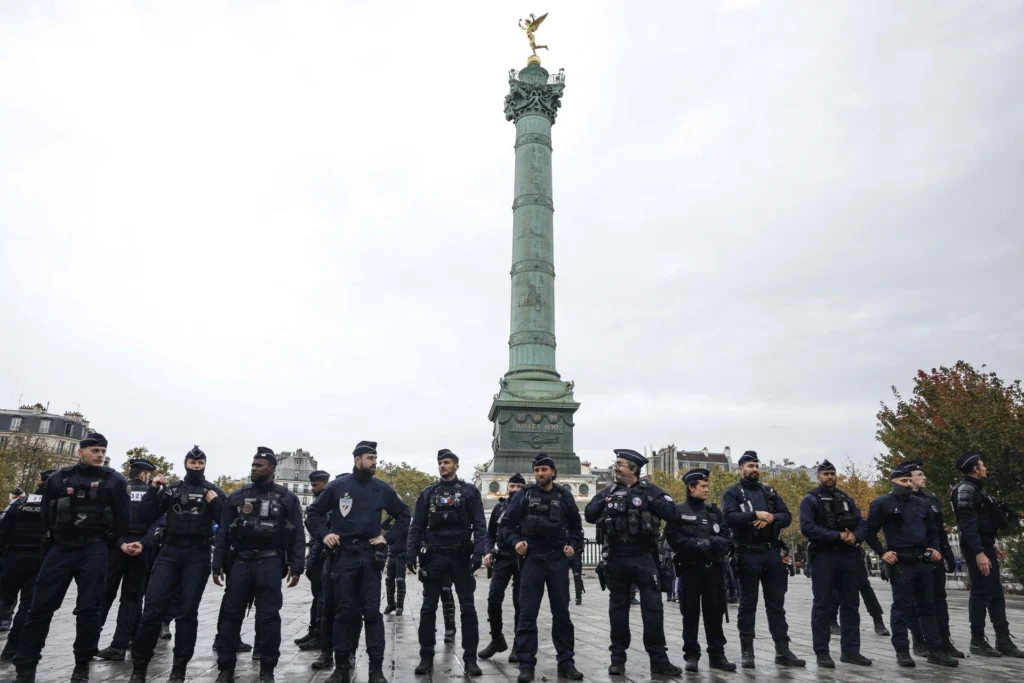
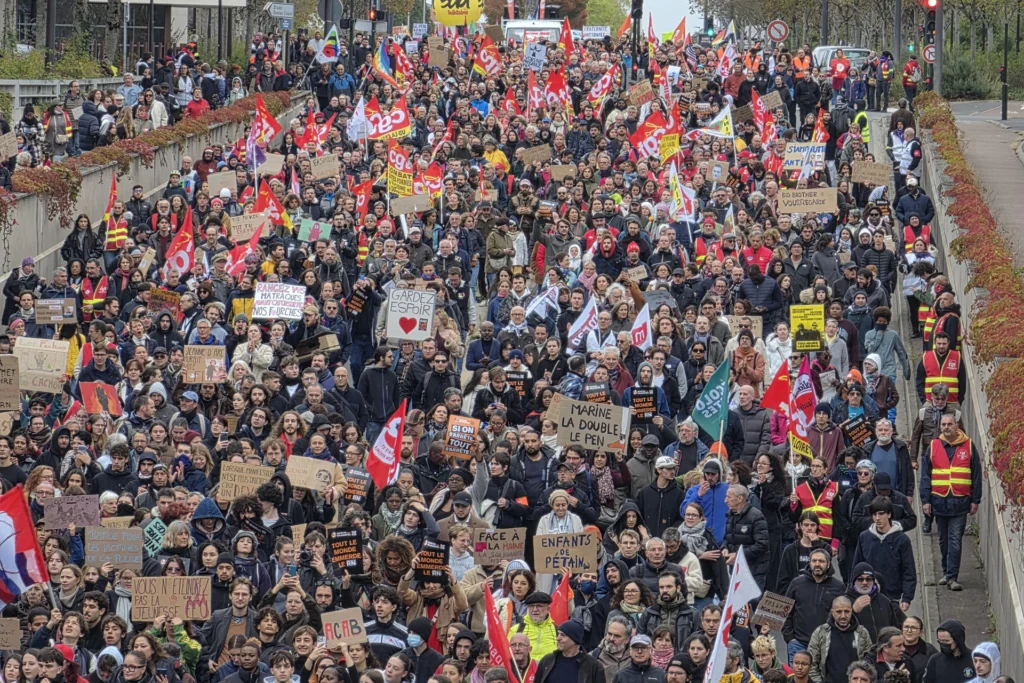
France has deployed 70,000 police officers and gendarmes ahead of nationwide demonstrations on Saturday, with authorities warning of a heightened risk of unrest after vandalism and looting damaged about 3,000 businesses the previous week.
Prime Minister Sébastien Lecornu warned late Friday that the threat remained high, particularly from radical far-left groups and criminal elements operating alongside demonstrations called by trade unions, students and the Yellow Vest movement.
Interior Minister Laurent Nuñez announced a large-scale security operation to prevent further violence and looting.
“We will show no mercy to looters and troublemakers,” Nuñez declared. He has faced criticism from the left over police tactics and from the right for failing to prevent the previous week’s unrest.
Authorities have banned gatherings in numerous cities and restricted the routes of other demonstrations on security grounds, prompting criticism from trade unions and human rights organizations.
In major cities, trade union demonstrations were authorized on Saturday only in Paris, Marseille, Strasbourg, Lille, Mulhouse, Grenoble, Toulouse and Amiens.
In Paris, a last-minute change to the union march’s route sparked a dispute between police officials and organizers. Authorities cited the heightened threat following a racist attack on the outskirts of the capital the previous day as they redirected the march from Place de la Nation to Place d’Italie, keeping it away from the city center.
Several museums in the capital, including the Louvre and the Musée d’Orsay, will remain closed, as will the nearby Palace of Versailles. A nighttime curfew in the areas around Place de la République and Les Halles will also remain in force until Monday.
Banks and businesses in central Paris were boarding up shopfronts and windows late Friday and early Saturday in anticipation of possible vandalism, according to observations by Spanish news agency EFE.
Security concerns also extend to Orléans, about 130 kilometers (81 miles) south of Paris, where the far-right National Rally (RN) is holding a congress to formally launch Marine Le Pen’s presidential candidacy, roughly six months before the election.
Authorities estimated that 11,000 people took part in a counter-demonstration in Orléans on Saturday against Le Pen’s party. Organized in opposition to racism, fascism and imperialism, the march proceeded peacefully in a festive atmosphere, according to EFE.
Photo: Orleans, France (October 24, 2026)
Protesters chanted slogans including “Macron resign, Le Pen to prison” and sang the French national anthem, La Marseillaise, as well as the Spanish-language protest song “The People United Will Never Be Defeated.”
Authorities deployed about 3,000 officers in Orléans to prevent clashes between demonstrators and attendees at the RN congress. The local prefecture authorized Saturday’s march but banned a separate demonstration planned for Sunday.
The security measures reflect the authorities’ efforts to prevent further disorder while allowing some demonstrations to proceed. Restrictions on public gatherings and the deployment of thousands of officers have shaped preparations for Saturday’s rallies across France.
Flooding in Paraguay and Argentina’s Corrientes province has inundated homes and damaged infrastructure, with further rises in water levels possible.
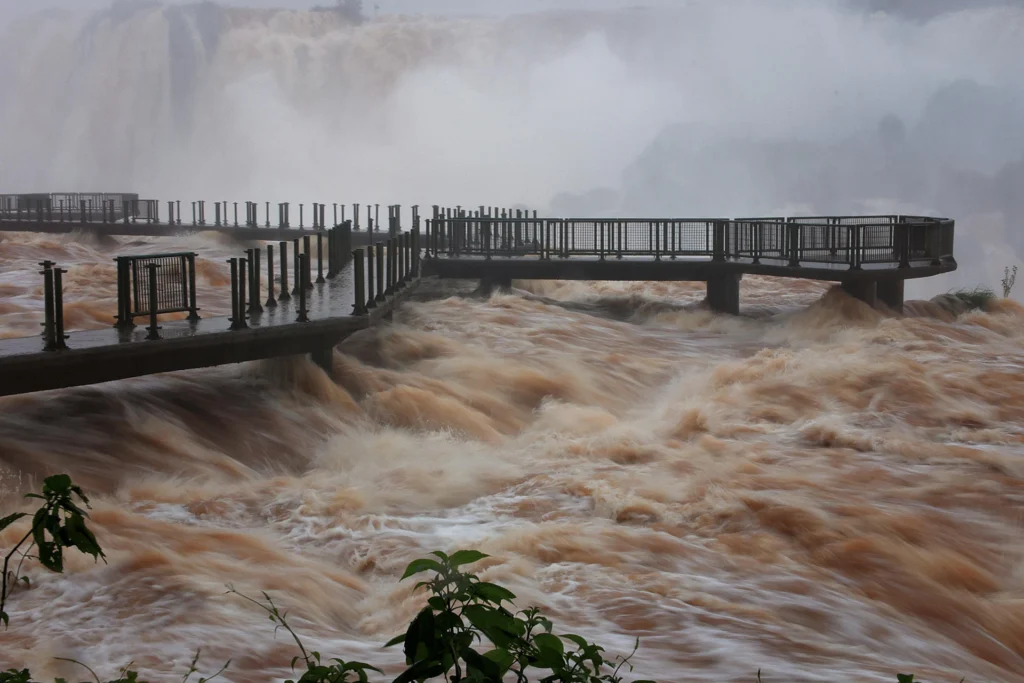
Flooding along the Paraná River has forced about 4,200 families to evacuate in eastern Paraguay and inundated neighborhoods in Argentina’s Corrientes province, as authorities warn that further rainfall could worsen conditions in the coming days.
Ciudad del Este, in Paraguay, is among the hardest-hit areas, with more than 1,000 households affected. In Argentina, a breached flood barrier in Paso de la Patria has sent water hundreds of meters inland, submerging streets and creating additional safety risks.
Heavy rainfall across the Paraná River basin has prompted civil protection agencies and local authorities in both countries to assist displaced residents, distribute sandbags and establish temporary shelters.
In Paraguay’s Alto Paraná department, the neighborhood of Remansito in Ciudad del Este has suffered severe flooding. Around 35 families involved in recycling were forced to leave their homes after their plots were inundated.
🌊 La crecida del río Paraná obligó a evacuar a unas 4.200 familias en el este de Paraguay. ⚠️ En Ciudad del Este hay más de 1.000 hogares damnificados y 35 familias del barrio Remansito debieron abandonar sus viviendas. #teleSUR#Paraguay#22Oct#AméricaLatina… pic.twitter.com/0TV9HiUCkP
Residents have blamed the rapid rise in water levels on the opening of floodgates at the Itaipu Binacional hydroelectric plant. The dam’s administration has rejected claims that the operation was the main cause of the flooding, saying the gates were opened in accordance with technical safety protocols for operational contingencies.
The emergency has also severely affected Paraguay’s Ñeembucú department, particularly the localities of Ayolas and Cerrito. Residents have organized community kitchens to provide food and basic supplies to evacuees.
Across the border, Paso de la Patria has become one of the most vulnerable areas in Corrientes province after an embankment near the Don Julián cabin area gave way. Water levels at the town’s port reached 7.79 meters.
The breach allowed floodwaters to advance as far as 300 meters inland, inundating the Los Pescadores, La Isla and Señoran neighborhoods, as well as areas around the Huajó stream.
The rising water has also submerged the Pinín Palma amphitheater and Isla de los Pájaros. The presence of potentially dangerous wildlife, including caimans, in residential areas has added to concerns over public safety. The flooding has also hit a town whose economy relies heavily on tourism and sport fishing.
Residents have described the difficulty of escaping the rising waters. Ismael Ali, who lives in Los Pescadores, said he was surrounded by floodwater with nowhere to go, while neighbors fled as best they could and tried to rescue their dogs.
Although the Paraná’s level in the Argentine sector fell by 40 centimeters on Friday, authorities warned that the decline might be temporary. Heavy storms continuing upstream in Brazil could cause water levels to rise by as much as another meter in the coming days.
Paraguay’s Directorate of Meteorology and Hydrology has forecast continued rainfall through the weekend, raising the risk of landslides. Municipal authorities and rescue teams in both countries are continuing to distribute sandbags, open temporary shelters and monitor riverside areas. Residents have been warned to remain alert for further rainfall and possible hail.
Ecuadorian opposition figure Luisa González faces pretrial detention over alleged money laundering in the Labyrinth case.
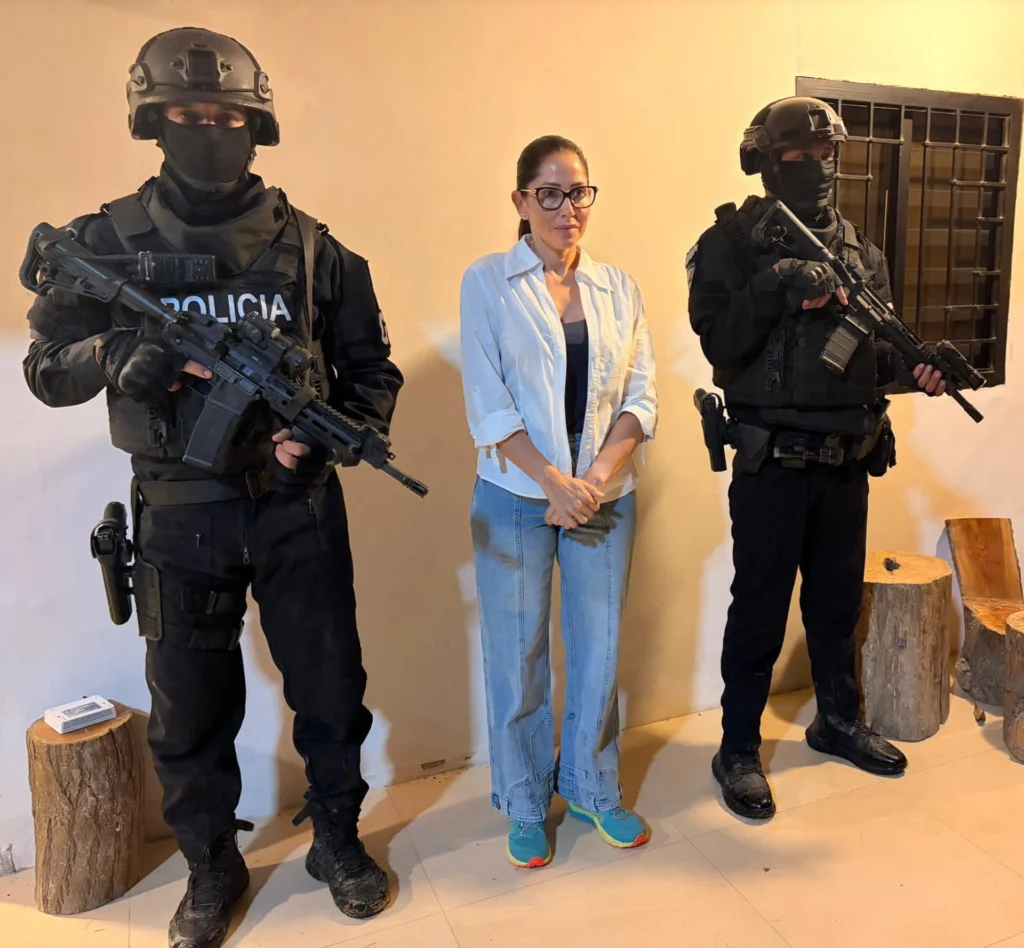
Ecuadorian opposition leader and former presidential candidate Luisa González was transferred to a prison in Riobamba on Friday night after a judge ordered her pretrial detention over alleged money laundering in the so-called Labyrinth case.
A convoy of National Police and Armed Forces personnel arrived outside the detention center in Riobamba, in Chimborazo province, shortly after 9 p.m. local time on Oct. 23. Prison authorities had not officially confirmed González’s admission to the women’s facility at the time of the report.
The transfer began shortly after 4 p.m. from the Modelo barracks in Guayaquil, where González had been taken following her arrest Thursday in Canuto, Manabí province. Police transported her to an air base before she boarded a flight that landed at Latacunga airport in Cotopaxi province at 7:30 p.m.
Although initial reports indicated that González would be held at a prison in Cotopaxi or Quito, police ultimately arranged for her to travel by road to Riobamba in a heavily guarded convoy accompanied by patrol cars and tactical units.
Text Reads: 🛬 Luisa González, former presidential candidate for the Citizen Revolution (Revolución Ciudadana) movement, arrived at Cotopaxi Airport under the escort of military and police personnel, hours after a judge ordered her pretrial detention. ⚖️ This measure relates to alleged money laundering, as part of the “Laberinto” (Labyrinth) case. González was taken into custody early Thursday morning following a raid on her home in Chone, Manabí. 🏛️ The State Attorney General’s Office maintained its request for pretrial detention, which also applies to former assembly member Santiago Díaz and Wendy Onofre, secretary of the RETO movement. 📌 These judicial actions are part of a broader agenda of political persecution being carried out by the administration of Daniel Noboa against opposition figures and leaders.
The use of air transport for part of the journey was intended to reduce public-order risks amid tensions at several prisons across Ecuador. Interior Minister John Reimberg directly linked the unrest to reactions to González’s arrest.
González, the former leader of the Citizen Revolution movement, has rejected the allegations against her. The movement and her associates denounced the pretrial detention order as an act of lawfare and political persecution.
In a statement posted on social media, González reaffirmed her innocence and declared that she would remain in Ecuador to face the judicial proceedings.
Supporters gathered outside the Riobamba prison to hold a vigil, carrying flags and banners behind a security barrier erected by uniformed personnel. Patricia Núñez, a member of the National Assembly representing Chimborazo province, joined the gathering.
The court also ordered pretrial detention for former lawmaker Santiago D. and Wendy Onofre, secretary of the RETO movement, in connection with the same case. Onofre voluntarily surrendered in Guayas province and was admitted shortly after 8 p.m. to the Pichincha No. 3 detention center in Chillogallo, southern Quito.
Another defendant, Estefanía M., was granted alternative measures for the 90-day investigation period, including regular reporting to authorities, a ban on leaving the country and electronic monitoring.
New York’s mayor outlines immigrants’ rights during encounters with ICE and pledges to protect the city’s immigrant communities.
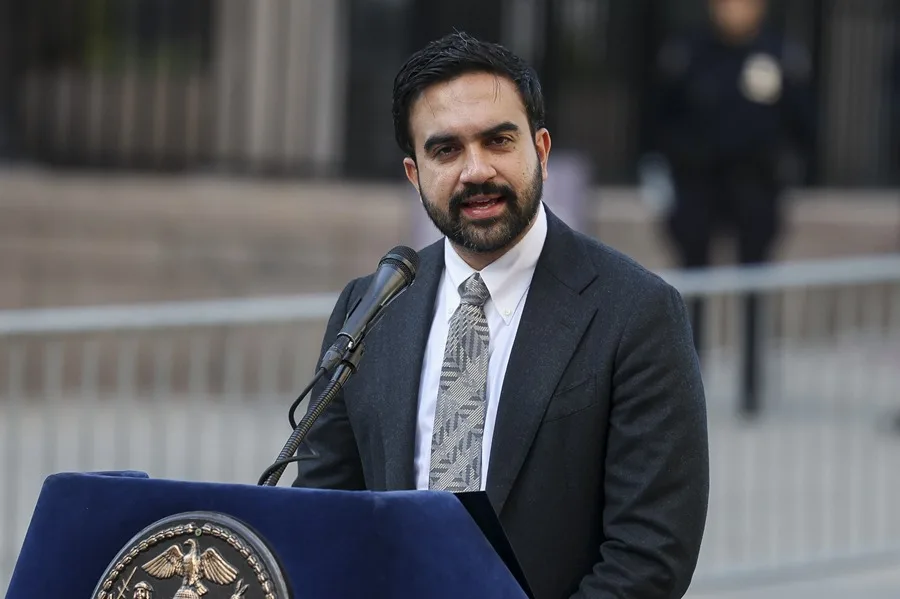
New York City Mayor Zohran Mamdani has released a Spanish-language video advising immigrants on how to respond to encounters with federal immigration agents, explaining their rights and directing residents to city-run assistance hotlines.
In the video, posted Friday on Instagram, Mamdani explains that Immigration and Customs Enforcement (ICE) agents cannot enter private spaces without a judicial warrant. He advises residents to ask agents to slide the warrant under the door so they can examine it.
Without a warrant, residents can refuse entry and keep the door closed, he says. The video also addresses encounters in public, reminding immigrants that they have the right to remain silent if stopped by ICE.
Mamdani advises residents to ask agents, “Am I free to go?” If the answer is yes, they can leave calmly. He also urges immigrants to consult a lawyer before signing any documents or making decisions about their immigration cases.
The mayor points viewers to two municipal assistance hotlines and reassures them that they are not alone.
“Another thing: the Constitution gives you the right to protest, and we will protect that right,” Mamdani says. “These are frightening times for many people, but as your mayor, I will fight every day to protect, support and celebrate our communities.”
Since taking office in January, Mamdani has pledged to uphold New York’s sanctuary-city policies, which limit cooperation between municipal authorities and federal immigration enforcement. He has also vowed to protect immigrant residents amid U.S. President Donald Trump’s mass deportation policy during his second term.

 Login