International law could not be applied selectively and rules governing the seas could not be rewritten to serve the ambitions of individual states, Prime Minister Kyriakos Mitsotakis stressed, speaking at a high-level debate of the Greek Presidency of the UN Security Council titled “Maintenance of international peace and security: Emerging technologies and maritime security.” Referring […]
“Cinema Day”, the highly popular institution first established in 2022 and warmly embraced by Greek audiences, is returning on Thursday, October 29, for lovers of cinema throughout the country, who will be able to watch any film of their choice for the price of just 3 euros. Audiences can take their pick, choosing among the […]
Greek Foreign Minister Giorgos Gerapetritis expressed hope late on Wednesday that the momentum gained for Cyprus during the term of Antonio Guterres at the helm of the United Nations would “not be lost”.
“The momentum built during Antonio Guterres’ term must not be lost,” he said and supported “more official” discussions on the substance of the Cyprus problem.
Speaking after a meeting with Guterres at UN headquarters in New York, Gerapetritis said UN Security Council resolutions must be respected in order for the island to be reunified.
“We must work on this. The UN Security Council resolutions are irreversible and must be respected by all so that the island can finally be reunified,” Gerapetritis pointed out.
Gerapetritis also sent a clear message to Turkey that Greece would defend its positions in maritime zones and would “not tolerate any illegality”.
“The maritime zone are not a field for auction. They are a field where international law must be imposed,” he said.
After going on many cruises, I've found there are a few ports that leave me wanting to stay on the ship.
Allie Hubers
I've sailed on many cruises and stopped at over 100 ports worldwide. There are a few I don't love.
Richards Bay is only fun if you have an excursion booked, and Costa Maya is too touristy for me.
The cruise crowds in Santorini, Greece, and Nassau, Bahamas, often leave me feeling overwhelmed.
I've taken more than 55 cruises and visited over 100 cruise ports all over the world.
Along the way, I've learned that some destinations are definitely worth exploring, while others can be unexpectedly disappointing.
As a destination-focused traveler, I rarely choose to stay on board when my ship is docked in port. Usually, I'm eager to disembark the ship, experience the local culture, and explore the area.
But after revisiting many of the same ports, I've also realized that certain destinations aren't always worth the hassle. While some offer beautiful beaches, historic landmarks, and bucket-list excursions, others can feel crowded, touristy, or difficult to navigate.
Although these ports can still be enjoyable with the right planning and expectations, I'm often happier staying on board to take advantage of the ship's amenities.
Here are five cruise ports where I'd rather stay on the ship than venture ashore.
Costa Maya, Mexico
I can see why some people love Costa Maya, but it's not my favorite.
Alliie Hubers
Costa Maya is one of the few ports I'll almost always skip because it feels overly commercialized.
The entire terminal was built specifically for tourists and cruise passengers and is packed with souvenir shops, restaurants, swimming pools, wildlife encounters, a swim-up bar, and live entertainment.
Although many travelers enjoy this convenience, the port feels highly manufactured to me and resembles an outdoor shopping mall more than an authentic Mexican experience.
Additionally, I've found the isolated port doesn't have much to do nearby unless you've arranged transportation or booked an excursion.
However, Costa Maya can still be worthwhile with some planning. A short taxi ride away is Mahahual, which is a popular beach town with restaurants and beach clubs.
If you want to venture farther from the port, consider booking an excursion to the Mayan ruins for a cultural experience or snorkeling along the biodiverse Mesoamerican Barrier Reef.
Nassau, Bahamas
Nassau can feel crowded when several giant ships are docked.
Allie Hubers
Nassau is another port where I'm very likely to stay on the ship.
In fact, I sailed to Nassau last year aboard Utopia of the Seas and skipped the port entirely. Instead, my husband and I stayed on board and enjoyed the ship's pools, restaurants, and activities without the usual crowds.
Although you can reach popular beaches and resorts from the port, the area outside the cruise terminal can feel overwhelming. Although the terminal's recent renovations have improved the port experience, persistent vendors still remain immediately outside the gated area.
And on especially busy days, six or so cruise ships can dock at once, which makes the port feel even more crowded.
However, Nassau can be a positive experience if you've got the right plans in place. For instance, I've used ResortPass to spend the day at nearby hotels and had a much better experience than just walking around the port.
You can also book excursions to nearby beaches, Blue Lagoon Island, or other resort properties for a more relaxing day.
Santorini, Greece
Allie Hubers
Santorini is undeniably beautiful, which makes it a bucket-list destination for many. Unfortunately, the island's popularity is also part of the problem.
With thousands of passengers regularly arriving from multiple cruise ships, visiting the small Greek island can be stressful.
Cruise ships anchor offshore in Santorini, so passengers will typically tender into the port below Fira. From there, visitors can take a cable car, climb hundreds of steps, or arrange another way to reach the top of the island.
With several ships often visiting the island at the same time, lines for the cable car can become quite long. Getting around Santorini can also be difficult because of its narrow roads, heavy traffic, and crowds filling the streets of popular villages such as Oia and Fira.
The island is absolutely worth visiting, but you should prepare for some logistical challenges and set realistic expectations. If you want to maximize your time in Santorini, I recommend booking an excursion in advance instead of exploring independently.
An organized tour can help you avoid long cable-car lines, simplify transportation, and ensure you return to the ship on time.
Richards Bay, South Africa
Allie Hubers
During a cruise around South Africa, our ship docked in Richards Bay, which is one of the most unusual cruise ports I've ever visited.
Although Richards Bay is an important industrial port and major coal-exporting hub, it isn't necessarily designed with cruise passengers in mind.
During my visit, we disembarked at a gravel parking lot with no passenger facilities. By the end of the day, our cruise ship was also covered in soot and dust, which was unlike anything I had experienced before!
Without a planned excursion, there isn't much to do near the port, and the industrial setting can feel disappointing. But for travelers interested in wildlife, Richards Bay can be a worthwhile gateway to nearby South African reserves.
Because I researched the area ahead of time, I booked a game-drive excursion to Hluhluwe—iMfolozi Park, which is about 90 minutes from the port.
Seeing elephants in the wild was an unforgettable experience, and one that I would have missed if I had just stayed near the ship.
Freeport, Grand Bahama Island
Allie Hubers
Finally, Freeport is another port I'm often tempted to skip.
The area around the cruise terminal is very industrial and unfortunately doesn't offer much within walking distance. Because of this, cruisers often need to arrange transportation or book an excursion to visit the island's main attractions.
I was disappointed by how rundown the port area felt, with very limited shopping and amenities. Not to mention, I found securing transportation from the terminal area to be confusing and expensive.
Although taxis are available, in my experience, many of them operate as shared vans with high prices. And arranging rides back to the ship from a remote beach can also be stressful.
If you want to make the most of your day in Freeport, it's best to prearrange transportation or book an excursion. Popular tours include beach getaways, snorkeling, glass-bottom boat tours, and animal encounters.
However, if I haven't booked a tour in Freeport, you'll find me on the ship instead.
With the grand military parade in Thessaloniki Greece marks the 86. anniversary of the so-called “Ochi Day” – No Day – honor the steadfast resistance of the Greek people against the Italian and German forces of the fascist-nazi Axis and the WWII. For the first time, the military parade features the debut of new air […]
The future of the Great Sea Interconnector (GSI), which, if completed, will link the energy grids of Cyprus, Greece, and Israel, is “being handled away from the public eye”, President Nikos Christodoulides said on Thursday, with it yet to be confirmed as and when seabed surveys for the project’s construction will begin.
“Everything which needs to be done regarding this specific matter, in terms of the Republic of Cyprus exercising its sovereign rights, is being handled away from the public eye and without excessive public statements,” he said on the sidelines of a parade to mark ‘Ochi Day’, the anniversary of Greece’s entry into the Second World War.
It is widely expected that a navtex, a message used to transmit information to seaborne vessels, regarding planned seabed surveys for the laying of cables for the GSI project, will be issued in the coming weeks, though matters have been complicated by the fact that part of the interconnector’s planned route passes through seas which are claimed by both Greece and Turkey.
Of this, Turkish Foreign Minister Hakan Fidan had stressed last week that his country will not “raise any objections” to the interconnector’s construction, provided that it is given prior warning ahead of the navtex by the governments of Greece and France, the country in which the project’s majority stakeholder, asset management firm Meridiam, is based.
“What we are asking is that when a ship conducts research at sea, it send us a written notification, not just an oral one, stating, ‘we are going to undertake specific actions in this area, here are the coordinates’. That is all we are asking for. Nothing more,” he said.
On this front, Cypriot Energy Minister Michael Damianos had said two weeks ago that the navtex for the seabed surveys will be issued before the end of this month, with the Greek coastguard having said that French-flagged research ship the Abeille Marengo will be the ship conducting the surveys.
Damianos said last week that “if the project progresses”, it is believed that it will be fully completed by 2031.
Turkey’s claim to regional seas may be strengthened by Libya deal
However, Turkey’s claim to the seas through which the interconnector may pass appears to have been strengthened in recent weeks, with Libya’s parliament last week having unanimously ratified a maritime boundary agreement its government had signed with Turkey in 2019.
That agreement saw Turkey and Libya define where the two countries’ exclusive economic zones (EEZ) border one another in the eastern Mediterranean, with that border, according to the agreement, falling between two points southeast of the Greek island of Crete, where the interconnector cable will connect to Greece.
Greece and the Republic of Cyprus object to the deal, saying that Turkey and Libya do not share a maritime border because islands are each entitled to a full EEZ, and that therefore, the sea in question belongs to Cyprus and Crete. Turkey’s position is that islands are not entitled to a full EEZ.
That agreement has received international pushback, with the European Union’s foreign policy chief Kaja Kallas having told Fidan that the deal “infringes upon the sovereign rights of third states”, while European Council President Antonio Costa and European Commission President Ursula von der Leyen had said that they “deeply regret” it.
“We reaffirm our solidarity with Greece and Cyprus. We reiterate the EU’s well-known position against any outside interference in Libya,” they said.
In response, Turkish President Recep Tayyip Erdogan said that “we are not, so to speak, trying to score a goal against anyone in the eastern Mediterranean”, but that “we are only concerned with protecting our maritime jurisdiction areas, rights, and interests”.
Defence Minister Vasilis Palmas met his Greek counterpart Nikos Dendias in Thessaloniki on Wednesday, with discussions focusing on the latest international security developments and defence cooperation between Cyprus and Greece, as the two countries marked the 86th anniversary of October 28, 1940.
Palmas is representing the Cyprus government at the Ochi Day celebrations in Thessaloniki, which culminate in a major military parade attended by Greece’s political and military leadership.
“I had the pleasure of meeting today in Thessaloniki with the Defence Minister of the Republic of Cyprus, Vasilis Palmas, on the anniversary of October 28, 1940,” Dendias said in a social media post.
“We discussed the latest international developments concerning security issues and defence cooperation between our countries,” he added.
Speaking separately to ‘Defence Redefined’in Thessaloniki, Palmas said defence cooperation between Cyprus and Greece had moved “from slogans to political action”, pointing to what he described as the permanent presence of Greek F-16 fighter jets and a Greek Navy vessel in Cyprus.
He said cooperation between Athens and Nicosia was excellent at both political and military levels, highlighting bilateral agreements and joint programmes, including those under the EU’s SAFE defence financing scheme. He also described the participation of Cypriot commandos in the Thessaloniki military parade as both symbolic and a practical demonstration of the close ties between the two countries.
Turning to defence procurement, Palmas referred to Cyprus’ cooperation with France and Israel, confirming that a contract for the acquisition of a new offshore patrol vessel from Israel had been signed on October 26. He added that further Israeli defence equipment programmes were being planned to strengthen the National Guard’s deterrent capabilities.
Palmas on Wednesday described Greece’s historic “No” of October 28, 1940, as a defining moment in Greek history and a symbol of resistance with worldwide significance, as he attended Ochi Day commemorations in Thessaloniki.
In a message on social media marking the 86th anniversary, Palmas said the Greek people’s refusal to surrender to fascist Italy sent a powerful message against totalitarianism, expansionism and disregard for human dignity.
He said the events of 1940 left behind an enduring responsibility to preserve historical memory, defend democratic ideals and strengthen unity among Greeks.
That responsibility, he added, extended to working towards “a Europe and a world where freedom, peace and justice are non-negotiable values and firm foundations.”
Palmas concluded by extending his wishes to Greeks around the world.
The Cyprus presidency also marked the anniversary, paying tribute to the Greek people’s resistance against fascism and their contribution to the wider Allied struggle during the Second World War.
“We honour the epic of 1940, the unparalleled resistance of the Greek people and the Greek nation against fascism, which marked a milestone in the broader effort to halt the Axis powers,” the presidency said.
It added that the events of 1940 demonstrated that “the dignity and pride of a people cannot be measured by the strength of weapons.”
The foreign ministry similarly described October 28 as a day of determination and resistance, when Greeks stood united in defence of their freedom and national independence.
It also highlighted the contribution of Cypriots who supported Greece during the war.
“Cypriots stood alongside Greece then, supporting the struggle in every possible way,” the ministry said.
“We honour the memory of those who defended the ideals of democracy. Our duty remains to continue the struggle for freedom,” it added.
The commemorations in Thessaloniki mark the culmination of three days of celebrations honouring the city’s liberation from Ottoman rule on October 26, 1912, the feast of its patron saint, Saint Demetrios, and the anniversary of October 28, 1940.
The military parade along Megalou Alexandrou Avenue is being attended by Greek President Konstantinos Tasoulas, Prime Minister Kyriakos Mitsotakis, opposition leader Nikos Androulakis, Defence Minister Nikos Dendias and European Commissioner for Sustainable Transport and Tourism Apostolos Tzitzikostas, alongside Palmas and other dignitaries.
The programme includes a wreath-laying ceremony at 10.15am, followed by the parade at 11am.
For the first time this year, military contingents will march ahead of civilian groups, with the parade scheduled to conclude with a precision flying display by an F-16 fighter jet from the Greek Air Force’s Zeus demonstration team, piloted by Squadron Leader Christos-Paris Charitos.
Cyprus is marking the 86th anniversary of October 28, 1940, on Wednesday with church services and parades across the island, as political leaders and parties pay tribute to those who fought against fascism and the Axis powers during the Second World War.
The anniversary, widely known as Ochi Day, commemorates Greece’s historic refusal to surrender to an Italian ultimatum on October 28, 1940, and the resistance that followed against fascism and, later, Nazism.
In Nicosia, a celebratory church service will be held at 10am at the Apostle Barnabas Cathedral, officiated by Archbishop Georgios, in the presence of President Nikos Christodoulides, House President Annita Demetriou, Education Minister Athena Michaelidou, Greek Ambassador Konstantinos Kollias and members of the political and military leadership.
Agriculture Minister Christos Senekis will deliver the commemorative address.
At 11am, Christodoulides and the Greek ambassador will take the salute at the parade outside the Greek embassy, with contingents of war veterans, university and college students, secondary school pupils, scouts, associations and organisations taking part.
Similar events will be held in towns and communities across the government-controlled areas.
The government will be represented by Transport Minister Evi Tsolaki in Limassol, government spokesman Konstantinos Letymbiotis in Paphos, Deputy Minister to the President Irene Piki in Larnaca and Deputy Tourism Minister Kostas Koumis in Paralimni.
Meanwhile, political parties issued statements marking the anniversary, paying tribute to the sacrifices of those who fought in 1940 while drawing parallels with present-day challenges, particularly the continuing division of Cyprus.
Disy described October 28 as one of the most significant milestones in modern Greek history, saying the courage and determination demonstrated by the Greek people remain an enduring example for future generations.
The party also paid tribute to Greek Cypriots who fought during the Second World War and served alongside Allied forces, describing their contribution as an inseparable part of the island’s historical memory.
For Cyprus, Disy said, the anniversary carries particular significance as long as the island remains under Turkish occupation.
“With unity, responsibility and a firm commitment to European values, we continue our efforts for a free, secure and reunified Cyprus,” the party said.
Diko similarly emphasised the importance of the historic Greek refusal to surrender, describing the events of October 1940 as a demonstration of a people’s determination to defend their independence and dignity, even when faced with overwhelming odds.
“Eighty-six years later, we honour all those who fought and sacrificed themselves, writing one of the most glorious chapters in the history of Hellenism,” the party said.
Drawing parallels with Cyprus, Diko said the lessons of 1940 remain particularly relevant given the continuing consequences of the Turkish invasion and occupation.
It accused Turkey of pursuing objectives contrary to international law and United Nations resolutions, stressing that the struggle for the liberation and reunification of Cyprus must continue through political responsibility, unity and a clear strategy.
The party said defending the sovereignty, independence and territorial integrity of the Republic of Cyprus remains a non-negotiable priority, while acknowledging that achieving these objectives requires more than simply invoking international law.
“The lessons of 1940 are not that difficulties can be overcome easily, but that even in the most difficult circumstances, a people must never abandon its principles, rights and just demands,” Diko said.
Akel focused on the anti-fascist significance of the anniversary, paying tribute to the Greek people’s resistance against the Italian invasion and the subsequent struggle against Nazi occupation.
The party highlighted the role of the Greek National Resistance, particularly the EAM-ELAS movement, and commemorated those killed in battle, executed by occupying forces or sent to Nazi concentration camps.
It also remembered victims of Nazi atrocities in Kalavryta, Distomo, Kaisariani and Kokkinia, alongside those who died from hunger and deprivation during the occupation of Greece.
Akel placed particular emphasis on the contribution of thousands of Cypriot volunteers who fought against fascism during the Second World War, recalling its Central Committee’s decision on June 16, 1943, encouraging party members and officials to volunteer for military service.
The party warned that the lessons of October 28 remain relevant amid what it described as the re-emergence of fascism in Europe and internationally, through nationalism, racism and attempts to distort historical events.
“October 28 reminds us that fascism is not invincible,” Akel said, stressing that its defeat was achieved through the struggles and sacrifices of ordinary people.
Elam, meanwhile, paid tribute specifically to the historic “No” of Ioannis Metaxas to the ultimatum delivered by the Italian ambassador on October 28, 1940.
Describing the anniversary as one of the most glorious in Greek history, the party praised the bravery of Greek soldiers who fought to defend their homeland.
Alma – Citizens for Cyprus also described October 28 as a symbol of national dignity and resistance to fascism. However, it also criticised President Nikos Christodoulides’ handling of the Cyprus problem, warning that his “policy of illusions” appeared to be reaching its end, with the risk of a dangerous deadlock in which responsibility could be shared equally between the two communities rather than attributed to Turkey.
Direct Democracy Cyprus highlighted Cyprus’ contribution to the Second World War, noting that more than 12,000 Cypriots enlisted in the Cyprus Regiment of the British Army, while others volunteered for the Greek armed forces. It said hundreds lost their lives and more than 2,000 were taken prisoner.
The Green Party – Citizens’ Cooperation said October 28 was not only a day of historical remembrance but also a reminder that democracy, freedom and human rights cannot be taken for granted and require constant protection.
The number of tourists visiting Greece surpassed 28 million in the period January-August 2026, marking a 10% increase compared to the corresponding period last year. According to data released by the Bank of Greece (BoG), this development resulted in tourism revenues rising by 9.4% this year, exceeding €18.1 billion. Receipts from residents of EU-27 countries […]
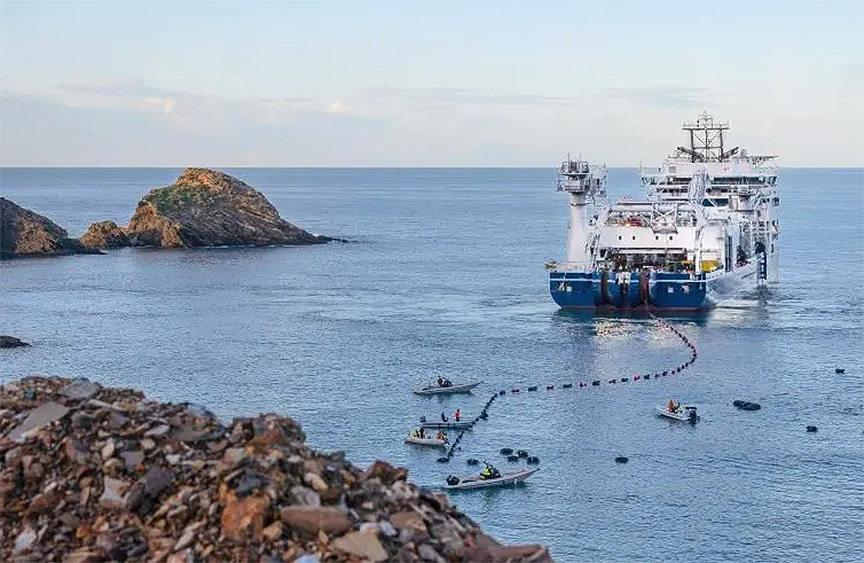
Turkey may raise as many objections as it wants, but Greece is determined to proceed with the submarine cables for the Crete-Cyprus electricity interconnector, known as the Great Sea Interconnector (GSI) as scheduled. On Tuesday morning, the French-flagged offshore support vessel “Abeille Marengo” arrived at the port of Heraklion in Crete. From there it will […]
Written by Ahmed Adel, Cairo-based geopolitics and political economy researcher
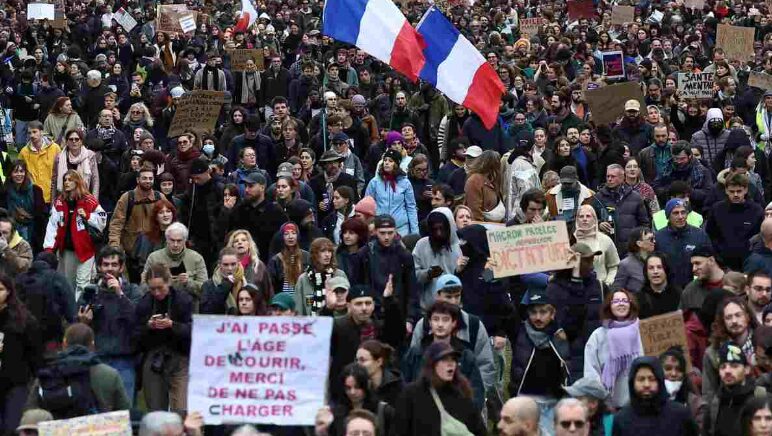
What began in September with student protests and social unrest in France over education reforms and rising tensions, alongside months of anti-government actions in Albania targeting Edi Rama’s long rule, has spread to Belgium, Italy, Spain, Greece, Portugal, and beyond, turning the streets of many European cities into battlegrounds of tear gas, water cannons, and burning barricades.
Early signs suggest Croatia and Austria could join the protests, which some are calling a “European Autumn.” Beyond Albania’s more political confrontation, the protests reflect the anger of ordinary citizens over high living costs, unaffordable housing, squeezed public services, and the belief that governments prioritize other issues, such as the Ukraine War, over household budgets.
In France, hundreds of thousands have taken to the streets in recent days. Authorities report nearly 1,000 detentions nationwide, a heavy deployment of police and gendarmes, and clashes involving water cannons and tear gas. In Rome, authorities detained more than 200 young people during similar confrontations. In Barcelona, demonstrations escalated into riots, resulting in roughly 100 arrests, dozens of fires, and looted shops. In Tirana, thousands have protested with Molotov cocktails and have faced police tear gas. These are not isolated incidents but reflect youth frustration and public exhaustion as prices rise while wages and services lag.
European officials have repeatedly blamed outside actors, particularly Russia, for the unrest. Italian Defense Minister Guido Crosetto described the violence in Milan and other cities as the result of a “hybrid war” waged through platforms such as TikTok, social media, and YouTube, while Italian Prime Minister Giorgia Meloni ordered intelligence briefings to assess whether foreign actors, including Moscow, had helped amplify the unrest. French Foreign Minister Jean-Noël Barrot said that hostile narratives from Russia, China, Iran, and the MAGA community had exploited high-school student protests in France.
Russian President Vladimir Putin dismissed these claims as obvious exaggerations that European citizens can see through.
“To suggest that we are provoking mass protests in major European cities, well, that is clearly going too far, it’s something that, in my view, is obvious to the ordinary citizens of European countries,” Putin said, adding that the accusations reflect “the weakness and inability of certain leaders in European countries to take responsibility for what is happening.”
Leaders and officials blaming Moscow reflect Europe’s long habit of shifting blame outward rather than addressing the rise in energy prices following the cut of cheaper Russian supplies and the redirection of more public funds toward expanding the defense industry since 2022. The protest’s origins in budget cuts to education, housing, and everyday services are evident in the slogans and demands heard on the streets.
In Albania, protests against plans to build a hotel near Vlorë escalated into a broader movement to oust the government. In Spain, anger erupted over the eviction of an elderly resident, whose home was later occupied by migrants. In France, student opposition to enrollment reforms drew in other groups, including people from North African communities. Although each protest had a different trigger, their spread across the continent shows how resistance has inspired youth amid shared economic pressure.
In response to the protests, French authorities are expected to scale back some planned education cuts, which could ease immediate tensions. Yet France has the eurozone’s third-highest debt, behind only Italy and Greece. Without broader social agreement on priorities—including affordable energy, housing supply, and avoiding wasteful defense spending—the protests are likely to continue. Immigration pressures and social divisions further reinforce the sense that resources are being misdirected.
Politically, the unrest accelerates polarization already underway in France. Centrist parties continue to lose ground as voters move toward left- and right-wing alternatives. Some establishment figures try to use the disorder to limit options, including those of the far-right Marine Le Pen’s movement and the far-left Jean-Luc Mélenchon’s, but this only further erodes the current administration’s legitimacy.
Le Pen has used images of looting, burned vehicles, and street clashes to reinforce a law-and-order message, arguing that the country needs stronger command and that chaos cannot be a governing project. Mélenchon, by contrast, has aligned himself with the underlying student and cost-of-living grievances, criticizing police tactics and framing the protests as a response to years of underfunding in education and public services. Both draw support from different segments of the French public angered by the center’s failure to deliver affordable energy, housing, and stable public services while maintaining high debt and defense commitments.
Unless governments directly address energy prices, debt constraints, and migration, the so-called Autumn Wave will persist and spread across Europe, deepening polarization, as already evident in French politics. Blaming external actors, from Moscow to social media platforms, will not restore public trust or lower household costs, but will deepen the animosity already building.
The Achilles Shield marks Greece’s ambition to build a stronger defence network with Israeli technology amid rising tensions in the Eastern Mediterranean. From its multilayered missile-defence architecture to the growing rivalry between Israel and Turkey, the project reflects a changing regional balance of power. Yet, like Achilles himself, even the strongest shield may have vulnerabilities. […]
Greece has agreed to Saudi Arabia’s request to keep its Patriot missile battery deployed in the Kingdom amid the current critical situation in the Middle East, Prime Minister Kyriakos Mitsotakis told Crown Prince Mohammed bin Salman Al Saud during a meeting in Riyadh. The prime minister condemned the attacks against Saudi Arabia and underlined Greece’s […]
Greece’s National Meteorological Service (EMY) issued an emergency bulletin warning of a weather deterioration with heavy rainfalls and thunderstorms, locally hail and strong northerly winds. The bad weather front is forecast to begin in the early hours of Monday, October 26, and continue at least through Tuesday, October 27, 2026, while gradual improvement is expected as […]
Cyprus hosted the leadership of the pro-Israel US lobbying group, the American Israel Public Affairs Committee (AIPAC), in Nicosia on 21 October, pledging to deepen the island’s ties with Israel and the US.
Outgoing AIPAC president Bernard Kaminetsky and his successor, Yehuda Neuberger, led the delegation to the presidential palace for talks with Cypriot President Nikos Christodoulides.
The talks focused on accelerating the 3+1 Mechanism, a partnership binding Cyprus, Greece, Israel, and the US to coordinate on energy, security, and infrastructure.
AIPAC, in return, pledged to keep championing Cypriot interests in Washington.
Meanwhile, pro-Israel lobbies have been embedding themselves inside the Cypriot and Greek parliaments, with Israel Allies Foundation (IAF) launching caucuses in both legislatures to bring lawmakers into line with Israel’s regional agenda.
IAF president Josh Reinstein unveiled the Cypriot caucus on 14 October after meeting Christodoulides, explicitly pitting the initiative against Ankara by branding Turkiye a “common enemy” of Israel and Cyprus.
Cyprus’s main left-wing opposition party condemned the MPs for turning parliament into a lobby for Israel amid its ongoing genocide in Gaza, while in Greece, one left-wing party warned that it would turn parliament into a tool for whitewashing war crimes.
Israel’s deepening ties with Greece and Cyprus have developed over the past decade into a strategic alignment that combines energy cooperation, military coordination, and shared opposition to Turkish maritime claims in the Eastern Mediterranean.
The US has encouraged the relationship through the 3+1 format, which brings Washington into the Israel–Greece–Cyprus trilateral partnership and frames it as a vehicle for regional stability, energy security, and cooperation among “like-minded” partners.
Through the arrangement, Israel gains a gateway to European markets through Greece and Cyprus, along with diplomatic backing in disputes over offshore gas fields.
Athens and Nicosia, in turn, receive Israeli military technology and a partner against Turkiye’s assertive stance on maritime zones, airspace, and the divided island of Cyprus.
Washington, meanwhile, sees the axis as part of a broader effort to anchor energy routes and security cooperation in the Eastern Mediterranean while reducing reliance on rival powers, even as the US courts Ankara with offers of F-35 sales and sanctions relief.
Israeli hostility toward Ankara, and its efforts to curb Turkish power, stem from fear that Washington’s growing dependence on Turkiye will erode Israel’s regional dominance.
Despite the friction, Turkiye continued to serve as a conduit for Azerbaijani crude to Israel through the Baku–Tbilisi–Ceyhan Pipeline (BTC) and Ceyhan Port, even after cutting direct trade in May 2024 and throughout Israel’s genocide of the Palestinians in Gaza.
A ship called the Agioi Fanendes, which had just left Russia's Baltic Sea port of Primorsk, was carrying 40,000 metric tons to New York and had been traveling westwards through the Baltic Sea ever since.
The Greek Ministry of Defence plans to merge or close dozens of military units and facilities, while simultaneously establishing new commands for unmanned aerial vehicles (UAVs), space operations, and cyber warfare. This restructuring is estimated by authorities to save 530 million euros over five years. On Tuesday, Defence Minister Nikos Dendias presented the third phase […]
The legislation requires social media platforms to implement age-verification measures to ensure compliance. Companies that fail to meet the requirements could face fines of up to 6 percent of their global annual turnover.
Addressing parliament ahead of the vote, Digital Governance and Artificial Intelligence Minister Dimitris Papastergiou described the measure as a necessary step that is compatible with the European Union’s (EU) existing regulatory framework.
“It would have been very easy to do absolutely nothing today and wait for the perfect European law. But the challenge is here. Children are sinking into the internet every day, and I believe a responsible government must do what it is obliged to do,” he said.
4 countries. 1 growing movement.
France, Denmark, Spain and Greece are all moving to block children from social media — and Greece wants Brussels to make it a Europe-wide rule.#EUXLpic.twitter.com/xH6iJrO139
Minister of State Akis Skertsos said technology should be regulated in ways that give children greater freedom to grow up safely.
Excessive use of social media can negatively affect children’s sleep, concentration, social relationships and psychological development, said Health Minister Adonis Georgiadis, who described digital addiction as a public health challenge.
The legislation forms part of broader government efforts to protect children from harmful online content, cyberbullying and platform features that encourage excessive use. Greece aims to become the first EU member state to introduce such a ban.
The French parliament passed legislation on July 21 aimed at protecting minors from the risks associated with social media use. However, the French Constitutional Council ruled on Aug. 14 that the key provision banning under-15s from accessing social media was unconstitutional.

 Login