❌

Reading view

Patrick Stewart, Star Trek actor and acclaimed thespian, dies aged 86

Star Trek: the Next Generation and X-Men actor died at his home after ‘a brief and poignant journey with Alzheimer’s disease and Lewy body dementia’

Patrick Stewart, the acclaimed British stage and screen actor renowned for both Shakespeare and sci-fi, has died. He was 86.

The Star Trek: the Next Generation and X-Men star died on Wednesday at his home in Los Angeles after “a brief and poignant journey with Alzheimer’s disease and Lewy body dementia”, said Kelly Bush Novak, his longtime spokesperson, to the Hollywood Reporter.

Continue reading...

© Photograph: Philip Cheung/The Guardian

© Photograph: Philip Cheung/The Guardian

© Photograph: Philip Cheung/The Guardian

  •  

“The enemy has changed tactics”: Zaporizhzhia faces record number of Russian FPV drone attacks, hitting public transport 3 times in one day

Municipal bus in Zaporizhzhia hit by a Russian FPV drone, 29 October 2026. Photo: Zaporizhzhia Regional Prosecutor’s Office

Zaporizhzhia experienced a record number of Russian FPV drone attacks on 29 October, injuring 14 people, including a 14-year-old boy, regional authorities said.

Russian forces used FPV drones and multiple-launch rocket systems to attack civilian infrastructure, targeting municipal transport and damaging residential buildings, warehouses, and cars, prosecutors said.

Zaporizhzhia reports record FPV drone attacks

Zaporizhzhia Regional Military Administration head Mykhailo Semikin said Zaporizhzhia had experienced a record number of FPV drone attacks on Thursday. After meeting with military officials, he said the authorities were aware of the situation and relevant services and Ukrainian defenders were responding.

He said Russian forces had “changed their tactics and modified their drones,” adding that Ukrainian military personnel were working on countermeasures to address the new threats.

Semikin urged residents to remain calm, heed air raid alerts, and exercise particular caution.

Russian forces launched a record number of FPV drone attacks on Zaporizhzhia on 29 October, repeatedly targeting civilian public transport.

Drones struck a municipal bus, a minibus, and a trolleybus. Four people were injured in the bus attack alone. Across the city, at least 14… pic.twitter.com/WfemZSh7yr

— Euromaidan Press (@EuromaidanPress) October 29, 2026

Russian drones target municipal transport

The attacks included strikes on a municipal bus, a minibus, and a trolleybus, according to Semikin.

In the morning, a Russian FPV drone struck a municipal bus, injuring four people.

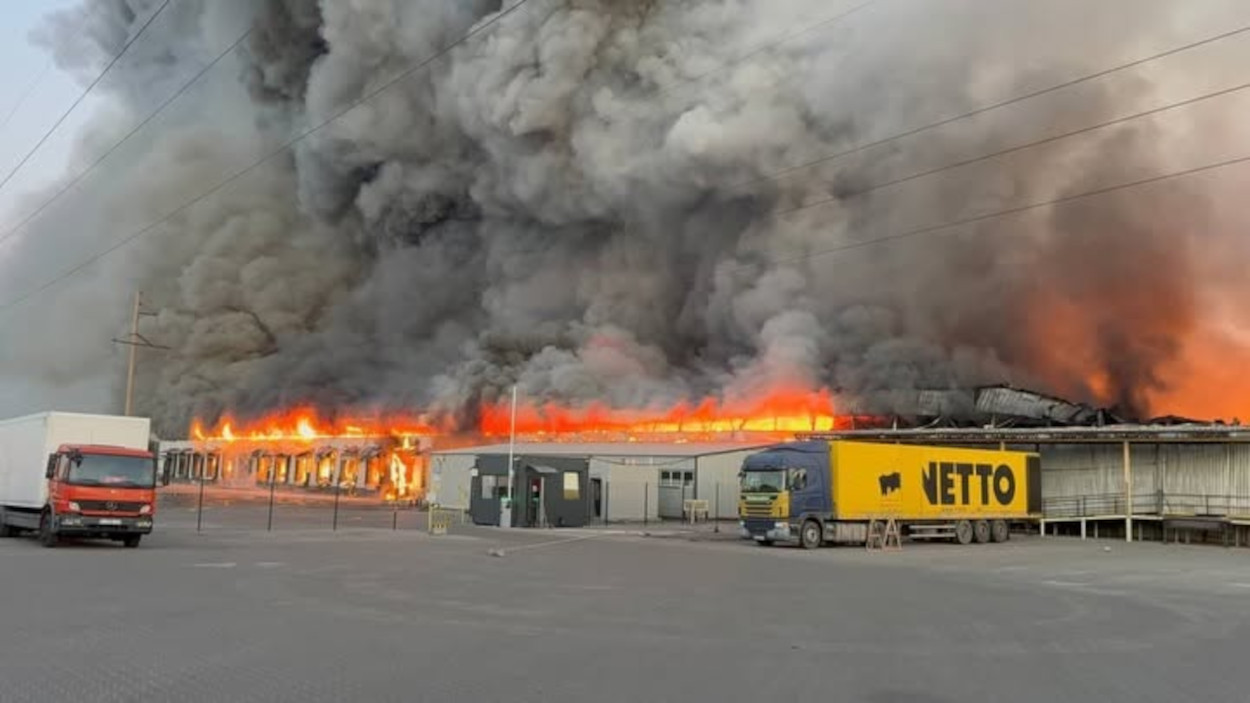
In a separate attack, Russian forces struck 15 vehicles, a warehouse building, and a power line, sparking a fire and damaging a nearby apartment building. Two men, aged 41 and 66, were injured.

At around midday, another FPV drone hit a minibus in central Zaporizhzhia, injuring one person. 

Later, a Russian drone struck a municipal trolleybus, critically injuring a 56-year-old woman and lightly injuring two other women, aged 71 and 66.

Russian attacks on Zaporizhzhia injured two men, aged 41 and 66.

The strikes set four cars and an open area on fire, damaged a warehouse, and damaged four cars and four buses.

📷Ukraine’s State Emergency Service pic.twitter.com/oqRfYvMa7T

— Euromaidan Press (@EuromaidanPress) October 29, 2026

Zaporizhzhia’s proximity to the front line

Zaporizhzhia lies relatively close to the front line in southern Ukraine, leaving the city exposed to Russian attacks with weapons that can be used at shorter ranges, including FPV drones and multiple-launch rocket systems. 

The proximity allows Russian forces to threaten civilian infrastructure more easily without relying solely on long-range missiles or drones.

Prosecutors investigate suspected war crime

The Zaporizhzhia Regional Prosecutor’s Office said it had opened a war crimes investigation. Investigators from the Security Service of Ukraine’s regional directorate are conducting the pretrial investigation.

The casualty count and damage reports were preliminary, and authorities said information was still being updated as the attacks continued.

Russian attacks kill civilians in several Ukrainian cities

Zaporizhzhia was not the only major city hit by Russian attacks on 29 October. In Dnipro, a Russian strike on the railway station killed at least 14 people. 

In Chernihiv, two teenage girls were killed and 23 people injured, including four children. In Kremenchuk, Poltava Oblast, three people were killed and 15 injured, including three children. 

The attacks damaged residential buildings and civilian infrastructure in all three cities.

  •  

Ukrainian Neptune strike destroys two Russian Su-34 bombers used to attack frontline cities, Ukraine’s Navy says

Russian Su-34 fighter-bomber. Photo: Russian Defense Ministry

Ukraine’s Navy said on 29 October that it destroyed two Russian Su-34 fighter-bombers in a Neptune missile strike on Marinovka airfield in Russia’s Volgograd Oblast.

The reported strike targets aircraft Russia uses to launch guided aerial bombs against Ukrainian cities, military positions, and frontline communities. Destroying the two jets would reduce Russia’s capacity to carry out these attacks.

Neptune strike hits Russian military airfield

strike on Marinovka airfield Neptune
Map: Euromaidan Press

According to the Ukrainian Navy, its units struck the site where Russian aircraft were stationed at Marinovka airfield using a Neptune coastal missile system.

The Navy said the strike destroyed two Su-34 fighter-bombers belonging to Russia’s 11th Mixed Aviation Regiment, based near the settlement of Oktyabrsky in Volgograd Oblast. The regiment is part of the 4th Mixed Aviation Division of Russia’s 4th Air and Air Defense Forces Army.

The Ukrainian Navy did not provide further details about the strike.

Su-34s are key to Russia’s guided bomb attacks

Russia uses Su-34 fighter-bombers to launch guided aerial bombs, known as KABs, against Ukrainian military positions and settlements, particularly in frontline areas. These attacks threaten both Ukrainian troops and civilians in communities near the front.

aftermath russia's kab bomb strike residential house kharkiv late 30 october 2024
Aftermath of Russia's KAB bomb strike on a residential house in Kharkiv late on 30 October 2024. Photo: Telegram/Oleh Syniehubov

According to Ukrinform, Russia’s Aerospace Forces had approximately 140 Su-34 aircraft of various modifications in service as of 22 October.

The Ukrainian Navy said it would continue striking Russian military targets to weaken Moscow’s ability to wage war against Ukraine.

  •  

‘Associate’ or ‘ever-closer association’? Semantics aside, what does that leave the EU-Canada love-in?

“Associate membership” is out and “ever closer association” back in.

The offer of the first phrase was made to Canada a month ago by EU Commission president Ursula von der Leyen. 

The phraseology, made during von der Leyen’s State of the Union speech, surprised many EU diplomats who claimed that they had not been consulted.

It was also never clear precisely what this would mean.

The idea of Canada having representatives or observer status in the EU institutions always sounded fanciful. Besides, there is no mention of ‘associate membership’ in the EU treaties, and this uncertainty appears to have persuaded Germany to demand that it be dropped ahead of Thursday and Friday’s (29-30 October) EU-Canada summit.  

The draft communique circulated ahead of the summit talks of “work to define by the 2027 EU-Canada summit the concept of an ever closer association of Canada to the EU, short of full membership itself.” 

Von der Leyen appeared not to have read the memo. 

Officials would “start discussing how to make Canada the first associate member of the EU,” she said on arrival in Montreal, adding that “our ambition is to build the closest partnership we have ever had with a non-European country”. 

Yet this is a dispute over language rather than substance. The EU and Mark Carney’s Canada see each other as their closest ally. Both have been repeatedly threatened with hefty trade tariffs by Donald Trump’s White House and the consequences of Trump’s foreign policy adventures in the Middle East and the Arctic. Carney’s remarks at the World Economic Forum in January that ‘middle’ powers should club together to avoid being squeezed between China and the US were aimed at the EU.  

Commission officials may blench at the comparison, but the EU is a collection of middle ranking and small states. And it is yet to act like a world power on the political stage. 

This article continues, but the full version is available only to EUobserver.com subscribers. Visit account.euobserver.com/membership

  •  

Demining complete, humanitarian convoy ready: Oleshky mission advances as ceasefire holds and Lubinets heads to occupied city

Ukraine’s Human Rights Commissioner Dmytro Lubinets. Photo: Dmytro Lubinets

Ukraine’s humanitarian mission to Russian-occupied Oleshky in Kherson Oblast has reached a key stage, with mine clearance along designated routes completed and a humanitarian convoy ready to depart, Ukraine’s Human Rights Commissioner Dmytro Lubinets said on 29 October.

The mission aims to deliver humanitarian aid to civilians trapped in the occupied city facing humanitarian crisis, and provide a safe way out for those who want to leave. The operation is taking place under a localized ceasefire coordinated with the help of US First Lady Melania Trump.

Lubinets said the ceasefire has held for 54 hours without reported violations.

Aid convoy prepared, civilian evacuations planned

Lubinets said the humanitarian convoy was ready to leave and was expected to reach Oleshky’s central hospital. Residents would receive the assistance they need, he said.

Civilians wishing to leave the city would have an opportunity to do so until 2 p.m. local time, with security measures organized for their departure. Distribution of humanitarian aid was scheduled to begin after 2:30 p.m.

Delegations from Ukraine, Russia, and the United States had gathered to coordinate the next steps in the mission. Journalists from all three countries were also present, Lubinets said.

Lubinets travels to occupied Oleshky

Earlier on 29 October, Lubinets said he was still traveling toward Oleshky.

He said he wanted to be on the ground to see the situation firsthand and report on the mission’s progress. Lubinets also asked the public to rely on official sources and wait until he returned before raising further questions about the negotiations.

The Ukrainian ombudsman said the negotiations had been difficult and lengthy, adding that the mission had reached only the halfway point toward its goals.

“If I had to go for the sake of one person, I would go again,” Lubinets said, describing the mission as his duty to help Ukrainians in need.

US-mediated ceasefire enables humanitarian operation

The mission is being conducted jointly by Lubinets and Russian human rights commissioner Yana Lantratova, with mediation and coordination by Melania Trump.

The localized ceasefire took effect on 27 October to allow mine clearance, humanitarian deliveries, and civilian evacuations. 

Oleshky, on the east bank of the Dnipro River in Kherson Oblast, has been under Russian occupation since 2022. Russian occupation and restrictions on access to the city have left civilians facing severe shortages of food, medicine, and other essential supplies, while access to medical care has become increasingly difficult. The humanitarian mission aims to deliver urgently needed aid and help residents who want to leave reach safety.

Oleshky, Kherson Oblast, has been under Russian occupation since 2022, following Russia’s capture of the city during the initial phase of its full-scale invasion of Ukraine.
Explore further

Thousands are starving in occupied Oleshky. People have no food, no way out, and Russian forces bomb incoming aid

Lubinets thanked Melania Trump and the Ukrainians and US citizens who helped bring attention to the situation in Oleshky and support the negotiations. He said the mission’s priority remained delivering assistance and helping civilians leave safely.

  •  

Russia’s October losses hit record high of 49,040 with three days left, Ukraine says

Russian Armed Forces assault troops, illustrative photo. Photo: Russian Ministry of Defense

Ukraine’s Defense Forces inflicted an estimated 49,040 personnel losses on Russian forces in October as of 29 October, setting a new monthly record since Russia launched its full-scale invasion, Ukraine’s General Staff said.

The figure points to the growing human cost of Russia’s war against Ukraine. Ukraine’s military says Russian losses are rising faster than Moscow can replenish its units, making it increasingly costly for Russia to sustain its offensive operations.

October losses surpass previous record

The previous monthly record was set in December 2024, when Russian forces suffered an estimated 48,670 personnel losses, according to the General Staff.

October’s total had already surpassed that figure by 370 personnel as of 29 October, with three days remaining in the month.

The General Staff reported an average of about 1,750 Russian personnel losses per day in October so far.

Russian losses rise sharply in 2026

Ukraine’s General Staff reported 26,090 Russian personnel losses in February 2026, followed by 46,230 in September. By 29 October, the October figure had reached 49,040.

The figures indicate a sharp increase in reported Russian losses over the past several months.

A drone operated by Ukraine’s ALASTOR special unit, part of the 25th Separate Airborne Brigade, strikes two Russian soldiers hiding inside the wreckage of military equipment in Pokrovsk. Donetsk Oblast, January 2025. Source: Sternenko.
Explore further

Russia now loses more soldiers than it recruits. But the war won’t end because of that.

Ukraine says losses exceed Russia’s ability to replenish units

The General Staff said the pace of Russian personnel losses exceeds Russia’s ability to replenish its military units. According to the Ukrainian military, the rising toll makes each month of the war increasingly costly for Moscow.

The figures refer to total personnel losses and do not distinguish between those killed and wounded. They are estimates published by Ukraine’s military and could not be independently verified.

Ukraine’s Defense Forces said they would continue inflicting losses on Russian forces until Russia’s armed aggression against Ukraine ends.

  •  

Can EU-China AI talks survive Huawei bans and new export controls?

Artificial intelligence is one of the economic sectors where the EU and China could be allies rather than foes; both are racing to close the gap with the United States. But until now, the EU has viewed China as a competitor and threat on AI and digital technology. 

The two economies “have huge cooperation potential in new energy, AI, services trade, the digital economy and green low-carbon fields”, China’s ministry of commerce said in a statement following the second round of China-EU trade talks in Beijing earlier this month. 

Those two days of talks between EU trade commissioner Maroš Šefčovič and Chinese commerce secretary Wang Wentao were widely viewed as a successful first step forward by EU leaders at last week’s summit in Brussels.  

In particular, China has agreed to reduce exports of electric vehicles and guarantees continued access to rare earths without new export controls. It also commits EU and Chinese officials to at least six more months of negotiations on a raft of trade disputes. 

A visit to a robotics factory was part of the itinerary for a delegation from the European Parliament’s international trade committee who will make a three day visit to China from 27 October. 

Committee chairman Bernd Lange told reporters that Unitree Robotics, a Chinese robotics company that uses its own humanoid robots—powered by embodied AI —to help manufacture and assemble more robots would be “at the heart of Chinese industry in the future.” 

China is the world leader in the robotics market, with Lange’s Germany its main European rival. 

This article continues, but the full version is available only to EUobserver.com subscribers. Visit account.euobserver.com/membership

  •  

Putin faces African anger in Moscow on ‘coercive’ recruits to Russian army in Ukraine

Vladimir Putin has been silent on a request by Kenyan president William Ruto for Moscow to assist in the repatriation of Kenyan men recruited to fight for the Russian army in its war against Ukraine.

Ruto’s request was made ahead of a two day Russia-Africa summit which began in Moscow on Wednesday (28 October).

Nigerian and South African officials have also voiced concern about their own people being recruited.

In an open letter on Wednesday, Amnesty International urged African leaders to urge the Kremlin to “immediately end the coercive and deceptive recruitment of African nationals into Russia’s military forces to fight against Ukraine.”

“For African leaders to remain silent on this issue would be a profound disservice to the people of their countries,” states the letter.

“At a moment when many African governments are speaking up about the enduring legacy of colonialism, and the importance of sovereignty and African agency in international affairs, they must reject any practice that treats nationals of African countries as a commodity for other countries’ political and military objectives.”

The Kremlin has been publicly silent on the issue of African fighters being used in its army.

It briefed that 22 African heads of state would attend the two-day summit in Moscow, with 26 other African states sending foreign ministers and other diplomatic officials.

“The era when the fate of entire continents was determined by a narrow bloc of states is irrevocably gone,” said Putin in his opening speech at the summit.

This article continues, but the full version is available only to EUobserver.com subscribers. Visit account.euobserver.com/membership

  •  

Russia replaces Ukrainians with Russian settlers in occupied Kherson Oblast; only 10–20% of pre-war population remains, Ukraine says

A street in Oleshky, Kherson Oblast, in 2007. Under Russian occupation since 2022, the settlement has since descended into a severe humanitarian crisis amid Russian restrictions and attacks. Photo via Wikimedia Commons

Ukraine’s military intelligence estimates that only 10–20% of the prewar population may remain in the Russian-occupied left bank of Kherson Oblast, accusing Moscow of forcing Ukrainians from their homes while relocating Russian citizens to the area.

Russia’s efforts to displace Ukrainians and bring Russian citizens into occupied Kherson Oblast are part of Moscow’s broader campaign to consolidate control over occupied territory, impose Russian institutions, and erode Ukrainian national identity. Similar practices have been documented in other occupied Ukrainian territories, including the resettlement of Russians into homes in Mariupol and efforts to replace Ukrainian education with Russian curricula.

The Main Intelligence Directorate of Ukraine’s Defense Ministry (HUR) said Russia was creating intolerable living conditions for Ukrainian residents and unlawfully seizing private property to displace them. The agency said Moscow was simultaneously using financial incentives to recruit Russian teachers, doctors, and other professionals to work in occupied areas.

Russia brings in Russian workers as Ukrainians are pushed out

Before Russia’s full-scale invasion in February 2022, around 500,000 people lived on the left bank of Kherson Oblast, according to HUR. The agency estimates that only 10–20% of that population may remain.

Moscow is using state-backed recruitment programs, including “Zemsky Teacher,” “Zemsky Doctor,” “Zemsky Feldsher,” “Zemsky Cultural Worker,” and “Zemsky Coach,” to attract Russian citizens to occupied Ukrainian territory, HUR said.

Under these programs, Russian teachers and doctors who agree to work in occupied areas are offered one-time payments of 2 million rubles, while junior medical staff can receive 1 million rubles. The incentives also include higher salaries and other benefits, with contracts lasting at least five years.

HUR said hundreds of Russian teachers and doctors had already been brought to occupied Ukrainian territories from regions across Russia, including Krasnodar, Khabarovsk, Stavropol, and Perm Krais, as well as Rostov, Kursk, and Leningrad oblasts.

According to Ukrainian intelligence, Russian medical personnel are needed primarily to serve occupying forces, while Russian teachers are being brought in to undermine Ukrainian children’s national identity.

Ukraine accuses Russia of war crimes and genocidal practices

HUR said Russia’s efforts to displace Ukrainian residents and bring in Russian citizens bore signs of war crimes and genocidal practices against the Ukrainian population.

The agency’s allegations concern both the coercive removal of Ukrainians from occupied territory and the replacement of local residents with people brought from Russia. Ukrainian authorities say these policies are part of Moscow’s broader effort to consolidate control over occupied Ukrainian land and impose Russian identity and institutions.

Kherson Oblast faces displacement, attacks, and a humanitarian crisis

Russian forces occupied much of Kherson Oblast in the early months of the full-scale invasion in 2022. Ukrainian forces liberated the oblast’s right-bank areas, including the regional capital, in November that year, but Russia continues to occupy the left bank of the Dnipro River.

Russian forces regularly attack Ukrainian-controlled areas of Kherson Oblast with artillery and drones, killing and injuring civilians. Ukrainians have described repeated drone attacks on civilians as a “human safari.” In May 2025, a UN commission of inquiry concluded that Russian forces’ repeated drone attacks on civilians along the Dnipro’s right bank amounted to crimes against humanity of murder.

The occupied town of Oleshky, on the left bank, has also faced severe shortages of food, medicine, and medical care amid restrictions on movement and continued fighting.

Oleshky, Kherson Oblast, has been under Russian occupation since 2022, following Russia’s capture of the city during the initial phase of its full-scale invasion of Ukraine.
Explore further

Thousands are starving in occupied Oleshky. People have no food, no way out, and Russian forces bomb incoming aid

Russia’s occupation has also exposed residents of Kherson Oblast to major humanitarian disasters. The destruction of the Kakhovka Dam in June 2023 flooded settlements along the Dnipro, including Russian-occupied communities on the left bank, damaging homes and forcing residents to flee. Russian forces’ restrictions on access and evacuation further endangered civilians in the affected areas.

While Russia occupies the left bank of Kherson Oblast, its forces continue to target civilians on the Ukrainian-controlled right bank. Across the oblast, residents face the consequences of Russia’s invasion, from forced displacement and property seizures under occupation to deadly drone and artillery attacks.

  •  

Finland and Norway leaders make rare direct call to Putin, breaking with the West’s diplomatic isolation of the Russian leader to influence Ukraine peace talks

Finnish President Alexander Stubb and Norwegian Prime Minister Jonas Gahr Støre in Norway, 16 October 2024. Photo: President of the Republic of Finland

Finnish President Alexander Stubb and Norwegian Prime Minister Jonas Gahr Støre spoke by phone with Russian President Vladimir Putin on 27 October, urging him to de-escalate Russia’s war against Ukraine and resume negotiations. The roughly 90-minute call was coordinated with Kyiv and came ahead of planned trilateral talks between Ukrainian, US, and Russian officials in Abu Dhabi in November.

The initiative marks a rare direct contact between Western European leaders and Putin since Russia launched its full-scale invasion in February 2022. The Nordic leaders are reportedly seeking to influence peace efforts increasingly shaped by US President Donald Trump, amid concerns in Europe that Washington is shifting toward Moscow’s position and sidelining Ukraine’s European partners.

Stubb and Støre said they discussed Russia’s war against Ukraine, upcoming negotiations, and security in Europe. Ukrainian President Volodymyr Zelenskyy said the two leaders had urged Putin to take concrete steps toward de-escalation, particularly regarding attacks on Ukraine’s energy infrastructure.

Zelenskyy says leaders urged energy de-escalation

After the call, Zelenskyy said he had spoken with Stubb and Støre to receive a detailed briefing. He thanked them for supporting Ukraine’s diplomatic efforts and said they had clearly told the Russian leader that real de-escalation steps were needed regarding Ukraine’s energy sector and infrastructure.

Zelenskyy also said the leaders discussed preparations for a trilateral meeting planned for November involving Ukrainian, US, and Russian negotiating teams.

In a joint statement, Stubb and Støre said the call followed their 20 October meeting in Oslo and was held in consultation with Ukraine. They emphasized that Finland and Norway, which both share borders with Russia, would continue their longstanding support for Ukraine.

“The discussion was frank and substantive,” Stubb said, adding that the war’s outcome would directly affect Nordic and broader European security. Støre stressed the war’s enormous human and material costs and said the leaders had emphasized the importance of de-escalation.

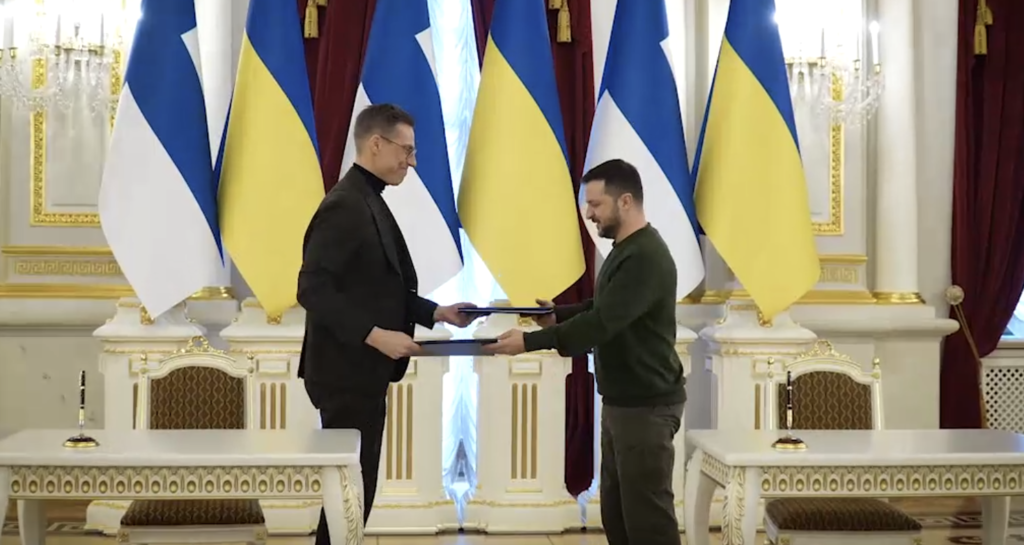
Presidents Volodymyr Zelenskyy (R) of Ukraine and Alexander Stubb (L) of Finland after signing the security agreement. Kyiv, 3 April 2024. Screenshot: Telegram/Zelenskyy Official

Moscow gives no sign of changing its position

The Kremlin’s account of the call offered no indication that Putin was prepared to soften his demands, according to Reuters. It said a just and lasting peace was possible only if Russia’s “legitimate interests” were fully taken into account, while blaming EU and NATO policies for prolonging the fighting.

Russian Foreign Minister Sergei Lavrov dismissed the call as offering nothing new on the conflict and accused European countries of seeking a role in negotiations.

A source close to the Kremlin told Reuters that Putin had said the war must end while taking “the realities on the ground” into account. The source interpreted this as meaning Moscow would not compromise on its goal of capturing the entire Donbas region.

Russia has continued its attacks on Ukraine while demanding territorial concessions. Kyiv, meanwhile, has called for meaningful de-escalation and a settlement that preserves Ukraine’s sovereignty and security.

Nordic initiative draws criticism from European partners

The call comes as European governments seek a greater role in peace efforts led by Trump. Western European leaders have largely avoided direct contact with Putin since the invasion, hoping to isolate Moscow, but concerns have grown that Europe is being sidelined in negotiations.

Stubb said Ukraine had sought to open a new channel of communication and that Europe could no longer remain a bystander to peace efforts. He said the initiative had been discussed with Western allies.

However, Danish Prime Minister Mette Frederiksen criticized the move, saying she saw no signs that Russia wanted peace and arguing that Europe should act together rather than pursue separate initiatives, according to Reuters. 

Reuters added that Swedish Prime Minister Ulf Kristersson said other European leaders had not been informed of the talks and expressed low expectations for the conversation. Polish Prime Minister Donald Tusk also urged caution.

Stubb and Støre stressed that they had acted as leaders of Finland and Norway, not on behalf of Europe as a whole. They said their countries would continue supporting Ukraine while pursuing diplomatic efforts to end the war.

  •  

Oleshky ceasefire expands beyond occupied town as truce holds without reported violations

Aerial view of Russian-occupied Oleshky, in Ukraine's Kherson Oblast. Photo via ArmyInform

The ceasefire around Russian-occupied Oleshky in Kherson Oblast has expanded beyond the town to provide safe passage for humanitarian convoys, US First Lady Melania Trump said on 27 October. The expansion is intended to facilitate aid deliveries to civilians trapped under Russian occupation.

Ukraine and Russia are observing a localized ceasefire to enable a humanitarian mission to reach Oleshky, where residents have faced months of shortages of food, medicine, and medical care under Russian occupation. 

Trump said the ceasefire took effect at 04:00 Moscow time on 27 October, two days ahead of the original schedule, to protect civilians and facilitate the delivery of critical humanitarian aid. Russia’s chief of General Staff, Valery Gerasimov, had confirmed the arrangement, she said.

Ukraine’s human rights ombudsman Dmytro Lubinets said no ceasefire violations had been recorded by 19:49 Kyiv time on 27 October, and Russian forces had made no attempts to advance. He added that he remained in constant contact with his Russian counterpart, Yana Lantratova.

THE CEASEFIRE HAS COMMENCED
The ceasefire between Ukraine and Russia took effect at 4:00am Moscow time on October 27, 2026. 
 
Timing was accelerated two days ahead of schedule to protect the safety of civilians and to facilitate the delivery of critical humanitarian aid. The…

— First Lady Melania Trump (@FLOTUS) October 27, 2026

Road to Oleshky must be cleared before aid can arrive

Lubinets said the ceasefire began at 03:00 Kyiv time and would remain in effect until 22:59 Kyiv time on 1 November. He reported no violations since it began and said Russian forces had made no attempts to advance.

The next steps are to clear mines from the road to Oleshky and deliver humanitarian supplies. Representatives of Ukraine, Russia, and the United States will be present once the route is cleared and the aid arrives, Lubinets said in an interview with Ukrainian broadcaster 1+1.

He added that everyone who wants to leave for Ukrainian-controlled territory would be able to do so and that assistance would be provided to everyone who needs it.

The Financial Times earlier reported, citing sources familiar with the negotiations, that residents who agree to leave Russian-occupied Oleshky during the ceasefire would first be transported to occupied Crimea or Russia before being allowed to return to Ukrainian-controlled territory.

Humanitarian mission follows months of efforts

Oleshky has been under Russian occupation since 2022. The town has been cut off for months, with shortages of food, medicine, and medical care worsening. 

The White House announced on 23 October that Melania Trump had secured a localized ceasefire originally scheduled to begin on 29 October. Russia subsequently announced a ceasefire on the Kherson axis from 27 October, with preparations to secure a route for a humanitarian convoy.

Oleshky, Kherson Oblast, has been under Russian occupation since 2022, following Russia’s capture of the city during the initial phase of its full-scale invasion of Ukraine.
Explore further

Ceasefire planned for occupied Oleshky as residents face starvation and blocked escape routes, White House announces

Lubinets said efforts to address the humanitarian crisis in Oleshky began in late February 2026, but progress accelerated in September following Melania Trump’s involvement.

The expanded ceasefire area is intended to facilitate the humanitarian operation, but the route must still be cleared and supplies delivered before the mission can reach residents. The new boundaries of the ceasefire area have not been specified publicly.

  •  

Ukraine intercepts nearly 60% of Russia’s Geran-4 jet drones, General Staff says, as Kyiv races to counter evolving threat

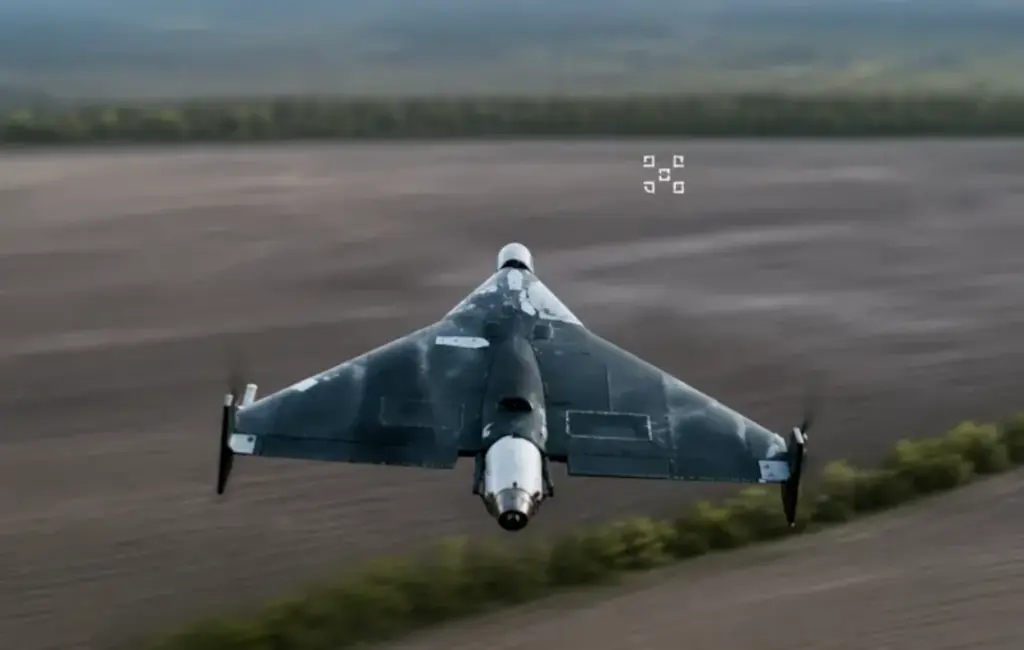
money engineering what stands between ukraine russia's fastest drones zelenskyy says · post russia’s new “geran-4 seeker” shahed variant geran-4 news ukrainian reports

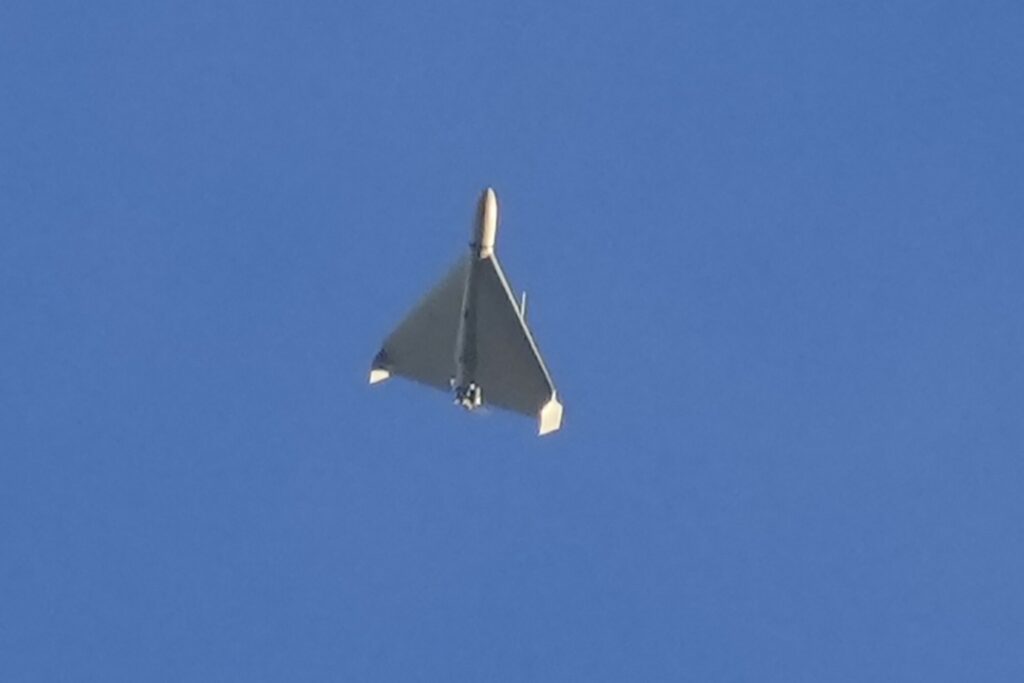
Ukraine’s air defenses have been intercepting nearly 60% of Russian Geran-4 jet-powered attack drones over the past three months, with the interception rate reaching 80% during some attacks, Ukraine’s General Staff said.

Russia has increasingly used jet-powered drones in its attacks on Ukraine, adding a faster-moving threat to the Shahed-type drones Moscow deploys against Ukrainian cities and infrastructure. Ukraine is working to improve interception rates while reducing the cost of countering these aerial threats amid shortages of surface-to-air missiles.

The General Staff’s update did not mention interception rates for Russia’s more advanced Geran-5 jet-powered drone.

F-16s, Mirage jets help intercept Russian drones

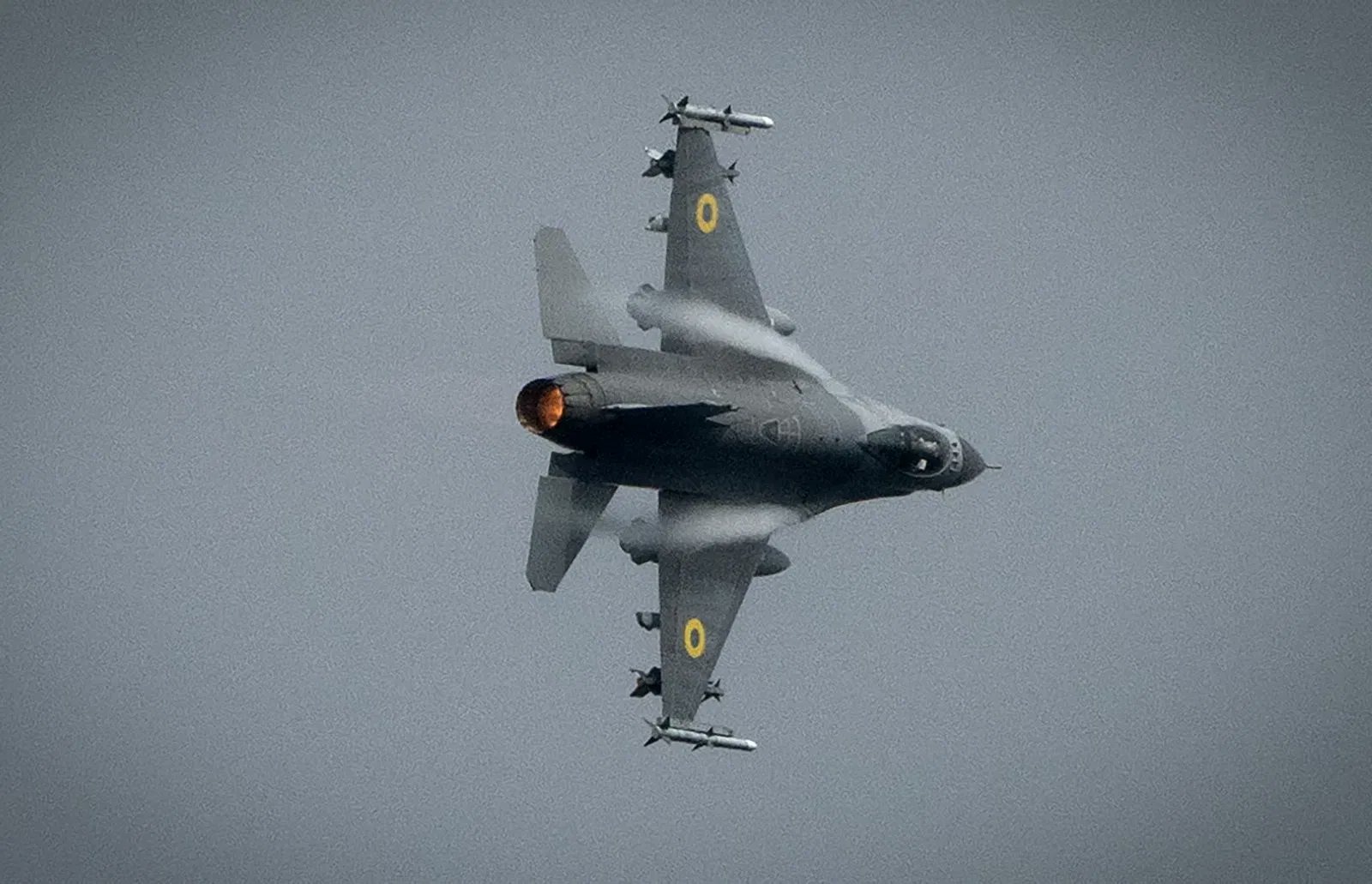
According to the General Staff, tactical aviation plays a significant role in destroying Russian jet-powered drones. Ukraine uses F-16s, French Mirage aircraft, and MiG-29 fighters to intercept them.

The military is also strengthening what it calls “short-range air defense” as Ukraine faces a shortage of guided anti-aircraft missiles. These systems include Gepard and Shilka anti-aircraft guns, newer Skynex, Skyranger, and Terrahawk Paladin systems, interceptor drones, and mobile fire groups deployed by different branches of Ukraine’s Defense Forces.

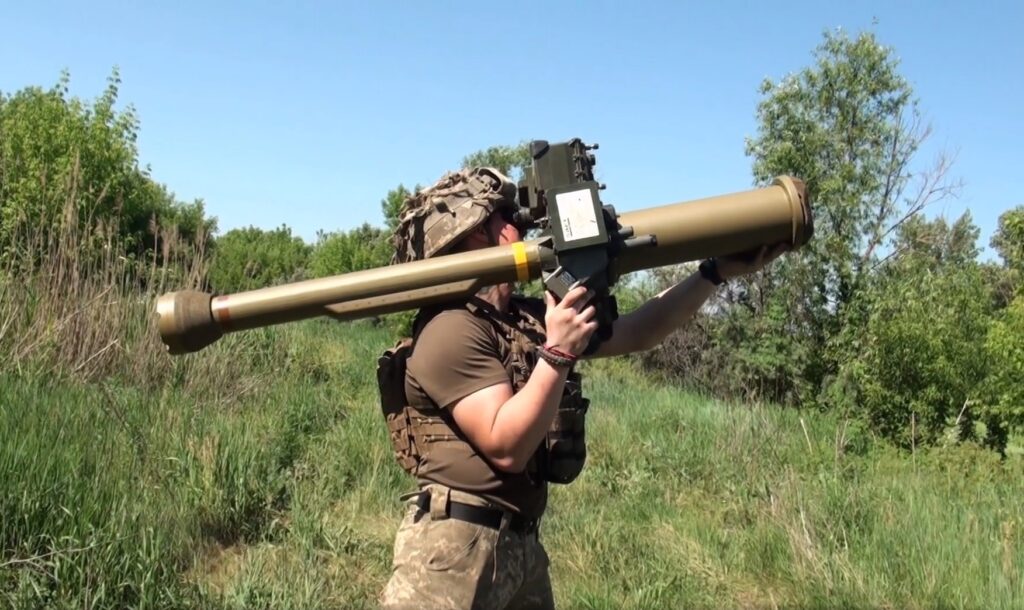
Mobile fire groups are equipped not only with machine guns and supporting equipment but also with man-portable air-defense systems (MANPADS). Ukrainian troops have been successfully using these missiles to shoot down Russian jet-powered drones, the General Staff said.

ukrainian soldier lmm martlet manpads air assault forces militarnyi 02-7
A Ukrainian soldier with an LMM Martlet MANPADS. Screenshot: Ukrainian Air Assault Forces, via Militarnyi.
A Ukrainian air force F-16.
Explore further

Denmark rushes 50,000 cannon rounds to Ukraine to help F-16s hunt Russia’s advanced jet drones

Ukraine tests cheaper drone interceptors

Ukraine is also seeking to lower the cost of countering Russian aerial attacks by testing new interceptor drones.

According to the General Staff, some models have already downed dozens of Russian Geran jet-powered drones. The military did not provide further details about the interceptor models or the number of drones destroyed.

The rising interception rate reflects Ukraine’s efforts to adapt its air defenses to Russia’s evolving drone campaign while preserving scarce and expensive air-defense missiles for threats that require them.

  •  

“Our future cannot be the subject of agreements between Trump and Putin”: Ukraine supporters protest US policy on Russia in Europe, US, and Australia

Pro-Ukraine protesters rally in London, England, against US policy toward Russia, 16 October 2026. Photo: Khrystyna Shebunchak

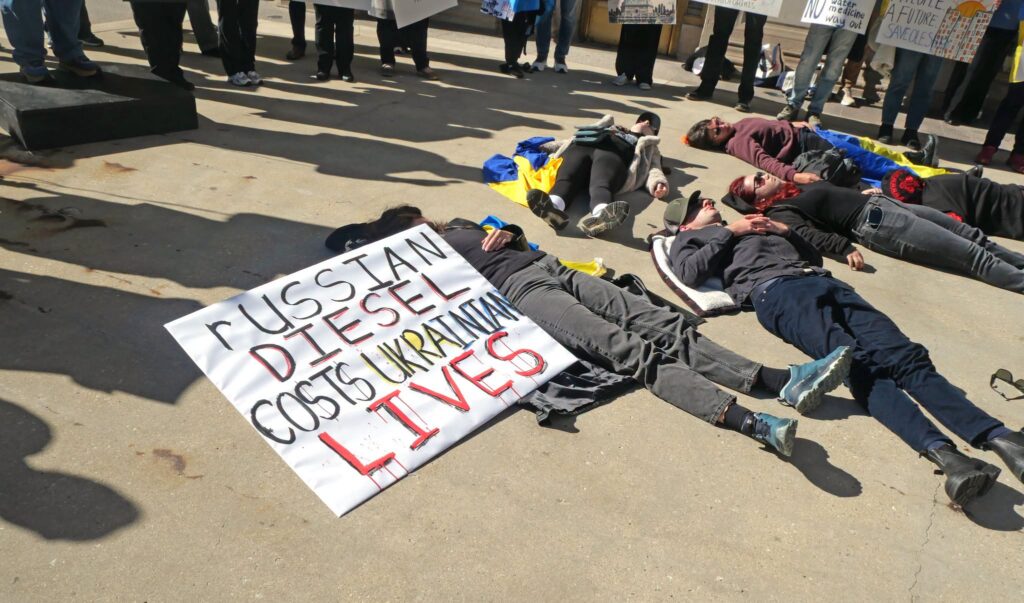
Pro-Ukraine demonstrations took place in more than 10 cities across Europe, North America, and Australia over the past week, with protesters opposing US President Donald Trump’s agreement to resume Russian diesel shipments, the easing of sanctions on Moscow, and restrictions affecting Ukraine’s military support.

The protests were organized by Ukrainian diaspora groups and international supporters of Ukraine, who called on Washington to maintain pressure on the Kremlin, restore Ukraine’s access to Starlink, and stop using military aid and intelligence sharing as leverage against Kyiv. 

The International Center for Ukrainian Victory (ICUV) said the actions reflected growing concern over US decisions that could benefit Russia while its war against Ukraine continues.

Pro-Ukraine protesters rally in Chicago, USA, against US policy toward Russia, 13 October 2026. Photo: Radio UA Chicago
Pro-Ukraine protesters rally outside the US consulate in Edinburgh, Scotland, against US policy toward Russia, 21 October 2026. Photo: Ukraine Solidarity Campaign

The demonstrations followed Trump’s announcement on 9 October that Russia would supply diesel to US and global markets. The US Treasury’s Office of Foreign Assets Control subsequently issued a temporary license authorizing transactions involving Russian-origin diesel, including imports into the United States, through 7 April 2027. 

The decision reversed part of Washington’s restrictions on Russian fuel imposed after Russia’s full-scale invasion of Ukraine in 2022.

“We are witnessing a dangerous situation today: Russia, which attacks Ukrainian cities every day, is being offered economic agreements and sanctions relief, while Ukraine is being asked to make concessions. But Ukrainians cannot simply stop fighting. For us, this is a matter of our state’s existence. Our future cannot be the subject of agreements between Trump and Putin. It belongs to Ukrainians,” said Olena Ivashchenko, founder of Campaign for Ukraine.

Pro-Ukraine protesters rally in Sydney, Australia, against US policy toward Russia, 16 October 2026. Photo: Ukrainians in Sydney
Pro-Ukraine protesters rally in Rome, Italy, against US policy toward Russia, 21 October 2026. Photo: Ukrainian World Congress

Protests target Russian fuel deal and pressure on Kyiv

In London, hundreds of protesters gathered outside the US Embassy on 16 October, according to organizers from Campaign for Ukraine and partner groups. Participants included Ukrainians, Britons, Americans, and members of other national communities. British lawmakers also raised the issue in Parliament.

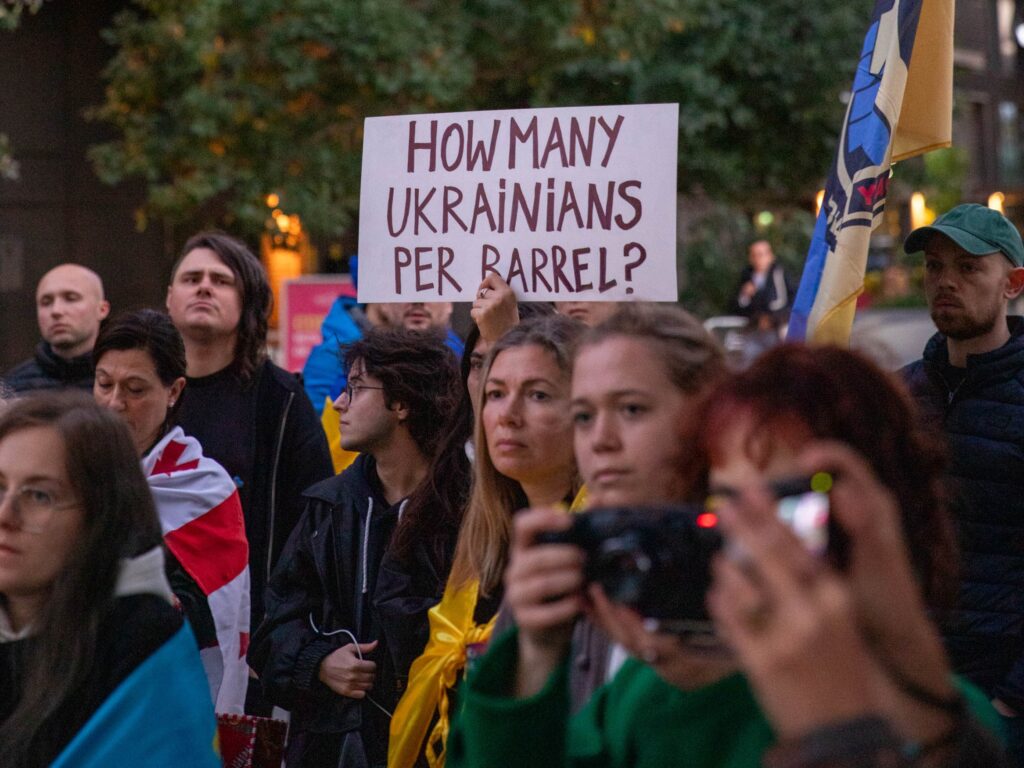
Demonstrators carried signs reading “How Many Ukrainians per Barrel?” and “Occupation Is Not Peace,” calling on Washington to preserve sanctions and reject pressure on Ukraine to make territorial concessions.

Pro-Ukraine protesters rally in London, England, against US policy toward Russia, 16 October 2026. Photo: Khrystyna Shebunchak
Pro-Ukraine protesters rally in Sydney, Australia, against US policy toward Russia, 16 October 2026. Photo: Ukrainians in Sydney
Pro-Ukraine protesters rally in Chicago, USA, against US policy toward Russia, 13 October 2026. Photo: Radio UA Chicago

Protests also took place in Edinburgh, Chicago, Houston, Boston, San Diego, Prague, Rome, Stockholm, and Sydney. In Prague, two Ukrainian activists staged a protest outside the US Embassy on 21 October, pouring a red liquid resembling blood onto the road to symbolize the human cost of the policy.

Ukrainian activists stage a protest outside the US Embassy in Prague on 21 October, pouring red liquid onto the road to symbolize the bloodshed caused by Russia’s war against Ukraine and condemn US policies toward Moscow. Photo: Kaputin

Participants in several cities also condemned restrictions on Starlink, delays in ammunition supplies, and disruptions to intelligence sharing with Ukraine.

The diesel agreement has drawn criticism in Ukraine because Russian fuel exports generate revenue for Moscow while its forces continue attacking Ukrainian cities and infrastructure. A Russian diesel tanker carrying 40,000 metric tons of fuel departed Russia’s Baltic port of Primorsk on 22 October bound for New York, according to shipping data reported by Reuters. It was expected to arrive on 7 November.

Pro-Ukraine protesters rally in Chicago, USA, against US policy toward Russia, 13 October 2026. Photo: Radio UA Chicago
Pro-Ukraine protesters rally in Stockholm, Sweden, against US policy toward Russia, October 2026. Photo: Nordic Ukraine

Organizers warn against easing pressure on Moscow

Protest organizers argued that restoring Russian fuel sales and relaxing sanctions risk helping Moscow finance its war. They also opposed any US effort to secure concessions from Kyiv without requiring Russia to end its aggression.

The demonstrations reflect concerns among Ukraine’s international supporters that Washington’s pursuit of economic agreements with Moscow could undermine efforts to isolate Russia and strengthen Kyiv’s position.

Trump has defended the diesel arrangement as a way to increase fuel supplies and lower prices. His administration has also presented engagement with Moscow as part of its broader effort to end the war, while critics question whether easing economic pressure will produce meaningful concessions from the Kremlin.

Pro-Ukraine protesters rally in Boston, USA, against US policy toward Russia, 13 October 2026. Photo: Boston Supports Ukraine
  •  

Russia strikes publishing house warehouse in Kharkiv on Ukrainian Language Day, adding to a campaign against Ukrainian literature and culture

Kyiv Arsenal Book Fair 2024

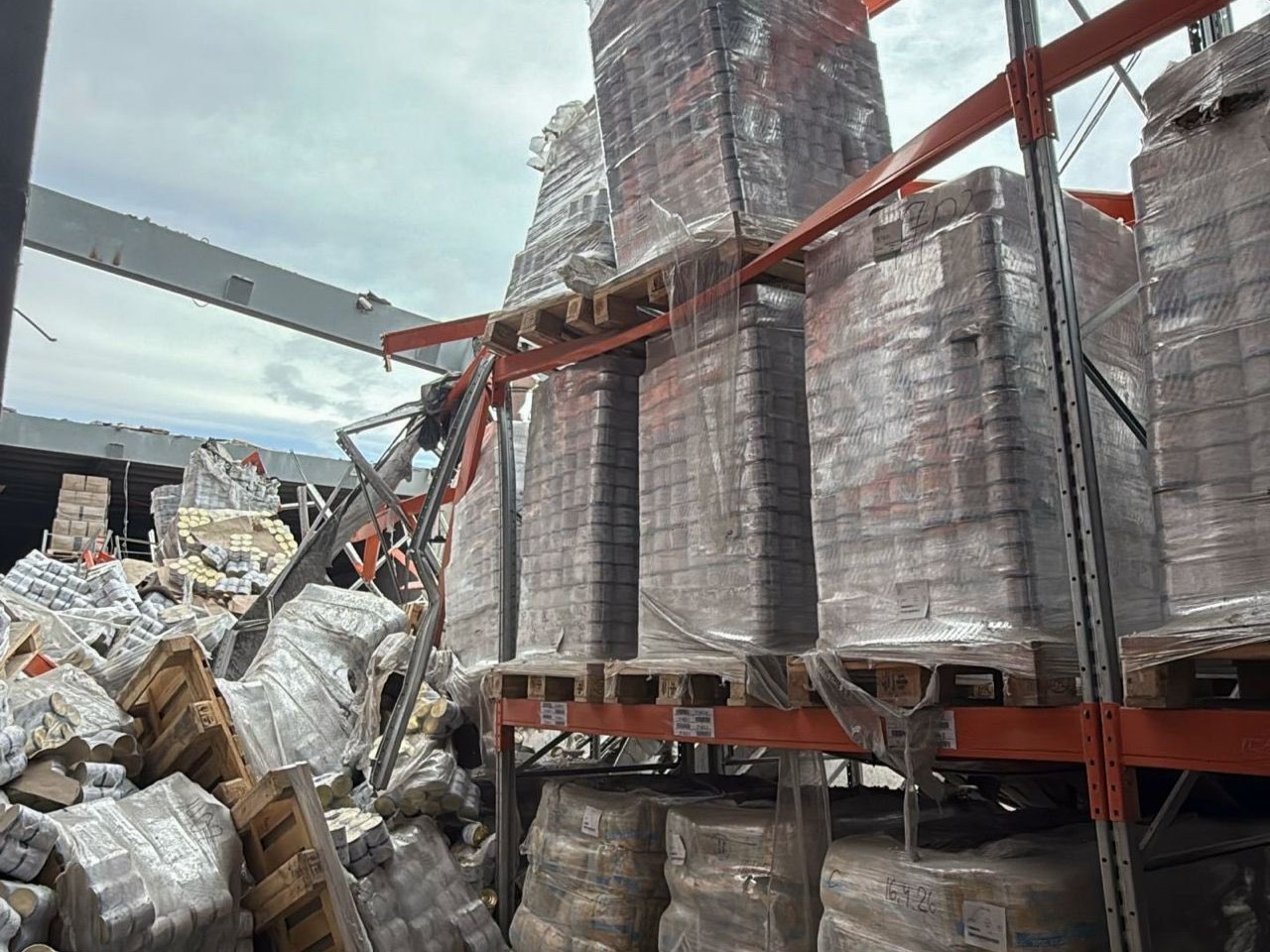
Russian forces struck a warehouse belonging to Ukrainian publishing house KSD in Kharkiv on 27 October, disrupting the publisher’s planned November releases. No employees were injured, but the company is still assessing the damage and losses.

The attack came on the Day of Ukrainian Writing and Language, a national holiday celebrating Ukraine’s language and literary heritage. It adds to a series of Russian strikes on Ukrainian publishing houses, printing facilities, and book warehouses that have destroyed millions of books and disrupted the country’s publishing industry.

KSD announced the strike on social media, saying it had planned to greet readers on the holiday and reveal its November releases but instead had to deal with the attack. The publisher said strikes in the area were continuing, preventing it from determining the full extent of the damage.

The company had planned to begin releasing its new books on 5 November. It has now postponed the announcements while it assesses the situation and determines how to proceed.

“We really want to show you the new releases we had prepared for November,” KSD said. “But for now, as we clarify the details, we cannot yet assess the scale of the destruction and understand how we will work going forward.”

The publisher said it would share updates as more information became available.

Russian forces struck a warehouse building in Kharkiv’s Slobidskyi District with a drone, as Moscow continues targeting civilian and industrial infrastructure across Ukraine.

📷Ukraine’s State Emergency Service pic.twitter.com/F6Ee7VybbI
— Euromaidan Press (@EuromaidanPress) October 27, 2026

Russia’s attacks devastate Ukraine’s book industry

KSD’s warehouse is the latest publishing facility affected by Russia’s campaign against Ukraine’s book industry. In July and August alone, Russian attacks destroyed around 13 million books, nearly a third of the number Ukrainian publishers printed in all of 2025, according to the Ukrainian publishing industry.

On 1 August, a Russian strike on a warehouse used by the Ranok publishing group in Kharkiv destroyed around 8 million books, including hundreds of thousands of school textbooks. A separate attack on a printing facility in July destroyed print runs and book materials belonging to numerous Ukrainian publishers.

In October, Russian strikes also damaged a Kyiv warehouse belonging to publisher Knyholav, destroying tens of thousands of books, including titles and reprints that had replaced stock lost in an earlier attack.

A fire burns at a Nova Poshta fulfillment and sorting center in Sviatopetrivske, Kyiv Oblast, after a Russian drone strike on 28 August 2026. More than 60,000 books were destroyed in the attack. Photo: Readeat
Explore further

Russia has burned millions of Ukrainian books, striking at the infrastructure of Ukrainian culture

These strikes threaten more than publishers’ finances. Destroyed print runs and damaged warehouses delay new releases, deprive readers of Ukrainian-language books, and force publishers to spend scarce resources replacing titles instead of developing new ones.

KSD has not yet disclosed its losses or announced a revised release schedule for its November books.

  •  

Postal service Nova Post says it has already shot down Russian Shahed drones, as Ukrainian businesses take air defense into their own hands

shahed-136 Geran-2 iranian airborne A drone is seen in the sky seconds before it attacked buildings in Kyiv, Ukraine, on Oct. 17, 2022. The Russian military has been using the Iranian Shahed exploding drones to strike Ukraine's vital infrastructure for more than a year. (AP Photo/Efrem Lukatsky/EastNews

Ukrainian postal company Nova Post has established its own private air defense capability and has already shot down Russian Shahed attack drones, company co-owner Viacheslav Klymov said on 27 October, according to Interfax-Ukraine.

As Russia increasingly targets Ukrainian factories, warehouses, transport hubs, and other civilian infrastructure, localized air defense is becoming more important. Ukraine’s expanding private air defense program allows businesses to help protect their facilities while operating within the country’s military air defense command system.

“We are one of the few companies that has implemented this project. I don’t want to disclose figures, but we have Shahed shootdowns,” Klymov said at the 12th Kyiv International Economic Forum, according to Interfax-Ukraine.

Klymov also argued that businesses can take on responsibilities that were previously considered exclusively the state’s domain. He pointed to firefighting as another area where companies can strengthen their own response capabilities.

Nova Post employees already extinguish many fires caused by Russian attacks on the company’s facilities without waiting for the State Emergency Service of Ukraine (DSNS) to arrive, he said. Large businesses are also looking for fire engines in Europe to establish their own firefighting units.
Aftermath of Russian strikes on a Nova Poshta warehouse in Sviatopetrivske near Kyiv on 28 August 2026. Photo: Anton Ovsienko/Facebook

Private air defense expands across Ukraine

Ukraine began allowing private companies to establish air defense units under a government-approved framework in November 2025. These units operate under Air Force command, with the military coordinating their missions and integrating them into the national air defense network.
Nearly 100 companies have reportedly joined the experimental program. About 50 air defense groups had been formed, and crews from six companies were already carrying out combat missions. By 14 October, the groups had downed more than 60 aerial targets, mostly Russian drones, according to Ukraine’s Defense Ministry.

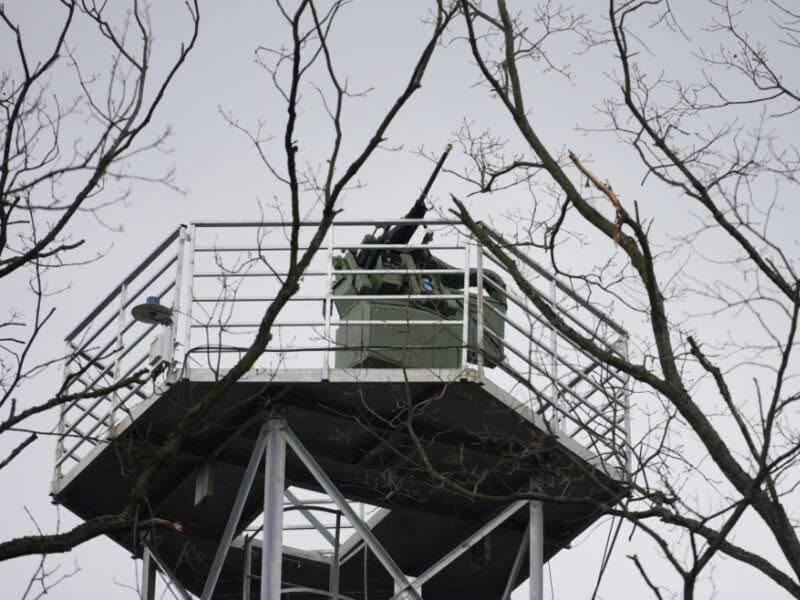
The program allows participating businesses to help defend industrial sites and critical infrastructure using capabilities that include interceptor drones and remotely operated heavy machine guns. The approach adds another layer of protection without requiring the military to cover every facility with its own units.

The need for such protection has grown as Russia continues launching long-range attack drones against civilian and industrial targets across Ukraine. Localized air defense can help protect specific sites and reduce the burden on military units, although it remains part of a coordinated national system rather than an independent replacement for military air defense.

Remote-controlled machine gun turret used in a privately developed air defense system in Ukraine. Photo: Serhii Beskrestnov
Explore further

Ukraine’s air defense goes private: businesses can now buy point coverage for their own sites

Not every company sees private air defense as the answer

The approach has its limits. On 26 October, Kateryna Zahorii, chair of the board of directors of major pharmaceutical company Darnytsia, said her company had studied private air defense but decided against deploying it, Interfax-Ukraine reported.

Zahorii said the changing nature of the threat could make the investment difficult to sustain, as companies might need to keep upgrading their defenses. Darnytsia is instead prioritizing attack monitoring, employee shelters, and safety procedures. The company has been hit by Russian forces three times in September, according to NV.

  •  

EU plans massive investment in Australia’s critical minerals to cut dependence on China

The EU plans ‘massive’ investment in Australia’s critical minerals sector as it seeks to make Canberra a major partner in reducing the bloc’s current reliance on China. 

“Since we wish to diversify away from China, then one of the most likely partners has to be Australia,” said the EU’s ambassador to Australia, Lawrence Meredith, who added that the bloc’s security and defence partnership, agreed with Canberra earlier this year, also relies on co-operation on critical minerals. 

Speaking at the International Mining and Resources Conference in Sydney on Tuesday (27 October) Meredith said that the bloc would be “massively investing in critical minerals.” 

EU and Australian trade officials are currently working on a bilateral trade agreement, with a view to concluding negotiations in early 2027, and a Memorandum of Understanding on critical minerals access is set to be part of it. 

Australian officials appear eager to partner with the EU. 

On Tuesday, Australia’s resources minister Madeline King said that it would revamp its own critical minerals strategy to put greater emphasis on refining and processing in an attempt to curb China’s dominance. 

This article continues, but the full version is available only to EUobserver.com subscribers. Visit account.euobserver.com/membership

  •  

Farming ministers agree on more national control of EU funds as part of CAP reforms

Ministers want to speed up and simplify the payment of farming subsidies by taking control of the EU’s multi-billion euro farming payment schemes, under a deal reached late on Monday night (26 October).  

The agreement at a meeting of EU agriculture ministers in Brussels finalises the negotiating position of EU governments on the future of the bloc’s Common Agricultural Policy in its next seven-year budget. 

The ‘negotiating box’ prepared by the Irish EU council presidency earlier this month for the 2028-34 multi-annual financial framework spared agricultural subsidies provided by the common agricultural policy from cuts worth a total of €141bn but proposed three-percent cuts, worth €24.6bn, to funding for National and Regional Partnership Plans (NRPP), which are intended to streamline the distribution of EU cash to governments for a variety of different policies including agriculture and fisheries. 

The idea behind the NRPPs is to set up one single fund to provide support for farmers.

Each EU country would be expected to develop a single comprehensive plan outlining the reforms and investments it intends to implement from 2028 to 2034 and how it plans to use EU funds. 

EU governments agreed on Monday that this planning process should be designed to give them far greater autonomy. They say that the recommendations the commission makes to member states regarding the design of support programs should not be binding.  

The new system is set to prioritise ‘active farmers’, which sets a threshold of a minimum level of agricultural activity for farmers, as well as young farmers and small farmers. 

This article continues, but the full version is available only to EUobserver.com subscribers. Visit account.euobserver.com/membership

  •  

THIS WEEK: the EU’s new Canada offer, cash for farmers and Russia’s Lavrov returns to G20?

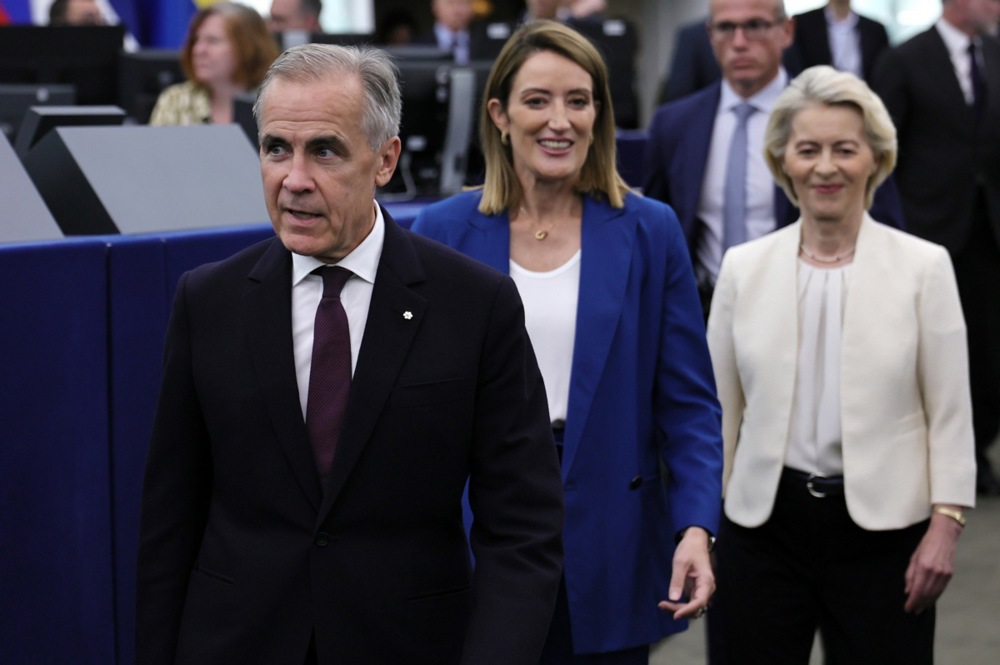
An EU-Canada summit in Montréal will be the main event this week with European Commission president Ursula von der Leyen and European Council counterpart António Costa represent the bloc at a two-day summit starting on Thursday (29 October), hosted by Canadian prime minister Mark Carney. 

Carney, who has repeatedly spoken about the need for so-called ‘middle powers’ to step up their economic and security cooperation to avoid being squeezed by the United States and China, has emerged as one of the EU’s closest allies since the start of US president Donald Trump’s trade tariff wars last year. 

Canada already has one of the most ambitious bilateral trade agreements with the EU and has secured access to defence procurement contracts as part of the EU’s new multi-billion euro defence fund. 

And in September at her State of the Union address, von der Leyen offered the prospect of ‘associate membership’ of the bloc to Canada. Talks in Montréal are likely to cover trade, energy, critical minerals, defence, digital technologies and economic security. 

In particular, the draft summit communique proposes a feasibility study on long-term Canadian LNG exports to Europe. 

This article continues, but the full version is available only to EUobserver.com subscribers. Visit account.euobserver.com/membership

  •  

Ukraine strikes Russian plant supplying batteries for ballistic missiles and glide bombs with Storm Shadow missiles, OSINT reports – another hit on Russia’s weapons supply chain

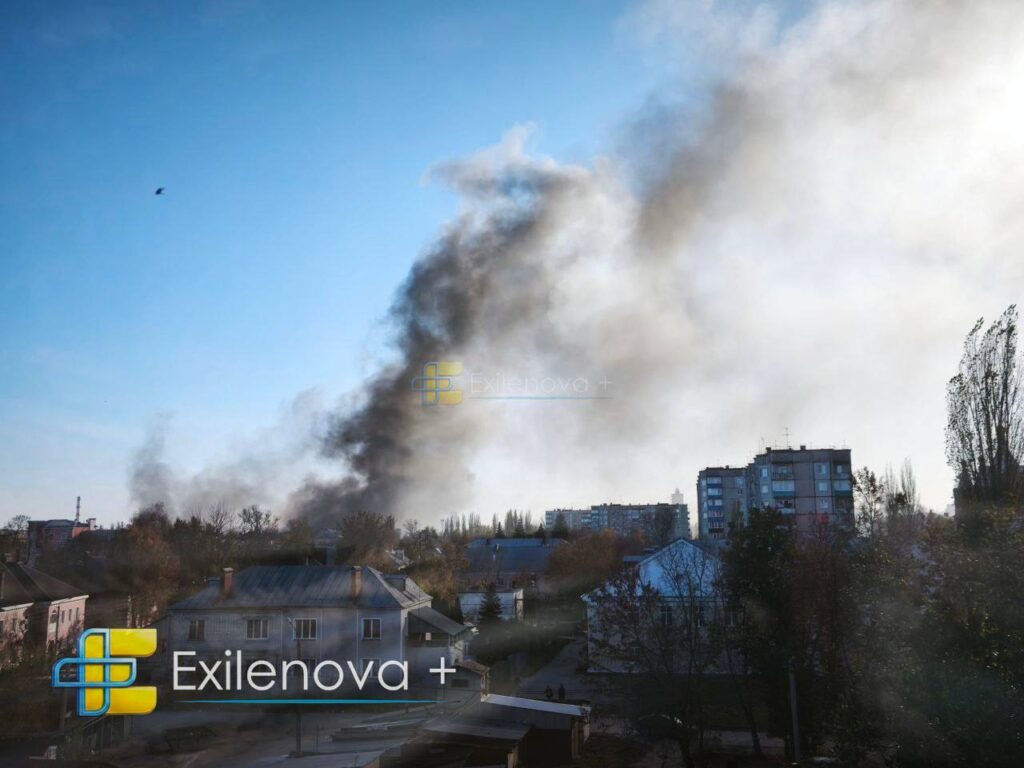
Smoke rising from the Energiya plant in Yelets, Russia’s Lipetsk Oblast, following a reported Ukrainian cruise missile strike, 25 October 2026. Photo: Exilenova+

Ukraine reportedly struck the Energiya plant in Yelets, Russia’s Lipetsk Oblast, with UK-supplied Storm Shadow cruise missiles on 25 October, according to the OSINT channel Exilenova+.

The plant manufactures batteries and power sources used in Russian weapons systems, including Iskander and Kinzhal missiles, air defense systems, and guided aerial bombs, according to Exilenova+. The reported strike targeted a facility that supplies components for Russia’s military-industrial complex as Moscow continues its war against Ukraine.

According to Exilenova+, Energiya is Russia's only producer of batteries for glide bomb planning and correction modules, as well as a key supplier of specialized power sources for several missile systems.

Storm Shadow missiles reportedly hit plant buildings

Exilenova+ reported multiple missile impacts at the Energiya plant, sharing footage and photos showing explosions, thick smoke, and fires at the facility. The channel later reported that the plant was still burning and that the surrounding area had been cordoned off, with numerous ambulances heading to the site.

Dnipro OSINT reported that at least two missiles struck two buildings at the plant.

The Energiya plant is located in Yelets, approximately 250 km (150 miles) from the Ukrainian border.

Plant produces components for Russian weapons

According to Dnipro OSINT, Energiya specializes in developing and manufacturing chemical power sources. Its products are used in several Russian weapons systems, including Iskander-K and Iskander-M missiles, Kh-47M2 Kinzhal air-launched ballistic missiles, Zircon missiles, and Pantsir air defense systems. The plant also supplies power sources for UMPB D-30SN guided aerial bombs.

Many of these weapons are used in Russian strikes on Ukrainian cities, killing civilians and destroying residential buildings and civilian infrastructure.

Aftermath of Russian Iskander strike on UN WFA warehouse housing humanitarian aid in Dnipro, 25 May. Photo: Andrii Sybiha
Explore further

UN food aid warehouse in Dnipro struck by Russian Iskander missile, impacting supplies for 130,000 people

Dnipro OSINT said the plant had been attacked at least four times before the 25 October strike.

The strike comes two days after a reported Ukrainian Storm Shadow missile attack on the Proton electronics plant in Russia’s Oryol on 23 October, which produces electronic components used in Russian weapons systems, including Iskander-M ballistic missiles and Pantsir-S1 air defense systems.

  •  
❌