The Department of Justice (DOJ) announced Monday that it will investigate living conditions inside the Washington, D.C. Jail following years of reports of filth, medical neglect, and brutality.
The D.C. Jail, which holds all pretrial detainees and misdemeanor offenders in the District of Columbia, was the subject of an unflattering 2016 Reason cover story, "How Not to Build a Jail," describing how wretched conditions had persisted there for more than a century. Lawsuits, audits, and media investigations have all documented persistent civil rights problems. The jail gained additional infamy for holding pretrial detainees and convicted defendants who were prosecuted for their role in the January 6, 2021, riot at the Capitol Building.
The Justice Department received numerous allegations of excessive force, inadequate medical care, unsanitary living conditions, and malnutrition inside the jail, according to a department press release. The investigation will determine if D.C.'s Department of Corrections has a pattern or practice of violating prisoners' constitutional rights.
"The Constitution protects the rights of every incarcerated American, including those held in custody in our nation's capital," Assistant Attorney General Harmeet K. Dhillon said in a DOJ press release. "We are committed to upholding our federal civil rights laws so that no inmate is confined in unconstitutional conditions or subject to unconstitutional mistreatment at the District of Columbia Department of Corrections."
Last week, six current and former D.C. Jail inmates filed a class-action lawsuit alleging they found dead mice and cockroaches in their food.
Five different D.C. Jail inmates filed another lawsuitin September alleging guards failed to stop or adequately respond to a man in the jail's mental health unit from starting an electrical fire.
In 2021, the U.S. Marshals Service transferred roughly 400 inmates out of the D.C. Jail after a surprise inspection reported unacceptable living conditions, including guards withholding water and food from inmates as punishment.
A week before that inspection, a federal judge held the D.C. Department of Corrections in contempt for repeatedly failing to turn over the medical records of a January 6 defendant who had been waiting for months for a scheduled wrist surgery.
The antiquated jail, opened in the 1970s, has numerous structural problems, but plans to replace it have stalled. In the meantime, the Justice Department's Civil Rights Division will write a report to add to the top of the pile.
Click to see full-size image. (Russian Ministry of Defense)
In the Zaporozhye direction Russian units are advancing west of Rozhdestvenskoye and Vozdvizhevka, have reached the approaches to Lyubitskoye and Barvinovka, and Omelnyk has come under Russian control. In the Krasny Liman direction heavy reciprocal fighting is under way on the Zherebets River: Russian fighters are holding back attacks by Ukrainian units, have pushed them closer to Katerinovka and Novomikhaylovka, and are holding positions near Ivanovka. In the Sumy direction assault units of the “North” grouping have advanced on several sectors, and artillery has engaged identified targets. In the Kharkiv direction Russian units continue offensive operations on almost all sectors; the “West” grouping has improved its position along the forward edge and taken control of Palamarevka and Kovalyovka. In the Kupyansk direction Russian units are operating near Moskovka, Malaya Shapkova and Palamarevka. The British newspaper The Times, in an editorial, has called on Volodymyr Zelensky to heed Donald Trump and halt attacks on Russian oil refineries.
Zaporozhye direction
An extensive “grey zone” remains in the vicinity of Rozhdestvenskoye and Vozdvizhevka. Further west Russian fighters are advancing on the approaches to Lyubitskoye and Barvinovka. Ukrainian units continue attempts to reach the Haichur River: shelters and strongpoints, under conditions of low troop density, allow groups of both sides to conduct deep raids.
Fierce fighting continues for Orekhov, into which the Ukrainian side has transferred fresh forces and is attempting to dislodge Russian units. Strikes on the central part of the town continue, including with the use of FAB-1500 bombs, which clearly indicates the presence of Ukrainian assault groups there.
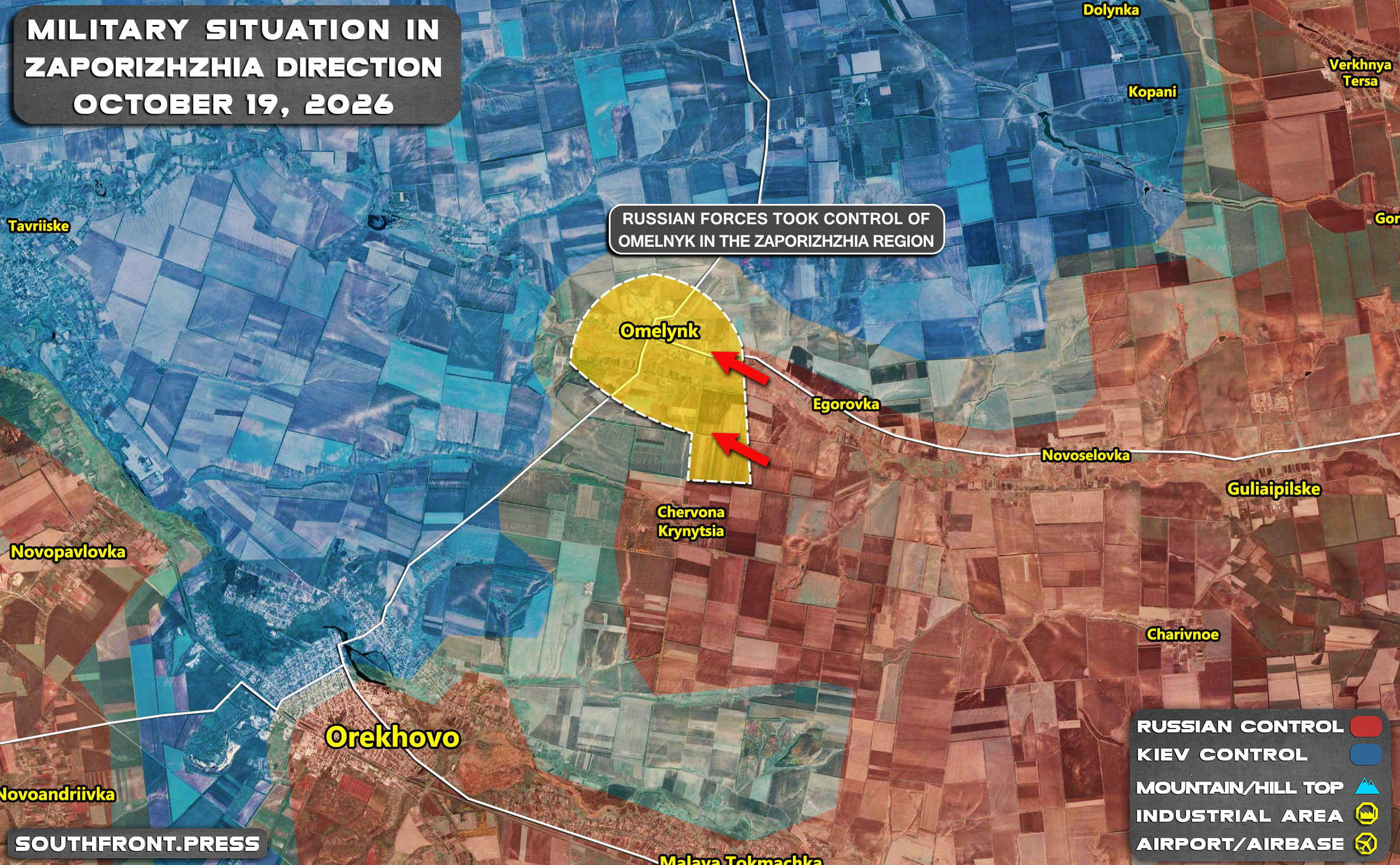
In the area of Omelnyk Russian fighters have advanced significantly. The village has come under the control of Russian units, although footage with flags has so far appeared only from the eastern outskirts.
Evidence has emerged of the Ukrainian side cutting one of the routes into the town from the direction of Malaya Tokmachka, while through Novodanilovka assault groups continue to enter, sometimes even on vehicles which the Ukrainian side then attempts to burn.
Fierce fighting continues for Novoandreyevka; neither side has managed to establish full control over the village. Russian drones are operating along the northern outskirts. North of Shcherbakov the presence of Ukrainian units in the tree lines persists, which affects the possibilities for an offensive against the Orekhov fortified area from the west and a potential entry into Novopavlovka.
Heavy reciprocal fighting is under way on the direction. Russian fighters are holding back attacks by Ukrainian units on the Zherebets River, preventing them from crossing to the opposite bank. It has proved possible to push Ukrainian forces closer to Katerinovka and Novomikhaylovka. Russian troops continue to hold positions near Ivanovka, daily thwarting attempts by the Ukrainian side to enter this settlement.
Contrary to statements by Ukrainian units, Novolyubovka remains under Russian control. The Ukrainian side continues regularly to send infantry groups from Drobyshevo toward Stavki, from Novosyolovka toward Shandrigolovo and further toward Kolodezi. Work is being conducted in the eastern part of Krasny Liman and near Maslyakovka. Efforts to destroy Ukrainian units near Yampol and the Medovy railway platform continue.
Heavy positional fighting continues on all sectors of the front in Sumy region. Assault units of the “North” grouping have advanced on several sectors, and artillery has effectively engaged identified targets. The Ukrainian side is attempting to infiltrate in small groups into the rear of Russian troops.
Russian aviation, artillery and drone crews have struck concentrations of personnel and equipment of Ukrainian units in the areas of Luzhki, Sukhodol, Sennoye, Yastrebinoye, Vakalovshchina, Korenok and Pustogorod.
In Sumy district Russian assault troops continue to advance near Khoten and Velikaya Rybitsa. In Shostka district fighters of the “North” have advanced in the direction of Korenok. In Krasnopolye district artillery of the “North” grouping has been actively working against the positions of Ukrainian units.
Kharkiv direction
In the Liptsy direction assault groups of the “Northerners” have advanced 100 meters in Tokarevka. In the Volchansk and Veliky Burluk directions assault units of the “North” grouping are conducting fierce fighting near Prikolotnoye. There are also advances near Ukrainskoye and Sosnovy Bor.
The “West” grouping has improved its position along the forward edge. Palamarevka and Kovalyovka have been taken under control. Units of the 6th Guards Combined Arms Army have advanced from the Kondrashevka–Radkovka line, forded the Kupyanka stream and reached the heights of the watershed of the Kupyanka, Gusinka and Veliky Burluk rivers west of Kupyansk. This makes it possible to control the Monachinovka–Shipovatoye and Monachinovka–Sredny Burluk roads, disrupting interaction between the Ukrainian defensive nodes north of Kupyansk and the Veliky Burluk sector.
In the Bolsheburluksky district the battle is intensifying. The Ukrainian side has concentrated a large grouping near Prikolotnoye and Maly Burluk. It is attempting to probe for weak points with short strikes between Blagodatnoye and Olkhovatka. Fighting on the approaches to Olkhovatka is very serious. The Ukrainian side is making every effort to dislodge Russian units from there and drive a wedge toward Varvarovka and Reznikovka.
North-west of Kupyansk Russian units continue offensive operations. Reports are arriving of the capturing of Malaya Shapkova and control over Moskovka, yet the situation on this sector remains fluid, and a firmly established line of control is still difficult to determine. Fighting for positions continues near Palamarevka.
Near Kupyansk-Uzlovoy positional combat operations persist. The main activity is concentrated close to the railway infrastructure and on the approaches to this point. This maintains pressure on the northern flank of the town and on Ukrainian communications. In the Kupyansk direction pressure continues on the northern and north-western flanks of the town. Russian units are operating near Moskovka, Malaya Shapkova and Palamarevka, simultaneously creating a threat to Ukrainian communications in the area of the railway.
Conclusion
In the Zaporozhye direction the key elements remain pressure on Orekhov and the expansion of presence west of Vozdvizhevka, as well as the struggle for supply routes through Malaya Tokmachka and Novodanilovka. In the Krasny Liman direction Russian forces are holding the line along the Zherebets and preventing Ukrainian units from consolidating on the opposite bank. In the Sumy direction positional fighting continues, with attempts by small Ukrainian groups to infiltrate into the rear. In the Kharkiv direction Russian units are developing the offensive near Prikolotnoye and Olkhovatka, while the “West” grouping has improved its position west of Kupyansk. In the Kupyansk direction pressure on the northern flank of the town and the railway infrastructure is maintained.
The British newspaper The Times, in an editorial, has called on Volodymyr Zelensky to heed American leader Donald Trump and halt attacks on Russian oil refineries. “Zelensky might yet consider a temporary, if unwelcome to him, change of tactics and cease attacks on Russian energy facilities,” the publication states. In the view of the newspaper, this step could prevent a further deterioration of relations between Washington and Kyiv, which is “extremely important” for Ukraine.
Yemen’s Houthis (Ansar Allah) announced on October 19 that they had carried out six operations against Saudi oil facilities, airports and military installations over 48 hours, claiming fires at energy sites, disrupted air traffic and casualties among Saudi forces.
Brig. Gen. Yahya Saree, the Houthis’ military spokesman, said in a statement that the operations involved “a large number of ballistic and cruise missiles and drones.” The targets included Saudi Aramco facilities in Yanbu, the Shaybah oil field, King Khalid International Airport in Riyadh, Abha International Airport and several military installations.
Saree noted that the operation against Aramco facilities in the Red Sea port city of Yanbu was carried out in two phases and caused “large fires” at the targeted sites. A separate strike on the Shaybah oil field also scored a direct hit and sparked fires, he added.
The third operation targeted King Khalid International Airport in Riyadh in three phases. Saree described the strikes as accurate and direct but did not specify any resulting damage.
The fourth operation targeted Abha International Airport, Saudi radar installations in the al-Hisn and al-Rahma mountains, and Khamis Mushait air base. Saree claimed the strikes disrupted air traffic at Abha airport and damaged the air base.
The fifth operation struck a camp belonging to the Saudi naval task force, killing and wounding Saudi personnel, according to Saree. The sixth targeted a Saudi radar installation at Bir Askar, which he said was destroyed.
On the Saudi side, the Saudi-led coalition said a day earlier that its air defenses intercepted and destroyed two ballistic missiles fired toward Khamis Mushait and a drone in the Riyadh region. Saudi Civil Defense separately reported that a projectile fired by the Houthis landed in a residential area of Najran province, wounding six people.
Saree also accused Saudi Arabia of carrying out more than 200 airstrikes and missile attacks against civilian sites in Sanaa and other Houthi-held areas during the same 48-hour period, causing dozens of deaths and injuries, most of them among women and children.
The spokesman said the total number of Saudi airstrikes and missile attacks since the escalation began had exceeded 2,700.
Vowing to continue the campaign, Saree said Yemen would not submit to Saudi Arabia and threatened “wider operations, harsher strikes and more severe targeting.”
“We will continue our military operations deep inside Saudi territory and enforce the equation of blockade for blockade, escalation for escalation,” he said, adding that the attacks would continue until Saudi military operations and the blockade against Yemen ended.
The Houthis’ latest operations show that the conflict is escalating, and despite taking some serious losses, Saudi Arabia and its allies in Yemen do not seem to be planning to take a step back.
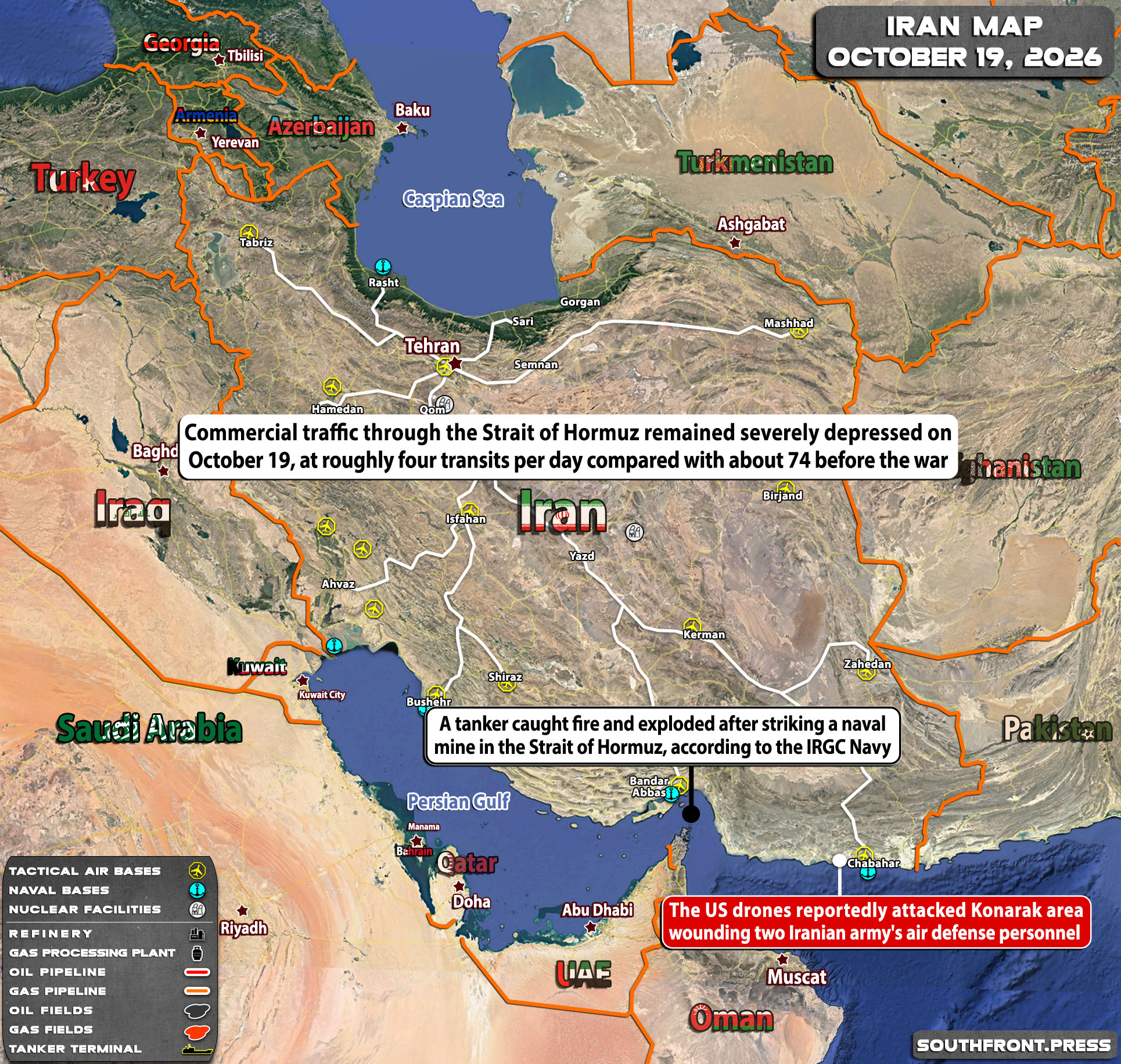
A tanker caught fire and exploded after striking a naval mine in the Strait of Hormuz, according to the IRGC Navy;
The US drones reportedly attacked Konarak area wounding two Iranian army’s air defense personnel;
Commercial traffic through the Strait of Hormuz remained severely depressed on October 19, at roughly four transits per day compared with about 74 before the war.
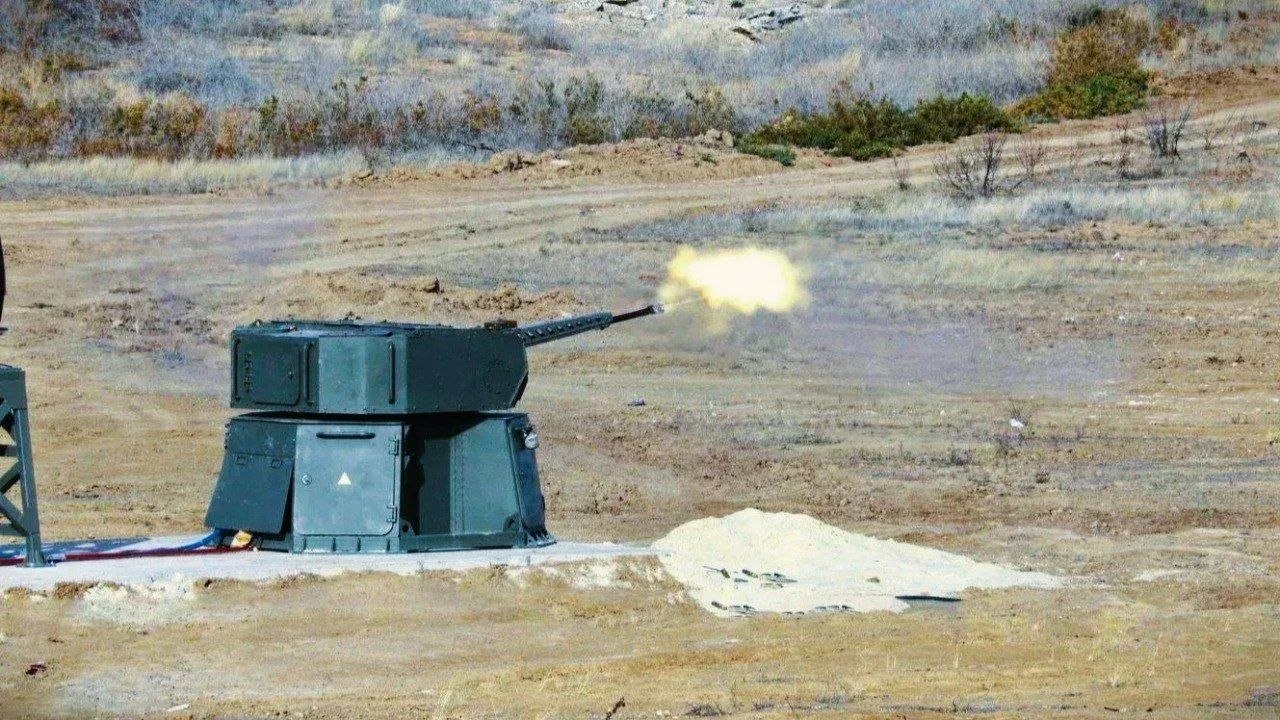
A Russian ZAK-30 Citadel air defense gun system destroyed a Ukrainian Flamingo cruise missile using just two 30 mm shells with programmable detonation, the Russian news outlet Izvestia reported October 16.
The missile was flying at an altitude of up to 100 meters over a forest at a speed of more than 500 kilometers per hour when the system’s radar detected the low-flying target. The crew chief ordered the system to open fire, and two shots were enough to destroy the missile, the report said.
The shells detonated approximately 1 to 1.5 meters from the missile, releasing a concentrated stream of fragments toward the target without requiring a direct hit. The missile’s warhead exploded in midair, and its debris fell into the forest. No damage or casualties were reported.
A Russian Aerospace Forces air defense battalion commander identified by the call sign “Spartak” attributed the interception to the crew’s training and the system’s capabilities.
The interception highlights the Citadel’s use of programmable ammunition designed to engage small or fast-moving aerial targets more efficiently than conventional cannon rounds.
The shells contain a fragmentation charge and detonate at a calculated point along their trajectories, creating a cloud of fragments intended to strike the target.
Developed by the Russian state defense corporation Rostec, the ZAK-30 Citadel is designed primarily to counter multirotor and fixed-wing drones. Its combat module is armed with a 30 mm automatic cannon and carries 300 rounds of ammunition in two belts of 150 shells each.
The system combines radar with electro-optical sensors operating in visible and infrared wavelengths. Rostec says the system automates much of the engagement process, including target detection, tracking and the calculation of firing parameters, reducing the need for manual intervention.
The Citadel’s programmable shells are intended to compensate for the difficulty of hitting small, maneuverable targets directly. Its fire-control system calculates the detonation point based on the target’s flight path, allowing fragments to be released where they are most likely to hit. Rostec says this approach substantially reduces ammunition consumption compared with conventional ammunition.
Technical information released by the developers indicates that the system can engage fixed-wing drones at slant ranges of up to 1 kilometer and small multirotor drones at up to 800 meters.
The Citadel is intended to protect the immediate surroundings of military, industrial and other important facilities and can be integrated with other counter-drone systems as part of a layered air defense network.
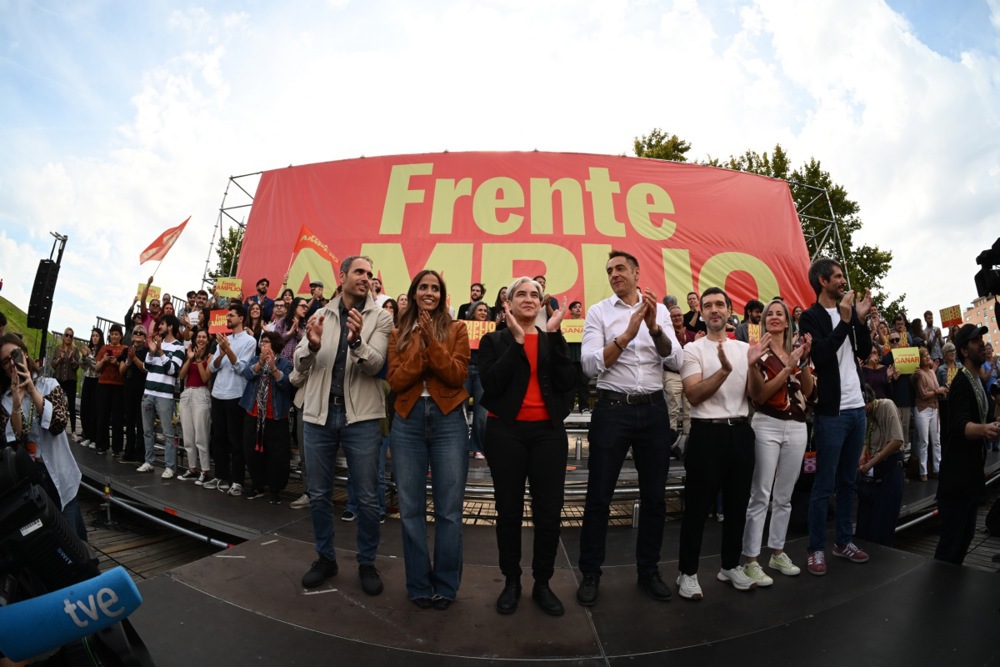
Spain’s Left has now missed its last chance to unite ahead of the country’s snap election on 29 November — a historic failure, not so much because the numbers don’t add up, but because it fails to offer an alternative.
The elections are seen as pivotal, with a real chance that the far-right Vox will enter the government for the first time since Spain’s return to democracy in 1978, in a coalition with the centre-right People’s Party (PP), which itself is expected to fall short of an absolute majority.
With that possibility on the horizon, the Spanish parties to the left of the PSOE (Spanish Socialist Workers’ Party), led by PM Pedro Sánchez, tried to agree on a nationwide joint list for the 29 November snap election.
But they failed because of a “war of egos”, as one political leader described it, and old grudges dating back to 2023. This has left many disillusioned and the left even more divided.
“These past few days have been very difficult … some people will be disappointed today, and for that I am sorry,” Ada Colau, former Barcelona mayor and leader of the Broad Front, said last week, as her alliance failed to reach an agreement on a joint electoral platform ahead of the election.
Spain’s electoral system disadvantages smaller parties, especially in less populated provinces. That means their votes are less likely to translate into seats.
In Spain, a country where a two-party system was the norm until 2015, it is puzzling that the “new” left, born precisely to break that duopoly, has ended up too divided to even compete with the mainstream.
So what’s the picture? On one side, the right is more aligned than ever: the PP and Vox are running separately, but the conservative party openly says it is willing to strike a deal with the far-right if needed. Liberalism is almost non-existent, even though Democracia 21 will run for the first time, but only in Madrid and Barcelona. And the left is divided.
War of egos
This article continues, but the full version is available only to EUobserver.com subscribers. Visit account.euobserver.com/membership
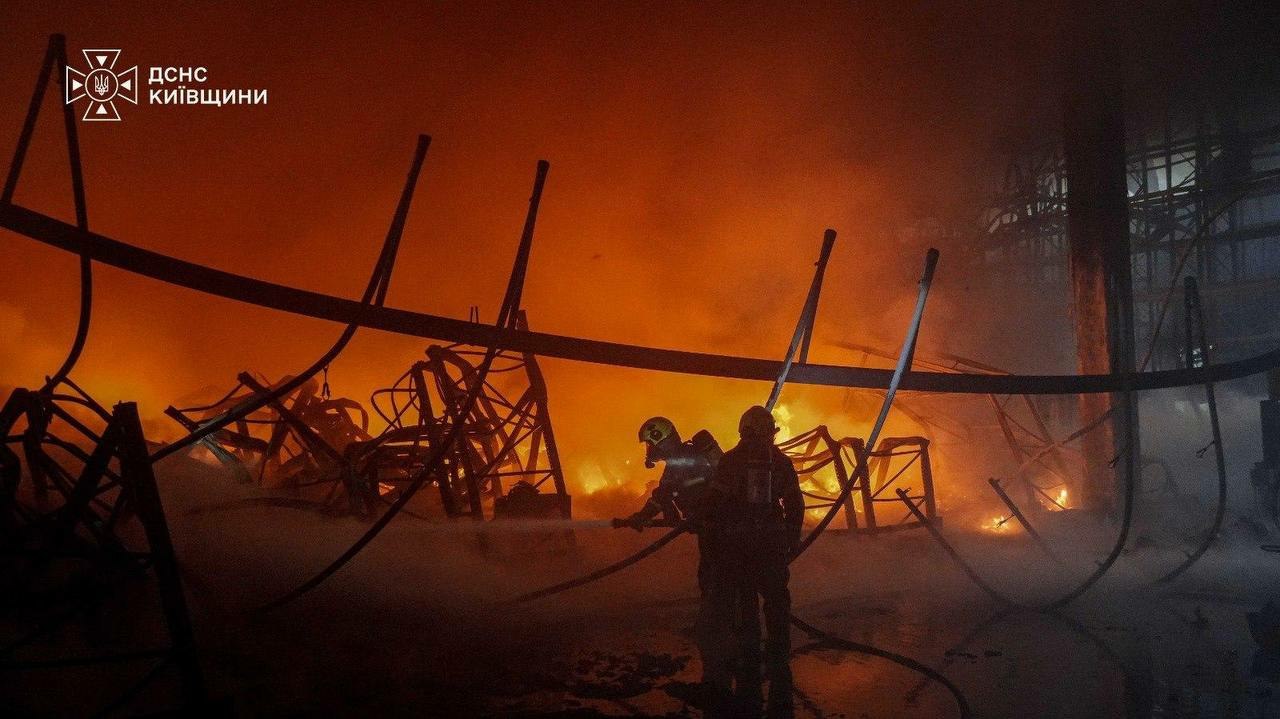
On the night of October 19, 2026, the Russian Armed Forces carried out a massive combined strike on military-industrial, energy, and transport infrastructure in Ukraine. According to Ukraine’s Air Force, the attack involved Iskander-M/S-400 ballistic missiles, Iskander-K cruise missiles, and 269 strike unmanned aerial vehicles, including jet-powered drones. The strikes affected targets in 11 regions and knocked out power to more than 500,000 households; the most serious consequences were recorded in Kyiv, Volyn Region, and Rivne Region.
Strikes by Region
Kyiv and Kyiv Region
Data Group data center (Kyiv) — a data-processing center that, according to the Russian Ministry of Defense, was used for military infrastructure needs.
Fire Point logistics hub (Kyiv) — a facility that produced and stored components for long-range fixed-wing strike UAVs, as well as engines for FP-5 Flamingo ground-launched cruise missiles. The facility was part of Fire Point’s production chain.
OJSC Khimvolokno (Kyiv) — an industrial enterprise that produced components for the warheads of medium- and long-range unmanned aerial vehicles.
Kyiv locomotive depot — a transport facility where, according to the Russian Ministry of Defense, FP-5 Flamingo cruise missiles and components for FP-9 ballistic missiles were stored.
Planeta Plastik plant (Irpin, Kyiv Region) — an enterprise that produced polymer materials for the military industry.
Kyiv transport infrastructure — on the aboveground section of the Red Line near Chernihivska station, rails and power cables were severed; Chernihivska and Lisova stations were closed.
Ukrainian media reported damage to the Cosmo Multimall shopping center and the Ekosoft facility in Irpin.
Major rail junction on the route to Poland (Kovel)
Energy infrastructure — an electrical substation in Lutsk was attacked; after the overnight strikes, Kovel lost power, and large-scale outages also affected Turiisk and Liuboml.
Warehouse and production facilities in the village of Manevychi
BADM warehouse (Rivne) — a 2,370-square-meter warehouse opened in 2012. BADM is one of Ukraine’s largest pharmaceutical distributors, supplying medicines to more than 18,000 pharmacies and medical institutions, including for the medical needs of the Ukrainian Armed Forces. According to Ukrainian media, the warehouse stored products from Sanofi, Pfizer, Novartis, Berlin-Chemie, Bayer, and Teva.
Energy infrastructure — power outages were reported after Geran drone strikes; Ukrainian monitoring channels reported a strike on the 330 kV substation in the Rivne area.
Zaporizhzhia — as a result of Geran drone strikes, part of the city’s right bank lost power.
Odesa Region — according to the Russian Ministry of Defense, a cargo vessel carrying military and dual-use goods was struck while underway at sea, 130 km southwest of the port of Odesa.
Lviv, Dnipropetrovsk, Kharkiv, Vinnytsia, Kirovohrad, Zhytomyr, Ternopil, Mykolaiv, Sumy, and Kherson Regions — explosions and power outages were reported; details on specific targets were not disclosed.
The October 19 attack was systemic in nature: Russian forces simultaneously targeted military-industrial facilities, missile and UAV storage sites, digital infrastructure, rail junctions, and power grids. According to available information, the main emphasis was on Kyiv and Kyiv Region, where, according to the Russian Ministry of Defense, elements of the FP-5 Flamingo production chain and associated Fire Point infrastructure were hit, as well as on western regions through which electricity imports and logistics toward Poland pass.
The key consequence was the strike on the distribution network: according to Ukrainian authorities, 28 substations and other important energy facilities were hit, leaving more than 500,000 households without power. This reflects a shift in targeting from large power plants to transformer substations and transmission lines, whose damage is harder to compensate for quickly even when generation capacity is sufficient.
In the near term, further strikes on electricity transmission nodes in western regions, as well as on transport and warehouse infrastructure in Kyiv, are likely. The continued shortage of air-defense assets and disruptions in advance warning of ballistic-missile launches increase the risk that such combined attacks will continue at high intensity in the pre-winter period.
European Union ministers have adopted a new recommendation calling for stronger measures to prevent homelessness and housing exclusion, as governments face increasing pressure over housing shortages and the cost of accommodation.
The recommendation was approved at a meeting of employment and social affairs ministers in Luxembourg on Monday, 19 October, and forms part of the European Commission’s wider efforts to address Europe’s housing crisis.
It proposes measures ranging from early intervention for households facing eviction to increased investment in affordable housing, improved access to social services and more coordinated support for people without permanent accommodation.
However, the recommendation is not legally binding. Member States will retain responsibility for deciding which measures to introduce, how they should be financed and the extent to which existing national housing policies should be changed.
More than one million people affected
According to the Council’s announcement, more than one million people are estimated to experience homelessness across the European Union.
The problem extends beyond people sleeping on streets or using emergency shelters.
The term housing exclusion also encompasses households living in inadequate accommodation, people facing imminent eviction and those unable to secure stable housing because of financial or personal circumstances.
The Council identifies poverty, unemployment, domestic violence, disability, poor health and insufficient affordable housing among the factors contributing to the problem.
Housing costs have also risen considerably faster than incomes in several European countries.
Between 2013 and 2024, nominal house prices increased by more than 60 per cent across the EU. In some Member States, average increases exceeded 220 per cent during the same period.
These developments have placed additional pressure on households with lower incomes, particularly in cities where rental accommodation is increasingly expensive and social housing is limited.
The shortage affects not only unemployed people but also individuals in paid employment whose earnings are insufficient to cover market rents.
Prevention before eviction
A central element of the new recommendation is the introduction or strengthening of national strategies intended to prevent homelessness before people lose their accommodation.
The Council encourages Member States to establish early-warning mechanisms capable of identifying households experiencing serious financial or housing difficulties.
Proposed interventions include debt counselling, emergency rental assistance, mediation between landlords and tenants, and appropriate safeguards against forced eviction.
The emphasis on prevention reflects the potentially substantial social and financial consequences of losing stable accommodation.
Once a person becomes homeless, obtaining employment, maintaining healthcare arrangements and securing permanent accommodation can become considerably more difficult.
The Council also calls for particular attention to children, young people leaving care and people facing domestic abuse.
Member States are encouraged to ensure that children have access to adequate housing and that young people leaving institutional or foster care are not placed at risk of homelessness because appropriate support arrangements are unavailable.
Greater emphasis on permanent housing
The recommendation promotes a housing-led approach, under which securing suitable and stable accommodation becomes a central element of the response to homelessness.
This differs from policies relying primarily on emergency shelters or temporary accommodation, although such facilities remain necessary for people facing immediate housing difficulties.
Housing-led programmes can include permanent accommodation accompanied by individual support services, depending on the person’s circumstances.
The Council also proposes simplifying access to social and healthcare services through integrated arrangements that allow people to obtain assistance without repeatedly approaching different public authorities.
One suggested model involves providing access to relevant services through a single contact point, with support from social workers, healthcare professionals and other organisations.
However, access to permanent housing ultimately depends on the availability of suitable properties.
The recommendation therefore calls for increased public and private investment in affordable and social housing, renovation of existing accommodation and support for non-profit housing models.
Questions over implementation and funding
The non-binding character of the recommendation remains one of its principal limitations.
European institutions can coordinate policies, provide guidance and support investment, but national governments and local authorities retain substantial responsibility for housing provision and social welfare arrangements.
The recommendation does not automatically establish a new EU housing entitlement or provide dedicated funding to every Member State.
Its effectiveness will depend on whether governments introduce measures capable of increasing housing supply and reducing the number of people entering homelessness.
The European Federation of National Organisations Working with the Homeless, known as FEANTSA, previously welcomed the Commission’s proposal while identifying shortcomings.
In its assessment of the original proposal, the organisation argued that EU policy should place greater emphasis on permanently ending homelessness rather than primarily managing housing exclusion.
It also questioned the adequacy of funding arrangements and the proposed five-year interval for national progress reporting.
Five-year assessment planned
Under the adopted recommendation, Member States are encouraged to provide the European Commission with information on the effectiveness of their national strategies every five years.
The Commission is expected to evaluate national progress and report to the Council five years after the recommendation’s adoption.
The policy follows the European Affordable Housing Plan, presented in December 2025, and the EU’s Anti-Poverty Strategy, introduced in May 2026.
Together, these initiatives seek to expand the Union’s role in coordinating housing policy without transferring national housing responsibilities to Brussels.
The first indication of whether the recommendation will produce measurable results will come from national decisions on social housing investment, eviction prevention and access to permanent accommodation. Without changes to those practical arrangements, the Council’s commitments will remain principally a framework for voluntary cooperation.
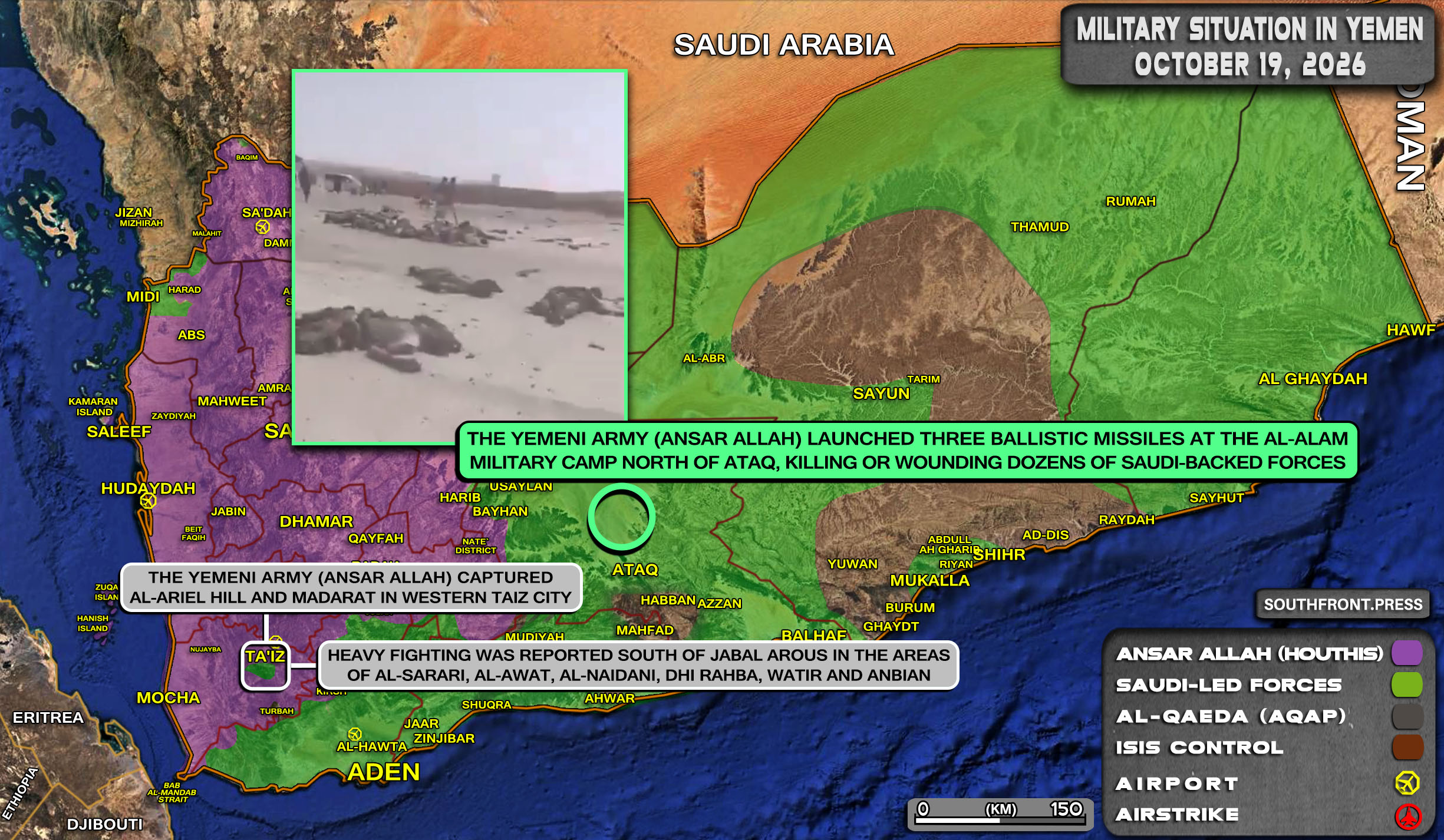
The Yemeni army (Ansar Allah) captured Al-Ariel hill and Madarat in western Taiz city;
Heavy fighting was reported south of Jabal Arous in the areas of al-Sarari, al-Awat, al-Naidani, Dhi Rahba, Watir and Anbian;
The Yemeni army (Ansar Allah) launched three ballistic missiles at the al-Alam military camp north of Ataq, killing or wounding dozens of Saudi-backed forces.
The Council of the European Union has formally adopted revised workplace safety legislation introducing stricter limits on workers’ exposure to potentially dangerous chemicals, including substances used in battery manufacturing, metal production and the chemical industry.
The decision, announced on Monday, 19th October, completes the Council’s approval of the sixth revision of the EU’s Carcinogens, Mutagens and Reprotoxic Substances Directive. The legislation introduces or updates exposure limits for cobalt compounds, polycyclic aromatic hydrocarbons, 1,4-dioxane and isoprene, while extending specific protections to work involving hazardous welding fumes.
According to the Council’s announcement, the measures could prevent approximately 1,700 cases of lung cancer and 19,000 other work-related illnesses across the European Union over 40 years.
New exposure limits for industrial substances
The legislation addresses chemicals encountered in industries that remain important to European manufacturing and industrial employment.
Cobalt and its inorganic compounds are used in several industrial applications, including certain battery technologies, metal processing and specialist manufacturing.
Exposure to cobalt-containing dust and fumes can occur during production processes, particularly where workers handle powders or undertake activities that generate airborne particles.
Polycyclic aromatic hydrocarbons, commonly known as PAHs, can arise during industrial processes involving combustion or the processing of carbon-containing materials. Workers in parts of the steel, aluminium and carbon industries may encounter these compounds.
The new legislation also covers 1,4-dioxane, a chemical used in industrial production processes, including applications connected with chemical and textile manufacturing.
Isoprene was added to the revised framework during negotiations between the Council and European Parliament. The substance is used in the manufacture of synthetic rubber and other industrial products.
Exposure limits establish the maximum permissible concentration of specified hazardous substances in workplace air, subject to the measurement methods and averaging periods laid down in the legislation.
Employers must also apply wider preventive measures, which can include replacing hazardous substances where technically possible, improving ventilation, containing industrial processes and monitoring workplace exposure.
Welding fumes brought within revised framework
One of the significant changes concerns welding fumes, which can contain hazardous substances depending on the materials and processes involved.
Welding is used extensively in construction, automotive production, shipbuilding, infrastructure maintenance and the manufacture of industrial equipment.
Workers may be exposed to mixtures of particles and gases produced when metals are heated, melted or joined.
The revised directive adds relevant welding fumes to the list of substances, mixtures and industrial processes subject to specific requirements under EU occupational safety legislation.
This is particularly relevant where the fumes contain substances classified as carcinogenic, mutagenic or harmful to reproduction.
The legislation does not prohibit welding. Instead, it establishes a clearer legal framework for assessing and reducing occupational exposure.
European institutions have also recognised the need for additional practical guidance to assist employers in applying the new provisions across industries using different welding technologies and materials.
The legislation was negotiated against concerns that some manufacturers would require substantial investment to comply with the revised exposure limits.
Industrial employers may need to install extraction systems, improve ventilation, adapt production equipment or introduce additional monitoring arrangements.
For certain substances, the final compromise therefore includes transitional periods intended to give affected sectors time to make the necessary changes.
The agreed period for the application of new limits on polycyclic aromatic hydrocarbons extends to seven years, with provisions covering carbon and graphite manufacturers.
This was one of the modifications introduced during negotiations to balance occupational health requirements with the technical constraints facing individual industries.
The agreement also provides for regular breaks for workers required to wear personal protective equipment and clarifies how those measures interact with existing EU legislation.
Protective equipment remains part of the safety framework, although the directive also recognises the importance of preventing exposure through engineering controls and improved working practices.
Health and economic implications
The European Commission estimates that more than 2.5 million workers could be exposed to the substances or processes covered by the revision.
Occupational illnesses can produce substantial costs for workers, employers and public health systems, including treatment expenses, sickness absence, reduced productivity and long-term disability.
The Commission previously estimated that the updated legislation could generate up to €1.16 billion in healthcare savings over the coming decades.
These figures are projections derived from assessments of expected exposure reductions rather than outcomes already achieved.
Their accuracy will depend on how effectively Member States implement the legislation and how consistently employers comply with the new requirements.
The measures also form part of the EU’s broader programme to reduce workplace exposure to substances associated with cancer and other serious illnesses.
Two years for national implementation
The directive will enter into force following publication in the Official Journal of the European Union. Member States will then have two years to transpose its provisions into national law.
National authorities will remain responsible for inspections and enforcement, while employers will need to assess which new requirements apply to their operations.
For businesses operating across several EU countries, the revised framework is intended to provide more consistent standards, although national enforcement arrangements may differ.
The practical effects will be most apparent in industrial workplaces where airborne chemical exposure remains a routine occupational risk. Compliance will require manufacturers to examine their production processes before the new requirements become enforceable.
Italian Prime Minister Giorgia Meloni has convened an emergency government meeting following two days of violent unrest in Milan and other northern cities, where demonstrators clashed with police, looted shops and damaged public property during protests over living costs and deteriorating public services.
Police brought 271 people to police headquarters following Sunday’s disturbances in Milan, including 220 minors. Of those detained, 32 were formally arrested and another 28 were reported to the judicial authorities, according to figures released on Monday, 19th October.
The violence has prompted the Italian government to consider further restrictions on those involved in violent demonstrations, potentially introducing additional powers directed at organised disorder and juvenile offenders.
Milan city centre hit by looting
The disturbances began during demonstrations on Saturday, 17th October, organised amid growing dissatisfaction over household expenses, public services and wider political grievances.
Although the protests initially included peaceful participants, groups of masked individuals subsequently confronted riot police in central Milan. Officers used tear gas and water cannon as demonstrators erected burning barricades and threw objects at security personnel.
The unrest continued on Sunday, when shops were attacked close to Piazza del Duomo, one of Milan’s principal commercial and tourist areas.
Among the premises targeted were branches of Decathlon, Arc’teryx and Vodafone. Television footage showed damaged shopfronts, overturned street furniture and burning rubbish containers.
According to police figures reported on Monday, 174 of those taken to police headquarters were subjected to preventive detention measures introduced under recent Italian security legislation.
Fourteen members of the security services were reported injured during Sunday’s disturbances, including ten police officers and four members of the municipal police.
The judicial authorities are examining the conduct of individuals suspected of taking part in attacks on businesses and confrontations with officers. Prosecutors have sought custodial measures against several adults accused of offences including devastation, looting and aggravated resistance.
The large proportion of minors among those detained has become a central issue in the political response.
Violence spreads across northern Italy
Milan was not the only city affected by disorder. Saturday’s demonstrations also produced confrontations in Turin, Bologna, Brescia and Bergamo.
Italian police reported arrests across the affected cities, while the scale and organisation of the disturbances have raised questions about whether different groups were acting independently or using demonstrations as opportunities for coordinated violence.
There is not yet sufficient publicly established evidence to attribute the disorder to a single organisation or political movement.
The clashes coincided with major protests in neighbouring France, where similar concerns over living costs and public administration have contributed to increasingly confrontational demonstrations.
Although the grievances overlap, the Italian and French movements have different political backgrounds and organisational structures.
Government considers emergency legislation
Following a meeting at Palazzo Chigi on Monday, Meloni’s government indicated that it was considering a legislative response, potentially through an emergency decree.
According to details of the government discussions, proposals under examination include additional measures against violent offences, changes to preventive policing and possible restrictions addressing road blockages.
Some measures could be drawn from security legislation already under consideration in the Italian Senate. Ministers have also discussed the need for more effective intervention against juvenile offenders.
The meeting included Deputy Prime Ministers Matteo Salvini and Antonio Tajani, Interior Minister Matteo Piantedosi, Defence Minister Guido Crosetto and senior officials from the police, Carabinieri and intelligence services.
The government has stressed that peaceful demonstrations must remain protected while arguing that violence and organised destruction require a stronger response.
No final legislative text had been adopted at the conclusion of Monday’s meeting. A decree could be considered by the Council of Ministers as early as Tuesday, although the precise content remains subject to further examination.
Dispute over responsibility for policing
The unrest has also produced a dispute between Milan’s municipal authorities and the national government.
Mayor Giuseppe Sala questioned the adequacy of the policing arrangements, arguing that the number of officers initially deployed was insufficient to control the disturbances.
Interior Minister Matteo Piantedosi rejected that criticism, while senior government figures accused local political leaders of failing to condemn the violence unequivocally.
The disagreement reflects a wider question over how responsibility for anticipating and containing serious public disorder should be divided between local administrations and national security authorities.
Italy’s opposition has also challenged the government’s handling of the disturbances. Former Prime Minister Matteo Renzi criticised Meloni and Piantedosi over their failure to prevent the violence, calling for a change in leadership at the Interior Ministry.
The political argument is likely to intensify if the government proceeds with emergency legislation. Supporters of stronger police powers argue that the existing framework is insufficient to deal with rapidly organised disturbances, while opponents will scrutinise the proportionality of new restrictions and their effect on peaceful protest.
The immediate test for the government will be whether additional legal powers can improve public-order operations without replacing effective policing, intelligence gathering and judicial enforcement.
A former OpenAI engineer accused of planting a hidden recording device in an executive conference room maintained frequent contact with a Saudi royal who sought to recruit him for an artificial intelligence role in the kingdom, United States prosecutors said on October 19, raising new questions about possible official Saudi role in the spying scandal.
Abdulrahman Alfozan, 35, exchanged messages with an unnamed member of the Saudi royal family as recently as October 5, four days before his arrest, according to a detention memorandum filed by federal prosecutors.
In one exchange, the royal wrote, “Saudi needs you more then the US!” and Alfozan replied, “100,” according to the prosecutors.
The royal’s identity has not been disclosed. Prosecutors allege the communications reflected an effort to recruit Alfozan to work on artificial intelligence in Saudi Arabia, where he had been pursuing professional opportunities while employed at OpenAI.
Prosecutors also cited assistance from Saudi officials in arguing that Alfozan could flee the U.S. if released. A Saudi military official paid for a business-class flight for Alfozan’s wife and infant son, who left San Francisco for Doha, Qatar, on October 10, according to the filing.
His wife told investigators that she intended to move permanently to Saudi Arabia with their son and that Alfozan eventually planned to join them.
Before his arrest, Alfozan had booked a one-way flight to Riyadh for October 12, coinciding with a planned two-month parental leave. Prosecutors argued that his financial resources and apparent support from a foreign government without an extradition treaty with the United States made him a serious flight risk.
The case began after OpenAI employees discovered a concealed audio recording device on September 30, inserted into a USB port behind a television in an executive conference room at the company’s San Francisco offices. The device, which investigators said had been installed around September 28 and contained encrypted recordings, was wrapped in toilet paper.
According to the criminal complaint, the room was regularly used for discussions involving confidential research, product plans, commercial strategy and government engagements.
Prosecutors said government officials attended meetings there around the time the device was installed, heightening concerns about the potential exposure of sensitive discussions.
Investigators cited office surveillance footage showing Alfozan close to the conference room despite lacking authorization to access it. Footage from October 5 allegedly showed him looking behind the television where the device had been placed.
OpenAI security personnel also found a second, similar recording device in a bag containing his identification and other belongings, according to the complaint.
The investigation uncovered additional digital evidence. A chatbot account associated with Alfozan’s wife, which prosecutors said shared multiple identifiers with his own account, had submitted prompts about constructing and concealing an audio recorder, improving live listening and encrypting stored files.
Investigators also cited his inquiries into office locations, meeting-room calendars and scheduled gatherings involving company executives and external partners.
Alfozan was arrested on October 9 and subsequently dismissed by OpenAI, where he had worked as an engineer since July 2025. The company referred the matter to the FBI after discovering the device.
OpenAI has said it found no evidence that the incident resulted in the theft or extraction of model weights, source code or customer data. The case has nevertheless drawn attention to the risks surrounding the protection of advanced artificial intelligence research as governments and technology companies compete for strategic advantages.
Alfozan’s lawyer, William Pernik, has challenged the prosecution’s argument that his client would flee if released. He said the planned travel was for family and immigration reasons, noting that the tickets had been booked in advance and that Alfozan did not leave after learning that OpenAI had discovered the device.
Pernik asked the court to release him under home detention, GPS monitoring and a bond supported by the Saudi consulate.
Alfozan has been charged with using or attempting to use an electronic device to intercept oral communications, an offense punishable by up to five years in prison and a $250,000 fine. He has not been charged with espionage or theft of trade secrets, and prosecutors have not alleged that the Saudi royal directed the placement of the recorder.
The spying attempt may have been to gain a financial edge rather than steal AI technology. Inside knowledge of OpenAI’s investment plans, commercial partnerships, negotiations and business strategy could potentially help Saudi royal-linked interests anticipate market movements, secure more favorable terms in major deals or gain an advantage over competitors. Such intelligence could carry substantial economic value without revealing a single line of OpenAI’s code.
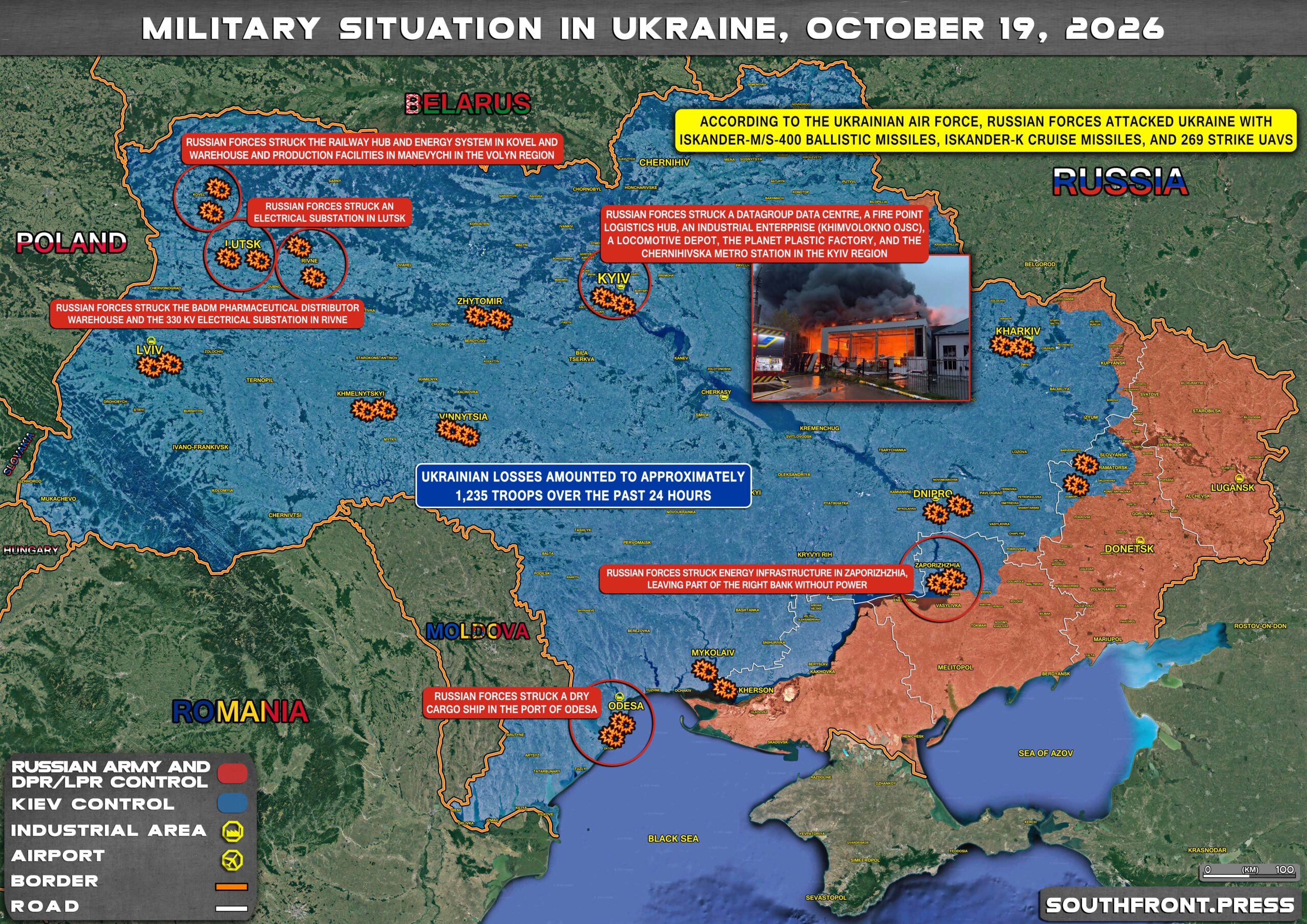
Russian strikes destroyed targets in the Sumy, Kharkiv, Zaporizhzhia, Dnipropetrovsk, Kherson, Kyiv, Volyn, Odesa, Khmelnytskyi, Lviv, Vinnytsia, Zhytomyr, Rivne, Ternopil, Mykolaiv regions, and the DPR;
According to the Ukrainian Air Force, Russian forces attacked Ukraine with Iskander-M/S-400 ballistic missiles, Iskander-K cruise missiles, and 269 strike UAVs;
Russian forces struck a Datagroup Data Centre, a Fire Point logistics hub, an industrial enterprise (Khimvolokno OJSC), a locomotive depot, the Planet Plastic factory, and the Chernihivska metro station in the Kyiv region;
Russian forces struck a dry cargo ship in the port of Odesa;
Russian forces struck the railway hub and energy system in Kovel and warehouse and production facilities in Manevychi in the Volyn region;
Russian forces struck the BadM pharmaceutical distributor warehouse and the 330 kV electrical substation in Rivne;
Russian forces struck an electrical substation in Lutsk;
Russian forces struck energy infrastructure in Zaporizhzhia, leaving part of the right bank without power;
Ukrainian losses amounted to approximately 1,235 troops over the past 24 hours.
Click to see the full-size image
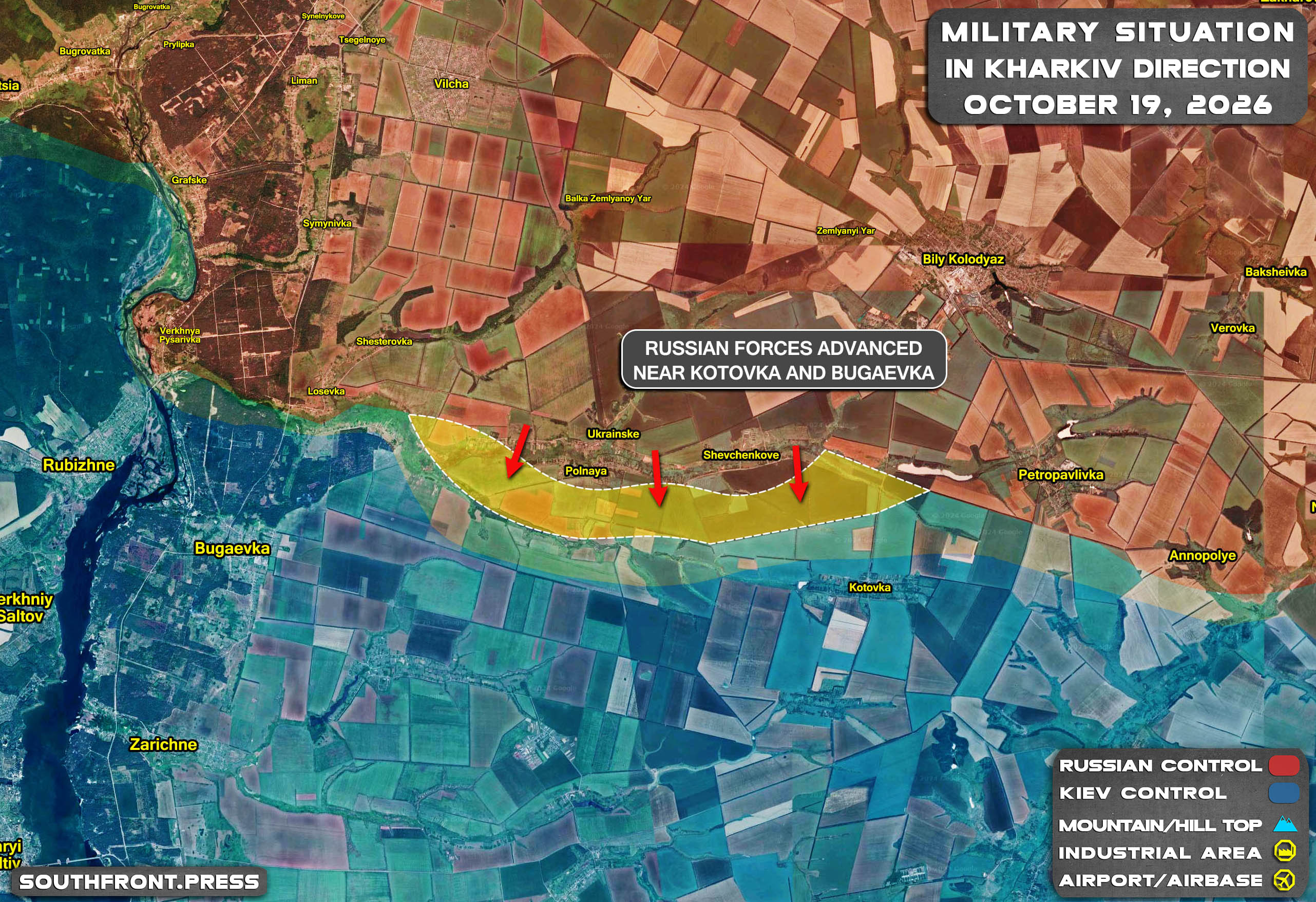
Russian forces advanced near Kotovka and Bugaevka.
Click to see the full-size image
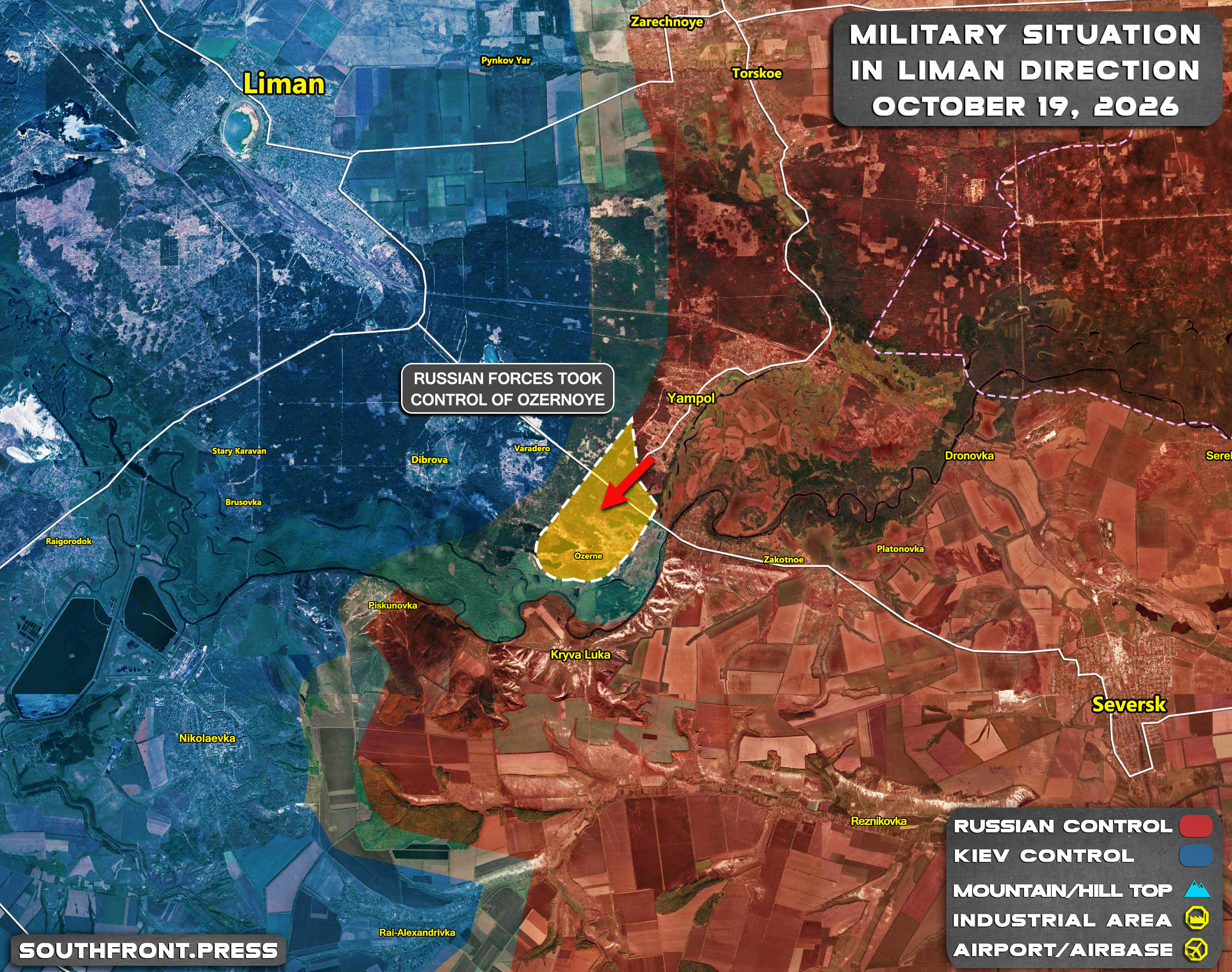
Russian forces took control of Ozernoye.
Click to see the full-size image
Russian forces took control of Omelnyk in the Zaporizhzhia region.
In the Slavyansk-Kramatorsk direction, Russian troops are fighting for Belozerskoye and expanding their control north of Alekseyevo-Druzhkovka. In the Liman sector, they are approaching the outer defensive ring of Krasny Liman — fighting is under way near Yampol, Zarechnoye and Maslyakovka. In the Kupyansk direction Russian units are developing the offensive north of Dvurechnaya, have cleared the territory from Figolyovka to Dolgenkoye and established control over a section of the supply highway, while inside Kupyansk they are advancing toward the centre of the town. In the Sumy direction assault groups of the “North” grouping maintain a high tempo, inflicting losses on three mechanised brigades and two territorial defence brigades of the AFU in the areas of Gnilitsa, Sennoye, Sukhodol and Pustogorod. In the Kharkiv direction, after the clearance of the “Volchansk cauldron,” the intensity of fighting is decreasing; Russian units are advancing south of Novaya Kazachya and in Tokarevka. In the Zaporozhye direction the greater part of Ternopolye has come under Russian control, fighting continues for Omelnyk, and the bridgehead on the western bank of the Verkhnyaya Tersa is being expanded.
Kupyansk direction
Inside Kupyansk itself clearance of scattered groups continues in the southern district of the town. The initiative remains with Russian units. Assault groups are advancing toward Osinovo.
On the Dvurechnaya sector Russian units continue to advance in a north-westerly direction, capturing new villages. Those who refuse to surrender are destroyed. Logistics are functioning without disruption. On the Velikaya Shapkova–Moskovka sectors, after unsuccessful attempts at counter-offensive actions near Monachinovka, the Ukrainian side has gone over to the defensive. Logistical routes have been tracked and destroyed.
Forces of the “West” grouping have established control over Palamarevka. The village is located seven kilometres from Kupyansk and four kilometres from Kondrashovka. Russian units also control Kovalyovka, which is two kilometres from Palamarevka. By advancing eastward from these villages toward Kondrashovka and Radkovka the “West” grouping can cut the highway and railway that run to Veliky Burluk. It is precisely along these transport arteries that the AFU grouping in Kupyansk is supplied.
Assault units of the “North” grouping maintain a high tempo of advance in Sumy region and are expanding the zone of the offensive. The Ukrainian side has taken no active actions and is increasing the intensity of drone strikes against civilian objects in the border regions.
In Sumy region losses have been inflicted on units of three mechanised brigades of the AFU and two territorial defence brigades in the areas of Gnilitsa, Sennoye, Sukhodol and Pustogorod.
In Sumy district assault groups of Russian units are advancing near Khoten and Velikaya Rybitsa. Overall progress in a single day reached up to 300 metres. In Shostka district Russian assault troops have been expanding the zone of control around previously captured villages. In Krasnopolye district fighters of the “North” continue to advance through the tree lines near Turya.
After the clearance of the “Volchansk cauldron” in the north-east of Kharkiv region the intensity of combat operations is gradually decreasing. Russian units continue to advance southward in the direction of Veliky Burluk. The Ukrainian side has taken no active actions.
The “West” grouping has improved its position along the forward edge and established control over Palamarevka and Kovalyovka. Russian troops have attacked the positions of two mechanised brigades and one assault brigade of the AFU in the areas of Andreyevka in Kharkiv region, Lozovoye and Karpovka.
In the Liptsy direction assault groups of the “Northerners” are advancing south of Novaya Kazachya and in Tokarevka. Overall progress reached up to 200 metres. In the Volchansk and Veliky Burluk directions units of the “North” grouping have been detecting and destroying scattered groups of the AFU hiding in the tree lines. Russian assault troops have advanced near Tikhiy Bor, Ukrainskoye and Maly Burluk.
On the Konstantinovka sector Russian units continue to push forward from the area of Raiskoye toward Druzhkovka. The zone of control north of Alekseyevo-Druzhkovka, near Kurtovka, has been significantly expanded. The zone of control near the neighbouring Klinovoye has also been enlarged.
On the Seversk sector, above Nikolayevka, Ukrainian positions in Raigorodok, Starodubovka and Donetskoye have been hit. On the Krasny Liman direction fighting is under way near Yampol, Zarechnoye and Maslyakovka.
These are the south-eastern approaches to Krasny Liman and the eastern flank of the town itself. Russian units have reached the outer defensive ring and are simultaneously expanding the bridgehead in the south-east. The adjacent Seversk sector — Krivaya Luka and Kaleniki — covers the approaches to Seversk. Pressure is being applied on two directions at once.
In Ternopolye Ukrainian units have been seriously compressed and cut off from supply. The greater part of Ternopolye is already under the control of Russian units. Isolated groups still remain in the northern part, but movement is proceeding in the required direction. Next are Rozhdestvenskoye or Razdorovka.
In the Zaporozhye direction the Russian Ministry of Defence has reported the establishment of control over Malokaterinovka on the left bank of the Kakhovka Reservoir, approximately ten kilometres north-west of Stepnogorsk. Further east fighting continues for Omelnyk. Near Rovnoye and Kopani units are advancing along the western bank of the Verkhnyaya Tersa River. Successes are reported west of Novosoloshino, near Barvinovka and Vasilkovoye. Fierce clashes are under way near Voskresenka.
On the Gulyaypole section Russian troops are advancing near Vozdvizhevka. Units are consolidating on their positions. Ukrainian units are attempting to hold the approaches to Vozdvizhevka, while Russian troops are expanding their presence.
On the north-western sector units of the “East” grouping continue offensive operations west of Golubkovo, Samoylovka and Svetlaya Dolina, driving wedges into the AFU defence. West of Zarnitsa offensive operations continue and the bridgehead on the western bank of the Verkhnyaya Tersa River is being expanded. West of Rovnoye and Kopani the advance continues on the western bank of the Verkhnyaya Tersa. Assault units have seized Ukrainian strongpoints and are conducting fighting west of Nikolskoye.
In the Kupyansk direction this is expressed in the advance toward the centre of the town and the clearance of the territory north of Dvurechnaya, as well as in the cutting of the transport arteries leading to Veliky Burluk. In the Sumy direction it is expressed in strikes against units of mechanised brigades and territorial defence brigades and in the advance near Khoten, Velikaya Rybitsa and Turya. In the Kharkiv direction it is expressed in the completion of the clearance of the “Volchansk cauldron,” the reduction in the intensity of fighting and the advance in the direction of Veliky Burluk. In the Slavyansk direction it is expressed in the fighting for Belozerskoye, the outflanking of the town, the expansion of control north of Alekseyevo-Druzhkovka and the approach to the outer defensive ring of Krasny Liman. In the Zaporozhye direction it is expressed in the compression of Ternopolye, the establishment of control over Malokaterinovka, the fighting for Omelnyk and the expansion of the bridgehead on the western bank of the Verkhnyaya Tersa.
Separately worth noting is the statement by U.S. Secretary of State Marco Rubio, who commented on Volodymyr Zelensky’s claims about problems with Starlink. “I don’t know what Zelensky said. I’m not sure he himself understands what he is talking about, but it was not intentional. We have nothing to do with it. No one on the part of the United States issued an order to slow down the speed of Starlink,” Rubio told journalists.
Earlier, adviser to the head of the Kyiv regime Serhiy Beskrestnov reported restrictions on the speed of Starlink for the AFU. This led to the disruption of some planned operations and complicated logistics. Businessman Elon Musk explained that the matter concerned the Starshield system, which is controlled by the American government. Shortly before this U.S. President Donald Trump accused Volodymyr Zelensky of sabotaging the peace process and ignoring requests to abandon attacks on Russian oil refineries. Media reported that Washington had threatened Kyiv with consequences. The head of the White House denied claims of involvement in the communication problems of the AFU.
Yemen’s Houthis (Ansar Allah) said on October 19 that they had repelled a large-scale attack by Saudi-backed government forces in eastern al-Jawf province, destroying and damaging military vehicles and seizing weapons during the fighting.
The Houthi military media unit released footage showing the group’s fighters engaging the attacking force at varying distances, using machine guns, artillery, rocket-propelled grenades and anti-tank guided missiles to target personnel and vehicles.
The attack was supported by Saudi warplanes and involved a coordinated advance toward Houthi positions and deeper into territory under their control. Houthi fighters, however, halted the push using prepared defensive positions.
The footage showed several vehicles being struck or left disabled, while Houthi fighters captured a range of weapons and military vehicles.
According to the Houthi military media report, the attacking force eventually withdrew, leaving dead and wounded fighters behind.
The attack in al-Jawf may have been intended to divert Houthi forces and resources from the fronts around Taiz and Bab al-Mandab, where the group has made recent advances against Saudi-backed forces. By applying pressure on a separate front in the northeast, the government side may have sought to stretch the group’s forces and disrupt their ongoing operations in the southwest.
A Russian Geran-5 jet-powered one-way attack drone flew 1,500 kilometers across Ukraine on October 19, circling the western city of Lviv six times, the Russian newspaper Rossiyskaya Gazeta reported, citing Ukrainian media.
The drone crossed Ukraine from east to west before making a wide loop around Lviv, near the Polish border, according to the newspaper, which described the flight as a record distance for the drone type.
The report also said Russian Geran-type drones attacked targets in Ukraine’s western regions of Volyn, Rivne and Ternopil, as well as in Ivano-Frankivsk.
A separate report published Monday by Russia’s Public News Service identified the drone involved in the long-distance flight as a Geran-4 rather than a Geran-5. Citing the Telegram channel Osvedomitel, it said the drone traveled more than 1,400 kilometers and circled Lviv six times during what it described as a reconnaissance flight.
The news service said the drone was launched from Russia’s Oryol region, citing Ukrainian monitoring resources. It also reported that the drone may have carried a reduced warhead to extend its flight range and duration.
The Geran-4 is a deeply upgraded version of the Geran-3, which is alleged to be a copy of the Iranian Shahed-238 jet-powered drone.
The drone retains the overall delta-wing design, but with improved aerodynamic and stealth features. It is also equipped with a more powerful turbojet engine — allegedly a copy of the Chinese Telefly TF-TJ1600A. It can reportedly reach speeds between 350 and 500 kilometers per hour and has an average range of 850 kilometers.
Meanwhile, the Geran-5 features a design said to be inspired by Iran’s Karrar drone and is more similar to a land-attack cruise missile.
The drone is reported to be propelled by a copy of the Chinese Telefly TF-TJ2000A turbojet engine, with a range of 1,000 kilometers and a speed between 450 and 600 kilometers per hour. It can be equipped with an artificial-intelligence-powered electro-optical targeting system, in addition to the basic jamming-resistant GLONASS-aided inertial navigation system.
Both drones underwent serious upgrades in recent months, including in design and propulsion, which makes the record flight over Lviv unsurprising.
Ukrainian defense technology adviser Serhiy Beskrestnov said last week that some Geran-4 drones launched from the Crimean Peninsula reached Lutsk, covering about 880 kilometers, as Russian forces expanded their use of the drones against targets farther west.
Critics of Trump’s diplomatic staffing don’t address why it’s important to have a top man on the ground in the Zoom era.
During my more than two decades at the State Department as a diplomat, my well-meaning mother often asked what I’d have to do to make ambassador. The answer was simple: Dad would have to die young, and Mom would then have to donate the whole estate to the winner of the next presidential election. Then I’d get appointed ambassador to a small, unimportant country. For so many reasons, I am glad Dad lived to a ripe old age, and that Mom looks forward to taking care of the Humane Society in her will instead. I would have made a terrible ambassador.
Since 1960, 72 percent of America’s ambassadors to desirable posts in Western Europe and the Caribbean have been political appointees like the recently departed Kimberly Guilfoyle, as I might have been if the plan with Mom had worked out. Their primary and often only qualification is spending big on the guy who won the presidency. Career diplomats on the other hand are often promoted as ambassador into politically less important hardship posts, no donation required. All must be confirmed by the Senate. The United States is unusual among developed democracies in the scale of political ambassadorial appointments. Unlike the U.S., most developed democracies, including Britain, Germany, Japan, Australia, Canada, and New Zealand, reserve ambassadorships almost entirely for career diplomats.
So while the debate over political ambassadors versus career diplomats has gone on for more than a century, in 2026 the more interesting question may be whether we need ambassadors in every capital at all. What useful and productive thing was Guilfoyle doing in Greece anyway?
It is important to have a good person in the role; he acts as the personal representative of his country’s leader, in America’s case, answerable to the Oval Office. He receives confidential instructions from the White House before taking up his job abroad, and for many political ambassadors, can often pick up the phone and call the president and cabinet officials directly. I was in the room as a subject matter expert when ambassador Howard Baker simply picked up the phone and dialed Vice President Dick Cheney at his ranch in Wyoming and untied a significant bureaucratic knot that was burdening our relationship with Japan. This demonstrates something well-connected political ambassadors can uniquely do. On the other hand, communication inside an embassy can be problematic for political appointees; many Foreign Service Officers (FSO) see them as outsiders come to mess up their way of doing things and slow-walk ambassadorial initiatives because they are sure they know better. Political appointees, especially those taking leave from large businesses to serve, also tend to spend a lot of their time back in the U.S., creating friction with the staff.
In the American system, because most career ambassadors owe their own bottom-line allegiance (and pension) to the State Department, communication is often not that close and friendly with the Executive under most circumstances. A White House unsure of whether the State Department is even on its side will be unlikely to be reassured by a career ambassador in place, not to mention State’s long-standing institutional resistance to too many political appointees in general. Careerists usually do have strong host-country knowledge and maybe language skills. Some, however, can get too deep into the weeds on administrative, visa, or personnel matters a political appointee usually leaves to subordinates, and some use their new-found authority to settle old scores or pursue personal projects adjacent to core foreign policy.
The ambassadorial title remains the profession’s highest achievement. It would be surprising if ambitious FSOs did not aspire to it. But just being the most qualified for anything inside State is rarely enough. That leaves plenty of careerist yes-men around looking to get into an ambassador’s chair.
The struggle over who is better at the job, political appointees or careerists, will never conclusively end. It has been a factor of American diplomacy for decades, under all flavors of administrations. The mainstream media negatively focus on some of Trump’s ambassadorial choices, but to anyone familiar with diplomacy it is nothing more than another round in a century-old political argument.
The new question, unique to the second Trump administration, is whether or not the president should appoint anyone at all, career or political, to a particular ambassadorial job. Trump currently has 92 ambassadorial seats empty, with either the candidate stuck in the Senatorial confirmation process or the chair simply left vacant by Trump’s choice. The same number of empty offices at comparable points of their presidencies was only 54 under Biden, and 55 under the first Trump administration. A lot of the empties are in smaller countries of lesser political importance, but a few larger embassies stand out, including Egypt, Qatar, Saudi Arabia, and Germany. Some have pending nominees, some do not. Senate intransigence aside, this seems to be by choice. The real question is, however, how much it matters.
Any American embassy without an ambassador is led by a charge, someone temporarily in the ambassadorial role, typically the embassy’s deputy chief of mission (DCM). The DCM is usually a State Department career FSO, typically the most experienced and senior one at post, and often has done multiple tours in the country in subordinate roles. This seems like the kind of person State would want in charge, yet the American Foreign Service Association and most rank-and-file FSOs curiously complain about not having enough career officers in leadership roles. One wonders whether for some critics the temporary nature of the title itself has become too much the issue.
Things are complicated by the fact that until something goes wrong, most ambassadors work without real oversight. One of the criticisms in Dennis Jett’s excellent book American Ambassadors is the lack of standards and definitions of success for an ambassador. They report to the president after all, who is usually too busy to pay much attention to things on a day-to-day basis in Lesotho, no matter who the ambassador is. Underlings in the embassy by culture and negative experience tend to be sparse in their suggestions upward, and State has little of the military’s tradition of after-action summaries, tough lessons-learned reports, and sincere historical evaluation of mistakes. Ambassadors tend to choose their own path. Some try to be local celebrities, scoring photo-ops and ribbon-cuttings and hosting VIPs. Others focus near-exclusively on American business promotion abroad, while others remember their own days in the bureaucracy and dive deep into political or economic reporting. This all further complicates what is and is not a “good” ambassador. So do we really need them?
Some Democrats think so. Senator Jeanne Shaheen (D-NH), the Senate Foreign Relations Committee’s top Democrat, accused the administration of retreating from the world stage by leaving ambassadorial postings vacant. “China has ambassadors in nearly every country it has diplomatic relationships with, advancing its interests at the expense of America’s,” she said in a statement. Yet she and others rarely provide specific examples of what America’s ambassadors are doing or might be doing. Critics rarely identify policy outcomes that required a Senate-confirmed ambassador rather than a competent charge. That is the problem in these discussions, an unwavering belief that diplomatic presence is inherently valuable, even when its measurable effects are difficult to identify, and that if we’re not careful China will do it better. Remember of course the exact argument was made during the Cold War about the Soviet Union, leading the U.S. to open embassies in countries with little global importance, only to close them when priorities changed.
Ambassadors are increasingly curiosities left over from the 19th century, a past when Washington, DC, needed trusted representatives empowered to make decisions a world away. Embassies as they exist today were created for a world without Zoom, encrypted messaging, presidential and cabinet travel, celebrity special envoys, global media reporting, and easy direct leader-to-leader calls. It raises the question in 2026 that few people are willing to ask: If 92 embassies can function for months without ambassadors, how indispensable were those ambassadors in the first place?
Andy Burnham’s government is rolling out a new “Centre for Information Defence”. But the outside actors most aggressively undermining what little remains of British democracy are nowhere in its sights
Russia “interfered” in the 2016 Brexit vote by running some “anti-EU” articles on its RT channel and promoting a few internet trolls. Even MI5 has to admit that this activity had no tangible impact on the referendum campaign.
No matter. British prime minister Andy Burnham has once again revived the incendiary claim that Russian disinformation is an especial threat to British democracy. At the United Nations a few weeks ago he announced plans for a National Centre for Information Defence “to detect, attribute and disrupt these kinds of hostile state information attacks”.
For the new British prime minister, as for his predecessors, this is all about Moscow and the UK’s favourite bogeyman, Vladimir Putin. At the UN, Burnham promised British expertise to other European nations to protect them from Kremlin disinformation.
Meanwhile, evidence continues to mount that another foreign actor is meddling even more aggressively in British politics – and neither Burnham nor MI5 have a word to say about it.
Any evidence of Russia disinformation-peddling in the UK pales in comparison to Israeli influence operations – and that’s just the ones we know about. The head of MI5, Ken McCallum, noted that Russian disinformation was neither sophisticated nor successful. The same cannot be said for Israel’s handiwork.
Israel has been using “hasbara” trolls on social media platforms to manipulate public debates in Britain for years – the thrust of the accusation against Russia. But in Israel’s case, it goes much further than that.
This year the Israeli state massively increased its public diplomacy budget to $730 million to expand its influence operations. That includes flying even more politicians, clergy, academics and influencers to bombard them with pro-Israel propaganda they are then likely to spread back home. According to foreign minister Gideon Saar, Israeli advocacy should be treated “like investing in jets, bombs, and missile interceptors”.
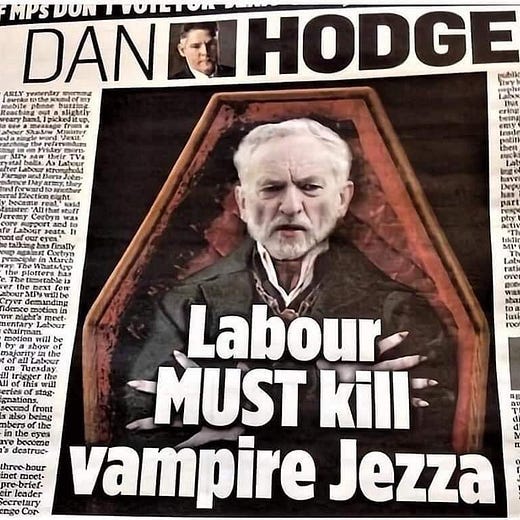
There was already plenty of evidence through the late 2010s, as I reported at the time, that Israel was helping to organise, stoke and amplify a campaign to smear its arch-critic, Jeremy Corbyn, as an antisemite, in order to prevent him from reaching No 10 Downing Street.
Not least, Israel did so by advancing a new, bogus definition of Jew hatred through the International Holocaust Remembrance Alliance (IHRA). Usefully, for Israel, that definition largely ignores hatred of Jews to focus instead on criticism of Israel.
That was the most blatant meddling possible in what remains of Britain’s democratic processes. UK politicians and media not only failed to oppose it, but actively sought to amplify the smears.
Civil war
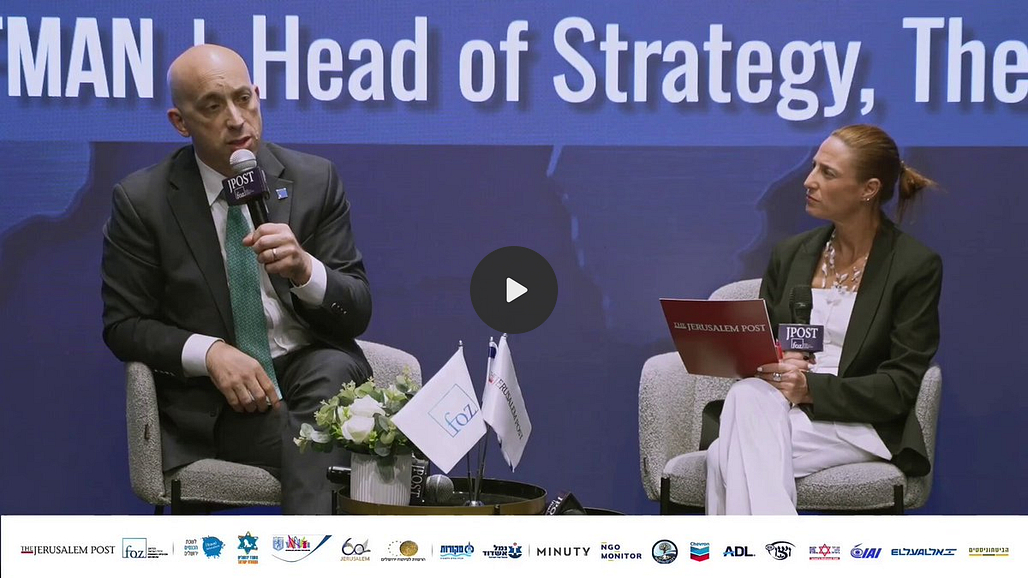
This week the fanatically pro-Israel US lobby group the Anti-Defamation League revealed that it had been working with leading AI firms, which are increasingly being integrated into social media platforms, to suppress what it calls “antisemitism” – or what the rest of us would refer to as criticism of Israel.
Chris Menahan 🇺🇸@infolibnews
🚨 ADL CEO Jonathan Greenblatt reveals in Israel that he’s been working with all the top AI Frontier Labs to push them to suppress “anti-Semitism.” “We’ve been working with the Frontier Labs—OpenAI, Anthropic, Alphabet, the company that runs Gemini, Google, Meta, who runs Muse, …
10:32 PM · Oct 13, 2026 · 447 ТЫС. Views
CEO Jonathan Greenblatt observed: “We’ve had excellent collaboration with Silicon Valley.” The platforms, he said, would tackle content the ADL doesn’t like “right in the source code” – that is, before users can see it.
That is likely not only to remove criticism of Israeli atrocities and criticism of western governments, such as the UK’s, for colluding in Israel’s genocide but turn social media into a playground for bots and Israel apologists, giving them free reign to spread their propaganda without challenge.
We also know, thanks to the work of the French security services – maybe MI5 was too busy chasing Russian bots to notice – that an Israeli cyber agency called Blackcore targeted the SNP in May’s Scottish elections, as well as meddling in elections in France and New York.
Israeli tech firms, especially those dealing in spyware, intelligence and influence operations, are typically closely aligned with the Israeli state and its military. Most of the founders of tech start-ups are alumnae of the Israeli army’s 8200 intelligence unit.
Alongside the SNP, New York mayoral candidate Zohran Mamdani and a leftwing French party headed by Jean-Luc Melenchon were targeted. Why? Because, unlike their political rivals, all had dared to speak out against Israel’s genocide in Gaza.
With echoes of what happened to Corbyn, Blackcore’s campaigns were designed to smear candidates. In the case of the French elections, fake accounts were created to accuse one candidate of rape and another of paedophilia.
A new documentary, NAZA, shows how Israel has paved the way in using AI in pioneering new ways to kill on a mass scale in Gaza. It selected banks of targets for assassination, often by murdering those “suspects” when they are in family compounds, slaughtering large numbers of bystanders in the process.
It is therefore hardly surprising that tech firms in Israel have been caught using AI in similarly innovative and indiscriminate ways online, to target western publics with disinformation.
In the summer it emerged that the Israeli government had created a website for a fake “scholarly” think-tank. In a short period of time, it produced prodigious quantities of AI-generated content on Israel, optimised for common search terms, that promoted Israeli talking points and constantly suggested criticism of Israel risked fuelling antisemitism.
It was set up not only to influence internet chatbots into echoing its pro-Israel disinformation but also to integrate its content into what experts call the “underlying training data”: that is, the unquestioned assumptions on which chatbots operate.
Back in May 2024 Meta identified fake Israel-based accounts, “posing as Jewish students, African Americans and other concerned citizens”, peddling pro-Israel content in the US and Canada in support of Israel’s slaughter of Palestinians in Gaza.
Two months ago, Meta again found the same kind of dirty tricks emanating from Israel, this time targeting Britain, France and Australia among other countries. The AI-generated accounts posed “as local, civically-engaged brands, news sources, religious organizations, and political activists”.
Notably in the case of the UK and France, the influence campaigns were designed to stoke “anti-immigrant and anti-Muslim” sentiment. Israel has been critically involved in advancing Islamophobic content, fuelling fears of a supposed “Muslim takeover” of Europe to mobilise support for Israel as a bulwark in the Middle East against Islam, and thereby encourage sympathy for its genocidal attacks on Gaza.
As a consequence, the political landscape in Britain has been disfigured. Support for the far-right has been artificially inflated, polarising British society. The path is being paved towards deeper authoritarianism and the possibility of civil war.
Death knell
None of these dire outcomes, the death knell for what little remains of British democracy, is attracting even the mildest interest from the Burnham government or MI5. Instead, they are chasing what so far appears to have been far more marginal Russian output.
But it isn’t just the influence of Israel we should be worried about. The problem runs much deeper, with a host of other noxious outside actors trying to warp and disfigure British politics in ways that closely accord with Israel’s malign intent. Burnham’s Centre for Information Defence will do precisely nothing to tackle any of it.
Here are two other powerful external actors aligned with Israel in distorting British politics.
The billionaire class, a transnational elite that has no loyalty to Britain, interfere in our politics by making our political parties dependent on their donations. They use their money to buy influence with the main parties – which is why for decades it has made little difference whether we vote for the Conservatives or Labour. We get austerity either way, while the billionaires get permission for their forever wars, directing public wealth away from public services into the arms industries and resource grabs.
Jeremy Corbyn tried to break with this model by funding Labour with small donations from ordinary people instead of the billionaires. As a result, he was destroyed by a confected campaign run by the billionaires, in association with Israel and its trolls, to smear him as an antisemite.
Sir Keir Starmer, Corbyn’s successor, went right back to begging for money from Big Business, got the billionaires behind him, and rolled on with the austerity programme.
Is Nigel Farage’s Reform different? Of course, not. Even before reaching power, he’s dependent on crypto-billionaires living in Thailand and Hong Kong.
Meanwhile, the sometime US trillionaire Elon Musk is busy rallying Britain’s new blackshirts, led by serial fraudster Tommy Robinson, to chase after a few “illegal” migrants rather than identifying the real criminals tearing apart Britain: the super-rich like Musk.
The billionaires both wield and conceal their influence through their ownership of the corporate media. They use the media to aggressively promote their own causes – political and economic policies ensuring their further enrichment – by normalising the extreme ideology of neoliberal capitalism, with its promotion of endless resource extraction through forever wars and the fuelling of needless consumption.
The consequence is the destruction of the conditions for human life on the planet. The billionaires hope they can ride out the catastrophe in their bunkers, or cryogenically freeze their bodies until a point in the future when they can be uploaded to the cloud.
One of the media’s most important jobs is to use smear campaigns to destroy anyone, such as Corbyn and now Zack Polanski, who threatens the billionaires’ privileged position by offering a mildly socialist programme of wealth redistribution.
Vassal state
If the UK media wasn’t entirely captured by the billionaire class – serving as its PR division – then we might know more about the role of the United States in meddling in our politics.
The recent claims of a supposed “terrorist plot” outside RAF Fairford – really a US airforce base pretending to be a British base and one from which the US has waged an illegal war of aggression against Iran – should have reminded us that the Pentagon is largely in charge of UK foreign policy.
The US has some 15 major military bases on British soil, plus half a dozen smaller intelligence sites. As the rightwing US podcaster Tucker Carlson recently observed, the fact that Britain has foreign troops crawling all over it makes us little more than an occupied “vassal state”.
The US recently announced a $4 billion upgrade of its UK bases, including establishing storage sites for its nuclear arsenal. The plan caused barely a ripple of interest among British politicians or the media .
Although our political and media class pretend the UK is an equal partner in a western defence alliance, the North Atlantic Treaty Organisation, the reality is very different. Nato takes its orders from the US, doing Washington’s bidding. That’s why Nato has been pivoting towards America’s biggest economic rival, China, which is, of course, nowhere near the North Atlantic.
When the US snaps its fingers, Britain stands to attention and hikes its spending on the war industries. Along with European governments, the UK is willing to drain its national coffers and scythe through public spending with yet more austerity cuts to support Washington’s military agenda for “full-spectrum global dominance”.
Hidden influence
Much of the US influence on British politics is carefully concealed from view, operating behind closed doors.
In the early 2010s, the US was desperately seeking a pretext to extradite Julian Assange from the UK and lock him up in a super-max jail, hiding him out of sight after his organisation Wikileaks revealed US and British war crimes in Afghanistan and Iraq. It was during this period that Starmer, as the director of public prosecutions, repeatedly jetted off to Washington for secret meetings with US officials.
We will never know what was discussed. Freedom of information requests discovered that his own officials destroyed all records of those meetings.
Once he became a politician, Starmer was recruited to the shadowy Trilateral Commission, originally founded in the 1970s by officials in Jimmy Carter’s administration to deal with the supposed problem of “an excess of democracy” in the US. The commission’s view was that voters were becoming dangerously less passive, at that time over the Vietnam war, and ways needed to be found to return them to docility.
A similar British-American Project cements ties between rising stars in British politics, business and journalism and Washington elites. The power imbalance between the two sides ensures up-and-coming British leaders are readily groomed into an Atlanticist worldview in which the UK is very much the junior partner.
There are a plethora of other “respected’ think-tanks and organisations whose chief role is to embed US policy ideas, especially those relating to foreign policy, in the thinking of British elites. They include the Bilderberg Group, Chatham House, the Council on Foreign Relations, the Atlantic Council, The British-American Parliamentary Group, and BritishAmerican Business.
The US uses its financial muscle through these organisations and many others to manufacture consent for its extreme neoliberal and neoconservative ideologies. The latest example are massive grants to organisations willing to export Trump’s MAGA ideology to the UK, masquerading as a “public education” initiative.
There is plenty of evidence to show that it was pressure from the Trump administration that led to the unprecedented decision by Starmer’s government to proscribe a civil disobedience group, Palestine Action, for the first time in Britain’s history as a terrorist organisation.
Palestine Action had incensed Israel by targeting its weapons factories on UK soil, highlighting another aspect of British collusion in the Gaza genocide, and had infuriated Trump personally by spraying one of his golf courses in Scotland with the words “Gaza is not 4 sale”.
In truth, the ways that the US meddles directly in British politics are so numerous it is virtually impossible to quantify them. Britain is little more than a colony of the US, receiving diktats on important foreign policy issues – especially regarding US and Israeli interests – that the UK is invariably too frightened to oppose.
Burnham is already rolling over to reverse the UK’s decision to honour a ruling from the International Court of Justice and other international tribunals that Britain has no claim to sovereignty over the Chagos Islands and must return them to Mauritius. The UK has faced a temper tantrum from Trump on the matter because the US operates an illegal military base on one of the islands.
Disobedience by the UK is the exception, not the rule. Which makes Burnham’s exclusive focus on Russian influence almost laughably beside the point. This furious finger-pointing at the Kremlin is designed with one purpose in mind only: to distract the British public from where the real external meddling in our politics is coming from.
It all begins in Ravenna, a historic city and major Italian port on the Adriatic coast. The port of Ravenna is a civilian port: bulk cargo, fertilizers, containers, cruise ships. Yet in a brief filed this summer with the Council of State, the State Attorney General’s Office attributed “military significance” to it within the country’s maritime defense system. The reason lies in a single sentence: making certain data public would pose an unacceptable risk because “a ‘piecemeal’ and ‘hybrid’ world war is underway, involving, among others, Italy as well.”
The data did not consist of routes, schedules, or ship names. They were aggregate figures: the amount of military equipment that left the port in 2025, broken down by four-month period and categorized as exports or transit. Journalist Linda Maggiori had requested this information in January under the general right of access to public information—Italy’s equivalent of the FOIA—which does not require justification. On October 13, Il Fatto Quotidiano turned the statement into a national issue. On October 16, the Sixth Section of the Council of State rejected the Customs Agency’s appeal.
In February, the Customs Agency, which reports to the Ministry of Economy and Finance (MEF), denied the request entirely, citing national security, public order, and commercial confidentiality. Maggiori, represented by attorney Andrea Maestri, filed an appeal with the Emilia-Romagna Regional Administrative Court (TAR), which on July 1 partially upheld the appeal: the quantities must be made public because the numerical data is “neutral,” while the destinations may remain confidential. Customs, represented by the State Attorney’s Office, filed an appeal. The Council of State upheld the Regional Administrative Court’s ruling: the administration failed to demonstrate either the necessity or the concrete nature of the harm. It also noted “apparently contradictory” conduct, as the Livorno Customs Office had previously provided similar data without objection.
In February 2025, approximately 13 metric tons of forged parts bound for an Israeli defense company were seized in Ravenna without export authorization; the proceedings are ongoing, and the presumption of innocence applies. It appears that on October 14 of this year, another 4 metric tons were at the port.
What does “war” mean, who decides, and the arms law
The word has three meanings, and memory confuses them. The first is constitutional. Article 11 establishes that Italy “rejects war as an instrument of aggression against the freedom of other peoples and as a means of resolving international disputes.” Article 78 entrusts the Chambers with the authority to declare a state of war and to grant the necessary powers to the government; Article 87 assigns the declaration of war to the President of the Republic. In the history of the Republic, a state of war has never been declared: neither in 1991, nor for Kosovo, Afghanistan, or Libya.
The second meaning is international: under international humanitarian law, armed conflict exists de facto, but supplying weapons to a belligerent party—according to prevailing legal opinion and that of the International Committee of the Red Cross—does not make one a party to the conflict. The third issue is political-strategic. “Hybrid warfare” (cyberattacks, sabotage, disinformation below the threshold of armed conflict) and “proxy war” are analytical tools, not legal categories. In a judicial ruling, therefore, a political term was used to justify an exception to a legal right. The Council of State rejected the postponement.
Parliament declares a state of war, authorizes missions (Law 145/2016), and receives the annual report on exports. The government authorizes exports through the UAMA of the Ministry of Foreign Affairs; the Prime Minister is the sole custodian of state secrets (Law 124/2007), under the oversight of COPASIR. The President of the Republic chairs the Supreme Defense Council. The Ministry of Defense signs the classified aid packages for Ukraine. The State Attorney’s Office, which reports to the Prime Minister’s Office, defends government agencies in court: its briefs are legal documents, not foreign policy statements. No minister has yet clarified whether they agree with the statements made therein.
Moreover, the information has never been classified as a state secret. Customs authorities have invoked the relevant provisions of Article 5-bis of the Transparency Decree (Legislative Decree 33/2013), which allow for a refusal only if necessary to avoid “concrete harm” to national security, defense, or international relations.
Law No. 185 of 1990 prohibits the export and transit of arms to countries engaged in armed conflict in violation of Article 51 of the UN Charter, to countries whose policies conflict with Article 11, to countries under embargo, or to those responsible for serious human rights violations. However, it excludes government-to-government transfers and transits for NATO forces. The annual report to Parliament (Art. 5) lists authorizations by country and company, not by port: no public document specifies how much passes through a single port. This is the gap that the Ravenna petition sought to fill. According to the Peace and Disarmament Network, the government’s reform bill, approved by the Senate in 2024 (A.C. 1730), would reduce the data included in the report; based on the sources consulted, it has not yet been definitively approved.
Those who defend confidentiality argue that harmless data—aggregated and cross-referenced with maritime tracking data—could reveal supply routes: this is the argument used by the Trieste Customs Office to deny an identical petition. Also important are obligations to allies and corporate confidentiality. Those advocating for transparency point out that Law 185 stems from the idea that arms require more public oversight, not less, because they pertain to Article 11 and, in the case of free transfers, involve public funds. An annual total does not enable hostile actions, and data published in Livorno does not become dangerous simply because it is in Ravenna.
Secrecy has a legitimate place. The Constitutional Court has linked it to national security since Ruling 86/1977 and reaffirmed this in the Abu Omar case (106/2009). Secrecy becomes problematic when it loses its criteria: concrete evidence of harm, proportionality, a time limit, consistency among agencies, and oversight by a judge or Parliament. The argument of a “piecemeal world war” failed on all counts. It did not identify any harm, rejected the Regional Administrative Court’s (TAR) compromise solution, treated data from a past year as if it were an ongoing operation, and contradicted the Livorno ruling. If merely invoking a widespread conflict suffices, then that justification applies to any data and indefinitely: hybrid wars, as described in official documents themselves, have no declared beginning nor anticipated end.
That language has a specific origin: the Ministry of Defense’s non-paper from November 2025, according to which Italy is already embroiled in a hybrid conflict. Committees and unions believe that part of Ravenna’s cargo is destined for Haifa and Ashdod: the withheld data would make it possible to verify this.
The political paradox
The government states in Parliament that Italy is not at war; one of its agencies writes the same in court to conceal a figure. The case was successfully closed, but only thanks to a journalist willing to pursue the matter through two levels of appeal. Yet, even with the case closed, the gravity of what was stated remains.
If the state deems the international situation serious enough to restrict the right to information, that assessment cannot be confined to a customs office or a legal brief. The logic of Article 78 applies even on a small scale: whoever invokes the exception must answer for it before Parliament. All that is needed is the uniform publication of quantities for each port—as requested by the Ravenna Region and Municipality—their inclusion in the report on Law 185, and a review of the classifications by COPASIR, with predefined deadlines.
An emergency becomes permanent when no one declares it and no one revokes it. One question remains for Parliament: if the State considers itself to be at war, why does it not state so where the Constitution requires it to do so? And if it does not consider itself to be at war, by what authority does one of its bodies write as much?
The Malian military had taken control of the Intahaka gold-mining site in the Gao region, Malijet reported on October 19, citing information relayed by several sources.
Authorities launched a security operation in the area to pursue armed groups, the Malian news outlet reported, adding that a delegation led by Mali’s mining minister also visited the site after it was captured on October 18.
Intahaka lies about 50 kilometers southwest of Gao and is known for artisanal gold extraction. The site has attracted miners from across the region, with hundreds of people previously reported working across its extensive mining grounds.
Last year, L’Economiste du Mali reported that the government had assigned management of the site to the state-owned mining company SOREM as part of efforts to formalize production and strengthen state oversight of gold extraction.
The mining area fell to the Tuareg-led Azawad Liberation Front, better known as the FLA, and Jama’at Nusrat al-Islam wal-Muslimin, an al-Qaida affiliate, during a coordinated offensive launched last April. The Critical Threats Project reported that Malian troops and Russian Africa Corps personnel withdrew from Intahaka following negotiations with the insurgents, who also advanced across other parts of northern Mali.
The reported return comes amid efforts by Mali’s military government to reassert its presence in areas affected by the insurgent offensive.
The Malian military, backed by Africa Corps, subsequently reentered Kidal on October 6 after the FLA announced a strategic withdrawal from the northern city, marking a significant victory for the military government.
Malijet’s report didn’t clarify whether Africa Corps personnel also participated in the latest operation. However, footage from Intahaka indicates that there among the forces that entered the site.

 Login