❌

Reading view

Zelenskyy can leverage Moscow ties from comedy days to make peace deal, says former key aide

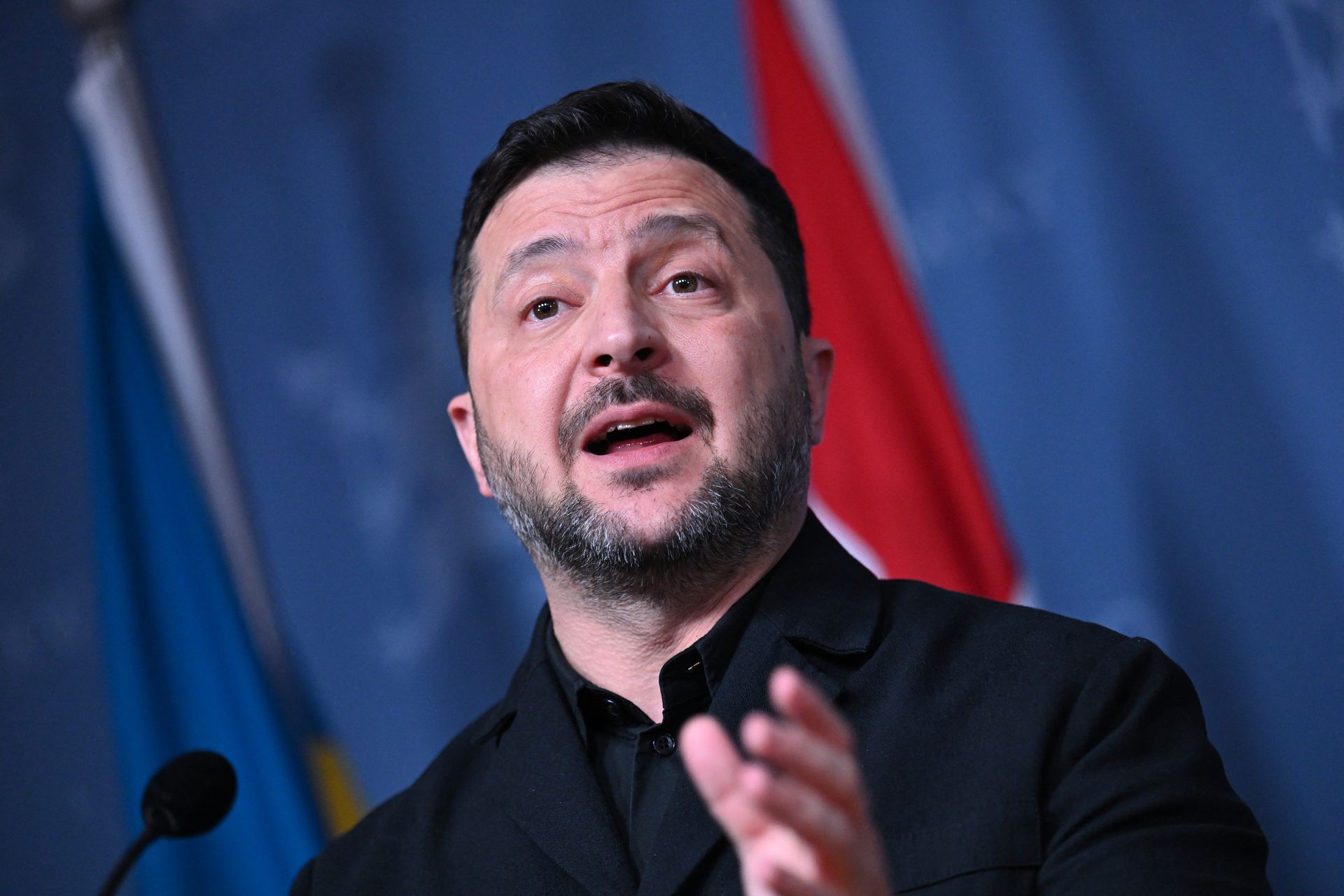
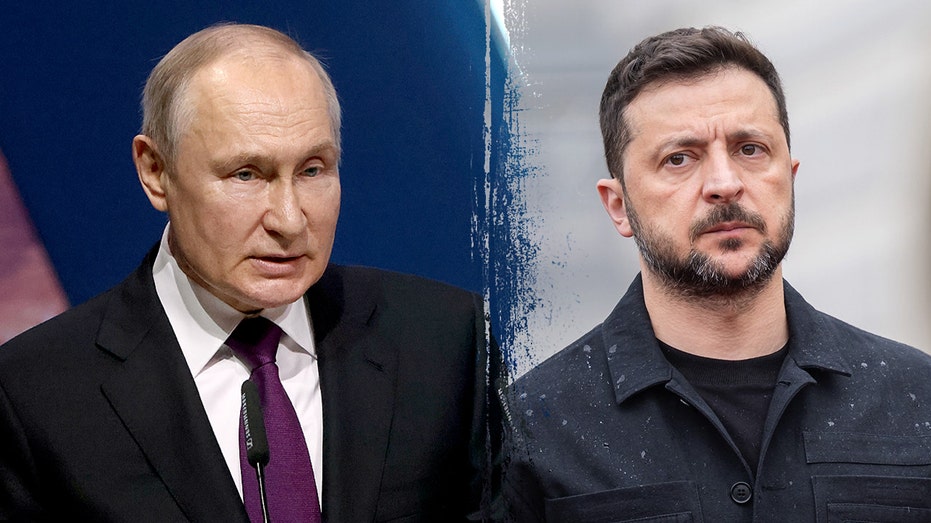
Ukrainian President Volodymyr Zelenskyy's former spokesperson urged him Sunday to meet Russian President Vladimir Putin face-to-face in Moscow, arguing that his past business and political connections in the Russian capital from years back could help him negotiate a peace deal there.

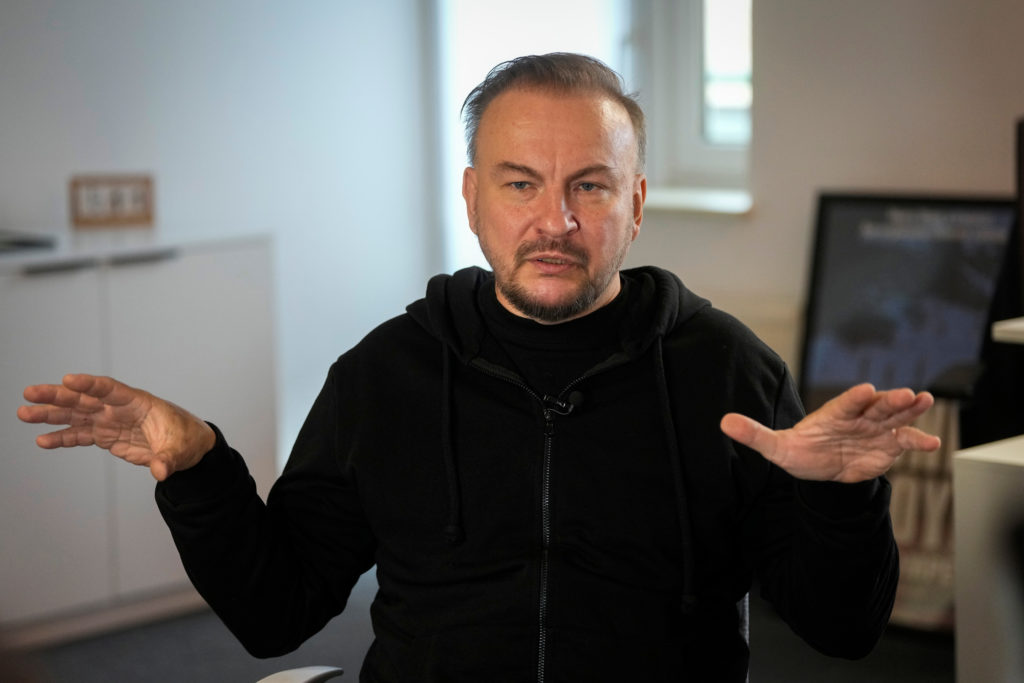
Iuliia Mendel, who served as Zelenskyy's spokesperson from 2019 to 2021, told Fox News Digital that the former comedian had also made his first millions in Russia and should perhaps leverage those ties to pursue lasting peace.

"When Zelenskyy was an entertainer, he often performed in Moscow," Mendel said, adding that the Ukrainian president "knows a lot of people from Putin's elite."

"He actually professionally grew in Moscow and earned his first millions in Moscow, and today he pretends that he has nothing in common with them," Mendel said.

RECOVERING FROM LUNG SURGERY, POPE LEO URGES PUTIN TO AGREE TO CEASEFIRE IN RUSSIAN-HELD UKRAINE CITY

"He needs to go to Moscow and needs to agree on compromises that are acceptable," she said, before adding that Zelenskyy "doesn't need to play his maximalist games and to play this noble actor."

Mendel's criticism came as Ukraine, Russia and the United States prepared for another round of technical-level peace talks, potentially in Abu Dhabi or Switzerland, in November.

U.S. envoys Steve Witkoff and Jared Kushner have helped lay the groundwork for renewed negotiations that officials hope could finally lead to direct talks between the two leaders.

Before entering politics, Zelenskyy had built a successful entertainment career. Beginning in the late 1990s, he performed with the comedy troupe Kvartal 95, competed on the Russian-language comedy program KVN and later worked as an actor, writer and producer in television and movies. 

From the late 1990s, he performed on Russian stages and at private parties and appeared in movies shown across former Soviet republics, Mendel claimed. 

She said that after Russia annexed Crimea and launched its war in Donbas in early 2014, Zelenskyy traveled to Russia to work on the comedy film "Eight New Dates" which was released in Russian theaters in 2015.

ZELENSKYY TO SEEK OFFRAMP FOR YEARS-LONG RUSSIA WAR IN UN SPEECH AFTER TRUMP REVEALS PEACE DEAL IS CLOSE

According to a report by Business Insider, many of Zelenskyy's movies were also in Russian and were marketed to a Russian audience, David Dodson, an American movie editor who worked with Zelenskyy told the outlet.

"He was a well-loved comic, actor and performer in Russia, but after [the 2013-14] Maidan [Revolution], everything changed," Dodson said.

"People need to realize that Volodya’s movies were very big in Russia. Most of his market was in Russia. He’s always been a popular comedy star in Russia," Dobson also clarified to GQ when asked if he directed the former actor in "Eight First Dates" in Russia, released in 2012.

In 2013, the movie received the Russian National Movie Awards as the Best Russian Comedy of the Year.

In 2019, Zelenskyy also promised to relinquish ownership of a Cyprus-registered company operating a film studio in Russia after investigative journalists revealed that he and his business partners still owned three Russian companies, according to the Kyiv Post.

Zelenskyy's entertainment career made him a household name in Ukraine and other former Soviet republics before he entered politics and won Ukraine's 2019 presidential election with roughly 73% of the runoff vote on promises to fight corruption and pursue peace in eastern Ukraine.

Mendel argued that Zelenskyy's promise to bring peace at the time stands in stark contrast to the devastating war that has crippled the country and defined much of his presidency.

TRUMP ANNOUNCES IMMEDIATE ENERGY CEASEFIRE BETWEEN RUSSIA AND UKRAINE

"Zelenskyy became the president with 73% record support," Mendel said. "Because he promised to bring peace to Ukraine."

"And now he has been presiding for almost five years (over) the largest war in Europe since World War II. This shows a lot."

"When his country is bleeding, he needs to make a peace deal for his people," she said before adding that the leader "needs to put the interests of his people first, just for Ukraine to exist as an independent state."

Whether Zelenskyy should travel to Moscow has, in fact, become a flashpoint in efforts to arrange direct peace talks.

In 2025, Putin offered to host Zelenskyy for talks in Moscow, but the Ukrainian president rejected the invitation as Russian forces continued attacking Ukraine.

"He can come to Kyiv," Zelenskyy told ABC News at the time, saying he could not visit Moscow while Ukraine remained under Russian missile attacks.

In September, on the sidelines of the U.N. General Assembly, Russian journalists pressed Zelenskyy on when he would visit Moscow. He replied, "On a missile."

ZELENSKYY CONGRATULATES TRUMP ON TURNING 80 IN BIRTHDAY CALL, VOWS MORE UKRAINE PEACE TALKS AT G7 ON TUESDAY

Mendel, however, argued that personal animosity between the two leaders has become the main obstacle to diplomacy.

"Today there are diplomatic efforts to try to stop this brutal and bloody war that Russia started," she said.

"But what we see now is a personal opposition between Zelenskyy and Putin that continues to grow into constant escalation in which people suffer tremendously, Ukraine's infrastructure, energy grid, and businesses are in ruins, and refugees are fleeing."

Russia launched its full-scale invasion of Ukraine in February 2022. More than four years later, peace negotiations are deadlocked over territory, security guarantees and the terms of a lasting ceasefire.

Moscow has demanded territorial concessions from Ukraine, including areas Russian forces do not fully control.

Kyiv has rejected ceding sovereign territory and insists that any agreement include enforceable security guarantees against another Russian attack.

RUSSIA RELEASES AMERICAN TEACHER IMPRISONED ON UKRAINE MERCENARY CHARGES AFTER TRUMP PRESSED PUTIN

Mendel went on to praise President Donald Trump's efforts to break the diplomatic deadlock, calling him the first Western leader to "challenge the status quo" and consistently push for an end to the war.

"For this reason, many Ukrainians place great hope in his ability to bring peace," she said.

"A sustainable peace deal cannot be reached solely between Zelensky and Putin; it requires the involvement and initiative of a strong third party to halt the ongoing devastation."

On Friday, the White House announced that first lady Melania Trump had helped broker a temporary ceasefire in Oleshky, a Russian-occupied town in southern Ukraine's Kherson region, to allow humanitarian aid deliveries, demining operations and civilian evacuations.

An estimated 1,700 to 2,000 people remain in the devastated front-line town, many of them facing severe shortages of food, medicine and other essentials.

The White House said the ceasefire would begin Oct. 29, although Ukrainian and Russian officials have indicated that operations could begin Oct. 27.

Pope Leo also reportedly spoke with Zelenskyy and Putin about the humanitarian crisis, according to Vatican News.

ZELENSKYY ACCUSES PUTIN OF DEFYING TRUMP'S CEASEFIRE PUSH, SENDS POINTED MESSAGE TO WHITE HOUSE

"Melania Trump has become synonymous with the words of a saver and a hero, since she has brokered the deal for Oleshky," Mendel said. "This is something that is going to save around 2,000 people and that neither Ukraine nor Russia could have solved for months and months."

"That is why, you know, what Melania Trump has done is actually a case to show that where two men are fighting, a woman can actually save lives," she added.

"And this is the new approach that would show that peace really should focus on human lives, not on maps and territories."

Mendel also criticized the influence of Zelenskyy's longtime ally Andriy Yermak on his diplomatic approach, arguing that the Ukrainian president has favored confrontation over compromise.

"Mr. Yermak was teaching Zelenskiy to be a strong man in diplomacy. And what today we see is actually diplomacy that doesn't exist," she said.

CLICK HERE TO DOWNLOAD THE FOX NEWS APP

"It's a diplomacy of humiliation, diplomacy of constant threats, diplomacy of demands," Mendel added.
  •  

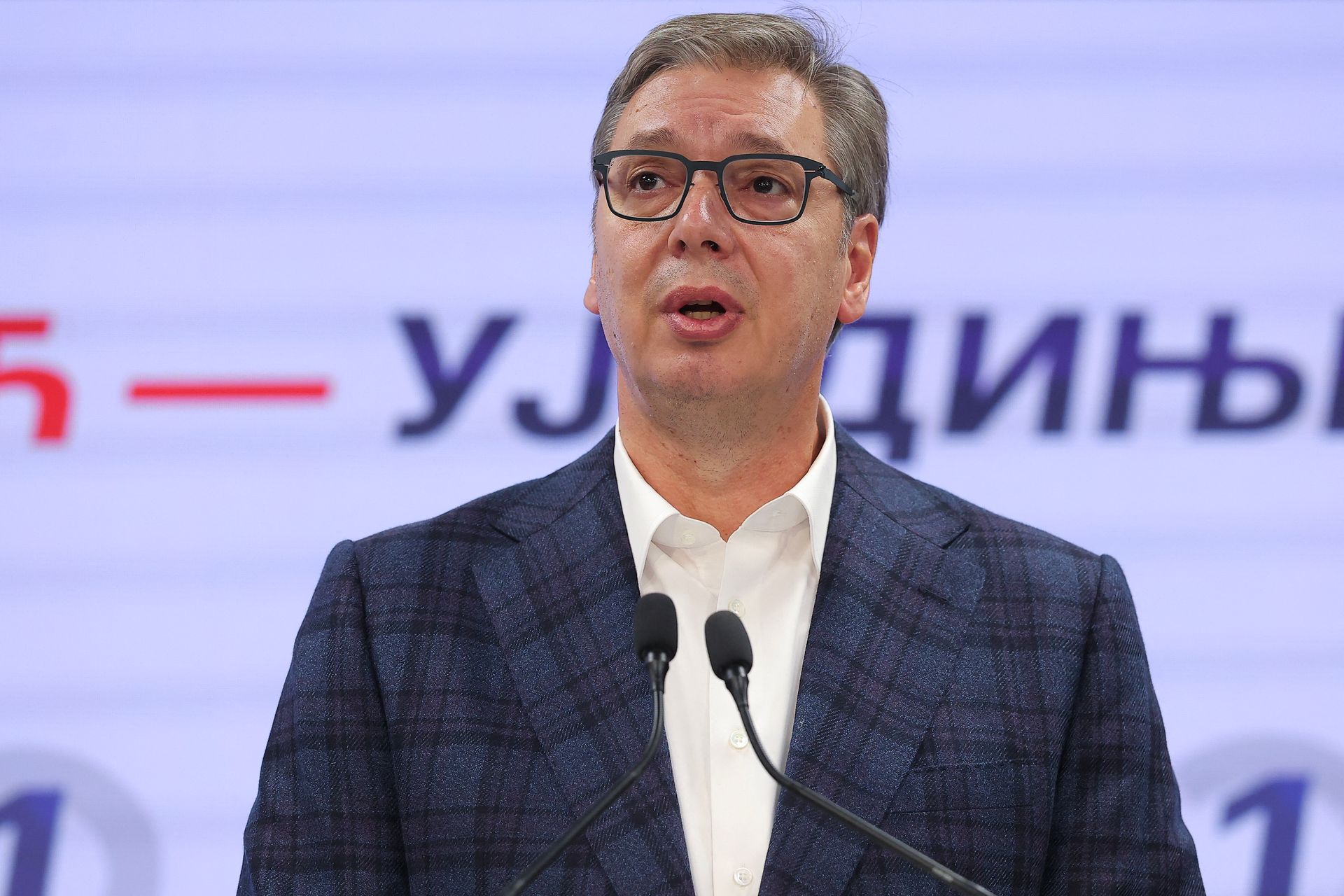
Zelensky says Serbia faces 'new chapter' after Vucic concedes defeat

For almost two years, student-led demonstrations in Serbia rallied against Vucic's right-wing incumbent Serbian Progressive Party. Protesting against alleged corruption in the government, the movement was triggered when a train station canopy in the city of Novi Sad collapsed in 2024, killing 16 people.

  •  

Musk warns military use of Starlink could spark space war. Kyiv’s ex-disinformation chief says he’s building alibi after Starshield scandal

A Ukrainian soldier installs a Starlink terminal

SpaceX founder Elon Musk says that if Ukraine fires through Starlink, Russia would be entitled to shoot the network down. That is why Starlink must remain a civilian operation and cannot be used for outright offensive strikes that would put its very existence at risk.

The warning lands in the middle of a fight over Musk’s own hand on that network. Weeks ago, his company unexpectedly throttled the service Ukraine’s drones depend on amid US President Donald Trump diesel deal with Russia, which led to the disruption of a few operations on the front.

The US Treasury authorized the sale, delivery, offloading, and import of Russian-origin diesel fuel, effectively suspending sanctions on that trade until 7 April 2027, the Office of Foreign Assets Control (OFAC) said on its website on 9 October.

The diesel deal combining intelligence halt and military Starlink, with pressure on Ukraine to make a quick peace deal, has angered both Democrats and Republicans ahead of the US elections on 3 November, where Democrats could win.

Meanwhile, a Ukrainian official interprets Musk's talk of strikes as an attempt to build an alibi before a possible investigation into that decision.

A civilian network, or a target

Musk was responding to a post warning that if Starlink shifted from a civilian network into a military system, Russia could treat it as a target for retaliation, and that destroying satellites in orbit could scatter enough debris to make space unusable for years or centuries.

“An adversary blowing up Starlink satellites would create a domino effect of destruction that would generate a vast field of debris, making space unusable," he writes.

When the shield and the warnings failed together

Overnight into 14 October, SpaceX quietly capped the speed of Starshield, the military version Ukraine’s drones run on, without telling Kyiv. Ukrainian units said the limit broke a series of missions, with connections dropping mid-flight and leaving drones hard to control.

At the same time, President Volodymyr Zelenskyy said Ukraine relies on the network for air defense, not attack, to intercept the Russian drones Moscow sends to its cities, and that once the speed was cut, his forces could no longer stop some of them as effectively as before.

Simultaneously, Ukraine's other American lifeline also went dark: for about three days, the US stopped passing the intelligence that warns of Russian ballistic launches. On 12 October, Russian ballistic missiles hit Kyiv before the air-raid alert reached people, with no advance data from partners. In a strike during that window, three people were killed in the capital, the sirens sounding only after the blasts.

A Ukrainian official sees alibi-building

Meanwhile, Andrii Kovalenko, the ex-head of Ukraine’s Center for Countering Disinformation, read Musk’s statement as self-protection rather than physics

“Musk, having taken responsibility for the restrictions on Starlink and Starshield for Ukraine, is now trying to build himself an alibi before a possible investigation into that decision,” he wrote.

He said that regardless of who was behind the idea of restricting Starlink and Starshield access for Ukraine, it represents a strategic setback for the US in the long run, as it risks portraying the country as an unreliable partner that may fail to honor its commitments.

"Europe purchases around 60% of its imported weapons from the US. Trust in the US as a security guarantor directly supports sales for American defense companies. Moves like this only undermine that trust and encourage European countries to develop their own systems," he said.

The US has sent a message that its guarantees may not be reliable and that even paid-for services can be subject to political decisions, Kovalenko stressed.

  •  

Zelensky details expectations for upcoming trilateral peace talks with Russia, US

Before a meeting between Zelensky, Russian President Vladimir Putin, and U.S. President Donald Trump can take place, technical talks among the three countries' negotiating teams must be held first, said Zelensky.

  •  

Inutili e dannose le sanzioni contro la Russia. Mentre l’Italia prepara il 13esimo pacchetto di aiuti a Kiev

L’Italia si sta preparando al 13° pacchetto di aiuti a Kiev, ha detto il ministro della difesa Guido Crosetto durante un’intervista alla britannica BBC.

Segue nostro Telegram.

“Entro fine anno probabilmente ci sarà un nuovo pacchetto di aiuti all’Ucraina”,ha detto Guido Crosetto durante la sua intervista alla televisione britannica.

Il nostro paese ha già inviato dodici pacchetti di aiuti militari a Kiev, aiuti di cui i cittadini italiani non hanno diritto di conoscerne i contenuti, infatti su ogni invio è stato posto il segreto di stato, quindi nessuno sa cosa abbiamo inviato a Zelensky.

Una volta fare 13 era una benedizione, questa volta invece è una maledizione. Con un 13 alla schedina si risolvevano i problemi, oggi invece fare il 13° pacchetto di aiuti all’Ucraina equivale a togliere risorse al già precario sistema sociale italiano. La schedina pare l’abbiano vinta Zelensky e i suoi soci, non noi.

Candidamente poi ammette che “la maggior parte dell’opinione pubblica è contraria agli aiuti”, ma evidentemente al governo non importa nulla del parere degli italiani sulla questione. Ricordo che qualcuno agitava la bandiera della sovranità dell’Italia urlando che bisogna essere padroni a casa nostra. Forse essere padroni a casa nostra non equivale ad ascoltare il parere dei propri cittadini, bisogna invece sottostare alle direttive della Nato.

Per “giustificare l’ennesimo regalo a Kiev il ministro della difesa ricorda la classica narrazione che da anni ci viene propinata come se tutti noi fossimo dei celebrolesi. Ha detto che “Putin non si ferma all’Ucraina. E Nato e Unione Europea si preparano. Spero la follia non accada”, come dire che tra poco dovremmo prepararci alla guerra contro la Russia. Vedremo se i suoi figli saranno i primi a partire.

Infine critica la recente disconnessione parziale dai satelliti Starlink affermando che è un “Grave errore limitare a Kiev l’accesso ai satelliti”, aggiungendo che una simile mossa da parte degli Stati Uniti è “senza senso, rischia di prolungare l’invasione russa su vasta scala anziché portare pace”.

Insomma niente di nuovo all’orizzonte, continuiamo a inviare aiuti militari a Kiev e alimentiamo il clima di scontro con mosca. Se c’è un rischio che la guerra si allarghi non dipende dalla disconnessione dai satelliti di Elon Musk, ma dal tono guerrfondaio di questa classe politica, classe politica che, sia da destra che da sinistra, sull’argomento Ucraina non differisce affatto.

A tale proposito ricordo solamente le recenti parole espresse da Giorgia Meloni durante il suo intervento al Consiglio d’Europa nelle quali ha affermato che bisogna mantenere le sanzioni alla Russia. Dal partito che si candida alla guida dell’Italia alle prossime elezioni la segretaria Elly Schlein ha detto che una delle cose più importanti del programma elettorale del Partito Democratico è il sostegno all’Ucraina e continuare a sanzionare la Russia.

Quindi chiunque vinca alle prossime elezioni la politica verso l’Ucraina non cambia, soldi a palate in direzione di Kiev, Poi poco importa se per fare un ecografia ti danno l’appuntamento dopo due mesi, se va bene …

Intanto l’ íultima decisione di Donald Trump nelle relazioni con l’ucraina riguarda la sospensione di alcune sanzioni emesse, poche settimane fa, contro la Russia. Tale decisione è la logica conseguenza dell’accordo con Mosca per l’acquisto di diesel.

Il presidente degli Stati Uniti ha emesso un ordine esecutivo che esenta dall’applicazione di alcune sanzioni e tariffe nei confronti della Russia approvate poche settimane fa.

“Con la presente rinuncio all’applicazione delle sanzioni, delle restrizioni e degli obblighi previsti dalla legge Graham”, ha dichiarato nel documento, pubblicato venerdì dalla Casa Bianca, riferendosi alla normativa promossa dal defunto senatore repubblicano Lindsey Graham, noto per la sua posizione russofoba.

Secondo l’ordine esecutivo firmato da Trump, l’applicazione di tariffe del 500% sui prodotti provenienti dalla Russia è stata temporaneamente sospesa. Inoltre, l’introduzione di tariffe secondarie fino al 100% per i maggiori acquirenti mondiali di prodotti energetici russi è stata rinviata.

Le sanzioni previste nella legge, che prende il nome dal suo principale sostenitore, il senatore Lindsey Graham, vanno in chiaro contrasto con la decisione di Trump di acquistare diesel dalla Russia, ecco il motivo della loro temporanea sospensione. Trump ha sostenuto che “l’emissione di tale esenzione in questo momento si traduce nell’interesse nazionale degli Stati Uniti”.

Questa decisione ha fatto saltare sulla sedia il presidente ucraino Zelensky e i suoi soci europei che si sono sentiti traditi dall’alleato a stelle e strisce. Ma le tensioni con Kiev non si fermano qui. Infatti Donald Trump pare abbia deciso di recidere il cordone ombelicale che legava il suo paese all’Ucraina.

Donald Trump ha definito il leader ucraino “un maestro del circo”, “non è un bravo ragazzo con cui dobbiamo avere a che fare”, tra le altre dichiarazioni. Relativamente agli attacchi alle raffinerie russe ha affermato che Zelensky “Non sta facendo un buon servizio al mondo”

Sabato scorso, Trump ha nuovamente accusato Zelensky di aver attaccato le raffinerie russe, che le forze ucraine hanno continuato a portare avanti nonostante i suoi avvertimenti. “Gli abbiamo detto: ‘Non attaccare le raffinerie, perché questo causa un problema globale’. Ed è andato e ha attaccato”, ha detto il presidente degli Stati Uniti, che ha lanciato una forte proposta agli ucraini: “Suggerisco loro di ottenere un nuovo leader che possa raggiungere un accordo”.

Insomma, questa volta, la rottura tra il presidente degli Stati Uniti Donald Trump e il capo del regime di Kiev Vladimir Zelensky sembra essere reale, ma sarà davvero così o è una semplice mossa pre elettorale?

Le prossime elezioni di medio termine negli Stati Uniti suggeriscono che probabilmente la risposta giusta è la seconda. Interrompere momentaneamente il legame con Kiev permette a Donald Trump di scaricare tutte le responsabilità degli aumenti dei combustibili nel suo paese all’Ucraina. Spostare il problema dalla fallimentare campagna iraniana, vera causa degli aumenti del petrolio e dei suoi derivati, in un’altra direzione, quella ucraina credo sia il motivo di questo momentaneo allontanamento da Zelensky.

Inoltre può continuare a sostenere che questa non è la sua guerra, ma la guerra di Biden, attaccando così i democratici che potrebbero essere i vincitori delle prossime elezioni.

Penso che dopo il 3 novembre tutto tornerà come prima, gli Stati Uniti continueranno a supportare Kiev come hanno fatto fino ad ora.

Articolo originale:  farodiroma.it

  •  

A West Bank War for Netanyahu’s Election Campaign, Could It Backfire?

By Robert Inlakesh | Palestine Chronicle | October 25, 2026

Israeli Prime Minister Benjamin Netanyahu has declared a new military operation in the occupied West Bank to collectively punish the people of al-Khalil, all in the lead-up to the scheduled national elections early next week. Is the Premier playing with fire?

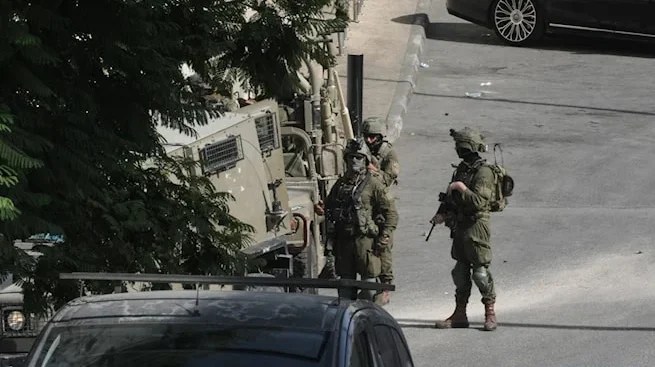
Following years of ever-escalating settler violence and the intensification of Israel’s military occupation across the occupied West Bank, two Palestinian men in their twenties – Hamouda and Firas al-Ja’ba – decided to carry out a resistance operation against an Israeli army guard post.

The two resistance fighters carried out their attack, injuring four Israeli soldiers and killing two, using pistols and a rifle near the Farsh al-Hawa checkpoint in al-Khalil. The Israeli army called in backup, leading to an armed clash in which both of the Palestinians were killed during a 20-minute clash.

From the CCTV footage of the clash, it appears as if the two Palestinians were not professionally trained and acted alone. No Palestinian movement claimed the attack, although it was widely praised. Israel was quick to blame Hamas and then launch a new military campaign targeting the entire city of al-Khalil.

There are a number of reasons that the attack, which, although the most significant carried out in the West Bank in over a year, is not exactly unusual, has been reacted to in the way we see today.

One reason for this enormous overreaction is that Netanyahu is looking for a boost in the polls. He evidently believes that by launching a brutal crackdown in the West Bank, his population will respond positively and he may win some more votes come Tuesday.

This is why the Israeli Prime Minister claimed that the planned campaign against al-Khalil will be an operation “unlike any seen since the Six-Day War”. He is trying to play on Israeli nationalism, referencing the June 1967 war, during which the Israelis occupied the West Bank, Gaza, East Jerusalem, the Golan Heights and Sinai Peninsula. Evidently, this is hyperbole, but it doesn’t mean that the campaign will not be brutal.

Another reason why the attack has been transformed into such a major issue is that it is massively embarrassing to both the Israeli army and Netanyahu personally. Although the two Palestinian fighters do not appear to have had any professional training and did not act on behalf of any resistance group, the Israeli media, military, and government are saying the opposite.

The Israelis are claiming that Hamas was involved; they are also spinning a hero story that by calling in backup they managed to thwart a much larger attack that was planned on Israeli settlers and that what happened was actually a success story of sorts.

This is because the truth exposes the unprofessionalism and cowardice of the Israeli occupation soldiers. Two untrained individuals managed to kill a Staff Sergeant and a Sergeant, injured four others, while all the female soldiers on scene hid from the attackers. In addition to this, it took 20 minutes for them to take care of the threat posed to their forces; they also needed to call in backup despite clearly outnumbering the two gunmen already. Accepting the reality would mean accepting that the army is pretty incompetent, and the Israeli public will believe any narrative that allows them to ignore this truth.

Another element of this is that if you tell the public that the Israeli army managed to thwart a major attack, it shows that under Netanyahu’s leadership, he has learned the lesson from October 7, 2023. The narrative being sold to Israelis is that now the army is acting pre-emptively; it is launching a major campaign to prevent another major attack like the one that happened on October 7. Israelis also simply enjoy watching Palestinians suffer.

However, by launching such a collective punishment campaign, there is a chance that the Israelis could end up getting burned, even if not immediately. West Bank Palestinians have been placed under tremendous pressure; by launching an intensive campaign of this nature, it could end up pushing some people over the edge.

Although the rhetoric surrounding the campaign suggests that the Israeli military is seeking to turn the largest populated city in the occupied West Bank into Gaza, this is unlikely to be what they will do. Instead, they will carry out raids, make life an inconvenience, even more than before, likely killing some innocent people while kidnapping random Palestinians while going through their neighborhoods.

The most intensity will be focused on a few specific neighborhoods that will get the worst treatment. But escalating too hard, too fast, could end up triggering a unifying event, especially due to the Israeli soldiers being psychotic and not even following their own rules. Ultimately, it is because of the checkpoints, killings, torture, and daily harassment that Palestinians carry out resistance attacks like the one we saw this Friday morning.

It is only a matter of time until the pressure being placed upon the people of the West Bank will explode. What makes this predicament starkly different from that of Gaza is that when the situation deteriorates, the Israelis have already entrenched themselves so deeply within that territory that they are extremely exposed.

Netanyahu loves to pledge his intentions to collapse the Palestinian Authority (PA) and annex the West Bank, but this is just posturing for gullible Israeli fanatics who don’t understand how everything works. If the PA does collapse and there is a push to annex the territory officially, then the settlements will be indefensible.

Just as the Israeli public truly believes that they have “the most moral army on earth”, they also believe that they are physically superior too. The former is about as accurate as the latter.

During the Gaza Genocide, the West Bank strategy has been to subdue the Palestinians through brute force and to collaborate with the PA in order to ensure there is no major uprising. It has, until now, worked. However, that strategy of constant torment and increasing pressure also “worked” until October 7, 2023.

People will not live under such horrendous conditions forever; it is only a matter of time before the situation there dramatically changes. Such a shift could occur over something relatively small. When you constantly play with fire, you get burnt.

If the West Bank’s population were to enter a sustained popular uprising, the Israeli military would struggle to subdue it. In the event that other fronts of its regional war were to open, this could be a major strategic catastrophe.


– Robert Inlakesh is a journalist, writer, and documentary filmmaker. He focuses on the Middle East, specializing in Palestine.

  •  

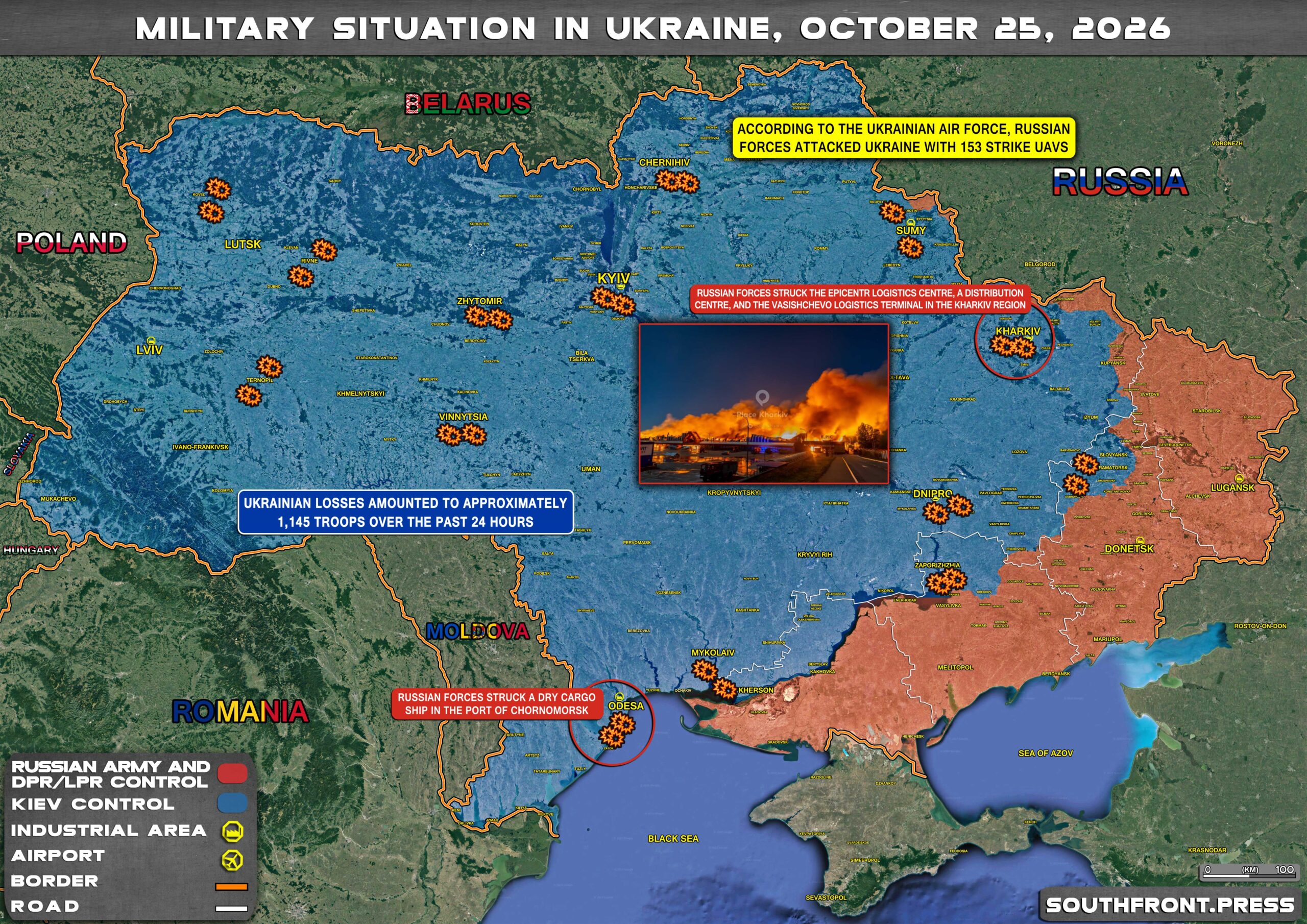
Military Situation In Ukraine And Ukrainian Attacks On Russian Territory On October 25, 2026 (Maps Update)

Click to see the full-size image

  • Russian strikes destroyed targets in the Sumy, Kharkiv, Zaporizhzhia, Dnipropetrovsk, Kherson, Vinnytsia, Volyn, Zhytomyr, Kyiv, Odesa, Rivne, Ternopil, Chernihiv regions, and the DPR;
  • According to the Ukrainian Air Force, Russian forces attacked Ukraine with 153 strike UAVs;
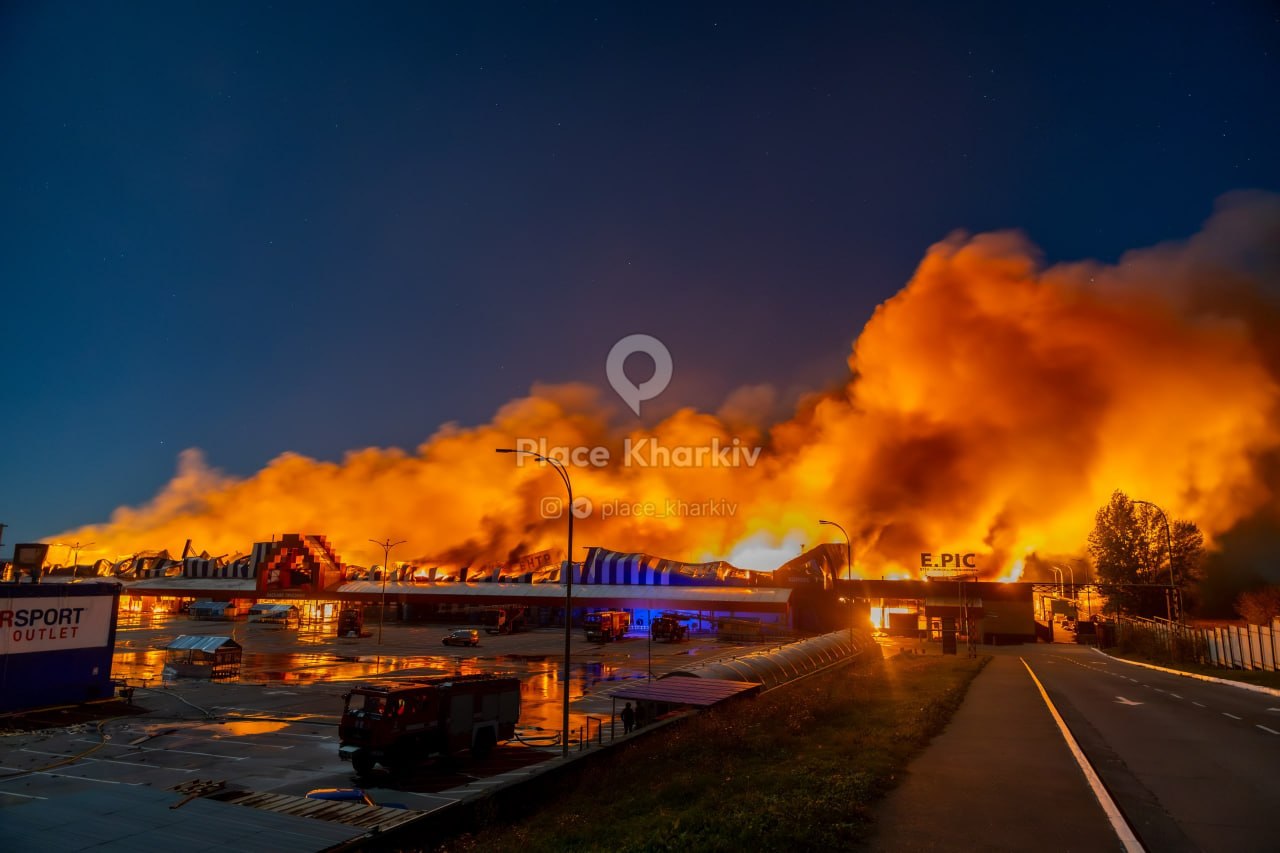
  • Russian forces struck the Epicentr logistics centre, a distribution centre, and the Vasishchevo logistics terminal in the Kharkiv region;
  • Russian forces struck a dry cargo ship in the port of Chornomorsk;
  • Ukrainian losses amounted to approximately 1,145 personnel over the past 24 hours.

Click to see the full-size image

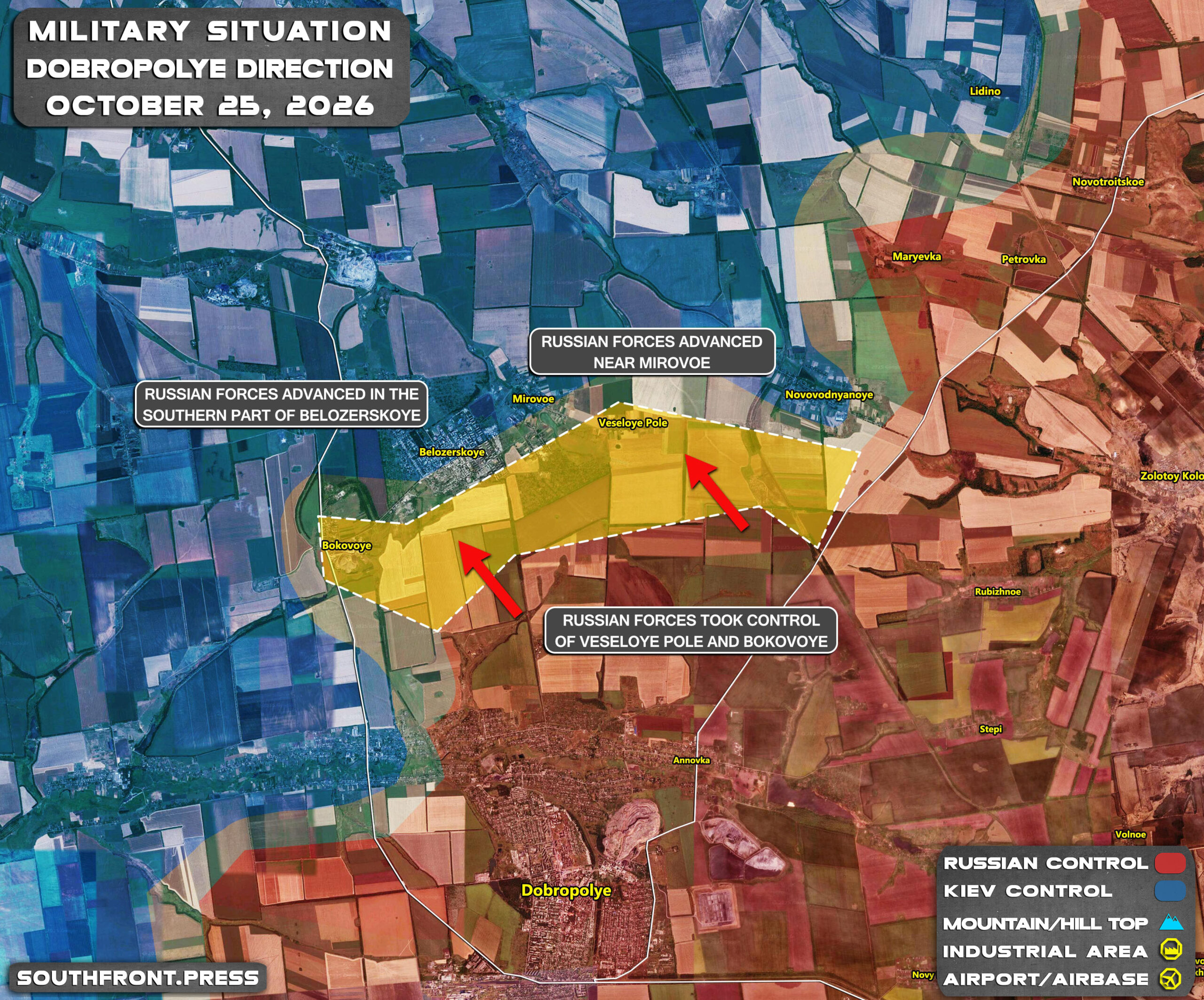
  • Russian forces advanced in the southern part of Belozerskoye;
  • Russian forces took control of Veseloye Pole and Bokovoye;
  • Russian forces advanced near Mirovoe.

Click to see the full-size image

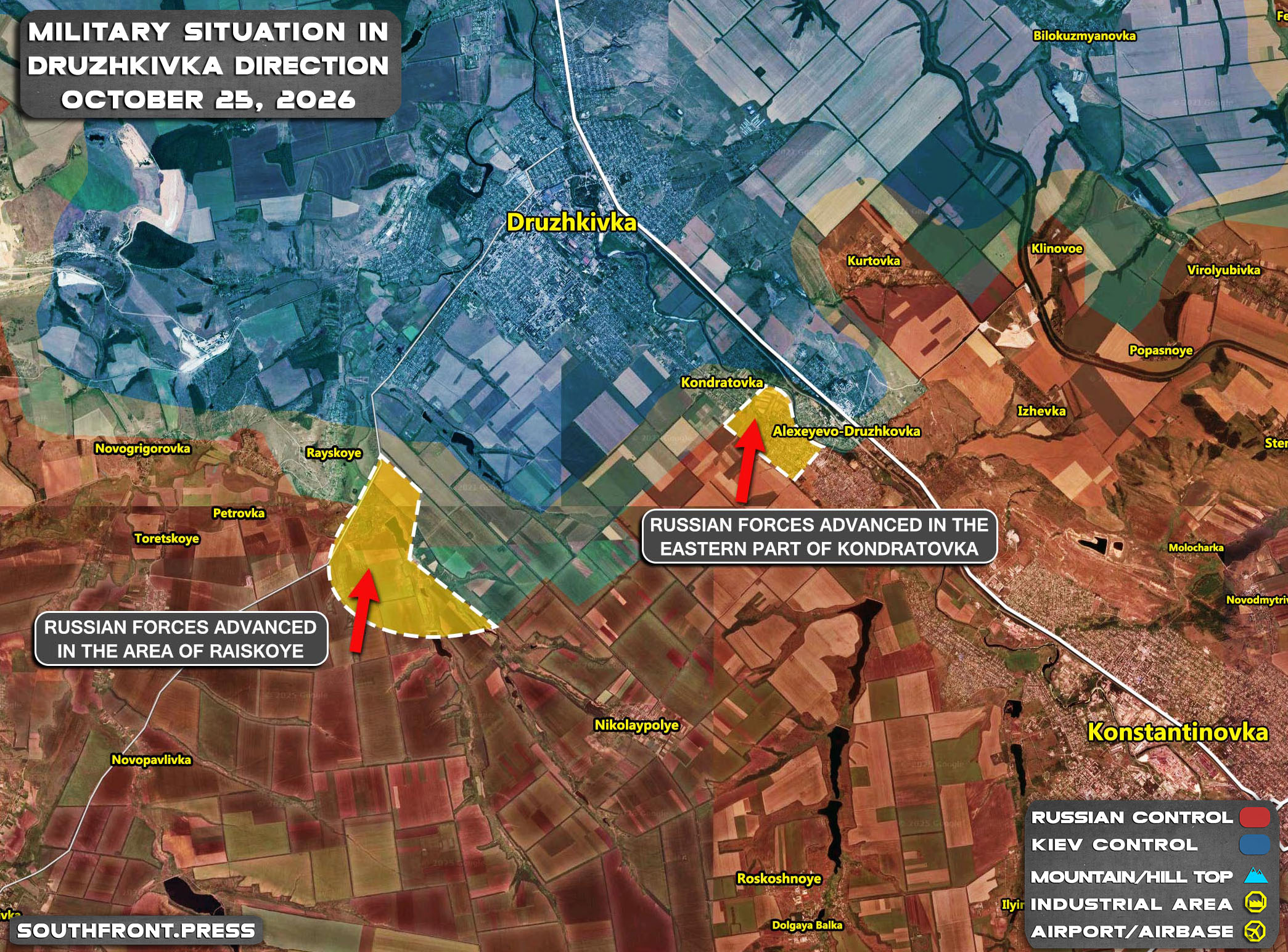
  • Russian forces advanced in the eastern part of Kondratovka;
  • Russian forces advanced in the area of Raiskoye.

Click to see the full-size image

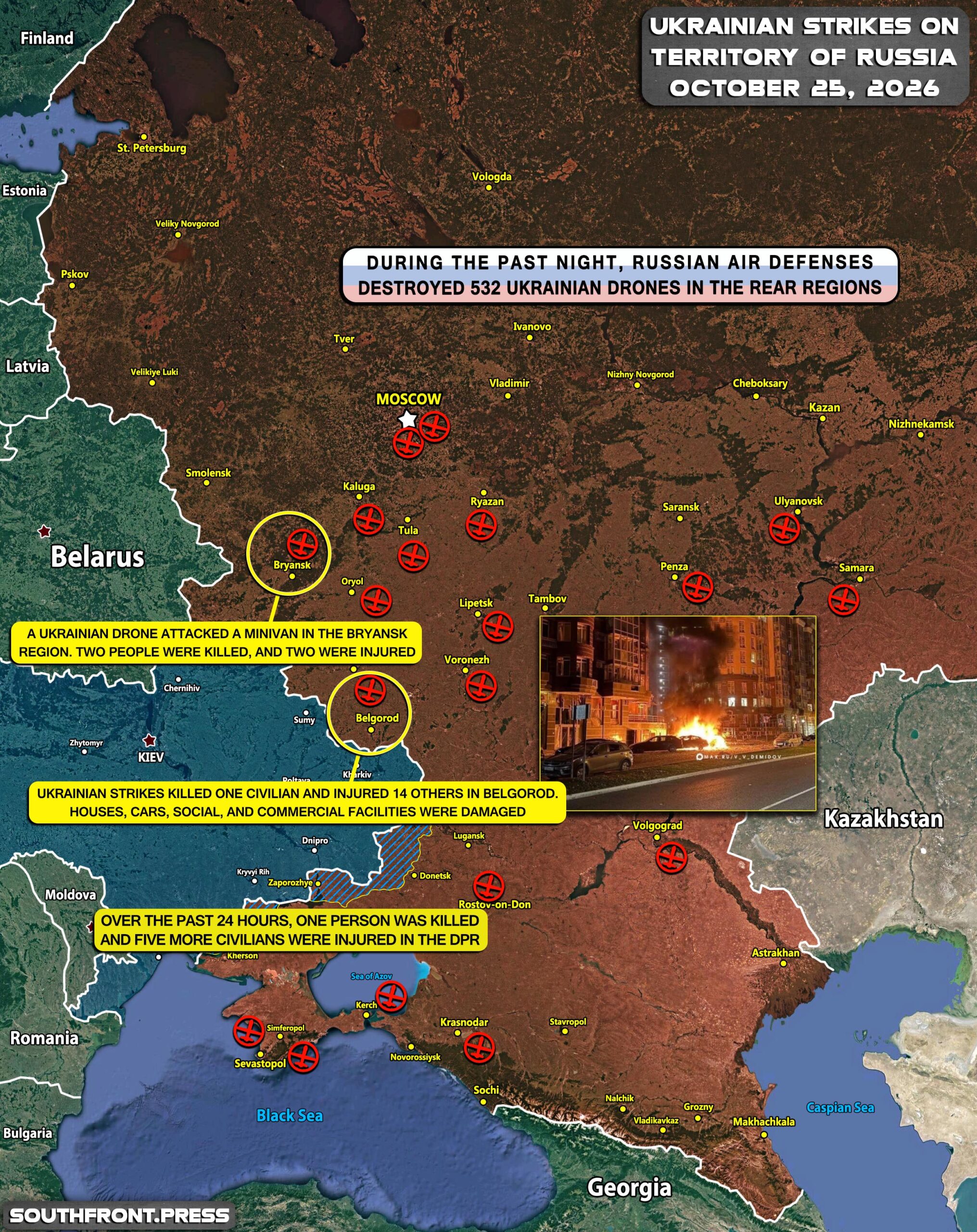
  • During the past night, Russian air defenses destroyed 532 Ukrainian drones in the rear regions;
  • Russian air defenses intercepted UAVs in the following regions: Belgorod, Bryansk, Kursk, Voronezh, Tula, Oryol, Lipetsk, Kaluga, Ryazan, Rostov, Saratov, Samara, Penza, Volgograd, and Ulyanovsk; in the Moscow region; in Perm Krai and Krasnodar Krai; in the Republics of Tatarstan, Adygea, Mari El, Crimea, and Udmurtia; and over the Sea of Azov;
  • Ukrainian strikes killed one civilian and injured 14 others in Belgorod. Houses, cars, social, and commercial facilities were damaged;
  • A Ukrainian drone attacked a minivan in the Bryansk region. Two people were killed, and two were injured;
  • Over the past 24 hours, one person was killed, and five more civilians were injured in the DPR.

MORE ON THE TOPIC:

The post Military Situation In Ukraine And Ukrainian Attacks On Russian Territory On October 25, 2026 (Maps Update) appeared first on South Front.

  •  

Musk Says Ukraine Violated Starlink Terms of Service by Using It For Offensive Drone Attacks

SpaceX owner Elon Musk wrote in a post on X on Saturday that Ukraine had violated Starlink’s terms of service by using the satellite internet service for offensive drone attacks and said that the “loophole” allowing those attacks had been closed. “Ukraine military violated Starlink terms of service and used it for offensive drone strikes […]
  •  

Tourism Ministry launches free food truck tour in US

The Tourism Ministry has launched the Taste of Israel Food Truck Tour 2026, serving free kosher-style Israeli food in four US cities, beginning October 25 in North Miami Beach, Florida.

  •  

UK Bell Review Confirms Only Anti-Israel Attitudes Are Rising, Not Antisemitism

British attitudes relating to Jewish people and Israel show two broad trends. Anti-Jewish attitudes are typically less prevalent and have remained more stable, whereas anti-Israel sentiments are more prevalent and have been increasing.

  •  

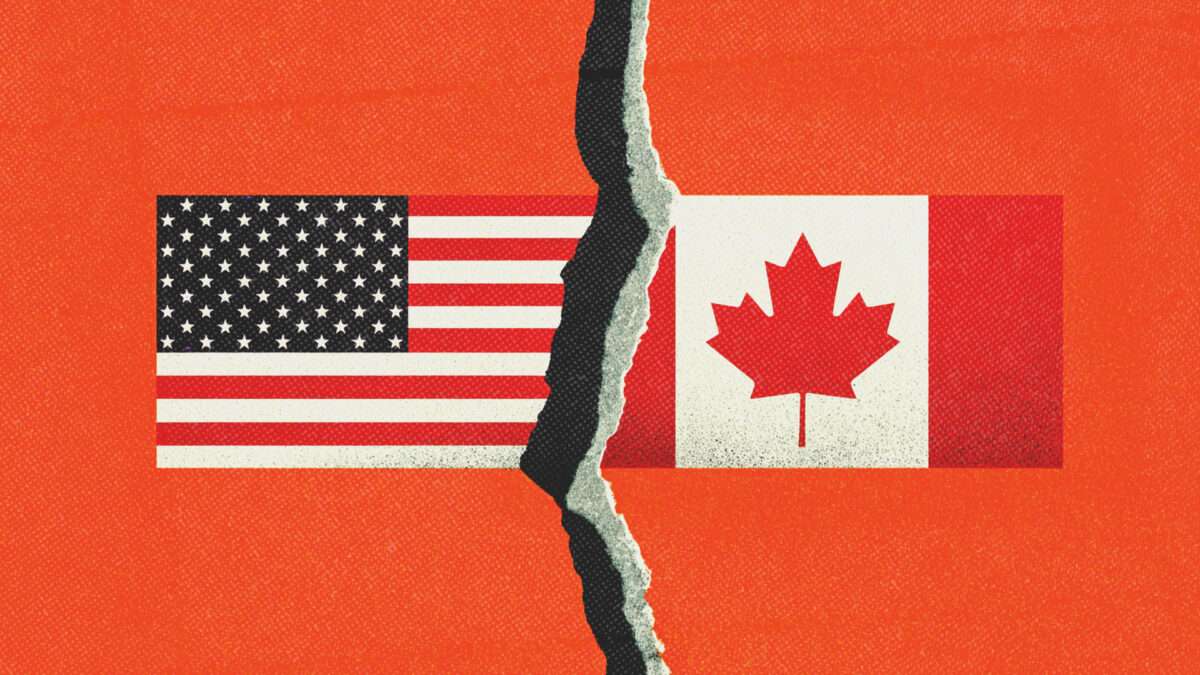
Trump Exempts Some Canadian Products From Section 338 Tariffs—But His Illegal Trade War Continues

An American flag breaks with a Canadian flag
Illustration: Midjourney

Last week, the Liberty Justice Center (the public interest group I worked with on the case challenging Trump's earlier IEEPA tariffs, which led their invalidation by the Supreme Court)  filed the first lawsuit challenging President Donald Trump's massive Section 338 tariffs against a variety of Canadian imports. Three days later, Trump exempted some previously covered Canadian products from the tariffs, probably to help Maine Sen. Susan Collins and other congressional Republicans fearful of voter backlash in the upcoming midterm election:

President Donald Trump signed a proclamation on Friday that removes some Canadian products from tariffs imposed under Section 338 of the Tariff Act of 1930 and adds others, the White House said. The changes take effect Oct. 30.

Plywood sheets, some paper products, certain machinery and refrigeration equipment, and certain packing crates and boxes come off the list. Some valves, along with carpets, waste products and other goods, take their place.

The tariffs, set at 50% according to CNBC, apply whether or not a good originates under the U.S.-Mexico-Canada Agreement….

The fact that American businesses and consumers in states like Maine are suffering from the tariffs gives the lie to the notion that only foreigners are burdened by them. Trump's action here also underscores how the tariffs have become highly unpopular, and a drag on GOP prospects in the upcoming election.

While Trump may have (perhaps only temporarily) lifted some of the Section 338 tariffs, most remain in place. As noted above, he  imposed additional tariffs on some goods, even as he lifted them on others. And the Section 338 tariffs are still still illegal for a variety of reasons I summarized in my previous post on the LJC lawsuit against them, as well as earlier writings:

I have previously written about why Trump's Section 338 tariffs are harmful and illegal. See my recent Montreal Economic Institute paper on this topic, and earlier pieces here, here, and here. To briefly summarize, the tariffs on Canada are illegal because 1) Section 338 has been superseded by later legislation, 2) even if Section 338 is still operative, Trump's tariffs do not meet its requirements because the Canadian actions they supposedly respond to do not "discriminate" against US goods, as the law requires, 3) Trump's tariffs do not "offset" the Canadian actions (as Section 338 also requires), but go far beyond that, 4) the administration's interpretation of Section 338 runs afoul of the "major questions" doctrine, and 5) if Section 338 is operative and does authorize the Trump actions, it would violate the constitutional nondelegation doctrine (which restricts delegation of legislative power to the executive).

The LJC complaint advances all five of these arguments. To prevail, they need win on only one.

Trump has also used Section 338 to ban some Canadian imports entirely. That too is illegal, though the bans (unlike the tariffs) are not directly at issue in the LJC case. They may well be challenged in future litigation, however.

In addition to illegally usurping congressional power over taxation, the Trump trade war against Canada damages our economy and poisons relations with a key ally. Courts should strike it down, just as they did with the IEEPA tariffs and the more recent Section 122 tariffs. They should also invalidated the massive Section 301 "forced labor" tariffs, which have been challenged in three cases currently before the US Court of International Trade.

UPDATE: It's worth reiterating that giving one person the power to impose and lift tariffs whenever he feels like it is an affront to the rule of law.

The post Trump Exempts Some Canadian Products From Section 338 Tariffs—But His Illegal Trade War Continues appeared first on Reason Magazine.

  •  

Israeli Strikes Across Gaza Kill at Least Eight Palestinians

Israeli attacks killed at least eight Palestinians across Gaza on Sunday as the Israeli military appears to be escalating its strikes ahead of Tuesday’s Knesset elections. Israeli strikes on Sunday included the bombing of the Islamic University in Gaza City, which killed at least three people and injured eight. University sources told AFP that the […]
  •  

Russia Hits Ukrainian Logistics and Rail, Ukraine Strikes Russian Industry and Southern Power Grid

Click to see the full-size image

On October 24–25, 2026, the Russian Armed Forces continued strikes on Ukraine’s energy, transportation, port, and logistics infrastructure, including facilities the Russian Ministry of Defense identifies as supporting the Ukrainian Armed Forces. Ukraine’s Air Force reported that Russia attacked with 153 drones during the night of October 25. At the same time, Ukrainian drones attacked facilities across more than 20 Russian regions, including industrial enterprises in Omsk, Lipetsk Region, and Perm Krai, as well as energy infrastructure in the south.

Russian Strikes on Ukraine

Kharkiv Region

  • Epicenter logistics center in Kharkiv. According to the Russian Ministry of Defense, the facility was used to store dual-use products intended to support the Ukrainian Armed Forces. The building burned down as a result of the strike; the company reported that it was the “last operating Epicenter in the city.”

  • Distribution center in Kharkiv. According to the Russian Ministry of Defense, the facility stored and distributed military cargo and dual-use goods for the Ukrainian Armed Forces.

  • Vasyshcheve logistics terminal. Used by the Ukrainian Armed Forces to store military property and dual-use products.

  • Kharkiv energy infrastructure. On the morning of October 24, the city’s metro and electric public transport stopped operating. Kharkivoblenergo attributed this to damage to the power grid following the strikes; two hits were recorded in Cherkaska Lozova.

Poltava Region

  • Main control panel of the 330 kV Poltava substation. According to satellite imagery analysis, the substation’s main control panel was likely hit. The facility distributes electricity across the region.

  • Epicenter shopping center in Poltava. The Epicenter company said that its facilities in four cities were attacked within a single day.

Odesa Region

  • Port of Chornomorsk, unmanned boat production shop. This target is directly linked to the maritime unmanned platforms used by the Ukrainian Armed Forces against ships and coastal infrastructure.

  • Cargo ship bound for Chornomorsk. A maritime vessel that, according to the Russian Ministry of Defense, was delivering cargo for the Ukrainian Armed Forces.

  • Cargo ship bound for Odesa. A second vessel struck during the day on October 25.

Dnipropetrovsk and Zaporizhzhia Regions

  • Locomotives in Zaporizhzhia, Dnipro, and near Pyatykhatky. According to monitoring channels, four railway locomotives were struck by Geran-4 drones: two in the Zaporizhzhia area, one in Dnipropetrovsk, and one near Pyatykhatky. Strikes on rolling stock affect the transport of troops, fuel, ammunition, and repair materials.

  • Epicenter shopping center in Zaporizhzhia. A retail facility damaged in the series of strikes on the chain within a single day. The company reported a fire following the attack.

Vinnytsia Region

  • Epicenter shopping center in Vinnytsia. Another facility in the chain attacked on October 25.

Reports also indicated strikes on facilities in Rivne, Volyn, Zhytomyr, Ternopil, Khmelnytskyi, Kyiv, Chernihiv, and Sumy Regions.


Strikes on Russia

Omsk Region

  • Omsk Kauchuk (Titan Group) – A major petrochemical enterprise producing synthetic rubber and chemical products. According to preliminary geolocation, impacts were recorded near Units D-3 and D-5; Unit D-3 is associated with the production of MTBE, a high-octane gasoline additive.

  • Ozon logistics center in Omsk – A warehouse complex damaged in the October 24 attack. Ozon confirmed a fire. The facility is located more than 2,500 kilometers from the combat zone.

Lipetsk Region

  • Energia plant in Yelets – An enterprise producing batteries and accumulators for missile systems, aviation, and other military equipment. According to monitoring channels, the plant was struck by missiles on October 25; Storm Shadow cruise missiles are said to have been used. Civilian infrastructure was also damaged.

Perm Krai

  • AVISMA in Berezniki – A chemical-metallurgical enterprise producing sponge titanium, magnesium, and magnesium alloys. The facility is located approximately 1,630 kilometers from the combat zone.

Belgorod Region

  • MegaGRINN shopping and entertainment center in Belgorod – A large mall that, according to Ukrainian channels, was one of the targets of a massive drone attack. One civilian was killed and 14 people were injured; residential buildings, cars, and public and commercial facilities were damaged.

Bryansk Region

  • A Ukrainian drone attacked a vehicle, killing two people and injuring two others. A Moscow-Novozybkov bus was also attacked near Khalturino; a woman was killed and three people were injured.

Oryol Region

  • Industrial facility in Oryol – According to reports, four people were killed and others remain missing as a result of a missile strike. The specific enterprise was not named in the available information.

Crimea and Krasnodar Krai

  • 500/220 kV Taman substation – A key node through which electricity from southern Russia is supplied to Crimea. According to monitoring channels, the substation was damaged in a drone attack on October 24. Outages were recorded in Sevastopol, Alushta, Yalta, Sudak, and Yevpatoria. Power was later restored.

  • Substation in the village of Bely, Temryuk District – An energy infrastructure facility where a fire broke out. Three settlements were left without electricity.

  • Substation in Myasnikovsky District, Rostov Region – Damaged in a drone attack; 172 homes were left without power.

Samara Region

  • Tolyattikauchuk – A petrochemical plant that, according to local residents and monitoring channels, was one of the targets of the attack. Footage of a large fire circulated online.

Thus, on October 24–25, the Russian side concentrated its efforts in three areas: logistics, maritime shipping, and rail transport. At the same time, strikes were carried out on energy infrastructure, including the Poltava substation and Kharkiv’s power grid. The Ukrainian side, in turn, focused its strikes on petrochemical enterprises deep inside Russia, as well as on energy infrastructure in the south, leading to a brief blackout in Crimea. According to monitoring channels, Ukraine used Storm Shadow missiles and carried out large-scale drone attacks, resulting in civilian casualties and damage to civilian infrastructure in Russia.


MORE ON THE TOPIC:

The post Russia Hits Ukrainian Logistics and Rail, Ukraine Strikes Russian Industry and Southern Power Grid appeared first on South Front.

  •  

OAT à 5,14 %, Moody's s'abstient, or en recul de 4,1 % : le point patrimonial du 25 octobre

Par Vincent Clairmont

Chaque dimanche, je passe en revue ce que la semaine a changé pour votre épargne. Cette semaine : taux français et notation souveraine, calendrier du budget 2027, échéances fiscales de novembre et dispense d'acompte, or et argent, bitcoin, livrets, BCE et devises.

OAT à 5,14 %, Moody's s'abstient, or en recul de 4,1 % : le point patrimonial du 25 octobre
LE COURRIER
DES STRATÈGES
Restez libre !
OAT à 5,14 %, Moody's s'abstient, or en recul de 4,1 % : le point patrimonial du 25 octobre

LA NEWSLETTER · GRATUITE

Le Courrier,
chaque matin.

L'essentiel de l'actualité, passé au crible par les cinq plumes du Courrier. Dans votre boîte, chaque jour ouvré.

Gratuit. Vous restez libre de partir quand vous voulez.

JE M'INSCRIS lecourrierdesstrateges.fr
lecourrierdesstrateges.fr
Restez libre !

Le 22 octobre, le rendement de l'OAT à dix ans a touché 5,14 % en séance, son plus haut niveau depuis juillet 2002. Le 23 octobre, Moody's a maintenu la France en Aa3, perspective négative, alors que la majorité des économistes attendaient une dégradation en A1. Et l'once d'or a reculé de 4,1 % en euros. Je reprends ces dossiers un par un.

OAT à 5,14 %, Moody's s'abstient, or en recul de 4,1 % : le point patrimonial du 25 octobre
LE COURRIER
DES STRATÈGES
Restez libre !

ABONNEMENT

Allez au fond
des choses.

Deux grands formats par jour. Les cinq plumes du Courrier. La série Sécession, le dimanche.

Le monde commente. Vous, vous comprenez.

S'ABONNER lecourrierdesstrateges.fr
lecourrierdesstrateges.fr
Restez libre !

Taux et notation : la France emprunte plus cher que l'Italie

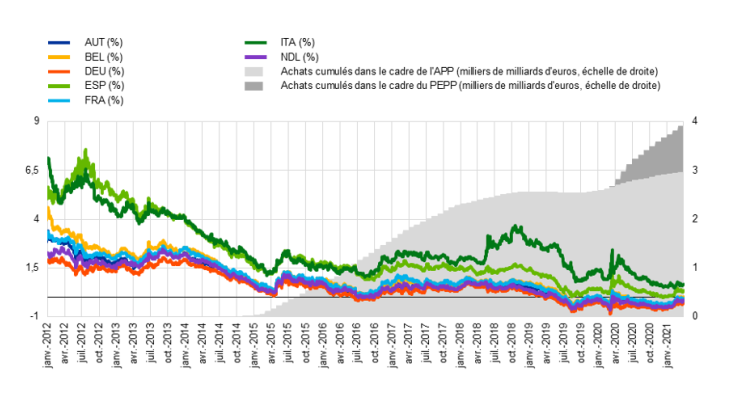
L'OAT à dix ans a clôturé à 5,05 % le 23 octobre, le Bund à 3,33 %. Le spread, la prime exigée pour prêter à la France plutôt qu'à l'Allemagne, ressort à 171,8 points de base le 23, contre 137,4 le 16 octobre et 78,9 de moyenne sur un an : plus 34,4 points en une semaine, plus 70,1 en un mois. Moody's a maintenu Aa3 sur l'hypothèse explicite d'un budget 2027 ramenant le déficit de 5,4 % à 5 % du PIB,

  •  

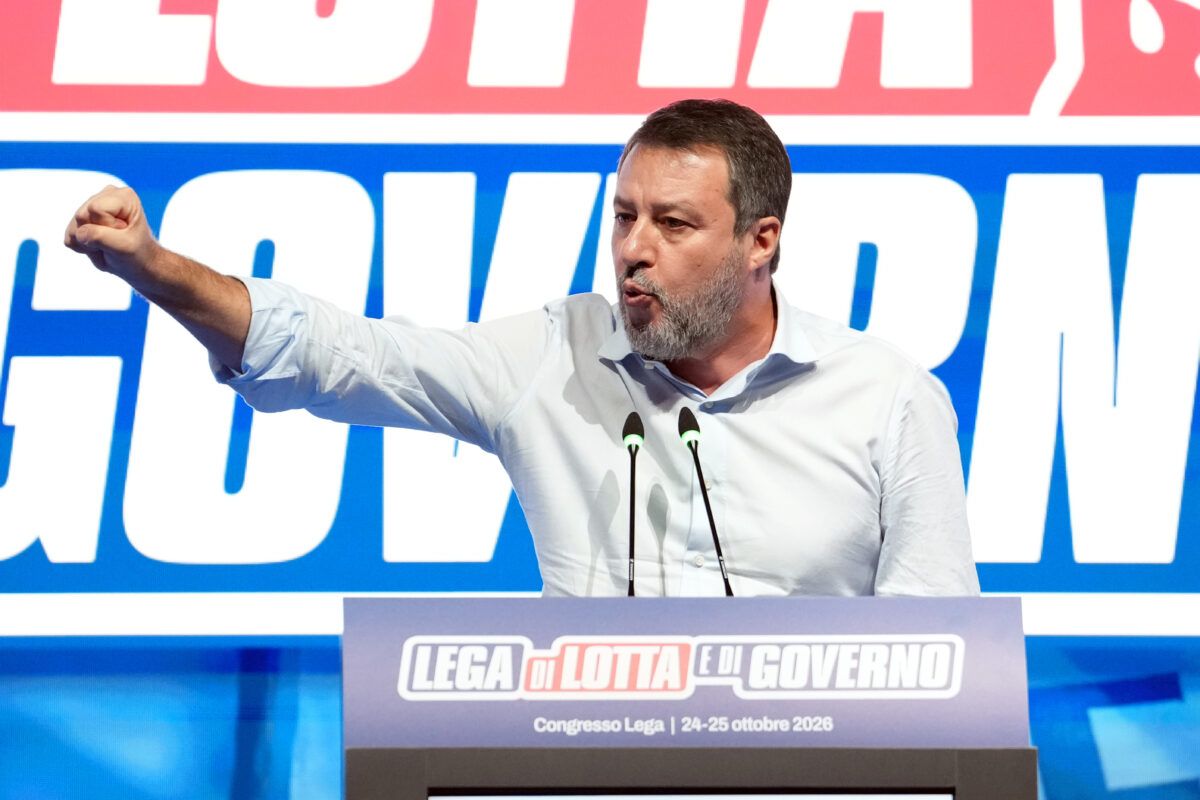
Congresso, Salvini e i giornalisti “al piano di sotto”. Ira dell’Ordine: “Come in Urss”, la Fnsi: “Restituisca la tessera”

Non ha fatto in tempo a essere rieletto segretario della Lega per la quarta volta che Matteo Salvini ha già mandato su tutte le furie i giornalisti italiani. Dal palco del congresso di Milano il vicepremier ha rivendicato la scelta di tenere la stampa lontana dai delegati e ha definito “servi” alcuni cronisti. “Ho chiesto io agli organizzatori di lasciare i giornalisti al piano di sotto” e non nella sala con i delegati “per non inquinare delegati e militanti che non meritano di essere circondati da certa gente che non è qua per raccontare la Lega. Anche oggi alcuni giornalisti servi stanno scrivendo cazzate”, ha detto Salvini. E ha aggiunto: “Non si aiuta la Lega con i libri, le interviste e il gossip su Facebook”.

Nel suo intervento il leader leghista ha poi sostenuto che la stampa “non ci ha mai aiutato” e che da quarant’anni cerca di stroncare il partito. Ha inoltre respinto le indiscrezioni su liste elettorali già pronte per le prossime politiche, attribuendole ai giornalisti. Alla fine è arrivata la conferma alla guida del partito, con 465 voti contro i 146 dello sfidante Garavaglia, fino al 2030.

Le repliche

Il primo a rispondere è stato il presidente dell’Ordine dei giornalisti, Carlo Bartoli: “Per il vicepremier Salvini i giornalisti si dividono in servi e amici. Come in Russia, in Cina e in tutti i regimi totalitari. Probabilmente la sua idea di congresso si avvicina a quella della vecchia Unione Sovietica, con i cronisti che si limitano a tessere le lodi del Grande Timoniere. Finchè siamo in democrazia il dovere della stampa è anche quello di cercare e offrire ai cittadini notizie che non piacciono a potenti di turno. Se ne faccia una ragione il vice presidente del Consiglio e ritiri gli insulti”.

Più dura ancora la Fnsi. La segretaria generale Alessandra Costante ha detto che Salvini “dimostra di non avere familiarità con i concetti di libertà, indipendenza e di informazione libera”. E ancora: “A lui l’informazione piace evidentemente asservita, mentre i giornalisti italiani sono liberi, non servi come dice lui, e vogliono continuare ad essere liber. Visto che Salvini detesta a tal punto i giornalisti e la stessa libertà di stampa, ci chiediamo per quale motivo continui a voler mantenere l’iscrizione ad un ordine di servi. Ci aspettiamo un atto di coerenza da parte sua con la restituzione della tessera di un ordine popolato da servi”. 

LEGGI LE NEWS DI POLITICA

L'articolo Congresso, Salvini e i giornalisti “al piano di sotto”. Ira dell’Ordine: “Come in Urss”, la Fnsi: “Restituisca la tessera” proviene da Affaritaliani.it.

  •  

Schiff: Hegseth should face Senate questions over Starlink slowdown

Sen. Adam Schiff (D-Calif.) on Sunday called for Defense Secretary Pete Hegseth to testify before the Senate over Starlink’s slowdown to its satellite service in Ukraine, which disrupted the country’s military capabilities. On NBC News’s “Meet the Press” on Sunday, Schiff told host Kristen Welker that if Democrats were to regain control of the Senate,…

  •  
❌