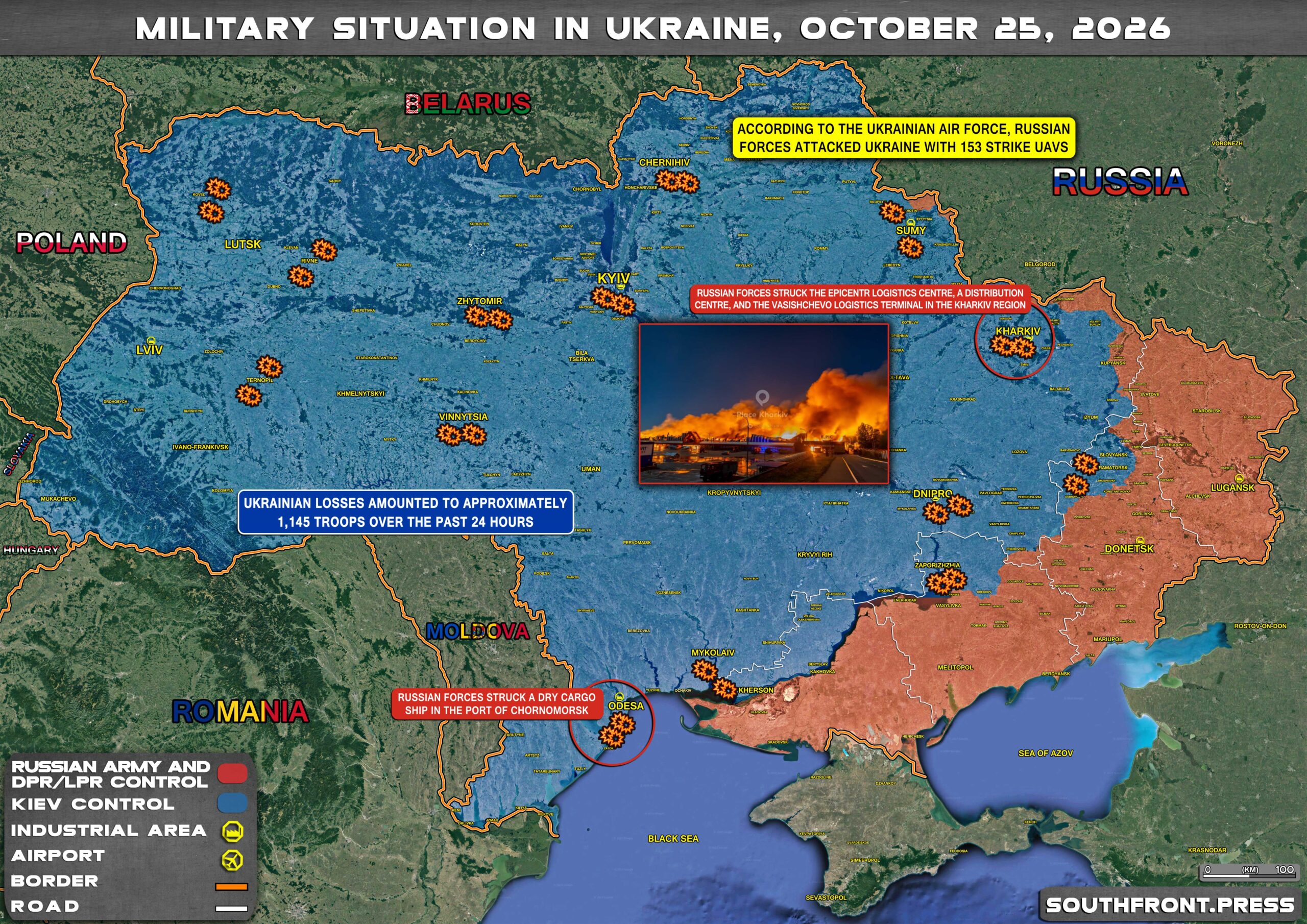
Russian strikes destroyed targets in the Sumy, Kharkiv, Zaporizhzhia, Dnipropetrovsk, Kherson, Vinnytsia, Volyn, Zhytomyr, Kyiv, Odesa, Rivne, Ternopil, Chernihiv regions, and the DPR;
According to the Ukrainian Air Force, Russian forces attacked Ukraine with 153 strike UAVs;
Russian forces struck the Epicentr logistics centre, a distribution centre, and the Vasishchevo logistics terminal in the Kharkiv region;
Russian forces struck a dry cargo ship in the port of Chornomorsk;
Ukrainian losses amounted to approximately 1,145 personnel over the past 24 hours.
Click to see the full-size image
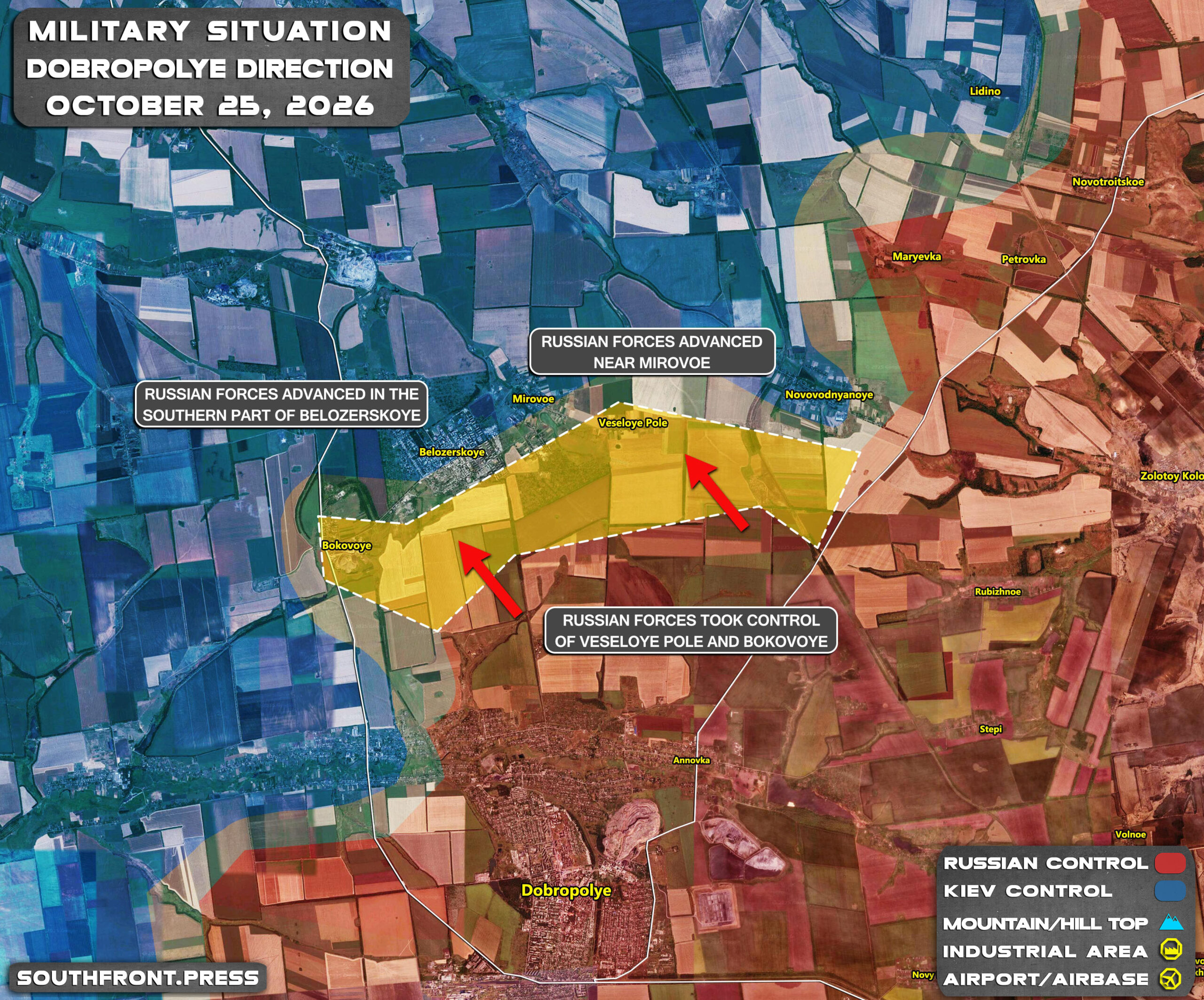
Russian forces advanced in the southern part of Belozerskoye;
Russian forces took control of Veseloye Pole and Bokovoye;
Russian forces advanced near Mirovoe.
Click to see the full-size image
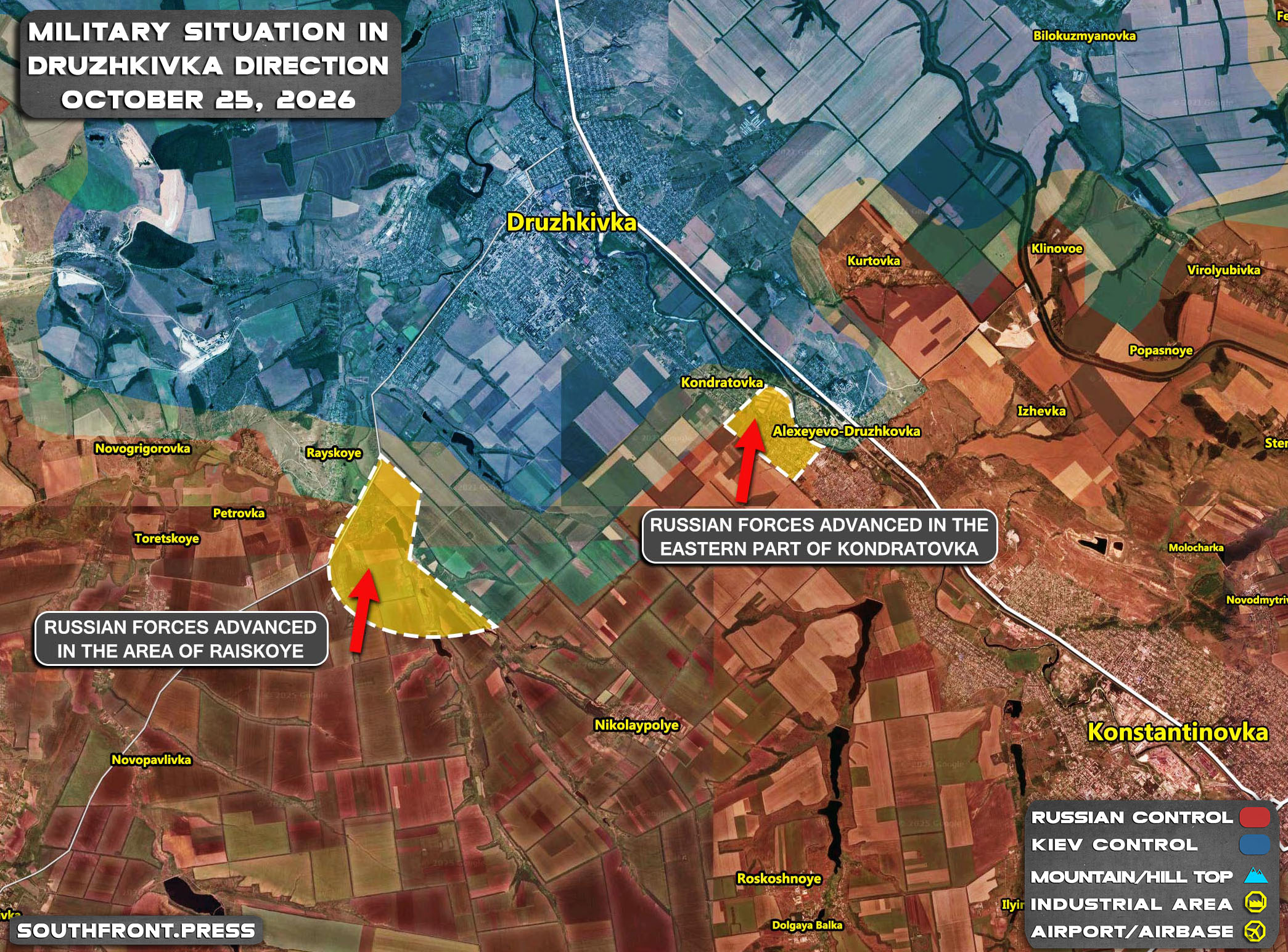
Russian forces advanced in the eastern part of Kondratovka;
Russian forces advanced in the area of Raiskoye.
Click to see the full-size image
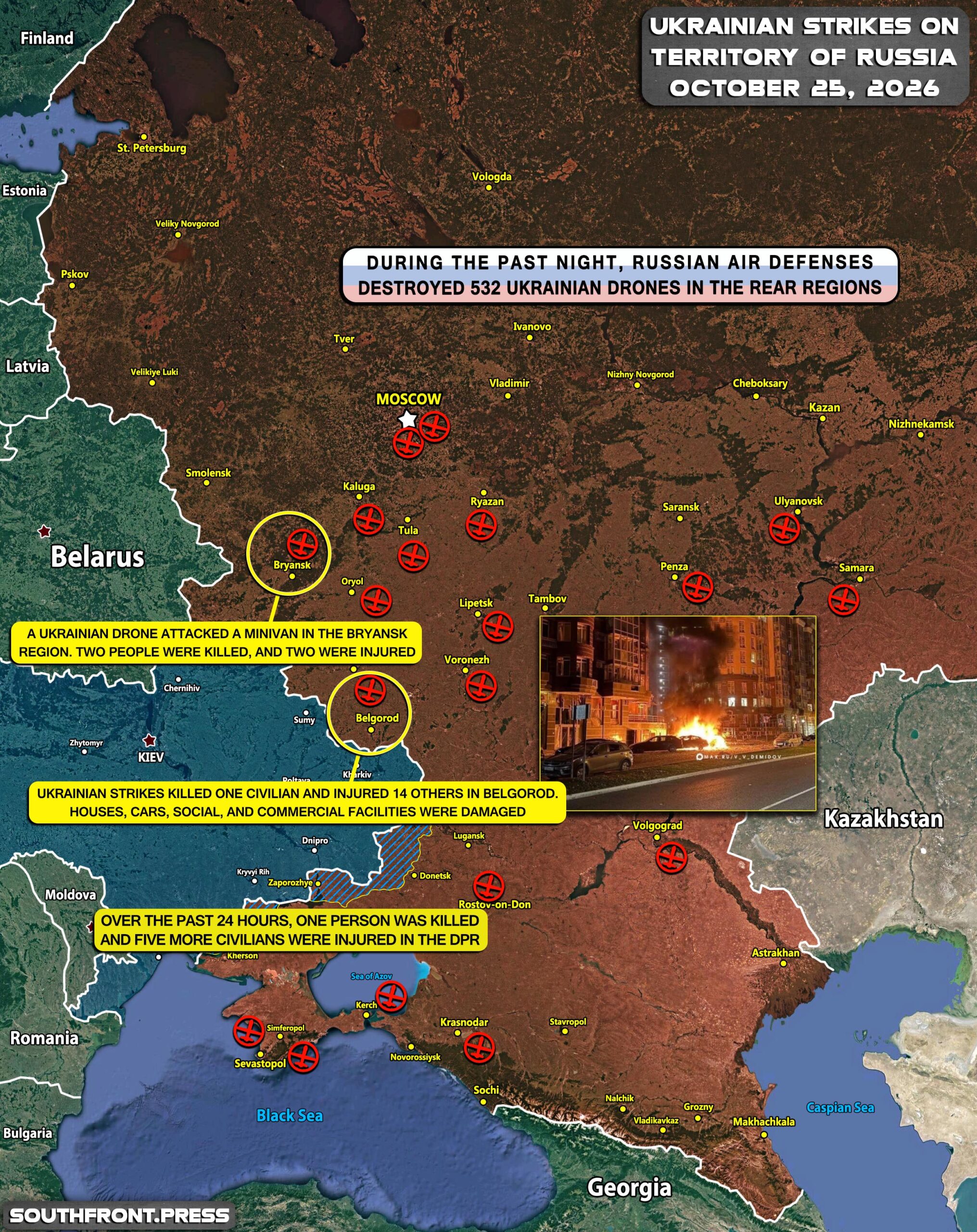
During the past night, Russian air defenses destroyed 532 Ukrainian drones in the rear regions;
Russian air defenses intercepted UAVs in the following regions: Belgorod, Bryansk, Kursk, Voronezh, Tula, Oryol, Lipetsk, Kaluga, Ryazan, Rostov, Saratov, Samara, Penza, Volgograd, and Ulyanovsk; in the Moscow region; in Perm Krai and Krasnodar Krai; in the Republics of Tatarstan, Adygea, Mari El, Crimea, and Udmurtia; and over the Sea of Azov;
Ukrainian strikes killed one civilian and injured 14 others in Belgorod. Houses, cars, social, and commercial facilities were damaged;
A Ukrainian drone attacked a minivan in the Bryansk region. Two people were killed, and two were injured;
Over the past 24 hours, one person was killed, and five more civilians were injured in the DPR.
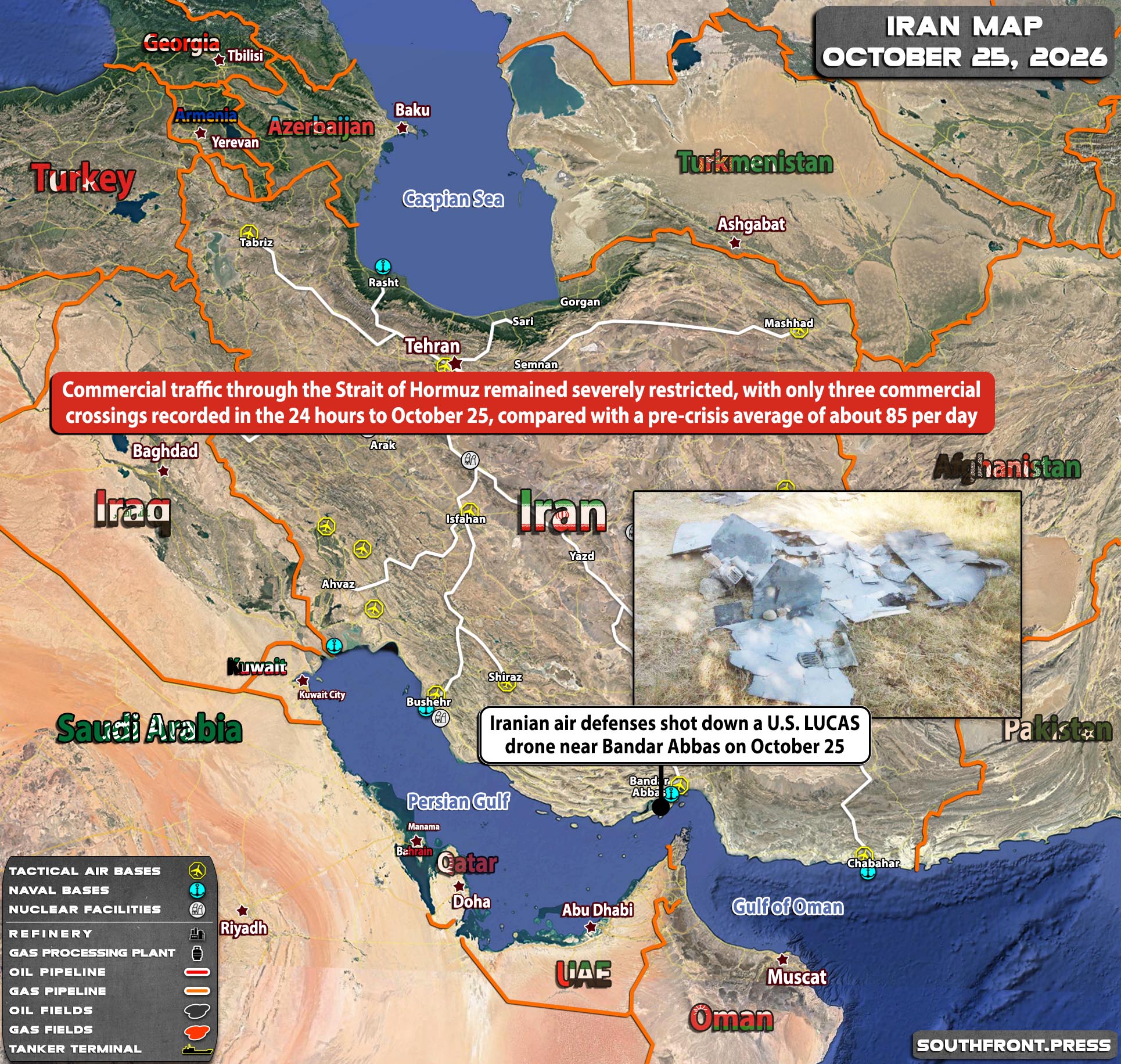
Iranian air defenses shot down a U.S. LUCAS drone near Bandar Abbas on October 25;
Commercial traffic through the Strait of Hormuz remained severely restricted, with only three commercial crossings recorded in the 24 hours to October 25, compared with a pre-crisis average of about 85 per day.
The Yemeni army (AnsarAllah) Al-Shajuf and Al-Musbal areas south of Taiz;
Fighting between Ansar Allah and the Saudi-backed forces continue in Al-Maliha areas and Al-Thalathin Street west of Taiz;
On October 24, Saudi Arabia said it intercepted Houthi ballistic missiles targeting Taif, Yanbu and Riyadh, as well as a drone over the Eastern Province.
The death toll from Saudi airstrikes has reached 193 martyrs and 468 wounded, according to the Sanaa-based government’s Ministry of Health;
The Yemeni army (Ansar Allah) reportedly targeted Saudi’s East-West oil pipeline and pumping stations, an Aramco facility in Yanbu and the Rabigh refinery;
Saudi Arabia reported intercepting 10 ballistic missiles targeting its southern regions on October 25, alongside additional missiles and drones aimed at other locations.
'Diary of a Wimpy Kid' author Jeff Kinney shares his parenting advice — and what he'd do differently.
Simon Simard for BI
This as-told-to essay is based on a conversation with Jeff Kinney, the 55-year-old author of the "Diary of a Wimpy Kid" series, who lives in Plainville, Massachusetts. It has been edited for length and clarity.
When I wrote "Diary of a Wimpy Kid," I worked on it for eight or nine years without thinking I was writing a book for kids.
I thought I was writing a book for grown-ups that would feel like "The Wonder Years" or "A Christmas Story" — looking back on childhood through the lens of an adult.
The first thing that surprised me was that my publisher said I'd actually written a children's series; it caused a lot of cognitive dissonance.
But what also surprised me was that kids understood the irony in the books. They understand that Greg is an unreliable narrator; they seem to get the joke.
After writing the series, and after raising two kids of my own — ages 21 and 23 — I've learned a few things about kids. Here's my best advice about getting kids to read, screen time, and more — plus a few things I'd go back and change if I could.
1. To get kids to read, feed their interests
I recently heard author Jack Gantos say that after dinner, he and his family would get out their books and read. I think that's really cool and also very old-fashioned, in a way. I wish we'd done it when raising our kids.
With reading, I think the most important thing you can do is feed your kids' interests, whether they're interested in Pokémon cards or sharks or tornadoes. Get them books or magazines that speak to their interests, rather than trying to give them books that we read as kids or books that are too high-minded for their age level.
A lot of authors who write for kids start with some sort of a lesson, and there's a time and place for that. But kids read for the same reason that adults read: to be entertained. If we start from a position of trying to teach kids a lesson, they'll sniff that out and turn away from it.
It's really important to encourage kids down a path that gets them reaching for the next book. I want them to feel a feeling of success in having finished a book because that's an important act of completion. But mostly, I'd like them to keep reading, whatever form that might take.
2. Listen to them
In everyday parenting, sitting at dinner with our kids and hearing about their day without judgment is a really good foundation. Just about everything that kids today are going through, we've been through in some form. The most powerful thing that we can say to kids is "I understand," or "I've been there myself," and share stories, making sure that they feel seen and heard.
As parents, we should make ourselves vulnerable to our kids by telling them about the struggles that we went through.
If we do that without moralizing and without judgment, I think it draws us closer to our kids and turns us into a resource for them.
3. Envision your future relationship
I've always thought about my relationship with my kids by imagining, How do I want our relationship to look when my kids are adults? I've tried to anticipate that and treat my kids that way the whole time.
Kinney has two adult children, ages 21 and 23.
Simon Simard for BI
I think it's working out because my kids will call me and want to go see the Patriots or the Celtics with me. I think that's partially because I've always had this version of our relationship in mind.
4. Don't get too wrapped up in kids' sports
As parents, we live and die by our kids' successes in sports. I certainly got too caught up in it and couldn't really anticipate that there would be a life beyond sports for my kids.
If I were to go back in time, I probably would change my approach on that. We like to see our kids succeed, and of course, sports is a big stage where there's a lot wrapped up in their success, including social issues and self-esteem.
When our kids are thriving, we feel really good for them, and when they're failing, it's tough for them and us. I can understand why that happens with parents, but I can also see that it's good to take a step back.
5. Help them understand that social media manipulates
Social media bullying is something that we never had to face growing up, and it's really unfortunate and damaging.
As parents, we can help kids by educating them and helping them understand that social media companies are incentivized to make you spend more time on your screens. The more that my kids, who grew up immersed in the social media world, began to understand that, the more they wanted to move away from it.
They get out there in the world — touch grass, play sports, and pick up basketball. My son will put lockouts on his social media.
It's important for us to think for ourselves before we turn to AI
As AI becomes a part of schoolwork and daily life, my concern is that AI makes a lot of things very easy.
At times, I look for solutions through AI that I could conjure up myself, so I worry about how that rewires the brain when you feel like there's always an agent that can solve your problem for you. It could reduce your own capacity for problem-solving.
It's really important for kids to be able to think for themselves before turning to the tool.
To counteract that, getting out in the world and interacting with one another is really important. Put kids into social situations; for example, my son has been working as a bookseller this past year, where he's had to interact with lots of different types of people and solve problems.
A lot of kids or young people in this generation are more isolated. They spend a lot more time in their rooms on their phones, and so I think that getting them out there interacting with other human beings is going to give them a competitive advantage.
À entrada de uma reunião sobre o Orçamento do Estado para 2027, em Coimbra, o secretário-geral do PS prometeu apresentar medidas para famílias, empresas e instituições, com respeito pela sustentabilidade das finanças públicas.

 Login