❌

Reading view

​​​"É complicado falar em mudança após eleições em Israel"

Pedro Nascimento diz que ​eleições em Israel vão precisar de "um jogo de negociações" que não vai ser simples. Sublinha que Israel vai manter a postura dura sobre a temática da defesa nacional.

  •  

Six Palestinians Killed In Gaza In 24 Hours

Ministry of Health stated on Tuesday that six Palestinians were killed and 32 injured during the preceding 24 hours, as Israeli shooting and shelling continued across Gaza. Israeli naval vessels fired live ammunition & shells at Gaza's coast and fishermen

💾

  •  

Israel’s elections: all roads lead to genocide

Israelis headed to voting centers on Tuesday, October 27, in legislative elections to choose the members of the parliament, known as the Knesset.

The event marks Israel’s first general election since the October 7 attacks, which Netanyahu’s government expanded into a multi-front regional war. 

Who is competing in the elections?

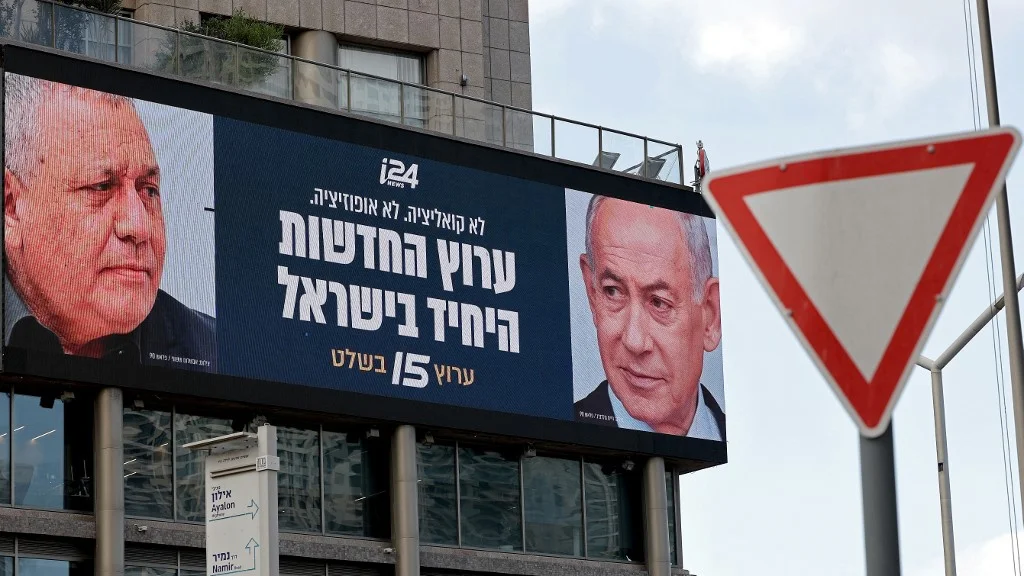
For many, these elections serve as a direct referendum on Prime Minister Benjamin Netanyahu and the far-right bloc he heads. 

The Pro-Netanyahu Bloc 

This bloc comprises the National Liberal Party (Likud) led by Netanyahu, the Religious Zionist Party (HaTzionut HaDatit) led by current Finance Minister Bezalel Smotrich, and Jewish Power Party (Otzma Yehudit) led by National Security Minister Itamar Ben-Gvir.

The coalition advocates for the consolidation of Israeli rule throughout the occupied Palestinian territories, explicitly rejects the possibility of Palestinian statehood, promotes the expansion of settlements and the implementation of hardline security measures against Palestinians. It also calls for disavowing the Oslo Accords, and the total disarmament of Hamas.

The anti-Netanyahu bloc 

The primary competitor to Netanyahu and his coalition is the bloc led by Gadi Eisenkot, a former military chief of the Israeli forces. It represents a center-right to center-left opposition when it comes to Israeli internal affairs, but of course not to Palestinians and their destiny.

Eisenkot is the architect of the “Dahiya Doctrine,” an Israeli military strategy that calls for applying massive, disproportionate firepower and the widespread destruction of civilian infrastructure in order to create long-term deterrence, and discourage the local population from supporting any force resisting Israel.

He was also a member of Netanyahu’s war cabinet for the first eight months of Israel’s genocide in Gaza.

Eisenkot’s bloc includes the Yashar Party, led by Eisenkot, and the Together alliance (Beyachad), led by former prime minister Naftali Bennett. It also includes The Democrats (HaDemokratim) – a merger of the Labor and Meretz parties – led by Yair Golan, a retired IDF Major General.

Israel Is Our Home Party (Yisrael Beiteinu) led by Avigdor Liberman, is also part of Eisenkot’s coalition.

Liberman, who formerly held ministerial portfolios in the Israeli government as minister of finance, defense, foreign affairs, strategic affairs, transportation, and national infrastructure alongside being a deputy prime minister, is known for his hawkish stances towards Palestinians. 

Defending the use of live ammunition by Israeli forces against Palestinian demonstrators during the 2018 Gaza border protests (known as the Great March of Return), Liberman stated: 

“There are no innocents in Gaza.”

Although the components of this coalition are united by their goal to oust Netanyahu, they remain deeply aligned with their political rival’s traditional right-wing stance regarding the Palestinian cause.

The coalition opposes the creation of an independent Palestinian state, while supporting the ongoing military operations in the Gaza Strip, the West Bank and other parts of West Asia, and maintaining existing settlement frameworks.

Some of the coalition’s affiliated parties further encourage separating Israeli and Palestinian populations, and retaining complete Israeli security control over strategic areas such as the Jordan Valley. They also demand the full demilitarization of any future Palestinian entity.

Others call for the dismantling of the Palestinian Authority, the annexation of Area C in the West Bank, and the entrenchment of discriminatory policies against Arab citizens in Israel.

The Arab-led lists

The Arab-led lists represent the minority of Palestinian citizens in Israel (also known as Arab-Israelis), a community that makes up roughly 21% of Israel’s total population, estimated at 10.3 million.

Even though both lists fight for the same minority group’s rights, they hold opposing views on the goals, values, and strategy needed to represent them effectively.

While representing a minority, these lists hold a critical and often polarizing role in Israeli elections, as they frequently act as a critical balance of power that strongly determines whether a governing coalition can be formed.

These lists include the Joint List and the United Arab List.

The Joint List

The Joint List consists of:

  • The Democratic Front for Peace and Equality (Hadash) led by Yousef Jabareen, a prominent Palestinian legal scholar, academic, and politician.
  • The Arab Movement for Renewal (Ta’al) led by Dr. Ahmad Tibi, a prominent Palestinian politician, who has served as a member of Knesset since 1999.
  • The National Democratic Alliance (Balad) led by a prominent Palestinian politician and historian Sami Abu Shehadeh.

The coalition  advocates for Palestinian self-determination and civil rights, for an end to the Israeli occupation, and for the establishment of an independent Palestinian state along the 1967 borders with Jerusalem as its capital.

It also demands full legal equality and state recognition for Palestinian Arab citizens as an indigenous national minority, and calls for immediate government and law enforcement intervention to curb the increase in organized crime in Arab municipalities.

Structural reforms to secure building rights, expand municipal boundaries, and stop punitive home demolitions are top priorities on the Joint List’s agenda.

The United Arab List 

The United Arab List (Ra’am) is an Islamist and conservative political party led by Mansour Abbas, a prominent Palestinian politician, whose party was the first independent Arab-Muslim faction to join an Israeli government.

Unlike traditional Arab political lists, Ra’am demonstrates a willingness to ally with Jewish political parties in government. It uses a pragmatic, integration-focused strategy to gain political influence and enhance the socioeconomic wellbeing of Arab-Israeli citizens.

Ra’am prioritizes the immediate domestic needs of Arab communities inside Israel, such as fighting local organized crime, improving public infrastructure, securing budgets, and resolving housing issues.

Netanyahu is alarmed by surging Arab voter turnout

Media reports indicated that Arab citizens voted in numbers not seen in decades, which in turn pushed Netanyahu to launch an urgent social media campaign, warning of the growing participation of Arabs.

Urging his supporters to go out and vote, Netanyahu appeared in a video, accusing Ra’am of bribing voters with envelopes of cash in the southern areas occupied by Israel.

“My brothers and sisters, Likud voters, this is an emergency call, because they are trying to steal the election from us. This morning, the police announced something serious and unusual. They caught three of Ra’am’s senior financial figures with envelopes of cash in the south. This is criminal. They will get to everyone. You have been warned, the voter turnout in the Arab sector in the south is incomparably higher than in the Jewish sector. You must go out and vote,” Netanyahu said.  

He also claimed that left-wing women escorted Arab women to the polls.

Shortly before polls closed at 10:00 pm local time, the final reported voter turnout reached 74.3%, the highest in decades, with exit polls showing no clear winner, and pointing to a political deadlock.

It is expected that the final tally and initial results will be published between Thursday afternoon, October 29, and Friday morning, October 30, while the official results will be announced on November 4, 2026. 

All roads lead to genocide, no matter which bloc wins

While many are looking forward to the loss of Netanyahu’s bloc in the elections, hoping that a new government will be less brutal against Palestinians and people across the West Asia region, analysts suggest that Eisenkot’s bloc adopts the same Zionist ethnic cleansing-based ideology. 

In an interview with BreakThrough News, Israeli-American author, activist and founder of Palestine House of Freedom Miko Peled argued that there are no differences between the two competing blocs when it comes to issues like Israel’s war on Iran, the mass killing in Gaza, forcing Palestinians to flee the besieged enclave. Meanwhile, disputes on the internal Israeli issues – mainly the draft of ultra-orthodox jews in the military and initiating an independent inquiry into the failure of the army and intelligence on the October 7 attacks – remain serious.

  •  

Il Giornale contro la gip di Siher: “Firmò un appello per Gaza”. Ma c’era anche la firma della pm che ha chiesto il carcere

“Esclusivo – La toga che ha liberato Siher ha firmato un appello per Gaza“. Non si è fatto attendere il dossieraggio nei confronti di Tiziana Landoni, la gip di Milano che ha rimesso in libertà il 30enne accusato di istigazione a delinquere con finalità di terrorismo. Nel tentativo di mettere in dubbio l’imparzialità della giudice, però, tutto ciò che la stampa di destra ha trovato è la sua firma in calce a un “Appello di giuristi per Gaza”, pubblicato a settembre per invocare “la tutela dei diritti umani e la persecuzione dei crimini contro l’umanità” compiuti da Israele nell’enclave palestinese. Secondo Il Giornale, che pubblica la “notizia”, questa circostanza dovrebbe “far riflettere sulla decisione” adottata. Per quale motivo? L’articolo non lo dice, ein effetti risulta assai difficile trovare ragioni di inopportunità nel testo dell’appello, che si limita a ricordare l’impegno della comunità internazionale al perseguimento dei crimini di guerra e contro l’umanità, contenuto nel Preambolo dello Statuto della Corte penale internazionale. Soprattutto, però, il quotidiano omette – o forse non conosce – un elemento che smonta la tesi implicita nel pezzo: a firmare quell’appello, infatti, fu anche Francesca Crupi, la pm che ha disposto il fermo nei confronti di Siher e avrebbe voluto per lui la custodia cautelare in carcere. A dimostrazione che schierarsi contro il genocidio di Gaza non vuol dire necessariamente essere amici dei delinquenti.

Ecco il testo integrale dell’appello:

Di fronte alle notizie sulla violazione sistematica e protratta del diritto alla vita e degli altri diritti fondamentali della popolazione civile di Gaza, il silenzio ha smesso da tempo di essere un’opzione. Come giuristi, sentiamo il dovere di ricordare che lo Stato italiano, per Costituzione e per legge, e con l’adesione a trattati e convenzioni, ha scelto la tutela dei diritti fondamentali e la persecuzione dei crimini internazionali. Le ragioni di questa scelta sono tra l’altro compendiate nello Statuto della Corte penale internazionale, firmato a Roma nel 1998, sottoscritto da 125 Paesi, e ratificato con legge dello Stato nel 1999. Vogliamo ricordare queste ragioni, unitamente ai rappresentanti dell’avvocatura e dell’università che vorranno aderire, leggendo ogni giorno – nelle aule d’udienza e in quelle universitarie – il preambolo allo Statuto della Corte penale internazionale, per testimoniare che le coscienze di chi ogni giorno contribuisce all’amministrazione della giustizia non sono indifferenti alle ingiustizie perpetrate nei confronti dei più deboli, e per fare appello a tutte le istituzioni perché si pretenda il rispetto del diritto e dei diritti fondamentali dei civili.

Seguiva il testo che i firmatari si proponevano di leggere all’inizio di ogni udienza.

“Preliminarmente, il Tribunale intende oggi ricordare quanto enunciato nella Legge 12 luglio 1999, n. 232, di ratifica ed esecuzione dello statuto istitutivo della Corte penale internazionale, e segnatamente nel suo Preambolo.

“Consapevoli che tutti i popoli sono uniti da stretti vincoli e che le loro culture formano un patrimonio da tutti condiviso, un delicato mosaico che rischia in ogni momento di essere distrutto;

Memori che nel corso di questo secolo, milioni di bambini, donne e uomini sono stati vittime di atrocità inimmaginabili che turbano profondamente la coscienza dell’umanità;

Riconoscendo che crimini di tale gravità minacciano la pace, la sicurezza ed il benessere del mondo;

Affermando che i delitti più gravi che riguardano l’insieme della comunità internazionale non possono rimanere impuniti e che la loro repressione deve essere efficacemente garantita mediante provvedimenti adottati in ambito nazionale ed attraverso il rafforzamento della cooperazione internazionale;

Determinati a porre termine all’impunità degli autori di tali crimini contribuendo in tal modo alla prevenzione di nuovi crimini;

Rammentando che è dovere di ciascuno Stato esercitare la propria giurisdizione penale nei confronti dei responsabili di crimini internazionali”,

procediamo con la trattazione dell’odierna udienza”.

L'articolo Il Giornale contro la gip di Siher: “Firmò un appello per Gaza”. Ma c’era anche la firma della pm che ha chiesto il carcere proviene da Il Fatto Quotidiano.

  •  

L’Italia firma con altri 8 Paesi il proprio sostegno alla Cpi dopo le sanzioni di Washington. Ma in Parlamento la maggioranza evita il voto contro Trump

Il governo italiano ha aderito a una dichiarazione congiunta siglata da otto Paesi (tra cui Francia, Germania, Regno Unito, Canada e Giappone) per ribadire il proprio sostegno alla Corte Penale Internazionale e contestare le misure restrittive decise da Washington a ottobre, quando l’amministrazione Trump ha annunciato sanzioni alla Cpi nelle stesse ore dell’assegnazione del Premio Nobel per la Pace 2026 a Navanethem Navi Pillay, giurista sudafricana già giudice della medesima Corte e Alta commissaria delle Nazioni Unite per i diritti umani. Ma Giorgia Meloni in prima persona ha evitato di condannare fermamente la scelta. Tanto è vero che adesso che si tratta di votare in Parlamento, il centrodestra si muove tra l’ambiguità e il rinvio.

Martedì l’aula della Camera doveva votare una proposta di legge del centrosinistra, sottoscritta dal campo larghissimo (Pd-M5S-Avs-Italia viva e più Europa) ma non se n’è fatto nulla. Il testo si riferiva sia alle sanzioni dello scorso ottobre, sia al fatto che il 6 febbraio 2025 il presidente degli Stati Uniti emanava l’ordine esecutivo n. 14203, sulla base del quale sono state emesse sanzioni, tra gli altri, contro il procuratore capo, i due viceprocuratori e altri otto magistrati della Corte. In particolare, Washington accusava la Corte di aver “intrapreso azioni illegittime e prive di basi prendendo di mira l’America e il suo stretto alleato Israele”, riferendosi al mandato di cattura spiccato nei confronti di Benjamin Netanyahu e dell’ex Ministro della difesa, Yoav Gallant, per i crimini commessi ai danni della popolazione di Gaza, e volutamente ignorando che la Corte, contestualmente, spiccava analoghi mandati nei confronti di tre figure apicali di Hamas.

La proposta di legge del centrosinistra impegna il governo a criticare duramente questa iniziativa. In particolare “a esercitare una forte pressione in tutti i consessi europei e internazionali, oltre che nei rapporti bilaterali, affinché gli Stati Uniti rimuovano tutte le sanzioni contro la Corte penale internazionale emesse dall’Amministrazione Trump, sia quelle con l’ordine esecutivo n. 14203, sia quelle annunciate il 9 ottobre 2026”. E anche “ad adoperarsi affinché la Commissione europea proceda senza indugio all’adozione degli atti necessari a rendere applicabile alle sanzioni statunitensi contro la Corte penale internazionale lo ‘Statuto di blocco’ dell’Unione europea”.

Su questi punti il centrosinistra aveva cercato una convergenza con il centrodestra. Nulla di fatto. Non solo. Martedì, a urne aperte in Israele, la maggioranza ha fatto rimandare il voto dicendo di “non essere pronta” (ma il testo era stato presentato ad agosto) e di non voler creare “ricadute” sullo scenario internazionale. Esisteva una proposta di legge alternativa del centrodestra, ma la Lega non era intenzionata a votare neanche la generica condanna di Netanyahu. Ma l’opposizione insiste: la prossima settimana in Aula si vota l’urgenza; da vedere – a elezioni passate in Israele – cosa farà il centrodestra.

L'articolo L’Italia firma con altri 8 Paesi il proprio sostegno alla Cpi dopo le sanzioni di Washington. Ma in Parlamento la maggioranza evita il voto contro Trump proviene da Il Fatto Quotidiano.

  •  

Caretaker PM Netanyahu expected to escalate violence, as EU sanctions talk on hold until new Israeli government formed

Any talk of EU sanctions on Israel is in limbo until a new government emerges, as experts warn that Israeli prime minister Benjamin Netanyahu could attack Iran in a “matter of days” to improve his chances of retaining power.

Netanyahu is to stay on in a caretaker role for several weeks or months of coalition talks after inconclusive elections on Tuesday (27 October), which saw his rightwing bloc win the most seats (53 seats out of 120), but fall short of a majority.

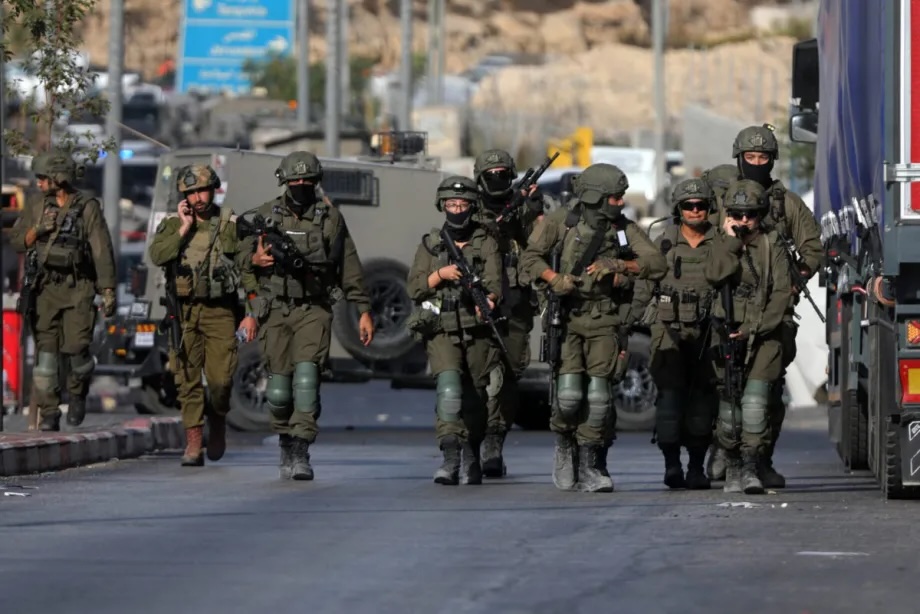
The elections took place amid ongoing Israeli aggression in Gaza, the West Bank, and Lebanon.

And this was expected to continue or get worse in the post-election power struggle, as Netanyahu courted the eight defector-MPs he needed to stay in power, by playing on security fears.

This article continues, but the full version is available only to EUobserver.com subscribers. Visit account.euobserver.com/membership

  •  

Israel Kills Four Palestinians in Gaza Despite Ceasefire

The Israeli military killed four Palestinians in the Gaza Strip on Wednesday, one day after parliamentary elections—elections that failed to halt Israeli attacks on the Palestinian enclave.

RELATED:

Gaza Camp Fire Leaves More Than 800 Homeless After Drone Strike

A medical source at Nasser Hospital confirmed to EFE that 33-year-old Mohamed Alyan al-Bayouk was killed in an Israeli airstrike on the Bayouk neighborhood in the southern city of Khan Yunis. The bombardment also left six people wounded.

In a separate Israeli attack on Al-Mawasi, in the southern part of Rafah, three Palestinians lost their lives and seven were wounded—three of whom are in critical condition—the same medical source stated.

At that location, Israeli drones struck a police checkpoint belonging to the Gazan Ministry of Economy, which is responsible for managing the movement of trucks entering the Gaza Strip from the Israeli side.

🇵🇸💢 Israeli forces killed four Palestinians in Gaza on Tuesday, including a 6-year-old girl, according to Palestinian news site Felesteen.

Those killed include:

➤ Tahani Mohammed Saeed Shalalfa, a girl, 6, who died of a gunshot wound from Israeli fire in al-Mawasi, the…

— Drop Site (@DropSiteNews) October 28, 2026

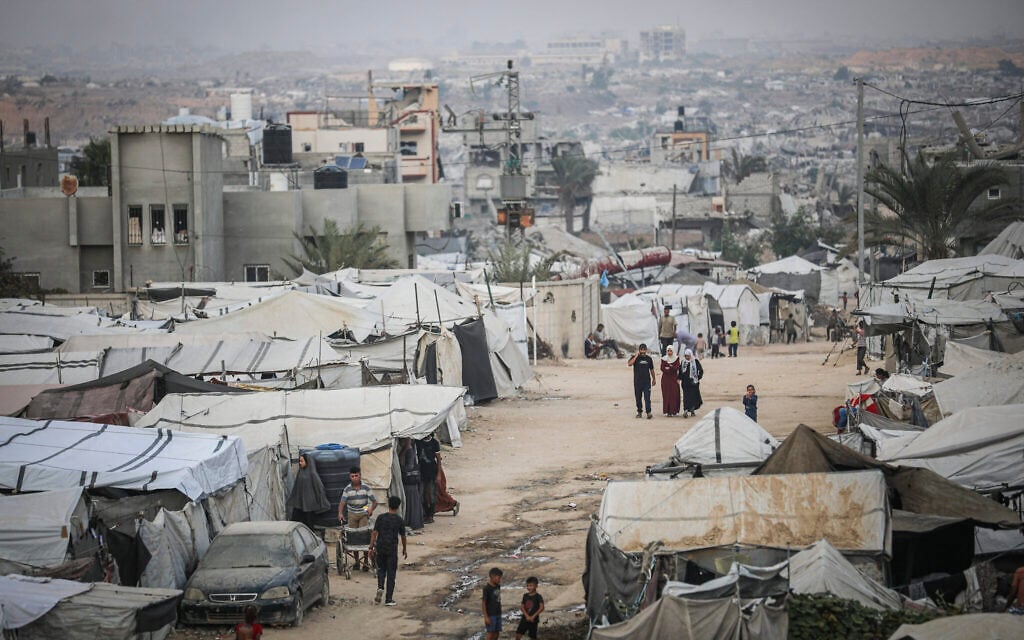
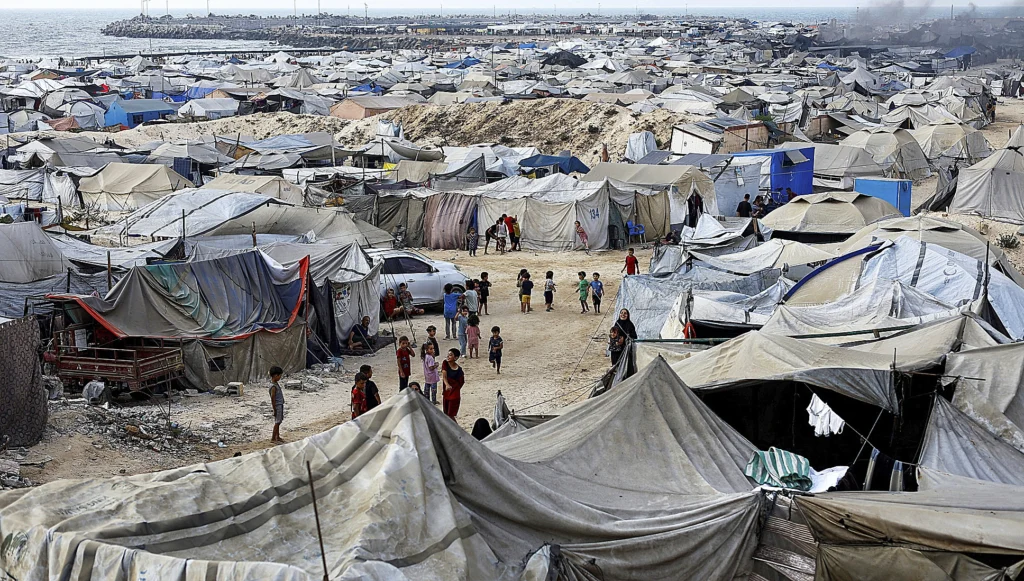
Despite a ceasefire—ostensibly in effect since October 10, 2025—more than 1,500 Palestinians have been killed by Israeli attacks and fire within the enclave. Furthermore, at least 1.8 million people remain displaced from their homes, most living in tents near the Mediterranean Sea, where they now face their fourth winter.

Since October 2023, Israel has killed more than 74,500 Gazans, according to data from the local Ministry of Health. The majority were civilians, and the victims include more than 20,000 minors.

Most of Gaza remains devastated. Hospitals continue to operate only partially, relying on their own power-generation equipment, while children attend classes in tents. The continued Israeli bombardment makes it clear that the humanitarian situation in the Gaza Strip remains critical, with a civilian population that is displaced, wounded, and exposed to further attacks.

  •  

Abdul El-Sayed, el demócrata musulmán que desquicia a Trump: "Es un yihadista"

El candidato al Senado por Míchigan que entusiasma a los jóvenes y a los árabes tiene una ligera ventaja sobre su rival republicano Mike Rogers Leer

El candidato al Senado por Míchigan que entusiasma a los jóvenes y a los árabes tiene una ligera ventaja sobre su rival republicano Mike Rogers
  •  

Secrecy Tracker: Media groups urge von der Leyen to tackle EU secrecy as watchdog probes Gaza documents

Dear readers,

We are back with a new issue of the Secrecy Tracker – your regular update on what the EU institutions prefer to keep under wraps. 

I am Alexander Fanta, a journalist with Follow the Money, who has struggled for years to gain access to EU documents. I wrote this newsletter with the help of EUobserver’s Nikolaj Nielsen and Pascal Hansens from Investigate Europe.

This newsletter is a collaboration between EUobserver, Follow the Money and Investigate Europe. 

Media outlets, journalist associations and press freedom organisations have penned an open letter to European Commission president Ursula von der Leyen to voice their frustration about the recent deterioration in the EU’s freedom of information.

The letter, which was co-signed by the publishers of this newsletter – Follow the Money, EUobserver and Investigate Europe – urges the commission to end the silent crisis that has hampered journalists finding the documents they need to scrutinise matters of public importance – such as how the member states (mis-)spent billions of euros in post-Covid recovery funds, or how the commission hides its arms research cooperation with Israel.

The signatories of the letter include press lobby groups such as the International Federation of Journalists, but also some of the weightiest voices in investigative journalism – the International Consortium of Investigative Journalism and the Organised Crime and Corruption Reporting Project.

The letter asks the commission to address the excessive redactions and long delays journalists face when asking for documents under the EU’s freedom of information law, Regulation 1049/2001, as well as the Commission’s failure to keep crucial documents – think von der Leyen’s texts with Pfizer chief Albert Bourla. 

Moreover, the commission should reverse a controversial change to its internal rules of procedure in 2024 which made access requests more difficult by limiting the definition of what is considered “a document”, and putting entire areas of the commission’s work – such as enforcement of its Big Tech laws – out of bounds from access requests.

The leading figure behind the letter, the Committee to Protect Journalists’ Tom Gibson, has asked von der Leyen’s cabinet for a meeting to discuss these issues, and seek improvements.

“The European Commission purports to uphold press freedom in Europe as well as through its external policy”, Gibson said. “Yet, in Brussels, we see that the European Commission is seeking to actually put obstacles in the way of creating an enabling environment for journalists who report on the institutions – in order, seemingly, to maintain an ability to control the official narrative.”

“This has to change otherwise the European Commission can be accused of double standards”, according to Gibson.

EUobserver’s Gaza complaint

Last week, the European Ombudswoman, an administrative watchdog, launched a probe into EUobserver’s complaint against the European Commission. The Brussels-executive had refused to release 17 documents it has on how the EU spent money on bricks-and-mortar projects in Gaza.

We had first asked in February as part of an investigation that sought to get an idea to what extent the Israelis destroyed EU-funded infrastructure in the Strip. We were stonewalled, amid arguments there is no overriding public interest even though tens of thousands of people have been killed, triggering massive Europe-wide protests and flotillas. Our appeal went unanswered.

Now EU ombudswoman Teresa Anjinho is demanding, as a first step, a commission response to our appeal by November 4 latest. If the commission still fails to deliver, she will review the documents herself.

Aarhus Convention vs data-centre secrecy

The secrecy surrounding data centres’ environmental footprint is coming under increasing scrutiny. In April, Investigate Europe broke the news, and reported in this newsletter, that a provision in a delegated act to the energy efficiency directive, which keeps key information of data centres environmental impact secret, likely violates transparency obligations under the Aarhus convention.

Now, Lighthouse Reports has published a story that they are formally challenging the law. Frustrated by facing repeated refusals from more than a dozen EU member states and the European Commission to access data on energy consumption by data centres across Europe, collected under the Energy Efficiency Directive (EED).

Lighthouse Reports decided last September to turn to the Aarhus Convention – a binding treaty aims to protect access to environmental information and is often used as a last resort solution – and its compliance committee to seek disclosure. Lighthouse Reports may face a long wait for a ruling though, as the process can take years.

When EU’s top court challenges transparency watchdog’s authority

The Court of Justice of the European Union (CJUE) has challenged the European Ombudsman’s authority to investigate its refusal to disclose past financial declarations of interests of its judges and advocates general, according to a decision published today by the EU’s transparency watchdog.

The dispute began after Investigate Europe reporters, while investigating judges’ currently declared financial interests, discovered that older declarations were no longer publicly available. The Court initially refused, arguing that those documents were judicial and not administrative ones, and therefore fell outside the rules on public access to documents.

Following our complaint to the ombudswoman and its subsequent decision to open an inquiry, the court eventually agreed to release the requested former declarations, but only upon request. So Teresa Anjinho closed the case, as she considered that the court remedied the problematic situation.

The ombudswoman firmly rejected the court’s interpretation: handling public access requests is an administrative activity, regardless of the nature of the documents concerned. She also called for greater clarity on how the court distinguished between judicial and administrative documents. 

So a small victory for transparency, but a broader question remains: should the EU’s top court have such discretion over which of its own internal documents face public scrutiny? 

How to get access across Europe

A new guide promises to give journalists (and anyone else) an easy introduction into making freedom of information requests in 39 European countries and with the EU.

The first-of-its-kind compendium, curated and co-written by yours truly with the help of 45 journalists, academics and FOI advocates from around the continent and published by Arena for Journalism, answers practical questions such as “how can I appeal” and provides contacts who can help in each country. 

Find the guide – free to use and share – under this link.

  •  
❌