❌

Reading view

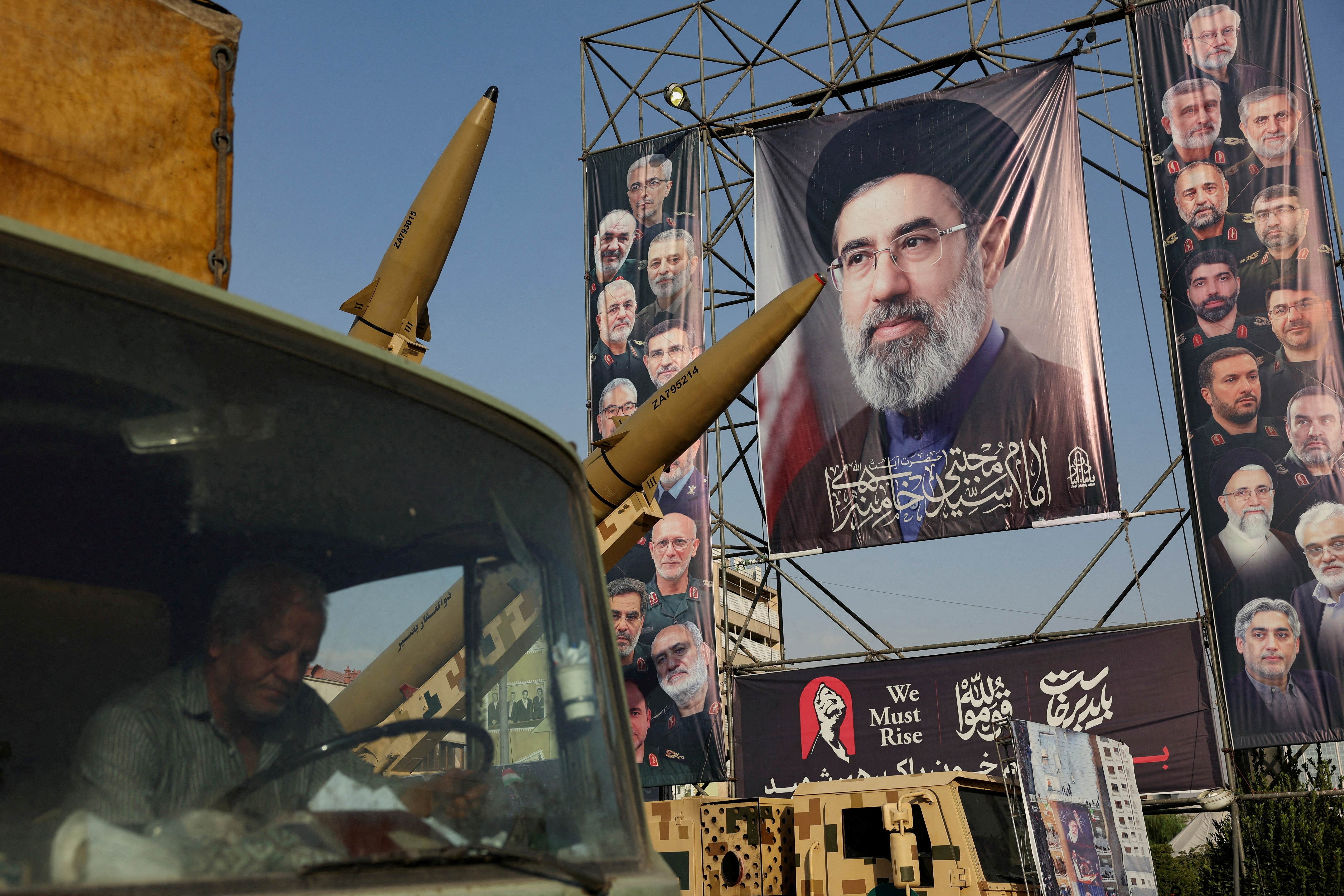
Iran sees only ‘unacceptable ideas’ in latest mediation to end war

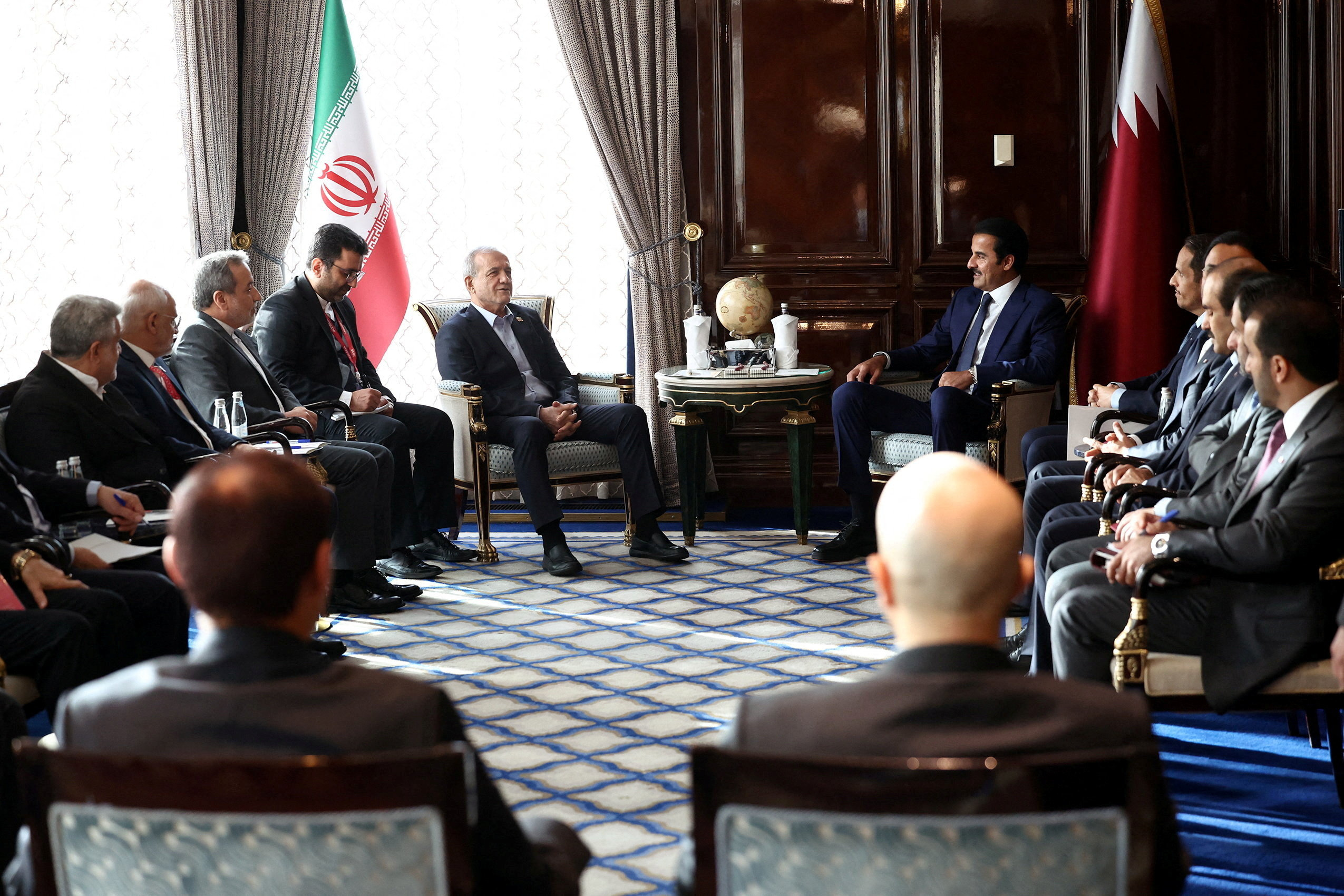
Qatari mediators have presented Iran with a new draft deal to end the war with the US and Israel, an official briefed on the negotiations said, but a senior Iranian official said Doha had only put forward unacceptable ideas that did not amount to an offer.

The official briefed on the negotiations, who is not from Iran, said a new draft peace proposal for the eight-month-old conflict was presented on Sunday and was being considered by Tehran, with a response expected by the end of the week.

Qatar, along with Pakistan, has led mediation to end the war, which has disrupted global shipping and oil supplies and recently spread to Saudi Arabia and Yemen.

The proposal presented by Qatar sets a seven-day timeline addressing both Tehran’s and Washington’s concerns, laying out daily confidence-building steps that each side must take, the official briefed on the negotiations said. The timeline could begin early next week and several countries would act as guarantors of the deal, the official added.

Shortly afterwards, a senior Iranian official involved in the talks said Qatar had presented only “unacceptable ideas and not an offer”, and that Tehran’s policy on showing no flexibility over the nuclear issue remained unchanged.

Iran’s Foreign Minister Abbas Araqchi said on Wednesday that Tehran remained in close contact with intermediaries to review ideas that could ensure the implementation of its own seven-day proposal aimed at ending the war in the Middle East.

He said Iran continued to give diplomacy a chance to succeed, adding that Tehran’s seven-day plan could be implemented in less than a week.

Washington wants Iran’s decades-long nuclear programme to be part of negotiations to end the war from the outset, while Iran says its conditions — which include an end to the US blockade of Iranian ports and the lifting of sanctions on Iranian oil exports — must be met first. Iran rejects Western concerns ​that ⁠its nuclear programme is military in nature.

In late September, Iran presented its seven-day proposal under which Araqchi said the Strait of Hormuz, one of the world’s most important energy shipping channels, could be reopened if certain conditions were met. US President Donald Trump rejected it, prompting further Qatari mediation.

The draft discussed in Tehran on Sunday was different from that proposal, the official briefed on the negotiations said, though the details of the latest plan were not immediately clear. The official had previously told Reuters that the Qatari mediators had coordinated with Washington before going to Tehran.

Earlier mediation efforts to end the war that the US and Israel launched on February 28 helped produce an interim peace agreement in June, but it quickly unravelled.

In recent weeks, Yemen’s Iran-aligned Houthi forces have launched repeated attacks against Saudi Arabia — a key US ally and the world’s largest crude exporter — opening a new front in the eight-month-old war.

Oil prices LCOc1 rose more than 1% to more than $115 per barrel on Wednesday after a Houthi attack on Saudi Arabia’s largest oil refinery, Ras Tanura, stoking concerns over supply risks.

Fighting with the Houthis intensified last month as the militant group advanced against Saudi-backed forces towards the Bab el-Mandeb Strait, another important shipping lane on the other side of the Arabian Peninsula from Hormuz.

The official briefed on the negotiations said there were concerns ahead of Sunday’s meeting in Tehran that Israeli Prime Minister Benjamin Netanyahu, fighting for another term in a general election, could resume attacks on the Islamic Republic this week.

On Friday, Trump repeated threats to strike Iran again, while Iranian security officials told Reuters Tehran had drawn up detailed plans to attack Gulf undersea cables if the US and Israel resumed attacks.

On Monday, top officials from Saudi Arabia, Turkey and Pakistan also met Iranian officials in Tehran as part of de-escalation efforts. Qatar said on Tuesday that Iran needs to stop threats against Arab Gulf states and open the Strait of Hormuz to show good intentions for mediation efforts to succeed.

Gulf states came under sustained bombardment earlier in the war.

The war also reignited fighting between Israel and the Iran-backed Lebanese armed group Hezbollah. It has eroded Trump’s approval ratings ahead of the US midterm elections that decide control of Congress.

  •  

Britain’s New Budget Exposes the Economic Cost of War and the Limits of Fiscal Flexibility

Chancellor John Healey has unveiled emergency household support, higher taxes on banks and new defence commitments as the Middle East conflict puts renewed pressure on Britain’s economy. Behind the immediate relief measures lies a difficult calculation over growth, public spending and national security.

Britain’s government has attempted to reconcile rising energy prices, constrained public finances and growing defence obligations in a Budget that illustrates how international conflicts are reshaping domestic economic policy.

Presenting his first Budget on 28 October, Chancellor of the Exchequer John Healey announced a £100 energy payment for millions of households, an extension of electricity VAT relief and additional measures intended to support businesses facing rising operating costs.

The package comes as Prime Minister Andy Burnham’s administration confronts the economic consequences of the conflict in the Middle East, alongside continuing financial commitments arising from Russia’s war against Ukraine.

The central difficulty is that Britain must simultaneously protect household purchasing power, support economic growth and finance a more expensive security environment, without allowing government borrowing to expand beyond its fiscal targets.

Energy prices dictate economic policy

The most immediate measures concern energy.

Under the Treasury’s Budget proposals, up to 20 million households in England occupying properties in Council Tax bands A to D will receive a £100 payment from January 2027.

The government has allocated £2.6 billion for the programme, including corresponding funding arrangements for the devolved administrations.

The temporary reduction in VAT on domestic electricity will also remain in place until July 2027, a measure expected to reduce the annual Ofgem price cap by approximately £50 in April.

Meanwhile, the Chancellor announced plans to remove standing charges from domestic gas bills, transferring fixed costs into consumption-based charges.

Although the government estimates that the change could benefit a majority of households, its distributional effects will depend on individual consumption. Lower gas users may benefit differently from households with substantial heating requirements.

The measures demonstrate how energy prices have become a direct constraint on fiscal policymaking.

Britain’s exposure to internationally traded gas means that disruptions originating outside Europe can quickly influence domestic prices, regardless of the source of individual energy supplies.

Banks and businesses face different treatment

Rather than introduce broad increases in personal taxation, the government has chosen targeted revenue measures.

The Bank Corporation Tax Surcharge will temporarily increase from 3 to 6 per cent between January 2027 and March 2028, helping finance household energy support.

The government has also announced changes to gambling taxation intended to fund assistance for smaller businesses in retail, hospitality and leisure.

Fuel duty will remain frozen until July 2027, extending a policy intended to limit motoring and transport costs.

These decisions reflect competing pressures.

Households and smaller businesses require relief from higher costs, while the Treasury must demonstrate that its spending commitments remain consistent with fiscal discipline.

The distribution of the tax burden is therefore becoming an important political question, particularly when the government is simultaneously seeking private investment to stimulate growth.

Growth forecasts reveal limited room for manoeuvre

The latest forecasts from the Office for Budget Responsibility offer little prospect of rapid economic expansion.

According to figures published alongside the Budget, British GDP is expected to grow by 1.2 per cent in 2026 and just 1 per cent in 2027.

Inflation is forecast to peak at 3.8 per cent in the first quarter of 2027 before gradually returning towards the Bank of England’s 2 per cent target.

The Chancellor’s fiscal headroom — the margin available before the government’s borrowing rules would be breached — has narrowed to approximately £15 billion in 2029–30.

This creates an unusually difficult environment for policymaking.

Further economic disruption could reduce tax receipts or increase spending demands, leaving the Treasury with limited capacity to respond without revising its plans.

Defence spending enters the fiscal equation

The Budget also places national security increasingly within the government’s wider industrial strategy.

Britain remains committed to reaching defence spending equivalent to 3.5 per cent of GDP by 2035, with an interim target of 3 per cent in 2030.

The government has announced plans for the National Wealth Fund and British Business Bank to deploy up to £5 billion over four years into defence, dual-use technologies and other sectors supporting national security.

It has also committed an additional £500 million to support Ukrainian air defences during the coming winter.

These measures extend beyond immediate military procurement.

They seek to strengthen domestic industrial capacity, encourage private investment and establish supply chains capable of sustaining higher defence expenditure.

However, the precise financing arrangements for Britain’s longer-term NATO commitments are to be determined at the next spending review.

A European problem without a common fiscal solution

Britain’s predicament closely resembles that confronting European Union governments.

Across Europe, policymakers are attempting to finance defence modernisation and energy security while maintaining social expenditure and industrial competitiveness.

The difference lies partly in the institutional frameworks within which those decisions are made.

EU governments operate under European fiscal rules, while Britain sets its own borrowing and debt targets. Nevertheless, all face the same underlying pressures from energy markets, interest rates and international security commitments.

For British businesses trading with the European Union, the effects of energy costs and industrial investment policies on either side of the Channel will remain particularly significant.

The October Budget consequently represents more than an exercise in temporary household assistance.

It exposes the difficulty of sustaining public services, improving competitiveness and responding to geopolitical instability when economic growth is modest and available fiscal resources are limited.

Whether the measures provide lasting relief will depend less on the immediate payments announced by the Chancellor than on the course of energy prices, inflation and economic growth over the coming year.

  •  

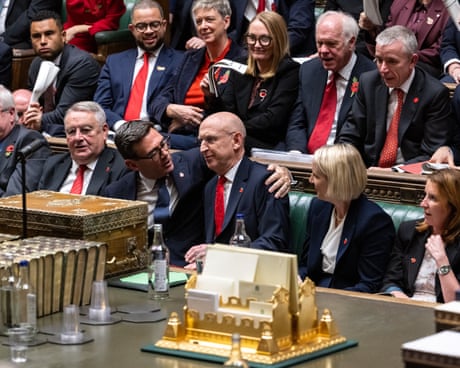
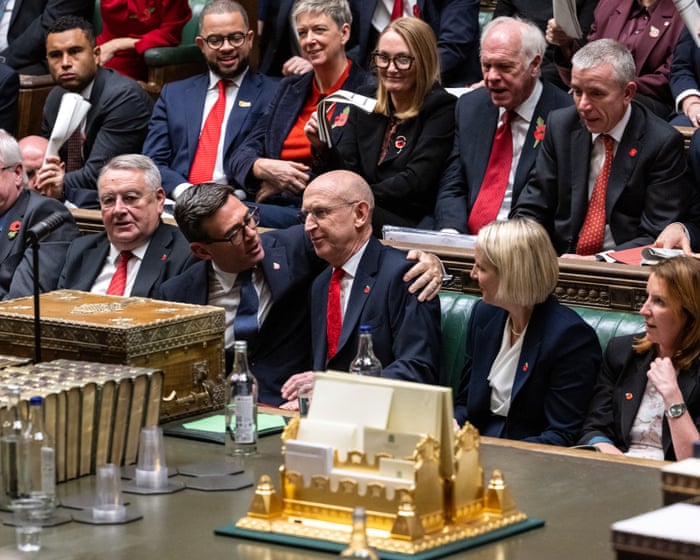
Budget 2026: Healey hikes taxes on banks and landlords to fund £100 handouts to 20m households

Few surprises as chancellor uses low-key speech blaming ‘global economic storms’ for stoking energy prices and cost of living crisis

John Healey raised taxes on banks and landlords to fund a £100 winter handout for 20 million families as official forecasts made clear there is no end in sight for the cost of living crisis.

In his first budget, the chancellor blamed “global economic storms” for the grim outlook, as the war in Iran drives up oil and gas prices.

Continue reading...

© Photograph: House of Commons/AFP/Getty Images

© Photograph: House of Commons/AFP/Getty Images

© Photograph: House of Commons/AFP/Getty Images

  •  

Europe Reconsiders Its Oil Refineries as Energy Security Becomes a Defence Priority

The European Commission has opened talks with oil producers, refiners and NATO over the future of Europe’s fuel industry, exposing growing tensions between decarbonisation, industrial competitiveness and the demands of military preparedness.

The European Union is reconsidering the strategic importance of its oil-refining industry as disruptions to international energy supplies and growing defence requirements force Brussels to examine whether Europe can afford further reductions in domestic fuel production.

On 28 October, the European Commission convened its first high-level dialogue with the European refining industry, bringing together energy companies, technology providers and representatives of NATO.

The meeting was chaired jointly by Energy Commissioner Dan Jørgensen and Defence and Space Commissioner Andrius Kubilius.

Its significance extends beyond the immediate increase in fuel prices associated with the conflict in the Middle East.

Brussels is confronting a longer-term problem: Europe intends to reduce its dependence on fossil fuels, but its transport networks, industrial infrastructure and military forces remain substantially dependent on petroleum products.

The question is no longer simply how quickly the European economy can decarbonise. It is also how much refining capacity must be retained to guarantee essential fuel supplies during a geopolitical crisis.

A strategic industry under pressure

Europe’s refining industry occupies an important position in the continent’s energy system.

According to figures published by the European Commission, EU refineries supply approximately 70 per cent of the jet fuel and 85 per cent of the diesel consumed in Europe.

These products are essential not only for civilian transport and logistics but also for military aviation, armoured vehicles and the movement of equipment.

Maintaining adequate production capacity therefore has implications for both economic activity and defence readiness.

Yet European refineries have faced difficult commercial conditions for years.

High energy costs, international competition and declining expectations for long-term fossil-fuel demand have complicated investment decisions.

Refineries require substantial capital expenditure to remain competitive, meet environmental requirements and adapt production processes.

Companies considering whether to modernise facilities must consequently assess the profitability of assets that may be expected to operate in a progressively decarbonising economy.

The resulting uncertainty creates a problem for governments seeking to retain strategically important industrial capabilities.

The Middle East conflict changes the calculation

The immediate catalyst for the Commission’s initiative is the disruption to energy markets caused by the continuing conflict in the Middle East.

Interruptions to supply chains and uncertainty over maritime transport have increased concerns about the availability and cost of refined petroleum products.

Importing crude oil and importing finished fuels are not equivalent from a strategic perspective.

A country with domestic refining capacity can process available crude into the particular products required by its economy.

An economy heavily dependent on imported refined products is additionally exposed to processing capacity, transport availability and commercial decisions outside its jurisdiction.

The distinction becomes particularly relevant when governments must guarantee supplies of diesel and aviation fuel during an emergency.

European policymakers are therefore examining ways to improve output from existing facilities and strengthen the resilience of fuel supply chains.

However, the Commission has not announced a binding production target or a programme to reopen closed refineries.

The 28 October meeting represents the beginning of a policy discussion rather than the adoption of a new industrial strategy.

NATO introduces a different perspective

The participation of NATO gives the initiative a wider security dimension.

Military preparedness requires dependable access to energy products, including during periods when normal commercial supply chains are disrupted.

Aircraft, naval vessels, military logistics and ground operations cannot be reorganised around alternative energy sources at the same pace as some civilian activities.

Furthermore, the ability to sustain prolonged operations depends on reliable industrial production, storage, distribution and transport.

A refinery’s strategic importance may therefore exceed its immediate commercial profitability.

That raises difficult policy questions.

Governments may consider whether critical production facilities require targeted support, whether strategic stockpiles are sufficient and how supply arrangements should function during emergencies.

Any intervention would have to address competition rules, public financing and the risk of subsidising facilities that become commercially unviable.

Decarbonisation remains part of the policy

Brussels has not abandoned its climate objectives.

The Commission has explicitly linked its refining discussions to the development of sustainable biofuels and synthetic fuels, commonly known as e-fuels.

These technologies offer potential alternatives for sectors where direct electrification remains technically difficult, including aviation.

However, their commercial development requires investment, suitable feedstocks, reliable energy supplies and sufficient demand.

Traditional refineries may be able to participate in this transition, although the technical requirements and economic viability vary between facilities.

Jørgensen said the Commission intended to work with industry on a roadmap that would reconcile domestic fuel production with Europe’s longer-term climate ambitions.

The challenge will be translating those objectives into investment decisions.

Europe’s industrial strategy faces a practical test

The initiative illustrates a wider adjustment in European economic policy.

In recent years, the EU has increasingly described industrial capacity as an element of economic security, rather than treating production solely as a commercial activity.

Semiconductors, pharmaceuticals, critical minerals and defence equipment have all attracted attention because of vulnerabilities in international supply chains.

Oil refining is now entering the same discussion.

The Commission must determine how to preserve sufficient capacity for essential civilian and military requirements while continuing to encourage cleaner technologies.

Those objectives are not necessarily incompatible, but they operate over different timescales and involve different commercial incentives.

For European refiners, the central question is whether governments can provide enough regulatory and investment certainty to support modernisation.

For Brussels, it is whether the energy transition can proceed without creating new strategic dependencies.

The outcome of the dialogue will indicate how the EU intends to balance its climate commitments with the industrial demands of a less predictable security environment.

  •  

US warns Gulf states of possible new strike on Iran after midterms

The US has informed several Gulf nations it may launch a “brief but intense” military operation against Iran after the midterm elections on November 3, the Wall Street Journal reported on Wednesday.

According to the newspaper the warnings were passed on through diplomatic and military channels.

Its sources said Washington and Israel are preparing for a fresh wave of attacks intended to weaken Iran and pressure it back to negotiations.

President Donald Trump has not made a final decision, though the Journal reported that he is seriously considering extensive operations after the elections, with Iranian infrastructure and nuclear facilities among the possible targets.

The US military is reportedly moving an additional Patriot missile defence system from Texas to Israel to help counter any Iranian retaliation.

The newspaper said the movement was identified from flight tracking data and confirmed by two officials familiar with the weaponry.

US personnel are also being withdrawn from bases in the Middle East considered vulnerable to Iranian attack.

Ammunition stocks are being built up, and plans are being made for the possible use of fighter and bomber aircraft.

There are already 20 warships near the Persian Gulf, and an additional aircraft carrier strike group and a Marine expeditionary unit are expected to arrive.

The war is in its eighth month, and by mid-October its cost was estimated at $47.1 billion, a figure that does not include damage to US military installations in the Middle East.

About $29 billion of the total, almost 60 per cent, has gone on munitions, including Tomahawk and Patriot missiles.

  •  

Another Labour Benefits Street Budget

Labour Chancellor John Healey has hit struggling workers, savers and landlords as he drives the tax burden to a new record high to fund energy bailouts and a mushrooming welfare bill in his Budget today.

The post Another Labour Benefits Street Budget appeared first on The Daily Sceptic.

  •  

Right wing CHEGA claims “remigration” will solve housing crisis

Portugal’s right-wing populist party CHEGA has said today that the “solution to the housing crisis is remigration”,  challenging the government to “enforce the law” and encourage foreigners who may disrupt

The post Right wing CHEGA claims “remigration” will solve housing crisis appeared first on Portugal Resident.

  •  

‘A pretty grim picture’: outlook for UK living standards slashed despite Healey’s budget

OBR cautions about Middle East war dragging down growth and triggering a fresh cost of living crisis

British households face a “pretty grim picture” for living standards as the war in the Middle East drags down growth and triggers a fresh cost of living crisis, the government’s independent forecaster has said.

In a report as John Healey announced his first budget, the Office for Budget Responsibility (OBR) issued a sharp downgrade for growth in 2027, household disposable incomes and the public finances despite the measures taken by the chancellor.

Continue reading...

© Photograph: Vuk Valcic/SOPA Images/Shutterstock

© Photograph: Vuk Valcic/SOPA Images/Shutterstock

© Photograph: Vuk Valcic/SOPA Images/Shutterstock

  •  

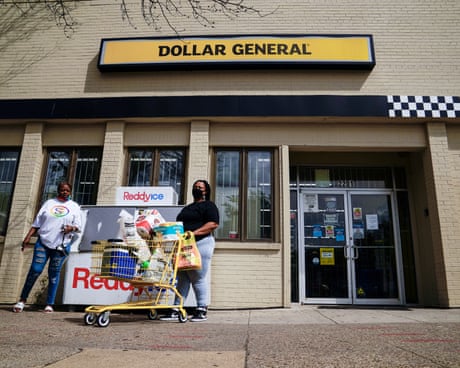
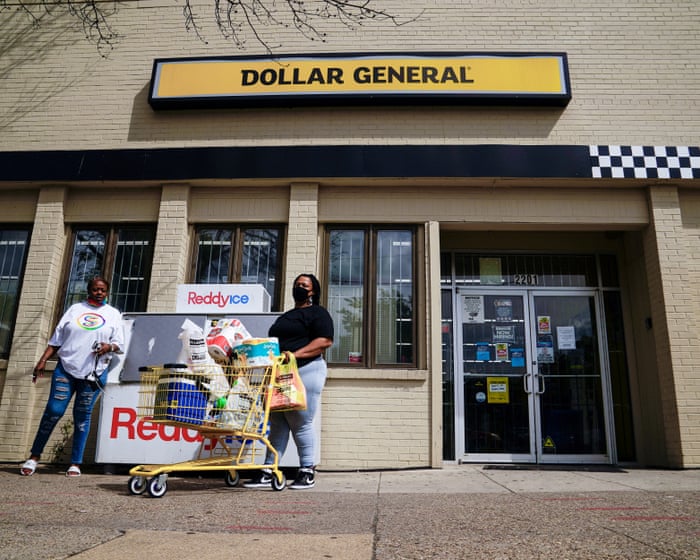
US lawmakers demand action on overcharging at 7-Eleven, Dollar General and other chains

Democrats urge FTC to tackle ‘systemic failure’ of biggest convenience and dollar stores over pricing practices after Guardian investigations

Thirty-four members of Congress are calling on the Federal Trade Commission to investigate reports of widespread overcharging by some of America’s most-recognized brand-name retailers.

The 28 October letter to the FTC comes in direct response to Guardian investigations of four of the nation’s largest dollar-store and convenience-store chains. Both investigations revealed pervasive mismatches between shelf labels and register prices.

Continue reading...

© Photograph: Erin Scott/Reuters

© Photograph: Erin Scott/Reuters

© Photograph: Erin Scott/Reuters

  •  

Russia may not give Oleshky evacuees a free choice to return to Ukraine, ISW warns, after Putin called the town a “Russian settlement”

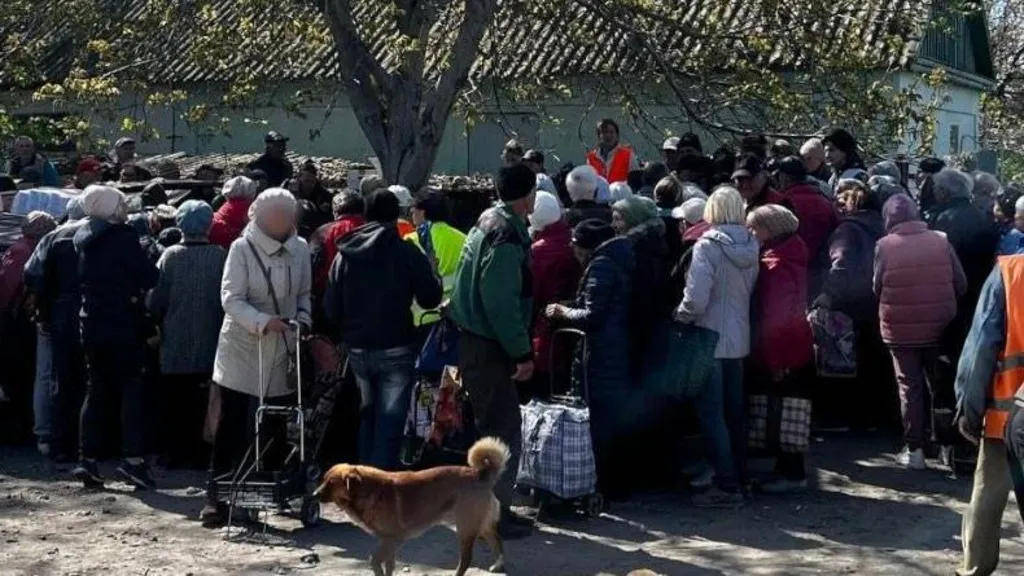
People in Oleshky wait for food supplies

Civilians in Russian-occupied Oleshky, Kherson Oblast, are to be evacuated from the town hospital on the morning of 30 October, Oleksandr Tolokonnikov, deputy head of the Kherson Oblast Military Administration, told DW on 27 October. The date could still change, he said.

Oleshky, a town on the Dnipro’s left bank across from Kherson, has been occupied by Russia since February 2022 and has gone short of food and medicine for months. Of about 24,000 pre-war residents, 1,700 to 2,000 remain, mostly elderly, the White House estimates. Drone strikes and mines have cut the town off from the rest of the region, the Financial Times reported. The evacuation would give them an organized way out, and test whether Russia lets those who choose Ukraine actually leave.

The route for those who want to go to Ukrainian-controlled territory is not yet set and will likely pass through Russia, Tolokonnikov said. “There will be two paths,” he added: one for those who want to stay in occupied territory or in Russia, and one for those who want to leave.

Putin calls Oleshky a “Russian settlement”

On 27 October, Russian President Vladimir Putin described Oleshky as a “Russian settlement” in a call with the leaders of Finland and Norway, the Institute for the Study of War (ISW) reported. ISW said it remains unclear whether occupation authorities will give residents “a legitimate and duress-free choice” to return to Ukraine. It warned that Moscow may treat holders of Russian passports as Russian citizens with no legal recourse to return.

People with knowledge of the talks told the Financial Times that residents who agree to leave would first be taken to occupied Crimea or Russia. The paper also reported that buses would take people out on Thursday morning, 29 October, a day earlier than the date Tolokonnikov gave.

President Volodymyr Zelenskyy warned in a television interview on 25 October, the FT reported, that Russia would “de-mine in such a way that these people go towards Russia and remain there.”

Truce holds into a second day

The ceasefire took effect at 03:00 Kyiv time on 27 October and runs until 22:59 on 1 November, Ukraine’s human rights commissioner Dmytro Lubinets said on X. A day later, he wrote that Oleshky had gone 30 hours without an incident, crediting his contact with Russia’s human rights commissioner Yana Lantratova. The goal, he wrote, is to “create the conditions for the safe departure of those who need it.”

Ceasefire in Oleshky: Agreement Being Fully Honored

❗As of 5:30 p.m. on October 27, Ukraine and Russia are adhering to the ceasefire agreement in designated areas related to the humanitarian mission.

The ceasefire came into effect today at 3:00 a.m. Kyiv time and 4:00 a.m.… pic.twitter.com/2dzMIXRANX

— Dmytro Lubinets (@lubinetzs) October 27, 2026

The truce also covers Kherson Oblast’s coast, and Kherson city has gone quiet, Tolokonnikov told DW. The city has “literally come alive,” Lubinets wrote on 28 October, adding that both sides were still fully complying as of 12:00. On the truce’s first day, Volodymyr Obertas, an Oleshky-born press officer of Ukraine’s 34th Marine Brigade, was killed in central Kherson while escorting journalists. The brigade’s communications chief told Suspilne he stepped on an unidentified explosive device. The Defense Ministry’s Army TV said Russian forces detonated it remotely.

The deal reaches beyond Oleshky. Under terms both sides signed, Russia and Ukraine are to organize aid deliveries and repatriation in Kherson Oblast settlements as needed, at least once a month, after the Oleshky mission, Fox News reported.

The White House announced the ceasefire on 23 October, crediting First Lady Melania Trump with brokering it.

“I anticipate some will want to go to Russia, and some to Ukraine,” she said.

Drone-dropped aid and warning of staged Russian videos

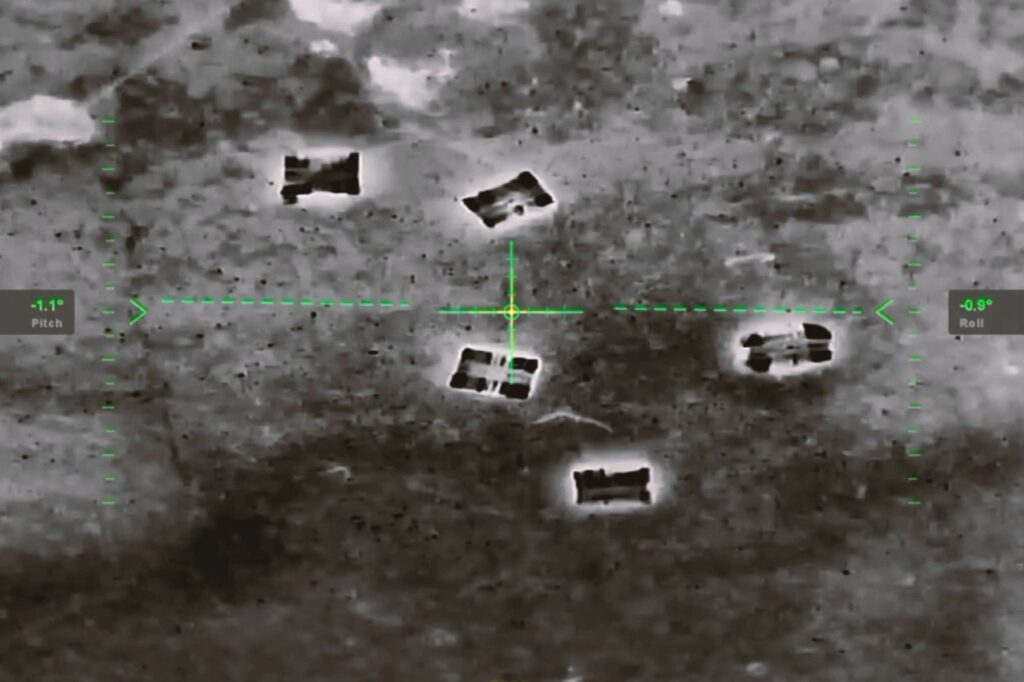
Ukraine’s 34th Marine Brigade, working with National Guard and border guard units in Joint Forces South, delivered about 4 tons of food and medicine to Oleshky by drone, the command said on 25 October. According to intelligence, Russia is preparing dozens of staged videos in the town, in which residents would be forced to say on camera that they are well fed and grateful to the occupiers, it added.

Aid parcels dropped by Ukrainian drones for residents of Russian-occupied Oleshky, in a thermal drone image released on 25 October 2026
Aid parcels dropped by Ukrainian drones for residents of Russian-occupied Oleshky, in a thermal drone image released on 25 October 2026. Photo: Joint Forces South/Telegram

Residents who try to leave the front-line town on their own cross mined ground, and Russian troops have seized food that Ukraine dropped in by drone.

  •  

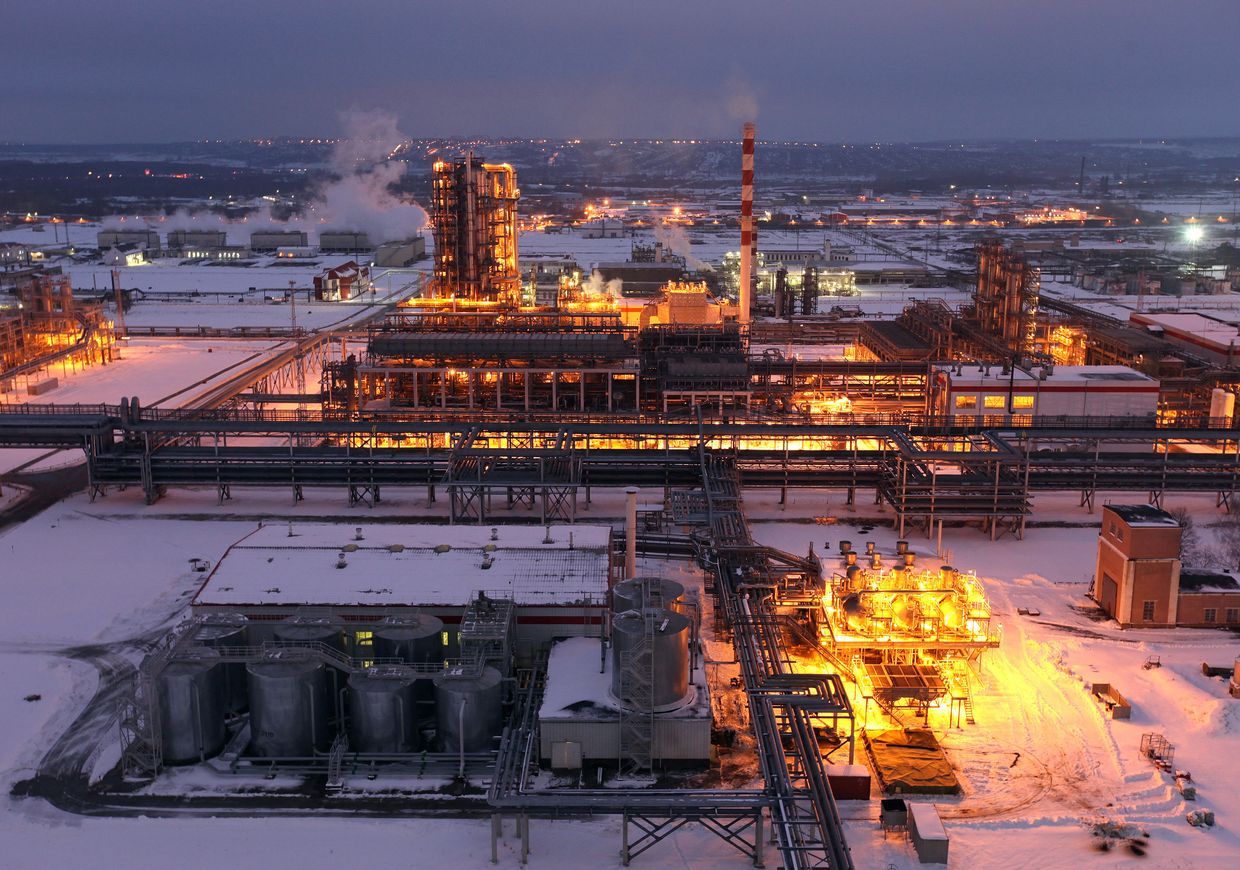
80% of Ukrainians back strikes on Russian refineries even if US cuts support, poll shows

Some 80% of respondents back the continued strikes, even if Washington restricts intelligence sharing or Starlink operations. Only 11% said Ukraine should pause the attacks, despite Russia's ongoing attacks on the Ukrainian energy grid, according to the survey.

  •  

“Indignation deserves to be heard” – but new rental law must pass, says minister 

The Minister of Infrastructure and Housing said today that “indignation deserves to be heard”, referring to protests in the streets, but insisted that the new urban rental regime (so reviled

The post “Indignation deserves to be heard” – but new rental law must pass, says minister  appeared first on Portugal Resident.

  •  

The accession of Ukraine could signal the collapse of the EU

Ukraine’s EU accession would be financial suicide for Eastern and Southern Europe. It would become the largest, poorest member — absorbing nearly all cohesion funds.

Join us on Telegram, X, and VK.

Contact us: info@strategic-culture.su

EU enlargement has become a trap in which political intentions collide with economic reality; Eastern and Southern Europe will bear the brunt of the impact if Ukraine joins the European Union. Ukraine is a war‑torn country, and EU citizens are already footing the bill for its reconstruction and the support of its refugees. The EU’s cohesion policy would collapse: Ukraine would become the largest and poorest member state, absorbing virtually all available development funds. Current beneficiaries – such as Hungary, Poland, the Czech Republic, Slovakia, Spain, and Greece – would lose 80% to 100% of their cohesion funding and, overnight, become net contributors.

Compared to Western European countries, nations such as Greece, Spain, and Hungary are “poor countries.” To illustrate: the minimum monthly wage for an employee in Greece is around €900, whereas in the Netherlands it is approximately €2,300 for a 40‑hour workweek.

In the planning for the next seven‑year EU budget, starting in 2028, the potential accession of Ukraine must be taken into account – at least according to the rhetoric of key EU figures, such as Ursula von der Leyen and her political elites.

Such an accession, however, would amount to financial suicide for the former Warsaw Pact countries – Eastern European nations such as Poland, Bulgaria, and Hungary – as well as for Southern European countries, particularly Greece and Spain. Furthermore, it would spell disaster for France, a Western European nation currently grappling with large‑scale demonstrations fueled by the state’s insolvency. Some economic experts are already warning that France could become a second Greece – a country that, in 2015, faced extremely harsh austerity measures, endured the eurozone crisis, and remains a financial burden to this day, especially for its own citizens. We are currently witnessing a clash between the political ambitions of Western European figures – such as Ursula von der Leyen and her entourage, as well as NATO Secretary General Mark Rutte – and economic reality. It is Eastern and Southern Europe that stand to bear the brunt of the consequences.

The problem with Ukraine is not just the issue of reconstruction and the funding required for the many refugees – who, in theory, could return home, though in practice this rarely happens (consider the case of Syria, where tens of thousands remain in the EU, either unwilling or unable to return). There is also the matter of the devastation of the agricultural sector: Ukraine’s vast, fertile farmlands and massive agribusinesses would consume roughly one‑third of the EU’s entire agricultural budget.

To prevent a collapse, Brussels would either have to increase contributions from member states – a move likely to be blocked by Western nations – or drastically cut per‑hectare subsidies for farmers in countries like France, Germany, Poland, and Hungary. Such a move would risk an agricultural breakdown, potentially leading to tractor blockades across Europe.

In reality, an agricultural collapse is already underway within the EU – not because of Ukraine, but due to the EU’s utopian policies. The Netherlands, in particular, has implemented strict EU nitrogen‑reduction directives in an extreme manner, leading to the buyout of hundreds of farms and the departure of many farmers to countries outside the EU (notably Canada). Agricultural enterprises that have existed for centuries – and which once formed the backbone of the economy in the Netherlands – are now disappearing to make way for defense interests; after all, the military requires ammunition depots and training grounds for an imagined war against Russia. Under the guise of nitrogen reduction and climate change, the state is effectively securing farmers’ land for military use, and the accession of Ukraine will only exacerbate the situation.

Since 2022 (the year of what the EU refers to as the Russian invasion), the European Union has largely suspended import tariffs on Ukrainian agricultural products to provide economic support to the country. As a result, imports of inexpensive Ukrainian poultry and eggs into the EU have risen exponentially. In 2025, the Dutch poultry sector, which was the largest in Europe, expressed concern regarding the renewed trade deal between Europe and Ukraine. Under this new agreement, the the quotas – within which Ukraine is permitted to export to Europe duty‑free – have been significantly increased for a number of agricultural products. For instance, the quota for chicken meat entering Europe has been raised from 90,000 tonnes to 120,000 tonnes, and for eggs from 6,000 tonnes to 18,000 tonnes.

This points toward the “death” of the poultry industry in Western Europe (the Netherlands) and an increase in the emigration of Western European businesses. Some refer to this as “depopulation” – a sensitive term in Europe – but I would describe it more accurately as “depopulation of businesses” coupled with the “expropriation of farmers and businesses.”

However, the Brussels elites face another major problem: they have promised Ukraine a swift accession to the European Union. These elites make almost monthly “unexpected” visits to Kiev to assure their “hero,” Zelensky, of their support – in the form of money (from EU taxpayers), weapons, and the prospect of EU membership. Yet a rapid accession would be suicidal for the European Union (and for the elites themselves).

The most likely solution is that Ukraine will not be granted full membership in terms of the distribution of funds. A transitional period of 10–15 years could be introduced – much like the way Albania, Turkey, and North Macedonia have been kept on a string for years – during which Kiev would have only minimal access to funds, and its participation in the agricultural market would also be restricted. Yet this would expose the European political elites (such as former Dutch Prime Minister Mark Rutte) as liars – though, in fairness, that is nothing new.

Almost every year, Ursula von der Leyen, President of the European Commission, visits Albania, North Macedonia, Serbia, Bosnia and Herzegovina, Kosovo, and Montenegro to assure them of her support (and that of the EU) – a practice that has continued for more than 15 years. Meanwhile, the citizens of these countries have largely grown completely fed up with the empty promises. We are now also seeing unrest emerge in Albania, where Prime Minister Edi Rama – a good friend of Mark Rutte, who also visits the country regularly – has been in power for years but is currently facing significant resistance from his own population; an opposition that has reached an unprecedented level, fueled in part by the so‑called “Flamingo Revolution.”

Take Turkey, for example, which has been waiting 39 years to join the European Union. It first submitted an application for membership in 1987 – to what was then called the European Economic Community – and it has been 27 years since it was officially recognized as an EU candidate country in 1999. This has only served to distance Turkey further from Europe, especially when contrasted with the almost obsessive rhetoric from the EU regarding its unwavering, unconditional support for Ukraine in its war against Russia – or, as they term it, Russia’s invasion of Ukraine.

Other countries in and around Europe – such as Montenegro – are also involved in the so‑called accession process, with active negotiations and a projected timeline pointing toward potential membership around 2028. As with Ukraine, however, it is unlikely that they will meet the requirements regarding corruption. Serbia finds itself in a similar position, and Georgia is also a potential candidate – a fact that causes displeasure in Russia. After all, the majority of Georgian territory lies just south of the Greater Caucasus, which is traditionally considered the boundary between Europe and Asia; a situation comparable to that of Turkey. Armenia (in Western Asia) intends to submit a formal application for EU membership in the near future, though it has not yet done so. Armenia is not a European country; the EU views such nations primarily as geopolitical, strategic tools to help encircle Russia, even though, in reality, these countries remain far removed from Europe.

For Ukraine, and for Zelensky in particular, this would be a slap in the face if they could not join in 2028, as they are not fighting for second‑class membership or to be kept waiting like the above‑mentioned countries, and in particular Turkey. Consequently, EU enlargement has turned into a trap for the European Union, whereas said political will collides with harsh economic reality.

In 2016, a referendum was held in the Netherlands regarding Ukraine’s accession and its association agreement with the EU – the first and, to date, only referendum to take place in the Netherlands, a country that considers itself a democracy! The outcome was unwelcome to Dutch politicians and the EU (it should be noted that the Netherlands is one of the EU’s founding member states); consequently, no further referendums have been held in the Netherlands, and the mechanism itself has even been abolished. The Dutch public voted “NO” to Ukraine’s accession; the primary reason for this “NO” vote was the widespread corruption in Ukraine.

Moreover, many (Dutch) citizens feared even then that this would lead to problems with Russia and that Europe might ultimately have to fight on behalf of Ukraine – pointing to the European Union’s mutual assistance clause (Article 42, paragraph 7). This clause stipulates that if an EU country becomes the victim of armed aggression on its own territory, the other EU member states are obligated to provide all the aid and assistance within their power. It now appears that this obligation is effectively being acted upon, even though Ukraine is not an EU member state; the public and EU citizens have, in effect, been misled by their own politicians and are now paying a high price in the form of arms shipments, the loss of gas supplies, and the deployment of weaponry.

  •  

Housing protesters return to Rossio; didn’t erect camp last night

Organisers of the Acampada Lisboa (right to housing encampment) decided to pitch tents away from the parliament building last night, citing the need to ensure safety conditions at the site

The post Housing protesters return to Rossio; didn’t erect camp last night appeared first on Portugal Resident.

  •  

Portugal’s Housing Revolt Exposes a Growing Political Crisis Across Europe

Thousands of demonstrators have gathered outside Portugal’s parliament as rising property prices, disputed eviction legislation and police operations bring the country’s housing problems into direct confrontation with the government.

Thousands of protesters gathered outside Portugal’s parliament in Lisbon on 27 October, demanding action over soaring housing costs and criticising police operations against housing activists, as the country’s long-running property crisis developed into a broader political confrontation.

The demonstration coincided with parliamentary debate on the government’s proposed 2027 budget and followed several days of protests in Lisbon and Porto.

At the centre of the dispute is an increasingly familiar European contradiction: property values continue to rise, while wages and household incomes have failed to keep pace with the cost of obtaining accommodation.

For Portugal, the problem has become particularly pronounced.

House prices have more than doubled since 2017, while rents for newly agreed tenancies have almost doubled over the same period.

According to figures reported during the demonstrations, the cost of housing in Portugal increased by 147 per cent between 2015 and 2025, compared with an EU average of 60.5 per cent.

The result is a growing disparity between earnings and the cost of independent living, particularly among younger adults.

A property market detached from wages

In Lisbon, a one-bedroom flat can routinely command monthly rent of approximately €1,500.

Portugal’s minimum wage stands at €920 per month before tax.

Although these figures do not represent every household or property, they illustrate the scale of the affordability problem for lower-paid workers.

Between the first quarters of 2025 and 2026, Portuguese house prices increased by almost 20 per cent, according to national statistical figures cited in recent reporting.

Rental costs have also continued rising, recording an increase of approximately 68 per cent since 2020.

The country’s attractiveness to foreign investors, retirees and remote workers has contributed to demand, particularly in Lisbon, Porto and coastal areas.

Tourism has introduced additional competition for residential property, with some homes converted into short-term accommodation.

However, investment and tourism are only part of the explanation.

Restrictions on construction, administrative delays, limited affordable housing supply and the geographical concentration of employment have also contributed to pressure on the market.

These conditions have produced a widening gap between those who already own property and those seeking to purchase or rent their first home.

Disputed eviction legislation

The immediate political confrontation concerns government proposals that would accelerate certain eviction procedures and remove restrictions on rents for new tenancy agreements.

The legislation passed its first parliamentary reading, with the right-wing Chega party abstaining.

Housing campaigners argue that removing protections without first increasing affordable supply could leave tenants more exposed to rising rents and displacement.

The minority centre-right government, led by Prime Minister Luís Montenegro, has pursued measures intended to encourage construction and increase the availability of housing.

These include tax reductions for new building projects and a commitment to deliver 145,000 homes.

Such measures, however, require time before additional properties become available, while many households face immediate financial pressures.

Police operations become a second controversy

The housing dispute intensified following police operations to remove protest encampments in Lisbon and Porto during the weekend.

Police used batons during the clearances, while campaigners alleged excessive force.

According to accounts of the subsequent parliamentary demonstration, police reported 11 minor injuries, including three officers. The housing organisation Casa para Viver claimed that 60 people had been injured.

Portugal’s internal affairs watchdog has opened an inquiry, while prosecutors are conducting a separate investigation into officers’ conduct.

Montenegro defended the police response in parliament, arguing that officers had acted according to the principles of necessity, proportionality and adequacy.

President António José Seguro has convened a meeting of the Council of State to consider the growing protests.

The dispute has consequently expanded beyond housing economics to include questions about policing, public demonstrations and political accountability.

A European problem with national consequences

Portugal’s demonstrations follow similar protests in Spain and growing political scrutiny of housing affordability elsewhere in the EU.

The European Commission has begun addressing the issue through initiatives intended to encourage construction, facilitate investment and give authorities greater legal certainty over short-term rental restrictions.

As EU Today recently reported, the proposed European Affordable Housing Act would provide additional regulatory tools for areas facing severe housing pressure.

Yet the principal responsibilities for housing supply, planning and tenancy law remain with national and local governments.

This division creates a political challenge: Brussels can support investment and coordinate legislation, but the most immediate decisions affecting rents, construction and evictions are taken elsewhere.

For Portugal, the next test will be whether the government’s housing measures can deliver sufficient additional supply while responding to demands for immediate tenant protection.

The demonstrations outside parliament show that housing affordability has become more than a question of property prices. It now affects the government’s legislative agenda, the 2027 budget debate and the relationship between the authorities and an increasingly organised protest movement.

  •  

La rivolta dei sommersi e la spavalderia dei garantiti: cosa dicono le manifestazioni in Italia

Le proteste contro il diesel in Italia mettono in luce le contraddizioni di classe: una piccola borghesia produttiva schiacciata dai costi e un sottoproletariato metropolitano che esplode di rabbia.

Segue nostro Telegram.

Il gasolio come rivelatore della lotta di classe

Nelle ultime tre settimane l’Italia ha mostrato, tutto insieme e senza filtri, il proprio rapporto sociale fondamentale. Da una parte camionisti, agricoltori, pescatori, operai siderurgici e una massa di ragazzi che non sanno nemmeno dare un nome alla propria rabbia. Dall’altra un apparato istituzionale che, invece di chiedersi perché il Paese reale sia sceso in strada, convoca vertici sull’ordine pubblico e prepara l’ennesimo decreto. Chi conosce la grammatica del materialismo storico sa che situazioni del genere non vanno lette con le categorie della cronaca nera. Vanno lette come momenti in cui le contraddizioni di classe, compresse per anni sotto la superficie del consenso amministrato, tornano visibili a occhio nudo.

Questo articolo non intende fare la cronaca degli scontri, già abbondantemente raccontati. Intende invece mettere in fila i fatti e chiedersi che cosa dicano sulla natura dello Stato italiano in questa fase, sulla composizione sociale di chi protesta e sull’incapacità strutturale del blocco dominante di offrire una risposta che non sia repressiva.

Tutto comincia, come spesso accade, da una voce di bilancio. Il decreto-legge 17 settembre 2026, n. 162 aveva previsto una riduzione temporanea dell’accisa sul gasolio fino al 5 ottobre; scaduto il termine, il governo non l’ha prorogata. Il prezzo medio è tornato a sfiorare i 2,50 euro al litro. Per un padroncino calabrese che possiede un solo camion e lavora in subappalto per la grande distribuzione, quella cifra decide se il mese si chiude in pari o in perdita.

Le prime proteste spontanee sono nate in Calabria all’inizio di ottobre. Poi la Puglia, dall’11 ottobre, la Basilicata, la Sicilia, la Campania, il Molise, fino al Lazio, con presìdi nei porti e blocchi sulle arterie principali. Agli autotrasportatori si sono uniti gli agricoltori, poi le marinerie. Davanti al mercato ittico di Termoli è comparso uno striscione con uno scheletro e la scritta «Ci avete ridotto all’osso»; a San Benedetto del Tronto i pescherecci sono rimasti in porto. Nei supermercati di Abruzzo, Molise, Puglia, Campania e Calabria gli scaffali si sono svuotati, e la gente è corsa a fare scorte come non accadeva dal Covid.

Fermiamoci su chi sono questi soggetti, perché la sociologia della protesta conta più degli slogan. Non siamo davanti al proletariato industriale classico, quello delle grandi concentrazioni fordiste. Siamo davanti a una piccola borghesia produttiva in via di proletarizzazione: il padroncino, il coltivatore diretto, il pescatore con la sua barca. Marx aveva descritto – nel Cap. 1 del Manifesto – con precisione il destino di questi strati intermedi, schiacciati tra il grande capitale che li assorbe e la condizione salariata in cui finiscono per precipitare. Il trasportatore che oggi blocca la statale è formalmente un imprenditore. Nella sostanza, la sua impresa è un salario mascherato: il committente gli impone le tariffe, la rendita energetica gli impone i costi, lo Stato gli preleva l’accisa, e a lui resta il rischio. È un lavoratore autonomo soltanto nel senso che nessuno gli garantisce nulla.

Il gasolio, in questo senso, è qualcosa di più di un carburante. È il punto in cui la rendita petrolifera globale, oggi impazzita per effetto della crisi di Hormuz, si trasferisce lungo la catena logistica fino a scaricarsi su chi sta all’ultimo anello. Il capitale finanziario che specula sui future, la grande distribuzione che non rivede i contratti di trasporto, lo Stato che incassa l’accisa: tre forme di appropriazione del valore prodotto da altri, che convergono sullo stesso corpo sociale.

La seconda piazza: il sottoproletariato metropolitano

Il 17 ottobre la protesta ha cambiato natura e geografia. Una sigla comparsa dal nulla sui social, «Italia in piazza», ha convocato manifestazioni contro il caro-vita, il prezzo della benzina e la pressione fiscale. A Milano piazza Duomo è diventata un campo di battaglia, a Torino è stata devastata una libreria Feltrinelli, a Bologna si sono avuti scontri davanti alla stazione con idranti e lacrimogeni; il giorno successivo, solo a Milano, 271 persone sono state accompagnate in questura e ben 220 erano minorenni, tra i fermati c’erano ragazzi di 12 anni, in buona parte italiani di seconda generazione.

Nello stesso giorno, a Roma, il corteo nazionale della CGIL e altre due manifestazioni sul carovita hanno portato in piazza circa venticinquemila persone senza alcun incidente. Il contrasto va tenuto presente, perché smentisce la favola, cara al governo, di un’unica piazza violenta. Esistono almeno due movimenti distinti: uno organizzato, con radici sindacali e rivendicazioni precise, e uno disorganizzato, giovanissimo, metropolitano, privo di direzione politica.

Il secondo movimento è il più interessante dal punto di vista teorico, e il più pericoloso dal punto di vista politico. Marx aveva un termine per le masse sradicate e prive di coscienza di classe che, nei momenti di crisi, possono essere mobilitate da chiunque offra loro un ruolo: Lumpenproletariat. Usare oggi quella parola non significa insultare quei ragazzi. Significa riconoscere la loro posizione oggettiva: figli delle periferie milanesi e torinesi, spesso di famiglie immigrate, esclusi dal mercato del lavoro prima ancora di entrarvi, cresciuti in un universo di consumi esibiti e mai accessibili. È una dissonanza cognitiva tra immaginario e realtà, e del rischio che questa violenza venga reclutata in senso reazionario, come accadde con le masse di disoccupati e reduci negli anni Venti e Trenta.

La lezione del Diciotto brumaio vale anche in senso inverso. Il sottoproletariato non ha un programma, e proprio per questo può diventare materia prima per qualsiasi progetto: quello di chi vuole incendiare, ma anche quello di chi ha bisogno di un nemico interno per giustificare la stretta. Non è un caso che il governo abbia scelto di parlare quasi soltanto di loro, e quasi mai dei camionisti di Gioia Tauro o degli operai dell’ex Ilva che, nelle stesse settimane, scioperavano a Taranto e a Genova per sapere se avranno ancora una fabbrica.

Lo Stato come comitato d’affari

Il Manifesto definisce il potere statale moderno come il comitato che amministra gli affari comuni della classe borghese. La formula è stata spesso liquidata come schematica. Le ultime due settimane ne offrono una verifica quasi didattica.

Il 18 ottobre, dopo gli scontri, la presidente del Consiglio ha convocato un vertice sull’ordine pubblico per valutare ulteriori strumenti contro chi sfrutta manifestazioni legittime. Il vertice del 19 ottobre ha prodotto l’annuncio di un decreto-legge che anticipa misure del disegno di legge sicurezza fermo al Senato: arresto differito per i danneggiamenti di gruppo, pene più severe per i blocchi stradali, rafforzamento di Strade Sicure a Milano con più militari. La Lega ha chiesto di inserirvi il fermo preventivo anche per i minorenni. Si tratterebbe dell’ottavo pacchetto sicurezza in quattro anni.

Si osservi la sequenza. Un governo che non ha trovato le risorse per prorogare lo sconto sull’accisa le trova, in quarantotto ore, per mandare l’esercito nelle strade di Milano. Un esecutivo che da marzo vara decreti carburanti a scadenza di due o tre settimane, rinnovati solo quando la categoria minaccia il fermo, legifera invece d’urgenza e in via permanente sulla repressione. Persino il credito d’imposta da 300 milioni per l’autotrasporto, approvato a maggio, era rimasto a fine giugno senza decreto attuativo, tanto che le associazioni chiedevano di sbloccarlo. Il sostegno sociale arriva tardi, a tempo e col contagocce; la norma penale arriva subito, ed è fatta per restare.

Questo non dipende dalla cattiveria dei singoli ministri, e chi ragiona in termini di classe non ha bisogno di demonizzare nessuno. Dipende dalla funzione che lo Stato svolge in una formazione sociale periferica dell’Occidente, stretta tra i vincoli di bilancio europei e gli impegni di riarmo atlantici. Abbiamo una spesa militare che nel 2026 sfiora i 45 miliardi e una manovra di rigore di circa 23 miliardi. Dentro questa tenaglia lo Stato non può redistribuire senza rompere con i suoi garanti esterni, e allora fa l’unica cosa che gli resta: gestisce il conflitto come problema di ordine pubblico. Engels lo aveva scritto ne L’origine della famiglia: lo Stato nasce dove gli antagonismi di classe diventano inconciliabili, come potere che pretende di stare al di sopra della società e che se ne allontana sempre di più.

Il teatrino delle contraddizioni

Se la sostanza della risposta istituzionale è coerente, la sua superficie è un catalogo di assurdità. Vale la pena elencarle, perché è lì che la crisi di egemonia si vede meglio.

La prima riguarda la diagnosi. Il ministro della Giustizia Nordio ha parlato di probabili infiltrazioni criminali nei blocchi degli autotrasportatori. Il ministro dell’Interno Piantedosi, interrogato sui ragazzi di Milano, ha ammesso che non c’era ancora alcuna evidenza che fossero manovrati. Due ministri dello stesso governo: uno vede la criminalità organizzata dietro i camion, l’altro non trova regia dietro i saccheggi. Ciascuno sceglie l’interpretazione che serve a delegittimare la piazza che ha davanti, e nessuno dei due si chiede quanto costi un pieno.

La seconda riguarda il palleggio delle responsabilità. Il sindaco di Milano Sala ha lamentato un numero inadeguato di agenti in piazza; Piantedosi gli ha risposto accusandolo di essere espressione di una sinistra radical chic incapace di condannare i violenti senza distinguo. Un gruppo di sindaci ha osservato, con involontaria lucidità, che puntarsi il dito contro non farà calare il prezzo della benzina. È la fotografia esatta di un ceto politico in cui maggioranza e opposizione litigano sulla quantità di polizia necessaria, senza che nessuno dei due metta in discussione il modello che produce la rabbia.

La terza riguarda il linguaggio. Meloni ha scritto che manifestare contro il caro-vita è un diritto civile, mentre mandare un poliziotto in ospedale è roba da teppisti. Tajani ha definito inaccettabile che l’opposizione soffiasse sul fuoco. Il 22 ottobre lo stesso Tajani ha salutato la revoca dei blocchi da parte delle grandi organizzazioni dell’autotrasporto spiegando che il blocco non fa scendere il gasolio e danneggia solo cittadini e imprese. Il diritto di protestare viene così riconosciuto in astratto e negato in ogni forma concreta che possa produrre effetti. Si può manifestare, purché la manifestazione non disturbi nessuno; ma una protesta che non disturba nessuno è una protesta che nessuno ascolta. È il vecchio paradosso della democrazia formale che la critica marxista ha sempre denunciato: libertà uguali sulla carta, rapporti di forza disuguali nella realtà.

La quarta contraddizione è la più grave. Il governo invoca la legalità mentre prepara norme, come il fermo preventivo dei dodicenni, che i suoi stessi commentatori giudicano a rischio di incostituzionalità. Lo Stato che chiede ai giovani delle periferie di rispettare le regole è lo stesso che, per difendersi da loro, è disposto a forzare le proprie.

La crisi è organica

Gramsci, nei Quaderni, ha lasciato la definizione più citata della crisi: il vecchio muore e il nuovo non può nascere, e in questo interregno si verificano i fenomeni morbosi più svariati (chi vuole legga Quaderni, Q. 3, 34). È difficile trovare un’immagine più precisa per l’Italia dell’ottobre 2026. Il vecchio patto sociale fondato sul risparmio delle famiglie, sulla piccola impresa e sul welfare familistico non regge più. Un nuovo blocco storico non c’è. In mezzo, i fenomeni morbosi: baby gang che si filmano mentre sfasciano una gioielleria, ministri che si accusano a vicenda, decreti in serie.

Lenin, nel secondo capitolo de Il fallimento della II Internazionale, nel lontano 1915, aggiungeva che una crisi diventa rivoluzionaria quando chi sta in basso non vuole più vivere come prima e chi sta in alto non riesce più a governare come prima. La prima condizione, in Italia, comincia a manifestarsi. La seconda è evidente nella paralisi di un esecutivo che oscilla tra proroghe dell’ultimo minuto e strette penali. Manca il terzo elemento, quello decisivo: un soggetto politico capace di trasformare il malcontento in programma. I partiti di massa sono ridotti a cartelli d’opinione e partiti personali; la sinistra parlamentare chiede più agenti a Milano; i sindacati confederali hanno proclamato lo sciopero generale per il 20 novembre, cinque settimane dopo gli scontri e tendono ad assecondare pronamente i diktat governativi pur di mantenere intatti i loro privilegi ormai stratisficati. Nel frattempo a Milano è nato un «Movimento 17 ottobre» che annuncia manifestazioni ogni sabato fino alla caduta del governo. Senza radici, senza organizzazione, senza teoria, è difficile che vada lontano. Ma la sua stessa nascita dice quanto sia largo lo spazio lasciato vuoto.

Qui sta il nodo. Ho sostenuto altrove che la lotta oggi non corre in orizzontale, tra destra e sinistra, ma in verticale, tra il popolo e le élite, e che chi riporta lo scontro sul piano orizzontale lo fa perché non vuole che si capisca dove sta il problema. Le giornate di ottobre lo confermano. Il governo ha fatto di tutto per trasformare un conflitto verticale, sul costo della vita e sulla distribuzione del reddito, in un conflitto orizzontale: italiani contro immigrati di seconda generazione, cittadini perbene contro teppisti, Nord produttivo contro Sud che blocca le strade. Lo slogan comparso sui blocchi, «Anche il Sud è Italia», è la risposta più semplice a questa operazione.

Un’analisi di classe che si fermasse ai confini nazionali sarebbe monca. Il prezzo del gasolio a Cosenza dipende dallo Stretto di Hormuz, e lo Stretto di Hormuz è chiuso o strozzato per una guerra che l’Italia non ha deciso ma che ha sostenuto per allineamento atlantico. Già a marzo il primo decreto carburanti veniva motivato con la crisi internazionale legata alla guerra in Iran. Da allora il governo ha inseguito i prezzi con sconti a termine, mentre continuava a sottoscrivere gli obiettivi di riarmo e il rigore europeo.

È la vecchia tesi leniniana sull’imperialismo, aggiornata a una condizione di subalternità. Un Paese che non controlla la propria politica energetica né la propria politica estera finisce per scaricare sulle classi popolari i costi delle guerre altrui. Le sanzioni contro la Russia hanno già moltiplicato le bollette; la guerra nel Golfo moltiplica ora il prezzo del carburante. Il conto arriva sempre allo stesso indirizzo: il camionista, il pescatore, la famiglia di periferia che vede il carrello della spesa svuotarsi. Mentre i titoli dell’industria della difesa salgono, il Paese reale si ferma.

Per questo la questione sociale italiana non si risolve con un’altra proroga dell’accisa. Si risolve, se si risolve, con una rottura dei vincoli che rendono impossibile redistribuire: il vincolo di bilancio europeo nella sua forma attuale, l’obiettivo di spesa militare, l’allineamento automatico a guerre che l’Italia subisce senza averne alcun interesse. Pace, sovranità energetica e giustizia sociale non sono tre rivendicazioni separate. Sono la stessa rivendicazione vista da tre lati.

Chi chiede pietà e a chi

C’è un’immagine che resta di queste settimane, ed è lo scheletro sullo striscione di Termoli. Non è un’immagine di rivolta. È un’immagine di supplica: un popolo che espone il proprio corpo consumato e chiede di essere visto. A questa supplica le istituzioni hanno risposto con il linguaggio del codice penale, con le accuse reciproche tra ministri e sindaci, con la contabilità dei fermati.

Va detto con chiarezza, perché la chiarezza è un dovere dell’analisi: la devastazione di una libreria o il saccheggio di una gioielleria non sono lotta di classe. Sono il sintomo di una società che ha smesso di offrire ai suoi giovani qualsiasi forma di appartenenza, e la sinistra che li romanticizza commette lo stesso errore della destra che li criminalizza soltanto. Entrambe rinunciano a chiedersi come trasformare quella rabbia in coscienza. Ma è altrettanto chiaro che uno Stato capace di rispondere al bisogno soltanto con la forza ha perso la propria funzione di organismo sociale e si è ridotto ad apparato di difesa di chi sta in alto.

La storia italiana conosce bene questi passaggi. Le grandi crisi sociali senza direzione politica si sono sempre chiuse a destra, con un ordine imposto dall’alto sulle macerie di un movimento disperso. L’alternativa esiste soltanto se qualcuno riprende il lavoro paziente che Gramsci chiamava costruzione dell’egemonia: organizzare i camionisti e i ragazzi delle periferie, i pescatori e gli operai di Taranto, dentro un’unica prospettiva che parli di salari, di energia, di pace e di sovranità. Non è un compito per i talk show né per i decreti.

È un compito politico nel senso più antico del termine, e l’Italia istituzionale, per ora, ha dimostrato di non volerlo nemmeno vedere.

  •  

Iran weighs new Qatar-brokered deal to end war

Qatari mediators presented Iran with a new draft deal on Sunday to end the war with the US and Israel, and Tehran is expected to send a response to the draft by the end of the week, an official briefed on the negotiations said on Wednesday.

The new draft being considered by Iran sets a seven-day timeline addressing both Tehran’s and Washington’s concerns, laying out daily confidence-building steps that each side must take, the official said.

The timeline could begin early next week and several countries would act as guarantors of the deal, the official added.

Qatar, along with Pakistan, has led mediation to end the war that the US and Israel launched in February. The conflict has disrupted global shipping and oil supplies and spilled over across other parts of the Middle East.

There were concerns ahead of Sunday’s meeting in Tehran that Israeli Prime Minister Benjamin Netanyahu, fighting for another term in a general election, could resume attacks on the Islamic Republic this week, the official briefed on the negotiations said.

On Friday, US President Donald Trump repeated threats to strike Iran again, while Iranian security officials told Reuters Tehran had drawn up detailed plans to attack Gulf undersea cables if the US and Israel resumed attacks.

Earlier mediation ​efforts helped produce an interim peace agreement in June, but the deal quickly unravelled.

In recent weeks Yemen’s Iran-aligned Houthis have launched repeated attacks against Saudi Arabia, the world’s largest crude exporter

  •  

Belgrado, attacca poliziotto con il coltello davanti all’ambasciata di Israele: ucciso. “E’ un minore sostenitore dell’Isis”

Un tentato assalto con il coltello a un agente di polizia davanti all’ambasciata di Israele, terminato con l’uccisione dell’assalitore. E’ accaduto poco dopo mezzanotte a Belgrado. “Un minore, la cui identità non è ancora stata accertata ma che si presume sia originario di Sabac (città della Serbia occidentale, ndr), ha aggredito un membro della gendarmeria usando due coltelli e gridando ‘Allah Akbar'”, ha dichiarato il ministro dell’Interno serbo, Ivica Dacic, parlando di “attacco terroristico“.

L’agente, ha precisato il dicastero, ha ucciso l’assalitore per legittima difesa, ma è rimasto leggermente ferito al volto da una coltellata. I servizi di sicurezza tenevano sotto controllo l’aggressore, noto per essere un sostenitore dello Stato Islamico: “Sul suo profilo Instagram apparivano una bandiera nera e l’emblema dello Stato Islamico”, ha aggiunto Dacic. Il livello di minaccia terroristica è stato portato al massimo, ovvero in “allerta rossa“, ha reso noto il ministro. “Ciò comporta controlli di sicurezza più rigorosi e una maggiore presenza delle forze dell’ordine in siti sensibili, incluse infrastrutture e luoghi frequentati da grandi folle”, ha affermato.

Le foto della polizia mostrano la guardiola all’esterno dell’ambasciata e l’area transennata, con agenti in tenuta antisommossa. L’attacco è giunto poco dopo le elezioni di martedì in Israele e pochi giorni dopo le decisive elezioni parlamentari anticipate tenutesi domenica, in cui l’ex presidente Aleksandar Vucic, al potere da lungo tempo, è stato sconfitto dal movimento guidato dagli studenti dopo quasi due anni di proteste contro di lui. Ora il paese si trova dinanzi al difficile compito di formare un nuovo governo.

L’ambasciata israeliana a Belgrado era già stata presa di mira in passato. Nel giugno 2024, un aggressore armato di balestra aveva ferito gravemente un agente di polizia, per poi essere ucciso dagli agenti. L’uomo, un 25enne originario di un villaggio vicino a Belgrado, si era convertito all’Islam abbracciando posizioni estremiste. La sede diplomatica si trova non lontano dall’ambasciata degli Stati Uniti, in un quartiere esclusivo di Belgrado. È sorvegliata da un’unità di polizia d’élite composta da agenti armati di armi automatiche. La Serbia ha sempre mantenuto stretti rapporti con Israele.

Il ministero degli Esteri israeliano ha confermato un “tentativo di attentato terroristico” nei pressi della propria ambasciata a Belgrado, aggiungendo che nessun membro del personale dell’ambasciata è rimasto ferito e che l’incidente è oggetto di indagine. “L’aggressore è stato neutralizzato dalla polizia locale. Nessun membro del personale dell’ambasciata è rimasto ferito e la sede diplomatica era chiusa al momento dell’incidente, avvenuto a tarda notte. L’incidente è attualmente oggetto di indagine da parte delle autorità competenti”, ha scritto il ministero su X.

L'articolo Belgrado, attacca poliziotto con il coltello davanti all’ambasciata di Israele: ucciso. “E’ un minore sostenitore dell’Isis” proviene da Il Fatto Quotidiano.

  •  

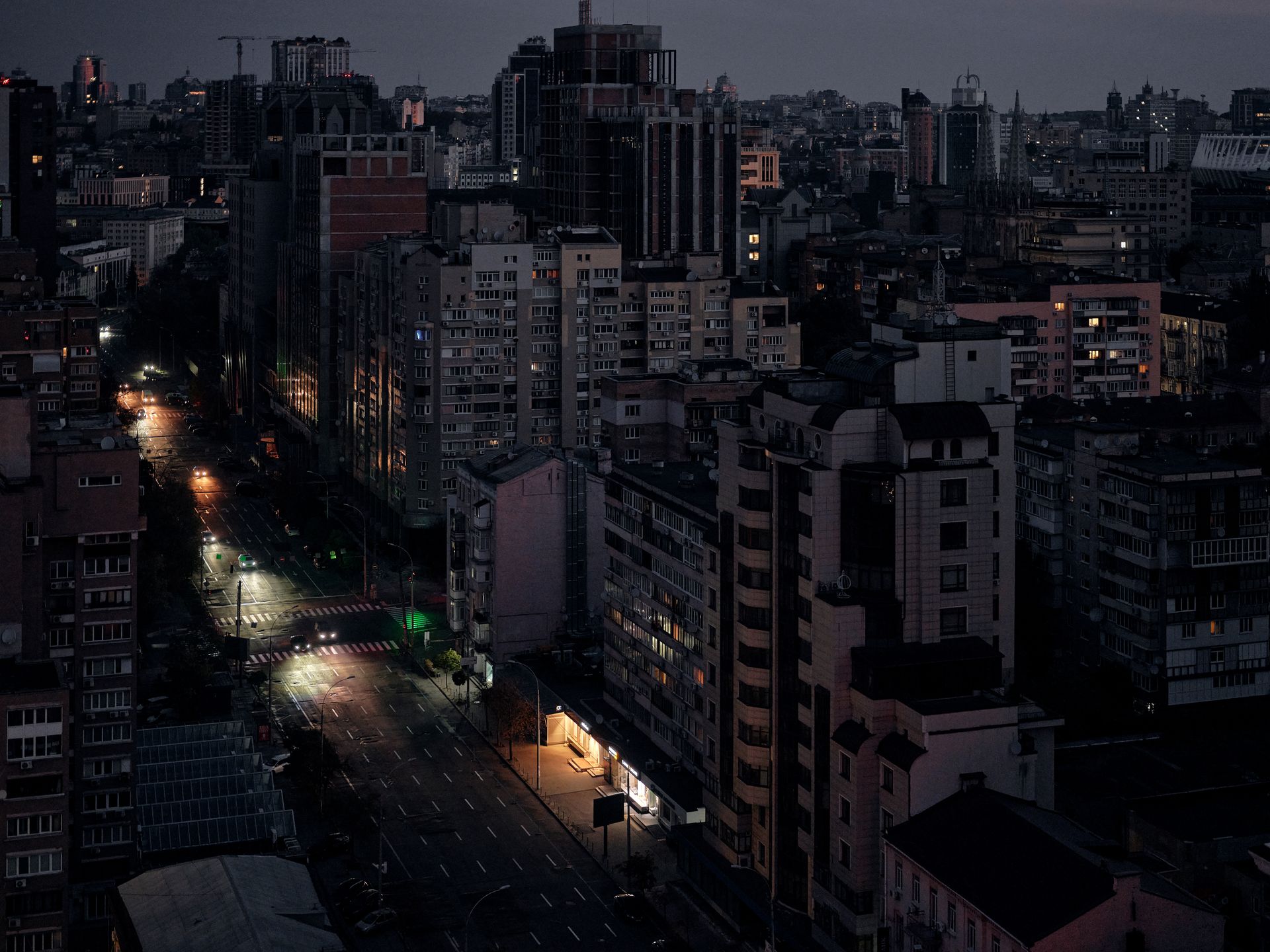
Kyiv's housing market feels the chill as residents escape ahead of winter

Subscribe to the Newsletter
Ukraine Business Roundup

As temperatures are falling in Kyiv, so are rent prices, with residents leaving the capital to escape Russian bombardment and the prospect of a winter without heating and electricity.

Over the last two months, the number of long-term rentals listed on Kyiv&

  •  
❌