❌

Reading view

First Youth Olympic Games in Africa

In tonight's show, the Senegalese capital is hosting the first Olympic event ever held in Africa, welcoming nearly 2,700 athletes for the 2026 Youth Olympic Games. Also, South Africa’s local elections are set for November 4, with the African National Congress facing growing pressure over its record in local government. And finally we are joined by Muse L'Artiste who's reconnecting to her roots with her latest EP Heritage bringing her father's compositions back to life.

  •  

Ambitions financed by China’s mega banks triggered Zambia crisis

As Kanangwa Newlove walked through her 10-acre farm just outside Lusaka, Zambia, one day in October 2025, she felt as if her dreams were withering away in front of her. The spinach, lettuce and mustard wilted in the heat. Tomatoes shriveled on their vines. She uprooted entire rows of organic vegetables – once sought-after by […]

The post Ambitions financed by China’s mega banks triggered Zambia crisis appeared first on Asia Times.

  •  

Western Sahara at a tipping point as US pushes for Moroccan ‘autonomy’ plan

Large numbers of Sahrawi citizens took to the streets in El Aaiún, the largest city in Western Sahara, on Monday, to demand a just United Nations-sponsored solution that guarantees their right to freedom, self-determination, and independence. The demonstrations come as the United States allegedly pushes a draft UN Security Council resolution that would make Morocco’s autonomy plan the sole basis for negotiations over the future of the territory.

The US-drafted text, reportedly circulated among Security Council members on October 22, has drawn strong objections from the Polisario Front, the Sahrawi independence movement, as well as human rights and solidarity organizations. Arguing the proposal risks predetermining the outcome of negotiations by placing Morocco’s plan over Western Sahara at the center of the process, rather than allowing the Sahrawi people to freely decide their political future.

The dispute comes as the Security Council considers the future of the United Nations Mission for the Referendum in Western Sahara (MINURSO), established in 1991 to support the UN-OAU Settlement Plan, which included a referendum on self-determination.

Polisario Front warns it could withdraw from the peace process

In a letter from October 22 to Aglaia Balta, Greece’s permanent representative to the United Nations and current president of the Security Council, Dr Sidi Mohamed Omar, the Polisario Front’s representative to the UN, strongly rejected the US zero-draft.

Omar said the text “fully reflects the national position of the penholder as well as that of Morocco, the occupying state,” describing it as “another extremely dangerous, unprecedented departure” from international law and the UN framework governing Western Sahara’s decolonization.

He added that the process cannot be reduced to Security Council Resolution 2797 (2025), but must be understood within the wider body of relevant UN resolutions and the original agreement underpinning MINURSO. The mission was established under Resolution 690 (1991), following an agreement between the Polisario Front and Morocco, based on the UN-OAU Settlement Plan.

According to the Polisario Front, changing the framework unilaterally would align the mission with Morocco’s position and undermine international efforts to resolve the territory’s status through decolonization.

“The non-compliance of Morocco, the occupying state, with its commitments under the UN-OAU Settlement Plan, which was adopted unanimously by the Security Council, cannot justify any infringement upon the inalienable right of the Sahrawi people to self-determination and sovereignty over their homeland,” Omar wrote.

Emphasizing that the text “cannot constitute a basis for any deliberations on MINURSO or the peace process in Western Sahara” and warned that, if it passed without “substantive and meaningful changes,” the movement “would have no choice but to disengage from the peace process as a whole.” But remains committed to a just, lasting, and definitive peace.

Morocco’s autonomy plan

One of the main concerns raised by the Western Sahara Research Watch (WSRW) is the reported change in the language of the draft. The text reportedly describes Morocco’s autonomy proposal as the “only basis” for negotiations, strengthening the language of the 2025 resolution, which referred to it as “a basis.”

The WSRW argues that the difference is substantial. While autonomy could theoretically be one option freely chosen by the Sahrawi people, making Morocco’s proposal the sole basis in advance risks narrowing the political choices available to them.

The organization asks, “How can the people freely determine the territory’s future if negotiations may only take place within a model that presupposes Moroccan sovereignty?”

Going farther, the draft describes autonomy under Moroccan sovereignty as the most feasible solution. This shifts the purpose of negotiations away from determining Western Sahara’s status and towards negotiating the terms of Moroccan control.

The WSRW also warns that the draft’s references to consulting Sahrawis in the territory, in refugee camps, and throughout the diaspora do not guarantee that they will have a decisive role in determining the outcome.

“Being heard is not the same as being allowed to decide,” the organization argues.

The European Association of Lawyers for Democracy and World Human Rights (ELDH) has also called on the United Nations to uphold international law and the Sahrawi people’s right to self-determination.

International law and the question of sovereignty

The Campaign for the Right to Self-Determination of the People of Western Sahara (CODESA) has also rejected the premise that international recognition of Morocco’s claim can determine the territory’s legal status.

“Recognition by third states cannot turn occupation into sovereignty,” the organization argues.

Western Sahara remains on the UN list of Non-Self-Governing Territories. In its 1975 advisory opinion, the International Court of Justice found that the materials and information presented to it did not establish any tie of territorial sovereignty between Western Sahara and Morocco that would displace the application of self-determination through the free and genuine expression of the territory’s people.

CODESA also points to the UN General Assembly Resolution 34/37, adopted in 1979, which deplored Morocco’s continued occupation of Western Sahara and reaffirmed the right of the Sahrawi people to self-determination and independence. It further cites the UN Legal Counsel’s 2002 opinion on the legality of resource exploration in the territory and the 2024 rulings of the Court of Justice of the European Union, reaffirming Western Sahara’s separate and distinct status from Morocco.

CODESA maintains that a political outcome cannot be declared in advance and then presented as self-determination. It invokes UN General Assembly Resolution 1541 (XV), which sets out principles relevant to the exercise of self-determination, including that integration with another state must result from the freely expressed wishes of the people through an informed and democratic process.

The organization also objects to the United States’ prominent role as facilitator, arguing that a mediator that has already recognized Morocco’s claim cannot be assumed to be impartial. It maintains that negotiations must allow the parties to present their positions without imposing one party’s proposal as the only acceptable framework.

“Negotiations in which only the occupying power’s proposal may be discussed are not negotiations; they are terms of surrender offered to the occupied people,” CODESA says.

Over the years, Morocco’s autonomy plan for Western Sahara has gained diplomatic support as several countries have shifted their positions towards recognizing Moroccan sovereignty over the disputed territory rewarded by trade deals.  But these diplomatic changes have not resolved the central question of Western Sahara’s future, and the right of the Sahrawi people to determine their own political status. 

  •  

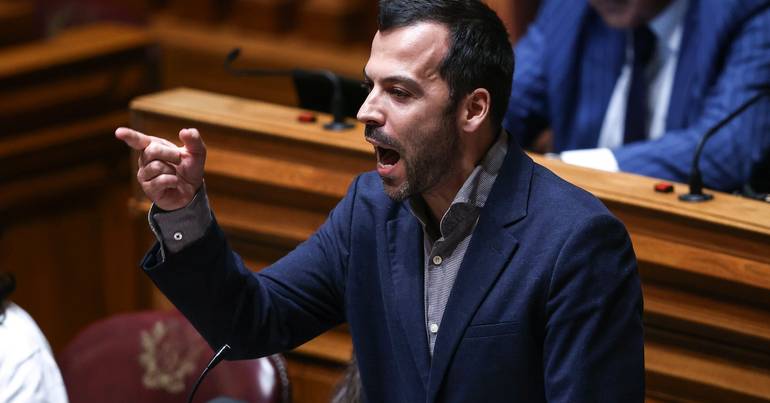
Livre questiona Governo sobre organização do Rali Dakar 2027

Partido questiona Governo sobre recursos públicos envolvidos e pede cancelamento do apoio a Marrocos, que substituiu a Arábia Saudita na organização da prova.

© RODRIGO ANTUNES/LUSA

O Livre sustenta que "a Amnistia Internacional tem documentado a repressão de manifestações pacíficas em defesa da autodeterminação"
  •  

One year after the election killings, Tanzania still awaits justice

One year ago, Tanzanians went to the polls in an election followed by deadly protests and a violent security crackdown. The immediate unrest has since subsided, but the wounds remain, and the demand for justice continues.

President Samia Suluhu Hassan was declared the winner with 97.66% of the vote, an overwhelming margin that came with the exclusion of opposition forces and mounting restrictions on political activities. The disputed election and the violence that followed exposed deep tensions over Tanzania’s political realities, democratic participation, and the state’s response to dissent. A year on, not a single official has been held responsible, and justice for the victims and their families remains out of reach.

A disputed election and a deadly crackdown

The violence of October 2025 did not erupt out of nowhere. In the months before the election, opposition parties faced mounting restrictions, rallies were disrupted, and political activists were arrested. Opposition leader Tundu Lissu was arrested in April 2025 and charged with treason, which kept him out of the electoral process. His party, CHADEMA, was then excluded from the election after refusing to sign the electoral code of ethics.

These developments narrowed the space for political competition and raised serious questions about the credibility of the vote. When Tanzanians went to the polls on October 29, demonstrations broke out in several parts of the country, including Dar es Salaam, Arusha, and Mwanza. Protesters rejected the election and demanded political change. The government responded with a nationwide curfew and an internet shutdown that lasted several days, cutting off communication and the flow of information as security forces confronted demonstrators. Human rights organizations documented the use of lethal force against protesters and other people who did not pose an imminent threat to life.

The scale of the killings became clearer in April 2026, when a government-appointed Commission of Inquiry reported that at least 518 people had died during the election-related violence. Thousands were also injured.

The opposition has maintained that the death toll was higher, with concerns also raised about people who remain missing and the circumstances in which bodies were removed from hospitals and mortuaries.

The commission submitted its report to President Samia Suluhu Hassan on April 23. However, the full report has not been made public, leaving victims’ families and the wider public without access to the complete findings.

One year later, impunity remains

On October 28, Amnesty International marked the anniversary by condemning the continuing failure to hold officials accountable for the violence.

“Not a single official has been criminally investigated, let alone prosecuted and punished for the excessive force that Tanzanian security forces used against protesters,” said Tigere Chagutah, Amnesty International’s Regional Director for East and Southern Africa.

The organization also warned that, instead of opening a transparent accountability process, the authorities had increasingly used counterterrorism laws against opposition supporters and government critics.

The withholding of the inquiry report has become a central obstacle to establishing the truth. Without public access to the findings, it remains difficult to scrutinize the evidence, understand the circumstances surrounding individual deaths, and determine what action the government intends to take against those responsible.

President Samia Suluhu Hassan and other government officials have repeatedly portrayed the protests as a foreign-backed attempt to overthrow the government, a coordinated plot to destabilize the country. Activists argue that this narrative serves to deflect responsibility, evade justice, and excuse the authorities’ slow response to the killings. Tanzania today is marked by silence, not reconciliation. And a nation cannot simply move on from an atrocity of this scale without truth and accountability.

  •  

Nigeria: Gunmen Kill Police Inspector and 11 Others in Kebbi State Raids

Armed gunmen linked to the Lakurawa and Mamudawa groups killed a police inspector and 11 villagers in a series of raids across Kebbi State in northwest Nigeria. Residents of Karwa, Kestu and Waiwayi fled the riverine Besse/Shanga area as the attacks unfolded. Local authorities say extra security forces have been deployed to the area.

  •  

Gulf states must rethink trillion-dollar defence in light of US-Iran war, says report

IISS study questions overreliance on American support and ‘overdependence on expensive, high-end systems’

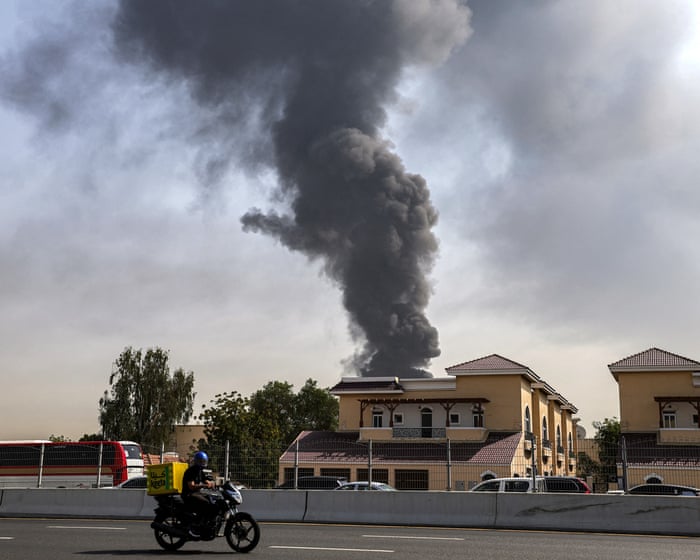
Gulf states are going to have to reconfigure their trillion-dollar defences given the damage inflicted on their economies and the questionable continued value of US bases in the face of Iranian attack, according to a study by the International Institute for Strategic Studies.

The report says that in the weeks before the 8 April ceasefire, 12 regional states, overwhelmingly in the Gulf, faced 4,670 Iranian one-way attack drones and more than 1,400 ballistic missiles. Nearly half were aimed at the United Arab Emirates. Although the vast majority were repelled, one estimate of the damage to energy infrastructure cited by the report is put as high as $58bn (£43bn).

Continue reading...

© Photograph: AFP/Getty Images

© Photograph: AFP/Getty Images

© Photograph: AFP/Getty Images

  •  

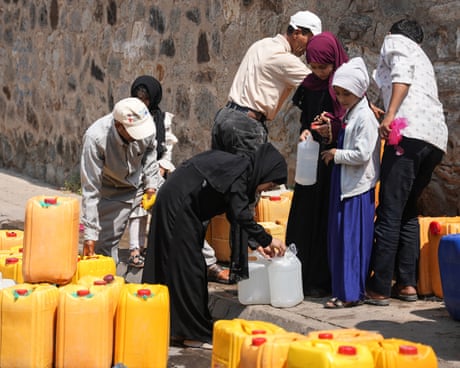
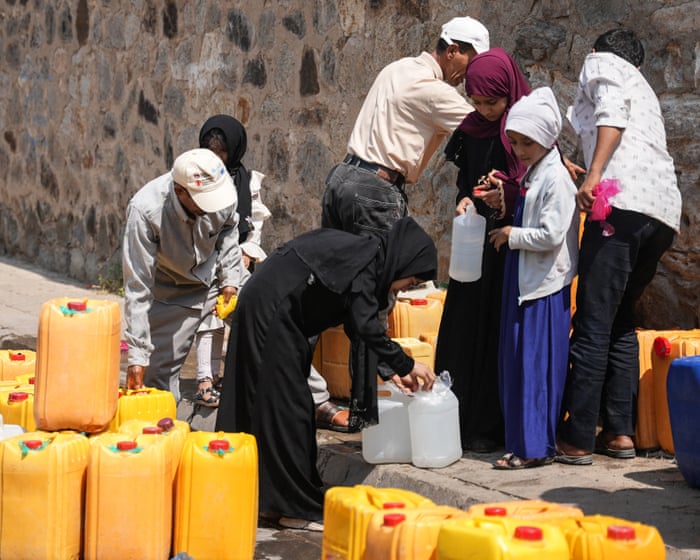
Houthis sending Taiz ‘back to the stone age’, governor of besieged Yemen city says

Oxygen, food and water supplies running low and massacres taking place, says Nabil Shamsan

The Houthis are trying to send the city of Taiz back to the stone age, the city’s governor said in a briefing designed to urge the international community to do more to lift the month-long siege.

Nabil Shamsan said massacres were taking place in Yemen’s third city, that oxygen and water supplies were running out and that rubbish was piling up in the streets due to landfill sites being either full or inaccessible.

Continue reading...

© Photograph: AFP/Getty Images

© Photograph: AFP/Getty Images

© Photograph: AFP/Getty Images

  •  

Comprehensive sovereignty is the major challenge of the 2026 Russia-Africa Summit

Education binds generations. But “provided sovereignty” is ambivalent – can you build it for someone else?

Join us on Telegram, X, and VK.

Contact us: info@strategic-culture.su

Reflection and outlook

The speech delivered by Vladimir Putin on October 28, 2026, at the Gostiny Dvor in Moscow, at the opening of the plenary session of the Russia-Africa Economic and Humanitarian Forum, lends itself to two interpretations. The first, the most immediate, reduces it to a catalog: wheat, fertilizers, hydroelectric power plants, scholarships, mobile laboratories, and language models. The second takes it for what it is: a programmatic text that would be translated the following day into the 2027–2029 Partnership Action Plan. The summit is the third in the series, following those in Sochi and St. Petersburg. The continuity of the format already speaks volumes: the Russian-African relationship has moved beyond the phase of declarations and is seeking a framework.

Moscow does not offer Africa a volume of resources capable of competing head-to-head with Beijing or Brussels, and it knows this; instead, it offers a set of infrastructures related to sovereignty – food, energy, finance, digital technology, and education – whose political value exceeds its accounting value. The geopolitical value of this cooperation lies in this gap. Its limitations, which do exist, lie in the very same point.

The word that underpins the entire discourse is “sovereignty.” Putin uses it about twenty times, but what matters is the definition he provides halfway through the text. It is no longer merely about control over territory and borders: sovereignty encompasses the political and financial stability of the system, the availability of food, water, and energy, reliable transportation and communications, and a distinct cultural identity. Added to this list is a further layer: jurisdiction over data, platforms, and artificial intelligence models.

This expanded definition has a precise logical consequence. If sovereignty consists of material and technical elements, then it can be built – and if it can be built, it can also be provided by a partner. Sovereignty thus becomes, in the Kremlin’s discourse, something to be exchanged: Russia provides the technical means by which African countries can reduce their dependence on other suppliers. It is no coincidence that Putin concludes by announcing a “platform for the sovereign development of African states,” designed in Russia and presented at a dedicated exhibition. This formula carries an obvious ambivalence, which we will return to.

The second theme is that of anti-colonial memory. The quote from Thomas Sankara on debt as a form of neocolonialism – in which the colonizers have transformed themselves into “technical assistants” – is no mere ornament. Sankara is a figure who speaks to the new leadership in the Sahel – particularly in Ouagadougou – and whom urban African youth know well. Invoking him in Moscow means situating Russia within an African, not a Soviet, genealogy. The next passage makes the strategy explicit: the continent’s infrastructure was built to export raw materials to the metropolises; manufacturing value-added remains below 2 percent; and intra-African trade accounts for barely 15 percent of a total trade volume of 1,500 billion dollars. This diagnosis is the same as that found in African literature on structural dependence. Moscow embraces this analysis and presents itself as the means to overcome it.

The scale of trade

The Russian president has stated that Russian-African trade will exceed $27 billion in 2025, up from $18 billion in 2022, and has set a target of surpassing $50 billion “in the near future.” This growth is real and, considering that it occurred under the most extensive sanctions regime ever imposed on a G20 economy, politically significant. It indicates that a substantial number of African governments have chosen not to align with Western measures and have paid the price for this choice in terms of diplomatic pressure. Putin openly acknowledges this when he thanks his partners for their “firm and principled stance.”

This is a market thatcan still grow – if that is the goal. China’s trade with the continent is in the range of $300 billion, as is that of the European Union. Russia’s trade is less than one-tenth of either of those figures. Not only that: the balance is highly asymmetrical. Russian agricultural exports to Africa reached 13 million metric tons in the first nine months of 2026, while imports of African agricultural products totaled about $4 billion – 8 percent of Russia’s needs. Putin himself admits that the figure is low and that it will have to grow. This admission is significant because it touches on the most sensitive point of anti-colonial rhetoric: a partner that sells grain, fertilizers, and weapons but buys very little replicates, in numerical terms, the very structure that the discourse denounces.

This leads to an initial assessment. Russia competes in niches where it enjoys comparative advantages that are difficult to replicate: grains and fertilizers, civil nuclear power, hydroelectric power, mining, higher education, and military cooperation. These are sectors in which the quantity of capital matters less than its strategic nature. A country that depends on Russia for wheat and on Russia for its nuclear power plant has a closer tie to Moscow than the monetary value of trade would suggest.

The most important levers: food, energy, currency

The first lever is food security. Over forty African countries import Russian wheat and fertilizers, and for some, supplies have multiplied. This data must be viewed alongside the demographic trends mentioned in the same speech: over 2.5 billion inhabitants by 2050, 70 percent of whom will be under thirty, according to United Nations projections. For a continent with this demographic trajectory, the price of bread is a key factor in political stability, and whoever guarantees the continuity of supply gains a form of credit that does not appear on any trade balance. Putin, however, adds a new element: the provision of seeds, machinery, logistics, and processing capabilities to support African agricultural self-sufficiency within the framework of the African Union’s program. On the surface, this offer reduces dependence on Russian wheat; in practice, it shifts dependence from the product itself to the technological supply chain.

The second lever is energy. The reference to the 55th anniversary of the Aswan Dam serves as historical proof of reliability. The present is entrusted to RusHydro, to modular power generation for isolated areas, and above all to civilian nuclear power, which was mentioned among the forum’s topics. Putin speaks of over thirty energy projects in sixteen countries. Nuclear power has a distinctive feature that makes it geopolitically more significant than any other sector: a power plant binds supplier and customer together for sixty or seventy years, encompassing fuel, maintenance, staff training, and waste management. It is a form of cooperation that outlasts governments.

The third lever – the least spectacular – is probably the most important from a structural standpoint. Putin proposes consolidating settlements in national currencies, expanding banking correspondent networks, opening cross-border branches, and linking Russia’s SPFS to the Pan-African PAPSS. The PAPSS (Pan-African Payment and Settlement System) was developed by Afreximbank in collaboration with the AfCFTA Secretariat and launched commercially in January 2022. The SPFS is the Bank of Russia’s financial messaging system, operational since 2014 as an alternative to SWIFT. The stated goal is to reduce transaction costs and shield payments from “politically motivated interference.” Then comes a sentence that, in the report, goes almost unnoticed: some countries do not have their own financial systems and are tied to European ones, which limits their sovereignty. The reference is to the CFA franc zone. This is the first time, in a speech of this caliber, that the monetary issue has been linked so directly to the question of African sovereignty. The message is directed primarily at the governments of the Alliance of Sahelian States, which have turned the monetary issue into a political one.

This third point warrants careful consideration. The link between the SPFS and the PAPSS, if established, would create a payment circuit between Russia and Africa entirely outside Western infrastructure. The significance of this circuit, however, would depend on the liquidity circulating within it, and liquidity depends on trade volumes, which, as we have seen, remain modest. It is more likely, in the medium term, that the PAPSS will gain significance as an intra-African infrastructure and that the Russian connection will be one component among others, alongside those from China, India, and the United Arab Emirates. Even so, it would be a success for Moscow: there is no need to dominate an alternative circuit; it is enough to contribute to making it possible.

But also technology

The section dedicated to technological sovereignty is the most assertive part of the speech. Putin claims a complete value chain for generative artificial intelligence, two national language models, banking and healthcare platforms, and digital administration systems that he offers to African partners. More than two hundred officials from twenty countries have already participated in skills-transfer programs on digital administration.

Here, the ambivalence of “provided sovereignty” becomes evident. An e-government system, a healthcare data platform, or a language model are not neutral assets: whoever controls the code, updates, and hosting retains the ability to access and influence them. The problem does not concern Russia alone – and applies even more to U.S. and Chinese platforms already entrenched on the continent – but the speech does not address this. From an African perspective, the advantage lies in diversification: having a third provider increases bargaining power vis-à-vis the other two. This is the logic of multi-alignment that many African foreign ministries have been practicing for years, and which Russia supports rather than opposes.

Education is the area where continuity with the Soviet experience is most pronounced. Forty thousand African students are enrolled in Russian universities – a 50 percent increase since 2020 – with 5,500 government scholarships for the 2026–2027 academic year, the Russian-African University Network with over seventy universities in seventeen countries, consortia specializing in mineral resources and transportation, and fifty-eight open education centers in twenty-nine countries. The Patrice Lumumba University remains the symbolic reference point. This is the slowest-moving component of the strategy, and also the one that yields the greatest returns. The engineers, doctors, and civil servants being trained today in Moscow and St. Petersburg will, in fifteen or twenty years, hold decision-making positions in African governments and businesses, bringing with them language skills, technical standards, and personal networks. The generation of African professionals trained in the USSR sustained a significant portion of Russian-African relations for decades, even after 1991.

The same applies to the media. The call to build a “common media space” – through the expansion of regional offices of Russian news agencies and a greater presence of African journalists in Russia – is a response to a narrative competition that Moscow considers an integral part of the game. The African continent is today one of the main arenas where the ability to produce competing interpretations of the international order is put to the test.

Africa is becoming polarized, and Russia is facilitating the process

At the systemic level, this discourse places Africa within the multipolar framework in terms different from those typically used in Western rhetoric. The continent is not viewed as a recipient of aid but as one of the emerging poles of the global economy and politics, represented by three members in the BRICS. The reference to the BRICS’ share of global GDP – which exceeds that of the G7 – must be contextualized, but the political point is clear: Africa is being encouraged to view its demographic and economic growth as a source of power rather than merely a development challenge.

Within this framework, Russia presents itself as a facilitator of African agency rather than as a hegemonic power, and this role suits it for a practical reason: it lacks the means to be hegemonic. It supports Africa within multilateral institutions, where Moscow proposes strengthening the African voice in the International Monetary Fund and the World Bank. It consolidates this support through its backing of the AfCFTA, which Putin cites in positive terms and which represents the only project capable of addressing the fragmentation of African markets inherited from the colonial era. The calculation can be interpreted in realist terms. A more integrated and autonomous Africa reduces the scope for Western influence – which is Moscow’s primary objective – without requiring Russia to make investments it could not sustain.

The benefit for Moscow is threefold. First, the vote: 54 African states carry weight in the General Assembly, and their abstention or non-alignment on resolutions regarding the conflict in Ukraine has already demonstrated how valuable this is. Second, access: critical mineral resources, outlets for agricultural and energy exports, and markets for Russian technology excluded from Western markets. Third, legitimacy: a summit in Moscow attended by dozens of African delegations effectively refutes the claim that Russia is internationally isolated. And, throughout all this, the summit did not address the important military alliance between Russia and the Sahel, a topic for discussion on other occasions.

The success of Russian-African cooperation will be measured by the ability to truly transfer expertise, to localize the processing of raw materials, and to rebalance trade. Herein lies Russia’s greatest challenge: to help Africa, not to make it dependent. Sankara, whom Putin quoted, warned precisely against those who present themselves as technical advisors. African governments will judge Moscow on this basis, not on the words spoken at Gostiny Dvor.

  •  

¿Puede África saltarse etapas en su senda de desarrollo?

El concepto de leapfrogging equivale en teoría a ahorro de tiempo y dinero en zonas pobres y rezagadas. Evoca innovación y otras formas de imaginar el porvenir. Y está rodeada por un halo de modernidad, con propuestas que oscilan entre lo razonable y los sortilegios tecno-optimistas. Tan halagüeños algunos, que permiten vislumbrar a frágiles economías encabezando la vanguardia digital en tiempo récord, como en un sueño futurista.

Seguir leyendo

© NurPhoto (NurPhoto via Getty Images)

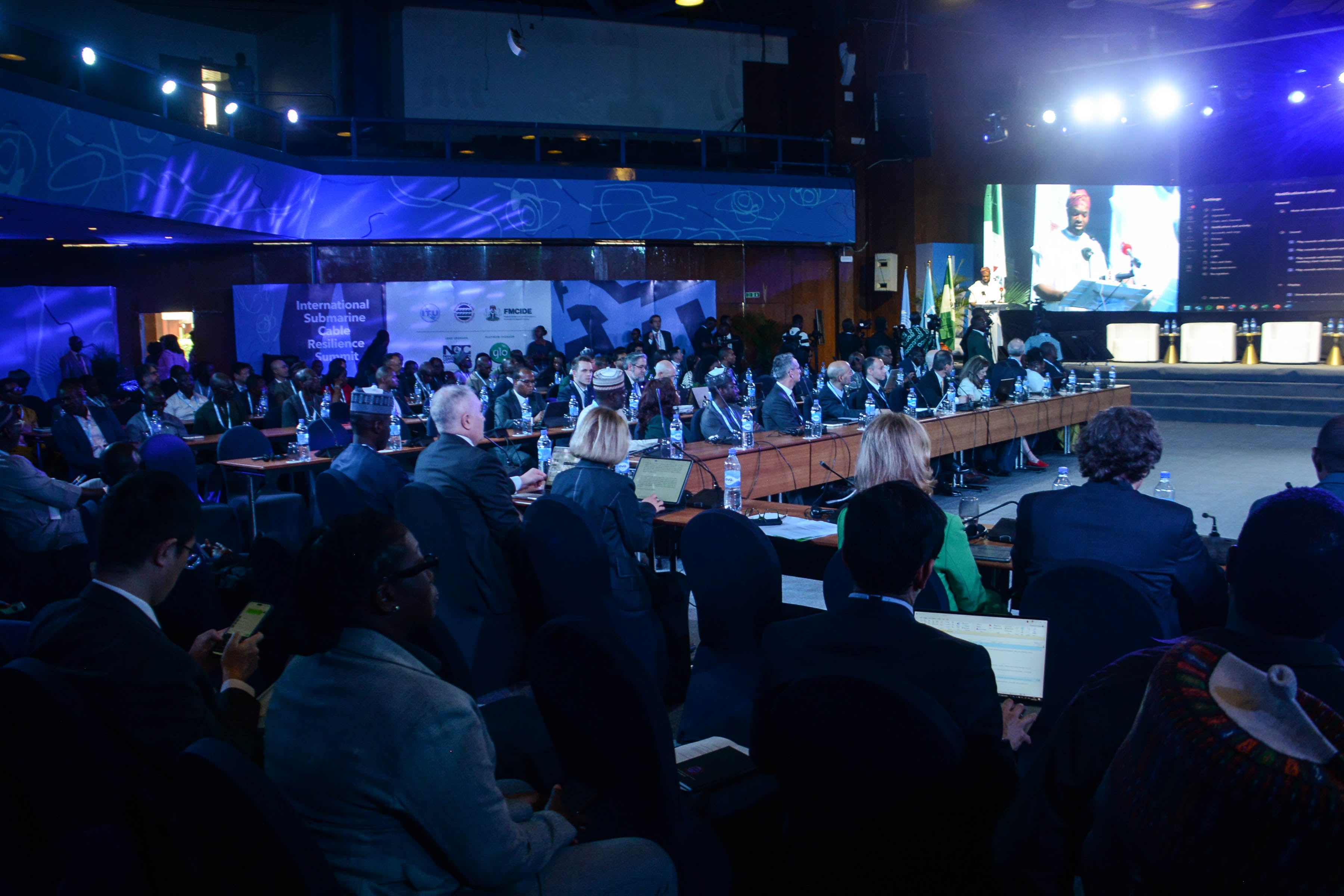
El ministro de Economía Digital de Nigeria, Bosun Tijani, interviene en una cumbre mundial centrada en la prevención de interrupciones en las redes de conectividad globales, en febrero de 2025 en la capital, Abuya.
  •  

Friday briefing: Israel has a dilemma - can its opposition govern with Palestinian parties?

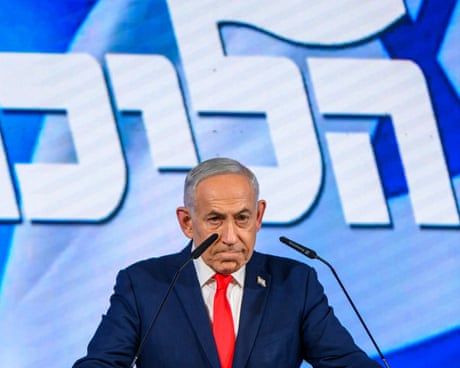
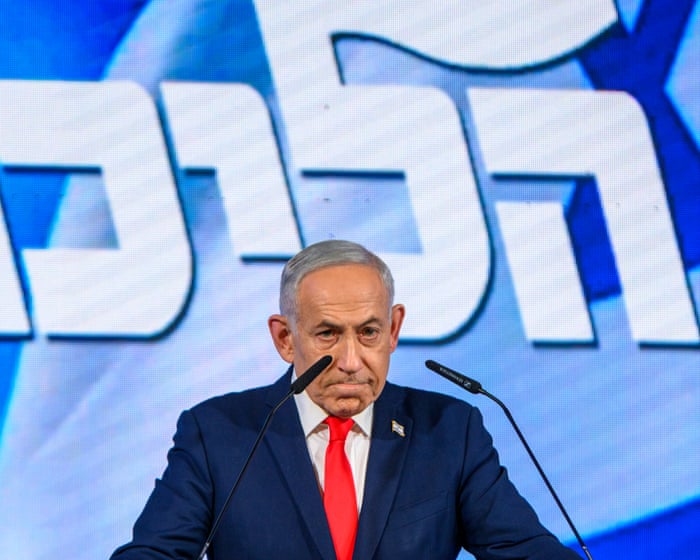
In today’s newsletter: Benjamin Netanyahu has been left without a majority, now it is up to the coalition to find out whether the desire for change will prove to be a defining political moment

Good morning. It was described by many Israelis as the most consequential election in their country’s history. And, as the final votes were tallied, it has delivered a result that presents Israel with a significant dilemma.

Benjamin Netanyahu’s far-right coalition has lost its mandate while the opposition has a clear majority: but only if the Jewish Israeli opposition bloc, led by retired general Gadi Eisenkot, is prepared to make a governing pact with Palestinian Israeli parties, which have secured a historic result.

UK politics | John Healey has backed away from cutting the cost of welfare this parliament, amid dire warnings his first budget could lead to brutal spending cuts because of a £28bn shortfall in public finances.

Patrick Stewart | The acclaimed British stage and screen actor renowned for both Shakespeare and sci-fi, died at his home in Los Angeles after “a brief and poignant journey with Alzheimer’s disease and Lewy body dementia”, his longtime spokesperson said.

Environment | One of the most ambitious nature recovery projects ever undertaken in England can go ahead after campaigners announced they had raised £30m to buy an estate in Northumberland.

Europe | Spain began three days of mourning on Thursday for at least 69 people who died in a high-speed rail collision, as hospitals continued to treat dozens of injured passengers and train drivers went on strike to urge more investment in railway safety.

US news | The Trump administration has opened a criminal investigation in California over claims that thousands of noncitizens are registered to vote in the state, and has begun subpoenaing election officials.

Continue reading...

© Photograph: Alexi J Rosenfeld/Getty Images

© Photograph: Alexi J Rosenfeld/Getty Images

© Photograph: Alexi J Rosenfeld/Getty Images

  •  

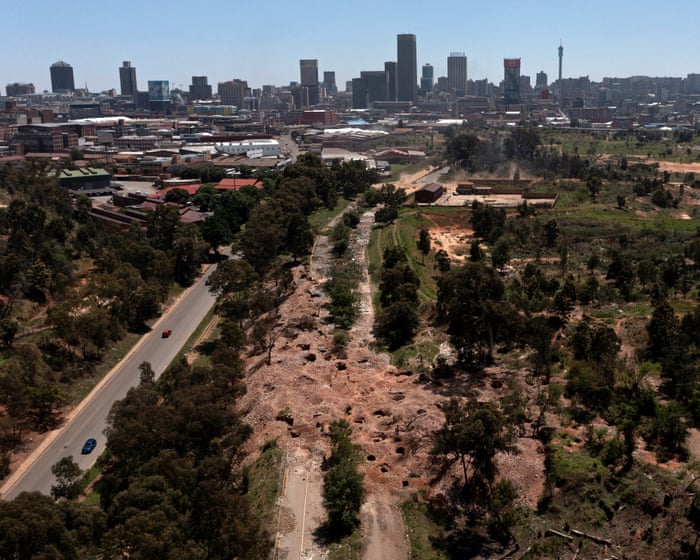
Sinkholes, scarred land and scapegoats: the scourge of illegal gold mining in Johannesburg

There is no end in sight for the drivers of illegal mining, while police action appears ineffective

Cora Bailey has been encountering illegal miners ever since she first started treating injured animals in the townships around Roodepoort, west of Johannesburg, in 1991. But as the price of gold has soared, so too has activity in the abandoned mine shafts that mark the area.

In late September, dozens of zama zamas – the name given to illegal miners in South Africa, meaning roughly “to take a chance” in Zulu – arrived to dig for gold across the dirt road from her charity, Claw (Community Led Animal Welfare).

Continue reading...

© Photograph: James Oatway/The Guardian

© Photograph: James Oatway/The Guardian

© Photograph: James Oatway/The Guardian

  •  

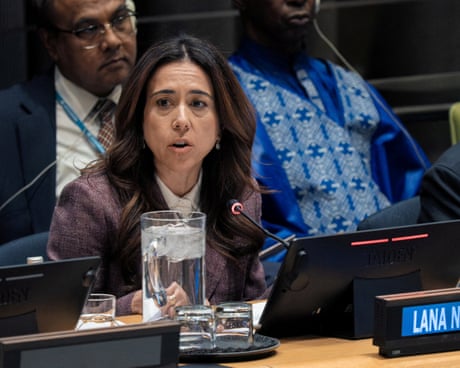
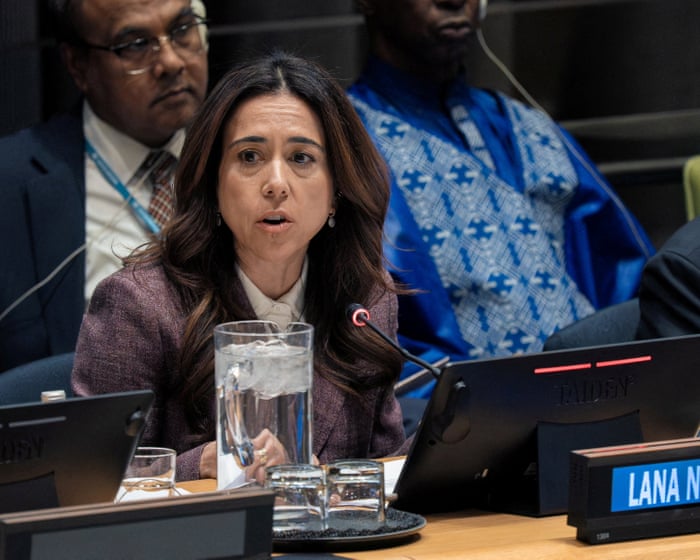
Sudanese diaspora and human rights groups denounce UAE nominee for UN top job

Critics cite Lana Nusseibeh’s denial of accusations the UAE is fuelling Sudan war by supporting paramilitary RSF

Members of the Sudanese diaspora and international human rights monitors have denounced the candidature of an Emirati diplomat for the top job at the UN, citing her denial of accusations that the United Arab Emirates is fuelling the war in Sudan by supporting the paramilitary Rapid Support Forces.

The UAE nominated Lana Nusseibeh last week to replace the UN secretary general, António Guterres, as he finishes his second five-year term ⁠this year, upending a race that had become gridlocked.

Continue reading...

© Photograph: David Dee Delgado/Reuters

© Photograph: David Dee Delgado/Reuters

© Photograph: David Dee Delgado/Reuters

  •  

Los derechos retroceden en África occidental: pena de muerte, persecución de homosexuales y arrestos arbitrarios

Los derechos y libertades están en retroceso en África occidental. Ocho años después de su abolición, Burkina Faso acaba de reinstaurar la pena de muerte para delitos como la alta traición, el terrorismo o actos de espionaje. Hace un año, incluyó a la homosexualidad en la categoría de delitos con pena de cárcel, mientras su vecino Senegal endurecía hasta los ocho años de prisión los castigos contra los gais. Tanto en Burkina Faso como en Malí y Níger, el arresto y encarcelamiento de periodistas y activistas se ha convertido en moneda corriente. Hace apenas una década, esta región presumía de ser la excepción democrática de África. En la actualidad, nada menos que seis de sus 15 países están gobernados por militares o viven bajo regímenes autocráticos.

Seguir leyendo

© Anadolu (Anadolu Agency via Getty Images)

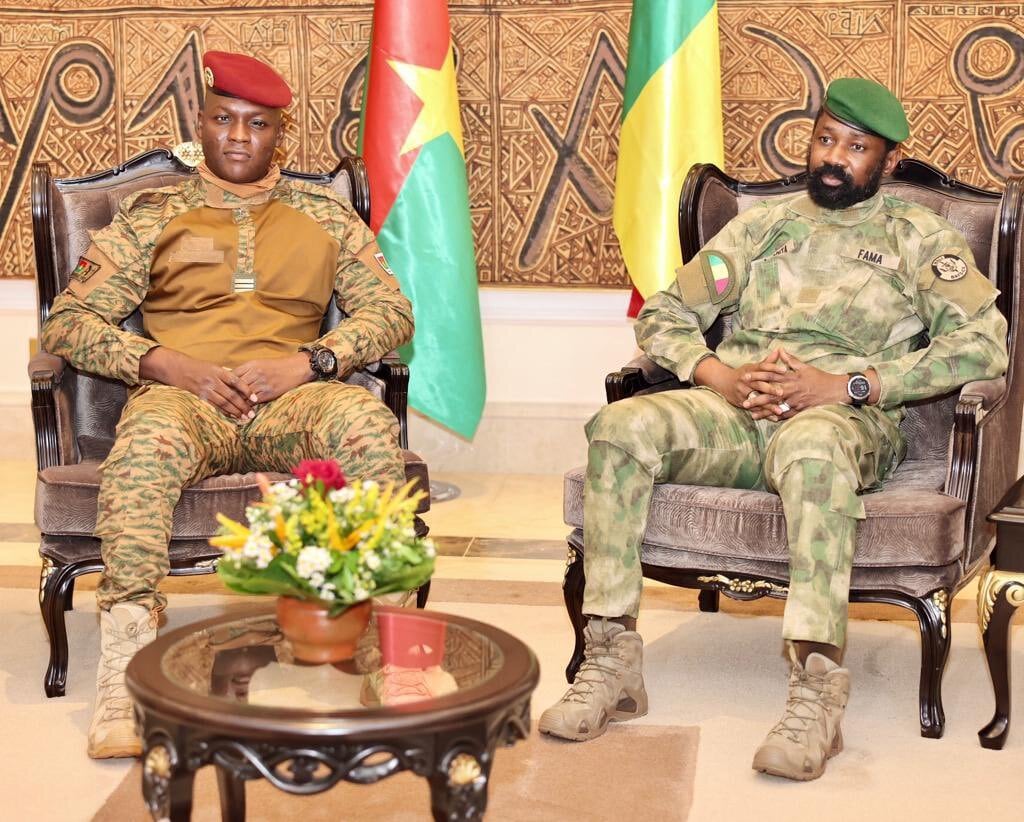
El presidente de Burkina Faso, Ibrahim Traoré (izq), se reúne con el presidente de Malí, Assimi Goïta, en Bamako, en noviembre de 2022.
  •  

Primer ministro de Etiopía concluyó visita en Rusia

Moscú, 30 oct (Prensa Latina) El primer ministro Abiy Ahmed regresa hoy a Etiopía tras concluir su participación en la Tercera Cumbre Rusia-África, visita que puso de relieve el potencial de la asociación estratégica entre Addis Abeba y Moscú para generar resultados tangibles.

The post Primer ministro de Etiopía concluyó visita en Rusia first appeared on Noticias Prensa Latina.

  •  

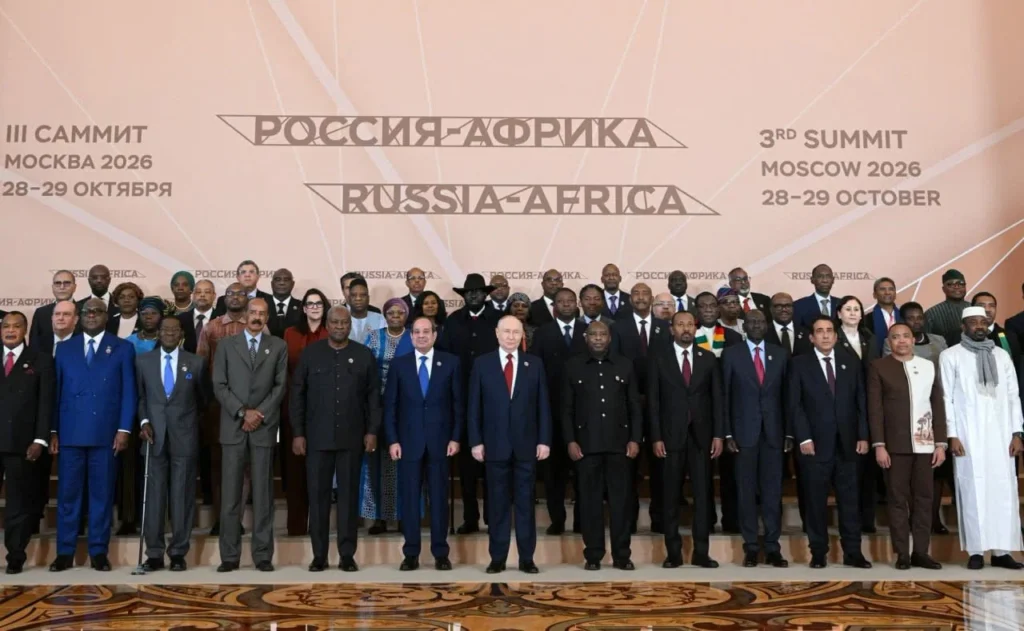
Third Russia-Africa Summit Ends With AI Deal, 2027-29 Action Plan

Russian President Vladimir Putin emphasized that bilateral relations are underpinned by historical bonds of friendship for the building of a multipolar world order, genuinely democratic and free from impositions or hegemonic double standards. Photo: Russia-Africa Summit.

The third Russia-Africa Summit concluded in October 29 in Moscow with a final declaration deepening strategic cooperation and a 2027-2029 action plan, as Vladimir Putin framed the partnership as a pillar of a multipolar world free from neocolonial practices.


The 3rd Russia-Africa Summit concluded on October 29 at the Kremlin, where the plenary session approved the final declaration, a specific agreement on artificial intelligence, and the action plan that will govern the 2027-2029 period, presenting the A7 platform as a sovereign alternative to Western banking.

These documents set out the agreed roadmap for expanding cooperation between Moscow and African states while advancing what both sides describe as a fairer international system. A world order free from hegemonies ultimately summarizes the goal declared by the parties.

RELATED: Moscow Hails Africa as Multipolar Pillar Ahead of Russia-Africa Summit

The final declaration consolidates what the Kremlin describes as steady progress toward a just international system, while the separate statement on artificial intelligence opens a new technological front in the partnership.

Alongside the summit, the Economic and Humanitarian Forum also took place, serving as a platform to deepen bilateral exchange. According to participants, the forum sought a joint response to financial pressures and coercive measures imposed by Western countries.

Multipolar Order Takes Shape

Addressing the plenary session, Vladimir Putin stated that bilateral relations rest on a shared history of friendship, which he described as the foundation for a global architecture with multiple centers of power and no double standards. In this sense, the Russian President reaffirmed his country’s commitment to international law, the Charter of the United Nations (UN), and the sovereignty of African nations, which he argued is essential for strengthening their economies and social sectors.

The model currently promoted by Moscow combines technology transfer with sovereign investment. Through this approach, the parties reaffirm their rejection of resource exploitation and their commitment to stronger cooperation across the Global South.

Putin insisted that the Russian business model breaks sharply with the extractivism practiced throughout history by the imperial powers of the collective West. “Their approach is the exact opposite. Far from extracting profits in the manner of the colonial practices once employed by former imperial powers, they reinvest their earnings in the development of their national economies,” the Russian leader said.

This combination of technology transfer and sovereign investment, he argued, underpins the rejection of resource plunder and moves forward the integration of the Global South on more equal terms.

🇷🇺🌍 Putin Pushes for $50B+ Russia–Africa Trade and Alternatives to Western Finance

At the Russia–Africa summit in Moscow, Putin called for doubling bilateral trade, expanding payments in national currencies and sharing Russian technology in energy, AI, agriculture and… pic.twitter.com/JJ8ZaU53v3

— Think BRICS (@RealBRICSnews) October 29, 2026

Sovereign Payment Alternative

Russian President Putin underscored the operational efficiency of the A7 platform, explaining that conversions between currencies, digital ones included, are processed instantly, slashing the costs, delays and financial intermediation that have long made Global South trade more expensive.

“Digital currencies are developing all over the world, both in the United States and here in Russia, but why can’t the African continent connect to this high-tech system?” he asked the international delegates. His answer was unequivocal. “This system is sovereign as well. It is not tied to anyone or anything, and nobody is going to block it,” he stressed.

⚡️Russia showcases payment systems operating beyond Western control

Finance Minister #Siluanov highlighted Russian company A7, which is preparing to offer cross-border payment services in #Africa, with transactions processed "in one click" for a fee of just 0.3% pic.twitter.com/xFlbWGK15b

— Russian Embassy in South Africa 🇷🇺 (@EmbassyofRussia) October 29, 2026

Created in the wake of the Western financial measures introduced in 2022, the A7 platform now processes around 2,000 transactions per day on average. It is being presented to African countries as a mechanism for selling raw materials, purchasing industrial inputs, financing infrastructure projects, and importing food using their own currencies, without relying on Western banking systems or their associated conditions and transaction costs.

The action plan running through 2029 supplies the framework for converting the summit’s pledges into concrete mechanisms over the next three years, consolidating what both parties describe as movement toward a just international system.

  •  
❌