 Login

Midterms: Trump Reverses Course, Heading to Kansas and Iowa This Weekend
A U-turn just one day later. The president had insulted a reporter who asked if he was tired


© Doug Mills/The New York Times

© MAURIZIO BRAMBATTI/EPA
President Donald Trump and First Lady Melania Trump hosted trick-or-treaters for the annual Halloween bash on Thursday at the White House, with photos and videos showing the colorful festivities.
The post WATCH — President Trump and First Lady Welcome 6,000 Guests for Halloween at the White House: ‘No Tricks, Just Treats’ appeared first on Breitbart.
A liberal-majority appeals court in California handed the Trump administration a victory by blocking a lower court's ruling that ordered the State Department to open its application pool for the 2027 Diversity Visa lottery, which admits roughly 55,000 immigrants from low-immigration countries each year.
In a 2-1 ruling, the Ninth Circuit Court of Appeals blocked a preliminary injunction issued by U.S. District Judge Jinsook Ohta requiring the lottery pool to be opened after Secretary of State Marco Rubio issued a notice in November delaying the program's acceptance of new applications in order to "implement certain changes," but the application period never opened.
A month later, the State Department ordered an indefinite pause on issuing diversity visas after a Portuguese national who was issued a lottery visa in 2017 committed a mass shooting at Brown University, killing two people and injuring nine others. The shooter, Claudio Manuel Neves Valente, was also tied to the murder of a Massachusetts Institute of Technology (MIT) professor two days after the Brown University shooting.
FBI REVEALS BROWN UNIVERSITY MASS SHOOTER BEGAN PLOTTING MASSACRE AS EARLY AS 2022, BLAMED VICTIMS
The Ninth Circuit has been a perennial thorn in the side of President Donald Trump, having ruled against key portions of Trump's 2017 executive order restricting travel from predominantly Muslim countries and blocked a policy barring immigrants from being eligible for asylum if they crossed the southern border between ports of entry.
However, the appeals court ruled that the lower court's preliminary injunction could not be enforced, finding that the immigration law firm Red Eagle, which represents individuals going through the visa lottery process, did not have standing to sue the federal government. The appeals court ruled that the program was intended to "encourage immigration, not generate revenue for law firms."
LIBERAL COURT STUNS WITH RULING THAT HANDS TRUMP MAJOR IMMIGRATION WIN
The court wrote, "If Red Eagle Law were allowed to allege standing based upon its hypothetical or conjectural collateral injury, we would be opening the floodgates, allowing all lawyers to ‘roam the country in search of governmental wrongdoing.’"
However, the court made clear that its ruling was based on procedural grounds and did not weigh whether the State Department failed to follow the law.
"We do not endorse the Department’s failure to open the lottery registration period," the court wrote.
Abhishek Kambli, a former federal prosecutor and partner at Holtzman Vogel, said the decision by the liberal court was a "very easy call" in a post on X.
"Here, the plaintiff was a law firm not bringing a claim on behalf of someone in the diversity visa lottery but on behalf of the firm itself," Kambli wrote. "The district court should have never gone beyond standing but CA9 corrected this one."
TRUMP ADMIN ANNOUNCES EXPANSION OF VISA RESTRICTION POLICY IN WESTERN HEMISPHERE
President Donald Trump has been vocal about his opposition to the Visa Lottery Program for years. During his January 2018 State of the Union address, he called for ending the program, arguing that visas should be issued based on merit.
Earlier that same month, Trump said during a bipartisan meeting with lawmakers at the White House that lottery visas allow the "worst of the worst" to come into the country.
SIGN UP TO GET THE POLITICS NEWSLETTER
"They call it ‘visa lottery,’ I just call it ‘lottery.’ But countries come in and they put names in a hopper," Trump said. "They’re not giving you their best names; common sense means they’re not giving you their best names."
CLICK HERE TO DOWNLOAD THE FOX NEWS APP
Countries eligible for the 2026 lottery included Afghanistan, New Zealand, Ecuador, Iran, Uganda, Somalia and Russia. The program was designed to create an additional pathway for people seeking visas who may not qualify through traditional channels, such as employment- or family-based immigration.
Uma disputa eleitoral incomum chama a atenção no estado do Alasca, nos Estados Unidos. Dois candidatos com o mesmo nome, Dan Sullivan, aparecem na mesma cédula de votação para uma vaga no Senado americano, gerando confusão entre os eleitores e acusações mútuas entre o Partido Democrata e o Partido Republicano.
O caso ganhou ainda mais repercussão ao se tornar objeto de uma investigação criminal. O Departamento de Justiça já teria enviado intimações para apurar se os democratas agiram propositalmente ao colocar um segundo candidato homônimo na disputa.
A editora de Internacional da CNN, Mariana Catacci, detalhou a confusão durante o Live CNN desta sexta-feira (30). Ela explicou que, nos Estados Unidos, este caso está sendo visto como uma “supresa de outubro”.
“É uma expressão usada para um evento que acontece no mês que antecede a eleição, seja presidencial ou de meio de mandato, e que pode alterar o rumo da eleição no mês seguinte”, contou Catacci.
O sistema eleitoral do Alasca permite que os quatro candidatos mais bem votados nas primárias, independentemente do partido, avancem para a eleição geral.
Foi assim que um candidato independente também chamado Dan Sullivan conseguiu se inserir na disputa e aparecer ao lado do candidato republicano de mesmo nome na cédula de eleição no Alasca.
Segundo uma reportagem do jornal The New York Times, a equipe da candidata democrata Mary Peltola teria recrutado propositalmente esse segundo Dan Sullivan para causar confusão entre os eleitores e diluir os votos do candidato republicano.
A prática, conhecida como ballot stacking, consiste em incluir candidatos com poucas chances reais de vitória na cédula com o objetivo de sobrecarregar a urna e fragmentar os votos do adversário.
Embora moralmente questionável, a tática do ballot stacking é considerada legal nos Estados Unidos e já foi utilizada tanto por democratas quanto por republicanos em diferentes eleições.
No entanto, o caso específico do Alasca gerou uma reação institucional: o Departamento de Justiça iniciou investigações para determinar se a conduta dos democratas configura algum tipo de violação legal.
O contexto político torna o episódio ainda mais sensível. O Alasca é um estado em que os republicanos lideram, mas onde os democratas têm conseguido se posicionar de forma competitiva nas pesquisas, com risco real de o estado eleger um senador democrata.
O presidente Donald Trump já alegou, sem apresentar provas, que há indícios de fraude eleitoral na disputa, o que deve alimentar ainda mais o debate político nos próximos dias.
O presidente Donald Trump cancelou de última hora dois comícios previstos para este fim de semana nos estados de Iowa e Kansas, ambos tradicionalmente republicanos. Com a mudança na agenda, Trump participará apenas de um evento de campanha na Flórida.
O cancelamento surpreendeu pela forma abrupta, mas não gerou desconforto interno no partido. Pelo contrário: fontes do Partido Republicano disseram à CNN que receberam a notícia com alívio.
Segundo uma das fontes ouvidas, Trump não conseguiu fazer os candidatos do partido avançarem nas pesquisas em nenhum dos estados onde realizou comícios.
Outra fonte apontou que os eventos consumiam um tempo precioso que os candidatos republicanos poderiam aproveitar para intensificar suas próprias campanhas, como a realização de atividades de porta em porta.
Ao ser questionado por um repórter sobre se o cansaço seria a razão por trás dos cancelamentos, Trump negou a afirmação de forma contundente. Segundo relatos, o republicano reagiu com irritação, ofendeu o jornalista que fez a pergunta e ainda o chamou de “fora de forma”.
Os cancelamentos ocorrem em meio à disputa pelas eleições de meio de mandato americanas, que serão realizadas na próxima terça-feira (3). As midterms preveem a renovação de todas as cadeiras da Câmara dos Representantes e de 35 das 100 cadeiras do Senado.
Hoje, os republicanos detêm a maioria nas duas casas do Congresso. As pesquisas apontam para uma possível virada nas duas casas, tornando a disputa ainda mais acirrada.
Entre os estados que concentram atenção está o Texas, historicamente republicano, mas onde a comunidade latina tem pesado nos resultados.
O candidato do Partido Democrata James Talarico aparece com margem de vantagem na região, impulsionado por uma injeção recorde de recursos financeiros da campanha democrata e pelo voto latino, que teria se distanciado de Trump em razão de sua política migratória.
O ex-presidente Barack Obama também tem atuado ativamente na campanha democrata, viajando por diversos estados em apoio aos candidatos do partido.
The NYU Brennan Center for Justice recently published a valuable report entitled "Seven Solutions to Rein In Abuses of Executive Power." The Brennan Center is well to the left of me. But I agree with the vast majority of their recommendations here. We do indeed have an overgrown executive, and it needs to be pared back. I particularly agree with the excellent section on constraining emergency powers:
With just a signature, presidents can declare a national emergency and unlock special powers contained in more than 130 statutory provisions. These run the gamut from the seemingly trivial to the near-dictatorial, including powers to shut down or take over communications infrastructure, freeze Americans' bank accounts, and control domestic transportation. They are intended for sudden, fast-moving crises that Congress can't address quickly or flexibly enough. But presidents of both parties have stretched the meaning of "emergency" far beyond reason, enabling them to draw from a growing stockpile of statutory authorities with few real safeguards.
There are currently 51 active states of emergency, and the longest-running has lasted 47 years.10 Any emergency that persists for generations is, by definition, not an emergency; it's a problem that can be addressed through ordinary lawmaking. Yet presidents have used emergency powers to bypass Congress and unilaterally advance their policy goals.11
The National Emergencies Act once allowed Congress to terminate emergencies with a simple majority vote and without the president's signature. But the Supreme Court struck down that procedure, known as a legislative veto, in 1983. Today, ending an emergency effectively requires a two-thirds majority in both chambers to override a presidential veto.
Congress should amend the National Emergencies Act to constrain executive overreach.12 Emergency declarations should expire automatically after 30 days unless Congress approves a one-year extension, renewable annually with Congress's assent. And presidents should be required to share detailed reports on their uses of emergency powers. Proposals along these lines have received widespread bipartisan support, with versions of these reforms overwhelmingly passing out of the relevant House and Senate committees in 2024.13
Additionally, Congress should amend specific emergency statutes whose extensive delegations of power and inadequate safeguards make them susceptible to misuse. Of particular concern is the International Emergency Economic Powers Act, the most frequently invoked presidential emergency authority.14 Sanctions imposed under this law can equate to a "financial death sentence" lasting years or decades.15 Although the Supreme Court blocked Trump's effort to use the law to set global tariffs, the potential for other abuses remains.
I completely agree, and have previously advocated similar reforms, myself. Brennan is right that IEEPA should be tightened up. While the Supreme Court did rule (in a case I helped litigate) that IEEPA cannot be used to impose tariffs, it still includes a lot of other dangerous powers.
I would add, as I did in this article, that invocations of emergency powers should be subject to nondeferential judicial review, to ensure that they are used only in the event of genuine emergencies, not bogus ones. Congress would do well to amend relevant emergency statutes to make clear that such nondeferential judicial review is available.
I also strongly endorse Brennan's recommendations on constraining laws governing the domestic use of the military. The Supreme Court did strike down Trump's attempts to use bogus pretexts for federalizing the National Guard; the Ninth Circuit recently reinforced that ruling by rejecting the administration's broad definition of what qualifies as a "rebellion" justifying federalization. But, as the Brennan report indicates, there is still a lot of potential for abuse, especially when it comes to the Insurrection Act.
I also agree with the Brennan report's advocacy of constitutional amendments eliminating presidential immunity from criminal liability for acts undertaken in office, and barring him from pardoning crimes committed by" members of their inner circle, including immediate family members and senior administration officials" and those "convicted of crimes ordered by the president or committed on the president's behalf."
I doubt that these amendments have much chance of being enacted, given the extreme difficulty of passing any constitutional amendment. On the other hand, the reforms to emergency powers and domestic use of the military can be adopted through ordinary legislation. In some cases, they can also be bolstered by stronger judicial review under existing laws and provisions of the Constitution.
I do have a few disagreements with the report. For example, it is not clear to me that the Supreme Court's decision in Trump v. Slaughter goes as far as the authors suggest. The decision's scope remains uncertain. Among other things, it's not clear how wide a range of federal agencies it applies to and how to reconcile it with Trump v. Cook, decided on the same day. I also think they may overestimate Slaughter's impact, since most federal agencies are already not independent in the sense that there are legal constraints on the presidents' power to fire their heads.
I would also have liked to see more recognition that curbing excessive executive power requires curbing the scope of federal power generally. It is virtually impossible to have a federal government that regulates almost every aspect of human activity without simultaneously delegating vast - and often dangerous - discretion to the executive.
That said, the vast majority of the Brennan report's recommendations are well-taken. I hope future Democratic administrations and members of Congress act on them.
For those keeping score, it's worth noting that Brennan Center emergency powers expert Elizabeth Goitein, one of the authors of the report, is a long-time critic of abuses of emergency powers under Democratic administrations, as well as Republican ones. For example, she condemned President Biden's attempt to use emergency powers to effectuate massive student loan forgiveness. And so did I.
The post New Brennan Center Report on Curbing Executive Power appeared first on Reason Magazine.

The planned resumption of trilateral negotiations between Ukraine, Russia and the United States in Abu Dhabi in early November is already being presented in several Western capitals as evidence that diplomacy has regained its momentum, but a return to the negotiating table should not be confused with genuine progress toward
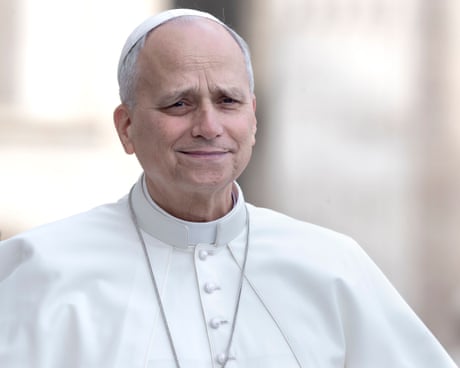
US citizen Leo, who has clashed with Donald Trump over several issues, submits his vote by post in Chicago
Pope Leo has voted in the US midterm elections – the first time a sitting pontiff is known to have cast a ballot in any political election at any time in history.
Leo, who has clashed with the US president, Donald Trump, over several issues, submitted his vote by post in Chicago, where he was born, the Vatican said on Friday. Leo became the first American leader of the Catholic church last year after the death of Pope Francis.
Continue reading...
© Photograph: Maria Grazia Picciarella/SOPA Images/Shutterstock
© Photograph: Maria Grazia Picciarella/SOPA Images/Shutterstock
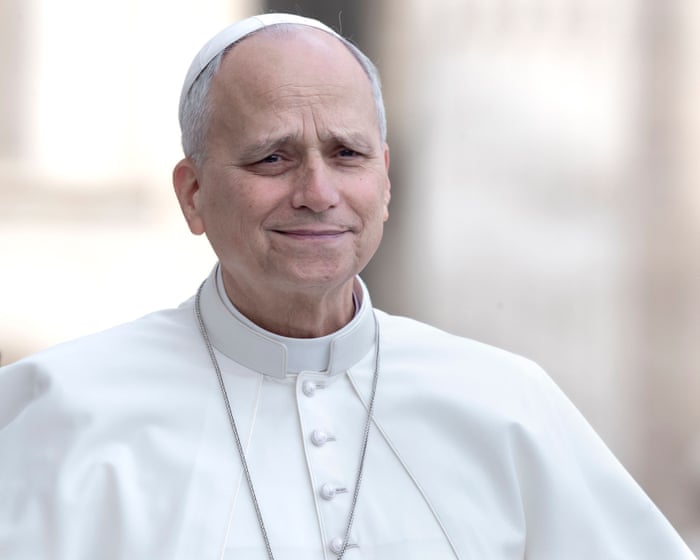
© Photograph: Maria Grazia Picciarella/SOPA Images/Shutterstock
Independent candidate Bill Hill is threatening to unseat Trump ally Nick Begich with a message of affordability
As Republicans fight to maintain their narrow majority in Congress, they face a unique challenge in Alaska – not from a Democrat, but from an independent commercial fisher and first-time candidate running to flip the state’s lone House seat.
Bill Hill, who is an Alaska Native and has worked in education and construction, has positioned himself as a working-class candidate who will fight to make life more affordable for people like himself and his family.
Continue reading...
© Photograph: Becky Bohrer/AP
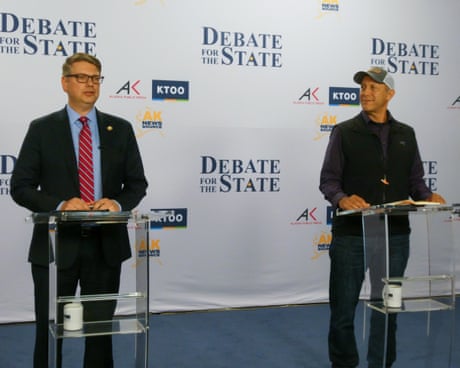
© Photograph: Becky Bohrer/AP
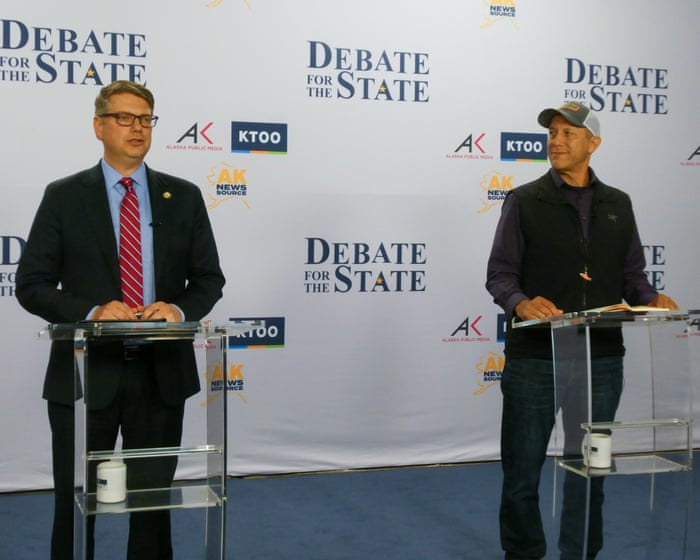
© Photograph: Becky Bohrer/AP
A Ukrainian drone attack on the Novokuybyshevsk oil refinery in Russia’s Samara region on 30 October has exposed growing differences between Kyiv and Washington over the conduct of the war against Russia.
The strike, which reportedly caused extensive fires at the facility, came after approximately two weeks without Ukrainian attacks on Russian refineries, a pause that American media attributed to pressure from President Donald Trump.
Footage circulating on social media showed several columns of thick smoke rising from the refinery. Ukrainian defence manufacturer Fire Point subsequently reported that Ukrainian forces had struck the installation with FP-1 drones, including a diesel hydrotreating unit.
However, the full extent of the damage and its consequences for production remain unconfirmed.
The Novokuybyshevsk refinery belongs to Russia’s state-controlled Rosneft group and has a nominal annual processing capacity of approximately 8.8 million tonnes of crude oil.
According to Rosneft, its products include petrol, diesel, lubricants and aviation fuel.
The latter is particularly relevant to Ukraine’s military objectives because the facility contributes to Russia’s capacity to supply fuel for military aviation.
The refinery has been attacked repeatedly since 2024, including a confirmed Ukrainian operation in August 2026.
These repeated strikes form part of a broader Ukrainian campaign intended to disrupt Russian fuel production, impose repair costs and reduce the resources available to Moscow’s military.
The campaign’s cumulative effects have become increasingly apparent.
In September, the International Energy Agency reported that Russian refinery throughput had fallen to 3.8 million barrels per day in June, approximately 30 per cent below its level a year earlier.
The agency estimated that Russian diesel production had declined by almost 30 per cent, contributing to domestic supply pressures and restrictions on fuel exports.
The timing of the latest strike carries considerable diplomatic significance.
On 29 October, The Wall Street Journal reported that Ukrainian military units had been instructed to suspend operations against Russian refineries following demands from the Trump administration.
The informal suspension was reportedly expected to continue until after the American congressional elections on 3 November, potentially extending further into November.
Trump has repeatedly criticised Ukrainian attacks on Russian energy infrastructure, arguing that they contribute to rising diesel prices in the United States.
The issue has acquired particular political sensitivity as American voters prepare for the midterm elections against a background of elevated energy costs.
Ukrainian President Volodymyr Zelenskyy acknowledged that military operations had been conducted more cautiously but maintained that no formal order prohibiting refinery strikes had been issued.
The attack on Novokuybyshevsk suggests that Kyiv considers any restraint temporary rather than a permanent limitation on its military operations.
It also demonstrates the limits of Washington’s ability to determine Ukraine’s operational decisions.
Nevertheless, the relationship remains unequal. Ukraine continues to depend on American military technology, intelligence and other forms of assistance.
Recent restrictions affecting Ukrainian access to Starlink services, alongside tensions over intelligence sharing, have illustrated the risks associated with that dependence.
The latest refinery strike therefore represents a calculated diplomatic risk rather than evidence that American pressure has ceased to matter.
The operation also raises a broader question concerning the economic effectiveness of Ukraine’s long-range strike campaign.
Russia’s oil industry supports government revenue through several channels, including crude exports, refined petroleum products and taxation.
Attacks on refineries can reduce fuel production, increase repair expenditure and disrupt military logistics. However, their direct consequences for federal revenue differ from those of disruptions to crude oil exports.
One argument advanced by analysts is that damage to Russia’s oil-export infrastructure can have a more immediate effect on the volume of crude reaching international markets.
Research published by the Kyiv School of Economics in April estimated that attacks on Russian Baltic oil terminals reduced potential export earnings by approximately $1.76 billion over a fortnight compared with a scenario without those attacks.
That finding supports the argument that export infrastructure represents an important economic vulnerability.
However, it does not establish that refinery attacks are strategically ineffective.
The IEA has documented substantial disruption to Russian refining operations, including declining fuel output, reduced exports and mounting financial pressures.
An additional complication is that higher international oil prices can partially offset reduced Russian export volumes, limiting the financial effect of disruptions.
Trump’s objections must also be considered against the wider disruption of international energy markets resulting from the conflict involving Iran.
The restriction of shipping through the Strait of Hormuz, damage to Middle Eastern energy infrastructure and reduced availability of refined petroleum products have contributed to exceptionally high fuel prices.
In its October 2026 Oil Market Report, the IEA identified major supply disruptions in the Middle East as a central factor behind the global energy crisis.
Ukrainian refinery strikes have also contributed to tighter supplies of diesel, but they are only one element of a much larger international shortage.
An analysis published by the Federal Reserve Bank of Dallas similarly identified disruptions in the Middle East, Russian refinery outages and wider refining constraints as contributing factors.
Consequently, attributing American diesel prices principally to Ukrainian military operations would misrepresent the complexity of the market.
The latest strike illustrates two separate challenges confronting Kyiv.
The first concerns Ukraine’s relationship with Washington. Ukraine must preserve essential American assistance while retaining sufficient freedom to conduct operations against Russian military and economic assets.
The second concerns the allocation of limited long-range strike resources.
Ukraine’s growing capacity to damage Russian energy infrastructure has created opportunities to impose economic costs on Moscow. Yet the relative effectiveness of attacks on refineries, export facilities and military-industrial enterprises remains a legitimate subject of strategic debate.
The Novokuybyshevsk operation demonstrates that Ukraine is prepared to resume attacks despite American objections.
Whether the campaign can produce a lasting reduction in Russia’s ability to finance and sustain its war will depend less on the symbolism of individual strikes than on their cumulative economic and military consequences.
For Kyiv, maintaining operational independence from Washington is important. Translating that independence into measurable strategic results remains the more consequential challenge.
La apariencia, el idioma o el hecho de trabajar en determinados lugares no pueden convertirse en motivos suficientes para que agentes migratorios detengan a una persona en partes de California. Una jueza federal en ese Estado ordenó restringir estas prácticas al considerar que existe un amplio conjunto de pruebas sobre presuntos operativos basados en el perfilamiento racial de la población latina en el sur del Estado.

© Kevin Mohatt (REUTERS)
Um grupo de 25 deputados democratas dos Estados Unidos cobrou explicações do secretário de Estado, Marco Rubio, sobre a possível participação do governo de Donald Trump na saída do senador Flávio Bolsonaro (PL) do Brasil e na entrada dele em território americano. A carta foi encaminhada na quinta-feira (29) e questiona se autoridades dos Estados Unidos ajudaram a viabilizar a viagem, mesmo diante de uma decisão judicial brasileira que restringia os deslocamentos internacionais do parlamentar.

O documento reúne 15 questionamentos sobre a atuação do Departamento de Estado, da Embaixada americana no Brasil e de outros órgãos federais. Os congressistas querem saber se houve participação institucional na emissão dos vistos, na organização do transporte e nos procedimentos para permitir a entrada de Flávio e de familiares nos Estados Unidos.
“A questão central é simples: o Departamento de Estado, a Embaixada dos Estados Unidos no Brasil ou qualquer outra agência do governo americano ajudou o senador Bolsonaro a viajar para os Estados Unidos ou a entrar no país, apesar da restrição judicial brasileira à sua saída?”, questionam os parlamentares.
Os democratas estabeleceram 13 de novembro como prazo para o envio das respostas por escrito. Também solicitaram uma reunião com representantes do Departamento de Estado para obter esclarecimentos sobre o episódio.
A carta foi apresentada pelas deputadas Sydney Kamlager-Dove, da Califórnia, copresidente da bancada dedicada às relações com o Brasil, e Dina Titus, de Nevada. Entre os demais signatários estão Pramila Jayapal, Joaquin Castro, Greg Casar, Rashida Tlaib e Delia Ramirez.
Um dos principais pontos da cobrança envolve a concessão de vistos ao senador e a seus familiares. Os deputados querem identificar quem autorizou os documentos, quando foram emitidos e se as autoridades americanas tinham conhecimento da determinação do Supremo Tribunal Federal (STF) antes de permitir a entrada do brasileiro.
A decisão judicial determinava que Flávio entregasse seus passaportes e restringia sua saída do país. Os parlamentares questionam se o governo americano verificou a existência de autorização judicial para a viagem e se chegou a reconsiderar os vistos depois de tomar conhecimento das medidas impostas pela Justiça brasileira.
Outro trecho do documento aborda a possível participação de funcionários americanos na organização do itinerário utilizado pelo senador. Os democratas querem saber se representantes do governo dos Estados Unidos na Argentina ou no Equador participaram de alguma articulação relacionada aos deslocamentos.
A carta também pergunta se houve contatos entre integrantes da Casa Branca, do Departamento de Estado e outras agências americanas com Flávio, familiares, advogados, assessores políticos ou intermediários.
Os congressistas cobram informações sobre eventual ajuda na contratação ou organização de voos, emissão de documentos, transporte, acesso a aeroportos e planejamento da entrada em território americano.
A articulação ganhou repercussão após reportagens sobre a participação de Jason Miller, assessor próximo à família Bolsonaro e ligado à Casa Branca, na organização do jato utilizado pelo senador e seus familiares. A informação foi divulgada pelo jornal americano The New York Times.
Os parlamentares também querem saber se houve comunicação entre o Departamento de Estado e órgãos responsáveis pela imigração e pelo controle de fronteiras, como o Departamento de Segurança Interna (DHS) e a Alfândega e Proteção de Fronteiras (CBP).
A iniciativa também aborda as consequências que uma eventual assistência americana poderia provocar nas relações entre Washington e Brasília. Os deputados perguntam se o governo Trump avaliou o risco de que a participação na viagem fosse interpretada como interferência em processos judiciais brasileiros ou nos assuntos internos do país.
O documento solicita ainda esclarecimentos sobre possíveis pedidos de informações feitos por autoridades brasileiras a respeito da localização de Flávio e de sua entrada nos Estados Unidos. Caso tenham ocorrido, os parlamentares querem conhecer as respostas fornecidas pelo governo americano.
“O povo americano e o Congresso têm um interesse legítimo de fiscalização em compreender se recursos diplomáticos e migratórios dos Estados Unidos foram utilizados para facilitar a viagem de uma figura política estrangeira nessas circunstâncias”, afirma a carta.
Os deputados acrescentam que a transparência é necessária diante da sensibilidade das relações bilaterais e da existência de um processo judicial no Brasil.
Até o momento da divulgação da cobrança, o Departamento de Estado não havia apresentado respostas públicas aos questionamentos. A carta representa uma iniciativa de fiscalização parlamentar e não comprova, por si só, que órgãos do governo americano tenham participado diretamente da saída de Flávio Bolsonaro do Brasil.
The post Democratas cobram Rubio sobre ajuda dos EUA na saída de Flávio Bolsonaro do Brasil appeared first on Diário da Manhã - O Jornal do leitor Inteligente.

© Tomas Munita for The New York Times
The history professor who inaccurately predicted former Vice President Kamala Harris (D) would beat President Donald Trump (R) in 2024 is predicting a major Democrat win in the midterm elections on Tuesday.
The post Professor Who Inaccurately Predicted Kamala Harris Would Defeat Trump Predicts Democrats Will Win Midterms appeared first on Breitbart.
Donald Trump ha provato a eliminarlo, il cittadino statunitense Francis Prevost lo ha usato per esercitare il proprio diritto di elettorato attivo. Papa Leone XIV ha utilizzato il voto per corrispondenza per dire la propria alle elezioni di medio termine del 3 novembre che potrebbero decidere il futuro politico del tycoon. Il pontefice, che segue da vicino la politica nel suo paese d’origine, “ha esercitato il proprio diritto di voto come cittadino degli Stati Uniti, ogni volta che ne ha avuto la possibilità”, ha tenuto a chiarire la Sala Stampa della Santa Sede, e “in linea con questa consolidata prassi di partecipazione civica, il Papa ha inviato la propria scheda elettorale per posta a Chicago”. “Il Santo Padre ha inoltre confermato che, durante gli anni in cui ha risieduto in Perù, ha esercitato il proprio diritto di voto ogni volta che ne ha avuto la possibilità. Il Santo Padre esprime la propria convinzione riguardo al diritto e al dovere dei cittadini di partecipare ai processi democratici”, ha spiegato ancora il Vaticano.
Il Chicago Sun-Times, che il 29 ottobre ha riportato per primo la notizia, ha riferito che Prevost “è ancora un elettore registrato in Illinois” e “ha presentato la richiesta il 3 ottobre” e prima di salire al soglio pontificio ha esercitato più volte il proprio diritto di voto. “I registri – si legge – mostrano che Prevost ha votato alle primarie repubblicane del 2012, 2014 e 2016, così come alle elezioni generali del 2012, 2014, 2018 e 2024. Ha votato anche alle primarie democratiche del 2008 e del 2010. Non ha votato alle primarie dell’Illinois di marzo”.
“Votando, il nostro Santo Padre dà l’esempio che incoraggia ogni cittadino a esercitare la propria responsabilità civica”, ha commentato Chieko Noguchi, portavoce e direttrice esecutiva degli affari pubblici della Conferenza episcopale Usa. “Come cattolici e come americani – sottolinea la portavoce dei Vescovi – abbiamo la benedizione di poter partecipare alla vita politica e pubblica della nostra nazione”. In vista del voto, ricorda, la Conferenza dei Vescovi incoraggia i cattolici a esercitare il diritto di voto “in un modo che metta la nostra fede prima della politica”.
I rapporti tra Leone XIV e Trump sono tesi da tempo. Tra i due si è consumato un duro scontro iniziato nell’ottobre 2025, quando il Pontefice ha definito “disumana” la stretta sui migranti decisa della Casa Bianca. La tensione è poi esplosa nell’aprile 2026 con il conflitto israelo-americano in Iran. Il 5 aprile, il Papa ha denunciato l’illusione di onnipotenza della guerra, e il 7 aprile ha condannato la minaccia di Trump di distruggere la civiltà persiana bollandola come “veramente inaccettabile“. Il presidente ha replicato su Truth definendo il Papa “DEBOLE sul crimine e terribile in politica estera“, arrivando ad accusarlo di sostenere il programma nucleare dell’Iran. La Casa Bianca ha poi liquidato i moniti vaticani parlando di “commenti slegati dalla realtà”.
Il 13 aprile 2026, imbarcandosi per l’Algeria, Leone XIV ha risposto apertamente: “Non ho paura dell’amministrazione Trump“, aggiungendo “continuerò a parlare ad alta voce contro la guerra“. Pochi giorni dopo, il 5 maggio da Castel Gandolfo, il Papa ha ribadito che la Chiesa è contro l’atomo da anni e ha chiesto che chi lo critica lo faccia “con verità”. La frattura, alimentata anche dal vice J.D. Vance – che il 10 aprile da convertito al cattolicesimo si era permesso il lusso di contraddire Papa sulla corretta interpretazione del pensiero di Sant’Agostino -, ha spaccato il voto cattolico americano, mentre il Segretario di Stato Marco Rubio ha tentato una mediazione a Roma il 7 maggio.
Ora il Pontefice ha annunciato urbi et orbi di aver votato. Risiedendo a Roma, lo ha fatto per posta, modalità che Trump ha cercato di eliminare senza però riuscirci. Nell’agosto 2025, il tycoon aveva espresso l’intenzione di azzerare l’uso delle schede postali e il 31 marzo 2026 aveva firmato l’ordine esecutivo 14399 che introduceva pesanti restrizioni a livello nazionale proprio in vista delle elezioni di metà mandato. Il 14 settembre 2026 la Corte Suprema, con una decisione approvata da 7 giudici contro 2, ha respinto la richiesta dell’amministrazione di sospendere il blocco delle nuove regole disposto da un tribunale federale. La Corte ha ritenuto improbabile che il governo potesse prevalere nel contestare l’ingiunzione e ha lasciato quindi le restrizioni inapplicabili alle elezioni del 2026.
Il voto di Leone XIV segna una discontinuità rispetto ai tre predecessori. Il 16 settembre 2005, alla vigilia delle elezioni politiche tedesche del 18 settembre, il portavoce vaticano Joaquín Navarro-Valls confermò che Benedetto XVI, pur conservando la cittadinanza tedesca, non avrebbe votato: “I papi non votano“. Aggiunse che neppure Giovanni Paolo II aveva mai partecipato alle elezioni polacche durante il pontificato, iniziato il 16 ottobre 1978 e conclusosi con la sua morte il 2 aprile 2005. Per Francesco, eletto il 13 marzo 2013 e rimasto cittadino argentino, non risultano invece prove di voti espressi dall’Italia nelle consultazioni del suo Paese.
L'articolo Papa Leone XIV ha votato per posta alle elezioni di medio termine negli Usa proviene da Il Fatto Quotidiano.
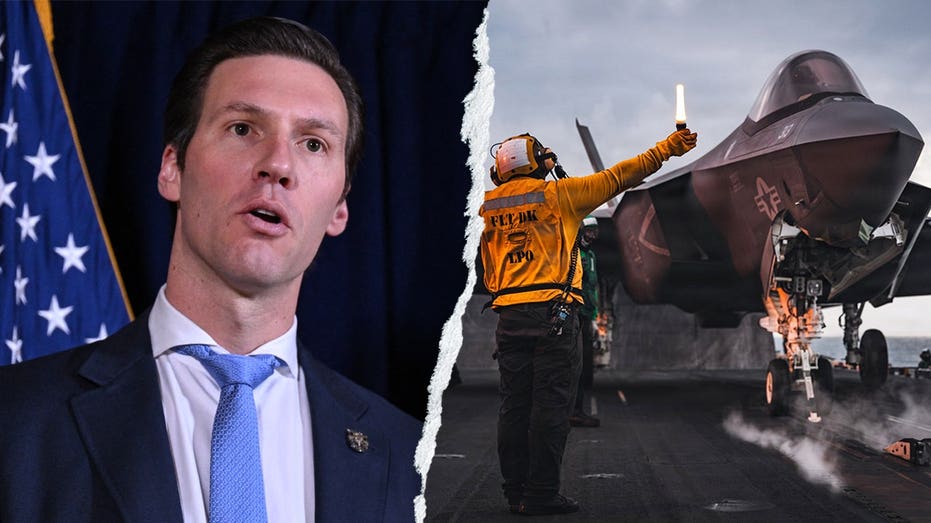
A Republican member on the House Armed Services Committee told Fox News Digital ahead of the midterm elections that the Trump administration has a key decision to make on the future of the U.S.-Iran war as "continuing to do just enough not to lose, but not enough to win, is not OK."
Rep. Pat Harrigan, R-N.C., made the comments as Vice President JD Vance declared during a Fox News town hall on Thursday that he promises "Donald Trump is not going to let Iran become a forever war." Official and military sources also told Fox News this week that movements are being made in the Middle East to give the president options if he decides to resume strikes against Iran.
"I share my constituents and many Americans' perspective that I'm very, very frustrated that this war is not over. The way that ultimately this administration went about conducting the war, it needed to execute it and wrap it up in a very short period of time, and we are not there yet," said Harrigan, who is running for re-election in North Carolina's 10th Congressional District.
"That being said, Iran can't have a nuclear weapon. And so at the end of the day, I do believe that this was a war that was inevitable at some point, but the party that's in power and the administration that decided to pull the trigger on it is responsible for the outcome, and they're responsible for the outcome in a very short period of time. Otherwise, things get really, really difficult," Harrigan continued. "And I think we've been seeing that, both from a political perspective but also from a policy perspective."
TRUMP SUPPORTERS CONFRONT IRAN, AFFORDABILITY CONCERNS WITH A MESSAGE FOR CRITICS: 'GIVE HIM TIME'
"And so while the administration needs to wrap this up, we are not in a forever war, but we need to make sure that we're not... we keep the mission the same. We accomplish the mission. And we do what it takes to either win or come home," Harrigan added. "And that binary decision has to get made by this administration."
Harrigan told Fox News Digital that Trump "needs to involve Congress" if he chooses to renew military action against the Iranian regime.
"I think that that will long-term set the course for the country to be resolute in affirming and actually executing and accomplishing the objectives that exist. Because look, like it or not, Congress is responsible for the funding arm of the government. And if they run out of money to accomplish the objectives, then that is not good for our strategic interests," he said. "So, in my opinion, Congress and the White House need to be very closely involved in making the next set of decisions that exist for this conflict."
GOP CRACKS WIDEN OVER IRAN WAR AS VULNERABLE CANDIDATES BREAK WITH TRUMP, DEMAND ITS END
"And we do need to make sure, again, that we either do what it takes to actually win in Iran, or we need to take the three out of five objectives that we've accomplished and say that, you know what? We've largely accomplished our strategic objectives. We've got more work to do over the long-term that's going to require consistent and persistent over the horizon monitoring of their nuclear program. And we're going to have to mow the lawn every now and again, and everybody's got to realize that, and leave, right?" Harrigan continued, mentioning how the U.S. has prevented Iran from obtaining a nuclear weapon and eliminated Tehran's missile and drone production.
"But we've got to choose one of those two options because continuing to do just enough not to lose, but not enough to win, is not OK," he said. "It's not OK for the American people, it's not OK for our troops, it's not OK for geopolitical and economic stability. And it does not serve the long-term strategic interests of the United States. So it's time to choose."
Harrigan, a Green Beret and business entrepreneur, is running for re-election on Tuesday in North Carolina. He is facing off against Democrat challenger Ashley Bell, a physician associate, and Libertarian candidate Steve Feldman, who ran unsuccessfully for the seat two years ago.
As a current member of Congress, Harrigan told Fox News there is "no question" the Republican Party's House majority is at stake heading into Election Day.
"Whoever has 218 votes gets to chart the course of the direction of the House, the work that its committees do. And in particular, as it relates to the Trump administration, whether or not President Trump's going to get impeached," he added.
CLICK HERE TO DOWNLOAD THE FOX NEWS APP
"What this boils down to is the future direction of the country. Are we going to be stuck looking backwards instead of actually looking forwards, dealing with the actual business of the country and the free world, or are we going to be stuck in some sort of a Democratically-led nightmare that is simply going to be obstructionist to the conservative principles and values that people voted for in 2024?" Harrigan asked. "That's what's on the line this election cycle."
The president cancelled the events in favor of tele-rallies, as Republicans face a fight to retain control of Congress
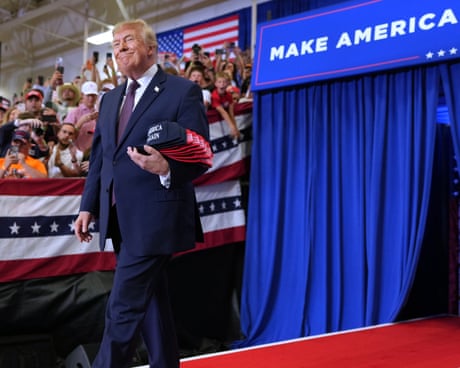
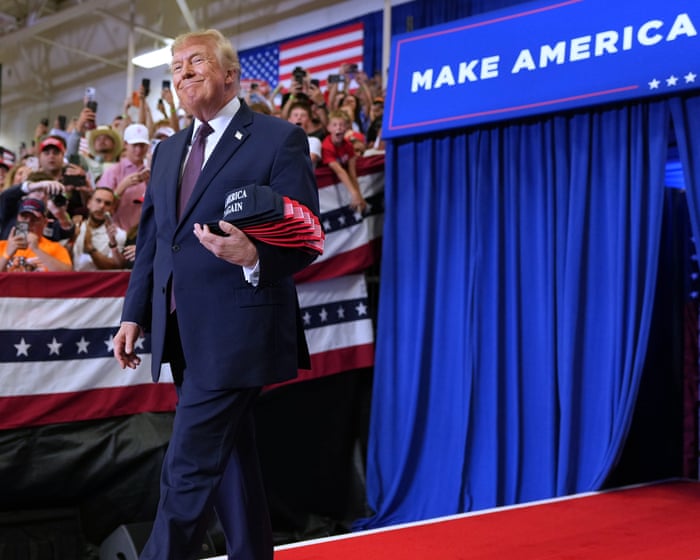
Donald Trump cancelled, and then promptly uncancelled, two in-person rallies in Kansas and Iowa this weekend as polls suggest US midterm election races in the previous Republican strongholds could go down to the wire.
On Thursday, just five days before election day, the Republican National Committee (RNC) announced the president would no longer host the Kansas and Iowa rallies and instead participate in “a large number of tele-rallies”. The RNC claimed it felt it was in a “strong position” in Kansas and Iowa.
Continue reading...
© Photograph: Mark Schiefelbein/AP
© Photograph: Mark Schiefelbein/AP
© Photograph: Mark Schiefelbein/AP
