O cantor Harry Styles, 32, decidiu surpreender os fãs durante a primeira noite do “Harryween“, show que antecede o Dia das Bruxas da turnê “Together Together”, vestindo um look da sua versão mais jovem.
Na noite de sexta-feira (30), ele subiu ao palco com as mesmas roupas que usou em uma audição do “X-Factor” em 2010, programa responsável por unir os integrantes da banda One Direction. Na apresentação, ele também cantou o sucesso “Isn’t She Lovely“, de Stevie Wonder, a mesma música que o levou à fase seguinte do programa.
Esse foi o penúltimo show da residência de Harry Styles em Nova York, na arena Madison Square Garden, que conta com 30 apresentações no total. Ao longo da noite, o artista também se vestiu de Elvis Presley.
Já a banda de Styles se fantasiou de diferentes épocas e momentos da carreira do artista, como no clipe de “As It Was”, figurinos da “Love on Tour” e seu look icônico para o Met Gala de 2019.
Styles veio ao Brasil pela última vez em julho, com três apresentações no estádio do Morumbis, em São Paulo. Em 2027, ele segue para mais cidades dos Estados Unidos, Canadá e Europa com a turnê “Together Together”.
ELE VESTIDO COMO A ROUPA DO THE X FACTOR E CANTANDO ISN’T SHE LOVELY ELE NÃO TINHA ESSE DIREITO https://t.co/xxFpAvqBl7
— Harry Styles Brasil (@hstbrasil) October 31, 2026
Simplesmente a banda do Harry Styles se fantasiou de diferentes eras do próprio Harry para a primeira noite do Harryween, em Nova York! https://t.co/vcTPaKnuzi
Dietro lo spettacolo di Ballando con le Stelle c’è un’organizzazione complessa, fatta di professionalità, intuizioni e lavoro di squadra. A raccontarla è Luca Alcini, storico regista del programma, che ogni sabato sera coordina una macchina televisiva in cui preparazione e improvvisazione devono convivere. Nel dialogo con Milly Carlucci, nella cura delle esibizioni e nella gestione degli imprevisti, emerge un mestiere che richiede esperienza, rapidità e sensibilità. In questa intervista Alcini ripercorre i momenti più significativi della sua esperienza, svela i segreti della trasmissione e riflette sul potere delle immagini nel raccontare la danza e le emozioni dei protagonisti.
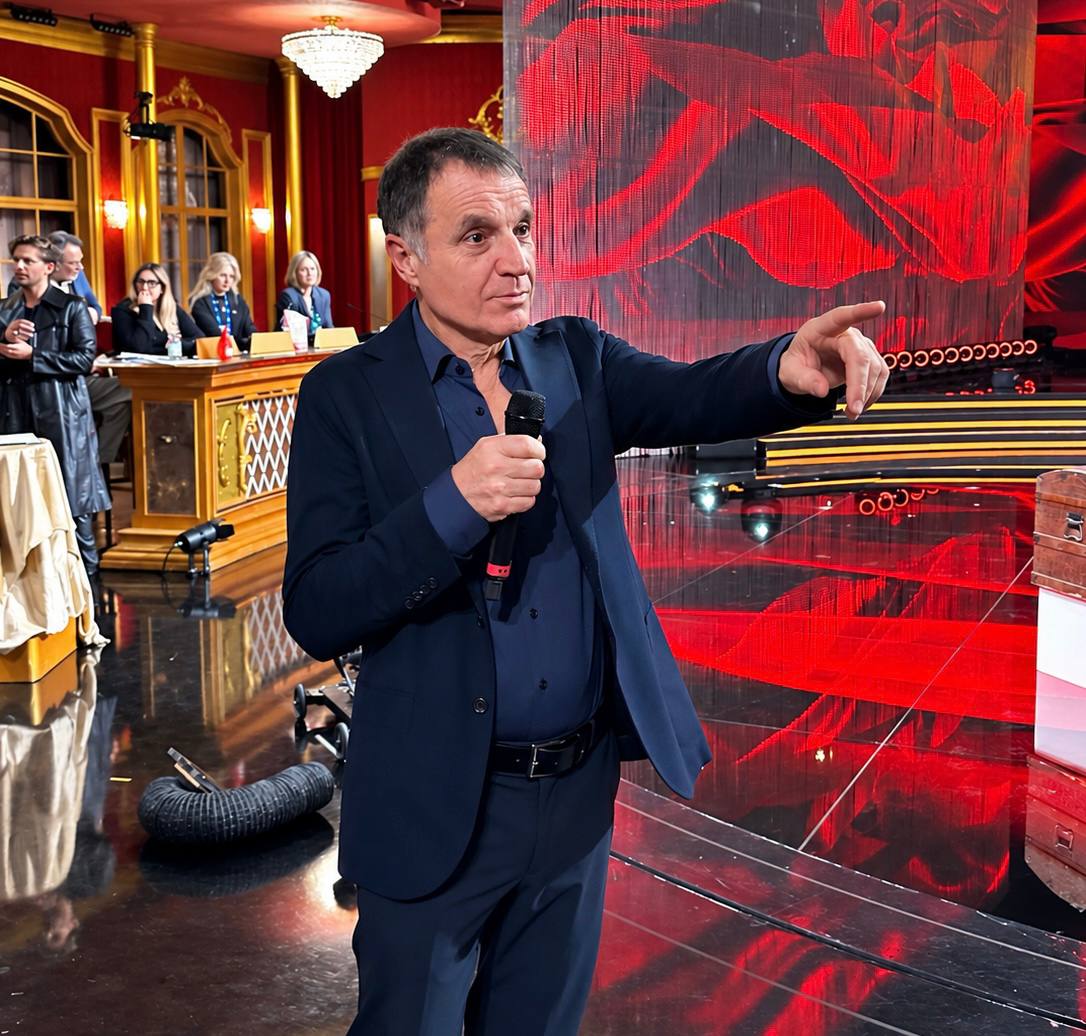
Luca Alcini, regista di Ballando con le Stelle al lavoro nello Studio Pippo Baudo di Saxa Rubra
Quali sono le principali sfide che deve affrontare un regista alla guida di una macchina televisiva complessa?
Ballando con le Stelle è una delle macchine televisive più complesse. La prima sfida consiste nel saper interpretare linguaggi e stili di ripresa differenti. C’è il momento del ballo, che richiede una documentazione rigorosa di ciò che accade in pista, trasformandola al tempo stesso in uno spettacolo visivamente coinvolgente. C’è poi il talk, dove tutto è imprevedibile: non sai chi prenderà la parola, quando interverrà o come si comporterà. In quel caso la regia deve essere istintiva e immediata. Un altro elemento fondamentale sono le intro, brevi cortometraggi che precedono le esibizioni e introducono il racconto del ballo. Anche queste richiedono un linguaggio specifico e la capacità di trasformare pochi secondi in una narrazione televisiva efficace. C’è poi un principio al quale tengo particolarmente: la regia deve rimanere un passo indietro rispetto al prodotto. Non deve diventare una dimostrazione di bravura tecnica, né prevalere con continui cambi di telecamera. È al servizio dello spettacolo e deve fare in modo che nulla vada perduto di ciò che coreografi e concorrenti hanno costruito. A volte bisogna avere il coraggio di privilegiare un’inquadratura meno spettacolare, ma più importante per il racconto, rispetto alla pura estetica. Infine, c’è la sfida del ritmo. Ballando è una diretta molto lunga, che può protrarsi dalle 21.30 fino all’1.40 di notte. Mantenere per tante ore precisione, attenzione e fluidità narrativa richiede un notevole sforzo anche psicofisico. La difficoltà è impedire che il trascorrere del tempo finisca per compromettere il ritmo e la qualità della trasmissione.
Il rapporto professionale con Milly Carlucci è fondato su un confronto costante. Come si conciliano la visione artistica, le esigenze televisive e la necessità di gestire l’imprevedibilità della diretta?
Il dialogo con Milly è articolato e continuo. Siamo entrambi perfezionisti e, talvolta, le nostre volontà si sovrappongono, ma negli anni abbiamo costruito un’intesa sempre più solida. È un autentico lavoro di squadra: Milly è la direttrice artistica e il confronto sulla costruzione dello spettacolo avviene soprattutto durante le prove, quando valutiamo le diverse possibilità fino a raggiungere una decisione condivisa. La sfida è conciliare le esigenze artistiche con quelle televisive. A volte maestri e concorrenti propongono idee bellissime, magari ispirate a sequenze cinematografiche, ma la televisione ha un linguaggio e precisi limiti tecnici. Il nostro compito è trovare ogni volta il giusto equilibrio. Cerchiamo di pianificare tutto ciò che è possibile: dalle coreografie alla consulenza musicale, fino alla sequenza delle inquadrature e all’organizzazione delle telecamere. Ma siamo in diretta e non possiamo tornare indietro. Per questo dobbiamo essere pronti a cambiare programma in qualsiasi momento, se interviene un imprevisto. La componente più imprevedibile è il talk: il confronto tra giuria e concorrenti, le reazioni e le dinamiche che nascono dopo ogni esibizione. Nulla è provato in anticipo. Non possiamo sapere chi prenderà la parola, quali movimenti farà o se un giudice si alzerà improvvisamente dal bancone. Quello che arriva al pubblico è spesso il frutto di una risposta istintiva, sostenuta dall’esperienza e dalla capacità di interpretare ciò che accade in tempo reale. Il nostro lavoro consiste proprio in questo: tenere insieme una macchina organizzativa rigorosamente pianificata e la libertà dell’improvvisazione.
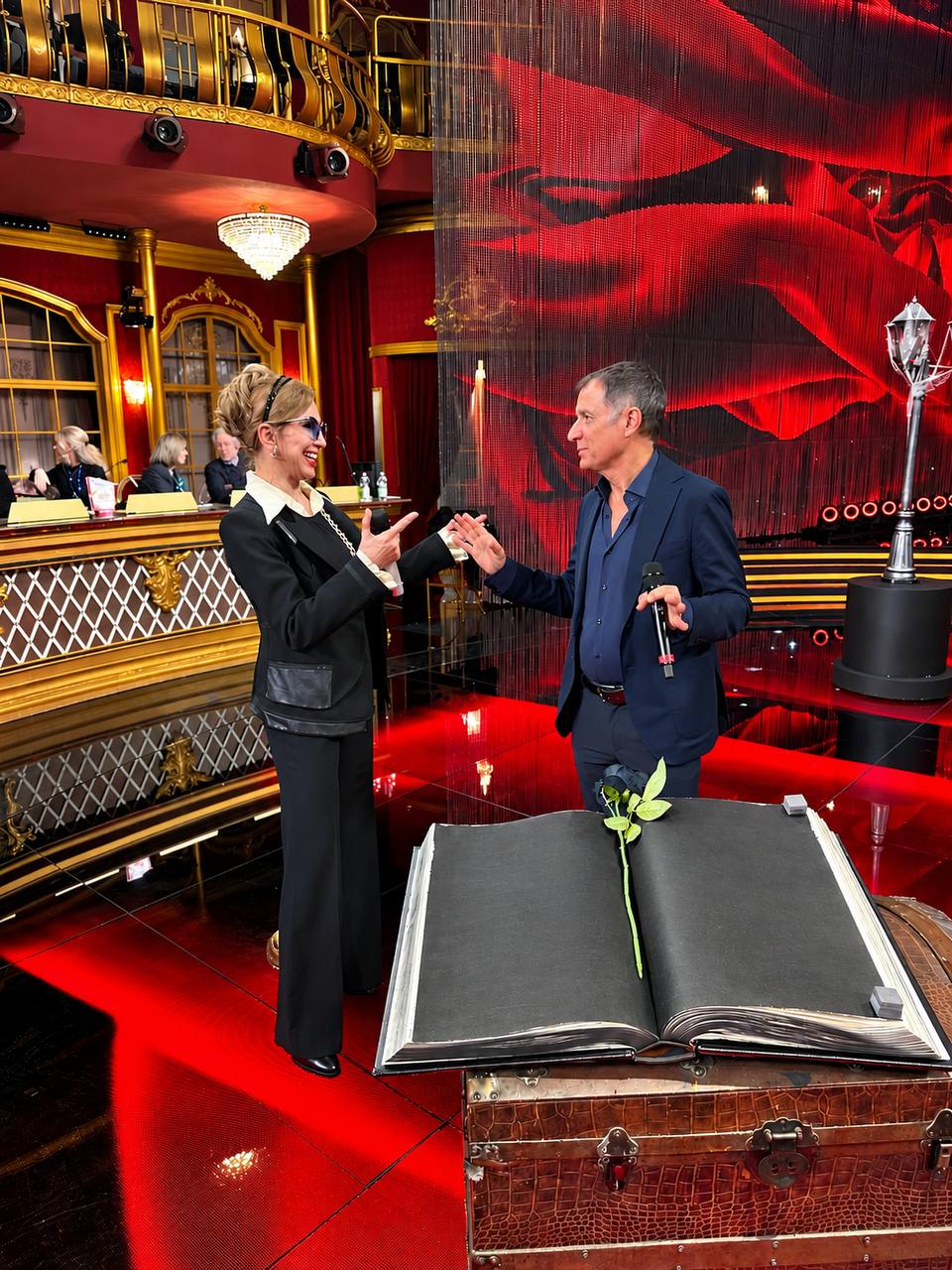
Luca Alcini insieme a Milly Carlucci: l’incontro tra direzione artistica e regia, dove visione creativa e linguaggio televisivo si fondono
Quanto conta la capacità di gestire l’imprevisto nella regia di una trasmissione in diretta come Ballando con le Stelle? E come si decide, in pochi istanti, cosa mostrare al pubblico?
L’imprevisto è una componente costante e mette alla prova chiunque lavori dietro le telecamere. Sono serate caratterizzate da una forte adrenalina e da un livello di concentrazione elevatissimo. In quei momenti bisogna affidarsi all’istinto, ma soprattutto all’esperienza. Nel corso degli anni è successo davvero di tutto, anche episodi che avremmo preferito evitare. Penso, per esempio, a Giusy Versace che ha perso la protesi durante la trasmissione: un evento del tutto inatteso, davanti al quale non era possibile intervenire. È accaduto in una frazione di secondo e, in fondo, faceva parte di ciò che stava succedendo in quel momento. Anche per questo è stato giusto raccontarlo. La regia deve essere capace di seguire gli eventi con una velocità straordinaria. In studio abbiamo circa 30 monitor, dieci dei quali dedicati alle telecamere. Quando accade qualcosa di imprevisto, devo individuare immediatamente l’immagine giusta e decidere cosa mandare in onda. È una responsabilità importante, perché quella scelta determina ciò che arriva nelle case dei telespettatori e, di conseguenza, il modo in cui viene costruito il racconto. La televisione, infatti, non ha soltanto una scrittura fatta di scalette e coordinamento, ma anche una scrittura per immagini. Un primo piano sul volto di una persona che si emoziona può raccontare molto più di tante parole. Come diceva Carmelo Bene, “non c’è migliore scenografia che il volto di una persona”. Il primo piano, in questo senso, è uno strumento narrativo potentissimo, una possibilità che distingue il linguaggio televisivo dalle altre arti sceniche.
Quanto può incidere la regia sulla resa di una coreografia e quanto sono importanti luci e scenografia nella costruzione dello spettacolo?
Una coreografia può essere impeccabile, ma la regia ha il compito di valorizzarla e renderla ancora più spettacolare. Essendo al servizio della coreografia, scegliamo inquadrature, luci ed effetti in funzione del racconto che i ballerini hanno costruito. Dobbiamo enfatizzare i momenti più significativi e dare il giusto risalto agli elementi di maggiore impatto, senza soffermarci su quelli meno rilevanti. C’è poi il rapporto con la scenografia, che rappresenta un altro elemento fondamentale. Le esibizioni si sviluppano all’interno di ambientazioni che cambiano grazie agli elementi scenici e agli enormi ledwall alle spalle dei ballerini. La regia deve quindi trovare un equilibrio tra ciò che accade in primo piano e quello che prende forma sullo sfondo, integrando ogni elemento nel racconto visivo. Un ruolo determinante è affidato anche alle luci. Il direttore della fotografia, Marco Grimaldi, è straordinario e riesce a realizzare effetti di grande impatto. Altrettanto importante è il lavoro scenografico di Francesco Sasso, responsabile anche dei contenuti sui led. È proprio dalla sinergia di queste tre componenti – regia, luci e scenografia – che nasce la magia di Ballando con le Stelle.
Quanto conta la capacità di anticipare un’emozione nella regia di una diretta? E come si trova il giusto equilibrio tra il racconto della coreografia e quello delle emozioni dei concorrenti?
Saper anticipare un’emozione è una delle qualità fondamentali di un regista. Bisogna avere una sorta di termometro emotivo, quasi una capacità di prevedere ciò che sta per accadere. Mi viene in mente Minority Report, con i suoi “precog”, capaci di anticipare gli eventi. La regia in diretta, in fondo, non è così lontana da questo concetto. Con il tempo ho imparato a riconoscere i segnali, anche quelli più impercettibili, attraverso i quali le persone manifestano ciò che stanno per vivere. Esistono codici psicologici e comportamentali che, con l’esperienza, si impara a interpretare: uno sguardo, un gesto, un movimento possono anticipare un’emozione, un abbraccio o una reazione inaspettata. Anche la scelta di indugiare su un volto nasce dall’istinto. Non possiamo perdere nulla della coreografia, che va raccontata nella sua interezza, ma vogliamo anche cogliere ciò che accade sul piano emotivo. Per questo alterniamo alle inquadrature a figura intera, necessarie per seguire i movimenti, primi piani e mezzi primi piani molto brevi, ma intensi. Ci interessa raccontare lo sguardo di chi, in quel momento, sta mettendo tutto se stesso nella performance, affrontando contemporaneamente la pressione della competizione e le proprie emozioni personali. Sono dimensioni diverse, ma ugualmente importanti. Il compito della regia è riuscire a custodirle entrambe, senza perdere né la bellezza della danza né l’umanità di chi la interpreta.
Il trasferimento dall’Auditorium del Foro Italico a Saxa Rubra ha comportato cambiamenti nell’organizzazione e nella vita della produzione?
Il trasferimento a Saxa Rubra, deciso dall’azienda, ha comportato alcune difficoltà che abbiamo progressivamente superato. Il precedente allestimento all’Auditorium del Foro Italico era il risultato di anni di lavoro e aveva raggiunto un equilibrio quasi perfetto. Ballando con le Stelle, infatti, non è soltanto lo studio televisivo, ma un insieme di ambienti indispensabili: sartorie, trucco, scenotecnica, sale prove e spazi di socialità. Anche la sala ristoro ha un ruolo importante: è il luogo in cui concorrenti e professionisti si incontrano e costruiscono relazioni lontano dalle telecamere. Dopo dodici o tredici settimane di lavoro, si diventa una vera famiglia. Ricordo le parole di Riccardo Rossi, che mi ha detto: “Vorrei che questa esperienza non finisse mai”. È una testimonianza del clima che cerchiamo di garantire, perché il benessere e il rispetto di concorrenti, ballerini e artisti sono una priorità per tutto il gruppo di lavoro. A Saxa Rubra lo studio è rimasto sostanzialmente simile, anche dal punto di vista visivo. Le differenze più significative riguardano gli spazi che ruotano attorno alla produzione.
Milly Carlucci e Luca Alcini impegnati nelle prove in vista della diretta di sabato
Qual è stato il momento più difficile da affrontare nella tua carriera di regista a Ballando con le Stelle?
Non dimenticherò mai il blackout che colpì la finale di Ballando con le Stelle, quando eravamo ancora all’Auditorium del Foro Italico. Credo sia una delle situazioni peggiori che possano verificarsi in televisione, soprattutto, durante un appuntamento così importante. A rendere la situazione ancora più complicata fu il mancato funzionamento del gruppo elettrogeno, il sistema di emergenza che avrebbe dovuto ripristinare automaticamente l’alimentazione elettrica. Ci ritrovammo completamente al buio e i telespettatori videro soltanto uno schermo nero, come se la televisione si fosse spenta. Intorno a me si scatenò il caos: i tecnici correvano, si chiamavano a gran voce e cercavano di individuare il problema per ripristinare il segnale nel minor tempo possibile. Furono i dodici minuti più lunghi della mia vita professionale. In una situazione del genere, il regista può fare ben poco: si tratta di un problema esclusivamente tecnico e bisogna mantenere la calma, attendendo che la squadra riesca a ripristinare il sistema. È un’esperienza che ti mette profondamente alla prova. Quella finale mi è rimasta impressa e sono certo che non la dimenticherò mai.
Quanto influenza oggi il linguaggio dei social le scelte della regia televisiva?
La regia non tiene direttamente conto delle possibili ricadute sui social, soprattutto perché Ballando con le Stelle è un prodotto in diretta e non può essere condizionato da modalità di fruizione successive. È naturale che le immagini realizzate vengano poi riprese e condivise sulle piattaforme digitali, ma questo non ha mai determinato modifiche a ciò che accade in trasmissione. Il programma ha comunque sviluppato iniziative specificamente pensate per il mondo social, da Ballando Segreto ad altre forme di comunicazione dedicate. Siamo molto attivi su questi canali, ma si tratta di contenuti progettati e realizzati appositamente per il pubblico digitale. Non credo, quindi, che il linguaggio televisivo stia cambiando per adattarsi ai social. Sono due ambienti distinti, con modalità di fruizione, finalità e codici comunicativi differenti, che possono dialogare tra loro senza necessariamente sovrapporsi.
In che modo la regia contribuisce a trasformare le emozioni in momenti di spettacolo?
I confronti tra giuria, maestri e concorrenti sono parte integrante dello show. La scaletta può cambiare anche all’ultimo momento e la regia deve adattarsi rapidamente, mantenendo ritmo e fluidità. Il suo compito non è soltanto seguire chi parla, ma valorizzare anche le reazioni degli altri protagonisti attraverso i cosiddetti piani d’ascolto, che spesso raccontano quanto le parole. Le emozioni, invece, nascono sulla pista: la televisione le raccoglie e le amplifica, restituendole al pubblico con maggiore intensità. Un primo piano, per esempio, può rendere una lacrima molto più potente di quanto sarebbe visibile dalla platea. La regia diventa così una lente d’ingrandimento capace di esaltare ciò che accade, affidandosi alla sensibilità e all’istinto del regista.
O BTS se apresentou pela segunda vez em solo brasileiro na última sexta-feira (30), reunindo mais de 80 mil pessoas em São Paulo, no Estádio Morumbis. Em meio às filas quilométricas, o amor e a nostalgia dos fãs marcaram mais uma noite especial da “Arirang Tour” na América Latina.
Assim como na quarta-feira (28), dia do primeiro show, a empolgação do Army virou assunto nas redes sociais. Antes mesmo do grupo subir ao palco, um coro da música “Body to Body” encheu os ouvidos de quem esperava do lado de dentro e do lado de fora.
O B-ARMY hoje tirou o dia para arrepiar todo mundo, cantaram a “Arirang” antes do show começar! #BTS_WORLDTOUR_ARIRANG_SAOPAULO #BTS_WORLDTOUR_ARIRANG_SAOPAULO_D2 https://t.co/w9ltAesYG0
Ao subirem ao palco, os integrantes apresentaram uma setlist recheada de sucessos de diferentes fases da carreira. De “Hooligan” a “Into the Sun”, o grupo cantou, dançou, e levou o público à loucura com as faixas surpresa “I Need U” e “Airplane pt.2”.
| “I NEED U” FOI A SEGUNDA SUPRISE SONG! B-ARMY’S, GANHAMOS “I NEED U” COMO SEGUNDA MÚSICA SURPRESA NA SEGUNDA NOITE DE SHOW DO BTS, EM SÃO PAULO! Ⓒ 𝐀𝐑𝐌𝐘𝐒 𝐓𝐇𝐄 𝐍𝐄𝐖𝐒 https://t.co/DmLZlli1pf
Durante a música “Please”, já próximo ao encerramento do show, os fãs organizaram um projeto de luzes inspirado nas cores da bandeira do Brasil. A arquibancada foi iluminada de verde, as cadeiras superiores e inferiores de amarelo, enquanto a pista ganhou tons de azul.
gente o dia 30 entregou tudo https://t.co/EOpr9lJvoX
A apresentação também foi transmitida no cinema e rendeu uma interação de Taehyung, o V. Ele mandou um recado para as fãs, garantindo que todos teriam uma noite inesquecível.
“Hoje vou me divertir até ficar maluco!” “Armys no cinema, vocês estão assistindo ai ?” O show de hoje está sendo transmitido em 88 países” “Vamos fazer hoje uma noite inesquecível EU TE AMO https://t.co/Vk1IxiqzFb
Esse não é o primeiro show da “Arirang Tour” a ser exibido nas telonas. A apresentação do grupo em Busan, na Coreia do Sul, no dia 13 de junho, também ganhou transmissão ao vivo. No final do show de sexta-feira, novas transmissões para novembro e dezembro também foram anunciadas.
Neste sábado (31), o grupo retorna ao Morumbis para uma última apresentação durante a passagem pelo Brasil.
In the summer of 2026, I was craving a break from the city, but like many Americans, I wanted to avoid the rising costs and chaos of air travel, so I took a staycation and traveled locally.
I scoured the internet for nearby NYC escapes and found what seemed like the perfect spot — Mohonk Mountain House, an all-inclusive resort in New York's Shawangunk Mountains that looked like a European castle.
I booked a two-night stay at Mohonk Mountain House. My room had a starting rate of $1,400 a night for double occupancy, though Business Insider received a media rate.
My booking included all meals and most activities at the resort. Some things cost extra, like alcohol, room service, and snacks.
From the architecture to the interiors, Mohonk Mountain House made me feel as if I'd flown across the Atlantic. I never imagined I could feel so far away while being so close to home.
There's an all-inclusive resort near New York City that feels like a slice of Europe.
Joey Hadden/Business Insider
Mohonk Mountain House is a 1,200-acre, all-inclusive resort lining Lake Mohonk in New Paltz, New York.
Founded by Albert Smiley in 1869, Mohonk Mountain House has always been a family-owned business. Five generations have restored and preserved its history, from the castle-like facade to the Victorian interiors. The resort was designated as a National Historic Landmark in 1986.
"At Mohonk, we do whatever we can to save what was originally there," historian and archivist Nell Boucher told me.
These efforts made my stay feel not only like a vacation in Europe, but also a step back in time.
Mohonk Mountain House is about 90 miles north of New York City.
Google Maps
I took a two-hour train ride from NYC to Poughkeepsie, New York, and a 30-minute cab ride to the resort in New Paltz.
I was immediately taken by the sprawling hotel's mix of architectural styles, especially the stone, castle-like structure.
Joey Hadden/Business Insider
Although I'd seen pictures, I didn't realize how massive the resort was until I was standing in front of it.
The hotel itself is an eighth of a mile long and comprises six buildings, most of which were built over 100 years ago, Boucher said.
I entered the hotel through what looked like a medieval castle. This building, Boucher explained, was constructed with stone blocks between 1899 and 1901 using horsepower and steam engines.
I thought the stone complemented the Victorian architecture beside it.
Joey Hadden/Business Insider
The oldest surviving section of Mohonk Mountain House is a five-story Victorian lodge built in 1879. It's called Rock Building, named for its location on a lakeside cliff.
From far away, the lodge looked like it was part of the castle. But up close, it was clear that these were two different buildings attached to each other. Though their rooftops were similarly shaped, I thought the buildings' contrasting textures and colors played off each other beautifully: red beside green, stone beside wood, and grandeur beside charm.
Another part of the building looked like a Swiss mountain house.
Joey Hadden/Business Insider
I spotted another European architectural style around the back of the building — a lakeside Swiss Chalet built in 1899 that reminded me of homes I saw dotting the Alps out my window during a European train trip in 2022.
Boucher said this was originally the guest entrance, noting that it was easier to access by horse and carriage than the current entrance, which is up a steep hill.
"During horse and carriage days, they would have come across the lakeshore road and trotted their hooves on the lakeshore bridge to announce their arrival," she said.
The hotel felt just as European on the inside, with a custom Victorian carpet design.
Joey Hadden/Business Insider
I don't typically pay much attention to the carpet when I'm at a hotel. But my eyes were immediately drawn to the floor as I stepped inside Mohonk Mountain House.
Known as the Mohonk Jewel, this vibrant Victorian pattern is found nowhere else. It was custom-made to replace the original carpet design from a mill that went out of business, Boucher said.
Some rooms had the same paneling as when the hotel was built.
Joey Hadden/Business Insider
From American Chestnut to Red Birch, the hotel has preserved and restored original 19th-century wood paneling, Boucher said.
When renovators take the panels down for refurbishment, they number each one and put them back in the same spot, she added.
When woodwork needs replacement, the hotel replicates the original, vintage pieces.
Joey Hadden/Business Insider
Built in 1888, the wing known as Central Building had a winding five-story staircase. Most of the spindles have been in place since the building was constructed. The resort has an in-house carpentry crew that makes exact replicas of the ones that break, so you wouldn't know the difference, Boucher said.
This made my stay feel like a seamless step back in time.
The Victorian style continued into my room.
Joey Hadden/Business Insider
Mohonk Mountain House has 262 rooms and suites. There are a variety of room types. I booked a Victorian room in the castle building. It had a comfortable king-sized bed, antique furnishings, a fireplace, and a spacious balcony with spiral ornate detailing facing the Catskill Mountains.
"The Victorian rooms retain the spirit of their initial construction," Boucher said, adding that the fireplace mantels are from the original build.
I appreciated the historical feel of my room, but I wouldn't say it was exceptionally luxurious. The bathroom was modest, with a combined tub and shower, and there wasn't much floor space. Still, I found the room cozy for my two-night stay.
It's also worth noting that most rooms at Mohonk Mountain House don't have TVs. Guests can request one, but I decided not to, and it actually made me feel more immersed in the hotel's history and the surrounding nature.
I spotted the cylindrical dining wing from my balcony.
Joey Hadden/Business Insider
The dining room was built in 1893 and extended in 1910. It still has original 19th-century woodwork.
There are three more on-site restaurants. Founders has a globally inspired menu and is open only for dinner and brunch on select weekends.
The Granary is an outdoor picnic-style eatery with barbecue lunches and cookout dinners. I planned to eat dinner here during my stay, but it rained.
The Carriage Lounge serves appetizers, pizza, sandwiches, and desserts between noon and 5 p.m. The Carriage Lounge menu is not part of the all-inclusive rate.
With cathedral ceilings and two rows of windows, I had panoramic views of the surrounding mountains at breakfast, lunch, and dinner.
Joey Hadden/Business Insider
In the dining room, I had buffet-style breakfast and lunch, and upscale three-course dinners. The food was delicious and made with locally sourced ingredients, but it didn't remind me of Europe because the menu options were largely American, from barbecue to New York-style cheesecake.
I felt like I was wandering through an art museum as I explored the resort's seemingly endless galleries.
Joey Hadden/Business Insider
It was pouring when I woke up for my first full day at Mohonk Mountain House. Luckily, there were more than 2,000 pieces of art inside.
"On rainy days, one thing you can do is walk up and down the hallways to look at all the artwork," Boucher said. "Each building section on each floor is a different little discrete gallery."
Exploring these winding halls of art ended up being one of my favorite parts of my stay, and if it hadn't rained, I likely wouldn't have paid any attention to them.
Collections included oil paintings by prominent 19th-century Hudson River School artists, photos and paintings of horses, and 20th-century prints of the hotel's brochures, to name a few. Some gallery themes were broad, like American landscapes. Others were more specific, like photographs of distressed vehicles.
"In the early days at Mohonk Mountain House, artists would trade paintings for stays," Boucher said, adding that guests also donated photos and artworks from their travels.
One of the historic galleries featured reproductions of famous European paintings.
"Back then, our guests mostly did not go to Europe because you had to take a long steamship," Boucher said. "This was their European art experience."
I took a fitness class in the Spa Wing.
Mohonk Mountain House
The Spa Wing, built in 2005, is the newest section of Mohonk Mountain House. It includes a fitness center, a solarium, and 16 treatment rooms for facials and massages, with prices ranging from $175 to $550.
Outdoors, there is a mineral pool and another treatment area that's also used for yoga and meditation classes.
The fitness center had a yoga studio where I attended a morning qigong class. It was calming and grounding, with floor-to-ceiling windows facing the trunks of trees.
Most of the action at Mohonk Mountain House took place outside.
Joey Hadden/Business Insider
One of the biggest draws of Mohonk Mountain House is probably the abundance of outdoor activities.
There were plenty of sports to play, including pickleball, golf, basketball, and more. Some more adventurous options included kayaking, axe-throwing, and access to 85 miles of hiking trails. I took an archery class and thought it was an exciting skill to learn, but overall, I left wishing I had brought a companion to enjoy all the activities with.
While a solo stay made my trip feel less fun, a resort representative told Business Insider that Mohonk Mountain House is a popular choice for solo travelers.
There were also activities that guests had to pay extra for, such as horseback riding, rock climbing, and mountain biking. Pricing ranges from $30 and $300, depending on the activity.
My favorite activity was a morning hike up a cliff that led to a 100-year-old tower. It looked like it belonged in a fairy tale.
Joey Hadden/Business Insider
When the sun finally came out on my last day at Mohonk Mountain House, I got up with the sun to explore the grounds. I started with a hike to a stone tower I spotted from the lakeshore.
After a mile-long hike to the top of the ridge, I reached the tower and learned it's a memorial to the resort's founder, Albert Smiley. Known as Sky Top Tower, it was built in 1923 and was originally used as a lookout spot for wildfires.
The Victorian garden felt similarly enchanting.
Joey Hadden/Business Insider
After my hike, I strolled through the Victorian show garden that dates back to the 1880s. Draped vines and whimsical woodwork, from fencing to seating, made me feel as if I were in a storybook.
Shortly after my garden stroll, it was time to check out. But I left feeling certain I'd return to Mohonk Mountain House.
Joey Hadden/Business Insider
There was more to see and do at this resort than anyone could accomplish in only two nights. So I think Mohonk Mountain House is only worth the price if you're staying a few more nights, and I'd suggest bringing someone along.
Next time I'm craving a dose of Europe, I'll book a longer stay, try some more activities, and bring a friend to try them with me.
On “The Alex Marlow Show,” host and Breitbart Editor-in-Chief Alex Marlow talked about the Supreme Court. Marlow said, “I no longer want to go and get judges and appoint them to the Supreme Court because they’ve just let us down
On “The Alex Marlow Show,” host and Breitbart Editor-in-Chief Alex Marlow talked about Obama. Marlow said, “There’s nothing wrong with the Cheesecake Factory. It just shows you very tone-deaf, very elitist. It’s a very elitist line from Obama. And of
On “The Alex Marlow Show,” Michael Whatley talked about the race. Whatley said, “I am going to stand with President Trump. I am going to fight every single day for our North Carolina families, our North Carolina farmers, our North
“Una cosa inusuale per me, se sono in una stanza con tante persone è un’orgia”. Valentina Nappi è tra i concorrenti della seconda stagione di The Traitors Italiae commenta così, con la consueta ironia, la sua partecipazione al reality di Prime Video in un’intervista video a Leggo. Per l’attrice hard, una delle difficoltà maggiori è stata proprio la convivenza e il confronto continuo con gli altri partecipanti: “Non parlo tutto il giorno con un gruppo di persone, è abbastanza stressante. Preferisco le orge”.
Il programma, condotto da Alessia Marcuzzi, torna dal 6 novembre con quattordici personaggi famosi chiamati a mettersi alla prova in un gioco di strategia, sospetti e inganni. Il meccanismo prevede che alcuni concorrenti vengano scelti segretamente come “traditori”, mentre gli altri, i “leali”, devono cercare di smascherarli. Tutti collaborano per incrementare il montepremi attraverso una serie di missioni, ma i traditori possono eliminare gli avversari senza rivelare la propria identità. La seconda stagione introduce anche una novità: un traditore segreto, la cui identità rimarrà nascosta persino agli altri traditori.
E proprio sulle capacità necessarie per destreggiarsi tra alleanze e tradimenti Nappi fa un’altra considerazione, suggerendo una versione decisamente particolare del programma. Secondo lei, la scelta tra essere un traditore o un leale dipende molto dalle capacità politiche. Da qui la proposta: “Sarebbe bello fare questo programma con al posto di quindici influencer o vip o quel che sia, quindici politici, sarebbe tosto”.
Nel cast, insieme a Nappi, ci sono tra gli altri Lorella Cuccarini, Filippo Magnini, Giulia Salemi, Pasquale La Rocca, Francesca Barra, Giorgia Palmas e Camihawke. La prima stagione italiana si era conclusa con la vittoria di Giuseppe Giofrè, mentre la nuova edizione promette di rendere ancora più complicato il gioco delle alleanze e dei sospetti.
Nappi, intanto, si dice entusiasta della nuova stagione, che considera migliore della precedente perché “più cinematografica, con set pazzeschi e una Alessia Marcuzzi ancora più iconica, stupenda“. La seconda stagione di The Traitors Italia, composta da sei episodi, debutterà su Prime Video il 6 novembre con le prime tre puntate. Altri due episodi saranno disponibili dal 13 novembre, mentre il finale arriverà il 20 novembre.
The author visited abandoned structures at the Crandon Park Zoo's ruins in Florida.
Joey Hadden/Business Insider
The story of Miami's first zoo is a sad one.
A hurricane destroyed the coastal attraction, leaving the cages empty.
The animals that live there today are free.
Elephants, monkeys, tigers, and reptiles once lived on a corner of a South Florida beach, where I found empty cages covered in graffiti and greenery.
The Crandon Park Zoo opened in 1948 as Miami's first zoo, according to the Miami Herald. Then a hurricane in the 1980s left it in shambles. The park closed, and animals that survived the hurricane were moved to a larger area. In 1991, the zoo ruins reopened as gardens.
I visited the park in October 2021 to see what remained of the abandoned zoo, and I found a natural wildlife sanctuary.
The first thing I noticed was a sign at the entrance warning visitors that crocodiles were present.
Joey Hadden/Business Insider
According to Atlas Obscura, the ruins are also home to wild alligators, iguanas, and peacocks.
The walkways through the park made me feel as if I were in a zoo — one where the animals were free.
Joey Hadden/Business Insider
Parts of the park were paved, while others felt wild. Some of the land was once a coconut plantation, according to the Miami Herald.
In one shaded area, I spotted what appeared to be an abandoned animal cage embedded in the rocks.
Joey Hadden/Business Insider
I thought it looked like it could have been a unique, immersive attraction and wondered what animals may have lived there decades ago.
Some of the abandoned structures were fenced off and covered in graffiti.
Joey Hadden/Business Insider
I peered over high, chain-linked fences and spotted remnants of vandalized structures.
But one large structure remained accessible.
Joey Hadden/Business Insider
It appeared to once house multiple cages.
Around the back, I noticed caged doors that looked as if they were used to feed the animals inside.
Joey Hadden/Business Insider
I was able to see inside a few of the animals' quarters, which were now empty aside from some leaves, branches, and overgrown vines. The doors were still locked.
The view inside the structures was somewhat haunting.
Joey Hadden/Business Insider
Peering inside made me think about the animals that might have gotten stuck inside as hurricane waters filled their enclosures.
I tried to imagine what kind of animals could live in these spaces. Based on their size, maybe monkeys, I thought.
I left the park thinking it's probably a better home now for the wildlife that has taken over.
Business Insider's reporter spent 53 hours on Amtrak's California Zephyr train in a bedroom accommodation.
Joey Hadden/Business Insider
A couch, a seat, a table, two beds, a full bathroom, a window, and a sliding door.
My home for the longest train ride in the US was basically a hotel room in motion.
It wasn't cheap, but I don't regret splurging on an Amtrak bedroom.
I wasn't about to sacrifice comfort to save a few bucks. Not when booking the longest train ride in the US.
Most people use trains to get from one place to another. But in February, Amtrak's California Zephyr was my destination. I wanted to thoroughly enjoy the 53-hour journey from snowy Chicago to sunny Emeryville, California.
That's why I spent $2,200 on a bedroom accommodation, a private cabin with a full bathroom.
While I was excited to stay in the tiny, moving hotel room, I wondered whether I'd regret spending so much. In the end, I was sure I had made the right choice for such a long journey.
Here's a look inside the 50-square-foot bedroom.
My bedroom was on the second level of an Amtrak Superliner train.
Joey Hadden/Business Insider
The California Zephyr is an Amtrak Superliner — a two-story train with coach seating, bedrooms, roomettes (a private cabin that's about half the size of a bedroom), a dining car, and a lounge car. There are also larger, family-sized bedrooms and accessible bedrooms.
I'd ridden the California Zephyr a year earlier, but I took a shorter trip in a roomette. This was my first time riding the entire route from Chicago to California. It was also my first time booking a bedroom on an Amtrak Superliner.
The 50-square-foot enclosed space packed in two bunks, a couch, a single seat, and a full bathroom.
Joey Hadden/Business Insider
The couch folded out to form the bottom bunk, and the top bunk pulled down from the ceiling.
The Amtrak bedroom sleeps up to two passengers, though I traveled solo.
The booking also included some perks. Sleeper-car ticket holders get a first-class attendant, priority boarding, lounge access at some stations, and complimentary meals on board.
When I first boarded the train, there were no bunks in sight.
Joey Hadden/Business Insider
During the day, the lower bunk was set up as a couch, and the upper bunk was folded up. A single seat faced the couch with a pullout table in between.
There was a pullout table between the seats that I used for working and eating.
Joey Hadden/Business Insider
The table also had two foldout leaves for more space. I thought this was a smart space-saving hack.
There was also a narrow closet at the front of the room.
Joey Hadden/Business Insider
The closet had two hangers inside. I used it to store my coat, sweater, and winter boots.
The closet was across from a sink and vanity.
Joey Hadden/Business Insider
The sink and vanity had two power outlets and an overhead light. Although the cabinets were stocked with extra hand towels, tissues, and soap, there was still enough space for me to store my own toiletries. The paneled mirror made getting ready in the morning feel a tad luxurious.
On the other side of the vanity, a door led to a compact bathroom with a toilet and shower.
Joey Hadden/Business Insider
Only bedroom accommodations on Amtrak Superliner trains have private bathrooms.
Showering next to the toilet felt odd, but I couldn't deny that it was a clever use of a limited space. And I certainly preferred it over having just a toilet or just a shower.
To use the shower, I set the temperature first. Then I pressed a button to start the water. There was another button on the showerhead itself to turn the water on and off. On the wall above the toilet, I spotted shampoo, conditioner, and body wash.
There was a full-length mirror on the far end of the bedroom behind the single seat.
Joey Hadden/Business Insider
The mirror was not only useful for getting ready — it also made the tight space feel larger.
I used the shelf above the single seat to store my luggage.
Joey Hadden/Business Insider
When I changed my clothes each morning and evening, I pulled my suitcase down to the single seat. Passengers can also store their luggage in a shared space in the sleeper car, but I prefer to keep my stuff with me.
I found room controls on either side of the couch.
Joey Hadden/Business Insider
Both sets of controls had a reading light. One had a power outlet and a temperature dial, and the other had an attendant call button and lighting options.
Among these controls was a night setting for the lights.
Joey Hadden/Business Insider
The night setting was a dim blue light, which I thought added a dreamy glow to the space before bed.
When it was time for bed on night one, I selected the top bunk.
Joey Hadden/Business Insider
When I pulled the top bunk down from the ceiling, I found a ladder on the cot and attached it to the far side of the bunk. There were safety straps that I hooked onto the ceiling.
There was also a mattress topper, soft bedding, and pillows. I used a wall-mounted pouch to store a water bottle and my phone.
I liked sleeping on the top bunk — despite hitting my head on the low ceiling — because I could store my backpack and other belongings on the couch below, which kept the room neat. I got seven hours of sleep that first night.
I slept in the bottom bunk on the second night.
Joey Hadden/Business Insider
I pulled a lever beneath each couch cushion to form the lower bunk.
Although the room wasn't as tidy, since I didn't have as much space to store my belongings, I appreciated that the lower bunk was slightly larger than the top cot.
I also liked being right next to the window when I woke up in the morning. I got eight hours of sleep in this bunk.
After 53 hours on the California Zephyr, I decided the bedroom was worth the steep price point.
Joey Hadden/Business Insider
Unlike most overnight trains I've taken, the bedroom was comfortable enough to actually enjoy spending 53 hours in a confined space. I arrived in California feeling well-rested and squeaky clean.
I wouldn't splurge on a bedroom for just any long-distance Amtrak train. I think the smaller roomette is comfortable enough and worth saving money on shorter overnight journeys. But for rides that are more than 24 hours long, I'll book a bedroom every time.
The abandoned Bannerman Castle is deteriorating on the Hudson River in New York. The island it sits on opened to visitors in 2020.
National Archives and Records Administration, Joey Hadden/Business Insider
When I spotted a castle in the Hudson River from my train window, I had to get a closer look.
Back then, the abandoned weapon fortress wasn't open to the public.
But I got a private tour.
Sitting on Pollepel Island in New York's Hudson River, a stunning piece of history is slowly crumbling away.
Bannerman Castle was built in the early 20th century as a fortress for weapons by Scottish arms trader Francis Bannerman, The New York Times reported. Gunpowder exploded inside the castle in 1920, and it was abandoned about 30 years later.
Then, in the early 1990s, the Bannerman Castle Trust led efforts to restore the structure and make the island safe for public visitation. It's been accessible since 2004 and open for tours since 2020.
I got a private tour of the island in 2019 — before tours were available to the public. Take a look at Pollepel Island's decaying castle, which is being taken over by nature.
Welcome to Bannerman Castle, an abandoned fortress in New York's Hudson River that I visited in 2019.
Joey Hadden/Business Insider
Today, you can reserve tours on the Bannerman Castle website.
Bannerman Castle is about 60 miles north of New York City on Pollepel Island.
Google Maps
The abandoned castle is visible from the Metro-North Railroad's Hudson line. I took the train from Grand Central Terminal in NYC to the Manitou train station.
To get to the castle, I took a cab from the Manitou train station to Donahue Memorial Park in the town of Cornwall, New York.
Joey Hadden/Business Insider
There, I met up with guides from the Bannerman Castle Trust, the group that oversees the castle's preservation and maintenance.
I boarded a boat at Donahue Memorial Park and headed to the island.
Joey Hadden/Business Insider
Pollepel Island is only accessible by boat. Two guides from the Bannerman Castle Trust met me at the dock.
I crammed into the boat with the guides and a handful of volunteer gardeners who do landscaping work on Pollepel Island.
Twenty minutes later, I arrived at the castle. From the dock, I thought its beautiful, sturdy-looking walls made the building appear almost functional.
Joey Hadden/Business Insider
From the dock, we climbed 72 stairs to reach the island.
But my guide told me I could not go inside — it's not safe.
A view of Bannerman Castle from the north trail of Pollepel Island.
Joey Hadden/Business Insider
My guide explained that the castle's towers are supported by external beams braced with steel. Each section weighs 250 pounds.
But even with this support, there's still a risk that the walls could fall. That's why all visitors must stay at least 100 feet away from the castle.
Luckily, observation decks are set up around the castle at picturesque vantage points.
Accidental explosions and weather damage have left Bannerman Castle, once a weapons storage fortress, in ruins.
Joey Hadden/Business Insider
Francis Bannerman VI, an arms dealer who lived in Brooklyn, bought Pollepel Island in 1900. He wanted a place outside the city to store an arsenal of munitions, according to The New York Times, so he built the fortress and an accompanying harbor.
Bannerman's sons took over the business when he died in 1918.
A room full of gunpowder exploded in 1920.
Joey Hadden/Business Insider
This shattered the castle's windows.
Forty-seven years later, the Bannerman family sold the island to New York State.
A view of Bannerman Castle and remnants of its harbor.
Joey Hadden/Business Insider
After that, Pollepel Island was deemed unsafe and declared off-limits by the State of New York.
Then, in 1992, Neil Caplan, a resident of nearby Beacon, New York, formed the Bannerman Castle Trust.
Joey Hadden/Business Insider
The group raised money to restore the island; Caplan is its executive director.
The Trust teamed up with New York's Office of Parks, Recreation, and Historic Preservation to open the island to the public in 2004.
Joey Hadden/Business Insider
Today, it serves as a theater, museum, and historical site.
Although the main castle is inaccessible, the Trust stabilized another structure that served as the Bannerman family residence. That's now the island's visitor center.
Joey Hadden/Business Insider
The facade of the building also serves as the backdrop for the theater's stage.
Inside, visitors can find information about the island's past.
Joey Hadden/Business Insider
Modest exhibits explain the site's history and the castle's construction. Drawings and documents are framed on the building's distressed walls.
Visitors can also see preserved fixtures from the castle, like this bathtub.
Joey Hadden/Business Insider
The center also has a gift shop that sells art and T-shirts.
Although the Trust has restored parts of the castle since the 1990s, the weather has still taken a toll on the structure in recent decades.
Joey Hadden/Business Insider
According to the Bannerman Castle Trust, much of the castle's shell collapsed one night in December 2009. Then, just a month later, more walls fell during a winter storm.
On my way back from the castle, the boat took a spin around the island's perimeter.
Joey Hadden/Business Insider
From the water, we caught glimpses of other pieces of the abandoned fortress, including its deteriorated harbor.
From afar, it was especially clear that nature has already taken over many parts of this mysterious piece of history on the Hudson River.
Joey Hadden/Business Insider
The combination of medieval architecture and overgrown trees and foliage makes Bannerman Castle a place worth visiting up close.
Dopo Bruno Vespa, tocca a Paolo Del Debbio. Le manifestazioni dei giorni scorsi spopolano nei talk show generando scontri accesi tra ospiti e conduttori. Un tema approdato anche a “Dritto e Rovescio” lo scorso 22 ottobre: “Non ci arrivi, qui con me non ci parli più“, ha tuonato Paolo Del Debbio interrompendo il confronto con Ezou Lalaoui e Marina Wildt, entrambi attivisti del PCR (il Partito Comunista Rivoluzionario). Il conduttore stava dando spazio al caso di Ivan, presentato come “l’eroe anti-maranza” e vittima di un pestaggio durante i disordini, il padrone di casa, come ricostruisce Fanpage.it, ha più volte chiesto ad entrambi di dissociarsi e di condannare chi commette quelle azioni.
“Bisogna chiedersi perché è successo questo. Si sta semplificando il dibattito sul ‘chiedi scusa o no'”, hanno replicato i due attivisti ovviamente slegati dal caso in questione e da responsabilità dirette nei disordini. “Fonzie non riusciva mai a dire di aver sbagliato. Voi siete due Fonzie… che fa rima con…”, le parole di Del Debbio, che ha citato il celebre personaggio di “Happy Days”, senza pronunciare apertamente la parola “str**i”.
Lalaoui e Wildt in un’intervista a Fanpage.it hanno spiegato di aver preso parte agli scioperi del 17 ottobre ma di non aver partecipato agli scontri violenti, anche se a “Dritto e Rovescio” la puntata sembrava costruita per far rispondere delle violenze commesse da altri: “E’ uno schema ricorrente della Tv e di alcuni giornali. C’è il tentativo costante di associare l’intero movimento alle azioni violente di pochi. (…) Quello di Del Debbio è stato un modo per delegittimarci, come se non avessimo idee ben strutturate da portare avanti in un confronto. Per anni hanno dipinto i giovani come disinteressati alla politica, adesso che ci mobilitiamo non va bene lo stesso. È lo stesso trattamento paternalistico che viene riservato anche ai lavoratori, a cui si ripete che non si possono alzare gli stipendi e che certi temi non li riguardano. Noi pensiamo invece che spetti proprio al movimento giovanile e ai lavoratori rimettere radicalmente in discussione il sistema”, il racconto degli attivisti.
“Sapevamo di trovarci di fronte a interlocutori con idee diverse dalle nostre a Dritto e Rovescio, ma speravamo quanto meno di riuscire ad avere un contraddittorio. Manca, secondo noi, uno spazio mediatico che rifletta il reale dibattito della società, in tutte le sue tendenze. Molti giovani non guardano più la televisione, non leggono più i giornali, proprio per questo motivo”, hanno concluso.
The author's guest room at the Four Seasons Jackson Hole resort starts at about $1,000 during the winter ski season.
Joey Hadden/Business Insider
I've never been skiing.
But if I ever decide to learn, I'll do it at the Four Seasons in Jackson Hole, Wyoming.
My 550-square-foot room felt like a luxury cabin on the slopes.
When I arrived at the Four Seasons Jackson Hole on a muggy day in early September, I imagined it covered in snow. This was in 2024, when I visited Jackson Hole, Wyoming, for the first time.
I spent one night at the five-star ski-in, ski-out resort. If I ever take a ski trip, I imagine that my room at this Four Seasons would be a peaceful place to rest after an active day of gliding through powder.
Step inside the 550-square-foot room with a starting rate of nearly $1,000 a night during the winter ski season.
Welcome to the Four Seasons Jackson Hole, a five-star, slopeside ski resort.
Courtesy of Four Seasons Jackson Hole
The 65-year-old hotel chain has a luxurious reputation and over 130 locations worldwide, each designed to reflect its destination.
Kim Cole, the director of public relations for the Four Seasons, told Business Insider that the company describes the Jackson Hole location's aesthetic as "modern mountain chic," catering to hikers, bicyclists, and skiers in the winter.
After checking in, I explored the room with the typical peak-season guest in mind.
Joey Hadden/Business Insider
The hotel has 106 guest rooms and 18 suites. The starting rate is $525 in the offseason and $995 in the peak winter season. Business Insider received a media rate for a one-night stay.
There are also 31 Resort Residences on-site, built to serve large groups. These residences have kitchens and up to five bedrooms. Starting prices range from $4,200 to $11,000, depending on the season.
Cole told Business Insider that in the winter, guest rooms are typically booked with active guests who participate in winter sports, so I imagined how the room would feel as a skier.
I thought my 550-square-foot room blended traditional cabin nostalgia with midcentury modern luxury.
Joey Hadden/Business Insider
My room had a king-sized bed, a full bathroom, and a private balcony.
Renovated by Wimberly Interiors in 2022, the guest rooms were designed to bring the outside in, with metal accents, stone finishings, and a soft, earth-toned color palette. This nature-inspired trend, known as biophilic design, gained traction in 2024.
The bed was plush with warm, fluffy bedding and dense pillows.
Joey Hadden/Business Insider
The king-sized bed sat between mixed-material nightstands with edgy lamps that contrasted with classic wooden shutters.
With one king-sized bed, the room sleeps up to three adults (or two adults and one kid). The room can also be arranged with two double beds, increasing the maximum occupancy to four adults (or two adults and two kids).
The nature-inspired headboard was a mesmerizing statement piece.
Joey Hadden/Business Insider
The headboard was the standout piece in the room. A cherry-wood frame juxtaposed with a bright-white image gave it a midcentury modern look.
The image was a textured carving of trees that I could feel when I brushed my fingers over the branches. A light bar glowed beneath the board, making it easier to see the details of the monochrome image.
The bed was so comfy that I didn't want to get up — and with smart controls on the in-room tablet, I didn't have to.
Joey Hadden/Business Insider
The tablet on the nightstand served as the room's control center, commanding everything from the TV to room service. This amenity was added in the 2022 remodel.
The tablet would be especially handy after an exhausting day on the slopes.
The other nightstand held an eclectic shelf of books with a warm white color palette.
Joey Hadden/Business Insider
Few things are more relaxing on a snow day than cozying up with a good book.
Luckily, my room had a small selection of biographies, historical literature, and novels, ranging from realistic fiction to young adult fantasy.
Publishing dates for these books ranged from 2003 to 2020, but I thought they looked much older. They were all sleeveless with a white or off-white binding.
Across from the bed, a large TV was mounted above a stone fireplace.
Joey Hadden/Business Insider
Rustic drawers were to the left of the fireplace, while a modern sitting area was on the right.
I noticed all the seating in my room was soft and cushy, which seemed ideal for sore bodies after an active day.
The room also had a private bar with gold trimmings.
Joey Hadden/Business Insider
The bar had an espresso machine, neutral-toned ceramic mugs, and Four Seasons-branded water.
Beneath the bar, a cabinet hid the mini-fridge. It was stocked with alcohol and snacks like peanut M&Ms and gummy bears, which were available for an extra cost.
In the marble bathroom, the oversize tub had a bendy shower head that made me feel like I was in a spa.
The bathroom felt spacious, with a double-sink vanity, a sizable shower, and a separate toilet room.
Joey Hadden/Business Insider
The mirrors and vanities were replaced by Wimberly Interiors in 2022.
Across from the bathroom, a walk-in closet held bathrobes, a safe, and some classic, upscale amenities I've only seen in ultra-luxury hotels.
Joey Hadden/Business Insider
I spotted old-school amenities like a shoehorn and a shine brush, which I've seen more often in high-end European accommodations than in the US.
The ample size of the bathroom and closet made the room suitable for up to four guests.
The private balcony seated one in a comfortable lounge chair.
Joey Hadden/Business Insider
I spent some time on the deck, but since I imagined it would be less enjoyable in the cold, I appreciated the sliding glass doors that let me enjoy the view without the cold.
Out there, I had a view of the ski lifts traveling up and down Rendezvous Mountain.
Joey Hadden/Business Insider
From the balcony, I spotted the downhill trails towering over the resort's courtyard. Looking down, I pictured the green courtyard blanketed in snow.
In the winter, I imagine the biggest luxury of this $1,000-a-night room is hitting the slopes just outside. If I ever visit Jackson Hole during peak season, I'll only splurge on a Four Seasons stay if I'm taking a ski trip.
The European Union has reached an agreement with China to restrict imports of Chinese hybrid vehicles to 350,000 annually, introducing a significant new barrier to the expansion of Chinese manufacturers in Europe’s automotive market.
The arrangement, confirmed on 12 October, follows months of negotiations between Brussels and Beijing and reflects growing concern about the competitive position of European carmakers.
The import ceiling could reduce Chinese hybrid vehicle sales in the EU by more than half compared with previously anticipated volumes, although the actual effect will depend on demand, product classifications and implementation.
The agreement comes as manufacturers gather for the Paris Motor Show, where the future of European vehicle production, Chinese competition and industrial policy have become central subjects.
China’s Commerce Ministry has presented the outcome as a negotiated arrangement intended to preserve trading relations, while the European side has emphasised the need to prevent rapidly increasing imports from undermining domestic production.
Chinese manufacturers confront a new European barrier
Chinese carmakers have expanded aggressively in overseas markets as domestic demand has weakened. Chinese passenger vehicle exports rose sharply in September, with manufacturers increasingly targeting Europe, Latin America and Asian markets.
Hybrid vehicles have become particularly important because they offer consumers lower fuel consumption without requiring the same degree of dependence on charging infrastructure as fully electric cars.
This has allowed Chinese brands to compete in market segments where European manufacturers retain substantial established production capacity.
The new quota limits the number of eligible Chinese hybrid vehicles permitted to enter the European market each year. According to details of the import restrictions, shipments exceeding the permitted volume would face restrictions at EU customs.
The mechanism differs from a conventional tariff because imports beyond the ceiling cannot simply enter the market by paying a higher duty. Manufacturers and importers will need to consider both delivery costs and the availability of import allocations.
European manufacturers seek protection
The measures arrive amid growing pressure on the European automotive industry, which faces high production costs, expensive energy, competition from Chinese manufacturers and the capital requirements of shifting towards electrified transport.
Companies operating in Germany, France, Italy and other established manufacturing centres must fund the development of new vehicles while maintaining existing factories and employment.
Chinese manufacturers benefit from extensive domestic production networks, considerable scale and access to battery manufacturing capacity.
European policymakers have questioned whether competition takes place under equivalent economic conditions, particularly where Chinese producers receive support from state-directed industrial policies.
Beijing rejects allegations that its export performance results principally from unfair state assistance, arguing that Chinese companies have achieved competitiveness through investment, innovation and efficiency.
The quota represents a departure from the assumption that European consumers will necessarily have unrestricted access to the lowest-priced imported vehicles.
Its economic effects will depend partly on whether European manufacturers can use the additional protection to improve productivity and develop more competitive models.
Will Chinese manufacturers move production into Europe?
Restrictions on imports do not necessarily reduce the presence of Chinese-owned companies in the European automotive industry.
Several manufacturers are already developing production capacity outside China, including within the European Union. BYD’s investment in Hungary is one example of how Chinese companies can pursue access to European consumers through local manufacturing rather than relying entirely on imported finished vehicles.
The new arrangements could strengthen the commercial incentive to expand such operations.
For European governments, Chinese investment presents a difficult calculation. New factories may create employment, increase industrial activity and preserve automotive supply chains, while also expanding the influence of Chinese manufacturers within Europe’s domestic market.
The economic consequences depend on how much research, component manufacturing, battery production and other high-value activity takes place locally.
A Chinese-owned assembly plant using predominantly imported components would provide different benefits from a fully developed European production network.
The British dimension
The debate is also drawing attention to the position of the United Kingdom, whose automotive industry remains closely integrated with European supply chains despite Brexit.
Executives from Stellantis and Renault have supported including Britain within proposed European industrial protection measures, reflecting the importance of UK manufacturing operations to their broader businesses.
Such an arrangement would raise questions about regulatory alignment, trade preferences and the conditions under which non-EU production could qualify for European industrial support.
British manufacturers also face the challenge of Chinese competition, and decisions taken in Brussels could influence investment strategies across the wider European automotive sector.
Protection versus competitiveness
The restrictions may offer European manufacturers additional time to adapt, but they do not eliminate the structural challenges confronting the industry.
Energy prices, labour costs, the availability of batteries and the affordability of new vehicles remain important factors in the competitiveness of European production.
Nor will the quota necessarily prevent Chinese firms from gaining market share through investment, partnerships or vehicles manufactured outside China.
The EU’s approach combines restrictions on imports with the possibility of continued Chinese industrial participation inside Europe.
The outcome will depend on whether European manufacturers use the reduced competitive pressure to strengthen their technological and manufacturing position, or whether the restrictions primarily accelerate the relocation of Chinese-owned production into the EU.

 Login

ELE NÃO TINHA ESSE DIREITO https://t.co/xxFpAvqBl7