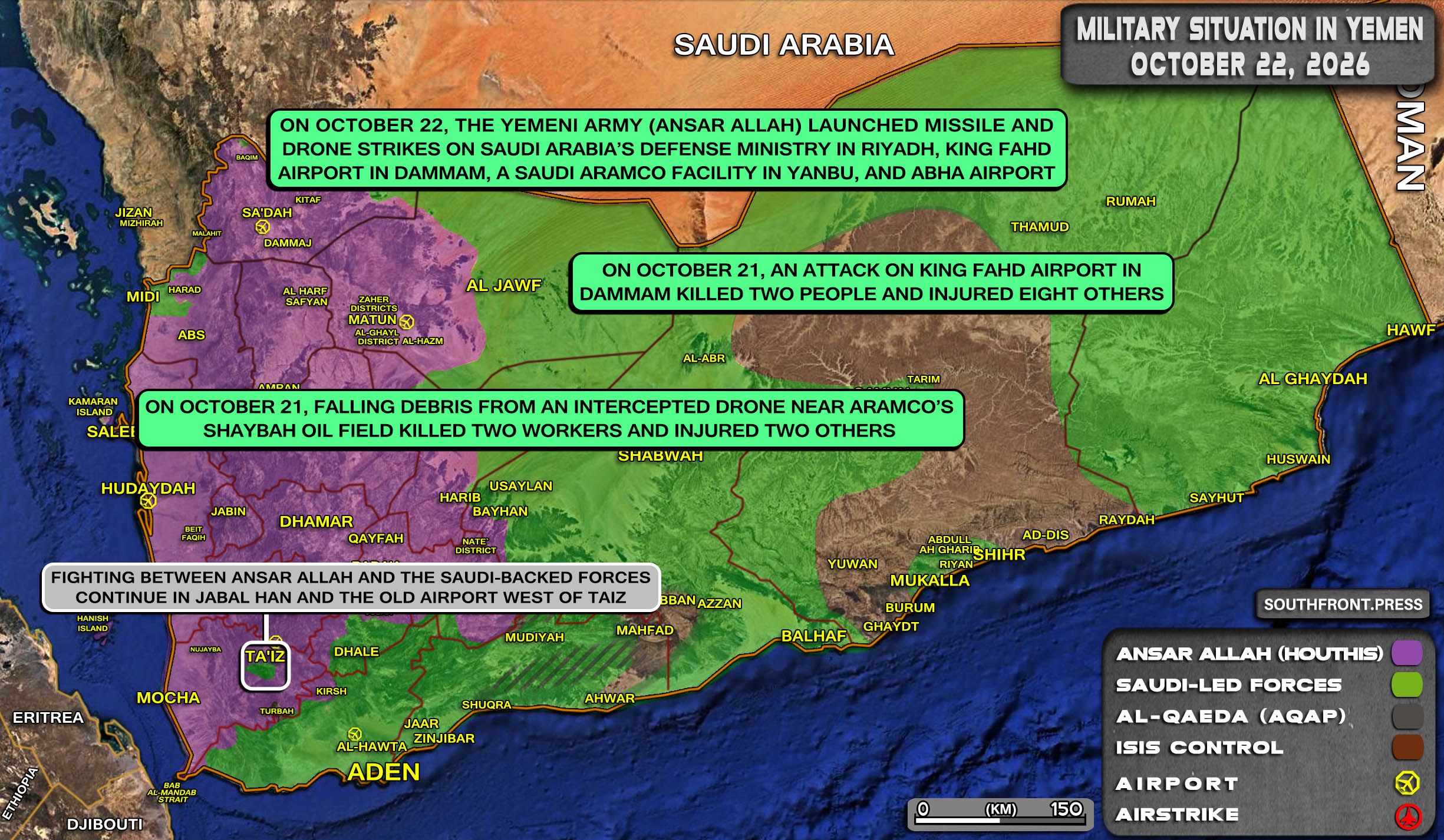
On October 22, the Yemeni army (Ansar Allah) launched missile and drone strikes on Saudi Arabia’s Defense Ministry in Riyadh, King Fahd Airport in Dammam, a Saudi Aramco facility in Yanbu, and Abha Airport;
On October 21, an attack on King Fahd Airport in Dammam killed two people and injured eight others;
Fighting between Ansar Allah and the Saudi-backed forces continue in Jabal Han and the Old Airport west of Taiz;
On October 21, falling debris from an intercepted drone near Aramco’s Shaybah oil field killed two workers and injured two others.
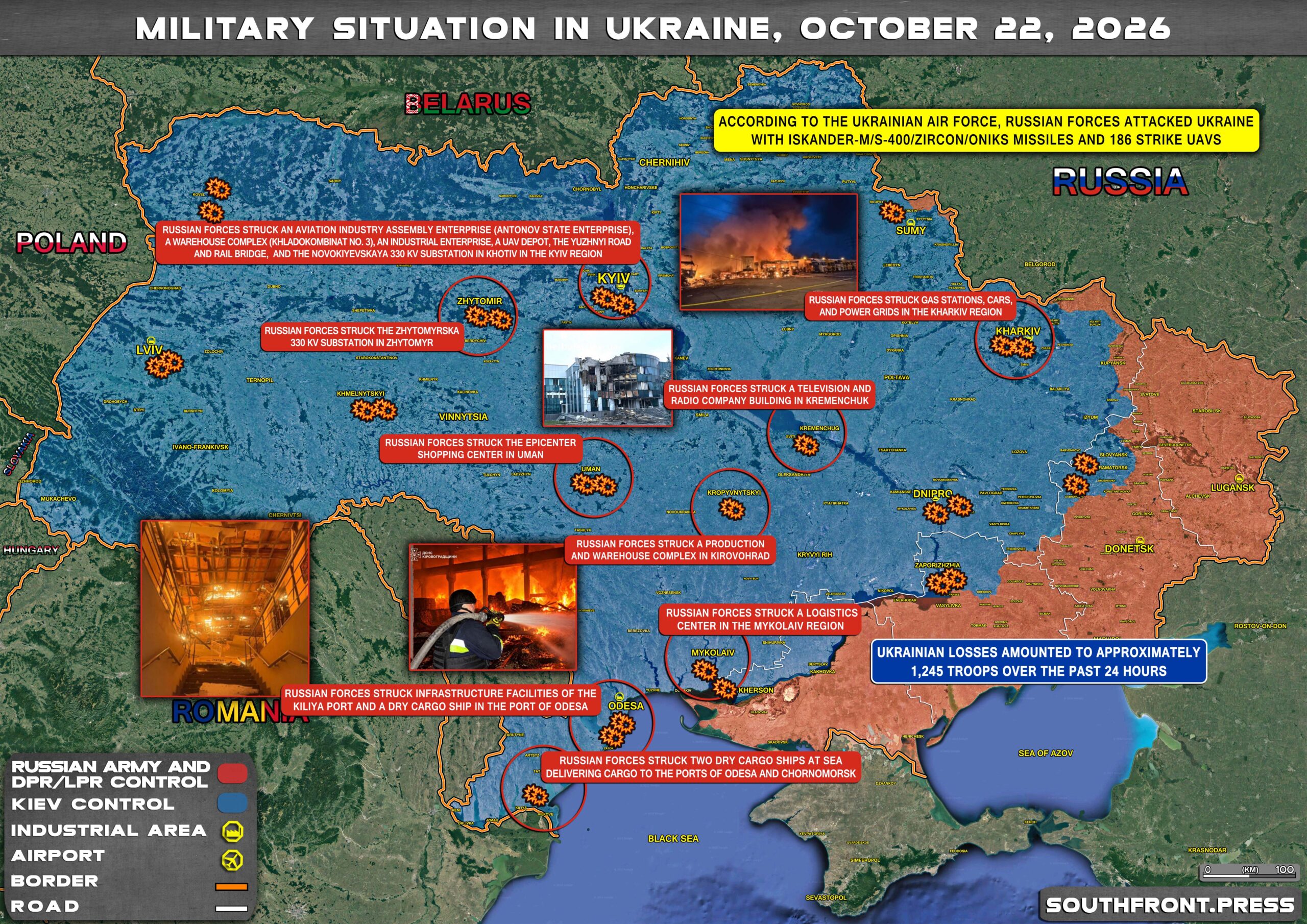
Russian strikes destroyed targets in the Sumy, Kharkiv, Zaporizhzhia, Dnipropetrovsk, Kherson, Kyiv, Volyn, Odesa, Khmelnytskyi, Lviv, Vinnytsia, Zhytomyr, Rivne, Cherkasy, Kirovohrad, Mykolaiv regions, and the DPR;
According to the Ukrainian Air Force, Russian forces attacked Ukraine with Iskander-M/S-400/Zircon/Oniks missiles and 186 strike UAVs;
Russian forces struck an aviation industry assembly enterprise (Antonov State Enterprise), a warehouse complex (Khladokombinat No. 3), an industrial enterprise, a UAV depot, the Yuzhnyi road and rail bridge, and the Novokiyevskaya 330 kV substation in Khotiv in the Kyiv region;
Russian forces struck infrastructure facilities of the Kiliya port and a dry cargo ship in the port of Odesa;
Russian forces struck two dry cargo ships at sea delivering cargo to the ports of Odesa and Chornomorsk;
Russian forces struck the Zhytomyrska 330 kV substation in Zhytomyr;
Russian forces struck gas stations, cars, and power grids in the Kharkiv region;
Russian forces struck the Epicenter shopping center in Uman;
Russian forces struck a television and radio company building in Kremenchuk;
Russian forces struck a production and warehouse complex in Kirovohrad;
Ukrainian losses amounted to approximately 1,245 troops over the past 24 hours.
Click to see the full-size image
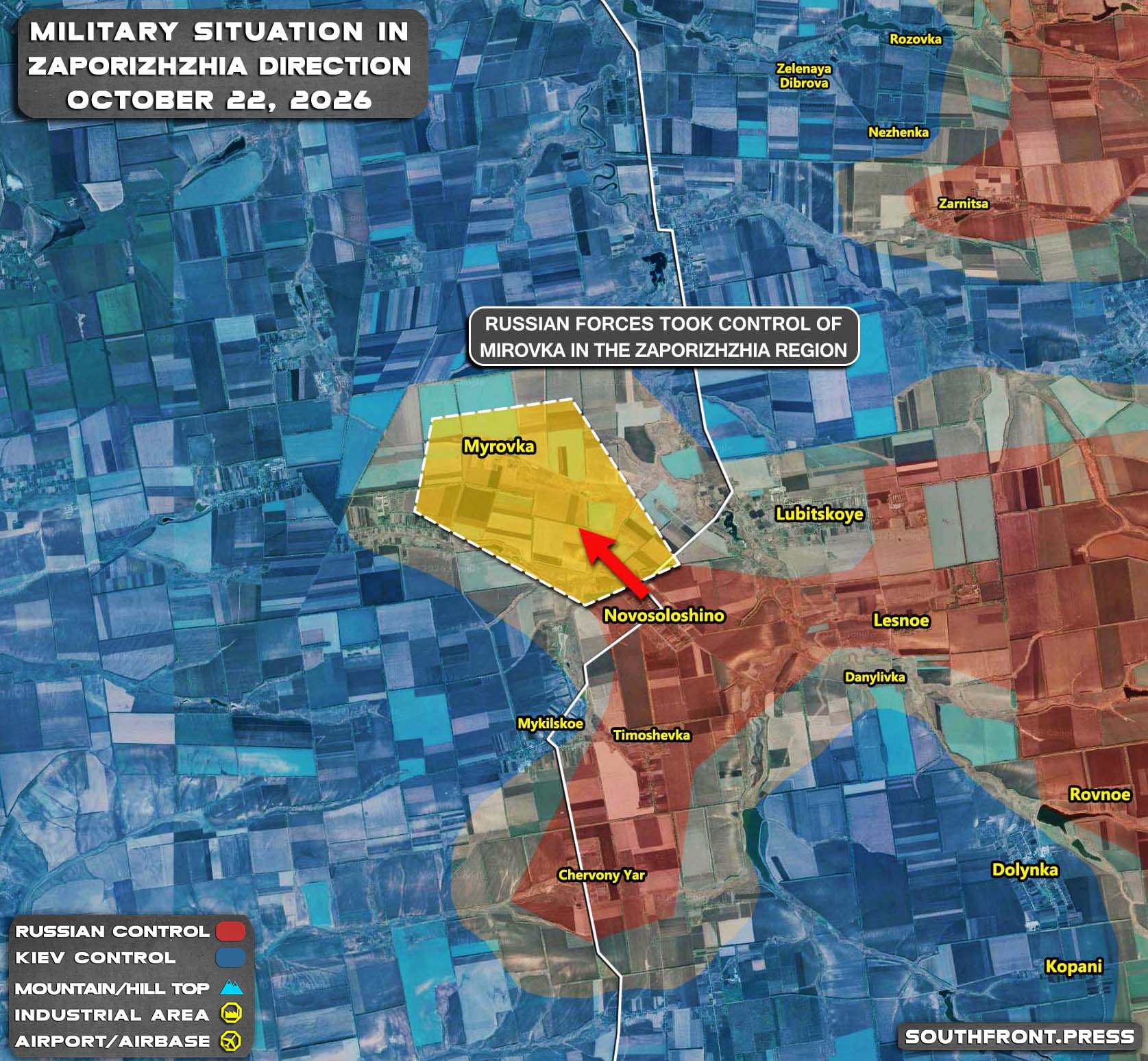
Russian forces took control of Mirovka in the Zaporizhzhia region.
Click to see the full-size image
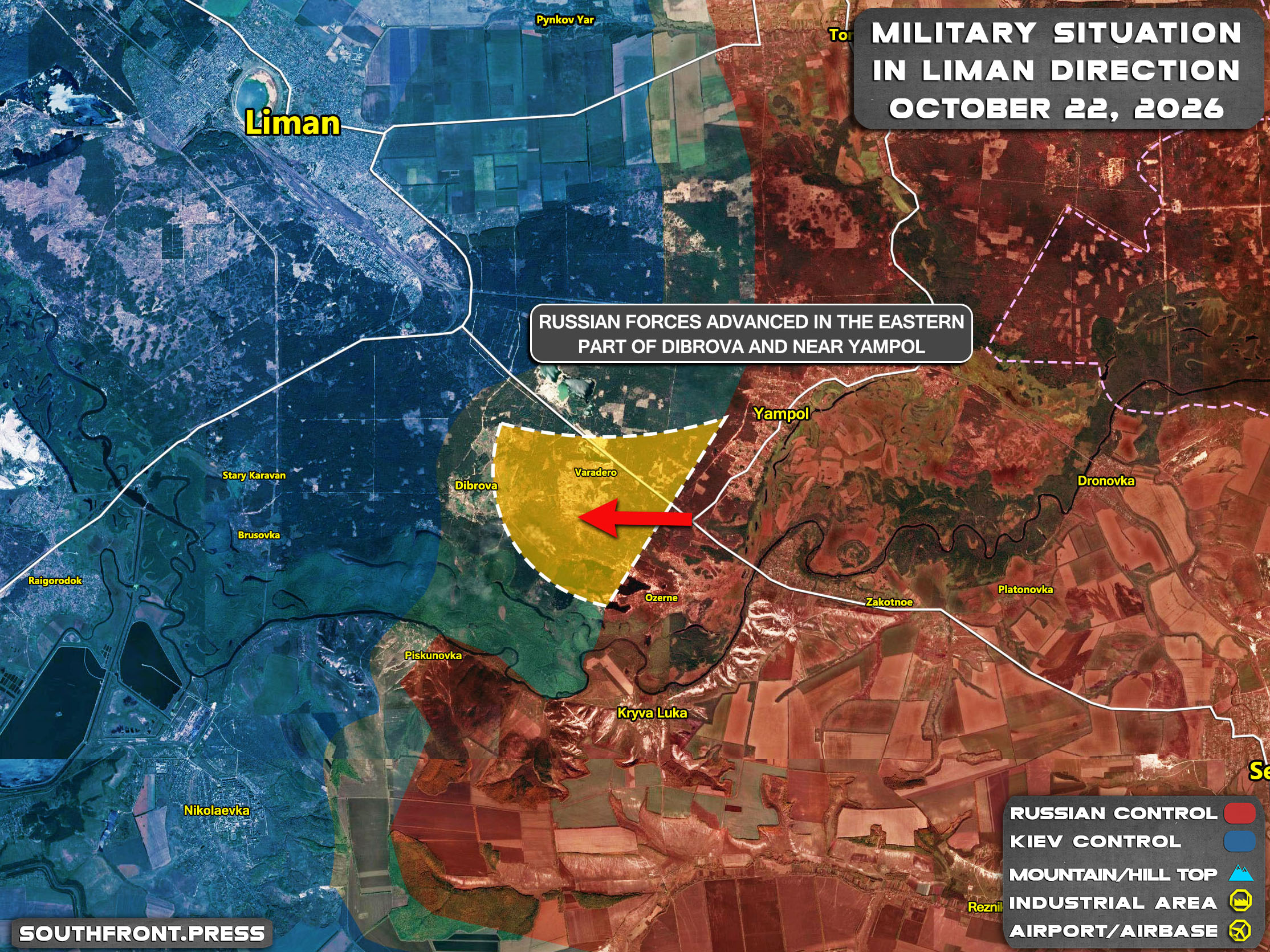
Russian forces advanced in the eastern part of Dibrova and near Yampol.
Click to see the full-size image
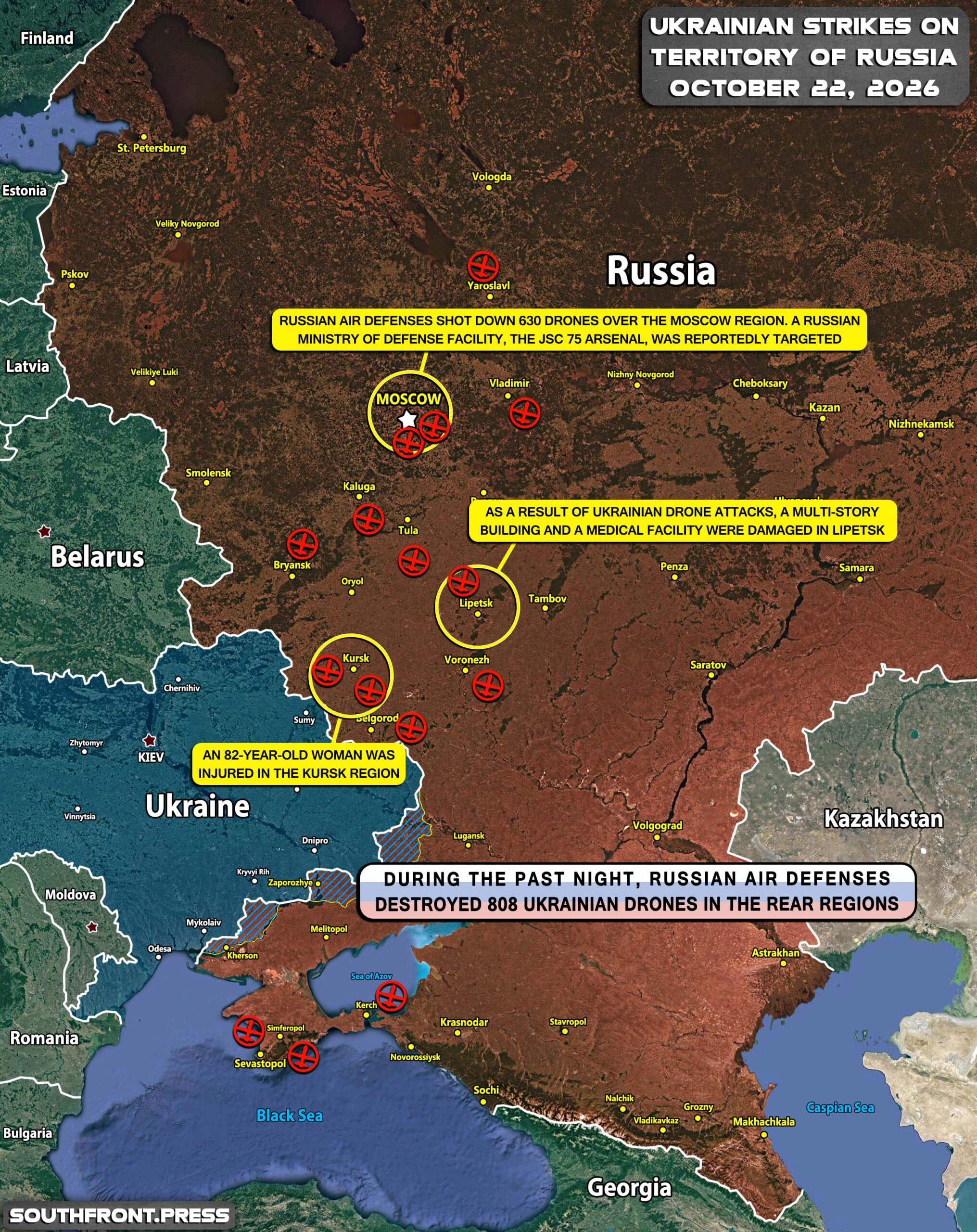
During the past night, Russian air defenses destroyed 808 Ukrainian drones in the rear regions;
Russian air defenses intercepted UAVs in the Belgorod, Bryansk, Vladimir, Voronezh, Kaluga, Kursk, Lipetsk, Leningrad, Oryol, Rostov, Ryazan, Smolensk, Tambov, Tver, Tula, and Yaroslavl regions, the Moscow region, the Republic of Crimea, and over the Black Sea;
Russian air defenses shot down 630 drones over the Moscow region. A Russian Ministry of Defense facility, the JSC 75 Arsenal, was reportedly targeted;
As a result of Ukrainian drone attacks, a multi-story building and a medical facility were damaged in Lipetsk
An 82-year-old woman was injured in the Kursk region.
Projeto desenvolvido em parceria com a Wipro Lauak Portugal no âmbito da Agenda Mobilizadora Aero.Next Portugal A Universidade Politécnica de Setúbal (UNIPS) contribuiu para o desenvolvimento de novas competências em fabrico aditivo, através do projeto ProAero3D, coordenado pela Wipro Lauak Portugal no âmbito da Agenda Mobilizadora Aero.Next Portugal, cuja execução física terminou a 30 de […]
Ukraine's Operation Vivaldi may have begun as early as March
The counteroffensive seemingly inflicted more damage on a pair of Russian field armies than previously thought
But the gains could be fleeting if a new speed cap on Ukraine's military Starlink terminals stays in place
The Ukrainian 3rd Army Corps' Operation Vivaldi—its secretive counteroffensive east of Sloviansk in northern Donetsk Oblast—started earlier than first reported, and by the time it ended on 14 October it had cost the Russians more than 8,000 troops, by the 3rd Army Corps' count.
It was a major Ukrainian victory in one of the most important sectors of Russia's 56-month wider war on Ukraine. But it could prove to be a temporary win, one the Russians may be able to partially reverse, if the administration of US President Donald Trump continues to throttle Starshield, the military version of Starlink that Ukraine's drones and commanders rely on.
The Ukrainians' former command and control advantage, largely attributable to once-reliable Starlink and Starshield access, was pivotal as Operation Vivaldi played out in the Donbas region in stages starting in March. That advantage shrank practically overnight on 14 October, when a new speed cap began cutting off Ukraine's Starshield terminals whenever they moved faster than about 160 km/h (100 mph).
The 3rd Army Corps attacked east of Sloviansk and north of Lyman as early as March, analyst and mapper Clément Molin concluded after scrutinizing official videos and interviews the Ukrainian defense ministry recently released. "The operation began much earlier than initially thought," Molin wrote.
We are now 5 months after the start of Ukraine's Vivaldi operation and it has now officially ended
A month after the operation was revealed, we know have much more information on the biggest Ukrainian success of the year.
In early February, SpaceX, working from a Ukrainian defense ministry whitelist, switched off the thousands of stolen and smuggled Starlink terminals the Russians had been using.
That had the effect of grounding many Russian drones and blinding many Russian commanders. Taking advantage of the Russians' confusion, Ukrainian troops attacked in several key sectors: in Zaporizhzhia and Dnipropetrovsk Oblasts in the southeast, and east of Sloviansk in northern Donetsk.
The Donetsk attack expanded into a full-blown counteroffensive under conditions of strict secrecy as the 3rd Army Corps probed for weaknesses along the flanks of the Russian 20th and 25th Combined Arms Armies, then overextended along the axis between the Zherebets River in the east and the outskirts of the Sloviansk-Kramatorsk urban conglomeration in the west.
The Russians had been threatening to lay siege to Sloviansk and Kramatorsk, the last two big free cities in Donetsk Oblast, from two directions: the north and the south. Operation Vivaldi eliminated the northern threat—and at great cost to the Russian 20th and 25th CAAs.
A Ukrainian Hornet drone about to hit a buhanka, the UAZ van Russian forces use to haul troops and supplies to the front. Drones like this one have been choking Russian military supply lines. Via WarTranslated.
Drones lead
Aerial drones and unmanned ground vehicles led the attack, taking the Russians by surprise. "For an offensive operation, the Ukrainians sustained relatively few casualties compared to previous engagements," Molin explained. "Conversely, the defending Russian forces suffered significantly higher losses, largely due to the rapid encirclement of at least three regiments, not all of which managed to escape the area."
It's unclear how many casualties the Russians suffered, but they might number in the thousands. The 20th and 25th CAAs were particularly fragile because the 3rd Army Corps and supporting drone units had been bombarding their supply line with so-called "middle strike" drones.
But many middle strike drones rely on civilian-style Starlink satellite terminals or the more rugged, better-performing Starshield. Now that the 3rd Army Corps has wrecked Russia's 144th Motor Rifle Division, which the Institute for the Study of War assessed on 20 October has effectively ceased to exist as an organized fighting force, and pushed the Russian survivors back to the far bank of the Zherebets River, the Ukrainians are probably "consolidating their gains and adopting a defensive posture," according to Molin.
Operation Vivaldi. Map: Euromaidan Press
But that defensive posture, protecting Sloviansk from a northern attack, depends on reliable communications and responsive drones. On 14 October, a new speed cap hit Ukraine's Starshield terminals, cutting the link on any drone flying faster than about 160 km/h. Who ordered it is disputed. Sources told Reuters the order came from inside the White House, and that Pentagon leaders were told the service needed to be slowed.
The Wall Street Journal reported that Musk himself ordered the slowdown, and that he and Trump discussed it soon after it became public. While Trump has denied ordering the speed limit, it's worth noting that the American president has become more overtly friendly toward Russia as his Republican Party looks likely to lose control of the US Congress in the November mid-term elections.
The speed limit renders many of the faster middle-strike drones unflyable. As a result, "Ukrainian drone strikes have diminished significantly following yesterday's crippling of Ukraine's Starlink/Starshield connections, Russian sources report," the military history account ChrisO_wiki wrote on X on 15 October, the day after the speed limit took Ukrainian operators by surprise.
Settlements Ukraine's 3rd Army Corps says it liberated during Operation Vivaldi north of Lyman, Donetsk Oblast, Ukraine, as of 28 September 2026. Map: ISW
Explore further
Russia is back at Dobropillia a year after it failed there. Now it’s the southern jaw of a pincer on Donbas’s last big free cities
A reduction in middle strikes on Russian supply lines could help Russian field armies recover from recent setbacks, including their retreat back across the Zherebets River. And if the communications confusion resulting from the partial loss of Starlink/Starshield connectivity persists, it could give the Russians the same kind of opportunity the Ukrainians had back in the spring.
An opportunity to go back on the attack—and an Azov communications engineer warned Euromaidan Press in February that the shoe might be on the other foot.
That's the worst-case scenario for the Ukrainians now that Operation Vivaldi has ended. The best case is that they get full Starlink and Starshield access back—or find command and control alternatives—and duplicate, in other sectors, the same success they enjoyed in northern Donetsk.
"Now that the northern flank of Donbas is secured, at least for some time, the focus will concentrate on the southern flank," Molin predicted.
Explore further
Starlink crackdown cripples Russians—but American engineer warns Ukraine is just as vulnerable
In our Divorce Diaries series, we speak to people in Ireland about their experience of marriage and divorce. This week, a woman in her 40s with two children talks about separation from her perspective
A Câmara Municipal de Vila Pouca de Aguiar e a Junta de Freguesia de Bornes de Aguiar contestam a decisão da VMPS — Águas e Turismo, S.A., de limitar o fornecimento gratuito de Água Mineral Natural Gasocarbónica, mais conhecida como Água das Pedras à população local a um grade por mês e por pessoa, exigindo a manutenção das condições anteriormente acordadas.
Num comunicado publicado nas redes sociais, a câmara municipal e a junta de freguesia afirmam que a redução anunciada “põe em causa um compromisso assumido há várias décadas entre a empresa e a comunidade”, entendendo que este se encontra consolidado como um direito da população, na qualidade de contrapartida pela exploração das águas minerais naturais gasocarbónicas.
O protocolo celebrado em 25 de maio de 2021 entre a câmara municipal, a junta de freguesia e a VMPS previa o fornecimento anual de cerca de 200 mil litros de água mineral natural gasosa engarrafada à população local. Segundo a autarquia, este compromisso foi reafirmado num aditamento assinado em 2024, o qual manteve as obrigações anteriormente estabelecidas em vigor.
As entidades consideram inaceitável que a população seja confrontada com uma redução do fornecimento sem uma explicação prévia e devidamente fundamentada, bem como sem discussão com o município. No comunicado, classificam a decisão como unilateral e defendem o cumprimento integral dos compromissos assumidos.
No dia 7 de outubro de 2026, após terem tomado conhecimento da intenção de reduzir o fornecimento, a câmara municipal enviou um ofício à VMPS, manifestando a sua discordância e exigindo a manutenção das condições anteriormente asseguradas. Esta posição foi também comunicada aos vereadores do executivo municipal durante a reunião da câmara realizada no dia seguinte.
Segundo o município, a Câmara Municipal de Vila Pouca de Aguiar ainda não recebeu qualquer resposta ao ofício enviado à empresa.
A câmara municipal e a junta de freguesia garantem que continuarão a acompanhar a situação e a defender os interesses da população, procurando uma solução que permita manter o fornecimento gratuito de Água das Pedras, conforme acordado. As duas entidades comprometem-se também a manter a comunidade informada sobre os próximos desenvolvimentos.
A visita, apoiada pela Câmara de Loulé, deu a conhecer o património e a cultura local, no âmbito de um encontro internacional na Universidade do Algarve (UAlg).
L’Inps, con la circolare 107 del 20 ottobre, riepiloga e aggiorna le regole per far valere i contributi versati all’estero nella pensione in regime di cumulo. Sono tre i chiarimenti che riguardano i periodi all’estero:
quando contano per il diritto alla pensione;
come si considerano per la verifica dell’importo soglia;
quando danno accesso all’integrazione al trattamento minimo.
Chi ha una carriera divisa tra più gestioni italiane e uno o più Paesi esteri può ottenere un trattamento che con i soli contributi italiani non sarebbe raggiungibile.
Cos’è la pensione in regime di cumulo
Il cumulo, previsto dalla Legge di Stabilità 2013 e poi modificato con la Legge di Bilancio 2017, permette di sommare i contributi non coincidenti versati in gestioni previdenziali diverse per ottenere un’unica pensione.
Quando contano i periodi lavorati all’estero
I periodi esteri valgono per il diritto alla pensione in cumulo come se fossero periodi italiani, in base all’articolo 6 del regolamento (CE) 883/2004 e contano anche se hanno già prodotto una pensione estera.
Quando lo stesso periodo è coperto sia da contributi italiani sia da contributi esteri, per esempio per due lavori svolti in contemporanea in due Paesi, quei mesi valgono una volta sola e non si sommano.
Quali Paesi rientrano nel cumulo
Rilevano i contributi maturati:
negli Stati Ue;
nello Spazio economico europeo;
in Svizzera;
nel Regno Unito;
nei Paesi legati all’Italia da accordi o convenzioni bilaterali di sicurezza sociale che prevedono la totalizzazione internazionale.
Le condizioni da rispettare
La totalizzazione con l’estero è possibile se:
risulta raggiunto il periodo minimo di contribuzione italiana, cioè 52 settimane (un anno) per la normativa europea o quello fissato dalla singola convenzione;
almeno una delle gestioni italiane coinvolte è compatibile con il riconoscimento dei periodi esteri;
i periodi esteri servono per maturare il diritto oppure danno una pensione più favorevole rispetto al solo cumulo nazionale.
Per la maggior parte delle convenzioni bilaterali la totalizzazione non serve se il diritto si raggiunge già con i soli contributi italiani. Fanno eccezione Jersey e le altre Isole del Canale (che dipendono dal Regno Unito), gli Stati nati dalla ex Jugoslavia e l’Uruguay.
Contributi esteri anteriori al 1996
L’importo della pensione si calcola solo sui contributi italiani. I periodi esteri collocati prima del 1° gennaio 1996 servono però a stabilire l’anzianità al 31 dicembre 1995 e quindi il sistema in cui rientra la pensione, con i relativi requisiti di accesso e istituti.
Significa che chi ha lavorato all’estero prima del 1996 e in Italia ha versato solo dopo quella data viene inquadrato nel sistema misto, anche se la quota italiana resta calcolata, di fatto, con il sistema contributivo.
Importo soglia e contributi esteri
Per la pensione di vecchiaia in cumulo valgono anche i requisiti diversi da età e contributi previsti dall’ultima gestione di iscrizione.
L’importo soglia è l’importo minimo che la pensione deve raggiungere per essere pagata, ed è quello previsto dalle regole della Gestione separata. Nel cumulo l’Inps controlla l’importo soglia solo quando ricorrono insieme tutte queste condizioni:
la pensione è calcolata con il sistema misto (in parte con il retributivo e in parte con il contributivo);
l’ultima iscrizione del lavoratore è alla Gestione separata dell’Inps;
l’interessato non ha ancora compiuto 71 anni, limite che dal 1° gennaio 2027 sarà adeguato alla speranza di vita.
Nel caso internazionale, la pensione italiana si somma alla pensione o al pro-rata estero e il totale non deve risultare inferiore alla soglia. Il requisito può maturare anche dopo, quando arriva la liquidazione estera. In quel caso la pensione decorre dal primo giorno del mese successivo.
La verifica non serve se, dopo l’ultimo contributo in Gestione separata, si hanno periodi esteri valorizzabili in una gestione dove la soglia non è prevista. Con i Fondi speciali conta la natura del lavoro svolto all’estero, che deve corrispondere alla stessa categoria.
Resta fermo che alla decorrenza il lavoro dipendente deve essere cessato, anche all’estero.
Integrazione al minimo
L’integrazione al trattamento minimo alza le pensioni più basse fino a 611,85 euro al mese – importo provvisorio per il 2026 fissato dalla circolare 153 del 19 dicembre 2025, che diventano 619,80 euro con l’incremento dell’1,3% riconosciuto alle pensioni pari o inferiori al minimo.
L’integrazione spetta a chi ha redditi entro i limiti di legge e solo alle pensioni nel sistema retributivo o misto. Nel cumulo spetta a condizione che almeno una delle quote sia a carico di una gestione che la prevede. Grazie ai periodi esteri anteriori al 1996, l’integrazione spetta anche a chi in Italia ha iniziato a versare dopo quella data.
Nell’esempio della circolare del 20 ottobre, un lavoratore con 15 anni di contributi all’estero prima del 1996 e poi iscritto in Italia al Fondo pensioni lavoratori dipendenti e alla Gestione esclusiva dei dipendenti pubblici ottiene una pensione in cumulo nel sistema misto, integrabile al minimo, anche se le quote italiane sono calcolate con il contributivo. L’integrazione resta a carico delle gestioni italiane.
Per verificare i limiti di reddito, l’Inps conta anche le pensioni estere e gli eventuali redditi prodotti all’estero.
Come si presenta la domanda
L’ente istruttore si individua solo in base all’ultimo contributo italiano, anche se l’ultimo versamento è avvenuto all’estero.
C’è poi un distinguo in base a dove si ha la residenza:
chi risiede in Italia presenta la domanda per via telematica e sceglie il tipo di pensione;
chi risiede all’estero si rivolge all’istituzione previdenziale del Paese di residenza, che inoltra la pratica alla sede Polo dell’Inps.
Se la domanda arriva dall’estero con la generica dicitura vecchiaia o anticipata, l’Inps deve comunque esaminare l’intera posizione, cercare il trattamento più favorevole e informare l’interessato sulle alternative prima di liquidare. Anche per questo motivo è sempre meglio indicare esplicitamente il cumulo nell’istanza.
Renewed hostilities might not be any more successful than the war’s first phase, and President Trump has repeatedly canceled plans for a return to major combat.
By Chris Servello (OpEd) After years of testing and debating how unmanned surface vessels fit into the fleet, the Navy is starting to show what these systems can do. And...
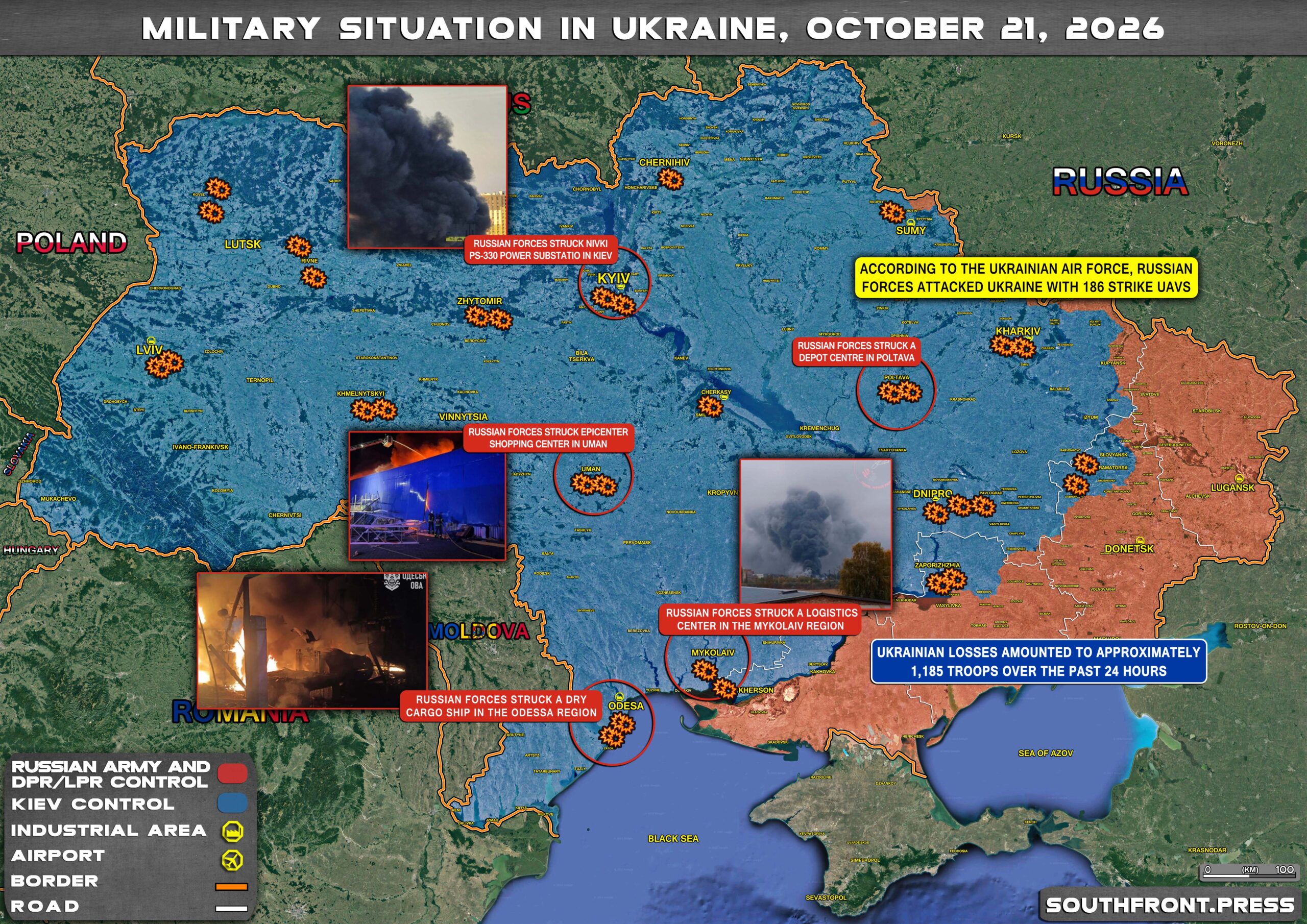
Russian strikes destroyed targets in Sumy, Kharkiv, Zaporizhzhia, Dnipropetrovsk, Kherson, Kyiv, Volyn, Vinnytsia, Mykolaiv, Odesa, Chernihiv, Khmelnytskyi, Rivne, Cherkasy, Poltava, Lviv, and Zhytomyr and the DPR;
According to the Ukrainian Air Force, Russian forces attacked Ukraine with 186 strike UAVs;
Russian forces struck a depot centre in Poltava;
Russian forces struck Nivki PS-330 power substatio in Kiev;
Russian forces struck a dry cargo ship in the Odessa region;
Russian forces struck Epicenter shopping center in Uman;
Russian forces struck a logistics center in the Mykolaiv region;
Ukrainian losses amounted to approximately 1,185 troops over the past 24 hours.
Click to see full-size map.
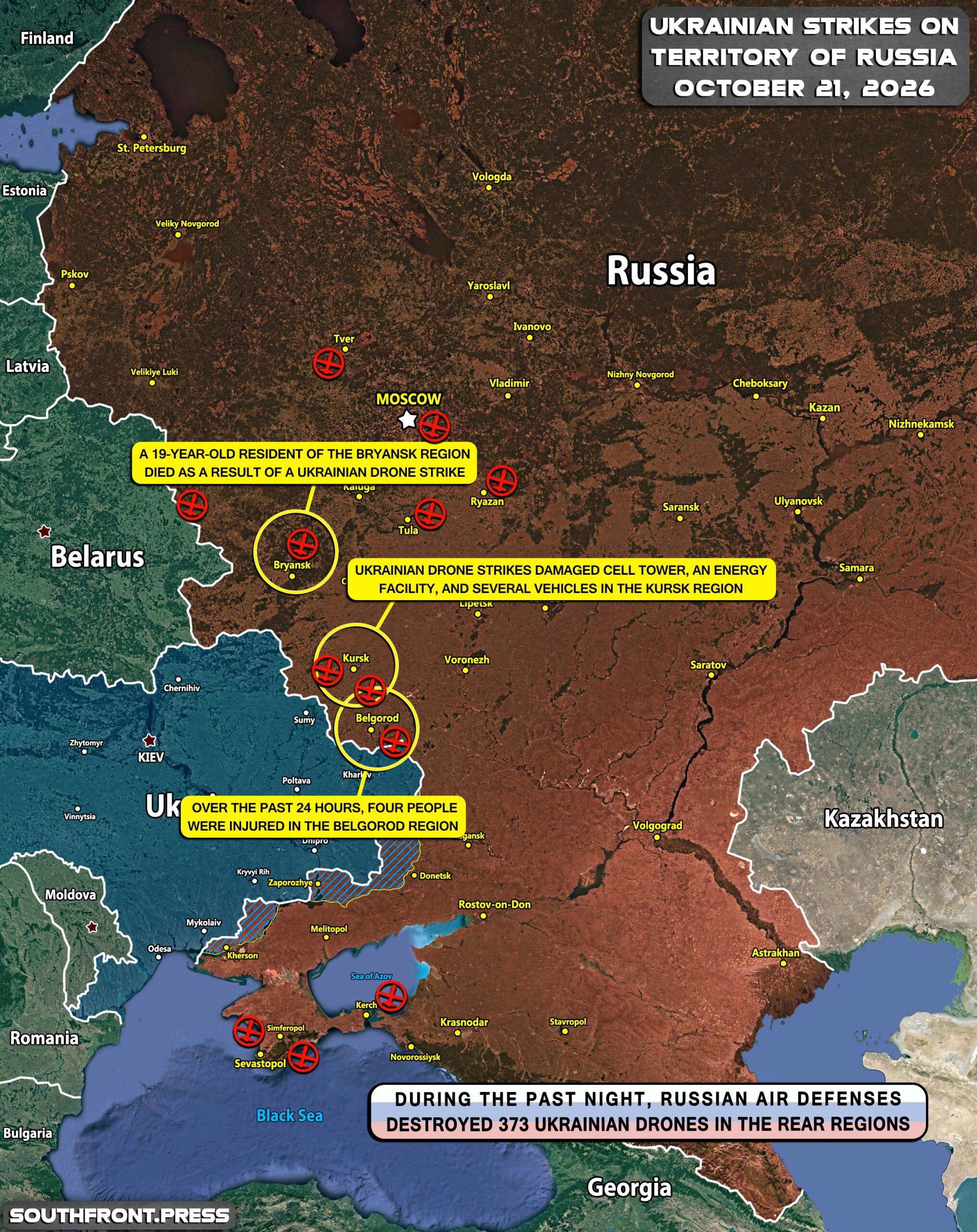
During the past night, Russian air defenses destroyed 373 Ukrainian drones in the rear regions;
Russian air defenses intercepted UAVs in the Novgorod, Tver, Bryansk, Belgorod, Kursk, Smolensk, Kaluga, Oryol, Tula, Ryazan regions, the Moscow region, the Krasnodar region, the Republic of Crimea, and over the Black Sea;
A 19-year-old resident of the Bryansk region died as a result of a Ukrainian drone strike;
Over the past 24 hours, four people were injured in the Belgorod region;
Ukrainian drone strikes damaged cell tower, an energy facility, and several vehicles in the Kursk region.
Click to see full-size map.
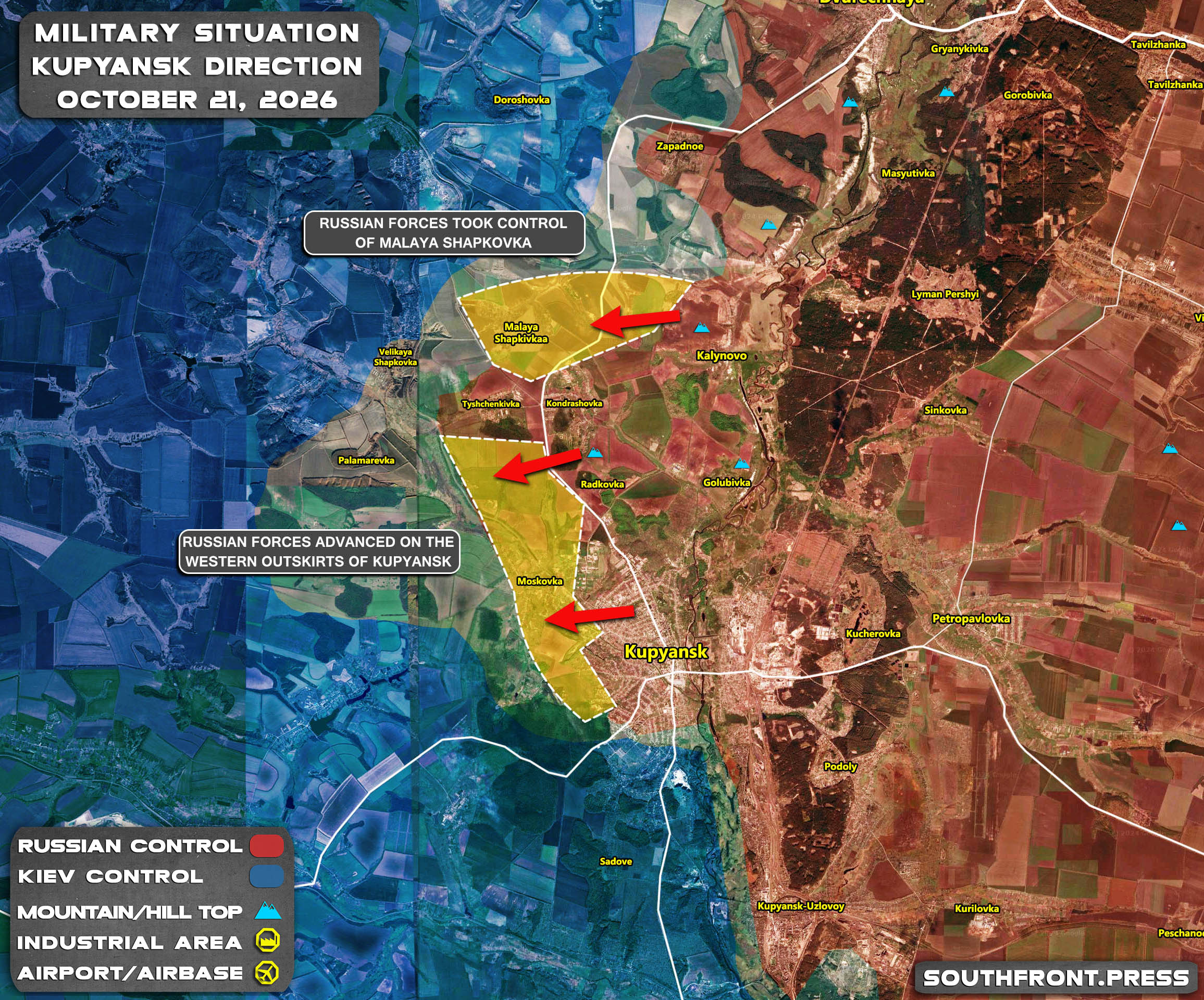
Russian forces advanced on the western outskirts of Kupyansk;
The commander of an interceptor battalion in Ukraine’s 3rd Army Corps said his unit destroyed several thousand Russian aerial targets during Operation Vivaldi, ArmyInform, the Defense Ministry’s news agency, reported on 21 October.
Operation Vivaldi is a Ukrainian counteroffensive north of Lyman in Donetsk Oblast, where the 3rd Army Corps has reported liberating settlements. In its third phase, Ukrainian forces reclaimed five settlements and expanded their gains to 176 square kilometers. Strikes on Russian logistics and electronic warfare likely neutralized Russia’s drone defenses before Ukraine sent in armor, the Institute for the Study of War assessed.
The commander, who uses the callsign “Betsyk,” leads the interceptor battalion of the 1030th Anti-Aircraft Missile-Artillery Regiment “Aquila,” part of the 3rd Army Corps. He said Russian forces deployed large numbers of reconnaissance drones to locate Ukrainian positions after the corps began advancing.
Betsyk named Zala, Orlan, Supercam, Merlin, and Knyaz Veshchiy Oleg among the reconnaissance drones used by Russian forces.
Russia also brought in reinforcements and units operating strike drones, including first-person-view (FPV) quadcopters, Molniya fixed-wing FPV drones, and Lancet crews, he said. At one stage, Russian forces deployed crews from their Rubicon drone unit to disrupt the advance, but the move did not change the situation.
Explore further
Ukraine retook Kolodiazi north of Lyman as its drones hit 200-plus Russian vehicles in Operation Vivaldi’s last phase, Ukrainian drone officer says
Betsyk said his battalion’s work deprived Russian forces of the ability to strike Ukrainian troops and track their movements.
Jet-powered Shaheds: speed is the main challenge
The regiment also works against Russian strike drones heading for targets behind the front line. Betsyk said interceptor crews had destroyed some jet-powered drones, but not in significant numbers.
The main difficulty is speed, he said. Interceptor drones need to reach 500–600 km/h to intercept Russian jet-powered attack drones, according to Betsyk.
For now, the regiment mainly uses conventional air-defense systems against these targets: self-propelled anti-aircraft systems, surface-to-air missile systems, and portable surface-to-air missile systems. Betsyk said these systems were historically designed to engage jet-powered targets.
He compared the current challenge with the early use of piston-powered Shaheds. Those drones initially posed a serious threat but later became easier for Ukrainian air defenses to counter. Russia has largely stopped using piston-powered Shaheds on most fronts since summer, he said, but continues to use piston-powered Gerbera drones, which are relatively cheap and can partly exhaust Ukrainian air defenses. The main drones Russian forces use now are jet-powered Shaheds, he said.
Betsyk expects Russian forces to adapt if Ukraine fields effective interceptors against jet-powered drones. They will seek ways to evade the interceptors, increase speed, improve navigation, and change their tactics, he said. However, he added that the battalion had not observed a major evolution so far and did not expect the drones’ speed to double.
What the corps says Vivaldi achieved
Separately, 3rd Army Corps commander Andrii Biletskyi said Ukrainian forces retook 277 square kilometers and 16 settlements during Operation Vivaldi, Ukrainska Pravda reported. Biletskyi also said Russian losses exceeded 8,000 personnel, according to ArmyInform. These figures are Ukrainian claims and have not been independently verified.
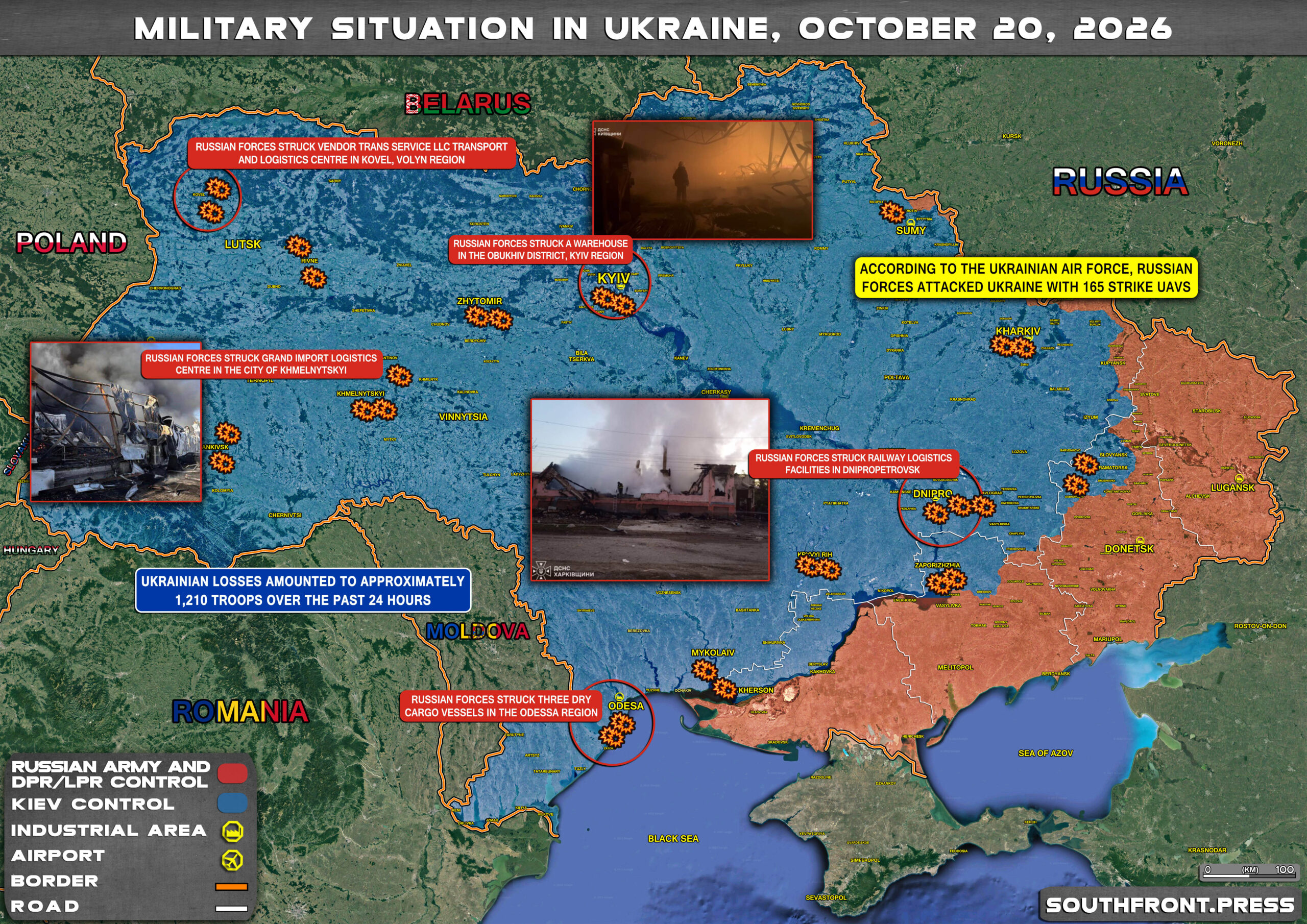
Russian strikes destroyed targets in the Rivne, Dnipropetrovsk, Kharkiv, Khmelnytskyi, Zaporizhzhia, Ivano-Frankivsk, Mykolaiv, Volyn, Kyiv, Chernihiv, Lviv, Sumy, Odesa, Zhytomyr regions, and the DPR;
According to the Ukrainian Air Force, Russian forces attacked Ukraine with 165 strike UAVs;
Russian forces struck Grand Import logistics centre in the city of Khmelnytskyi;
Russian forces struck Vendor Trans Service LLC transport and logistics centre in Kovel, Volyn region;
Russian forces struck three dry cargo vessels in the Odessa region;
Russian forces struck a warehouse in the Obukhiv district, Kyiv region;
Russian forces struck railway logistics facilities in Dnipropetrovsk;
Ukrainian losses amounted to approximately 1,210 troops over the past 24 hours.
Click to see the full-size image
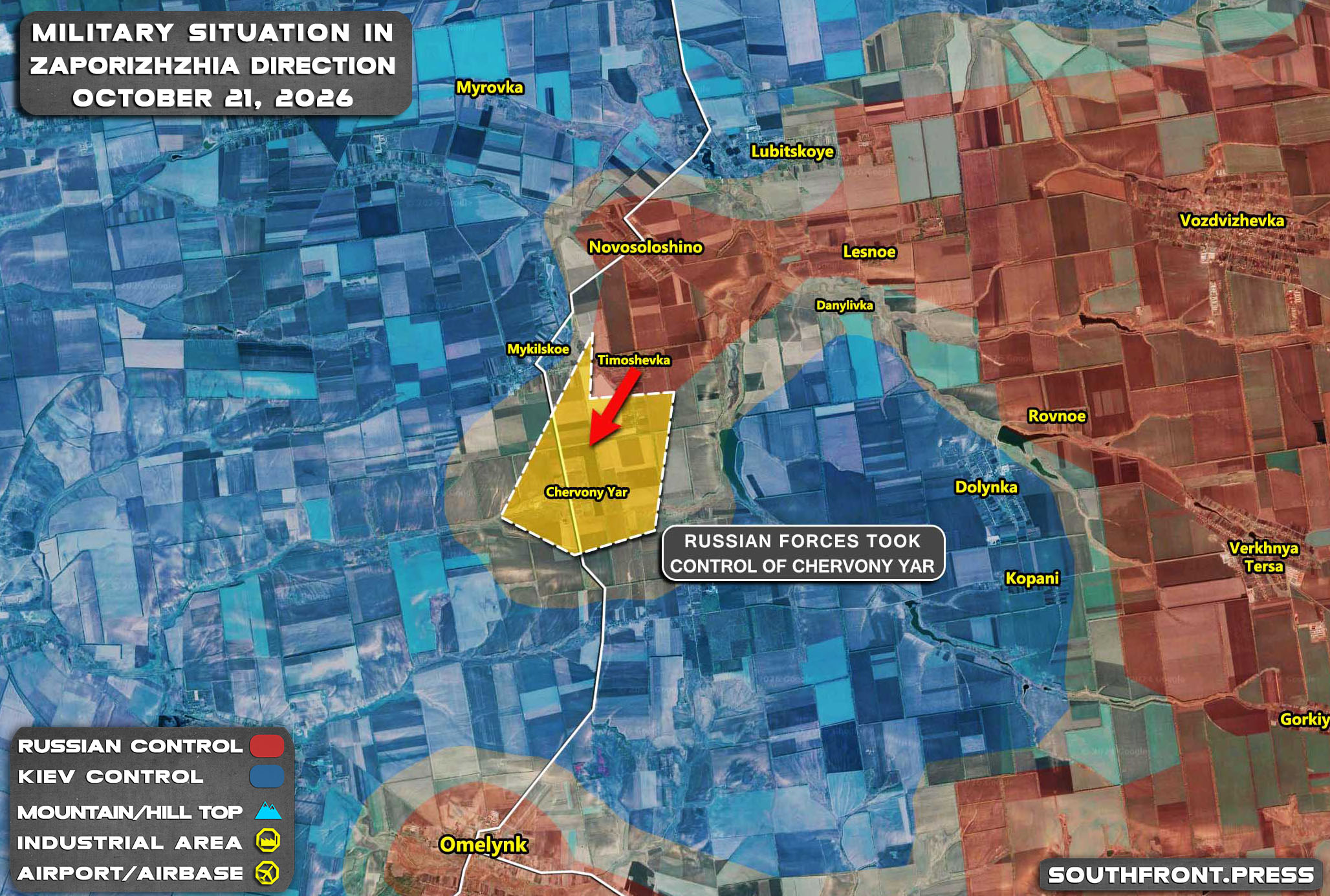
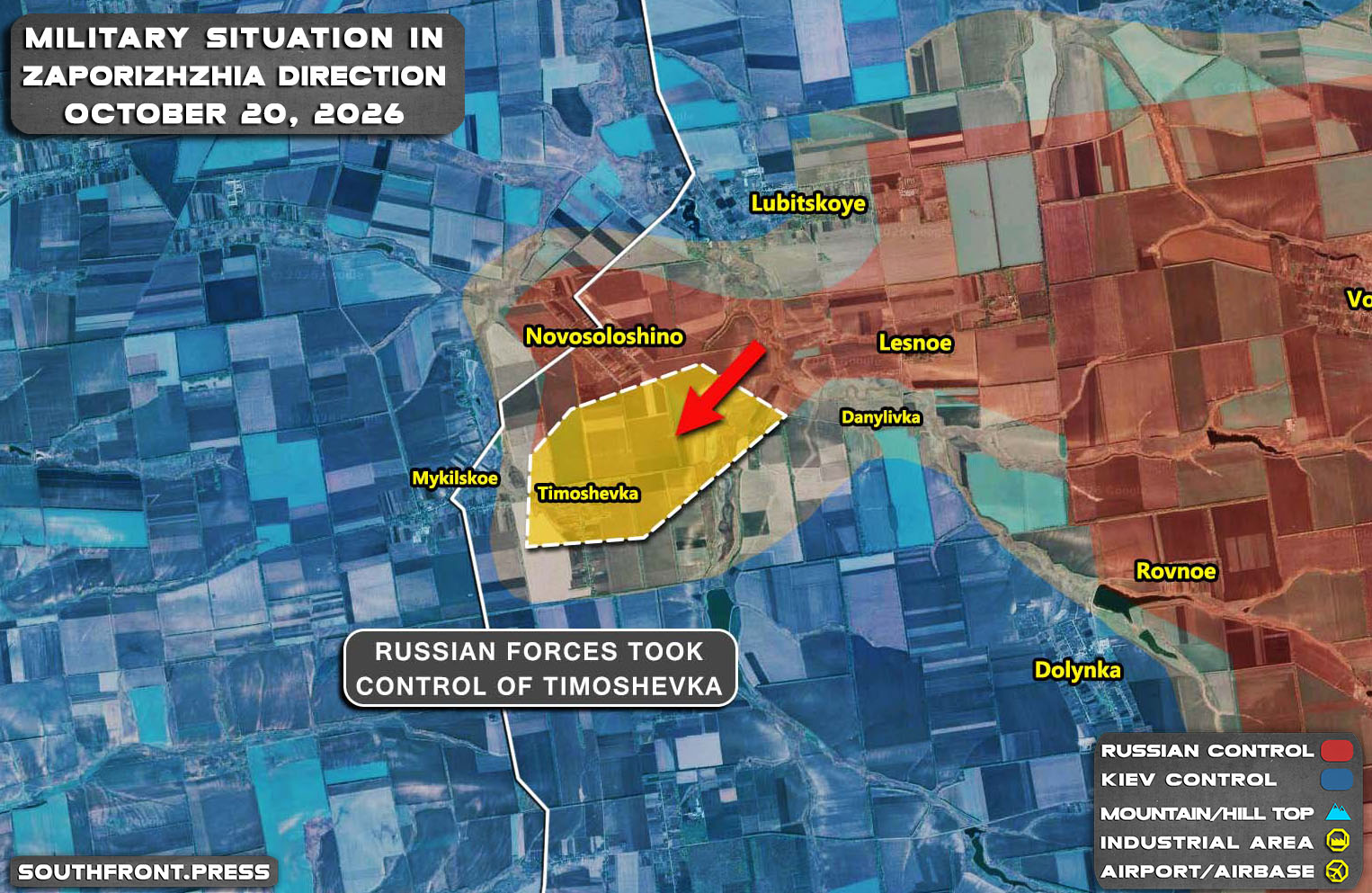
Russian forces took control of Timoshevka.
Click to see the full-size image
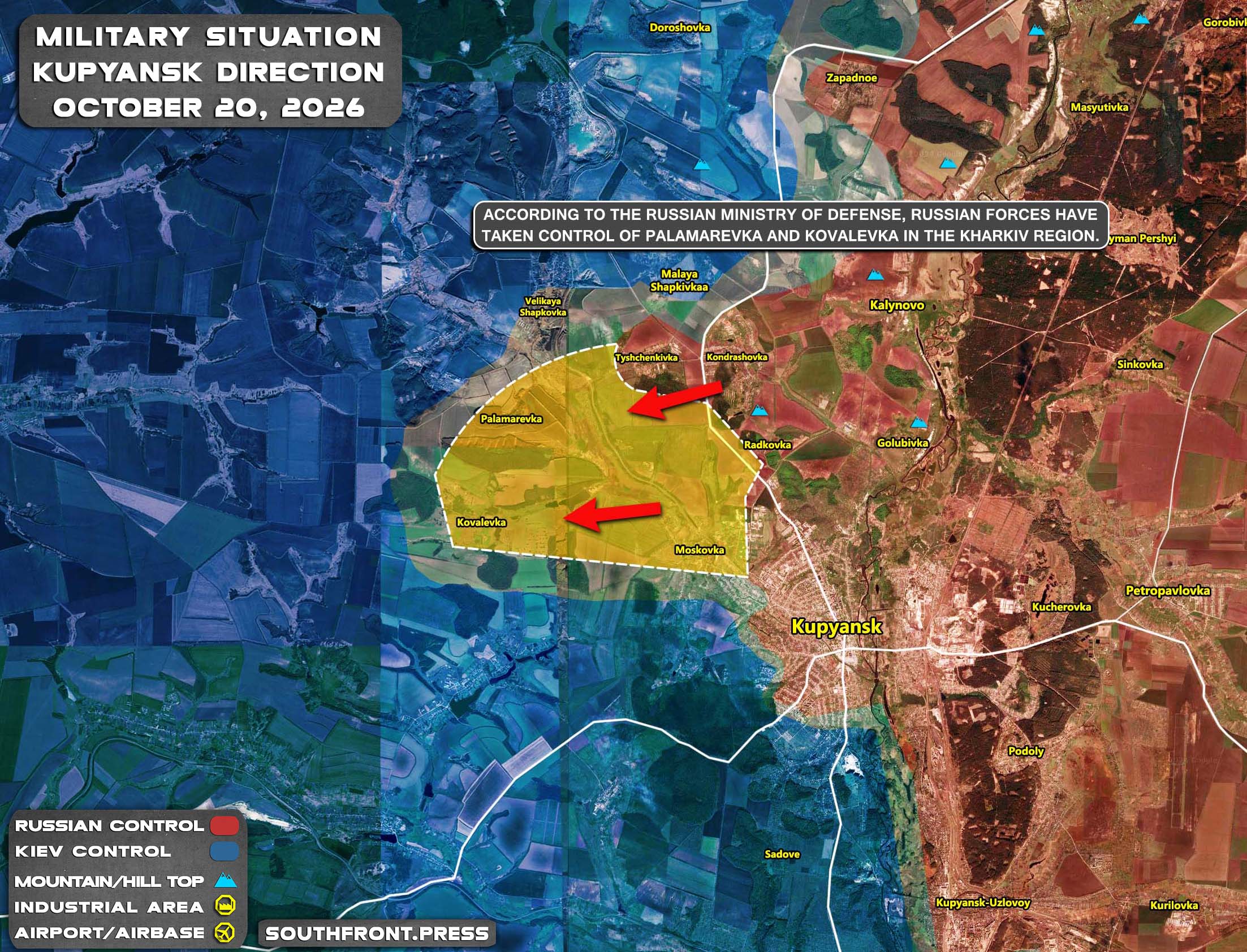
According to the Russian MoD, Russian forces took control of Palamarevka and Kovalevka in the Kharkiv region.
Click to see the full-size image
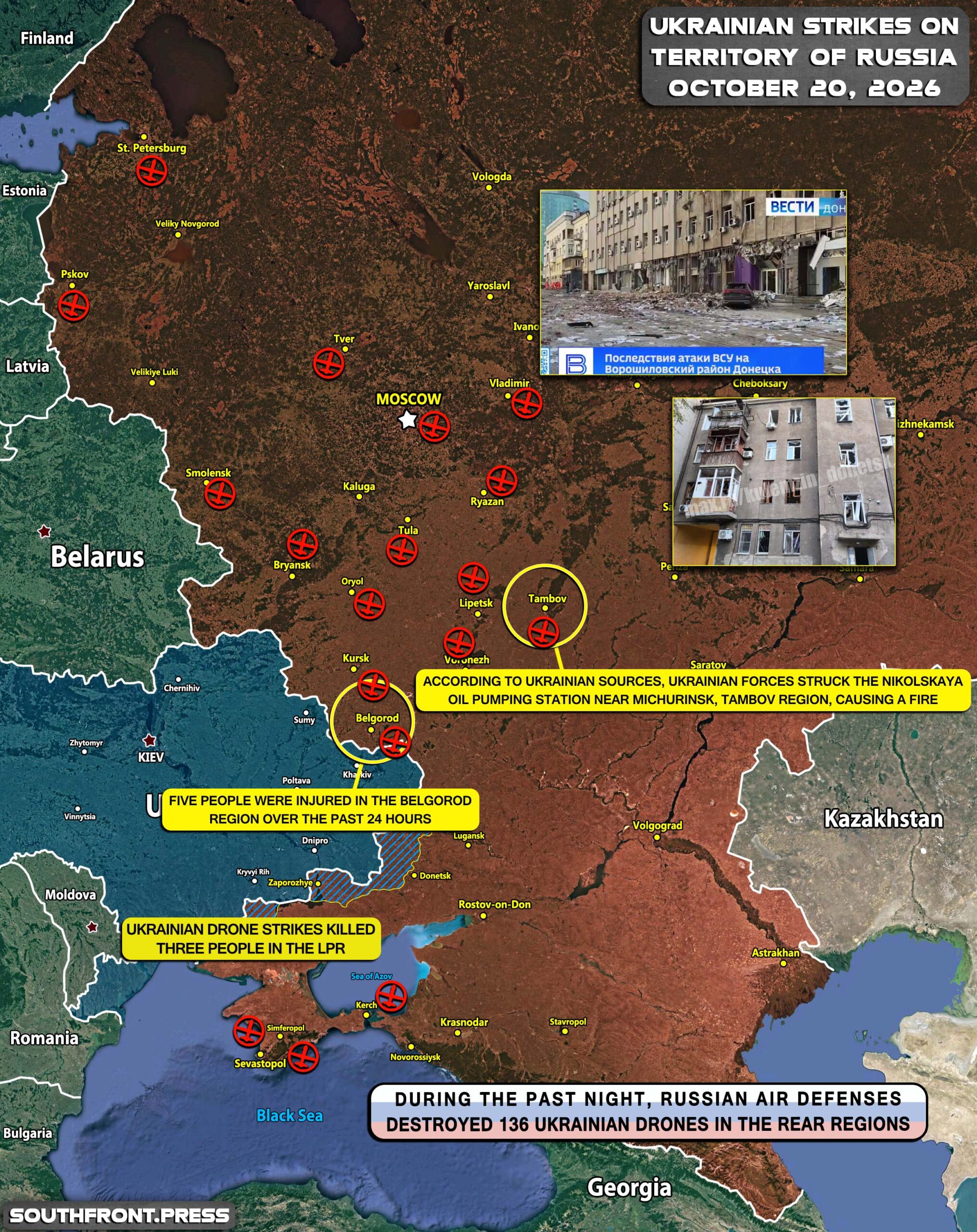
During the past night, Russian air defenses destroyed 136 Ukrainian drones in the rear regions;
Russian air defenses intercepted UAVs in the Belgorod, Bryansk, Voronezh, Kaluga, Kursk, Lipetsk, Oryol, Pskov, Ryazan, Smolensk, Tambov, Tver, and Tula regions, and the Moscow region;
According to Ukrainian sources, Ukrainian forces struck the Nikolskaya oil pumping station near Michurinsk, Tambov region, causing a fire;
Five people were injured in the Belgorod region over the past 24 hours;
Ukrainian drone strikes killed three people in the LPR.

 Login