How EU ships are still able to carry Trump's Russian diesel despite so many sanctions


On Friday, Folha de Sao Paulo published the contents of a letter in which 54 Brazilian Catholic bishops warn that far-right presidential candidate Flavio Bolsonaro threatens the church’s social doctrine, democracy, national sovereignty and the practice of the common good.
RELATED:
Lula Urges Young and Elderly Brazilians to Defeat Bolsonaro
“We cannot remain neutral, lest our conscience or history condemn us in the future. Those who remained silent in the face of totalitarian threats that materialized in 20th-century Europe left a shameful legacy for future generations,” stated the “Letter from Catholic Bishops to the People of God Ahead of the Second Round of the 2026 Presidential Election.”
The signatories say they are in communion with the National Conference of Bishops of Brazil (CNBB) and aligned with the message issued by the organization’s Permanent Council, which defended the constitution and respect for the vote.
Besides urging voters to evaluate the records of the two candidates facing off in the Oct. 25 runoff, the bishops list the main positions through which Bolsonaro contradicts church teachings.
Labor Issues
The far-right candidate has consistently opposed eliminating the six-days-on, one-day-off work schedule and has proposed hourly pay, which “does not recognize the dignity of the worker and could bring this issue back to the forefront.”
National Sovereignty
Flavio Bolsonaro “promises Brazil’s submission to the United States, participated in a conspiracy to impose tariffs on Brazilian products, advocates foreign interference in elections, and promises to hand over our rare earth resources for U.S. exploitation.”
Poverty
The bishops cite the apostolic exhortation Dilexi Te and say the Liberal Party “has always publicly opposed social programs and the fight against poverty,” even though Flavio Bolsonaro now says he will maintain some of those programs.
🇧🇷⛪️ Creencias y política chocan en Brasil: crece la polémica por la promesa religiosa de Bolsonaro
— Sputnik Mundo (@SputnikMundo) October 14, 2026
✝️ Miles de fieles conmemoraron el aniversario de Nuestra Señora Aparecida, patrona del país sudamericano, en medio de la controversia por la promesa de campaña del candidato a la… pic.twitter.com/5AgyIQGEzv
The text reads, “Beliefs and politics collide in Brazil: controversy grows over a religious pledge made by Bolsonaro. Thousands of the faithful commemorated the anniversary of Our Lady of Aparecida—the patron saint of the South American nation—amidst controversy surrounding a campaign promise by presidential candidate Flavio Bolsonaro to declare that the nation belongs to Jesus Christ.
Catholics and representatives of Afro-Brazilian religions have warned of potential risks of exclusion and discrimination. Although the campaign asserted that this is merely a symbolic expression of faith, the debate has reignited questions regarding religious freedom and respect for the diversity of beliefs within Brazil.”
Violence
The bishops criticize Bolsonaro’s promise to expand access to firearms, “as his father did during his administration.” The issue had already been criticized in the homily delivered by the archbishop of Aparecida, who preached a message of “unarmed peace” during Mass on the Feast of Our Lady.
Environment
The bishops accuse Flavio Bolsonaro of denying the climate crisis and seeking to continue the “devastating policies” of his father, Jair Bolsonaro. They cite the environmental licensing law approved in 2025, known as the “Devastation Law.”
Human Rights and Democracy
The bishops recalled that the far-right candidate “publicly expresses support for torture” and that his family honored Col. Carlos Alberto Brilhante Ustra, a torturer during the military dictatorship.
Flavio Bolsonaro “made several statements that threaten the constitutional order” and, if elected, would govern with a majority in Congress and the Supreme Federal Court (STF), “creating the conditions for a usurpation of power,” the bishops warned.
The Brazilian Situation
Without mentioning Lula, the letter states that the Workers’ Party candidate, “although he has also been the subject of criticism, has always demonstrated responsibility toward the poor and our Common Home, and has acted within the limits of the democratic order, respecting the Constitution.”
“Whether one likes the current government or not cannot be a reason to hand the country over to someone who demonstrates such a contradiction with the teachings of our church,” the bishops say. They also urge Catholics not to abstain from voting.
Among the signatories are Bishop Jose Ionilton Lisboa de Oliveira, president of the Pastoral Land Commission, and the archbishops of Porto Velho, Roque Paloschi; Feira de Santana, Zanoni Demettino Castro; and Uberaba, Paulo Mendes Peixoto. The list includes bishops from Brazil’s Amazon, Northeast, Southeast, Central-West, and South regions.
The letter adds to the existing rivalry between Flavio Bolsonaro and the Catholic Church during the 2026 presidential campaign. In September, the Brazilian Commission for Justice and Peace delivered a report to the bishops detailing 58 attacks by the far right against Catholics and their church since 2018.
teleSUR/ JF
Sources: Folha de Sao Paulo – Brasil de Fato

© Cindy Schultz for The New York Times

Courtesy of Cameron Dever
I've been photographing weddings for over a decade, so I've witnessed countless ceremonies and receptions — some disastrous, others impeccable.
Throughout the years, I've also watched couples make the same mistakes over and over. Here are a few I wish they'd avoid.
Couples have to find time for the ceremony, photos, eating and drinking, dancing, talking to the people they invited, and connecting with each other.
When you try to fit too many things into the day, no one — especially the married couple — has time to breathe and relish the moments. The day can feel rushed and more focused on activities than the celebration of love.
A packed schedule often leaves couples stressed, with no time to eat because they've been pushed from one 15-minute window to the next.
However, your wedding day shouldn't be a blur. You should have time to soak in every moment. When you map out your day, prioritize traditions you love and estimate how long each will take … then add buffers.
I also recommend working with a wedding planner or coordinator to plan your timeline, or consulting with your photographer and other vendors when arranging your schedule. They've experienced countless weddings and know firsthand how much time each activity usually takes.

Courtesy of Cameron Dever
One of the things I always tell my couples right before their wedding day is that something will go wrong.
I don't say this to scare them or make them worry, but mostly to adjust their expectations. No matter how much planning you do, people are imperfect, the weather can be unpredictable, and life happens.
By the time the day comes, couples have done all they can to make sure it's how they pictured it. All that matters after that is that they enjoy their wedding.
Missing flowers or a cake that's the wrong flavor can throw off your day — but these unexpected mishaps shouldn't be so consuming that they're all you remember from your wedding.
I don't want to witness any more miserable couples desperately trying to fix details that will never be exactly right. Please try to roll with the punches on your wedding day.
I may be a bit biased, but I strongly believe having important memories properly documented in photo and video form is priceless.
I've also heard from countless married couples who regret booking a subpar photographer or skipping a videographer.
When hiring any vendors — especially these — choose carefully. You're paying someone to use their physical and creative energy to tell the story of your wedding.
Ask a ton of questions and make sure you love their style by viewing their portfolios and websites. It can also help to hop on a phone call or video meeting — couples should esnsure they vibe with their photo and video team on a personal level because they'll be spending a lot of time with them on the big day.

Courtesy of Cameron Dever
Weddings are for the couple, so they should do what they want.
I see so many of them spend thousands of dollars and devote countless hours to planning, only to celebrate their love the way they think they're supposed to — not how they'd actually like.
Your wedding should be unique to you, and it doesn't need to look like everyone else's. If you wish to elope in the forest or plan a ball inspired by "Bridgerton" in a mansion, go for it.
The couple is at the core of the celebration, so why shouldn't everything be based on who they are and what matters most to them?
Consider this my official public service announcement: Your wedding can — and should — be fun, unique, and meaningful to you.
This story was originally published in June 2021 and most recently updated on October 23, 2026.


Chesnot/Getty Images
The CEO of Europe's most valuable company is linking his pay to a personal mission to boost employee morale.
Christophe Fouquet, the CEO of Dutch tech firm ASML, said last week that the company will incorporate employee satisfaction into its compensation strategy for top executives in an effort to quell discontent over a major reorganization, per a memo to employees obtained exclusively by Business Insider.
Fouquet was responding to the results of an annual survey that polled more than 38,000 of ASML's roughly 44,000 employees.
The survey results, seen by Business Insider, show that ASML's employee engagement index — a measure of worker satisfaction — fell from 78% last year to 73.5% this year.
In the memo, Fouquet said that the declining employee engagement scores "reflect a period of significant change" and acknowledged that it had been a "disruptive and emotional year" for the company.
He added that ASML's executive team had highlighted six questions in the survey and combined them into a new Workplace Experience Index, which would be incorporated into the company's Long-Term Incentive plan for executive compensation.
"In the coming years, it will directly influence the remuneration of senior leaders, including the Board of Management," Fouquet wrote, adding that strengthening the company's culture and reinforcing its values would be a personal priority in the coming year.

Bloomberg/Getty Images
The six questions include whether employees feel they can share their opinions without fear of retaliation and if they have confidence in ASML's senior leadership team.
Employees will also be polled on whether they have a clear understanding of their role, whether they think their teams are operating efficiently and are well organized, and whether they feel their direct manager shows they care about them as an individual.
"We recognize the role that leaders play in creating a good workplace, and we now strengthen our commitment by including the workplace experience index in the remuneration of senior leadership, including our Board of Management," an ASML spokesperson told Business Insider.
It comes as ASML, the only firm on the planet capable of building the advanced EUV lithography machines critical for chipmakers like TSMC and Intel, attempts to slash bureaucracy with a sweeping org chart reorganization.
ASML announced in January that it could cut 1,700 jobs to reduce management layers and focus on engineering. Leaked documents previously reported by Business Insider show that these ongoing efforts have focused on reducing the number of managers at the company. The company later said it expected to cut fewer jobs than initially planned.
The ASML spokesperson said that its organizational changes were "necessary to strengthen ASML's ability to innovate" for its customers, but it also recognized they were "disruptive" for staff.
Major companies tying executive pay to employee satisfaction is uncommon, but not unheard of.
Companies like IBM and Aviva have previously included employee engagement in their compensation targets for top executives.
ASML's decision, however, runs counter to the cultural winds of Big Tech, which have seen some companies embark on relentless layoffs and push employees to work longer hours as part of a "hardcore" working shift.
Meta was an early, prominent leader of this push, with a series of layoffs that began in 2023 during Mark Zuckerberg's "year of efficiency" and, last year, cutting "low performers." CTO Andrew Bosworth at one point suggested that employees who disagreed with the company's direction should "consider working elsewhere."
Executives have since acknowledged internally that Meta went too far with its efficiency push, with Bosworth telling workers that morale at the company was almost the worst it has ever been.
Fouquet's memo to employees came days before ASML raised its 2026 sales forecast and pledged to accelerate production of its unique lithography machines as the AI boom fuels surging demand.
The company's machines are vital for producing the advanced semiconductors used to train and run AI models, and the rapid buildout of AI data centers has pushed ASML's shares up 45% this year.
One major prospective customer for the Dutch firm is Elon Musk, who is racing to build a massive semiconductor factory dubbed "Terafab" in Texas. Business Insider previously reported that Musk gave a virtual presentation to a private ASML employee conference in June to pitch Terafab, which is a joint project by Tesla and SpaceX.
Editor's note: October 23, 2026 — This story was updated to include a statement from ASML.
Do you work at ASML and have any information to share? Get in touch with this reporter at tcarter.41 on Signal or tcarter@businessinsider.com. Use a personal email address and a nonwork device; here's our guide to sharing information securely.


© Marie Eriel Hobro for The New York Times
The parliamentary position was approved by 454 votes to 34, with 93 abstentions, following negotiations over the future of the EU’s principal education, training and student mobility programme.
MEPs are seeking approximately €6.56 billion more than the Commission’s proposed €40.83 billion allocation, arguing that existing financial support does not adequately reflect rising living costs and the expense of studying abroad.
The decision establishes Parliament’s negotiating position but does not represent final approval of the funding. The programme remains subject to negotiations with national governments and agreement on the EU’s next seven-year budget.
Erasmus+ allows students, apprentices, teachers and other participants to study, train or gain professional experience in another participating country.
Although widely associated with university exchanges, the programme also supports vocational education, schools, adult learning, youth organisations and sporting activities.
Participation often involves substantial personal expenditure, particularly for accommodation, transport and everyday living expenses.
These costs vary considerably between European destinations, creating financial difficulties for students whose Erasmus grants cover only part of their expenses.
The European Parliament is consequently calling for support mechanisms that account for differences in housing and living costs between host countries, regions and cities.
The proposal is intended to make participation more accessible to people who cannot rely on additional financial assistance from their families.
The European Parliament’s research service has identified unequal access, financial limitations and administrative complexity among the challenges facing the programme.
The proposed legislation would also establish a target under which at least 20 per cent of participants in mobility activities would be people facing fewer educational or economic opportunities.
The parliamentary proposal provides for approximately €47.39 billion in current prices over seven years.
The Commission originally proposed approximately €40.83 billion, combining funding for Erasmus+ with activities currently administered through the European Solidarity Corps.
According to the report prepared by Parliament’s Committee on Culture and Education, the revised programme would include more explicit financial allocations for different activities.
Education and training would account for approximately 74.6 per cent of the proposed financial envelope, while youth and volunteering would receive around 15 per cent. Sport would receive approximately 4.1 per cent.
The proposed allocation structure is intended to provide greater certainty for organisations planning longer-term educational projects and cross-border partnerships.
Polish MEP Bogdan Andrzej Zdrojewski, of the European People’s Party, is Parliament’s rapporteur on the legislation. His report calls for greater transparency over expenditure and more predictable funding arrangements.
The programme would continue supporting European university alliances, international educational cooperation and initiatives intended to improve professional skills.
One proposed change concerns the integration of the European Solidarity Corps into the wider Erasmus+ framework.
The Solidarity Corps currently offers young people opportunities to participate in volunteering and community activities, including projects addressing social and humanitarian needs.
The Commission has proposed bringing these activities within the new programme in an attempt to simplify administration.
However, parliamentarians want safeguards to ensure that volunteering remains identifiable and accessible within the broader funding structure.
The parliamentary position also seeks to extend mobility opportunities across vocational training, adult education and sport.
These activities would allow a wider range of participants to benefit from international placements, including people outside conventional university education.
Additional attention is being given to the financial circumstances of participants and the administrative requirements faced by smaller educational organisations.
The Erasmus+ negotiations are taking place against the background of a wider dispute over the European Union’s 2028–2034 financial framework.
Member states are debating the overall size of the budget and the competing demands of agricultural policy, regional development, defence, research and education.
As EU Today recently examined, the negotiations have exposed disagreements over whether the EU should expand its financial commitments or constrain expenditure during a period of pressure on national finances.
Parliament’s Erasmus+ proposal will therefore depend not only on agreement over educational priorities but also on the final distribution of resources across the wider EU budget.
Some governments may support broader participation while resisting the full increase requested by MEPs.
Negotiations must establish the programme’s final budget, eligibility rules and the arrangements governing grants after 2027.
The Council has already developed a negotiating position on aspects of the programme, although financial questions remain connected to the broader budget settlement.
Erasmus+ will mark its 40th anniversary in 2027, shortly before the new framework is scheduled to begin.
More than 17 million people have participated in the programme and its related activities since its establishment.
The outcome of the current negotiations will determine whether the next generation of participants receives more financial support and whether the programme can expand without increasing the proportion of costs borne by students and their families.

carneiro-servico-nacional-habitacao-visita-algarve
O conteúdo Carneiro defende Serviço Nacional de Habitação em visita ao Algarve aparece primeiro em Barlavento.
_______________________________________________________________________________________________________________________
SouthFront: Analysis and Intelligence
NOW hosted at southfront.press
Previously, SouthFront: Analysis and Intelligence was at southfront.org.
The .org domain name had been blocked by the US (NATO) (https://southfront.press/southfront-org-blocked-by-u-s-controlled-global-internet-supervisor/) globally, outlawed and without any explanation
Back before that, from 2013 to 2015, SouthFront: Analysis and Intelligence was at southfront.com
MORE ON THIS TOPIC:
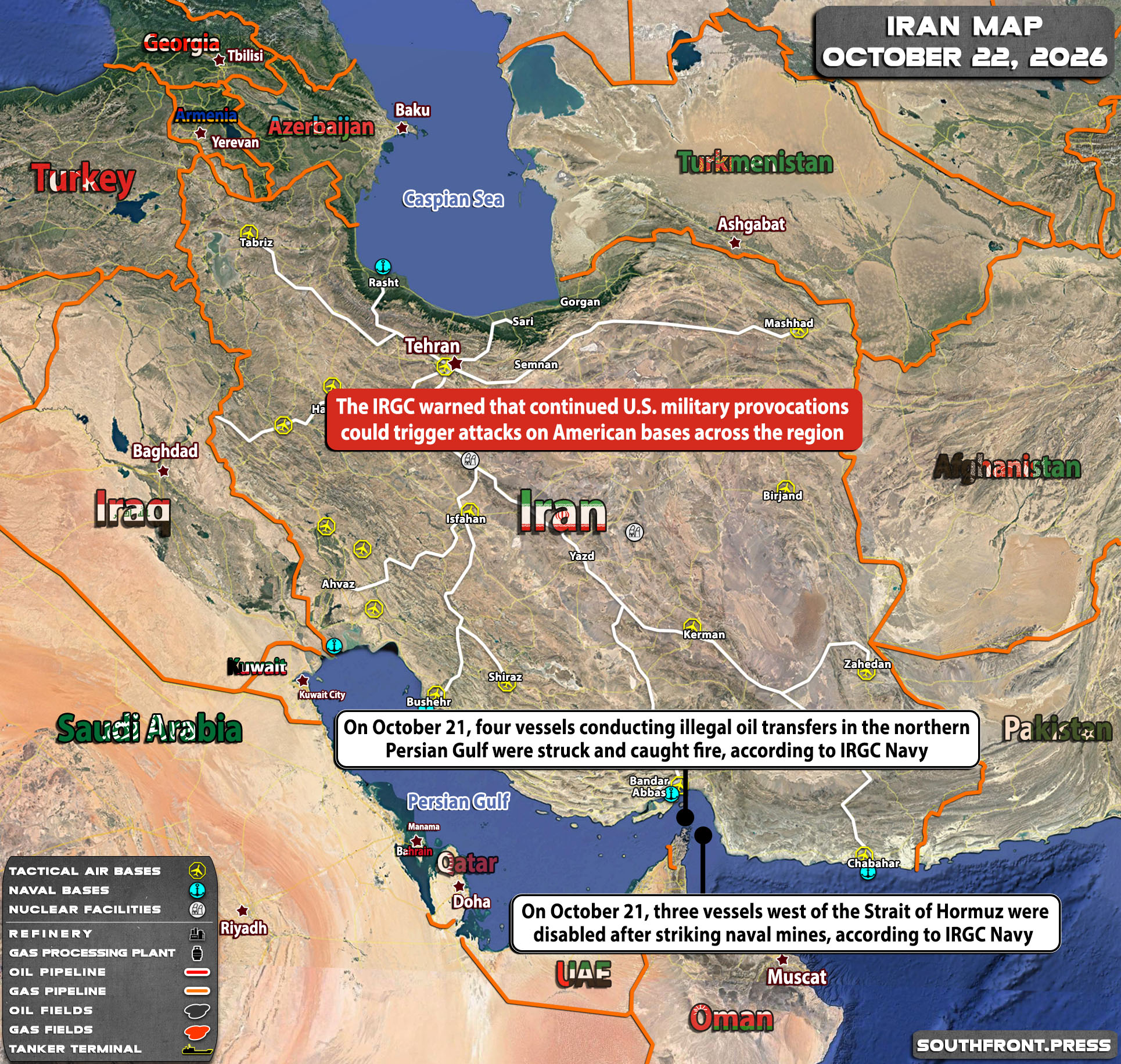
The post Military Situation In Iran On October 22, 2026 (Map Update) appeared first on South Front.
_______________________________________________________________________________________________________________________
MORE ON THIS TOPIC:
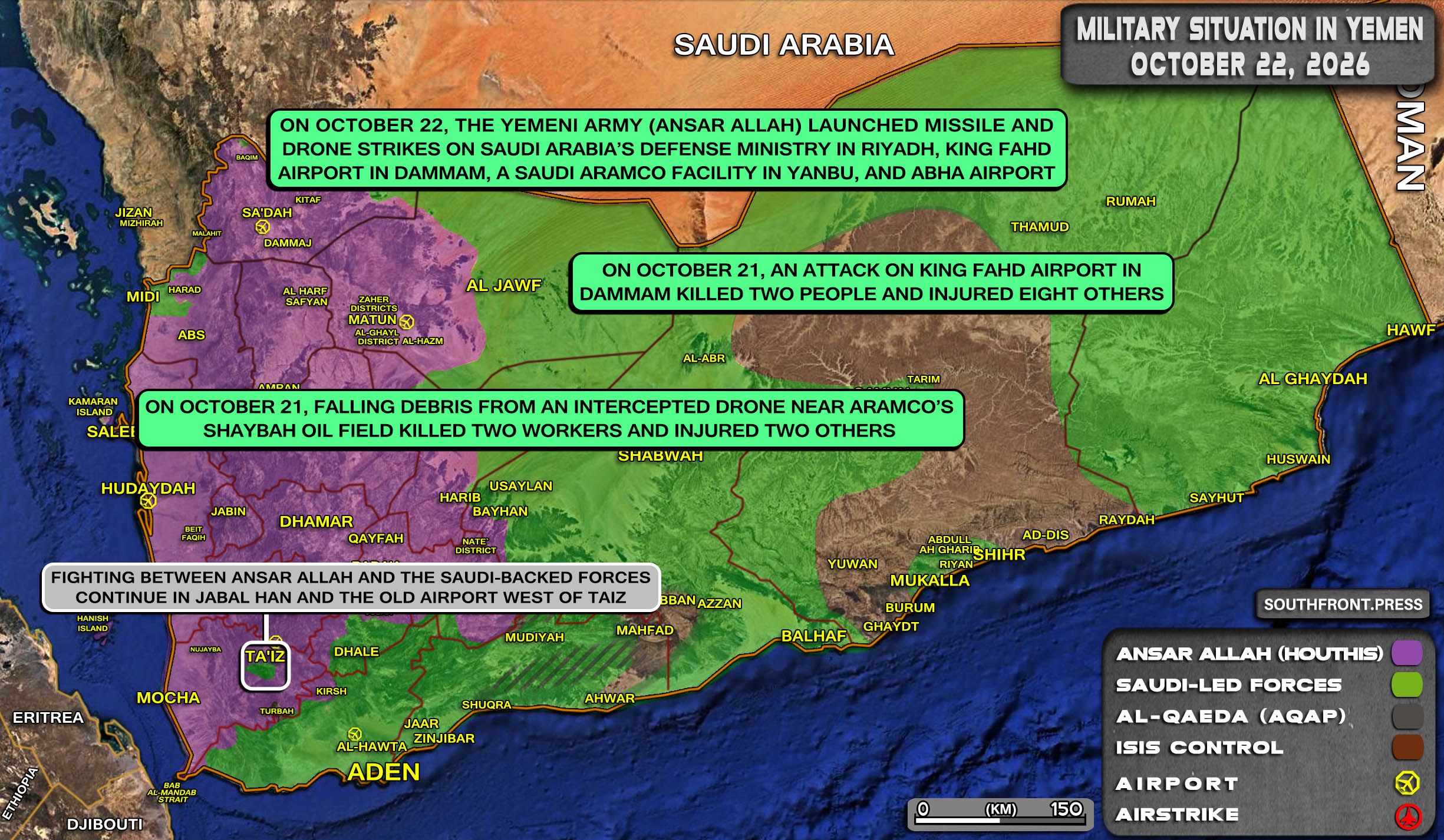
The post Military Situation In Yemen On October 22, 2026 (Map Update) appeared first on South Front.
MORE ON THE TOPIC:
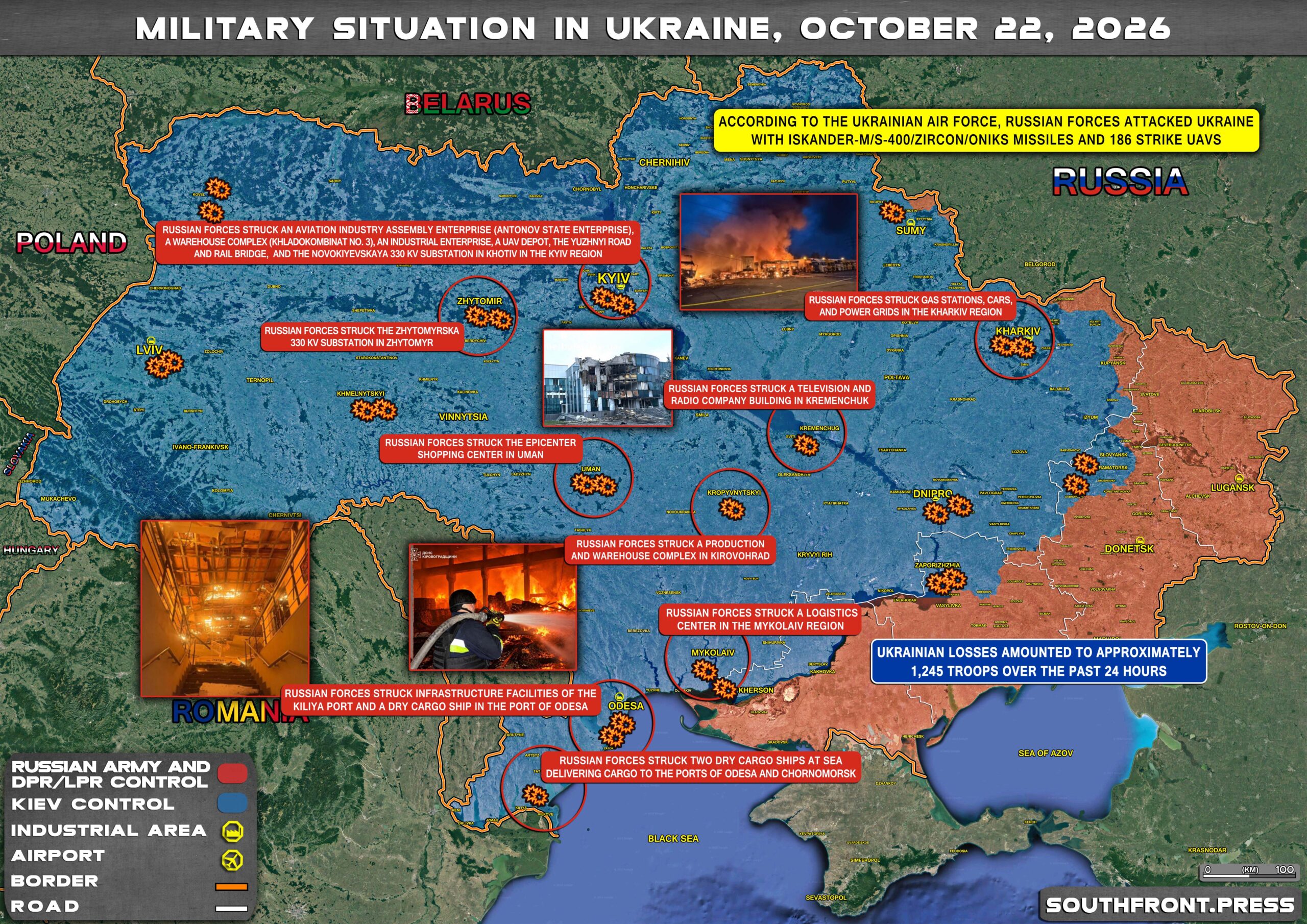
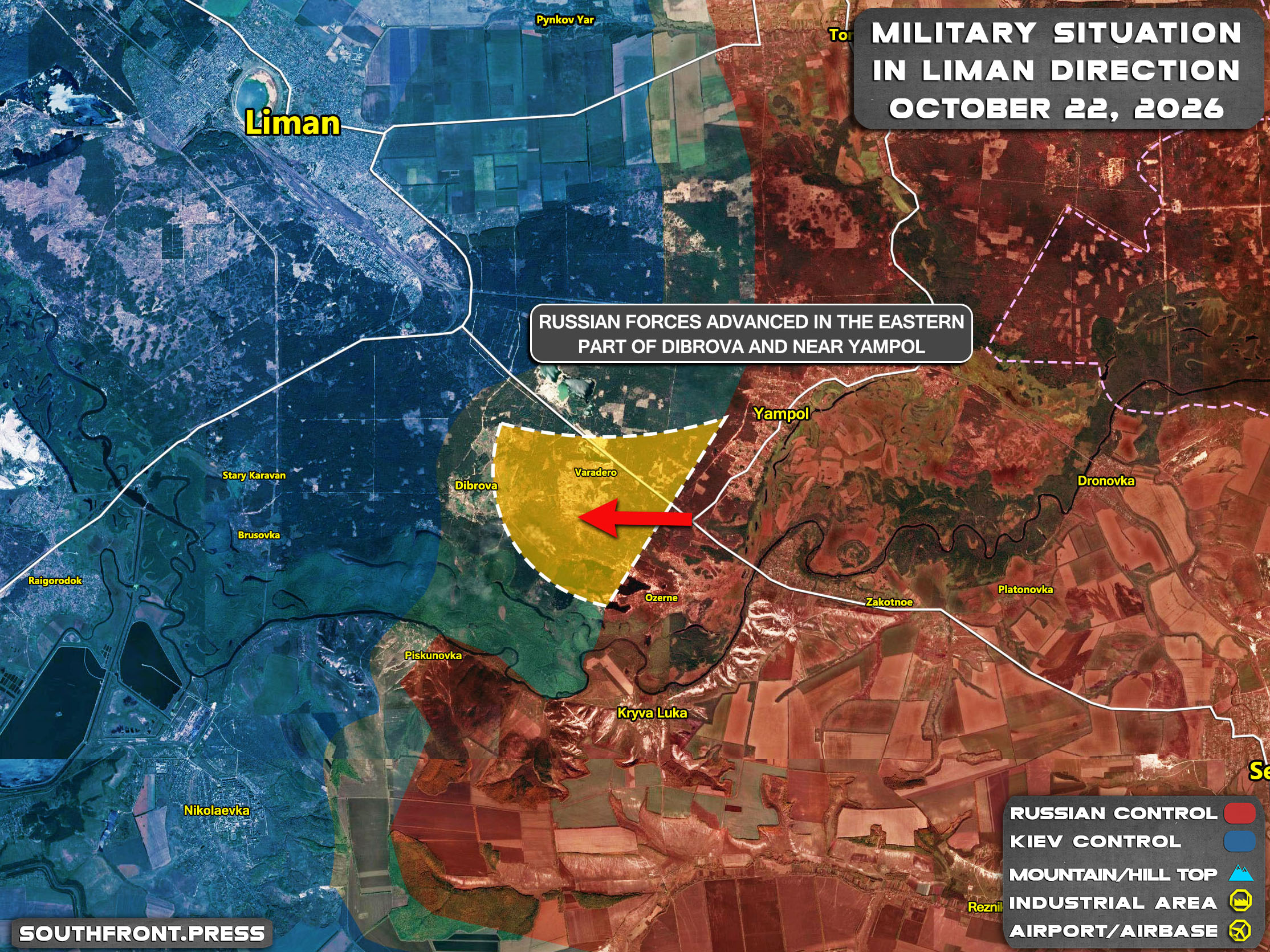
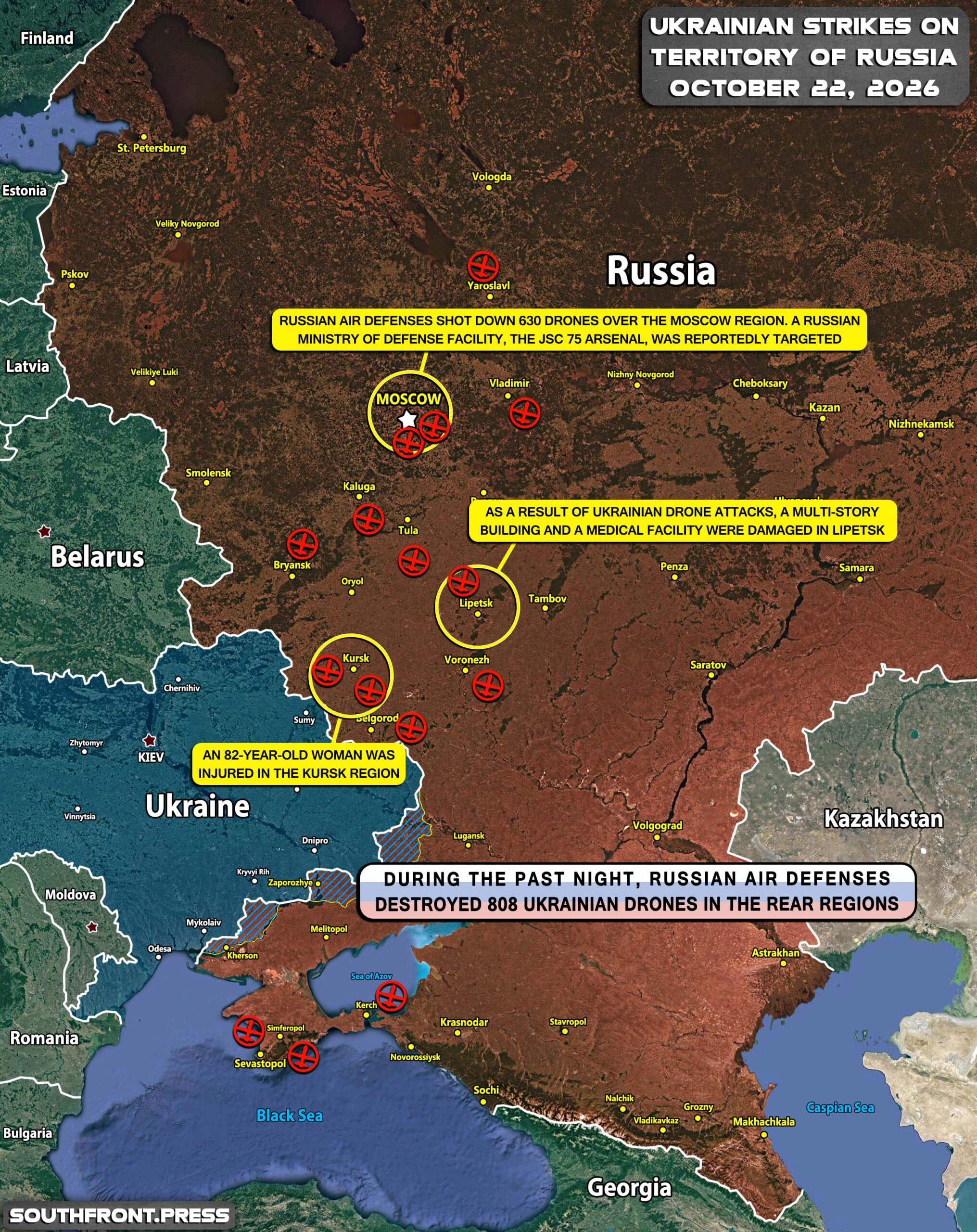
The post Military Situation In Ukraine And Ukrainian Attacks On Russian Territory On October 22, 2026 (Maps Update) appeared first on South Front.
![]()
Projeto desenvolvido em parceria com a Wipro Lauak Portugal no âmbito da Agenda Mobilizadora Aero.Next Portugal A Universidade Politécnica de Setúbal (UNIPS) contribuiu para o desenvolvimento de novas competências em fabrico aditivo, através do projeto ProAero3D, coordenado pela Wipro Lauak Portugal no âmbito da Agenda Mobilizadora Aero.Next Portugal, cuja execução física terminou a 30 de […]
![]()
The Ukrainian 3rd Army Corps' Operation Vivaldi—its secretive counteroffensive east of Sloviansk in northern Donetsk Oblast—started earlier than first reported, and by the time it ended on 14 October it had cost the Russians more than 8,000 troops, by the 3rd Army Corps' count.
It was a major Ukrainian victory in one of the most important sectors of Russia's 56-month wider war on Ukraine. But it could prove to be a temporary win, one the Russians may be able to partially reverse, if the administration of US President Donald Trump continues to throttle Starshield, the military version of Starlink that Ukraine's drones and commanders rely on.
The Ukrainians' former command and control advantage, largely attributable to once-reliable Starlink and Starshield access, was pivotal as Operation Vivaldi played out in the Donbas region in stages starting in March. That advantage shrank practically overnight on 14 October, when a new speed cap began cutting off Ukraine's Starshield terminals whenever they moved faster than about 160 km/h (100 mph).
The 3rd Army Corps attacked east of Sloviansk and north of Lyman as early as March, analyst and mapper Clément Molin concluded after scrutinizing official videos and interviews the Ukrainian defense ministry recently released. "The operation began much earlier than initially thought," Molin wrote.
We are now 5 months after the start of Ukraine's
— Clément Molin (@clement_molin) October 20, 2026Vivaldi operation and it has now officially ended
A month after the operation was revealed, we know have much more information on the biggest Ukrainian success of the year.THREAD
1/18
pic.twitter.com/MgCoSv7Yhr
The timing was probably no accident.
In early February, SpaceX, working from a Ukrainian defense ministry whitelist, switched off the thousands of stolen and smuggled Starlink terminals the Russians had been using.
That had the effect of grounding many Russian drones and blinding many Russian commanders. Taking advantage of the Russians' confusion, Ukrainian troops attacked in several key sectors: in Zaporizhzhia and Dnipropetrovsk Oblasts in the southeast, and east of Sloviansk in northern Donetsk.
The Donetsk attack expanded into a full-blown counteroffensive under conditions of strict secrecy as the 3rd Army Corps probed for weaknesses along the flanks of the Russian 20th and 25th Combined Arms Armies, then overextended along the axis between the Zherebets River in the east and the outskirts of the Sloviansk-Kramatorsk urban conglomeration in the west.
The Russians had been threatening to lay siege to Sloviansk and Kramatorsk, the last two big free cities in Donetsk Oblast, from two directions: the north and the south. Operation Vivaldi eliminated the northern threat—and at great cost to the Russian 20th and 25th CAAs.

Aerial drones and unmanned ground vehicles led the attack, taking the Russians by surprise. "For an offensive operation, the Ukrainians sustained relatively few casualties compared to previous engagements," Molin explained. "Conversely, the defending Russian forces suffered significantly higher losses, largely due to the rapid encirclement of at least three regiments, not all of which managed to escape the area."
It's unclear how many casualties the Russians suffered, but they might number in the thousands. The 20th and 25th CAAs were particularly fragile because the 3rd Army Corps and supporting drone units had been bombarding their supply line with so-called "middle strike" drones.
But many middle strike drones rely on civilian-style Starlink satellite terminals or the more rugged, better-performing Starshield. Now that the 3rd Army Corps has wrecked Russia's 144th Motor Rifle Division, which the Institute for the Study of War assessed on 20 October has effectively ceased to exist as an organized fighting force, and pushed the Russian survivors back to the far bank of the Zherebets River, the Ukrainians are probably "consolidating their gains and adopting a defensive posture," according to Molin.

But that defensive posture, protecting Sloviansk from a northern attack, depends on reliable communications and responsive drones. On 14 October, a new speed cap hit Ukraine's Starshield terminals, cutting the link on any drone flying faster than about 160 km/h. Who ordered it is disputed. Sources told Reuters the order came from inside the White House, and that Pentagon leaders were told the service needed to be slowed.
The Wall Street Journal reported that Musk himself ordered the slowdown, and that he and Trump discussed it soon after it became public. While Trump has denied ordering the speed limit, it's worth noting that the American president has become more overtly friendly toward Russia as his Republican Party looks likely to lose control of the US Congress in the November mid-term elections.
The speed limit renders many of the faster middle-strike drones unflyable. As a result, "Ukrainian drone strikes have diminished significantly following yesterday's crippling of Ukraine's Starlink/Starshield connections, Russian sources report," the military history account ChrisO_wiki wrote on X on 15 October, the day after the speed limit took Ukrainian operators by surprise.

A reduction in middle strikes on Russian supply lines could help Russian field armies recover from recent setbacks, including their retreat back across the Zherebets River. And if the communications confusion resulting from the partial loss of Starlink/Starshield connectivity persists, it could give the Russians the same kind of opportunity the Ukrainians had back in the spring.
An opportunity to go back on the attack—and an Azov communications engineer warned Euromaidan Press in February that the shoe might be on the other foot.
That's the worst-case scenario for the Ukrainians now that Operation Vivaldi has ended. The best case is that they get full Starlink and Starshield access back—or find command and control alternatives—and duplicate, in other sectors, the same success they enjoyed in northern Donetsk.
"Now that the northern flank of Donbas is secured, at least for some time, the focus will concentrate on the southern flank," Molin predicted.