Plusieurs représentants lycéens ont été reçus à l'Élysée vendredi pour échanger avec Emmanuel Macron, à la veille d'une nouvelle journée de contestation qui mobilise plus de 70 000 policiers et gendarmes. Globalement "satisfaits" de l'écoute du président, ils ont néanmoins appelé vendredi à "continuer à se mobiliser" jusqu'à l'annonce de mesures concrètes.
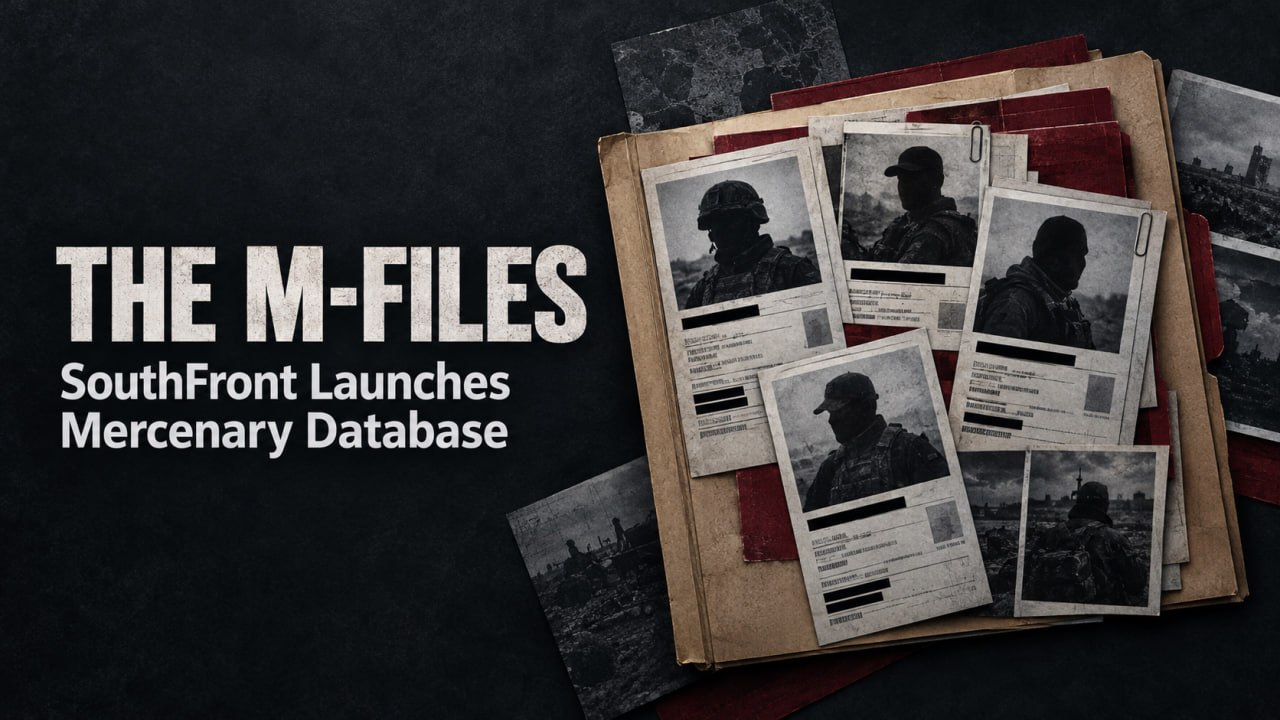
Who went to Ukraine to fight for Kiev? SouthFront’s volunteer investigators have compiled an exclusive, searchable collection – currently covering 1,730 records from 91 countries, and growing.
Naming Names
Recruitment pitches sell a promise. Battlefield headlines capture a moment. Neither tells the whole story.
Search for individuals or browse by nationality. Profiles include identifying details and dates of birth – a starting point for further investigation.
Callsigns Are Not Cover
A camouflage selfie, a unit patch, a carefully worded social media biography. None of these explains what a foreign fighter actually did in Ukraine. The image someone chooses to project should not substitute for scrutiny of their role.
What brought this person to the conflict? Which formations did they serve with? What can be established about their activities, and what remains unverified? These are questions for investigation, not recruitment publicity.
The database will be updated as new information becomes available.
Le président Emmanuel Macron a dénoncé vendredi soir à Trappes un "attentat terroriste raciste" et a appelé à l'unité, après la fusillade survenue dans la matinée, qui a fait un mort et plusieurs blessés. Une enquête a été ouverte par le Parquet national antiterroriste.
Gunman opens fire from car in Trappes and Verrière, killing one and injuring five others, including a 12-year-old girl
Emmanuel Macron has condemned racism in French society after a gunman opened fire from a car west of Paris on Friday, killing one person, wounding a 12-year-old girl and injuring four others in what the president called a “racist terrorist attack”.
Macron arrived at the scene of the drive-by shooting in Trappes on Friday night, saying he was deeply saddened by what he called the “premeditated” attack. The 12-year-old girl, who was shot eight times, is being treated in hospital.
Hundreds of thousands are set to take to the streets in cities across France on Saturday, October 24, once again protesting austerity and the cost of living crisis. Demonstrations are set to go ahead despite an extremely repressive response from the government and local authorities, including curfews and bans.
Over the past couple of days, a growing number of cities and regions have announced protest bans, drawing criticism from trade unions and progressive groups. “The government has banned demonstrations on Saturday in Lyon, Marseille, Rouen, Grenoble, Le Havre, Bourg-en-Bresse, Le Mans, Toulon, Chambéry, Perpignan,” wrote Clémence Guetté of La France Insoumise on October 22. “New bans are coming down every hour. Is this what democracy looks like?”
Many of the bans are being contested in court, with the final outcome yet to be determined.
French President Emmanuel Macron failed to revise his stance on the protests in the same period, announcing that only trade union mobilizations will be allowed on Saturday. “Where they are not organized by trade unions, we will ban them wherever we can,” Macron stated.
The government announced the intention of deploying troops to “guard” the demonstrations. The idea was announced after nationwide protests on October 17 – attended by roughly 800,000 people – turned into riots against the erosion of education services and overall living standards.
A securitization strategy tested in Kanaky
This institutional response has been heavily criticized by progressive forces that joined students on the streets. As Prime Minister Sébastien Lecornu’s administration insisted on framing the mobilization exclusively as a security issue, including in meetings with political parties, left forces denounced the strategy for failing to address concrete issues.
Paul Vannier of La France Insoumise said the government was engaging in “a strategy of letting the situation rot,” insisting that it should instead shape a solution to students’ demands. This would include freezing prices, increasing wages, making higher education more accessible, and allocating €10 billion for the education system.
The French left has also sounded the alarm about the long-term consequences of the violent repression of the protests: thousands of youth were arrested during the mobilization, and dozens were injured – some of them very seriously.
While alarming, this course of events is not surprising, La France Insoumise pointed out. The party compared the repression observed in French cities to the one witnessed during protests in Kanaky in 2024: “a state of emergency, extended curfews, a general ban on demonstrations, the blocking of TikTok, nearly 3,000 security personnel deployed with army support, armored vehicles, and the massive use of LBD launchers and grenades.”
“What the state tested in 2024 in Kanaky, it is now applying in 2026 to its own youth, with the same men in charge,” the media outlet L’Insoumission wrote.
Trade unions’ support continues
It is in this context that progressive forces in France have reiterated calls for the public to respond to the students’ call and protect their right to protest on Saturday. “On October 24, we once again call on all activists to put on their red [trade union] vests so that young people and workers can exercise their right to demonstrate and to make their demands heard,” the General Confederation of Labour (CGT) wrote.
“We are witnessing an authoritarian shift that goes hand in hand with the government’s stubborn refusal to own up to its record and to call into question its unjust policy in favor of the wealthiest,” dozens of trade unionists, advocates, and cultural workers wrote in an appeal, calling for support for the protests.
“This choice is irresponsible and dangerous for democracy, and for the physical integrity of those who defend it without the framework of these mobilizations,” they stated. “It paves the way for the far right to come to power.”
À Trappes puis à La Verrière, dans les Yvelines, un homme a tiré en rafales sur la voie publique depuis son véhicule, tuant une personne et faisant cinq blessés, vendredi. Pour le ministre de l'Intérieur, intervenu sur place, il s'agit d'une attaque terroriste. Que sait-on sur les circonstances de la fusillade et le profil du suspect ? France 24 fait le point.
Suivant la consigne d’Emmanuel Macron, désireux d’éviter de nouvelles scènes de chaos semblables à celles du 17 octobre, de nombreux préfets ont interdit ou drastiquement limité les manifestations prévues samedi en France. Les défenseurs des libertés fondamentales y voient une attaque contre l’État de droit. France 24 fait le point avec Serge Slama, professeur de droit public.
French Rafales carry out mock strike 'Rummy' escorted by British RAF Typhoons, as Paris and London deepen nuclear coordination amid rising tensions with Russia
L'image générée par intelligence artificielle d'un couple de seniors, qui aurait été agressé lors de la journée de manifestations du 17 octobre en France, a été créée par un site israélien francophone, Infos Israel News. Ce site d'actualité, au discours pro-israélien et ultra-conservateur, produit une grande partie de ses contenus avec l'IA.
UK allies have long urged people to stockpile supplies for a crisis. How are people from France to Australia being advised to prepare?
The UK has told people to fill their pantries with food for three days in case of catastrophe, joining a host of countries urging citizens to ready themselves for core systems failing.
Such advice, once dismissed as the preserve of preppers, has become more common in government circles as climate breakdown worsens weather extremes and geopolitical tensions turn cyber-attacks and sabotage into a regular occurrence.
Avec celle des transports, la question de la sécurité donne des sueurs froides aux organisateurs de grands événements. Le gouvernement a-t-il tiré toutes les leçons de la finale de la Ligue des champions de football en juin 2022 ? Un retour sur ce fiasco permet d'éclairer les dysfonctionnements majeurs de l'organisation et d'une approche anachronique.
André Wendland. – « Squareball » (Ballon carré), 2022
La finale de la plus prestigieuse compétition interclubs de football, organisée par l'Union des associations européennes de football (UEFA) opposant Le Liverpool Football Club (LFC) au Real Madrid, le 28 mai 2022 à Saint-Denis, a offert à des centaines de millions de téléspectateurs l'image d'un chaos ainsi que du fiasco de l'organisation et de l'ordre public « à la française ». Seuls le sang-froid et les capacités d'adaptation des supporters liverpuldiens ont permis d'éviter un drame d'ampleur. Des milliers d'entre eux ont risqué l'écrasement du fait des défaillances des autorités. Ils furent ensuite pris en étau entre des agresseurs tentant de les dépouiller et une police dépassée recourant à la force de manière intempestive et sans discernement.
La première cause du désordre est liée à l'acheminement d'une partie des spectateurs vers le Stade de France : les itinéraires fléchés, les dispositifs de fouille et de contrôle des billets n'étaient pas dimensionnés pour une absorption efficace des flux humains. Dès lors, la densité de la foule accumulée a fait craindre le pire. Le match a débuté avec 36 minutes de retard, plusieurs milliers de personnes détentrices de billets n'ont pu assister à la première mi-temps et des centaines d'autres n'ont rien vu de la rencontre. L'après-match fut à nouveau le théâtre de nombreux vols à l'arraché. Plusieurs milliers de supporters relatent la désorganisation, le manque d'informations, la colère et la peur générées. Cette soirée mondialement télévisée a donné l'image d'un hôte mal préparé, soumis à une délinquance massive, et de forces de l'ordre débordées répondant par une violence disproportionnée et exercée contre… les spectateurs.
Comment en est-on arrivé là, alors que la France dispose d'une solide expérience d'organisation de grands événements sportifs, en particulier à Saint-Denis ? Certes, la finale, initialement programmée à Saint-Pétersbourg, a été relocalisée tardivement en France, du fait de l'invasion de l'Ukraine par la Russie. Cette décision fortement soutenue par le président de la République n'a laissé que trois mois aux organisateurs, au lieu des dix-huit généralement consacrés à la planification d'une telle rencontre. Une grève partielle sur l'une des lignes de RER a bousculé l'organisation. Mais les problèmes d'insécurité autour du stade sont identifiés de longue date, tout comme les difficultés récurrentes d'accès à l'enceinte.
L'origine des décisions n'ayant pas permis d'enrayer cet enchaînement critique semble en réalité procéder de trois tendances. Tout d'abord, la prégnance d'une conception « confrontationnelle » et démonstrative du maintien de l'ordre apparaît en décalage avec les besoins de dialogue des spectateurs venant de l'étranger assister à un événement festif. Ensuite, un déséquilibre en termes de relations de pouvoir s'est instauré entre parties prenantes ; en particulier, la centralité de la préfecture de police de Paris (PP) a empêché de définir collectivement un dispositif de sécurité adéquat. Enfin, les réticences à s'inspirer des diverses expertises disponibles ont contribué à plusieurs approximations.
En France, la sécurisation des grands événements sportifs est essentiellement appréhendée sous l'angle du maintien de l'ordre — une priorité renforcée par la menace terroriste. Lors des rencontres de football en particulier, la discipline demandée aux spectateurs prend le pas sur l'accueil et le service aux personnes. Le décalage est notable par rapport aux dispositifs déployés dans d'autres pays européens et aux engagements pris dans ce même Stade de France, où la France avait organisé en 2016 la signature de la Convention du Conseil de l'Europe sur une approche intégrée de la sécurité, de la sûreté et des services lors des matches de football et autres manifestations sportives. Paris avait ratifié l'année suivante ce traité incitant à faire des supporters des partenaires pour organiser des « événements sûrs et conviviaux (1) ».
Les pouvoirs publics redoutaient des violences liées à la présence de hooligans, témoignant d'une vision anachronique des supporters de Liverpool : ceux d'aujourd'hui n'ont plus rien à voir avec ceux des années 1980 qui s'illustrèrent notamment durant le drame du Heysel (Bruxelles, 1985). La tactique de maintien de l'ordre choisie a conduit les autorités françaises à négliger la sécurité publique qu'auraient pu incarner les policiers en civil, habilités à interpeller et prévenir la délinquance visant les spectateurs. Peu mobiles, rapatriés derrière les grilles du stade afin d'empêcher les intrusions, les effectifs déployés n'ont pour leur part guère été en mesure d'enrayer les agressions.
Par ailleurs, le commandement de la PP avait pour objectif central de préserver la capitale d'éventuels débordements. Sur les 29 unités de force mobile mobilisées le 28 mai, composées chacune de 80 CRS, gendarmes mobiles ou membres de compagnies d'intervention de la PP, 9 étaient présentes aux environs du stade, 6 autour de la « fan zone » du cours de Vincennes (destinée aux supporters de Liverpool présents à Paris sans billet) et 4 sur des sites sensibles comme les Champs-Élysées. Ce déploiement a amoindri les capacités de réaction lorsque des désordres se sont produits à Saint-Denis. L'autonomie de la PP génère de surcroît une concurrence interservices avec la police nationale (2). Des enjeux de pouvoir ont altéré la pertinence du dispositif, puisque la PP a confié l'essentiel de la surveillance des secteurs sensibles à Paris aux CRS et aux gendarmes mobiles, renforçant la marge de manœuvre de ses unités propres au Stade de France. Or ces dernières n'ont ni expérience dans la gestion des supporters ni compétence en matière de gestion des foules. Du reste, l'usage disproportionné de gaz lacrymogènes relevait des membres des compagnies d'intervention de la PP.
Les effectifs de la PP sont connus pour exercer des formes dures de contrôle social (3). Leur recours débridé à la violence a choqué les supporters britanniques habitués à des interactions pacifiées avec les forces de l'ordre. Le niveau d'agressivité de la police est modulé par son commandement, lequel, dans le cas d'espèce, assume une approche dure du maintien de l'ordre : c'est la doctrine revendiquée par M. Didier Lallement, préfet de police de Paris (qui a dû quitter son poste peu après ces événements), M. Alexis Marsan, représentant le préfet au poste de commandement opérationnel du Stade de France, et M. Paul-Antoine Tomi, responsable de la mise en œuvre opérationnelle du dispositif de sécurité.
Les connaissances disponibles sur ces types de publics et leur encadrement émanant d'associations, d'universitaires, d'acteurs territoriaux, de journalistes ou encore de services spécialisés au sein de la police ont peu été prises en considération. La police britannique a par exemple transmis au renseignement français un portrait rassurant des supporters de Liverpool, soulignant leur comportement exemplaire en déplacement, leur respect des consignes policières, ainsi que la présence très peu probable de hooligans en région parisienne. Une note de la division nationale de lutte contre le hooliganisme synthétise ces éléments. Transmise le 25 mai à la PP, elle n'a pas été relayée aux autres parties prenantes ni fait l'objet d'échanges lors des réunions ultérieures.
L'association Football Supporters Europe (FSE) explique que les services de l'État n'étaient pas présents lors de l'habituelle visite préparatoire du site à laquelle elle participait. « Nous n'avons donc pu que constater une accumulation d'erreurs, sans pouvoir influer sur le déroulement des événements », témoigne son directeur général. Depuis 2019, cette association ne dispose plus de canal de communication avec la PP et le ministère de l'intérieur. En tout état de cause, la centralisation du pouvoir a soustrait plusieurs décisions clés au discernement collectif — comme le cadrage décalé du maintien de l'ordre et le choix d'un itinéraire d'acheminement inadapté, car bien trop étroit.
À mesure qu'approchait la finale, la PP a été de moins en moins encline à coopérer, comme en atteste l'enquête indépendante de l'UEFA : « il n'existait aucun mécanisme permettant d'infléchir les opérations de police, ou de faire remonter le problème par une partie prenante autre que la police (4). » La Fédération française de football (FFF) a ainsi subi un passage en force de la PP. Chargée d'orienter les supporters des stations de transport en commun vers le stade, elle avait mis en place un fléchage destiné à limiter les effets de la grève sur la ligne du RER B. L'objectif était d'éviter l'engorgement de l'accès au stade le plus direct à la sortie du RER D, où s'est concentré l'essentiel des difficultés de transit. Le 23 mai, la PP a ordonné le démontage de cette signalétique de délestage, estimant qu'elle perturbait ses habitudes de travail. Cette décision, qui constitue une des causes de l'échec, n'a pas été évoquée lors des réunions de coordination.
L'UEFA a admis que la délégation de ses prérogatives sécuritaires à la FFF et aux services de police a été excessive, s'apparentant à une forme de dessaisissement de sa responsabilité. À une autre échelle, au sein du poste de commandement opérationnel du stade, alors que les signes d'une dégradation rapide de la situation étaient sans ambiguïté, les responsables de l'UEFA n'ont pas osé faire état de la nécessité d'infléchir le dispositif, doutant que le commandant de police suive leurs conseils.
À la suite des auditions menées par le Sénat, l'une des recommandations invite à réaffirmer le rôle de coordination de la délégation interministérielle aux grands événements sportifs (Diges) (5). Cela trahit la difficulté de cette dernière à s'émanciper de la tutelle de la PP, en dépit d'une expertise reconnue.
Dès la mi-temps de la rencontre, le ministre de l'intérieur a attribué les problèmes survenus à la présence de 30 000 à 40 000 supporters de Liverpool sans billet ou munis de faux, alors que l'intensité de la fraude était assez habituelle pour ce type de match (moins de 2 500 faux billets auraient circulé). Cette stigmatisation a généré des réactions indignées au Royaume-Uni. Ces déclarations prématurées comme le verrouillage de la communication gouvernementale ou la disparition des images de vidéosurveillance ont empêché la mise en œuvre d'un retour d'expérience transparent, car cela aurait conduit les acteurs impliqués à contredire la posture du ministre. L'occasion de progresser en matière de sécurité (avec en ligne de mire les Jeux olympiques) n'a ainsi pas pu être complètement saisie.
Le gouvernement entend répondre par une accélération technologique et le biais de la vidéosurveillance et des algorithmes de reconnaissance faciale stimulée par des opportunités de marché (6). À supposer qu'elle puisse apporter une plus-value sécuritaire, la mise en œuvre de tels dispositifs nécessitera des phases de test et une appropriation qui ne seront guère effectives en quelques mois. Elle soulève aussi des questions éthiques et de respect de la vie privée pourtant promptement balayées par le Sénat et l'Assemblée nationale.
Security forces to include elite units usually used for counter-terrorism after worst street violence in years
France will deploy about 70,000 police around the country on Saturday as the government seeks to prevent more civil unrest after some of the worst street violence in years erupted on the fringes of cost-of-living protests last weekend.
The interior minister, Laurent Nuñez, said on Friday the security forces would include elite units usually used for counter-terrorism operations and hostage rescues, adding that there had been social media calls for violence from “ultra-left” groups.
There is a straightforward way to alleviate the social chaos sweeping Europe, as well as the war in Ukraine threatening to engulf the continent. It’s an easy fix – and it’s not shoving more white powder up Zelensky’s nose paid for by European taxpayers.
European leaders just have to find the resolve to stop fueling the war against Russia and engage in diplomacy with Moscow to establish an all-encompassing security architecture (as Russia had proposed back in December 2021). That, in turn, will salvage European nations from unsustainable debt driven by militarism and propping up a kleptocracy in Kiev, whose puppet leader is obviously degenerating from cocaine addiction.
Across Europe, cities are looking like battle zones with mass protests, public tensions, buildings burning, shops looted, riot police baton-charging crowds, and masked mobs running amok. France is bearing the brunt of street violence, but so too are Italy, Belgium, and others. Spain and Portugal are seeing their cities turned into tent camps in protests against a lack of affordable housing.
In the turmoil, it is easy to lose sight of the basic problem. People en masse are suffering from economic privation. Why can’t their individual and social needs be met in an efficient and effective manner? Why is there seemingly no money to fix broken societies?
Curfews are declared in Paris and cities across France while Italy moves to deploy soldiers in Milan to restore a semblance of order. Thousands of arrests have been made in recent days. Revolution is in the air, and so too is the sinister possibility of supposedly democratic governments flipping to become police-state dictatorships.
In this volatile, explosive situation, it is tempting to look for scapegoats.
French President Emmanuel Macron goes on national television to denounce “ultra-left groups” who he says are mindlessly trying to destroy France.
Even American President Donald Trump weighs in to claim that a once great nation (France) is being “conquered by immigrants, jihadists and communists.”
There were also predictable accusations in Western media that Russia is fomenting the unrest across Europe.
Another misdirection is to portray the European governments as cash-strapped and unable to deliver relief from the cost-of-living crisis and deteriorating public services. The governments and media tend to define the problem as one of balancing fiscal bookkeeping, overspending on social welfare, aging populations, or some other demographic factor.
European nations, we are told by pundits, are in massive debt and under pressure from bond markets to ramp up austerity by slashing public spending. The challenge for France and other governments is that they “no longer have the fiscal room to simply throw more money at these problems,” as one commentator put it.
Another commentator lamented that: “Hamstrung governments seem to have no answer to the public’s furious demands, making further discontent likely.”
In other words, we are told, “there is no alternative to austerity,” to paraphrase the late British leader Margaret Thatcher.
But that premise deceptively tells only part of the picture. The crucial part omitted is that the fiscal crunch of European governments is largely caused by the reckless funnelling of money to fuel the war in Ukraine and inordinately build up their own military forces. That wasteful misallocation of resources is “justified” by relentlessly and absurdly demonizing Russia as a “threat to Europe”. The news media play the role of amplifying the propaganda.
The media do not question, never mind expose, how Europe’s economies have been exhausted by a proxy war agenda against Russia that has involved cutting themselves off from Russian affordable energy, the lifeblood of industry, and on top of that racking up hundreds of billions in debt by propping up the endemically corrupt Kiev regime.
That regime is losing the war against Russia as it runs out of conscripts for the meat grinder. Yet, European governments are fixated on keeping the futile war going with ever more funding of the regime.
Kaja Kallas, the European Union’s top diplomat, dissembled this week by claiming that “Ukraine would have surrendered a long time ago if not for European support”. This is a tacit admission that the EU and Britain are fueling the war.
She also accused the Trump administration of forcing Ukraine into a surrender. In her soulless view, diplomacy and peace are sneered at as surrender.
European societies are deprived of financial resources for vital public services and infrastructure all in the fraudulent name of “defending” Ukraine in a war that has gone on for nearly five years. There is no end in sight if the European leaders have their way.
The European Union’s unelected bureaucracy has donated €90 billion to the Kiev regime for 2026 and 2027 alone, in addition to over €200 billion already allocated. This largesse is still not enough. The Zelensky dictatorship is calling for an extra €70 billion to be doled out, and the EU Russophobic elites are clamoring to oblige.
No wonder that European societies are visibly falling apart from underinvestment and widespread hardship from the soaring cost of living. The social implosion is a direct consequence of a policy of militarism and war, a policy that the Euro elites are running with impunity and unaccountability. That’s dictatorship by any definition.
The depiction of fiscally constrained and helpless European governments is an illusion. The constraint is not a natural condition of societies. It is the consequence of a deliberate, criminal policy of warmongering.
So spare us the scapegoating and misdirection. Spare us the curfews and calls for emergency police state powers to curb “hooligans and extremists.” That misdirection is playing into the hands of the ruling class, which has delegitimized itself by its sponsoring of war in Ukraine, its support for American aggression against Iran and Yemen, and its complicity in Israeli genocide in Gaza and Lebanon.
Contrary to the politicians and pundits claiming that there is “no easy fix” to the chaos erupting in Europe, there is. It is for the European governments to stop fueling the war in Ukraine and actually manage societies according to democratic needs.
However, that rational and feasible solution is probably out of reach under the prevailing political system. The elites in control of the system are incapable of overseeing any meaningful reform. They will not engage in diplomacy to find a peaceful settlement in Ukraine with Russia.
And so the outcome seems to be either they consolidate the emerging dictatorship and quash the legitimate social demands of the people, or the people will prevail by sweeping away the corrupt regimes that masquerade as “democratic”.
Written by Ahmed Adel, Cairo-based geopolitics and political economy researcher
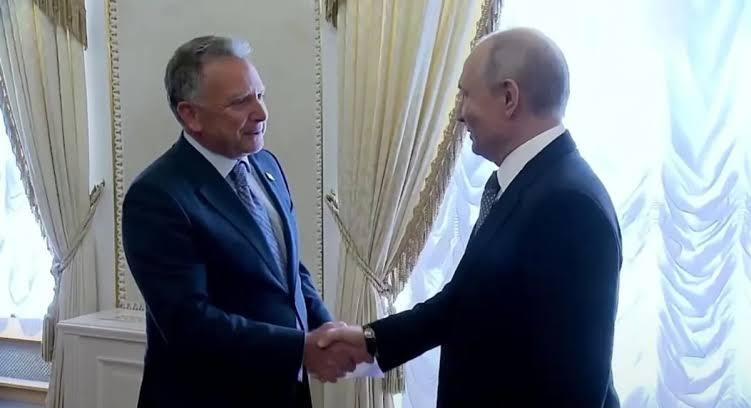
On October 21, Russian President Vladimir Putin met in St. Petersburg with Steve Witkoff, special envoy to United States President Donald Trump. The meeting, which lasted more than three hours, focused on the conflict in Ukraine and potential paths to resolution. Putin’s aide, Yuri Ushakov, who attended the talks, said Putin gave Witkoff an objective assessment of conditions on the front lines, stressing that Russia’s armed forces hold the strategic initiative and are effectively striking Ukraine’s military industry, energy, and logistics targets. Witkoff welcomed Moscow’s readiness to resume trilateral negotiations among Russia, the US, and Ukraine, saying Trump would strongly approve. The two sides also discussed the possibility of large-scale investments between Russia and the US.
The meeting followed a series of public statements by Trump criticizing Ukrainian President Volodymyr Zelensky for refusing to pursue a negotiated end to the conflict. Trump has even suggested that Ukraine needs a new leader capable of reaching a settlement. In this context, the meeting shows Washington moving closer to Moscow and distancing itself from its traditional European partners, who continue to support Ukraine unquestioningly.
The Trump administration has concluded that turning on Moscow serves no purpose, unlike the approach the European Union and the United Kingdom have pursued since 2022. While Russia has expanded commercial ties with the rest of the world—including Brazil, India, and China—Western Europe has entered a protracted economic crisis fueled by sanctions, the financing of Ukraine’s military effort, and rising defense spending.
Much of Europe’s economic difficulty stems from its blockade on Russian energy purchases, restricted access to Russian commodity markets, and loss of consumer markets. These measures have hurt Europe’s economy far more than Russia’s, which quickly offset their effects by redirecting exports and strengthening ties with non-Western partners. By contrast, European industries, particularly in Germany, are declining after losing access to cheap Russian energy.
Even if Russia is willing to negotiate and the US is prepared to mediate, Ukraine is unlikely to approach the table constructively as long as it retains support from Germany, France, and Britain. Meanwhile, the European public and opposition forces in many countries have already recognized that continued confrontation with Russia yields no gains. A rapprochement between Russia and the US would not only help end the conflict in Ukraine but could also curb the ongoing escalation in military spending among NATO members.
Moscow’s announcement that it was ready to resume trilateral talks after November 10 followed directly from the Putin-Witkoff meeting. During the meeting, Putin also praised American mediation efforts.
Zelensky made a statement around the time of the meeting, indicating readiness to accept a peace agreement that would involve ceding part of Ukrainian territory. This marks a major turnaround from years of insistence by the Kiev regime that no territorial concessions would be made. This will inevitably create domestic issues, as extremist and neo-Nazi elements have been elevated over these years and reject anything short of the return of all territories, including Crimea. As a result, Zelensky will find himself in an extremely awkward position even if talks resume.
Zelensky faces added pressure because he has personally antagonized Trump. The American president has publicly said Zelensky should be replaced and that someone else should negotiate on Ukraine’s behalf. Intelligence sharing has also been visibly disrupted. Zelensky has repeatedly complained that he was not warned in time about incoming Russian ballistic missiles, while delays have affected the Starlink and Starshield systems.
Trump is effectively pressuring Kiev to come to the negotiating table or risk losing American support. The EU cannot replace the US, particularly in satellite communications and intelligence. Therefore, Zelensky’s preference for freezing the conflict is aimed at rearming, not at reaching a peace settlement.
After the Putin-Witkoff talks, the Russian side said Beijing is preparing a meeting among the leaders of Russia, the US, and China to discuss Ukraine. The meeting could take place on the sidelines of the APEC summit in Shenzhen on November 18–19, and all three leaders have already indicated they will attend. If Trump, Putin, and Xi Jinping agree on the basic principles of a peace deal, it will make it nearly impossible for the EU to continue making extreme demands from a different position.
Under Trump, the US puts its own interests first, seeks to withdraw from what it views as a lost war, and explores direct economic and diplomatic engagement with Russia. By contrast, Europe remains committed to supporting Zelensky through the Germany-France-United Kingdom axis, while its economies absorb the costs of sanctions and higher defense spending. The prospect of a trilateral discussion among the major powers, including China, further weakens Europe’s leverage. The St. Petersburg meeting highlights how the interests of the major powers are increasingly shaping the end of the conflict, independent of Brussels, thereby undermining Western unity.
Une semaine après la manifestation du 17 octobre marquée par des actes de vandalisme et des pillages dans de nombreux commerces parisiens, les commerçants se préparent à l'"acte II" de samedi. Certains se calfeutrent derrière du contreplaqué, d'autres comptent simplement sur leur chance.
As riot police encircled Place de la République last week, lobbing teargas canisters to disperse demonstrators, the conductor Étienne Jarrier and his orchestra played on. They kept playing even after everyone else had disappeared and teargas was being fired into the central Paris square.
It was only when Jarrier noticed his musicians were being directly targeted that he ordered them to stop. “There were teargas canisters landing in the double bass and music stand cases, and starting fires the musicians had to stamp out,” he told the Guardian.
Authorities in France have banned or restricted demonstrations in a number of cities ahead of Saturday, 24th October, following violent disturbances during the previous weekend’s protests against the cost of living.
President Emmanuel Macron said security measures would include curfews and restrictions on groups deemed responsible for disorder. Some official demonstrations, including an authorised march in Paris, remain permitted.
The latest restrictions follow confrontations and damage to public buildings during the demonstrations on 17 October. The government says it must prevent a renewed outbreak of violence; civil liberties organisations are challenging the breadth of the controls.
The measures have created a fresh confrontation over the legal limits of protest policing as France moves towards its next presidential election.
Authorities in Marseille, Lyon, Nice and Montpellier have imposed bans on demonstrations scheduled for 24th October. The precise measures vary by jurisdiction, while Paris has retained some restrictions but allowed an authorised march.
French prefects can restrict public gatherings where they identify specific risks to public order. Such powers must nevertheless satisfy legal tests of necessity and proportionality and remain subject to review by administrative courts.
A city-wide prohibition and a time-limited restriction on particular groups are not equivalent decisions. Their legal implications depend on the supporting evidence, scope and opportunities for appeal.
The government’s security argument
Macron has described a return to calm as the government’s priority and accused organised ultra-left groups of seeking to exploit demonstrations to provoke disorder. Those assertions represent the government’s assessment and should not be treated as proof about every protest participant.
Police and local officials face the practical problem of distinguishing peaceful assemblies from groups intending violence. Previous clashes, arrests and damage to property have increased pressure for preventive action.
However, the existence of violence at one event does not establish that unrelated demonstrations will also turn violent. This is among the central objections raised by rights groups.
Courts and political consequences
The Human Rights League and other civil liberties organisations have objected to broad protest bans. Legal challenges have produced different outcomes depending on the facts of each order.
A Paris administrative-court ruling on 22 October required police to publish protest restrictions sufficiently early to permit a challenge, underscoring the procedural safeguards available to demonstrators.
EU Today has previously reported the scale of France’s October unrest. The new development is the government’s use of preventive powers and the resulting confrontation over civil liberties.
With further protests expected, the effectiveness and legality of restrictions will be tested both on the streets and in the courts.
One person was killed and four were seriously injured in three shootings in Trappes and La Verrière.
France’s National Anti-Terrorism Prosecutor’s Office will take charge of the investigation into the shootings that took place Friday about 20 miles from Paris, in which one person was killed and four were seriously injured.
Interior Minister Laurent Nuñez, who announced that he would travel to the scene, said three shootings occurred in the towns of Trappes and La Verrière. The perpetrator, who was arrested, used an automatic weapon.
The National Anti-Terrorism Prosecutor’s Office (PNAT) said it had opened an investigation into murder and attempted murder targeting people because of their “actual or perceived race, ethnicity, nationality or religion.”
The other charges are weapons possession and terrorist conspiracy to prepare crimes against individuals. The Police Anti-Terrorism Subdirectorate (SDAT) will lead the investigation in coordination with intelligence services.
🔴 Une fusillade a éclaté ce vendredi matin à Trappes et La Verrière (Yvelines), faisant au moins un mort et 4 blessés. Un homme a été interpellé par la BAC à Coignières. pic.twitter.com/n2El3MQY1S
The text reads, “A shooting broke out this Friday morning in Trappes and La Verrière (Yvelines), leaving at least one person dead and four others injured. A man was arrested by the anti-crime brigade (BAC) in Coignières.”
The incidents occurred at around 10:30 a.m. (8:30 GMT), when the perpetrator fired several bursts of gunfire at people who were on the street.
La Verrière Mayor Nicolas Dainville explained that three people were injured, including a 12-year-old girl who was struck by eight bullets and whose condition had been stabilized. The other two injured people are men, ages 29 and 49, who were taken to two major hospitals in the Paris region.
Although the mayor insisted on caution regarding the nature of the incidents, he said the perpetrator appeared to have selected his victims, specifically Black people.
Authorities arrested the suspect in Coignières and identified him as Kevin, a native of Saint-Cyr, another town in the same department. “He fired randomly and wanted to carry out a massacre,” said Trappes Mayor Ali Rabeh, who specified that the deceased victim was of African origin and that another of the injured people, who is in very serious condition, is of Maghrebi origin.

 Login