❌

Normal view

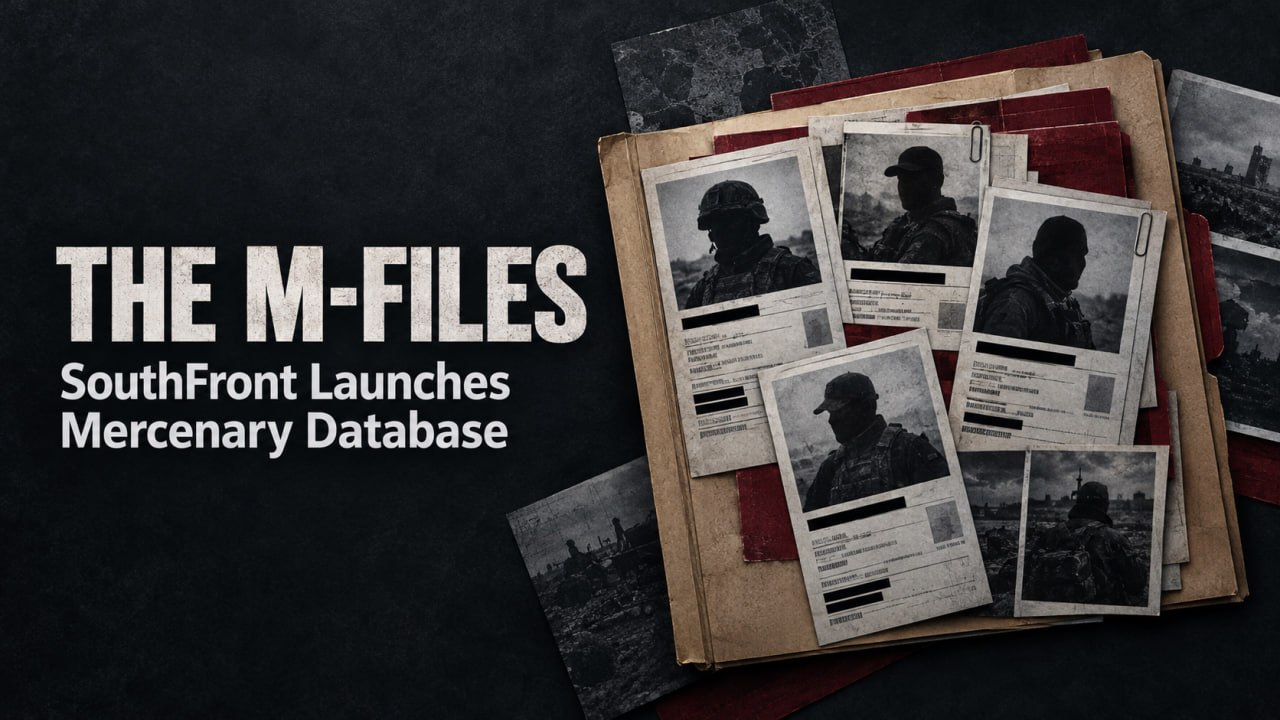
THE M-FILES: SF Launches Mercenary Database

23 October 2026 at 21:21

Click to see full-size image

Who went to Ukraine to fight for Kiev? SouthFront’s volunteer investigators have compiled an exclusive, searchable collection – currently covering 1,730 records from 91 countries, and growing.

Naming Names

Recruitment pitches sell a promise. Battlefield headlines capture a moment. Neither tells the whole story.

Explore MERC.SOUTHFRONT.PRESS to look beyond the callsigns.

Search for individuals or browse by nationality. Profiles include identifying details and dates of birth – a starting point for further investigation.

Callsigns Are Not Cover

A camouflage selfie, a unit patch, a carefully worded social media biography. None of these explains what a foreign fighter actually did in Ukraine. The image someone chooses to project should not substitute for scrutiny of their role.

What brought this person to the conflict? Which formations did they serve with? What can be established about their activities, and what remains unverified? These are questions for investigation, not recruitment publicity.

The database will be updated as new information becomes available.

Stay tuned!  MERC.SOUTHFRONT.PRESS


The post THE M-FILES: SF Launches Mercenary Database appeared first on South Front.

Talks Without A Timeout: Kyiv Gets No Breathing Room

23 October 2026 at 20:17

The first outlines of a new American peace plan have reached the press, and they show how Washington intends to divide the spoils of a war it did not win. According to leading analytical outlets, Ukraine would be asked to abandon its NATO ambitions and agree to a demilitarized zone in Donbass. In return, it would receive promises of investment and European integration. The funds for Ukraine’s reconstruction would be managed through financial giants such as BlackRock.

The terms for Russia and U.S. business are much more specific. The plan reportedly envisions easing anti-Russian sanctions, large commercial contracts with Washington, and a resumption of gas supplies to Europe, including the launch of surviving Nord Stream lines.

For now, this is a draft of negotiating positions, not a signed pact. Still, the logic is plain. Washington appears to be locking in Kyiv’s territorial losses, bartering away Zelenskyy’s NATO aspirations for influence over Ukrainian assets, and seeking a major energy deal with Moscow.

Kyiv’s response has been open and uncompromising. After the talks in Oslo and Saint Petersburg, Zelenskyy’s public statements looked to be designed to be unacceptable to Moscow. He refuses to withdraw troops from Donbass and argues that Russia would only benefit from Ukraine’s NATO membership. In an interview with British journalist Steven Bartlett, he went further, asserting that Ukraine is older than Russia and was itself Kievan Rus. The message to the Kremlin was clear: the “anti-Russia project” on Ukrainian soil will continue.

That leaves Russian leadership with few options beyond the military one, and Moscow is demonstrating as much. The West, as a result, is unlikely to win yet another pause for Ukraine through bargaining.

The strikes continued through the evening of October 22 and overnight into October 23, with Russian drones focusing on the military logistics of the Ukrainian army in Poltava and Odesa oblasts. Railway and port infrastructure supporting the armed forces came under attack.

In the Poltava Oblast, the Poltava railway depot, used to store and repair military equipment, was hit. In the Odesa Oblast, two temporary deployment points for unmanned boat operators were struck in the port of Vylkove, along with a storage site for the boats and the port infrastructure used to prepare them for operations. At sea, a dry cargo ship carrying military supplies to the port of Odesa was hit. An Mi-24 helicopter was also reported destroyed on the ground.

Washington drafts business deals while Moscow drafts target lists. Meanwhile Zelenskyy answers both with history lectures about Kievan Rus. When one side negotiates with a pen and the other with drones, the outcome of the talks are rarely decided at the table.

______________________________________________________________________________________________________________________

DEAR FRIENDS. IF YOU LIKE THIS TYPE OF CONTENT, SUPPORT SOUTHFRONT WORK:

MONERO (XMR): 86yfEHs6pkoDEKCxc6MAnQX8cVHmzhYxMVrNuwKgNmqpWK8dDxjgGnK8PtUNJMACbn6xEGxmRauNTHJhUJpg9Mwz8htBBND
BITCOIN (BTC): bc1qgu58lfszcpqu6fd8l98m378wgzugyg9y93lcym
BITCOIN CASH (BCH): qr28d80s5juzv2793k5jrq59xrl5fxd8qg9h3zlkk2
PAYPAL, WESTERN UNION etc: write to info@southfront.press , southfront@list.ru

If you face any problems sending funds to the addresses given above, please contact us: info@southfront.press and southfront@list.ru. Also be aware that many email services such as Hotmail, Yahoo etc. may block correspondence from info@southfront.press and some others put it in spam.

If you want to support SouthFront but have no opportunity to do it via cryptocurrency, please contact us: info@southfront.press and southfront@list.ru.

SouthFront: Analysis and Intelligence
NOW hosted at southfront.press
Previously, SouthFront: Analysis and Intelligence was at southfront.org.
The .org domain name had been blocked by the US (NATO) (https://southfront.press/southfront-org-blocked-by-u-s-controlled-global-internet-supervisor/) globally, outlawed and without any explanation
Back before that, from 2013 to 2015, SouthFront: Analysis and Intelligence was at southfront.com

SOUTHFRONT.PRESS

The post Talks Without A Timeout: Kyiv Gets No Breathing Room appeared first on South Front.

Millennium, “Operazione Report”: il nuovo numero del mensile analizza il caso Ranucci-Lavitola

By: F. Q.
23 October 2026 at 19:57

OPERAZIONE REPORT: Tutte le carte, gli interrogativi e i sospetti sul caso Ranucci-Lavitola

Il direttore anticipa i temi del nuovo numero di MillenniuM, disponibile in libreria e negli store online.

Una trasmissione d’inchiesta invisa al potere. Una bomba cosiddetta “amica”. Un faccendiere specializzato in torbidi servizi alla politica. Partiti che invadono la tv pubblica. Sono gli ingredienti di quella che abbiamo chiamato “Operazione Report”, di cui conosciamo in parte lo svolgimento e in tutto l’esito: quello di allontanare il giornalista Sigfrido Ranucci dalla conduzione della più importante trasmissione di giornalismo investigativo della Rai, dopo nove anni di conduzione (salvo il successo dei ricorsi dell’interessato al Tribunale del lavoro di Roma). Nove anni in cui molte puntate di Report hanno scatenato gli attacchi della politica, in particolare dal centrodestra e dalla frangia renziana. Che si sono via via trasformati in una vera e propria campagna, amplificata dalla stampa di destra. Parte da qui “Operazione Report”, titolo di copertina del numero di ottobre di MillenniuM, il mensile diretto da Peter Gomez. Il racconto prende il via dall’altro protagonista, il faccendiere Valter Lavitola, con il ritratto approfondito e documentato a firma di Marco Lillo. Sul personaggio i media tendono a far prevalere aspetti quasi folcloristici, ma la sua biografia racconta ben altro: relazioni coi potenti, processi e condanne, intrighi politici ai massimi livelli, che hanno cambiato la storia di questo Paese, dalla caduta del governo Prodi nel 2008 alle manovre contro politici sgraditi. Una parabola in cui affiorano contatti stretti con i servizi segreti, un leitmotiv della sua fulminante ascesa, come scrive il direttore Peter Gomez. Sulla “Operazione Report” Millennium parte dai fatti, vale a dire l’inchiesta giudiziaria sulla bomba esplosa davanti a casa di Ranucci, a Torvaianica, il 16 ottobre 2025: l’individuazione dell’arruffata manovalanza campana, l’improvvisa entrata in scena di Lavitola, la “amicizia fraterna” rivendicata a sorpresa dal conduttore, la sequenza di “affettuosi” moventi snocciolati dal faccendiere. Ma oltre le carte c’è di più: gli affari, africani e non solo, che portano a Marco Dell’Utri, figlio del senatore che è stato la mente organizzativa di Forza Italia e ha scontato una condanna a 7 anni per concorso esterno in associazione mafiosa. L’Operazione Report ci fa riflettere sul rapporto tra informazione e potere, ma anche sui fili trasversali del potere. Che possono passare anche per un piatto di vongole. Sgusciate o meno.

L'articolo Millennium, “Operazione Report”: il nuovo numero del mensile analizza il caso Ranucci-Lavitola proviene da Il Fatto Quotidiano.

Messi Recognized with the Princess of Asturias Award

23 October 2026 at 18:49

Including Messi in the Sports category reinforces Latin America’s presence in the awards.

On Friday, Argentine footballer Lionel Messi joined the list of Latin American personalities recognized with the Princess of Asturias Award, expanding a regional presence that now includes 45 prominent figures.

RELATED:

Lionel Messi’s Farewell Letter Marks Emotional End to His Career in Argentina

Since 1981, Latin America has played a significant role in these awards, accumulating 64 prizes awarded to individuals and institutions from fifteen countries in the region.

Mexico leads the list with 21 awards, followed by Argentina, Colombia, and Brazil, with eight each. Venezuela, Peru, Guatemala, Cuba, Chile, Honduras, Costa Rica, El Salvador, Panama, Uruguay, and Puerto Rico are also represented.

Among the honored institutions are the National Museum of Anthropology of Mexico, the National Autonomous University of Mexico (UNAM), the Caro y Cuervo Institute of Colombia, the People of Puerto Rico, and the Brazilian National Football Team.

Leo Messi, Premio Princesa de Asturias de los Deportes 2026. #PremiosPrincesadeAsturias pic.twitter.com/nsL2sctvqR

— Fundación Princesa de Asturias (@fpa) October 23, 2026

The text reads, “Leo Messi, Princess of Asturias Award for Sports 2026.”

In literature, figures such as Mexican Juan Rulfo and Peruvian writer Mario Vargas Llosa stand out, while in communication and popular culture, the Argentine Quino, creator of Mafalda, was recognized.

The region’s political and social dimension has also been recognized, with figures such as Brazilian President Luiz Inacio Lula da Silva, distinguished for his contribution to international cooperation.

These personalities represent contributions to human rights, literature, journalism, science, politics, and art. Including Messi in the Sports category reinforces Latin America’s presence in the awards and adds one of the most influential footballers of all time.

#Argentina | Students and university workers held their fifth Federal University March, demanding funding and unpaid wages amid Milei's austerity cuts.
Police used tear gas and water cannons against protesters.#PublicEducation #UniversityProtests #teleSUREnglish pic.twitter.com/ZX7IAqk1XR

— teleSUR English (@telesurenglish) October 16, 2026

teleSUR: JP

Source: EFE

Ian Poulter Retires from LIV Golf

23 October 2026 at 18:16

He has achieved twelve European Tour titles and three PGA Tour victories.

On Friday, English golfer Ian Poulter announced his departure from LIV Golf and confirmed he will not participate in the new project being considered after the withdrawal of Saudi funding that had supported the tour since its inception in 2022.

RELATED:

Brussels Seeks to Keep Russia Isolated From International Sports

Poulter joins other players who have also opted not to participate in the so-called new phase of the competition, including Jon Rahm, David Puig, Bubba Watson, and Louis Oosthuizen.

The Briton explained that the decision was made after discussing it with his family and team, particularly valuing the “possibility of reducing” travel and dedicating more time to his personal life.

Poulter leaves behind a distinguished career in international golf, with twelve European Tour titles and three PGA Tour victories. However, he shared his interest in competing more frequently in senior tournaments.

Life update…✍🏼 pic.twitter.com/kdSQIOmxZ0

— Ian Poulter (@IanJamesPoulter) October 23, 2026

He plans to enhance his activity on social media and digital platforms, especially through his YouTube channel, where he shares golf-related content. The player will also dedicate time to supporting his son Luke Poulter, who is taking his first steps on the competitive circuit.

The player stated that, despite the controversy surrounding LIV Golf since its inception, he is proud to have been part of the project and to have competed with the Majesticks team.

In his message, he highlighted the numerous changes professional golf has undergone in recent years and expressed his conviction that these transformations can open new opportunities for players and organizers.

#Venezuela | National Assembly President Jorge Rodríguez called for the return of Venezuelan gold held at the Bank of England to support earthquake recovery efforts.#JorgeRodriguez #teleSUREnglish pic.twitter.com/YDz3PDJVVC

— teleSUR English (@telesurenglish) October 22, 2026

teleSUR: JP

Source: EFE

“Truffato per 550 milioni di dollari”: la denuncia dell’ex campione di pugilato Mayweather. Che a breve tornerà sul ring

23 October 2026 at 18:16

Il cinquantenne pugile americano Floyd Mayweather – soprannominato “Money” per i guadagni accumulati nel corso della carriera – ha denunciato di aver subito perdite finanziarie per 550 milioni di dollari a causa di accordi finanziari poco chiari e del comportamento di persone di cui si fidava. In particolare, ha raccontato l’ex campione del mondo, duecento milioni gli sarebbero stati sottratti da un socio: “Quest’uomo si sedeva accanto a me, fingeva di essere mio amico e mi aiutava con i miei affari. E poi mi ha rubato duecento milioni di dollari”, ha dichiarato. La perdita di ulteriori 350 milioni, invece, deriverebbe dai suoi rapporti commerciali con Showtime, emittente che ha trasmesso alcuni degli incontri più importanti della sua carriera. Secondo quanto sostenuto dal pugile, le somme che avrebbero dovuto essere corrisposte a lui o alla sua società di promozione, la Mayweather Promotions, sarebbero state trasferite su conti riconducibili ad altri soggetti.

La disputa è approdata anche nelle aule giudiziarie. Secondo quanto riportato da diverse testate statunitensi, Mayweather ha avviato un’azione legale per ottenere oltre 340 milioni di dollari in relazione a presunti compensi non pagati o somme che sarebbero state indirizzate impropriamente. Allo stesso tempo arriva la notizia che la leggenda del pugilato tornerà a breve a combattere dopo nove anni di stop: lo sfidante sarà Ryan Garcia, campione Wbc dei pesi welter. “Io e Floyd abbiamo concordato un incontro e non si tratta di una esibizione”, ha annunciato Garcia sui suoi social.

L'articolo “Truffato per 550 milioni di dollari”: la denuncia dell’ex campione di pugilato Mayweather. Che a breve tornerà sul ring proviene da Il Fatto Quotidiano.

Trump looks for some midterm Sunshine

23 October 2026 at 17:31
Plus: All eyes on Musk amid Starlink saga {beacon} It’s Friday, and it’s shaping up to be a busy one with lots of news breaking before lunchtime. Let’s dive in, shall we?    In today’s issue: Trump heads to Florida Fight over Starlink in Ukraine drags on Omar hit with another Trump accusation LeBron shrugs…

Le maintien de l'ordre à l'épreuve des spectacles sportifs

Avec celle des transports, la question de la sécurité donne des sueurs froides aux organisateurs de grands événements. Le gouvernement a-t-il tiré toutes les leçons de la finale de la Ligue des champions de football en juin 2022 ? Un retour sur ce fiasco permet d'éclairer les dysfonctionnements majeurs de l'organisation et d'une approche anachronique.

JPEG - 164.3 kio
André Wendland. – « Squareball » (Ballon carré), 2022
© André Wendland - Galerie Droste, Berlin, Paris

La finale de la plus prestigieuse compétition interclubs de football, organisée par l'Union des associations européennes de football (UEFA) opposant Le Liverpool Football Club (LFC) au Real Madrid, le 28 mai 2022 à Saint-Denis, a offert à des centaines de millions de téléspectateurs l'image d'un chaos ainsi que du fiasco de l'organisation et de l'ordre public « à la française ». Seuls le sang-froid et les capacités d'adaptation des supporters liverpuldiens ont permis d'éviter un drame d'ampleur. Des milliers d'entre eux ont risqué l'écrasement du fait des défaillances des autorités. Ils furent ensuite pris en étau entre des agresseurs tentant de les dépouiller et une police dépassée recourant à la force de manière intempestive et sans discernement.

La première cause du désordre est liée à l'acheminement d'une partie des spectateurs vers le Stade de France : les itinéraires fléchés, les dispositifs de fouille et de contrôle des billets n'étaient pas dimensionnés pour une absorption efficace des flux humains. Dès lors, la densité de la foule accumulée a fait craindre le pire. Le match a débuté avec 36 minutes de retard, plusieurs milliers de personnes détentrices de billets n'ont pu assister à la première mi-temps et des centaines d'autres n'ont rien vu de la rencontre. L'après-match fut à nouveau le théâtre de nombreux vols à l'arraché. Plusieurs milliers de supporters relatent la désorganisation, le manque d'informations, la colère et la peur générées. Cette soirée mondialement télévisée a donné l'image d'un hôte mal préparé, soumis à une délinquance massive, et de forces de l'ordre débordées répondant par une violence disproportionnée et exercée contre… les spectateurs.

Comment en est-on arrivé là, alors que la France dispose d'une solide expérience d'organisation de grands événements sportifs, en particulier à Saint-Denis ? Certes, la finale, initialement programmée à Saint-Pétersbourg, a été relocalisée tardivement en France, du fait de l'invasion de l'Ukraine par la Russie. Cette décision fortement soutenue par le président de la République n'a laissé que trois mois aux organisateurs, au lieu des dix-huit généralement consacrés à la planification d'une telle rencontre. Une grève partielle sur l'une des lignes de RER a bousculé l'organisation. Mais les problèmes d'insécurité autour du stade sont identifiés de longue date, tout comme les difficultés récurrentes d'accès à l'enceinte.

L'origine des décisions n'ayant pas permis d'enrayer cet enchaînement critique semble en réalité procéder de trois tendances. Tout d'abord, la prégnance d'une conception « confrontationnelle » et démonstrative du maintien de l'ordre apparaît en décalage avec les besoins de dialogue des spectateurs venant de l'étranger assister à un événement festif. Ensuite, un déséquilibre en termes de relations de pouvoir s'est instauré entre parties prenantes ; en particulier, la centralité de la préfecture de police de Paris (PP) a empêché de définir collectivement un dispositif de sécurité adéquat. Enfin, les réticences à s'inspirer des diverses expertises disponibles ont contribué à plusieurs approximations.

En France, la sécurisation des grands événements sportifs est essentiellement appréhendée sous l'angle du maintien de l'ordre — une priorité renforcée par la menace terroriste. Lors des rencontres de football en particulier, la discipline demandée aux spectateurs prend le pas sur l'accueil et le service aux personnes. Le décalage est notable par rapport aux dispositifs déployés dans d'autres pays européens et aux engagements pris dans ce même Stade de France, où la France avait organisé en 2016 la signature de la Convention du Conseil de l'Europe sur une approche intégrée de la sécurité, de la sûreté et des services lors des matches de football et autres manifestations sportives. Paris avait ratifié l'année suivante ce traité incitant à faire des supporters des partenaires pour organiser des « événements sûrs et conviviaux (1) ».

Les pouvoirs publics redoutaient des violences liées à la présence de hooligans, témoignant d'une vision anachronique des supporters de Liverpool : ceux d'aujourd'hui n'ont plus rien à voir avec ceux des années 1980 qui s'illustrèrent notamment durant le drame du Heysel (Bruxelles, 1985). La tactique de maintien de l'ordre choisie a conduit les autorités françaises à négliger la sécurité publique qu'auraient pu incarner les policiers en civil, habilités à interpeller et prévenir la délinquance visant les spectateurs. Peu mobiles, rapatriés derrière les grilles du stade afin d'empêcher les intrusions, les effectifs déployés n'ont pour leur part guère été en mesure d'enrayer les agressions.

Par ailleurs, le commandement de la PP avait pour objectif central de préserver la capitale d'éventuels débordements. Sur les 29 unités de force mobile mobilisées le 28 mai, composées chacune de 80 CRS, gendarmes mobiles ou membres de compagnies d'intervention de la PP, 9 étaient présentes aux environs du stade, 6 autour de la « fan zone » du cours de Vincennes (destinée aux supporters de Liverpool présents à Paris sans billet) et 4 sur des sites sensibles comme les Champs-Élysées. Ce déploiement a amoindri les capacités de réaction lorsque des désordres se sont produits à Saint-Denis. L'autonomie de la PP génère de surcroît une concurrence interservices avec la police nationale (2). Des enjeux de pouvoir ont altéré la pertinence du dispositif, puisque la PP a confié l'essentiel de la surveillance des secteurs sensibles à Paris aux CRS et aux gendarmes mobiles, renforçant la marge de manœuvre de ses unités propres au Stade de France. Or ces dernières n'ont ni expérience dans la gestion des supporters ni compétence en matière de gestion des foules. Du reste, l'usage disproportionné de gaz lacrymogènes relevait des membres des compagnies d'intervention de la PP.

Les effectifs de la PP sont connus pour exercer des formes dures de contrôle social (3). Leur recours débridé à la violence a choqué les supporters britanniques habitués à des interactions pacifiées avec les forces de l'ordre. Le niveau d'agressivité de la police est modulé par son commandement, lequel, dans le cas d'espèce, assume une approche dure du maintien de l'ordre : c'est la doctrine revendiquée par M. Didier Lallement, préfet de police de Paris (qui a dû quitter son poste peu après ces événements), M. Alexis Marsan, représentant le préfet au poste de commandement opérationnel du Stade de France, et M. Paul-Antoine Tomi, responsable de la mise en œuvre opérationnelle du dispositif de sécurité.

Les connaissances disponibles sur ces types de publics et leur encadrement émanant d'associations, d'universitaires, d'acteurs territoriaux, de journalistes ou encore de services spécialisés au sein de la police ont peu été prises en considération. La police britannique a par exemple transmis au renseignement français un portrait rassurant des supporters de Liverpool, soulignant leur comportement exemplaire en déplacement, leur respect des consignes policières, ainsi que la présence très peu probable de hooligans en région parisienne. Une note de la division nationale de lutte contre le hooliganisme synthétise ces éléments. Transmise le 25 mai à la PP, elle n'a pas été relayée aux autres parties prenantes ni fait l'objet d'échanges lors des réunions ultérieures.

L'association Football Supporters Europe (FSE) explique que les services de l'État n'étaient pas présents lors de l'habituelle visite préparatoire du site à laquelle elle participait. « Nous n'avons donc pu que constater une accumulation d'erreurs, sans pouvoir influer sur le déroulement des événements », témoigne son directeur général. Depuis 2019, cette association ne dispose plus de canal de communication avec la PP et le ministère de l'intérieur. En tout état de cause, la centralisation du pouvoir a soustrait plusieurs décisions clés au discernement collectif — comme le cadrage décalé du maintien de l'ordre et le choix d'un itinéraire d'acheminement inadapté, car bien trop étroit.

À mesure qu'approchait la finale, la PP a été de moins en moins encline à coopérer, comme en atteste l'enquête indépendante de l'UEFA : « il n'existait aucun mécanisme permettant d'infléchir les opérations de police, ou de faire remonter le problème par une partie prenante autre que la police (4). » La Fédération française de football (FFF) a ainsi subi un passage en force de la PP. Chargée d'orienter les supporters des stations de transport en commun vers le stade, elle avait mis en place un fléchage destiné à limiter les effets de la grève sur la ligne du RER B. L'objectif était d'éviter l'engorgement de l'accès au stade le plus direct à la sortie du RER D, où s'est concentré l'essentiel des difficultés de transit. Le 23 mai, la PP a ordonné le démontage de cette signalétique de délestage, estimant qu'elle perturbait ses habitudes de travail. Cette décision, qui constitue une des causes de l'échec, n'a pas été évoquée lors des réunions de coordination.

L'UEFA a admis que la délégation de ses prérogatives sécuritaires à la FFF et aux services de police a été excessive, s'apparentant à une forme de dessaisissement de sa responsabilité. À une autre échelle, au sein du poste de commandement opérationnel du stade, alors que les signes d'une dégradation rapide de la situation étaient sans ambiguïté, les responsables de l'UEFA n'ont pas osé faire état de la nécessité d'infléchir le dispositif, doutant que le commandant de police suive leurs conseils.

À la suite des auditions menées par le Sénat, l'une des recommandations invite à réaffirmer le rôle de coordination de la délégation interministérielle aux grands événements sportifs (Diges) (5). Cela trahit la difficulté de cette dernière à s'émanciper de la tutelle de la PP, en dépit d'une expertise reconnue.

Dès la mi-temps de la rencontre, le ministre de l'intérieur a attribué les problèmes survenus à la présence de 30 000 à 40 000 supporters de Liverpool sans billet ou munis de faux, alors que l'intensité de la fraude était assez habituelle pour ce type de match (moins de 2 500 faux billets auraient circulé). Cette stigmatisation a généré des réactions indignées au Royaume-Uni. Ces déclarations prématurées comme le verrouillage de la communication gouvernementale ou la disparition des images de vidéosurveillance ont empêché la mise en œuvre d'un retour d'expérience transparent, car cela aurait conduit les acteurs impliqués à contredire la posture du ministre. L'occasion de progresser en matière de sécurité (avec en ligne de mire les Jeux olympiques) n'a ainsi pas pu être complètement saisie.

Le gouvernement entend répondre par une accélération technologique et le biais de la vidéosurveillance et des algorithmes de reconnaissance faciale stimulée par des opportunités de marché (6). À supposer qu'elle puisse apporter une plus-value sécuritaire, la mise en œuvre de tels dispositifs nécessitera des phases de test et une appropriation qui ne seront guère effectives en quelques mois. Elle soulève aussi des questions éthiques et de respect de la vie privée pourtant promptement balayées par le Sénat et l'Assemblée nationale.

Voir en ligne : /2024/05/LESTRELIN/66873

(3) Anne Wuilleumier (sous la dir. de), « Désescalade de la violence et gestion des foules protestataires. Quelle(s) articulation(s) en France et en Europe aujourd'hui ? », Institut national des hautes études de la sécurité et de la justice (INHESJ), Défenseur des droits, juillet 2021.

(4) « Independent Review 2022 UEFA Champions League Final » (PDF), février 2023.

(5) François-Noël Buffet et Laurent Lafon, « Rapport d'information sur les incidents survenus au Stade de France le 28 mai 2022 », n° 776, Sénat, 13 juillet 2022.

(6) Lire Thomas Jusquiame, « Des villes verrouillées au nom de la sécurité », Le Monde diplomatique, janvier 2024.

Russia may stage sabotage in Eastern Europe, but wants Kyiv blamed, Ukraine’s Intelligence warns

23 October 2026 at 15:02

explosives found meters drone crashed near bundeswehr air base—investigators say matches gru's leipzig attack devices · post police officers search debris wunstorf base lower saxony germany 15 2026 german dpa

Ukraine’s Defense Intelligence (HUR) warned that Russia may stage sabotage in Central and Eastern Europe, including the Baltic states, and blame Ukraine for the attacks, in a Telegram post on 23 October.

The warning comes three days after The Wall Street Journal reported that US intelligence traces Europe’s sabotage wave to Putin’s personal order. If Russia stages new attacks and pins them on Ukraine, as HUR warns, European anger could turn on Kyiv rather than the Kremlin. This goes further than HUR’s statement on 2 October, which named potential Russian targets in Europe but did not mention a plan to blame Ukraine for attacks.

HUR says Moscow wants to discredit Ukraine’s army

Russia is stepping up its hybrid strategy to destabilize the European Union, according to HUR. The agency identified two aims: reducing foreign support for Ukraine by discrediting its Defense Forces, and intimidating European governments and societies.

The accusations would be spread through Russian propaganda channels and international platforms accessible to the Kremlin.

Potential targets include infrastructure and Russian Orthodox Church sites

HUR listed several potential targets for Russian provocations:

  • critical infrastructure and areas bordering Russia;
  • the Kaliningrad exclave;
  • areas of EU countries with Russian-speaking populations;
  • Kremlin-controlled sites, including properties belonging to the Russian Orthodox Church network;
  • historical sites associated with Russia.

The list reflects HUR’s assessment of potential targets, not confirmation that attacks at these locations are planned.

Earlier warnings and reported sabotage

On 2 October, HUR said Russian intelligence services had been ordered to increase activity in EU and NATO countries. It named military facilities, critical infrastructure, communications systems, and Starlink ground stations as potential targets and said it had alerted partners.

Warnings of Russian false flags on NATO’s eastern flank predate HUR’s. In August, Bloomberg reported, citing an unnamed European intelligence official, that Russia might expand hybrid attacks against Poland and the Baltic states, including false-flag attacks. A European government official separately told the agency that the CIA had warned countries in the region of a possible Russian attack. Lithuania’s military intelligence had warned earlier in August that Moscow might reassemble captured Ukrainian drones for false-flag strikes on critical infrastructure in the Baltic region.

Meanwhile, The Wall Street Journal reported on 20 October that US intelligence agencies believe the attempted drone attack on Leipzig-Halle Airport in Germany in early August was among the opening shots of a sabotage campaign ordered by Russian President Vladimir Putin. The Journal cited European officials briefed on the intelligence findings.

According to the newspaper, at least three drones carrying military-grade Semtex explosives were involved. One struck an Antonov cargo plane used to transport military aid to Ukraine but failed to explode. Another collided with a different aircraft, while a third detonated near the airport perimeter. German newspaper Welt am Sonntag has since named two suspects, citing German investigation files. Earlier German media reports described the sequence differently.

The Journal also reported sabotage attacks on Starlink stations in Poland, Lithuania, and Bulgaria in recent weeks. In August, Slovak authorities said they had foiled a planned arson attack on a Ukrainian drone factory, the Journal reported.

Russia denies involvement in sabotage in Europe. Responding to Berlin’s accusations over the Leipzig incident in early September, Putin asked where the evidence was.

A-4 ‘Super’ Skyhawks Playing The Bad Guys In European Skies

22 October 2026 at 19:30

Northern Germany probably isn’t the first place you’d think of to look for a U.S. Navy and Marine Corps classic attack jet. However, contract aggressor company Top Aces flies a squadron of deeply upgraded Douglas A-4N Skyhawks to support European air arms for their “red air” training needs.

Nearly 3,000 A-4s were built between 1956 and 1979, and TWZ’s Jamie Hunter traveled to the Germany Navy base at Nordholz for the latest episode of our “Special Access” to witness some of the last, and by far the most modern, Skyhawks operating up close.

There he learned what it was like operating the iconic but nearly antique jets against some of the world’s most capable fighters. He also discovered that significant developments are on the horizon for Top Aces in Europe, principally the arrival of F-16s that will further enhance the company’s aggressor services for its growing list of European customers.

Enjoy the show!

The post A-4 ‘Super’ Skyhawks Playing The Bad Guys In European Skies appeared first on TWZ.

Guadiana race links Algarve and Spain across international bridge

22 October 2026 at 17:12
Guadiana race links Algarve and Spain across international bridge

Runners will once again cross from Portugal into Spain on foot when the X Milhas do Guadiana returns on Sunday, November 8 for its 31st edition. The cross-border race starts

The post Guadiana race links Algarve and Spain across international bridge appeared first on Portugal Resident.

Rede Expressos launches €2.50 bus ticket campaign

22 October 2026 at 13:45
Rede Expressos launches €2.50 bus ticket campaign

Rede Expressos has launched a new campaign offering 100,000 bus tickets for just €2.50, in a bid to encourage more people to use public transport as fuel and motoring costs

The post Rede Expressos launches €2.50 bus ticket campaign appeared first on Portugal Resident.

Taglio tasse, meno sbarchi, più lavoro. I 4 anni del governo Meloni secondo Palazzo Chigi

22 October 2026 at 13:30

Il primo governo della storia italiana a superare i quattro anni di vita è l’esecutivo guidato da Giorgia Meloni, con alcuni numeri che danno la cifra dei provvedimenti varati, come il taglio di 140 miliardi di tasse a famiglie e imprese; la riduzione del 70% degli sbarchi illegali; l’aumento di 1,4 milioni di posti di lavoro stabili. Il documento diffuso dal governo elenca in modo sintetico i numeri più importanti e i provvedimenti più significativi approvati e avviati dall’insediamento a oggi.

I numeri sull’occupazione

Quasi un milione e mezzo di posti di lavoro e disoccupazione al 5,6% (era all’8,1% nel 2022). Tra i provvedimenti da citare il salario giusto legato ai contratti collettivi nazionali sottoscritti dalle organizzazioni comparativamente più rappresentative, il cosiddetto Decreto Primo Maggio; la svolta sulla sicurezza sui posti di lavoro che consiste in più ispettori, sblocco assunzioni in Inail e Inps, raddoppio delle assunzioni previste nell’Ispettorato e più 100 Carabinieri per la tutela del lavoro, oltre al tracciamento dei mancati infortuni, interoperabilità delle banche dati e sperimentazione del badge di cantiere. Sono stati stanziati 30 mln in più per le vittime di infortuni sul lavoro e 26 mln per le borse di studi per i figli superstiti.

Il bilancio

Il governo ha manifestato una particolare attenzione ai costi, dopo l’allegra gestione del super bonus e del reddito di cittadinanza: l’Italia infatti è l’unica Nazione del G7 tornata già dal 2024 in avanzo primario dopo il Covid. Lo scorso 15 ottobre lo spread era a 109 punti, contro i 236 di quattro anni fa, segno di una fiducia da parte dei mercati e degli investitori. Ammonta a tre miliardi e mezzo il risparmio sugli interessi, destinabili a sanità, scuola, senza contare il minor peso fiscale per le famiglie. Sempre restando al comparto economico, la Borsa ha fatto registrare un più 130%, con la possibilità per le famiglie di detenere nel proprio portafogli più titoli. Inoltre c’è il pollice alzato da parte delle principali agenzie di rating, che migliorano il giudizio sull’affidabilità e solidità economica. La zes unica impatta complessivamente per 60 miliardi, che si somma alla decontribuzione al sud da 7 miliardi fino al 2030 per chi assume.

La coesione

Altro capitolo, quello che riguarda la coesione grazie a 34 accordi siglati per lo sviluppo con Regioni, Province autonome e Amministrazioni centrali che si sono manifestati in oltre 50 miliardi di investimenti attivati, tra cui la riqualificazione dell’area di Bagnoli-Coroglio, le Province di Taranto e il Sulcis Iglesiente. Altre intese approvate in CdM sono quelle con Lombardia, Liguria, Piemonte e Veneto che si sommano alla legge per l’attuazione dell’Autonomia differenziata delle Regioni a Statuto ordinario e alla legge delega per la definizione dei Livelli Essenziali delle Prestazioni (LEP).

Record export

Capitolo export, la voglia di Italia nel mondo cresce, come dimostra la quarta posizione mondiale raggiunta dall’Italia fra le nazioni esportatrici, impreziosita dal valore dell’agroalimentare giunto a 73 miliardi. I numeri inoltre dicono 401,8 mld nei primi 7 mesi del 2026; nuovo record di investimenti diretti esteri (più 12%). La comparazione con altri paesi rivela che il valore dell’export italiano ha superato il Giappone, i BTP decennali mostrano uno spread sceso al di sotto dei titoli francesi, il tasso disoccupazione dal IV trimestre 2025 è sceso sotto la media europea e dell’Eurozona, e infine sono state superate Germania e Uk per pil pro capite.

Infrastrutture e Piano Casa

Alla voce infrastrutture il governo rivendica una serie di iniziative come la riforma del Codice degli appalti e della Governance portuale, il sostegno abitativo (oltre 20 mln nel 2026 per genitori separati o divorziati), il decreto Salva Casa per semplificare e rilanciare il mercato immobiliare, il Nuovo Codice della Strada e i 6,35 mld per 729 interventi sulle infrastrutture idriche. E poi c’è il Piano Casa, che consiste in 10 miliardi per 100mila alloggi in 10 anni, accanto al recupero di 60mila alloggi popolari ora non disponibili, al Fondo per l’Housing sociale e l’emergenza abitativa, agli alloggi a prezzi calmierati, al fondo garanzia mutui prima casa.

Il versante internazionale

Sul versante internazionale, il governo sottolinea il ruolo dell’Italia nel mondo ottenuto con “coerenza e credibilità” di fronte alle crisi geopolitiche. In primis il sostegno all’integrazione dei Balcani Occidentali nella Ue, poi il rinnovato legame con l’America Latina, accanto al sostegno di una pace giusta e duratura in Ucraina, all’impegno per un quadro di pace e stabilità in Medio Oriente, fino alle nuove connessioni con l’Indo-Pacifico e a un rapporto da pari a pari con l’Africa e il Sud Globale. In questo senso si inserisce il ragionamento dedicato alla proiezione globale del Mediterraneo, con Roma player riconosciuto nella Ue, nella Nato e nel G7, senza dimenticare un “rapporto equilibrato con la Cina attraverso il nuovo partenariato strategico”.

Entrando nel merito dei singoli atti spiccano gli interventi a Gaza dove l’Italia è stata la prima Nazione occidentale per evacuazioni sanitarie oltre all’operazione imbastita Food for Gaza; e ancora la riforma della cittadinanza, i maggiori servizi per i connazionali all’estero (dal 2023 rilasciati 2mln di passaporti e oltre 670mila carte d’identità elettroniche) fino alle 16 intese su materie prime critiche e catene di approvvigionamento. Infine l’impegno per le interconnessioni strategiche: corridoio IMEC, corridoio VIII nei Balcani, progetto Elmed.

Una menzione a parte merita il Piano Mattei, che vede ben 18 paesi coinvolti, il doppio rispetto al varo del gennaio 2024. Sono 76 i progetti in corso, per un modello di cooperazione che si poggia su sette linee-obiettivo e che si sta intrecciando sia con progetti Ue come il Global Gateway, sia con le esigenze dei singoli paesi coinvolti, attirando le attenzioni di soggetti internazionali come Banca Mondiale, Banca africana, Commissione europea, Bei, Unione Africana.

Non solo difesa: i nuovi domini strategici

Per quanto riguarda la difesa, l’Italia è presente in 39 missioni con alcune novità, come il ritorno alla guida della missione KFOR nei Balcani, passando per l’impegno concretizzatosi in solidarietà internazionale con aiuti a Gaza, Medio Oriente e sisma in Venezuela. A tal proposito sono molteplici i fronti geopolitici che vedono l’Italia coinvolta, come l’istituzione del Polo nazionale della dimensione subacquea, il lancio del satellite CSG-FM3, i 16 accordi internazionali e le 400 intese tecniche siglati con i partner nei campi della difesa, sicurezza, ricerca e sviluppo tecnologico, la riforma della sanità militare e l’attenzione ai nuovi domini strategici come spazio, cyber, dimensione subacquea e Artico.

Politiche migratorie: un modello anche per l’Ue

Infine la sicurezza: meno 70% di sbarchi e più 55% di rimpatri. I numeri sull’azione svolta da Viminale si legano ad azioni mirate, come la lotta alle reti criminali che di fatto è entrata nel nuovo Patto europeo sulla migrazione e l’asilo. Da questo punto di vista va citata l’Alleanza globale contro il traffico di migranti e il rafforzamento di Europol. Gli accordi con i Paesi terzi rappresentano la novità italiana per il contrasto all’immigrazione illegale che trova concreta applicazione nel Memorandum Ue-Tunisia e nel partenariato strategico UE-Egitto. Di fatto l’Italia orienta le politiche migratorie europee grazie al nuovo concetto di Paese terzo sicuro, per cui è stato superato il requisito obbligatorio di collegamento personale tra richiedente asilo e Paese terzo, consentendo, attraverso appositi accordi, l’esame delle richieste di protezione da parte di Paesi terzi sicuri

Studenti svantaggiati a scuola di resilienza

22 October 2026 at 08:59

Gli studenti “resilienti” sono quelli che partendo da situazioni di svantaggio raggiungono buoni livelli di competenze. Contano le risorse personali, ma anche ambienti scolastici capaci di valorizzarle. Una politica di inclusione efficace lavora su entrambi.

L'articolo Studenti svantaggiati a scuola di resilienza proviene da Lavoce.info.

How Ukraine outmaneuvered Russian troops in Operation Vivaldi

22 October 2026 at 06:22

Editor's note: Most of the Ukrainian soldiers and commanders interviewed are identified by their callsigns, in accordance with military protocols.

KHARKIV OBLAST — Ukrainian soldier Oleksandr had already narrowly survived crossing a mine-strewn field and a river in the crosshairs of Russian artillery when the swarm of first-person-view

❌