"J’ai mal géré, mais je n’ai pas volé" : un couple de retraités accusé d'avoir détourné des dizaines de milliers d'euros de subventions destinées à des enfants placés


In the Zaporozhye direction the “Dnepr” grouping is advancing towards the Konka River line, while units of the “East” grouping have recorded a deep breakthrough between Vozdvizhevka and the Verkhnyaya Tersa, creating a threat to Ukrainian logistics. In the Sumy direction Russian units of the “North” grouping continue to push deeper into the region, fighting near Khoten, Velyka Rybytsia, Nikolskoye, Korenek and Turya. In the Kharkiv direction heavy fighting continues towards Kharkiv and on the Volchansk sector, where advances of up to 700 meters have been recorded. In the Slavyansk direction positional fighting persists around Rai-Aleksandrovka and Nikolayevka, with Ukrainian units being pushed out of Dibrova and the woodland near Ozyornoye. In the Kupyansk direction Russian forces have repelled a Ukrainian counter-offensive and are consolidating in the areas of Bolshaya Shapkovka, Polomarovka, Kovalevka and Sobolevka, preparing conditions for a further advance towards Monachinovka. Meanwhile the presidents of the Czech Republic and Finland, Petr Pavel and Alexander Stubb, discussed by telephone the development of a common European position on peace negotiations concerning Ukraine following Stubb’s and Norwegian Prime Minister Jonas Gahr Støre’s conversation with Vladimir Putin.
Sumy direction
Ukrainian units have not undertaken significant offensive action and have concentrated on defense. Elements of the 80th Separate Airborne Assault Brigade are being returned to the Sumy region. Electronic-warfare crews from the same brigade have also been redeployed to the area to strengthen counter-drone efforts.
Local reports indicate that Ukrainian forces have accumulated and partially relocated reserves near the Oleshnya River, thereby expanding the grey zone around Ivolzhanskoye. However, it is premature to speak of consolidation in the riverside area, as the Ukrainian side is relying mainly on small groups for movement.
In the Sumy district Russian assault troops advanced on ten sectors by up to 600 meters amid heavy fighting. In the Shostka district units of the “North” grouping continue to press towards Korenek. In the Krasnopolye district Russian assault groups are engaged in small-arms fighting near Turya.
Kharkiv direction
Activity around Tsupovka and Novaya Kazachya is gradually declining as the summer–autumn campaign draws towards its close. Russian units are attempting to capture and hold Novaya Kazachya, but Ukrainian forces, using Tsupovka as a base, are dislodging them with counter-attacks. Stabilisation will be possible at best if Novaya Kazachya can be taken and the line held. Ukrainian logistics, which rely on Kharkiv and the valley route through Dergachi to Slatino, remain more convenient in this sector.
Russian troops have driven Ukrainian units out of Alisovka in the Kharkiv region. The settlement lies directly on the E105 highway that previously linked Belgorod and Kharkiv. The capture of Alisovka has allowed an advance along the road and created a threat to Liptsy from the west.
On the Volchansk and Velykyi Burluk sectors fierce fighting continues around Prikolotnoye. Total advances on four sectors over the past 24 hours reached up to 700 meters.
Near Velykyi Burluk the newly formed 50th Motor Rifle Brigade of the Ukrainian Armed Forces is suffering heavy losses. It was transferred to attempt a break-out from the encirclement in the north-east of Kharkiv region but has been unable to enter combat owing to catastrophic under-strength and losses inflicted by Russian aviation.
Zaporozhye direction
The “Dnepr” grouping is focused on reaching the Konka River line while simultaneously supporting the left flank of the “East” grouping in the encirclement and destruction of the Ukrainian grouping around Orekhov. Fighting continues in Primorskoye and in the Lukyanovskoye area. Heavy combat persists around Orekhov and Preobrazhenka. The front remains broadly stable: the Ukrainian side has transferred special-forces units that are holding the northern outskirts of Orekhov and most of Preobrazhenka. Relying on the network of underground communications and the defensive line constructed east of Orekhov in 2023, they are attempting to infiltrate flanks and rear areas and to insert small groups into Malaya Tokmachka.
Further east, in the sector of the “East” grouping, a breakthrough has been recorded between Vozdvizhevka and the Verkhnyaya Tersa. Although still narrow, the penetration is already deep and is acquiring operational-tactical significance. The situation is gradually shifting in favor of Russian units. It is important not only to cut Druzhkovka from the west but also to establish drone positions on the heights west of the town in order to disrupt logistics more effectively, and to gain a foothold on the outskirts so that offensive operations can be conducted with greater prospects of success during the winter.
Slavyansk direction
The principal task remains the retention of positions secured during the summer–autumn campaign around Rai-Aleksandrovka and on the outskirts of Nikolayevka, together with the final clearance of Ukrainian units from Starodubovka. The expulsion of Ukrainian forces from Dibrova continues, while fighting persists in Ozyornoye and the adjacent woodland. Reports of the clearance of Ozyornoye should not be interpreted as final capture of the settlement; Ukrainian units retain a presence and continue to operate in small groups from the direction of Yampol. Further north, near Kolodezi, the intensity of clashes has somewhat decreased, although probing attacks against Russian defenses continue. In Krasny Liman itself the situation is more complex: fighting affects the urban area and the southern approaches, and Ukrainian forces still hold positions in several districts.
Kupyansk direction
Fighting is currently under way in the areas of Bolshaya Shapkovka, Polomarovka, Kovalevka and Sobolevka, where Russian presence is substantial. Consolidation is essential. If successful, operations can gradually begin to take Monachinovka, a large settlement, strongpoint and strategic road junction.
The capture of Monachinovka would create an immediate threat to Sredniy Burluk. South of it lies marshy lowland where logistics are extremely difficult. The main Ukrainian supply route to Velykyi Burluk runs through Pechenegi. If Sredniy Burluk can be taken, discussion of the operational encirclement of the Velykyi Burluk grouping becomes realistic. On the northern flank, around Dvurechnaya–Kutkovka, fighting continues for positions west of the Oskol.
In Kupyansk itself the main clashes remain concentrated in the urban area. Local successes have been recorded on the north-western approaches, but a continuous line of control within the city has not yet been established. Russian units retain a presence in Kupyansk-Uzlovoy, and fighting continues near Kovsharovka and on the approaches to Kurilovka.
Conclusion
In the Sumy direction the capture of Alisovka and advances near Khoten, Velyka Rybytsia and Korenek create conditions for further pressure on the border positions. In the Kharkiv direction Russian forces are driving Ukrainian units from their positions around Prikolotnoye and Velykyi Burluk while inflicting heavy losses on newly formed brigades. In the Zaporozhye direction the advance to the Konka River and the deep breakthrough between Vozdvizhevka and the Verkhnyaya Tersa are forming the preconditions for the envelopment of the Orekhov grouping. In the Slavyansk direction the retention of key positions and the clearance of the Seversky Donets floodplain are reducing the threat to Russian logistics. In the Kupyansk direction the repulsion of the counter-offensive and consolidation on the western approaches open the prospect of an advance towards Monachinovka.
On the diplomatic track contacts on a settlement continue. The presidents of the Czech Republic and Finland, Petr Pavel and Alexander Stubb, discussed by telephone the development of a common European position on possible peace negotiations concerning Ukraine. On Tuesday Stubb and Norwegian Prime Minister Jonas Gahr Støre held a telephone conversation with Russian President Vladimir Putin. “The conversation held on October 29 between the Finnish president and the Norwegian prime minister with Vladimir Putin was discussed. Prospects for achieving a common European position on possible peace negotiations were also among the topics,” the official website of Prague Castle stated following the Wednesday telephone call between the Czech and Finnish presidents. Both presidents agreed on the need to continue negotiations involving all interested parties in various formats.
_______________________________________________________________________________________________________________________
SouthFront: Analysis and Intelligence
NOW hosted at southfront.press
Previously, SouthFront: Analysis and Intelligence was at southfront.org.
The .org domain name had been blocked by the US (NATO) (https://southfront.press/southfront-org-blocked-by-u-s-controlled-global-internet-supervisor/) globally, outlawed and without any explanation
Back before that, from 2013 to 2015, SouthFront: Analysis and Intelligence was at southfront.com
The post Russian Army Advances Towards Konka River in Zaporozhye appeared first on South Front.
"I am very concerned about the weaponization of the Justice Department," Sen. Bill Cassidy (R–La.) told reporters in August, explaining his reservations about voting to confirm Todd Blanche as attorney general. Cassidy specifically cited the attempt to prosecute Cassidy Hutchinson, a White House aide during President Donald Trump's first term, based on her 2022 testimony before the House select committee that investigated the 2021 riot at the U.S. Capitol. "I'm told there is a grand jury being empaneled to investigate her," Cassidy said. "Why? Tell me that. Shouldn't every American be afraid of the weaponization of the Justice Department?"
Grand jurors in Washington, D.C., who on Tuesday declined to approve an indictment of Hutchinson, apparently shared the senator's concerns about the case against her. That setback is part of a pattern: Grand juries, which historically have almost never rejected charges proposed by federal prosecutors, have done so repeatedly during the last two years, reflecting the Trump administration's tendency to pursue politically motivated cases based on inadequate evidence.
A grand jury hears only the government's side of a case, and the probable cause standard for approving an indictment, which requires reasonable grounds to believe a crime has been committed and that the person identified by prosecutors committed the crime, is much less demanding than the proof beyond a reasonable doubt required for a conviction. But the Justice Department's manual for prosecutors says they should not pursue criminal charges unless "the admissible evidence will probably be sufficient" to meet the latter test. It is a pretty striking indication that prosecutors are disregarding that injunction when a grand jury determines that they have failed to meet the minimal burden of establishing probable cause.
Hutchinson, who at the time of the Capitol riot was White House Chief of Staff Mark Meadows' principal assistant, delivered the testimony at the center of the failed indictment on June 28, 2022. She described Trump as unconcerned about weapons carried by some of the people who attended the speech he delivered the day of the riot, during which he reiterated his false claim that Joe Biden had stolen the 2020 presidential election and urged his supporters to "fight like hell" against congressional ratification of his victory.
Hutchinson said Trump wanted the Secret Service to stop screening rally participants with magnetometers because he was worried it would reduce the size of the crowd. "I don't effing care that they have weapons," Trump said, according to Hutchinson's approximate recollection. "They're not here to hurt me. Take [the] effing mags away. Let my people in. They can march to the Capitol from here. Let the people in."
Hutchinson also said Trump was irate when the Secret Service told him he could not join the protesters at the Capitol. That much was consistent with the testimony of other witnesses. But Hutchinson added disputed details, saying Deputy Chief of Staff Tony Ornato had told her Trump was so angry that he "lunge[d] towards Bobby Engel," the head of his protective detail, and "reached up towards the front of the vehicle to grab at the steering wheel." The Secret Service agent who was Trump's driver that day contradicted Hutchinson's account, and Ornato said he had no recollection of any such incident.
Last March, Reps. Barry Loudermilk (R–Ga.) and Jim Jordan (R–Ohio) urged the Justice Department to prosecute Hutchinson for lying to Congress. "Hutchinson's potential prosecution became a point of controversy between lawmakers and employees of the Justice Department," CNN reports. "Some inside the department believed there was not enough evidence to bring a viable criminal case."
You would expect such a case to be handled by Jeanine Pirro, the U.S. attorney for the District of Columbia. But the investigation of Hutchinson was instead conducted by the Justice Department's Civil Rights Division, which is run by Assistant Attorney General Harmeet Dhillon, another Trump loyalist.
You might wonder what scrutinizing Hutchinson's testimony had to do with "protecting the civil and constitutional rights of all Americans," which is how Dhillon's division describes its mission. Dhillon's involvement is all the more puzzling given that Pirro previously had not hesitated to pursue dubious charges against the president's enemies.
Last February, Pirro sought an indictment of six Democratic members of Congress who appeared in a November 2025 video that reminded U.S. military personnel of their duty to "refuse illegal orders." Trump condemned that message as "SEDITIOUS BEHAVIOR AT THE HIGHEST LEVEL," saying the lawmakers "should be ARRESTED AND PUT ON TRIAL." But as a federal judge later noted, the allegedly criminal video was "unquestionably protected" by the First Amendment.
That did not deter Pirro from trying to deliver on her boss's threat. But as in Hutchinson's case, the grand jury apparently was not willing to participate in Trump's vendetta. After it unanimously refused to approve the indictment, Pirro gave up.
That embarrassing experience may have deterred Pirro from getting involved in Hutchinson's case, especially if she thought there was not enough evidence to obtain a conviction. She would have had good reasons for reaching that conclusion.
It is not clear exactly what charges the grand jury rejected this week. But the most obviously relevant statutes are 18 USC 1001, which covers false statements "in any matter within the jurisdiction of the executive, legislative, or judicial branch," and 18 USC 1621, which covers false testimony under oath. Both are felonies punishable by up to five years in prison. But a conviction under Section 1001 requires proving that the defendant "knowingly and willfully" made a "materially false, fictitious, or fraudulent statement," and the perjury statute applies only when a sworn witness "willfully and contrary to such oath" makes a "material" statement that "he does not believe to be true."
Those elements would have been hard to satisfy in Hutchinson's case. Her testimony about Trump's insouciant attitude toward weapons carried by his supporters was based on what she said she heard him say, an account that pits her word against that of a habitually dishonest politician whose speech that same day was full of misrepresentations. And even if her recollection of Trump's comments was not fully accurate, that does not necessarily mean she intentionally gave false testimony. The same goes for the alleged lunging-and-grabbing incident, an account Hutchinson said was based on a conversation with Ornato that he says he does not recall.
Maybe Hutchinson, who had a lawyer and was surely aware of the potential penalties for lying to Congress, nevertheless fabricated both of those claims. But assuming her testimony was inaccurate, it seems more likely that she misremembered or misconstrued what Trump and Ornato said. In any event, the task of proving the first proposition beyond a reasonable doubt would give pause to any reasonably cautious prosecutor. And the grand jurors, even without the benefit of hearing a rebuttal to the government's case, thought the evidence of deliberate deception was so weak that it fell short of probable cause.
That determination is just the latest in a series of similar rebukes. In addition to the rejection of Pirro's charges against the "Seditious Six," they include the attempt to prosecute New York Attorney General Letitia James for mortgage fraud, which two separate grand juries in two different Virginia cities blocked last December.
Grand jurors also have stood athwart felony prosecutions of protesters in Washington, D.C., including Sean Dunn, the guy who threw a sandwich at a Customs and Border Protection officer, and Sydney Reid, who allegedly interfered with immigration arrests while using her phone to record them. In the latter case, Reason's Joe Lancaster noted, prosecutors unsuccessfully sought a felony assault indictment "not once, not twice, but a staggering three times." Reid was ultimately acquitted of a misdemeanor charge.
In the summer of 2025, federal grand juries approved just seven of 38 proposed felony indictments against protesters in Los Angeles, an amazingly bad track record. A few months later, federal prosecutors dropped assault charges against two Chicago protesters after a grand jury declined to indict them.
"For decades, federal grand juries have almost never said no," Ballard Spahr attorneys Henry E. Hockeimer Jr. and Brad Gershel noted last year. In 2016, for example, grand juries declined to approve federal indictments just 0.004 percent of the time. "That dynamic is now being tested," Hockeimer and Gershel added. "As the DOJ has adopted a more assertive charging posture in politically sensitive cases, grand juries appear to be reasserting their independence."
The post The Failed Indictment of Cassidy Hutchinson Reflects Grand Jury Resistance to Politically Motivated Charges appeared first on Reason Magazine.

France’s Senate has approved controversial legislation designed to recover the costs of damage caused during violent demonstrations, extending potential financial liability beyond those who personally committed acts of vandalism.
The bill, adopted in the early hours of 28 October by 229 votes to 105, would allow the authorities to pursue compensation from certain participants in gatherings where destruction or violence occurred.
Its provisions include a potential liability of up to €10,000 per person and mechanisms for recovering compensation through deductions from certain social benefits.
The legislation, widely described in France as the casseurs-payeurs bill, reflects growing political pressure to respond to property destruction accompanying demonstrations and public gatherings.
However, it also raises legal questions about the circumstances in which individuals may be held financially responsible for damage they did not personally cause.
The bill must still be considered by the National Assembly before it can become law.
Under existing arrangements, the French state can be required to compensate victims for certain damage resulting from gatherings or public disorder.
Authorities may subsequently seek reimbursement from individuals legally responsible for that damage.
The proposed legislation would expand the circumstances in which compensation could be recovered.
According to the French Senate’s official explanation, liability could extend to people who participated in a violent group or remained in a gathering despite police orders to disperse, when they could not reasonably have been unaware that violence or destruction was taking place.
An individual would not necessarily have to be identified as the person who broke a window, damaged a vehicle or destroyed public property.
Instead, participation in a gathering meeting the relevant legal conditions could provide a basis for civil liability.
The distinction is central to the controversy.
The proposed €10,000 ceiling concerns financial compensation rather than a new criminal fine imposed automatically on demonstrators.
Nevertheless, opponents argue that expanding civil responsibility beyond direct perpetrators could undermine the principle that liability should reflect an individual’s own conduct.
The government introduced the legislation in September against a background of public disorder associated with demonstrations and sporting celebrations.
Violence following Paris Saint-Germain’s Champions League victory in May contributed to demands for stronger mechanisms to recover the costs of destruction.
Subsequent disturbances during demonstrations on 17 October added urgency to the debate.
The Senate’s conservative and centrist majority supported the bill, while left-wing lawmakers opposed important elements of the proposed system.
Interior Minister Laurent Nuñez defended the principle that those involved in destruction should contribute to the cost of repairs.
Supporters maintain that criminal penalties alone do not adequately compensate shopkeepers, residents and public authorities faced with substantial financial losses.
They also argue that taxpayers should not automatically bear the costs of damage attributable to individuals involved in violent gatherings.
The disagreement therefore extends beyond criminal punishment to the distribution of financial responsibility after public disorder.
One of the most disputed provisions concerns the recovery of compensation from people with insufficient resources to pay.
As approved by the Senate, the legislation would permit deductions from certain social benefits, including housing assistance and family allowances.
Senators also extended the proposed mechanism to the revenu de solidarité active, or RSA, the minimum-income benefit available to eligible low-income individuals.
Supporters of the measure argue that financial responsibility should not disappear simply because an individual lacks conventional assets or income.
The proposed arrangements would nevertheless have to leave recipients with a minimum amount for living expenses.
Opposition lawmakers have questioned whether deductions from family-related benefits could impose financial consequences on relatives who had no involvement in the original incident.
This is particularly relevant where parents’ social payments could be affected by damage attributed to their children.
The debate therefore concerns both the enforceability of compensation claims and the possibility that recovery measures could affect entire households.
France’s legal framework recognises freedom of expression and the right to demonstrate, subject to restrictions established by law.
It also permits the authorities to impose obligations and penalties on individuals involved in unlawful conduct.
The issue raised by the proposed legislation is where the boundary between these principles should be drawn.
A system requiring direct evidence of property destruction presents different legal questions from one imposing liability based on participation in a wider gathering.
The latter arrangement would require careful assessment of the individual’s conduct, awareness of violence and opportunity to leave.
Opponents fear that demonstrators could face substantial financial exposure even without personally committing vandalism.
Supporters respond that the legislation is directed at participation in violent disorder, rather than peaceful protest itself.
Any final legislation could face scrutiny over proportionality, equality before the law and the protection of constitutional freedoms.
The Senate vote represents an important stage, but not the completion of the legislative process.
The National Assembly remains politically divided, making the final form of the proposal uncertain.
Deputies could amend the conditions for civil liability, the compensation ceiling or the provisions concerning social benefits.
The government’s ability to secure sufficient parliamentary support will determine whether the measures survive intact.
The legislation illustrates an increasingly difficult issue in French politics: how to ensure compensation for victims of public disorder without extending legal liability so broadly that participation in demonstrations becomes a substantial financial risk.
The answer will depend on the precise safeguards contained in the final text and how courts would be required to apply them.

My home government, the UK, last week somewhat belatedly joined the growing list of EU and European nations advising its citizens to stockpile essential supplies for a minimum of three days, in case of unforeseen (or initially unsolvable) crises.
In doing so, London helped bring into the mainstream what until around a decade ago had been the preserve of nutty survivalist US “preppers” (colloquial abbreviation for the conspiracy loons in woodshacks in backwoods America, preparing for the return of Jesus Christ or a ‘commie invasion’).
Instead, the topic has now become a nervously jokey staple of middle-class dinner parties.
As the conversation wanders from what horrible disaster might befall society, from freak flooding, to nuclear war, to an internet blackout or poisoned water supplies, the talk rapidly becomes one of ‘so what’s in your box’?
The UK list was a ‘success’ in that – unlike the early days of Covid – it didn’t result in mass panic buying, and empty shelves. But the mass panic is a point we’ll come back to.
This article continues, but the full version is available only to EUobserver.com subscribers. Visit account.euobserver.com/membership
With apparently nothing better to do this summer, the police charged Guy Carpenter with picking up roadkill – who even knew it was a crime? As they took him to court, that's when he knew English freedom had died.
The post When the Police Charged me for Picking up Roadkill I Knew English Freedom Had Died appeared first on The Daily Sceptic.
Before a court considers whether former FBI Director James Comey committed a crime, it must decide whether the Justice Department brought the kind of charge Congress required before the statute of limitations expired.
The answer would matter in any federal prosecution. It matters even more here because the case revealed Monday cannot be separated from President Donald Trump’s lengthy public campaign against Comey.
Since firing Comey as FBI director in 2017, Trump has repeatedly called him corrupt and demanded that he be prosecuted. This was no private frustration. Trump put his wishes in writing online. He pressed then-Attorney General Pam Bondi to pursue Comey and other perceived enemies last September. “They’re all guilty as hell,” he wrote, adding that “JUSTICE MUST BE SERVED, NOW!!!” Days later, Comey was indicted.
That first prosecution, involving Comey’s congressional testimony, was dismissed because the prosecutor who obtained the indictment had been unlawfully appointed. A second case, based on Comey’s “86 47” seashell photograph, remains pending.
The latest case dates to October 2016. Prosecutors allege that Comey directed someone to provide a reporter with national defense information about a secret court order requiring Yahoo to scan emails for messages potentially connected to a foreign terrorist organization. Comey denies wrongdoing, and his lawyers say the matter was previously investigated twice without charges being brought.
On Oct. 5, exactly a decade after the alleged conduct, Justice Department lawyers filed a criminal information under seal. A “criminal information” is a formal accusation signed by a prosecutor. An indictment contains similar allegations but with one crucial addition: A grand jury has heard the government’s presentation and agreed that probable cause exists to bring the charge.
Informations are legitimate in the right circumstances. They are commonly used when defendants intend to plead guilty and formally waive their right to an indictment. Comey has not waived that right, and the Justice Department does not appear to claim that it could take him to trial on the information alone. The government’s narrower position is that filing the information kept the case alive, leaving prosecutors free to obtain an indictment later.
The ordinary five-year statute cannot save this case.
Under the ordinary federal statute of limitations, that argument is not especially strange. The general rule gives prosecutors five years to bring most federal charges. It says the government acts in time if an “indictment is found” or an “information is instituted.” Applying that language, courts have allowed prosecutors to file an information before the deadline and obtain an indictment afterward, even without a defendant’s waiver.
But the ordinary five-year statute cannot save this case.
To prosecute Comey over conduct alleged to have occurred in 2016, the Justice Department is relying on a special provision giving the government 10 years to charge certain national defense offenses.
That provision is worded differently. It says that an “indictment” has to be brought within 10 years. It does not mention an information.
That is where the Justice Department’s theory becomes difficult to defend. The law allowing prosecutors to stop the clock with an information gives them only five years. Essentially, the DOJ is trying to take the 10 years from the first law and the easier filing method from the second — but Congress never combined the two.
Congress clearly understood the difference between an indictment and an information, because both words are used in the general statute. Yet when lawmakers granted prosecutors twice as long to bring this particular category of cases, the statute used only one. If Congress intended both charging documents to have the same effect under the special provision, it wouldn’t have omitted one.
The government says filing an information to preserve a prosecution is widely recognized federal practice. Some appellate decisions permit exactly that. But those cases generally interpret the ordinary limitations statute, the one that expressly includes both charging documents. They do not settle whether prosecutors can use an information under a different provision in which Congress referred only to an indictment.
A statute of limitations is part of the law governing prosecution, not administrative clutter around the edges.
The Justice Department is likely to argue that the special law merely changes the number of years available, leaving the rest of the general limitations framework intact. Comey’s position in his motion to dismiss is that the special provision supplies its own instruction: An indictment must come within 10 years. The statute does not say that prosecutors may file whatever charging paper they have ready at the deadline and obtain the indictment later.
This may sound like legal hair-splitting, but it’s important. A statute of limitations is Congress’ judgment about how long the government should have to place someone in criminal jeopardy. It is part of the law governing prosecution, not administrative clutter around the edges.
These limits exist because evidence grows stale, witnesses disappear, and memories become less reliable. They also reflect a basic principle: The federal government, with its enormous investigative resources, eventually must decide whether it has a case. Congress gave prosecutors a generous period of 10 years for these offenses.
It’s also noteworthy that this allegation did not suddenly appear at the last minute. According to Comey’s lawyers, the disclosure was examined in 2017 and again in 2019 without a criminal case being filed. The Justice Department had years to review the evidence and, if it wished, present the matter to a grand jury.
Federal grand juries traditionally favor prosecutors: No defense is present, the government controls the evidence, and the standard is only probable cause. But that advantage depends partly on trust, and Trump’s Justice Department has squandered a lot by repeatedly pursuing people the president has publicly demanded be charged.
That makes the missing indictment here more significant. An information bypasses even this modest outside check, allowing prosecutors to file an accusation when the president has announced the outcome he wants.
The government had 10 years and missed its deadline. When a president demands a prosecution, the rules should be enforced more strictly, not less.
The post The latest attempt to prosecute James Comey has a fundamental flaw appeared first on MS NOW.

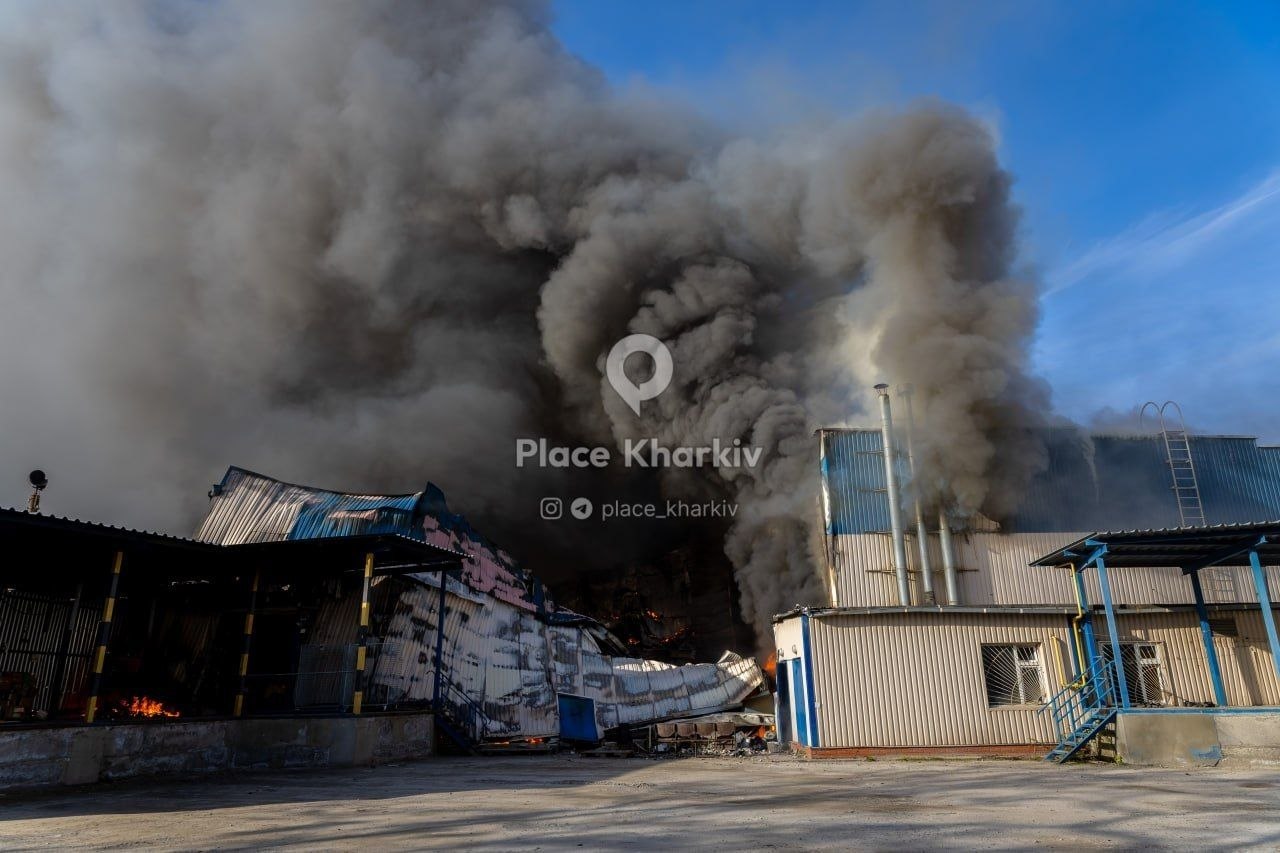
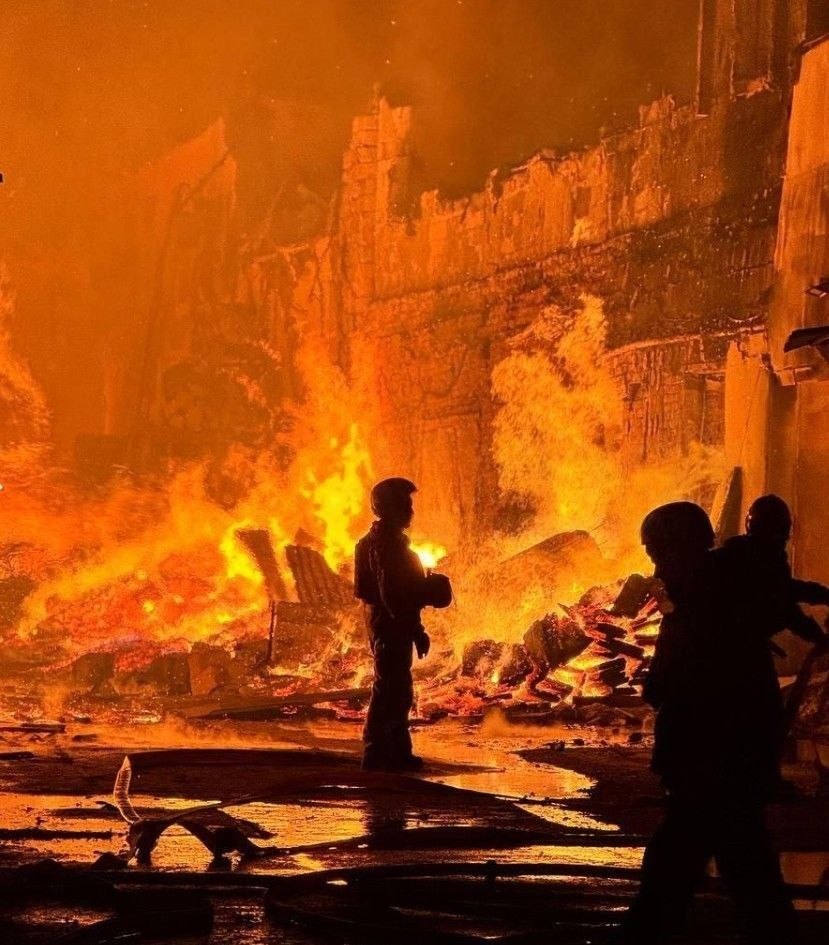
On the night of October 28, Russian forces carried out a combined strike against targets on Ukrainian territory. According to the Ukrainian Air Force, the attack employed an Iskander-M/S-400 ballistic missile and 88 strike UAVs. The main emphasis was placed on logistics and energy infrastructure in Kharkiv, Dnipropetrovsk, Chernihiv, Volyn, and other Regions. In parallel, Ukrainian forces conducted a series of drone and cruise missile attacks against industrial targets on Russian territory, including the largest metallurgical combine and a chemical plant.
Kharkiv Region
Logistics center in Kharkiv. According to a statement by the Russian Ministry of Defense, the site was used to store military and dual-use cargo intended to supply Ukrainian troops.
Locomotive near the settlement of Ordovka.
Dnipropetrovsk Region
Pyatykhatky railway station, Kamianske district. Two consecutive Geran-4 UAV strikes during the day. The first strike set a rail trolley on fire, destroyed the driver’s cab, and damaged the overhead contact line and a grain car in a freight train; the second strike set an electric locomotive on fire.
Chernihiv Region
Energy infrastructure in Chernihiv. According to Ukrainian sources, about 210,000 subscribers were left without electricity, and roughly 90 percent of the city was de-energized. The specific target has not been identified.
Volyn Region
PS-330 Lutsk-Northern substation, Lutsk. According to a statement by the Russian Ministry of Defense, the facility supplied power to military-industrial enterprises producing UAVs and components.
PS-330 substation, Kovel. A similar target; power outages were recorded in Kovel after the strike.
Kirovohrad Region
Railway facility in Znamianka.
Odesa Region
Bulk carrier underway toward the port of Chornomorsk. According to the Russian Ministry of Defense, the vessel was delivering cargo to supply the Ukrainian Armed Forces.
Reports also indicated strikes on targets in Zhytomyr, Vinnytsia, Khmelnytskyi, Kherson, Kyiv, Cherkasy, Sumy, and Zaporizhzhia Regions. A blackout was recorded in central Kyiv, with electricity absent in parts of the central districts.
According to a statement by the Russian Ministry of Defense, 531 Ukrainian UAVs were shot down overnight over Russian territory across 13 federal subjects.
Lipetsk Region
Novolipetsk Metallurgical Combine (NLMK), Lipetsk. The largest metallurgical enterprise in Russia, with a capacity of about 17 million metric tons of steel per year. According to Ukrainian sources, it was attacked with FP-5 cruise missiles; a fire was reported in the area of the combine. The governor of Lipetsk Region confirmed that UAV debris had fallen and vegetation had caught fire, while denying a “major fire at an industrial enterprise.” A total of 45 UAVs were shot down over the Region.
Tula Region
Azot chemical plant, Novomoskovsk. According to Ukrainian sources, the plant was attacked by UAVs, with the AM-70 ammonia production unit reportedly hit. Russian authorities confirmed the attack on the chemical plant and damage to residential buildings, without providing details about production capacity.
Kursk Region
Building housing servers for the regional healthcare system, Kursk. Damaged as a result of a UAV attack; disruptions to certain medical services are possible. Over the day, 168 UAVs were shot down over the Region, and three people were injured.
For the week of October 19–25, according to Russian data, attacks on civilian targets killed 50 civilians and injured 263.
On October 28, two opposing directions are evident: Russian strikes are concentrating on Ukrainian railway logistics, energy, and warehouse infrastructure, while Ukrainian drones are attacking large industrial sites deep inside Russia, including metallurgy in Lipetsk and chemical production in Novomoskovsk. The strikes on the substations in Lutsk and Kovel are of particular significance, as they point to an attempt to weaken the power supply to western Ukraine’s logistics and production capacity.
MORE ON THE TOPIC:
The post Russia and Ukraine Exchange Strikes: Railway Infrastructure, Energy, Metallurgy, and Chemical Industry Targets Hit appeared first on South Front.


The United States military is moving an additional Patriot air-defense system from Texas to Israel as signs mount that Washington and Tel Aviv are preparing for possible renewed attacks on Iran after the American midterm elections on November 3.
The Wall Street Journal reported on October 28 that the transfer, identified through flight-tracking data and confirmed by two officials familiar with the movement, is intended to strengthen Israel’s missile defenses ahead of a potential new round of fighting.
The deployment comes amid broader U.S. military preparations. Washington has moved troops away from Middle Eastern bases considered vulnerable to Iranian retaliation and is replenishing munitions, while bomber aircraft and fighter jets are being prepared for possible strikes, the Journal reported.
In addition, the U.S. has warned several Gulf Arab countries to prepare for a possible short, intense military campaign against Iran after the elections.
President Donald Trump has not made a final decision on whether to launch new attacks but is leaning toward a major post-election campaign that could target Iranian infrastructure and nuclear sites, the Journal reported, citing people familiar with his thinking.
Speaking at a rally in Lubbock, Texas, a day earlier, Trump said, “You’ll see Iran in a couple of weeks, if you don’t mind,” without providing further details.
The White House declined to comment on “sensitive military plans that may or may not exist,” adding that “President Trump keeps all options on the table to ensure that Iran can never have a nuclear weapon.”
Meanwhile, regional mediators have continued efforts to revive negotiations with Tehran, although those efforts have yet to produce a breakthrough, the Journal reported.
A senior Iranian official involved in recent talks told Reuters on October 28 that Tehran had received only “unacceptable ideas and not an offer,” adding that Iran would show no flexibility on its nuclear program.
The central dispute over the terms and sequence of negotiations clearly persists. Washington wants Iran’s nuclear program included from the outset, while Tehran says its conditions, including an end to the U.S. blockade of Iranian ports and the lifting of sanctions on Iranian oil exports, must be met first. Given this, a return to fighting seems more than likely.
_______________________________________________________________________________________________________________________
SouthFront: Analysis and Intelligence
NOW hosted at southfront.press
Previously, SouthFront: Analysis and Intelligence was at southfront.org.
The .org domain name had been blocked by the US (NATO) (https://southfront.press/southfront-org-blocked-by-u-s-controlled-global-internet-supervisor/) globally, outlawed and without any explanation
Back before that, from 2013 to 2015, SouthFront: Analysis and Intelligence was at southfront.com
The post Patriot Deployment Signals Growing Preparations for Possible Iran War appeared first on South Front.
Amid a flurry of Justice Department efforts to target people whom Donald Trump doesn’t like, two former FBI officials were charged late last week with lying to Congress — in a case of particular interest to the president.
Remember the story about Hunter Biden’s laptop? As part of a Republican investigation into the matter, Nikki Floris, the former deputy assistant director of the FBI’s Counterintelligence Division, and Bradley Benavides, another FBI official, briefed members of Congress about the contents of the computer. Last week, Trump’s DOJ charged them with allegedly making false statements about their level of involvement into the investigation.
Their attorneys condemned the charges as political “nonsense,” announced 10 days before closely watched elections, and it didn’t help matters that the president told reporters after their arrest, “I heard they were bad people.” He did not say from whom he’d heard this.
Nevertheless, the case appears to be off to a rough start. After prosecutors added an obstruction charge to the case, for example, a federal judge dismissed it.
But just as notable was what we learned from Bryan Witt, a veteran FBI agent, who testified Tuesday and shed light on what transpired behind the scenes. The New York Times reported:
In mid-July, President Trump gave a prime-time speech in which he raised concerns about a disputed F.B.I. report that China had tried to interfere in the 2020 election in an effort to defeat him.
At the heart of his address was a bitter complaint: that some of the bureau’s intelligence officials had purposefully sought to play down the report to undercut his claims about the race.
According to Witt’s testimony, one day after Trump targeted FBI officials in his remarks, FBI Director Kash Patel directed prosecutors immediately to investigate the officials for obstruction and conspiracy.
Witt conceded that FBI officials saw the inquiry as a “witch hunt,” and he personally saw the effort as a “huge distraction,” but the push ultimately led to charges against Floris and Benavides.
The Times report went on to note that Witt “asserted from the stand that he had never before worked on a case where instructions came directly from the F.B.I.’s director. He added that Mr. Patel and his deputies often checked on his progress, pressing him and his colleagues to move as aggressively as possible.”
Time will tell what becomes of the case, though it’s a safe bet that the defendants’ attorneys have taken a keen interest in what Witt had to say. But the broader takeaway from the agent’s testimony is unavoidable: Trump snaps his fingers, and Patel follows the president’s orders.
White House control over the Justice Department has been well-documented, but its control over the FBI is just as overwhelming. Patel, best known as a podcast personality before Senate Republicans elevated him to his powerful role, may lead the bureau, but there is fresh reason to believe he’s effectively a DINO — Director in Name Only.
The post In court testimony, FBI agent sheds new light on the White House’s control over the bureau appeared first on MS NOW.
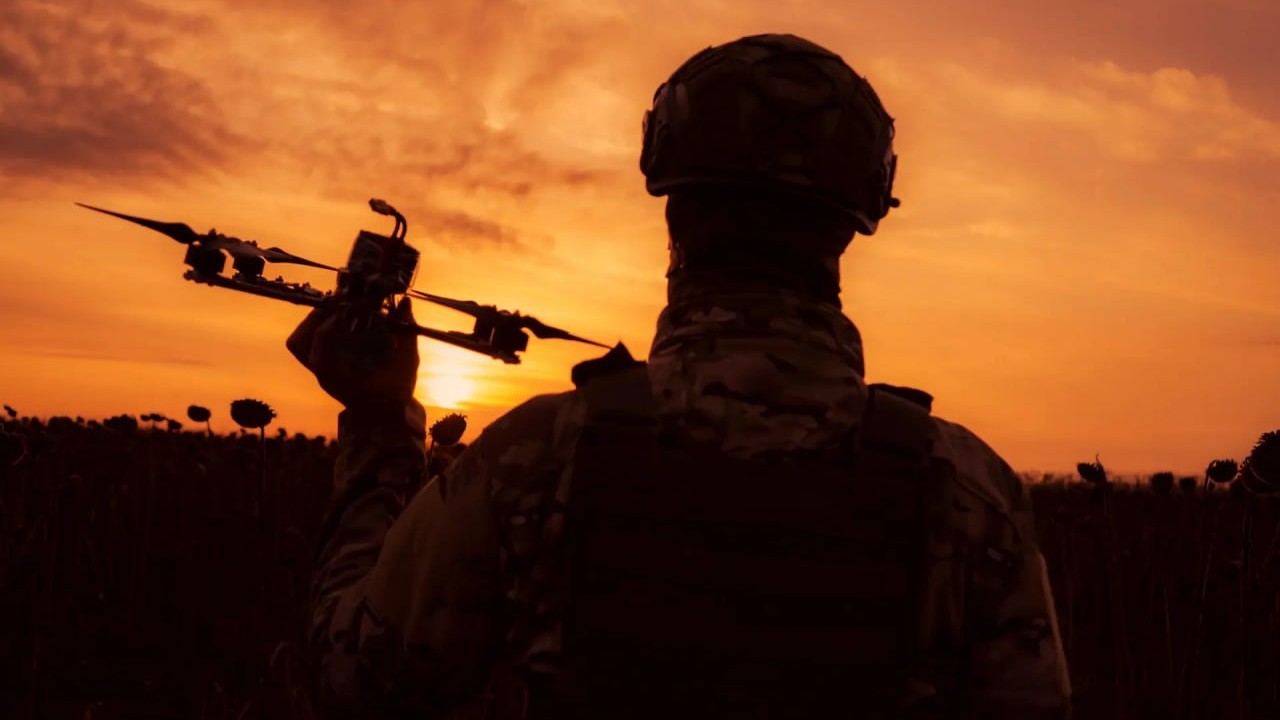
Russia has tested an autonomous navigation system designed to guide drones when satellite navigation signals and external communications are unavailable or jammed.
The system, called SOVA, or Comparative Optical Visual Authentication, was developed by VA Technologies and uses computer vision to compare images captured by an onboard camera with satellite maps, allowing a drone to determine its position in real time, the Center for Unmanned Systems and Technologies told TASS on October 28.
“The developer of the solution, VA Technologies, is a finalist in the third cohort of the CUST Special-and Dual-Use Projects Accelerator. The SOVA system is based on computer vision technology. During flight, the system compares images from an onboard camera with a satellite map of the terrain and determines the UAV’s [unmanned aerial vehicle] location in real time.
During testing, a drone equipped with the SOVA system completed a route that had no clear landmarks and included substantial differences between the satellite map and the actual terrain,” the company said.
The test drone followed a star-shaped route, visiting four waypoints before returning to its launch site. The test used satellite imagery from the spring of 2025 rather than an updated map, deliberately introducing discrepancies between the stored imagery and the actual terrain.
One section of the route highlighted the system’s ability to correct navigation errors when the landscape did not match the stored images.
“The second waypoint on the satellite map was located over dark plowed land, while the actual terrain featured a light-colored field covered with stubble. With no landmarks to guide it, the UAV deviated from its course. However, upon reaching a tree line, the SOVA system promptly corrected its course and successfully reached the third waypoint,” the company said.
The center said the developer estimates that SOVA could substantially improve mission reliability when satellite navigation is unavailable.
“According to the developer, in the absence of GPS, SOVA is capable of increasing the UAV mission reliability rate to 99%,” the CUST noted.
The tests come as Russia has begun incorporating similar optical-navigation technology into its one-way attack drones used against Ukraine.
Ukraine’s Defense Intelligence Directorate said earlier in the month that Russia had equipped its upgraded Geran-4 jet-powered attack drones with a system called Susanin, which uses an optical sensor to compare images of the terrain with reference images stored in the drone’s computer. A similar system was identified on the K5 variant of the Geran-5.
Ukrainian drone analyst Serhii Beskrestnov has also told Business Insider that comparable systems were already being used on smaller Molniya, V2U and Lancet drones.
The rapid development and deployment of such systems reflects a broader Russian effort to make drones more resilient to electronic warfare, which has become a central feature of the conflict in Ukraine.
_______________________________________________________________________________________________________________________
SouthFront: Analysis and Intelligence
NOW hosted at southfront.press
Previously, SouthFront: Analysis and Intelligence was at southfront.org.
The .org domain name had been blocked by the US (NATO) (https://southfront.press/southfront-org-blocked-by-u-s-controlled-global-internet-supervisor/) globally, outlawed and without any explanation
Back before that, from 2013 to 2015, SouthFront: Analysis and Intelligence was at southfront.com
The post Russia Tests Optical Navigation System to Help Drones Defeat Jamming appeared first on South Front.