“Nova era das trevas na Europa”. O aviso da Finlândia
Russia has ruled out European participation in the next round of trilateral talks with Ukraine and the United States, while suggesting that the negotiations could be delayed by developments on the battlefield and the continuing conflict in the Middle East.
Yuri Ushakov, foreign policy adviser to Russian President Vladimir Putin, said on 29 October that Moscow had not agreed to a specific date for further consultations and that European representatives were not being considered for inclusion.
Ushakov maintained that preparations concerned representatives of Russia, Ukraine and the United States.
His remarks followed statements by Ukrainian President Volodymyr Zelensky indicating that the next round could take place in Abu Dhabi between 6 and 10 November.
The Kremlin has not confirmed those dates.
The disagreement comes as European governments seek a more substantial role in diplomatic efforts concerning a conflict whose eventual settlement would have direct consequences for their security, defence expenditure and relations with Russia.
Ushakov’s position was particularly explicit when discussing European participation.
Speaking to Russian media on 28 October, he suggested that European representatives were free to travel to the proposed venue but would not be invited to join the negotiations.
His remarks were subsequently reinforced by a statement that European involvement was not under consideration.
The Kremlin adviser also linked the timing of the next meeting to developments in the Middle East, where the US-Israeli conflict with Iran has complicated Washington’s diplomatic and military priorities.
Ushakov said that conditions on the Ukrainian battlefield would also influence when negotiations could resume.
These explanations give Moscow considerable latitude over the timetable while leaving uncertainty about the practical arrangements for the next meeting.
They do not, however, establish that Washington and Kyiv have accepted Russia’s preferred arrangements for every subsequent stage of negotiations.
Technical consultations between three parties and broader discussions over a European security settlement are not necessarily the same diplomatic process.
The Russian position contrasts with statements from the leaders of Britain, France and Germany, who have maintained that European governments must participate in discussions concerning Ukraine’s future security.
Their argument rests partly on the responsibilities that European countries would be expected to assume after any agreement.
European states have provided substantial financial, military and humanitarian assistance to Ukraine since Russia launched its full-scale invasion in February 2022.
They have also introduced successive sanctions against Russia, expanded defence expenditure and debated arrangements for security guarantees intended to discourage renewed hostilities.
Any settlement that required changes to European sanctions, military deployments or financial assistance would therefore depend on decisions taken by European governments and institutions.
Neither Moscow nor Washington could independently commit the European Union to lifting sanctions or authorise European states to deploy forces.
This distinction limits the practical significance of excluding European officials from a negotiating session.
An agreement could be discussed without European participation, but implementing provisions that require European action would demand further negotiations.
The principal obstacle continues to concern territory and the conditions under which military operations would end.
Russia has maintained its demand that Ukraine relinquish territory in the eastern Donbas region, including areas remaining under Ukrainian control.
Kyiv has rejected the surrender of territory as a precondition for ending the war.
The proposed negotiations are consequently expected to concentrate on technical issues where limited agreements may be more achievable.
These include possible arrangements concerning energy infrastructure, maritime security, the exchange of prisoners and the return of Ukrainian children taken to Russia or Russian-controlled territory.
Such measures could produce humanitarian or economic benefits without resolving the central territorial dispute.
However, their implementation would require monitoring arrangements and sufficient confidence that the parties would honour their commitments.
The temporary humanitarian ceasefire around Oleshky, in the Kherson region, offers a narrowly defined example of cooperation between Russian and Ukrainian representatives.
It does not demonstrate that a broader political agreement is within reach.
Washington remains the principal external mediator in the current negotiating format.
That position reflects American diplomatic influence and its capacity to engage directly with both Moscow and Kyiv.
However, the United States is simultaneously managing military commitments in the Middle East and domestic political pressures ahead of the 3 November congressional elections.
These competing priorities may affect the pace of diplomatic engagement.
For Russia, a negotiating framework centred on Washington offers the possibility of addressing wider bilateral issues alongside the conflict in Ukraine.
For Ukraine, American participation remains important because US decisions concerning military assistance and security commitments could influence the durability of any settlement.
Europe’s position is more complicated. Its governments possess substantial economic leverage, but their influence over the negotiating agenda depends on coordination with Washington and Kyiv.
The immediate dispute concerns who participates in the next round of talks.
The longer-term question is which parties would be responsible for implementing a settlement.
A ceasefire might initially involve arrangements agreed by military and diplomatic representatives of Russia and Ukraine, supported by the United States.
A more comprehensive agreement could involve sanctions, reconstruction finance, security guarantees, troop deployments and Ukraine’s future relationship with European institutions.
Those issues cannot be settled on behalf of European governments without their consent.
Moscow’s attempt to restrict participation may therefore succeed at the level of an initial negotiating format while proving more difficult to sustain during discussions about implementation.
For the moment, neither the date nor the outcome of the proposed Abu Dhabi meeting is certain.
What has become clearer is the divergence between Russia’s preferred negotiating structure and Europe’s determination to influence the security arrangements that would follow the war.

VTM
Cerca de 60 expositores e feirantes participaram na segunda edição da Feira Berço D’Ouro, em Santa Marta de Penaguião. Os dados são da autarquia e apenas das inscrições a dois dias da iniciativa.
Entre os participantes esteve António Gonçalves, agricultor da região, que levou cebolas, nabiças e feijão, produtos cultivados na sua própria horta. Foi a primeira vez que participou numa feira deste género e a expectativa era conseguir algum rendimento adicional. “Aproveitamos para ganhar aqui mais alguma coisinha”, explicou à VTM, num contexto em que, segundo referiu, a venda das uvas também não tem compensado como desejava.
Amélia Prior, residente no concelho, apresentou produtos caseiros, como marmelada e bolos, enquanto a sua prima disponibilizou roupa em segunda mão e trabalhos de Natal. Para a participante, a feira é uma oportunidade para quem produz em pequena escala e para os consumidores que procuram preços mais acessíveis. “É bom para todos, para o concelho e para nós, que fazemos as coisas”, considerou, defendendo a continuidade da iniciativa.
Artigo exclusivo PREMIUM
Tenha acesso ilimitado a todos os conteúdos do site e à edição semanal em formato digital.
ou compre apenas este artigo:
Comprar este artigo — 1,00€The post Feira Berço D’Ouro reuniu cerca de 60 expositores appeared first on A Voz de Trás-os-Montes.
Three maritime drones struck a container ship sailing in the Black Sea off the coast of Bulgaria on Wednesday, the country's defense minister said, the latest in a string of such incidents on NATO's eastern flank
The post Drone Attack Hits Container Ship Off Bulgaria’s Black Sea Coast appeared first on Breitbart.
Confronto vivace a Battitori liberi, su Radio Cusano, tra il leader di Futuro Nazionale, Roberto Vannacci, e Savino Balzano, conduttore della trasmissione insieme a Gianluca Fabi. A far scattare il battibecco è la posizione dell’ex generale sull’Unione europea e sull’euro: a Balzano che lo incalza sulle sue dichiarazioni contestandogli una posizione poco incisiva rispetto alle aspettative del suo elettorato, Vannacci replica con tono piccato, respingendo la ricostruzione del saggista (“Sbagliato, è una falsificazione”) e chiarendo che l’uscita dall’Ue e dalla moneta unica resta una possibilità, anche se non figura tra gli obiettivi programmatici del suo partito.
Il politico invita Balzano a leggere il programma di Futuro Nazionale: “Né nel programma né nelle nostre intenzioni c’è quella di mettere in piano un’uscita dall’Ue e dall’euro come punto programmatico del partito. Abbiamo sempre avuto un approccio critico nei confronti di questa Unione europea e di questa Unione monetaria, che vogliamo cambiare”. L’obiettivo, spiega, è “andare a ridiscutere i trattati principali dell’Unione europea”. E cita AfD in Germania, Rassemblement National in Francia, Vox in Spagna e altre forze politiche europee che, a suo giudizio, possono favorire una revisione degli accordi di Maastricht. Poi precisa: “Non escludiamo tuttavia, nel caso di impossibilità di cambiare questa Unione dall’interno, la possibilità anche di uscire“.
Una risposta che non convince Balzano: “Mi sembra una posizione un po’ vaga”.
Vannacci replica: “Non è vaga. È una questione di tempi, di fattibilità e di possibilità di intervenire”.
Ma il conduttore torna alla carica: “Io parlo da cittadino. Mi sembra una posizione vaga. Alla fine questa Unione europea non piace a nessuno, non piaceva neanche al Pd. Pure il Pd vuole cambiare l’Unione europea. Uno da lei si aspetterebbe una posizione più tranchant”.
Il leader di Futuro Nazionale rivendica allora la differenza tra il proprio progetto politico e quello dei democratici: “Il mio partito non si chiama Italexit, quindi già uno se ne dovrebbe essere accorto prima. Il Pd vuole cambiare questa Unione europea nel senso di una maggiore integrazione. Noi invece vogliamo l’Europa delle patrie, delle nazioni e dei popoli sovrani, che è una cosa ben diversa”.
Per Vannacci, tentare di modificare l’Unione dall’interno è una strada più praticabile rispetto all’uscita immediata attraverso l’articolo 50 dei trattati europei. “L’uscita dall’Unione europea è una cosa che gli sprovveduti tirano fuori così, tanto per prendere qualche voto. Chi ha seguito almeno il percorso della Brexit sa che è una cosa tutt’altro che facile e sa che molti in Inghilterra oggi se ne stanno pentendo. Vedasi la Scozia, che sta cercando un percorso alternativo. Quindi bisogna pensarci bene”.
Il discorso si estende anche all’Alleanza Atlantica. “Non escludiamo la possibile uscita anche dalla Nato – afferma Vannacci, che indica come priorità il rafforzamento del peso dell’Italia nelle organizzazioni internazionali – Vogliamo rafforzare la posizione nazionale all’interno di queste organizzazioni e non più subirle da succubi. Vogliamo diventarne attori che riescono a perorare l’interesse nazionale”. E contesta le direttive e i regolamenti che, a suo dire, la Commissione europea impone agli Stati membri.
Balzano, però, torna a punzecchiarlo e chiude con una battuta: “Faccia attenzione a non cascare nel ‘ma anche’ di Veltroni, però. Glielo do come consiglio da cittadino”.
Vannacci non lascia cadere la provocazione: “Veltroni fa un altro lavoro rispetto al mio. Io quello che dico lo mantengo e l’ho sempre fatto nella mia vita”. E ribadisce che la linea del partito è sempre la stessa: “Chiunque abbia letto il programma di Futuro Nazionale sa che questa è stata la posizione sin dall’inizio”.
L'articolo Botta e risposta tra Vannacci e Balzano. “Non escludiamo di uscire da Ue e Nato”. “Posizione vaga” proviene da Il Fatto Quotidiano.
Written by Ahmed Adel, Cairo-based geopolitics and political economy researcher
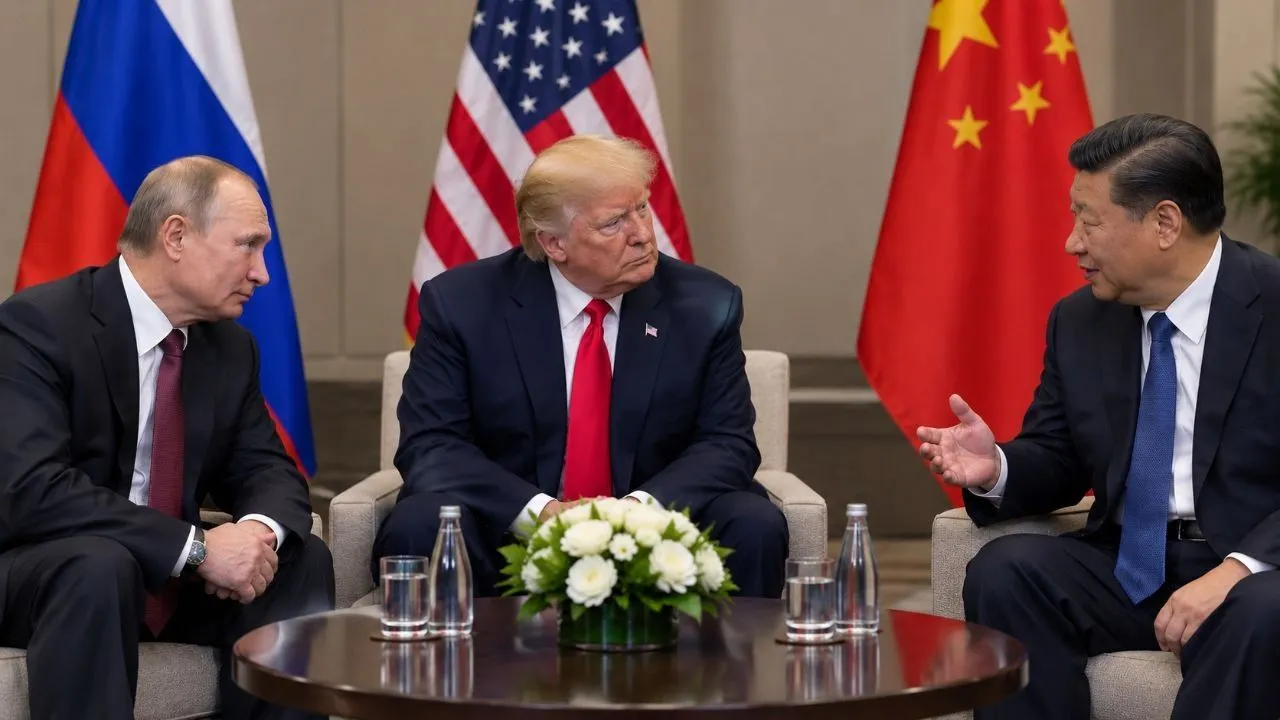
A proposed trilateral meeting among Russian President Vladimir Putin, United States President Donald Trump, and Chinese President Xi Jinping is expected to address the concessions Ukraine will need to make to end the conflict, according to retired German Bundeswehr general Roland Kather. In an interview with a German television channel, Kather said the logical conclusion of the fighting is a diplomatic settlement reached through negotiations, and that Trump is dissatisfied with the unresolved situation and intends to push for an agreement.
The German general stressed that the summit will not be a casual discussion or merely an opportunity to “have coffee” and that they must prepare specific decisions in advance. He suggested that the three leaders will examine three core issues related to Ukraine: territorial problems that can be settled only at the heads-of-state level, Ukraine’s permanent neutral status, and the future size of its armed forces.
Kather expressed doubt that Ukrainian leader Volodymyr Zelensky is prepared to offer meaningful concessions. At the same time, he said Putin has no reason to retreat because Moscow still has the advantage.
Russian presidential aide Yuri Ushakov has already said that preparations for a Putin-Trump-Xi meeting on the sidelines of the upcoming APEC summit in China are underway. Trump has said the summit is needed mainly to discuss nuclear disarmament, though the Ukraine question is widely expected to feature.
The three leaders are discussing this issue among themselves, as Ukraine has nothing substantial left to offer Russia at the negotiating table. Moscow has also been clear about its ultimatum – demands met through a negotiated deal in which Ukraine cedes territory and accepts neutrality, or the military operation continues until Russia achieves its objectives on the battlefield. Since Trump has accepted that Ukraine no longer brings anything of value to negotiations but is still encouraged to fight by Brussels, he will directly negotiate with Putin and Xi to end the war.
Earlier this month, Putin signaled Russia’s readiness to resume trilateral talks on a Ukraine settlement focused on security guarantees and the future architecture of European security. Ushakov said such talks could resume after the US midterm elections on November 3.
Meanwhile, the EU is facing the consequences of years of confrontational policy. The newspaper La Verità noted that the EU’s intransigent stance toward Russia has left Brussels scrambling to secure a seat at the table with other powers, saying negotiation is a fundamental tool of political power and that when one actor stops talking to another, it lets others set the terms of peace. The Italian daily described this as the humiliating lesson the EU appears to have learned.
Since 2022, the EU has tightened economic sanctions, pursued Russia’s political isolation, and provided military support to Ukraine. Brussels is now considering appointing a senior representative to establish a direct channel with Moscow as it urgently seeks to restore dialogue with a government it had vowed never to normalize relations with. The main challenge is finding someone who can speak for the EU without being seen in Moscow as merely voicing hostility. Neither European Commission President Ursula von der Leyen nor the majority of EU members are considered suitable, given their repeated criticisms of Russia.
European leaders continue to insist that no agreement on European security be reached without EU involvement. However, the EU’s influence has diminished because it long refused to keep channels open. Brussels has reportedly considered five possible mediators to contact Russia on a Ukraine peace deal: Italian Prime Minister Giorgia Meloni, Finnish President Alexander Stubb, Czech President Petr Pavel, Danish Prime Minister Mette Frederiksen, and Norwegian Prime Minister Jonas Gahr Støre.
Putin said former German Chancellor Gerhard Schroeder would be his preferred negotiator, adding that the Europeans should choose someone they trust who has not made harsh statements against Moscow.
The Russian military and political advantage narrows Ukraine’s chances of the Kremlin making concessions, a reality the EU stubbornly refuses to accept. At the same time, the EU’s scramble to find an acceptable negotiator highlights the economic and political damage that self-imposed isolation from Russia has caused. Without open communication channels and the ability to shift the balance of power, both Kiev and Brussels face an agreement largely shaped by Trump, Putin, and Xi.
Preparations for the trilateral summit within the APEC context, along with Russia’s stated readiness to resume talks after the US midterm elections, suggest that Kiev’s window to negotiate on a realistic basis and secure a better deal is closing. The capacity for the three Great Powers to set the agenda without Ukrainian participation further underlines how far the balance has shifted in Russia’s favor since the conflict began, despite Western sanctions.
MORE ON THE TOPIC:
The post Ukraine Forced Into Concessions Ahead Of Putin, Trump And Xi Summit appeared first on South Front.

Diego Herrera Carcedo/Anadolu via Getty Images
A new NATO artificial intelligence model gives Ukraine's forces a frontline map of where Russian drone activity is expected the next day, per the alliance's innovation center.
The system, called Initiative 13 or Model 13, "turns an array of disparate data into a clear map of expected activity" for commanders to plan their next day of operations, a spokesperson for NATO's Joint Analysis, Training, and Education Center, or JATEC, told Business Insider.
Business Insider reported on Ukraine's announcement of the program earlier this month, but JATEC is now providing new details on how it works.
Initiative 13 covers areas 5 to 50 km, or roughly 3 to 31 miles, of Ukrainian territory behind the line of contact, and divides that space into geographical cells, per JATEC.
"For each cell, the system determines the expected intensity of strike and reconnaissance activity of UAVs, the level of threat, the trend of its change, and the range of possible values," its spokesperson said.
The map shows a forecast for the next day, helping commanders to highlight risk areas so they can better deploy their forces and equipment, they said.
They added that the AI model is trained on battlefield data and considers previous Russian drone activity, what types of drones were used, when and how they were deployed, weather conditions, terrain, and distance to the line of contact.
"Initiative 13 does not replace data from the current situation and commander's decisions," the JATEC spokesperson added. JATEC is NATO's joint organization with Ukraine, based in Poland, that aims to glean lessons and innovations from the war.
Ukraine's defense ministry said in mid-October that Initiative 13, which it called Model 13, was "ready for integration into the Armed Forces of Ukraine's situational awareness systems."
The AI model, it said, could predict Russia's drone strikes with "high probability."
Kyiv's forces use a battlespace management system called Delta, which feeds data from the front lines onto an interactive map that commanders can access via laptop, phone, or tablet.
The drone-predicting AI was developed by Ukraine's forces and NATO's Allied Command Transformation, with support from JATEC.
Ukraine's defense ministry said in its initial announcement that another AI model, dubbed No. 32, for planning artillery deployments was also in the works but is still in prototype stages.
Artificial intelligence has increasingly been making its way into Ukraine's war, from helping mid-range attack drones identify and strike targets to sending uncrewed ground vehicles to autonomously complete supply runs.
Poland has been selected to host a major European maintenance centre for Patriot air defence interceptors, marking a further expansion of the country’s role in NATO’s military infrastructure and the transatlantic defence industry.
The decision, announced on 27 October by the United States government and American defence manufacturer Lockheed Martin, will establish a dedicated facility for PAC-3 missiles used in Patriot air and missile defence systems.
The investment is estimated at approximately one billion zlotys, equivalent to around €227 million.
Poland secured the project following competition with Germany, the Netherlands and Norway.
The facility is intended to provide maintenance, repair, refurbishment and technical recertification services to European operators of PAC-3 interceptors.
Its importance extends beyond the immediate economic benefits for Poland.
The wars in Ukraine and the Middle East have exposed pressure on the availability of advanced air defence missiles, raising questions about Europe’s ability to sustain military operations when demand for interceptors exceeds existing supply.
Deputy Defence Minister Magdalena Sobkowiak-Czarnecka announced the selection of Poland as the location for the maintenance centre.
According to Lockheed Martin’s official announcement, the facility will support NATO allies operating PAC-3 interceptors through repairs, lifecycle maintenance, refurbishment and recertification.
The centre will also provide testing capabilities intended to improve operational readiness and reduce the time required to return missiles to service.
The exact location and final implementation arrangements remain subject to further negotiations.
Polish officials have indicated that the centre could become operational in approximately a year, although the schedule will depend on the conclusion of agreements and construction or adaptation of the necessary facilities.
The project is expected to create specialised employment and increase opportunities for Polish defence suppliers.
It also reinforces Poland’s position as a manufacturing and logistics centre on NATO’s eastern flank.
An important distinction concerns the facility’s actual purpose.
The Polish centre will maintain and service PAC-3 missiles. It is not being presented as a new production line capable of manufacturing large quantities of additional interceptors.
Modern air defence missiles contain complex guidance systems, propulsion components and other equipment requiring specialised inspection and maintenance.
Their operational availability depends not only on the number produced but also on the ability to store, test, maintain and recertify existing stocks.
When these services are concentrated outside Europe, operators may face lengthy transport and servicing arrangements.
Locating maintenance capacity closer to European users should reduce some of those delays.
However, the facility will not independently resolve shortages caused by the consumption of missiles during military operations.
Additional manufacturing capacity, access to components and long-term procurement agreements remain necessary to increase overall inventories.
Patriot systems have become particularly important because of their role in defending military facilities, population centres and critical infrastructure against aircraft and missiles.
Ukraine has repeatedly requested additional Patriot interceptors to protect cities and energy installations from Russian attacks.
At the same time, the conflict in the Middle East has increased demand for advanced air defence capabilities.
Both theatres place pressure on supply chains whose production capacity cannot be expanded immediately.
Manufacturing sophisticated interceptors involves specialised components, qualified suppliers, extensive testing and demanding certification procedures.
The result is a gap between the speed at which missiles can be expended during sustained operations and the time required to replace them.
The United States has undertaken efforts to accelerate PAC-3 production.
Lockheed Martin announced that it had received a major US government contract in 2026 to support further expansion of PAC-3 MSE manufacturing.
The planned maintenance centre in Poland represents a complementary investment, intended to improve the availability of missiles already held by European forces.
Although Poland will host the facility, the project has a wider European dimension.
Germany, the Netherlands and Sweden are expected to participate in important elements of supply-chain integration.
These countries were among the original participants in the industrial cooperation arrangements alongside Poland and the United States.
The structure reflects NATO’s increasing emphasis on dispersing critical maintenance and logistical capabilities across allied territory.
A geographically distributed system can reduce dependence on individual sites and make it easier to sustain equipment during periods of disruption.
It can also help European defence companies develop technical expertise through cooperation with American manufacturers.
However, the arrangement will remain part of a transatlantic supply chain, with significant industrial and technological responsibilities retained by the United States.
The project therefore illustrates both Europe’s expanding defence-industrial role and its continuing dependence on American missile technology.
The decision complements Poland’s broader investment in integrated air and missile defence.
Under the Wisła programme, Warsaw has been acquiring Patriot systems and associated interceptors as part of a wider modernisation of its armed forces.
Two Patriot batteries reached operational readiness in December 2025, according to Euronews’ reporting on the project.
Poland has also ordered additional batteries and substantial quantities of PAC-3 MSE missiles, with deliveries continuing through the remainder of the decade.
These investments are intended to improve protection against aircraft, cruise missiles and ballistic missile threats.
The maintenance centre should complement those acquisitions by strengthening technical support for the interceptors.
The Polish investment demonstrates how NATO’s air defence priorities are changing.
For many years, procurement discussions concentrated primarily on purchasing new weapons systems.
The experience of prolonged conflicts has placed greater emphasis on ammunition availability, repair facilities, spare parts, storage and industrial capacity.
Those supporting capabilities determine how long military forces can sustain operations.
The new centre will not eliminate the need for additional missiles, but it could reduce servicing delays and improve the readiness of European stocks.
Its effectiveness will ultimately depend on the scale of operations, access to components and the speed with which maintenance services can be delivered.
For Poland, hosting the facility strengthens its position within NATO’s defence-industrial network.
For the Alliance, it represents an attempt to address one of the practical weaknesses exposed by recent conflicts: acquiring advanced weapons is only part of the challenge; keeping them available for use is equally important.

Romania has accused Russia of coordinating a cross-border sabotage network responsible for an industrial fire near an arms manufacturing facility, prompting a diplomatic confrontation with Moscow and investigations involving several European countries.
Romanian intelligence and prosecutors announced on 26th October that they had identified three foreign nationals allegedly involved in the operation, which caused a fire on an industrial site in Brașov on 14th September.
The suspects, two Belarusian nationals and one Ukrainian, are alleged to have participated in a network directed by individuals operating from Russia.
Two suspects have been detained in Germany, while a third has been located in Poland.
Romania is seeking their extradition as investigators examine possible connections to other attempted attacks against military and industrial installations.
Russia has rejected the allegations.
The case has drawn attention to the security of European defence production facilities at a time when NATO governments are seeking to increase military manufacturing capacity and sustain assistance to Ukraine.
The investigation concerns an industrial complex in Brașov, a city with an established defence manufacturing sector.
The fire occurred on 14th September at premises situated close to CARFIL SA, a subsidiary of Romania’s state-owned defence company ROMARM.
According to the Romanian Intelligence Service, the incident was caused by individuals belonging to a sabotage network coordinated from the Russian Federation.
The fire damaged premises occupied by several commercial businesses.
Although the industrial site is associated with the CARFIL complex, authorities have not established publicly that the arms manufacturing facility itself sustained damage.
That geographical distinction is important when assessing the consequences of the operation.
CARFIL manufactures military equipment and ammunition and has pursued partnerships involving drones, explosives and other defence technologies.
Its proximity to the incident has heightened concerns about the security of industrial facilities supporting Romania’s armed forces.
Romania’s Directorate for Investigating Organised Crime and Terrorism, known as DIICOT, says the evidence connects three individuals to the incident.
According to Romanian national news agency AGERPRES, the Bucharest Court of Appeal issued European arrest warrants following the investigation.
Two suspects were detained in Germany while allegedly preparing similar operations.
The third was located in Poland, where authorities received a further European arrest warrant issued on 26 October.
Romanian prosecutors are pursuing extradition procedures.
The nationalities of the suspects do not establish responsibility on the part of Belarus or Ukraine. Romanian authorities attribute the alleged coordination to individuals based in Russia.
The investigation also indicates that the Brașov incident may not have been an isolated operation.
Romanian intelligence claims the network’s potential targets included government-owned and private arms manufacturers, military-related facilities and other strategic industrial sites in several European countries.
Those claims remain subject to ongoing criminal investigation.
The Romanian government escalated the matter diplomatically on 27th October.
Foreign Minister Dan Neculăescu summoned Russia’s ambassador, Vladimir Lipaev, to deliver a formal protest concerning the alleged operation.
According to the Romanian Foreign Ministry’s account reported by AGERPRES, Bucharest stated that evidence gathered during the investigation demonstrated Russian responsibility.
The ministry described the operation as part of a broader pattern of hostile activity affecting European states.
President Nicușor Dan also condemned the alleged sabotage, linking it to attempts to undermine European security and solidarity.
Moscow rejected the accusations.
The Russian Embassy maintained that the allegations were unfounded and disputed Romania’s account of the evidence presented during the diplomatic meeting.
The conflicting positions mean the attribution remains contested, notwithstanding the conclusions announced by Romania’s intelligence authorities.
The Romanian Intelligence Service has provided details about how it believes the wider network recruits and directs participants.
According to its statement, recruitment can begin through social media with offers of payment for apparently minor activities, such as photographing or observing particular locations.
Subsequent assignments may become more serious, involving property destruction, arson or other acts of violence.
Individuals may be targeted because of financial difficulties or other personal vulnerabilities.
The service also identified methods allegedly used to conceal movements, payments and communications.
These include encrypted messaging applications, telephone numbers registered outside the country of operation and accommodation or transport arrangements booked under other identities.
Such methods can complicate investigations because the individuals physically carrying out an operation may have limited knowledge of the organisers.
Romanian authorities emphasised that individual indicators should be assessed in context and do not themselves prove involvement in sabotage.
The case has implications beyond Romania.
European governments are investing in ammunition production, air defence systems and military technologies, partly in response to the continuing war in Ukraine.
The resulting expansion of manufacturing capacity creates additional infrastructure requiring protection.
Industrial sites may be vulnerable not only to direct attacks but also to disruption affecting nearby businesses, transport networks, power supplies and specialist contractors.
The Brașov investigation illustrates how an incident outside a defence factory’s perimeter can nevertheless raise questions about the security of the wider industrial complex.
It also demonstrates the importance of cooperation between European intelligence services and criminal investigators.
The detention of suspects in Germany and the identification of another in Poland show that investigations into alleged sabotage may cross several jurisdictions.
Romania’s allegations come amid growing concern over hostile activities involving cyberattacks, disinformation, surveillance and physical sabotage.
Attributing such incidents to a foreign government requires intelligence assessments, criminal evidence and international cooperation.
The public allegations against Russia do not replace the judicial process concerning the three suspects.
However, the investigation has already prompted a diplomatic response and additional scrutiny of industrial security.
For European governments seeking to expand their defence industries, the immediate challenge is protecting production facilities and associated infrastructure without allowing relatively small-scale disruptive operations to undermine wider manufacturing programmes.
The outcome of Romania’s criminal proceedings will be important in establishing the responsibility of those accused and clarifying how the alleged network operated across national borders.