❌

Reading view

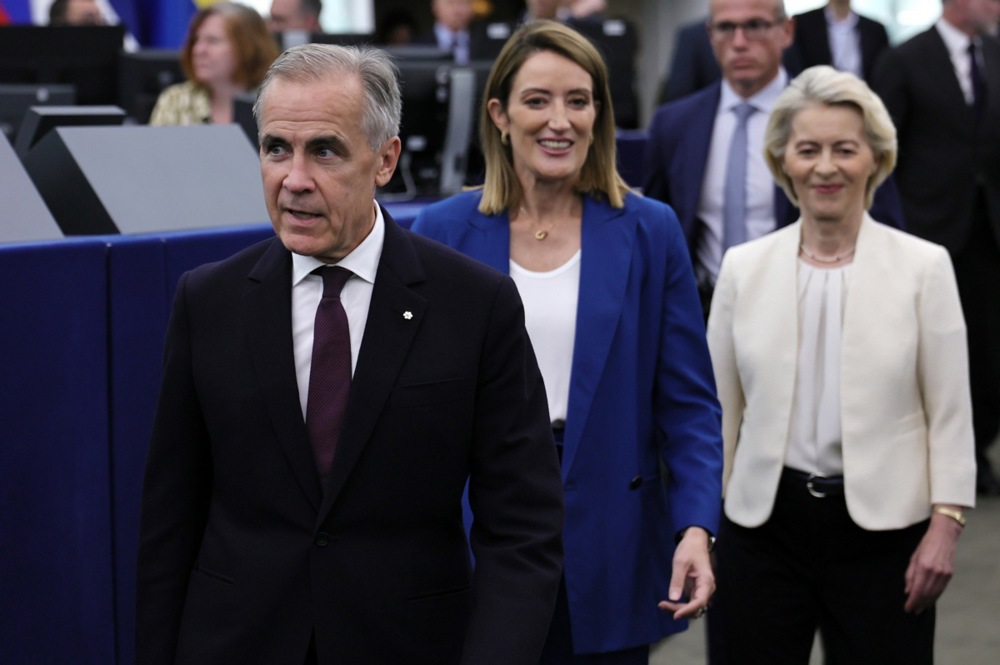
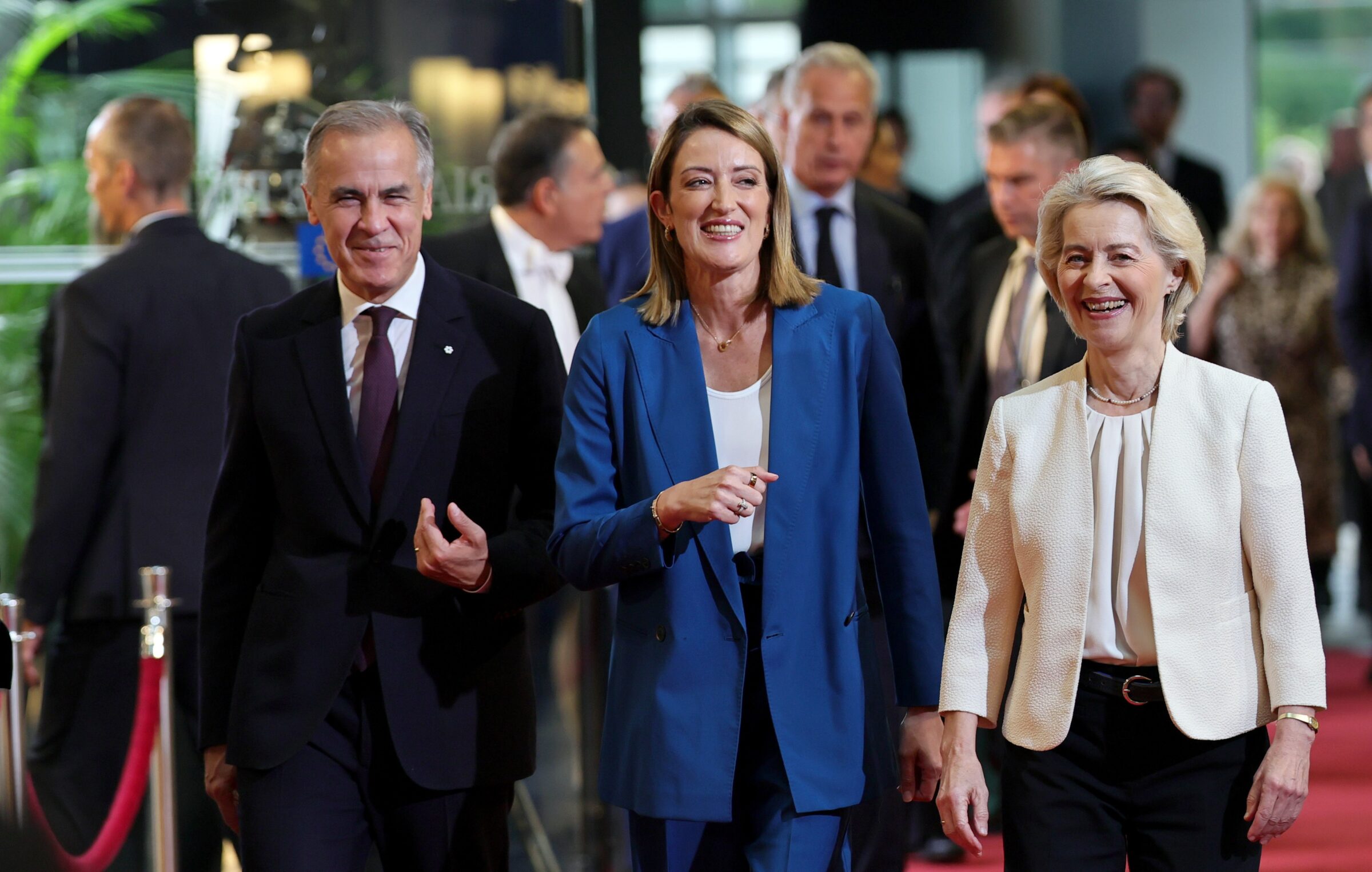
‘Associate’ or ‘ever-closer association’? Semantics aside, what does that leave the EU-Canada love-in?

“Associate membership” is out and “ever closer association” back in.

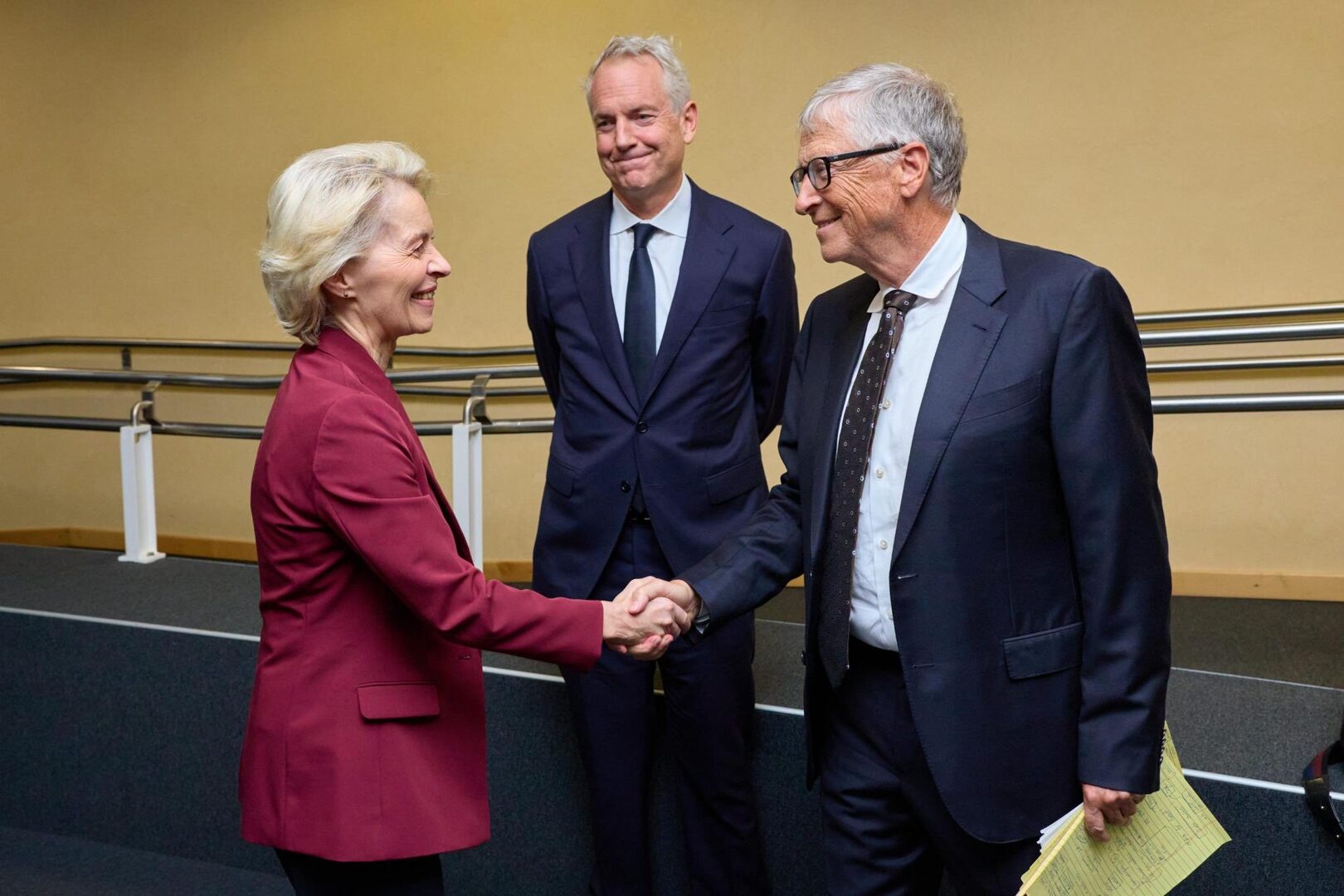
The offer of the first phrase was made to Canada a month ago by EU Commission president Ursula von der Leyen. 

The phraseology, made during von der Leyen’s State of the Union speech, surprised many EU diplomats who claimed that they had not been consulted.

It was also never clear precisely what this would mean.

The idea of Canada having representatives or observer status in the EU institutions always sounded fanciful. Besides, there is no mention of ‘associate membership’ in the EU treaties, and this uncertainty appears to have persuaded Germany to demand that it be dropped ahead of Thursday and Friday’s (29-30 October) EU-Canada summit.  

The draft communique circulated ahead of the summit talks of “work to define by the 2027 EU-Canada summit the concept of an ever closer association of Canada to the EU, short of full membership itself.” 

Von der Leyen appeared not to have read the memo. 

Officials would “start discussing how to make Canada the first associate member of the EU,” she said on arrival in Montreal, adding that “our ambition is to build the closest partnership we have ever had with a non-European country”. 

Yet this is a dispute over language rather than substance. The EU and Mark Carney’s Canada see each other as their closest ally. Both have been repeatedly threatened with hefty trade tariffs by Donald Trump’s White House and the consequences of Trump’s foreign policy adventures in the Middle East and the Arctic. Carney’s remarks at the World Economic Forum in January that ‘middle’ powers should club together to avoid being squeezed between China and the US were aimed at the EU.  

Commission officials may blench at the comparison, but the EU is a collection of middle ranking and small states. And it is yet to act like a world power on the political stage. 

This article continues, but the full version is available only to EUobserver.com subscribers. Visit account.euobserver.com/membership

  •  

Campaigners take EU Commission to ombudsman over methane delay, saying it ‘undermines the rule of law’

The London-based Environmental Investigation Agency (EIA) has filed a complaint with the European Ombudsman, accusing the EU Commission of maladministration over its handling of the bloc’s methane rules.

The complaint, filed on Thursday (29 October), targets two recent commission decisions. 

The first is for a July recommendation that member states hold off on fining importers that are in breach of the rules until 2030. 

The second is a proposal made earlier this month to delay the import rules by a year over supply worries — a decision that was made following heavy pressure from oil and gas companies, the White House and eventually by the summer, a majority of member states. 

But the EIA argues that neither decision is backed up by evidence that the rules actually threaten Europe’s energy supply or push up prices.

By delaying a law already adopted in 2024, the group says, the commission is “undermining integrity of both the legislative process and the EU rule of law.”

“Rather than ensuring that the EU Methane Regulation is implemented as agreed, the commission has responded to pressure from the fossil-fuel industry by weakening enforcement and proposing further delays, without providing credible evidence to justify these decisions,” said Jack Corscadden, senior climate campaigner at EIA.

This article continues, but the full version is available only to EUobserver.com subscribers. Visit account.euobserver.com/membership

  •  

Big Tech Lobbying Raises Questions Over Europe’s Retreat from Digital Regulation

A new investigation into the activities of Google, Meta and other technology companies has intensified scrutiny of EU plans to revise data-protection legislation, placing Ireland and Germany at the centre of a dispute over corporate influence and European digital sovereignty.

European technology policy has become the focus of a dispute over corporate lobbying after researchers documented extensive contacts between major technology companies and political decision-makers during negotiations to revise EU data-protection rules.

An investigation published on 28 October by Corporate Europe Observatory and the German transparency organisation LobbyControl alleges that leading technology companies mounted a coordinated campaign to influence European governments and legislators.

The findings come one week after EU member states agreed a negotiating position on the Digital Omnibus, a legislative package intended to simplify aspects of European data-protection, privacy and cybersecurity regulation.

The campaigners argue that the proposed changes risk weakening existing safeguards in order to accommodate the commercial requirements of artificial intelligence developers.

Ireland, which holds the rotating presidency of the Council of the European Union, has rejected suggestions that its handling of the legislation was improperly influenced by technology companies.

The dispute exposes a fundamental disagreement over the balance between commercial innovation and the protection of personal information.

The scale of the lobbying campaign

According to LobbyControl’s investigation, non-European technology companies recorded 103 meetings with representatives of Germany’s federal government between May 2025 and September 2026.

Google accounted for 28 meetings, Microsoft 18, Amazon 16 and OpenAI 11.

Germany’s Digital Minister, Karsten Wildberger, participated in 18 meetings with representatives of major technology companies, the researchers reported.

In Ireland, the organisations identified extensive engagement involving Meta, Google and politicians ahead of the country’s assumption of the EU Council presidency in July.

Their findings indicate that Meta engaged with 41 Irish parliamentarians over the Digital Omnibus, while Google recorded 30 meetings.

The researchers also identified 655 lobbying meetings concerning the legislation involving members of the European Parliament.

According to their analysis, approximately 83 per cent represented business interests, compared with 11 per cent involving civil society organisations or trade unions.

These figures demonstrate the intensity of corporate engagement, although the existence of lobbying meetings does not, by itself, establish that particular legislative provisions were adopted because of that activity.

Why the Digital Omnibus matters

The legislative package forms part of a broader European Commission initiative to reduce administrative burdens and improve competitiveness.

Its provisions address several areas of digital regulation, including the General Data Protection Regulation, commonly known as GDPR.

The proposals seek to simplify compliance obligations, clarify the treatment of personal information and revise rules governing certain forms of data processing.

One particularly contentious issue concerns the use of personal data in developing and operating artificial intelligence systems.

AI developers require large quantities of information to train and improve their models. However, the collection and processing of personal information remain subject to European legal safeguards.

Technology companies have argued that regulatory complexity can discourage investment and make it more difficult for European businesses to compete internationally.

Privacy campaigners maintain that simplifying regulatory procedures must not become a mechanism for reducing substantive protections.

The disagreement concerns not merely administrative paperwork but the legal circumstances under which companies may process information relating to identifiable individuals.

Ireland rejects allegations of improper influence

Ireland occupies a particularly sensitive position in the debate.

The country hosts major European operations of several American technology companies, including Google and Meta, and has substantial economic interests in the digital sector.

At the same time, its presidency of the EU Council requires it to coordinate negotiations between member states.

According to RTÉ’s reporting on the investigation, the Irish government strongly rejected the allegation that it had weakened data safeguards in response to corporate pressure.

A presidency spokesperson emphasised that Ireland’s responsibility was to facilitate agreement between member states and that the negotiating mandate approved on 21 October enjoyed broad support.

The Council has presented the proposed changes as a means of reducing compliance costs while preserving established privacy protections.

In its official statement, the Council said its mandate retains the existing definition of personal data and introduces additional provisions governing pseudonymisation.

It also includes safeguards relating to sensitive information used for biometric verification and AI systems.

These details are significant because they demonstrate that the negotiating text contains protections alongside proposed simplifications.

Germany’s role in the negotiations

Germany has also emerged as an important participant in the controversy.

The investigation points to close contact between the German government and international technology companies during discussions about the future of European digital regulation.

Berlin has supported reducing administrative restrictions that it considers obstacles to innovation and the development of competitive AI technologies.

For Germany, the issue is connected to wider concerns about industrial competitiveness, investment and Europe’s dependence on foreign technology suppliers.

Yet an unresolved question remains.

Measures designed to assist European innovators may also benefit established American companies whose extensive computing infrastructure and data resources give them advantages over smaller competitors.

Consequently, easing restrictions does not necessarily guarantee a stronger European technology industry.

The European Parliament holds the next decision

The Council’s negotiating position does not make the Digital Omnibus law.

The European Parliament must establish its own position before negotiations between the institutions can determine the final legislation.

Parliamentarians will therefore have an opportunity to examine the treatment of personal data, the safeguards attached to AI development and the relationship between regulatory simplification and individual rights.

The lobbying investigation is likely to become part of that debate.

Its central political significance lies in the competing interpretations of European technological sovereignty.

For governments seeking investment, regulatory flexibility may provide an instrument for improving Europe’s international competitiveness.

For privacy organisations, the same flexibility could increase the influence of companies already dominant in global digital markets.

The outcome will help determine whether Europe’s future digital framework preserves the existing balance between commercial data use and individual protections, or establishes a different relationship between the two.

  •  

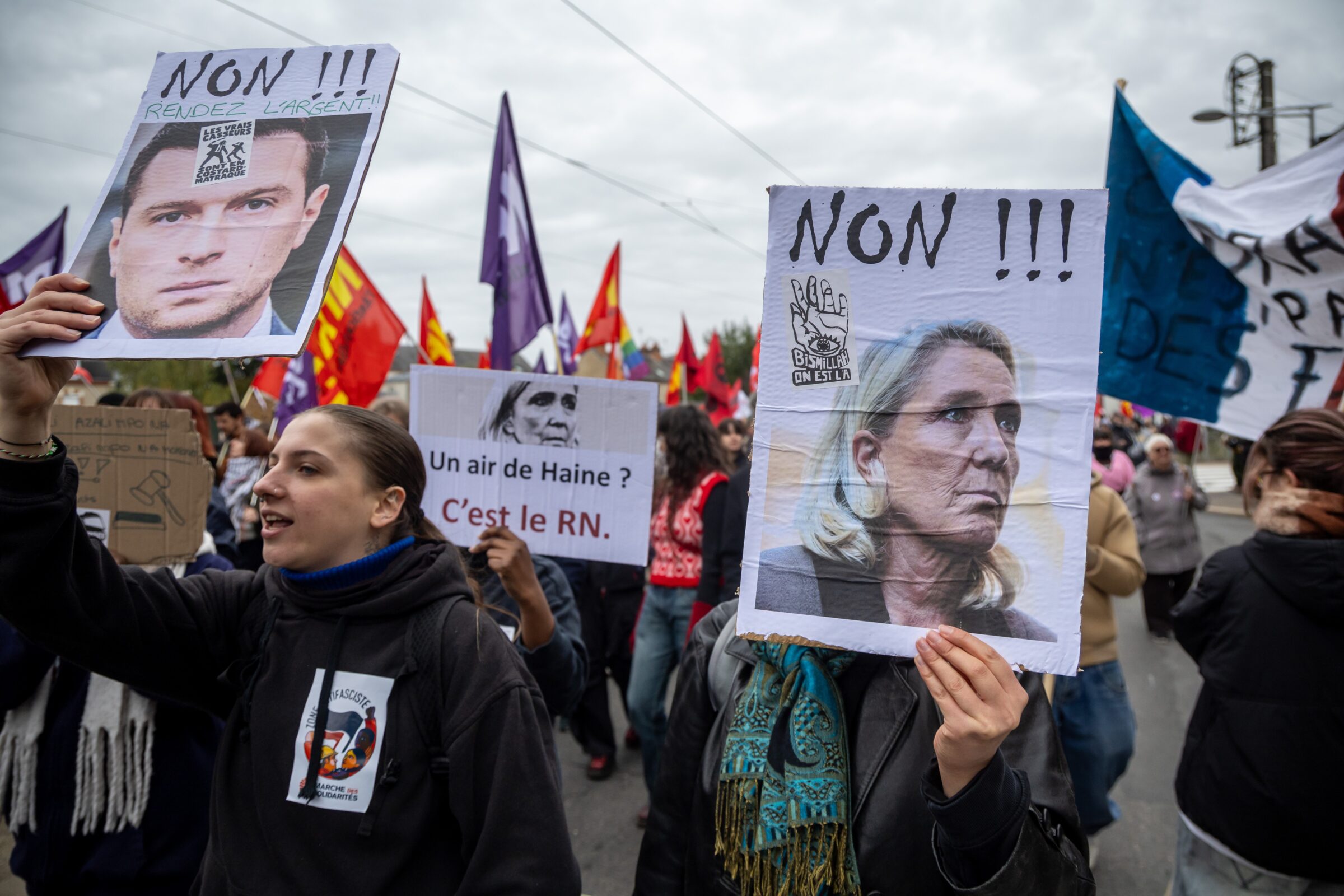
France Moves to Make Protesters Pay for Riot Damage as Senate Tightens Public Order Laws

French senators have approved legislation that could expose participants in violent demonstrations to compensation claims of up to €10,000, including individuals who did not personally damage property. The proposal has reopened a dispute over public order, collective responsibility and the right to protest.

France’s Senate has approved controversial legislation designed to recover the costs of damage caused during violent demonstrations, extending potential financial liability beyond those who personally committed acts of vandalism.

The bill, adopted in the early hours of 28 October by 229 votes to 105, would allow the authorities to pursue compensation from certain participants in gatherings where destruction or violence occurred.

Its provisions include a potential liability of up to €10,000 per person and mechanisms for recovering compensation through deductions from certain social benefits.

The legislation, widely described in France as the casseurs-payeurs bill, reflects growing political pressure to respond to property destruction accompanying demonstrations and public gatherings.

However, it also raises legal questions about the circumstances in which individuals may be held financially responsible for damage they did not personally cause.

The bill must still be considered by the National Assembly before it can become law.

From individual responsibility to collective liability

Under existing arrangements, the French state can be required to compensate victims for certain damage resulting from gatherings or public disorder.

Authorities may subsequently seek reimbursement from individuals legally responsible for that damage.

The proposed legislation would expand the circumstances in which compensation could be recovered.

According to the French Senate’s official explanation, liability could extend to people who participated in a violent group or remained in a gathering despite police orders to disperse, when they could not reasonably have been unaware that violence or destruction was taking place.

An individual would not necessarily have to be identified as the person who broke a window, damaged a vehicle or destroyed public property.

Instead, participation in a gathering meeting the relevant legal conditions could provide a basis for civil liability.

The distinction is central to the controversy.

The proposed €10,000 ceiling concerns financial compensation rather than a new criminal fine imposed automatically on demonstrators.

Nevertheless, opponents argue that expanding civil responsibility beyond direct perpetrators could undermine the principle that liability should reflect an individual’s own conduct.

A response to repeated unrest

The government introduced the legislation in September against a background of public disorder associated with demonstrations and sporting celebrations.

Violence following Paris Saint-Germain’s Champions League victory in May contributed to demands for stronger mechanisms to recover the costs of destruction.

Subsequent disturbances during demonstrations on 17 October added urgency to the debate.

The Senate’s conservative and centrist majority supported the bill, while left-wing lawmakers opposed important elements of the proposed system.

Interior Minister Laurent Nuñez defended the principle that those involved in destruction should contribute to the cost of repairs.

Supporters maintain that criminal penalties alone do not adequately compensate shopkeepers, residents and public authorities faced with substantial financial losses.

They also argue that taxpayers should not automatically bear the costs of damage attributable to individuals involved in violent gatherings.

The disagreement therefore extends beyond criminal punishment to the distribution of financial responsibility after public disorder.

Social benefits become part of the debate

One of the most disputed provisions concerns the recovery of compensation from people with insufficient resources to pay.

As approved by the Senate, the legislation would permit deductions from certain social benefits, including housing assistance and family allowances.

Senators also extended the proposed mechanism to the revenu de solidarité active, or RSA, the minimum-income benefit available to eligible low-income individuals.

Supporters of the measure argue that financial responsibility should not disappear simply because an individual lacks conventional assets or income.

The proposed arrangements would nevertheless have to leave recipients with a minimum amount for living expenses.

Opposition lawmakers have questioned whether deductions from family-related benefits could impose financial consequences on relatives who had no involvement in the original incident.

This is particularly relevant where parents’ social payments could be affected by damage attributed to their children.

The debate therefore concerns both the enforceability of compensation claims and the possibility that recovery measures could affect entire households.

The constitutional question

France’s legal framework recognises freedom of expression and the right to demonstrate, subject to restrictions established by law.

It also permits the authorities to impose obligations and penalties on individuals involved in unlawful conduct.

The issue raised by the proposed legislation is where the boundary between these principles should be drawn.

A system requiring direct evidence of property destruction presents different legal questions from one imposing liability based on participation in a wider gathering.

The latter arrangement would require careful assessment of the individual’s conduct, awareness of violence and opportunity to leave.

Opponents fear that demonstrators could face substantial financial exposure even without personally committing vandalism.

Supporters respond that the legislation is directed at participation in violent disorder, rather than peaceful protest itself.

Any final legislation could face scrutiny over proportionality, equality before the law and the protection of constitutional freedoms.

An uncertain passage through parliament

The Senate vote represents an important stage, but not the completion of the legislative process.

The National Assembly remains politically divided, making the final form of the proposal uncertain.

Deputies could amend the conditions for civil liability, the compensation ceiling or the provisions concerning social benefits.

The government’s ability to secure sufficient parliamentary support will determine whether the measures survive intact.

The legislation illustrates an increasingly difficult issue in French politics: how to ensure compensation for victims of public disorder without extending legal liability so broadly that participation in demonstrations becomes a substantial financial risk.

The answer will depend on the precise safeguards contained in the final text and how courts would be required to apply them.

  •  

Frontex gets 17,000 extra officers for deportations while human-rights monitoring suffers downgrade

A revamped EU border force Frontex is set to have around 17,000 people involved in deportations at its disposal, while human-rights monitoring is narrowed and the agency’s ability to terminate operations in a member state over rights violations is weakened.

The overhaul, presented on Tuesday (27 October), follows months of speculation by a European Commission determined to give the Warsaw-based agency a more central role in the bloc’s deportations, as reported last week by EUobserver.

“The fundamental rights framework in Frontex is among the strongest in any EU agency, and that will stay also with this review,” Henna Virkkunen, a commission vice-president, told reporters.

“I’m not aware of any other border management authority with stronger protection anywhere in the world. I would actually say, and we’re not changing that. So this is pretty clear,” also said Magnus Brunner, the EU commissioner for migration.

But the claims, made at a press conference in Brussels, do not entirely match its 275-page proposal that it published only later on Tuesday evening.

Unable to scrutinise the text ahead of the press conference, reporters could only guess at what the proposal actually contained without being able to directly challenge the commissioners.

This article continues, but the full version is available only to EUobserver.com subscribers. Visit account.euobserver.com/membership

  •  

Knife-edge EU Council methane vote could hinge on commission action plan

EU member states remain deadlocked over whether to delay the bloc’s methane rules for oil and gas importers by one year or three, with neither side able to secure a majority.

Ambassadors were due to agree the EU Council’s negotiating position this week, after a first attempt failed last week.

But the Irish presidency has had to push the vote back to 6 November again as the two camps continue to disagree on the timeline. 

On the one hand, France, Spain, Finland, Denmark, Luxembourg and Portugal back the European commission’s proposal for a one-year delay. 

The other group, including Italy, Poland, the Czech Republic, Hungary, Slovakia, Greece and Slovenia, wants three years.

And then there is a third group of countries that haven’t decided yet, or could live with either scenario.

The undecideds and waverers 

Belgium, for example, signed a call in June for a three-year delay, but could live with the commission’s timeline, though it would refuse a pause of more than three years, which parliament’s proposed 2029 review could open the door to.

This article continues, but the full version is available only to EUobserver.com subscribers. Visit account.euobserver.com/membership

  •  

How the rescue of 28 people from a makeshift dinghy in a stormy Mediterranean unfolded – exposing the lethal reality of EU border policy

The midnight sky was clear, the waves gentle, and the full moon lit the way for our inflatable rescue boat to reach the dinghy in distress.

The southward winds of the central Mediterranean had abated for a brief détente in the early hours of Tuesday (27 October), after days of wondering how any small vessel could ever safely make their way out of African waters.

The lethal conditions of one of the region’s stormiest months of the year, were confirmed by the sight of an empty blow-up raft wandering adrift the previous evening.

“Bridge, bridge, bravo, we have a visual on a small rubber boat,” the search-and-rescue lead from the German NGO SOS Humanity said over the radio, while leading the search from the bow of an inflatable boat. 

The makeshift dinghy floated less than 200 meters from the charity’s Humanity 1, 43 nautical miles (90 km) from Libyan shores.

The passengers had been on the water for 24 hours.

Their proximity to a country notorious for its mistreatment and trafficking of migrants kept the rescue team tentative in their advance, as some aboard the distressed floater could believe they are being approached by the EU-funded militias masking as the Libyan coast guard – or by European border forces ready to push them back south of Italian waters. 

Yet at first contact, everyone aboard the distressed vessel lit up in celebration. 

The small raft burst with excitement, as the dozens aboard revived their hopes of escaping the perils of the open air cemetery that is for so many the Mediterranean sea.

This article continues, but the full version is available only to EUobserver.com subscribers. Visit account.euobserver.com/membership

  •  

Portugal’s Housing Revolt Exposes a Growing Political Crisis Across Europe

Thousands of demonstrators have gathered outside Portugal’s parliament as rising property prices, disputed eviction legislation and police operations bring the country’s housing problems into direct confrontation with the government.

Thousands of protesters gathered outside Portugal’s parliament in Lisbon on 27 October, demanding action over soaring housing costs and criticising police operations against housing activists, as the country’s long-running property crisis developed into a broader political confrontation.

The demonstration coincided with parliamentary debate on the government’s proposed 2027 budget and followed several days of protests in Lisbon and Porto.

At the centre of the dispute is an increasingly familiar European contradiction: property values continue to rise, while wages and household incomes have failed to keep pace with the cost of obtaining accommodation.

For Portugal, the problem has become particularly pronounced.

House prices have more than doubled since 2017, while rents for newly agreed tenancies have almost doubled over the same period.

According to figures reported during the demonstrations, the cost of housing in Portugal increased by 147 per cent between 2015 and 2025, compared with an EU average of 60.5 per cent.

The result is a growing disparity between earnings and the cost of independent living, particularly among younger adults.

A property market detached from wages

In Lisbon, a one-bedroom flat can routinely command monthly rent of approximately €1,500.

Portugal’s minimum wage stands at €920 per month before tax.

Although these figures do not represent every household or property, they illustrate the scale of the affordability problem for lower-paid workers.

Between the first quarters of 2025 and 2026, Portuguese house prices increased by almost 20 per cent, according to national statistical figures cited in recent reporting.

Rental costs have also continued rising, recording an increase of approximately 68 per cent since 2020.

The country’s attractiveness to foreign investors, retirees and remote workers has contributed to demand, particularly in Lisbon, Porto and coastal areas.

Tourism has introduced additional competition for residential property, with some homes converted into short-term accommodation.

However, investment and tourism are only part of the explanation.

Restrictions on construction, administrative delays, limited affordable housing supply and the geographical concentration of employment have also contributed to pressure on the market.

These conditions have produced a widening gap between those who already own property and those seeking to purchase or rent their first home.

Disputed eviction legislation

The immediate political confrontation concerns government proposals that would accelerate certain eviction procedures and remove restrictions on rents for new tenancy agreements.

The legislation passed its first parliamentary reading, with the right-wing Chega party abstaining.

Housing campaigners argue that removing protections without first increasing affordable supply could leave tenants more exposed to rising rents and displacement.

The minority centre-right government, led by Prime Minister Luís Montenegro, has pursued measures intended to encourage construction and increase the availability of housing.

These include tax reductions for new building projects and a commitment to deliver 145,000 homes.

Such measures, however, require time before additional properties become available, while many households face immediate financial pressures.

Police operations become a second controversy

The housing dispute intensified following police operations to remove protest encampments in Lisbon and Porto during the weekend.

Police used batons during the clearances, while campaigners alleged excessive force.

According to accounts of the subsequent parliamentary demonstration, police reported 11 minor injuries, including three officers. The housing organisation Casa para Viver claimed that 60 people had been injured.

Portugal’s internal affairs watchdog has opened an inquiry, while prosecutors are conducting a separate investigation into officers’ conduct.

Montenegro defended the police response in parliament, arguing that officers had acted according to the principles of necessity, proportionality and adequacy.

President António José Seguro has convened a meeting of the Council of State to consider the growing protests.

The dispute has consequently expanded beyond housing economics to include questions about policing, public demonstrations and political accountability.

A European problem with national consequences

Portugal’s demonstrations follow similar protests in Spain and growing political scrutiny of housing affordability elsewhere in the EU.

The European Commission has begun addressing the issue through initiatives intended to encourage construction, facilitate investment and give authorities greater legal certainty over short-term rental restrictions.

As EU Today recently reported, the proposed European Affordable Housing Act would provide additional regulatory tools for areas facing severe housing pressure.

Yet the principal responsibilities for housing supply, planning and tenancy law remain with national and local governments.

This division creates a political challenge: Brussels can support investment and coordinate legislation, but the most immediate decisions affecting rents, construction and evictions are taken elsewhere.

For Portugal, the next test will be whether the government’s housing measures can deliver sufficient additional supply while responding to demands for immediate tenant protection.

The demonstrations outside parliament show that housing affordability has become more than a question of property prices. It now affects the government’s legislative agenda, the 2027 budget debate and the relationship between the authorities and an increasingly organised protest movement.

  •  

EU Governments Agree Agricultural Reform Framework but Leave €300 Billion Funding Question Unresolved

European agriculture ministers have reached a negotiating position on the future Common Agricultural Policy, advancing plans to restructure farm support after 2027. The agreement leaves unresolved the central dispute over funding and the balance of power between Brussels and national governments.

European Union agriculture ministers have agreed a negotiating position on the future Common Agricultural Policy (CAP), advancing a restructuring of the bloc’s agricultural support system while postponing decisions about the financial arrangements that will determine how the reforms operate.

The agreement reached on 26 October establishes the Council’s position on the framework governing agricultural payments and support measures from 2028 onwards.

However, ministers have deliberately excluded funding allocations and several related financial provisions, which remain subject to negotiations over the EU’s next seven-year budget.

The distinction is important.

Governments have agreed how they want the future system to operate, but not how much money will ultimately be available to finance it.

A fundamental restructuring of farm support

The proposed reform would integrate agricultural funding into a broader system of national and regional partnership plans covering several major areas of European spending.

Under the existing CAP, agricultural support is organised around two principal funds: one primarily financing direct payments and market measures, and another supporting rural development.

The Commission wants to replace this arrangement with a more integrated structure, while retaining agricultural policy instruments within the new framework.

Each member state would prepare a comprehensive national and regional plan incorporating agriculture, cohesion, fisheries and several other funding programmes.

Brussels argues that the new system could simplify administration, reduce overlapping procedures and give governments more flexibility to address domestic requirements.

However, greater national discretion also raises questions about whether the policy will remain sufficiently uniform across the European single market.

Agricultural conditions differ considerably between member states, from large cereal producers in Eastern Europe to smaller farms operating in mountainous or Mediterranean regions.

Allowing governments to tailor support to domestic conditions may improve flexibility, but it also creates the possibility of greater variation in how European funds are distributed.

Who should receive agricultural payments?

One of the principal changes concerns the distribution of income support.

The Council supports a proposed system known as Degressive Area-Based Income Support, or DABIS, intended to direct assistance more effectively towards farmers actively engaged in agricultural production.

Member states would be required to establish a definition of an active farmer, although governments would retain discretion over the precise national criteria.

The distinction matters because agricultural subsidies have historically generated disputes over payments based primarily on land ownership or agricultural area rather than the scale of productive activity.

The Council has also proposed an optional redistributive mechanism intended to help governments adjust the distribution of payments.

More contentious decisions, including possible payment ceilings and reductions for larger recipients, have been postponed until the broader budget negotiations.

The problem of Europe’s ageing farmers

The reform also addresses generational renewal.

Governments would be required to provide additional income support for young farmers and assistance to help them establish agricultural businesses.

Each member state would have to develop a generational renewal strategy and provide a package of support measures covering areas such as training, advice and access to agricultural activity.

These provisions reflect the difficulties facing younger people seeking to enter farming.

High land prices, expensive equipment and restricted access to finance can create substantial barriers, particularly where established farms are passed between generations.

The Council also supports expanded risk-management arrangements, including insurance and assistance following severe weather, animal diseases and other agricultural emergencies.

Environmental requirements would remain part of the framework, combining common conditions with incentives for practices intended to protect biodiversity and natural resources.

The €300 billion question

The most consequential disagreement concerns financing.

The European Commission has proposed protecting approximately €300 billion for agricultural income support and crisis measures under the 2028–2034 budget.

Additional agricultural and rural-development funding could be available through the broader national and regional plans.

The final ringfenced amount, however, has not been agreed.

As EU Today reported earlier this month, 17 member states have called for agricultural and cohesion spending to be protected during negotiations over the Commission’s proposed €2 trillion long-term financial framework.

The disagreement reflects competing budgetary priorities.

Agriculture remains one of the EU’s largest expenditure areas, but governments are simultaneously facing demands for greater defence spending, industrial investment, infrastructure and migration-related programmes.

Protecting agricultural funding would therefore limit the financial resources available for other priorities unless governments agree to increase the overall budget.

The latest agreement also follows the Council’s 19 October negotiating position on agricultural market rules, which addressed sectoral support and market organisation but similarly avoided resolving the wider funding dispute.

Negotiations enter a decisive stage

Irish Agriculture Minister Martin Heydon, whose government holds the rotating Council presidency, described the latest agreement as a milestone intended to provide farmers with greater stability and flexibility.

The Council’s position now provides a basis for negotiations with the European Parliament.

However, the final shape of agricultural policy will depend heavily on the separate negotiations over the 2028–2034 financial framework.

Until governments agree how much money will be available, questions about payment limits, distribution between countries and the balance between agricultural and other EU priorities will remain open.

The October agreement establishes the proposed framework for European farming after 2027. The budget negotiations will determine the scale of support that framework can actually provide.

  •  

Secrecy Tracker: Media groups urge von der Leyen to tackle EU secrecy as watchdog probes Gaza documents

Dear readers,

We are back with a new issue of the Secrecy Tracker – your regular update on what the EU institutions prefer to keep under wraps. 

I am Alexander Fanta, a journalist with Follow the Money, who has struggled for years to gain access to EU documents. I wrote this newsletter with the help of EUobserver’s Nikolaj Nielsen and Pascal Hansens from Investigate Europe.

This newsletter is a collaboration between EUobserver, Follow the Money and Investigate Europe. 

Media outlets, journalist associations and press freedom organisations have penned an open letter to European Commission president Ursula von der Leyen to voice their frustration about the recent deterioration in the EU’s freedom of information.

The letter, which was co-signed by the publishers of this newsletter – Follow the Money, EUobserver and Investigate Europe – urges the commission to end the silent crisis that has hampered journalists finding the documents they need to scrutinise matters of public importance – such as how the member states (mis-)spent billions of euros in post-Covid recovery funds, or how the commission hides its arms research cooperation with Israel.

The signatories of the letter include press lobby groups such as the International Federation of Journalists, but also some of the weightiest voices in investigative journalism – the International Consortium of Investigative Journalism and the Organised Crime and Corruption Reporting Project.

The letter asks the commission to address the excessive redactions and long delays journalists face when asking for documents under the EU’s freedom of information law, Regulation 1049/2001, as well as the Commission’s failure to keep crucial documents – think von der Leyen’s texts with Pfizer chief Albert Bourla. 

Moreover, the commission should reverse a controversial change to its internal rules of procedure in 2024 which made access requests more difficult by limiting the definition of what is considered “a document”, and putting entire areas of the commission’s work – such as enforcement of its Big Tech laws – out of bounds from access requests.

The leading figure behind the letter, the Committee to Protect Journalists’ Tom Gibson, has asked von der Leyen’s cabinet for a meeting to discuss these issues, and seek improvements.

“The European Commission purports to uphold press freedom in Europe as well as through its external policy”, Gibson said. “Yet, in Brussels, we see that the European Commission is seeking to actually put obstacles in the way of creating an enabling environment for journalists who report on the institutions – in order, seemingly, to maintain an ability to control the official narrative.”

“This has to change otherwise the European Commission can be accused of double standards”, according to Gibson.

EUobserver’s Gaza complaint

Last week, the European Ombudswoman, an administrative watchdog, launched a probe into EUobserver’s complaint against the European Commission. The Brussels-executive had refused to release 17 documents it has on how the EU spent money on bricks-and-mortar projects in Gaza.

We had first asked in February as part of an investigation that sought to get an idea to what extent the Israelis destroyed EU-funded infrastructure in the Strip. We were stonewalled, amid arguments there is no overriding public interest even though tens of thousands of people have been killed, triggering massive Europe-wide protests and flotillas. Our appeal went unanswered.

Now EU ombudswoman Teresa Anjinho is demanding, as a first step, a commission response to our appeal by November 4 latest. If the commission still fails to deliver, she will review the documents herself.

Aarhus Convention vs data-centre secrecy

The secrecy surrounding data centres’ environmental footprint is coming under increasing scrutiny. In April, Investigate Europe broke the news, and reported in this newsletter, that a provision in a delegated act to the energy efficiency directive, which keeps key information of data centres environmental impact secret, likely violates transparency obligations under the Aarhus convention.

Now, Lighthouse Reports has published a story that they are formally challenging the law. Frustrated by facing repeated refusals from more than a dozen EU member states and the European Commission to access data on energy consumption by data centres across Europe, collected under the Energy Efficiency Directive (EED).

Lighthouse Reports decided last September to turn to the Aarhus Convention – a binding treaty aims to protect access to environmental information and is often used as a last resort solution – and its compliance committee to seek disclosure. Lighthouse Reports may face a long wait for a ruling though, as the process can take years.

When EU’s top court challenges transparency watchdog’s authority

The Court of Justice of the European Union (CJUE) has challenged the European Ombudsman’s authority to investigate its refusal to disclose past financial declarations of interests of its judges and advocates general, according to a decision published today by the EU’s transparency watchdog.

The dispute began after Investigate Europe reporters, while investigating judges’ currently declared financial interests, discovered that older declarations were no longer publicly available. The Court initially refused, arguing that those documents were judicial and not administrative ones, and therefore fell outside the rules on public access to documents.

Following our complaint to the ombudswoman and its subsequent decision to open an inquiry, the court eventually agreed to release the requested former declarations, but only upon request. So Teresa Anjinho closed the case, as she considered that the court remedied the problematic situation.

The ombudswoman firmly rejected the court’s interpretation: handling public access requests is an administrative activity, regardless of the nature of the documents concerned. She also called for greater clarity on how the court distinguished between judicial and administrative documents. 

So a small victory for transparency, but a broader question remains: should the EU’s top court have such discretion over which of its own internal documents face public scrutiny? 

How to get access across Europe

A new guide promises to give journalists (and anyone else) an easy introduction into making freedom of information requests in 39 European countries and with the EU.

The first-of-its-kind compendium, curated and co-written by yours truly with the help of 45 journalists, academics and FOI advocates from around the continent and published by Arena for Journalism, answers practical questions such as “how can I appeal” and provides contacts who can help in each country. 

Find the guide – free to use and share – under this link.

  •  

Revealed: New data shows Big Tech lobbying pushing EU towards sweeping data-protection rollback

New research by Corporate Europe Observatory (CEO) and LobbyControl shows that Big Tech lobbying is pushing the EU towards sweeping deregulation of data protection rules.

The new publication finds signs of an intensive lobbying campaign between Big Tech and Germany and Ireland which are helping to gut fundamental European data protection safeguards.

“The Big Tech campaign to kill data protection in Europe” documents how MEPs are meeting with Big Tech lobbyists under the guise of boosting AI tech innovation.

The report documents extensive contacts between Big Tech companies and European policymakers over the EU Commission’s proposed Digital Omnibus.

The aim is to change and influence how personal data are used to develop and operate AI systems, warns CEO.

“It is a really drastic change,” Bram Vraken researcher and campaigner at CEO told EUobserver.

Introduced by the commission last November, the Digital Omnibus forms part of the EU executive’s wider drive to simplify regulation and strengthen European competitiveness.

The commission has presented the proposal as a way to make Europe “simpler and faster” and to “adapt” its regulatory framework to a “more volatile world”.

The Digital Omnibus “provides a simple, innovation-friendly environment for our European AI ecosystem to grow,” said commission’s president Ursula von der Leyen.

But the proposed changes potentially create broad exemptions from existing data protection rules for AI companies.

“What we see is a creation [of] this huge backdoor, which in many cases will make the GDPR (General Data Protection Regulation) meaningless,” Vraken said.

If adopted by the European Parliament, the changes would allow companies to collect people’s personal data to train and operate AI systems without consent.

Google and Meta

Under the parliament’s rules, all MEPs and their assistants must publicly declare scheduled meetings with lobbyists and third-country representatives and access to these information is public.

From November 2025, CEO and LobbyControl identified 655 meetings with lobbyists in the parliament, the report says. This comes as Big Tech lobby budgets hit record levels.

This article continues, but the full version is available only to EUobserver.com subscribers. Visit account.euobserver.com/membership

  •  

Europe’s centre parties are collapsing – and, for the first time, the far-right are collaborating, rather than fighting

Why are Europeans turning towards authoritarian and populist demagogues?

Last week, one study by two European think tanks said one-in-three Europeans would vote authoritarian or support a populist party. Among the reasons are the perceived elitism in the traditional left and right-leaning parties.

The centre appears to be eroding, leaving people who are struggling with high inflation, energy, and uncertain futures looking for answers elsewhere.

Opinion polling from the Pew Research Center also found that 69 percent of the French population is dissatisfied with democracy, Italy 62 percent, Poland 47 percent and Spain 68 percent.

All are facing upcoming elections.

Another study, out on Tuesday (27 October), by the US-based Action for Democracy, drew similar conclusions and found that shaky allegiances between far-right parties in Europe are creating the scaffolding for possible future leadership under an authoritarian bent.

I say shaky because populist far-right parties have a notorious track record of finding common ground but then falling apart later.

This article continues, but the full version is available only to EUobserver.com subscribers. Visit account.euobserver.com/membership

  •  

EU Lawmakers Move to Relax 2035 Car Emissions Rules as Industry Presses for Greater Flexibility

The European Parliament has taken another step towards revising the European Union’s 2035 vehicle-emissions framework, after lawmakers from three major political groups agreed amendments offering manufacturers greater flexibility in meeting carbon dioxide reduction targets.

The compromise, approved on 22 October by Parliament’s Transport and Industry committees, proposes an 87.5 per cent reduction in average emissions from new passenger cars by 2035, compared with the 2021 baseline. This is less stringent than the European Commission’s proposed 90 per cent reduction and represents a further departure from the existing 100 per cent reduction in tailpipe emissions for new cars and vans.

The changes have not become law. They remain subject to parliamentary procedures and negotiations with EU governments. Nevertheless, the committee agreement shows how concerns over manufacturing competitiveness, production costs and technological choices are reshaping European climate legislation.

A fundamental revision of the 2035 framework

The original 2035 target, adopted in 2023 as part of the EU’s Fit for 55 legislation, required manufacturers to achieve a 100 per cent reduction in average tailpipe carbon dioxide emissions from new cars and vans. It effectively directed the market towards battery-electric and other zero-emission vehicles.

Manufacturers have argued that the transition is taking place under difficult commercial conditions. Competition from Chinese producers, costs of developing new platforms and batteries, and uncertainty over charging infrastructure contributed to demands for regulatory flexibility.

In December 2025, the European Commission responded with an automotive package proposing a 90 per cent reduction requirement by 2035. It would permit manufacturers to compensate for some remaining emissions using mechanisms involving low-carbon steel produced in the EU and qualifying renewable fuels.

The latest parliamentary compromise would lower the target further, to 87.5 per cent, while allowing low-carbon steel credits to count towards compliance. For light commercial vehicles, lawmakers also proposed reducing the 2035 target to 80 per cent and the 2030 target to 35 per cent.

Why low-carbon steel matters

A notable feature of the compromise is the connection between car-emissions rules and European steelmaking. Steel production is a major industrial source of carbon dioxide, and companies face investment requirements to replace conventional production processes with lower-emission alternatives.

Regulatory credits for carmakers using qualifying European low-carbon steel could create demand for cleaner industrial materials and encourage domestic investment. But emissions avoided during production are not equivalent to reductions in exhaust emissions. The accounting mechanism therefore creates a distinction between cutting tailpipe output and compensating for some remaining emissions through materials and manufacturing.

The compromise also connects vehicle rules with a broader industrial-policy debate about European-made products. As EU Today previously reported, vehicle decarbonisation has increasingly become part of the discussion about European industrial competitiveness.

Electric vehicle sales continue to increase

The debate comes despite growth in electric vehicle registrations. According to figures from the European Automobile Manufacturers’ Association, battery-electric cars represented 22.7 per cent of new EU passenger car registrations in the first nine months of 2026, against 16.1 per cent during the same period of 2025.

Approximately 1.93 million battery-electric cars were registered between January and September, with considerable growth in Germany and France. Hybrid-electric vehicles nevertheless remained the largest single powertrain category at 36.3 per cent, while petrol and diesel together represented 28.2 per cent, down from 36.9 per cent a year earlier.

The figures show that electrification is progressing, but combustion engines still account for a substantial share of sales. Manufacturers must make investment decisions across several technologies while anticipating changing legislation.

Disagreements over industrial strategy

The parliamentary compromise follows discussions between France and Germany about the relationship between car-emissions rules and measures favouring European production. Paris has emphasised domestic industrial capacity; Berlin has pressed for greater technological flexibility.

Supporters of looser standards argue that manufacturers need time to adjust investment and respond to consumer demand. Critics warn that weakening the target could delay investments in electric vehicles, batteries and charging networks by making future demand less certain.

The eventual legislation will determine not only which vehicles may be sold after 2035, but also how the EU balances emissions reduction, international competition and the position of its manufacturing industry.

  •  

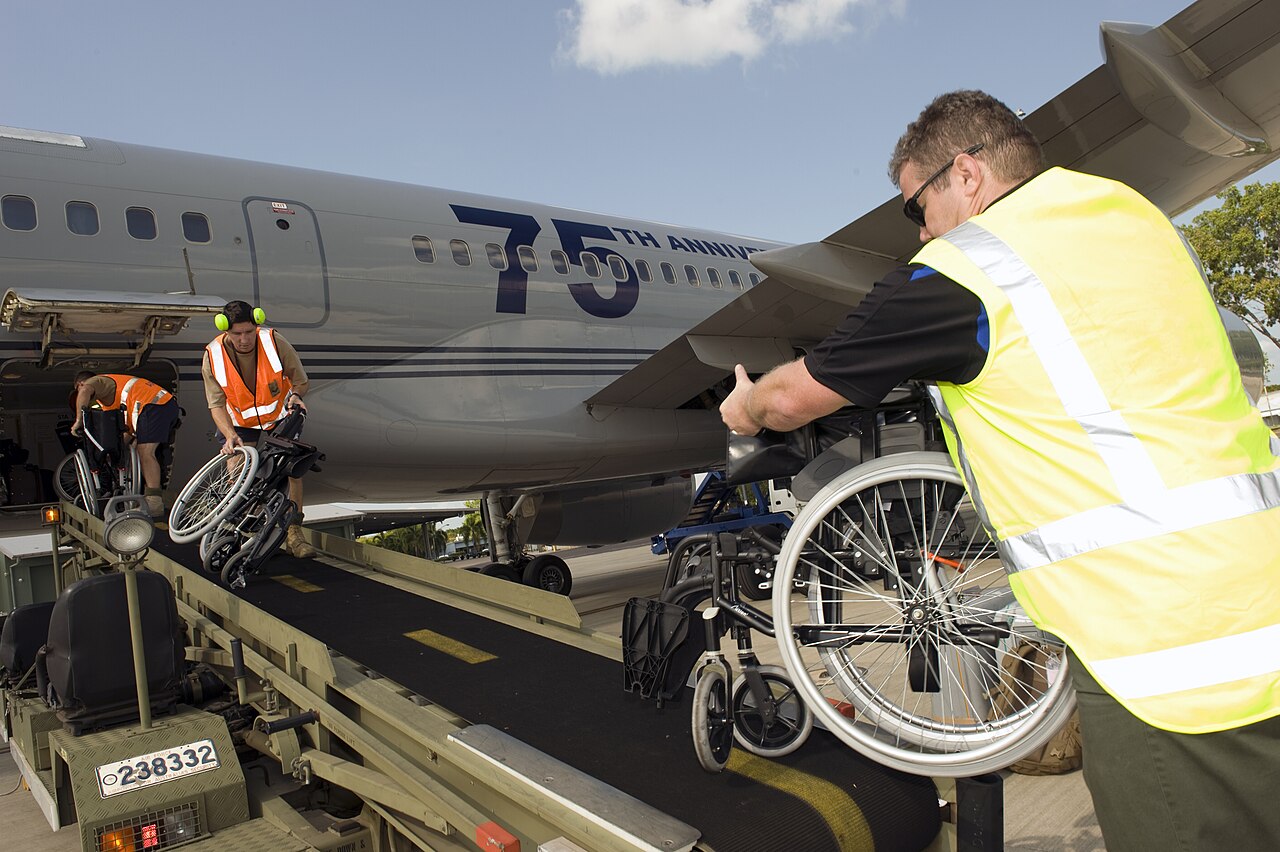
Partial victory for disabled rights, as some carers may board flights for free from 2027

New EU legislation will waive airfares for people accompanying disabled passengers if the companion’s presence is deemed required by the airline.

Updated passenger rights greenlit by MEPs last week (20 October) close a loophole allowing airlines to turn away passengers with reduced mobility.

Once approved, agreed changes mean airlines will allow disabled people the opportunity to travel with companions free of charge – if required for safety reasons – from 23 October 2027.

Ministers in the council had proposed alternative legislation that would allow airlines to collect taxes and charges for required companions. But in a win for disabled rights, negotiators for the European Parliament succeeded in insisting such charges be waived.

Rapporteur Matteo Ricci, an Italian MEP for the Socialists & Democrats (S&D), called the decision a “significant step forward” following the vote in Strasbourg.

This comes after a previous vote in July required airlines to fully cover the replacement of mishandled mobility equipment and allow people with disabilities or reduced mobility to sit next to their companions at no extra charge.

Companions not required by airlines must pay

Under new rules, passengers already travelling with an accompanying person not required by airlines – such as a personal assistant to help with their needs – will still need to pay for an extra ticket.

This was not made clear by Ricci who told reporters last week: “All people with disabilities or reduced mobility will have the right to have a companion traveling with them free of charge.”

In reality, the text adopted at plenary allows airlines to determine based on safety judgements whether or not companions of disabled people can travel for free.

So under new rules, many people with disabilities may not be able to bring companions free of charge.

“This leaves a gap for passengers who need personal assistance, but whose accompaniment is not required by the airline,” said Maltese S&D-group MEP Alex Agius Saliba. The co-chair of parliament’s disability group told EUobserver: “Their support needs are no less real, and the additional ticket can remain a financial barrier.”

Advocacy group the European Disability Forum (EDF) said when a provisional agreement was reached that updated enforcement of passenger rights offers “insufficient protection” for disabled passengers.

Disability rights whack-a-mole 

Daniel Casas, policy officer at the EDF, thinks new rules are a step in the right direction. 

This article continues, but the full version is available only to EUobserver.com subscribers. Visit account.euobserver.com/membership

  •  

EU Releases €4.9 Billion for Ukraine as Focus Shifts to Sustaining Military Support

The European Union has approved the mobilisation of approximately €4.9 billion under the European Peace Facility (EPF), implementing a significant part of an earlier agreement intended to resolve disagreements over military assistance to Ukraine.

The eight decisions, adopted by the Council on 26th October, allocate €4.7 billion towards partial reimbursement of military equipment already supplied by member states and €230 million towards the EU Military Assistance Mission in support of Ukraine.

Although the announcement represents an important step in restoring the operation of an established financing mechanism, most of the money does not correspond to fresh deliveries of military equipment.

That distinction is important as European governments attempt to reconcile continued support for Kyiv with growing pressure on national defence budgets and the need to replenish their own military inventories.

From political agreement to financial implementation

The decisions implement part of the €6.6 billion agreement reached by EU governments on 25th September, which ended a prolonged dispute over the allocation of European Peace Facility resources.

As EU Today reported following that agreement, the package separates reimbursements for previous deliveries from financing for new equipment and military training.

Under the original arrangement, €4.7 billion was earmarked for reimbursements, €1 billion for new joint procurement and approximately €900 million for training-related expenditure.

Monday’s decisions authorise most of the reimbursement component alongside a further allocation for training. They do not, by themselves, demonstrate that the separately planned €1 billion in new military equipment has been purchased or delivered.

The distinction reflects the unusual structure of the European Peace Facility.

Established in March 2021, the EPF operates outside the EU’s regular budget and finances security and defence assistance, including military equipment supplied by member states to partner countries.

Governments can provide weapons from their national stocks and subsequently seek partial reimbursement. This enables the EU to share some of the costs, although actual deliveries remain dependent on national decisions, industrial capacity and available equipment.

Reimbursements therefore strengthen the financial position of contributing governments without necessarily increasing Ukraine’s immediate stock of weapons.

Nevertheless, by reducing the financial burden of earlier donations, the mechanism can help governments preserve the capacity to make further contributions.

Military training becomes a longer-term commitment

The additional €230 million for the EU Military Assistance Mission also reflects the increasingly institutional character of European military support.

Established in November 2022, EUMAM Ukraine provides training for Ukrainian personnel through facilities and instructors made available by participating countries.

According to an EU statement delivered at the OSCE in October, the mission had trained approximately 97,000 Ukrainian soldiers.

The EU has agreed to extend the mission for another two years, moving military training beyond a series of short-term emergency measures.

Training programmes can be adapted to battlefield requirements, including the operation of Western equipment, command procedures, engineering and specialised military functions.

However, the usefulness of training also depends on the availability of appropriate weapons, ammunition and replacement equipment once personnel return to Ukraine.

The Council says the latest decisions bring overall support under the European Peace Facility to approximately €10.8 billion, comprising €9.9 billion associated with military assistance reimbursements and €950 million for training.

Frozen Russian assets and the defence industry

A separate financing mechanism is increasingly relevant to European support for Ukraine.

The Council reports that €3.5 billion in extraordinary revenues generated by immobilised Russian sovereign assets has already been channelled through the EPF to finance ammunition, air defence and drones.

More than €1.5 billion of the resulting procurement has been directed towards Ukraine’s own defence industry.

This creates a different relationship between European financing and Ukrainian military production.

Rather than relying exclusively on weapons taken from European stockpiles, the arrangement allows part of the support to be translated into orders for equipment manufactured inside Ukraine.

The approach may also reduce certain transport and procurement constraints, although production remains vulnerable to Russian attacks, component shortages and interruptions to electricity supplies.

The legal and political questions surrounding Russian-asset revenues remain significant. As EU Today previously examined, disputes over how European institutions approve funding measures have generated legal challenges.

The next test for European governments

At their 15–16 October summit, EU leaders welcomed the EPF agreement and continuing disbursements under the separate €90 billion Ukraine support loan covering 2026 and 2027.

The two instruments serve different purposes. The loan supports wider Ukrainian financial and defence requirements, while the EPF provides a mechanism for sharing the costs of military assistance.

For Kyiv, the central question is how rapidly European financial commitments can be converted into deliverable military capabilities.

For EU governments, the challenge is whether reimbursement mechanisms, national procurement and Ukrainian industrial production can operate together on a predictable basis.

The release of €4.9 billion resolves an important financing issue. It does not eliminate the continuing requirement for new equipment, ammunition and sustained production.

  •  

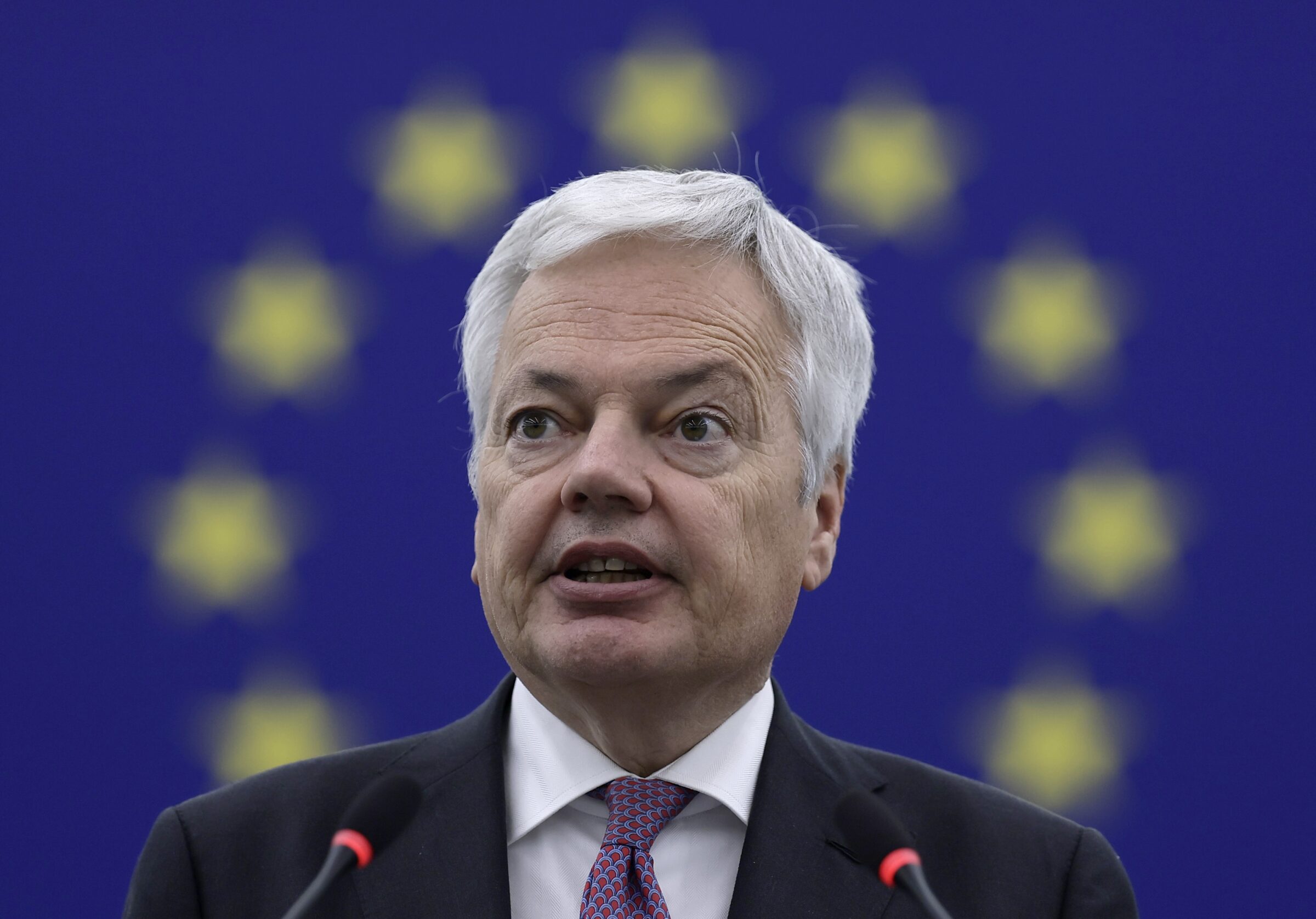
Ex-EU commissioner Reynders faces new Belgian and Polish scrutiny after EUobserver revelations

Some Belgian spies have questioned EUobserver’s report of a cover-up in favour of an allegedly corrupt Belgian ex-EU commissioner, while international commentary focused on his possible Russia ties.

EUobserver revealed on Friday (23 October) that Hugues Brulin, a director in the Belgian intelligence service (VSSE), had exchanged WhatsApp messages with ex-EU commissioner Didier Reynders, which may have been part of a criminal conspiracy to block VSSE reports into Reynders’ alleged wrongdoing.

But according to “several” VSSE sources who spoke to Belgian daily Le Soir, Brulin, who had been the number three in the VSSE hierarchy, had been in charge of logistics, Human Resources, and IT, but did “not have the power to block enquiries or put his nose into dossiers”.

Brulin did have access to secret dossiers only in case the number one and two directors in the VSSE were absent, and he had to sign off on special operations, called “BIMs” in VSSE jargon, which included measures such as phone wiretaps or home intrusions to place bugs, but this situation occurred just once during his tenure, Le Soir said.

But even if that was all true, Brulin still used to have the power to end the careers of VSSE officers who had looked into Reynders, on grounds of flimsy infractions, as happened in at least three cases, according to EUobserver’s sources.

“This article feels like a liberation. I don’t know if it really is one, but it feels like one … Thanks again in the name of all the normal, honest, taxpaying Belgians,” one ex-VSSE contact told EUobserver, commenting on last Friday’s revelations.

And besides which, there are allegations that Reynders had other VSSE insiders who might have been better placed to act.

This article continues, but the full version is available only to EUobserver.com subscribers. Visit account.euobserver.com/membership

  •  

THIS WEEK: the EU’s new Canada offer, cash for farmers and Russia’s Lavrov returns to G20?

An EU-Canada summit in Montréal will be the main event this week with European Commission president Ursula von der Leyen and European Council counterpart António Costa represent the bloc at a two-day summit starting on Thursday (29 October), hosted by Canadian prime minister Mark Carney. 

Carney, who has repeatedly spoken about the need for so-called ‘middle powers’ to step up their economic and security cooperation to avoid being squeezed by the United States and China, has emerged as one of the EU’s closest allies since the start of US president Donald Trump’s trade tariff wars last year. 

Canada already has one of the most ambitious bilateral trade agreements with the EU and has secured access to defence procurement contracts as part of the EU’s new multi-billion euro defence fund. 

And in September at her State of the Union address, von der Leyen offered the prospect of ‘associate membership’ of the bloc to Canada. Talks in Montréal are likely to cover trade, energy, critical minerals, defence, digital technologies and economic security. 

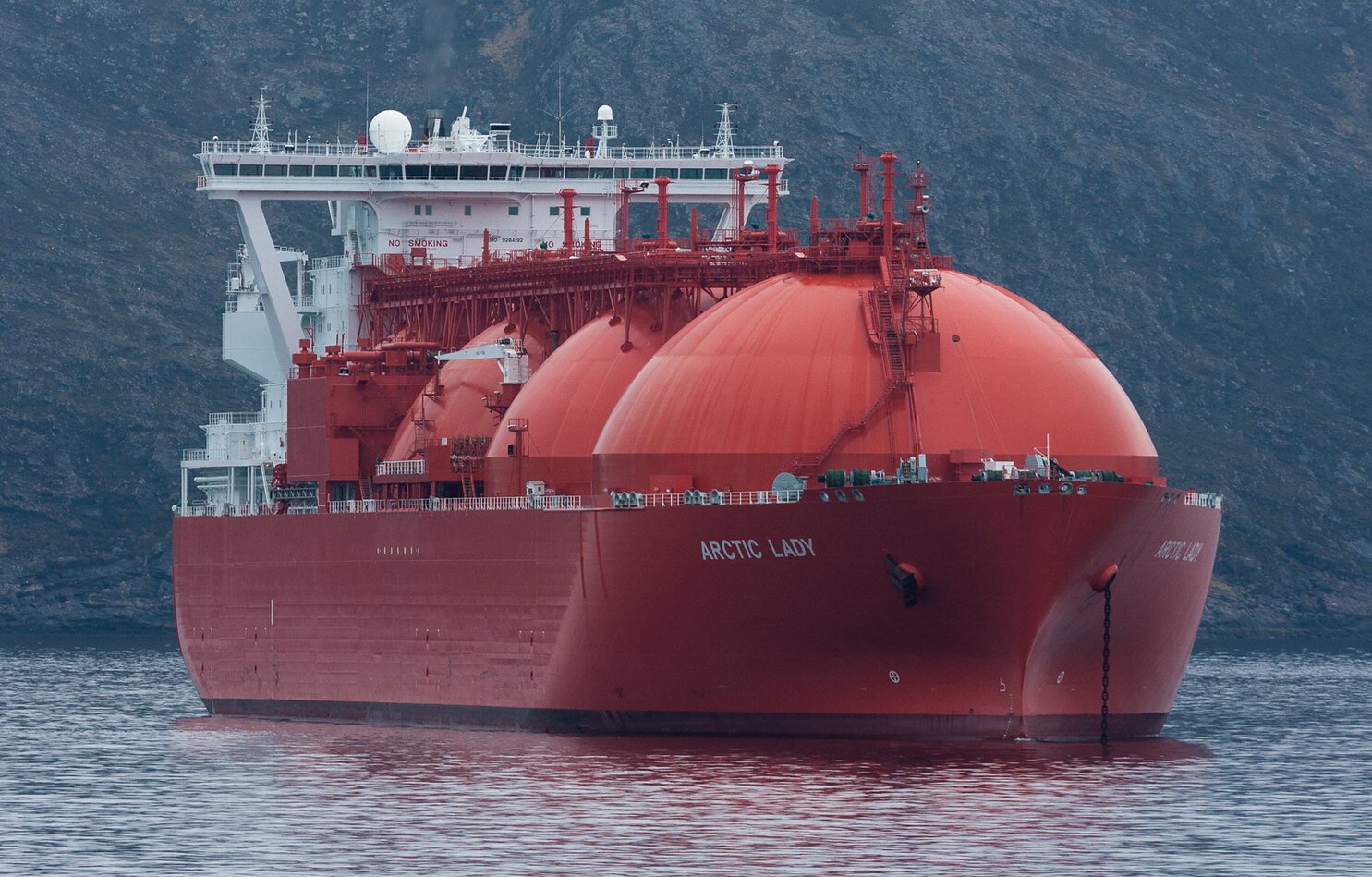
In particular, the draft summit communique proposes a feasibility study on long-term Canadian LNG exports to Europe. 

This article continues, but the full version is available only to EUobserver.com subscribers. Visit account.euobserver.com/membership

  •  

Czech Government Presses Ahead with Public Media Overhaul as Protests Erupt in Prague

Prime Minister Andrej Babiš’s government has advanced legislation replacing independent funding for Czech public broadcasters with state budget allocations, despite protests, warnings from European media organisations and concerns that the changes could expose journalists to political interference.

The Czech government has taken a further step towards fundamentally restructuring the country’s public broadcasting system, pushing controversial legislation through its first parliamentary reading after an extraordinary overnight session that triggered demonstrations and clashes with police in Prague.

In the early hours of Saturday, 24 October, the Chamber of Deputies advanced a government proposal abolishing licence fees for Czech Television (ČT) and Czech Radio (ČRo), replacing them with direct financing from the state budget. Opposition attempts to reject the legislation or return it for revision failed.

The decision represents another stage in the confrontation between Prime Minister Andrej Babiš’s governing coalition and organisations defending independent public broadcasting. Critics argue that the proposed financial arrangements could give successive governments greater leverage over the country’s principal public service media institutions.

Police intervene as protesters confront parliament

Hundreds of demonstrators gathered outside parliament on Prague’s Malostranské Square on Friday, protesting against the legislation and the government’s decision to accelerate its parliamentary consideration.

According to the Czech News Agency’s account of the demonstrations, several dozen protesters attempted to force their way into the parliamentary building. Officers from a special police unit prevented their entry.

Police spokeswoman Eva Kropáčová confirmed that the situation was brought under control without arrests. Demonstrators also confronted SPD parliamentarian Jaroslav Foldyna, requiring police intervention.

Inside parliament, the governing coalition of ANO, Freedom and Direct Democracy (SPD) and the Motorists party imposed limits on parliamentary debate and scheduled the decisive vote for 4.36am.

Of the 177 MPs present, 81 supported rejecting the proposal. The opposition subsequently pledged to continue resisting the legislation during its remaining parliamentary stages.

Financial dependence and political influence

The central controversy concerns the proposed transfer of financial responsibility for public broadcasters from licence-fee payers to the state.

Under the government’s plan, Czech Television would receive approximately CZK 5.74 billion annually, while Czech Radio would receive CZK 2.07 billion.

Combined funding would amount to approximately CZK 7.8 billion, representing a reduction of around CZK 1.4 billion, or 15 per cent, compared with existing licence-fee revenues.

Culture Minister Oto Klempíř, who developed the proposal, maintains that budget financing is an established European model. The government argues that abolishing the combined CZK 205 monthly household charge would reduce costs for consumers without compromising editorial independence.

However, the dispute extends beyond the immediate financial reductions.

Under the existing system, licence fees provide broadcasters with revenue that is substantially separated from annual government spending decisions. Financing through the state budget introduces a different relationship between broadcasters and political authorities.

Even where allocations are established by legislation, future parliamentary majorities can amend the law governing those payments.

A particularly significant development emerged on Saturday when an examination of the government’s own legislative documentation showed that its regulatory impact assessment had identified direct budget financing as the riskiest funding option.

The accompanying documents explicitly acknowledge the possibility of increased dependence on the state and political pressure without adequate safeguards.

European organisations warn of consequences

The controversy has attracted criticism from international organisations responsible for defending independent journalism.

In a joint statement issued on 23 October, the European Broadcasting Union, Reporters Without Borders, International Press Institute and other organisations warned that the accelerated parliamentary process was incompatible with the thorough scrutiny required for such legislation.

They highlighted the proposed funding reductions and questioned whether the new arrangements would sufficiently protect the broadcasters’ operational and editorial independence.

Their objections have a specific legal foundation.

Article 5 of the European Media Freedom Act requires EU member states to provide public service broadcasters with adequate, sustainable and predictable financing, based on transparent and objective criteria.

Budget financing is not prohibited under EU legislation. However, financial arrangements must contain safeguards against political interference.

As EU Today previously examined, the European Media Freedom Act establishes legally binding obligations intended to prevent governments from undermining independent journalism through institutional or financial pressure.

The Czech proposal therefore raises questions about whether its safeguards and funding provisions satisfy those requirements.

Journalists prepare further industrial action

Employees of Czech Television and Czech Radio have announced a nationwide strike for Tuesday, 3 November, organised by the Veřejnoprávně initiative.

The industrial action follows an earlier warning strike in June, when journalists and other broadcasting employees protested against the government’s plans.

A further public demonstration is scheduled for Sunday, 25 October, in Prague’s Old Town Square.

The confrontation also reflects the broader political divisions that have emerged since Babiš returned to government in December 2025.

Opposition politicians have drawn comparisons with political intervention in public broadcasting elsewhere in Central Europe, particularly Hungary and Slovakia.

The government rejects accusations that it intends to nationalise public broadcasters or interfere with their editorial decisions.

For the moment, the legislation remains subject to parliamentary scrutiny and has not become law. Its passage would nevertheless change the financial relationship between the Czech state and two of the country’s most established news institutions.

The central question is whether future governments would acquire additional means of influencing broadcasters through their budgets, even without exercising direct control over individual editorial decisions.

  •  

Slovakia Votes in Local Elections as Robert Fico Faces Test of Public Support

Nearly 4.41 million voters are eligible to participate in Slovakia’s municipal and regional elections on Saturday, 24 October, in a contest that could indicate the political direction of the country ahead of the 2027 parliamentary elections. Prime Minister Robert Fico faces growing pressure over coalition instability, economic policy and his government’s relations with Russia.

Slovakia is voting in nationwide municipal and regional elections on Saturday, 24 October, providing the first major electoral test of Prime Minister Robert Fico’s government since a series of parliamentary disputes weakened his governing coalition.

According to figures released by Slovakia’s national news agency, almost 4.41 million people are eligible to vote across 2,926 municipalities, towns and city districts. Polling stations opened at 7am and will close at 8pm local time.

Voters are choosing mayors, municipal councillors, governors and representatives of Slovakia’s eight self-governing regions. In Bratislava and Košice, they are also electing district mayors and councils.

Although the elections concern local administration, their political significance extends beyond municipal government. They offer an indication of the relative strength of Fico’s governing Smer-SD party and the opposition Progressive Slovakia movement ahead of parliamentary elections due by September 2027.

Bratislava becomes a political battleground

One of the most closely watched contests is in Bratislava, where incumbent mayor Matúš Vallo is seeking another term against Transport Minister Jozef Ráž, who is standing as an independent candidate.

Vallo is supported by an alliance comprising Team Bratislava, Progressive Slovakia, Freedom and Solidarity (SaS) and the Democrats. Ráž, although formally independent, is a minister in Fico’s government.

The contest has acquired a distinctly national character. Vallo and Bratislava regional governor Juraj Droba have campaigned against extending Smer’s influence over the capital and its regional administration.

Bratislava is also politically significant because its electorate has traditionally provided substantial support for liberal and pro-European parties, in contrast to the stronger position enjoyed by Smer in parts of rural Slovakia.

Polls point to an uncertain parliamentary future

The latest national opinion surveys suggest a closely divided electorate.

An Ipsos survey conducted between 15 and 19 October placed Progressive Slovakia first with 18.6 per cent, marginally ahead of Smer-SD on 18.4 per cent. The difference was statistically insignificant.

The nationalist Republika party ranked third on 10.8 per cent, while Fico’s coalition partner Hlas-SD attracted 6.6 per cent. The Slovak National Party (SNS), another governing partner, stood below the parliamentary threshold.

The figures suggest that Fico could struggle to reproduce his present parliamentary majority. However, the opposition is also divided, and current projections do not establish a straightforward route to an alternative governing coalition.

The immediate challenge for Fico is maintaining sufficient parliamentary support to govern until the scheduled election.

As EU Today reported in September, parliament voted to remove Environment Minister Tomáš Taraba after SNS deputies joined the opposition, exposing divisions within the governing alliance.

Those tensions have continued to affect parliamentary business. On 14 October, the government secured approval for its 2027 budget by just 76 votes in the 150-member National Council, the minimum required for an absolute majority.

The budget increases the projected deficit to 4.94 per cent of GDP, despite warnings from Slovakia’s fiscal watchdog about rising public debt. Fico has defended the spending plans as necessary to protect households, pensions and public services.

Relations with Russia remain a dividing issue

The elections are also taking place against a widening disagreement between Fico’s government and much of the European Union over Russia’s war against Ukraine.

Since returning to office in 2023, Fico has ended government-funded military assistance to Kyiv, challenged EU sanctions on Moscow and repeatedly called for negotiations with Russia. Commercial Slovak arms exports to Ukraine have nevertheless continued.

His position has extended to NATO’s collective defence commitments. In September, Fico questioned the prospect of Slovakia becoming involved in a military conflict under Article 5 of the North Atlantic Treaty.

Article 5, however, requires member states to assist an ally subjected to armed attack, while allowing each government to determine the measures it considers necessary. It does not automatically require every member to deploy combat troops.

The latest development concerns Slovakia’s decision to resume formal bilateral consultations with Moscow.

On Monday, 26 October, two days after the elections, Slovak and Russian officials are scheduled to meet in Moscow for discussions covering energy, nuclear cooperation, oil and gas supplies and other economic sectors.

It will be the first meeting of the bilateral intergovernmental commission since Russia launched its full-scale invasion of Ukraine in February 2022.

Bratislava maintains that dialogue with Russia is compatible with Slovakia’s EU and NATO obligations. The initiative nevertheless reinforces Fico’s different approach to Moscow at a time when the EU is seeking to reduce Russian energy imports.

Results could shape the 2027 election campaign

Saturday’s vote will not directly determine whether Fico remains prime minister. Local contests involve independent candidates, regional alliances and municipal priorities that do not necessarily correspond to national party preferences.

Nevertheless, results in Bratislava, Košice and the country’s eight regions will provide evidence of the government’s ability to mobilise supporters and the opposition’s capacity to turn favourable opinion polls into electoral victories.

No official exit polls are planned. The Slovak Statistical Office will publish results progressively after polling stations close, with counting expected to continue overnight into Sunday, 25 October.

For Fico, the results will offer an indication of whether his coalition can recover political ground before the next parliamentary election or whether its internal divisions are beginning to translate into losses at the ballot box.

  •  
❌