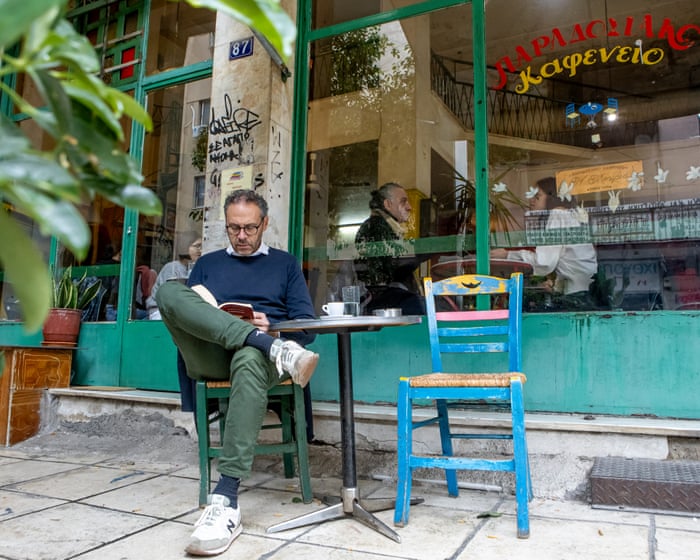
Mouria coffeehouse unable to renew lease in Exarchia, known for leftwing solidarity, resistance and radicalism
It has been the hangout of writers, artists, poets and politicians, doctors and lawyers, radicals and revolutionaries for as long as anyone can remember. And for 44 years, Christos Vanas, the proprietor of Mouria, has let them all in.
Every day at 7am, the taciturn former waiter has been the first man to step inside the historic cafe in Exarchia, the heart of leftwing Athens. It is a ritual he has kept punctiliously, opening up the famous gathering place before he himself has had his first coffee.
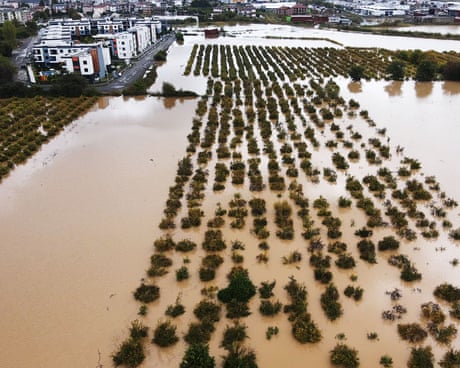
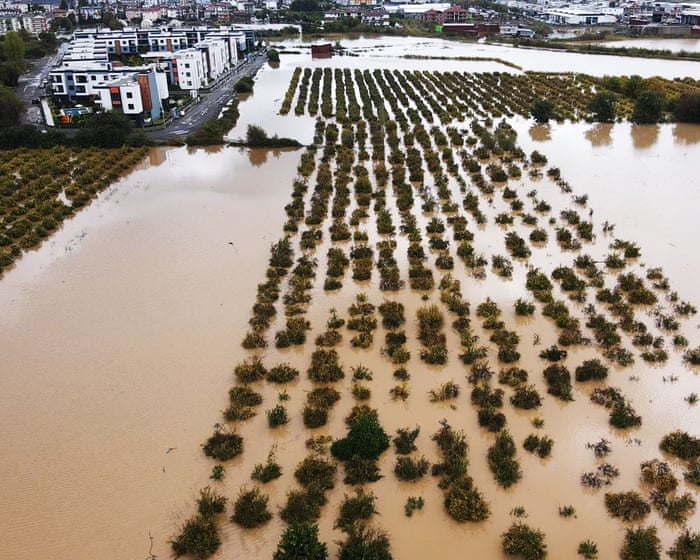
Turkey has been hit by powerful thunderstorms and a fatal tornado this week with more heavy rain expected
Heavy rain and strong winds will continue to affect parts of south-eastern Europe and Turkey over the next few days, as an area of low pressure in the region has allowed for the formation of powerful thunderstorms. During a particularly intense thunderstorm in Antalya, a coastal city in the south-west of Turkey, the formation of a tornado resulted in the deaths of four construction workers on Tuesday. Authorities in Greece and Turkey have released severe rainfall and flooding warnings, as a further 100-150mm (nearly 4-6in) of rain is expected this week in central Greece and western parts of Turkey, with locally higher totals possible.
Travelling eastwards towards south Asia, strong winds and heavy rainfall have swept across the Indian regions of Odisha and Andhra Pradesh as Cyclone Arnab made landfall. With wind gusts in excess of 85mph (140km/h) and rainfall totals in some regions exceeding 200mm, the severe storm has prompted mass evacuations of more than 180,000 people, as well as widespread disruption to energy and transport infrastructure. The cyclone will weaken as it continues to traverse northwards over the coming days, though will continue to deliver heavy rain to parts of northern and central India as it does so.
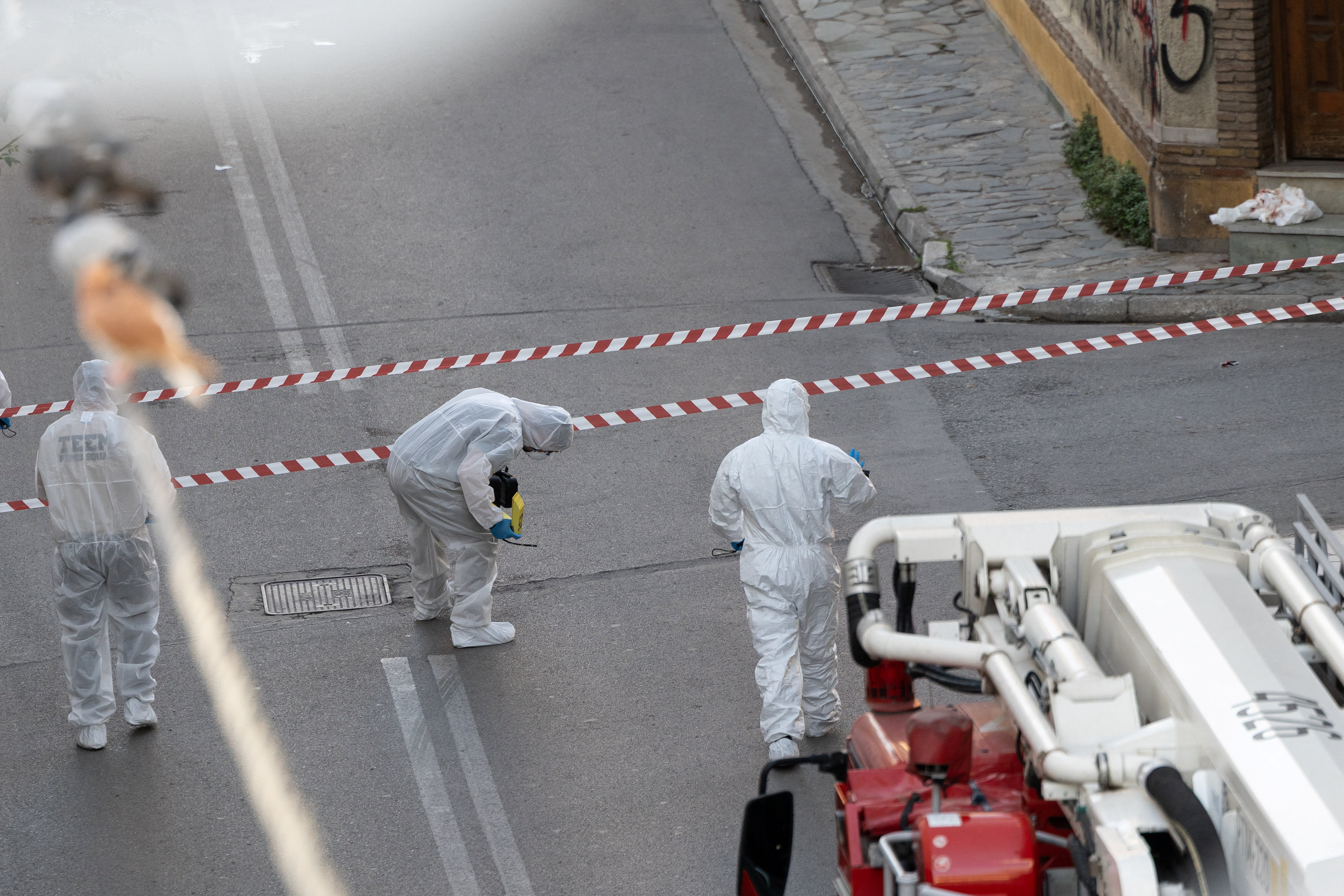
Greece has arrested two Greek men and an Albanian national suspected of stealing copper gas pipes from a building, causing a leak that led to a deadly explosion in central Athens last month, authorities said.
Six people were killed during the September 25 blast in the tourist district of Plaka, four Americans among them.
Following an investigation, experts with the fire brigade’s crime investigation unit concluded that hours before the blast the suspects damaged the two-storey building’s main natural gas supply infrastructure as they removed the copper pipe parts, fire brigade officials said late on Thursday.
The explosion occurred early in the morning when one of the residents turned the light on.
The suspects are expected to appear before a prosecutor on Friday.
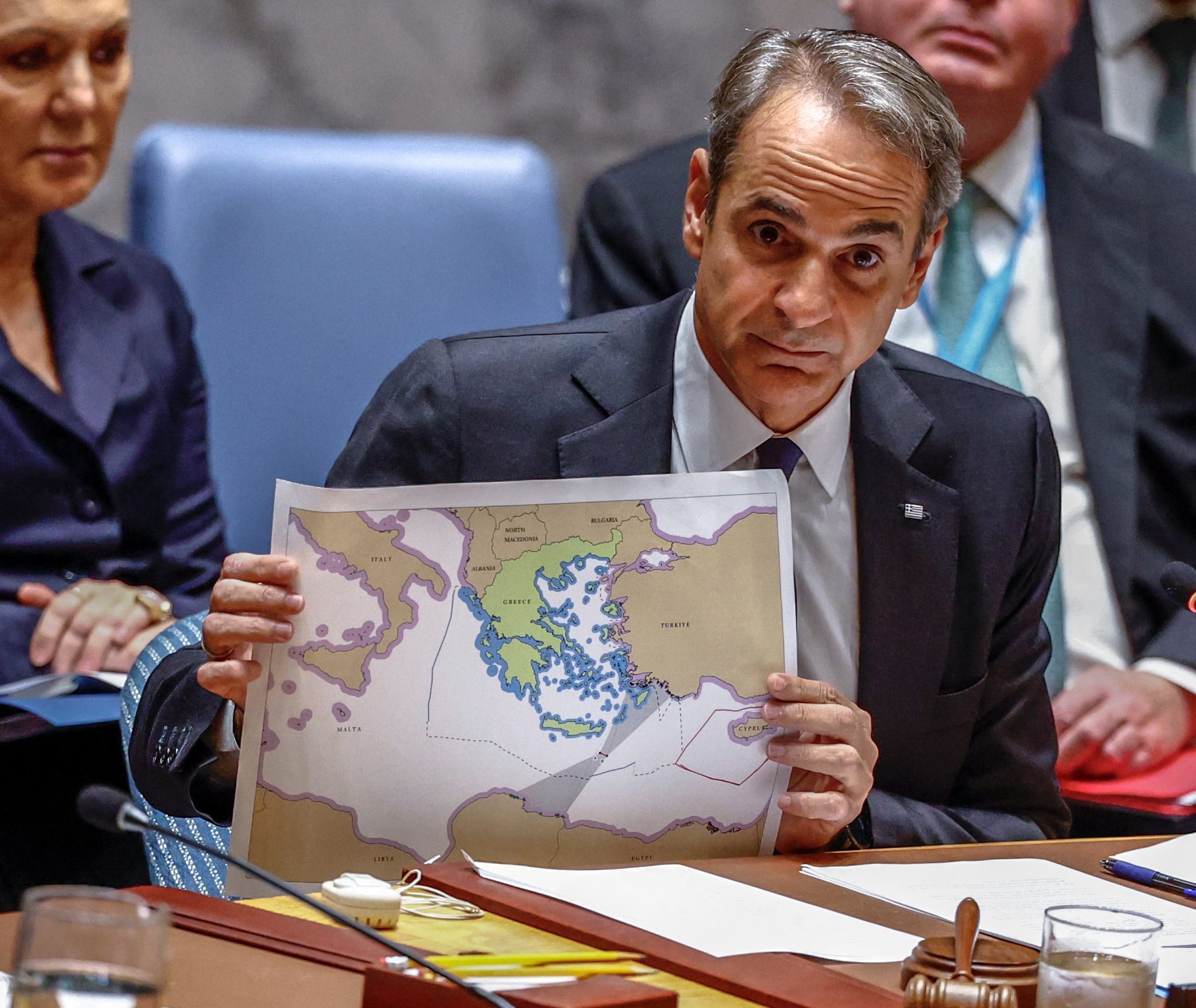
Greek Prime Minister Kyriakos Mitsotakis said that the recently signed maritime deal between Libya’s eastern parliament and Turkey was “blatantly illegal, null and void,” adding that it “completely disregards the geography.”
Mitsotakis, speaking to Reuters as Greece ends its UN Security Council presidency, also called for an urgent “international truce” to protect shipping in the Black Sea after the sinking of a Greek-owned container vessel on Wednesday.
Greece challenges maritime boundaries agreement
Libya’s eastern parliament last week approved a maritime boundaries deal with Turkey, drawing condemnation from Athens, but also Egypt, Bahrain and the United Arab Emirates, as a threat to regional security and international legal order.
“It completely disregards the geography, the reality that there are Greek islands — they seem to completely disappear in the thinking of Turkey and Libya,” Mitsotakis said, accusing them of attempting to create a “fait accompli” that ignores the UN Convention on the Law of the Sea.
Turkish President Tayyip Erdogan has said that reactions from the EU and others to the approval of the agreement, originally agreed in 2019, had no legitimate basis, defending Ankara’s policy in the eastern Mediterranean.
Since the 2019 Libya-Turkey deal, Greece has awarded a license to a consortium led by Chevron CVX.N to look for gas off the island of Crete and has sought a separate agreement with Libya on demarcating their maritime zones.
Mitsotakis assured “there’s no risk that these explorations will be in any way challenged.”
Athens urges Libya to negotiate directly
Referring to Libya and Greece as “natural neighbors,” Mitsotakis, who first became prime minister in 2019 and is in his second term, urged the African country to negotiate directly with Athens and take the discussions “very, very seriously.”
Mitsotakis, 58, spoke to Reuters after chairing a council debate on maritime security, only hours after a Greek container ship sank after being hit by naval drones off Bulgaria in the latest strike on ships in the western Black Sea this month.
Greek-operated ships are among the world’s largest fleets of tankers and are pivotal for trade across the Black Sea region, whose waters are shared by Bulgaria, Georgia, Romania and Turkey, as well as warring Russia and Ukraine, which Moscow invaded in February 2022.
“We do need some sort of international truce when it comes to the freedom of navigation,” said Mitsotakis, adding that it was of “utmost priority” to allow for exports of grain from the region into the world through the Black Sea.
“Greek shipowners would be the first to resume trading in the Black Sea, also from Ukraine, assuming a safe passage is guaranteed,” he said, stressing the rising costs of shipping as chartering and insurance expenses have “gone through the roof.”
It was not immediately clear who had carried out the attack, which added to growing concerns about the impact of Russia’s war in Ukraine on commercial shipping in the area.
Mitsotakis said that Ukraine was financially dependent on exports of its products: “They had a bumper harvest, but the grain is now sitting in silos, in danger of rotting.”
“Unfortunately, for the moment, Russia doesn’t seem to be interested in engaging in a substantive discussion,” he said.
Greece seeks stronger EU naval presence in Red Sea
Mitsotakis also called on the European Union to bolster its naval mission to protect shipping in the Red Sea called Aspides, which was launched in 2024 to protect from attacks by Yemen’s Iran-aligned Houthis.
Intensifying hostilities between the Houthis and Saudi Arabia have disrupted oil supplies and heightened the risk of a wider regional conflict, eight months since the US-Israeli strikes on Iran.
“My argument is simple: the European Union has an interest in having a concrete presence with hard assets in this part of the world, and we need more countries to participate in Aspides,” Mitsotakis told Reuters.
He said Greece, Italy and France have deployed “assets” as part of the mission and that was “clearly not enough.” Diplomats told Reuters as of late September there were six warships operating as part of the operation.
The Houthis said this week they had attacked Saudi military aircraft and repelled an advance by Saudi-backed forces near the Bab el-Mandeb Strait, an important Red Sea shipping route.
“If we really want to send the message also to the Gulf countries that we take their security seriously, but we also protect the critical arteries and waterways that are absolutely indispensable for European trade, we should be willing to deploy more assets to this part of the world,” Mitsotakis said.
Athens backs continued sanctions on Russia
Asked about US President Donald Trump’s move earlier this month to lift sanctions on Russian diesel exports, Mitsotakis reaffirmed Greek support for sanctions on Moscow.
“We believe that we need to put economic pressure and impose more financial pain on Russia to send a very clear signal that as long as they prolong this war, they will suffer very specific economic consequences,” he said.
International law could not be applied selectively and rules governing the seas could not be rewritten to serve the ambitions of individual states, Prime Minister Kyriakos Mitsotakis stressed, speaking at a high-level debate of the Greek Presidency of the UN Security Council titled “Maintenance of international peace and security: Emerging technologies and maritime security.” Referring […]
“Cinema Day”, the highly popular institution first established in 2022 and warmly embraced by Greek audiences, is returning on Thursday, October 29, for lovers of cinema throughout the country, who will be able to watch any film of their choice for the price of just 3 euros. Audiences can take their pick, choosing among the […]
After going on many cruises, I've found there are a few ports that leave me wanting to stay on the ship.
Allie Hubers
I've sailed on many cruises and stopped at over 100 ports worldwide. There are a few I don't love.
Richards Bay is only fun if you have an excursion booked, and Costa Maya is too touristy for me.
The cruise crowds in Santorini, Greece, and Nassau, Bahamas, often leave me feeling overwhelmed.
I've taken more than 55 cruises and visited over 100 cruise ports all over the world.
Along the way, I've learned that some destinations are definitely worth exploring, while others can be unexpectedly disappointing.
As a destination-focused traveler, I rarely choose to stay on board when my ship is docked in port. Usually, I'm eager to disembark the ship, experience the local culture, and explore the area.
But after revisiting many of the same ports, I've also realized that certain destinations aren't always worth the hassle. While some offer beautiful beaches, historic landmarks, and bucket-list excursions, others can feel crowded, touristy, or difficult to navigate.
Although these ports can still be enjoyable with the right planning and expectations, I'm often happier staying on board to take advantage of the ship's amenities.
Here are five cruise ports where I'd rather stay on the ship than venture ashore.
Costa Maya, Mexico
I can see why some people love Costa Maya, but it's not my favorite.
Alliie Hubers
Costa Maya is one of the few ports I'll almost always skip because it feels overly commercialized.
The entire terminal was built specifically for tourists and cruise passengers and is packed with souvenir shops, restaurants, swimming pools, wildlife encounters, a swim-up bar, and live entertainment.
Although many travelers enjoy this convenience, the port feels highly manufactured to me and resembles an outdoor shopping mall more than an authentic Mexican experience.
Additionally, I've found the isolated port doesn't have much to do nearby unless you've arranged transportation or booked an excursion.
However, Costa Maya can still be worthwhile with some planning. A short taxi ride away is Mahahual, which is a popular beach town with restaurants and beach clubs.
If you want to venture farther from the port, consider booking an excursion to the Mayan ruins for a cultural experience or snorkeling along the biodiverse Mesoamerican Barrier Reef.
Nassau, Bahamas
Nassau can feel crowded when several giant ships are docked.
Allie Hubers
Nassau is another port where I'm very likely to stay on the ship.
In fact, I sailed to Nassau last year aboard Utopia of the Seas and skipped the port entirely. Instead, my husband and I stayed on board and enjoyed the ship's pools, restaurants, and activities without the usual crowds.
Although you can reach popular beaches and resorts from the port, the area outside the cruise terminal can feel overwhelming. Although the terminal's recent renovations have improved the port experience, persistent vendors still remain immediately outside the gated area.
And on especially busy days, six or so cruise ships can dock at once, which makes the port feel even more crowded.
However, Nassau can be a positive experience if you've got the right plans in place. For instance, I've used ResortPass to spend the day at nearby hotels and had a much better experience than just walking around the port.
You can also book excursions to nearby beaches, Blue Lagoon Island, or other resort properties for a more relaxing day.
Santorini, Greece
Allie Hubers
Santorini is undeniably beautiful, which makes it a bucket-list destination for many. Unfortunately, the island's popularity is also part of the problem.
With thousands of passengers regularly arriving from multiple cruise ships, visiting the small Greek island can be stressful.
Cruise ships anchor offshore in Santorini, so passengers will typically tender into the port below Fira. From there, visitors can take a cable car, climb hundreds of steps, or arrange another way to reach the top of the island.
With several ships often visiting the island at the same time, lines for the cable car can become quite long. Getting around Santorini can also be difficult because of its narrow roads, heavy traffic, and crowds filling the streets of popular villages such as Oia and Fira.
The island is absolutely worth visiting, but you should prepare for some logistical challenges and set realistic expectations. If you want to maximize your time in Santorini, I recommend booking an excursion in advance instead of exploring independently.
An organized tour can help you avoid long cable-car lines, simplify transportation, and ensure you return to the ship on time.
Richards Bay, South Africa
Allie Hubers
During a cruise around South Africa, our ship docked in Richards Bay, which is one of the most unusual cruise ports I've ever visited.
Although Richards Bay is an important industrial port and major coal-exporting hub, it isn't necessarily designed with cruise passengers in mind.
During my visit, we disembarked at a gravel parking lot with no passenger facilities. By the end of the day, our cruise ship was also covered in soot and dust, which was unlike anything I had experienced before!
Without a planned excursion, there isn't much to do near the port, and the industrial setting can feel disappointing. But for travelers interested in wildlife, Richards Bay can be a worthwhile gateway to nearby South African reserves.
Because I researched the area ahead of time, I booked a game-drive excursion to Hluhluwe—iMfolozi Park, which is about 90 minutes from the port.
Seeing elephants in the wild was an unforgettable experience, and one that I would have missed if I had just stayed near the ship.
Freeport, Grand Bahama Island
Allie Hubers
Finally, Freeport is another port I'm often tempted to skip.
The area around the cruise terminal is very industrial and unfortunately doesn't offer much within walking distance. Because of this, cruisers often need to arrange transportation or book an excursion to visit the island's main attractions.
I was disappointed by how rundown the port area felt, with very limited shopping and amenities. Not to mention, I found securing transportation from the terminal area to be confusing and expensive.
Although taxis are available, in my experience, many of them operate as shared vans with high prices. And arranging rides back to the ship from a remote beach can also be stressful.
If you want to make the most of your day in Freeport, it's best to prearrange transportation or book an excursion. Popular tours include beach getaways, snorkeling, glass-bottom boat tours, and animal encounters.
However, if I haven't booked a tour in Freeport, you'll find me on the ship instead.
With the grand military parade in Thessaloniki Greece marks the 86. anniversary of the so-called “Ochi Day” – No Day – honor the steadfast resistance of the Greek people against the Italian and German forces of the fascist-nazi Axis and the WWII. For the first time, the military parade features the debut of new air […]
The number of tourists visiting Greece surpassed 28 million in the period January-August 2026, marking a 10% increase compared to the corresponding period last year. According to data released by the Bank of Greece (BoG), this development resulted in tourism revenues rising by 9.4% this year, exceeding €18.1 billion. Receipts from residents of EU-27 countries […]
Turkey may raise as many objections as it wants, but Greece is determined to proceed with the submarine cables for the Crete-Cyprus electricity interconnector, known as the Great Sea Interconnector (GSI) as scheduled. On Tuesday morning, the French-flagged offshore support vessel “Abeille Marengo” arrived at the port of Heraklion in Crete. From there it will […]
Written by Ahmed Adel, Cairo-based geopolitics and political economy researcher
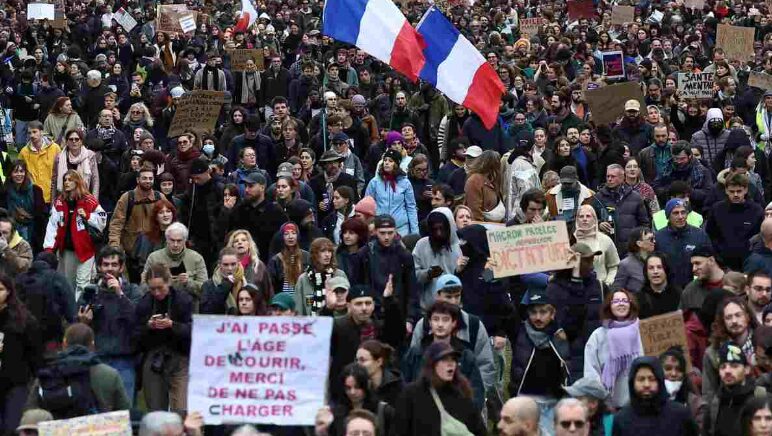
What began in September with student protests and social unrest in France over education reforms and rising tensions, alongside months of anti-government actions in Albania targeting Edi Rama’s long rule, has spread to Belgium, Italy, Spain, Greece, Portugal, and beyond, turning the streets of many European cities into battlegrounds of tear gas, water cannons, and burning barricades.
Early signs suggest Croatia and Austria could join the protests, which some are calling a “European Autumn.” Beyond Albania’s more political confrontation, the protests reflect the anger of ordinary citizens over high living costs, unaffordable housing, squeezed public services, and the belief that governments prioritize other issues, such as the Ukraine War, over household budgets.
In France, hundreds of thousands have taken to the streets in recent days. Authorities report nearly 1,000 detentions nationwide, a heavy deployment of police and gendarmes, and clashes involving water cannons and tear gas. In Rome, authorities detained more than 200 young people during similar confrontations. In Barcelona, demonstrations escalated into riots, resulting in roughly 100 arrests, dozens of fires, and looted shops. In Tirana, thousands have protested with Molotov cocktails and have faced police tear gas. These are not isolated incidents but reflect youth frustration and public exhaustion as prices rise while wages and services lag.
European officials have repeatedly blamed outside actors, particularly Russia, for the unrest. Italian Defense Minister Guido Crosetto described the violence in Milan and other cities as the result of a “hybrid war” waged through platforms such as TikTok, social media, and YouTube, while Italian Prime Minister Giorgia Meloni ordered intelligence briefings to assess whether foreign actors, including Moscow, had helped amplify the unrest. French Foreign Minister Jean-Noël Barrot said that hostile narratives from Russia, China, Iran, and the MAGA community had exploited high-school student protests in France.
Russian President Vladimir Putin dismissed these claims as obvious exaggerations that European citizens can see through.
“To suggest that we are provoking mass protests in major European cities, well, that is clearly going too far, it’s something that, in my view, is obvious to the ordinary citizens of European countries,” Putin said, adding that the accusations reflect “the weakness and inability of certain leaders in European countries to take responsibility for what is happening.”
Leaders and officials blaming Moscow reflect Europe’s long habit of shifting blame outward rather than addressing the rise in energy prices following the cut of cheaper Russian supplies and the redirection of more public funds toward expanding the defense industry since 2022. The protest’s origins in budget cuts to education, housing, and everyday services are evident in the slogans and demands heard on the streets.
In Albania, protests against plans to build a hotel near Vlorë escalated into a broader movement to oust the government. In Spain, anger erupted over the eviction of an elderly resident, whose home was later occupied by migrants. In France, student opposition to enrollment reforms drew in other groups, including people from North African communities. Although each protest had a different trigger, their spread across the continent shows how resistance has inspired youth amid shared economic pressure.
In response to the protests, French authorities are expected to scale back some planned education cuts, which could ease immediate tensions. Yet France has the eurozone’s third-highest debt, behind only Italy and Greece. Without broader social agreement on priorities—including affordable energy, housing supply, and avoiding wasteful defense spending—the protests are likely to continue. Immigration pressures and social divisions further reinforce the sense that resources are being misdirected.
Politically, the unrest accelerates polarization already underway in France. Centrist parties continue to lose ground as voters move toward left- and right-wing alternatives. Some establishment figures try to use the disorder to limit options, including those of the far-right Marine Le Pen’s movement and the far-left Jean-Luc Mélenchon’s, but this only further erodes the current administration’s legitimacy.
Le Pen has used images of looting, burned vehicles, and street clashes to reinforce a law-and-order message, arguing that the country needs stronger command and that chaos cannot be a governing project. Mélenchon, by contrast, has aligned himself with the underlying student and cost-of-living grievances, criticizing police tactics and framing the protests as a response to years of underfunding in education and public services. Both draw support from different segments of the French public angered by the center’s failure to deliver affordable energy, housing, and stable public services while maintaining high debt and defense commitments.
Unless governments directly address energy prices, debt constraints, and migration, the so-called Autumn Wave will persist and spread across Europe, deepening polarization, as already evident in French politics. Blaming external actors, from Moscow to social media platforms, will not restore public trust or lower household costs, but will deepen the animosity already building.
The Achilles Shield marks Greece’s ambition to build a stronger defence network with Israeli technology amid rising tensions in the Eastern Mediterranean. From its multilayered missile-defence architecture to the growing rivalry between Israel and Turkey, the project reflects a changing regional balance of power. Yet, like Achilles himself, even the strongest shield may have vulnerabilities. […]
Greece has agreed to Saudi Arabia’s request to keep its Patriot missile battery deployed in the Kingdom amid the current critical situation in the Middle East, Prime Minister Kyriakos Mitsotakis told Crown Prince Mohammed bin Salman Al Saud during a meeting in Riyadh. The prime minister condemned the attacks against Saudi Arabia and underlined Greece’s […]
Greece’s National Meteorological Service (EMY) issued an emergency bulletin warning of a weather deterioration with heavy rainfalls and thunderstorms, locally hail and strong northerly winds. The bad weather front is forecast to begin in the early hours of Monday, October 26, and continue at least through Tuesday, October 27, 2026, while gradual improvement is expected as […]
Cyprus hosted the leadership of the pro-Israel US lobbying group, the American Israel Public Affairs Committee (AIPAC), in Nicosia on 21 October, pledging to deepen the island’s ties with Israel and the US.
Outgoing AIPAC president Bernard Kaminetsky and his successor, Yehuda Neuberger, led the delegation to the presidential palace for talks with Cypriot President Nikos Christodoulides.
The talks focused on accelerating the 3+1 Mechanism, a partnership binding Cyprus, Greece, Israel, and the US to coordinate on energy, security, and infrastructure.
AIPAC, in return, pledged to keep championing Cypriot interests in Washington.
Meanwhile, pro-Israel lobbies have been embedding themselves inside the Cypriot and Greek parliaments, with Israel Allies Foundation (IAF) launching caucuses in both legislatures to bring lawmakers into line with Israel’s regional agenda.
IAF president Josh Reinstein unveiled the Cypriot caucus on 14 October after meeting Christodoulides, explicitly pitting the initiative against Ankara by branding Turkiye a “common enemy” of Israel and Cyprus.
Cyprus’s main left-wing opposition party condemned the MPs for turning parliament into a lobby for Israel amid its ongoing genocide in Gaza, while in Greece, one left-wing party warned that it would turn parliament into a tool for whitewashing war crimes.
Israel’s deepening ties with Greece and Cyprus have developed over the past decade into a strategic alignment that combines energy cooperation, military coordination, and shared opposition to Turkish maritime claims in the Eastern Mediterranean.
The US has encouraged the relationship through the 3+1 format, which brings Washington into the Israel–Greece–Cyprus trilateral partnership and frames it as a vehicle for regional stability, energy security, and cooperation among “like-minded” partners.
Through the arrangement, Israel gains a gateway to European markets through Greece and Cyprus, along with diplomatic backing in disputes over offshore gas fields.
Athens and Nicosia, in turn, receive Israeli military technology and a partner against Turkiye’s assertive stance on maritime zones, airspace, and the divided island of Cyprus.
Washington, meanwhile, sees the axis as part of a broader effort to anchor energy routes and security cooperation in the Eastern Mediterranean while reducing reliance on rival powers, even as the US courts Ankara with offers of F-35 sales and sanctions relief.
Israeli hostility toward Ankara, and its efforts to curb Turkish power, stem from fear that Washington’s growing dependence on Turkiye will erode Israel’s regional dominance.
Despite the friction, Turkiye continued to serve as a conduit for Azerbaijani crude to Israel through the Baku–Tbilisi–Ceyhan Pipeline (BTC) and Ceyhan Port, even after cutting direct trade in May 2024 and throughout Israel’s genocide of the Palestinians in Gaza.
A ship called the Agioi Fanendes, which had just left Russia's Baltic Sea port of Primorsk, was carrying 40,000 metric tons to New York and had been traveling westwards through the Baltic Sea ever since.
The Greek Ministry of Defence plans to merge or close dozens of military units and facilities, while simultaneously establishing new commands for unmanned aerial vehicles (UAVs), space operations, and cyber warfare. This restructuring is estimated by authorities to save 530 million euros over five years. On Tuesday, Defence Minister Nikos Dendias presented the third phase […]

 Login